
 by
Venetian plaster shower ideas can handle wet conditions, but only when you use the right finish system and respect the shower’s splash zones. I once treated plaster like ordinary wall paint, and the first steamy week taught me otherwise. Seal it properly, give your room a believable material story, and it’s one of the warmest bathroom moves you can make.
- Seal the shower plaster wall in layers (the Wet-Zone Rule)
- Choose a warm mineral neutral over cold gray
- Build the Two-Texture Rule around one venetian shower
- Float a plaster bench only where your layout earns it
- Can a deep blue plaster shower stay light enough?
- Frame the valve with a narrow tile halo
- Use the Three-Height Light Stack after dark
- Swap bright white for Sherwin-Williams Sea Salt
- Add a niche that disappears into the plaster
- Let a plaster shower borrow warmth from the floor
- Try Venetian plaster around the tub before committing to wet walls
- Make the budget visible before you choose finishes
- Choose a lived-in finish over a flawless showroom sheen
1Seal the shower plaster wall in layers (the Wet-Zone Rule)
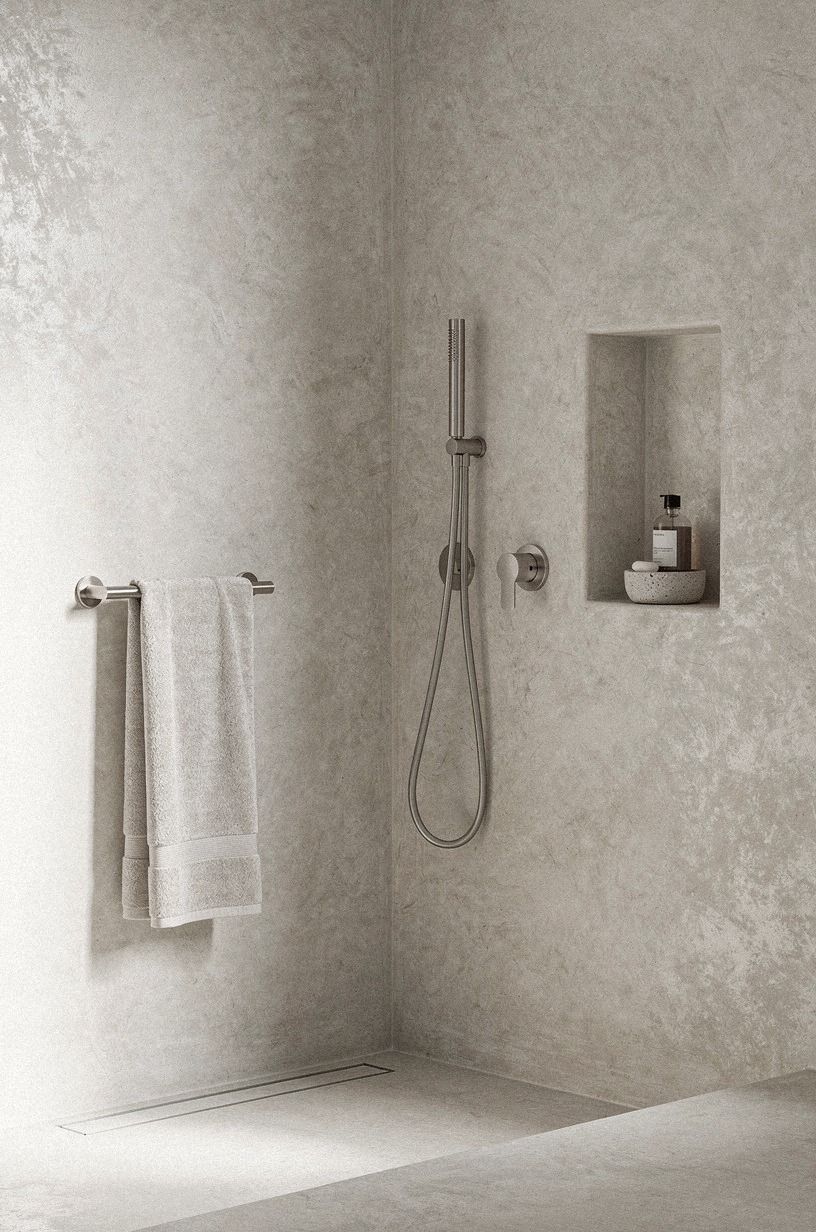
Start with a shower-rated Venetian plaster system, then follow its primer, plaster, and protective topcoat sequence without improvising. Your walls need a finish intended for water exposure, especially around the valve and beneath the showerhead. I’d skip a chalky, porous limewash look here because your daily spray will find every weak patch.
Choose a microcement-compatible waterproof sealer with a low-sheen finish, not a glossy coating that makes your shower look plastic. Midnight blue plaster, copper accents, ivory details, and cerused white oak can feel rich without becoming heavy. And yes, your installer should test a sample board first.
For more texture direction outside the direct splash zone, see these Venetian plaster wall ideas for subtle depth-filled texture. Your shower gets the durable finish; your vanity wall can have a little more romance.
2Choose a warm mineral neutral over cold gray
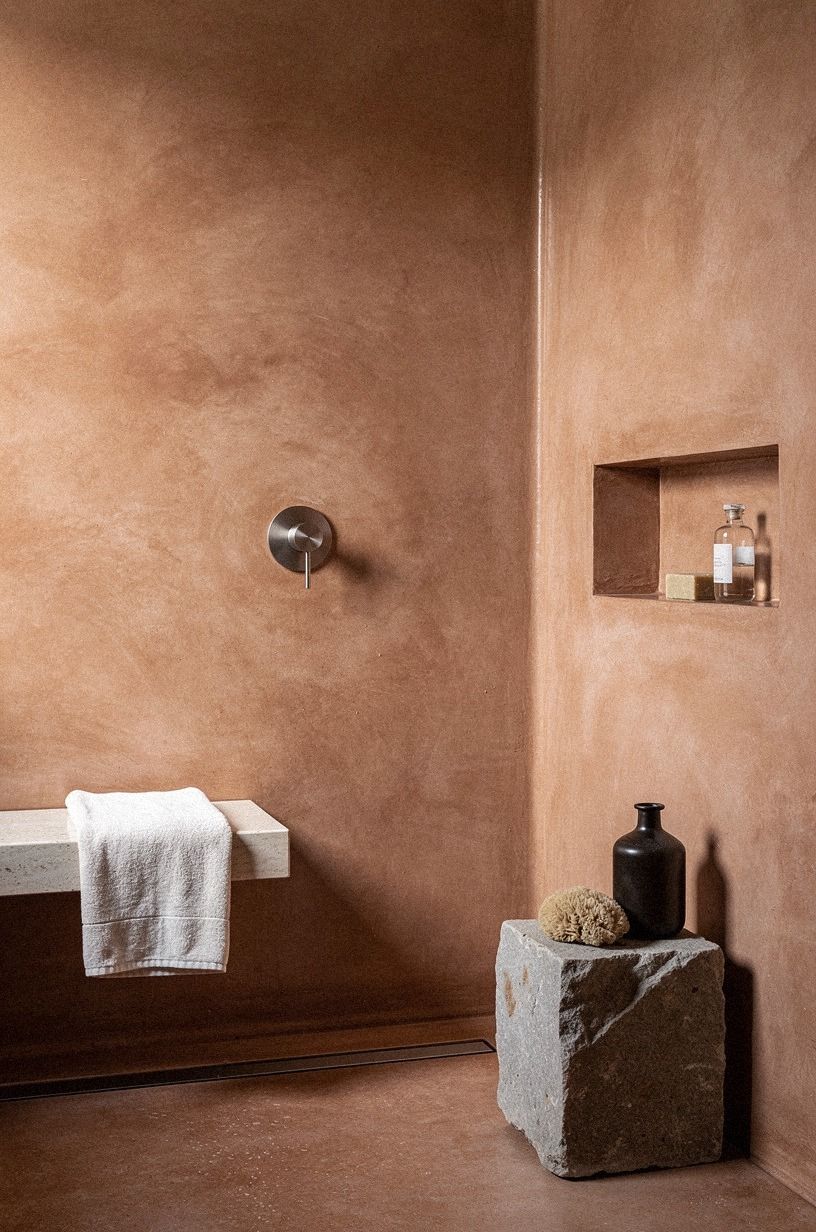
A sage-green mineral plaster shower feels calm when the undertone has some earth in it. Balance it with warm cream, natural wood, and a small piece of backlit translucent onyx rather than contractor gray. The stone’s gentle glow gives the room warmth without turning the plaster yellow.
I’ve seen cool gray plaster turn blue beside white LEDs, and it’s miserable by breakfast. Sage green catches steam like old stone and keeps your bathroom inviting even when the rest of the room is plain. But don’t force beige if your existing tile has blue undertones; that fight never gets better.
A brushed brass faucet is the easy partner here. Its typical $120-$450 range means you can decide whether the metal belongs in this project before committing to a full fixture swap.
3Build the Two-Texture Rule around one venetian shower
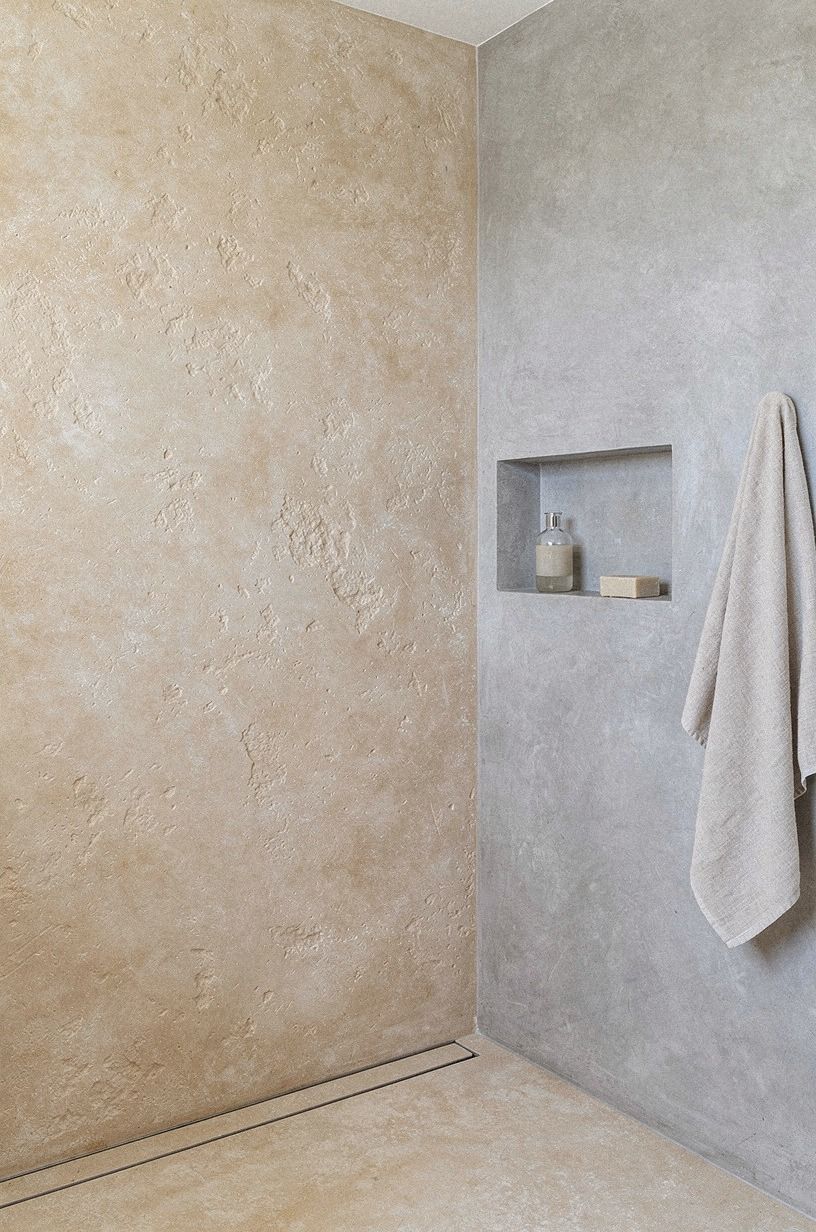
Use Venetian plaster for the broad, quiet surfaces and stone only where your shower needs a crisp visual edge. Let terracotta, olive, and book-matched walnut bring warmth without giving every wall a separate pattern.
4Float a plaster bench only where your layout earns it
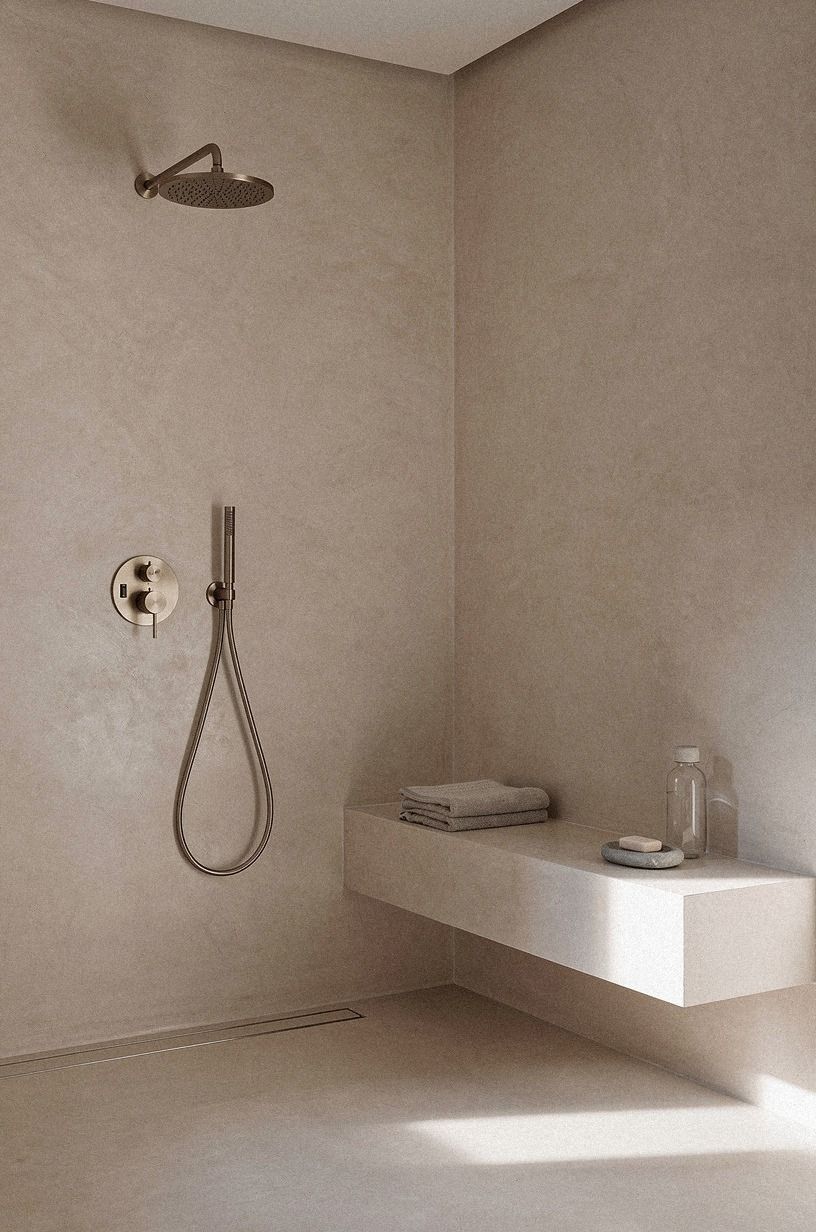
A built-in bench looks luxurious, but your shower needs enough room for it. A comfortable shower starts at 36x36 in, and a bench can make that footprint feel stingy fast. If your enclosure is larger, float a slim ledge in warm travertine with natural pitting rather than building a bulky plaster block.
You’ll use it for a towel, a foot while shaving, or the bottle that never fits the niche. I made a bench too deep once, and it became a shin magnet. Keep your body’s path clear, then let the clay-toned plaster, linen, and aged brass read as a quiet architectural line.
But if you have a standard 60x30 in tub, don’t fake a bench with a giant bath tray. Your room will look crowded, and the tray will spend more time on the floor than on the tub.
5Can a deep blue plaster shower stay light enough?
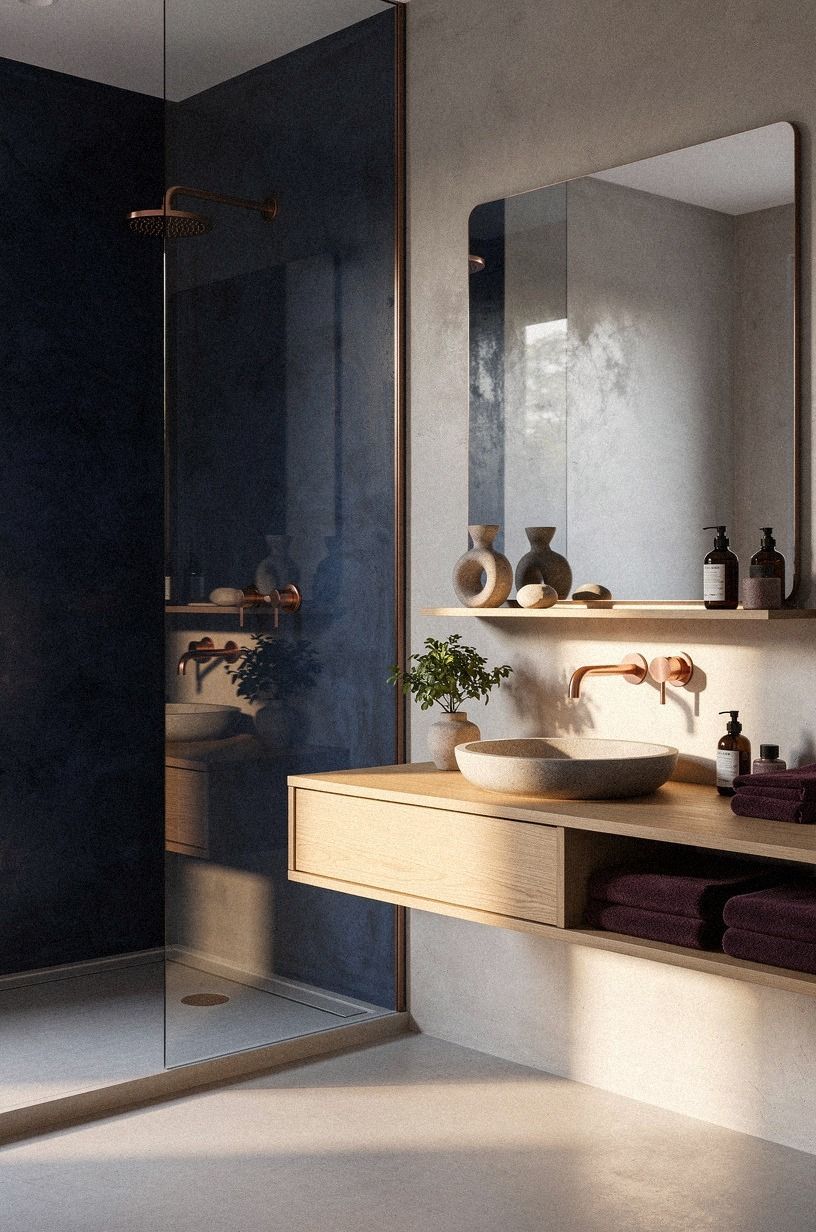
Yes, if you let the deep blue lean toward plum, give it a reflective gray partner, and add a little rose gold instead of burying it under black hardware. Unlacquered brass developing a soft patina can bring another layer of warmth without making the room feel shiny.
6Frame the valve with a narrow tile halo
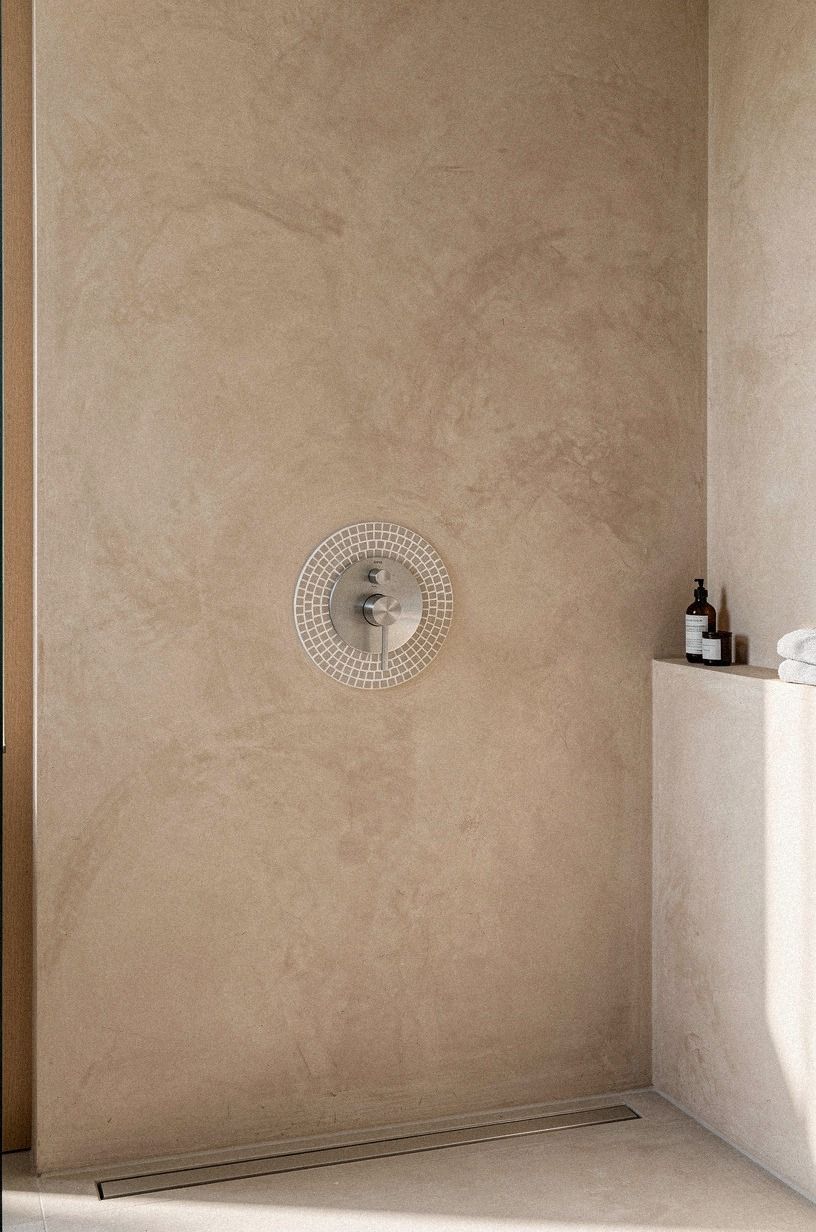
Instead of tiling the entire shower, create an oversized-chip terrazzo halo around the valve and showerhead. Your navy plaster still owns the room, while the white-and-walnut palette keeps the terrazzo from feeling busy. The tile takes the daily abuse where water lands hardest.
This is also where your budget can breathe. Typical subway tile runs $2-$10 per sq ft, while zellige often lands at $15-$35 per sq ft. You don’t need the expensive material across every wall to get its irregular, luminous edge.
And don’t center the halo by guesswork. Your shower hardware deserves a measured composition, not a last-minute rectangle that looks like a patch. Browse soft luminous Venetian plaster bathrooms if you need a visual reset before choosing the border.
7Use the Three-Height Light Stack after dark
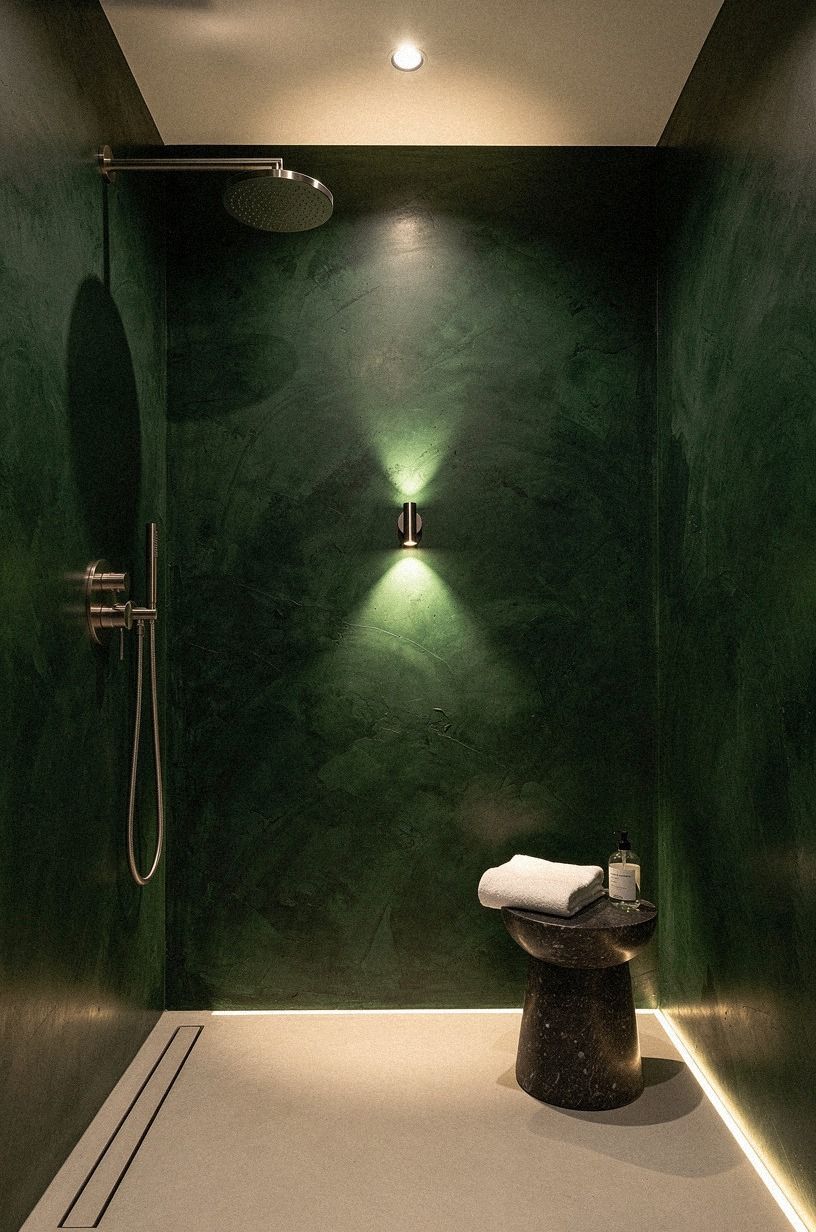
Your shower plaster will look completely different at night, so light it from more than one height. Overhead light handles the practical moment.
A mirror sconce handles your face. A low, dimmable glow near the vanity lets emerald plaster, gold hardware, and cream surfaces read as soft and earthy rather than flat.
You don’t need a chandelier over the tub. I’d skip that popular move in most bathrooms because it steals attention from the hand-applied Venetian plaster and adds one more thing to clean. A pair of simple gold sconces beside the mirror gives your room a warmer, more refined pool of light.
Your bulbs matter too. Use warm dimmable bulbs, and let the plaster keep its gentle shadowing.
The room should feel relaxing at 10 p.m., not like a dressing room. Small shift.
Huge difference!
8Swap bright white for Sherwin-Williams Sea Salt
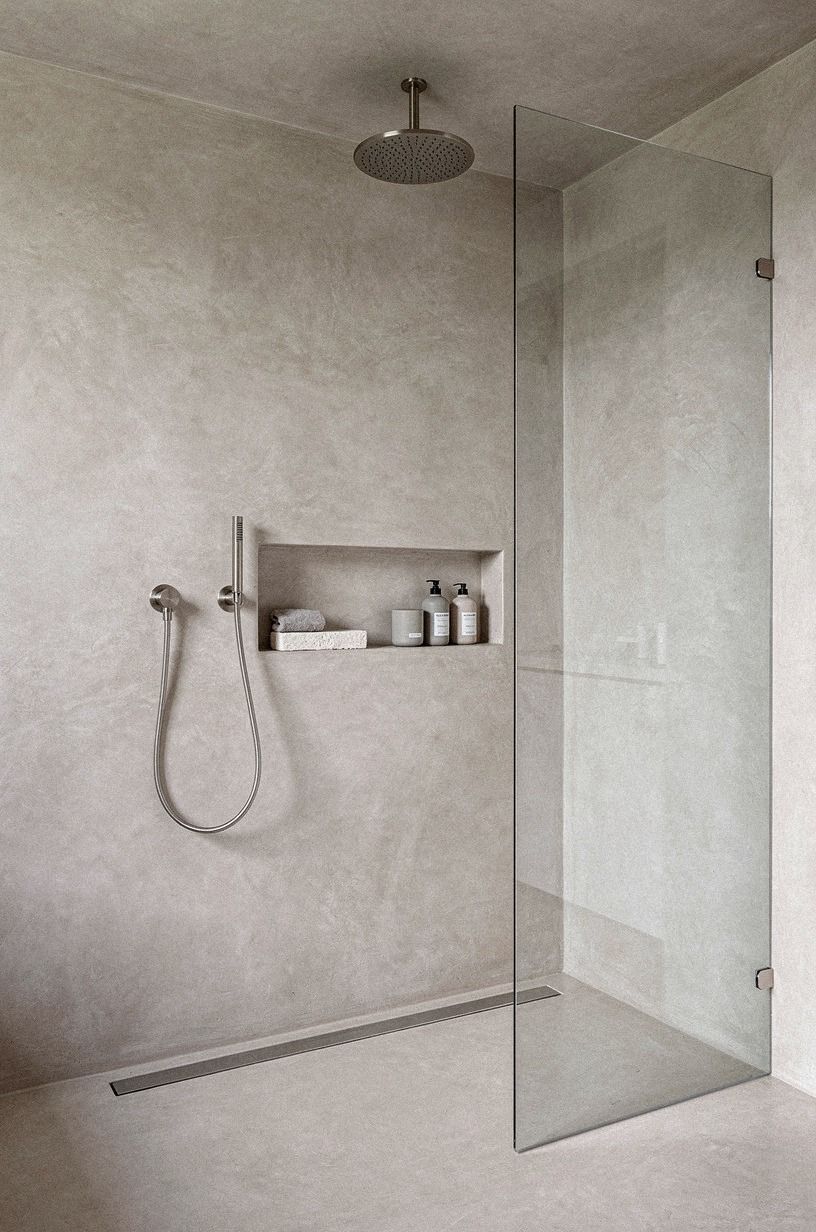
A pale Venetian plaster shower doesn’t have to be cream. For this palette, a forest-green plaster with rust accents and natural oak feels more grounded than bright white or a thin green-gray. Your color reads especially well when the plaster has slight tonal variation instead of one flat coat.
Pair it with a 3/4-inch solid white oak floating vanity and a simple round mirror. I’d choose natural oak over high-gloss white lacquer every time here; lacquer reflects every water spot, while oak gives the wall something honest to lean against.
Add a small shagreen accent if you want texture beyond the plaster. For a broader organic palette, these serene organic-modern Venetian plaster bathroom ideas are worth studying. Your towels can stay plain.
The wall already has enough movement.
9Add a niche that disappears into the plaster
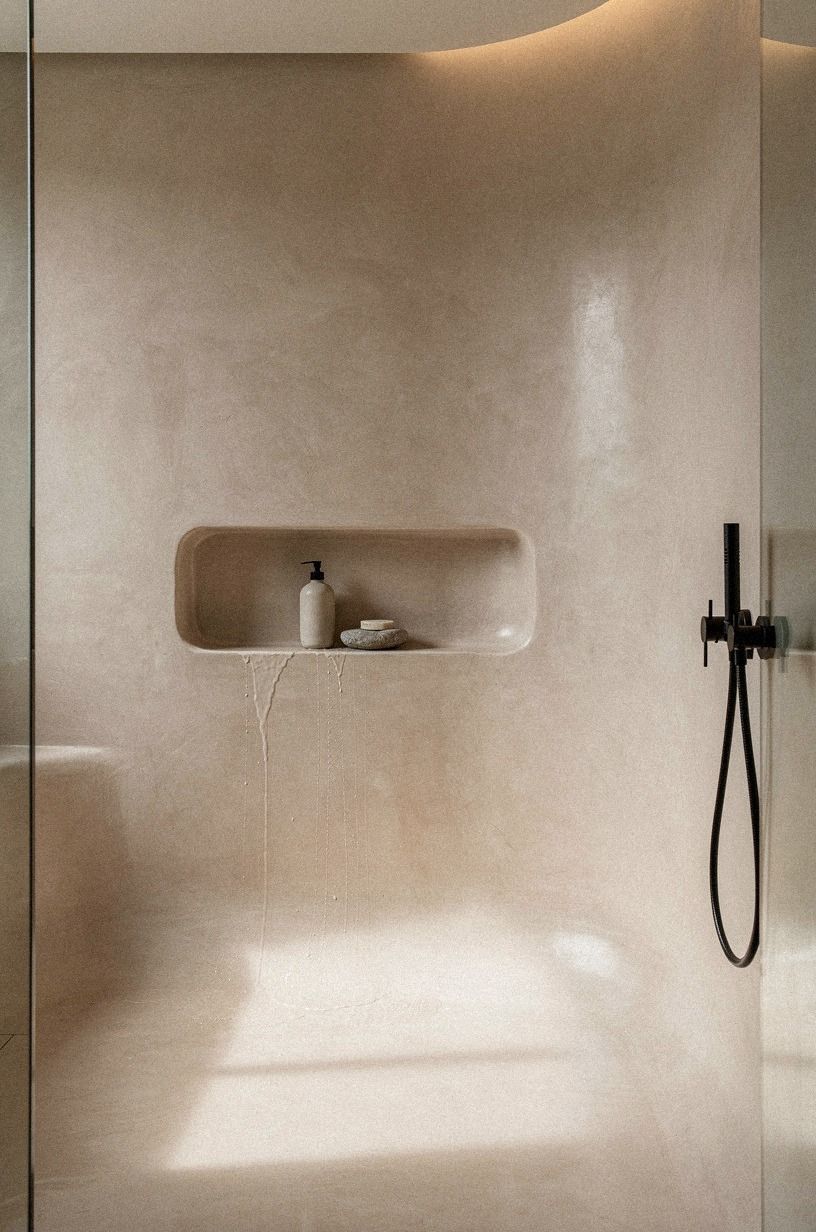
A recessed niche lined in the same plaster finish can look seamless in the best sense of the word, though the waterproofing behind it can’t be casual. Your niche should be properly sloped so water leaves rather than sitting in the back corner.
Tiny detail. Very real consequence.
Use charcoal tile inside the niche and bring in brass through the trim or hardware. Keep the washed Belgian linen outside the direct splash zone as a towel or vanity accent. That dusty rose, charcoal, and brass combination gives the room contrast without interrupting the plaster.
I’d skip a niche packed with five matching dispensers. Your shower isn’t a boutique shelf. One amber bottle, one bar dish, one clean cloth, and the plaster can do its job.
10Let a plaster shower borrow warmth from the floor
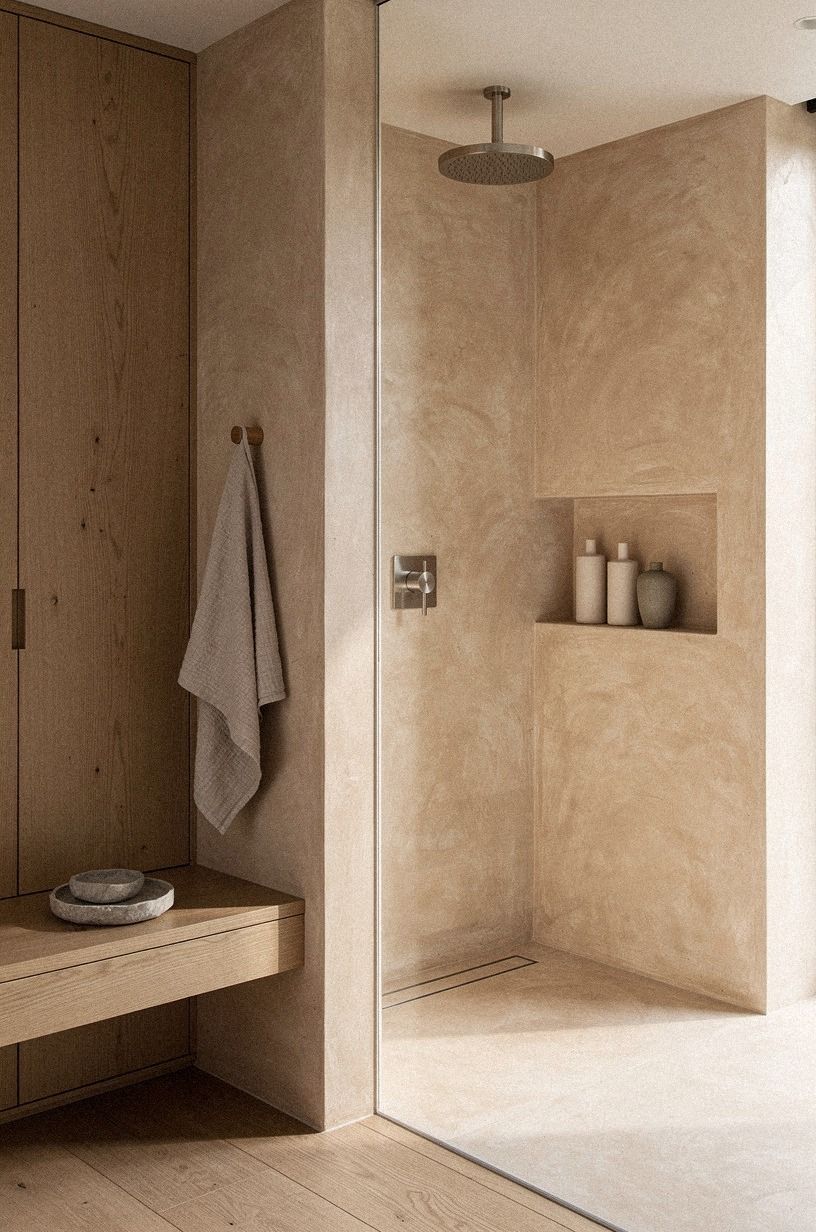
Your shower walls don’t live alone. Pull one undertone from the floor into the plaster mix, and the room looks gathered instead of assembled. A warm-white plaster with camel accents and restrained black details works beautifully beside a simple stone floor.
If your toilet sits nearby, preserve at least 21 in of clearance in front of it. That practical measurement matters more than squeezing in a decorative stool. An organic bouclé seat can add softness without introducing another hard pattern.
But don’t chase a complicated checkerboard floor just because it’s everywhere online. The plaster has movement already. Your floor should support it, not compete for the first look.
11Try Venetian plaster around the tub before committing to wet walls
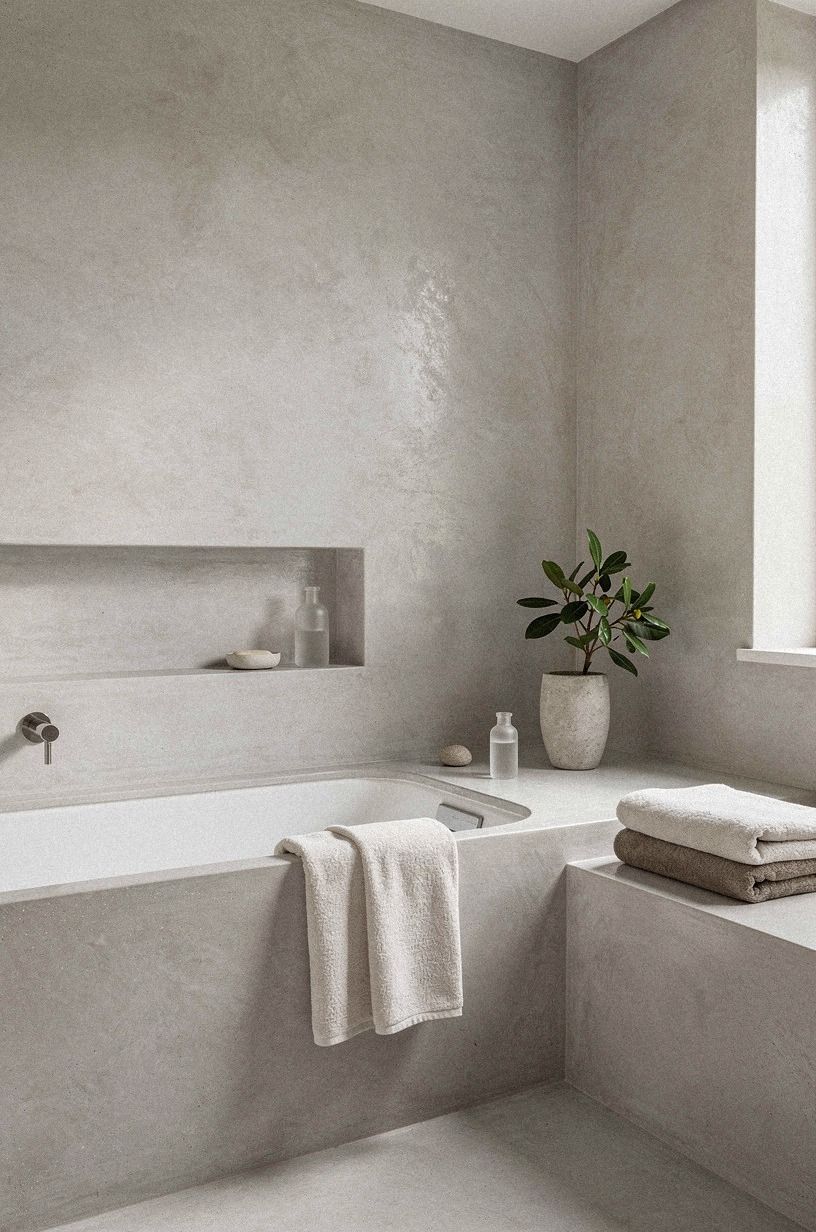
Not ready to put plaster inside the shower? Use it around the tub or on the vanity wall first.
Your room still gets that soft, hand-troweled character, and you can learn how the finish behaves in steam before taking it into direct spray. It’s the sensible trial run.
A standard tub is 60x30 in, which gives you a generous wall plane for a backdrop of Nero Marquina black marble with white veins. Midnight blue, copper, and ivory accessories can soften the contrast, while a compact vanity keeps the room from feeling formal.
I went back and forth on this approach because it sounds less bold. Turns out, it often looks better. The shower can remain tiled and practical while your plaster wall gives the whole bathroom a warm, intimate center.
Read why Venetian plaster makes a bathroom look effortlessly elevated for the wider-room version of this choice. Your first plaster surface doesn’t need to be your riskiest one.
12Make the budget visible before you choose finishes
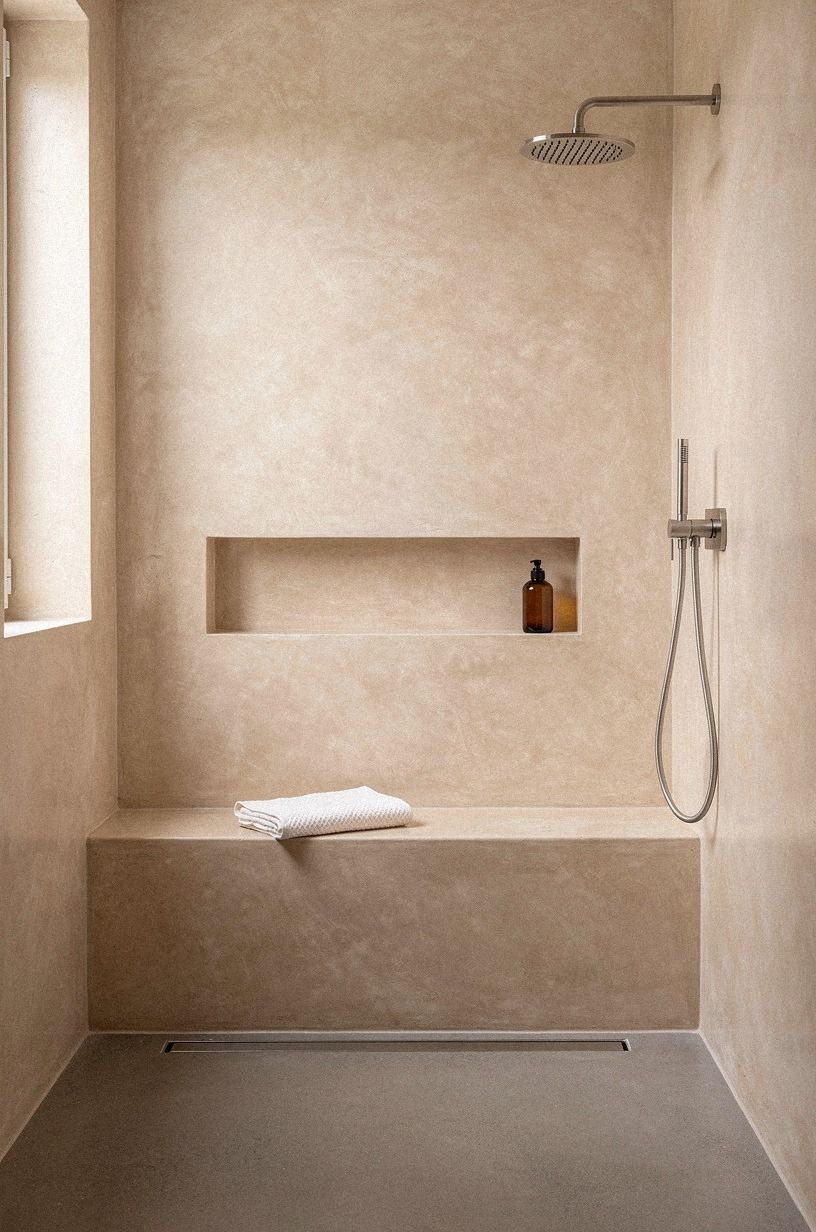
A Venetian plaster shower project can sit inside a larger bathroom refresh, so decide your spending tier before you fall for the sample board. Your money goes furthest when you keep plumbing where it is and spend on the surface your eye meets first. I’d protect the waterproofing budget before buying a fancy mirror.
For your own plan, put the shower finish, topcoat, and labor in the same column. Then you’ll see whether a deep-pile mohair velvet stool outside the splash zone and fresh paint can carry the rest of the room this year. Your cheapest win may be keeping the existing vanity at its 32-36 in height and changing the wall around it with sage green, warm cream, and natural wood.
13Choose a lived-in finish over a flawless showroom sheen
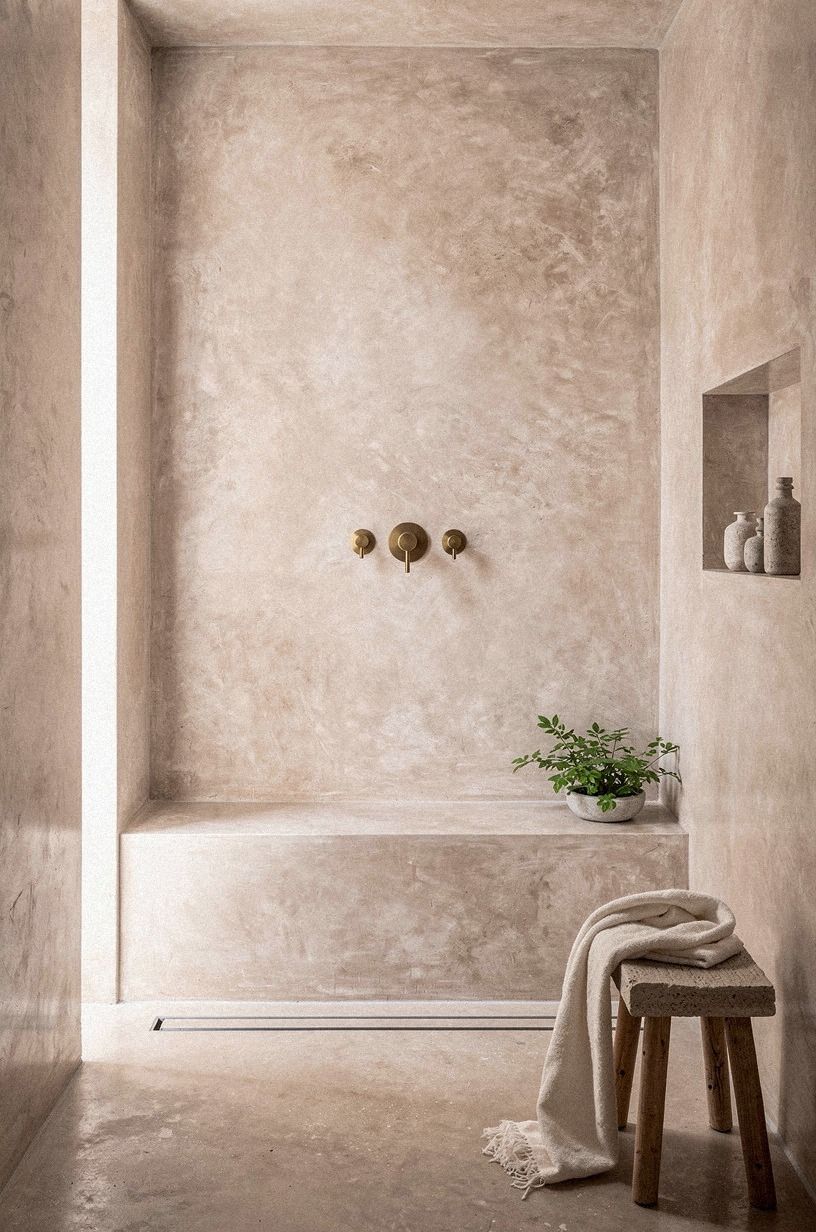
The best plaster shower ideas leave room for handwork. You want trowel marks, cloudy mineral shifts, and a surface that looks slightly different after the steam clears. A perfectly uniform application can feel modern, sure, but it loses the point of Venetian plaster.
Ask for a sample with a matte, waterproof finish beside Carrara marble with subtle gray veining. Terracotta, stone, and olive accents can make the palette feel settled without adding gloss. Your eye should see depth before it sees shine.
I’d rather have a subtle imperfect wall than a glossy “luxury” finish that looks stamped out. Your bathroom is used, wet, and human. Let it show a little personality!
Why I’m picky about plaster in a shower
I love Venetian plaster in bathrooms because it pushes back against the idea that every wet room has to be hard, bright, and endlessly scrubbed. For years, the default was white tile, chrome, and enough reflected light to make you feel like you were brushing your teeth in a pharmacy.
It’s practical, I get it. But practical doesn’t have to mean emotionally blank.
The part I learned the hard way is that plaster isn’t a shortcut. I once focused so much on the finish sample that I barely asked about the waterproofing layers underneath.
That was backward. The wall looked rich on day one, then I noticed a dull patch near the controls after a few humid showers.
Nothing catastrophic, but enough to make me realize that the glamorous part is only as good as the boring prep behind it.
So here’s my decision frame for you: use Venetian plaster inside the shower only if you’re willing to pay for the system, not just the look. That means a qualified installer, compatible substrate, and the specified sealer. If your budget is tight, place plaster on the vanity wall, around the tub, or just beyond the direct splash line.
You’ll still get the calming mineral texture without turning your morning routine into an anxious inspection.
And I don’t think every bathroom needs it. A tiny rental with old grout may need a deep clean, a better curtain, and light first.
But in a bathroom where you want warmth without a rustic cabin costume, plaster is hard to beat. It makes tile feel less cold, brass feel less precious, and your whole routine a little more grounded.
A Few Things Worth Answering
What is the best Venetian Plaster Shower Ideas (Yes, It Can Handle the Wet) for a small bathroom?
A pale plaster shower with one tile halo is the strongest small-bathroom choice because it keeps your sightline open. Sherwin-Williams Sea Salt SW 6204 and a slim IKEA GODMORGON mirror cabinet give you softness plus storage without making your room feel busy.
Where can I buy Venetian Plaster Shower Ideas (Yes, It Can Handle the Wet) pieces on a budget?
You can find budget bathroom layers at IKEA, Target, and Wayfair, then hunt Facebook Marketplace or thrift shops for solid mirrors and stools. Your best buy is often a real wood frame, not a matching set of new accessories. See Venetian plaster bathroom inspiration before you shop.
How much does a Venetian Plaster Shower Ideas (Yes, It Can Handle the Wet) makeover cost?
A cosmetic bathroom makeover can run about $200 to $1,200, while a larger wet-area redo rises with tile, plumbing, and labor. Keeping your existing layout is the free planning decision that protects your budget. Your contractor should price waterproofing separately.
Can I create a Venetian Plaster Shower Ideas (Yes, It Can Handle the Wet) on a budget?
Yes, and you can start outside the direct spray zone. A painted vanity wall, a cleaned grout line, and new warm bulbs cost far less than rebuilding a shower. Your existing mirror, folded linen towels, and one secondhand stool can carry the look.
Is a Venetian Plaster Shower Ideas (Yes, It Can Handle the Wet) worth it in a small space?
Yes, it’s worth it when you use it as one continuous visual plane instead of adding competing patterns. Soft wall movement makes a small bathroom feel less boxed in. Keep your vanity narrow and your shower glass clear so the finish remains visible.
Is a Venetian Plaster Shower Ideas (Yes, It Can Handle the Wet) a good idea for a rental?
Yes, if you keep the plaster to removable or owner-approved surfaces outside the shower. Peel-and-stick accents, a tension rod, and removable lighting changes give your rental warmth without risking the deposit. Your direct wet wall should stay as the landlord built it.
Where I’d Start First
If I had to pick one, I’d start with a warm mineral plaster sample. You can’t judge this finish from a sample alone; your bathroom’s steam and light decide whether it reads like stone or drywall. Pin the sample plan for later and revisit these Venetian plaster wall ideas.