
 by
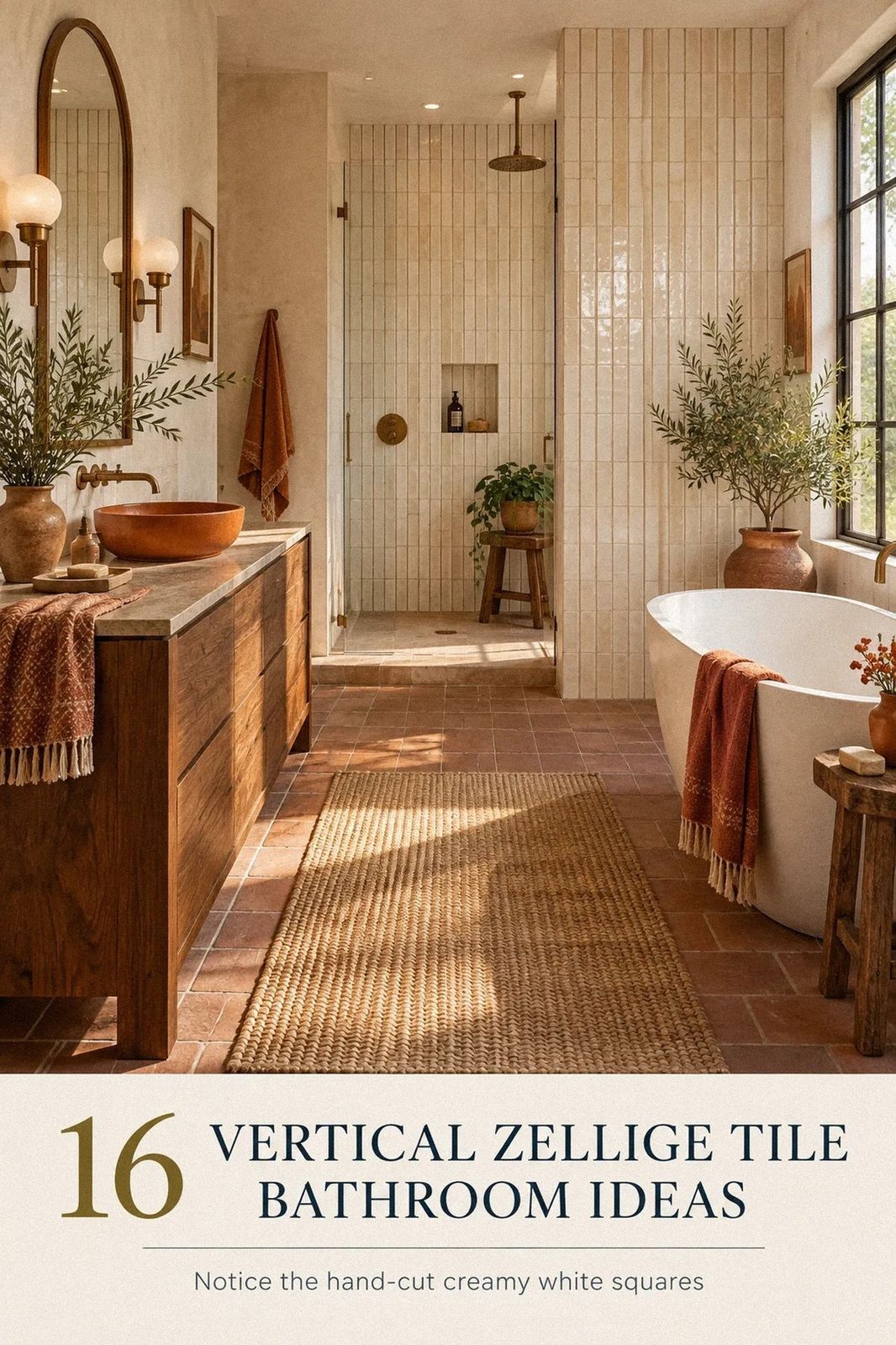
by Vertical zellige tile bathroom ideas can stretch the walls when the tile runs past eye level and the grout stays quiet. I once stopped a backsplash too low, and the room looked shorter overnight. Handmade edges, narrow joints, and one strong sightline fixed it. Your bathroom doesn’t need more decoration. It needs height.
- Run Vertical Lines from Vanity to Ceiling
- Build The One-Inch Rhythm
- Stack Warm White Above a Dark Floor
- Run Vertical Lines from Vanity to Ceiling
- Build The One-Inch Rhythm
- Stack Warm White Above a Dark Floor
- Could a Narrow Shower Take the Full Wall?
- Frame the Mirror with a Tile Column
- Swap Beige for Farrow & Ball Hague Blue
- Use The Three-Height Light Stack
- Turn a Tub Wall into a Tall Backdrop
- Why Choose Zellige Tiles on Floors and Walls?
- Anchor a Beige Vertical Tile Bathroom with Wood
- Hang the Tile Wall Bathroom Beyond the Wet Zone
- Choose Cream Over Gray for Softer Height
- Paint the Ceiling, Keep the Grout Quiet
- Mix Handmade Green with Brushed Brass
- Borrow The Small-Bathroom Sightline Rule
- Choose Full-Height Tile Over a Short Backsplash
1Run Vertical Lines from Vanity to Ceiling
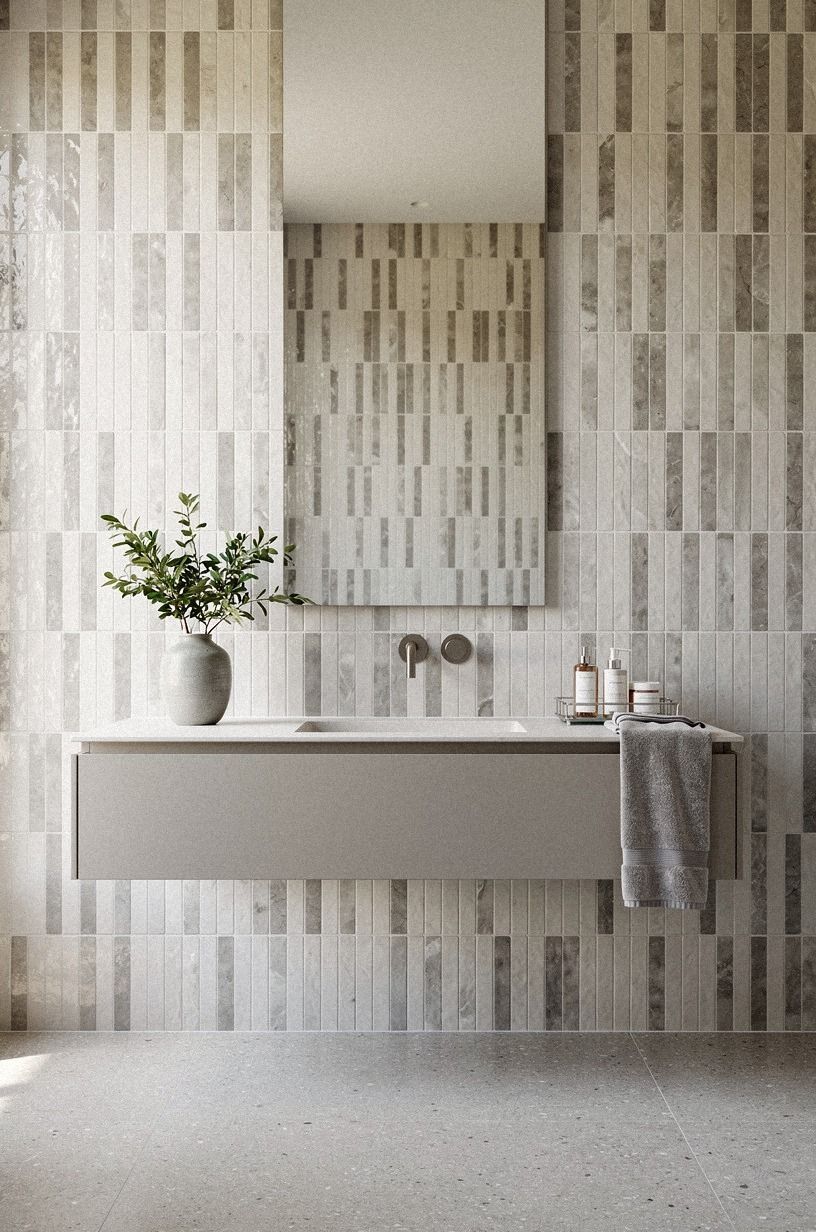
Run dusty rose zellige tile from the vanity counter to the ceiling behind your sink. The upward joints pull your eye past the mirror, especially when your vanity sits below the standard 32 to 36 inches. I’ve used this move in a narrow bath, and the wall looked taller before the lighting was even switched on.
Choose a tile with dusty rose variation and a softly glazed surface that catches morning light. Your mirror should overlap the tile slightly instead of floating in a painted gap. Don’t stop the tile at the mirror’s top edge, because that creates a hard horizontal line and cuts the height you’re trying to build.
Keep the vanity simple. A charcoal vanity with unlacquered brass hardware can work with the rosy surface, while a bulky cabinet may make your wall feel heavier. For a related approach, see these zellige tile bathroom ideas for handmade glossy character, then choose one vertical field for your own room.
2Build The One-Inch Rhythm
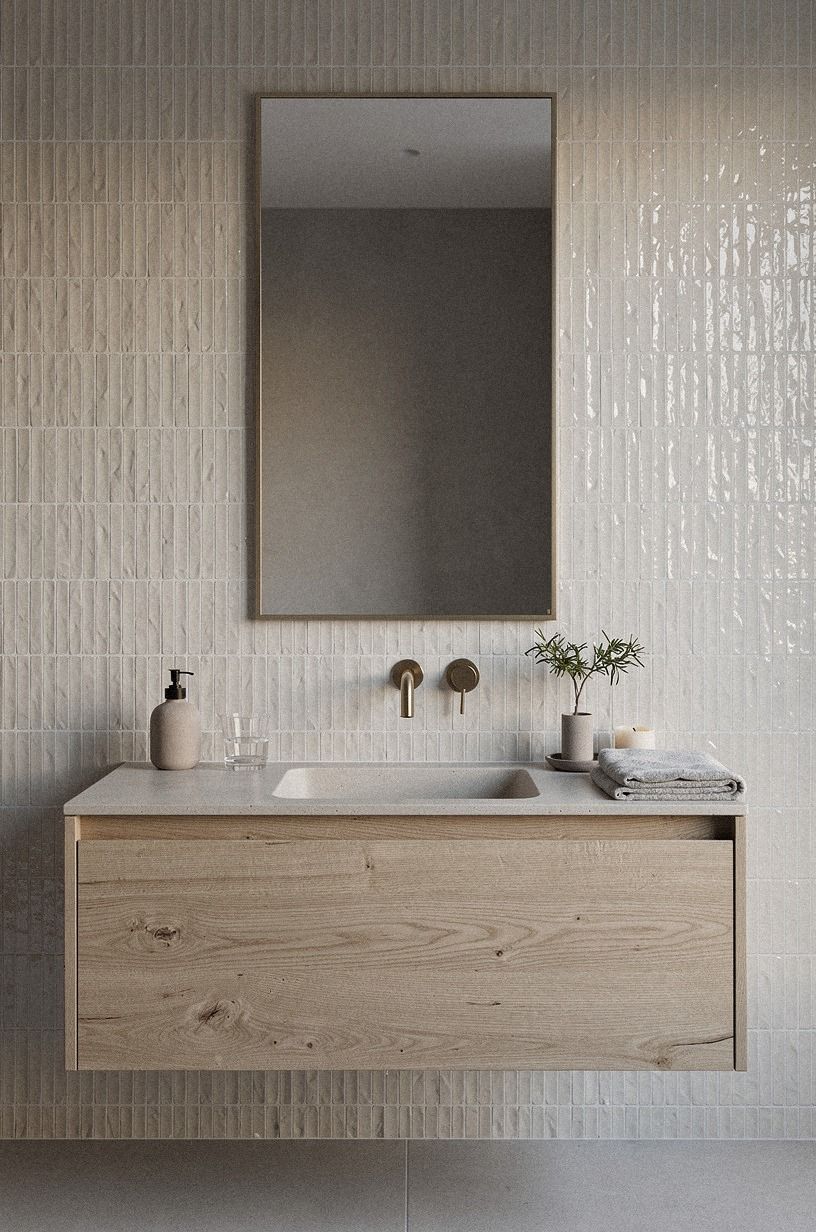
The One-Inch Rhythm uses narrow vertical tiles with grout lines that stay visually calm. Your eye reads the repeated lines as height, but only if the joints don’t become a checkerboard. A 2-by-8-inch or similar vertical format can feel airy, while a busy contrast grout will make your wall look chopped up.
Use warm white tile with camel and black accents, then bring oversized-chip terrazzo to the vanity or floor. I’d skip crisp white grout here.
It’s bright, sure, but it turns every small irregularity into a stripe and makes your bathroom feel more commercial than collected. Your goal is gentle movement, not a grid shouting from the wall.
Try the rhythm behind a 36-inch vanity, around a recessed shelf, or along the full shower wall. You’ll want the tile courses to line up with the vanity edges where possible. That small bit of order keeps the finish from feeling careless, and your room will still retain the gentle variation that makes the layout worth choosing.
3Stack Warm White Above a Dark Floor
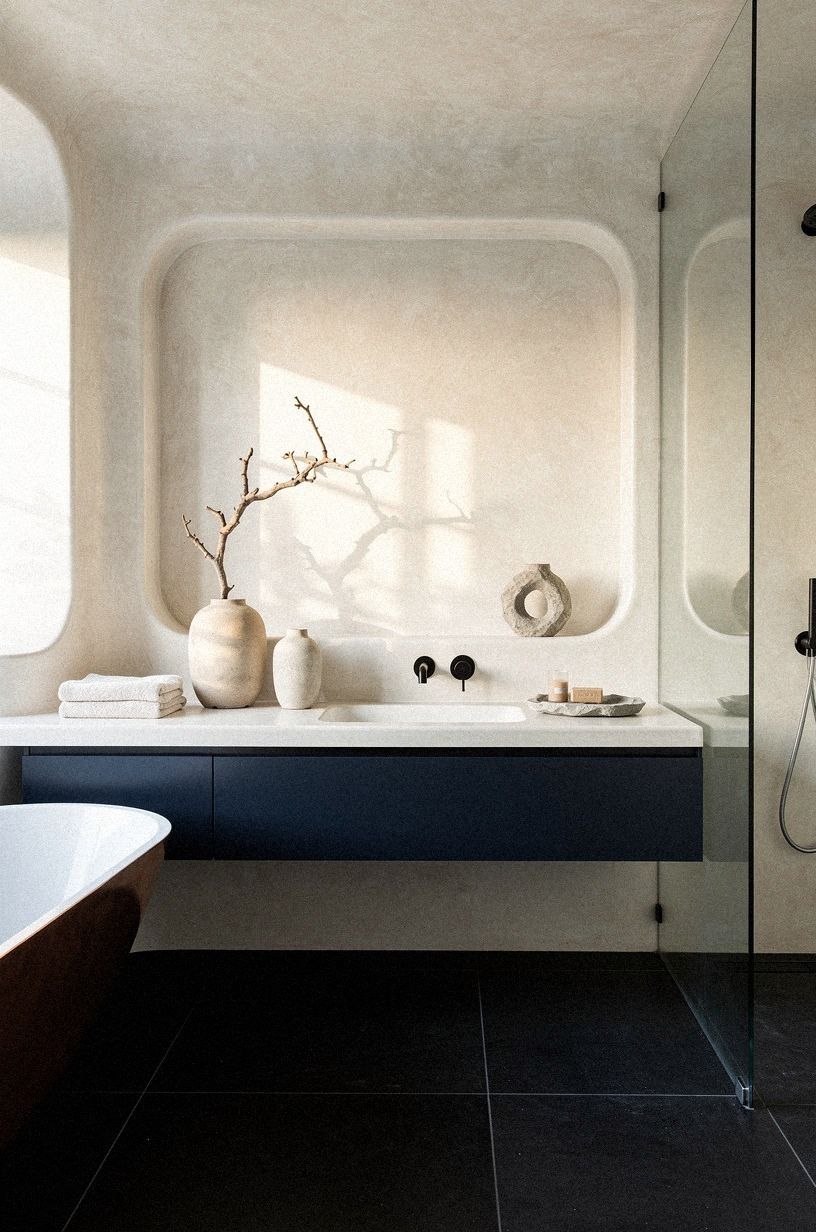
Pair midnight-blue, hand-applied Venetian plaster walls with an ivory floor and copper hardware so your bathroom gains height without losing weight.
4Could a Narrow Shower Take the Full Wall?
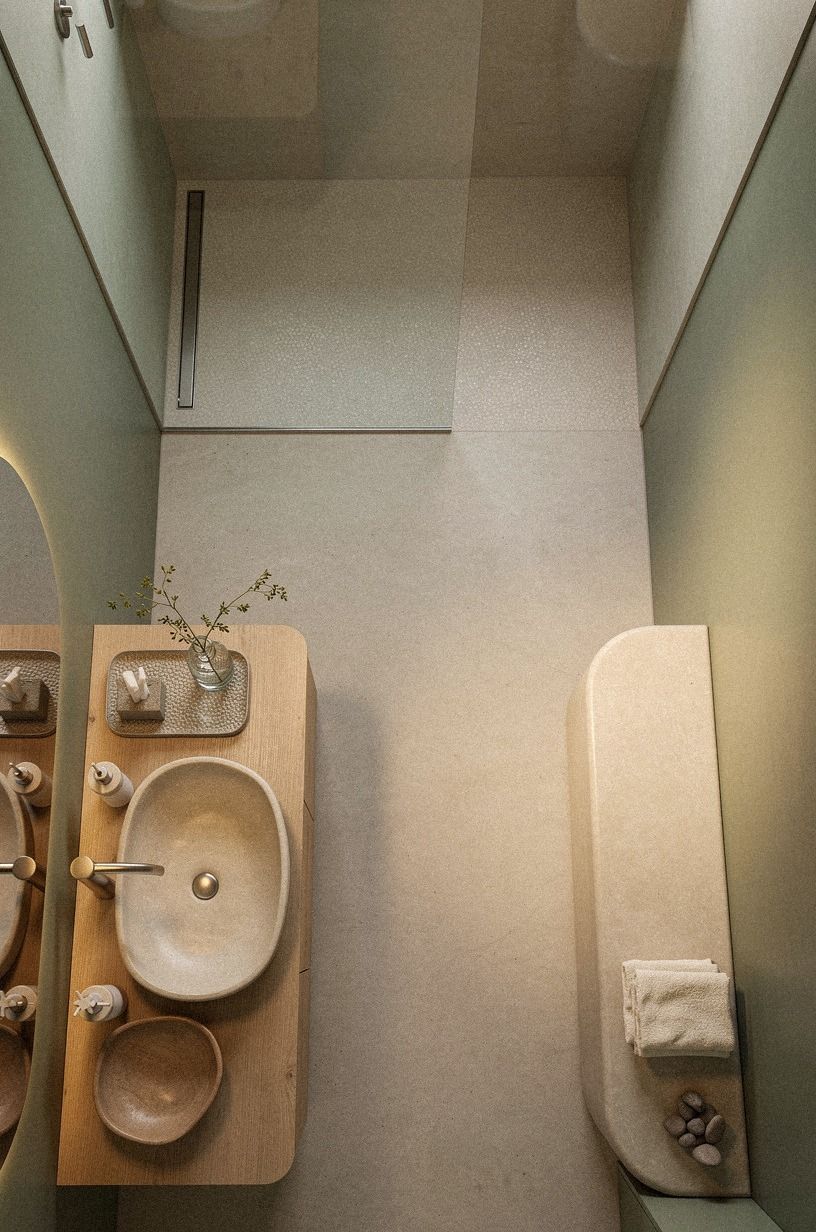
Yes, a narrow shower can take a full vertical wall, and that’s often the strongest choice in a small bathroom. Why break the wall into separate zones when one continuous surface can make your shower feel taller and wider? Run the sage green finish from the shower floor to the ceiling, then repeat the same finish behind the vanity.
Choose sage green tile if your room has limited natural light. Its variation will catch small shifts of light as you move, so the surface won’t read as flat. Add natural wood and a small shagreen accent, while keeping the fixtures quiet because too many shiny finishes can compete with the tile.
I’d avoid a short accent strip at shoulder height. It creates a stripe across your sightline and makes the ceiling feel lower. If you’re planning a spa-like palette, these simple elegant zellige tile bathroom ideas show how one continuous wall can feel calm without becoming bland.
5Frame the Mirror with a Tile Column
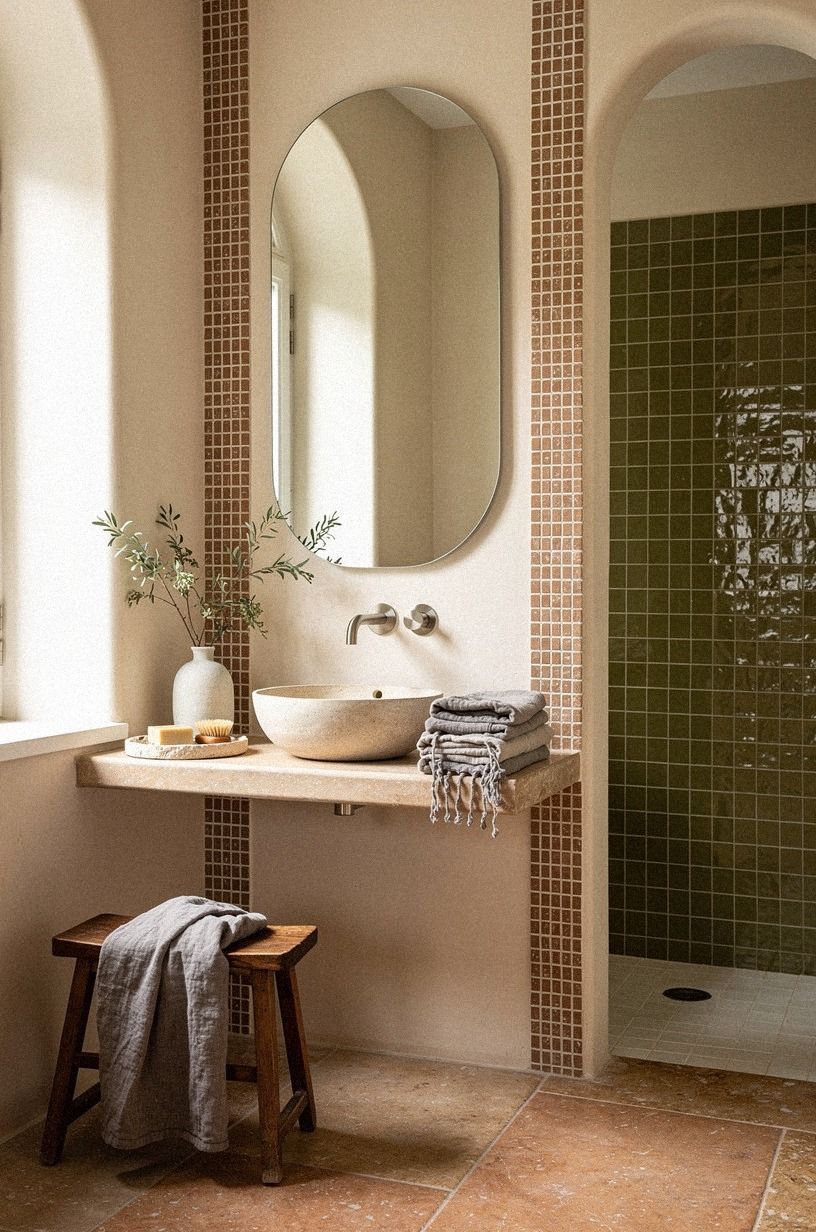
Frame your mirror with a slim vertical tile column, then leave the neighboring wall painted.
6Swap Beige for Farrow & Ball Hague Blue
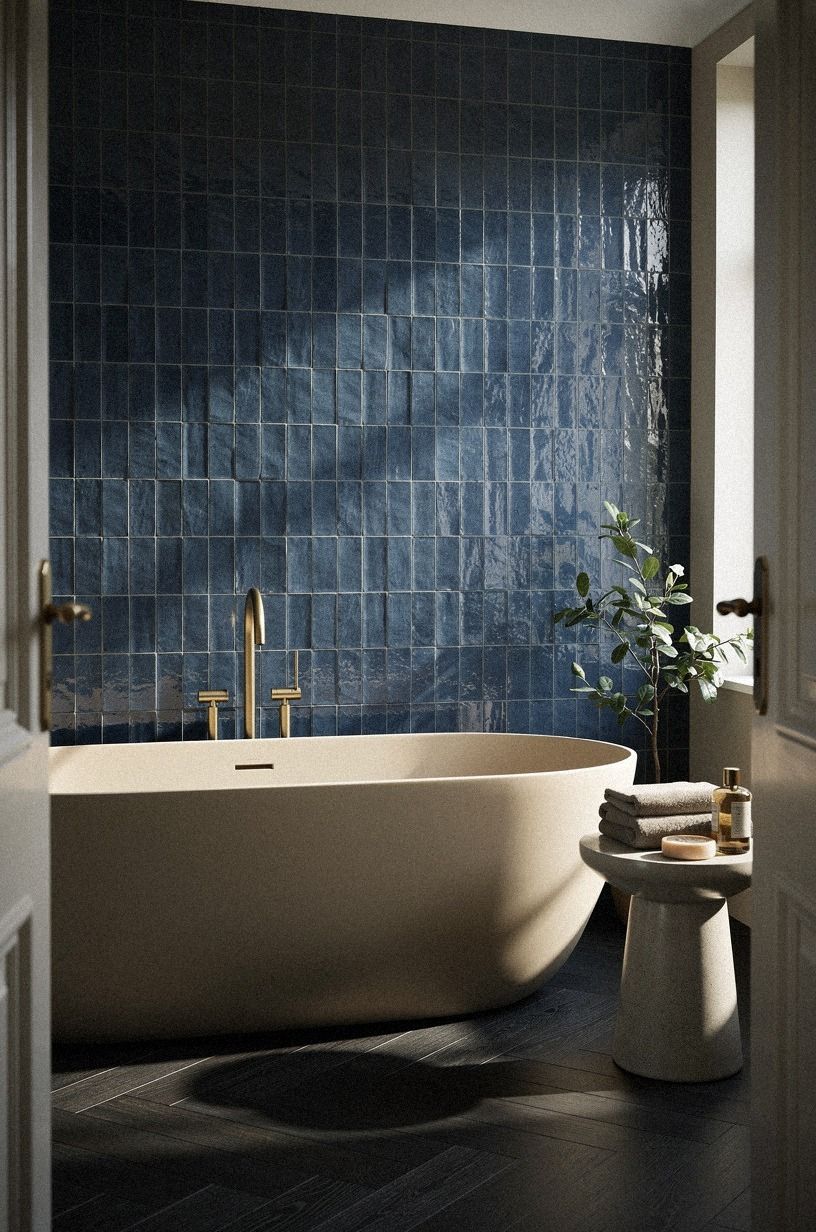
Use a clay-toned Farrow & Ball shade on the painted walls around a vertical zellige feature. The earthy color makes linen and aged brass feel warmer, giving your bathroom a grounded, elegant edge. Your room doesn’t need to be large for this to work, but it does need warm bulbs and a finish that can handle humidity.
Choose clay-colored tile with subtle linen variation instead of cold white. I’ve tried stark tile beside warm paint, and the pairing looked harsh under overhead lighting. A softer surface keeps your bathroom inviting after sunset, when pale finishes can otherwise turn flat.
Keep your upholstery tactile. Organic bouclé on a small stool works with the clay palette because its nubby texture adds a soft counterpoint to the tile. If you’re unsure about using a deeper wall color, study these neutral zellige tile bathroom ideas for soft earthy calm, then test your paint beside the actual tile.
7Use The Three-Height Light Stack
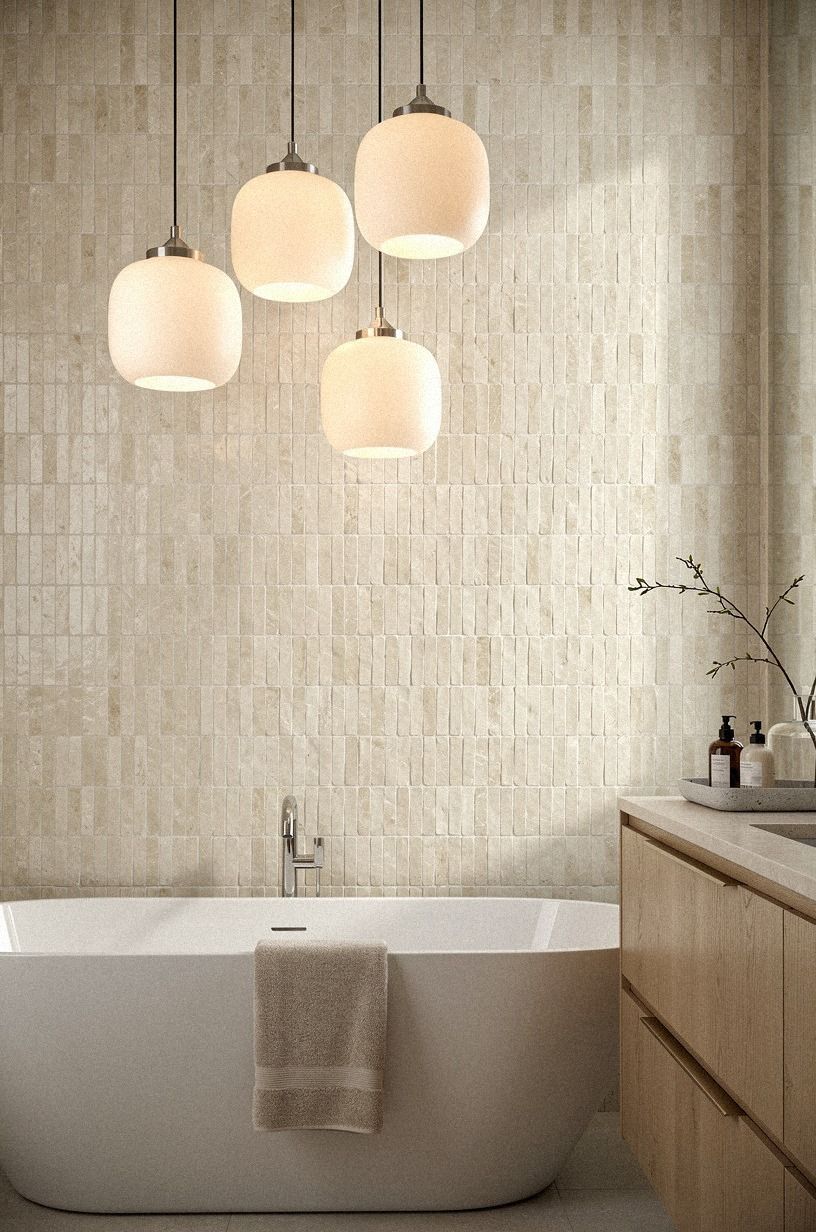
The Three-Height Light Stack gives your vertical tile three points of reflection: a low vanity glow, a mirror-level glow, and a high ceiling wash.
8Turn a Tub Wall into a Tall Backdrop
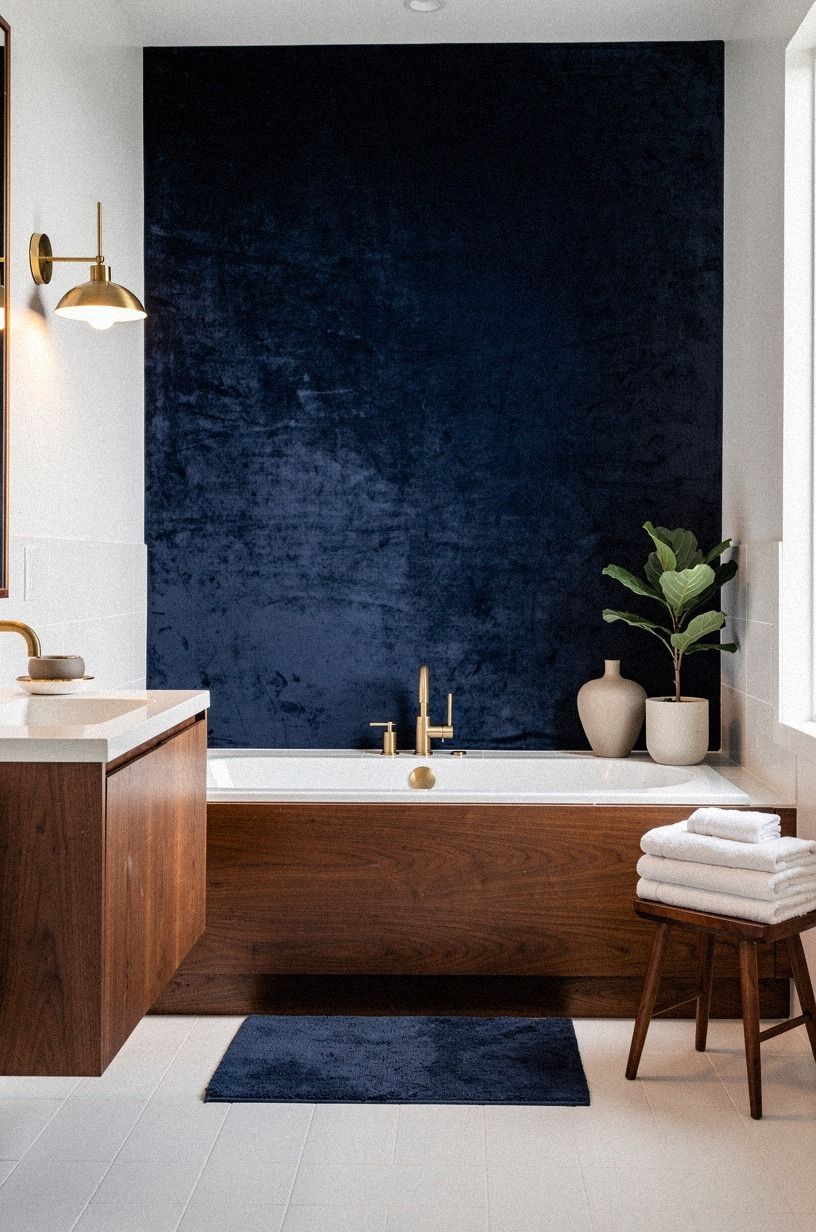
Treat the tub wall as a tall backdrop rather than a narrow splash zone. Run navy and white tile from the tub deck to the ceiling, keeping the sides consistent so your standard 60-by-30-inch tub feels tucked into one generous vertical plane. The finish will look composed instead of stark when you pair it with walnut and soft textiles.
Choose a tile with navy, white, and restrained tonal variation. Your bath curtain or glass panel should stay visually quiet, because a patterned curtain would interrupt the wall’s upward pull. I’d choose a simple linen-look curtain over a glossy plastic panel if your layout allows it.
And if your tub wall faces the doorway, make that the one surface where you spend more of your budget. Deep-pile mohair velvet on a small stool can echo the richness without turning the bathroom into a theme. See these pink zellige tile bathroom ideas for a soft warm wash for more color direction.
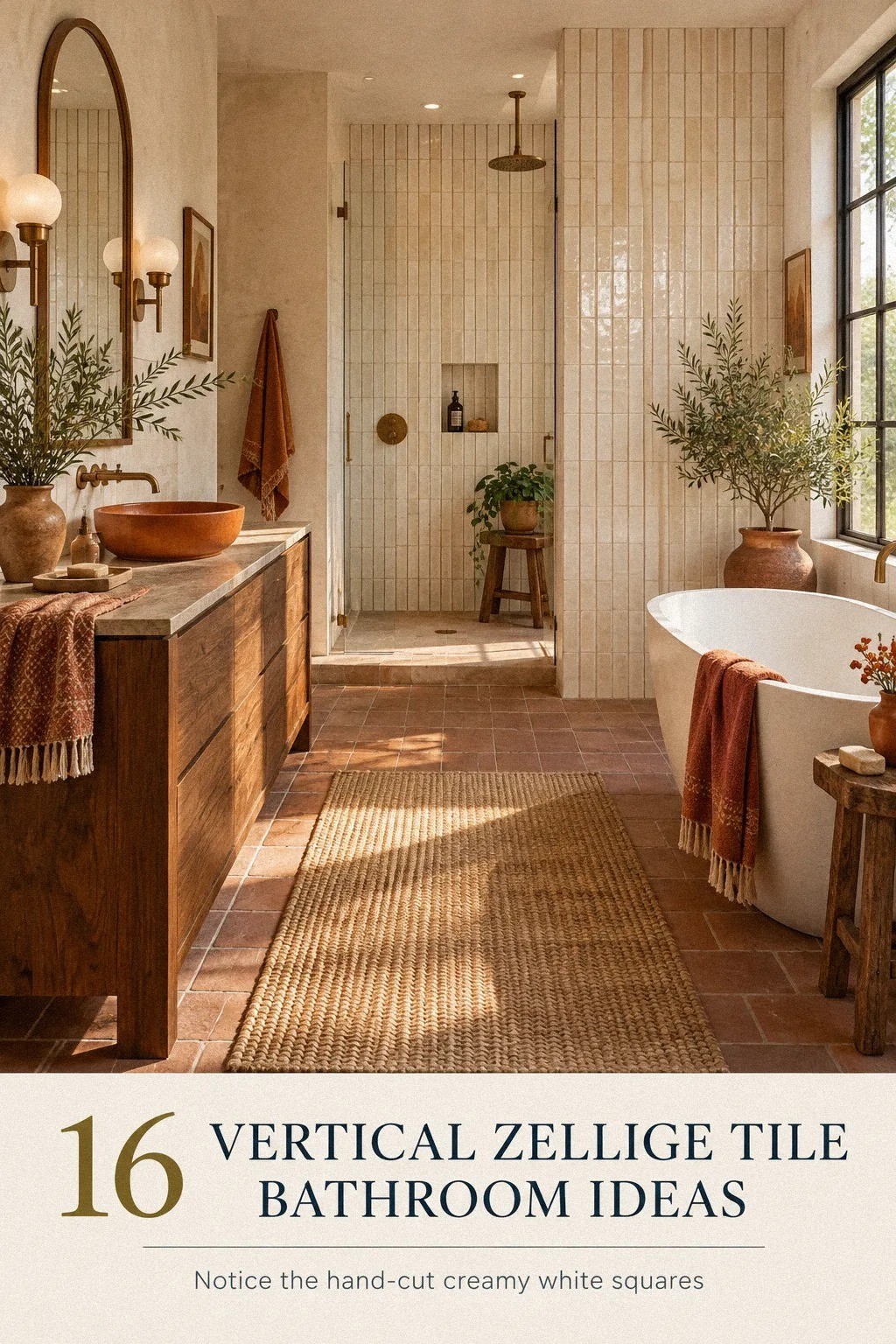
9Why Choose Zellige Tiles on Floors and Walls?
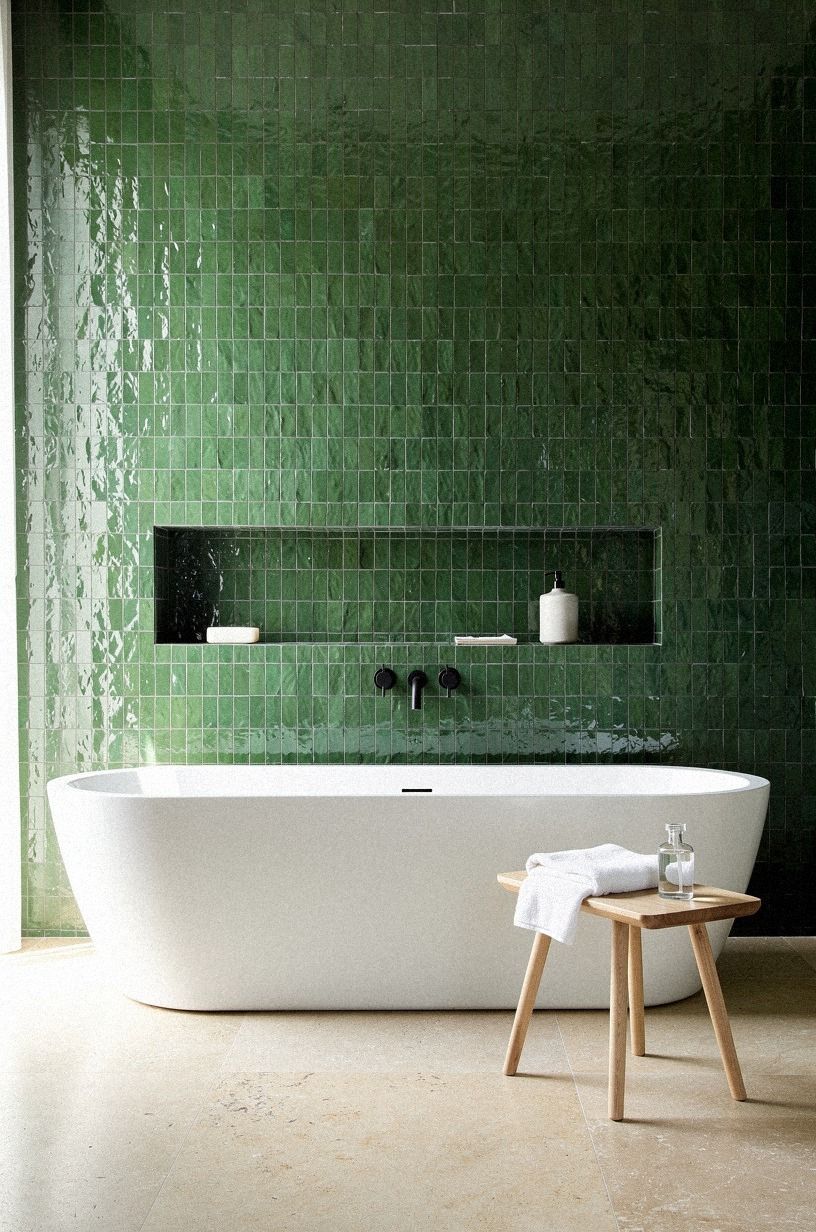
Choose zellige for the walls and a quieter marble for the floor when you want the room to feel tall, not busy. Zellige’s handmade edges create enough movement above eye level. Your floor needs traction and visual rest, so I’d use Carrara marble with subtle gray veining underfoot instead of repeating the same glossy surface.
A hand-glazed emerald zellige wall can work with cream and Carrara marble, especially if your vanity has a warm finish. The green will shift as light changes, while the marble stays steady. I went back and forth on green in a windowless bathroom, but the right warm bulb kept it rich rather than gloomy.
Your grout should sit close to the tile color. Strong white lines may make the wall look taller from far away, but close up they can feel restless. If you want a cleaner layout, compare these square zellige tile bathroom ideas for a clean grid-like look before committing to a long vertical format.
10Anchor a Beige Vertical Tile Bathroom with Wood
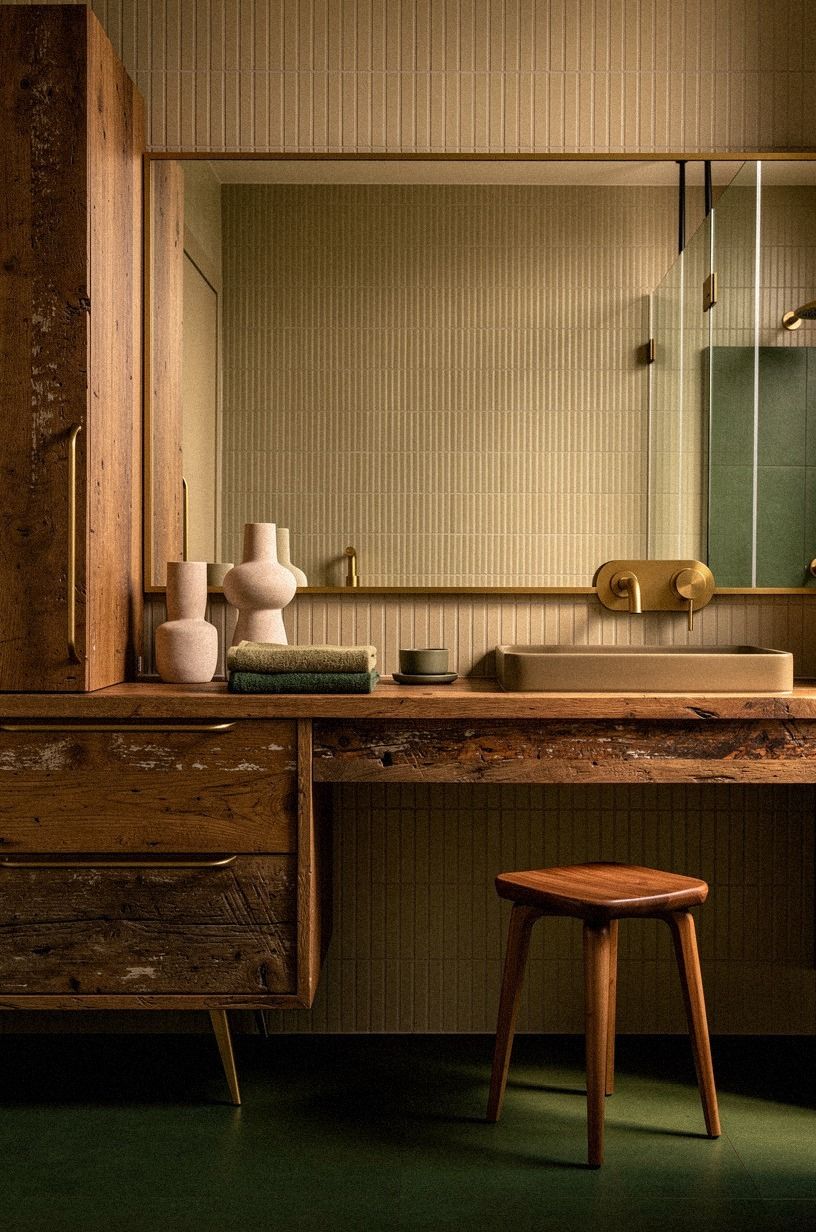
A forest-green vertical tile bathroom needs a material with enough grain to keep it from feeling flat. Add reclaimed weathered teak beneath the tile, then repeat the wood in one framed mirror or a narrow open shelf. Your eye will read the wood as a horizontal anchor while the tile keeps the room climbing.
Benjamin Moore White Dove OC-17 can cover the painted portions of your wall if the green tile has a softened base. Don’t use a blue-white paint beside the forest tone.
It will make the rust accents look dull and the wood look colder. I’d rather see one careful paint sample than three expensive accessories fighting the undertone.
Keep your shelf useful. Rust-colored linen can bring in warmth without crowding your bath with furniture.
Your own room needs folded towels, a small ceramic cup, and breathing space. For a softer palette, browse these cream ivory zellige tile bathroom ideas for quiet warmth.
11Hang the Tile Wall Bathroom Beyond the Wet Zone
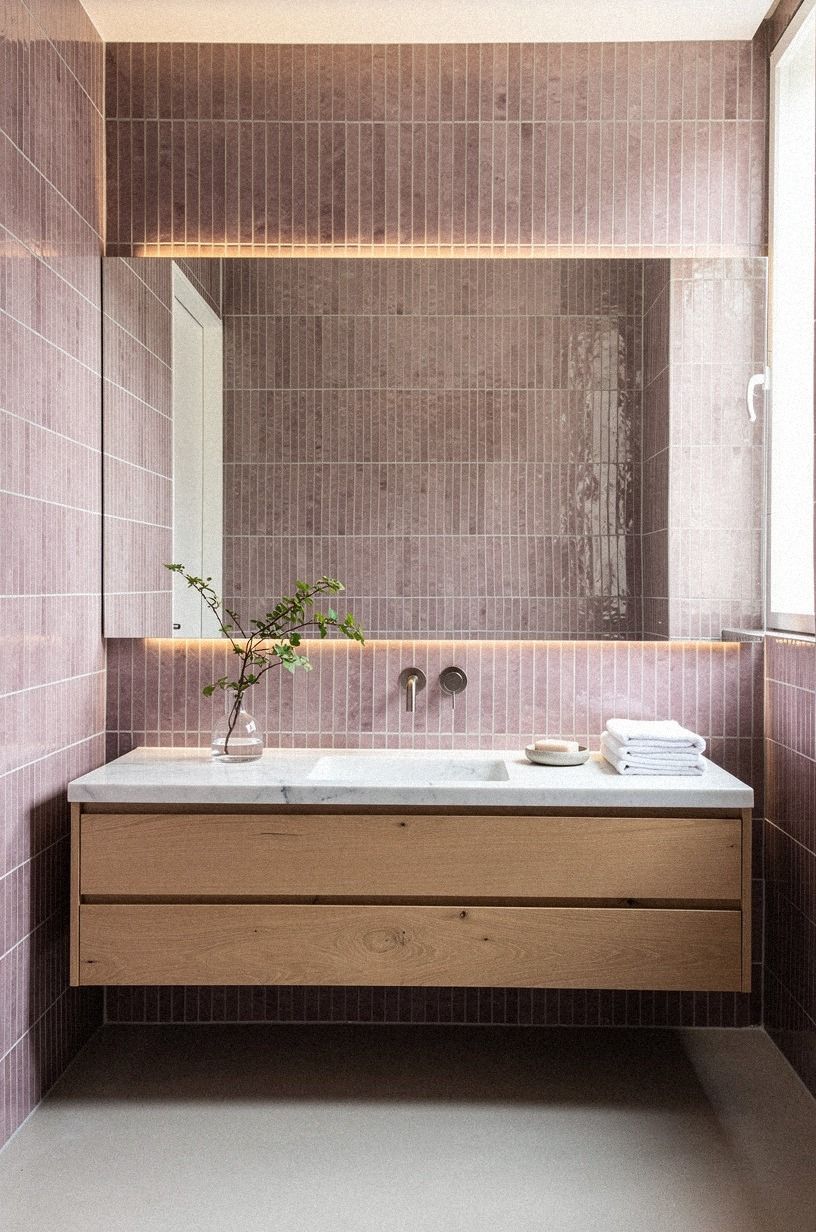
Extend the dusty rose tile-and-marble finish beyond the shower or sink so the vertical effect has room to breathe. Calacatta marble with delicate gold veining can connect the wall to warm brass details without making the room feel busy.
12Choose Cream Over Gray for Softer Height
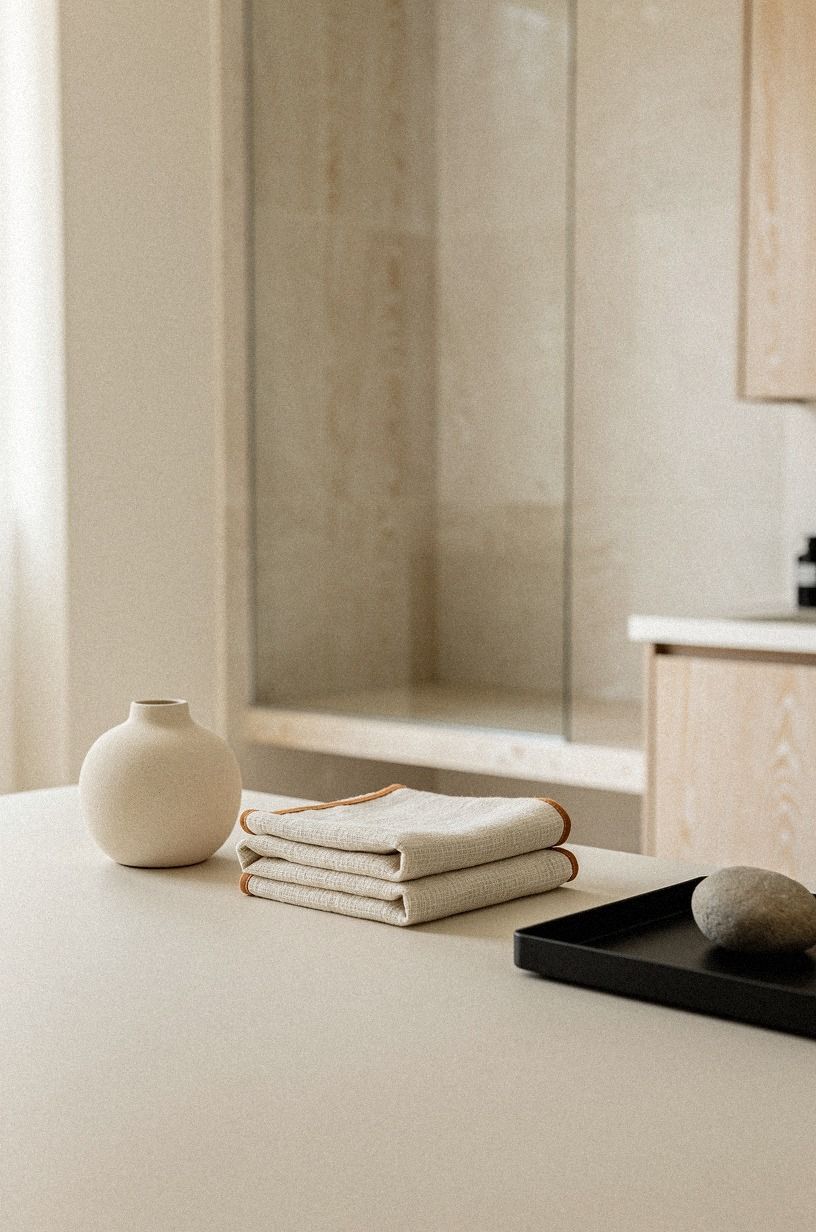
Choose warm white over gray when your bathroom has little daylight and you want the walls to feel tall and inviting. Warm white zellige tile reflects more warmth into the room, while gray can turn flat beside dark fixtures. Your vertical layout will still stretch the walls, but the color will make the height feel welcoming rather than stark.
Pair the tile with a camel-toned paint on an adjacent wall if you need a painted break. Black accents can bridge the warm surfaces and keep the palette grounded, but sample the combination first. I wouldn’t pair the tile with a cold blue-gray, because the undertones can make your bathroom look muddy.
And don’t assume every small room needs white. A warm surface can feel more expansive because it gives the eye fewer hard edges to track.
Your towels, mirror frame, and cerused white oak should repeat the warm family. For a calmer reference, use these neutral zellige tile bathroom ideas as a starting point.
13Paint the Ceiling, Keep the Grout Quiet
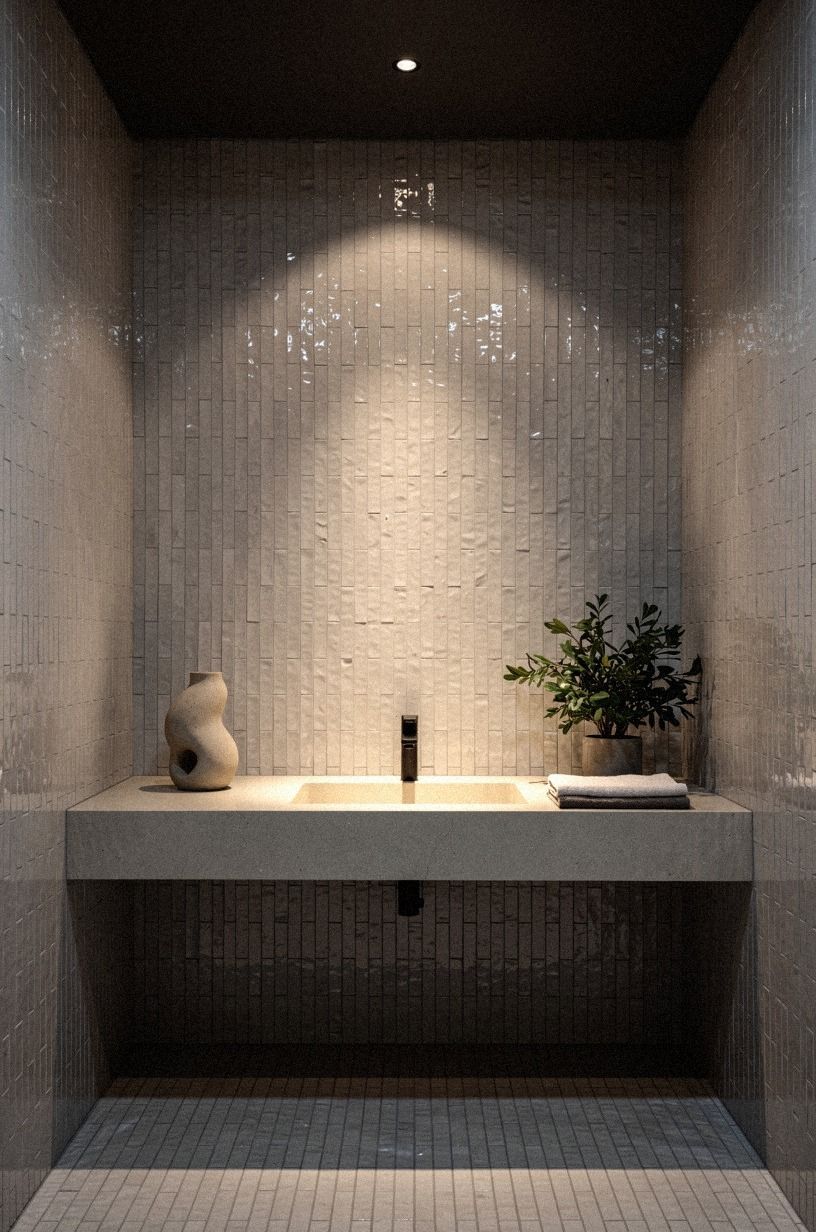
Paint the ceiling one shade lighter than the midnight-blue wall when you want the vertical finish to continue visually without covering the ceiling. Add backlit translucent onyx where you need a soft ivory glow.
14Mix Handmade Green with Brushed Brass
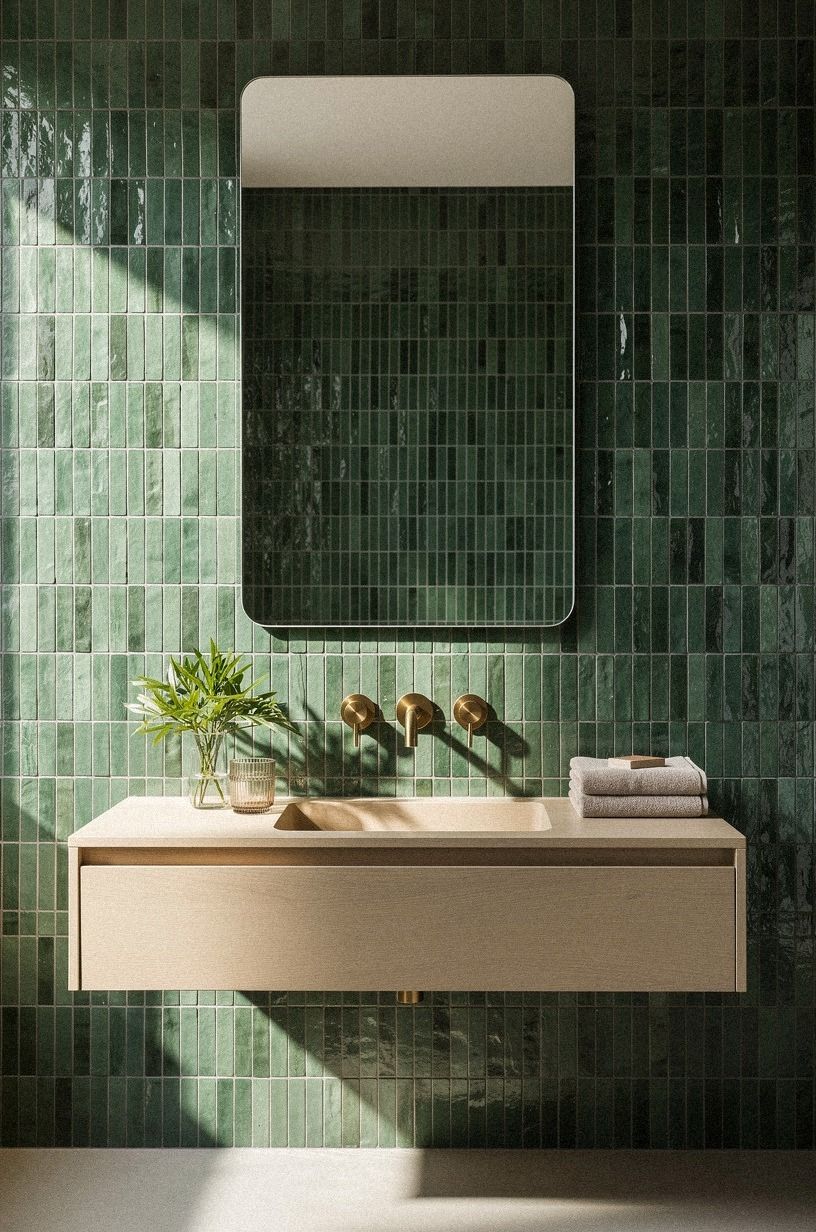
Mix handmade sage green tile with warm cream and natural wood when you want a bathroom that feels earthy and polished at once. Sage green tile looks especially rich beside warm surfaces because the glaze catches small shifts of light. Your wall will move from muted green to deeper olive depending on the hour, which gives a compact room real depth.
Use brushed brass on the faucet, mirror edge, and one towel hook. I’d skip a full matching brass package. Too much metal makes the room feel staged, while three repeated notes look deliberate.
Your vanity can stay simple, perhaps with book-matched walnut used thoughtfully for storage.
Tile prices vary widely, so plan the visual priority before you shop. A full shower wall will cost more than a vanity backsplash, and your budget should reflect the wet-zone labor.
15Borrow The Small-Bathroom Sightline Rule
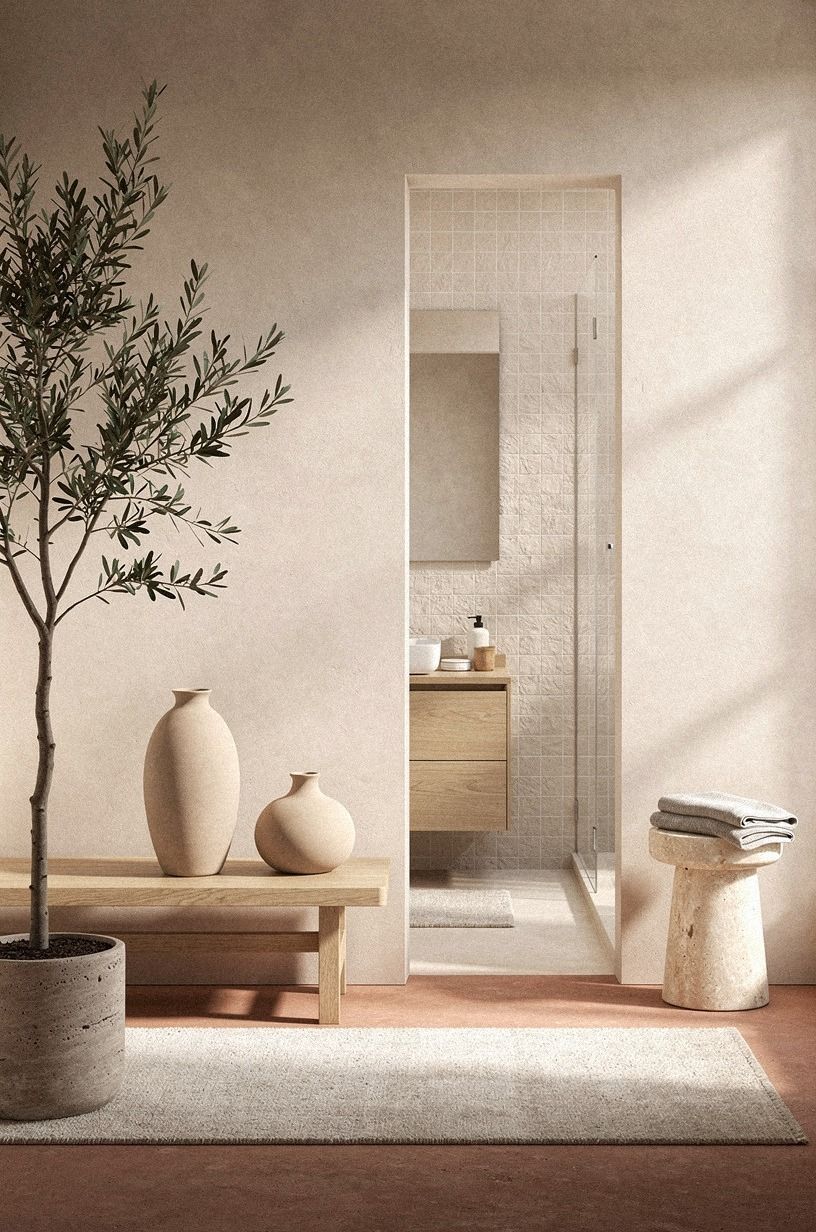
The Small-Bathroom Sightline Rule is simple: keep the first view from the doorway as uninterrupted as possible. Run terracotta tile behind the vanity or tub, then place storage on the less visible wall. Your room will feel taller because the strongest finish isn’t interrupted by shelves, hooks, or a toilet tank.
Measure the sightline from your standing height, not from the floor plan. Your mirror, faucet, and tile edge should form one clean visual path.
I’d move a narrow cabinet before I’d break that path with a decorative shelf. Storage matters, but the first five seconds in the room matter too.
Use a slim medicine cabinet for everyday products and reserve open shelves for one folded towel and a small vessel. Warm travertine adds texture without shouting, while olive accents keep the stone palette from feeling too pale. If your room feels too plain, add color through one hand towel rather than another tile pattern, then keep the wall doing the heavy lifting.
16Choose Full-Height Tile Over a Short Backsplash
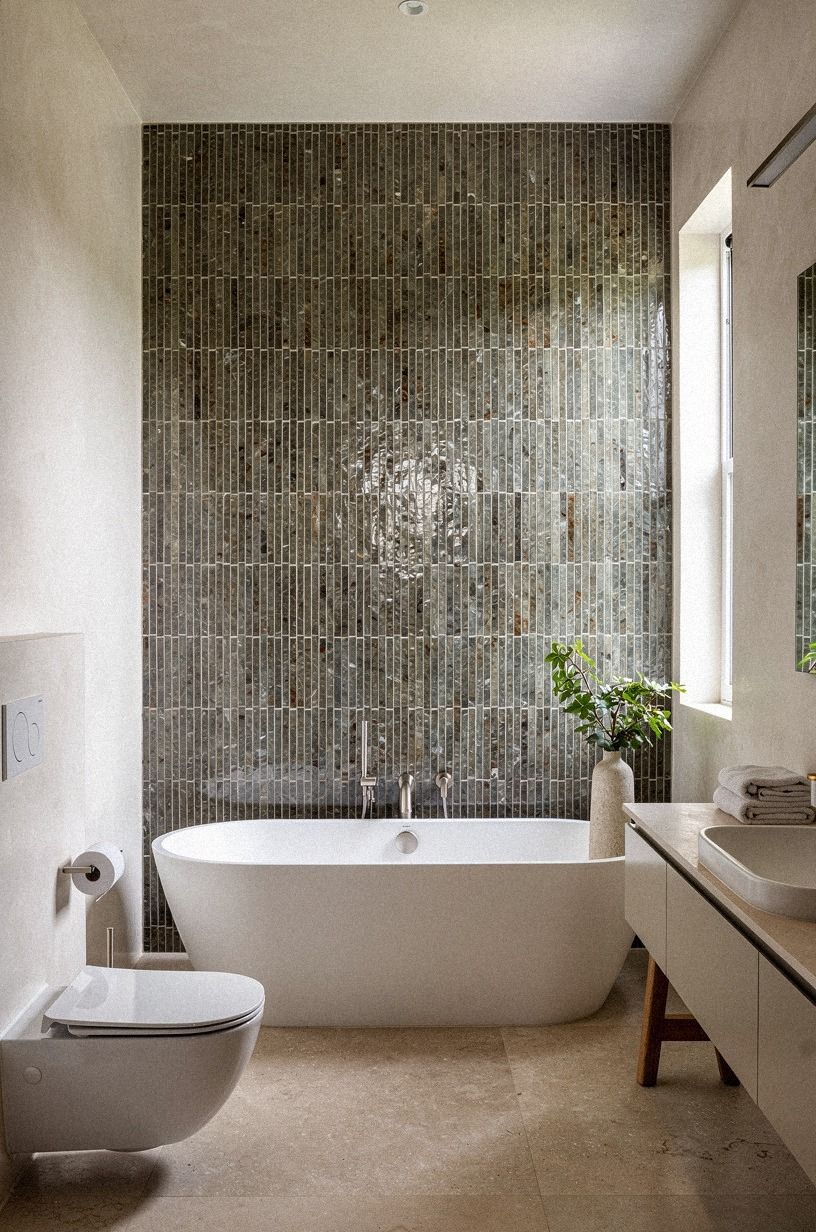
Choose full-height tile over a short backsplash when your main goal is to stretch the walls. A 4-inch strip protects paint, but it also creates a stopping line right where your eye wants to travel. Your tile can remain limited to one wall, yet still reach the ceiling for a stronger architectural effect.
Use clay-toned tile with linen accents and aged brass details if your zellige is glossy and irregular. Unlacquered brass will develop a gentle patina, giving the room a tactile balance. Your vanity height can stay within the standard 32 to 36 inches, while the wall finish carries the visual height.
I’d invest in the wall behind the vanity before upgrading a small accessory. The tile will greet you every morning, and a new soap dish won’t change the room’s proportions. If you’re choosing between colors, see these green zellige tile bathroom ideas for a richer vertical finish and save the one layout that fits your budget.
The Wall Height Principle I Keep Coming Back To
Vertical tile works because it changes the order in which you read a bathroom. First, you notice the height. Then you notice the glaze, the grout, and the fixture details.
That sequence matters. A room can hold plenty of attractive pieces and still feel short if the strongest horizontal line arrives too early.
I’ve learned to spend more time looking at the wall from the doorway than standing beside the vanity. From the doorway, you see the real composition: where the tile stops, where the mirror cuts across it, and whether the ceiling feels connected. It’s less glamorous than shopping for hardware, but it prevents expensive visual mistakes.
The handmade surface also brings a useful imperfection. Every tile catches light differently, so the wall doesn’t feel like a printed panel. Your bathroom can be tidy without becoming precious.
I’d rather see a few uneven edges and a warm bulb than a flawless gray scheme that feels cold before you’ve even touched the faucet.
The budget matters, too. A cosmetic update with paint, a mirror, a faucet, and textiles may sit within the $200 to $1,200 budget range, while a full shower and wall-tile renovation can move into the $12,000 to $30,000+ range. Those are very different projects, and your best choice depends on whether the plumbing and waterproofing already work.
There’s no prize for tiling every surface. If your room is small, one full-height wall can create more impact than three competing finishes. And if you’re renting, a removable mirror, tension rod, warm textile, and carefully placed peel-and-stick detail can still create the same upward rhythm without permanent work.
A Few Things Worth Answering
What is the best Vertical Zellige Tile Bathroom Ideas to Stretch the Walls for a small bathroom?
The best choice is a full-height cream or white zellige wall behind your vanity. It reflects light and draws your eye upward. Pair it with a simple IKEA HEMNES vanity, a thin mirror, and quiet grout for more visual height without crowding your floor.
Where can I buy Vertical Zellige Tile Bathroom Ideas to Stretch the Walls pieces on a budget?
Look at IKEA, Wayfair, and Target for mirrors, towels, and storage, then check Facebook Marketplace or a local thrift shop. There are no affiliate links here, so your savings come from comparing finishes, buying second-hand, and reusing what you own. Save this simple elegant spa bathroom guide for palette ideas.
How much does a Vertical Zellige Tile Bathroom Ideas to Stretch the Walls makeover cost?
A cosmetic update can cost about $200 to $1,200, while mid-range work with a new vanity, partial wall tile, and lighting often reaches $3,000 to $9,000. Your free upgrades include rearranging storage, repainting, changing textiles, and improving bulb warmth.
Can I create a Vertical Zellige Tile Bathroom Ideas to Stretch the Walls on a budget?
Yes, you can. Paint the ceiling, reuse your mirror, and tile only the vanity wall. Your budget can also cover a second-hand cabinet, a new faucet, and warm towels before you commit to a full shower installation.
A small finished wall often gives you the strongest visual return.
Is a Vertical Zellige Tile Bathroom Ideas to Stretch the Walls worth it in a small space?
Yes, it’s worth it because a small room gives the vertical surface more visual power. Keep your grout quiet, use one tall field behind the vanity, and leave the floor calmer. Your eye will travel upward instead of stopping at a short backsplash.
Is Vertical Zellige Tile Bathroom Ideas to Stretch the Walls a good idea for a rental?
Yes, it can work in a rental with removable choices. Use peel-and-stick tile on a protected accent area, a tension rod, a removable mirror, and textiles in cream or green. Your landlord’s rules still matter, so avoid adhesives on fragile paint or tile.
Where I’d Start First
If I had to pick one, I’d start with a full-height vertical run behind the vanity. It pulls your eye past the mirror and hides awkward plumbing breaks. Pin that layout for later, then compare it with our white zellige bathroom ideas.