
 by
Your wallpaper alternatives can cost $20 to $200 instead of the full price of a roll, and they’ll still give your wall pattern, color, or texture. I once covered a small entry with a print that fought the floor. These ideas are cheaper, calmer, and easier to change. Start here!
- Layer a linen grid for cheap wall covering ideas
- Paint a half-wall in two warm tones
- Swap in removable contact paper panels
- Frame fabric panels instead of wallpaper
- Hang a collected art wall with one color rule
- Build the Three-Height Light Stack
- Float a slatted wood screen
- Make a budget art-and-textile wall
- Mix a chalky limewash effect with paint
- Repeat one bold textile from wall to chair
- Use the Rental Rail Method for removable panels
- Ask whether paint or panels suit your room
- Create a paper-cut border with faux wallpaper
- Anchor the room with one oversized textile
1Layer a linen grid for cheap wall covering ideas
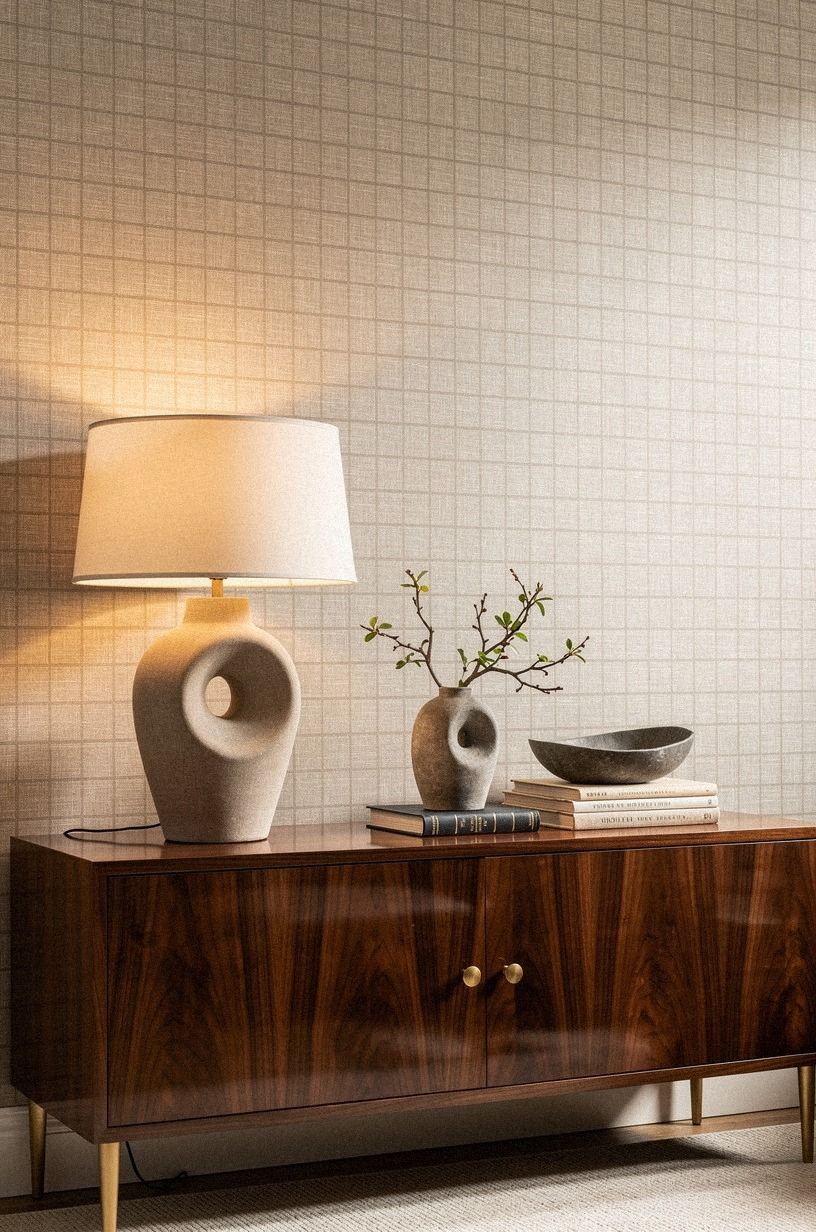
A linen grid gives you the quiet pattern of wallpaper without covering every inch of plaster. You’ll need lightweight fabric, narrow trim, and a wall color that supports the weave.
I like natural linen against a clay wall, with aged brass details and book-matched walnut trim. The combination feels warm without looking shiny.
Measure each panel before you cut, and keep the spacing consistent. Your eye will forgive a slightly uneven fabric edge, but it won’t forgive crooked horizontal lines. Use a steel ruler, a fabric pencil, and a sharp pair of dressmaker’s shears so the first cut doesn’t fray into a problem.
If you’re working around a rental wall, removable strips can hold light trim, and this guide to peel-and-stick wallpaper on textured walls will help you judge the surface first. A smooth, clean wall gives you much more control than a dusty or heavily textured one.
And don’t buy a whole bolt before testing one square. Your fabric may darken against the wall, especially in a north-facing room. A 12-inch sample beside your lamp will tell you more than a store display ever will.
Good news: a sample also lets you compare the linen with your flooring, sofa, and hardware before you commit.
For the most custom result, mount the trim in a simple grid rather than filling the wall with identical rectangles. Two wider columns may suit a narrow hall, while four smaller panels can make a dining wall feel more architectural.
Keep the outer margin slightly wider than the interior gaps. That small adjustment makes the arrangement feel intentional.
2Paint a half-wall in two warm tones
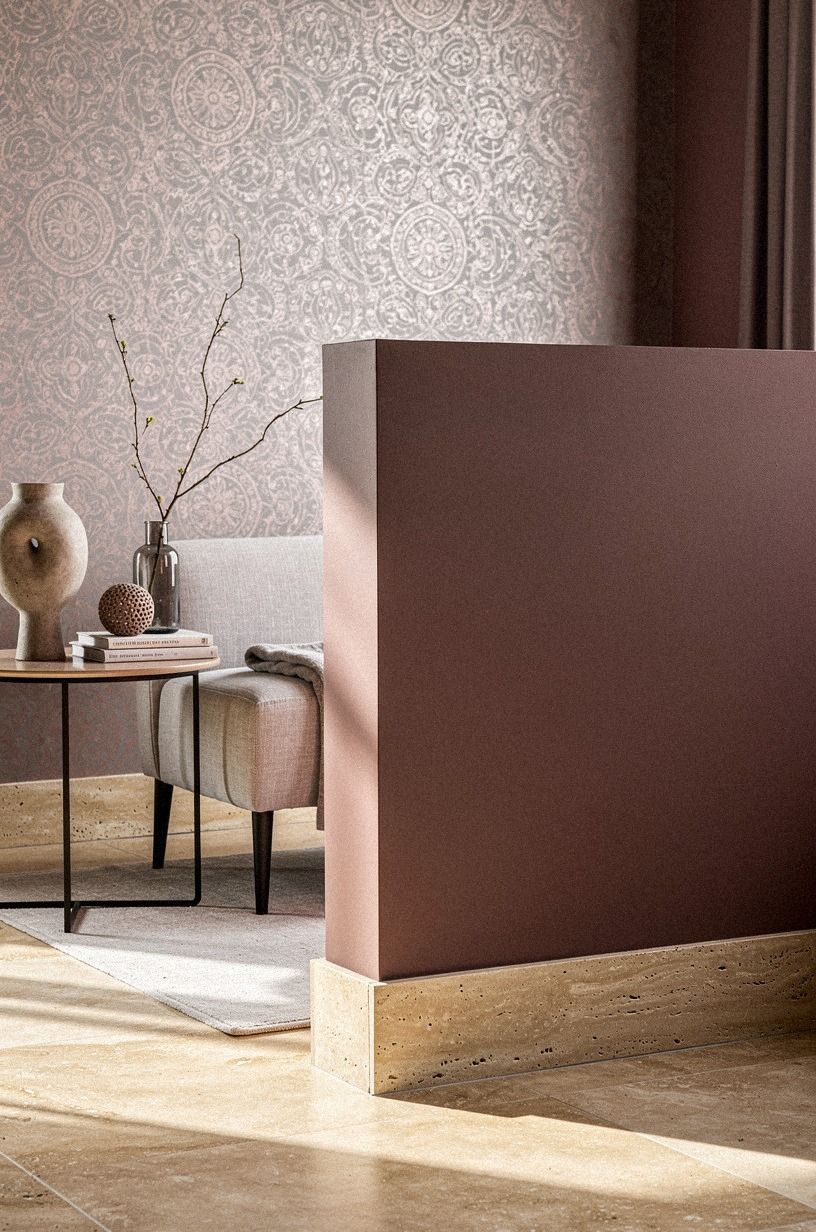
A painted half-wall creates a strong horizontal break, so your room gets the rhythm of wallpaper without the paper cost. Try Farrow & Ball Brinjal No.222 below and a warm gray above. The plum base feels enveloping, while the lighter upper wall keeps your ceiling from feeling low.
Set the lower line at roughly chair-rail height or slightly above your furniture. You’ll want painter’s tape with a clean edge, a two-inch angled brush, and two coats of quality paint. I’d skip a dramatic black lower half in a narrow room because it can make the floor feel heavier than it is.
But the line doesn’t need to be rigid. Your dining room may look better with the color rising behind a sideboard, while a bedroom can handle a lower band behind the headboard. If you’re borrowing the vintage feeling of an older home, pair the paint with a vintage wood bedroom palette for warmth.
Use a small level to mark several points before taping. Walls are rarely perfectly straight, and following the ceiling can make the color line visibly slope. A measured line usually looks better than one that simply copies an imperfect architectural edge.
For a softer transition, choose two colors from the same family instead of a high-contrast pairing. Sherwin-Williams Agreeable Gray SW 7029 with a muted plum lower wall feels gentle and earthy. A warm gray with rose-gold hardware feels more dramatic without becoming theatrical.
What a difference one restrained color decision can make!
3Swap in removable contact paper panels
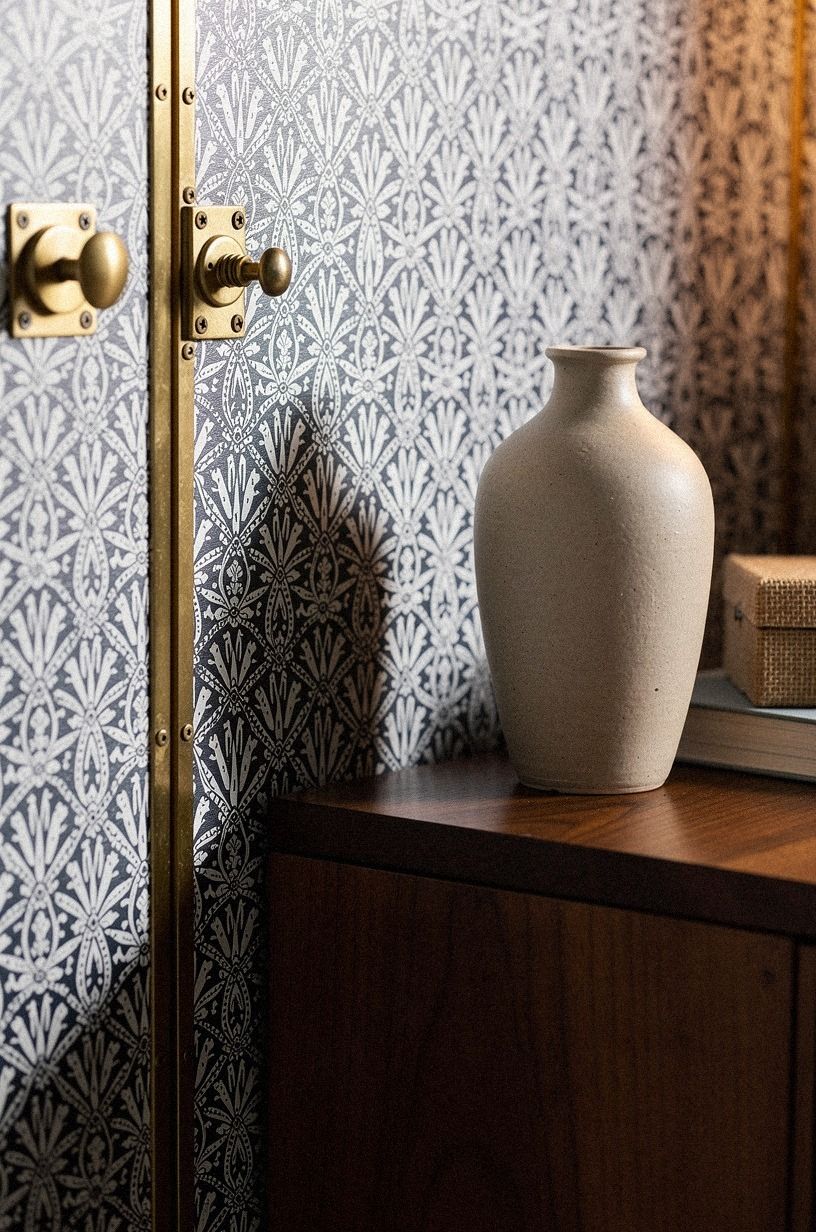
Contact paper works best when you treat it like a framed surface instead of a permanent wall covering.
4Frame fabric panels instead of wallpaper
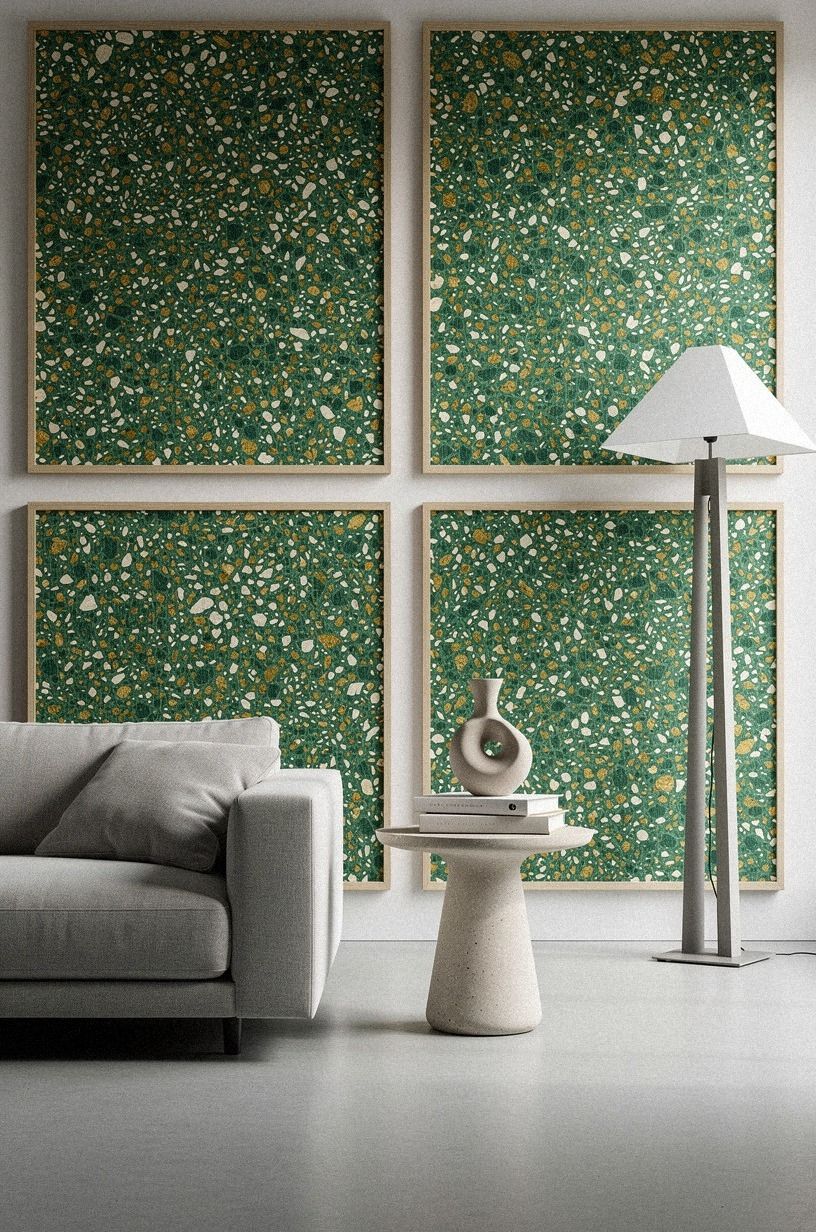
Framed fabric panels are the better choice if you want pattern but don’t want to commit your entire wall. Stretch a printed cotton or emerald mohair velvet over foam board, then place three or four panels above a console. The repeated rectangles create wallpaper-like order, while the fabric softens sound.
Your panels should relate to the furniture below them. Over a 60-inch console, three 18-inch panels usually feel more settled than five tiny frames. Hang the center of your art about 57 to 60 inches from the floor, depending on your eye level and the furniture height.
And you can change the fabric without repainting the room. That flexibility matters if you’re decorating a rental or a guest room that needs to serve several people.
I’d avoid glossy polyester because it catches light like plastic. Washed cotton, linen blend, or 600gsm Turkish cotton has more depth.
Leave enough fabric to wrap around the back of the board. Pull opposite sides first, then finish the corners so the tension stays even. If you pull only from one direction, the pattern can tilt and make the whole panel look careless.
For a more finished look, use gold frames or simple cerused white oak frames that repeat a nearby material. If the room already includes oversized-chip terrazzo, let the frames stay quiet. A bold textile needs a calm border.
The easiest way to make the arrangement feel custom is to vary the fabric scale while keeping the frame size consistent. One panel might carry a large botanical, while the neighboring panels use a stripe or small check from the same palette. That gives you rhythm without making every rectangle compete.
5Hang a collected art wall with one color rule
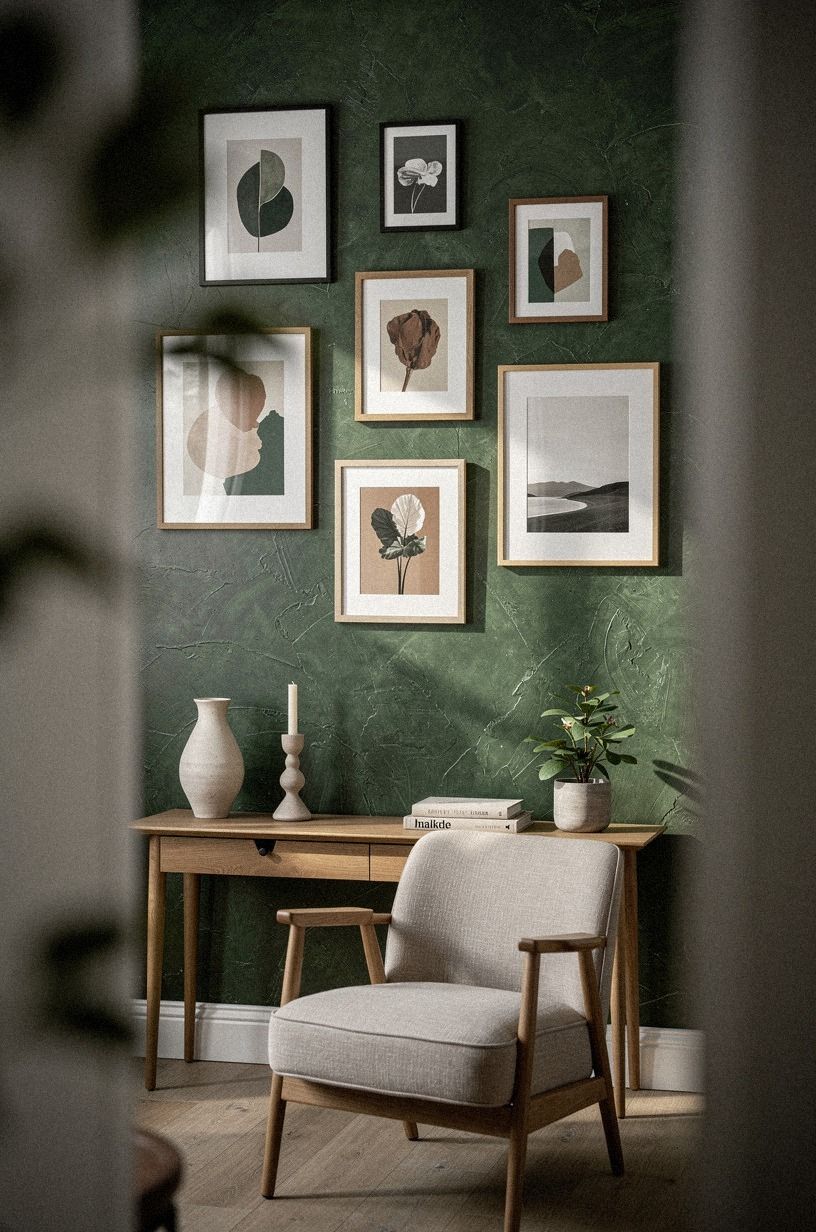
A small art wall can replace wallpaper’s repetition if you give it one unifying rule.
6Build the Three-Height Light Stack
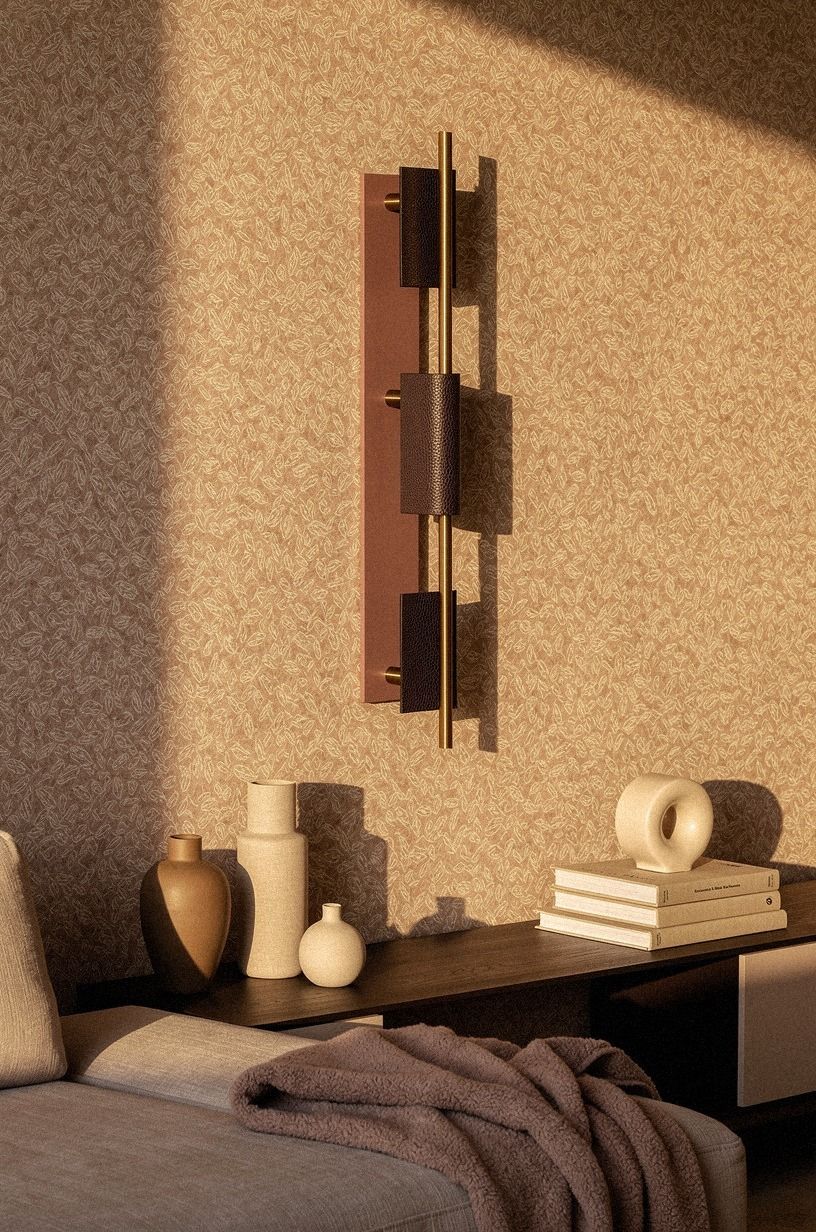
The Three-Height Light Stack uses three layers of light to create the visual movement wallpaper often brings. Your overhead fixture handles the room, a task lamp serves the activity, and a low table lamp adds the soft glow. The goal is inviting, not bright from every direction.
Use a brass pendant, a lamp around seated eye level, and a low source near the floor or on a console. Three sources per room is the useful baseline from the brief, and you’ll notice the difference as soon as the overhead light goes off. Why should a wall carry all the personality after sunset?
But choose bulbs carefully. A cool blue bulb can make dusty rose look flat, while a warmer bulb lets charcoal and brass settle.
I’d skip matching lamps on every surface because the symmetry feels staged. Your room needs one slightly unexpected piece, such as a shagreen accent or a sculptural charcoal base.
Use warm bulbs around 2700K for living spaces, then check the actual color beside your wall treatment. A lamp that looks soft in a showroom may appear yellow beside a cream wall. If the room has several warm materials, a slightly less golden bulb can keep the palette from becoming muddy.
The low light matters most. Place a small lamp on a shelf, a side table, or even a sturdy stool.
Its glow will pick up wood grain, fabric texture, and the uneven surface of a limewash-style finish. The wall starts to feel dimensional without any pattern applied to it.
If you’re working with a limited budget, spend on one beautiful shade and use simpler bases elsewhere. A pleated cotton shade can make a basic lamp feel tailored.
This sleep-friendly room guide is also worth keeping nearby if you’re adjusting bedroom lighting. That matters more than a decorative fixture that looks impressive only when switched off.
7Float a slatted wood screen
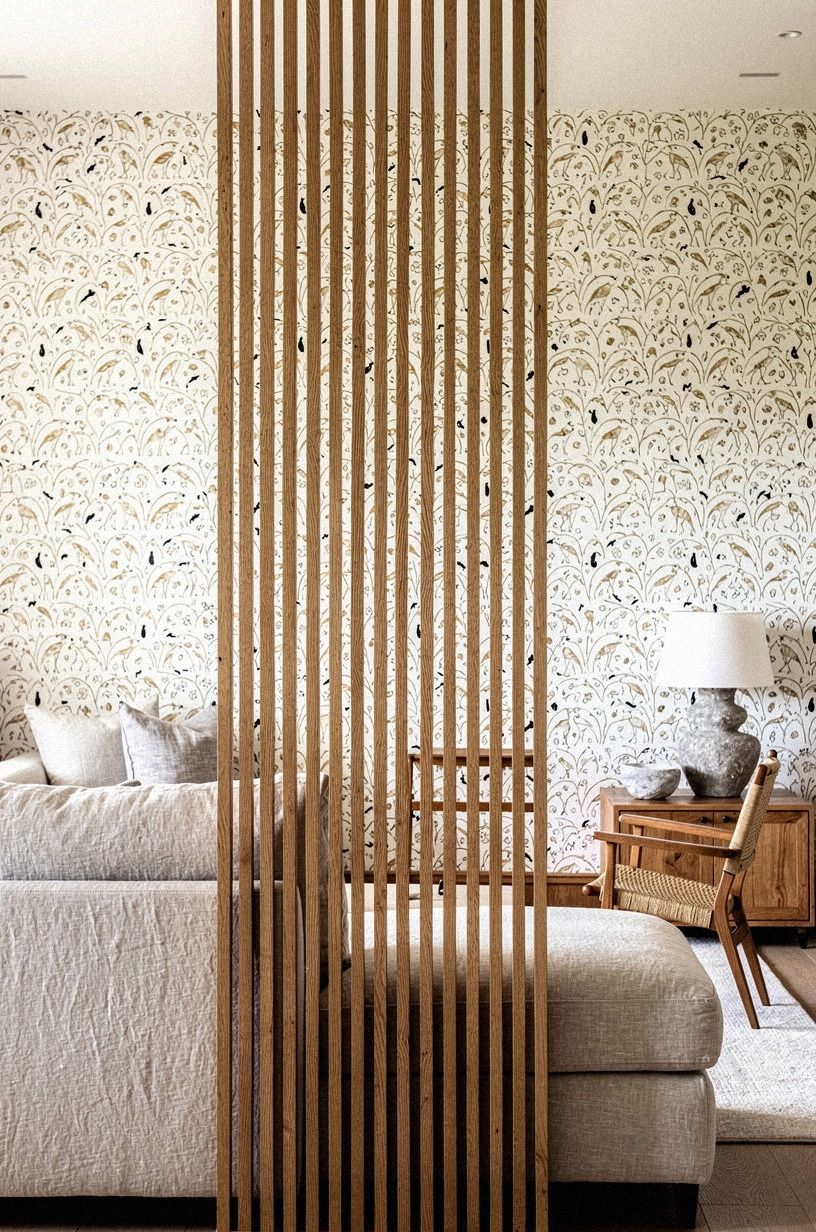
A slatted wood screen gives your wall vertical rhythm, shadow, and a little privacy without wallpaper paste.
8Make a budget art-and-textile wall
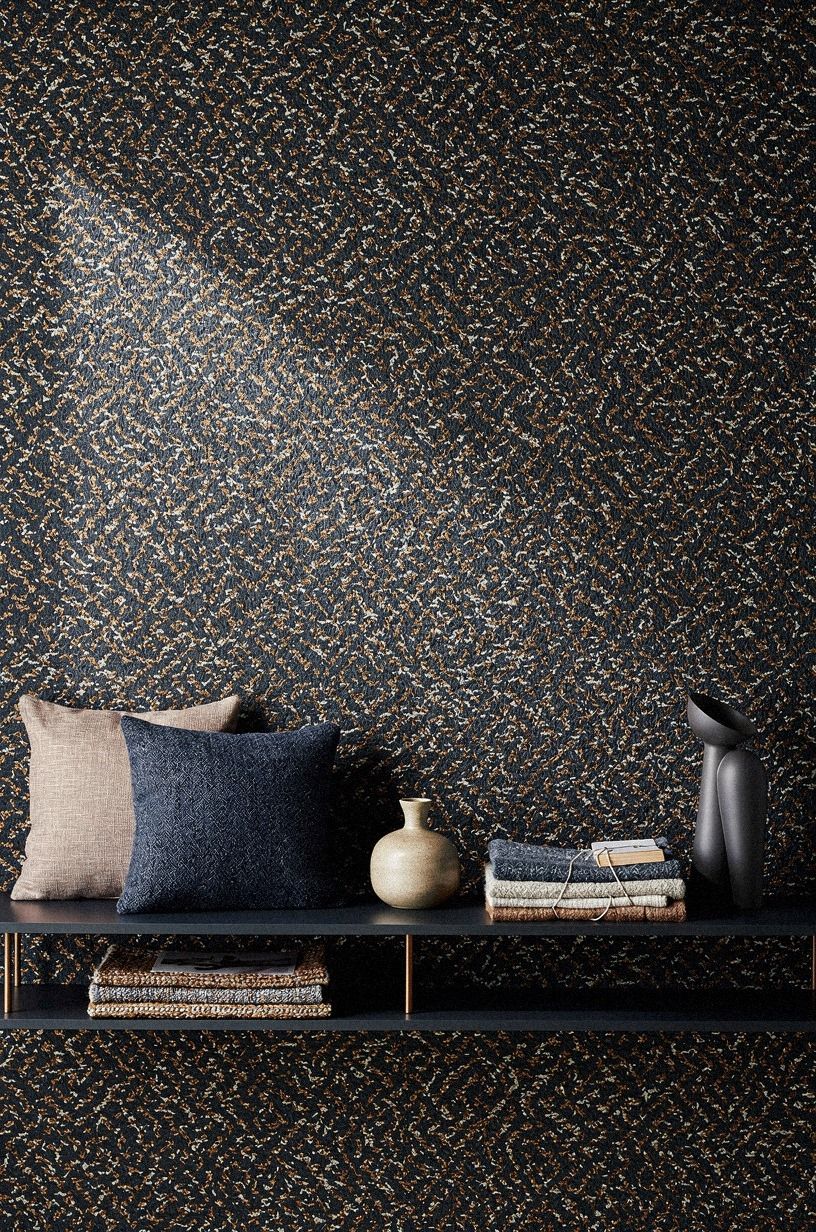
A budget art-and-textile wall combines inexpensive objects into one layered composition. Start with a large textile, then add smaller art, a woven basket, or a simple shelf. Your wall gets the softness of an organic bouclé throw in midnight blue, ivory, or a copper-toned accent without the cost of covering it in patterned paper.
The typical US costs below show where your money may go. Paint and textiles can carry most of the effect, while a large rug or custom furniture changes the budget quickly.
If you’re keeping costs low, thrift the textile and spend on one good frame. A wall with one strong anchor looks more refined than a wall crowded with small purchases. Your cost-conscious vintage bedroom reference can help you balance old wood with softer fabric.
A vintage quilt, kilim runner, or woven wool blanket can all work vertically. Check the weight before hanging it, especially if the piece has dense wool or decorative stitching. A proper textile hanger distributes the load better than a few nails along the top edge.
Keep the composition asymmetrical but balanced. Put the largest piece slightly off center, then counter it with two smaller objects on the opposite side. A narrow shelf can hold a bowl or small book stack, but leave some wall visible so the arrangement doesn’t become heavy.
Choose one repeating color from the textile and carry it into a frame, lamp, or painted accent. That connection makes thrifted pieces feel intentional. If you’re exploring a material-heavy outdoor treatment, these fence covering ideas that cost less than one fence panel also show how repetition can create structure without expensive construction.
9Mix a chalky limewash effect with paint
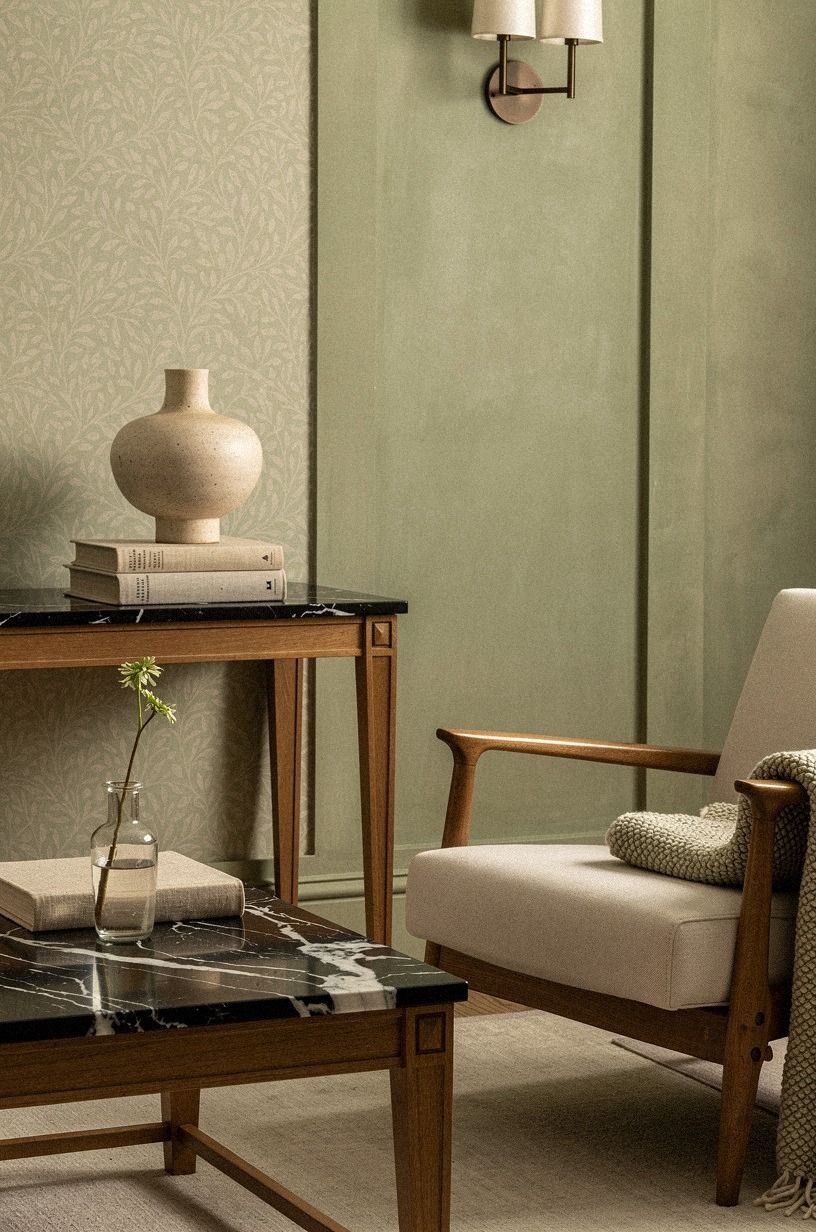
A faux limewash effect adds cloudy movement to a flat wall, and you can create it with ordinary paint. Choose a warm cream matte base, then brush a diluted sage green in loose overlapping strokes. Farrow & Ball Pointing No.2003 with a muted green can look earthy without turning yellow.
Work in small sections while the surface is still damp. Your brush marks should vary, but don’t chase every patch.
I’d avoid a perfect crisscross pattern because it makes the finish look printed instead of mineral. The charm comes from slight shifts in density.
Use a wide masonry brush for the first pass and a smaller chip brush for softening obvious edges. Keep a damp cloth nearby so you can lift an area that becomes too dark. You’re aiming for movement, not a collection of visible brush diagrams.
Test the mix on poster board before you start. Paint dries lighter or darker depending on the base, the wall, and the room’s daylight.
If your first attempt feels too busy, dilute it with more base paint. A limewash effect rewards restraint, and you’ll want the wall to support your furniture rather than compete with it.
A warm cream can make a cool room feel grounded. A sage green can bring a garden-like quality to a bedroom.
Farrow & Ball Pointing No.2003 creates a gentle base, while Sherwin-Williams Evergreen Fog SW 9130 gives the wall a more tranquil direction. A small piece of Nero Marquina marble nearby adds contrast through black stone and white veining.
Don’t force the finish into every corner if the room is small. One focal wall is often enough.
Stop at a natural break such as a door frame, and use a clean brush near trim. The uneven center should feel relaxed, while the edges should feel controlled.
10Repeat one bold textile from wall to chair
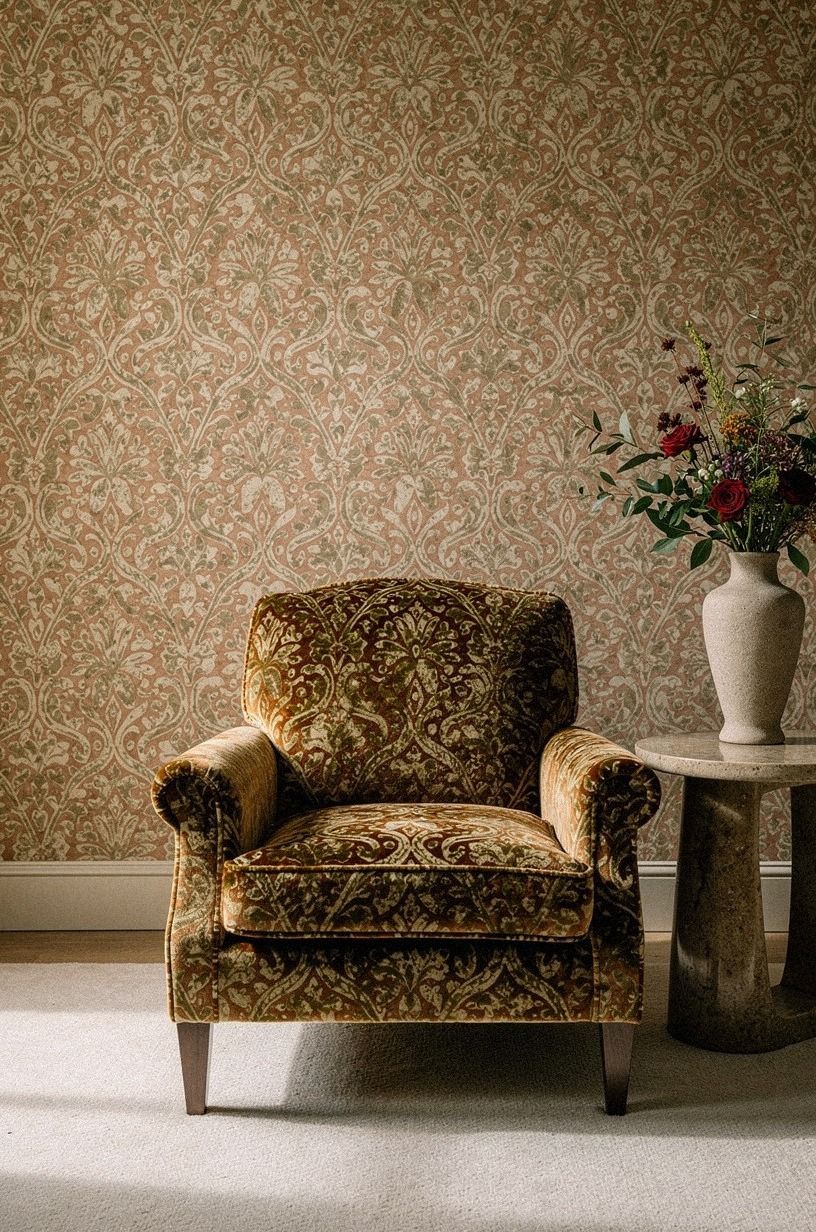
Repeating one textile creates the connected feeling people often want from wallpaper. Use the same deep-pile mohair velvet on a small wall panel, a cushion, or the back of a chair. Your room gains pattern and tactile depth in terracotta, stone, and olive without needing a full print installation.
Choose a fabric with a clear background color, then repeat that color in paint or accessories. A stone-colored wall can calm the richer textile, while a warm cream wall lets terracotta or olive feel welcoming. I’d skip five unrelated patterns because the eye won’t know where to rest.
You can make one panel with a canvas stretcher, a staple gun, and enough fabric to wrap the edges. If you’re renting, hang it like art instead of attaching it directly to the wall. This organic buying guide is useful if you’re comparing cotton quality, but you don’t need organic fabric for the idea to work.
Repeat the textile at different scales. A large panel can carry the full motif, while a cushion uses only a small section. That variation prevents the room from looking like it was wrapped in one continuous roll.
A bold fabric deserves a quiet supporting cast. Use solid linen, natural oak, or aged bronze nearby instead of introducing another competing pattern. The wall panel should connect the chair to the room, not turn every surface into a separate statement.
If you want a softer result, repeat only the fabric’s background color. A faded olive textile might connect to olive paint without appearing deliberately matched. The effect is subtle, but the room will feel more coherent.
11Use the Rental Rail Method for removable panels
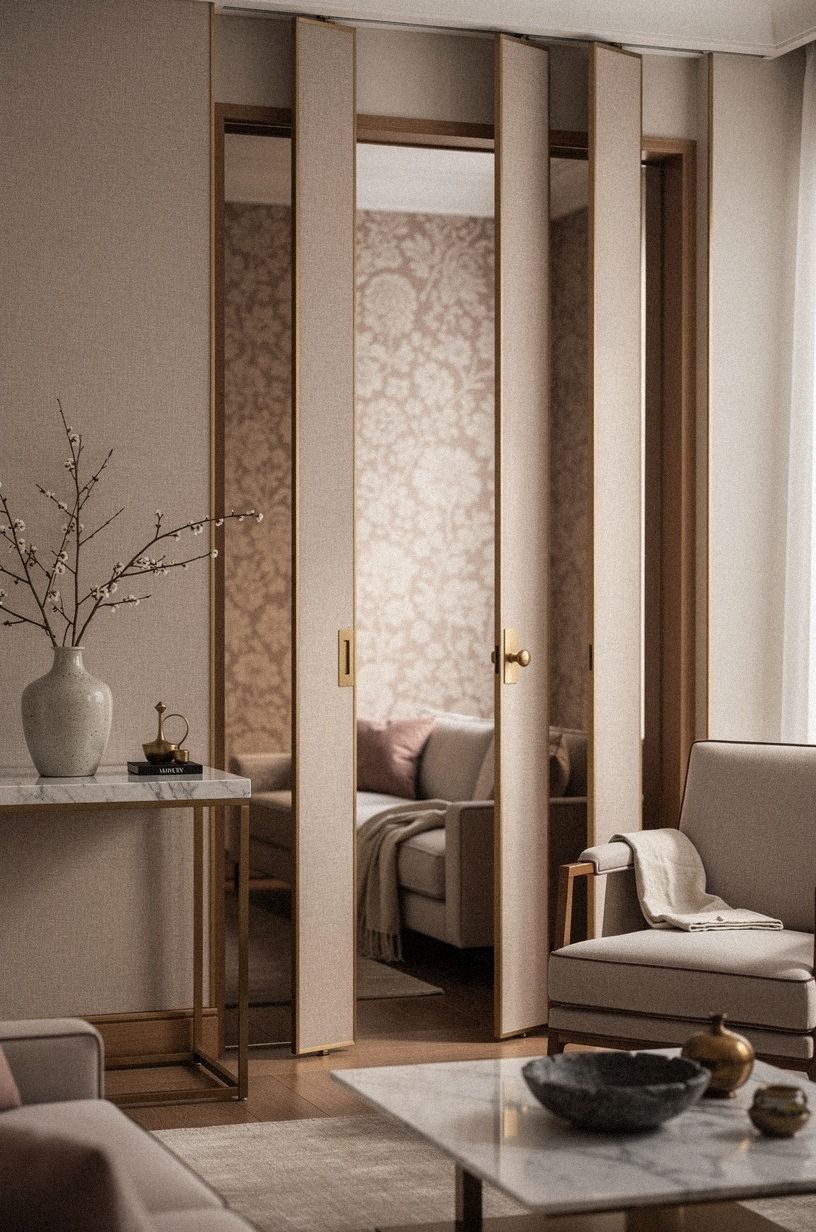
The Rental Rail Method uses a curtain rod or picture rail to hold removable fabric, paper, or art.
12Ask whether paint or panels suit your room
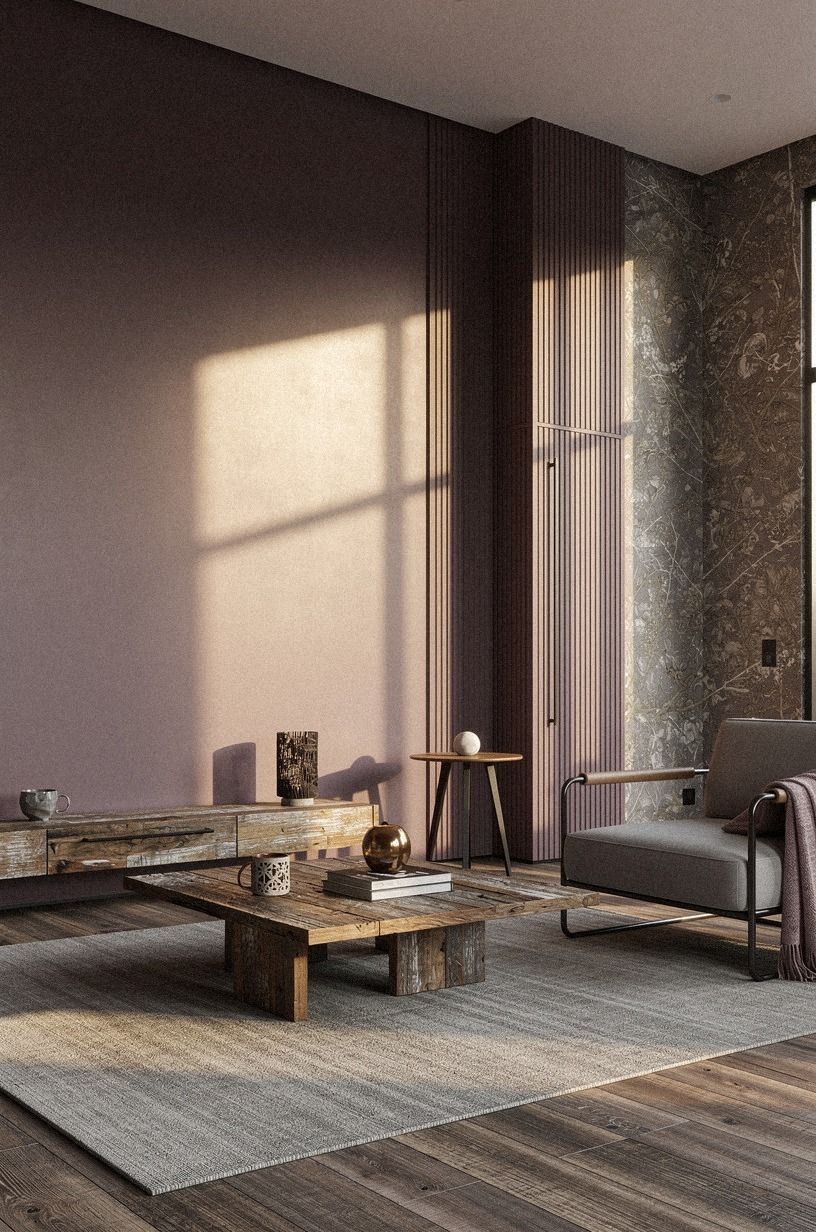
Paint wins when you want the lowest cost and the fastest visual reset. Panels win when you need texture, sound absorption, or a way to hide an imperfect wall. Your choice depends on the problem, not on which option looks more sophisticated in a photograph.
Use paint for broad color and panels for a smaller focal zone. Farrow & Ball Brinjal No.222 behind a bed can feel enveloping, while removable panels with rose-gold details add depth around it. I’d skip full wall panels in a narrow hallway because every seam becomes visible as you walk past.
If the wall has minor dents, a textile panel can conceal them better than a dark paint. If the surface is uneven across the entire room, paint may be less frustrating than trying to make every panel sit flat. Choose the treatment that solves the wall’s real problem.
Budget matters, too. Paint may cost less at the beginning, but panels can be moved and reused. A single can of quality matte interior paint may transform a small room, while a set of panels made from reclaimed weathered teak can follow you to another address.
And remember that wallpaper alternatives don’t need to cover the whole room. A single wall behind a desk may give you enough pattern to make the space feel finished. If your budget is closer to $200, spend on paint, one textile, and better lighting before you buy custom millwork.
If you’re furnishing around an existing bed, compare the treatment with this vintage wood bedroom palette. For a room with a complicated layout, this guide to Murphy bed costs may also help you decide where a wall treatment is worth the money and where furniture already provides enough structure.
13Create a paper-cut border with faux wallpaper
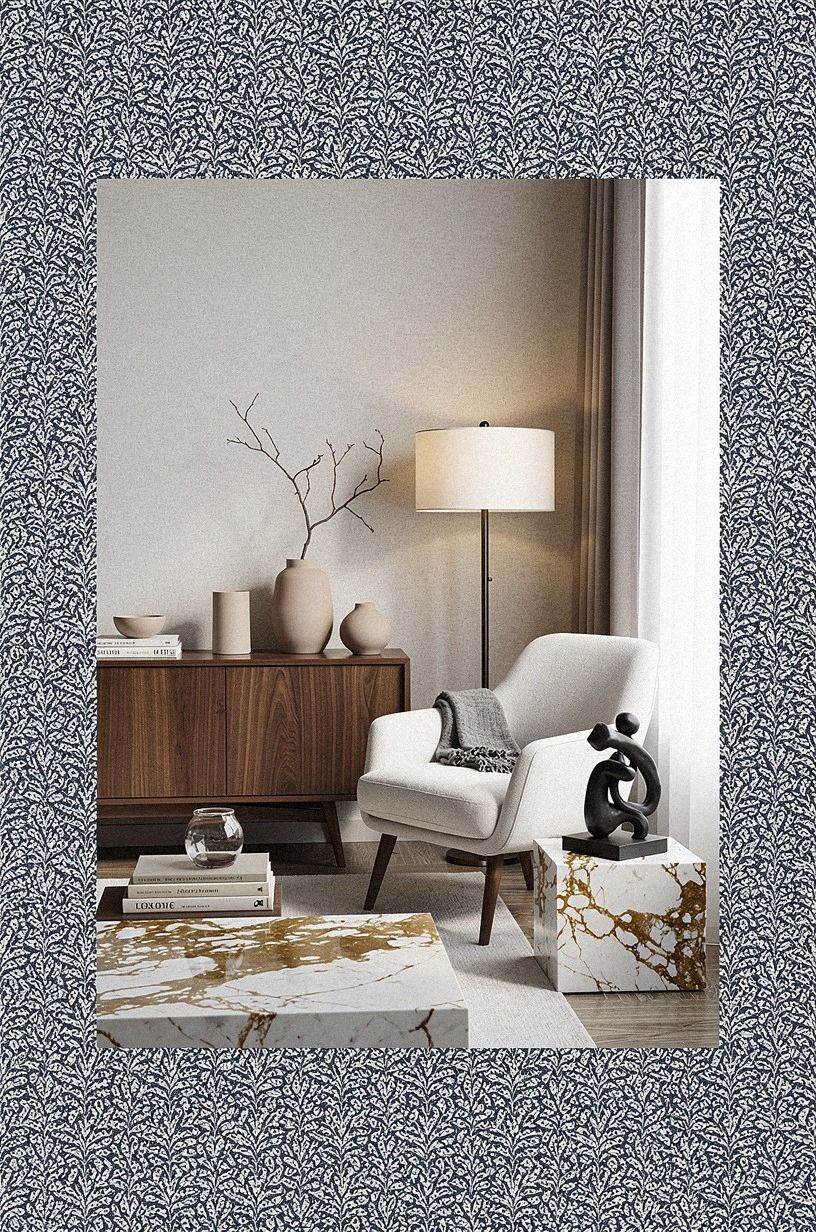
A paper-cut border gives you the playful edge of DIY faux wallpaper without the commitment of a full installation.
14Anchor the room with one oversized textile
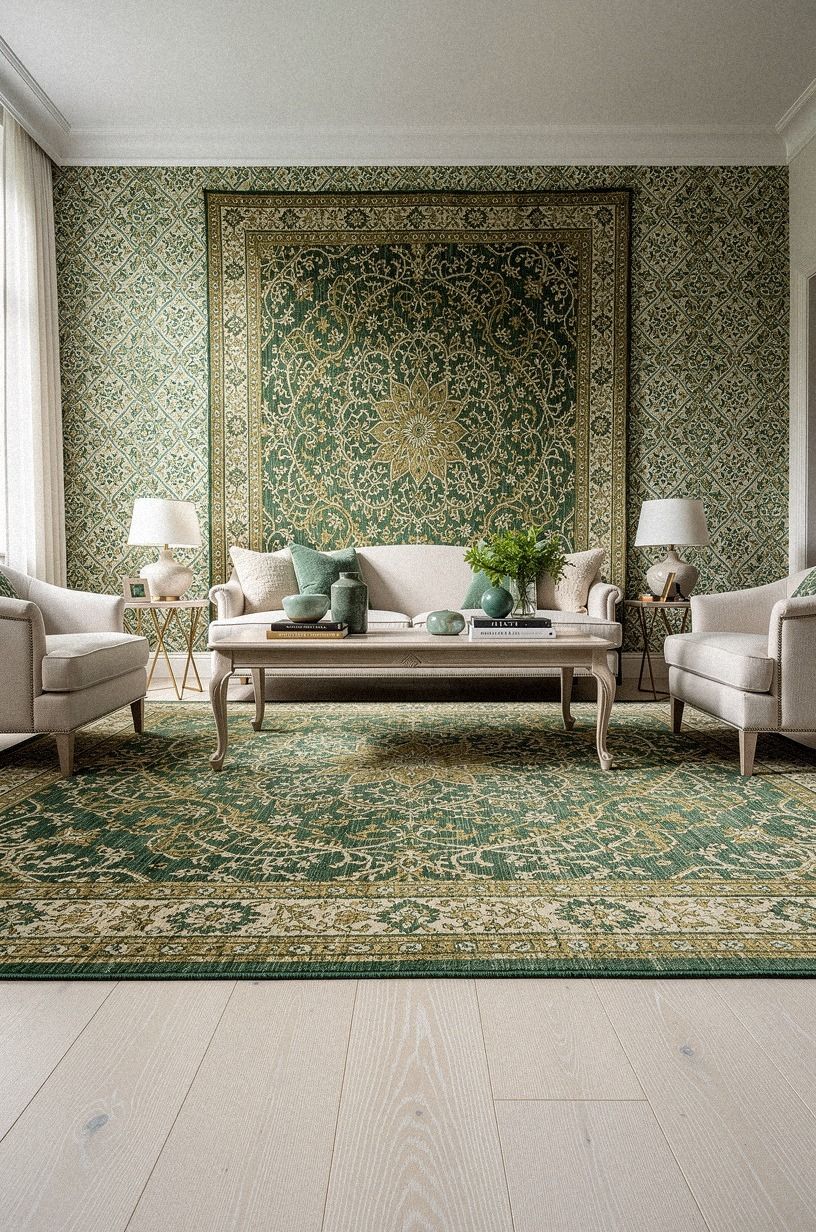
One oversized textile can do the work of an entire wallpaper wall when it has enough scale. Hang a textile in emerald, gold, or cream behind your sofa, bed, or dining table. A substantial woven piece adds pattern, sound control, and a grounded feeling.
Your textile should be wider than the furniture below it, or at least close to the same width. Secure it to a wood dowel or a proper textile hanger so the weight doesn’t pull on one corner. I’d avoid pinning a heavy rug directly to drywall because the tension can distort both the fabric and the wall.
And keep the surrounding pieces quiet. A warm white wall, one sculptural lamp, and a cerused white oak table will let the textile carry the room. You can compare this approach with a budget bedroom made from vintage wood if you’re mixing older pieces with a more modern layout.
Check the textile from several distances before deciding where to hang it. A pattern that feels delicate close up may disappear behind a sofa. Strong scale matters, especially when the treatment is replacing a full wall of wallpaper.
If the textile is valuable, use a proper sleeve or conservation-style support. Avoid folding a heavy rug over a narrow rod for long periods because the crease can become permanent. For ordinary decorative pieces, a wide dowel with a fabric sleeve is usually simple and effective.
This is one of the strongest choices when you want change without renovation. It brings history, softness, and color in one move. Hang it carefully, give it room to breathe, and let the rest of the wall stay quiet.
The Part I’d Decide Before Buying Anything
I’ve tried enough wall treatments to know that the cheapest option isn’t always the one that saves money. A $30 contact-paper roll can become expensive if the pattern fights your floor, your lighting, and the furniture you already own. Meanwhile, a thrifted textile for $20 can make a room feel settled because it brings color, texture, and history in one move.
Your first decision should be about permanence. If you’re renting, choose a fabric panel, tension rod, framed textile, or removable board.
If you own the home and want a longer-term change, paint gives you the broadest effect for the least labor. I’d choose limewash-style paint over faux panels in a large room because the finish stays quiet across a wide surface.
The second decision is scale. Tiny repeated details can look nervous when the room already has small furniture, narrow windows, or busy flooring.
One oversized textile or a half-wall of color usually has more authority. That’s why I’d skip filling every empty inch. Your room needs breathing space, even when you want pattern.
The third decision is light. A wall that looks warm at noon may turn gray by evening.
Test your sample beside the actual lamp, not only beside a window. I once approved a soft beige that turned green after sunset, a rude surprise, and I had to repaint the whole reading nook.
Spend one afternoon testing. It’s cheaper than fixing a whole room later.
Finally, decide what you want the wall to do. If it needs to hide damage, choose panels or a textile.
If it needs to change the room’s proportions, choose a half-wall or vertical slats. If it simply feels blank, art and lighting may be enough.
You can also combine two modest ideas. A painted half-wall with one framed textile may look richer than either treatment alone.
A rail-mounted fabric panel beside a low lamp can create a complete reading corner. Start with the smallest change that solves the problem, then live with it before adding more.
The Questions Worth Answering First
What are the best wallpaper alternatives for a small room?
Painted half-walls and framed fabric panels are the best starting points because they add pattern without closing in every surface. Choose Benjamin Moore White Dove above the treatment, keep the lower color muted, and let your furniture overlap the visual boundary. I’d also consider one large textile because it adds scale without demanding many extra objects.
Where can I buy wallpaper alternative pieces on a budget?
Look at IKEA, Target, Wayfair, thrift shops, and Facebook Marketplace for frames, textiles, rods, and small furniture. Your best finds may be used, especially for wool rugs and fabric panels. You can also browse fence covering ideas that cost less than one fence panel for repeated-material inspiration.
How much does a wallpaper alternative makeover cost?
A small makeover can stay near $20 to $200 if you use paint, thrifted fabric, or art you already own. A full room may fall into the $200-$800 budget tier when you add textiles, lighting, and organization. I’d reserve money for samples and proper hanging hardware because those small costs prevent expensive mistakes.
Can I create wallpaper alternatives on a budget?
Yes, and you can start with free changes: rearrange art, reuse fabric, and move a lamp to create a stronger focal wall. A sample pot of paint, thrifted frame, and removable rod can create a budget-friendly treatment without a full renovation. If you’re unsure, test one small section before buying enough material for the whole room.
Are wallpaper alternatives worth it in a small space?
Yes, because a small room gives each surface more visual influence. Use one treatment wall, keep the other walls quiet, and choose vertical lines or a half-wall to control the proportions. Your room won’t need many decorative pieces once the wall has enough texture.
A single oversized textile may be all the room needs.
Are wallpaper alternatives a good idea for a rental?
Yes. Fabric panels, tension rods, removable art boards, and carefully tested peel-and-stick materials can give you pattern with limited wall damage.
Before you commit, read this guide about peel-and-stick wallpaper on textured walls and test a hidden patch. I’d favor a rail-mounted textile if you’re especially concerned about the paint underneath.
Where I’d Start First
If I had to pick one, I’d start with the framed fabric panel. It brings pattern and sound-softening texture without trapping you in a print.
Hang one behind your sofa, live with it for a week, then add more only if your room still feels empty. Pin this sleep-friendly room guide for later.