
 by
Will peel and stick wallpaper stick to a textured wall? Yes, but only when you flatten high spots, prime for grip, and choose a forgiving pattern. I learned that after one roll slid down overnight. These 14 ideas will help you build a warm, renter-friendly wall that looks intentional and comes down cleanly later.
- Test the Texture-Bridge Method Before You Unroll
- Sand High Spots, Keep the Wall’s Character
- Prime With a Matte Grip Layer
- Can the Three-Surface Test Save a Rental?
- Choose Small-Scale Prints Over Giant Motifs
- Layer the Paper Over a Smooth Panel
- Frame the Sticky Wallpaper With Trim
- Swap Full Coverage for a Renter-Friendly Accent
- Float Furniture in Front of the Pattern
- Paint the Edges With Pigeon or Agreeable Gray
- Build the Three-Source Light Stack
- Compare Costs Before You Commit
- Hang Art at 57 to 60 Inches Over the Paper
- Peel, Patch, and Photograph the Exit Plan
1Test the Texture-Bridge Method Before You Unroll
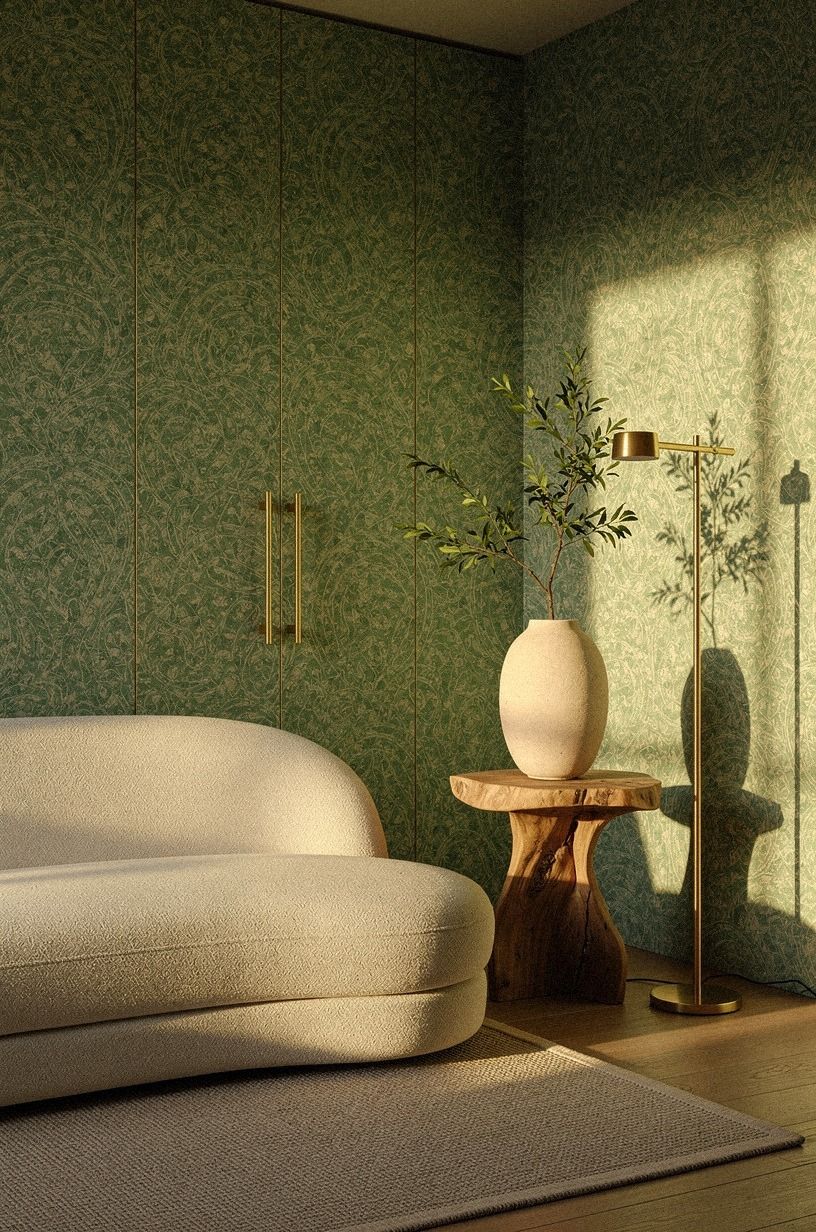
Start with a small sample before you commit to a full wall. Press peel-and-stick wallpaper onto the roughest area, smooth it with a felt squeegee, and leave it for 48 hours.
If the corners lift or the paper bubbles by morning, your wall needs more preparation. You’ll save yourself a whole afternoon and a roll of expensive paper!
Your hand can tell you more than a product description. Run your palm across the surface and notice whether you’re feeling shallow orange-peel texture or deep ridges.
The first is workable. The second needs a bridging layer, because adhesive can’t grip air pockets.
I prefer a calming emerald-and-cream print with a matte finish for this test. Farrow & Ball Studio Green nearby can help you judge whether the wallpaper feels too busy against your existing wall color. If you’re unsure, compare the sample beside your trim during daylight and lamplight.
And don’t skip the removal test. Lift one corner slowly after the sample has stayed put, then check for paint transfer. If you’re styling a rental, read these renter-friendly wallpaper ideas that peel off clean before buying a full roll.
Typical cost by tier (US averages):
2Sand High Spots, Keep the Wall’s Character
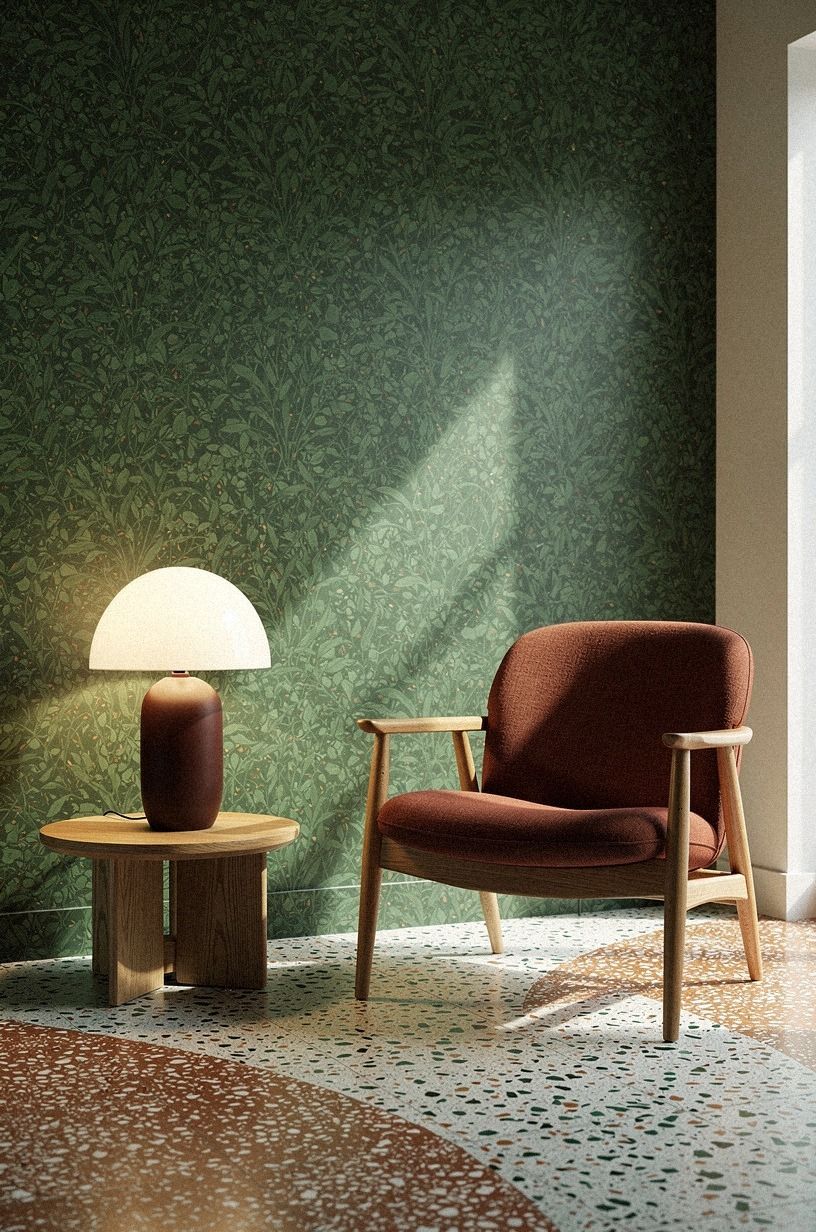
You don’t need to erase every bit of texture. You need to knock down the sharp peaks that keep the adhesive from making contact.
A fine sanding block can soften those ridges, while a vacuum and slightly damp cloth remove the dusty residue. Your wall can stay organic and softly imperfect.
I made the mistake of wiping only the visible dust once. The adhesive grabbed the powder instead of the paint, and the sheet peeled back like a dry leaf. Now I clean twice, then wait until the wall feels completely dry before I measure anything.
A fine-grit sanding sponge gives you more control than an aggressive power sander. Work lightly around corners and outlets, where you’ll want the paper to sit flat without thinning the drywall. Your goal is a smoother touch, not a blank surface.
For a room with forest green, rust, and natural oak, that restrained texture can look charming under a small botanical print. If your wall has oversized-chip terrazzo or heavy ridges, compare this approach with how to lay peel-and-stick tile over ugly ceramic tile before you choose wallpaper. The same rule applies: the surface beneath still matters.
If you’re unsure whether your wall is ready, revisit these renter-friendly wallpaper ideas that peel off clean and compare the preparation steps with your own room.
3Prime With a Matte Grip Layer
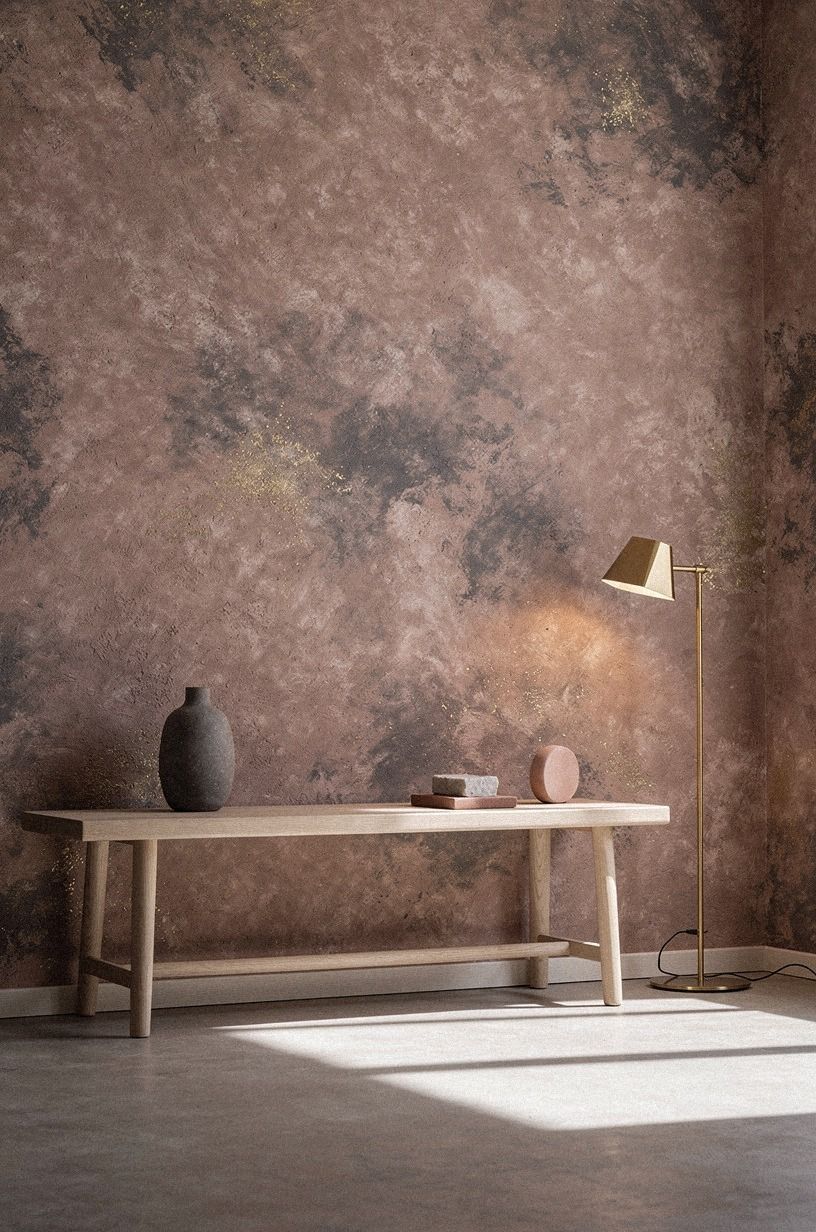
A matte primer gives you a cleaner, more predictable base than bare paint. Choose a wall-safe primer designed to seal porous surfaces, then let it cure fully. Your wallpaper needs a dry, stable film beneath it, especially if your textured wall has been painted several times.
I’d skip glossy primer. It sounds durable, but the slick surface can make repositioning frustrating and may encourage the adhesive to slide. A matte bonding primer creates a subtle tooth, which is exactly what you need for a secure application.
If you’re painting first, Benjamin Moore First Light 2102-70 is a dusty rose background that won’t fight a warm, earthy print. You’ll still see the wallpaper’s pattern clearly, and the color won’t flash through small gaps as harshly as a bright blue-white.
And give your primer time. The label’s dry-to-touch time isn’t always the same as its ready-for-wallpaper time. If you rush, you’ll trap moisture under the sheet, and your sophisticated little accent wall may start curling at the edges.
For another small-surface project that depends on careful preparation, see these peel-and-stick tile backsplash ideas that look real. The principle is identical: clean, stable, and fully cured beats quick.
4Can the Three-Surface Test Save a Rental?
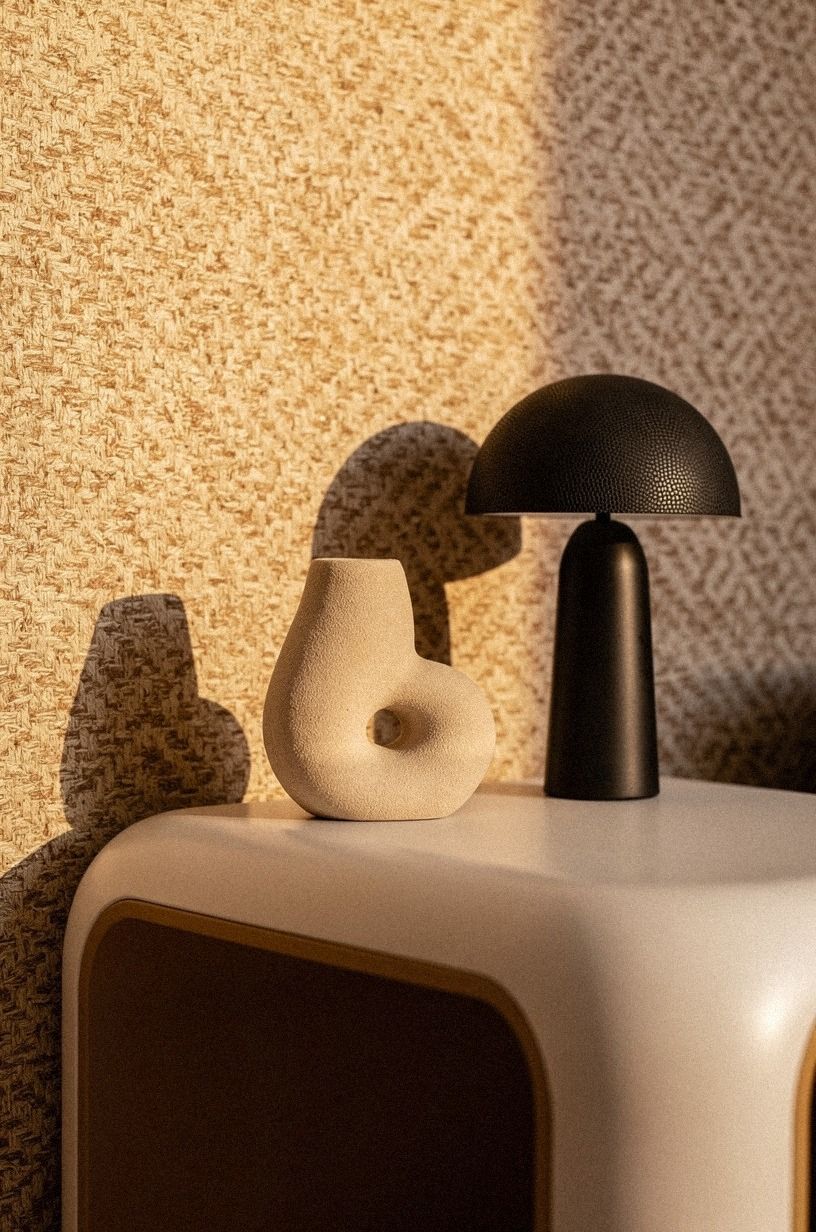
Yes, the Three-Surface Test can save your rental deposit, especially when you test it against warm white paint, camel upholstery, and black accents. A small shagreen detail nearby can also show whether the wallpaper feels polished or too busy.
5Choose Small-Scale Prints Over Giant Motifs
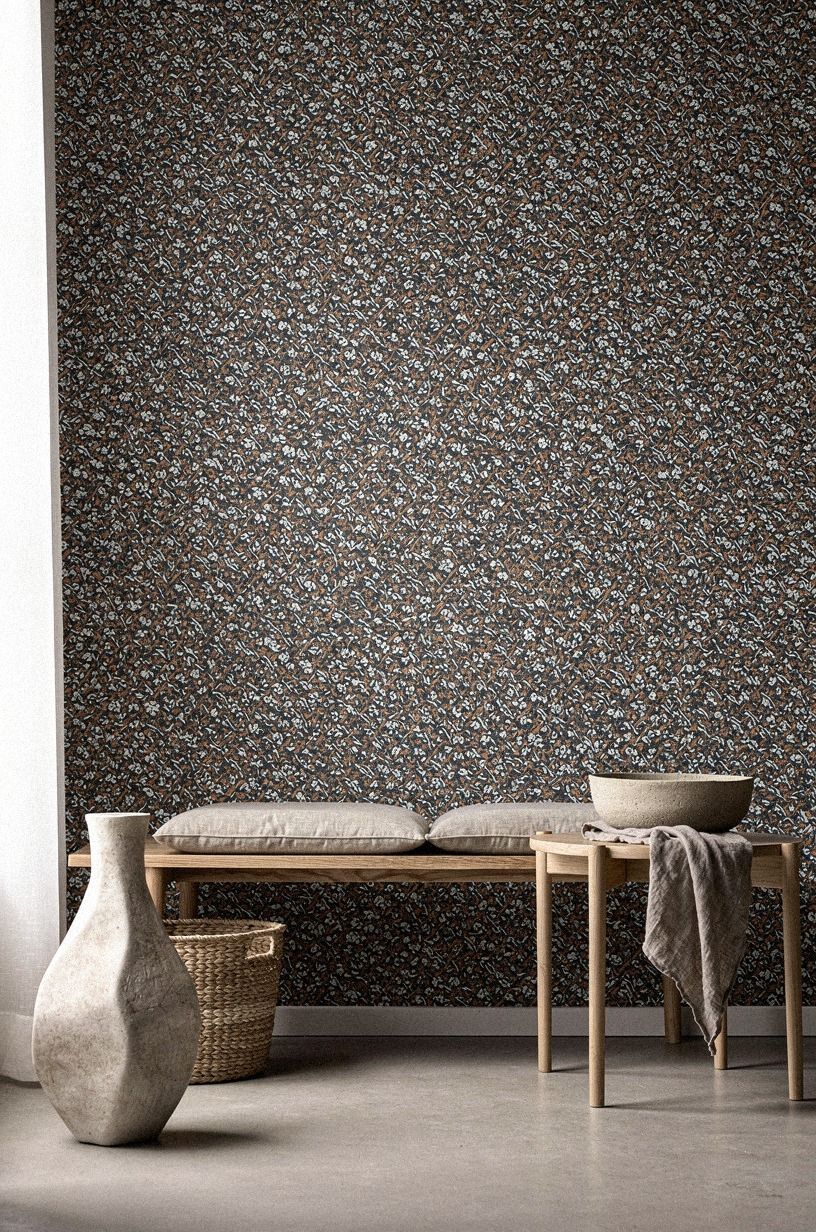
Small-scale prints hide uneven adhesion better than oversized motifs. A tiny stripe, pebble shape, or delicate leaf breaks up the wall visually, so your eye doesn’t land on every slight bubble. You’ll get a more refined result without needing a perfectly smooth surface.
I’d avoid a huge geometric repeat on your first attempt. The pattern can look dramatic in a sample and become unforgiving once the wall shifts by a fraction of an inch. A small botanical repeat gives you more room to adjust each strip.
Your room’s size should guide the choice. In a narrow hallway, a gentle vertical mark can feel airy. In a reading nook, a midnight-blue fern or ivory print creates an intimate corner without making the walls feel crowded.
If you’re placing furniture nearby, keep the upholstery quieter. An IKEA KALLAX birch-effect unit or a chair covered in washed Belgian linen won’t compete with the print. You can browse peel-and-stick cabinet covers that actually fool people for another way to coordinate nearby surfaces.
A small bathroom can use the same restrained approach. These peel-and-stick tile ideas for a renter-friendly bathroom show why limited coverage often feels more intentional than a loud full-wall repeat.
6Layer the Paper Over a Smooth Panel
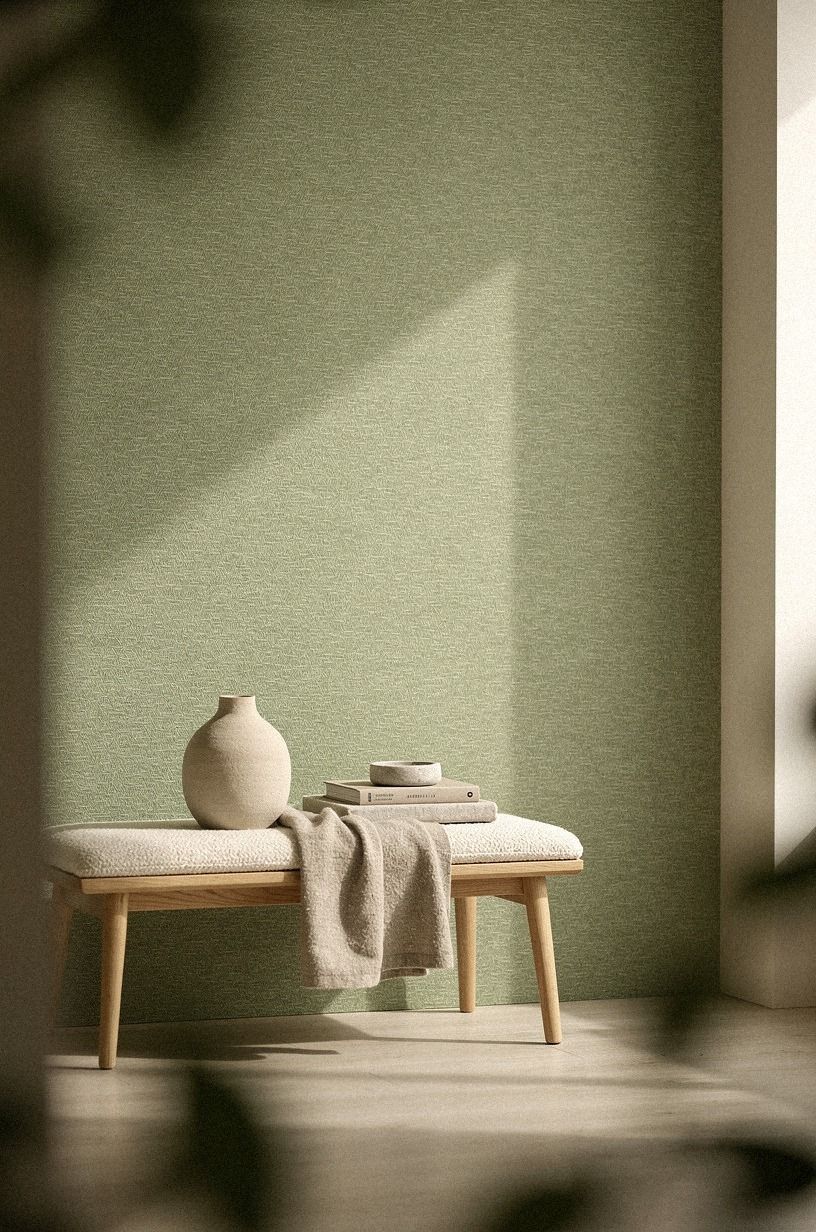
When your wall texture is stubborn, create a smooth removable panel instead of fighting the entire surface. Thin hardboard, foam board, or a framed plywood sheet can hold wallpaper beautifully. You’ll get a crisp backdrop that you can move, replace, or remove later.
The panel should feel sturdy in your hands, not bendy. A 3/4-inch solid white oak frame around a smooth center gives the installation a tailored, almost built-in look. Your wallpaper becomes art rather than a desperate attempt to disguise a rough wall.
I like this approach behind a desk or bed because it limits the amount of paper you need. A sage-green paper against warm cream, paired with an organic bouclé chair, can feel soft without touching the original paint. You can also change the print seasonally without touching the original paint.
Before you cut, measure the panel and your furniture together. Your eye should see a clear border on every side, and the panel shouldn’t disappear behind a tall headboard. If you need a related surface project, see these peel-and-stick tile backsplash ideas that look real.
7Frame the Sticky Wallpaper With Trim
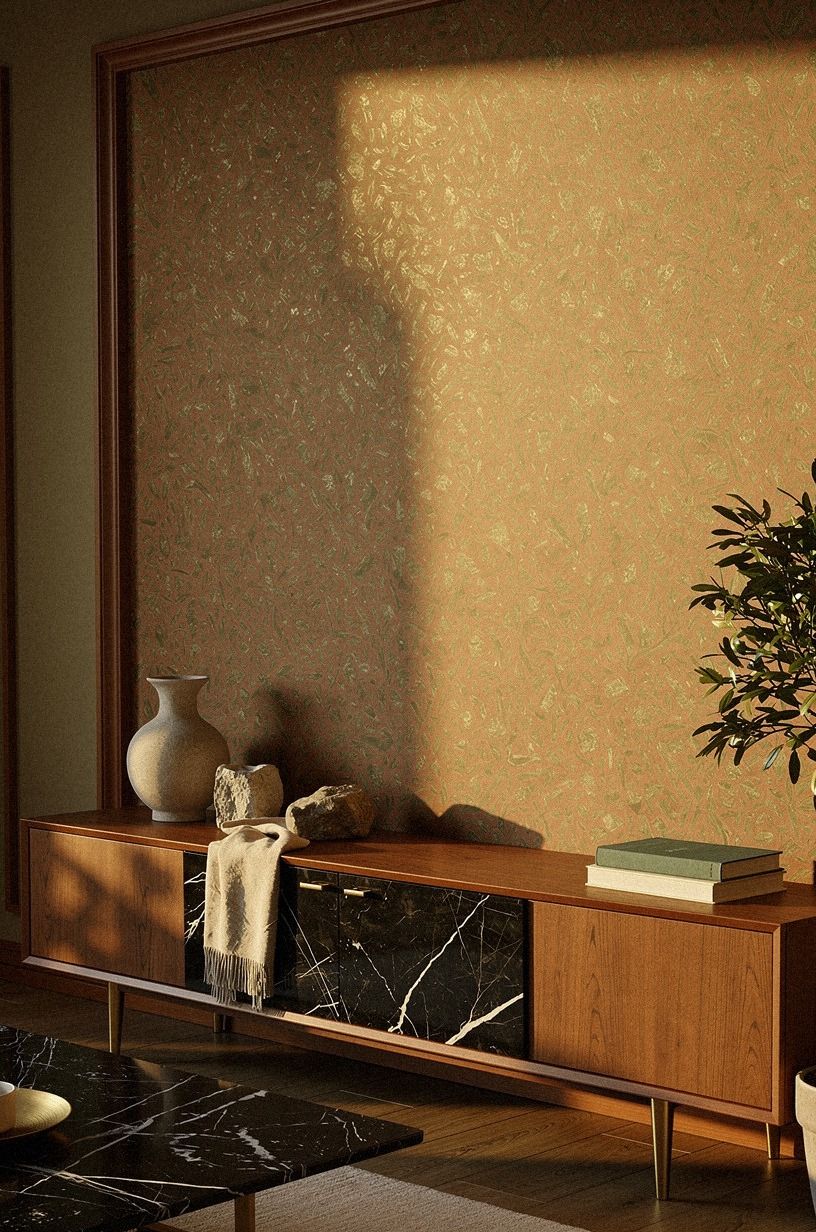
Trim gives peel-and-stick wallpaper a finished edge, especially when the wall texture makes the perimeter look uneven. Terracotta paper with stone-colored walls and an olive accent can look especially settled when the stopping point is deliberate.
A slim ledge in Nero Marquina black marble with white veins can create a crisp boundary if the surrounding architecture supports it. Otherwise, use painted wood trim and keep the profile modest.
8Swap Full Coverage for a Renter-Friendly Accent
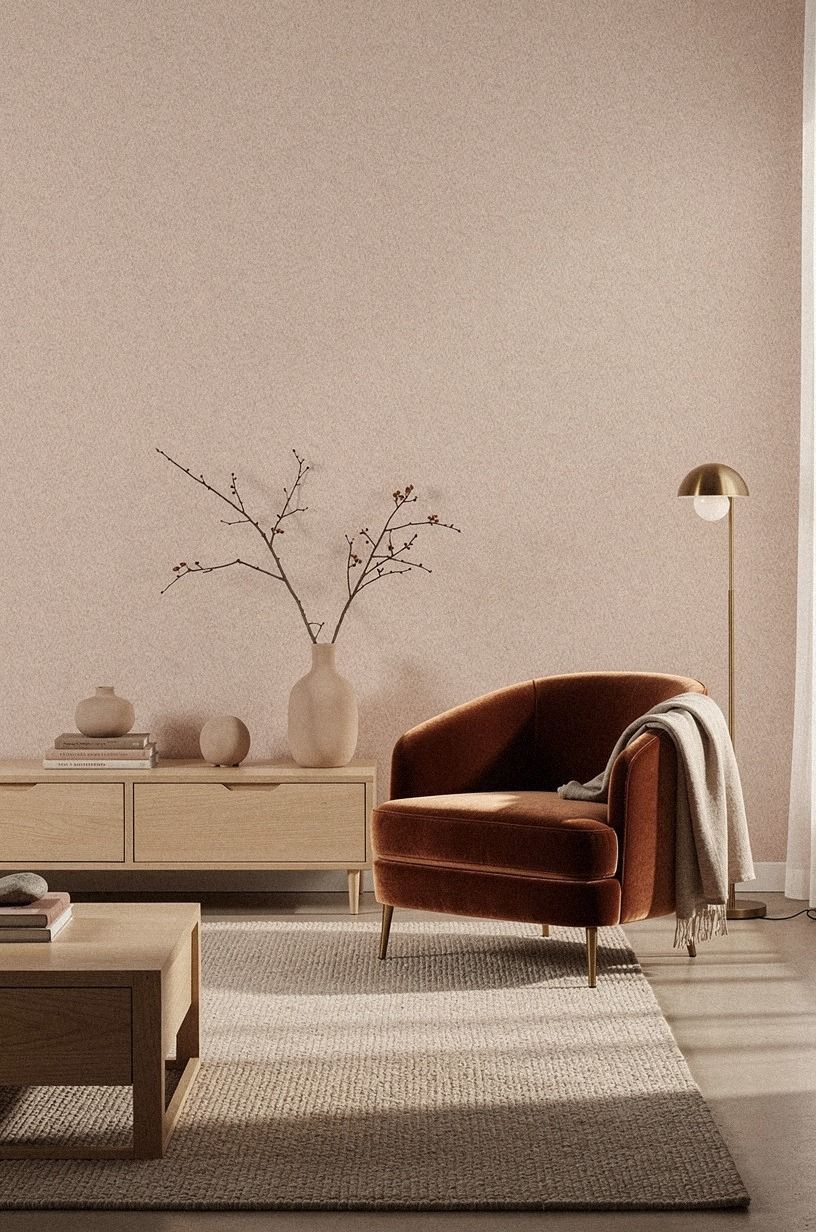
Full-wall coverage isn’t your only option. A half-wall panel, vertical stripe behind a dresser, or narrow section inside a bookcase can give you the warmth of wallpaper with less adhesive and less risk. Your room will feel intentional, not overwhelmed.
A clay-toned pattern can make a cold corner feel earthy, while a linen-colored stripe keeps a small room bright. You’ll want to repeat one color elsewhere, perhaps in a deep-pile mohair velvet cushion or an aged-brass lamp, so the accent feels connected.
I’d choose an accent wall over a random strip in the center of a blank wall. Anchor the paper to furniture, architecture, or a clear sightline. Your eye likes a reason for the pattern to begin and end.
For a no-damage setup, use removable mounting methods only where the manufacturer permits them. You can also place the paper inside a bookcase backing, where the surrounding frame protects the edges. These peel-and-stick tile ideas for a renter-friendly bathroom use the same small-zone thinking.
Fireplaces and other awkward areas benefit from the same restraint. These peel-and-stick tile ideas for bathrooms and fireplaces can help you think through borders, heat, and visual stopping points.
9Float Furniture in Front of the Pattern
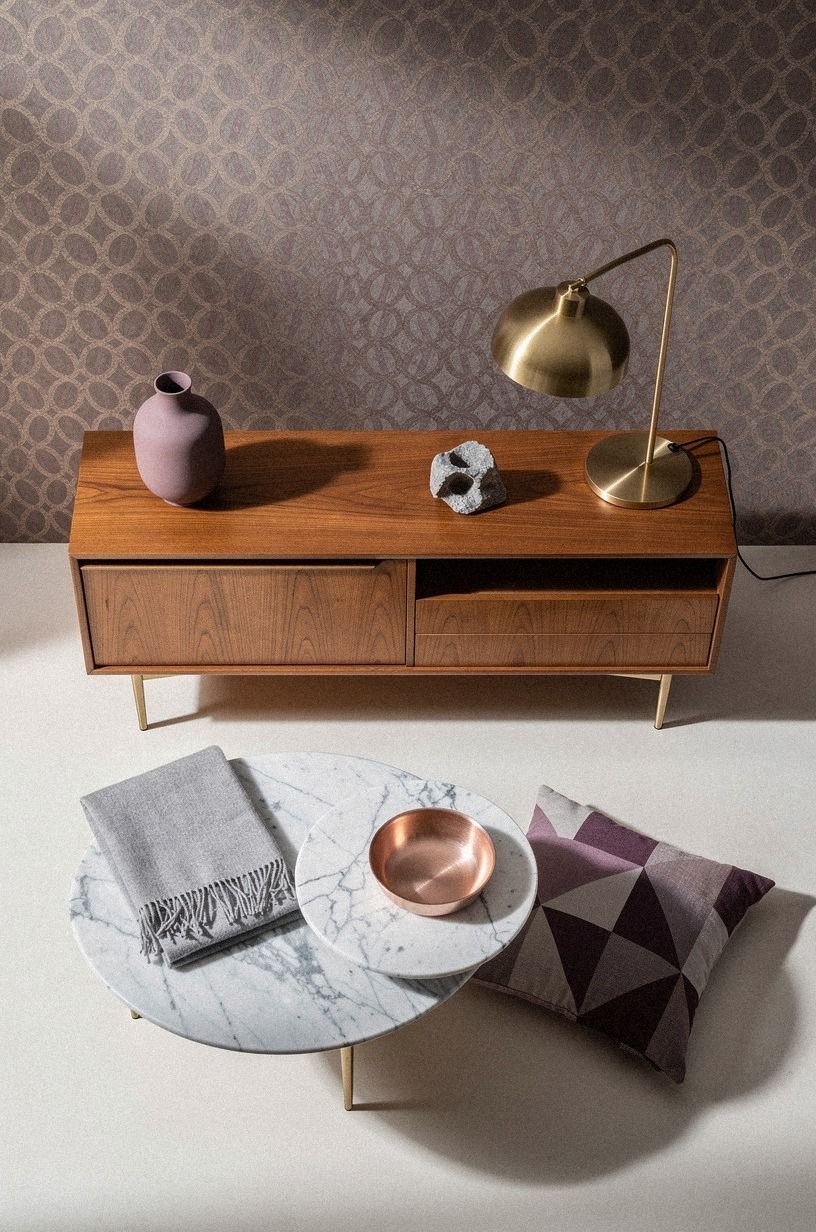
Furniture can hide the lower section where textured walls are hardest to cover. A plum or gray chair beside a slim Carrara marble console can make the wallpaper feel like part of the room rather than a repair job.
Leave a little air behind the furniture so the paper can settle without being scraped or crushed. Subtle gray veining in the marble also gives a patterned wall something quiet to balance against.
10Paint the Edges With Pigeon or Agreeable Gray
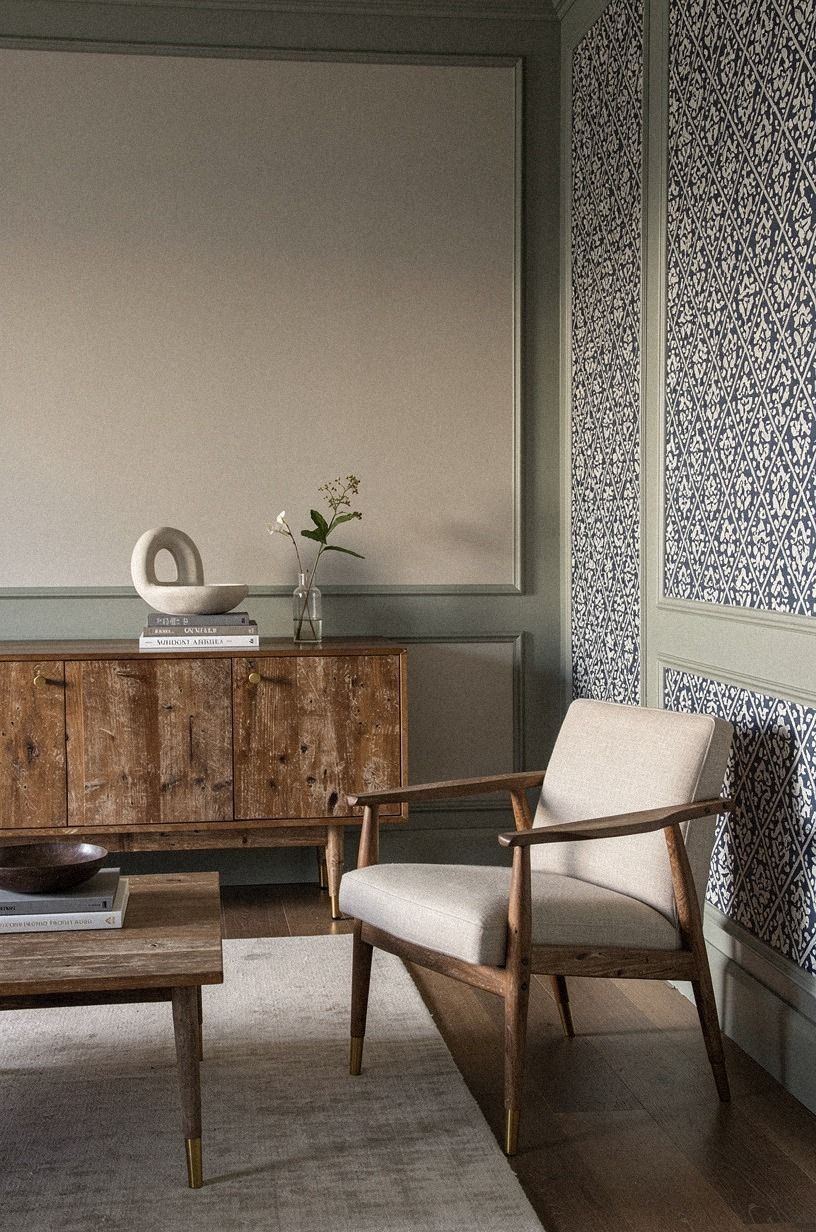
Paint is your best friend where wallpaper meets trim, ceiling, or an awkward corner. A related color can disguise a narrow gap and make the whole wall feel calmer. You’ll also have an easier time matching the surrounding architecture.
Farrow & Ball Pigeon No.25 works well with navy, warm white, and walnut because it has enough gray to settle a busy pattern. Sherwin-Williams Agreeable Gray SW 7029 is gentler when your wallpaper leans cream or beige.
I’d avoid choosing paint from a phone screen. Your wall texture changes how light moves across the color, and evening bulbs can make a neutral look unexpectedly yellow. Take your sample home, then look at it in morning, afternoon, and lamplight.
And keep your brush narrow near the paper. Your hand will have more control, and you won’t smear paint across the removable surface. A small angled brush gives you a soft edge; a wide accidental stripe is not what you want.
For another way to refresh surrounding cabinetry without committing to paint, see these peel-and-stick cabinet covers that actually fool people.
11Build the Three-Source Light Stack
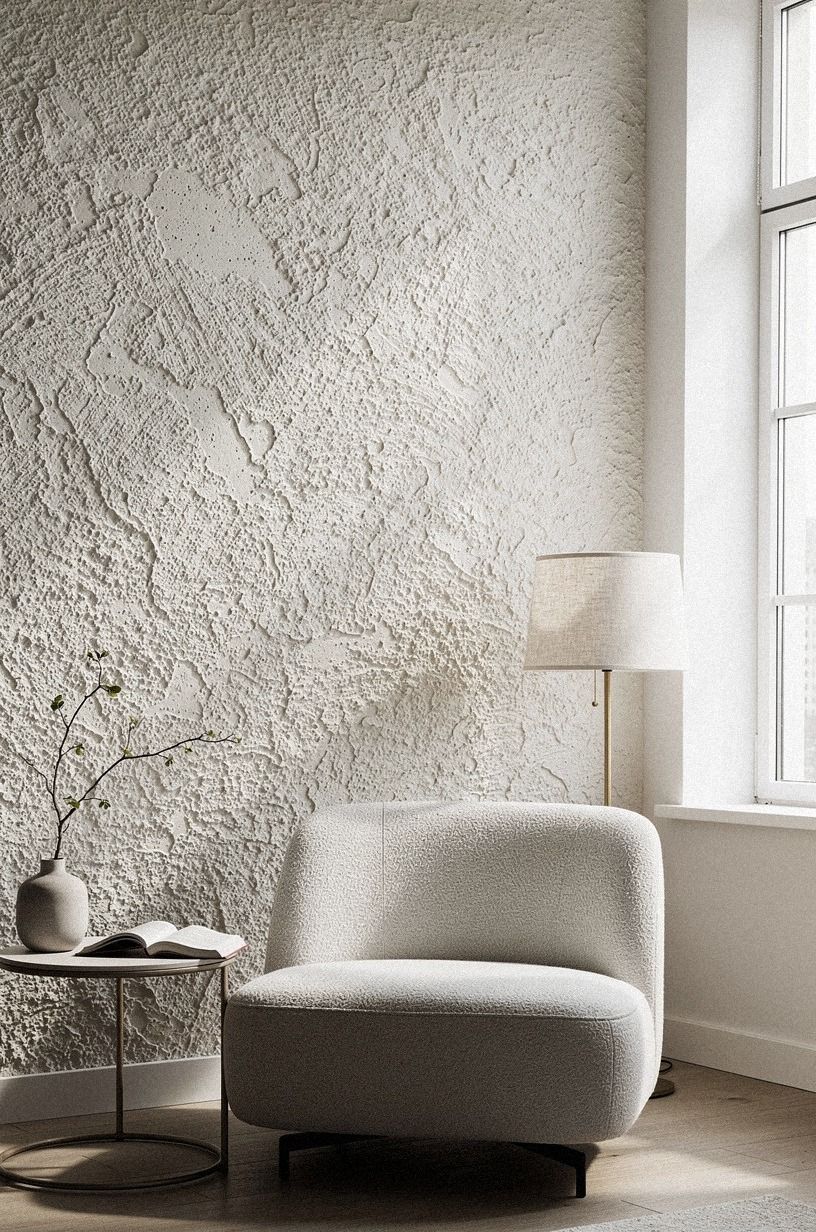
Wallpaper can look flat under one overhead fixture and gorgeous under three gentle light sources. Use overhead light, task light, and ambient light so your pattern gets changing shadows throughout the day. Your textured wall will look more dimensional at night!
A linen-shaded table lamp beside the wallpaper can soften a bold print, while a Calacatta marble base with gold veining adds a quiet reflective detail. You’ll want warm bulbs, not icy blue ones, because cool light can make cream paper look gray.
Place your task light where you read, work, or get dressed. Then add a floor lamp or low lamp near the opposite side of the room. I’d skip relying on a single ceiling fixture, since it flattens the pattern and makes the room feel more like a corridor.
Use the standard three-source approach: overhead, task, and ambient. Your wall doesn’t need more decoration if the light is doing useful work. If you’re refreshing a nearby surface, these peel-and-stick tile ideas for bathrooms and fireplaces can help you coordinate texture.
12Compare Costs Before You Commit
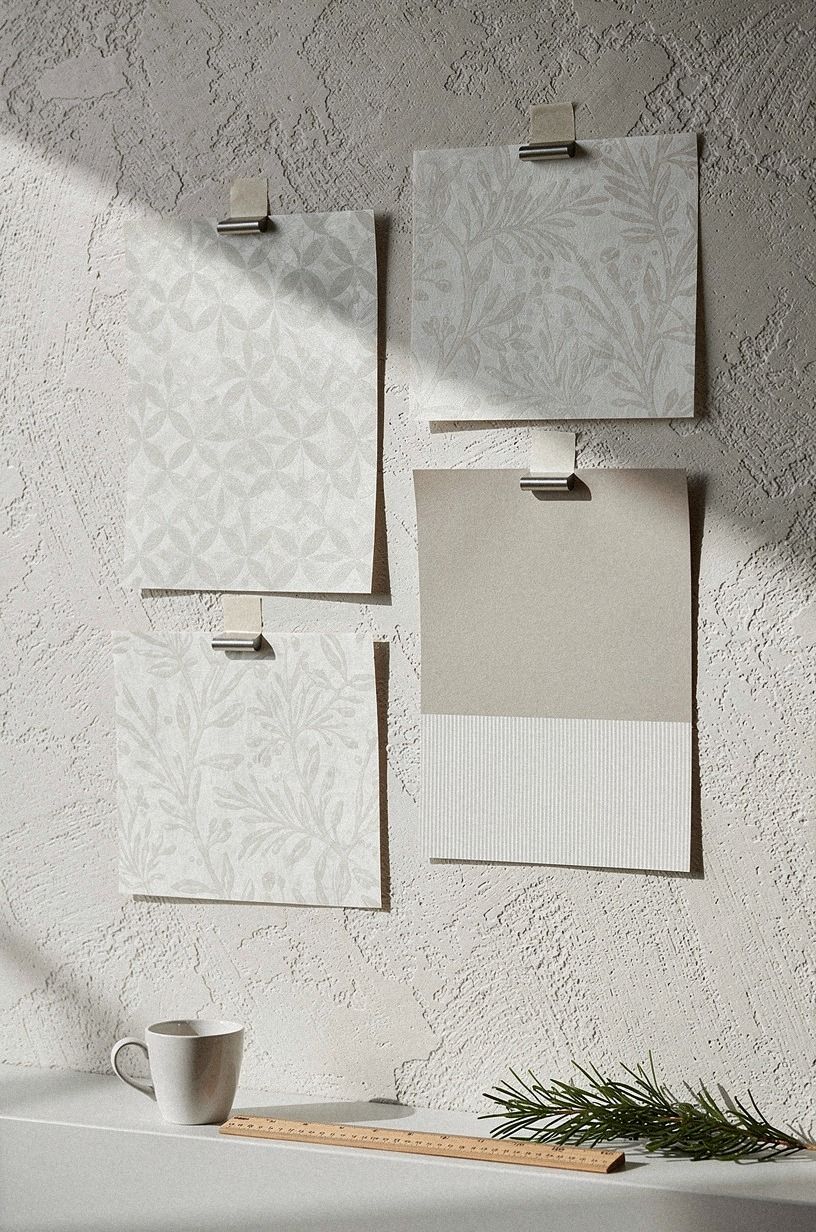
A wallpaper accent can be modest, but the surrounding room may cost more than the paper. Build your estimate around preparation first, then add trim, lighting, and furniture.
A forest-green wall with rust accents and a cerused white oak shelf can look considered without requiring an expensive full-room makeover. Spend on the surface work before decorative extras.
13Hang Art at 57 to 60 Inches Over the Paper
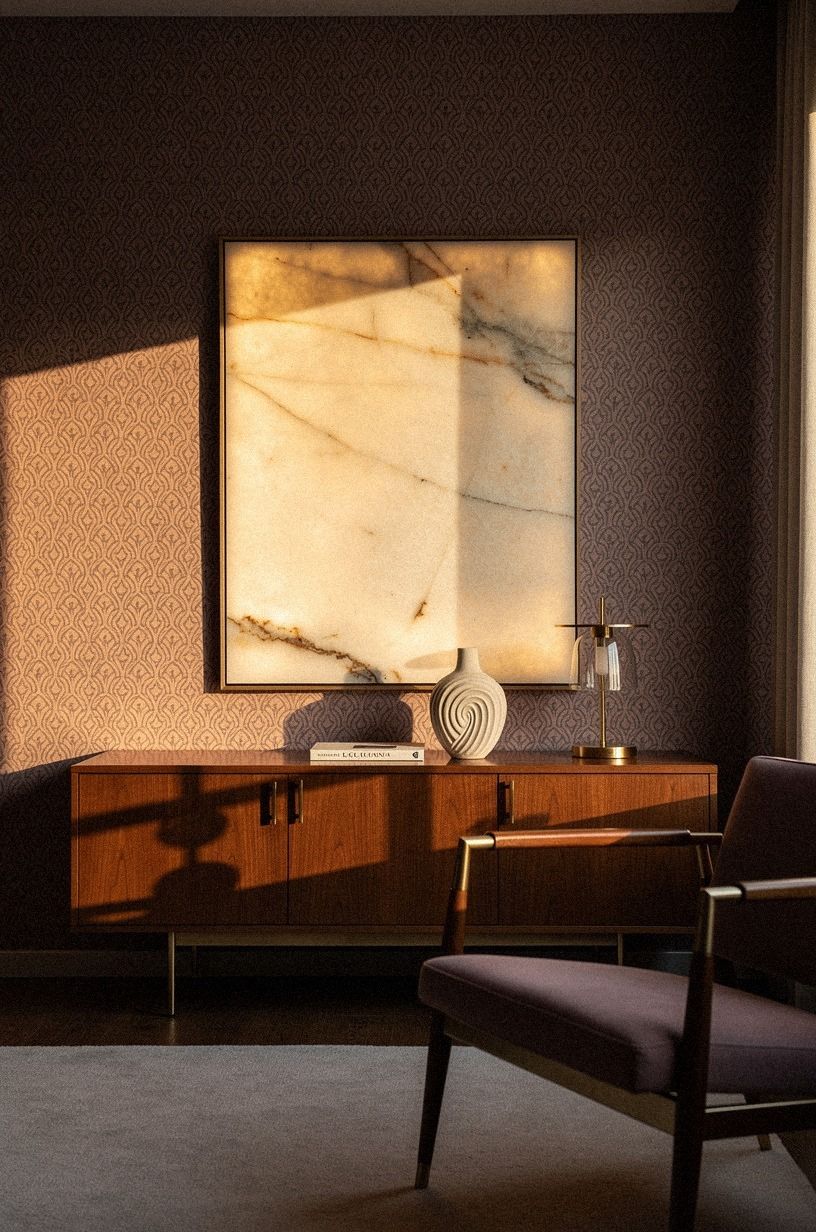
Art keeps wallpaper from feeling like the only event on the wall. Hang the center of your piece about 57 to 60 inches from the floor, adjusting for your furniture and eye level. Your pattern will become a backdrop rather than visual noise.
A small framed landscape looks serene against a subtle print, while charcoal-toned photography in a brass frame brings a sharper, modern note. You’ll want enough contrast for the frame to read, but not so much that it competes with every repeat.
If your art hangs above a console, judge the space between the furniture and the frame as a group. Your piece should feel attached to the furniture, not floating near the ceiling. I’ve found that a slightly lower arrangement usually feels more intimate.
And don’t cover every open spot. Leave breathing room so your wallpaper can provide the soft, organic texture you wanted. If you’re styling a rental, a few removable hooks can give you flexibility without adding permanent holes.
14Peel, Patch, and Photograph the Exit Plan
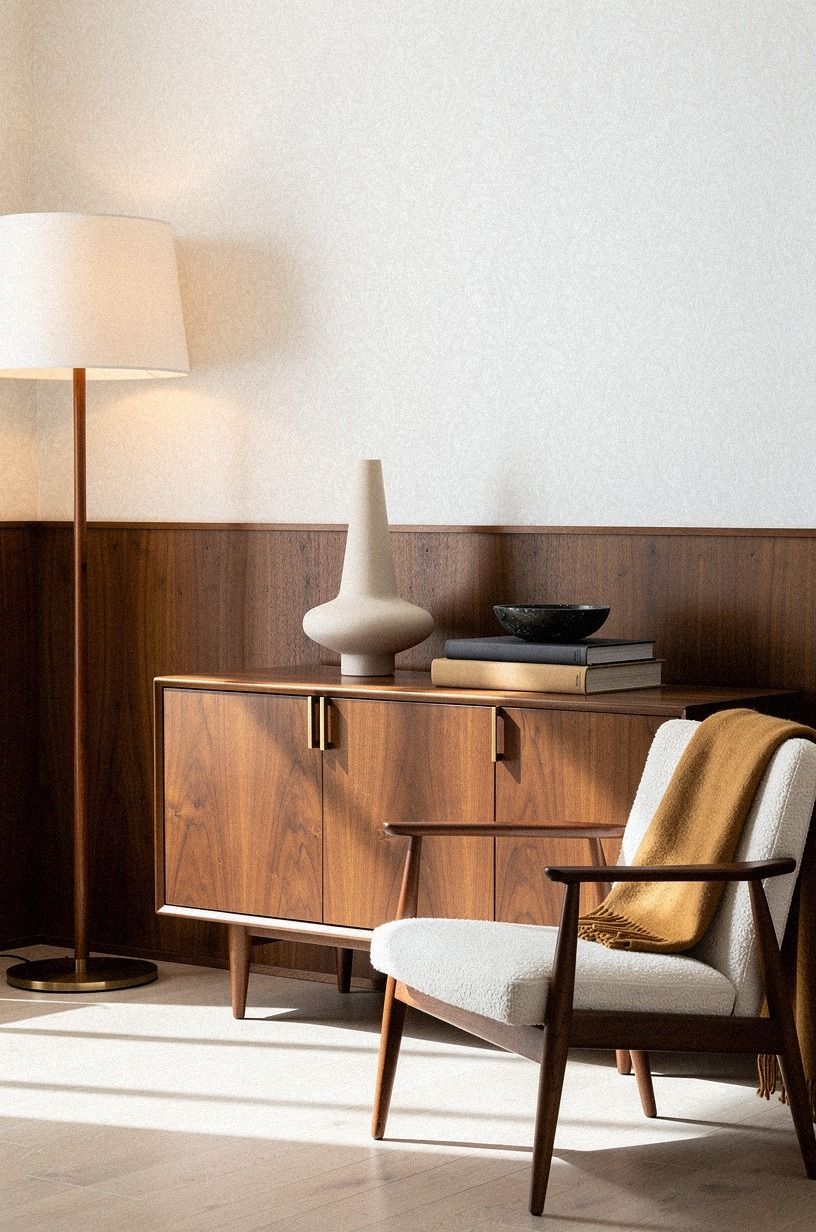
The best renter-friendly wallpaper plan includes removal from the beginning. Document your original wall, save the packaging, and keep a small amount of matching paint if you have it. You’ll feel calmer knowing your exit is already organized.
When you peel, warm the adhesive gently with a hair dryer and pull slowly at a low angle. Your wall may need a light clean afterward, especially if the texture held dust. A microfiber cloth is safer than a rough scrubber that could burnish the paint.
I’d never yank a full sheet straight out from the wall. That can lift paint and tear the paper into sticky fragments. Work in manageable sections, and stop if the surface begins to resist.
Your final check should include corners, outlets, and the area behind furniture. A book-matched walnut console may conceal part of the lower wall, but it shouldn’t hide a loose edge. If you’re comparing removable materials, will the grout lines show through peel-and-stick tile offers a useful reminder: the surface beneath always matters.
If you need a second removal reference before starting, read renter-friendly wallpaper that peels off without a trace. It’s worth understanding the exit before you make the entrance.
The Wall Texture Rule I’d Keep
I’ve tried wallpaper on smooth drywall, orange-peel paint, old plaster, and one wall that had no business receiving adhesive at all. The smooth walls were easy, but they also looked ordinary. The textured wall became my favorite once I stopped trying to make it behave like new construction.
My first mistake was trusting the word removable. Removable describes the adhesive, not the condition of the wall beneath it.
If the paint is chalky, loose, damp, or poorly bonded, wallpaper can pull it away. That’s why your sample test, cleaning, and primer matter more than the pattern’s price.
I’d choose a smaller repeat over a dramatic mural for a rough surface. A subtle linen-texture print can disguise little shifts, while a giant grid announces every crooked seam. You’ll get a more peaceful result when the design works with the wall instead of arguing with it.
There’s also a practical reason to keep the project focused. One accent zone lets you spend time on preparation, lighting, and furniture placement.
Your room can feel warm and sophisticated without covering every inch. And honestly, a well-finished 30-square-foot wall beats a rushed roomwide installation every time!
What People Always Want to Know
What is the best peel-and-stick wallpaper for a small wallpaper project?
The best choice is a small-scale, matte vinyl pattern with forgiving repeats. IKEA can work for simple supporting furniture, while an Article Sven tan leather chair can anchor the finished corner. Choose a print that won’t punish small alignment shifts, especially on textured walls.
Where can I buy peel-and-stick wallpaper pieces on a budget?
Look at IKEA, Wayfair, and Target, then check Facebook Marketplace or a local thrift shop for unopened rolls. Your safest budget move is buying one sample first. Browse these renter-friendly wallpaper ideas that peel off clean before you order.
How much does a peel-and-stick wallpaper makeover cost?
A small makeover usually runs about $100 to $300, depending on the wallpaper, primer, trim, and tools. Your free contributions are the wall you already have, existing furniture, and art you can move from another room. If the wall has old tile, compare preparation needs with how to lay peel-and-stick tile over ugly ceramic tile.
Can I create a peel-and-stick wallpaper room on a budget?
Yes, and you can start with one accent panel, leftover paint, and furniture you already own. Use a sample instead of a full roll at first, shop second-hand for lighting, and style with existing textiles. Your room can feel warm without a full renovation.
A small cabinet update may also be enough, so consider these peel-and-stick cabinet covers that actually fool people.
Is peel-and-stick wallpaper worth it in a small space?
Yes, especially when you use one contained wall or the back of a bookcase. A small space helps the pattern feel intentional.
Your best layout will usually keep the print behind one anchor piece, such as a dresser, desk, or reading chair. For bathrooms, these peel-and-stick tile ideas for a renter-friendly bathroom follow the same contained approach.
Is peel-and-stick wallpaper a good idea for a rental?
Yes, if your wall paint is stable and you test removal first. Pair it with a tension rod, removable hooks, and freestanding furniture.
Your rental plan should include documentation before installation and slow, low-angle peeling when you leave. Before committing, check whether the grout lines will show through peel-and-stick tile because every removable surface depends on what sits underneath.
Where I’d Start First
If I had to pick one, I’d start with the small sample test. It catches weak adhesion before you waste a roll, and textured walls vary more than product photos suggest. Pin this guide for later, then test the roughest corner in daylight.