
 by
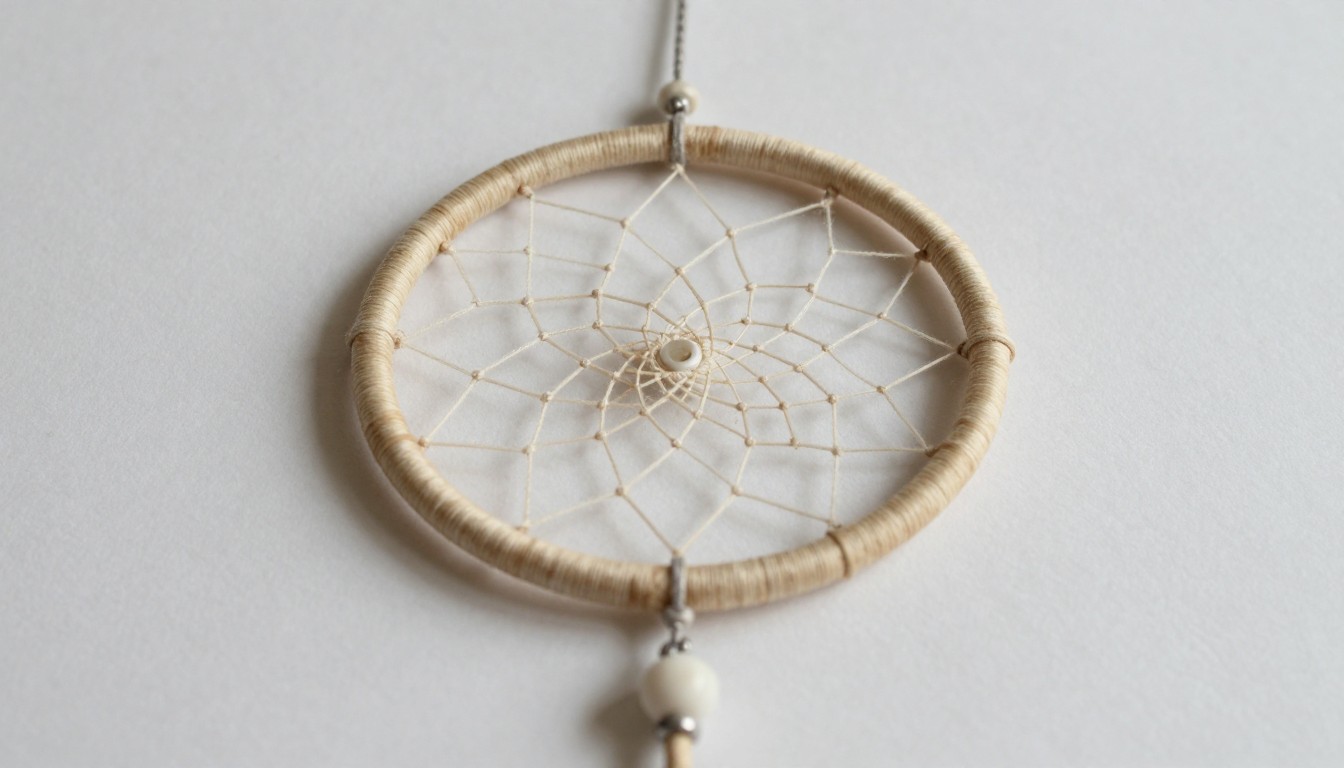
by Quick answer: A dreamcatcher is used symbolically to filter dreams. Popular belief says it preserves pleasant nighttime images, while it has also served as a shared symbol of hope and healing.
- The French-language Wikipedia entry describes dream filtering as a popular belief, not a proven sleep effect.
- In that account, pleasant nighttime images remain while bad visions disappear at first light.
- English Wikipedia documents a framed dreamcatcher used by the Little Thunderbirds Drum and Dance Troupe as a shared symbol of hope and healing.
Updated July 2026 · Reviewed for accuracy
That’s the straight answer. A dreamcatcher is a symbolic object associated with dreams, protection, hope and healing, but the exact meaning depends on how it’s presented and who is using it.
I’d treat it as an expression of belief or identity, not as sleep technology. The distinction matters because the folklore explains what the object represents, while the cited sources don’t establish that it physically changes dreams.
What is a dreamcatcher actually used for?
The clearest stated use is to filter dreams. The French-language Wikipedia entry on dreamcatchers describes a popular belief in which the object prevents bad dreams from entering the owner’s sleep.
That use is symbolic. Hanging a dreamcatcher can express the wish to keep comforting nighttime images and leave disturbing ones behind. It may also make a sleep space feel more personally meaningful, though that personal value shouldn’t be confused with a measurable effect on sleep.
Dreamcatchers can have a broader communal role too. According to English Wikipedia, the Little Thunderbirds Drum and Dance Troupe from the Red Lake Indian Reservation has used a mounted and framed dreamcatcher as a shared symbol of hope and healing. That example moves the object beyond the narrow idea of bedroom decoration.
Uses supported by the named sources
| Use | What that means | How firmly to state it |
|---|---|---|
| Filtering dreams | Keeping welcome dream imagery while excluding bad visions | A popular belief described by French-language Wikipedia |
| Expressing hope | Giving visible form to a positive shared intention | A documented use by a specific troupe |
| Representing healing | Serving as a communal symbol rather than a physical treatment | Symbolic use, not a medical claim |
My read is simple: “dream filter” answers the basic question, but it isn’t the whole answer. A dreamcatcher may be used privately beside a sleeping area or displayed publicly to communicate a shared meaning.
How is the dream-filter belief supposed to work?
The French-language Wikipedia account describes the dreamcatcher as a filter for dreams sent by spirits. In that telling, it catches the dreams, keeps the beautiful images of the night and deals with the unwanted visions at the first light of day.
This creates a clear symbolic sequence. Dreams arrive, desirable imagery remains and bad visions are removed. The purpose isn’t merely to decorate the room; the arrangement gives physical form to the idea that welcome and unwelcome experiences can be separated.
The careful way to describe it: Popular belief presents the dreamcatcher as a filter that retains good nighttime images and disposes of bad visions at first light. It’s a belief-based explanation, not proof of a physical process.
I wouldn’t turn that account into a promise. Nothing in the named sources establishes that hanging a dreamcatcher changes the content of a person’s dreams, prevents nightmares or improves mattress comfort. Its value may still be real to the owner as symbolism, but that’s a different kind of value.
This wording is especially useful when explaining a dreamcatcher to a child. Saying “some people believe it filters dreams” preserves the story without promising that the object will control what happens during sleep.
The same distinction applies to phrases such as “magical protection.” Pinterest’s Dream Catcher Meaning page describes dreamcatchers as magical elements used to care for their owners, but that is the page’s framing. It shouldn’t be presented as an established capability.
Why are dreamcatchers linked with hope and healing?
A mounted and framed dreamcatcher has been used as a shared symbol of hope and healing by the Little Thunderbirds Drum and Dance Troupe from the Red Lake Indian Reservation, according to English Wikipedia. That’s a concrete example of a dreamcatcher carrying meaning outside an individual bedroom.
The framing matters. Mounting the object for shared display puts the emphasis on what a group wants it to represent. Hope concerns what people wish to carry forward, while healing can describe the meaning assigned to the symbol without claiming that the object provides medical treatment.
This example also shows why “What is it used for?” has more than a decorative answer. An object may be displayed because of what it communicates. In this case, the documented message is communal rather than limited to one sleeper’s dreams.
Keep the wording specific
- Say a dreamcatcher can be used as a symbol of hope and healing.
- Attribute the documented example to the Little Thunderbirds Drum and Dance Troupe.
- Don’t claim that every dreamcatcher has exactly the same meaning for every owner or community.
I wouldn’t use a single example to declare one universal interpretation. It supports the narrower and more accurate point that dreamcatchers have been used to carry shared emotional and cultural meaning.
Does every part of a dreamcatcher have a fixed meaning?
Pinterest’s Dream Catcher Meaning page says it explains the meaning of the elements that make up a dreamcatcher. That shows how online guides often interpret separate components, but the page description doesn’t establish a universal system that applies to every object or community.
That’s why I’d be cautious with charts claiming that each visible feature always means one specific thing. Meanings can be assigned by a maker, an owner or a group, and the named sources don’t support treating every component as a fixed code.
| Claim | What the source supports | Safer interpretation |
|---|---|---|
| It filters dreams | French-language Wikipedia identifies this as a popular belief | Describe it as symbolic or belief-based |
| It preserves good imagery | The same account says beautiful nighttime images are retained | Explain the folklore without promising an effect |
| It represents hope and healing | English Wikipedia documents this use by a named troupe | Present it as a specific documented use |
| Every component has one fixed meaning | The Pinterest page offers element meanings but doesn’t establish universal agreement | Ask what the particular maker or owner intends |
The cleanest distinction is between use and interpretation. Its use might be filtering dreams or expressing hope. The interpretation of an individual detail may be more personal and shouldn’t automatically be presented as a universal rule.
If a seller, maker or owner gives a particular explanation, attribute the meaning to that person. That keeps the description honest and avoids turning a personal interpretation into a claim about every dreamcatcher.
How should you choose, place or explain a dreamcatcher?
A framed dreamcatcher can work as a shared display, as the Little Thunderbirds example documented by English Wikipedia shows. Placement near a bed is therefore an option, not the only meaningful way to use one.
Start by deciding what you want the object to communicate. If the dream-filter belief matters to you, a sleep area makes that intention easy to understand. If you see it as a symbol of hope or healing, a visible shared space may suit that purpose better.
A sensible placement checklist
- Choose the meaning before choosing the spot.
- Ask the maker or seller how they describe the object and its components.
- Use belief-based wording rather than claiming it guarantees better dreams.
- Follow the maker’s hanging or mounting directions.
- Secure it so it can’t fall onto a sleeper or interfere with the bed.
If you’re giving one to somebody else, explain why you chose it. “I see this as a symbol of hope” is clearer than assigning the recipient a belief they may not share. It also leaves room for the object’s meaning to remain personal.
For children, I’d keep the explanation plain: some people believe a dreamcatcher filters dreams and keeps good nighttime images. Avoid telling a child that it guarantees protection from bad dreams, because the French-language Wikipedia entry presents the idea as popular belief.
Respect also means resisting broad claims. English Wikipedia provides a specific community-connected example, not permission to say every group uses dreamcatchers in the same way. Name the documented context when it matters and allow individual makers to explain their own work.
What a dreamcatcher can and can’t change in a sleep space
A dreamcatcher changes the meaning or appearance of a room. It can’t change the construction beneath the sleeper. That boundary is worth keeping clear if the real concern is physical comfort rather than symbolism.
If discomfort is the issue, inspect the sleep setup itself. Mattress construction, the support below it and how the bed fits the room are separate questions from what a dreamcatcher represents.
I’d diagnose those practical concerns directly. A symbolic object and a supportive sleep surface perform entirely different jobs, so there’s no reason to expect one to compensate for a problem with the other.
| Your actual question | Useful next step |
|---|---|
| What does the dreamcatcher represent? | Use the belief and symbolism explained in this guide |
| Is my mattress the right choice? | Read the guide to choosing the best mattress |
| What should support my mattress? | Check what goes under a mattress |
| How will it look with a curved bed frame? | Review what defines a sleigh bed before planning the wall placement |
The distinction doesn’t make a dreamcatcher meaningless. Quite the opposite. It lets the object be judged on what it’s actually used for: expressing a belief, marking an intention or sharing a symbol.
My bottom line is that “dream filter” is the right short answer, provided it’s labeled as popular belief. Hope and healing are also supported symbolic uses in a documented community example. Claims of guaranteed dream control go beyond what the named sources establish.
FAQ
What is a dreamcatcher used for in simple terms?
It’s used symbolically to filter dreams. The French-language Wikipedia entry describes a popular belief that it keeps beautiful nighttime images while preventing bad dreams from taking over the sleeper’s night.
Does a dreamcatcher actually stop bad dreams?
The named source describes dream filtering as a popular belief, not a proven physical effect. I’d present a dreamcatcher as a meaningful symbol rather than promise that it will stop bad dreams.
Does a dreamcatcher have to hang above a bed?
The cited sources don’t establish a universal placement rule. English Wikipedia documents a mounted and framed example used as a shared symbol, so a dreamcatcher can carry meaning outside a bedside setting.
Can a dreamcatcher symbolize hope and healing?
Yes, it can serve that symbolic purpose. English Wikipedia reports that the Little Thunderbirds Drum and Dance Troupe from the Red Lake Indian Reservation has used a framed dreamcatcher as a shared symbol of hope and healing.
Does every part of a dreamcatcher mean something specific?
Pinterest’s Dream Catcher Meaning page assigns meanings to dreamcatcher elements, but its description doesn’t establish a universal interpretation. Ask how the particular maker or owner explains the components instead of assuming every detail has one fixed meaning.