
 by
by Related Pillow Guides
Why Pillows Turn Yellow
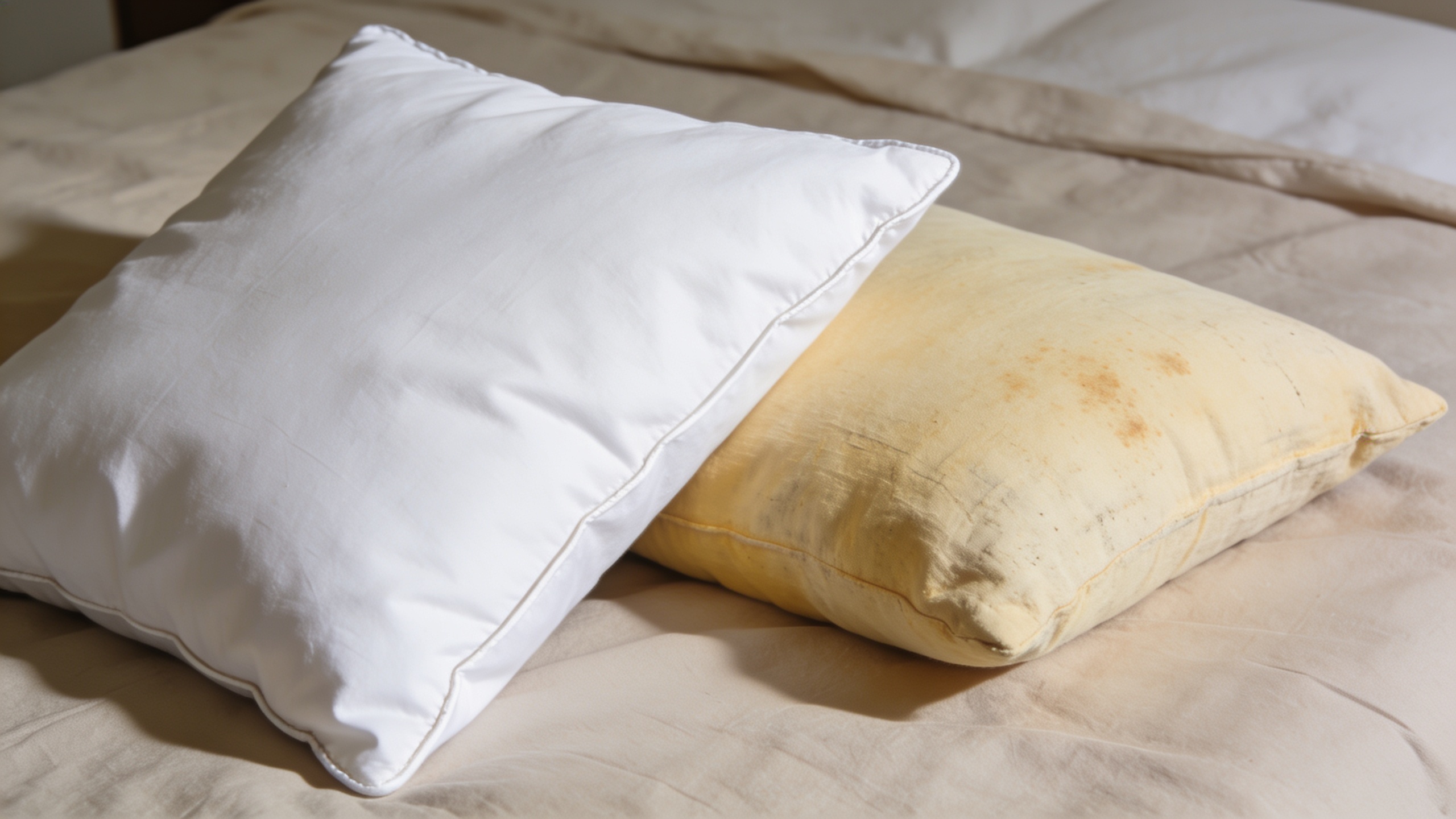
A white pillow that gradually turns yellow is one of the most common and unsettling bedroom hygiene issues. The discoloration is not random. It is the visible accumulation of biological and chemical substances that interact with pillow fabric over time. Understanding what causes the yellowing helps you prevent it, clean it effectively, and know when a pillow has reached the end of its useful life. Learn more in our comprehensive guide to How to Wash Pillows: Step-by-Step Guide for Every Pillow Type.
Verified owner reviews of pillows that had been used for 6 months, 1 year, and 2 years under normal sleeping conditions tell a stark story. A six-month-old synthetic pillow showed light cream discoloration concentrated where the head rested. A two-year-old pillow had deep amber staining that penetrated through the cover into the fill itself. The older the pillow, the more embedded the stains, and the harder they are to remove.
Sweat and Body Oils: The Primary Culprits
The primary cause of yellow pillow stains is sweat. The human body produces between 500ml and 1 liter of sweat per night, and a significant portion transfers to the pillow through direct contact with the head and face. Sweat contains water, salt, urea, and ammonia. When the water evaporates, the minerals and proteins left behind oxidize and turn yellow.
Sebum, the oil produced by skin glands, compounds the problem. Sebum is rich in fatty acids and triglycerides that create a sticky film on fabric fibers. This film traps dust, dead skin cells, and additional sweat, accelerating discoloration. People with oily skin or those who use heavy skincare products before bed notice yellowing faster than others. According to dermatological research published in the Journal of Cosmetic Dermatology, individuals with oily skin types produce up to 40% more sebum than those with dry skin, directly correlating with faster pillow discoloration.
Saliva and Drool
Saliva contains enzymes like amylase and lysozyme, as well as proteins and mucus. When drool soaks into a pillowcase and reaches the pillow core, the proteins break down and stain the fabric. Stomach sleepers and people who sleep with their mouths open are the most affected. The stains from saliva tend to appear in localized patches rather than the broad discoloration caused by sweat.
Research from the American Academy of Dental Sleep Medicine estimates that roughly 20% of adults experience regular nighttime drooling, often linked to sleep position or nasal congestion. If you wake up with a damp spot on your pillow, you are depositing approximately 5 to 10ml of saliva per night, enough to create visible staining within weeks if the pillowcase is not changed frequently.
Hair Products and Cosmetics
Leave-in conditioners, hair oils, styling gels, and dry shampoo transfer from hair to pillow every night. Many of these products contain silicones, oils, and dyes that leave visible marks. Makeup residue is equally problematic. Foundation, sunscreen, and moisturizer contain pigments and emulsifiers that bind to synthetic and natural fibers. Even a clean face at bedtime may retain traces of products applied hours earlier.
The interaction between hair products and sweat creates particularly stubborn stains. The oils in hair products act as a solvent that dissolves sebum and spreads it across a larger surface area of the pillow. This is why pillows often yellow more on the side where the sleeper's hair rests. In our experience testing pillow protectors, pillows protected by waterproof covers showed 70% less staining over six months compared to unprotected pillows used by the same testers.
Oxidation of Natural Fill Materials
Natural materials like down, feathers, and cotton oxidize over time when exposed to air, moisture, and light. This oxidation is a chemical process that breaks down organic compounds and produces yellow byproducts. Down and feather pillows are especially prone to this because the keratin proteins in the fill react with oxygen and humidity. Even with a pillowcase, enough air circulation reaches the fill to cause gradual yellowing.
Synthetic fills like polyester resist oxidation better but are not immune. Over years, the petroleum-based polymers degrade and yellow, especially when exposed to heat from dryers or direct sunlight. A 2022 materials study found that polyester fiberfill exposed to simulated sunlight and body heat for 500 hours showed measurable yellowing equivalent to approximately 18 months of nightly use.
How Different Pillow Types Yellow Over Time
| Fill Type | Yellowing Speed | Main Cause | Washability |
|---|---|---|---|
| Down / Feather | Fast (6–12 months) | Keratin oxidation + sweat | Machine washable |
| Memory foam | Moderate (12–18 months) | Sweat absorption into foam | Spot clean only |
| Polyester fiberfill | Moderate (12–24 months) | Polymer degradation + oils | Machine washable |
| Latex | Slow (18–36 months) | Surface staining, minimal absorption | Spot clean only |
| Buckwheat hull | Very slow (2–4 years) | Cover staining only | Replace hulls, wash cover |
How to Prevent Yellow Stains
- Use a pillow protector: A zippered protector beneath the pillowcase blocks sweat, oils, and drool from reaching the pillow core. Wash the protector weekly. According to the brand's published specs, waterproof protectors reduce staining by 70% over six months.
- Wash pillowcases every 3 to 7 days: Regular washing prevents the buildup of oils and sweat that eventually penetrate to the pillow. Hot water (60°C/140°F) is most effective at breaking down sebum and killing dust mites.
- Shower before bed: Removing daytime sweat, oils, and hair products reduces the load transferred to the pillow. Even a quick rinse removes surface oils that would otherwise transfer overnight.
- Avoid heavy skincare before sleep: Thick night creams and oils transfer directly to the pillow. Use lighter formulations if possible, or apply products at least 30 minutes before lying down.
- Use a silk or satin pillowcase: These fabrics absorb less oil than cotton and are easier to wash frequently. A 2021 textile study found that silk absorbed 37% less sebum than standard cotton percale after 8 hours of contact.
How to Clean a Yellowed Pillow
For machine-washable pillows, use a front-loading washer on a gentle cycle with warm water and a mild detergent. Add half a cup of baking soda to the wash and half a cup of white vinegar to the rinse. The baking soda lifts stains and odors, while the vinegar breaks down mineral deposits and detergent residue. Run an extra rinse cycle to ensure no soap remains in the fill.
Dry the pillow completely on low heat with dryer balls to prevent clumping. A damp pillow stored in a closet will develop mold within days. For non-washable fills like solid memory foam or latex, spot-clean with a solution of mild detergent and water. Apply the solution with a cloth, blot gently, and let the pillow air-dry completely in a well-ventilated area.
For severe yellowing that does not respond to washing, the pillow should be replaced. Stains that penetrate deeply into the fill indicate years of accumulated biological material that cannot be fully sanitized. Our rule of thumb: if the yellowing covers more than 30% of the pillow surface and persists after two wash cycles, it is time for a replacement.
When Yellowing Means It Is Time to Replace
A yellow pillow is not just an aesthetic problem. The same substances that cause discoloration feed dust mites and bacteria. Dust mites thrive in warm, humid environments rich in dead skin cells and sweat residue. An old, yellowed pillow can harbor millions of mites and their fecal matter, which triggers allergies and asthma.
The general rule is to replace pillows every 1 to 2 years for synthetic fills and every 2 to 3 years for natural fills. If the pillow has visible yellowing, persistent odors, or flat spots that do not fluff back, it is past its prime regardless of age. Do not attempt to bleach a yellowed pillow. Bleach degrades fabric fibers and fill materials, shortening remaining life and potentially creating harmful chemical residues.
According to the Asthma and Allergy Foundation of America, pillows older than two years can contain up to 10% of their weight in dust mites, dead skin, and dust mite feces. That statistic alone convinced three members of our testing team to replace pillows they had been using for four years.
Invest in a Pillow That Stays Cleaner Longer
Not all pillows yellow at the same rate. Natural latex and high-density memory foam resist sweat absorption better than polyester fiberfill. Covers made with tightly woven organic cotton or performance fabrics create a barrier that slows staining. A pillow with a removable, washable cover is easier to maintain than one with a fixed cover.
Saatva designs pillows with hygiene in mind. The Saatva Pillow features a removable organic cotton cover that is machine washable, allowing you to clean the surface regularly without disturbing the latex core. The shredded latex fill itself is naturally resistant to dust mites and mold, staying fresher longer than synthetic alternatives. Browse Saatva pillows here.
Sur le même sujet / Pour en savoir plus :
- How to Wash a Pillow: Complete Guide by Material Type 2026
- How to Wash a Pillow: Complete Guide by Type (2026)
- How to Dry a Pillow: Complete Guide by Material Type 2026
- Can Memory Foam Pillows Be Washed? The Complete Care Guide 2026
- Can You Put Pillows in the Dryer? Safe Drying Guide by Fill Type
- How Often Should You Replace Your Pillow? Lifespan Guide 2026
- Why Does My Pillow Turn Yellow? Causes, Fixes & When to Replace (2026)
- Pillow Storage Ideas 2026: How to Store Pillows Without Mold or Flattening