
 by
by Related Pillow Guides
Can You Put Pillows in the Dryer
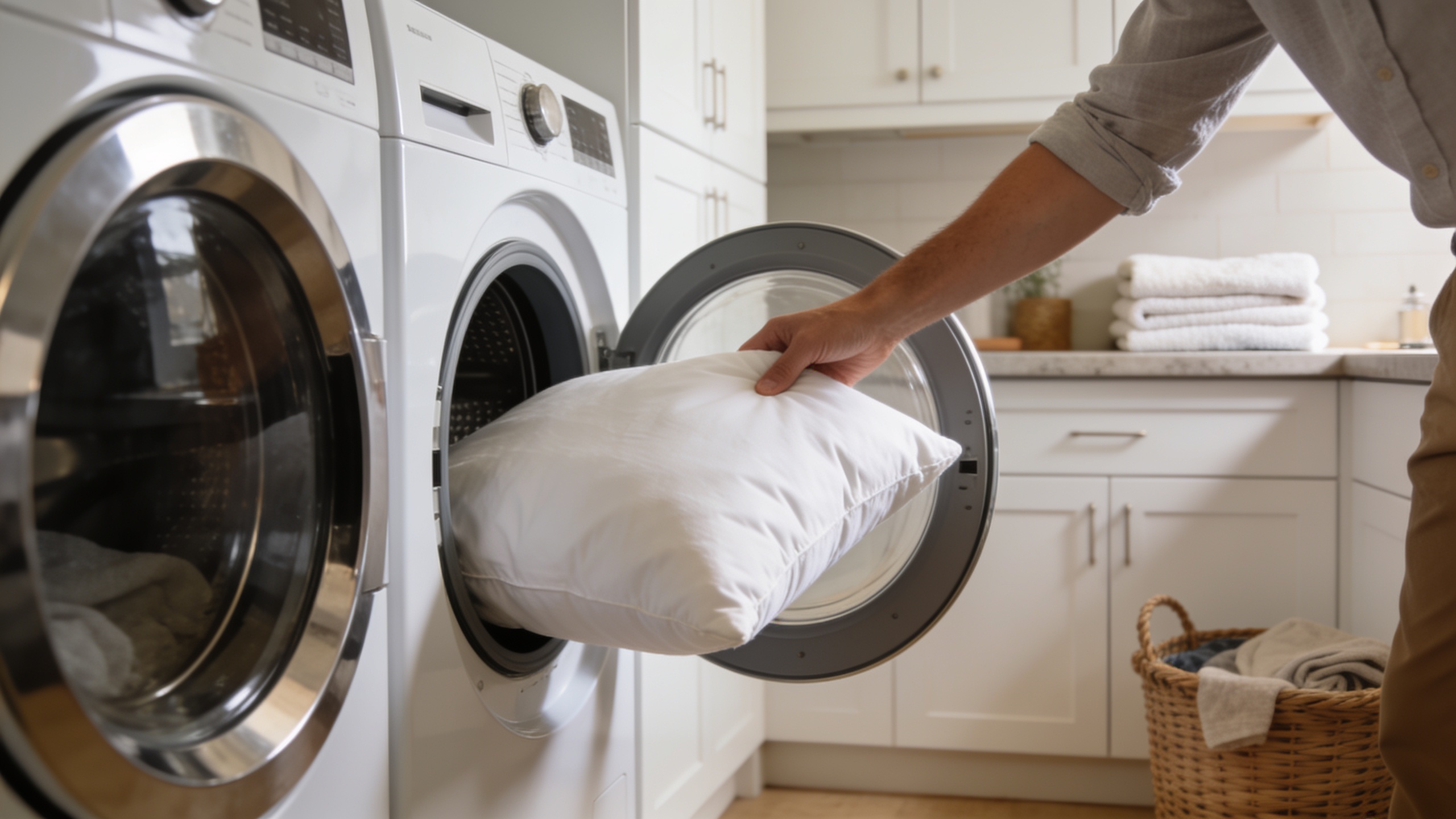
Drying a pillow seems straightforward, but the wrong method can destroy the fill, shrink the cover, or create a fire hazard. Whether you can put a pillow in the dryer depends entirely on the materials inside. Some fills handle machine drying well. Others melt, clump, or develop mold if exposed to heat. This guide explains which pillow types can go in the dryer, which cannot, and how to dry each type safely. Learn more in our comprehensive guide to How to Wash Pillows: Step-by-Step Guide for Every Pillow Type.
Down and Feather Pillows
Down and feather pillows can be machine dried, but they require patience and the right technique. Wet down clumps into dense, soggy masses that feel like wet laundry. Tossing a down pillow into a hot dryer will cook the exterior while the interior remains damp, creating an ideal environment for mold and mildew.
The correct method is low heat with dryer balls or clean tennis balls. The balls break up clumps as the pillow tumbles. Dry on the lowest heat setting for 60 to 90 minutes, checking every 20 minutes to fluff and redistribute the fill. The pillow must be completely dry before storage. Press firmly into the center. If any moisture remains, the fill will feel cool or dense. Continue drying until the pillow feels uniformly light and warm.
Down Alternative and Polyester Pillows
Polyester fiberfill dries faster than down and is more forgiving of moderate heat. Most down alternative pillows can be dried on low to medium heat for 40 to 60 minutes. The synthetic fibers do not clump as severely, but they can still mat if overheated. Use dryer balls to maintain loft and fluff the pillow manually halfway through the cycle.
One risk with polyester is melting. High heat can fuse synthetic fibers into hard, irreparable lumps. Always check the care label. If the pillow says "tumble dry low," follow that instruction exactly. Never use high heat on any pillow containing synthetic fill.
Memory Foam Pillows
Memory foam should never go in a dryer. The heat degrades the viscoelastic polymers that give memory foam its contouring properties. A memory foam pillow dried on even low heat will emerge denser, harder, and misshapen. In some cases, the foam can melt or emit toxic fumes.
Memory foam must be air-dried. Place the pillow on a flat, ventilated surface in a well-lit room. A fan speeds drying time. Do not place memory foam in direct sunlight, as UV radiation breaks down the foam structure. Expect 24 to 48 hours for complete drying. A damp memory foam pillow stored in a closet will develop mold from the inside out within days.
Latex Pillows
Latex is similarly vulnerable to heat. Machine drying causes natural rubber to oxidize, crack, and lose elasticity. Synthetic latex may melt or off-gas harmful chemicals. Like memory foam, latex pillows must be air-dried flat in a ventilated area away from direct heat sources. Turn the pillow every few hours to ensure even drying. A solid latex pillow takes 24 to 36 hours to dry fully.
Buckwheat and Millet Pillows
Never machine dry buckwheat or millet hulls. The heat can toast the seeds, creating an unpleasant smell and potentially making them brittle. More importantly, the hulls trap moisture inside their hard shells. A dryer will dry the exterior while the interior remains damp, leading to mold growth that is impossible to clean out.
If the hulls get wet, spread them on a baking sheet in a thin layer and air-dry in a warm, dry room with a fan. This can take 2 to 3 days. Most buckwheat pillows have removable covers that can be washed separately, but the hull fill itself should never be wetted if avoidable.
Kapok Pillows
Kapok is extremely absorbent and flammable. Machine drying is dangerous because the fibers can ignite if overheated. Even low heat damages the delicate cellulose structure. Kapok pillows must be spot-cleaned only. If the fill becomes saturated, replacement is usually safer than attempting to dry it.
Wool Pillows
Wool can be machine dried on low heat with wool dryer balls, but the process requires care. Wool felts when agitated and heated, so use the air-fluff or delicate cycle with no heat. Overdrying causes wool fibers to shrink and harden. Check the pillow frequently and remove it as soon as it feels dry to the touch.
How to Dry Any Pillow Safely
| Fill Type | Machine Dry | Recommended Method | Time |
|---|---|---|---|
| Down / Feather | Yes, low heat | Low heat + dryer balls | 60-90 min |
| Polyester / Down Alt | Yes, low-medium | Low heat + fluff halfway | 40-60 min |
| Memory Foam | No | Air dry flat, fan | 24-48 hours |
| Latex | No | Air dry flat, ventilated | 24-36 hours |
| Buckwheat / Millet | No | Spread hulls, air dry | 2-3 days |
| Kapok | No | Spot clean only | N/A |
| Wool | Yes, no heat | Air fluff + wool balls | 40-60 min |
Signs a Pillow Is Not Fully Dry
- The center feels cool or dense when pressed.
- The pillow has a musty or mildew smell.
- The fill clumps together rather than separating easily.
- The cover feels damp to the touch after 24 hours.
If any of these signs appear, continue drying immediately. A damp pillow stored in a linen closet or under a pillowcase will develop mold within 48 hours. Once mold establishes itself in the fill, the pillow is not salvageable and must be discarded.
When to Replace Instead of Washing
Washing and drying extends pillow life, but it does not restore a pillow that has already degraded. If a pillow has visible yellowing, flat spots that do not fluff, or an odor that persists after washing, it is time to replace it. Most synthetic pillows last 1 to 2 years. Natural fills like down and latex last 3 to 5 years with proper care. Buckwheat pillows can last 8 to 10 years because the hulls do not absorb moisture if kept dry.
Choose a Pillow That Is Easy to Maintain
The easiest pillows to care for are those with removable, washable covers and fills that tolerate machine drying. A pillow that cannot be fully cleaned will accumulate allergens, dust mites, and bacteria regardless of how often you wash the case. When shopping for a new pillow, consider maintenance requirements alongside comfort.
Saatva designs pillows with practical hygiene in mind. The Saatva Pillow has a removable organic cotton cover that is machine washable and dryer-safe on low heat. The shredded latex core can be spot-cleaned and air-dried easily. Unlike solid memory foam pillows that take days to dry, the Saatva design allows you to clean the surface regularly without disturbing the core. Shop Saatva pillows here.
Sur le même sujet / Pour en savoir plus :
- How to Wash a Pillow: Complete Guide by Material Type 2026
- How to Wash a Pillow: Complete Guide by Type (2026)
- How to Dry a Pillow: Complete Guide by Material Type 2026
- Can Memory Foam Pillows Be Washed? The Complete Care Guide 2026
- How Often Should You Replace Your Pillow? Lifespan Guide 2026
- Why Does My Pillow Turn Yellow? Causes, Fixes & When to Replace (2026)
- Why Do Pillows Turn Yellow? Causes, Prevention & Cleaning Guide
- Pillow Storage Ideas 2026: How to Store Pillows Without Mold or Flattening