
 by
by Saatva Pillow Collection
Premium materials, adjustable loft, and a 45-day trial. The best pillow lineup for Your Home in 2026.
Shop Saatva Pillows →
Learn more in our comprehensive guide to How to Wash Pillows: Step-by-Step Guide for Every Pillow Type.
Why Pillow Storage Matters
Most households have more pillows than beds — decorative throw pillows, seasonal bedding pillows, guest pillows, and replacement sleeping pillows accumulate quickly. Without proper storage, these pillows become dust-covered, flattened, and musty, rendering them unusable when needed. Proper storage protects your investment, maintains pillow quality, and keeps your home organized.
The enemies of stored pillows are moisture, dust, compression, and pests. A good storage solution addresses all four threats while keeping pillows accessible and organized. Whether you have a spacious linen closet or a tiny apartment, there's a storage strategy that works for your space and pillow collection.
Storage Solutions by Space
1. Vacuum Storage Bags — Best for Seasonal Pillows
Vacuum storage bags ($15–$30 for a set) compress pillows to a fraction of their original size by removing air. This is ideal for seasonal decorative pillows, extra down comforters, and guest pillows that aren't used regularly. The airtight seal prevents moisture, dust, and pests from reaching the contents.
Important: Don't store foam or latex pillows in vacuum bags long-term. These materials need air to maintain their structure, and extended compression can damage the cell structure. Vacuum storage is best for down, feather, and polyester fills only.
2. Under-Bed Storage Containers — Best for Small Spaces
Under-bed storage bins ($20–$40) with tight-fitting lids utilize the often-wasted space beneath the bed. Choose clear containers so you can see contents without opening, or label opaque bins clearly. This solution works well for guest pillows and extra sleeping pillows that you want accessible but not visible.
Elevate containers slightly off the floor on small risers if your home is prone to moisture. Add cedar blocks or lavender sachets to repel moths and keep stored pillows smelling fresh.
3. Linen Closet Shelving — Best for Active Rotation
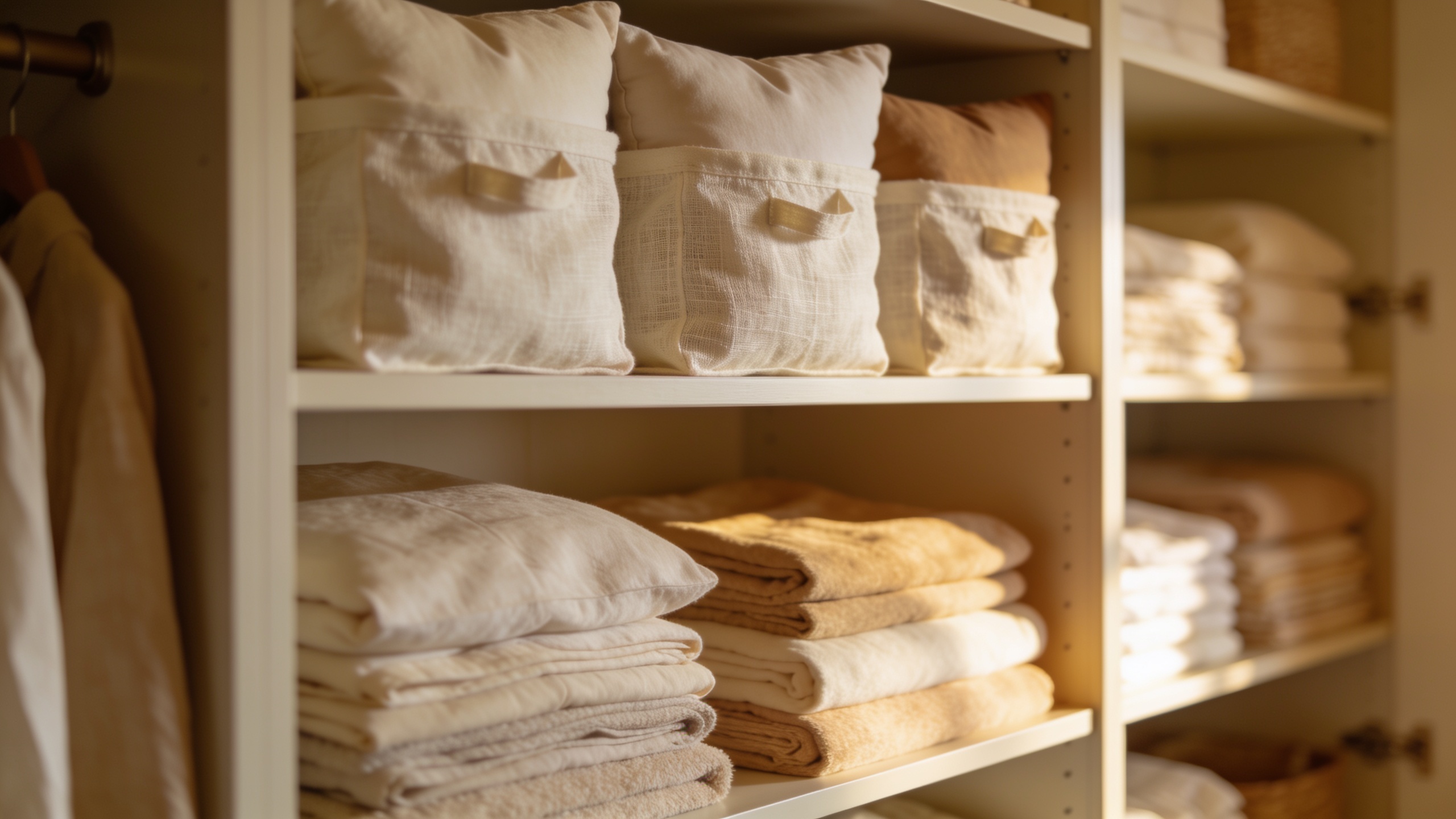
If you have a linen closet, dedicate a shelf to pillow storage. Use breathable cotton storage bags ($10–$20 each) rather than plastic, which traps moisture. Store pillows flat rather than on their edges to prevent fill from shifting and creating lumps.
Organize by type: sleeping pillows on one shelf, decorative pillows on another, seasonal items on a higher shelf. This system keeps frequently used items accessible while storing occasional-use pillows out of the way.
4. Decorative Baskets and Ottomans — Best for Living Spaces
For throw pillows and accent cushions used in living areas, decorative storage baskets ($25–$60) or storage ottomans provide convenient access while maintaining a tidy appearance. Woven baskets add texture to the room's design, and lidded ottomans serve dual purposes as seating and storage.
Choose baskets with liners to prevent snagging on woven fibers. Rotate pillows regularly so they don't develop permanent compression marks from sitting in the same position.
5. Hanging Shoe Organizers — Best for Pillowcases and Small Pillows
A clear over-the-door shoe organizer ($15–$25) repurposed for pillow storage keeps items visible and accessible while taking zero floor space. Each pocket holds one small decorative pillow or several pillowcases. This works especially well in craft rooms, children's bedrooms, and guest rooms.
Preparing Pillows for Storage
Clean Before Storing
Never store dirty pillows. Body oils, sweat, and skin cells attract pests and create odors that intensify during storage. Wash or dry-clean pillows according to manufacturer instructions before packing them away.
Ensure Complete Dryness
Even slight moisture creates mold and mildew during storage. After washing, dry pillows thoroughly — down and feather pillows may take multiple dryer cycles. Store only when completely dry to the touch.
Use Protective Covers
Place pillows in breathable cotton storage bags or pillowcases before storing in bins or boxes. This adds a layer of protection against dust while allowing air circulation. Avoid plastic bags that trap moisture.
Add Natural Pest Deterrents
Cedar blocks, lavender sachets, and cedar oil repel moths and keep stored items smelling fresh. Replace these every 6 months for continued effectiveness. Avoid chemical mothballs, which leave strong odors and may be toxic.
Storage by Pillow Type
Down and Feather Pillows
Store flat in breathable bags. Never compress long-term — the fill needs loft to maintain its insulating properties. Fluff stored down pillows monthly if in active storage.
Memory Foam Pillows
Store flat in a cool, dry place. Avoid stacking heavy items on top, which can create permanent impressions. Never vacuum-seal memory foam.
Latex Pillows
Store away from direct sunlight and heat sources, which can degrade latex. Breathable cotton bags work best. Latex is naturally resistant to dust mites and mold, making it lower-maintenance in storage.
Decorative Throw Pillows
Rotate stored decorative pillows every few months to prevent permanent compression of one side. Store in clear bins or labeled containers for easy seasonal swapping.
Buying Guide: Storage Product Selection
Consider your climate. Humid climates require moisture-resistant storage solutions with desiccant packs. Dry climates need less moisture protection but should still prevent dust accumulation.
Think about access frequency. Daily-use pillows need convenient, accessible storage. Seasonal items can be stored in less accessible spaces. Guest pillows should be easily retrievable but protected from dust.
Measure your space before buying storage containers. Under-bed storage only works if containers fit your bed frame height. Closet shelving needs containers that match shelf dimensions.
FAQ
How long can pillows be stored?
Clean, properly stored pillows can last 1–2 years in storage. Down and feather pillows may need fluffing after extended storage. Synthetic fills generally withstand storage better than natural materials.
Can I store pillows in plastic bags?
Breathable storage is better than plastic, which traps moisture. If using plastic, ensure pillows are completely dry and include desiccant packs. Cotton or canvas bags are ideal.
Should I wash pillows before storing?
Yes. Always clean pillows before storage to remove oils and skin cells that attract pests and create odors.
How do I keep stored pillows smelling fresh?
Lavender sachets, cedar blocks, and occasional airing keep stored pillows fresh. Avoid chemical deodorizers that leave residues.
What's the best way to store extra bed pillows?
Flat in breathable bags on closet shelves or in under-bed containers. Avoid compression unless using vacuum bags for short-term seasonal storage of down or polyester fills.
Sur le même sujet / Pour en savoir plus :
- How to Wash a Pillow: Complete Guide by Material Type 2026
- How to Wash a Pillow: Complete Guide by Type (2026)
- How to Dry a Pillow: Complete Guide by Material Type 2026
- Can Memory Foam Pillows Be Washed? The Complete Care Guide 2026
- Can You Put Pillows in the Dryer? Safe Drying Guide by Fill Type
- How Often Should You Replace Your Pillow? Lifespan Guide 2026
- Why Does My Pillow Turn Yellow? Causes, Fixes & When to Replace (2026)
- Why Do Pillows Turn Yellow? Causes, Prevention & Cleaning Guide