
 by
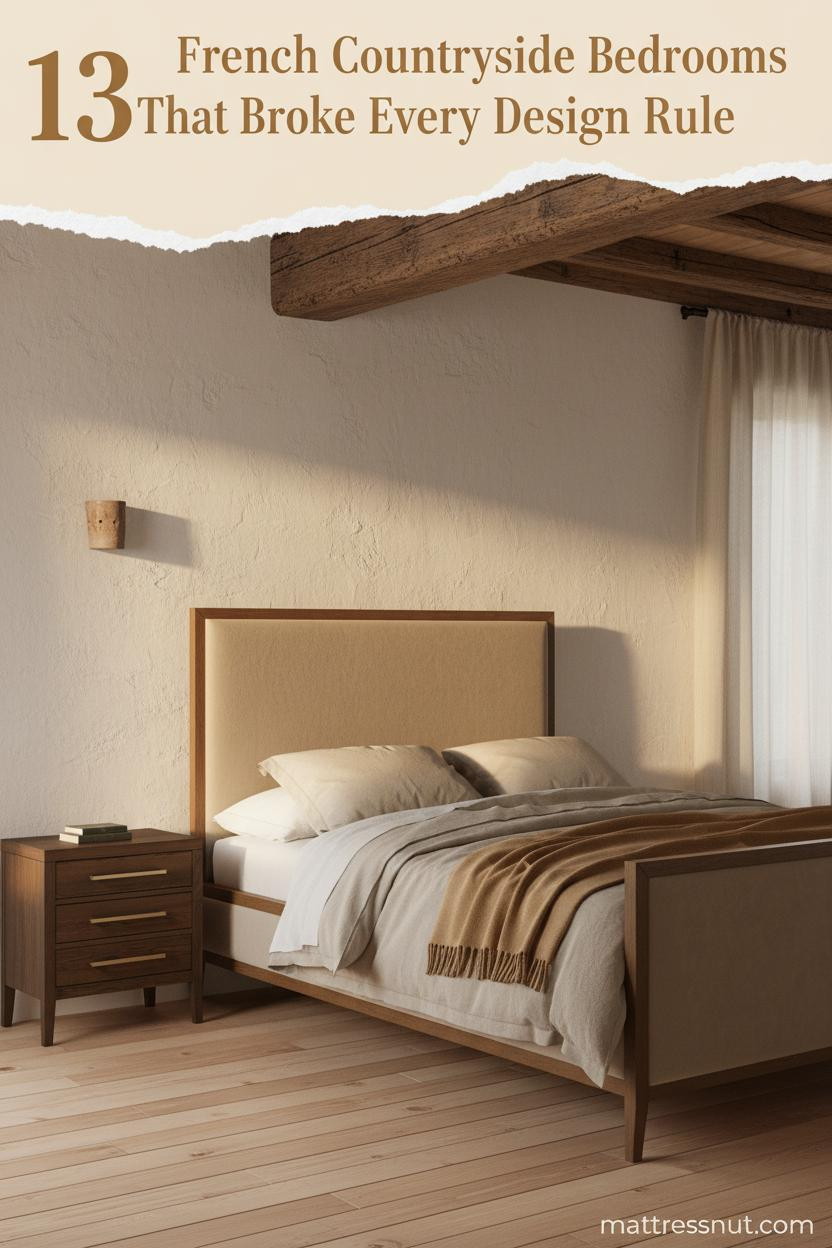
by The first thing you notice in the best French Countryside Bedroom isn't the furniture. It's the feeling that nobody tried too hard.
These 13 rooms lean into aged plaster, worn timber, and light that arrives slow. Nothing matches perfectly. That's the point.
A Herringbone Wood Wall That Earns Its Keep
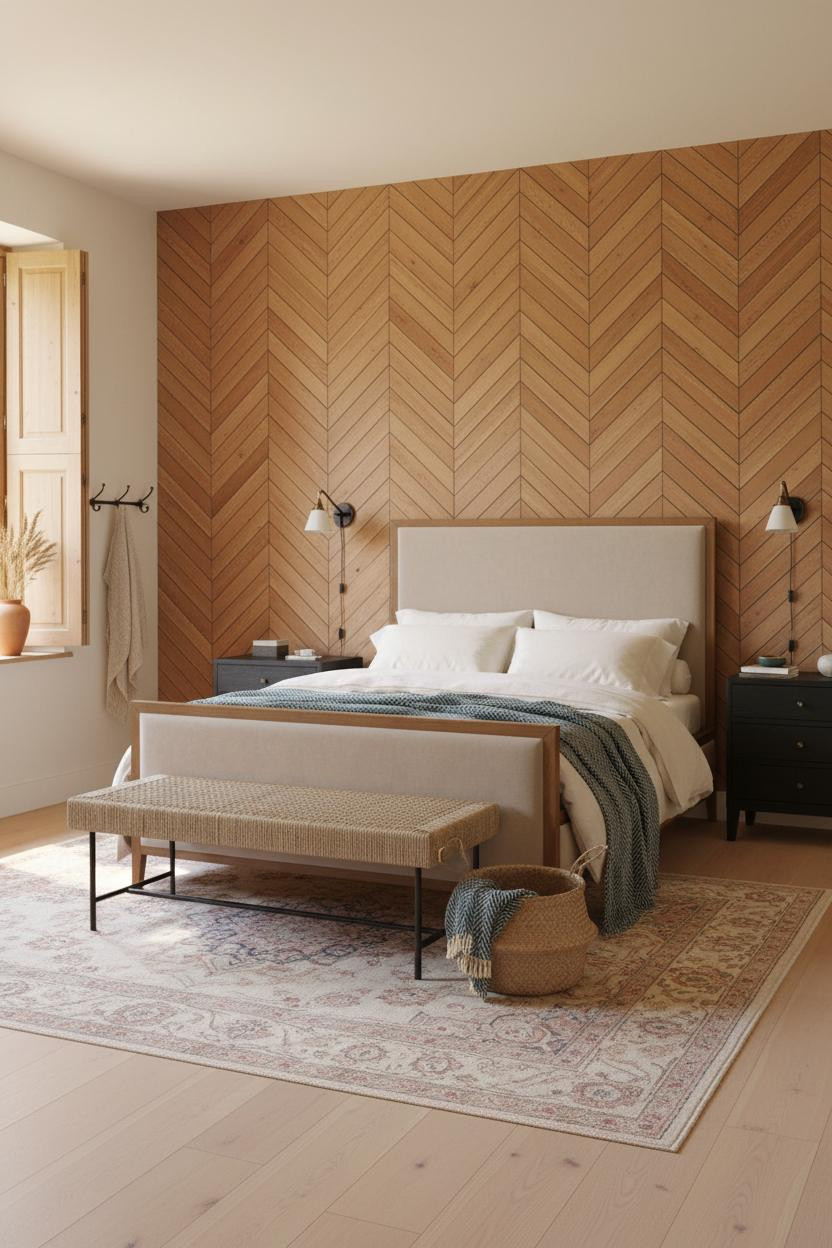

I keep coming back to this one. The herringbone chestnut wall does what no single paint color can.
Why it holds together: Tight chevron grain variation creates rhythm across the entire headboard wall, so the room feels structured while still feeling warm.
Steal this move: Pair the plank wall with a faded Persian rug in rose and ivory. The contrast keeps it from reading too rustic.
Slatted Oak Planks And The Calm They Create
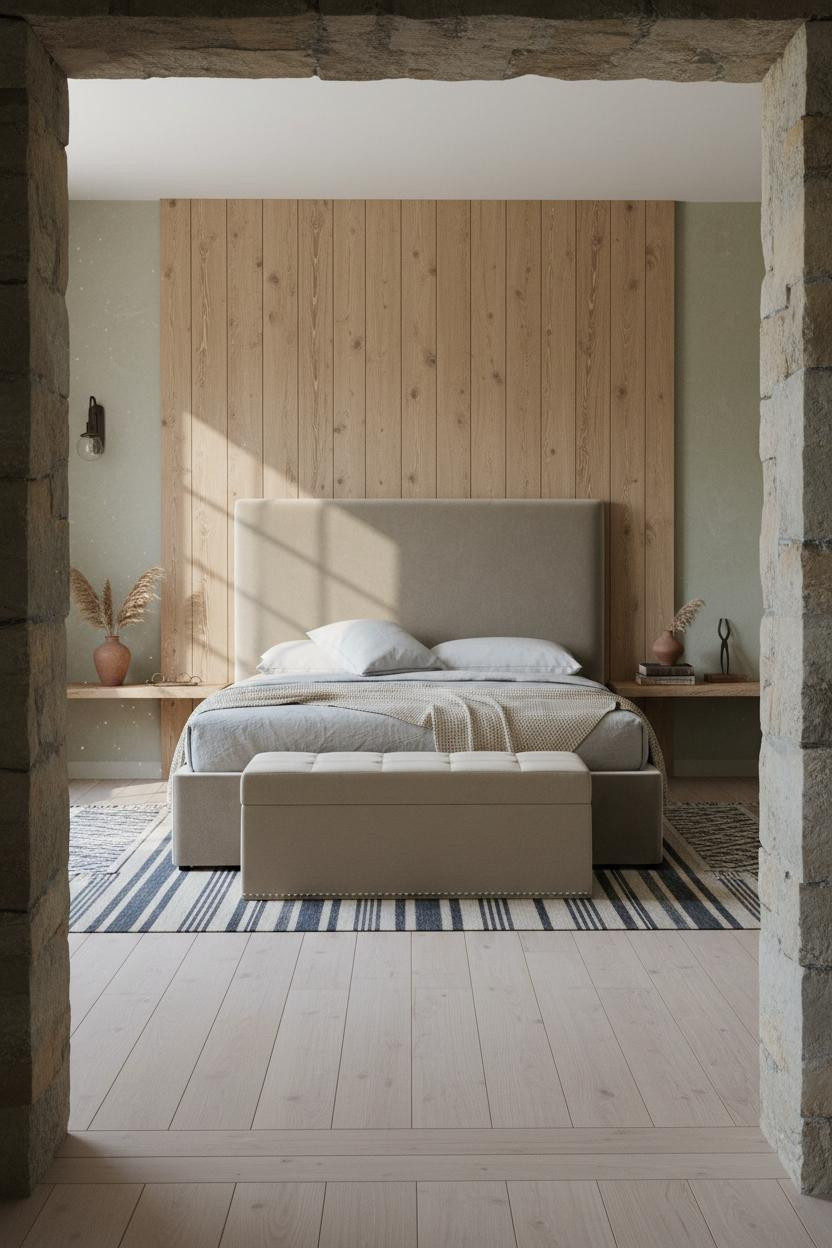

Vertical slatted walls are having a moment. But this one feels genuinely old, not trend-chasing.
What makes it work: Raw hand-planed oak planks with visible grain variation cast narrow shadow lines at dawn, giving the wall movement you don't get with smooth timber.
Layer a flat-weave kilim in faded indigo over bleached oak flooring. Two worn surfaces, zero effort.
Aged Pine Wainscoting That Looks Like It Was Always There
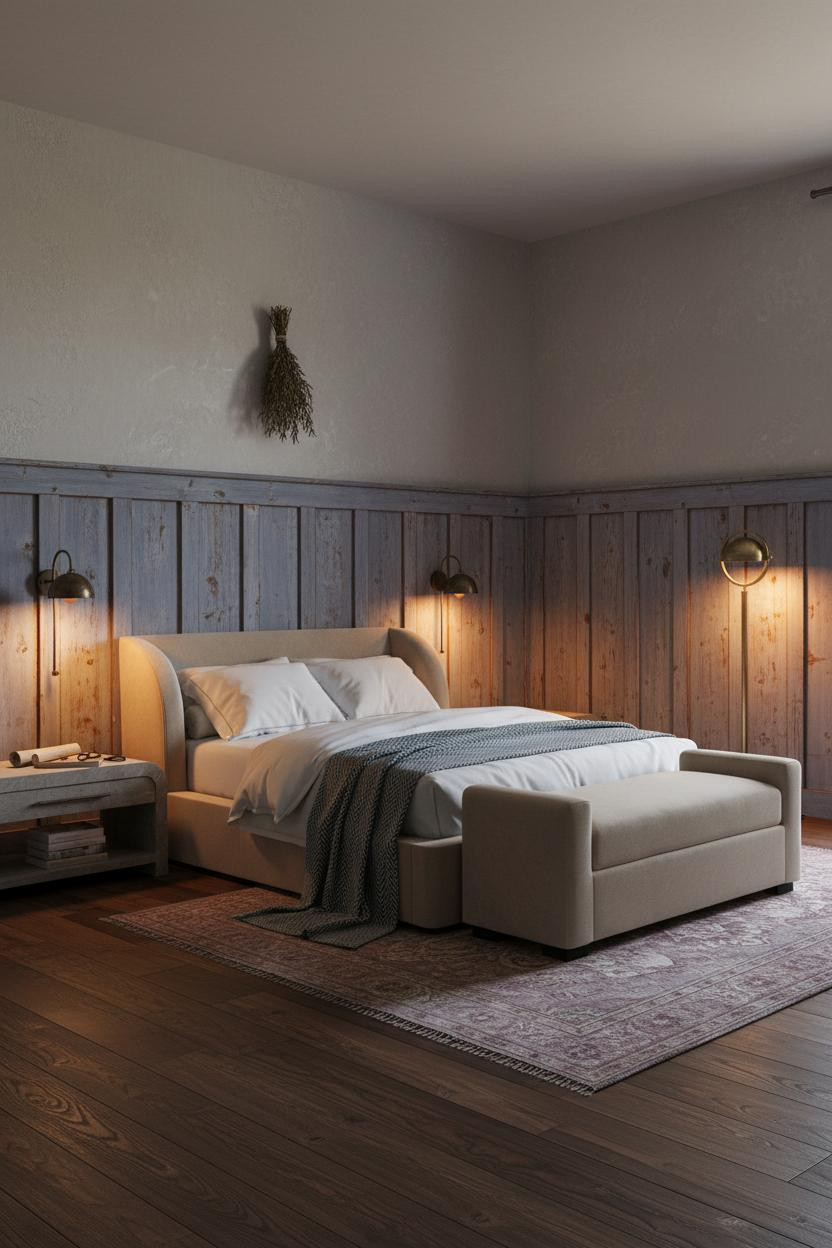


Bold choice. Indigo-grey milk paint on pine boards is not subtle. But it earns every second of attention.
The chipped corners and visible brush strokes on the aged pine wainscoting are the whole reason this room feels provincial rather than polished.
The part to get right: Run it at true half-height, no lower. And let the limewash plaster above stay rough. The contrast between them is what makes both surfaces read as intentional.
Avoid this mistake: Don't repaint the chips. That's where the character lives.
Whitewashed Fieldstone And How To Make It Feel Warm
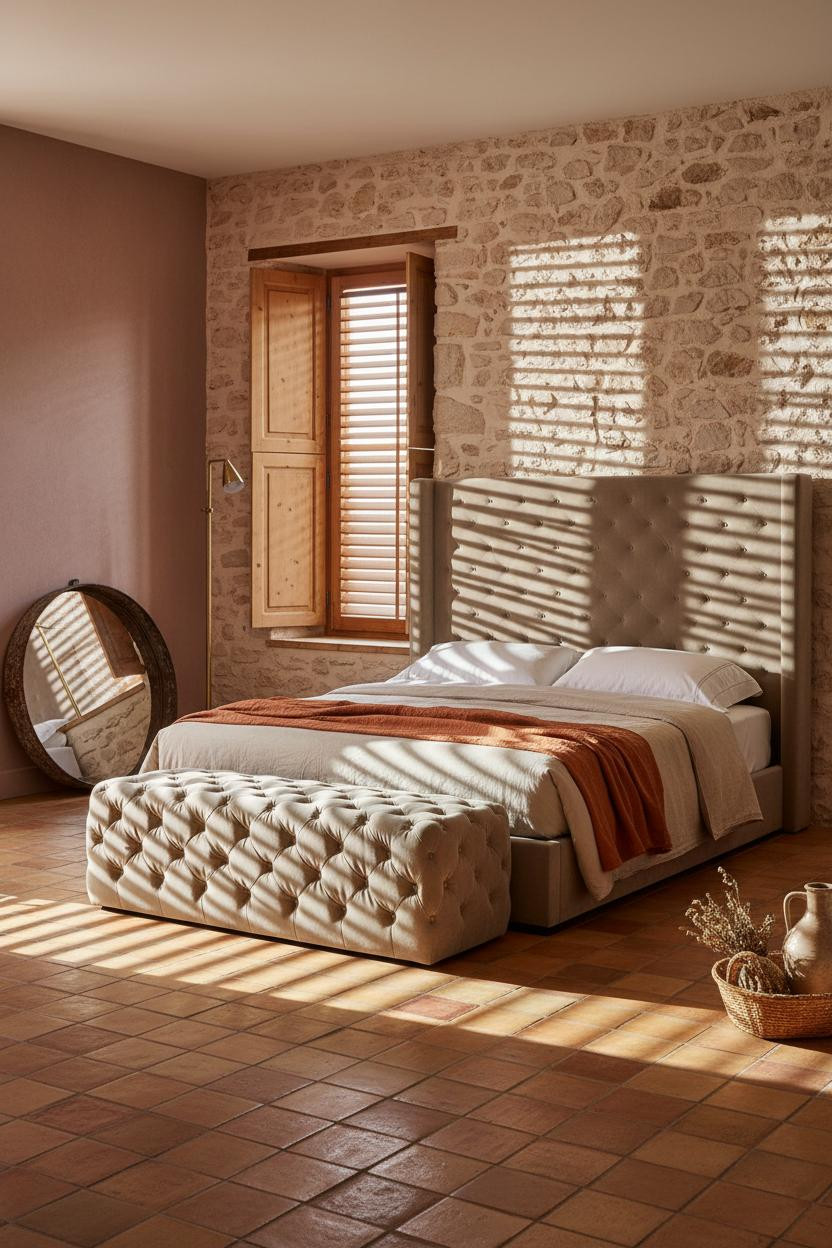

Stone walls go cold fast if you get the palette wrong. This one doesn't.
Why the palette works: The dusty mauve-rose limewash on the flanking walls pulls warmth back into the space, so the pale fieldstone reads honeyed rather than grey.
The easy win: Add a terracotta tile floor and a burnt-orange throw. Warm floor, warm textile, and the stone suddenly looks like it was quarried nearby. See more ideas like this in our cottage bedroom design inspiration.
Sun-Warmed Plaster And Shutters That Actually Do Something
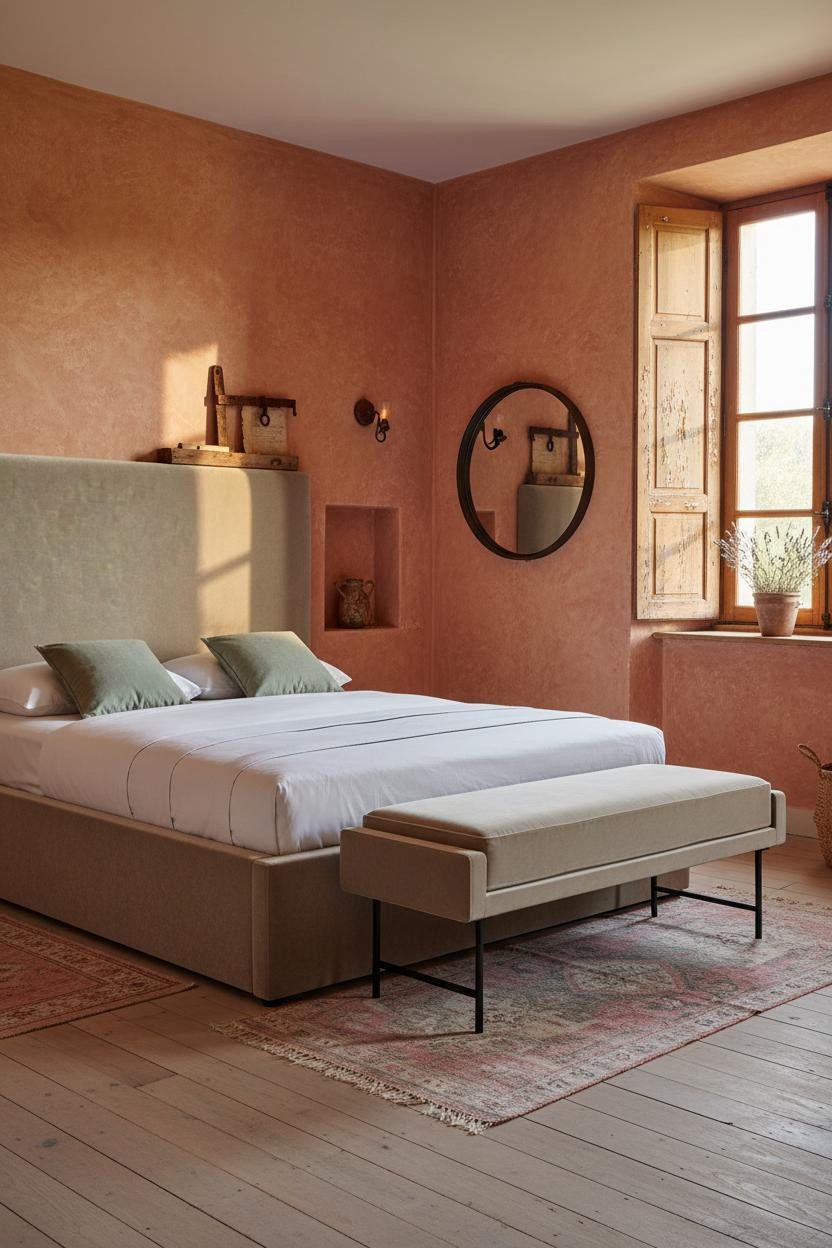
Honestly, apricot-burgundy plaster sounds like a disaster on paper. It isn't.
The paint flaking from the timber shutters to reveal raw wood beneath is what gives this room its age. That's not neglect. It's provenance.
What to borrow: Hang an oversized round iron mirror low on the plaster wall. It reflects shutter light without competing with the texture above it.
Iron-Frame Windows That Turn Sunset Into Architecture
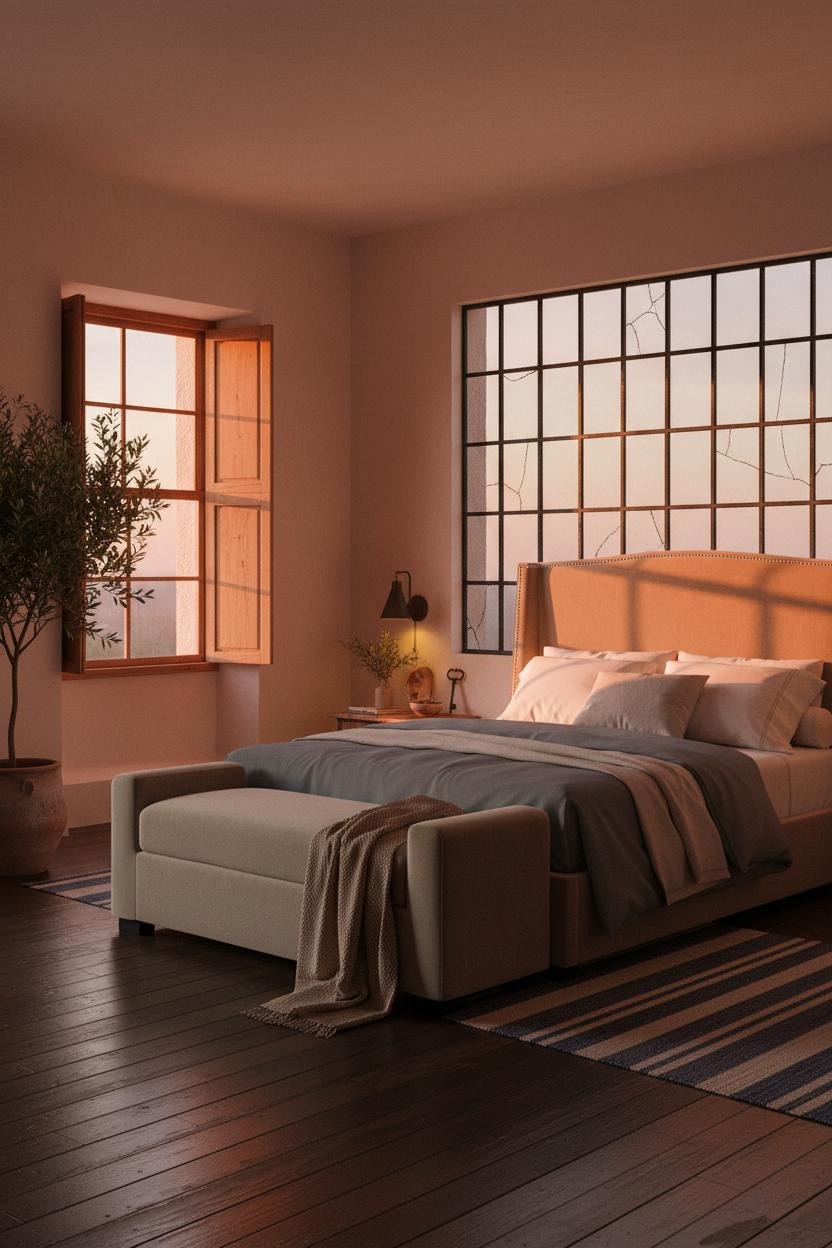

I almost scrolled past this. Glad I didn't.
The aged Crittall-style iron window profiles cast a hard grid shadow across blush-rose limewash at low sun angle, and the room feels like it belongs in a film rather than a Pinterest board. It shouldn't work. But somehow it does.
Pro move: Keep bedding in slate jersey and add a camel wool throw. The warmth in those textiles balances the cool iron geometry while still feeling relaxed.
A Hand-Carved Limestone Niche That Anchors Everything
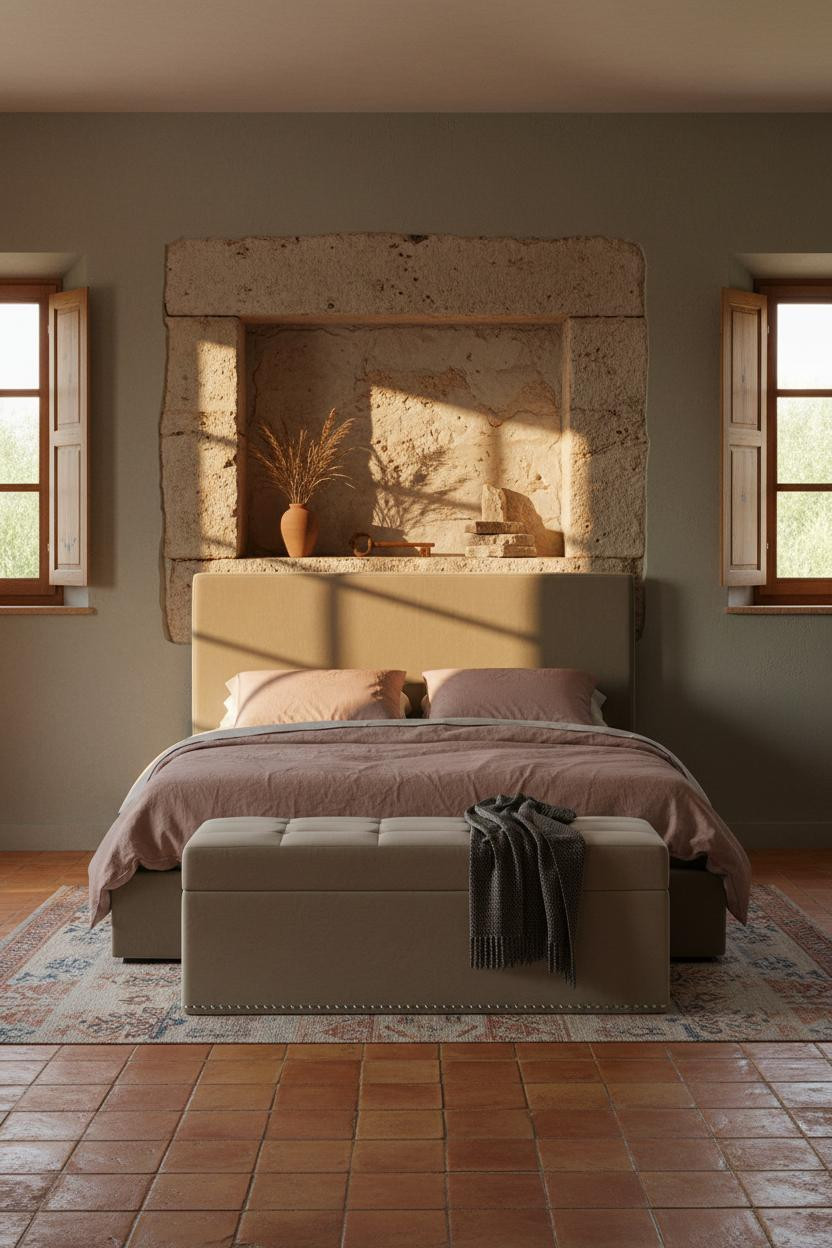

This is divisive. Not everyone wants a carved stone surround as the room's focal point. But when it works, it really works.
The real strength: Deep shadow pooling in the rough-cut recesses of the pale limestone blocks creates texture that no painted wall can replicate, especially under raking evening light.
A flat-weave kilim in faded rust and indigo against polished terracotta tile keeps the palette earthy, in a way that feels genuinely Provençal rather than styled. For more rooms with this kind of layered character, see our cottagecore bedroom ideas for rustic charm.
Board And Batten With A Dusty Blue Wall That Actually Works
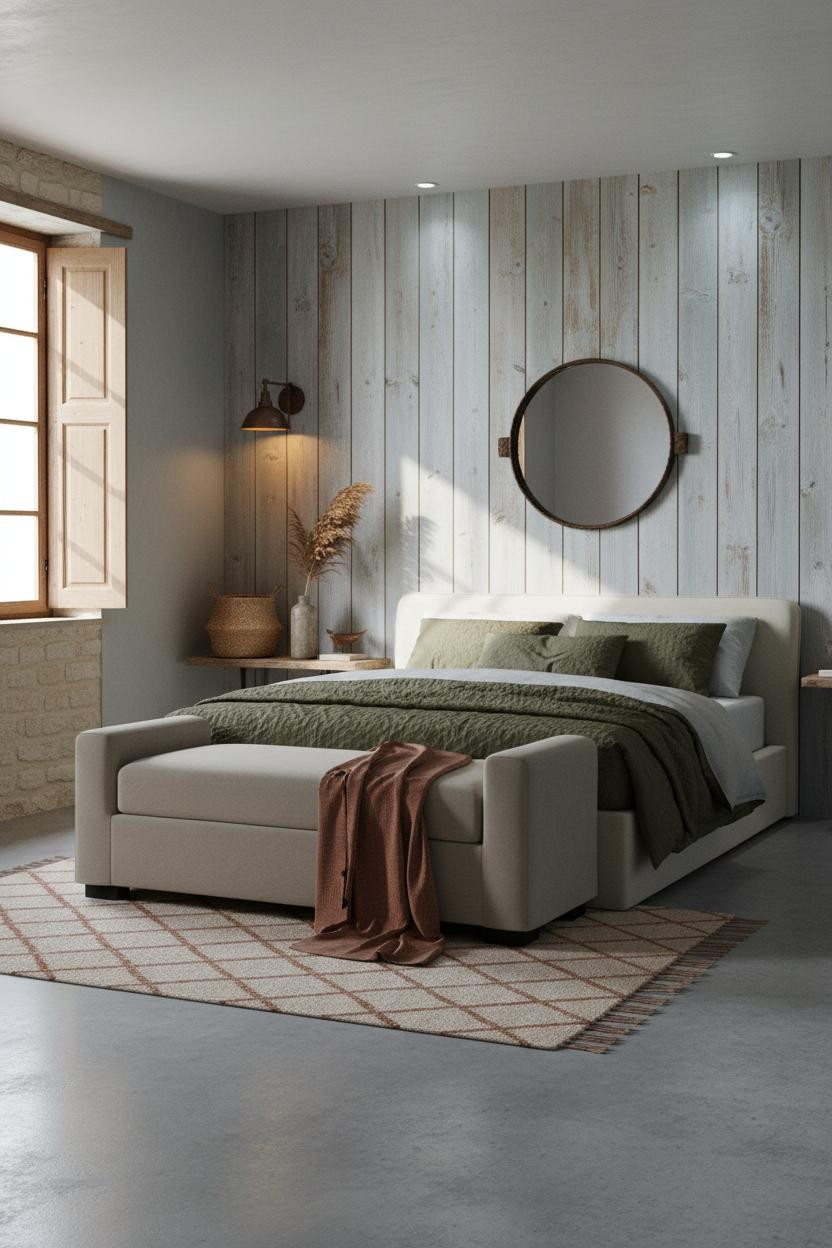

Nothing fancy. That's the point.
Design logic: Worn paint edges and knot-grain texture on the vertical board-and-batten planks catch raking side light, creating shadow rhythm that makes the wall feel dimensional without any additional treatment.
One smart swap: Replace a polished concrete floor rug with a faded Moroccan diamond-pattern in terracotta and cream. The geometry grounds the rustic plank wall, while still feeling relaxed.
Hand-Plastered Ochre And The Timber Corbels Nobody Talks About
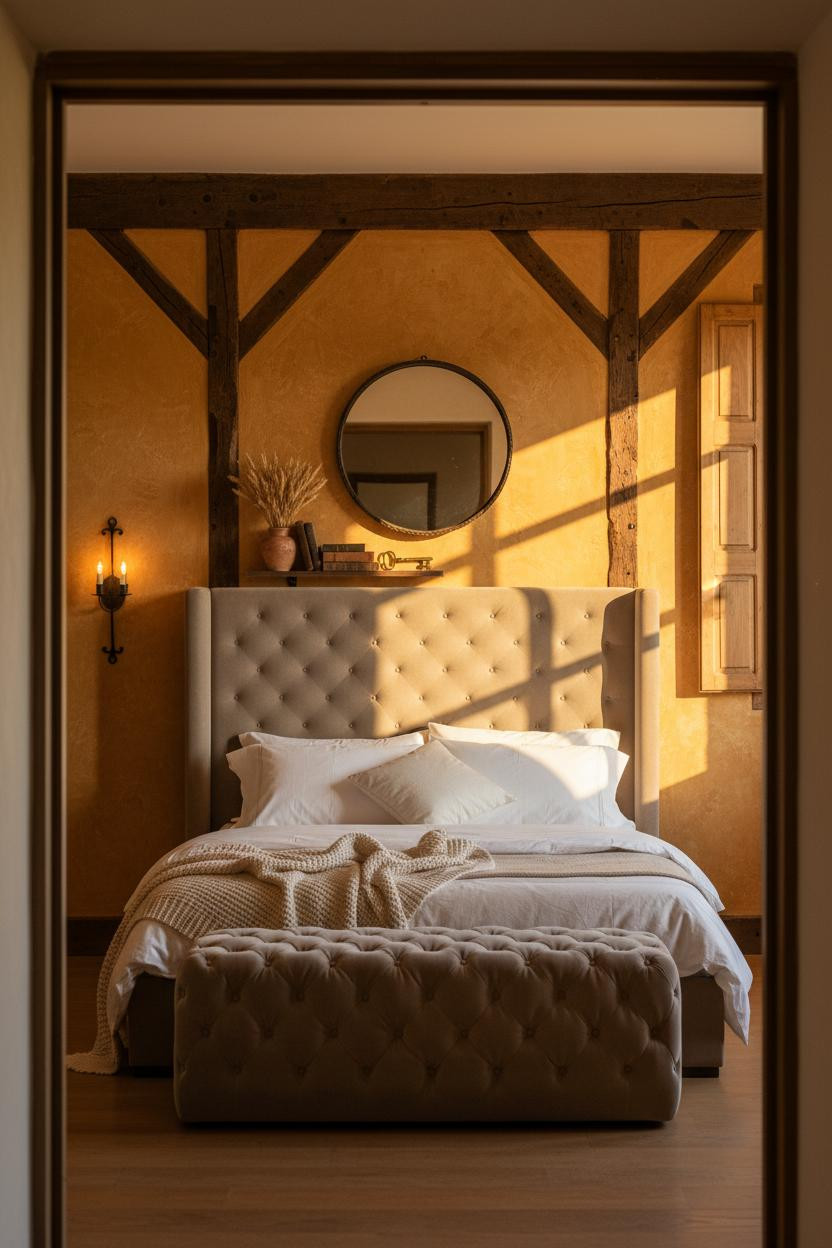
The rough-hewn timber corbels jutting from the ochre plaster are what most people would remove. That's the wrong call.
Why it feels custom: Corbels casting hard geometric shadows across centuries of limewash layers give the wall a sculptural depth that no faux finish can reproduce.
Worth copying: Stack worn leather-spined books on a low shelf beside the bed. A small detail, but it shifts the room from decorated to lived-in.
Exposed Ceiling Beams That Do The Heavy Lifting
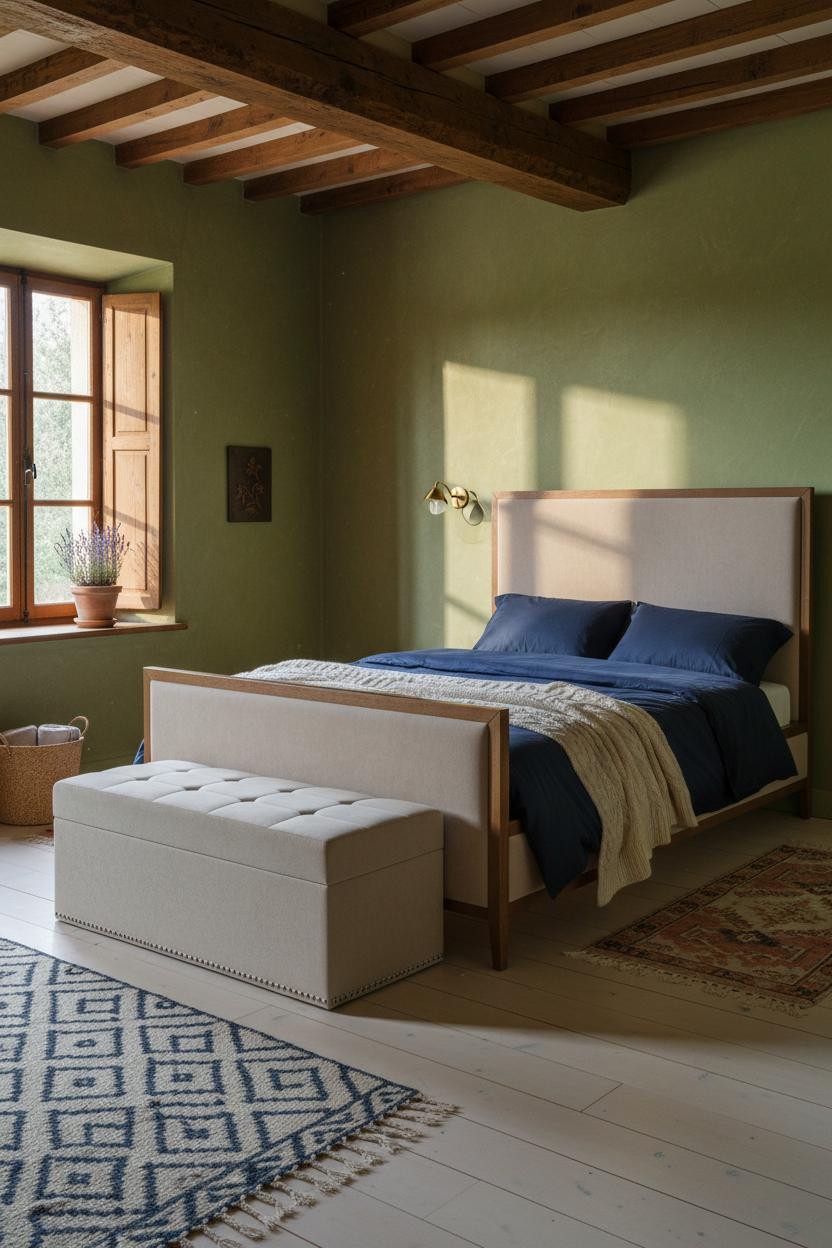
I'll be honest: hand-hewn beams are hard to fake and easy to ruin with the wrong wall color beneath them.
What carries the look: Limewashed moss green plaster with visible trowel variation keeps the honey-dark timber from feeling heavy, because the wall already has its own patina to compete with.
The finishing layer: Navy sateen bedding with a cable-knit cream throw draped asymmetrically off the bench. The contrast between sleek and rough is exactly what a well-decorated bedroom needs to feel balanced.
A Limestone Alcove That Makes The Bed Feel Like A Destination
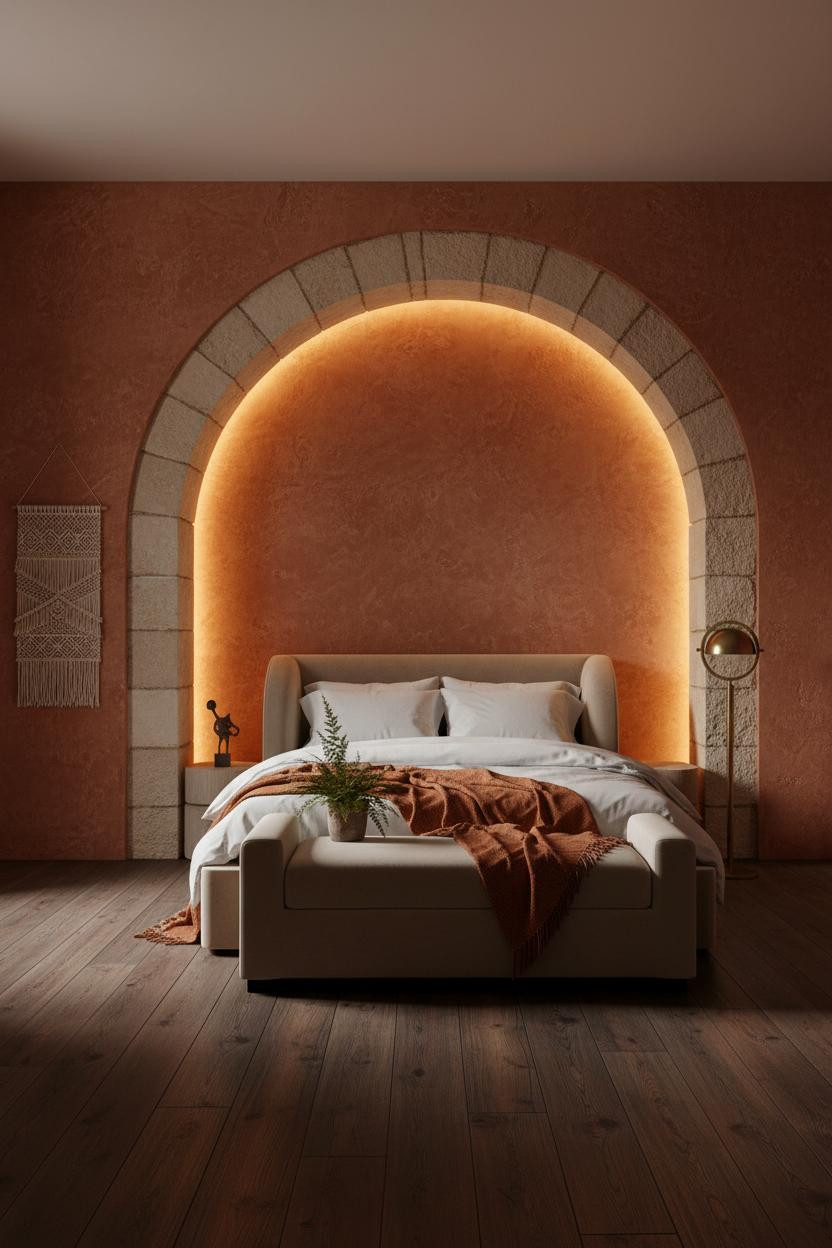
This is the kind of room that makes you want to cancel plans and stay in bed.
What creates the mood: Candlelight shadows curving across the arched limestone vault above the bed turn a structural detail into something that feels intimate and ancient at the same time.
The smarter choice: Dress the bed in oatmeal cotton and add a burnt orange mohair throw. Against terracotta-washed plaster, those tones create a room that feels warm without being heavy.
An Exposed Stone Chimney That Earns Its Footprint
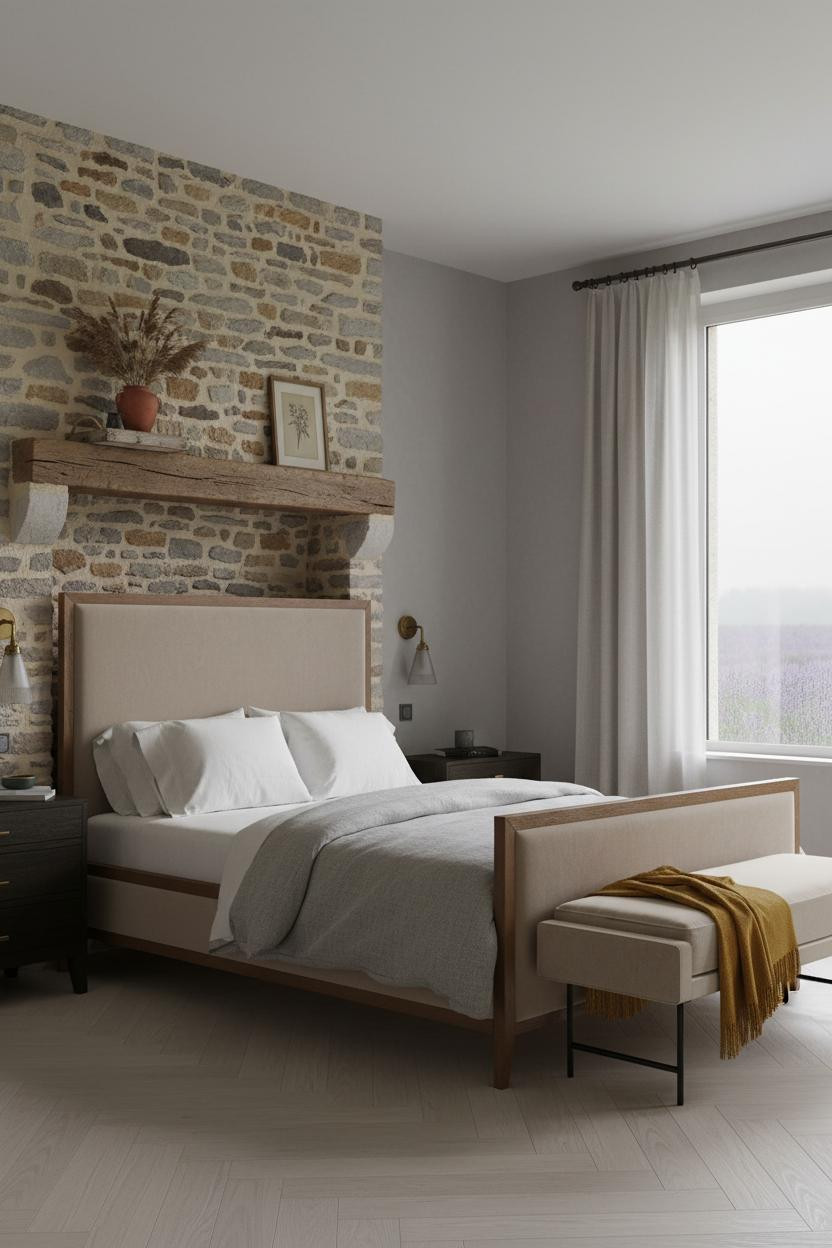
Eight feet of irregular fieldstone in honey, ash, and iron-grey takes up real space. The room has to earn it back.
It does, because the herringbone parquet in bleached oak and the floor-to-ceiling gauze linen curtains pooling at the base give the eye somewhere cool to rest after all that stone texture.
Where people go wrong: Pairing a chimney breast this heavy with dark walls. Keep them dove grey limewash and let the stone hold the contrast on its own. See how this plays out across English classic bedroom aesthetics too.
Morning Light Through Sheer Linen And A Beam That Tells Time
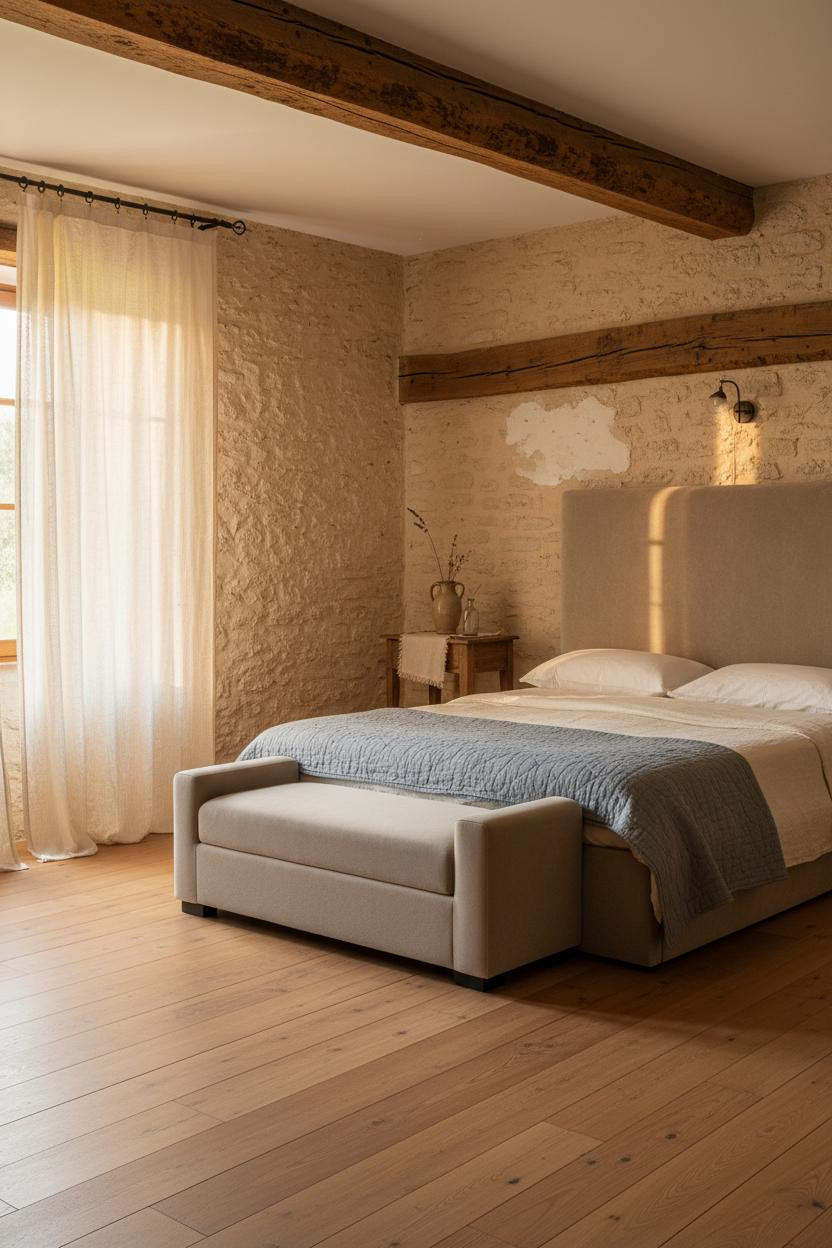
This one is quieter than the others. And honestly, I think it's the best of the thirteen.
What gives it presence: A honey-dark horizontal beam with age cracks spanning twelve feet casts a long shadow across cream limewash plaster below it, grounding the whole room without a single piece of furniture doing the work. The undyed linen curtains hanging from a wrought-iron rod soften the beam's weight, while still letting the morning light do what it's meant to do.
The foundation: Wide-plank honey-pine flooring worn at center. That detail alone tells you the room is real. A Provence Bedroom should feel like that. Like it's been here far longer than you have. Explore more ideas in our bedroom lighting design essentials guide.

Our #1 Pick
Saatva Classic Mattress
America's best-selling online luxury innerspring. 365-night trial, lifetime warranty, free white glove delivery.
Shop Saatva Classic
The Foundation Of Every Beautiful Bedroom
All thirteen of these rooms have different bones. Stone, plaster, timber, tile. But they share one thing: the bed is never an afterthought. And the mattress underneath matters more than most people admit.
The Saatva Classic is what I'd put in any of these rooms. Dual-coil support that holds its shape over years, a breathable organic cotton cover that doesn't trap heat on warm nights, and a Euro pillow top that feels considered rather than piled on.
Walls get repainted. Linen gets swapped out. The mattress stays. Start there.

The rooms people save are the ones where nothing looks accidental. But the rooms people actually want to sleep in? Those start with what's under the sheets.