
 by
by The first thing you notice in the best eclectic bedroom is that nothing looks purchased on the same afternoon. Things arrived slowly. Some have a story. That's the whole idea.
These 15 rooms lean into the warm, lived-in aesthetic that's actually hard to fake. Collected rather than decorated. Here's how they pull it off.
The 70s Boho Room That Feels Sun-Warmed All Day
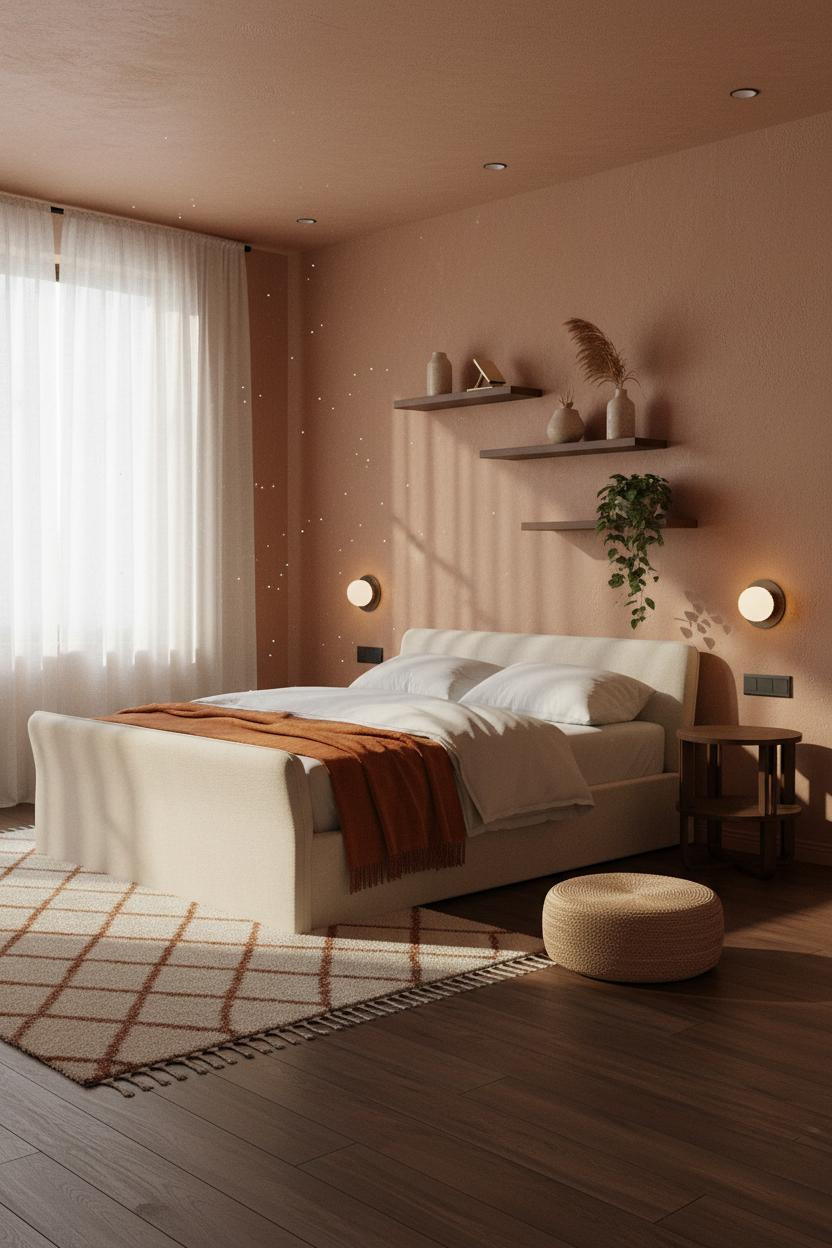


I keep coming back to this one. The room feels warm without trying.
What makes it work is the hand-troweled clay plaster behind the bed. It catches light unevenly, so the wall looks different at noon than it does at dusk, and that texture keeps the whole room from feeling flat.
Steal this move: Stagger floating walnut shelves at different heights instead of one straight row. The asymmetry is what makes a shelf arrangement feel found rather than installed.
Rust Plaster Walls That Actually Age Well
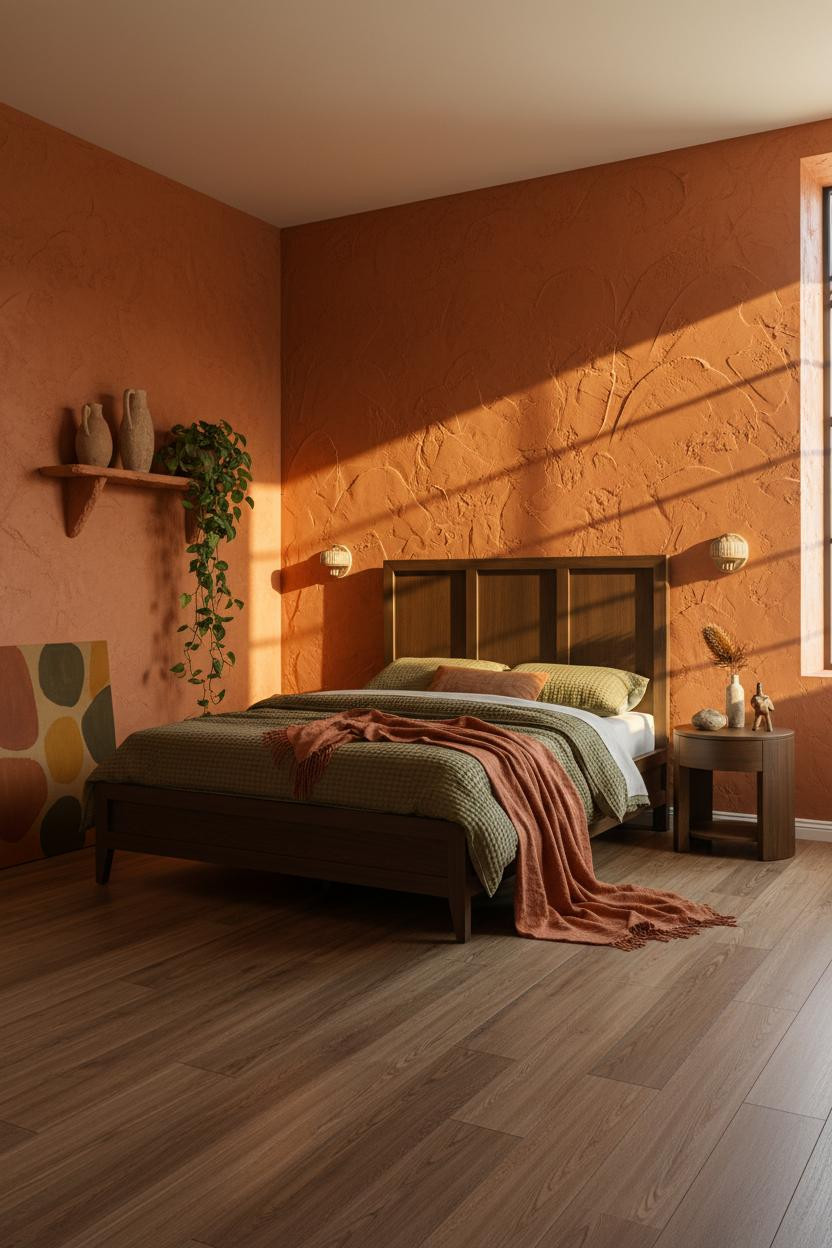
Bold choice. But the people who commit to rust plaster never repaint.
The reclaimed wide-plank walnut floor is doing a lot of work here. Warm wall, warm floor, same family. The room holds together because nothing is fighting anything else.
The practical move: Let one throw corner drag onto the floor. It's a small thing, but it shifts the room from styled to lived-in.
A Herringbone Wall That Earns Every Stare
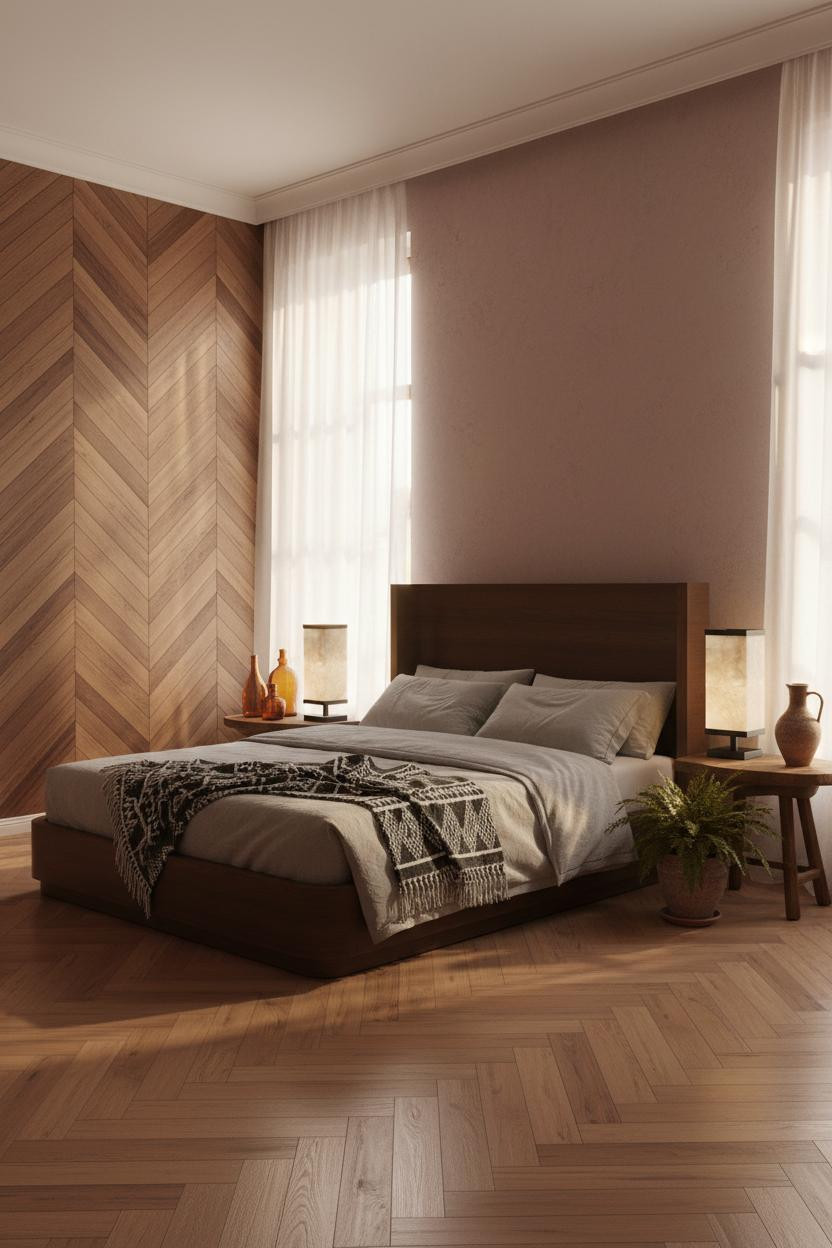
The walnut herringbone plank wall sounds like a lot. It isn't.
Why it holds together: Pairing a graphic wall with dusty rose plaster on the adjacent surfaces keeps the geometry from feeling aggressive. The softness absorbs the pattern.
Pro move: Leave the herringbone parquet floor bare. A rug here would compete with two geometric surfaces at once, and that's one pattern too many.
Deep Burgundy Walls and a Gallery That Looks Inherited
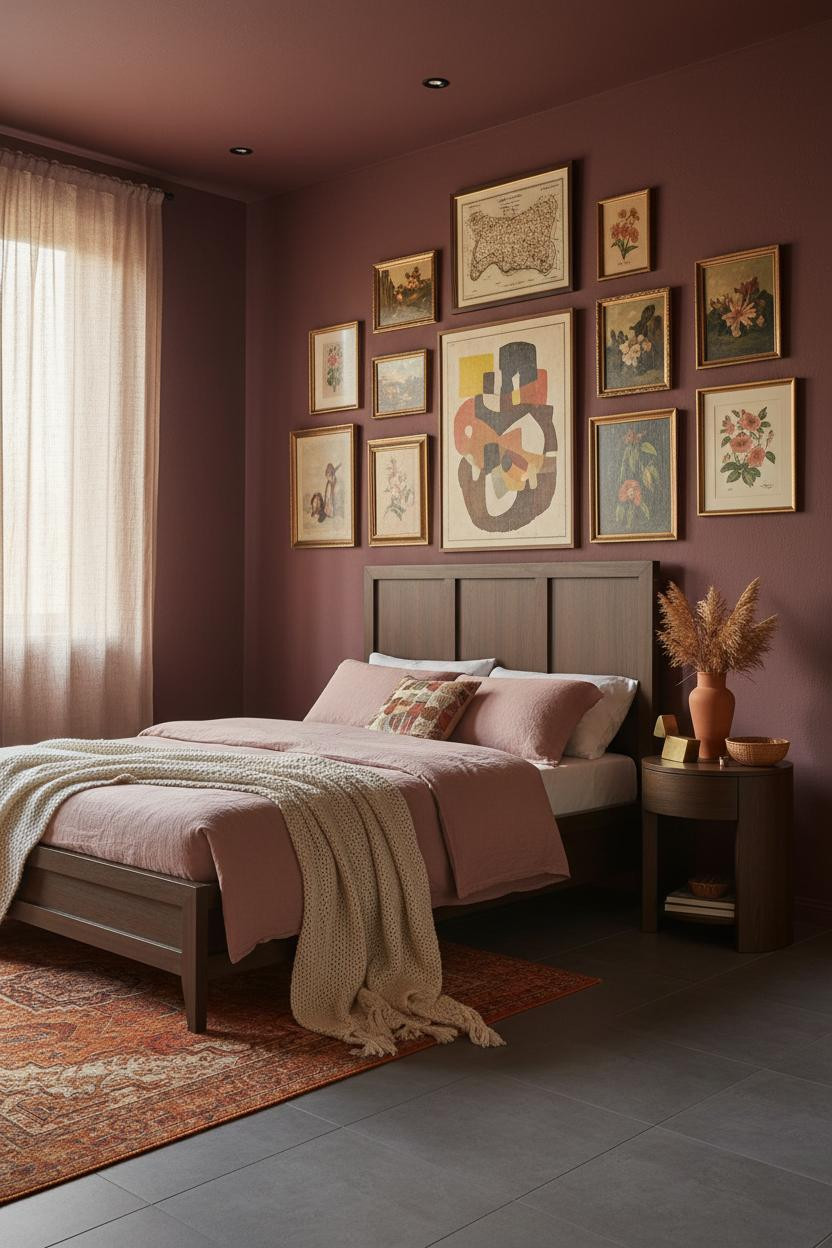
Gallery walls fail when every frame matches. This one works because nothing does.
What creates the mood: The deep burgundy plaster makes mismatched frames disappear into the wall, so the art reads as a single mass rather than a collection of individual decisions.
Tilt a few frames slightly. Not ironically. Just slightly. That detail alone is what separates inherited from installed.
Honey Oak Shelving Against Amber Plaster
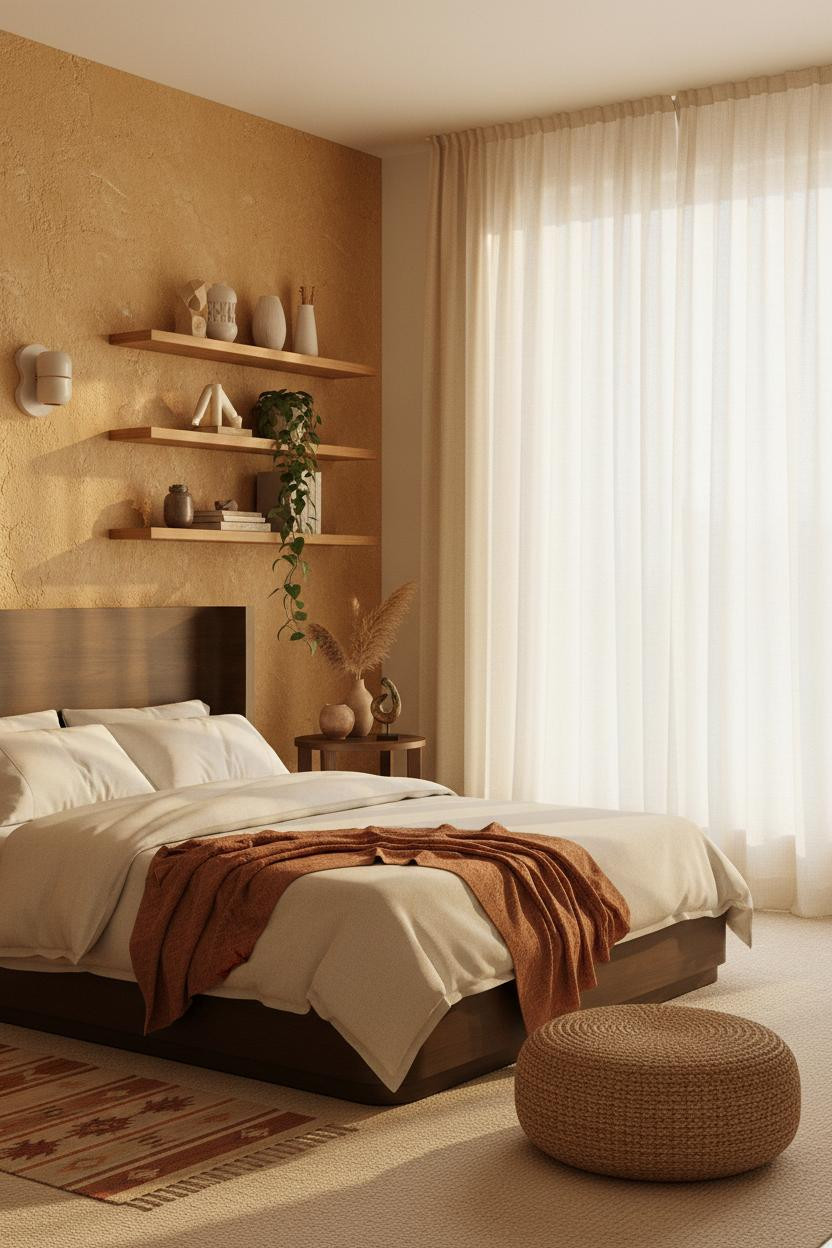
Nothing fancy. That's the whole point here.
Honey oak against amber-gold hand-troweled plaster shouldn't work this well. But the tones sit so close together that the shelving reads as part of the wall rather than furniture added to it, and that's exactly why it feels intentional.
Worth copying: Mix ceramic vessel heights on floating shelves. One trailing pothos and one dried pampas stem. Honest things, not showpieces.
The Sage Alcove That Changes the Whole Room
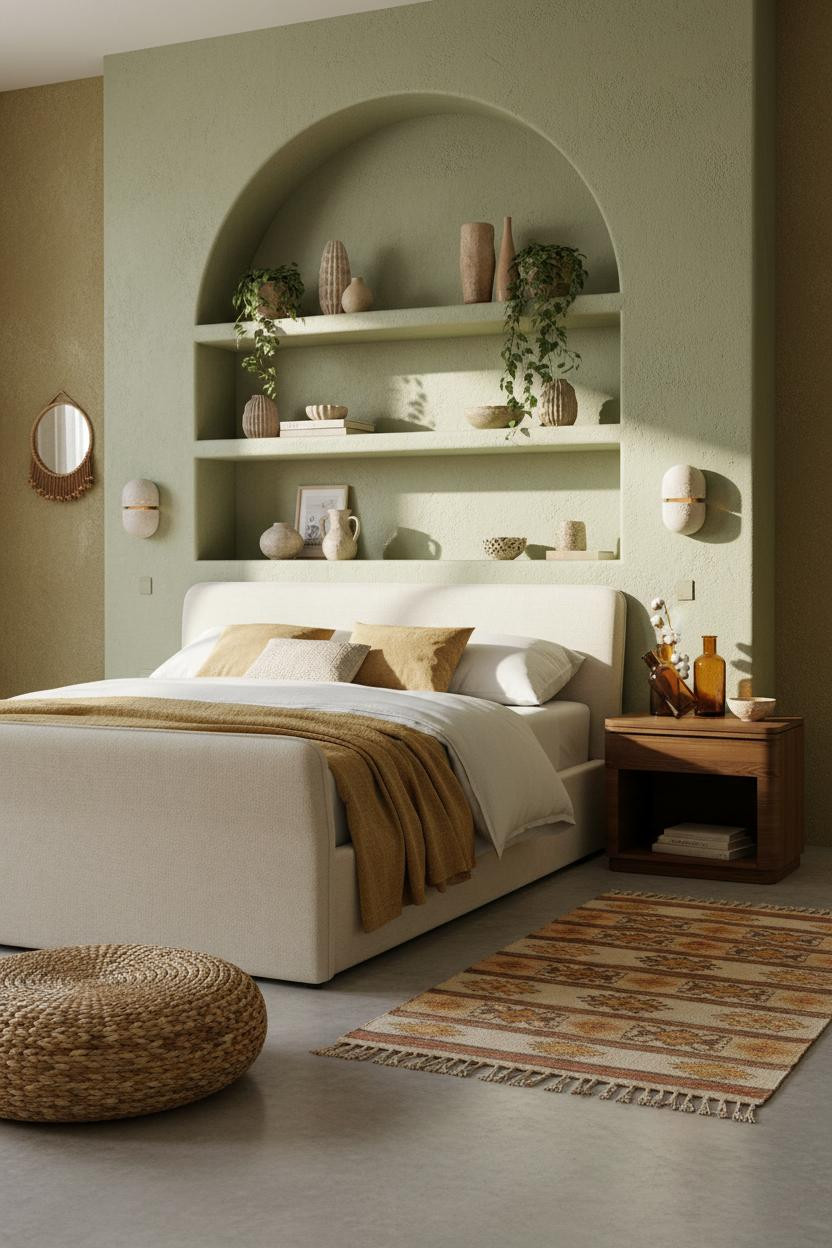
I almost scrolled past this. Glad I didn't.
A curved alcove painted in hand-plastered sage green does something a flat wall never can. Morning light rakes across those trowel marks and the whole recess glows. The arch edge becomes its own architectural moment.
The smarter choice: Fill the recess with ceramics and trailing ivy, not a TV. An alcove this good deserves to stay analog. Check out more earth tone bedrooms that stay warm without heaviness.
Indigo Plaster Is Braver Than It Looks
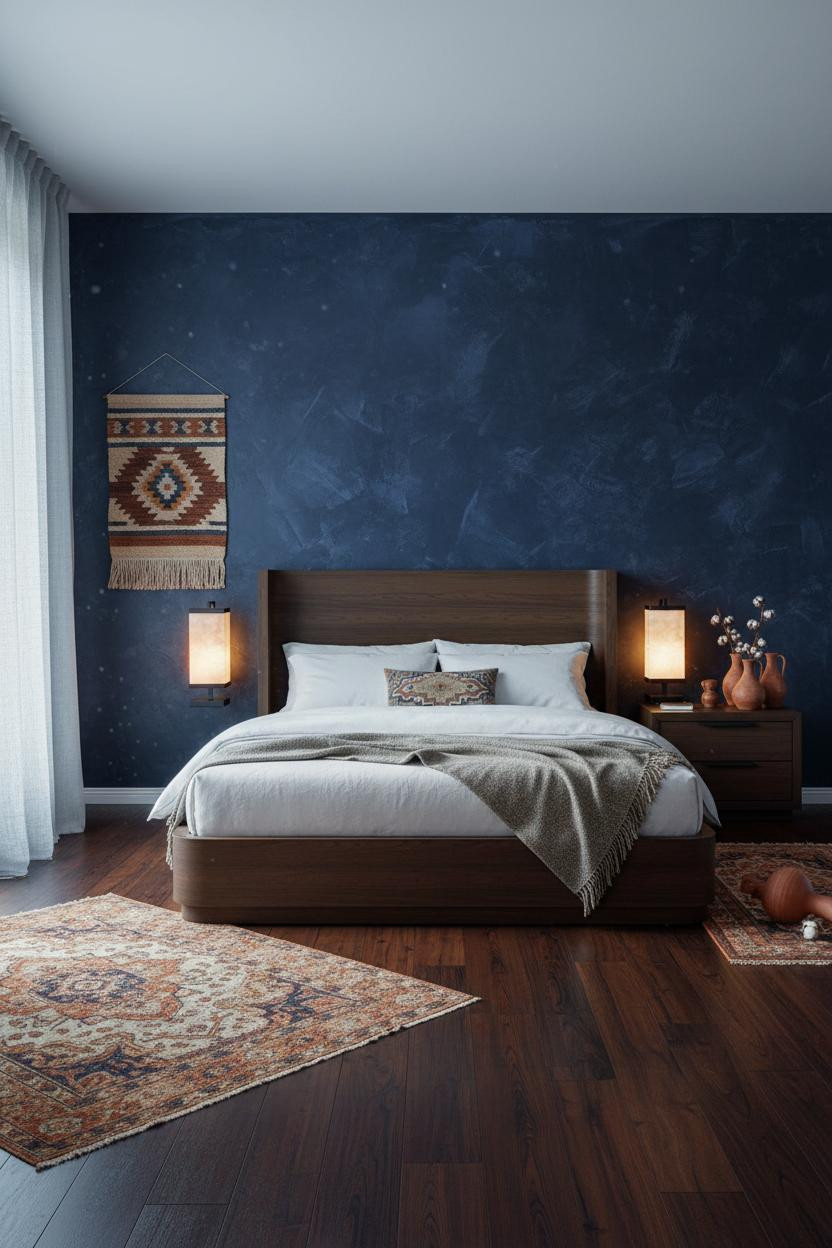
This is divisive. I happen to love it.
Why the palette works: Deep warm indigo plaster reads earthy, not cool, because the trowel marks pull amber tones forward. It's the texture that keeps it from feeling like a meditation studio.
Avoid this mistake: Don't pair this wall with cold white bedding. Warm ivory or grey wool is the move. Keep everything in the same dusty, unhurried family.
Clay Shiplap That Feels Slow and Right
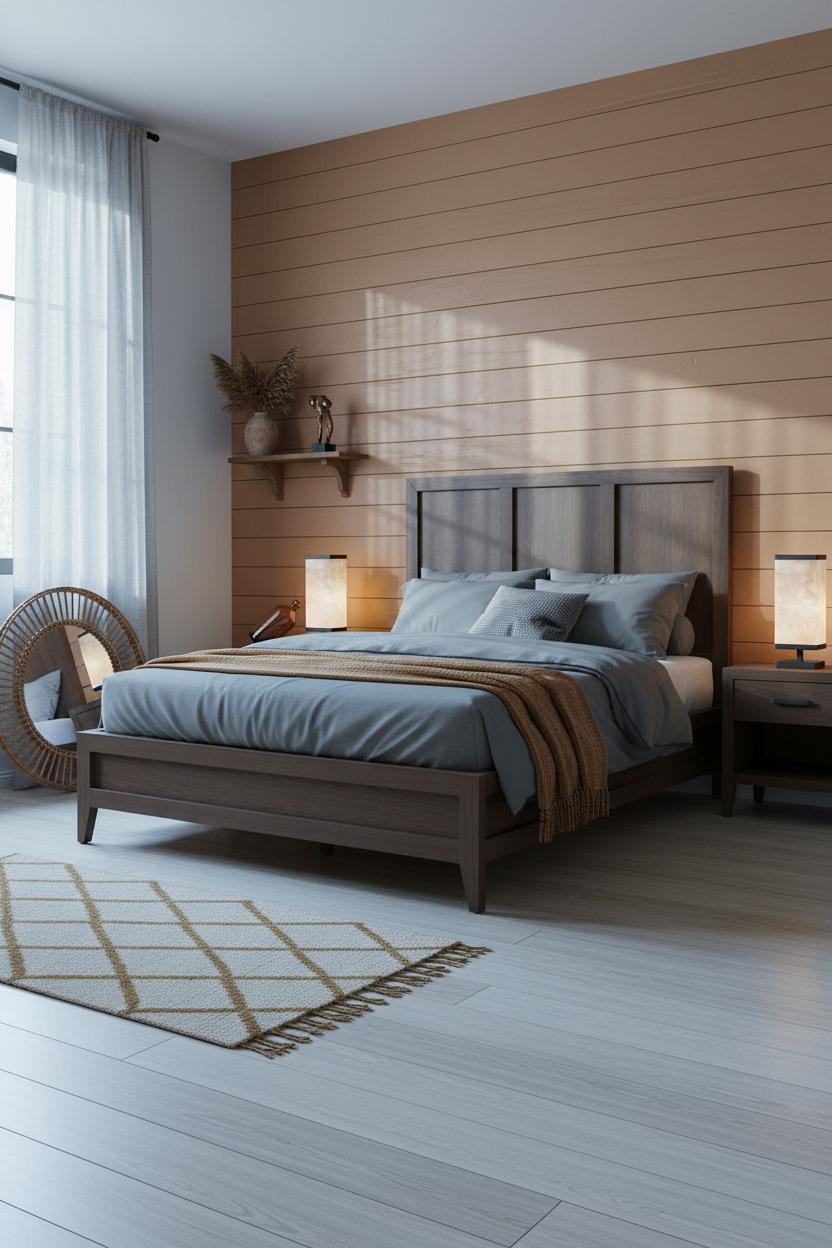
Shiplap gets a bad reputation because people paint it white. This room gets it right.
The warm clay hand-painted shiplap catches raking light across every board seam, and those thin shadow lines add horizontal rhythm that feels genuinely architectural. The room feels calm and cohesive in a way that drywall just doesn't.
A large round rattan mirror leaning against the wall finishes it. Don't hang it. Leaning is more honest.
Forest Green Plaster for the Brave and Patient
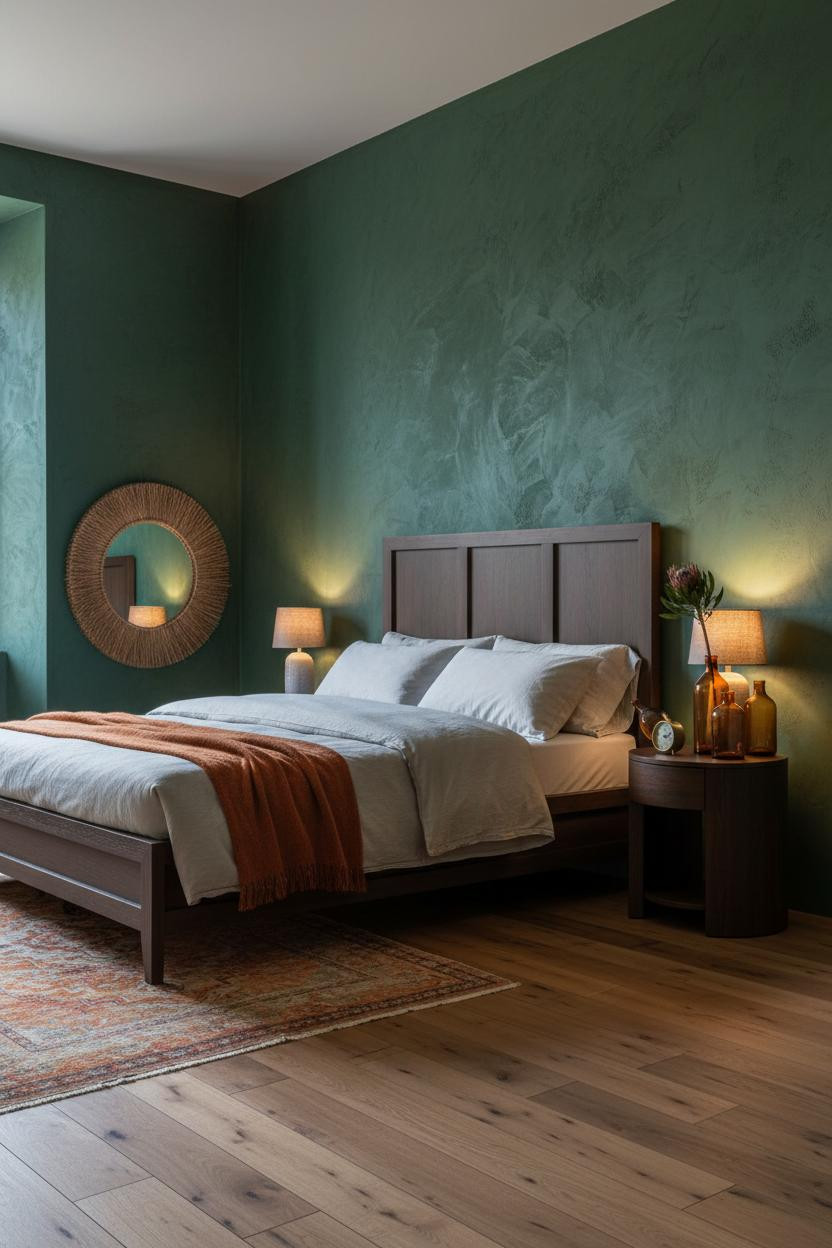
It shouldn't feel this warm. But deep forest green hand-troweled plaster at twelve feet does something surprising: the room feels smaller in the best way. Enclosed. Cozy without being dark. The reclaimed chestnut flooring is what grounds it, pulling amber tones into a room that could tip cold.
Where to start: A woven seagrass mirror leaning against the far wall keeps the scale honest and adds texture while still feeling collected rather than decorated. See more ideas in these boho bedroom ideas that feel genuinely gathered.
Exposed Brick Doesn't Have to Feel Industrial
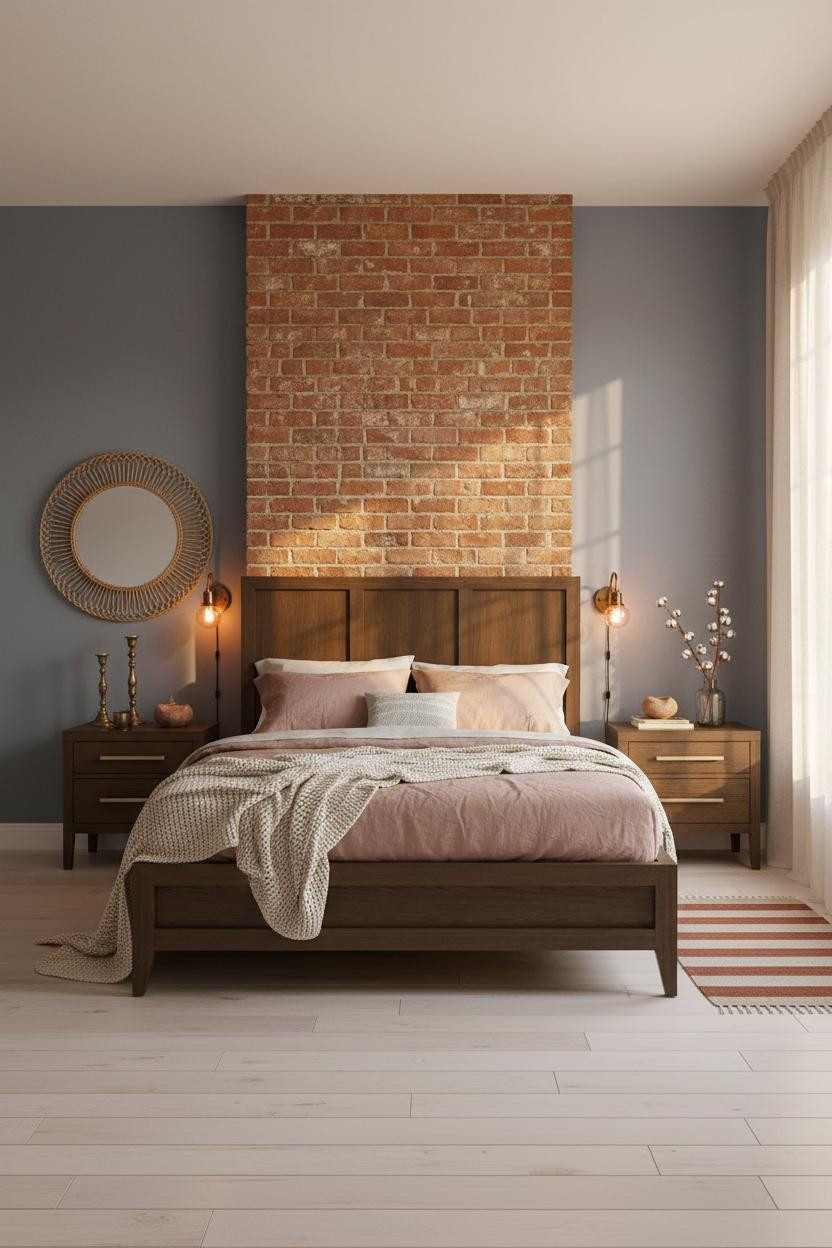
Exposed brick reads industrial when the rest of the room is grey and minimal. Pair it with muted denim blue walls and dusty pink linen and it shifts completely. The terracotta mortar joints suddenly read as warm, earthy, almost soft.
The easy win: Mount a round rattan mirror beside the chimney breast rather than above it. Off-center placement is what makes the room feel personal, not Pinterest-perfect.
Slatted Oak That Earns Its Place on the Wall
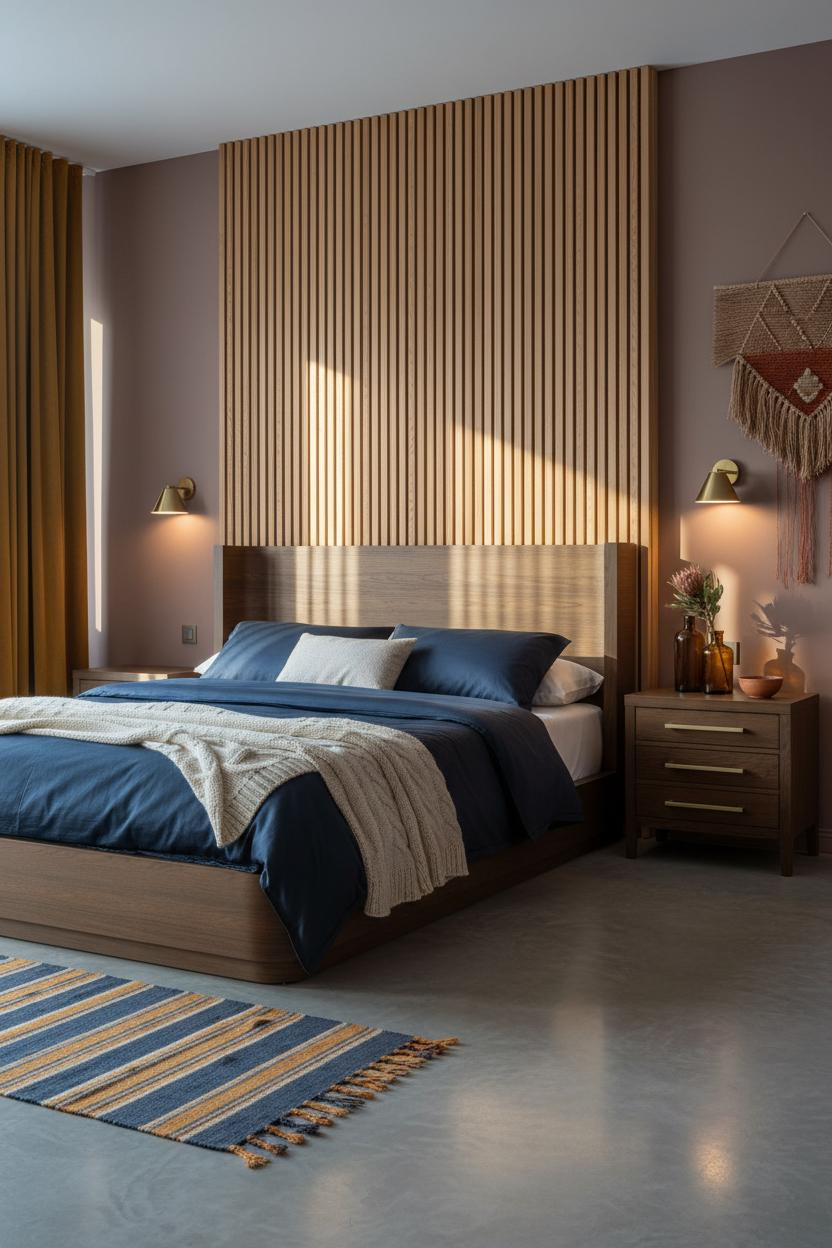
Vertical honey-stained oak slats are having a moment, and honestly, rooms like this show why. Each slat catches raking light and throws a thin shadow line across the grain, and that rhythm creates depth that a painted wall simply can't.
What throws it off: Flanking curtains in a clashing color. The mustard velvet panels here stay in the same warm, dusty family as the oak, which helps the whole wall breathe as a single surface.
Olive Board-and-Batten With Brass Sconces
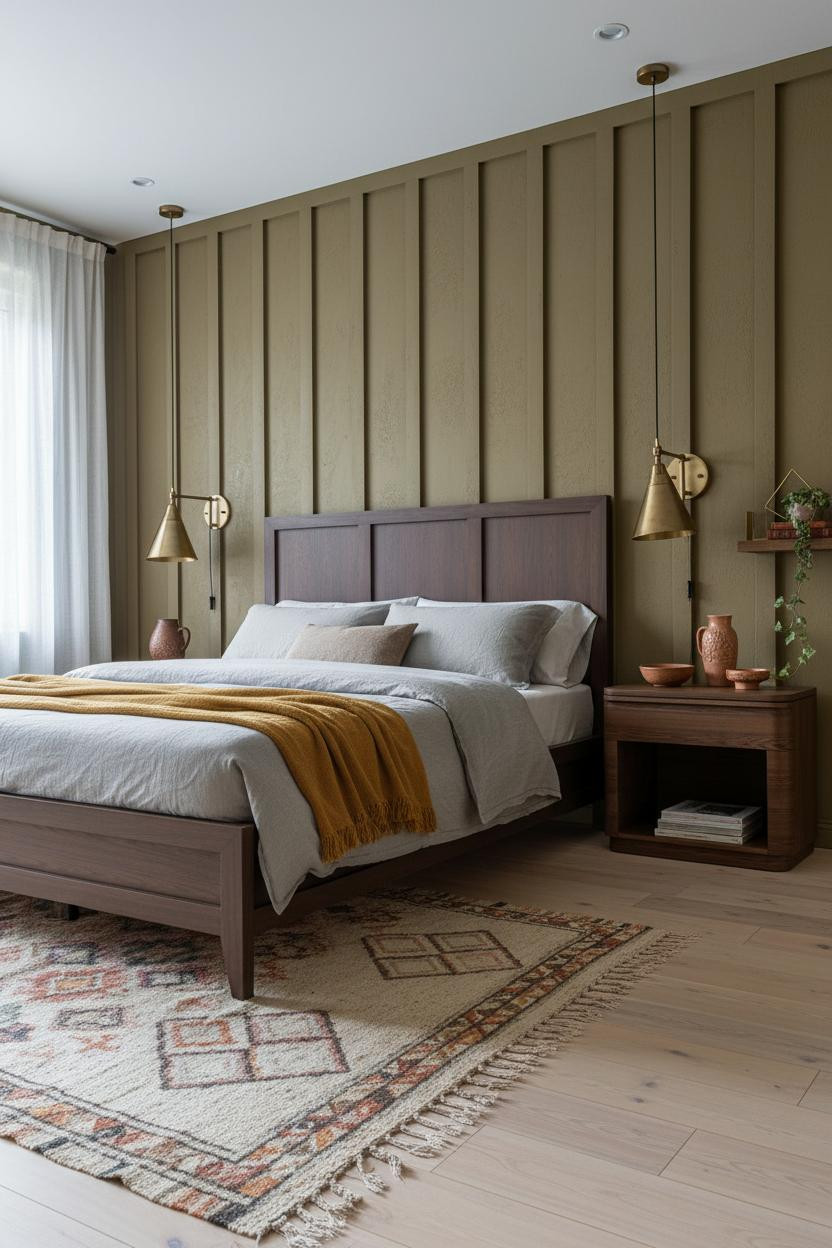
I think olive is the most underused color in bedroom design. This room proves it.
Why it looks custom: The warm olive board-and-batten catches vertical light differently than flat plaster. Each batten edge creates a thin shadow line, and that architectural rhythm makes the whole wall feel built rather than painted.
One smart swap: Replace any flush-mount ceiling light with dramatic brass wall sconces flanking the headboard. The amber pools they cast are what give this kind of room its glow. Learn more about getting this right in our bedroom lighting guide.
A Sage Arch That Frames the Whole Room
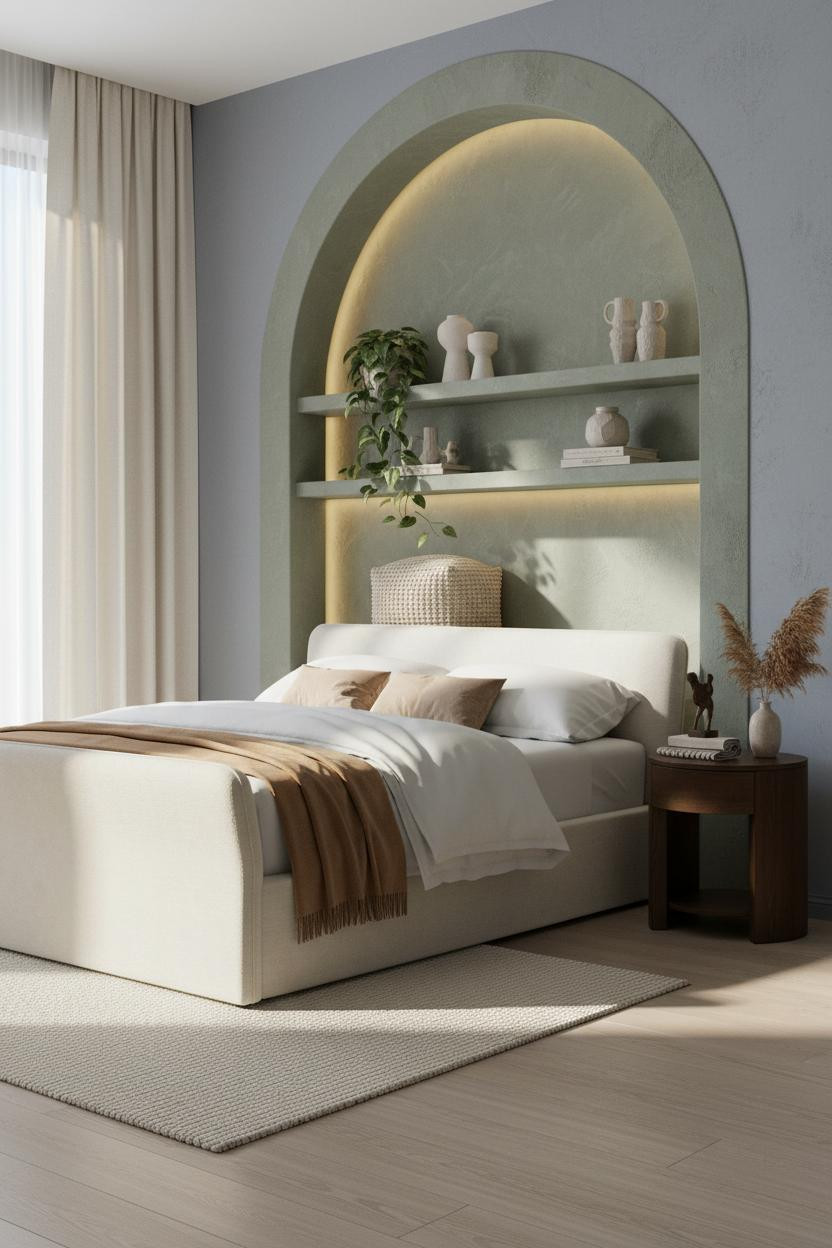
An arched alcove in textured sage plaster is a commitment. But it changes the entire character of the room. The curve softens everything around it.
Design logic: Flanking the arch with dusty blue-grey walls keeps it from dominating. The arch becomes a focal point while still feeling like part of the room rather than a feature dropped in from somewhere else.
What to copy first: Floor-to-ceiling cream linen curtains as a vertical counterweight to the arch's horizontal mass. The proportion is the whole trick.
Brass Track Lighting That Makes Mushroom Plaster Glow
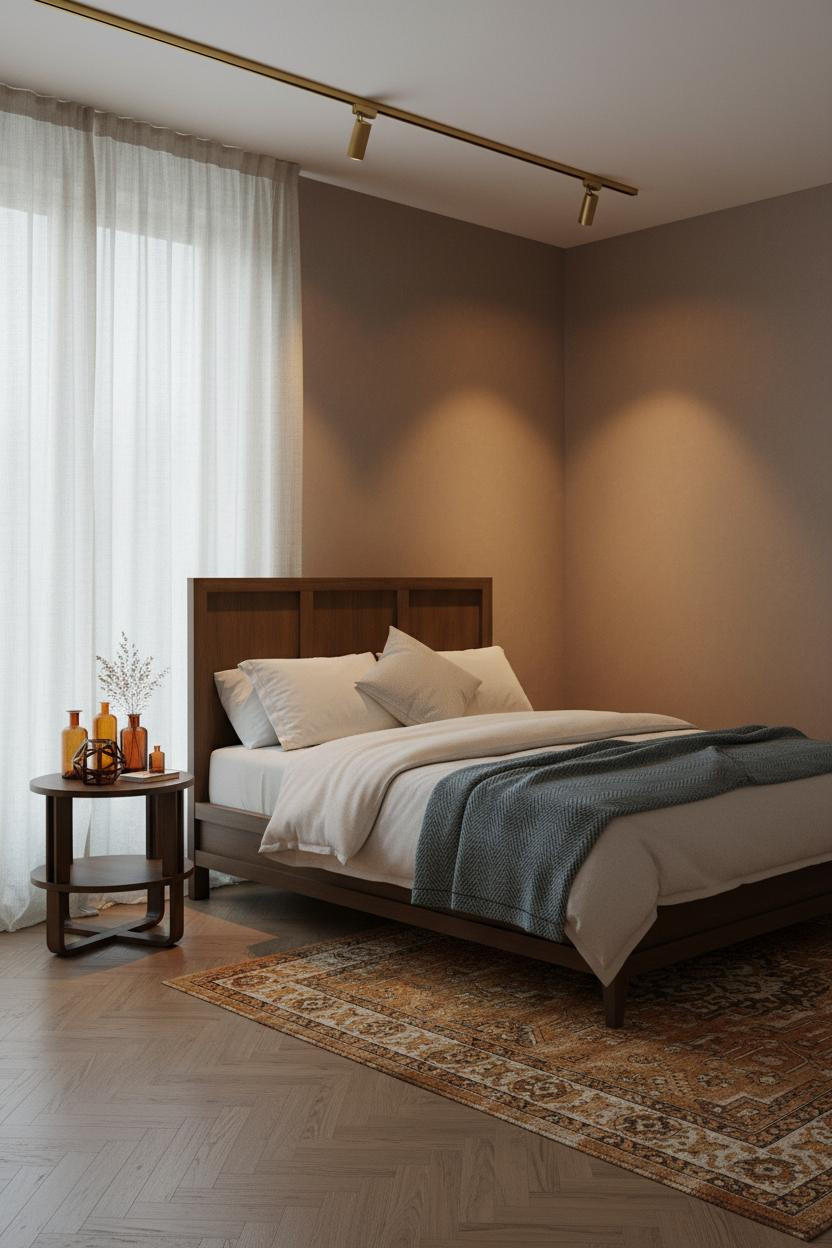
Lighting makes or breaks a collected bedroom. This one gets it right.
What gives it presence: Recessed brass track lighting running the full ceiling width lets you direct amber pools exactly where the room needs warmth. The mushroom matte plaster catches it unevenly, and that irregularity is what makes the room feel lived-in rather than lit.
And the herringbone parquet floor ties it together at the bottom. Two patterns, one warm palette. Enough contrast to feel interesting, while still feeling grounded.
Terracotta Walls and a Macrame That Actually Belongs
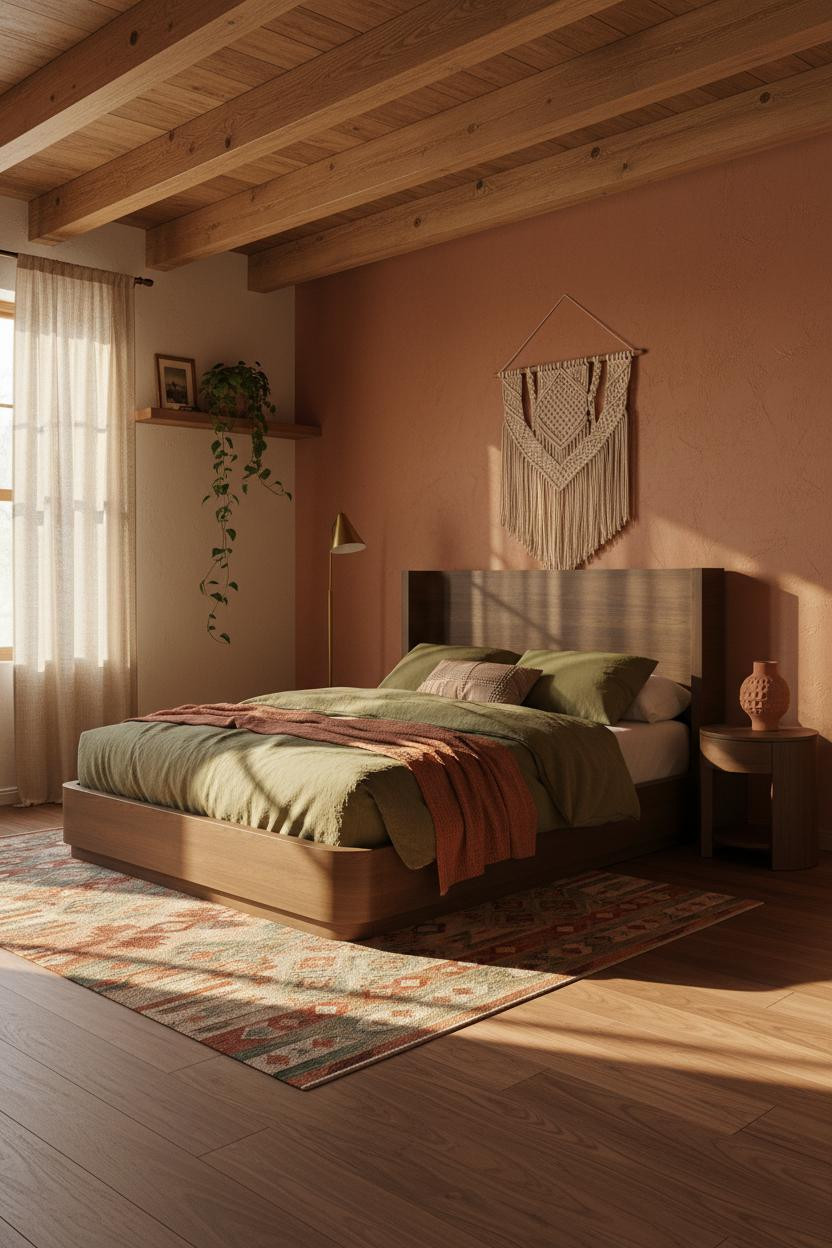
Macrame fails when it floats on a white wall with nothing around it. Here, the terracotta plaster gives it something to belong to, and the exposed beam ceiling overhead anchors the whole vertical arrangement. The room feels collected and cohesive in a way that genuinely surprises me.
In a layered eclectic bedroom, the easy win is choosing one vintage textile and building the palette around it. The kilim rug in terracotta, sage, and cream is where every other color decision here started. That's the formula. Here's how to approach bedroom decorating if you're starting from scratch.
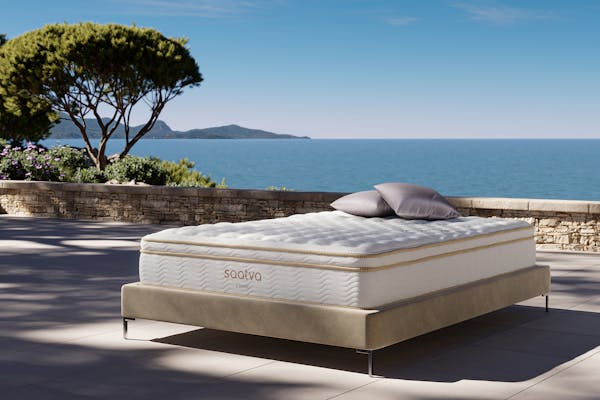
Our #1 Pick
Saatva Classic Mattress
America's best-selling online luxury innerspring. 365-night trial, lifetime warranty, free white glove delivery.
Shop Saatva Classic
The Foundation Of Every Beautiful Bedroom
Every room in this list has one thing in common. The walls are interesting. The objects are personal. But none of it matters if the bed isn't right.
The Saatva Classic is the mattress I'd put under any of these rooms. Dual-coil support means it holds its shape properly, so the bedding drapes the way it should. The Euro pillow top has that soft-but-structured feel you get in a good hotel. And the breathable organic cotton cover means you're not waking up overheated at 3am, which honestly matters more than any of the aesthetic decisions above.
Walls get repainted. Rugs get swapped. The mattress stays. Start with the one thing you'll sleep on every single night.

The rooms people save are the ones where every object looks like it arrived on its own schedule. Nothing was purchased to fill a gap. And that kind of patience is actually a design strategy.
Good design ages well because it's made well.