
 by
TOP RECOMMENDATION
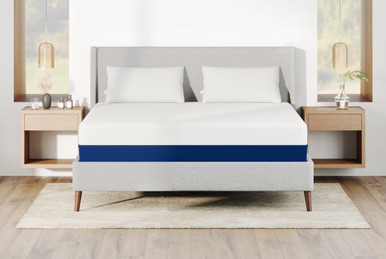
Amerisleep AS3
Bio-Pur plant-based memory foam, HIVE 5-zone lumbar support, 100-night trial, and a 20-year warranty. The AS3 is the strongest all-around mattress in the Amerisleep vs Tuft & Needle comparison for most sleeper types.
Amerisleep and Tuft & Needle both sell foam direct-to-consumer with a 100-night trial, but they target very different buyers. The Amerisleep AS3 is the better long-term mattress: Bio-Pur plant-based memory foam, HIVE 5-zone lumbar support, and a 20-year warranty that is double T&N's 10-year coverage. Tuft & Needle is the honest pick for anyone under $700 who wants a bouncy, responsive foam without the memory-foam sink.
Amerisleep AS3
9.1/10
- HIVE 5-zone support reinforces the lumbar while letting shoulders sink
- Bio-Pur open-cell foam dissipates heat faster than standard memory foam
- CertiPUR-US certified; partially plant-based construction
- 20-year warranty, twice T&N's 10-year coverage
- Softer edges than a coil hybrid
- Sleepers over 230 lb may need the AS3 Hybrid for extra support
For most sleepers comparing these two brands, the AS3 wins on every spec that matters long-term: better pressure relief, zoned lumbar support, cooler sleep, and twice the warranty. The premium is justified.
Amerisleep vs Tuft & Needle: the real difference
Both brands built their reputation on beds-in-a-box with home trials. Both use proprietary foam. The gap shows up in what that foam does: the AS3 uses Bio-Pur, a partially plant-based open-cell memory foam with a 5-zone HIVE support layer underneath; the Tuft & Needle Original uses T&N Adaptive polyfoam (graphite and gel-infused, faster-response, less contouring). If you want deep-pressure relief with targeted lumbar support, you want the AS3. If you want something bouncy and budget-friendly, T&N is the honest answer.
Specs side by side
| Spec | Amerisleep AS3 | T&N Original | T&N Hybrid |
|---|---|---|---|
| Queen price | From $1,249 | ~$595 | ~$1,295 |
| Foam type | Bio-Pur plant-based memory foam | T&N Adaptive polyfoam | T&N Adaptive + pocketed coils |
| Firmness | Medium 5/10 | Medium-firm 6/10 | Medium-firm 6.5/10 |
| Height | 12" | 10" | 12" |
| Zoned support | HIVE 5-zone | None | None |
| Trial | 100 nights | 100 nights | 100 nights |
| Warranty | 20 years | 10 years | 10 years |
| Certifications | CertiPUR-US | CertiPUR-US, OEKO-TEX | CertiPUR-US, OEKO-TEX |
| Made in USA | Yes | Yes | Yes |
Bio-Pur vs T&N Adaptive: what the difference feels like
Both are polyurethane-based foams with proprietary modifications. The formulations solve different problems.
Bio-Pur (Amerisleep) substitutes plant-derived oils for a portion of the petrochemical base. The open-cell structure responds to body heat and conforms closely, more like classic memory foam, but with faster pressure recovery than older memory foams. Side sleepers get deep cushioning at the shoulder and hip.
T&N Adaptive (Tuft & Needle) blends graphite and gel into the polyfoam. The result is more responsive, closer to a neutral polyfoam than true memory foam. It springs back faster and does not produce the slow-melt contouring that defines Bio-Pur. Combination sleepers who change positions frequently often prefer this bouncier feel.
Practical verdict: side sleepers and pressure-sensitive sleepers belong on the AS3. Back sleepers and combo sleepers who dislike "stuck" memory foam may actually prefer the T&N feel, but T&N delivers it without the 5-zone lumbar support the AS3 carries.
Cooling
How the three compare on cooling:
- AS3: open-cell Bio-Pur foam; NapLab measured a peak surface temperature of 85.4°F (9/10 for cooling)
- T&N Original: polyfoam infused with graphite and gel to draw heat away
- T&N Hybrid: the same foam over pocketed coils, which add airflow
We expect the AS3 and the T&N Hybrid to sleep coolest. The open-cell Bio-Pur structure dissipates body heat rather than retaining it, while the T&N Hybrid's pocket coils circulate air through the support layer. These are our editorial assessments, not results from our own temperature tests.
Back pain and lumbar support
This is where the AS3 separates itself. Tuft & Needle's foam is uniform: no zoning, no targeted lumbar reinforcement. That works for many sleepers, but for anyone with lower back pain it misses the key engineering detail: the lumbar zone needs more support than the shoulder zone, not the same support.
The HIVE layer in the AS3 uses hexagonal cutouts to create 5 zones. The zones under the head, lower back and legs are firmer; the zones under the shoulders and hips are softer. Your spine stays neutral on your side or back without the hips sinking below the lumbar. HIVE is designed to vary support by body zone; comfort on unzoned foam depends on individual fit.
For chronic back pain sufferers, this distinction is not theoretical. It is the reason to pay the AS3 premium over the T&N Original.
Durability and warranty
Amerisleep backs the AS3 with a 20-year warranty split into two phases: full replacement at no cost for manufacturing defects or sagging over 1.5 inches in years 1–10; replacement at 50% of the original price in years 11–20; labor and transport are not covered. That is twice Tuft & Needle's 10-year limited warranty.
Memory foam typically develops significant body impressions between 8 and 10 years. T&N's 10-year warranty covers that window and stops. Amerisleep's 20-year warranty extends meaningfully past it, which signals genuine confidence in foam density and construction. For a mattress you plan to keep 12–15 years, that matters.
Price and value
At around $595 queen, the Tuft & Needle Original is one of the best budget foam mattresses available. It outperforms many entry-level competitors on cooling and pressure relief at that price point. If your budget stops at $700, T&N is the honest recommendation: do not let anyone talk you into a worse mattress just because it costs more.
At $1,249 and above, the AS3 justifies its price through four advantages T&N cannot match: HIVE zoned lumbar support, Bio-Pur plant-based foam that sleeps cooler, superior pressure relief at the shoulder, and 20-year warranty coverage. The T&N Hybrid at around $1,295 is the closest competitor in that range, but at that price the AS3's lumbar zoning and longer warranty still give it the edge for most sleeper types.
Who should buy each
Buy the Amerisleep AS3 if:
- You sleep on your side and need deep shoulder and hip pressure relief
- You have lower back pain and need active lumbar support, not just a flat medium-firm
- You want the longest warranty in this price range (20 years vs 10)
- You run warm and want the cooler of the two foam types
- Budget allows $1,249 or more for queen
Buy Tuft & Needle if:
- Budget is under $700, and the Original at $595 is the cleanest budget foam pick
- You prefer a bouncier, more responsive feel than classic memory foam
- You are furnishing a guest room or kids room where 10-year coverage is sufficient
- You sleep on your back and do not need targeted lumbar zoning
- You want OEKO-TEX certification alongside CertiPUR-US
Off-gassing
Both are CertiPUR-US certified. NapLab noted a strong new-mattress smell from the all-foam AS3 that faded after about 4 days, so plan to air out either bed for a few days. Neither should be a lasting concern.
Choose the Amerisleep AS3 for better pressure relief, HIVE lumbar zoning, cooler sleep, and a 20-year warranty. Choose Tuft & Needle Original if budget is the hard constraint at under $700 and you prefer a bouncier, less-contouring foam.
Frequently asked questions
Is Amerisleep or Tuft & Needle better for side sleepers?
Amerisleep AS3. The Bio-Pur memory foam contours more deeply at the shoulder and hip, and the HIVE zoning keeps the lumbar supported while those areas sink. T&N's Adaptive foam is bouncier and less conforming, adequate for side sleeping, but not as targeted for pressure relief.
Is Tuft & Needle worth buying over Amerisleep?
At under $700, yes. The T&N Original is a genuinely good budget mattress. Above $900, the AS3's engineering advantages (HIVE zoning, Bio-Pur foam, 20-year warranty) justify the higher price for most sleepers.
Does Amerisleep AS3 sleep hot?
Less hot than most memory foam. The Bio-Pur open-cell structure dissipates heat better than standard closed-cell memory foam. NapLab rates the AS3 9/10 for cooling, with a peak surface temperature of 85.4°F.
How does T&N Hybrid compare to Amerisleep AS3?
The T&N Hybrid at around $1,295 is competitive on price. The coils improve edge support and airflow. But it still uses a single-density Adaptive foam comfort layer with no lumbar zoning, and the warranty is 10 years to the AS3's 20. At that price point, the AS3 wins on long-term value for most buyers.
Amerisleep AS3
9.1/10
Bio-Pur plant-based memory foam, HIVE 5-zone lumbar support, 100-night trial, and a 20-year warranty. The AS3 beats Tuft & Needle on every long-term spec that matters.