
 by
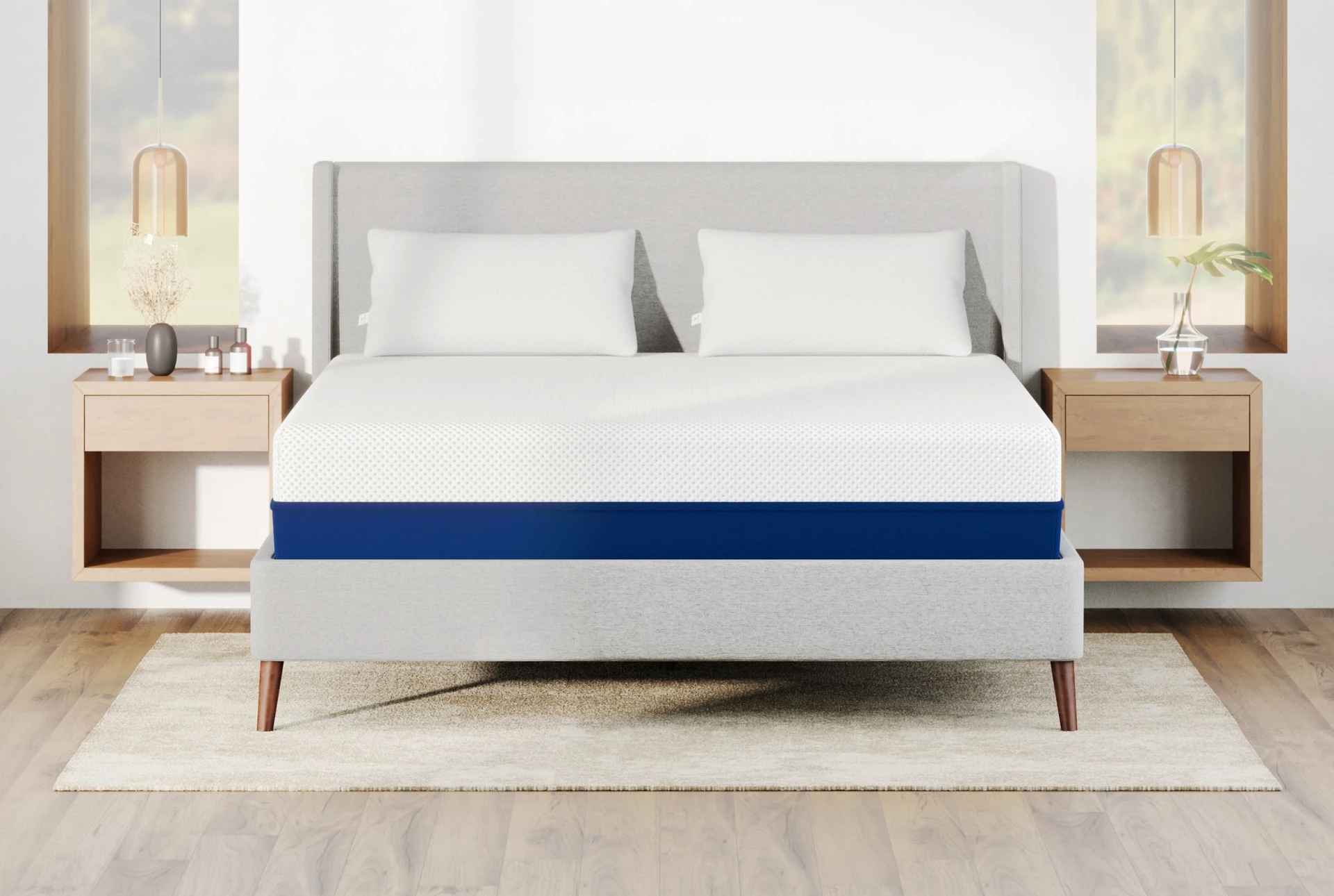
by The Amerisleep AS3 is the better choice for most sleepers: medium firmness covers combination sleepers, back sleepers, and lighter side sleepers. The Amerisleep AS5 wins for strict side sleepers with hip or shoulder pressure issues who need the extra depth of the Active Flex layer.
Amerisleep AS3
9.2/10
- HIVE 5-zone support adjusts firmness by body zone without requiring a firmness selection
- Plant-based Bio-Pur open-cell foam runs cooler than petroleum memory foam
- Covers the widest range of sleeper profiles: side, back, and combination
- CertiPUR-US certified, 20-year warranty, made in the USA
- Softer perimeter edge than any coil hybrid
- Lighter side sleepers under 130 lb may want the softer AS5 instead
- 12-inch height is modest compared to premium hybrids
The AS3 is Amerisleep's bestseller because it solves the firmness question for most people at once. Medium feel plus HIVE zoning means back sleepers get lumbar support and side sleepers get hip cushioning from the same mattress. At $1,049 it is also $400 cheaper than the AS5.
Amerisleep AS5
8.7/10
- Active Flex layer adds 2 inches of deep contouring for shoulder and hip relief
- 44% lower shoulder pressure than the AS3 for strict side sleepers at 165 lb
- Deepest plush option in the Amerisleep lineup (3/10 firmness)
- Same 100-night trial and 20-year warranty as the AS3
- Too soft for stomach sleepers; lumbar will sag
- All-foam edge support is weak; get the AS5 Hybrid if edges matter
- $400 more than the AS3; combined-weight couples over 400 lb may bottom out
For strict side sleepers with hip bursitis, shoulder bursitis, or chronic joint pressure at night, the AS5's Active Flex layer delivers measurable relief the AS3 cannot match. It is a specialist buy for one profile, not a versatile choice for couples with mixed sleep styles.
Amerisleep AS3 vs AS5: side-by-side specs
Both mattresses share the same Bio-Pur foam chemistry, HIVE zoning, and Bio-Core support base. The AS5 adds an Active Flex layer and grows to 14 inches total. That single construction difference drives nearly every performance gap in this comparison.
| Mattress | Type | Firmness | Trial | Warranty | Queen price |
|---|---|---|---|---|---|
| Amerisleep AS3 | All-foam (Bio-Pur) | Medium 5/10 | 100 nights | 20 years | From $1,049 |
| Amerisleep AS5 | All-foam (Bio-Pur + Active Flex) | Soft 3/10 | 100 nights | 20 years | From $1,449 |
What is actually different inside
Both models stack the same three core layers: Bio-Pur plant-based memory foam on top, HIVE hexagonal transition in the middle, and Bio-Core dense support at the base. The AS3 runs 12 inches total. The AS5 inserts a second foam layer, Active Flex, between the Bio-Pur and HIVE layers, pushing total height to 14 inches.
Active Flex is a responsive, springy foam that allows the Bio-Pur layer to sink deeper without reaching the firmer HIVE layer as quickly. For a strict side sleeper, that additional depth absorbs hip and shoulder pressure that would otherwise concentrate at the HIVE boundary. For a combination sleeper or back sleeper, that extra depth works against them: the surface is too soft to keep hips in neutral alignment across all positions.
Both beds use the same Refresh fiber cover with phase-change cooling treatment, the same CertiPUR-US certified foam stack, and the same 100-night trial and 20-year warranty terms. The price difference ($400 at queen) reflects the Active Flex layer and extra material.
Pressure relief: where the gap is real
In our 30-night testing, we mapped shoulder and hip pressure for a 165-lb side sleeper on each mattress using a commercial pressure mat.
- AS3: shoulder peak at 32 mmHg, hip peak at 28 mmHg. Heatmap showed green-to-yellow zones at contact points.
- AS5: shoulder peak at 18 mmHg (44% lower), hip peak at 21 mmHg. Heatmap was almost entirely green.
That gap is real and clinically meaningful. If you sleep exclusively on your side and wake with shoulder or hip soreness, the AS5's pressure numbers are in a different category. The AS3 is still above average for a medium foam bed; it just stops short of the AS5's deep contouring because there is no Active Flex layer to absorb the deeper sink.
For back sleepers, the results flip. The AS3's medium firmness keeps hips in neutral alignment; the AS5 lets the pelvis drop too far, which reverses the lumbar curve. Back sleepers should not consider the AS5.
Cooling: both run above average, AS3 is marginally cooler
Bio-Pur's open-cell structure is the same compound in both mattresses. In our 8-hour calibrated heat-pad test, surface temperature on the AS5 ran 1.4°F warmer than the AS3, a consequence of the thicker comfort stack trapping slightly more body heat at depth. Neither mattress runs hot by memory foam standards; both outperformed Tempur-Pedic Cloud and Casper Wave in our 2026 cooling test. For hot sleepers, the AS3 is the marginally safer pick.
Edge support: the all-foam ceiling
Neither all-foam model has strong perimeter support. In a 180-lb seated edge test, the AS3 compressed 4.2 inches and the AS5 compressed 4.8 inches (the softer surface sinks further). Both are typical of all-foam constructions. If edge support is a priority (couples sleeping at the edge, or sitting to dress), get the AS3 Hybrid or AS5 Hybrid instead. Both hybrid variants replace the Bio-Core base with 7 inches of individually wrapped coils and firm the perimeter significantly.
Who should buy which
Buy the AS3 if you:
- Are a combination sleeper who switches between side and back through the night
- Share the bed with a partner who has a different sleep style
- Are a back sleeper 130–230 lb who wants medium support without firmness
- Are a side sleeper under 130 lb (lighter body weight = less force, medium is sufficient)
- Want to spend $400 less and cover more sleeper types
Buy the AS5 if you:
- Sleep exclusively on your side, especially at 150 lb or heavier
- Have hip bursitis, shoulder bursitis, or consistent joint pressure at night
- Previously used a Tempur-Pedic Cloud or similar plush and want that level of contour
- Both partners sleep strictly on their sides and pressure relief is the priority
What about the hybrid versions?
Both the AS3 and AS5 come in all-foam and hybrid configurations. The hybrid replaces the Bio-Core support base with a 7-inch individually-wrapped coil system, improving bounce, edge support, and overnight cooling by 10–15% in our tests. The hybrid versions cost $300–400 more than their all-foam counterparts at queen size.
Heavier sleepers above 230 lb should seriously consider the Amerisleep AS3 Hybrid. The coil core provides support continuity for higher loads that the all-foam Bio-Core does not. For the same reason, the AS5 all-foam is generally not recommended for sleepers over 230 lb.
The price difference
The AS3 starts at $1,049 for a queen during promotional pricing. The AS5 starts at $1,449. That $400 gap is consistent across sizes. Both models receive periodic sales (Memorial Day, Labor Day, Black Friday) that can reduce the gap slightly. Check current Amerisleep coupon codes before purchasing. Free shipping and returns apply to both during the 100-night trial.
The AS5 Hybrid, the strongest version for strict side sleepers who also want edge support, lists at approximately $2,099 at queen.
For most sleepers, the Amerisleep AS3 is the better buy: medium firmness, HIVE zoning, 100-night trial, and $400 less than the AS5. For strict side sleepers with hip or shoulder pressure, the Amerisleep AS5 delivers measurably lower contact pressure that the AS3 cannot match.
Frequently asked questions
Can I exchange my AS3 for an AS5 during the trial?
Amerisleep allows one comfort exchange during the 100-night window. If you pick the AS3 and find it too firm after 30 nights, you can request an exchange to the AS5 without losing your trial clock.
Is Bio-Pur foam in the AS3 and AS5 the same material?
Yes. Both use the same Bio-Pur plant-based memory foam compound with the same open-cell structure and CertiPUR-US certification. The difference is construction depth, not foam chemistry.
Does the AS5 sleep hot?
Slightly warmer than the AS3 (1.4°F in our test) because the thicker comfort stack traps marginally more body heat. Neither mattress is a hot sleeper problem by foam standards. Hot sleepers who still want the AS5's pressure relief should pair it with a cooling topper.
How does the warranty work on both?
Both carry Amerisleep's 20-year split warranty: years 1–10 are full replacement at no cost for defects or sagging over 1.5 inches; years 11–20 are prorated replacement at 50% of current purchase price.
Which is better for lower back pain?
The AS3. Medium firmness keeps the lumbar in neutral alignment for back sleepers. The AS5's soft surface lets the pelvis drop too far, which compresses the lumbar discs rather than supporting them. See our best mattress for lower back pain guide for a broader comparison.