
 by
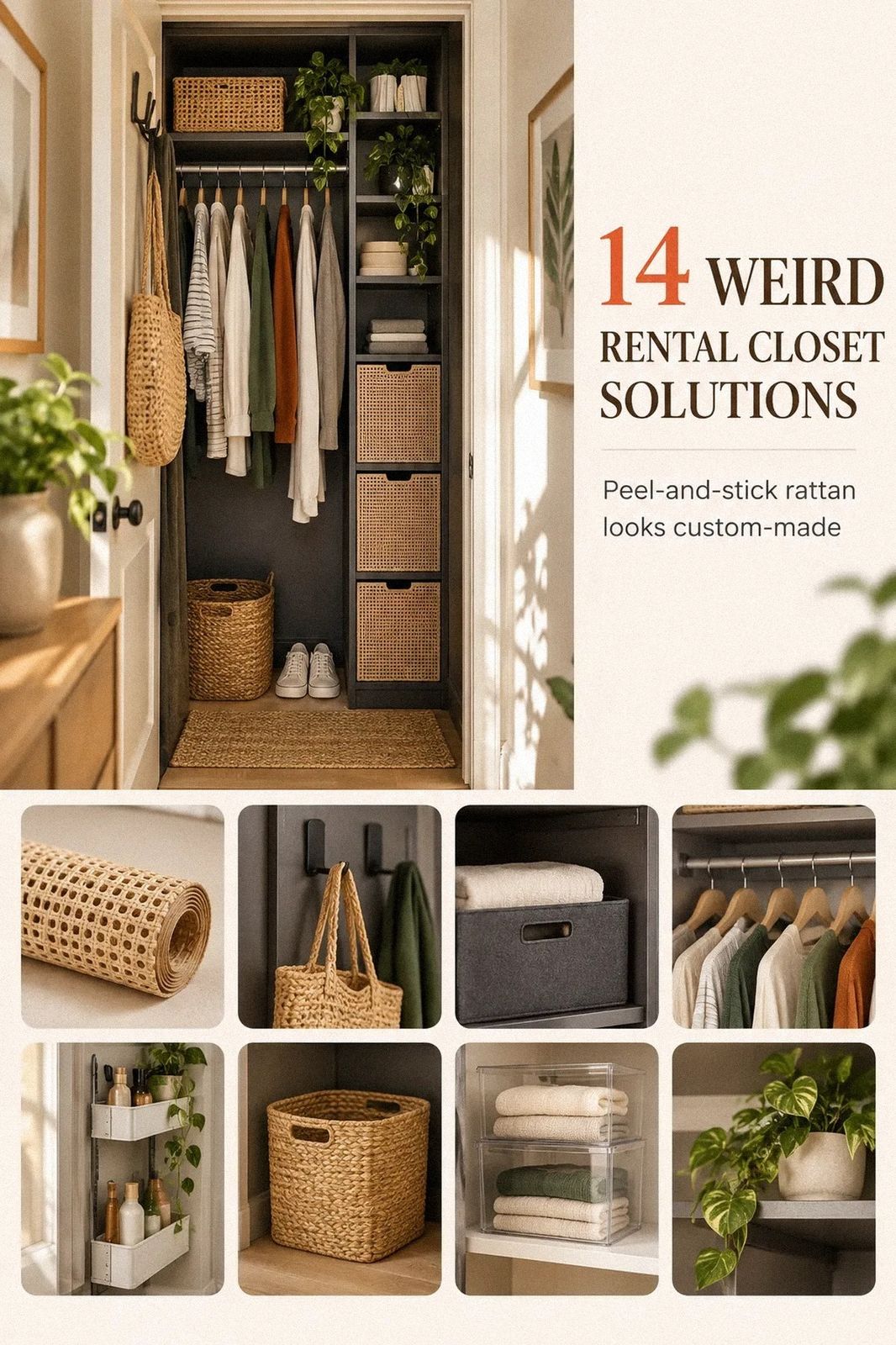
Awkward closet solutions for weird rental layouts can turn dead space into useful storage without renovating, and I proved it in one cramped rental. The closet had a sloped ceiling, one shallow wall, and nowhere sensible for shoes. I couldn't drill freely, so I worked with tension, light, and furniture that could leave with me.
- ✓ Measure the Small Long Closet Before You Buy Anything
- ✓ Apply the Two-Wood Rule to Make Uneven Walls Feel Intentional
- ✓ Hang Double Rods on the Tallest Wall
Here's what it looked like before
The closet was the full rental package: a single wire shelf, one metal rod, a narrow return wall, and a door that hit the dresser outside. The floor disappeared under tote bags, while the upper corners held nothing but dust. You'd open the door, sigh, and close it again.
I paused before touching anything because I wanted the awkwardness understood. Your eye needs to see the problem before you start buying containers.
The closet wasn't too small for clothing. It was arranged as if every wall were the same depth, which wasn't true. That distinction shaped every decision afterward.
The first useful change was admitting that the closet needed zones. The tall wall would hold hanging clothes, the shallow wall would handle folded pieces, and the floor would stay open for shoes. That simple division felt surprisingly hopeful!
- Measure the Small Long Closet Before You Buy Anything
- Apply the Two-Wood Rule to Make Uneven Walls Feel Intentional
- Hang Double Rods on the Tallest Wall
- Float a Narrow Dresser Instead of Crowding the Floor
- Build the Three-Height Light Stack
- Swap Bulky Bins for One Vertical Drawer Tower
- What Can You Do With the Dead Corner?
- Frame the Door With a Soft Curtain
- Choose Open Shelving Over Bulky Drawers
- Paint One Wall in Benjamin Moore Pale Oak
- Use the Soft Boundary Method Around Seasonal Clothes
- Anchor Shoes Under the Lowest Usable Shelf
- Add an Empty Inch Plan for Bags and Belts
- Finish With a Small Dressing Surface
1Measure the Small Long Closet Before You Buy Anything
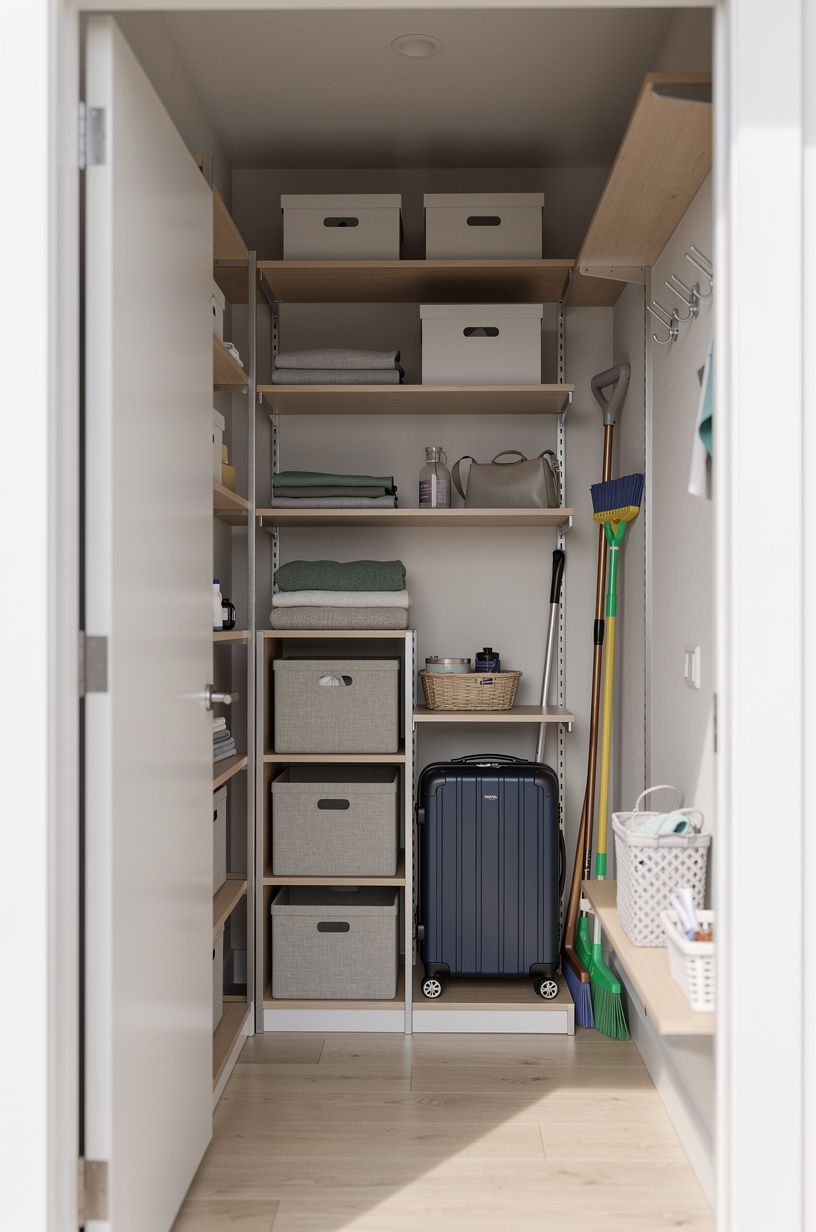
I started with a paper measuring tape and marked every wall, including the sloped section above the door. The comfortable walk-in closet size is 6x8 ft, with 4x4 ft as a minimum, but my rental didn't offer that clean rectangle. You need to measure the usable floor, not the hopeful floor.
The shelf depth mattered most. A 14 in shelf is a standard reference, yet the short wall could only handle less without blocking the door.
I chose shallow shelving there and used washed Belgian linen boxes for folded pieces. If you're planning your own awkward closet solutions, draw the door swing first.
Your prettiest cabinet won't help if you can't step inside.
I made a small mistake at this stage. I measured the hanging wall twice but forgot the baseboard projection, so the first shelf sat crooked against it.
You won't notice a 1 in error on paper, but you'll feel it every time a hanger catches. The second measurement saved the whole plan, and I used tiny closet organization ideas for small rentals before ordering anything.
The final sketch included the radiator, outlet, door casing, and every awkward corner. It looked less elegant than a showroom plan, but it was honest. A realistic measurement is a wonderfully boring form of protection.
2Apply the Two-Wood Rule to Make Uneven Walls Feel Intentional
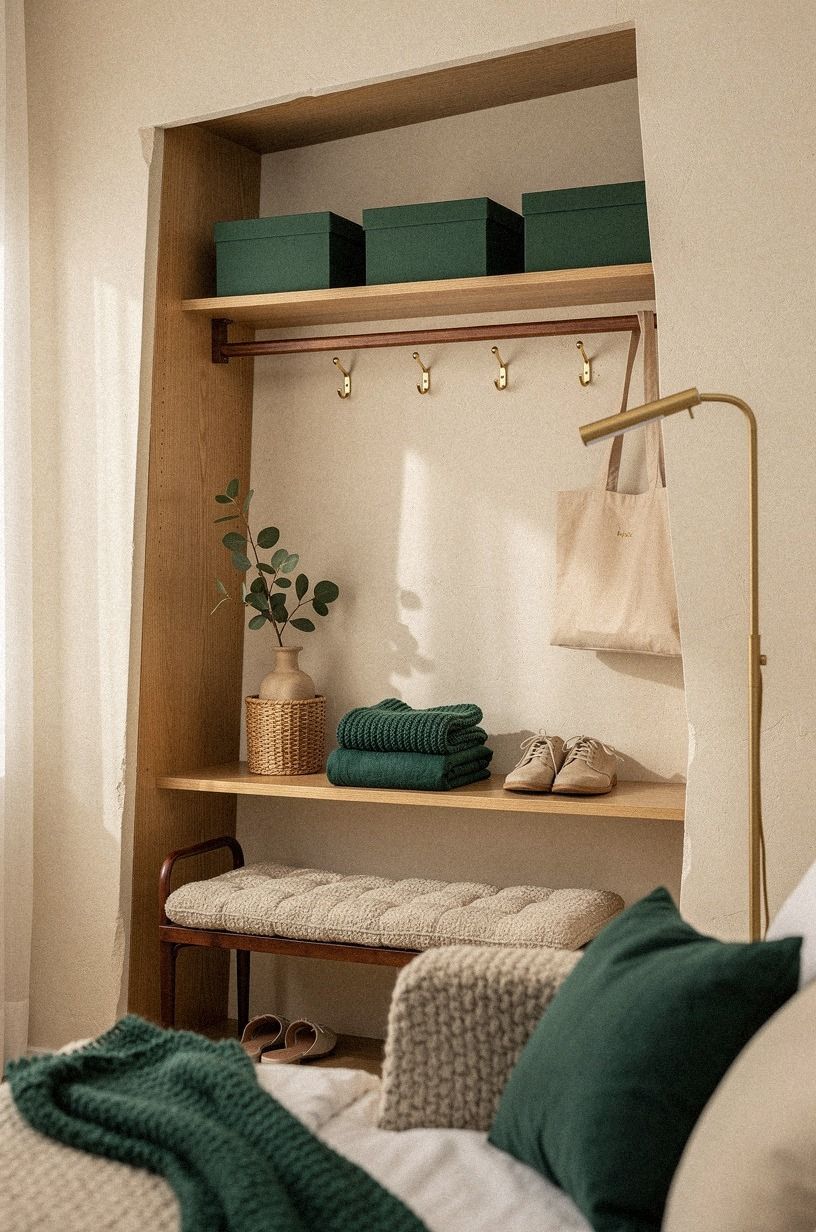
The closet had mismatched surfaces already, so I decided to limit the room to two wood tones.
3Hang Double Rods on the Tallest Wall
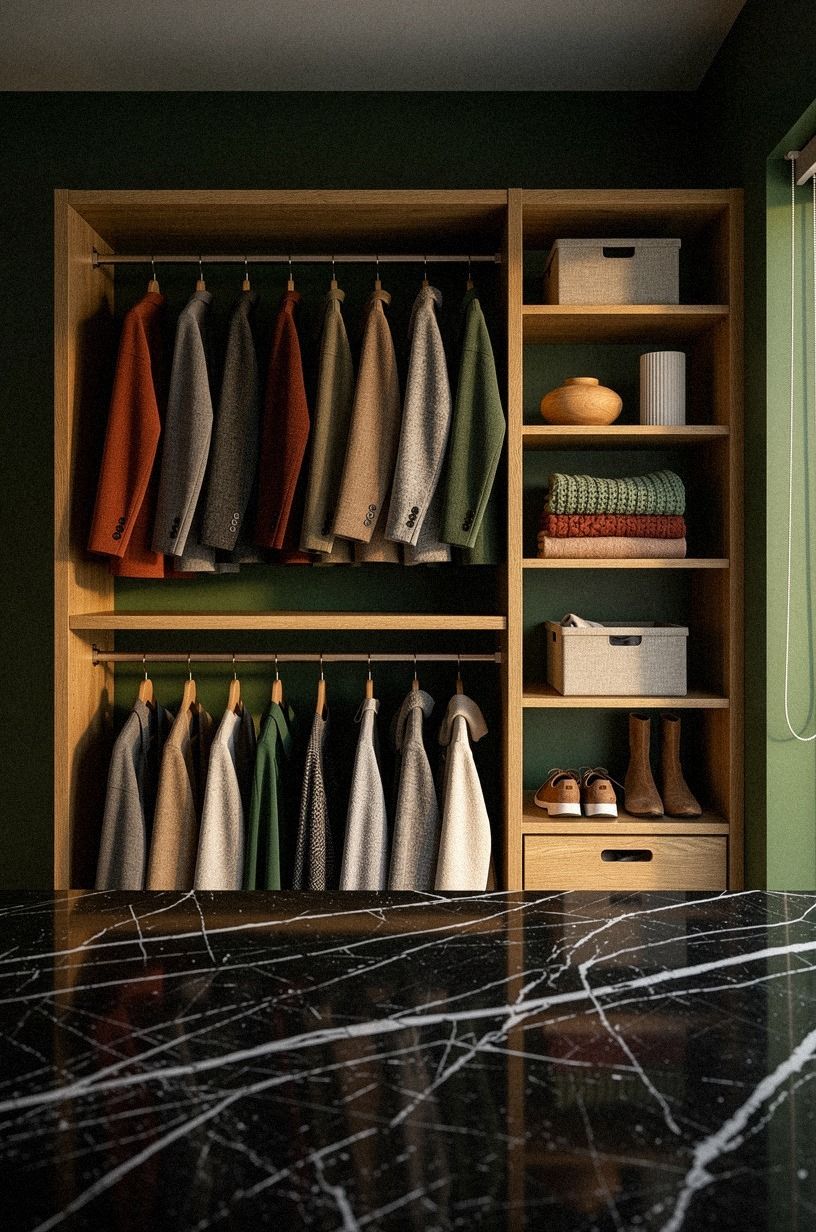
The tallest wall was the only place where double hanging made sense. I used the standard reference points of 42 in and 84 in for two rods, then left the sloped side for shorter garments. You want shirts and folded trousers below, while dresses and coats need the upper run.
I chose a slim matte black tension rod because it didn't require holes and looked less temporary than white plastic. It held lightweight clothing without visual fuss. If your landlord allows a few small holes, a mounted rod may carry more weight, but I wouldn't gamble with a rental deposit for a closet full of winter coats.
The emotional shift happened when I moved all short items onto the lower bar. Suddenly, the floor appeared. Your eye reads that empty strip as calm, even though the storage increased.
I kept one open section for a basket and linked the plan to my guide on organizing wire closet shelves, because the rod only works when the shelf above it stays edited.
I used cotton velvet hangers only for slippery blouses and jackets. Matching every hanger would have been expensive and unnecessary. The important thing was keeping the lower rod visually light so the closet felt open rather than aggressively packed.
One warning: test the rod with a few garments before loading it completely. A tension system can feel sturdy for ten minutes and disappointing by morning. Mine held because I kept the heavy coats on the upper wall instead of forcing everything into one narrow span.
4Float a Narrow Dresser Instead of Crowding the Floor
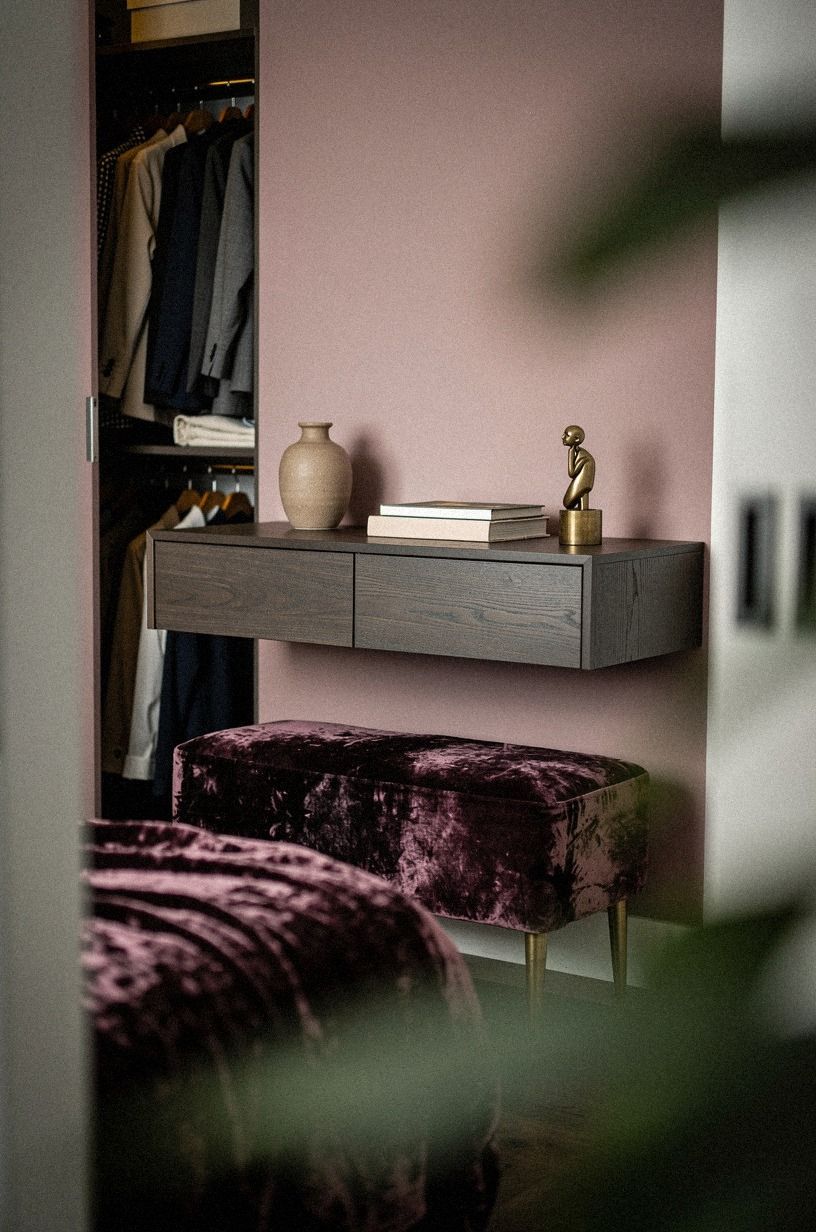
A dresser seemed impossible because the closet's short wall was only slightly wider than a drawer pull. I found a narrow IKEA MALM dresser that could sit outside the closet, then treated it as part of the storage zone rather than forcing it inside. Sometimes the best closet solution lives just beyond the door.
You’ll want to check the drawer clearance before committing. I left enough room for the drawers to open without hitting the door casing, and I used the top for daily pieces rather than decoration. Your rental layout needs a landing place for belts, socks, and tomorrow's outfit.
A vase won't solve that problem.
I tested the arrangement with empty cardboard boxes first. It looked plain, but I could walk past it without turning sideways, which was the real victory.
The dresser's dusty rose deep-pile mohair velvet also softened the white walls. If your bedroom has another awkward furniture zone, compare it with these rug and sofa layouts for awkward rental living rooms before buying a larger piece.
The top became a useful landing surface rather than a decorative display. I placed a shallow tray there for watches and keys, then left enough empty room to fold laundry. That restraint made the whole arrangement feel more generous.
I also checked the dresser from the hallway. A piece can work beautifully inside a closet and still look clumsy from the room beyond. This one created a gentle transition between the bedroom and storage zone, which made the rental feel more considered.
5Build the Three-Height Light Stack
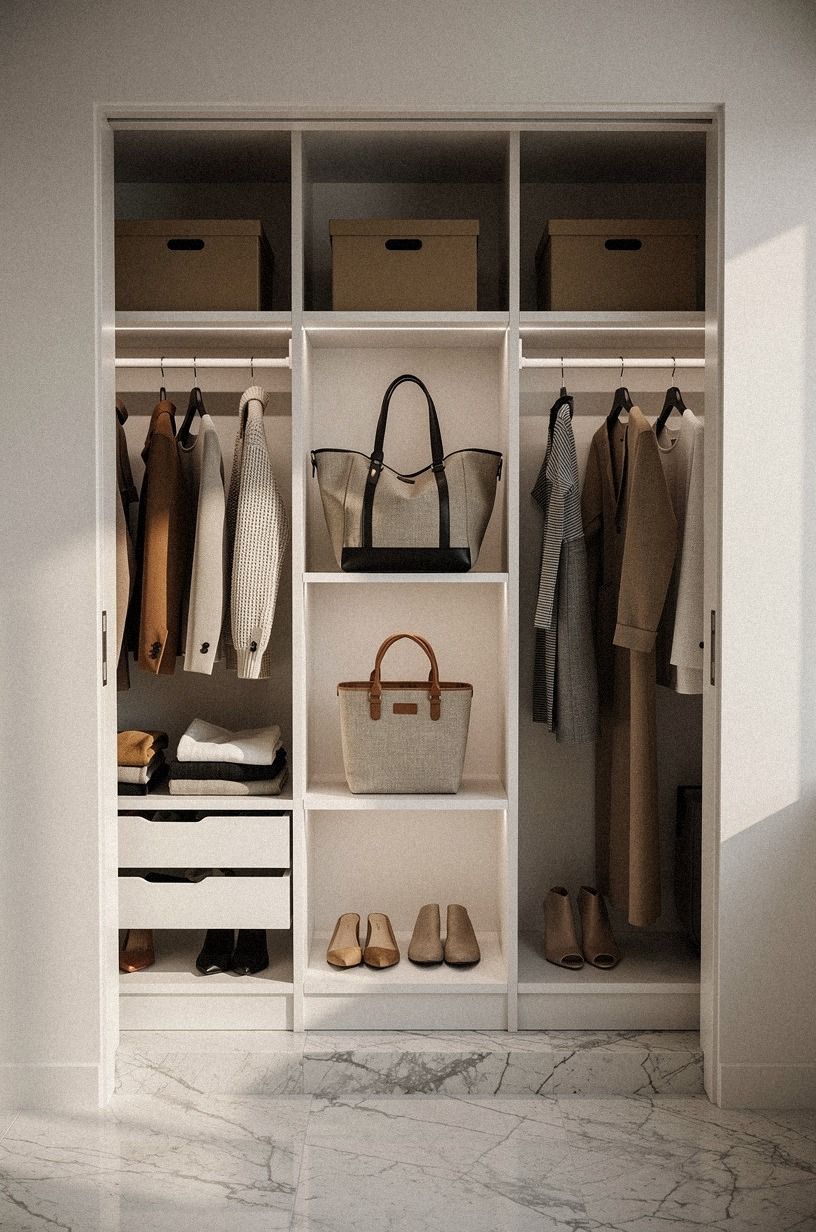
The original closet had one ceiling bulb that made every color look gray. I wanted three levels of light: a ceiling source, a low glow, and illumination along the hanging wall. That became my Three-Height Light Stack, and it changed the room more than any bin did.
I used a warm LED rod light above the shorter garments, a plug-in lamp near the doorway, and the existing overhead bulb only when I needed to search. Typical LED rod lighting runs $30-$150, so you can make this a gradual project. You don't need a wired renovation to get a more inviting result.
The low lamp was the emotional trigger. At night, it threw a soft pool across the floor and made the closet feel serene instead of purely functional.
Your clothes look better under warm light, but don't use light to hide clutter. I still removed half the items.
And yes, turning on the lamp before getting dressed felt absurdly luxurious!
I tested the color temperature across Carrara marble with subtle grey veining, black clothing, and camel knitwear. Very cool light made everything feel harsh, while an extremely warm bulb turned white pieces yellow. A middle setting gave me the most flattering and practical result.
If you want a broader bedroom reset, the lighting logic pairs well with the non-toxic bedroom I'd build in a rental. The room doesn't need to become dramatic. It needs to let you see what you own.
6Swap Bulky Bins for One Vertical Drawer Tower
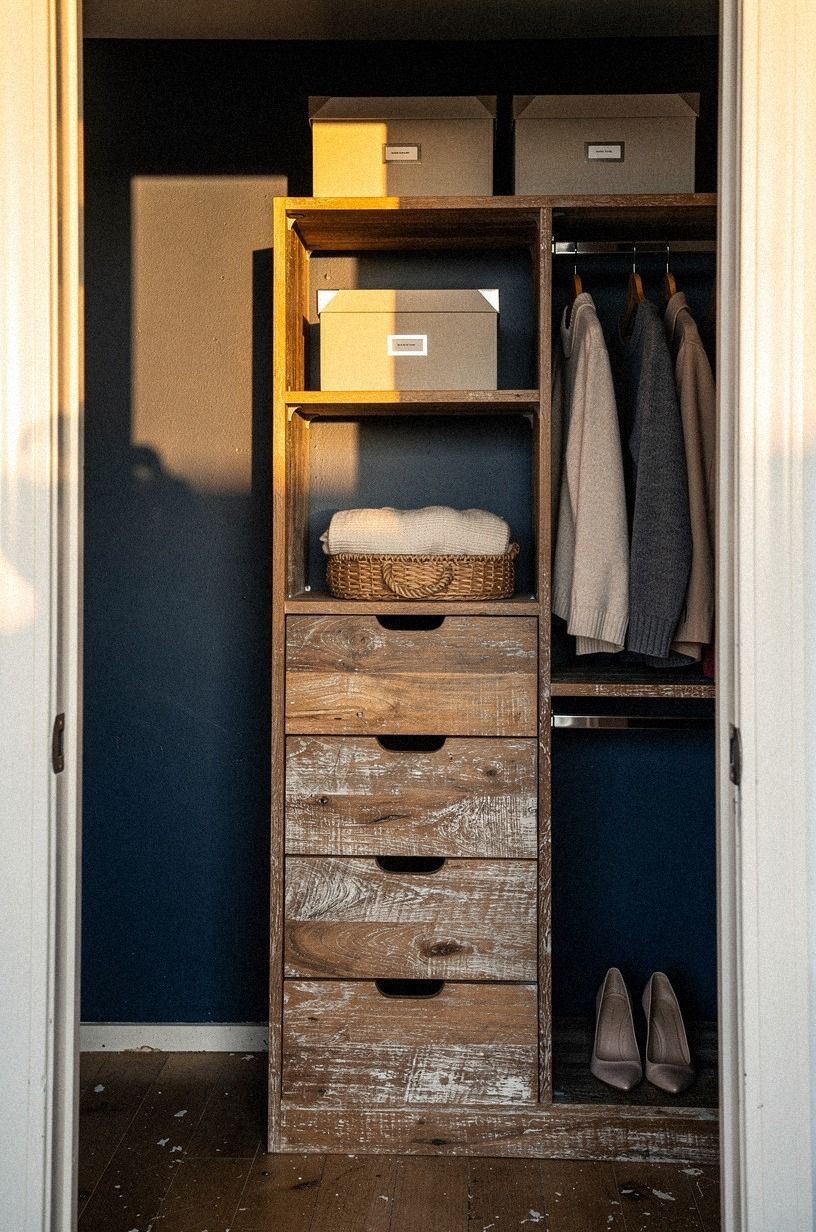
I had been storing accessories in four oversized fabric cubes, which sounds organized until you need the scarf at the bottom. I replaced them with one narrow Target Threshold drawer tower and assigned each drawer a category. The tower used height instead of precious floor width, which suited the rental's long shape.
Your containers should match the things you reach for most. I kept belts in the shallow top drawer, workout clothes in the middle, and spare linens below.
You’ll save space if you stop giving every category a giant box. A container that is too deep becomes a hiding place, not storage.
The drawer tower was also less visually noisy than the bins. I tried clear boxes first, but seeing every small item made the closet feel busy. My opinion is firm here: skip transparent storage for soft goods unless you love constant visual inventory.
Use reclaimed weathered teak where you need warmth and drawers where you need order. The difference was immediate.
I labeled only the inside edges of the drawers. Big labels would have made the compact tower feel more utilitarian, while no labels encouraged the old habit of tossing everything together. This small compromise kept the system practical and calm.
For more ideas on arranging limited bedroom storage, I returned to organizing wire closet shelves and borrowed the idea of leaving one intentionally empty container. An empty drawer is not wasted space. It is breathing room for the next change.
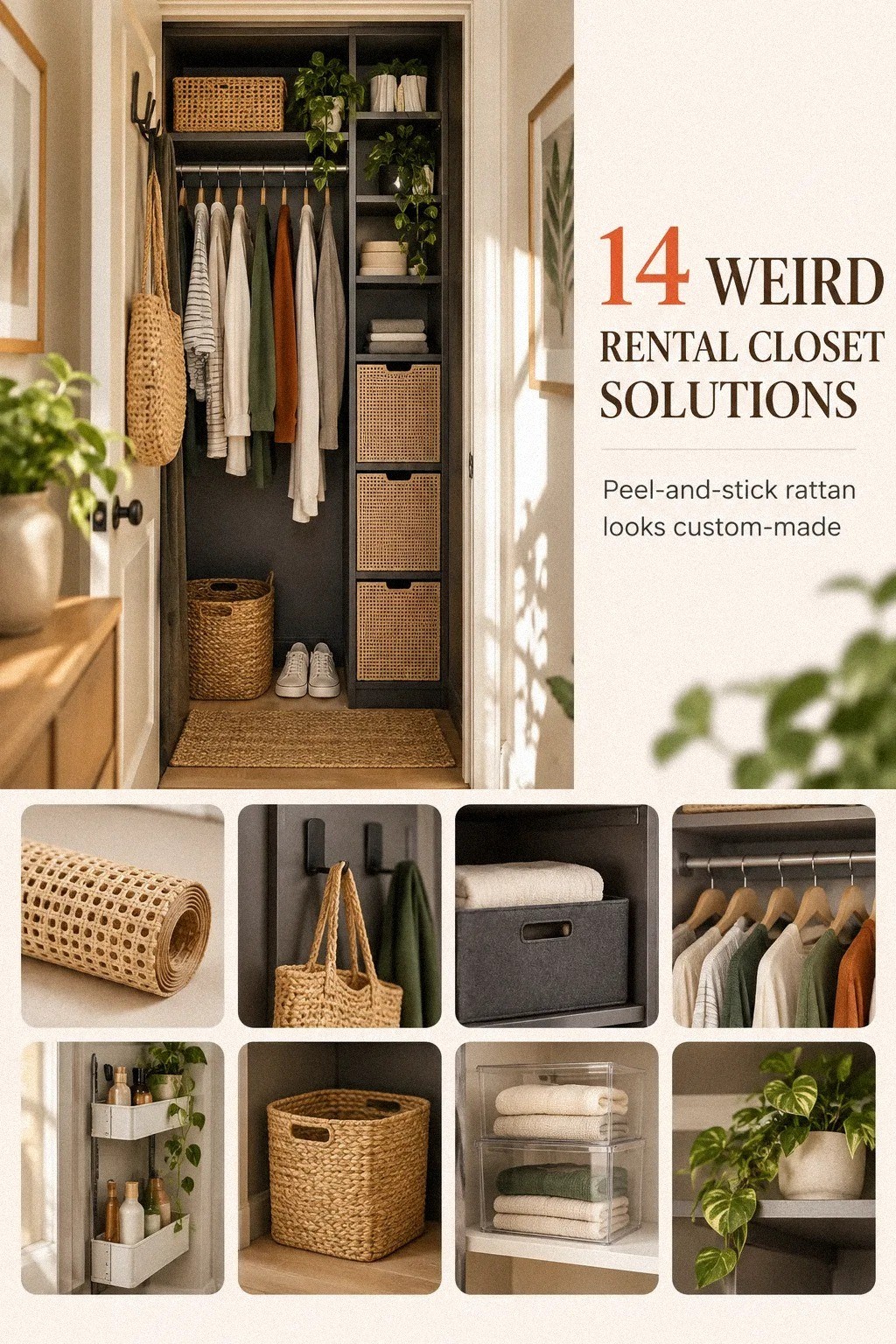
7What Can You Do With the Dead Corner?
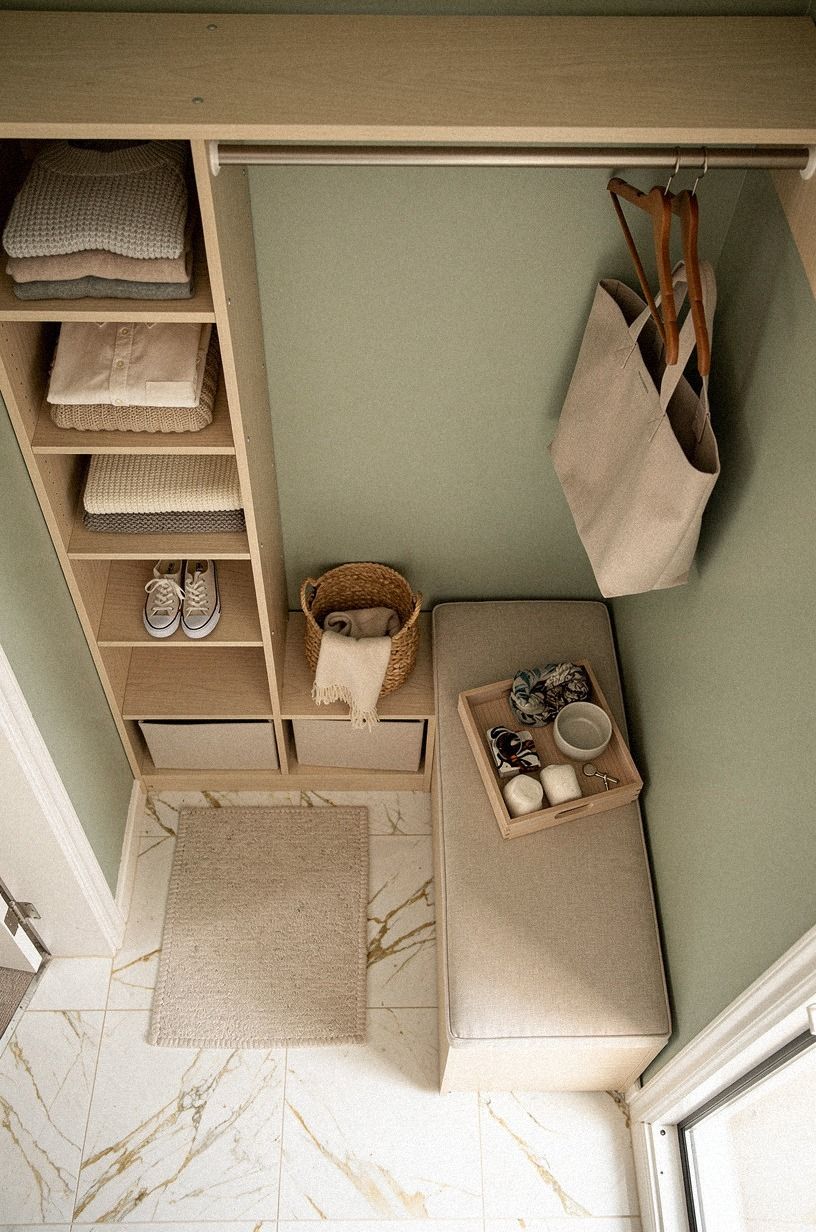
The dead corner held a sliver of floor beside the angled wall.
8Frame the Door With a Soft Curtain
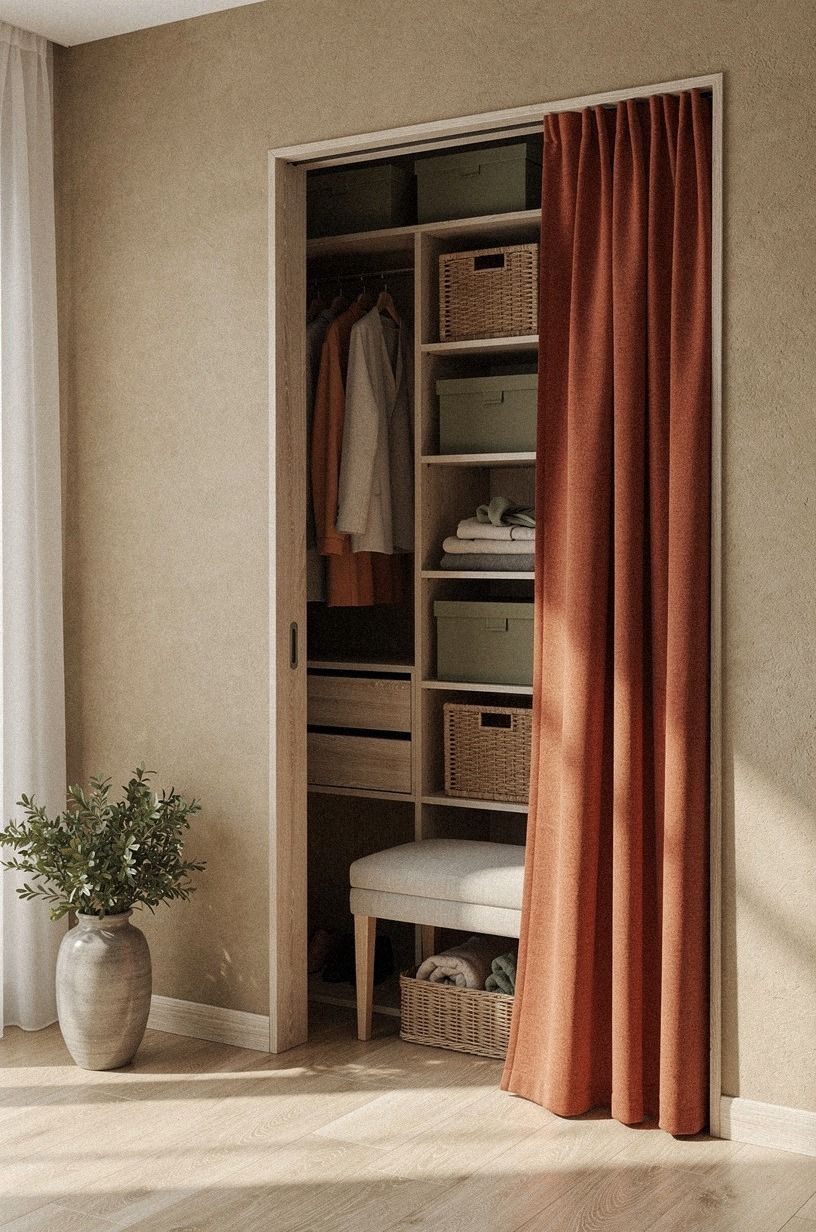
The door was the visual problem I kept avoiding. It opened into the room and exposed a jumble of hangers, so I replaced it with a washable curtain on a tension rod. The fabric made the closet feel calmer while preserving access, and it didn't demand a hinge repair.
I chose a curtain in warm stone and kept the surrounding trim in cerused white oak, with a restrained olive accent. A glossy polyester panel would have looked too sharp against the rental's matte walls. Your curtain should brush the floor without pooling if you want the opening to feel taller.
Mine stopped just above the baseboard.
The most surprising moment came when I closed it for the first time. The room looked finished, but I could still reach the closet in one motion.
I'd choose a curtain over a folding screen every time in a tight rental because screens steal floor area. For more variations, I used these closet curtain ideas to hide an ugly rental closet.
I kept the fabric plain because the closet already had enough visual angles. A stripe or bold print might have been charming in a larger room, but here it would have emphasized the cramped opening. The soft surface was enough.
The curtain also solved the psychological problem. I no longer saw every unfinished task when I walked past the bedroom. Closing it created a quiet boundary, and that small ritual felt unexpectedly restorative!
9Choose Open Shelving Over Bulky Drawers
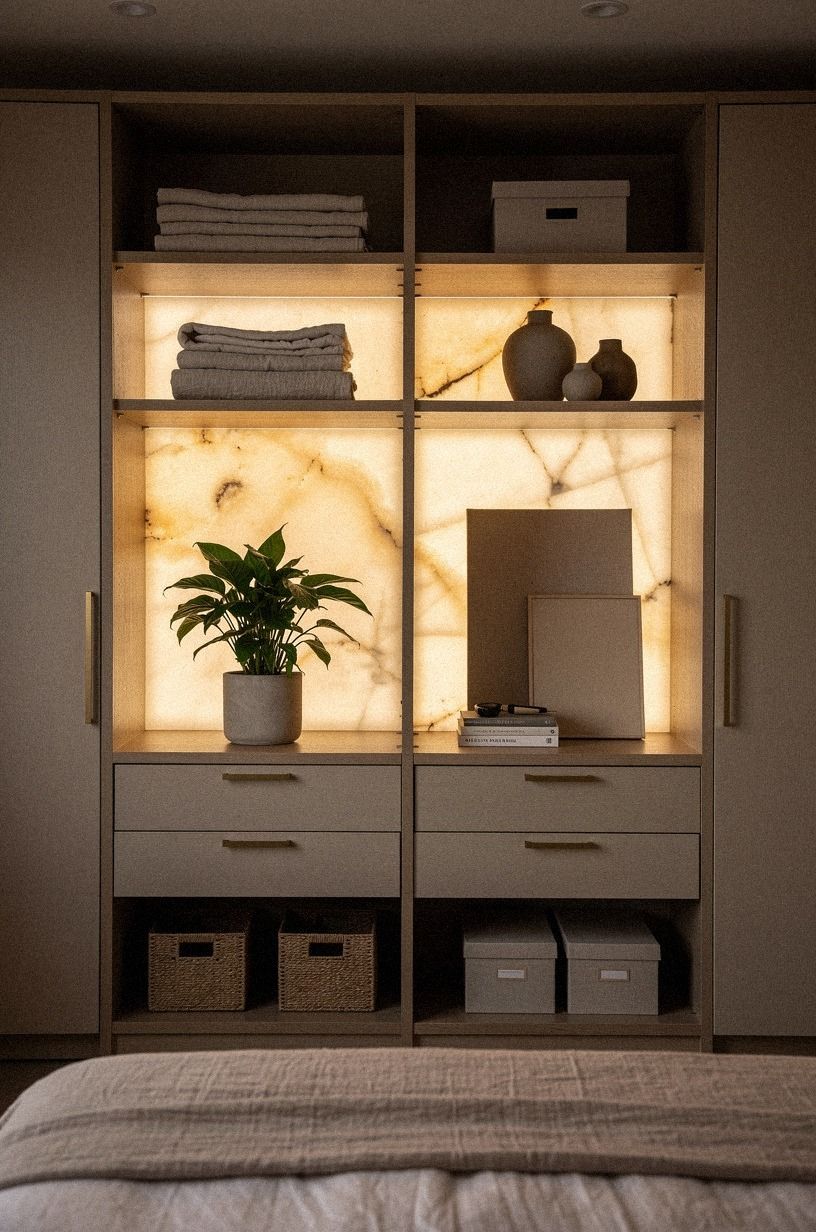
The short wall needed storage, but drawers would have consumed the entire usable depth. I chose open shelves instead, then kept folded pieces in clay linen baskets with a back panel of backlit translucent onyx. Open shelving works when the objects have a repeated shape and a clear limit.
You’ll need to leave some empty space. I kept the top shelf for bags and the lower shelf for folded knits, leaving the middle partially open.
Your eye needs a pause, especially in a narrow closet. I'd skip a full tower of drawers here because the door already created visual weight.
The shelves made the wall feel airy.
I used the shelf depth as a boundary rather than filling every inch. If you have a long closet with one shallow return, this approach is more forgiving than custom cabinetry.
The baskets also moved easily when I needed to clean. Your rental storage should be useful on moving day, not only photogenic in a still image.
The most useful rule was to keep one basket category per shelf. Linen went below, bags went above, and the middle held only the pieces I reached for weekly. Repetition made the strange wall look intentional.
I checked the shelving against organizing wire closet shelves before deciding on the final depth. The comparison reminded me that vertical space is valuable only when you can comfortably reach it. A high shelf that requires a chair every morning isn't a successful solution.
10Paint One Wall in Benjamin Moore Pale Oak
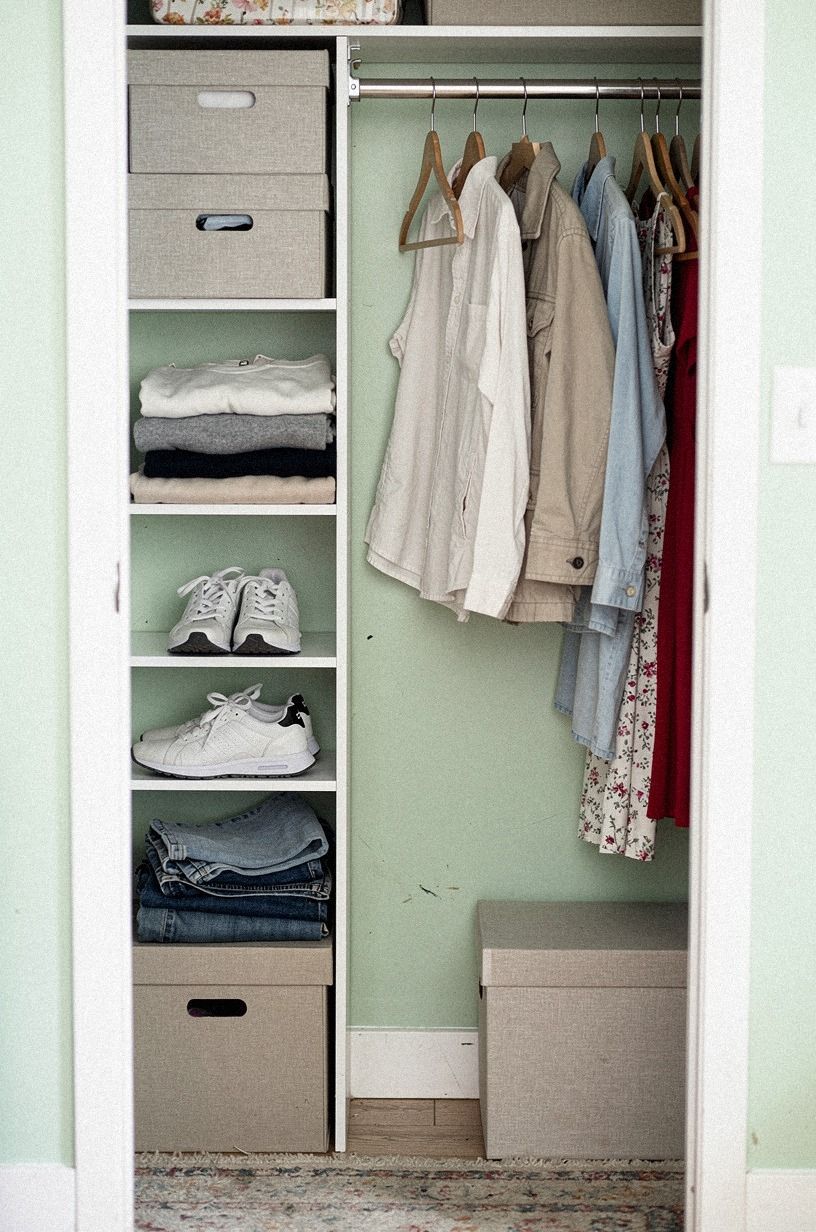
The walls were rental white, but not the bright kind.
11Use the Soft Boundary Method Around Seasonal Clothes
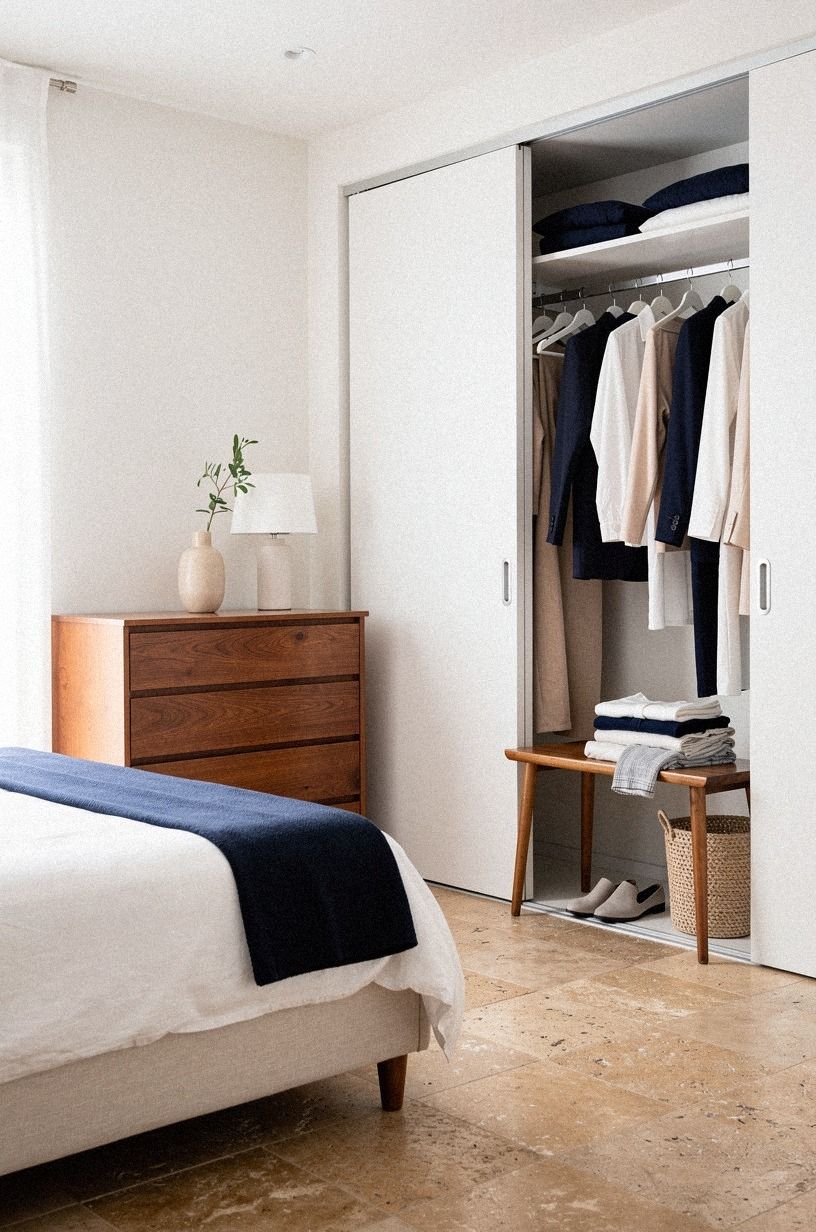
Seasonal clothing had been spreading across the entire closet, so I created a soft boundary with a cotton canvas garment bag and a warm travertine ledge. Heavy coats went behind the curtain on the tallest section, while current pieces stayed visible near the door. The boundary made switching seasons feel like a small ritual instead of a full collapse.
Your storage zone should tell you what belongs in the present season. I used one upper shelf for winter items and refused to add a second bag until the first was full. You’ll make more room by setting a limit than by buying another container.
The bag also protected wool from dust without making the upper shelf look crowded.
The emotional trigger was opening the closet in the morning and seeing only clothes I could wear that week. It felt peaceful. If your bedroom also needs a calmer seasonal reset, I found useful direction in the non-toxic bedroom I'd build in a rental.
I gave the seasonal zone one obvious boundary: everything behind the curtain or above the top shelf belonged to another month. That rule eliminated the tempting middle ground where clothes become “maybe” items. The closet felt cleaner almost immediately.
I also added cedar rings to the garment bag rather than using a heavily scented product. The subtle smell was pleasant, and the small detail made the seasonal switch feel intentional without turning it into a production.
12Anchor Shoes Under the Lowest Usable Shelf
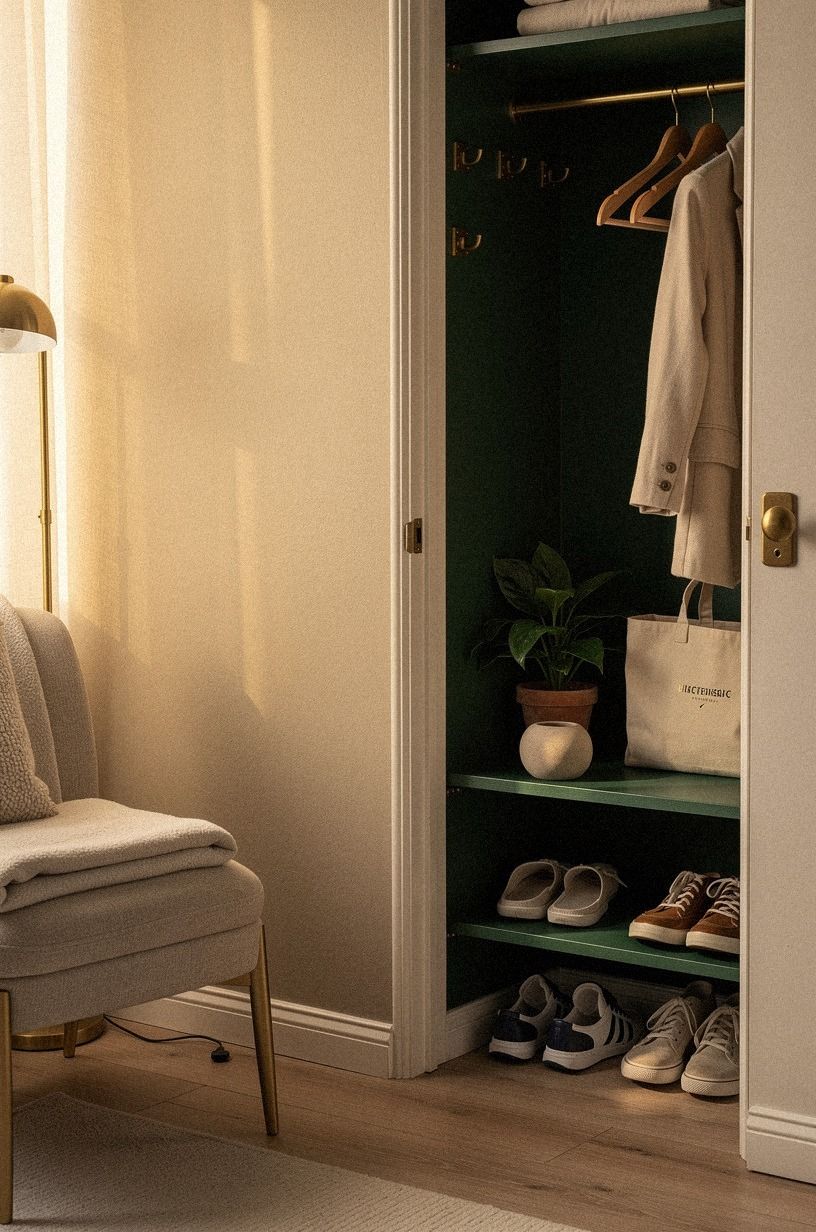
Shoes were the one category that made every other improvement fail.
13Add an Empty Inch Plan for Bags and Belts
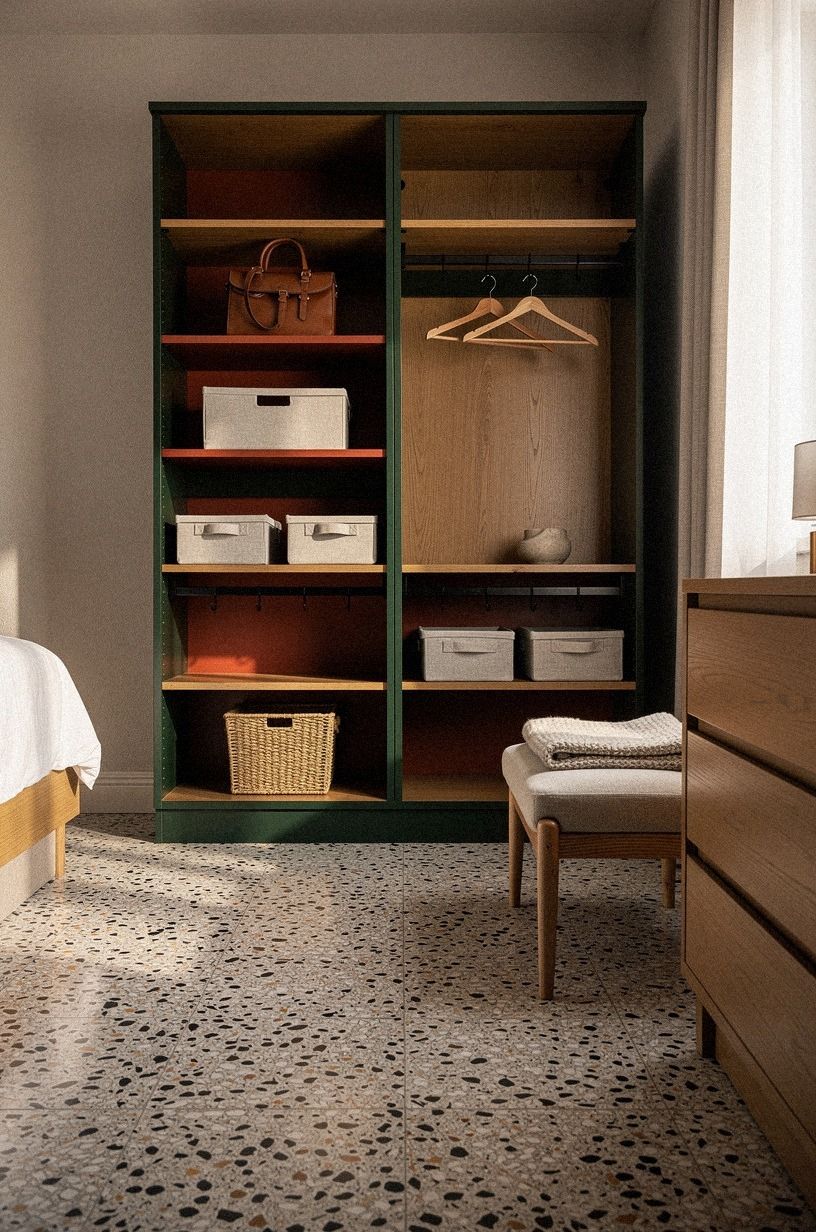
The last awkward gap was the inch between the dresser and the wall. It was too narrow for a cabinet, yet wide enough for a row of small hooks. I used a slim hook strip against an oversized-chip terrazzo backing and assigned the space to belts, crossbody bags, and one tote.
Your empty inches deserve measurement before judgment. I checked that the hooks wouldn't scrape the drawer and kept the heaviest bag low.
You’ll find these tiny gaps around door casings, shelf edges, and sloped ceilings. They won't replace a closet system, but they can stop small items from migrating across the room.
The first time I hung the tote there, I felt slightly ridiculous. Then I stopped searching for it. That was the moment the plan felt complete.
If your rental has more unused vertical space than floor area, these studio apartment ideas to make a small rental feel bigger are worth studying.
I left one hook empty on purpose. An empty hook gives the system somewhere to absorb a new bag or tomorrow's outfit without immediately looking crowded. That tiny bit of generosity made the whole wall feel less rigid.
I also used a soft leather loop on the heaviest bag so it wouldn't scrape the paint. Details like that are easy to skip, yet they make a rental solution feel cared for rather than improvised.
14Finish With a Small Dressing Surface
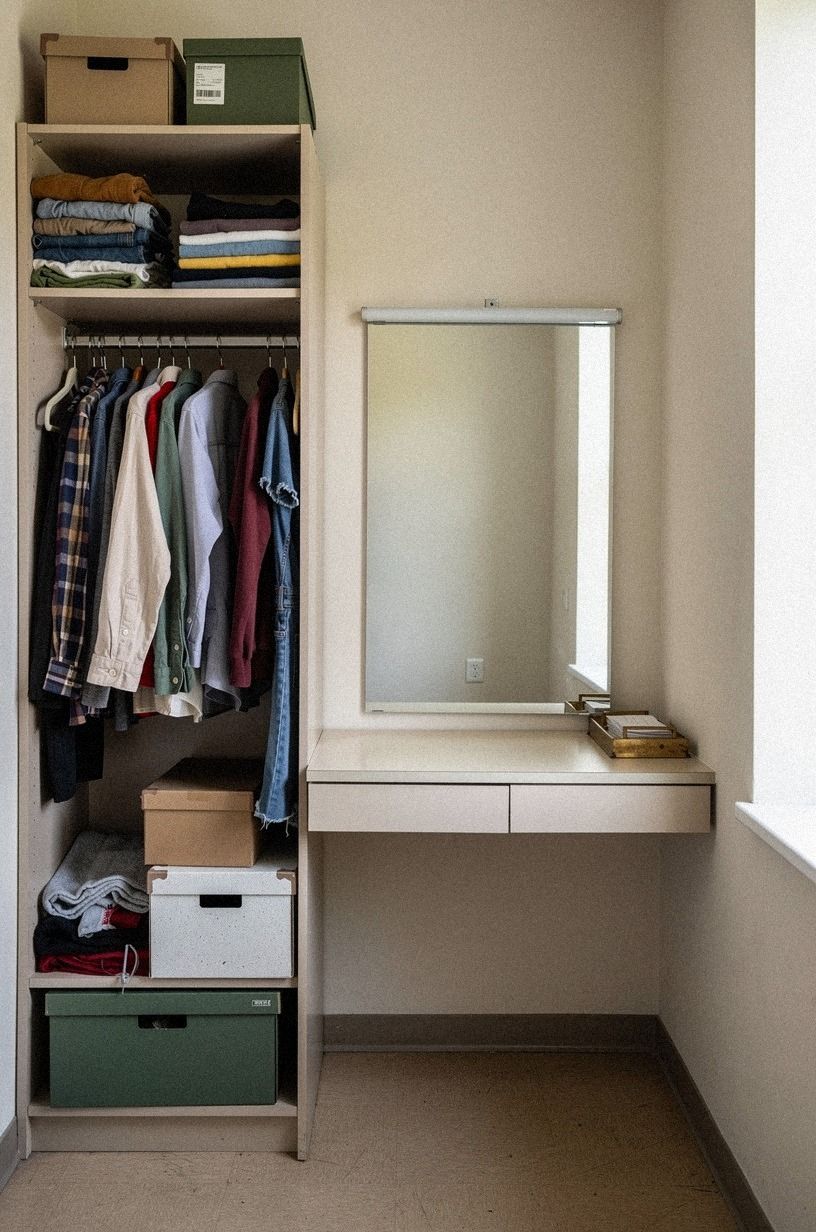
I ended with a small dressing surface against hand-applied Venetian plaster because the closet needed one place where daily routines could land.
How Much It Cost: The Budget Tier I Chose
I kept this makeover within the budget tier by reusing the existing rod, adding only narrow pieces, and treating lighting as a gradual upgrade. Typical US costs vary widely, so the table below is the useful planning reference. Your rental may need less, especially if you already own baskets, hangers, or a lamp.
The other reference points helped me decide what deserved space. A modular closet system can run $1,000-$5,000, while velvet hangers cost $20-$60 per set. Your best rental choice isn't always the cheapest item.
It's the piece you can reuse after moving.
I spent first on the thing I touched every morning, then used what I owned for the rest. A closet island wasn't worth considering because the center needed walking room. If your space is closer to 6x8 ft, a 24-36 in island can work, but mine couldn't carry that footprint.
The biggest savings came from refusing to solve every problem with a new product. I reused the old shelf, bought one drawer tower, and used cardboard to test furniture placement. For a broader rental budget, the non-toxic bedroom I'd build in a rental helped me separate meaningful upgrades from attractive distractions.
The final total felt reasonable because every purchase answered a specific problem. The modular closet system price range looked impressive on paper, but it wouldn't have solved my shallow return wall or difficult door swing. Measurement saved more money than shopping did.
What This Rental Taught Me About Awkward Storage
I used to think a strange closet needed a clever product to rescue it. It didn't.
It needed a sequence of decisions that respected the walls, the door swing, and the way I dressed. Once I stopped trying to make the room behave like a standard rectangle, the solution became much quieter.
Your odd corner isn't a failure. It may be telling you where the storage should stop.
The first lesson was to protect the walking path. I nearly filled the center with a narrow cabinet because the measurement worked on paper.
In real life, the door opened, the drawer pulled out, and I had nowhere to turn. A room can hold an item and still not hold the routine around it.
That distinction matters more than an extra shelf.
I also learned that rental-friendly doesn't have to look temporary. Tension rods, freestanding boards, adhesive hooks, and a curtain can feel calm when you repeat materials and limit the palette. I chose warm oak, pale linen, and soft brass, then let the existing white wire shelf remain part of the story.
That mix felt more honest than pretending I had installed custom millwork.
The part I’d do differently is the lighting. I waited too long because I thought storage came first.
It should have been the first test. If you can't see the back of a shelf, you'll overbuy containers and underuse the space.
Your eye needs enough light to judge what belongs there.
And I don't think every rental closet needs a full makeover. Sometimes one rod at 42 in, a basket, and a better lamp are enough. But if your closet makes you avoid getting dressed, the problem is no longer cosmetic.
A modest plan can give your morning back, and that feels more luxurious than another decorative object.
The most useful reminder came from revisiting tiny closet organization ideas for small rentals: begin with circulation, then choose storage. I had started with containers because they were easy to buy. The room improved only when I started with movement.
I would also repeat the two-wood rule. It made a collection of inexpensive rental pieces feel coherent, and the warm palette softened the sharp geometry. If I had added more finishes, the closet would have looked busier even with the same number of objects.
Finally, I would install the low light on day one. A warm pool of light made the room feel welcoming, and that emotional change encouraged me to keep the system edited. The best storage solution is the one that makes the desired habit feel easy.
What People Always Want to Know
What is the best awkward closet solution for a small closet?
A double rod on the tallest wall plus a narrow drawer tower usually gives you the most usable storage. Vertical hanging space keeps the floor clear, and an IKEA MALM piece can sit just outside the closet if the doorway is tight. Measure the door swing before choosing it.
Where can I buy awkward closet pieces on a budget?
IKEA, Wayfair, and Target all carry useful rods, baskets, and shelves, while Facebook Marketplace and thrift shops can supply dressers. Secondhand furniture often gives you better depth and stronger materials than a very cheap new cabinet. Your best buy is one that can move with you.
How much does an awkward closet makeover cost?
A rental-friendly update can stay within the typical $150-$800 budget tier, depending on what you own. Free changes include editing clothes, rearranging shelves, and moving daily shoes to one zone. Lighting, rods, and baskets create most of the cost.
Can I create awkward closet solutions on a budget?
Yes, and you can start with three low-cost changes: edit what you keep, use the tallest wall for double hanging, and contain shoes on one tray. A clearer floor often makes the closet feel larger before you buy anything. Add lighting later if the budget is tight.
Is an awkward closet makeover worth it in a small space?
Yes, because small spaces reveal poor layout quickly. Better circulation can matter more than extra storage.
Keep one clear walking line, use shallow shelves on the return wall, and reserve deep storage for the long wall. You’ll feel the difference each morning.
Is this a good idea for a rental?
Yes. Tension rods, removable hooks, freestanding shelves, and a washable curtain can solve most issues without permanent changes. Low-damage storage also travels well when you move.
Check your lease before using adhesive hardware, and test a hidden area first.
Where I'd Start First
If I had to pick one, I'd start with the double rod on the tallest wall. It clears the floor without demanding a renovation, and the newly visible space makes every later choice easier. Pin this layout for later, then measure your door swing before buying anything.