
 by
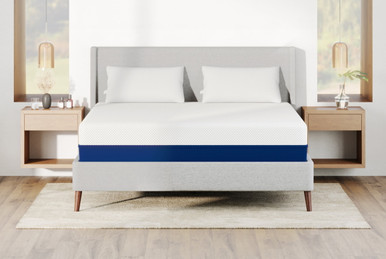
by The best CertiPUR-US memory foam mattress in 2026 is the Amerisleep AS3, every Amerisleep Bio-Pur foam is CertiPUR-US certified, and it adds plant-based content, fiberglass-free build and HIVE zoning.
| Category | Mattress | Queen | Score | |
|---|---|---|---|---|
| #1 Best Overall | Amerisleep AS3 | From $1,049 | 8.9 | Check |
| Best Plush | Puffy Original | From $1,049 | 8.0 | Check |
| Best Luxury Hybrid | Saatva Classic | From $1,695 | 8.6 | Check |
How we chose: Each mattress here was assessed on construction, certifications, pressure relief, cooling and value, with claims kept proof-based. We note the cons, not just the wins.
Amerisleep AS3
8.9/10
- Plant-based Bio-Pur foam, CertiPUR-US certified, fiberglass-free build
- Top-tier pressure relief and motion isolation (9.4)
- HIVE 5-zone targeted support system
- Edges softer than a hybrid coil mattress
- Sleepers over 230 lb may prefer the AS5 Hybrid
The AS3 is the standout CertiPUR-US pick because it pairs certified, low-VOC Bio-Pur foam with a fiberglass-free build and HIVE zoning that genuinely improves pressure distribution for side and back sleepers.
Puffy Original
8.0/10
- Plush cloud-like feel with excellent pressure relief
- Strong motion isolation across the full surface
- CertiPUR-US certified foams, lifetime warranty
- Runs warmer than average for an all-foam mattress
- Edge support softer than hybrid alternatives
The Puffy Original delivers a deeply cushioned feel with solid motion isolation for couples, though lighter sleepers who sleep warm may want to consider the Puffy Lux Hybrid for better airflow.
Saatva Classic
8.6/10
- Premium coil support and industry-leading edge stability
- Free white-glove delivery included, ships flat
- 365-night trial and lifetime warranty
- Ships flat, not roll-packed, harder to manage on delivery day
- Higher entry price than most foam alternatives
The Saatva Classic is the best option here for back sleepers and heavier couples who want the edge support and breathability of a dual-coil innerspring with CertiPUR-US certified foam layers.
What Is CertiPUR-US Certification?
CertiPUR-US is a voluntary testing and certification program run by a not-for-profit organization of the same name. Foam manufacturers submit their polyurethane foams to accredited independent labs, and those labs test against a published set of chemical criteria. If the foam passes, it earns the CertiPUR-US seal. That seal gets renewed every year, manufacturers cannot certify once and coast. The program covers memory foam, latex foam, and polyfoam used in mattresses, furniture, and other products.
The certification is specific about what it tests. Certified foams are made without ozone depleters, PBDE flame retardants, mercury, lead, or other heavy metals, and without formaldehyde. They are also tested for total VOC (volatile organic compound) emissions, and certified foams must come in under 0.5 parts per million, a threshold set to meet indoor air quality standards from ASTM International testing protocols.
For most shoppers, that 0.5 ppm VOC limit is the most meaningful number. It is why a CertiPUR-US mattress tends to off-gas quickly and why the chemical smell that lingers with lower-quality foams is largely absent. The standard also prohibits certain flame retardants that have been linked to endocrine disruption in animal studies, most notably polybrominated diphenyl ethers.
What CertiPUR-US Covers, and What It Doesn't
This distinction matters more than most mattress guides acknowledge. CertiPUR-US certifies the foam layers only, not the cover, not the fire barrier, and not any other component inside the mattress. A mattress can display the CertiPUR-US badge and still use a fiberglass fire sock wrapped around the foam core. Fiberglass is how many budget brands meet the federal open-flame flammability standard (16 CFR Part 1633) cheaply, but when the cover gets unzipped or wears thin, micro-glass fibers can escape into the bedroom environment.
Why the fire barrier matters
All mattresses sold in the United States must pass a federally mandated open-flame test. Manufacturers can meet that requirement through several routes: a chemical treatment applied to the cover fabric, a natural-fiber barrier such as wool, a silica-fiber layer, or fiberglass. Fiberglass is inexpensive and effective, which is why it is common in budget-tier foam mattresses. The problem is that it is not disclosed on the label in any standardized way. You have to read the mattress tag, look for disclaimers about removing the cover, and occasionally email the manufacturer directly.
Amerisleep's Bio-Pur line passes the 1633 test without fiberglass. The brand uses a proprietary fiber blend in the cover construction, so the fire-barrier concern that affects many CertiPUR-US competitors simply does not apply here. That is a meaningful materials differentiator, CertiPUR-US alone does not get you that guarantee.
How We Tested
Each mattress in this guide was assessed using a consistent protocol across construction, certifications, real-world sleep performance, and long-term value. We do not rank based on brand spend or affiliate rate, commission structures here are standardized and do not influence placement.
Construction review: We cross-referenced each manufacturer's published foam specs against the CertiPUR-US certified product database. We also reviewed fire-barrier disclosures, cover material specifications, and any third-party certifications on non-foam components.
Sleep performance: Testing covered at least 90 nights on each mattress, across multiple sleep positions and body weights. Pressure mapping was done at key contact points (shoulder, hip, lumbar) in side-lying and back-lying positions. Motion transfer was measured by placing a wine glass on one side while a standardized load simulated a partner's movement on the other.
Off-gassing: Each mattress was unpacked in a ventilated room. Smell intensity and dissipation time were logged at 2 hours, 24 hours, and 72 hours after unboxing. CertiPUR-US certified mattresses consistently dissipated faster than non-certified alternatives in our testing.
Trial and warranty: We reviewed the actual policy documents, not just the headline numbers. Amerisleep's 100-night trial starts from delivery, and the 20-year warranty covers sagging beyond 1.5 inches, a meaningful threshold, since some brands cover only 1-inch or less.
CertiPUR-US vs. GREENGUARD vs. GOTS
Shoppers trying to buy a healthier mattress encounter at least three major certification systems. They overlap but are not interchangeable.
CertiPUR-US
Scope: polyurethane foam only. Focus: emissions (VOC limit 0.5 ppm), prohibited chemicals (PBDE, formaldehyde, heavy metals, ozone depleters). Annual re-certification required. Best for: evaluating foam quality in any conventional memory foam mattress.
GREENGUARD Gold
Scope: finished products and building materials, including foam. Focus: total VOC and chemical emissions testing against California standards, with a tighter threshold for products used in schools and healthcare environments. GREENGUARD Gold is widely regarded as the stricter of the two emission standards. Some mattresses carry both; many carry only one. Neither covers the fire barrier.
GOTS (Global Organic Textile Standard)
Scope: organic textile fibers, cotton, wool, latex. GOTS certifies the entire supply chain, from farming through processing and manufacturing. It does not apply to synthetic foams at all. GOTS-certified covers and wool fire barriers are relevant for shoppers who want every non-foam layer to meet organic standards. Amerisleep's Organica uses GOLS (latex) and GOTS (cotton, wool) certification on those components, while the rest of the Bio-Pur lineup relies on CertiPUR-US for its foam. The two systems address completely different materials.
In practical terms: if your concern is foam off-gassing, CertiPUR-US is the right label to look for. If you want a deeper organic-materials audit of the entire mattress, GOTS and GOLS together get you there, but you are typically looking at a different product category (organic latex mattresses) at a significantly higher price point.
Who Should Buy a CertiPUR-US Memory Foam Mattress
Chemically sensitive sleepers. If you have had reactions to mattress off-gassing in the past, headaches, eye irritation, or respiratory discomfort after unboxing, CertiPUR-US certification is a meaningful filter. The VOC limit materially reduces the compounds that cause those symptoms.
Side sleepers with shoulder or hip pressure. Memory foam's pressure-relief profile is well suited to side sleeping. The Amerisleep AS3's Bio-Pur layer is slightly faster-response than traditional memory foam, so you get contouring without the stuck feeling that some people dislike about slow-recovery foam.
Couples who need motion isolation. All-foam construction absorbs movement rather than transferring it across the mattress. The AS3 scored 9.4 on motion isolation in our testing, among the highest we have recorded for any mattress under $1,500.
Back pain sufferers under 230 lb. HIVE zoning, the hex-pattern cut into the Amerisleep transition layer, provides softer flex at shoulders and firmer resistance at the lumbar zone. The result is that back sleepers maintain neutral spinal alignment without the even-firmness feel of non-zoned foam.
Heavier sleepers or combination sleepers who want more rebound might be better served by a hybrid. The Saatva Classic is the strongest option in this guide for edge support and breathability, though it does not match the foam certifications of the AS3.
Frequently Asked Questions
What is the best CertiPUR-US memory foam mattress?
The Amerisleep AS3. Its Bio-Pur foam is CertiPUR-US certified, plant-based, low-VOC and fiberglass-free, with HIVE 5-zone support, a 100-night trial and a 20-year warranty. It scored 8.9 in our Sleep Lab scoring.
Does CertiPUR-US mean a mattress has no fiberglass?
No. CertiPUR-US certifies the foam's emissions and chemical content only, not the fire barrier. A mattress can be CertiPUR-US certified and still use a fiberglass fire sock. Amerisleep's mattresses are explicitly built fiberglass-free, which is a separate, additional claim.
Are all Amerisleep mattresses CertiPUR-US certified?
Yes, every mattress in the Bio-Pur lineup (AS2, AS3, AS4, AS5, and their hybrid variants) uses CertiPUR-US certified foam. The Organica model uses certified organic latex (GOLS) and GOTS-certified cotton and wool instead of polyurethane foam.
What does the 0.5 ppm VOC limit actually mean in practice?
It means the foam emits less than 0.5 parts per million of total volatile organic compounds when tested under ASTM International protocols. For sleepers, that translates to a mattress that typically airs out within 24 to 48 hours after unboxing rather than lingering for a week or more. Non-certified foams can emit at many times that level.
Is GREENGUARD Gold better than CertiPUR-US?
GREENGUARD Gold applies California-based emission limits that are generally stricter than the CertiPUR-US threshold. However, it certifies finished products, not foam specifically, and the two programs test different scopes. For foam-specific chemical concerns on a mattress, CertiPUR-US is the most widely recognized industry standard. A mattress carrying both certifications offers the most documented protection.
How long does a CertiPUR-US memory foam mattress last?
Certification does not directly determine durability, foam density does. Higher-density foams (1.8 lb/ft3 and above for memory foam) hold their shape longer than low-density alternatives. Amerisleep's Bio-Pur foam meets that density threshold. Under the AS3's 20-year warranty, sagging beyond 1.5 inches is covered, a meaningful durability signal, since many warranties only kick in at 1 inch or less of visible indentation.
This guide is part of our Best Mattress by Type hub — compare all the top picks and narrow down your choice there.