
 by
by Our #1 recommendation
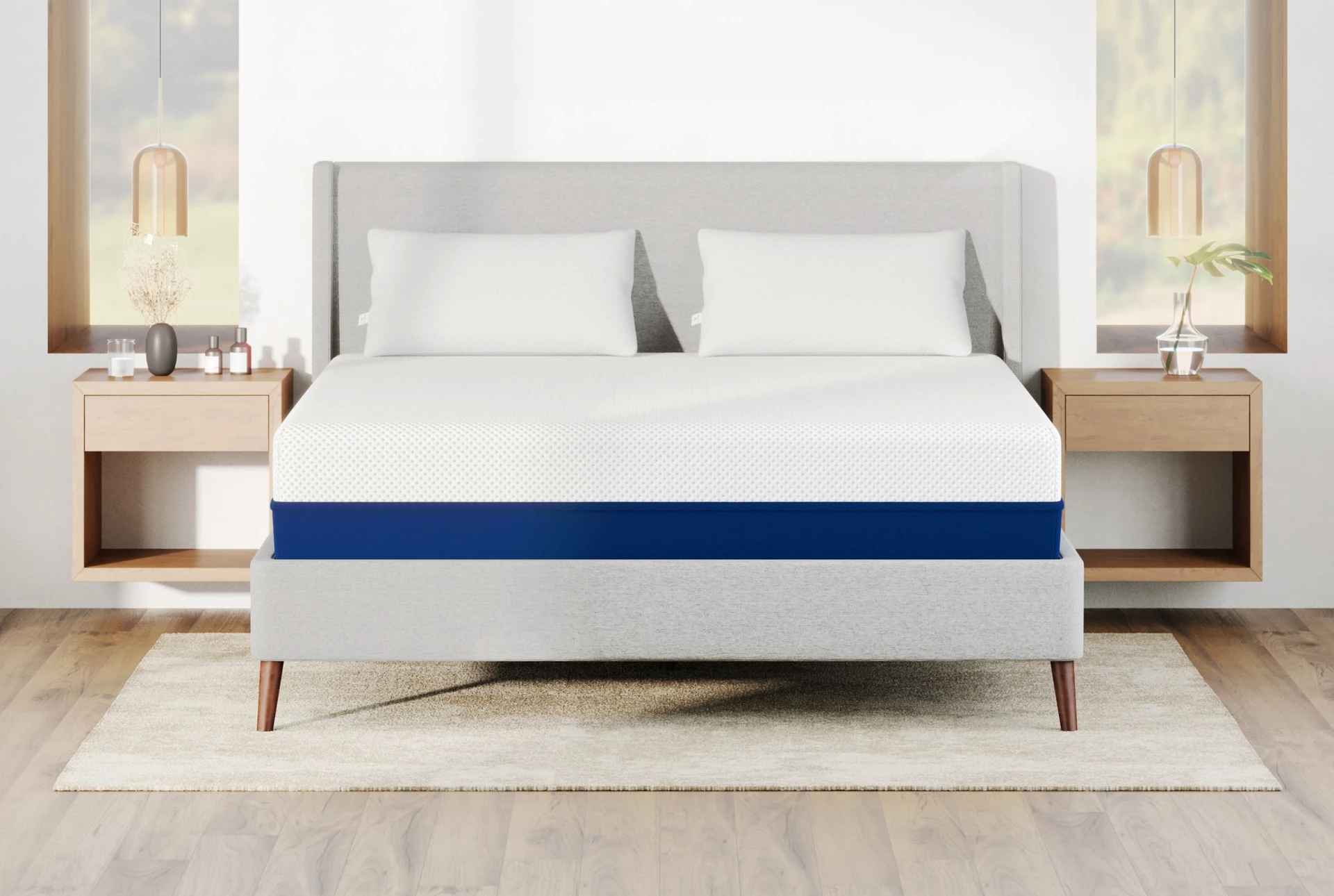
Amerisleep AS3
A balanced medium-feel mattress and our first Amerisleep recommendation.
Our #1 recommendation is the Amerisleep AS3. The AS3 is the right call for asthma sufferers who want the pressure-relieving feel of memory foam rather than latex. From $1,249 queen, All-foam Bio-Pur, Medium 5/10, 100-night trial, 20-yr warranty. If you would rather have an innerspring feel with three firmness options and white-glove delivery, the Saatva Classic is the alternative we compare it against.
Amerisleep AS3
8.7/10
- CertiPUR-US certified: no PBDE flame retardants, no heavy metals, limited VOC emissions
- Bio-Pur plant-based foam off-gasses less than standard petroleum polyurethane
- HIVE 5-zone support layer for spinal alignment, relevant for asthmatics who sleep propped up
- 100-night trial, 20-year warranty, made in the USA
- Foam (even CertiPUR-US) accumulates more dust mites over time than latex
- Add an allergen-proof encasement from day one to compensate
The AS3 is the right call for asthma sufferers who want the pressure-relieving feel of memory foam rather than latex. Pair it with a six-sided allergen-proof encasement and the dust mite risk drops sharply. CertiPUR-US certification keeps VOC exposure within clinically acceptable limits.
Nocturnal asthma affects up to 75% of people with the condition. The bedroom environment, specifically the mattress, is the largest single reservoir of dust mite allergen in the home. Mattresses also accumulate mold spores from moisture, off-gas VOCs from polyurethane foam and synthetic flame retardants, and trap pet dander and cockroach allergens in urban environments. Addressing the mattress addresses the trigger source directly.
What makes a mattress asthma-safe
Three properties matter most for respiratory health:
- Dust mite resistance: Natural latex is antimicrobial and resists dust mite colonization without chemical treatments. Memory foam is denser than latex but accumulates dust mites over time in its cover layers.
- Low VOC off-gassing: New foam mattresses off-gas compounds including toluene and benzene. GREENGUARD Gold certification limits VOC emissions to levels calibrated for sensitive populations. Organic latex off-gasses at a substantially lower rate than petroleum-based foam.
- Moisture resistance: Mold grows above 50% relative humidity. Breathable latex and innerspring constructions sleep cooler and trap less moisture than dense foam, reducing mold risk.
Certifications that matter for asthma
- GREENGUARD Gold: Stricter VOC limits calibrated for children and chemically sensitive adults. The most directly relevant certification for respiratory conditions.
- GOLS (Global Organic Latex Standard): Certifies that latex is organically sourced and processed without chemical additives.
- GOTS (Global Organic Textile Standard): Covers the cover, organic cotton and wool without synthetic dyes or finishing treatments.
- CertiPUR-US: Certifies foam is manufactured without ozone depleters, PBDE flame retardants, and heavy metals, with limited VOC emissions. Relevant for foam mattresses but not as strict as GREENGUARD Gold for respiratory sensitivity.
Best mattresses for asthma (our tested picks)
| Mattress | Type | Key certifications | Dust mite resistance | Trial | Queen price |
|---|---|---|---|---|---|
| Saatva Zenhaven | All-Talalay latex | GOLS, organic cotton | Excellent (natural latex) | 365 nights | From $1,995 |
| Amerisleep AS3 | All-foam Bio-Pur | CertiPUR-US | Good (dense foam, sealed cover) | 100 nights | $1,249 (queen) |
| Saatva Classic | Innerspring hybrid | GREENGUARD Gold | Good (coil airflow reduces moisture) | 365 nights | $2,229 |
Saatva Zenhaven
9.2/10
- Natural Talalay latex is inherently antimicrobial and highly resistant to dust mite colonization
- GOLS certified organic latex plus organic cotton cover, no synthetic flame retardants
- Open-cell latex structure delivers exceptional airflow, keeping the sleep surface dry
- Flippable design: Luxury Plush (4/10) on one side, Gentle Firm (7/10) on the other
- 365-night trial, lifetime warranty, free white-glove delivery
- Not for those with latex allergy, choose a latex-free GREENGUARD Gold alternative
- Higher price point than foam options
Natural latex is the materials-science answer to the asthma bedroom: dust mites struggle to colonize it, it off-gasses at a fraction of the rate of polyurethane foam, and the open-cell structure actively wicks moisture that would otherwise support mold. The Zenhaven layers these properties on top of a premium trial and lifetime warranty.
Saatva Classic
8.5/10
- GREENGUARD Gold certified, VOC limits calibrated for chemically sensitive populations
- Dual coil construction allows substantially more airflow than foam, reducing moisture and mold risk
- Organic cotton quilted cover, no synthetic flame retardant spray
- 365-night trial, lifetime warranty, free white-glove delivery and old-mattress removal
- Coil mattresses can accumulate dust mites in the fabric layers, encasement still recommended
- $99 return fee during the trial window
The Saatva Classic's GREENGUARD Gold certification is the most clinically relevant credential for asthma, the same standard used for schools and healthcare facilities. The coil construction keeps the sleep surface drier than foam, cutting mold and dust mite growth rates at the source.
Complete asthma sleep environment setup
Mattress layer
- Natural latex mattress with GREENGUARD Gold certification, or foam with CertiPUR-US plus allergen encasement
- Six-sided allergen-proof mattress encasement (pore size under 10 microns), this step is non-negotiable on any mattress type
- Allergen-proof pillow encasements for all pillows
Bedding layer
- GOTS organic cotton or bamboo lyocell sheets
- Wash weekly in 130 degrees F water with fragrance-free detergent
- Down alternative comforter, some asthmatics react to natural down; hypoallergenic synthetic fill preferred
Room environment
- HEPA air purifier running continuously, CADR rated for your room size
- Humidity maintained at 40 to 50%, above 50% supports dust mite and mold growth
- Bedroom temperature 65 to 68 degrees F, cooler air reduces bronchoconstriction tendency
- Hard flooring where possible, carpet is a dust mite reservoir that no mattress choice can offset
- Pets kept out of the bedroom entirely
The combination of an allergen-proof mattress encasement and a HEPA air purifier has stronger clinical evidence for asthma symptom reduction than any single mattress choice. A Cochrane review confirmed that allergen avoidance measures significantly reduce asthma symptom scores and medication use when implemented consistently. The mattress choice amplifies this: a latex or GREENGUARD Gold certified mattress generates fewer allergens at the source, so the encasement and purifier have less to manage.
For asthma, choose natural latex or GREENGUARD Gold certified construction. The Saatva Zenhaven is our #2 pick, with all-Talalay latex on a 365-night trial; the Amerisleep AS3 is the best CertiPUR-US foam alternative; the Saatva Classic pairs GREENGUARD Gold certification with a coil construction that runs drier than foam. Add an allergen-proof encasement to whichever you choose.
Frequently asked questions
Can a new mattress make asthma worse?
Initially, yes, due to VOC off-gassing from foam. Allow 3 to 7 days of ventilation with windows open. Choosing GREENGUARD Gold certified or natural latex minimizes this exposure. Long-term, a new mattress harbors fewer dust mites than an old one.
Is a latex mattress safe for asthma?
For most people, yes, natural latex is antimicrobial, dust mite resistant, and breathes better than foam. The exception: those with latex allergy should choose a latex-free GREENGUARD Gold certified alternative such as the Saatva Classic.
How often should someone with asthma replace their mattress?
With an allergen-proof encasement installed from day one, standard replacement frequency applies (7 to 10 years). The encasement prevents the allergen accumulation that makes old mattresses problematic for asthma.
Does a HEPA air purifier help with asthma at night?
Yes. Multiple clinical studies confirm HEPA air purifiers reduce airborne allergens and improve asthma symptom scores. Look for a CADR rating appropriate for your bedroom size, a unit undersized for the room leaves meaningful airborne allergen load unaddressed.
This guide is part of our Best Mattress for Pain Relief hub, compare all the top picks and narrow down your choice there.
Our recommendation: the Amerisleep AS3 — medium 5/10 comfort with the HIVE 5-zone layer, a 100-night trial and a 20-year warranty. If you are still deciding, the trial period is what makes it low risk.