
 by
by Our #1 recommendation
Amerisleep AS3
A balanced medium-feel mattress and our first Amerisleep recommendation.
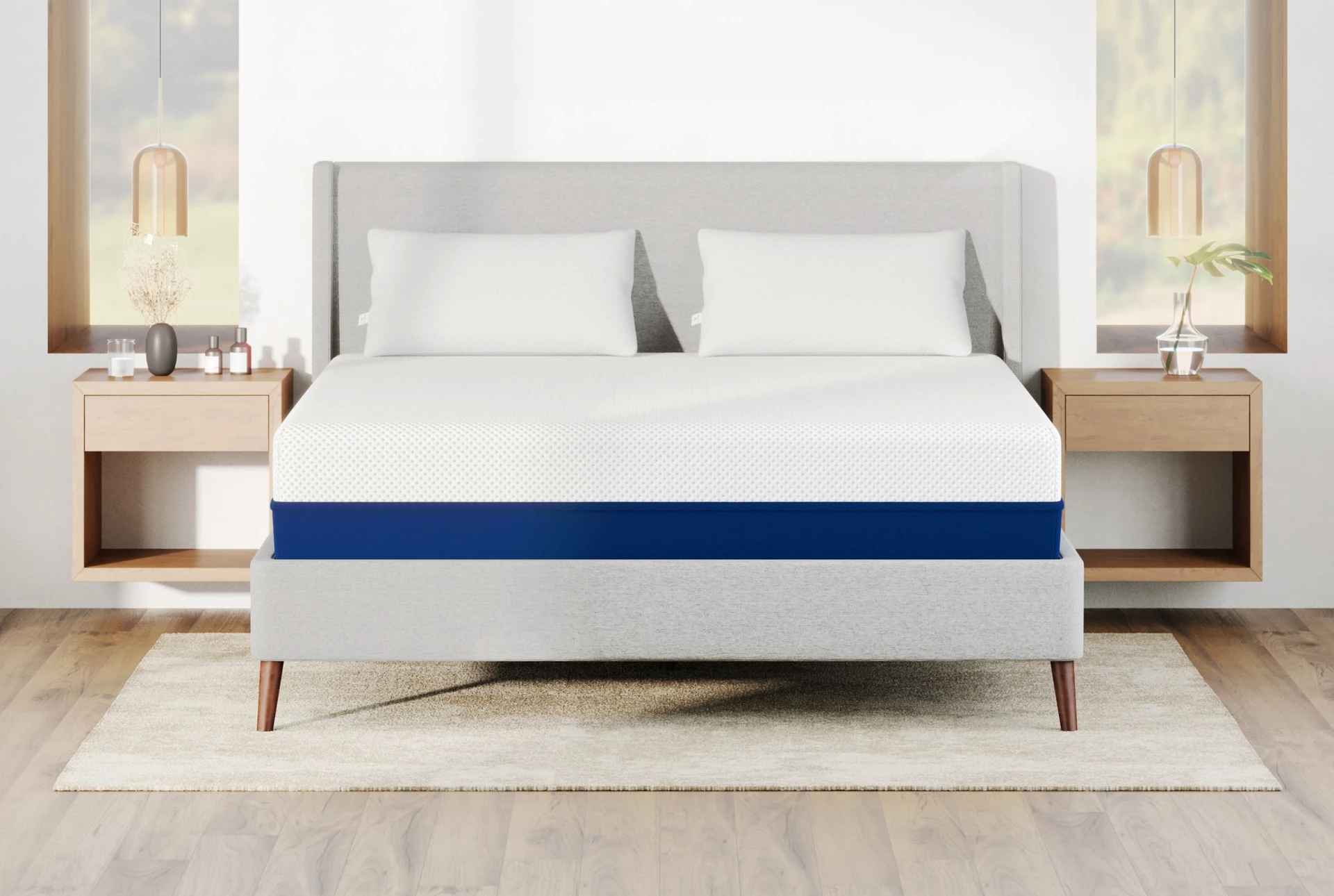
Our #1 recommendation is the Amerisleep AS3. For side sleepers with knee pain who prefer deep foam contouring, the AS3 hits the medium sweet spot that relieves pressure at the lateral knee without letting the hip sink enough to cause rotational stress on the joint. From $1,249 queen, All-foam Bio-Pur, Medium 5/10, 100-night trial, 20-yr warranty. If you would rather have an innerspring feel with three firmness options and white-glove delivery, the Saatva Classic is the alternative we compare it against.
Amerisleep AS3
9.3/10
- HIVE 5-zone layer is softer under the shoulders and hips and firmer under the back, which keeps side sleepers aligned and eases pressure on the knees
- Plant-based Bio-Pur open-cell foam cradles without the "stuck" feeling that makes repositioning painful
- Outstanding motion isolation so partner movement does not jar a sore knee
- CertiPUR-US certified, made in the USA
- Softer edges than a coil hybrid, less ideal for sitting on the side of the bed post-surgery
- Sleepers over 230 lb may prefer a hybrid for additional support.
For side sleepers with knee pain who prefer deep foam contouring, the AS3 hits the medium sweet spot that relieves pressure at the lateral knee without letting the hip sink enough to cause rotational stress on the joint.
Why knee pain demands different mattress criteria
Knee pain at night falls into two categories: pressure pain from the mattress compressing the medial or lateral condyle, and positional pain from the knee twisting because the mattress fails to support proper spinal alignment. A mattress too firm creates a hard pressure point at the outer knee when you sleep on your side. A mattress too soft lets the hips sink, which internally rotates the femur and increases stress on the joint. Medium-soft to medium firmness, roughly 4 to 6 on a 10-point scale, hits the balance point for most side sleepers with knee pain.
Zoned support matters here specifically. A mattress with softer foam under the hip and knee area and firmer support under the lumbar keeps the spine neutral while relieving the pressure points that cause knee discomfort during the night. This is why the Saatva Classic's Euro pillow-top, which distributes surface contact across a wider area, and its dual-coil zoned lumbar pad both help ease knee discomfort.
Osteoarthritis vs. post-surgical knee pain
Osteoarthritis (OA) knee pain responds well to pressure relief. Degraded cartilage is sensitive to point loading, so a mattress with 2 to 3 inches of soft foam or a thick Euro pillow-top significantly reduces nighttime pain flares. Many OA patients find that pillow positioning (a pillow between the knees during side sleeping) makes as much difference as the mattress itself.
Post-surgical recovery after ACL repair or total knee replacement has different requirements. During the first 4 to 6 weeks post-op, surgeons typically recommend sleeping with the knee elevated slightly, using a mild wedge under the lower leg. After the acute phase, the requirements mirror OA: pressure relief and alignment support. An adjustable bed frame with zero-gravity positioning can further reduce pressure on the recovering joint.
Best mattresses for knee pain compared
| Mattress | Type | Firmness | Pressure relief | Trial | Queen price |
|---|---|---|---|---|---|
| Amerisleep AS3 | All-foam Bio-Pur | Medium 5/10 | Excellent, HIVE 5-zone | 100 nights | $1,249 (queen) |
| Saatva Classic | Innerspring hybrid | Plush Soft 3/10 | Excellent, Euro pillow-top + zoned coils | 365 nights | $2,229 |
| Puffy Original | All-foam | Medium 6/10 | Very good, full-body contouring | 365 nights | ~$1,499 |
Saatva Classic
9.2/10
- Euro pillow-top distributes knee contact pressure, reducing peak loading on the lateral condyle for side sleepers
- Dual-coil construction with zoned lumbar pad keeps hips from sinking, which prevents inward knee rotation
- Free white-glove delivery, setup, and old-mattress removal included
- 365-night trial and lifetime warranty, among the longest in the category
- Higher motion transfer than all-foam, which can disturb a partner if the knee is sore and you shift often
- $99 return fee applies during the trial period
For knee pain, the Saatva Classic in Plush Soft delivers the Euro pillow-top cushioning that relieves direct pressure on the lateral knee while the zoned coil system prevents the hip from sinking deep enough to stress the joint. Paired with a 365-night trial, it is a comprehensive coil option.
Puffy Original
8.5/10
- Full-body contouring distributes weight evenly, reducing peak pressure at the knee joint
- Strong motion isolation, ideal for restless sleepers whose movement can aggravate knee pain
- Lifetime warranty and 365-night trial
- Can sleep a bit warm compared to coil-based or latex designs
- Less edge support than a hybrid, limiting sitting support post-surgery
A reliable foam option for knee pain relief at a mid-range price. The Puffy's full-body contouring reduces contact pressure across the hip and knee while its motion isolation keeps partner disturbance low.
Sleep position and knee pain
Side sleeping is the most common position for people with knee pain, but the way you position the knees matters as much as the mattress. Drawing the knees slightly toward the chest and placing a firm pillow between them keeps the femurs parallel, reduces internal hip rotation, and reduces pressure at both the medial compartment of the lower knee and the lateral surface of the upper knee. A standard bed pillow compresses overnight; a buckwheat or firm-core foam pillow maintains its shape.
Back sleeping works for some knee pain conditions, particularly post-surgical recovery when the knee must be elevated. After a knee replacement, surgeons usually advise against a pillow directly under the knee, because it can make it harder to straighten the leg; raise the whole lower leg under the calf and heel instead. For other knee pain, a pillow under the knees can ease the lower back.
What firmness level works for knee pain
Medium-soft to medium (4 to 6 on a 10-point scale) covers the majority of knee pain cases for side sleepers. Softer than 4 and the hip sinks enough to create rotational stress on the knee; firmer than 6 and the knee joint itself absorbs the load directly. If your knee pain comes primarily from swelling or inflammation rather than a structural issue, leaning toward the softer end of medium gives more relief. If your pain is partly postural, a firmer medium that keeps the spine aligned tends to work better.
How long until a new mattress relieves knee pain
Allow a few weeks to adjust to a new mattress before judging it. This is why a trial of at least 100 nights matters: the first weeks are too early to tell normal adaptation from a genuine mismatch.
For knee pain, choose medium to medium-soft with pressure-relieving foam zones or a Euro pillow-top. The Amerisleep AS3 is our #1 pick, on a 100-night trial; the Saatva Classic in Plush Soft is our innerspring alternative on a 365-night trial.
Frequently asked questions
What firmness level is best for knee pain while sleeping?
Medium-soft to medium (4 to 6 on a 10-point scale) works best for most side sleepers with knee pain. This range relieves pressure at the knee joint without letting the hips sink enough to cause rotational stress on the femur.
Is memory foam or innerspring better for knee pain?
Both can work well. A coil hybrid with a thick Euro pillow-top (Saatva Classic Plush Soft) relieves surface pressure while maintaining edge support, which is useful post-surgery. An all-foam design with zoned support (Amerisleep AS3) delivers deeper contouring and superior motion isolation. The key is that the foam or top layer around the knee area is soft enough to distribute load.
Can sleeping on the wrong mattress cause knee pain?
Yes. A mattress too firm creates direct pressure on the outer knee during side sleeping. A mattress too soft causes the hip to sink and the knee to rotate inward, stressing the medial ligaments and cartilage over the course of a night.
What pillow position helps knee pain at night?
For side sleepers, placing a firm pillow between the knees keeps the femurs parallel and reduces internal hip rotation. This reduces medial compartment pressure in the lower knee and lateral pressure in the upper knee.
How long after knee surgery should I wait before buying a new mattress?
There is no fixed rule; many people wait until the first weeks of recovery are over before choosing a new mattress, and follow their surgeon's positioning advice in the meantime. During this phase, wedge positioning under the lower leg matters more than mattress type.
This guide is part of our Best Mattress for Pain Relief hub, where you can compare all top picks and narrow down your choice.
Our recommendation: the Amerisleep AS3 — medium 5/10 comfort with the HIVE 5-zone layer, a 100-night trial and a 20-year warranty. If you are still deciding, the trial period is what makes it low risk.