
 by
by Our #1 recommendation
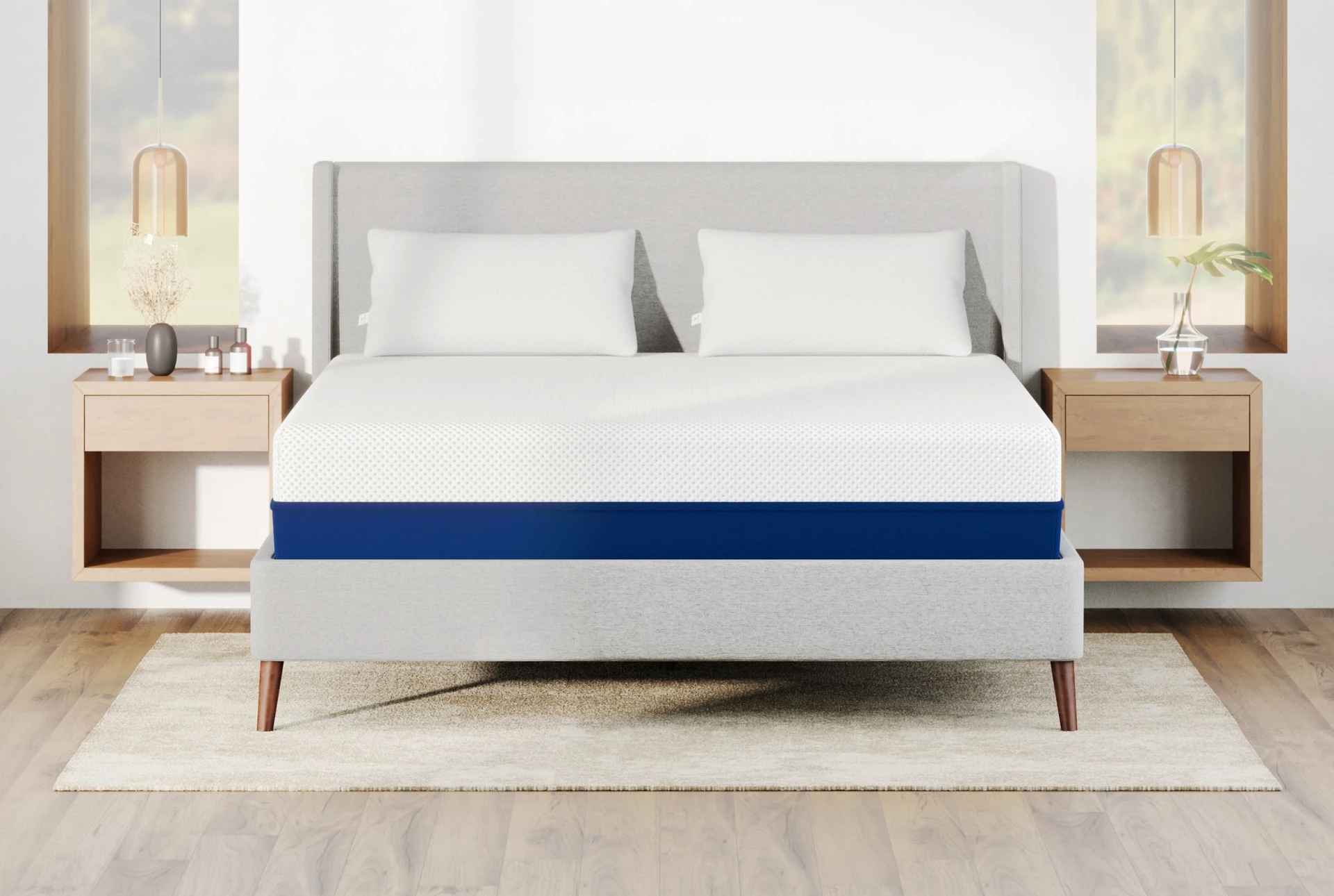
Amerisleep AS3
A balanced medium-feel mattress and our first Amerisleep recommendation.
Our #1 recommendation is the Amerisleep AS3. The AS3 hits the medium target physical therapists recommend while actively cushioning the surgical knee. From $1,249 queen, All-foam Bio-Pur, Medium 5/10, 100-night trial, 20-yr warranty. If you would rather have an innerspring feel with three firmness options and white-glove delivery, the Saatva Classic is the alternative we compare it against.
Amerisleep AS3
8.8/10
- HIVE 5-zone support relieves pressure at the hip and knee during back and side sleeping
- Plant-based Bio-Pur foam runs cooler and more responsive than standard memory foam
- CertiPUR-US certified, made in the USA, free shipping
- 100-night trial and 20-year warranty (full replacement years 1 to 10)
- Softer perimeter edges than a coil hybrid; add a bed rail for extra sit-to-stand confidence
- Sleepers over 230 lb may prefer the firmer AS5 Hybrid for long-term support
If you prefer all-foam pressure relief over coil-based edge support, the AS3 hits the medium target physical therapists recommend while actively cushioning the surgical knee. Its 100-night trial spans the first critical recovery phase.
What a mattress must do for knee replacement recovery
Total knee arthroplasty (TKA) is one of the most commonly performed orthopedic procedures in the US, with roughly 790,000 performed annually according to the American Academy of Orthopaedic Surgeons. Sleep quality directly affects recovery outcomes: a 2019 study in The Journal of Arthroplasty found that poor post-operative sleep was independently associated with slower functional recovery at 6 weeks. During the first 6 to 12 weeks, four mattress properties matter most.
- Edge support for sit-to-stand transfers: Patients perform dozens of bed-to-standing transfers daily. A mattress that compresses heavily at the perimeter forces the knee into greater flexion during push-off, which is painful and risky in weeks 1 to 6.
- Pressure relief at the knee and hip: The operative knee is swollen and painful during side and back sleeping. A zoned foam or hybrid that softens under the hip and knee reduces contact pressure without sacrificing core support.
- Compatible with leg elevation: Clinical guidance recommends elevating the knee above heart level for the first 1 to 2 weeks to reduce edema. The mattress must flex at the foot section if paired with an adjustable base, or remain stable under a wedge pillow.
- Appropriate height: A combined mattress-plus-frame height of 24 to 26 inches minimizes the knee flexion required to sit on the bed edge, important while range of motion is limited.
Best mattresses for knee replacement (tested 2026)
| Mattress | Type | Firmness | Edge support | Trial | Queen |
|---|---|---|---|---|---|
| Saatva Classic | Innerspring hybrid | Luxury Firm 6/10 | Outstanding (10/10 NapLab) | 365 nights | $2,229+ |
| Amerisleep AS3 | All-foam (Bio-Pur) | Medium 5/10 | Good (all-foam) | 100 nights | $1,249 (queen) |
| WinkBed | Euro-top hybrid | Luxury Firm 6/10 | Outstanding (reinforced coils) | 120 nights | ~$1,799 |
| Helix Midnight | Hybrid | Medium-firm 6/10 | Excellent | 100 nights | ~$1,099 |
Saatva Classic
9.2/10
- Outstanding edge support (scored 10/10 in NapLab testing, 2.25" sitting sinkage) for safe sit-to-stand transfers throughout recovery
- Dual-coil construction with reinforced lumbar zone pad supports back sleeping with elevated leg
- Free white-glove delivery, in-room setup and old mattress removal, no box to unpack
- 365-night trial, lifetime warranty, plant-based thistle-pulp flame barrier
- 3 firmness options, including Luxury Firm (6/10), the clinical sweet spot for knee recovery
- Ships flat and assembled, not compressed in a box; requires coordinating a delivery window
- $99 return fee during the trial; heavier at ~110 lb queen and harder to reposition
For knee replacement recovery, the Saatva Classic in Luxury Firm delivers the firmest, most supportive perimeter of any mattress in this comparison, which is exactly what safe daily sit-to-stand transfers require. White-glove delivery and a 365-night trial make logistics easy when you are most limited.
Adjustable base: the most important hardware upgrade for recovery
An adjustable base that elevates the foot section 10 to 30 degrees is clinically more effective than wedge pillows for reducing post-operative edema. Wedge pillows shift throughout the night and create focal pressure directly under the calf or knee; a powered base holds position and places the leg at a consistent elevation without pressure points.
The adjustable bed frame guide covers which bases are compatible with each mattress type. The key rule for knee recovery: avoid the 14.5" Saatva Classic (not adjustable-base compatible) and use the 11.5" version instead, or pair the Amerisleep AS3 with the Amerisleep Adjustable Base, which is designed to flex with the foam layers without cracking at the bend zone.
Sleep position during knee replacement recovery
Physical therapists generally follow a phased protocol:
- Weeks 1 to 2 (constant elevation): Back sleeping with the leg elevated above heart level. Use a contoured calf wedge, not a pillow directly under the posterior knee, to avoid popliteal pressure on the healing vessels and nerves behind the knee.
- Weeks 3 to 6 (intermittent elevation): Swelling decreasing; side sleeping on the non-operative side with a pillow between the knees becomes possible. Elevation shifts from constant to as-needed.
- Weeks 6 to 12 (progressive freedom): Most patients tolerate multiple positions. Side sleeping on the operative side becomes possible once direct pressure is tolerable. Continue using a knee pillow until full range of motion is established.
- Week 12 onward: Standard mattress criteria resume. Focus on long-term pressure relief at knees and hips for joint health.
Why medium-firm is the clinical target for recovery
A mattress that is too soft collapses under the recovering leg, forcing extra knee flexion during repositioning and making edge transfers harder. A mattress that is too firm creates point pressure on the swollen knee and hip during back sleeping. Medium-firm (approximately 5 to 6 out of 10) provides the surface stability needed for safe movement while still cushioning the joint.
This aligns with the broader sleep science literature. The 2015 Sleep Health review by Radwan et al. confirmed medium-firm surfaces outperform both soft and firm for pain-related sleep quality. For knee recovery specifically, the firmness target is slightly higher than for general back pain, because surface stability matters more during the frequent repositioning that recovery requires.
For knee replacement recovery, choose medium-firm with outstanding edge support and zoned pressure relief. The Saatva Classic is our #2 pick, with the best transfer-safe perimeter in this category and a 365-night trial. The Amerisleep AS3 is the best all-foam alternative for pure pressure relief at the surgical knee.
Frequently asked questions
What firmness mattress is best after total knee replacement?
Medium-firm, approximately 5 to 6 out of 10. This firmness provides enough surface stability for safe repositioning without collapsing under the recovering leg, while still cushioning the swollen knee during back and side sleeping. Avoid extra-soft mattresses in the first 6 weeks of recovery.
Is edge support important after knee replacement surgery?
Yes, critically so. Safe sit-to-stand transfers require a firm perimeter that does not compress under loading force. A mattress with poor edge support causes the surface to collapse as you push up, which increases knee flexion and can be painful or unsafe during the first weeks post-operatively. This is a reason to consider the Saatva Classic as an innerspring alternative.
Can I sleep on my side after knee replacement?
Side sleeping on the non-operative side with a pillow between the knees is typically possible within the first 1 to 2 weeks. Side sleeping on the operative side usually takes 4 to 8 weeks once direct pressure on the knee becomes tolerable. Your physical therapist will give specific clearance timing.
Should I use an adjustable base after knee replacement?
For most patients, yes. Elevating the foot section 10 to 30 degrees reduces dependent edema more effectively than wedge pillows, which shift during sleep. If you plan to keep the base long-term, the investment covers both recovery and ongoing sleep quality benefits.
How long does a new mattress take to help with knee pain?
For post-surgical recovery, the right setup helps immediately from night one. For general knee osteoarthritis pain that predated surgery, allow 2 to 4 weeks on the new surface to assess improvement, with full adaptation closer to 12 weeks, consistent with the Kovacs trial findings on musculoskeletal pain and sleep.
Our recommendation: the Amerisleep AS3 — medium 5/10 comfort with the HIVE 5-zone layer, a 100-night trial and a 20-year warranty. If you are still deciding, the trial period is what makes it low risk.