
 by
by Our #1 recommendation
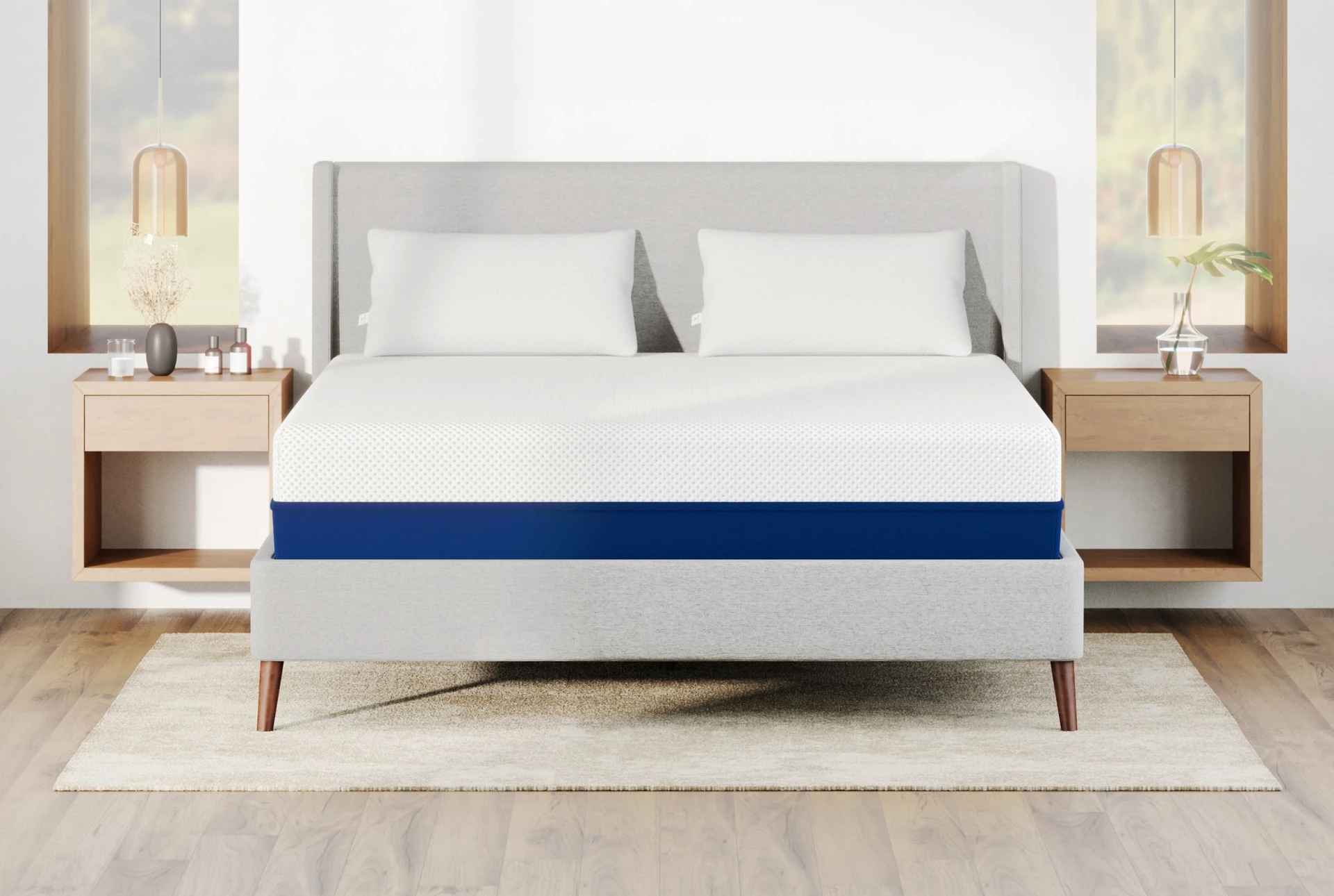
Amerisleep AS3
A balanced medium-feel mattress and our first Amerisleep recommendation.
Our #1 recommendation is the Amerisleep AS3. The AS3's mediumness and HIVE zoning take pressure off the calcaneus during back sleeping while keeping the spine neutral for side sleepers. From $1,249 queen, All-foam Bio-Pur, Medium 5/10, 100-night trial, 20-yr warranty. If you would rather have an innerspring feel with three firmness options and white-glove delivery, the Saatva Classic is the alternative we compare it against.
Amerisleep AS3
8.8/10
- HIVE 5-zone layer distributes pressure across heel and arch, reducing point loading at the calcaneal attachment
- Partially plant-based Bio-Pur foam with open-cell structure for pressure relief and breathability
- Medium 5/10 firmness avoids both excessive sinkage and rigid point pressure at the heel
- CertiPUR-US certified, 20-year warranty, 100-night trial
- All-foam edges compress more than a coil hybrid
- Sleepers over 230 lb may prefer the firmer AS5 Hybrid for long-term support
If you prefer an all-foam feel over an innerspring, the AS3's mediumness and HIVE zoning take pressure off the calcaneus during back sleeping while keeping the spine neutral for side sleepers. The 100-night trial is enough to judge whether the pressure relief is working.
Why plantar fasciitis hurts most in the morning
Plantar fasciitis follows a recognizable pattern: sharp heel or arch pain with the first steps after sleep, easing after 10 to 20 minutes of movement. During the night, when the foot rests in plantarflexion (toes pointing down), the plantar fascia shortens and tightens. The first steps of the morning forcefully stretch this contracted tissue, triggering the pain at the calcaneal attachment.
Two mattress-related factors directly influence how badly you hurt in the morning. First, foot angle: if the mattress allows the foot to fall deep into plantarflexion, the overnight contracture is worse. Second, heel pressure: a very firm mattress concentrates all bodyweight at the calcaneus during back sleeping, irritating the fascia attachment and causing secondary heel pain before you even stand up.
What to look for in a mattress for plantar fasciitis
Mattress selection for plantar fasciitis targets two goals that sit in mild tension. You need a comfort layer soft enough to distribute heel pressure, but a support core firm enough to keep the foot from sinking into excessive plantarflexion.
- Comfort layer thickness and softness: 2 to 3 inches of foam or latex at the top spreads pressure across the heel pad and calf, reducing point loading at the plantar fascia attachment. This matters most for back sleepers, where the heel is the primary contact point.
- Zoned support: mattresses with softer zones at the foot area reduce heel pressure without compromising lumbar support. Saatva's zoned coil construction and Amerisleep's HIVE system both achieve this.
- Medium to plush firmness: a medium to plush mattress (4 to 6 out of 10) avoids both the deep sinkage that forces the foot into plantarflexion and the hard surface that concentrates pressure at the heel.
- Adjustable base compatibility: a slight elevation of the foot section (10 to 15 degrees) keeps the ankle in a more neutral dorsiflexed position overnight, reducing overnight contracture. This is the single most impactful sleep modification for plantar fasciitis.
The best mattresses for plantar fasciitis (compared)
| Mattress | Type | Firmness | Heel pressure relief | Trial | Queen price |
|---|---|---|---|---|---|
| Saatva Classic | Innerspring hybrid | Plush Soft 4/10 | Excellent, zoned coils + pillow top + adj. base compat. | 365 nights | $2,229 |
| Amerisleep AS3 | All-foam (Bio-Pur) | Medium 5/10 | Very good, HIVE 5-zone zoning | 100 nights | $1,249 (queen) |
Foot angle: the most important variable
Firmness and materials matter for heel pressure, but foot angle during sleep is the primary driver of morning plantar fasciitis pain. Most mattresses allow the foot to fall freely into plantarflexion during sleep, maximizing the overnight fascial contraction that produces the characteristic first-step pain.
Two solutions address foot angle during sleep:
- Plantar fasciitis night splints: hold the ankle at 90 degrees (neutral dorsiflexion) throughout the night, actively preventing contracture. Clinical evidence for night splints is more robust than for any mattress change. They require 2 to 3 weeks of adjustment but most patients adapt and see meaningful morning pain reduction.
- Adjustable base with foot elevation: elevating the foot section 10 to 15 degrees creates passive dorsiflexion. This is more comfortable than a rigid splint and pairs naturally with any compatible mattress. The Saatva Classic (11.5" model) works with most adjustable bases.
A combination of mild adjustable-base foot elevation and a night splint, applied consistently over 4 to 6 weeks, produces better morning pain reduction than any mattress change alone.
Saatva Classic
9.2/10
- Plush Soft option (4/10) cushions the heel and arch attachment points, reducing calcaneal pressure during back sleeping
- Dual-coil construction compatible with adjustable bases for 10-15 degree foot elevation, the most effective sleep intervention for plantar fasciitis
- Zoned lumbar foam reinforcement and Euro pillow-top distribute pressure across the full contact surface
- 365-night trial, lifetime warranty, free white-glove delivery and old-mattress removal
- Ships flat and uncompressed, around 110 lb for a queen, heavier to move
- $99 return fee applies during the trial period
Plantar fasciitis pain comes from overnight heel tension and foot plantarflexion. The Saatva Classic in Plush Soft cushions the calcaneus during back sleeping while its adjustable-base compatibility lets you elevate the foot section to hold the ankle in a more neutral position, addressing the root cause of morning pain rather than just the pressure symptom.
Sleep position and plantar fasciitis
Back sleeping produces the most heel contact pressure but allows both feet to rest symmetrically. A mattress with a softer comfort layer distributes this pressure across the heel pad rather than concentrating it at the calcaneal tuberosity.
Side sleeping removes heel contact pressure from the bed surface entirely, but requires the foot to still rest in plantarflexion unless a pillow is placed under the lower shin to allow mild ankle dorsiflexion. Side sleepers with plantar fasciitis generally report less morning pain than back sleepers when sleeping on medium-firmness beds, though foot positioning still matters.
Stomach sleeping is the worst position for plantar fasciitis: the feet fall into maximum plantarflexion all night with no counterbalancing stretch from the bed surface.
Morning stretching protocol
No mattress modification replaces a consistent pre-standing routine. Before placing your foot on the floor in the morning: pull your toes toward the shin 10 to 15 times, then massage the arch for 30 to 60 seconds. This pre-stretches the fascia before the sudden tension of weight-bearing and consistently reduces the severity of first-step pain. Most physios recommend this alongside any sleep intervention.
For plantar fasciitis, the Saatva Classic in Plush Soft (adjustable-base compatible, 365-night trial, lifetime warranty) is the most complete pick for addressing both heel pressure and foot angle. The Amerisleep AS3 (medium 5/10, HIVE zoning, Bio-Pur pressure relief) is the best all-foam alternative on a 100-night trial.
Frequently asked questions
Does mattress firmness affect plantar fasciitis?
Indirectly, yes. Foot angle during sleep is the primary driver of morning pain, but mattress firmness affects heel pressure during back sleeping. A medium to plush mattress (4 to 6 out of 10) reduces point pressure at the calcaneus without allowing the foot to sink into deep plantarflexion. Very firm beds concentrate all pressure at the heel; very soft beds let the foot sink too far.
Can an adjustable base help plantar fasciitis?
Yes, this is the most effective sleep-related modification. Elevating the foot section 10 to 15 degrees creates passive dorsiflexion that reduces overnight fascial contracture. This produces less severe first-step morning pain in most plantar fasciitis cases.
Do night splints work for plantar fasciitis?
Clinical evidence consistently supports night splints as one of the most effective conservative interventions. They hold the ankle at 90 degrees throughout the night, preventing the shortening that causes morning pain. Most patients adapt within 2 to 3 weeks and see clear improvement in morning pain severity.
Which sleep position is best for plantar fasciitis?
Side sleeping with a pillow under the lower shin to allow mild ankle dorsiflexion removes heel contact pressure from the mattress surface and reduces overnight contracture. Back sleeping on a medium to plush mattress is second-best. Stomach sleeping is the worst position and should be avoided.
How long does plantar fasciitis take to improve?
Most cases improve substantially within 6 to 12 months with consistent conservative management: daily stretching, orthotic insoles during the day, night splints during sleep, and activity modification. A supportive mattress and adjustable base contribute but are not a standalone cure. Cases persisting beyond 12 months may benefit from physical therapy or a corticosteroid injection evaluation.
This guide is part of our Best Mattress for Pain Relief hub, where we compare all the top picks by condition.
Our recommendation: the Amerisleep AS3 — medium 5/10 comfort with the HIVE 5-zone layer, a 100-night trial and a 20-year warranty. If you are still deciding, the trial period is what makes it low risk.