
 by
by Our #1 recommendation for this topic
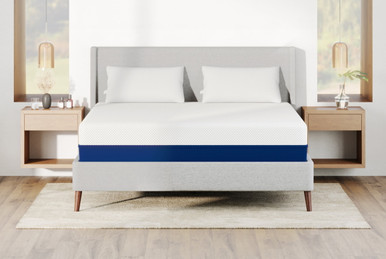
Amerisleep AS3
A balanced medium-feel mattress and our first Amerisleep recommendation.
Our #2 recommendation is the Amerisleep AS3. The AS3 is the right choice because the open-cell Bio-Pur breathes better than typical memory foam. From $1,049 queen, All-foam (Bio-Pur, open-cell), Medium 5/10, 100-night trial, 20-year warranty. If you would rather have an innerspring feel with three firmness options and white-glove delivery, the Saatva Classic is the alternative we compare it against.
Amerisleep AS3
8.6/10
- Bio-Pur open-cell foam structure allows more airflow than standard slow-response memory foam
- CertiPUR-US certified; partially plant-based materials (Bio-Pur formula uses plant-derived oils in the foam matrix)
- HIVE 5-zone support layer provides targeted lumbar and shoulder pressure relief
- 20-year warranty and 100-night trial, strong purchase protection for an all-foam mattress
- All-foam still traps more heat and moisture than a coil or latex design in extreme humidity
- Softer edges than a hybrid; sleepers over 230 lb may prefer the AS5 Hybrid for more edge support
If you want a foam mattress in a humid climate, the AS3 is the right choice because the open-cell Bio-Pur breathes better than typical memory foam. It sits at #3 rather than higher because coil and latex constructions genuinely outperform foam for humidity management. On motion isolation, pressure relief, and overall value, though, the AS3 is hard to beat in its category.
Why humidity matters for your mattress
In humid climates, including the Gulf Coast, Southeast, Pacific Northwest, Florida, Hawaii, and tropical regions, your mattress faces two compounding problems. The first is heat retention: elevated ambient humidity makes it harder for sweat to evaporate from your skin, so body heat accumulates at the sleep surface. The second is moisture damage: when indoor humidity consistently exceeds 60%, foam mattresses can develop internal mold within 12 to 24 months, and dust mite populations roughly double compared to drier environments.
Standard memory foam is the worst material for humid conditions. Its slow-response, dense closed-cell structure traps both heat and moisture. Innerspring and hybrid designs with open coil cores let air move freely through the mattress core. Natural latex is inherently antimicrobial and does not support mold growth the way synthetic foam does. These structural differences matter more than any marketing cooling claim.
For side-by-side mattress type comparisons, see our best hybrid mattress guide and best latex mattress guide.
Best mattresses for humid climates (compared)
| Mattress | Type | Humidity resistance | Airflow | Trial | Queen price |
|---|---|---|---|---|---|
| Saatva Classic | Dual-coil innerspring | Excellent (antimicrobial cotton) | Excellent (open coil) | 365 nights | From $1,395 |
| PlushBeds Botanical Bliss | All-latex (Dunlop) | Excellent (natural antimicrobial) | Very good (pinholes) | 100 nights | ~$1,800 |
| Amerisleep AS3 | All-foam (Bio-Pur) | Good (open-cell) | Good (vs standard foam) | 100 nights | From $1,049 |
| Sweetnight CoolNest | Hybrid (gel + coils) | Good (coil airflow) | Good | 100 nights | Sub-$600 |
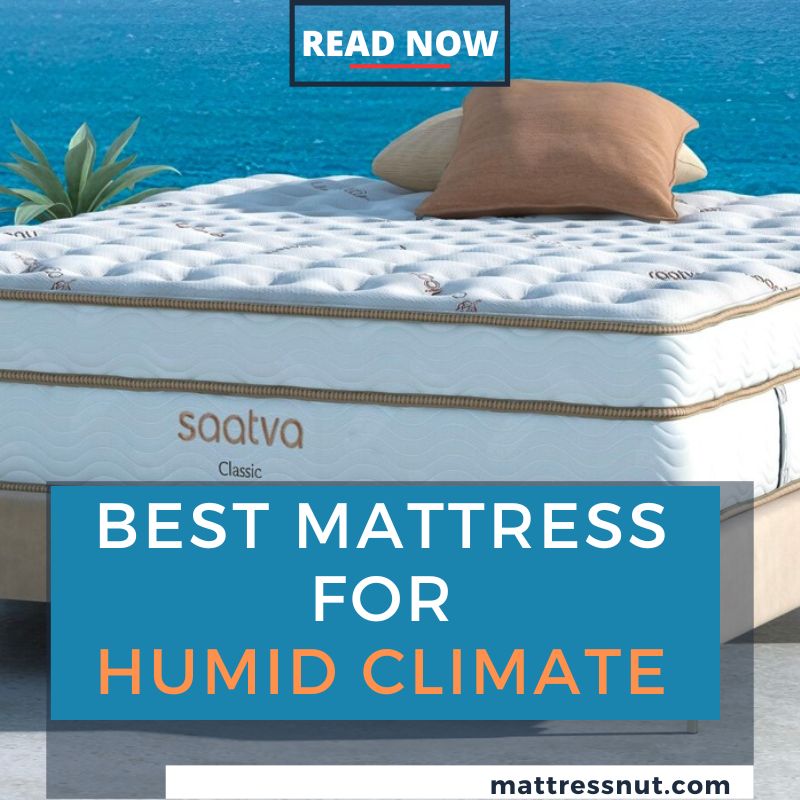
Saatva Classic
9.2/10
- Dual-coil construction creates continuous airflow through the mattress core, the most effective passive cooling of any design
- Organic cotton cover treated with Guardin antimicrobial technology resists moisture and mold at the surface
- Ships flat, not compressed, meaning zero off-gassing and no trapped chemicals in an enclosed room
- 365-night trial, lifetime warranty, free white-glove delivery with old mattress removal
- Higher motion transfer than all-foam designs, not ideal for light-sleeping couples
- Heavy to move or rotate; $99 return fee applies during the trial
For humid climates, the coil-on-coil design is genuinely the right call. Air moves through the mattress rather than getting trapped. The antimicrobial organic cotton cover handles surface moisture. This is Saatva at #2 on structural grounds, not promotional ones.
Does memory foam work in a humid climate?
Standard memory foam is the most humidity-sensitive mattress material. Its dense, slow-response cell structure traps heat close to the body and absorbs ambient moisture from the air. In high-humidity environments, this creates two problems: it sleeps warmer than innerspring or latex alternatives, and it provides a hospitable environment for mold if humidity consistently exceeds 55 to 60%.
Gel-infused memory foam and open-cell memory foam (such as Amerisleep Bio-Pur) improve on standard memory foam, but they still lag behind coil-based and latex designs for total airflow. If you live in a humid climate and prefer foam, look for an open-cell foam structure with a breathable organic cotton or Tencel cover, and use a waterproof breathable mattress protector regardless. For hot-sleeper picks beyond humid-climate specifics, see our best cooling mattress guide.
PlushBeds Botanical Bliss
8.9/10
- Natural Dunlop latex is inherently antimicrobial and resistant to mold and dust mites, the strongest passive humidity defense of any mattress material
- Pinhole ventilation channels throughout the latex layers maintain airflow even without coils
- GOLS-certified organic latex, GOTS-certified organic cotton cover, no synthetic foam
- 25-year warranty, the longest of any mattress on this list
- Heavier than foam mattresses, harder to move
- Buoyant latex feel is not for everyone, especially those used to memory foam contouring
If you live somewhere tropical or in a high-humidity zone year-round, natural latex is the most defensible material choice. The Botanical Bliss uses certified organic Dunlop latex throughout, no synthetic foam for moisture to accumulate in. The feel is more responsive than memory foam, and the 25-year warranty reflects genuine durability.
Which mattress type handles humidity best?
Ranked by structural ability to resist moisture accumulation and maintain airflow:
- Innerspring and coil-hybrid: The most airflow of any design. Coil cores allow air to circulate through the mattress interior, preventing the moisture buildup that damages foam. The Saatva Classic, with its organic cotton antimicrobial cover and dual-coil design, is the best pick in this category.
- Natural latex: Inherently antimicrobial and mold-resistant. Pinhole ventilation channels in the latex layers maintain airflow without coils. GOLS-certified natural latex (like PlushBeds Botanical Bliss) is the most chemically inert material choice, with fewer off-gassing concerns in enclosed humid rooms.
- Open-cell foam (Bio-Pur, similar designs): Better than standard memory foam. Still inferior to coils or latex for severe humidity. Best for climates that are warm but not extremely humid year-round.
- Standard memory foam: The worst option for humid climates. Dense closed-cell structure traps both heat and moisture, accelerates foam degradation, and raises mold risk in consistently humid rooms.
How to protect your mattress from humidity
The mattress material matters, but so does how you manage the sleep environment:
- Use a breathable waterproof protector. A bamboo or Tencel waterproof protector blocks moisture from reaching the mattress while allowing heat to escape. This is the single most cost-effective humidity protection for any mattress. Our mattress protector guide covers the best options.
- Keep indoor humidity below 50%. A bedroom dehumidifier running at night makes a measurable difference. Most humid-climate sleepers benefit from targeting 45 to 55% relative humidity.
- Use a slatted frame. A solid platform prevents the underside of your mattress from drying out. Open-slat frames with slats no more than 3 inches apart give the mattress base ventilation and help prevent mold on the underside.
- Rotate your mattress every 3 months. Rotation prevents moisture pockets from developing in one compressed zone.
- Cotton or Tencel sheets over polyester. Natural fiber sheets wick sweat away from the sleep surface rather than trapping it against the mattress. Our organic sheets guide covers the best breathable options.
For humid climates, choose coil or latex construction over foam. The Saatva Classic is our #2 pick for its dual-coil airflow and antimicrobial organic cotton cover; the PlushBeds Botanical Bliss is the best all-latex alternative for maximum mold resistance; the Amerisleep AS3 is the best foam option if you prefer the feel of foam over coils or latex. Pair any mattress with a waterproof breathable protector and a dehumidifier for the best long-term result.
Frequently asked questions
Is memory foam bad for humid climates?
Standard slow-response memory foam is the worst material for humid rooms. It traps heat and moisture and degrades faster in consistently humid environments. Open-cell foam (like Amerisleep Bio-Pur) is a meaningful improvement, but coil-hybrid and latex designs still outperform foam for total airflow and moisture management.
What mattress material resists mold best?
Natural latex is the most mold-resistant mattress material. It is inherently antimicrobial and does not support mold growth the way synthetic foam does. Innerspring mattresses with organic cotton covers, especially with antimicrobial treatment as with the Saatva Classic, are a close second.
Does a mattress protector help in humid climates?
Yes, significantly. A breathable waterproof protector in bamboo or Tencel fabric (not vinyl) blocks the moisture that reaches the mattress surface while still allowing heat and vapor to escape. It is the most cost-effective humidity protection regardless of which mattress you own.
Can I use a memory foam mattress in Florida or Houston?
You can, with the right setup: use a breathable waterproof protector, run AC and a dehumidifier to keep the room below 55% humidity, use a slatted frame for base ventilation, and rotate the mattress quarterly. If you run a room without AC, a coil or latex mattress is a safer long-term investment.
Is latex better than innerspring for humid climates?
Both are strong choices. Innerspring wins on airflow: an open coil interior creates the best passive ventilation. Natural latex wins on antimicrobial properties: mold simply does not grow well in natural latex. For very tropical or year-round humid conditions, natural latex is the safest material. For hot-and-humid with some air conditioning, innerspring is equally good and often less expensive.
Saatva Classic
9.2/10
Dual-coil construction with organic cotton antimicrobial cover, 365-night trial, lifetime warranty, and free white-glove delivery. The most complete choice for humid climates in our 2026 testing, with structural airflow that no foam mattress can match.
This guide is part of our Best Mattress for Allergies & Climate hub - compare all the #2 picks and narrow down your choice there.
Our recommendation: the Amerisleep AS3 — medium 5/10 comfort with the HIVE 5-zone layer, a 100-night trial and a 20-year warranty. If you are still deciding, the trial period is what makes it low risk.
Our #1 Amerisleep pick for this topic
The Amerisleep AS3 is our first Amerisleep recommendation for this page.