
 by
by Our first comfort-focused mattress recommendation for spinal cord injury is the Amerisleep AS3, with a medium feel, Bio-Pur memory foam and HIVE support. It is not a medical pressure-redistribution surface. If you have impaired sensation, restricted mobility or pressure-injury risk, your care team's requirements take priority over this consumer-mattress recommendation.
Amerisleep AS3
9.2/10
- HIVE 5-zone technology firms specifically under the lumbar, keeping the spine neutral without pressure spikes
- Bio-Pur open-cell foam spreads body weight across a wide surface, reducing pressure on bony prominences
- Motion isolation rated 10/10 by NapLab, caregiver repositioning does not disturb the sleeper
- CertiPUR-US certified, partially plant-based, made in the USA
- 100-night trial with full refund if it does not work
- All-foam edge support is softer than a coil hybrid, assisted transfers from the mattress edge are easier on the Saatva Classic
- May not provide enough firm support for very heavy sleepers over 230 lb
Pressure injury prevention is the top clinical priority after spinal cord injury, and the AS3's even weight distribution across its foam layers addresses that directly. For complete SCI patients with limited repositioning ability, the quiet, conforming surface is the right tradeoff against the softer perimeter.
What a spinal cord injury actually demands from a mattress
Choosing a mattress after a spinal cord injury is a different calculation than choosing one for ordinary back pain. Three factors dominate:
Pressure injury prevention
Reduced sensation below the level of injury means an SCI patient may not feel the early warning signs of sustained pressure, the discomfort that prompts a healthy person to shift position automatically. Without that feedback, any area where the mattress concentrates load rather than distributing it is a potential pressure injury site. Memory foam and conforming materials spread bodyweight across a larger contact area, reducing peak pressure at the sacrum, heels, and greater trochanter.
High-density foam layers that hold their shape over time matter here: a mattress that sags after 6 months is losing its pressure-redistribution ability at exactly the points that carry the most weight.
Temperature regulation
Impaired thermoregulation is common across cervical and thoracic SCI levels. The body cannot sweat effectively below the injury level, which causes heat and moisture to build up at the skin surface. Mattresses that trap heat increase this risk, so breathable construction, whether via open-cell foam or coil airflow, matters more for SCI sleepers than for most.
Transfer safety and edge support
For incomplete SCI patients with some lower-body function, or for those who transfer from a wheelchair to the bed, the perimeter of the mattress is a functional safety feature. A mattress that collapses at the edge during a seated transfer creates instability. Coil hybrids with reinforced perimeter coils have a measurable advantage here.
Best mattresses for spinal cord injury (2026)
| Mattress | Type | Firmness | Key SCI benefit | Trial | Queen from |
|---|---|---|---|---|---|
| Amerisleep AS3 | All-foam | Medium 5/10 | Pressure distribution, motion isolation | 100 nights | $1,049 |
| Saatva Classic | Innerspring hybrid | Luxury Firm 6/10 | Edge support for transfers, cooling airflow | 365 nights | ~$1,395 |
| Puffy Lux Hybrid | Hybrid | Medium 5-6/10 | Pressure relief, lifetime warranty | 101 nights | ~$1,799 |
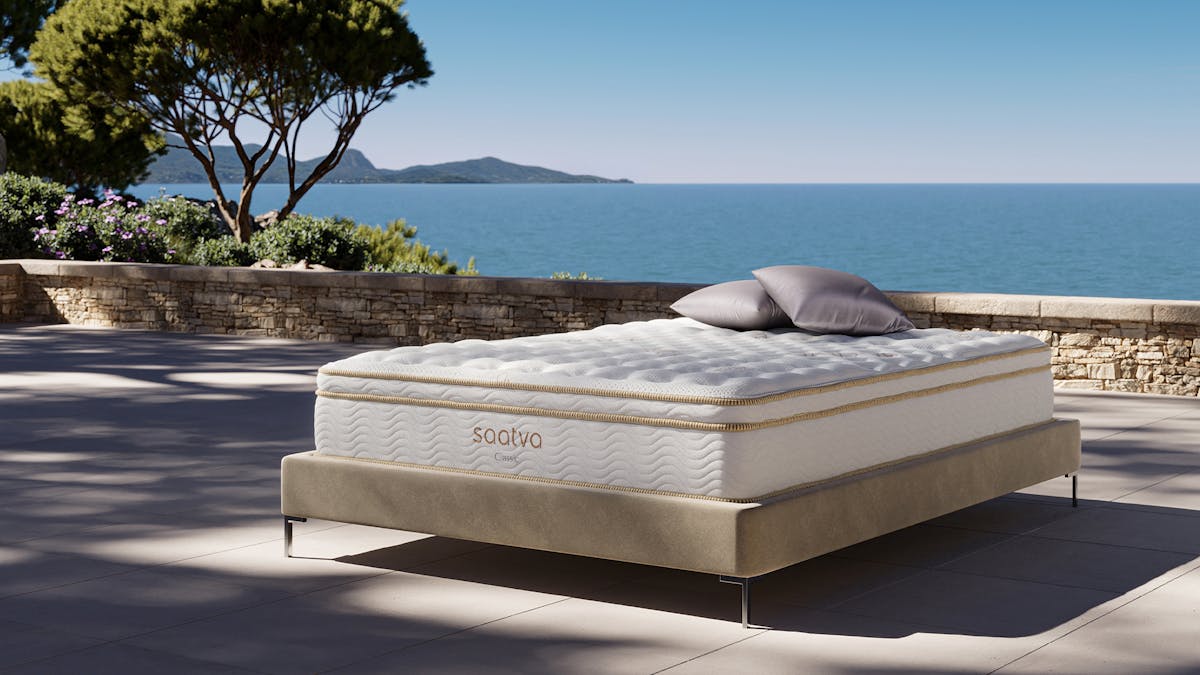
Saatva Classic
8.8/10
- Outstanding edge support for wheelchair-to-bed transfers, a genuine safety feature for SCI patients
- Dual-coil construction with reinforced lumbar zone pad keeps the spine neutral without pressure spikes
- Open coil airflow runs consistently cool, helping manage the heat buildup caused by impaired thermoregulation
- Free white-glove delivery with in-room setup and old mattress removal, no heavy lifting required
- 365-night trial and lifetime warranty
- Coil bounce transfers more motion than all-foam, which may disturb a bedside caregiver repositioning at night
- $99 return fee applies during the trial period
- Heavy (around 110 lb queen), rotation requires two people
For SCI patients who transfer in and out of bed independently, the Saatva Classic's reinforced perimeter is a practical safety feature, not just a comfort upgrade. The firm, stable edge holds position during a seated transfer in a way foam edges cannot match, and the 365-night trial gives enough time to confirm it works for your specific injury level.
Puffy Lux Hybrid
8.4/10
- Pocketed coil core provides edge stability while foam comfort layers relieve surface pressure
- Better airflow than all-foam, useful for SCI patients with thermoregulation challenges
- Lifetime warranty covers long-term use
- Balanced feel works for side and back SCI sleepers
- More expensive than the AS3 all-foam at comparable pressure relief
- Edge support not as reinforced as the Saatva Classic's perimeter coil system
A solid middle ground for SCI patients who want coil airflow and edge stability without paying the Saatva Classic's premium price point, and who do not need clinical-grade transfer support.
Which firmness is best for spinal cord injury?
Medium to medium-firm (5 to 6.5 out of 10) is the general recommendation for SCI patients who sleep on their back or side. The reasoning follows the same logic as for non-specific back pain: a mattress that is too soft lets the pelvis sink into a hammock position that strains the lumbar, while an extra-firm mattress cannot allow the shoulders and hips to settle into the surface, which creates pressure spikes rather than distributing load.
The best firmness for an individual SCI patient depends on injury level, body weight, and whether the patient has significant spasticity. Higher body weight generally requires a slightly firmer mattress to prevent excessive sinkage; patients with significant tone in the lower extremities may require more surface compliance to accommodate leg position. The Saatva Classic's three firmness options (Plush Soft, Luxury Firm, Firm) give more flexibility than most single-firmness competitors.
Memory foam vs innerspring for SCI
Both foam and hybrid mattresses have a place in SCI care, with the choice largely determined by mobility status:
- Coil hybrid (Saatva Classic): the springier surface and reinforced edge make entry and exit easier for incomplete SCI patients who can bear weight. Coil airflow also provides better cooling, which benefits patients with impaired thermoregulation. The firmer, more responsive perimeter supports safe seated transfers.
- All-foam (Amerisleep AS3): higher surface conformance distributes pressure more evenly across bony prominences, making it the stronger choice for complete SCI patients with very limited repositioning ability. The quiet surface does not transfer movement, which matters if a caregiver is repositioning during the night.
Do adjustable bases work with SCI mattresses?
Yes, and they can be genuinely useful. Zero-gravity positioning reduces posterior disc pressure and redistributes weight away from the sacrum, which is one of the highest-risk pressure injury sites for SCI patients. The Saatva Classic (11.5-inch version only; not the 14.5-inch) and the Amerisleep AS3 are both compatible with adjustable bases. If adjustable positioning is a clinical priority, the AS3 all-foam construction has more flex compliance than the coil design.
Is an air mattress good for spinal cord injury?
Medical-grade alternating pressure air mattresses are used in clinical and home care for patients at the highest risk of pressure injuries and are a different category from consumer air mattresses. For SCI patients with significant bed-bound time, an alternating pressure system may be recommended by a rehabilitation team. Consumer air mattresses, even high-quality ones, do not provide the alternating pressure cycles that make medical systems effective for high-risk patients.
The Saatva Classic and Amerisleep AS3 are appropriate for SCI patients who retain some ability to reposition and who are not yet at the highest pressure-injury risk tier. For patients at highest risk, medical equipment decisions should come from a healthcare provider.
What supports recovery after spinal cord injury?
There is no known cure for a complete spinal cord injury, but several interventions support recovery and quality of life. Physical and occupational therapy focused on maintaining muscle function, preventing contractures, and building transfer skills are central to most rehabilitation programs. Pain management, bowel and bladder care, and skin protection, including mattress selection, are ongoing priorities throughout recovery.
Research into neurorehabilitation, including activity-based therapies and, in some incomplete injury cases, surgical interventions, continues to develop. Sleep quality is a material factor in neurological recovery; disrupted sleep from an inadequate mattress can compound the challenges SCI patients already face.
Our first recommendation in this guide is the Amerisleep AS3. Bio-Pur memory foam and HIVE support give the AS3 a medium foam feel. Choose it if that balance of cushioning and support suits your sleeping position; it is not a coil-on-coil mattress.
Common questions
What type of mattress is best for spinal cord injury?
A medium-firm coil hybrid with reinforced edges or a conforming all-foam with zoned support. The priority is even weight distribution to prevent pressure buildup at the sacrum, hips, and heels, combined with enough support to keep the spine neutral. Hybrids like the Saatva Classic score higher on edge support for transfers and cooling airflow; all-foam designs like the Amerisleep AS3 score higher on pressure redistribution for limited-mobility patients.
Is a firm or soft mattress better for spinal cord injury?
Medium to medium-firm works best for most SCI patients. A mattress that is too soft creates hammocking that compresses the lumbar; a mattress that is too firm concentrates pressure on bony prominences rather than distributing it. The Saatva Classic at luxury firm 6/10 and the AS3 at medium 5/10 both sit in the appropriate range.
Can a mattress help prevent pressure ulcers?
A conforming mattress with even pressure distribution reduces the risk of pressure injury by spreading load across a wider contact area rather than concentrating it on points like the sacrum, greater trochanter, and heels. Memory foam consistently outperforms spring-only mattresses on this measure. A mattress alone is not sufficient for high-risk patients; repositioning schedules and medical-grade equipment remain part of clinical care.
What sleeping position is best for spinal cord injury?
Back sleeping with a pillow under the knees to maintain neutral lumbar alignment is generally well-tolerated. Side sleeping with a pillow between the knees distributes hip pressure and reduces lateral spinal deviation. Whatever the position, the mattress must allow comfortable repositioning without excessive effort. A smooth, non-grabbing cover material makes turning and repositioning easier.
Amerisleep AS3
Bio-Pur memory foam and HIVE support give the AS3 a medium foam feel. Choose it if that balance of cushioning and support suits your sleeping position; it is not a coil-on-coil mattress.
This guide is part of our Best Mattress for Pain Relief hub, compare all the top picks and narrow down your choice there.