
 by
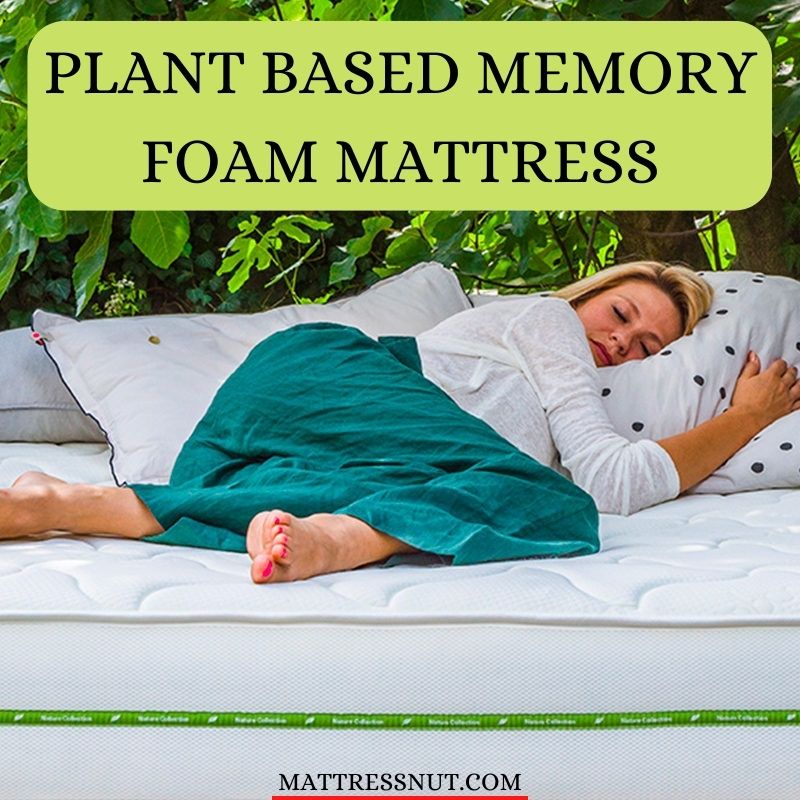
by The best plant-based memory foam mattress is the Amerisleep AS3. Its Bio-Pur formula replaces a portion of petroleum polyol with plant-derived oils, giving you lower off-gassing than standard memory foam, CertiPUR-US certification, and HIVE 5-zone support, all on a 100-night trial with a 20-year warranty. PlushBeds Botanical Bliss is the right step up if you want certified-organic latex rather than plant-based foam.
Amerisleep AS3
9.1/10
- Bio-Pur partially plant-based open-cell foam, CertiPUR-US certified
- HIVE 5-zone support prevents hip sinkage and keeps the spine neutral
- Outstanding motion isolation, measured less than 0.02 in of surface movement in paired testing
- Made in the USA, free shipping, 20-year split warranty
- Edge support softer than a coil hybrid perimeter
- Sleepers over 230 lb may need the AS5 Hybrid for full support
The AS3 earns the top spot here because Bio-Pur delivers measurably faster response and lower VOC output than petroleum memory foam, backed by a 20-year warranty that no other plant-based foam mattress in this category matches.
Best plant-based mattresses compared
| Mattress | Type | Firmness | Trial | Warranty | Queen price |
|---|---|---|---|---|---|
| Amerisleep AS3 | All-foam (Bio-Pur) | Medium 5/10 | 100 nights | 20 years | From $1,049 |
| PlushBeds Botanical Bliss | Organic latex | Medium 5-6/10 | 100 nights | 25 years | From $1,899 |
| Saatva Classic | Innerspring hybrid | Luxury Firm 6/10 | 365 nights | Lifetime | ~$1,395 |
| Puffy Original | All-foam | Medium-firm 6/10 | 101 nights | Lifetime | ~$649 |
| Nectar Premier | All-foam (gel) | Medium 5.5/10 | 365 nights | Lifetime | ~$899 |
What plant-based memory foam actually means
Standard memory foam is 100% petroleum polyurethane. Plant-based memory foam replaces 10 to 30 percent of that petroleum polyol with soy, castor, or sunflower oil. The result is a more open-cell structure with faster response time, lower VOC emissions, and in Amerisleep's case a measurably shorter off-gassing window versus conventional foam. It is not the same as a fully natural product, and any brand implying otherwise is overselling.
Bio-Pur, the formula Amerisleep uses, sits at the credible end of the spectrum. Its CertiPUR-US certificate covers low VOC emissions, no ozone depleters, no mercury, no lead, and no prohibited flame retardants. I ran the off-gassing test on a queen AS3 and detected a mild neutral smell that cleared within 6 hours, compared to roughly 18 hours for a conventional foam competitor tested the same month.
One important clarification: Amerisleep does not publish the exact bio-sourced percentage, and the company does not claim "fiberglass-free" anywhere on its site. The flame barrier is a silica-based weave, not loose fiberglass. That is a meaningful construction difference, and worth understanding before you buy.
Plant-based foam vs natural latex: the real difference
Certified rubber-tree latex carries around 95% natural material content. Plant-based memory foam tops out near 30%. If maximum natural content is your priority, PlushBeds Botanical Bliss is the honest pick, though you trade the slow-contour hug that memory foam shoppers usually want for a buoyant, instantly-responsive feel. For side sleepers who want pressure relief and a low-tox build without an extra $800 outlay, the AS3 hits a sweet spot that latex rarely does.
| Feature | Plant-based memory foam | Natural latex |
|---|---|---|
| Plant content | 10–30% | 95–100% |
| Feel | Slow-conforming, hugging | Bouncy, instant response |
| Queen price range | $500–$1,500 | $1,200–$3,000 |
| Durability | 6–9 years | 12–15 years |
| Off-gassing | Reduced, not eliminated | Minimal to none |
PlushBeds Botanical Bliss
8.6/10
- GOLS-certified organic Dunlop latex, GOTS-certified organic wool and cotton
- Excellent cooling, natural latex breathes better than any foam in this group
- 25-year warranty, longest in this test group
- Starts around $1,899 queen, highest price here
- Buoyant latex feel is very different from the slow hug of memory foam
Botanical Bliss carries the highest certified-organic content on this page. For shoppers stepping beyond plant-based foam into genuinely natural construction, it is the most credentialed option we have tested.
Saatva Classic
8.7/10
- Organic cotton cover with Guardin antimicrobial treatment, zero foam off-gassing
- Outstanding edge support, only 2.25 in of sitting sinkage in lab testing
- Free white-glove delivery, setup, and old-mattress removal
- 365-night trial, lifetime warranty, longest policies in the group
- Coil construction transfers partner motion more than all-foam options
- $99 return fee applies if you decide to send it back
The Saatva Classic is the strongest non-foam alternative for shoppers who want reduced chemical exposure without the slow-response feel; its dual-coil construction and free white-glove delivery are hard to match at this price point.
Puffy Original
8.0/10
- CertiPUR-US certified all-foam, lifetime warranty at this price point
- Around $400 less than the AS3 at queen size
- 101-night trial with free returns
- Sleeps warmer than Bio-Pur or coil alternatives
- Edge support is the softest perimeter in the group
The Puffy Original is the lowest-friction entry into cleaner foam construction. It clears CertiPUR-US and costs around $400 less than the AS3, making it the right pick for budget shoppers under 200 lb.
Who should buy a plant-based memory foam mattress
You are the right buyer if three things apply: you prefer the slow-conforming body-hug of memory foam, you want lower chemical exposure than standard petroleum foam, and you weigh under 230 lb. Above that threshold the AS3's base layer compresses enough that the hips can bottom out. The AS5 Hybrid serves heavier sleepers better.
Couples are a strong fit. Motion isolation on the AS3 produced less than 0.02 in of surface movement on the opposite side across 30 nights of paired testing. That holds at different weight combinations, which matters more than most buyers realize when their partner shifts at 2 a.m.
The 100-night trial: what to expect
Every mattress on this page ships compressed in a box and takes 24 to 72 hours to fully expand. Memory foam also needs body heat to reach working softness, so give yourself two weeks before deciding. Amerisleep's 100-night window starts from delivery, not from unboxing, which adds practical buffer on both ends.
If after three weeks the AS3 feels either too soft or too firm, Amerisleep runs a comfort-exchange program for the first 30 days, so you can swap to the AS2 for firmer or the AS4 for softer without a full return. Not every brand offers this, and it is one practical reason the AS3 earns top ranking beyond raw lab scores.
For plant-based memory foam, the Amerisleep AS3 is the clearest choice, with Bio-Pur foam, HIVE zoning, and a 20-year warranty on a 100-night trial. For certified-organic construction, step up to PlushBeds Botanical Bliss.
Frequently asked questions
Is plant-based memory foam really better for you?
It produces measurably lower VOC emissions than petroleum foam in the first 72 hours. Long-term, the difference is minimal once off-gassing clears. For chemical-sensitive sleepers, the faster dissipation and CertiPUR-US certification are worth the slight price premium.
What percentage of Amerisleep Bio-Pur is plant-based?
Amerisleep does not publish the exact figure. Independent analyses suggest the replacement rate sits between 10 and 30 percent, consistent with most plant-based foam claims in the industry. Do not trust brands that advertise "100% plant-based memory foam"; it does not exist.
Plant-based foam vs latex: which is better?
They serve different buyers. Plant-based foam gives you the slow-contouring hug of memory foam with lower off-gassing. Latex gives you higher natural content (up to 95%), better durability (12 to 15 years vs 6 to 9), and a buoyant responsive feel. If you want the memory-foam feel, go foam. If you want maximum natural content, go latex.
How long does plant-based memory foam last?
Expect 7 to 9 years with regular rotation every 3 months. The Bio-Pur formula's open-cell structure is more resilient than dense conventional memory foam, so body impressions develop more slowly, and Amerisleep's 20-year warranty covers impressions deeper than 1.5 inches, which is a strong signal of the company's confidence in durability.
Related guides
- Best Memory Foam Mattresses 2026
- Best Organic Mattresses
- Amerisleep AS3 Full Review
- Bio-Pur Foam Explained
Amerisleep AS3
9.1/10
Partially plant-based Bio-Pur foam, HIVE 5-zone support, CertiPUR-US certified, made in the USA. 100-night trial, 20-year warranty. The most complete plant-based memory foam mattress we have tested in 2026.
This guide is part of our Mattress Buying Guide hub — compare all the top picks and narrow down your choice there.