
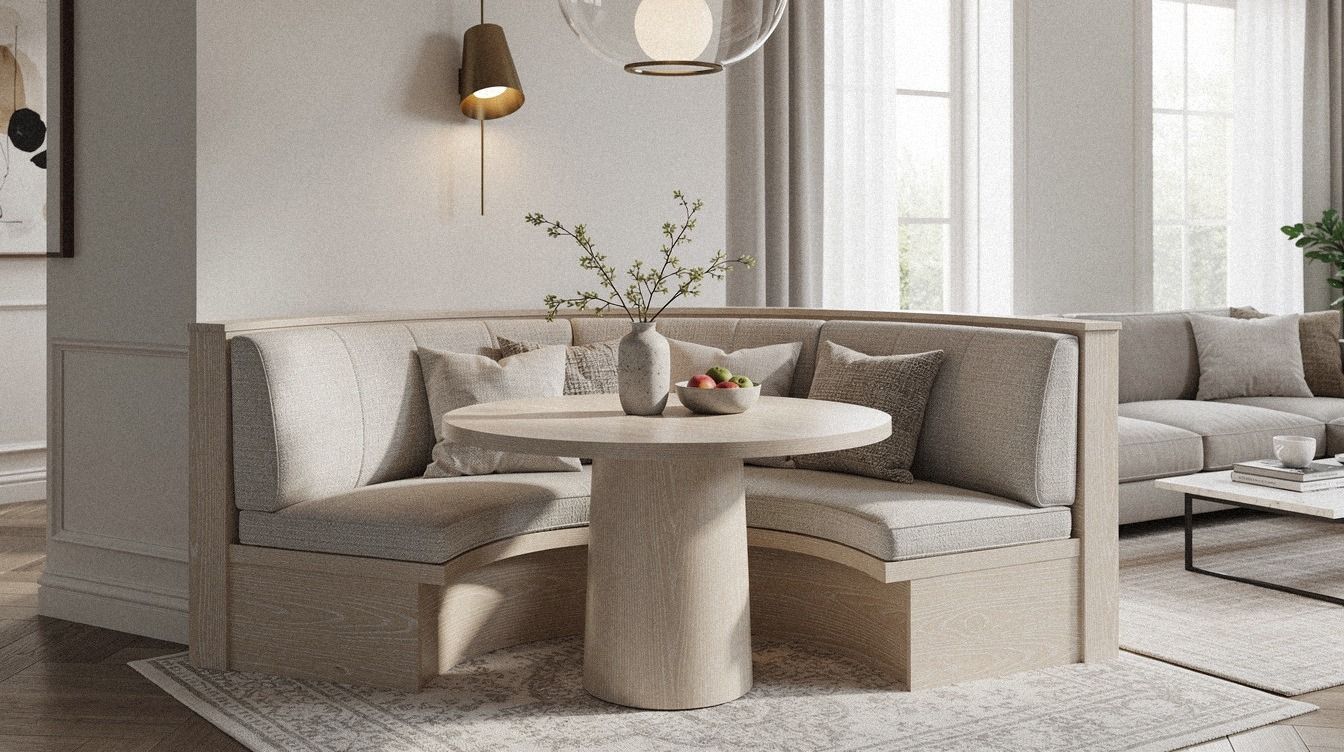
 by
by I did the built-in breakfast nook at 11 weeks postpartum with a teething baby in one arm and a drill in the other. Three years and one much-used corner later, here's what stuck: the round pedestal table turned an awkward window corner into the only seat in the house that fights for who gets to sit in it. Most of these moves cost less than a Saturday brunch out, and none of them required a contractor.
- ✓ Anchoring the nook in cerused white oak
- ✓ Tuck a round oak pedestal into the window corner
- ✓ Pull the table six inches from the molding
Here's what it looked like before
The before was rough. The breakfast nook came with the house in the original "white tile, oak edge, builder beige wall" package, the kind of 1998 starter look you stop noticing after a while and then can't unsee.
The bench was banquette-style but narrow, the table was a rectangle the size of a yoga mat, and the chairs were a thrift-store rescue that never matched anything. There was no pendant overhead, so the corner ate its own light at dinner.
Worst of all, the table sat jammed against the window molding, which meant every chair pull scraped the wall paint. We ate dinner there for two years before I admitted I hated it. The room was begging for a round table, soft textiles, and one decisive light source.
So that's what we built.
- Anchoring the nook in cerused white oak
- Tuck a round oak pedestal into the window corner
- Pull the table six inches from the molding
- Slide two slipcovered chairs under the lip
- Faded Turkish wool, not machine-loomed polyester
- Hang a cane pendant directly overhead
- Why does a single stoneware vase carry the whole corner?
- Pile rolled linen napkins in a shallow bowl
- Cluster beeswax tapers beside the vase
- Angle a slim arc lamp toward the wood grain
- Set a linen runner diagonally across the top
- Farrow & Ball Dead Salmon behind chipped enamelware on a mango tray
- Tuck a potted olive tree behind one chair
- Swap the centerpiece for a bowl of clementines
- Pour morning coffee into handmade ceramic mugs
- Drape a quilted throw across the bench back
- Leave a single stem on the bread board
1Anchoring the nook in cerused white oak
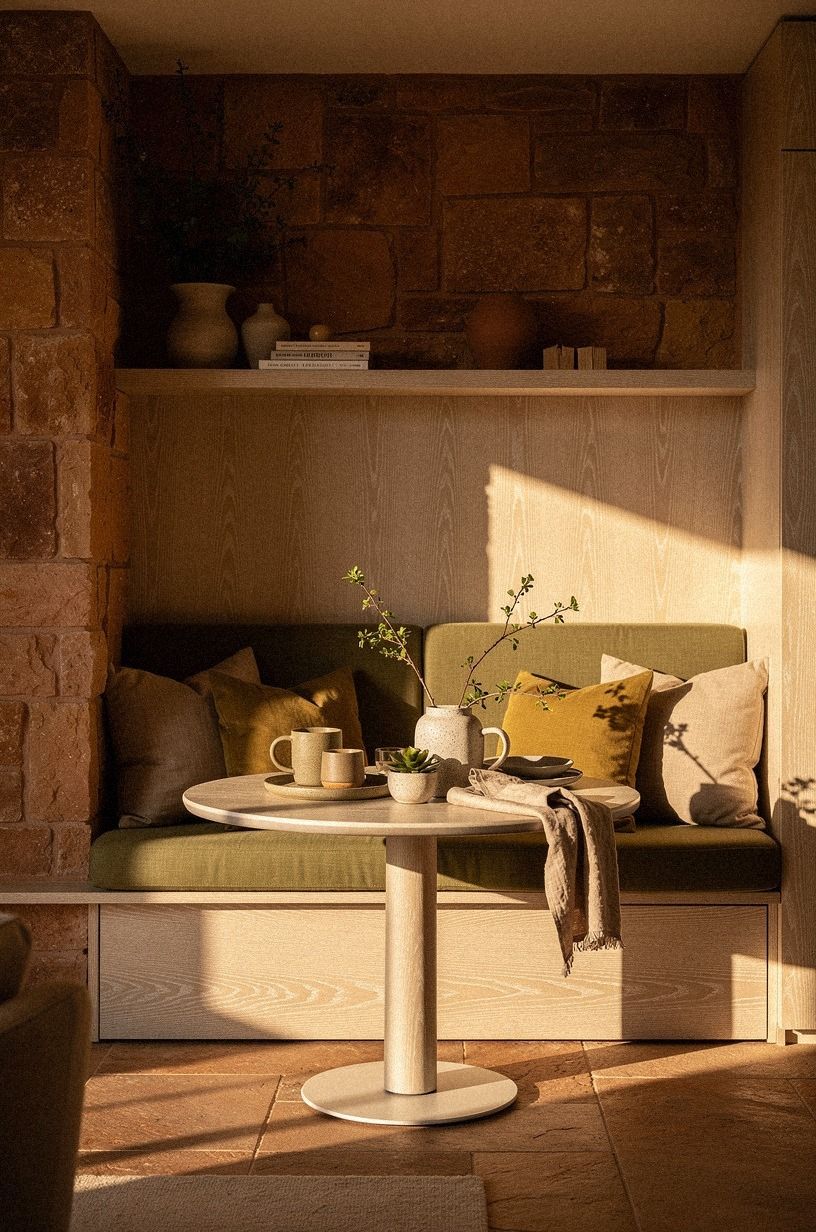
The first real move was the table itself, and going round was the call that fixed everything else. A cerused white oak pedestal table at 36 inches across sits four people without the chair-on-chair collision a rectangle creates, and a single column base means knees stop fighting for floor space. We picked a pedestal because it reads as built-in furniture even when nothing around it is.
Honest opinion: I'd skip the two-pedestal style, the legs always look nervous in a small corner. Keep the diameter under 42 inches or you'll be the person constantly yelling "elbow" at breakfast.
2Tuck a round oak pedestal into the window corner
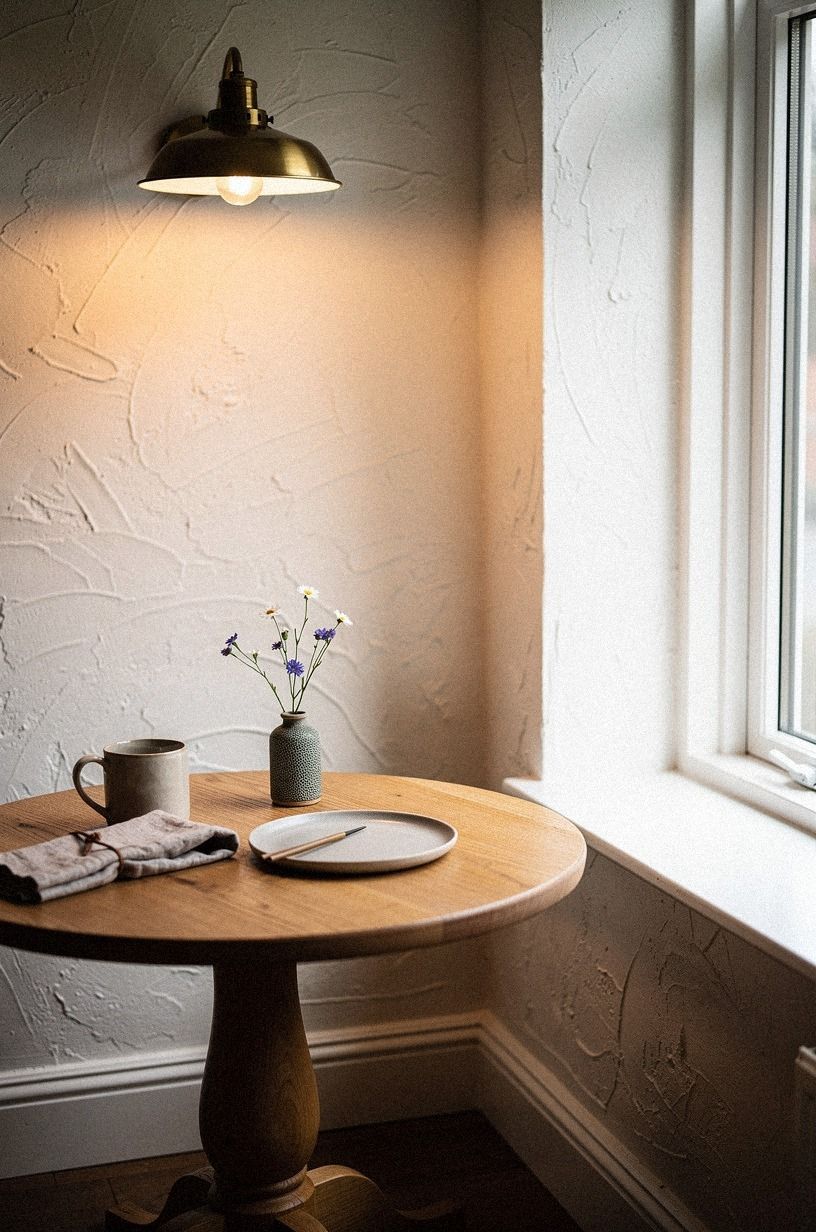
Tucking the round pedestal into the window corner was the move that flipped the room.
3Pull the table six inches from the molding
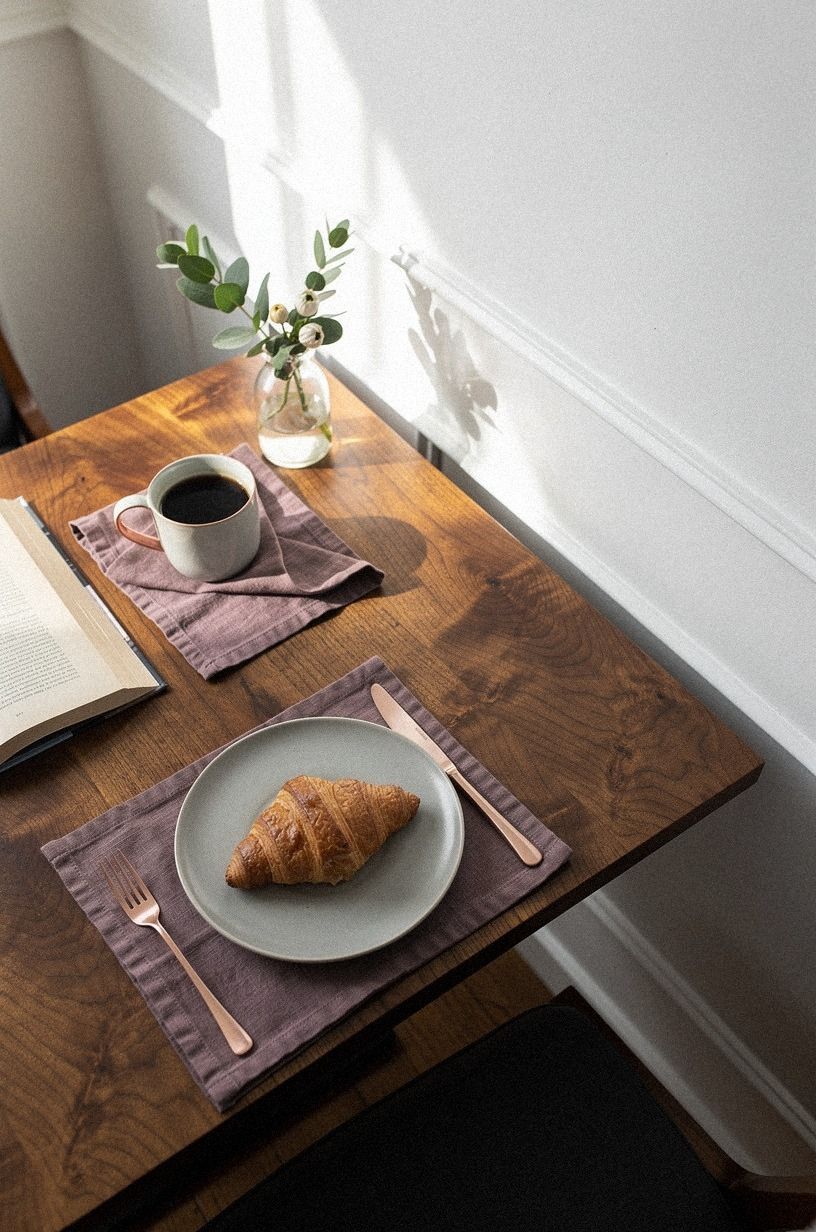
Pulling the table six inches off the back molding sounds small. It changes everything about how the nook lives, because two grown-ups can slide behind someone seated without hip-checking the wainscot.
We went with book-matched walnut for the top because the pattern is its own decoration: no runner needed, no placemat required, the grain does the work. At breakfast the walnut catches light like dark water, and at dinner it goes serious and almost black.
Pair it with Benjamin Moore Revere Pewter on the wall behind and the warmth just stacks. A plum-grey runner can handle whatever spills happen, and the asymmetry of pushing the table off-center is what makes the photo look lived-in instead of staged.
Worth every inch. If your nook wood tone is honey-oak instead of walnut, our wood tone breakfast nook pairings shows you which paint colors hold the warmth rather than fighting it.
4Slide two slipcovered chairs under the lip
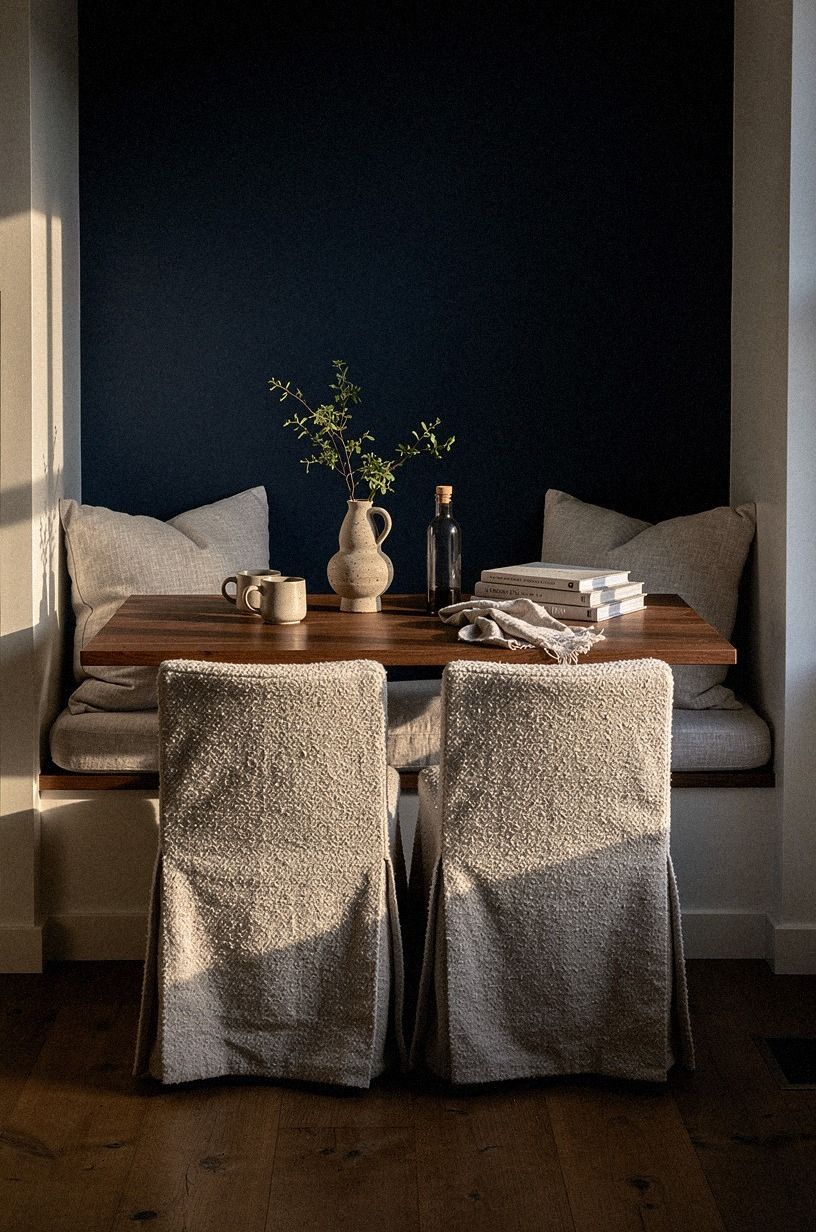
Two slipcovered chairs tucked under the lip is the move that makes a built-in nook actually feel finished.
5Faded Turkish wool, not machine-loomed polyester
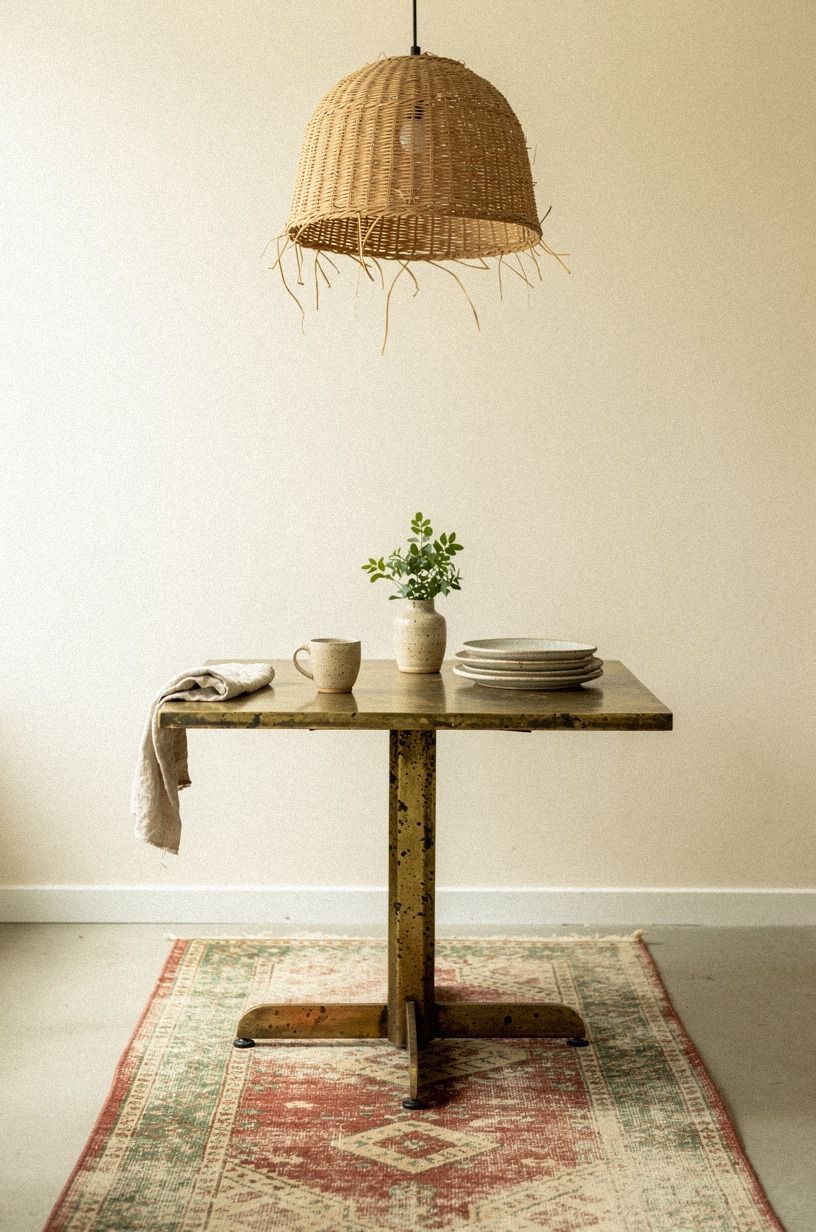
Dropping a faded Turkish runner under the table base is the cheapest way to fake a custom look. We use a 4-by-7 foot runner in emerald gold and undyed cream, faded on purpose, because a brand-new rug in a breakfast corner looks like a sales pitch.
The runner takes the chair-out, chair-back scuff that would shred any floor finish, and it makes the whole nook read as one piece. Hand-knotted Turkish wool is what you want, low pile so chair legs don't fight it.
Skip anything machine-loomed. The slight asymmetry of an antique-pattern rug is what makes a space-saving table look intentional instead of small.
If your nook floor is already dark, our dark moody breakfast nook ideas shows how to layer the runner without losing the corner to shadow.
6Hang a cane pendant directly overhead
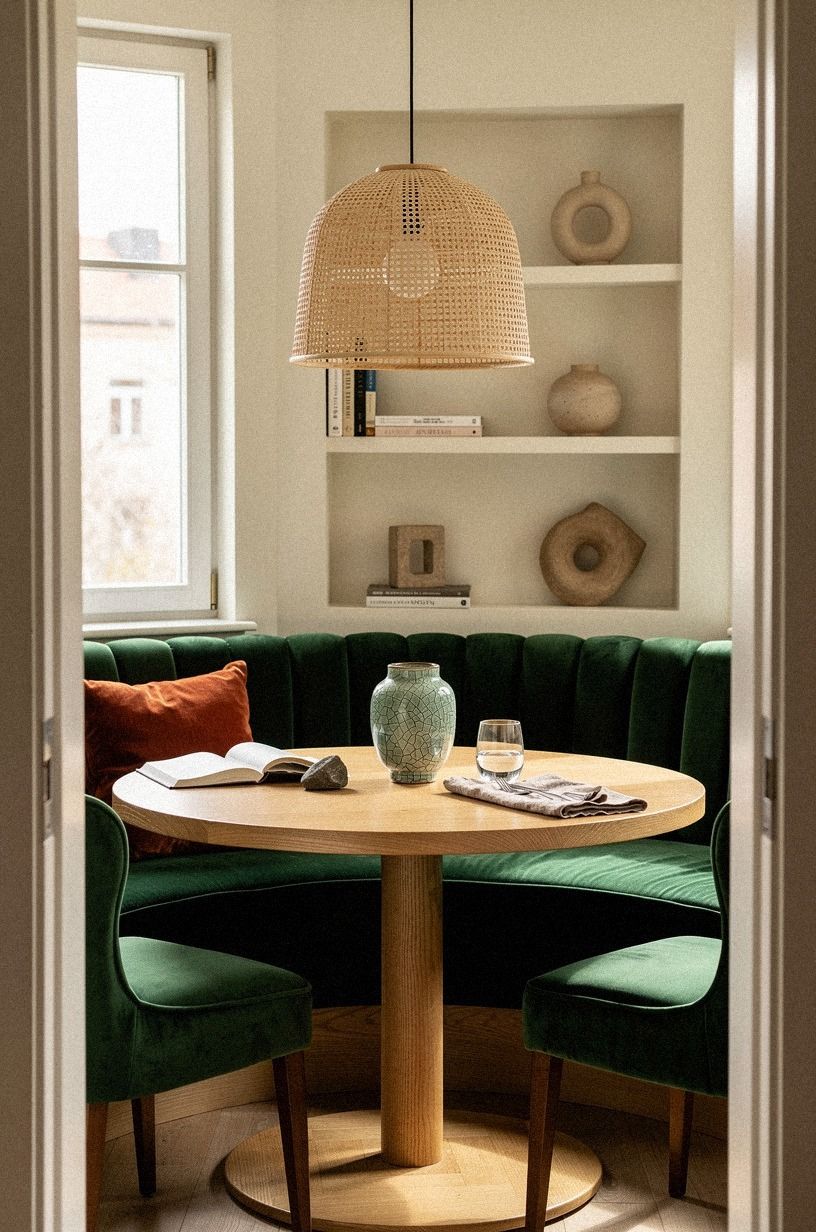
Hanging a cane pendant right over the center of the table is the single biggest upgrade you can make, and it costs less than people think. We went with a wabi-sabi woven rattan pendant in the 18-inch range, hung at 32 inches off the table top so the glow hits faces, not foreheads.
The cane weave scatters light sideways instead of blasting it down, which is the only kind of light that makes people stay at the table past 8 PM. Bench seat is deep-pile mohair velvet in a dusty moss color, the kind of bench you sink into and forget to leave.
If you're wiring a pendant into an existing junction box, this is a one-electrician visit, sometimes two. Worth every line item on the invoice! Honest take: a beautiful kitchen can carry an ugly pendant, but an ugly pendant can flatten a beautiful kitchen in under a minute.
If your house isn't pre-wired for one, our kitchen nook designs we love shows you five workarounds renters use to get the same glow without rewiring.
7Why does a single stoneware vase carry the whole corner?
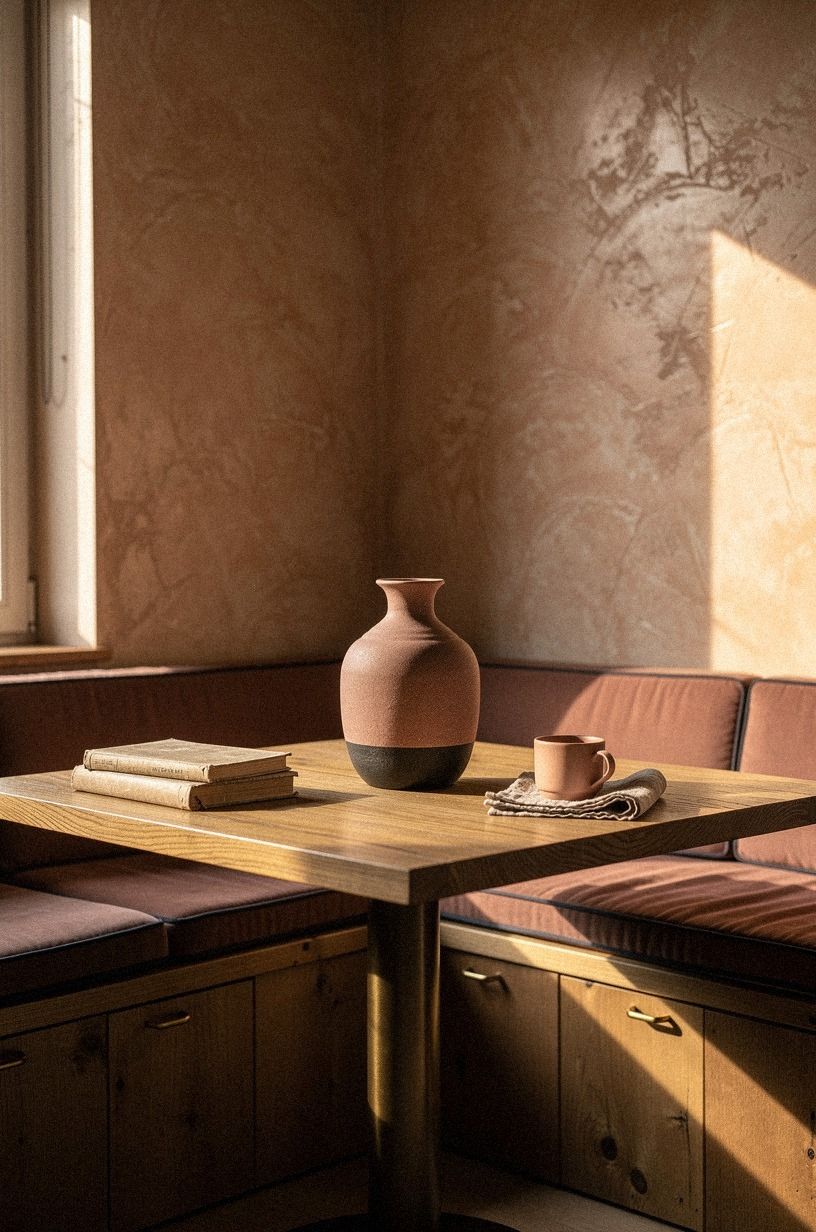
A stoneware vase at the dead center of the table is the move that anchors the eye. We picked a matte charcoal stoneware vase about ten inches tall, no flowers yet, just sitting there doing its job.
The vase matters more than what's in it: empty is fine, a single branch is better, three grocery-store stems is plenty. Dusty rose walls in the corner let the charcoal read deliberate instead of stark, and a brass collar at the vase base picks up the pendant across the room.
The rule is resisting the urge to fill the vase. A bowl of lemons or a stack of magazines can sit beside it instead.
The center is reserved for the vase, period. If your corner is tight on square footage and you can't fit a chair on every side, our corner breakfast nook ideas rounds up the eleven layouts we tried before landing on round.
8Pile rolled linen napkins in a shallow bowl
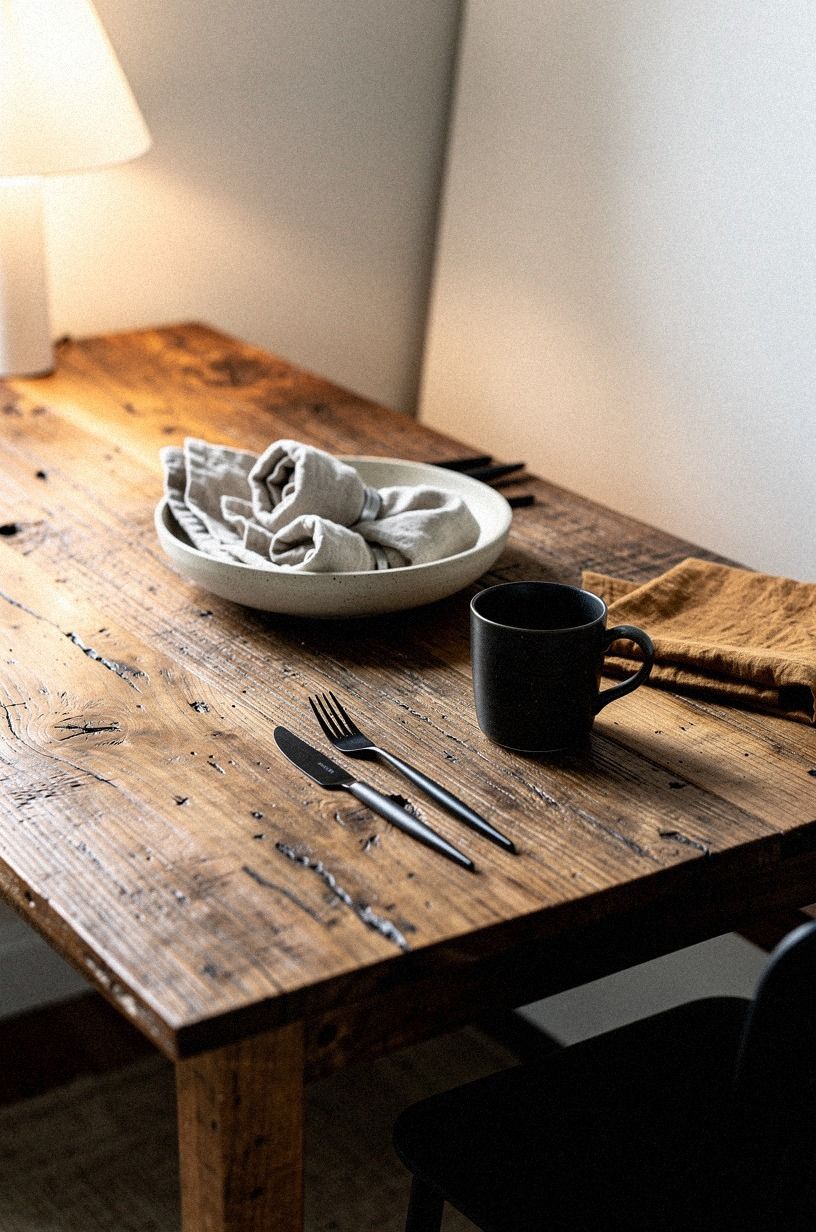
Rolled linen napkins in a shallow bowl is the styling move that makes the corner look considered instead of kitted out.
9Cluster beeswax tapers beside the vase
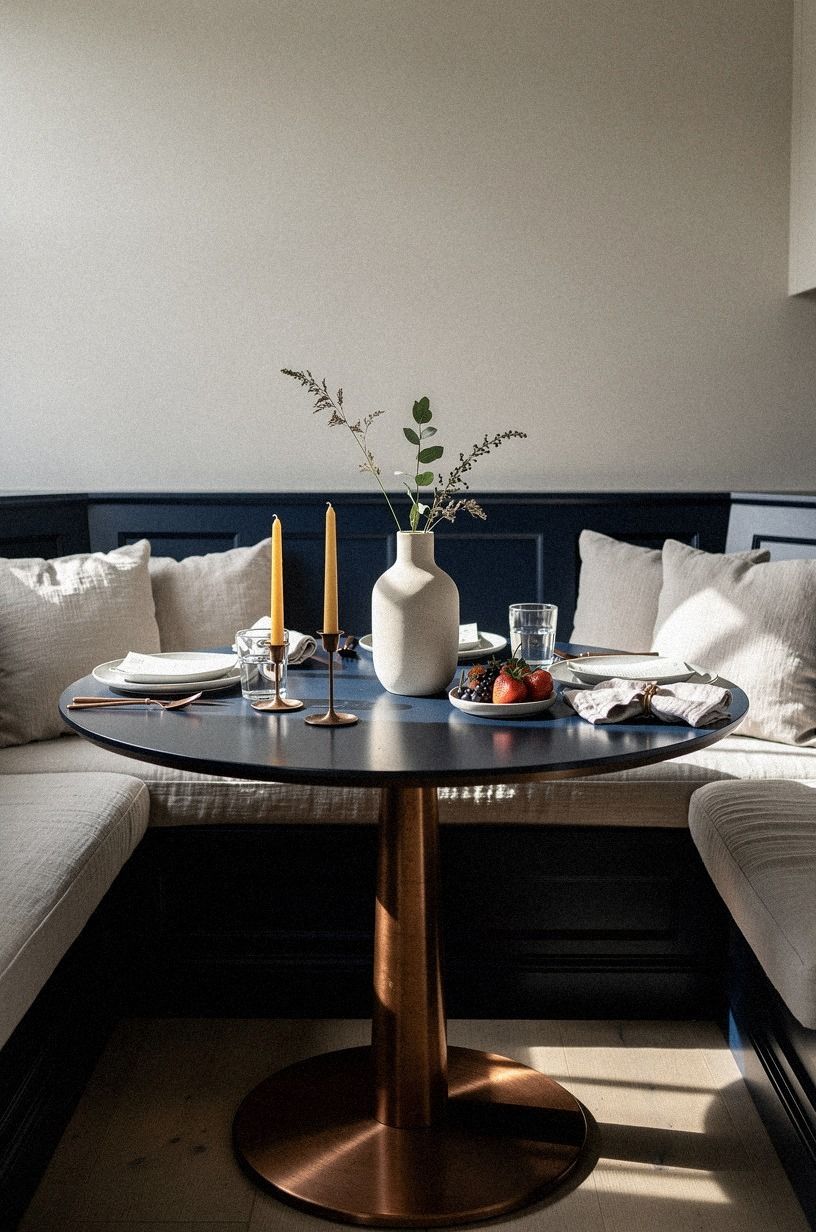
Mix three tapers, varied heights, in unlacquered brass candlesticks, and a single fat pillar in midnight blue when dinner runs late. The beeswax matters because paraffin smells like a birthday cake, beeswax smells like nothing.
Light two tapers for weeknight dinner, three when company stays over. We painted the nook walls Sherwin-Williams Evergreen Fog SW 9130 because the candle light turns the green into pure shadow at 9 PM, and the brass goes molten at the taper base.
Don't mix taper heights mechanically. Cluster one tall, two short, never three identical.
Visual rhythm beats visual symmetry every time. A pair of Schoolhouse Electric taper holders in the 8-inch range is the move for tall tapers, and West Elm's aged brass holders at 4 inches handle the short ones, pair them at the table edge so the cluster feels gathered instead of staged.
10Angle a slim arc lamp toward the wood grain
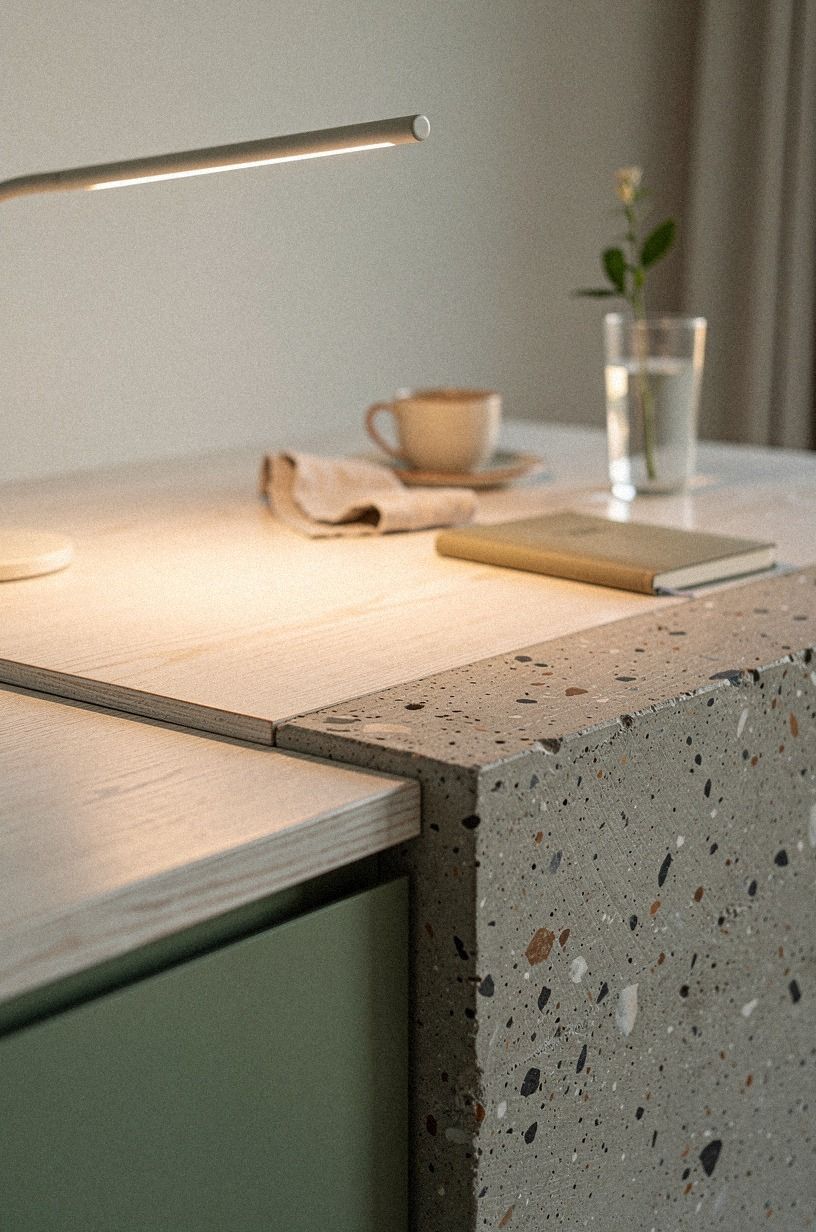
Angling a slim arc lamp toward the wood grain is the move you swear is overkill until you turn it on.
11Set a linen runner diagonally across the top
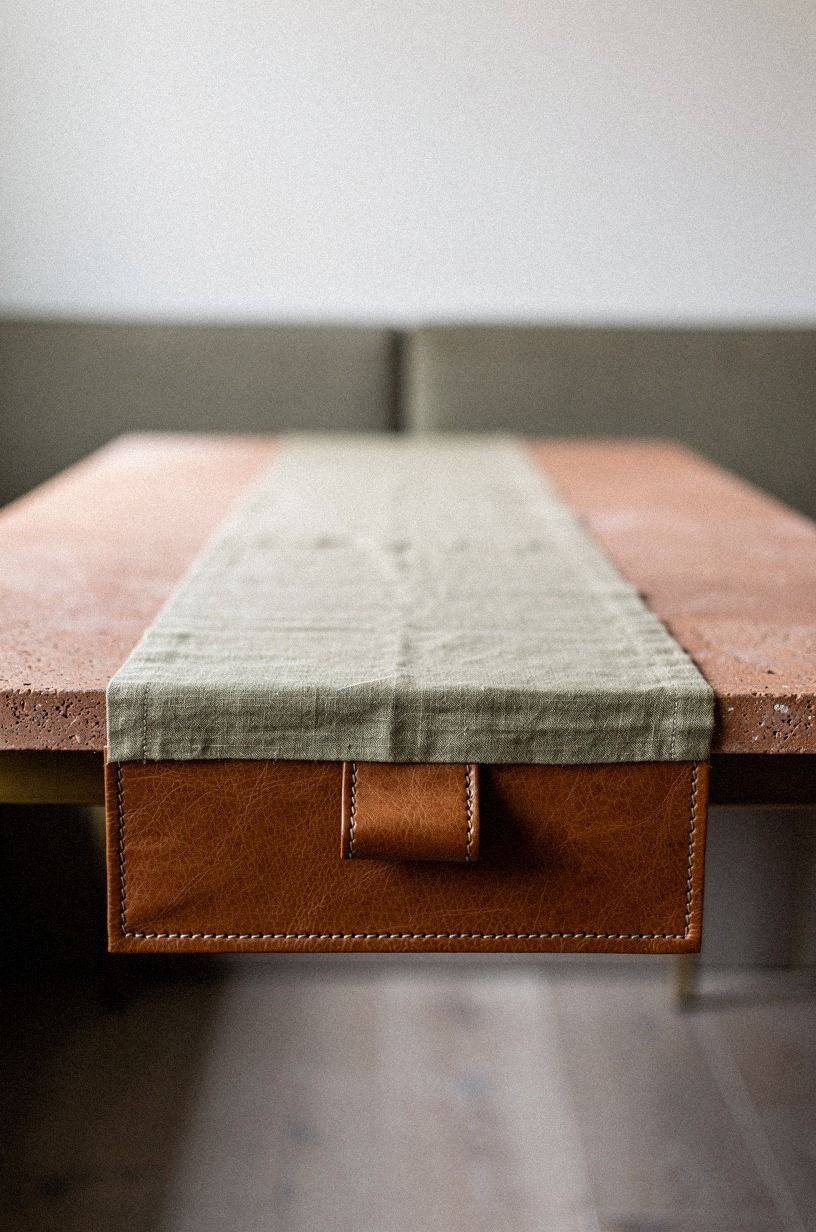
Linen runner set diagonally across the top is the styling move that breaks every rule and earns the break. We use a 14-by-72 inch piece of stonewashed french linen in terracotta, thrown at a 30-degree angle so it tucks under the vase at one end and falls off the corner at the other.
Diagonal lines pull the eye through the corner instead of just sitting on top of the table, and terracotta against walnut is the kind of pairing that reads as old-money even when the rest of the room isn't. The linen doesn't have to be hemmed raw. A frayed edge is the point.
Swap the runner seasonally: terracotta for fall, oat for winter, eucalyptus-tinted for spring. You'll never get bored of this corner.
Layering a single runner takes less than five minutes, and our kitchen table centerpiece basics walks through how to keep the diagonal from shifting once dishes start landing on it.
12Farrow & Ball Dead Salmon behind chipped enamelware on a mango tray
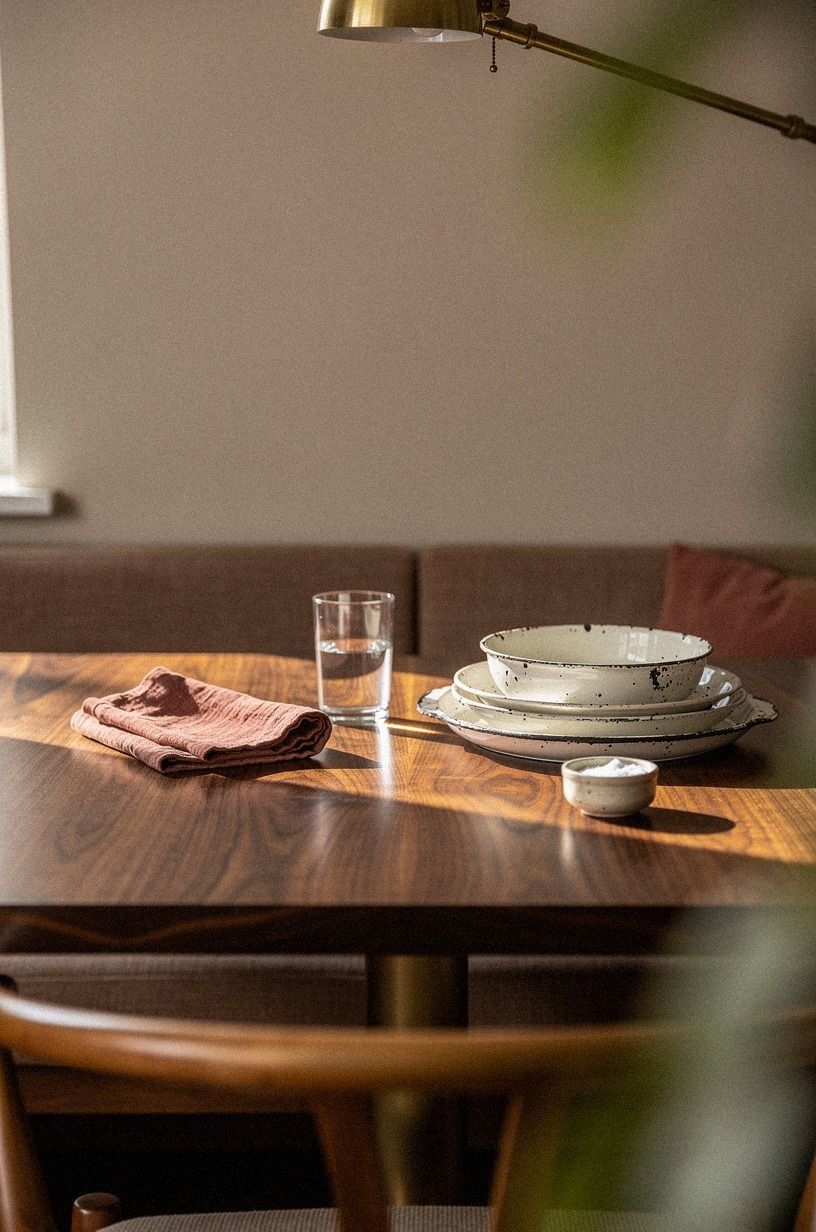
Chipped enamelware stacked on a low tray is the styling move that pulls a built-in together the way a single high-end object never can. We use a whitewashed mango wood tray at one corner of the table, piled with three chipped enamel mugs, a small creamer, and one espresso cup that survived a barn find.
The enamelware is plain white with blue trim, the kind of everyday stuff that gets prettier with patina. Clay-tinted walls behind (we landed on Farrow & Ball Dead Salmon) let the white read aged, not sterile.
The tray keeps the stack from drifting into clutter, and you can clear it in ten seconds when breakfast actually happens. Sometimes the styling pays rent by getting out of the way.
13Tuck a potted olive tree behind one chair
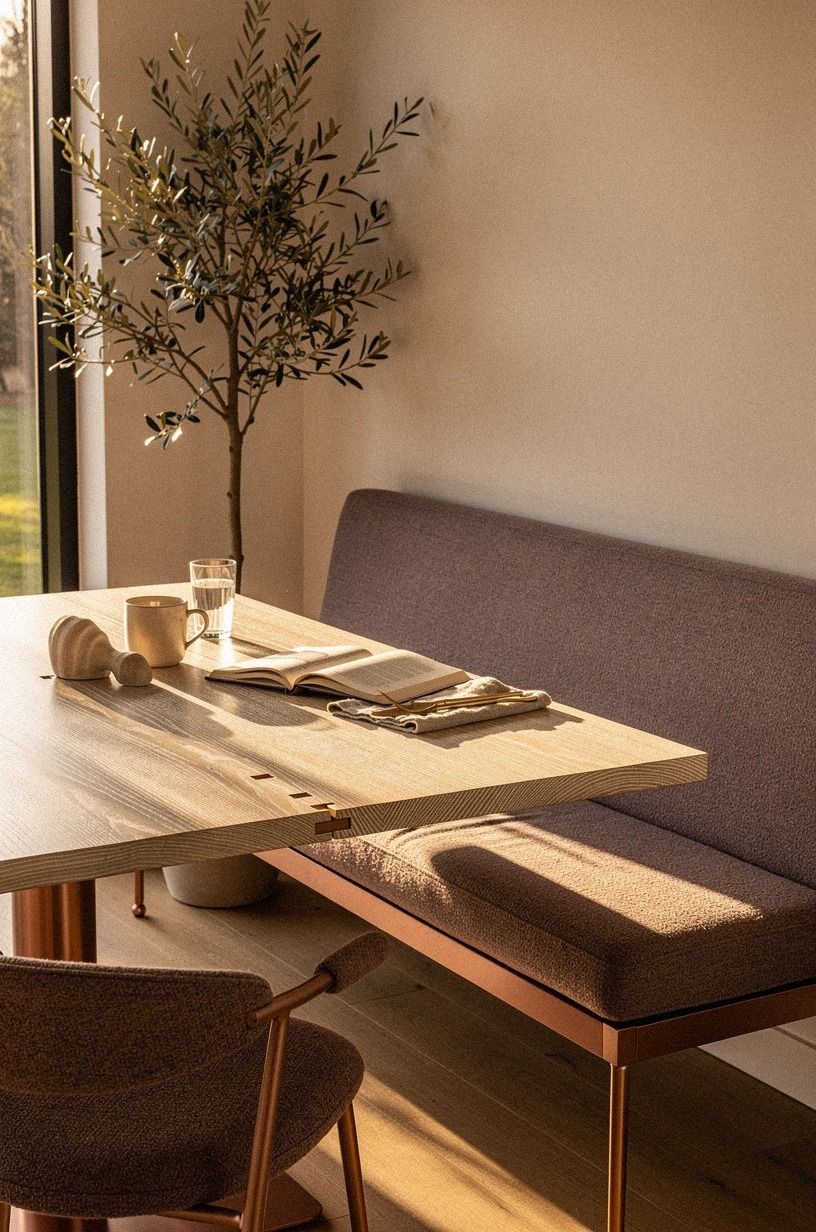
A potted olive tree tucked behind one chair turns the whole corner into something that resembles a real room.
14Swap the centerpiece for a bowl of clementines
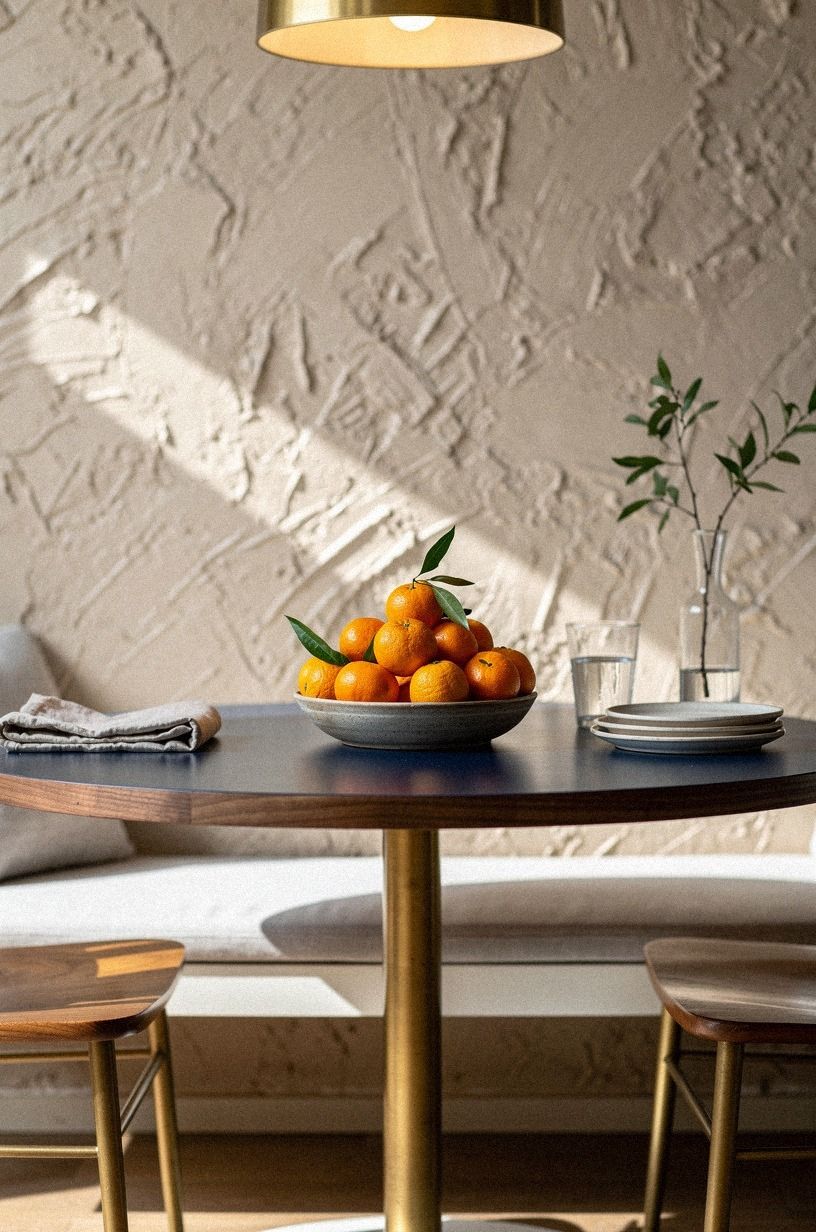
Swapping the centerpiece for a bowl of clementines is the move that saves every slow Sunday morning. A stoneware fruit bowl in cream, twelve clementines loose in it, set where the vase usually sits. The bowl doesn't have to be pretty on its own, it has to be warm when you grab one.
Navy walls behind the nook (we used Benjamin Moore Hale Navy HC-154) make the orange go neon without trying, and a walnut round table under it ties back to the floor. Eat three, leave three, swap the bowl out midweek.
Nobody ever compliments a vase. Everyone compliments a bowl of fruit that looks like it grew there. Total cost: four dollars a week and your fruit drawer finally gets emptied for once!
Article's Sven leather bowl at 12 inches across is the move if you want a tray you don't have to hide between servings, and our kitchen table centerpiece ideas roundup pairs the fruit bowl with eleven other seasonal swaps that won't crowd a 42-inch round.
15Pour morning coffee into handmade ceramic mugs
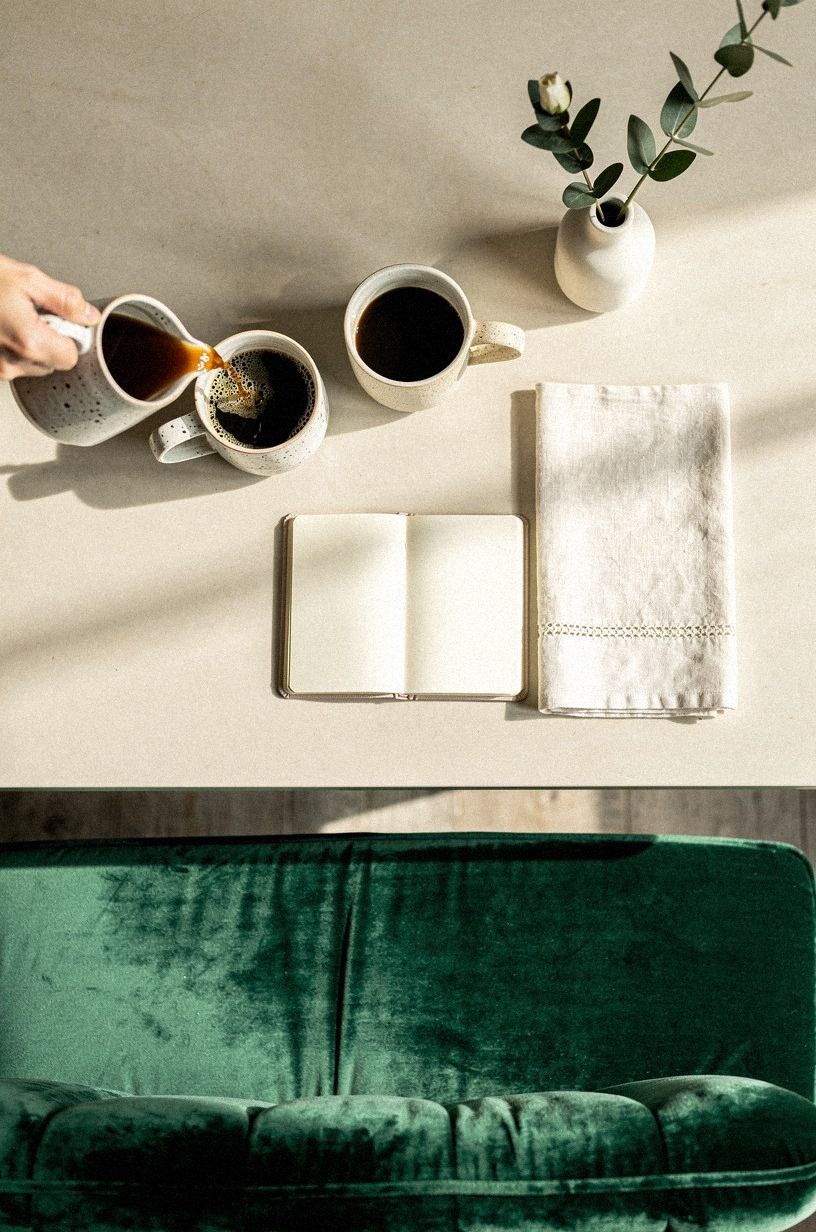
Pouring morning coffee into handmade ceramic mugs is the ritual that makes the corner actually function. Two stoneware mugs from a local potter, glaze in emerald and cream, sit ready on the table at 6:30 AM. The mugs matter because they hold heat longer than store-bought, they sit flat on a wood table without clattering, and the glaze never shows lipstick, pen marks, or coffee rings the way white porcelain does.
Pair them with a bodum french press in brass on a small walnut tray, and the corner becomes a coffee bar at 7 AM and a dinner table by 7 PM. This is the move that brought the nook from styled to lived-in.
The ritual beats the decor every time. If you want to take the morning ritual further, our boho breakfast nook roundup covers four color-forward ways to layer more character onto the table without crowding the mugs.
16Drape a quilted throw across the bench back
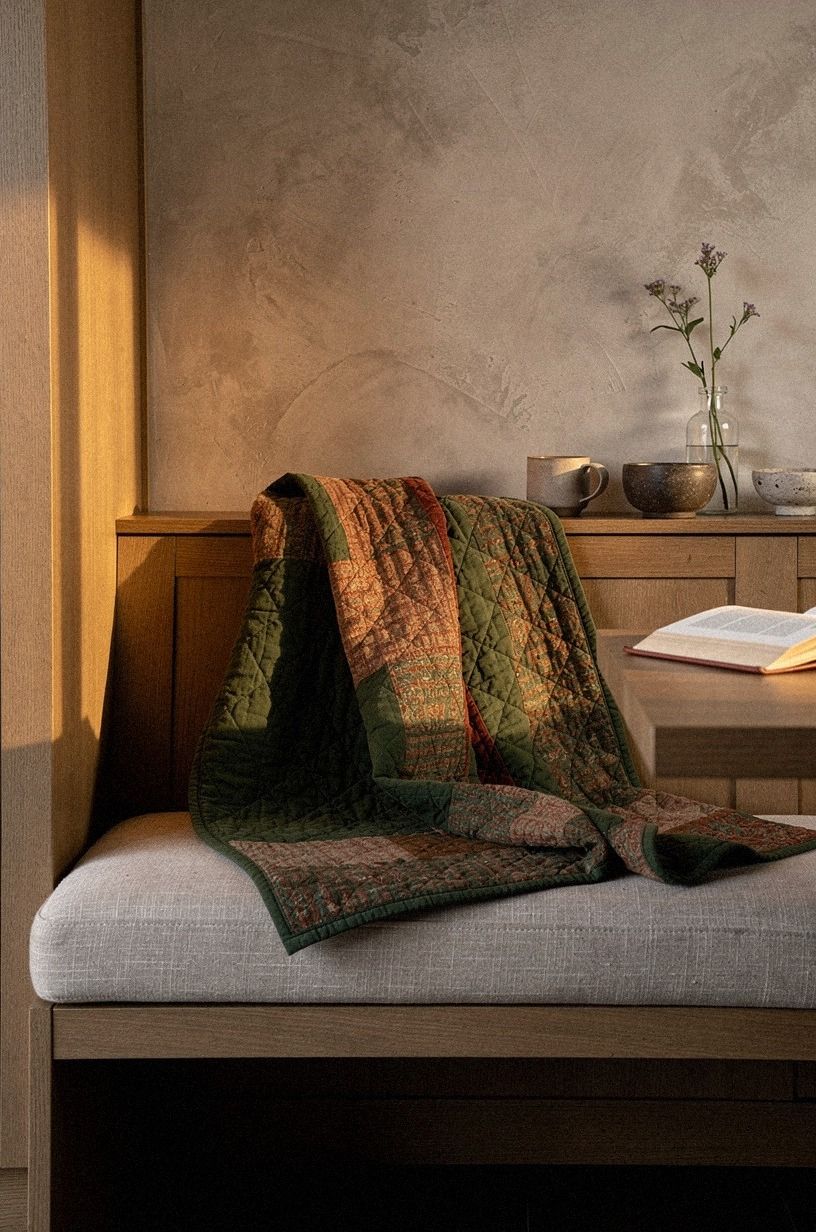
A quilted throw draped across the back of the bench is the move that makes the nook the warmest seat in the house by mid-October.
17Leave a single stem on the bread board
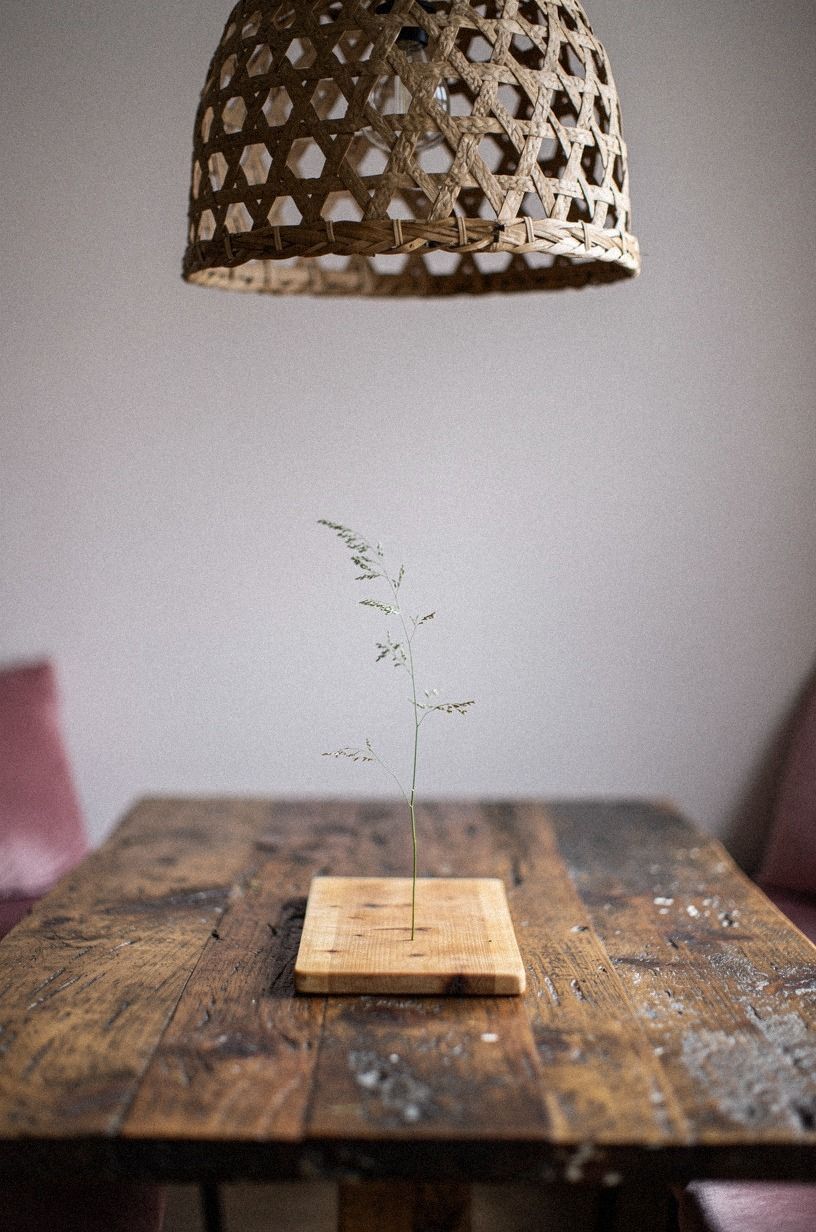
Leaving a single stem on the bread board is the styling that closes the whole corner out. We keep a 14-inch reclaimed teak bread board at the center of the table at all times, and on it we drop a single branch from the garden. Lavender in June, a fig cutting in August, an olive sprig in October. The board matters because it gives the eye a place to land when the table is empty, and the stem on it does ninety percent of the styling work.
Dusty rose walls (we finally landed on Farrow & Ball Pink Ground) read soft behind the teak, and the stem's shadow moves across the wall all day. This is the move that makes the corner feel like a still life you can sit down at.
And that's the whole point. We sized our reclaimed teak board at 14-by-10 inches, slightly larger than a dinner plate, so it doubles as a cheese board on weekends.
Pairs clean with Heath Ceramics linen-folded napkins if you want to upgrade the whole still life in one move.
How much it cost
Honest totals, line by line. The biggest line item is the table itself, and that one I can defend. The rest is paint and patience.
Our actual spend for the seventeen ideas came in around $1,150. The single round pedestal table was the biggest line at $480, the pendant came in at $190 (unlacquered brass upgrade is where the money went), the two slipcovered chairs ran $340 for the pair, the CB2 Defrost arc lamp at $129, the IKEA EKTORP chairs slipcovered at the upper end of that range, and the rest was under $200 across paint, the tray, the linens, the beeswax tapers, and a single olive tree.
I could hit this same look for $400 if I skipped the pedestal-table splurge and went flat-pack. I won't, but you could.
The part I almost got wrong
Here's the move nobody tells you about building a breakfast nook in a real house. The first version of this corner had a rectangular table.
It was the shape everybody defaults to, the shape sold at every big-box store, the shape that fit the tile pattern already on the floor. We lived with it for fourteen months and hated every breakfast.
The rectangle forced the chairs into a line, the line forced conversation across two people instead of around four, and the sharp corner poked a hip every time someone stood up. I wish I'd listened to my own instinct the day we moved in, which was: this corner wants a circle.
Going round wasn't only an aesthetic call. A round pedestal table has no head.
No head means no awkward "where does the parent sit" politics at family dinner. No head means your guest can show up late, slide a chair into the curve, and feel like they arrived instead of interrupted. I didn't appreciate that until I watched a friend quietly choose the corner chair and then stay past midnight talking.
The round shape gave the night its rhythm.
Nobody warned me about the pendant either. We went back and forth for weeks on cane versus drum versus nothing.
The room had a ceiling fan overhead we hated, so we swapped it out, and the moment the new junction box went in the entire corner learned to glow. A well-hung pendant does the work three lamps never do. It pulls faces up and gives the eye a target when you walk in the door.
We saved money by skipping the "smart dimmer" upsell and going with a $40 slide dimmer we installed ourselves.
Last thing. The vase is doing more work than the table, and I'll argue this with anyone.
The pedestal is the money piece, the vase is the editing. Every morning I pass the corner and the vase stops me.
A tabletop without an anchor reads like an empty stage. A vase, even an ugly one, gives the room a reason to be still. I'd buy the matte charcoal stoneware vase before I bought the cerused white oak pedestal, and that surprises me as much as it surprises you.
The vase is cheap and the table is expensive, but the vase is the part you'll never get bored of.
A Few Things Worth Answering
What is the best round built-in breakfast nook table for a small living room?
A round pedestal table in cerused white oak between 36 and 42 inches across. Article's Sven round table lands in the lower end and wears like iron, and you can compare the geometry trade-offs in our u-shaped breakfast nook guide.
West Elm's Mid-Century pedestal runs higher and looks more designed. Pick a pedestal base, never four legs, because the column gives back the knee space your small corner needs.
Where can I buy round built-in breakfast nook pieces on a budget?
IKEA carries the cleanest round pedestal in the under-$500 range, look at DOCKSTA or the older INGO series on the as-is floor. Target's Threshold line with Studio McGee drops a new nook-pedestal every fall for under $300.
Facebook Marketplace and local thrift stores turn up solid-wood rounds in the $80-150 range if you're willing to refinish the top yourself. Most "built-in" looking tables started as plain rounds that somebody sanded and stained. Need inspiration for what the finished corner looks like?
Our kitchens with a built-in breakfast nook we love gallery walks you through five reader submissions.
How much does a round built-in breakfast nook makeover cost?
About $400 to $1,500 for the styling-only route, closer to $2,500 to $8,000 if you replace the bench cushion, paint the corner wall, and add a hardwired pendant. Free wins come from reorganizing what you already own, your slipcover, two pillows, a runner you flip seasonally. If you'd like a closer look at piece-level pricing, the table in the budget section above shows you our exact line items.
Can I create a round built-in breakfast nook on a budget?
Yes, and the entry point is the IKEA DOCKSTA at $179, four GURLI throw pillows at $15 each, and one can of Benjamin Moore White Dove OC-17 for the bench base. That alone changes your corner.
Add a used pendant from Facebook Marketplace for $40 and you've got the bones for under $300. Working with tighter cushion math? Our custom seating guide covers the half-yard of foam that can save your back.
Is a round built-in breakfast nook worth it in a small space?
Worth it. A round table reads smaller than its footprint and gives back knee space a rectangle can't.
The corner can't be deeper than 5 feet for the nook to feel right, anything wider loses the "tucked-in" feeling. Paint the wall behind the nook in a deep tone (Farrow & Ball Inchyra Blue or Sherwin-Williams Evergreen Fog) so the small footprint reads intentional instead of cramped.
If your corner geometry is unusual, our awkward-space nook gallery covers three layouts that turn dead corners into the only seat anybody fights for.
Is a round built-in breakfast nook a good idea for a rental?
Yes if the nook is freestanding. Skip anything that screws into the wall: use a removable command-strip picture hanger for the pendant swap, a tension-rod curtain between the nook and the rest of the room, and a peel-and-stick removable wallpaper in a Farrow & Ball trompe-l'oeil behind the table for the backdrop.
Landlord-friendly, full effect. Renters can also borrow heavily from our round vs rectangular guide to pick a pedestal diameter you can carry back when you move.
Where I'd Start First
If I had to pick one, I'd start with the round pedestal table. You can layer a vase, a pendant, and a throw later, but you can't fake the geometry once the rectangle is in. The round goes first; our styling roundup covers every other move.