
 by
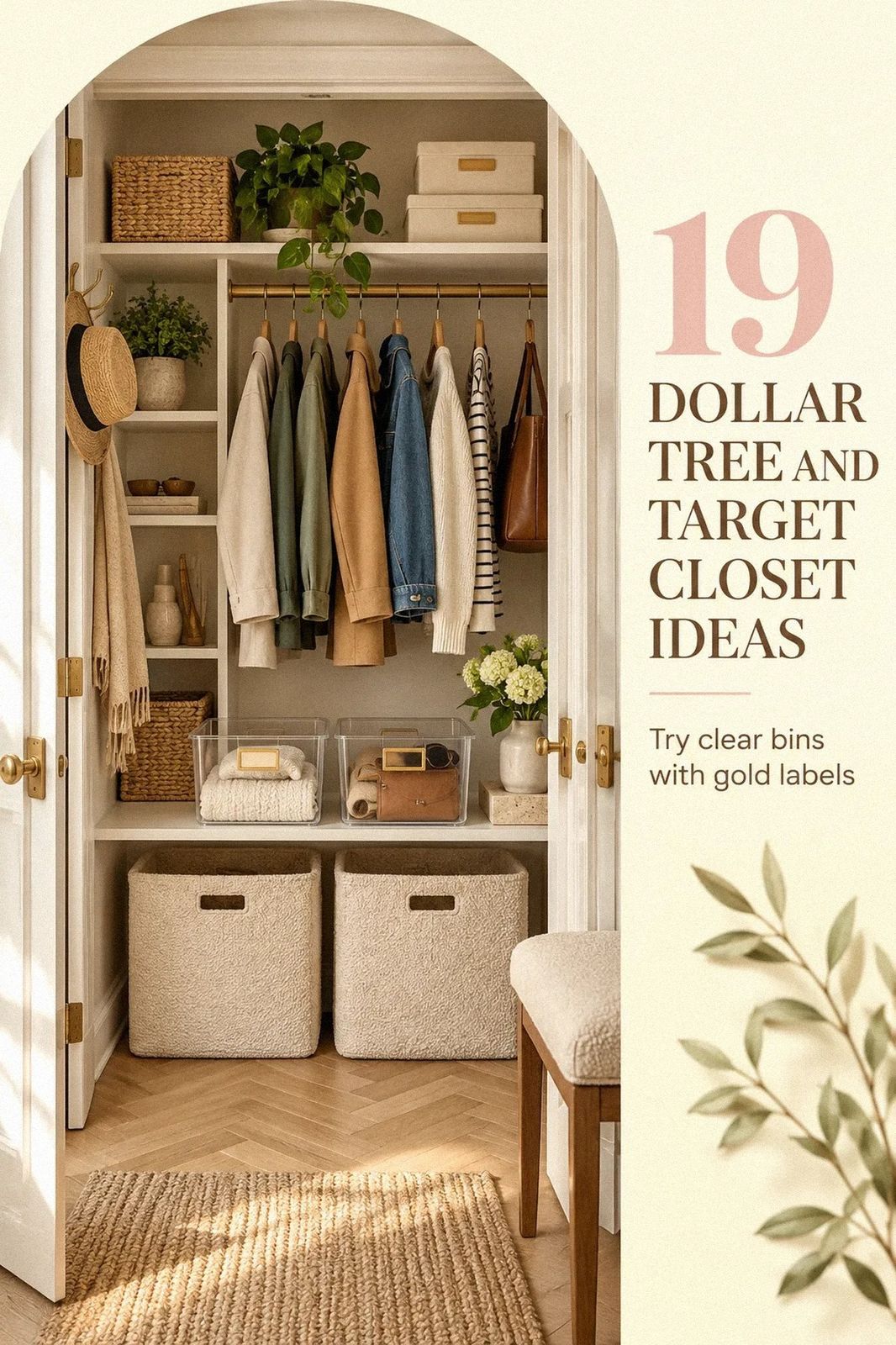
by The best Dollar Tree and Target closet tips under $10 can make a walk-in feel calmer without a renovation. The biggest wins are usually bins, light, and better spacing. I learned that after buying pretty boxes that swallowed useful floor space. Your closet doesn't need more stuff. It needs a smarter landing place.
- Build the Two-Bin Landing Zone
- Layer the Three-Height Light Stack
- Swap Plastic for the Soft-Edge Rule
- What Should You Hang at Eye Level?
- Open Shelves over a Bulky Dresser
- Frame the Mirror with a Narrow Tray
- Paint One Back Wall in a Soft Contrast
- Mix the Two-Wood Rule
- Use a Door Pocket for the Small Stuff
- Price the Closet Before You Paint It
- Hang a Target Rod Under the Shelf
- Create the Three-Height Shoe Story
- Fold Sweaters with the Shelf-Width Test
- Paint the Hangers, Not the Whole Room
- Anchor the Center with a Small Stool
- Swap a Basket for a Display Box
- Hang a Rental-Friendly Curtain
- Mix the Everyday and the Seasonal
- Finish with the One-In, One-Out Shelf
1Build the Two-Bin Landing Zone
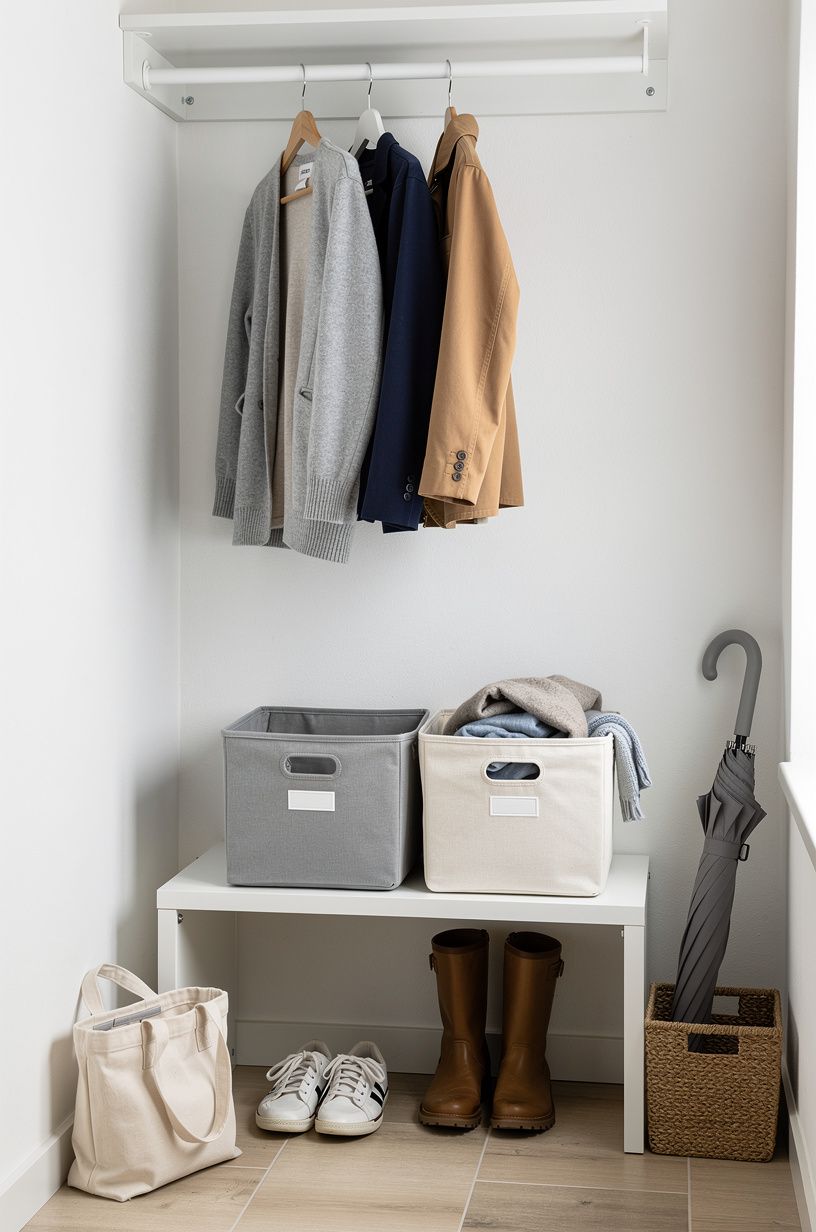
Your closet needs one place for laundry and one place for items you’ll wear again. That simple split keeps your chair, floor, and bench from becoming a soft pile by Wednesday. I like a shallow organic bouclé storage basket near the entrance because you can see the rim without bending down.
Put your laundry bin near the hamper, then give your repeat-wear pieces a smaller container on the other side. You’ll move faster in the morning, and your closet will feel airy instead of crowded.
But don’t choose two deep bins if your walkway is narrow. You’ll lose the floor you’re trying to protect.
A Dollar Tree plastic basket works for scarves, belts, or folded workout clothes, while a Target basket can handle heavier sweaters. Your eye will read the matching shapes as intentional, even when the materials aren’t identical. Add a cotton liner if the plastic feels too sharp against your warm, inviting palette.
A bouclé basket with a clean rim can look surprisingly polished beside a plain hamper. That small change can feel dramatic!
2Layer the Three-Height Light Stack
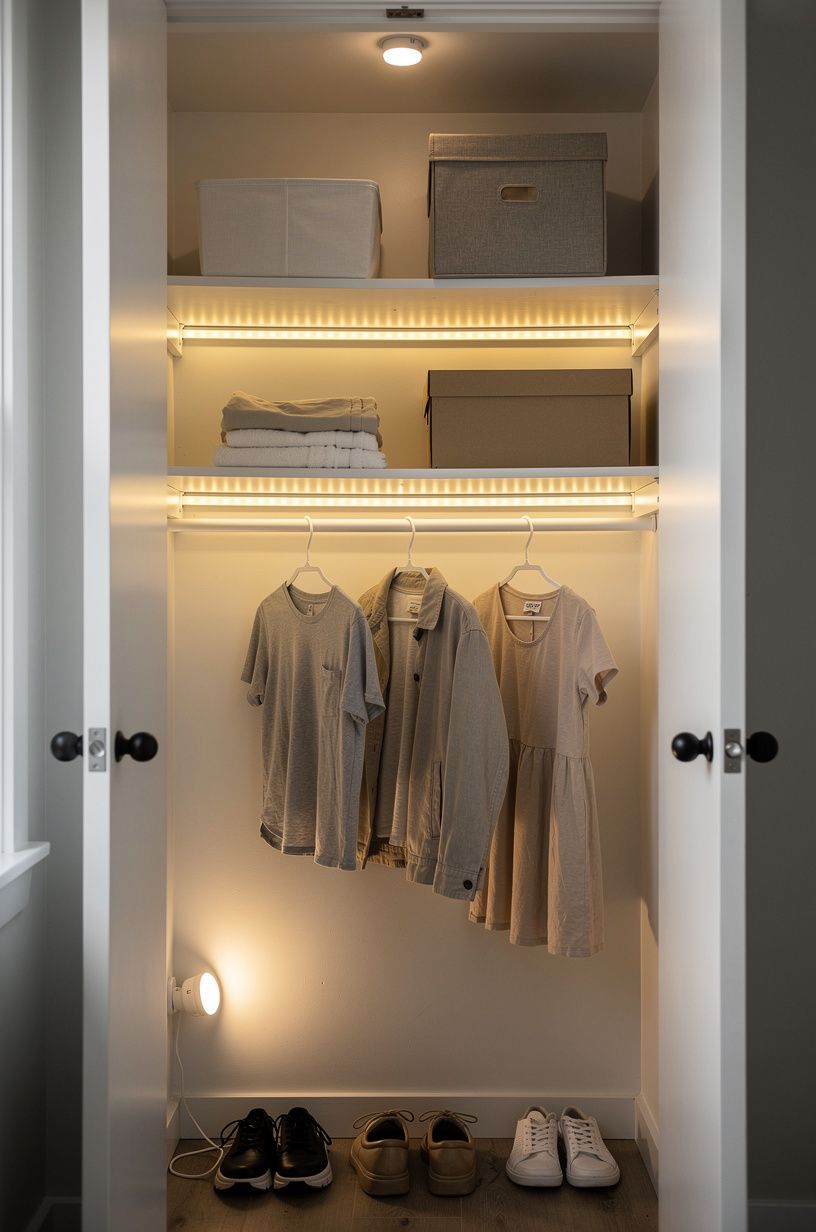
Closet lighting changes everything, especially when your clothes are packed into dark corners. Start with the ceiling fixture, add a battery puck under the shelf, and place a small lamp with a Nero Marquina marble base outside the closet if your layout allows it. You’ll get a gentle glow instead of one harsh pool overhead.
A rechargeable LED puck under a shelf makes folded denim easier to sort, while a Target stick light can brighten a hanging rod. I’d skip cool blue bulbs because they make terracotta, stone, and olive look tired. Warm light is the better call for a calming closet.
If you’re renting, your lighting should move with you. Use removable strips, keep cords tucked behind a linen garment bag, and test the light at night before committing. And if you want more placement ideas, your under-cabinet lighting guide has the same layering logic for small spaces.
A warm-white bulb will make the closet feel richer and more welcoming. You’ll notice texture, color, and empty space much more clearly.
3Swap Plastic for the Soft-Edge Rule
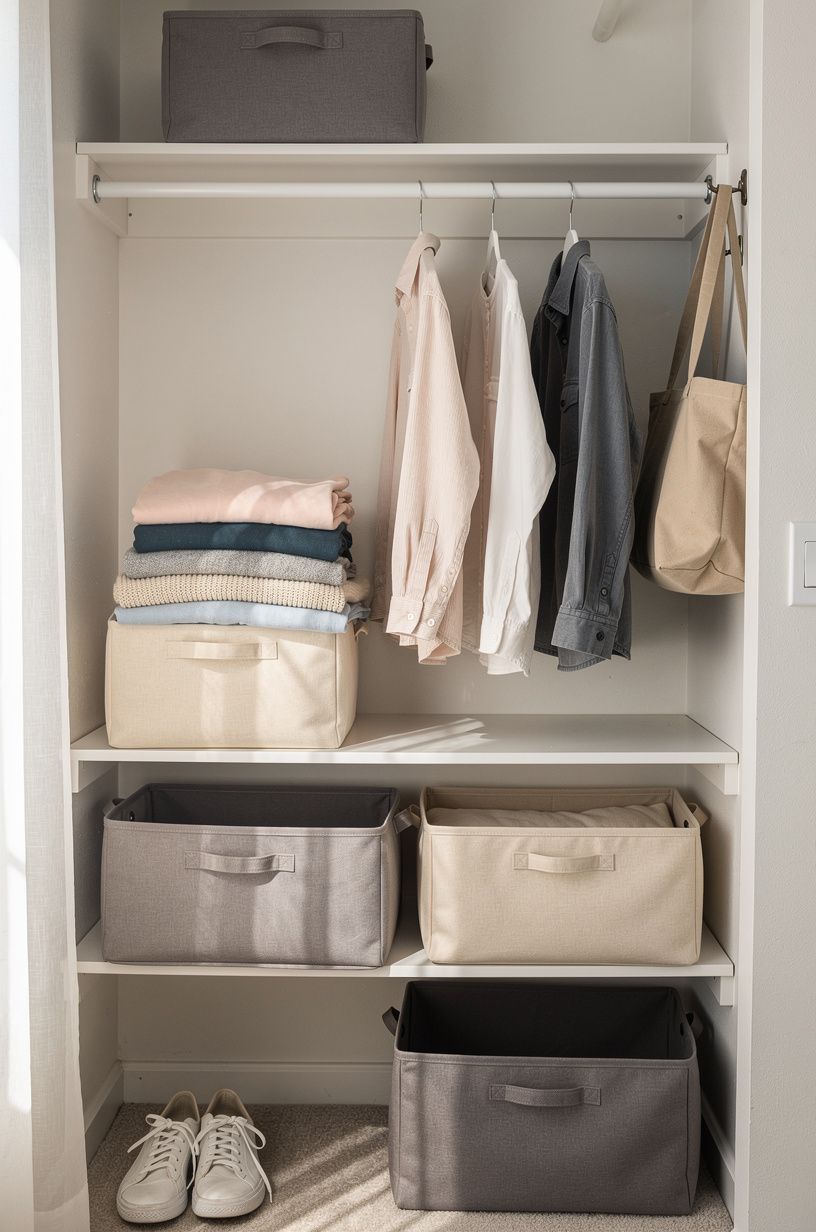
Hard plastic bins are practical, but too many glossy edges can make a walk-in feel like a supply closet. A deep-pile mohair velvet bin brings a softer finish without giving up useful storage.
4What Should You Hang at Eye Level?
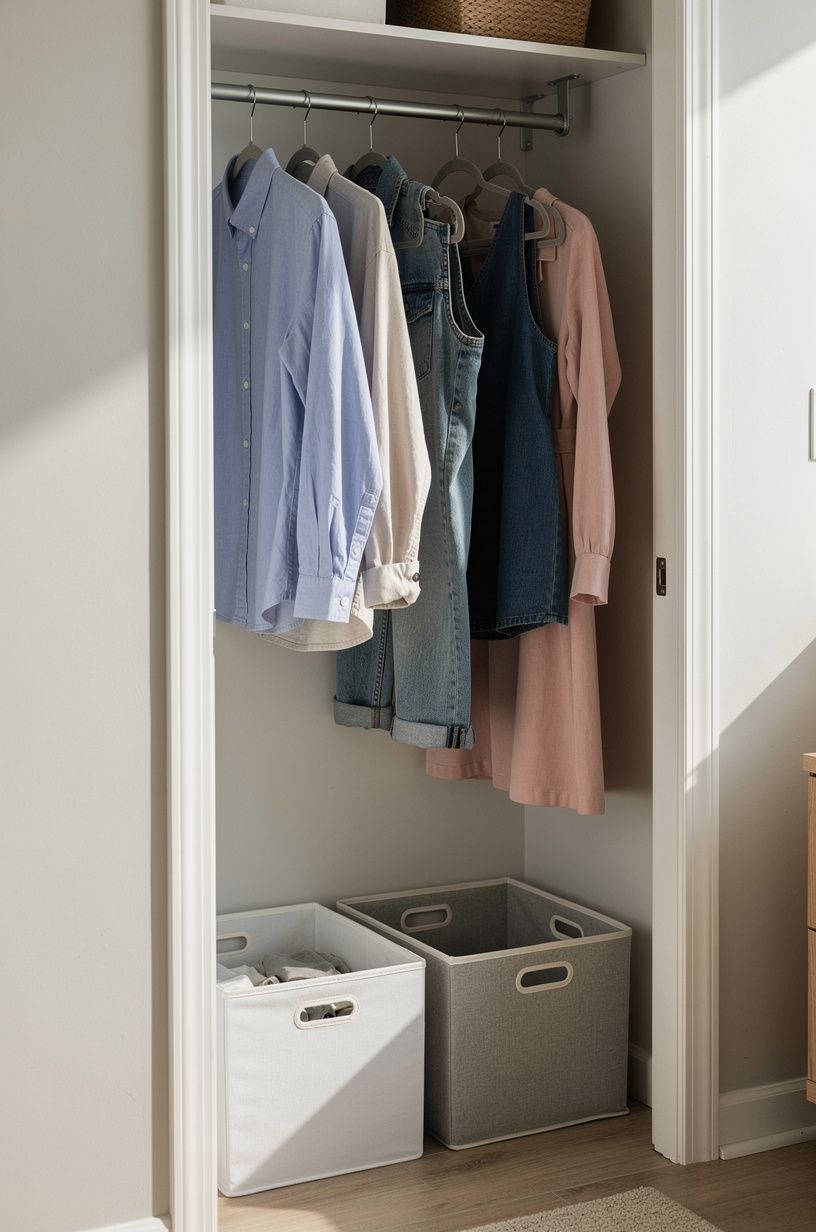
Hang the clothes you reach for most between your shoulder and waist, not the pieces you wear once a year. Your everyday shirts, jackets, and trousers deserve the easiest zone because that’s where your hand naturally lands. It sounds obvious, but it changes how quickly you can get dressed.
For a standard double-hang layout, the rods sit around 42 in and 84 in. Use the lower rod for shirts and skirts, then keep dresses or long coats above.
I’d skip putting your favorite pieces in the highest section because you’ll stop wearing them. Convenience beats theory here.
A slim Target hanger keeps slippery fabric from sliding, and the narrow shape gives you breathing room between garments. If you’re short on rod space, group colors lightly instead of arranging every shade perfectly. Your closet should help you leave the house, not give you another task.
Try matching slim hangers only on the most visible rod. That controlled repetition makes the closet feel crisp without turning the entire room into a showroom.
5Open Shelves over a Bulky Dresser
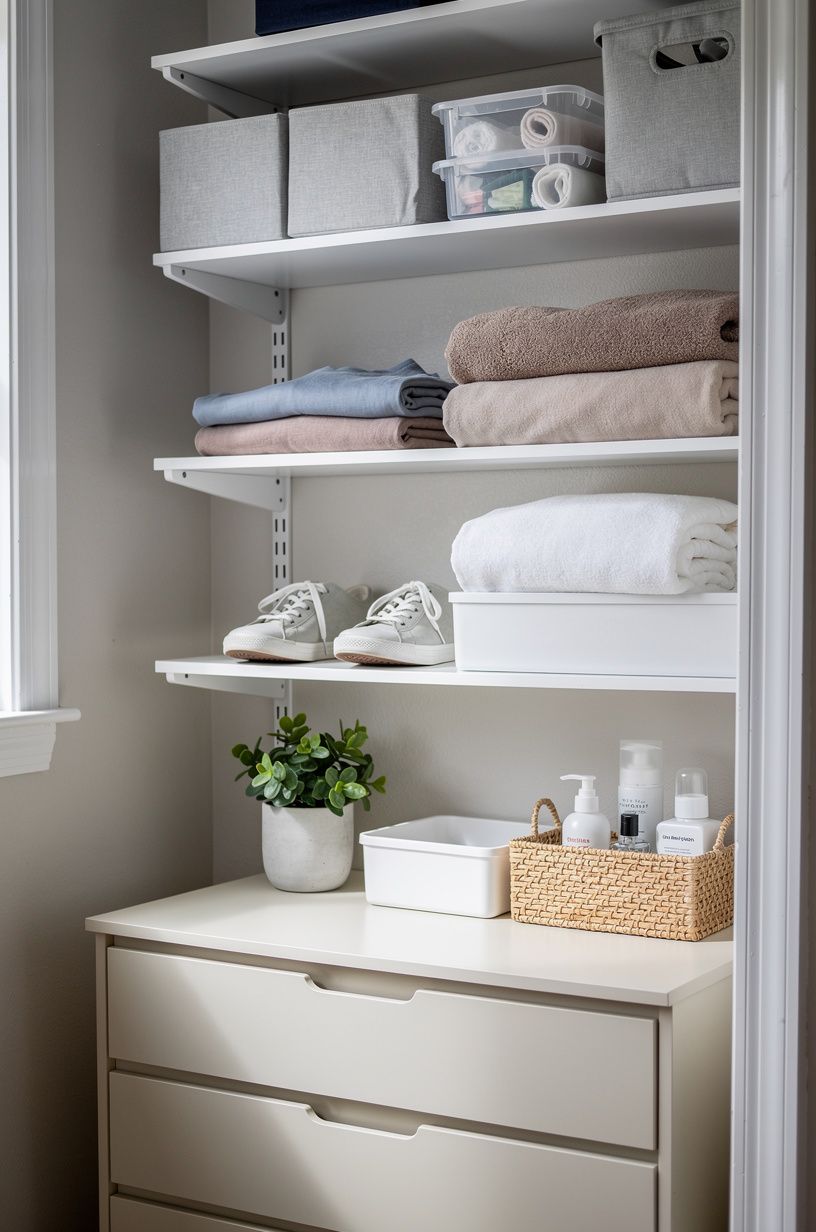
An open shelf often works better than a dresser in a small walk-in because it preserves the floor line. You’ll also see what you own before buying another duplicate sweater or pair of jeans.
Use a shallow reclaimed weathered teak shelf for folded basics and a small lidded box for items you don’t reach for daily. If you need a drawer-like container, choose a fabric bin that slides easily and doesn’t scrape the shelf.
Open storage feels especially fresh when the contents are edited. Keep the prettiest or most-used pieces in view, then move backups higher or farther back. This simple adjustment can make a cramped layout feel incredibly generous.
For another compact-storage approach, compare these under-bed storage ideas. The same principle applies: visible daily items, contained seasonal pieces, and an open path.
6Frame the Mirror with a Narrow Tray
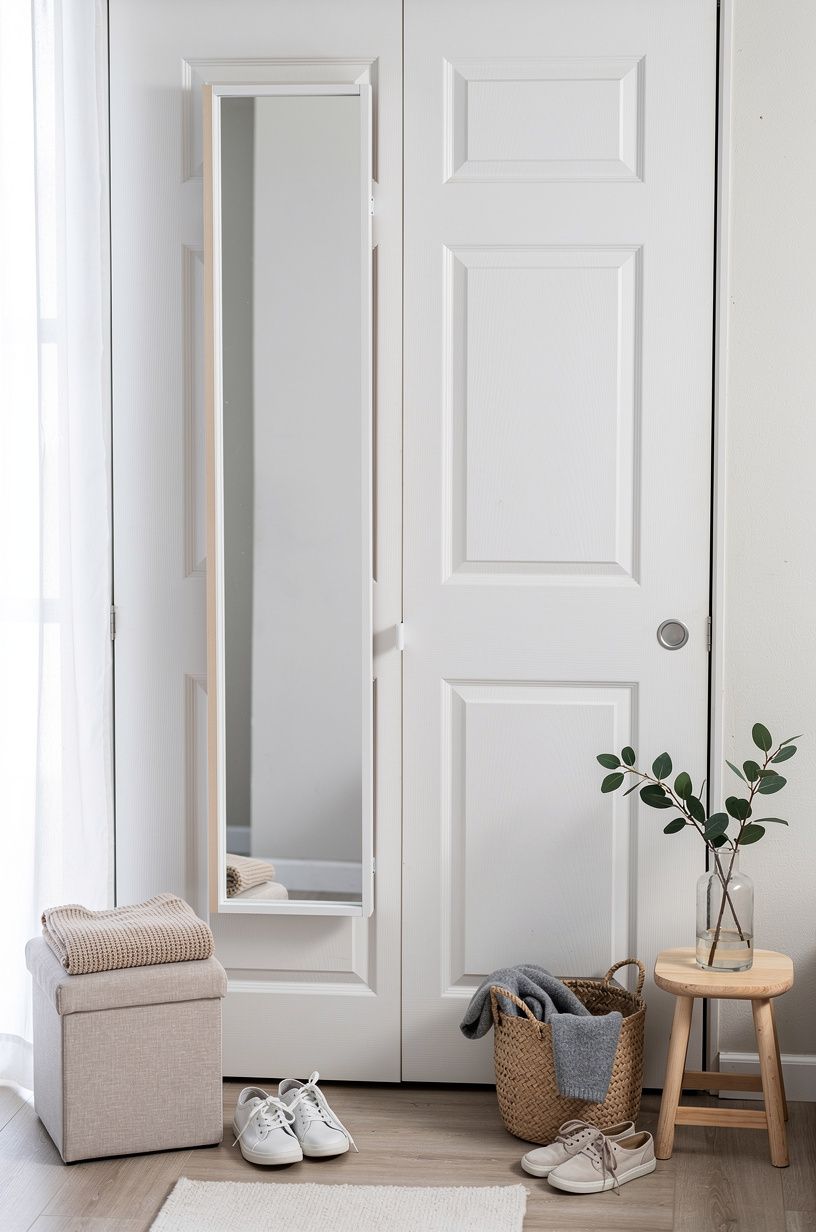
A full-length mirror needs a landing spot for the little things you remove before leaving. Add a narrow Calacatta marble tray with gold veining beside it for earrings, hair clips, sunglasses, and the watch you always misplace. Your morning routine will feel less frantic because each item has a visible home.
A cream marble tray with gold veining looks graceful against cream walls, while a Target tray with a pale finish feels warmer with soft paint. I’d avoid a deep bowl because small jewelry vanishes at the bottom. A flat shape keeps your eye on what’s there and makes the surface easier to reset.
Mount the mirror where your clothing choices are visible, not behind the closet door. You’ll catch proportions before you walk out, and your room will feel more polished. If your rental doesn’t allow anchors, lean a slim gold-framed mirror against the wall and secure the top with removable strips.
Add a felt jewelry pad inside the tray if metal pieces tend to scratch. It’s a tiny, elegant detail that keeps the landing zone looking composed.
7Paint One Back Wall in a Soft Contrast
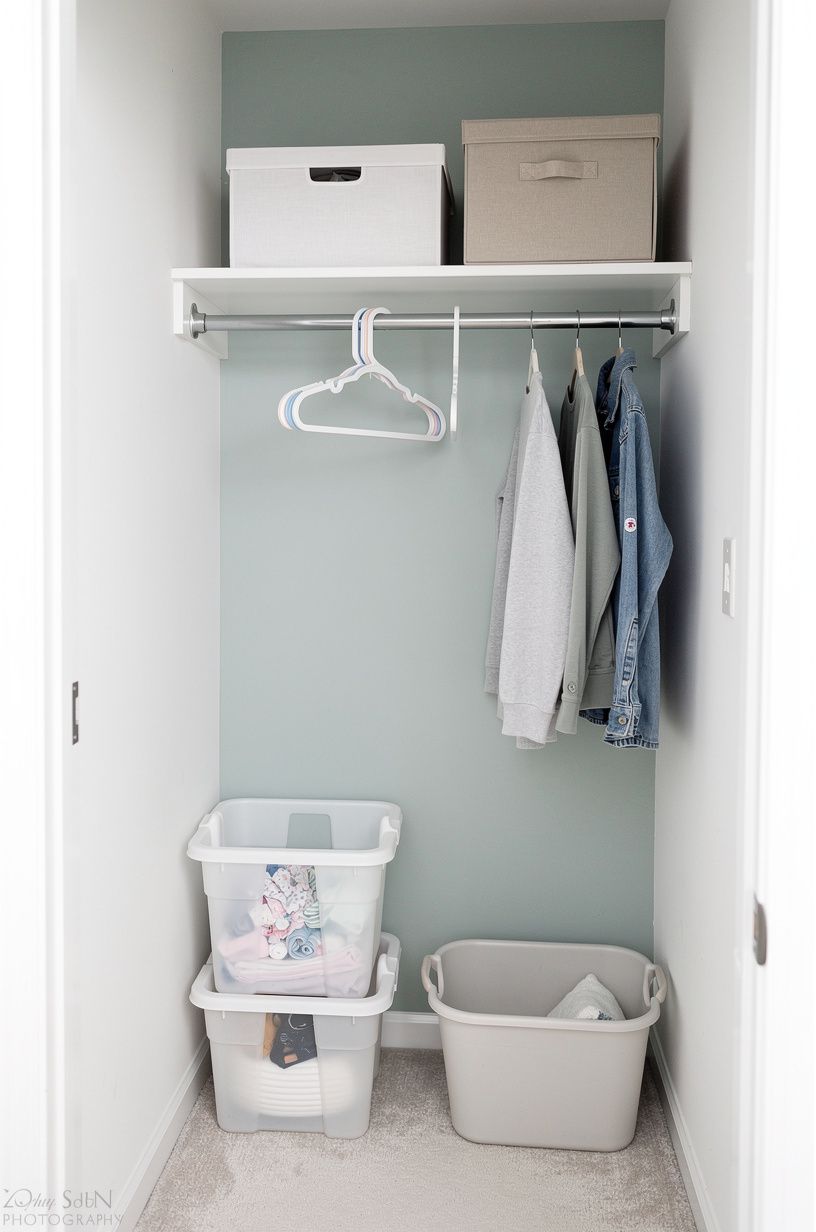
You don’t need to paint every surface to give your closet personality. A forest-green back wall can add depth behind warm wood shelving without making the room feel closed in.
8Mix the Two-Wood Rule
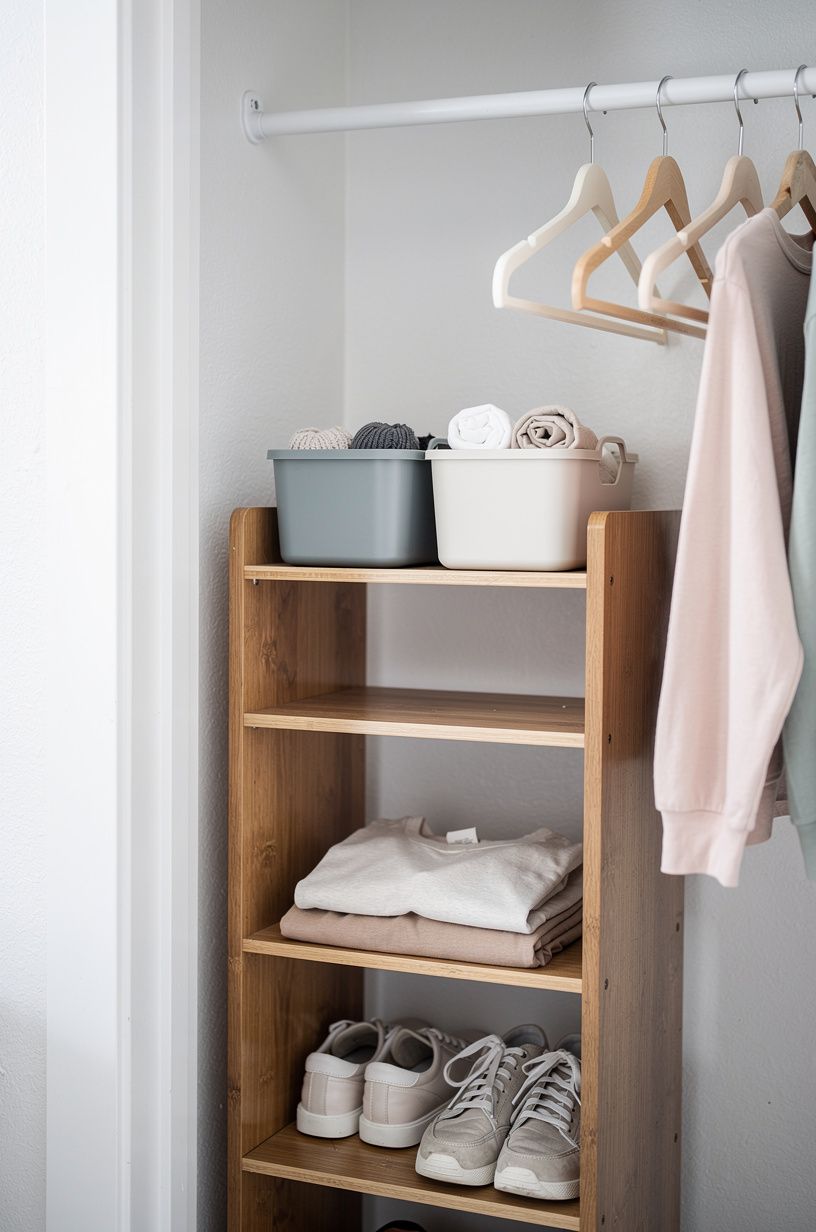
Your closet can handle two wood tones, but more than that often looks accidental. Choose one light wood for shelves and one deeper tone for a stool, tray, or frame. Your eye gets contrast without having to process a collection of unrelated finishes.
A backlit translucent onyx shelf paired with a walnut-toned stool feels earthy and grown-up. I’d skip matching every wood accessory because the room can start to resemble a showroom. A little variation makes your closet feel lived-in, and you won’t panic when one piece gets replaced.
Keep the lighter wood higher and the darker piece near the floor. You’ll create visual balance, especially when your garments already bring many colors. If your shelves are plain laminate, add a wood-look adhesive liner to one section rather than covering everything.
Your budget stays small, but the texture changes the room.
A beechwood hanger or walnut tray can bridge the two finishes without adding another competing tone. The effect is subtle, warm, and unusually polished for such a small investment.
9Use a Door Pocket for the Small Stuff
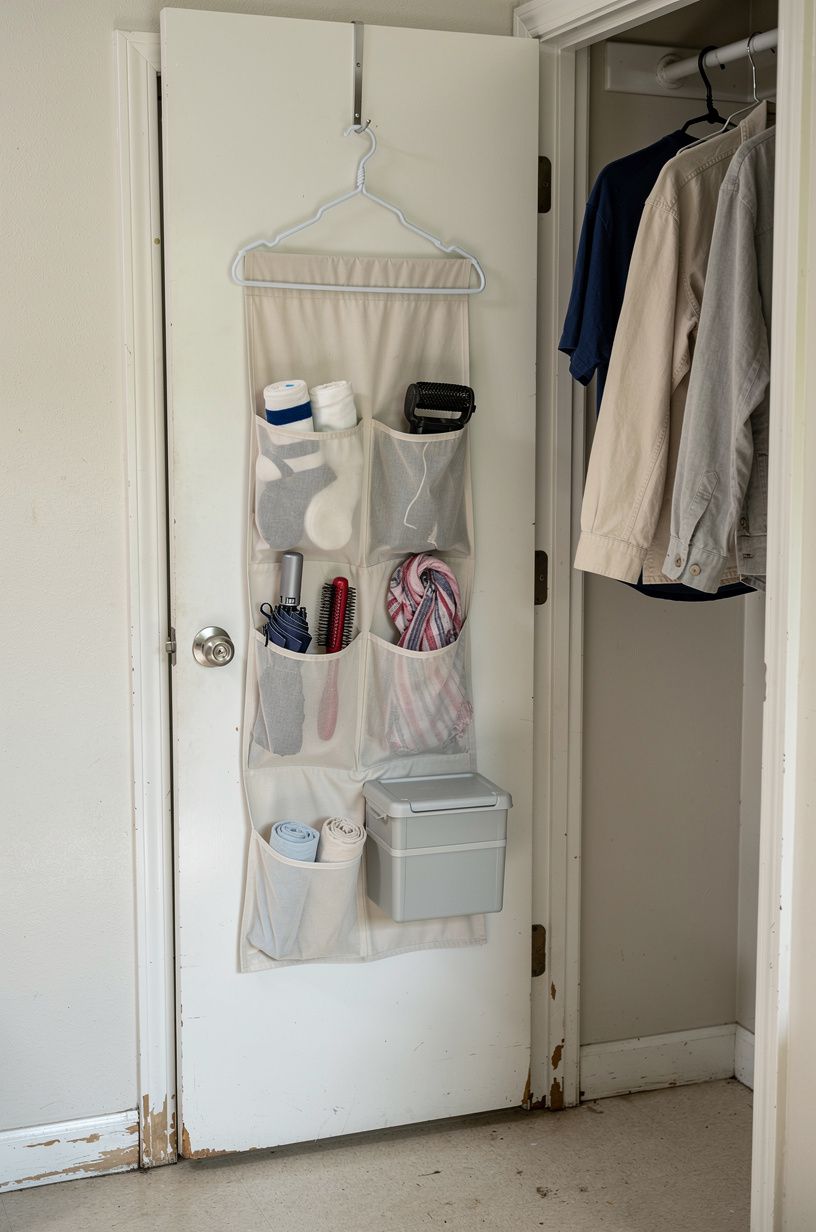
The back of a book-matched walnut closet door is valuable storage, and you don’t need a built-in system to use it. A door pocket can hold scarves, belts, travel-size products, or the accessories that otherwise drift across every shelf.
Choose a clear vinyl organizer when you need fast visibility, or a canvas over-door pocket when you want a softer, quieter look. Keep the heaviest items low so the door doesn’t swing awkwardly or strain its hinges.
Group each pocket by routine rather than category. Sunglasses near the mirror make sense. Travel items near the entrance make sense.
You’ll maintain the system because it follows how you actually move.
If the closet is tiny, these tiny closet organization ideas for small rentals offer more ways to use vertical space without sacrificing the walkway.
10Price the Closet Before You Paint It
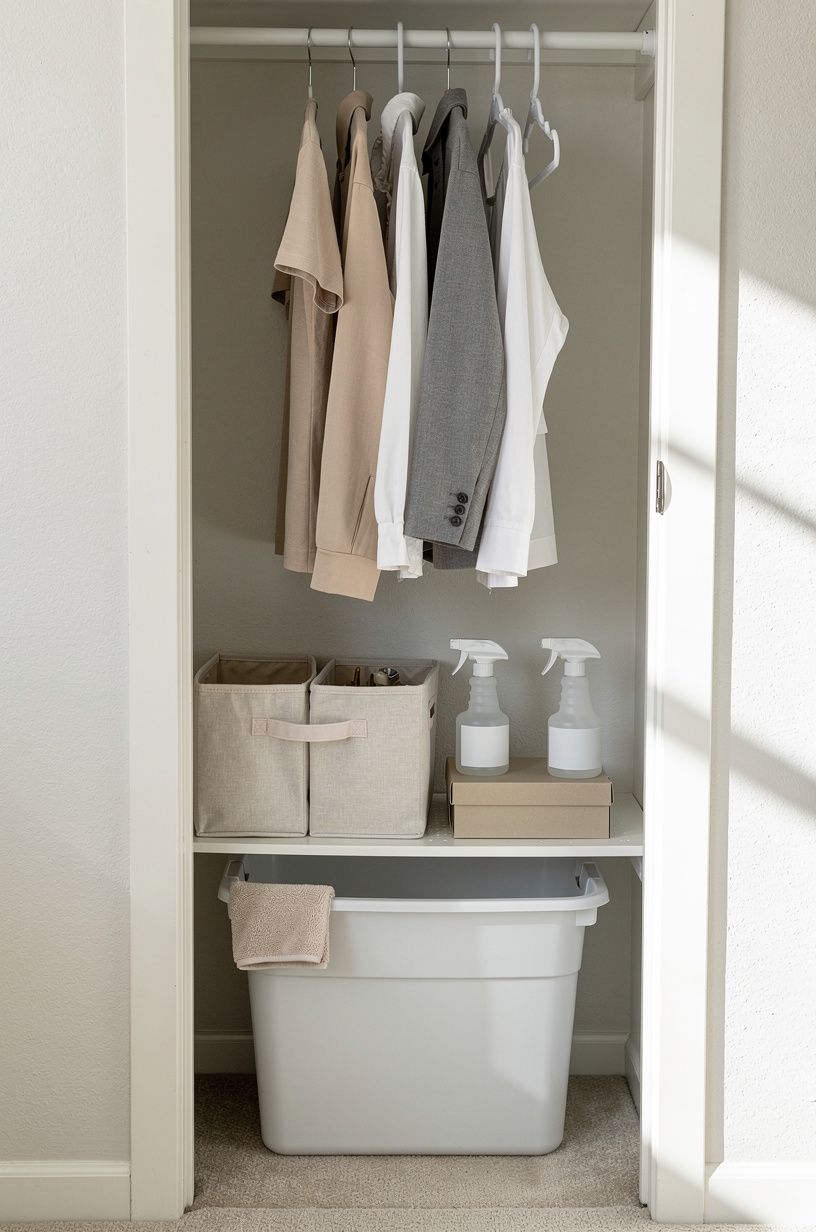
Before you spend your under-$10 pieces, compare them with the cost of a complete closet project.
11Hang a Target Rod Under the Shelf
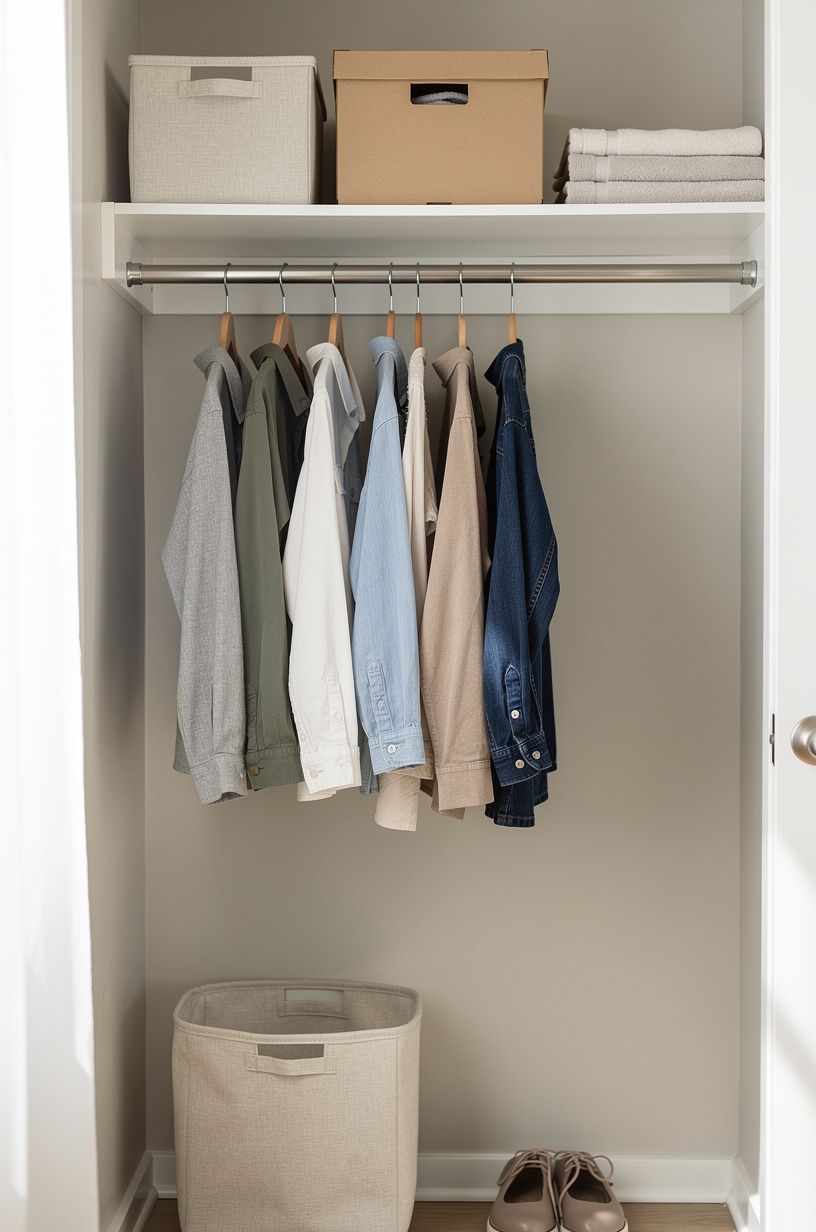
A short secondary rod turns wasted air into useful hanging space. Put it under a shelf for scarves, cropped trousers, or the outfit you’ve planned for tomorrow. Your closet will feel more efficient without adding a full cabinet.
An unlacquered brass tension rod works well for renters because you don’t need to drill into the wall. I’d skip hanging heavy coats from it, though.
The rod may bow, and you’ll end up with a pile on the floor. Keep the load light and the placement specific.
Your best location is where you can reach the garments with one hand. A rod hidden behind a door looks tidy, but it won’t help if you forget it exists. Add wooden clip hangers for tomorrow’s outfit, and give yourself a visual cue that removes one morning decision.
A brass-grip tension rod is useful when the shelf surface is slick. Test it with a few light pieces before trusting it with a full week of outfits.
12Create the Three-Height Shoe Story
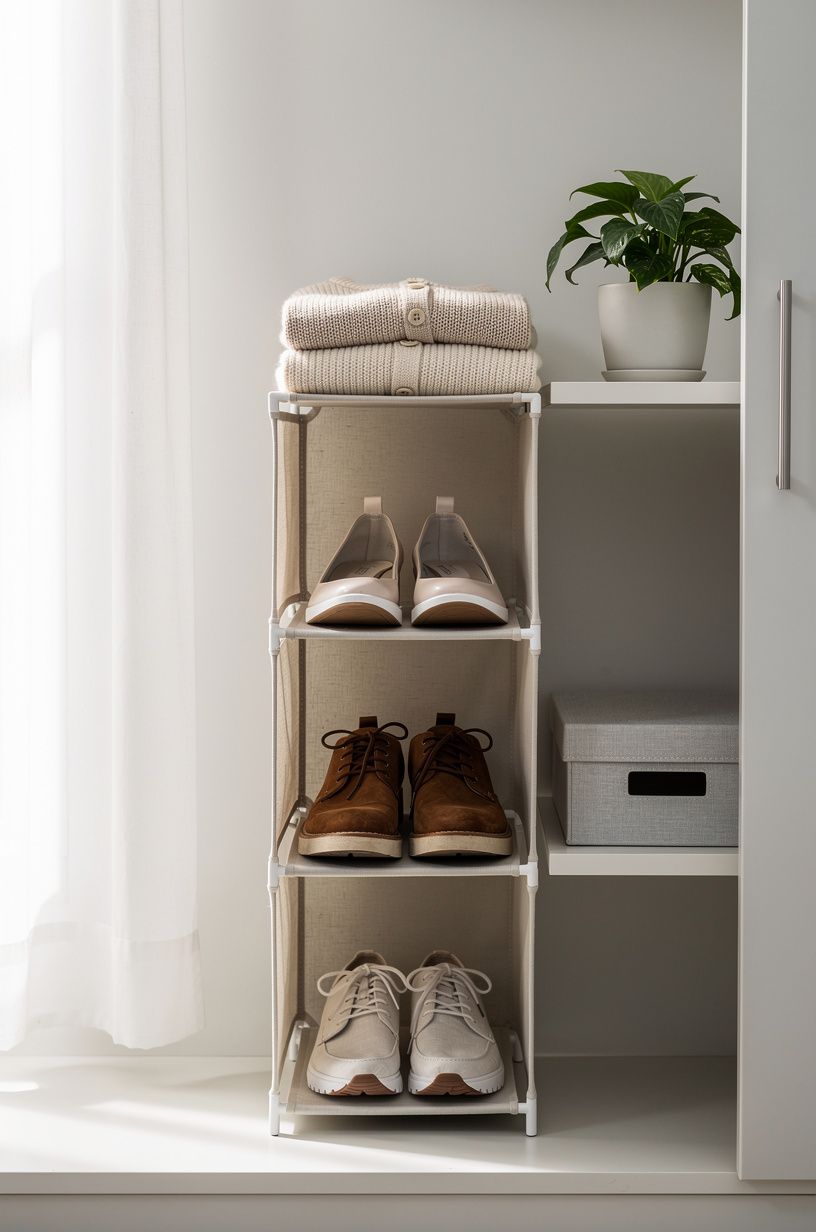
Shoes look more organized when they’re grouped by height instead of scattered by color. Keep flats low, ankle boots in the middle, and taller boots on the upper shelf. Your eye reads the arrangement quickly, and you’ll know where to return each pair.
An oversized-chip terrazzo shoe riser creates a second level inside a cubby. I’d avoid stacking delicate leather shoes directly on one another because the pressure leaves marks. Give your favorite pairs enough air to keep their shape.
If your closet has a center island, leave 24 to 36 in around it so you can walk and turn comfortably. Your shoe zone shouldn’t make the room feel cramped. A cotton dust bag protects special pairs, but daily shoes should remain easy to grab.
Use cedar shoe inserts for pairs that need structure, and reserve a low stone boot tray for rainy days. A clear floor line makes the entire closet feel cleaner.
13Fold Sweaters with the Shelf-Width Test
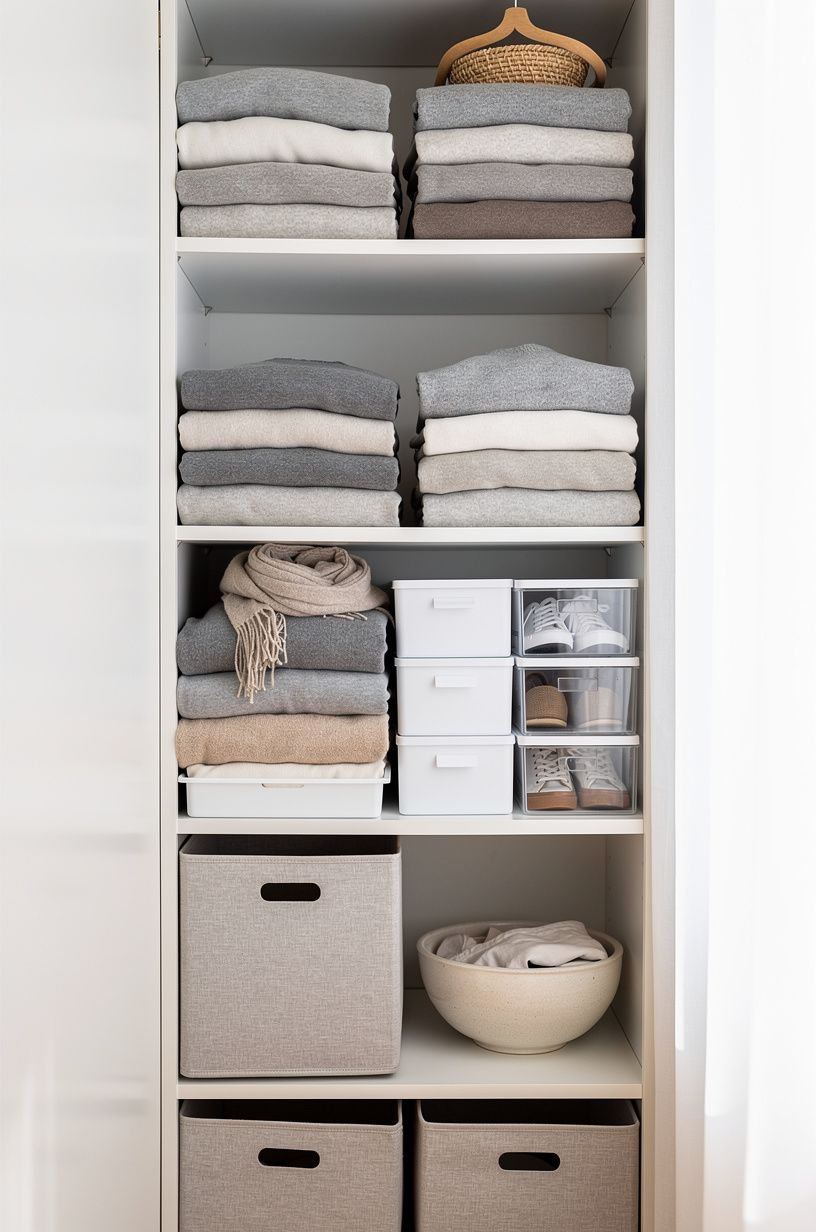
Fold sweaters to the width of your shelf, not the width of the garment. That one adjustment prevents leaning stacks, crushed sleeves, and the familiar avalanche that appears whenever you pull from the bottom.
Use a shelf divider between categories and a linen storage box for delicate knits. If the shelf is deep, fold sweaters once more rather than pushing them toward the back where they disappear.
Keep the pieces you wear weekly at chest height. Heavy winter knits can move higher during warm months, while lightweight layers stay within reach. These tiny closet organization ideas for small rentals can help when shelf depth is especially limited.
A breathable cotton cover protects special cashmere without trapping too much moisture. The stack will look tidy, soft, and refreshingly easy to maintain.
14Paint the Hangers, Not the Whole Room
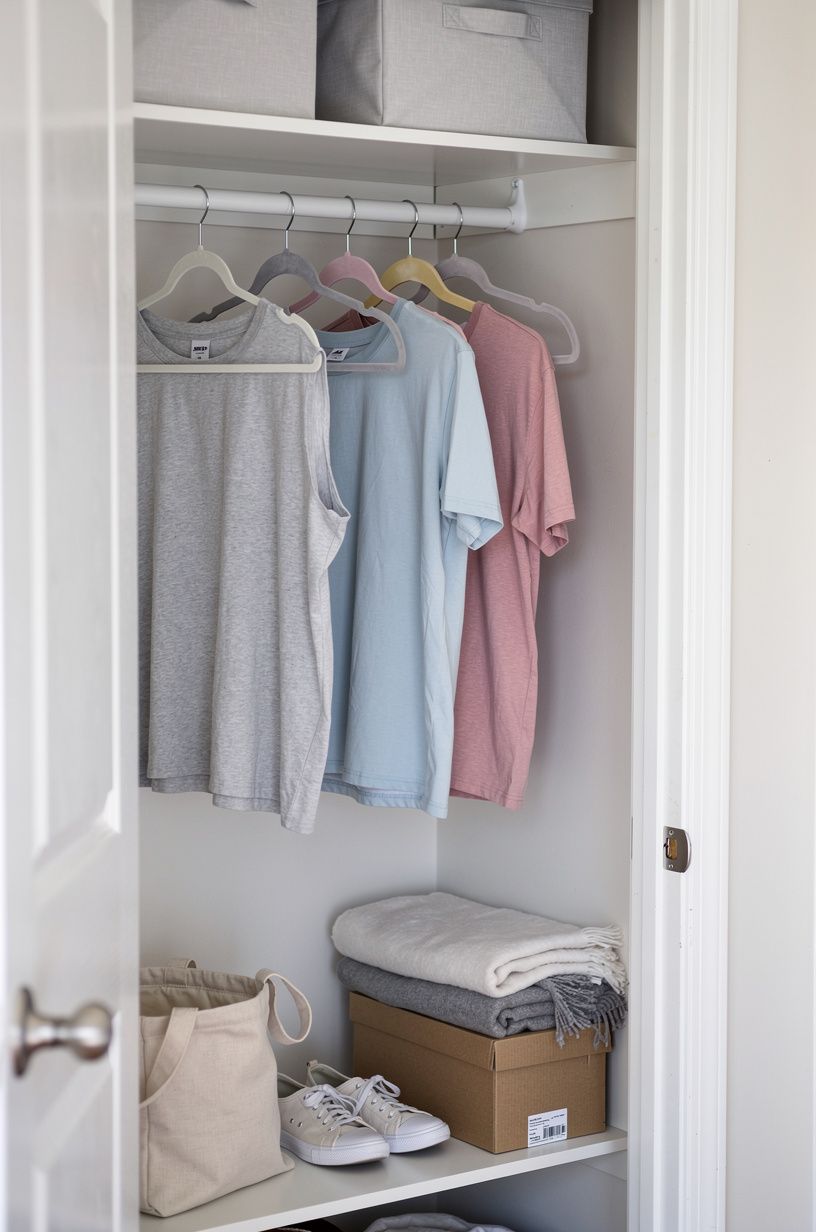
A matching hanger color with a few shagreen accents can make a mismatched wardrobe look deliberate, and you won’t need to repaint your closet.
15Anchor the Center with a Small Stool
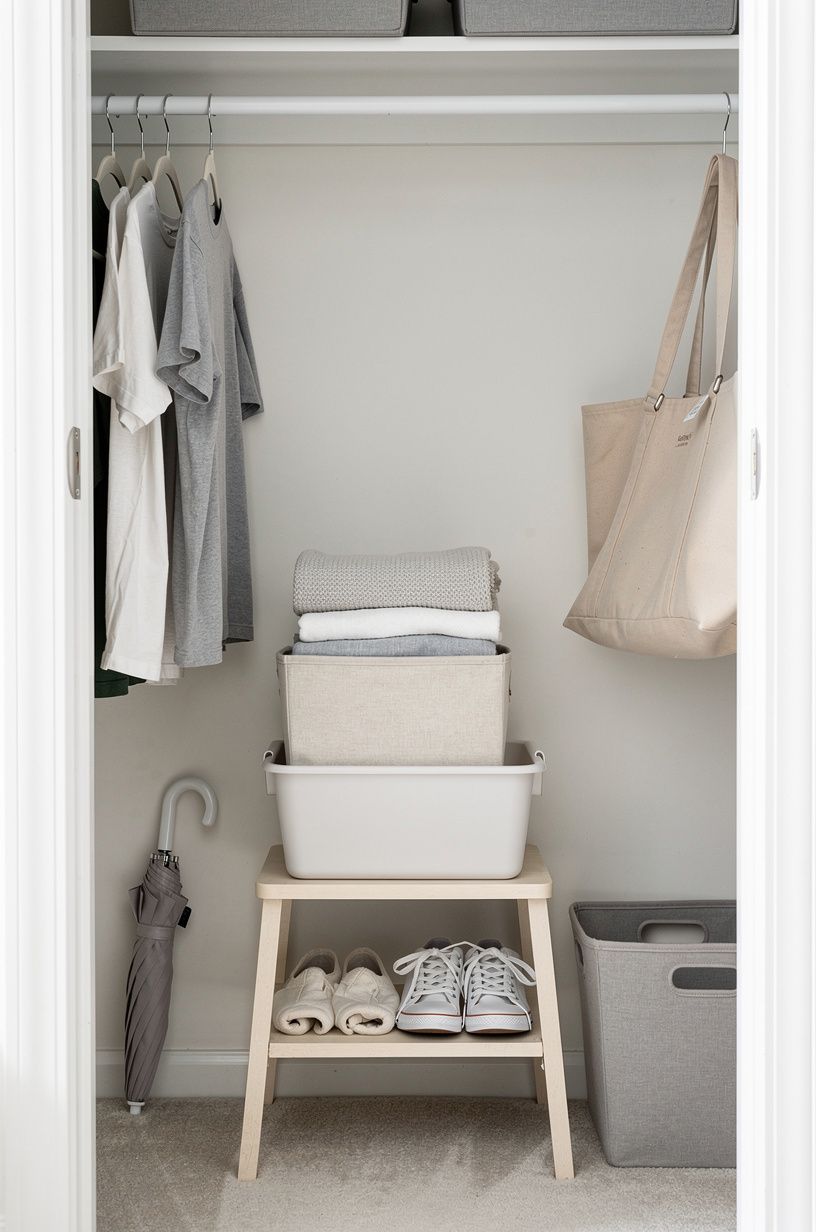
A small stool gives you a place to sit, fold, or set down a basket, and it can make the closet feel more like a room. Pick a narrow silhouette that leaves the main path open.
A round walnut stool brings warmth, while a washed Belgian linen seat adds soft texture without looking overly formal. I’d avoid anything with a broad footprint or sharp corners if you’re constantly turning between shelves.
Place it where you can reach the mirror or lower storage without blocking the door. If the closet has no natural seating zone, keep the stool beside the entrance and move it only when needed.
A compact stool can also hold a folded outfit or small laundry basket for a few minutes. For more ideas about layering useful lighting and furniture, revisit the under-cabinet lighting guide. The goal is the same: every object should support the way you use the space.
16Swap a Basket for a Display Box
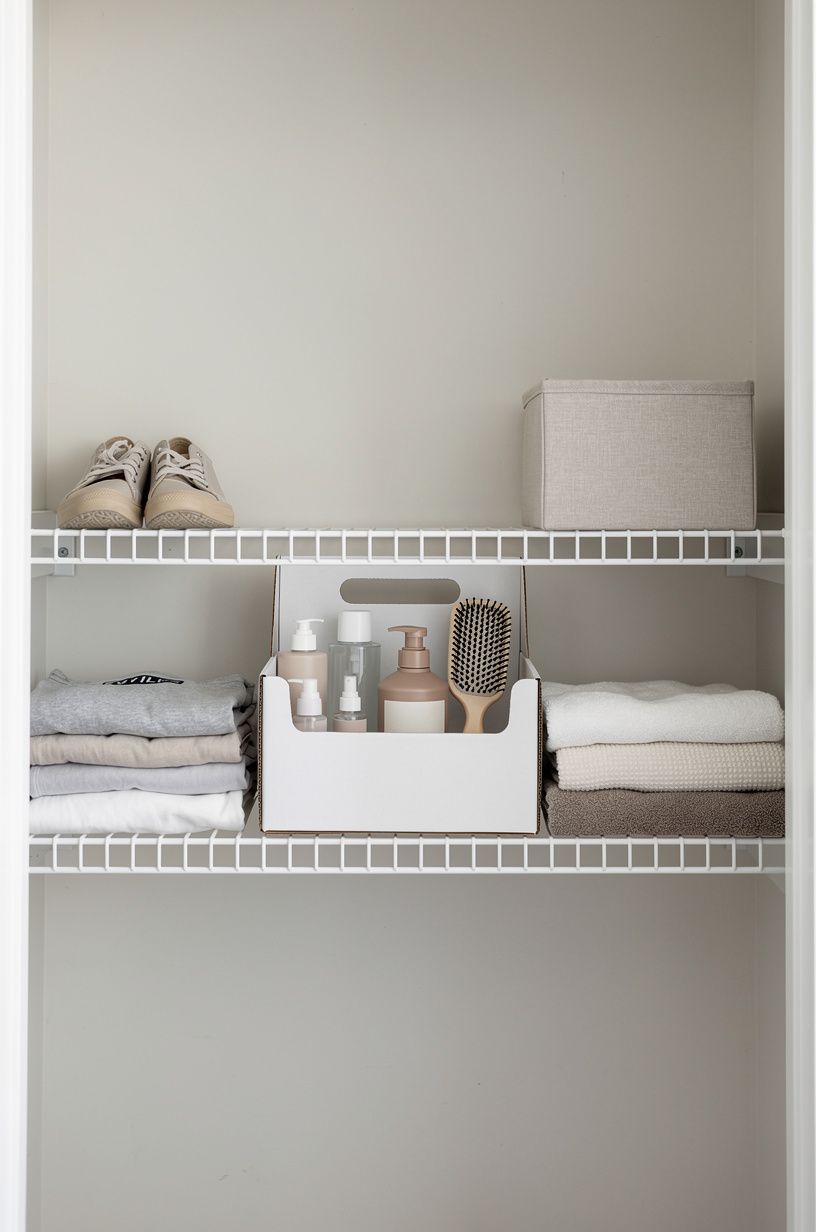
Some accessories deserve to be seen. A clear box for sunglasses, watches, or small handbags keeps the pieces protected while giving your eye a neat little display. Your closet will feel more sophisticated, and you’ll remember what you own.
A clear acrylic box works for small accessories, but I’d avoid using it for everything. Too much transparency can make a closet look busy, especially when patterns show through. Keep one display box visible and store the rest in opaque bins.
Put the box near your mirror or next to the tray. Your routine will connect the storage to the moment you use it. An organic bouclé-covered keepsake box can hide less attractive items, and you’ll get a softer finish where the shelf meets the wall.
A brass-lidded box adds a gentle glow, while a smoked acrylic organizer feels more dramatic. Choose one mood and let the rest of the storage stay quiet.
17Hang a Rental-Friendly Curtain
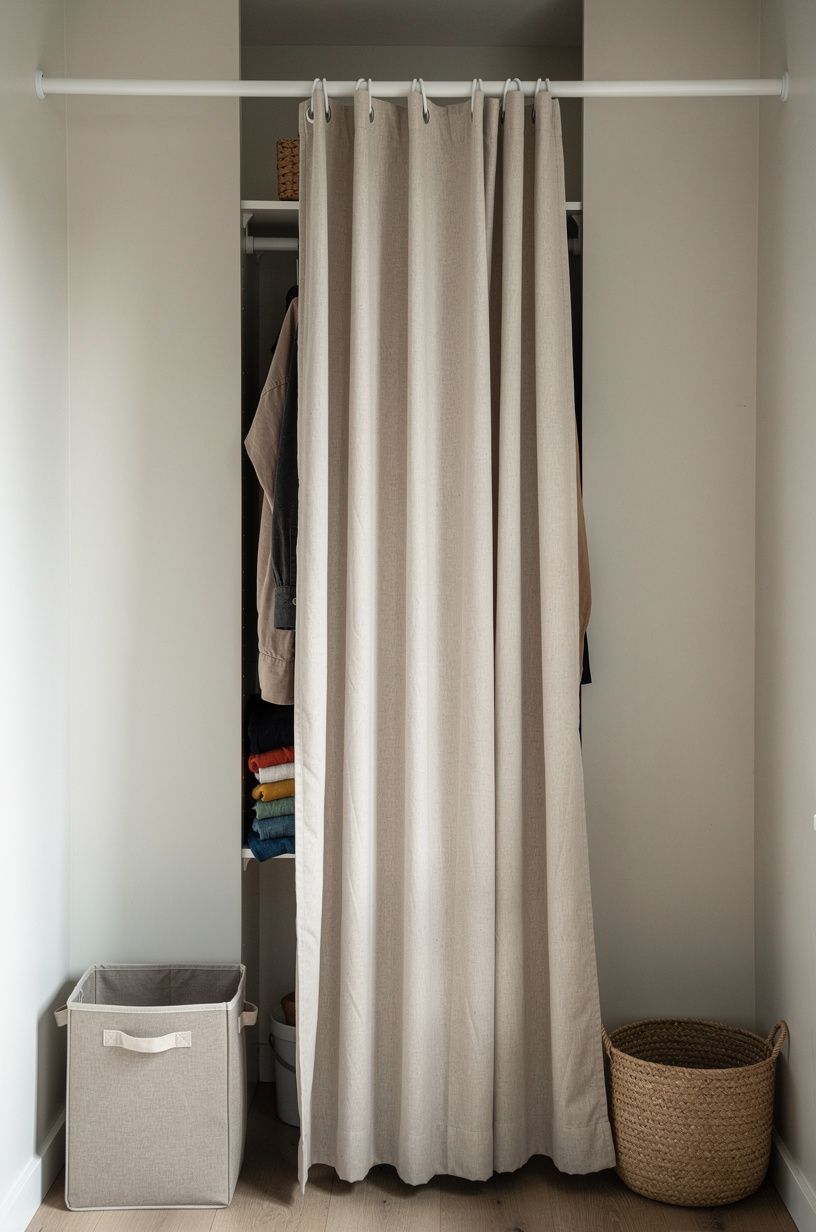
A curtain can hide open storage, soften a hard wall, or separate your closet from the bedroom without construction. Your room will feel more intimate, especially when the shelves hold mixed packaging and practical items. It’s a useful visual reset at the end of the day.
Choose a forest-green linen curtain for texture, or use a plain cotton panel if you need the lowest-cost option. I’d skip a heavy blackout fabric here because it can make a small closet feel boxed in. Light should still travel through the space.
Install it with a tension rod so your rental walls stay untouched. Your curtain should stop just above the floor, where it won’t drag through dust. A matte brass tension rod adds a small warm note, but keep the rest of the hardware quiet so the fabric stays in charge.
A light-filtering cotton panel keeps the effect airy instead of theatrical. It’s a graceful fix for shelves that are useful but not especially attractive.
18Mix the Everyday and the Seasonal
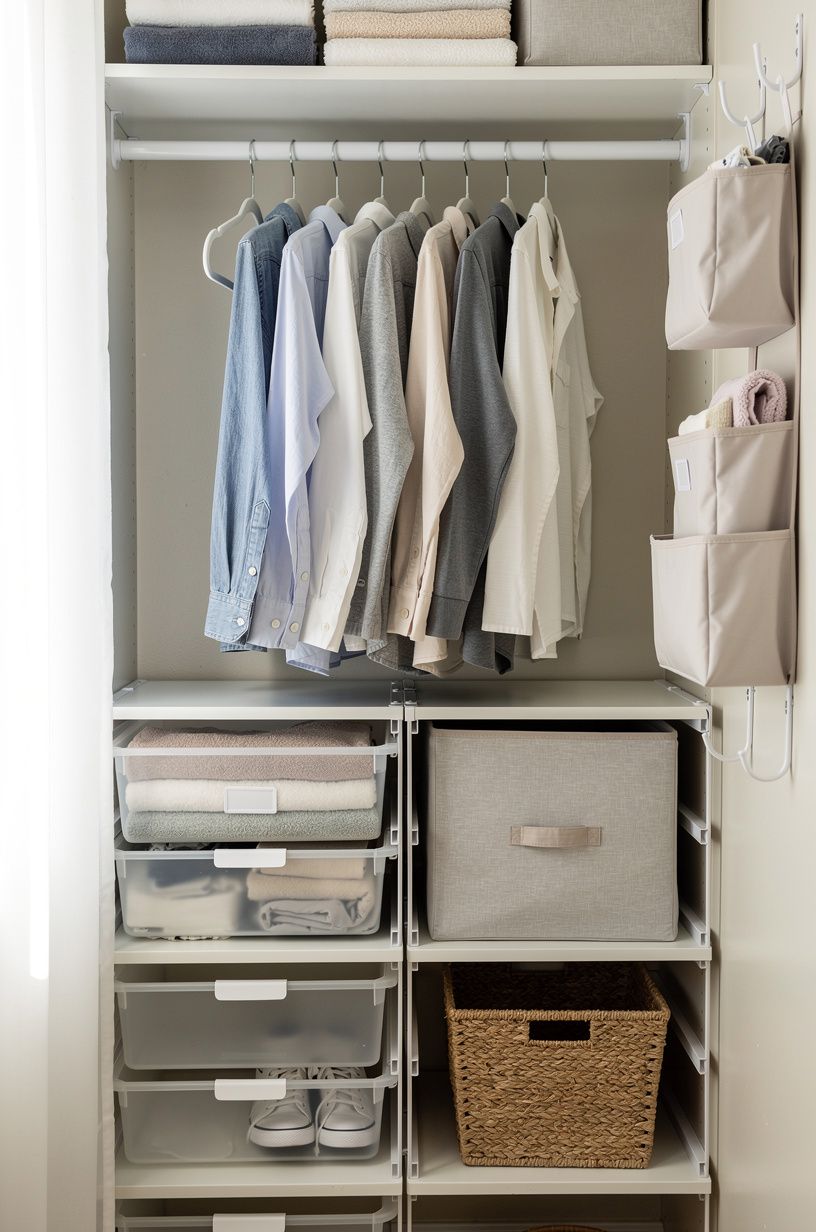
Your closet works better when daily clothing gets the easiest real estate and seasonal pieces move upward. Rotate coats, swimwear, or heavy blankets when the weather shifts. You’ll see what you need, and your shelves won’t become a museum of things you forgot.
A deep-pile mohair velvet throw belongs in a breathable upper bin, not compressed under delicate clothing. I’d skip vacuum bags for pieces you use often because they’re annoying to reopen and can flatten soft fibers. Make seasonal storage easy enough that you’ll maintain it.
Keep one labeled bin for the current transition season. Your closet will feel prepared without becoming overstuffed. And if your home has a tiny bedroom, these under-bed storage tips can hold the pieces that don’t belong in your active rotation.
Add a felt label holder to the bin and a breathable canvas bag for soft items. The system feels orderly, practical, and pleasantly forgiving.
19Finish with the One-In, One-Out Shelf
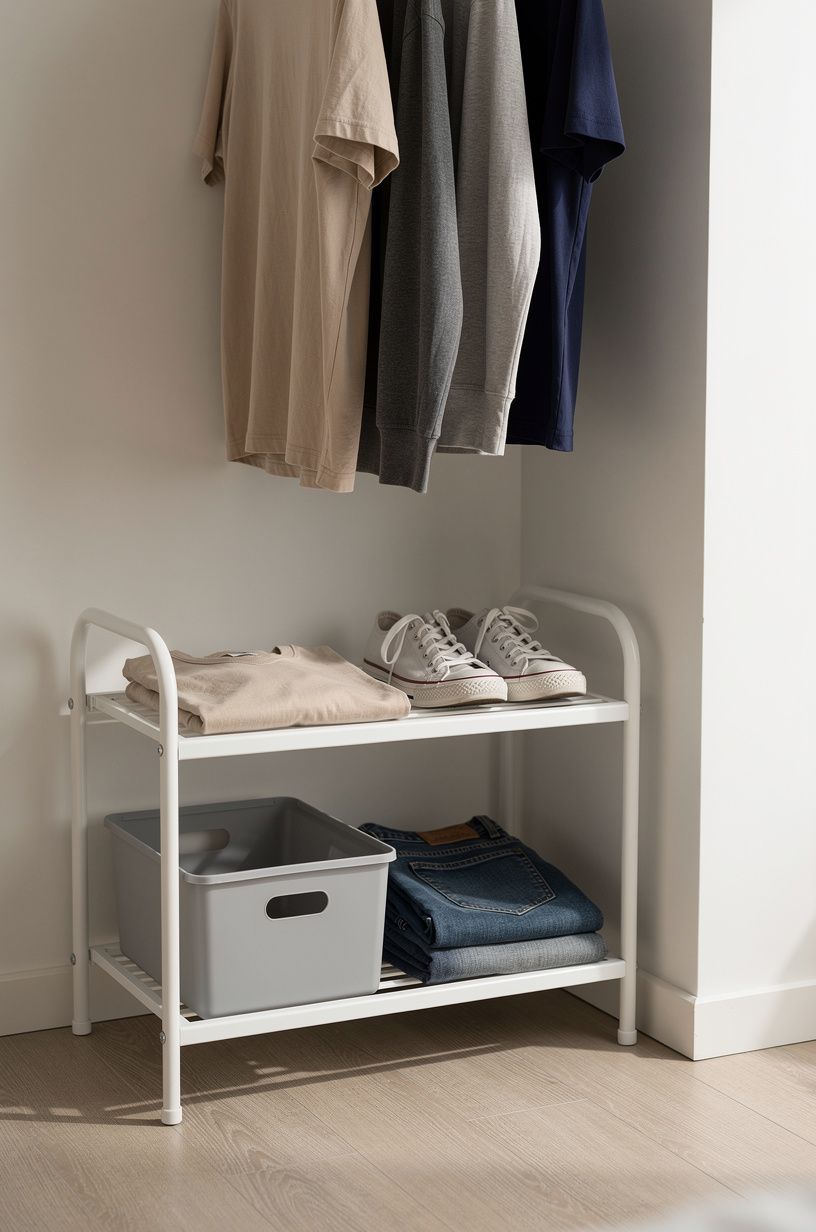
Reserve one shelf for new purchases and items you’re considering donating.
The Closet Rule I’d Keep
I’ve styled enough small closets to know that the expensive-looking result rarely comes from expensive furniture. It comes from deciding what deserves to be visible. A soft basket, a warm bulb, and one clear landing zone can do more than a wall of matching containers if they support how you move through the room.
My own mistake was chasing symmetry. I bought the same bins for every shelf, then discovered that half of them were the wrong depth and none of them fit the pieces I reached for daily.
The closet looked tidy for a week. It didn’t feel easier.
That distinction matters.
Your best setup will probably include a little unevenness. Keep the daily shoes low, put the most-used garments between 42 in and 84 in, and let one shelf stay open. That breathing room is what makes a walk-in feel serene instead of packed.
I’d choose function over a perfect grid every time.
The under-$10 pieces are useful because they let you test a layout before you commit to a larger system. Try the tray, the rod, or the basket for a few mornings.
If your hand keeps reaching for it, keep it. If you ignore it, move it.
A closet should respond to your habits, not demand that you become a different person.
What People Always Want to Know
What is the best budget idea for a small closet?
A two-bin landing zone is the best starting point because it controls laundry and repeat-wear clothes immediately. Add a slim IKEA KALLAX cube or shallow basket if you need a second layer. Your floor stays clearer, and the improvement doesn’t depend on a full closet system.
Where can I buy affordable closet pieces?
Start at Dollar Tree and Target for baskets, hooks, trays, and lights, then check IKEA or Wayfair for larger storage pieces. Your local thrift shop and Facebook Marketplace may have solid wood trays or stools for less. Look for sturdy edges and useful dimensions before choosing a finish.
How much does a full closet makeover cost?
A complete project can range from $150-$800 for rods, shelves, bins, and lighting, while a mid-range system may reach $2,000-$6,000. Your free upgrades are editing, rearranging, and using the back of the door. Small purchases can improve the room without pretending they’re a full renovation.
For more low-cost storage inspiration, compare your layout with these under-bed storage tips. The same idea works here: contain what you don’t need today and keep daily items easy to reach.
Can I create a polished closet on a budget?
Yes, and you can begin with three free moves: remove items you never wear, group clothing by use, and clear the floor. Then add one basket, one light, and one tray. Your closet will feel calmer before you buy anything, which helps you spend with more confidence.
Is this worth it in a small space?
Yes, because a small closet shows the benefit of better spacing quickly. Keep a 14 in shelf depth, protect the walking path, and store daily pieces at hand height. Your room doesn’t need more furniture.
It needs fewer obstacles between you and the clothes you use.
These tiny closet organization ideas for small rentals can help if your layout has almost no spare floor space.
Is this a good idea for a rental?
Yes. Tension rods, removable hooks, peel-and-stick lights, and freestanding baskets give you flexible storage without permanent holes.
Your best rental setup should leave the walls quiet and the floor open. A light canvas curtain can hide shelves while moving with you later.
Where I’d Start First
If I had to pick one, I’d start with the two-bin landing zone. It stops the daily pile before it spreads, and your floor stays useful instead of becoming storage. Pin the landing zone for later, then save these tiny closet organization ideas for small rentals.