
 by
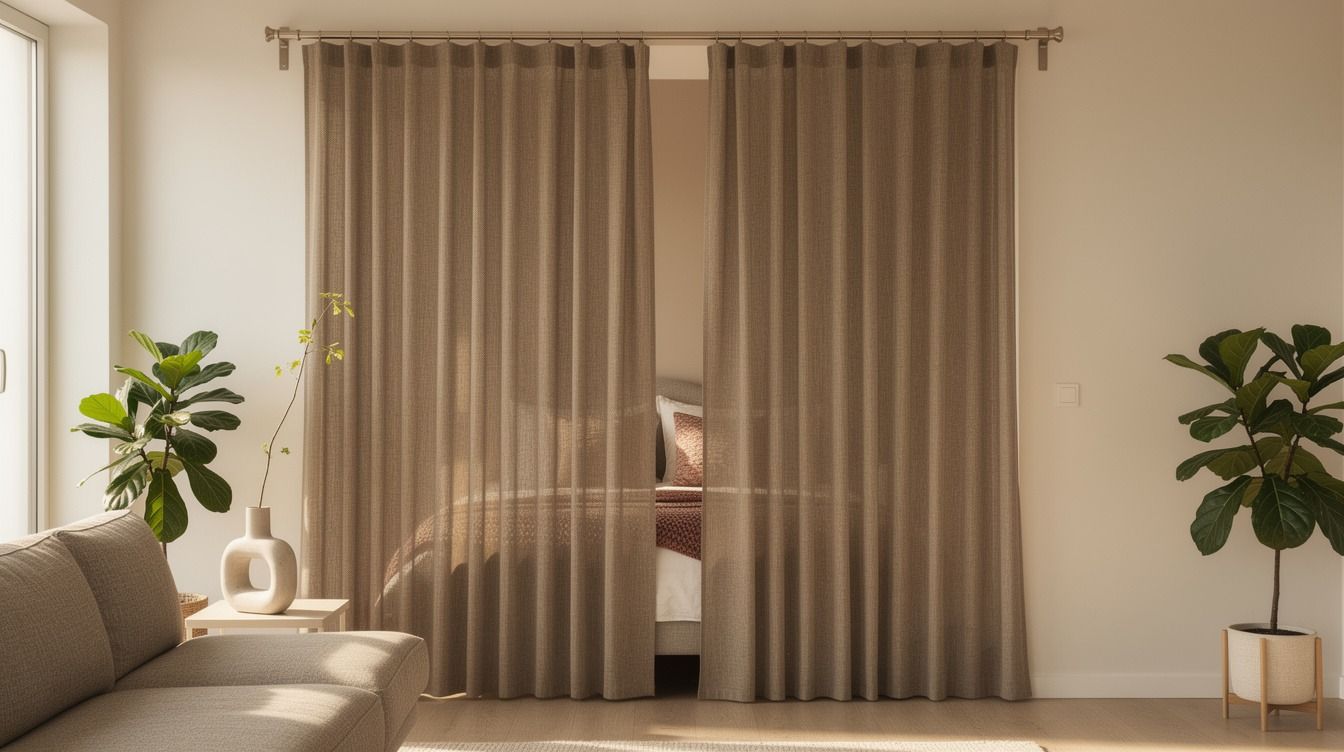
by A curtain room divider can make a wall-less rental feel private, warm, and settled for $200 to $800. I learned that after living with one open room where my bed, desk, and sofa all competed for attention. The fix wasn't construction. It was fabric, light, and one layout decision that changed how I use my home.
- Hang a tension rod for curtains to divide a room
- Layer sheer and blackout panels for a room partition curtain
- Float the bed behind the curtain instead of blocking the sofa
Here's what it looked like before
Before the curtain, my rental had the full open-plan problem. The bed faced the sofa, the desk faced the kitchen, and every lamp seemed to illuminate the entire room. I could see every unfinished chore from under the covers, and you could feel the lack of privacy the second you walked through the door.
I wasn't allowed to build a wall or drill into the ceiling. The landlord's rules were clear, so I lived with a room that looked temporary even after my furniture had been there for two years. My first move was a washable Belgian flax linen panel, and that small change gave the room a softer edge.
And I didn't expect the emotional shift. Closing the curtain at night made the bed feel like a room instead of a piece of furniture parked beside the kitchen. If your rental has the same exposed layout, start with the part of the room you want to protect, not the prettiest corner.
- Hang a tension rod for curtains to divide a room
- Layer sheer and blackout panels for a room partition curtain
- Float the bed behind the curtain instead of blocking the sofa
- Use the Two-Texture Rule for dividing rooms with curtains
- Frame a sleeping nook with a ceiling-height curtain
- Swap a solid divider for a warm linen curtain
- Anchor a work corner with the Three-Height Light Stack
- Paint the hidden wall in Benjamin Moore White Dove
- Build storage into the curtain dividers for rooms
- Hang art at the curtain's visual edge
- Choose sage over stark white for a softer room partition
- Keep curtains over open shelving, not in front of a doorway
- Create a double-sided curtain with one calm face
- Open the curtain by day and close it at night
1Hang a tension rod for curtains to divide a room
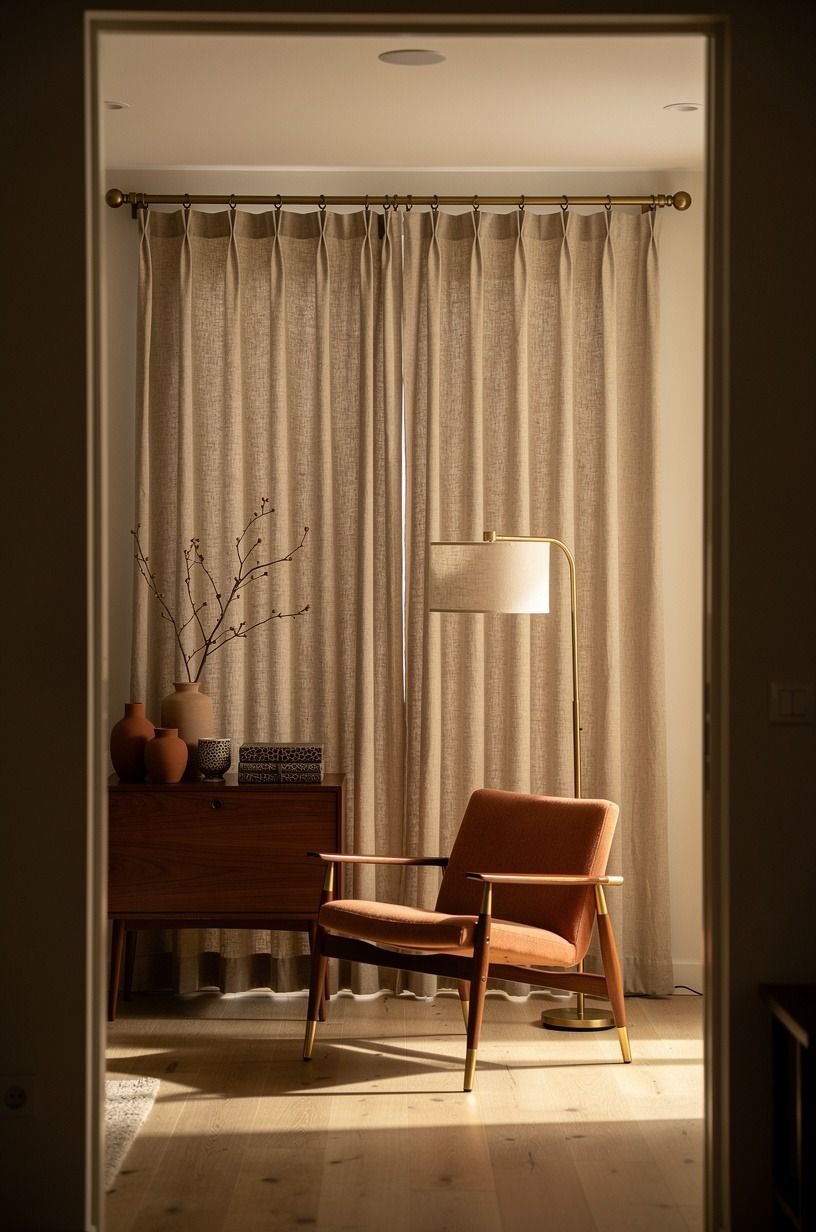
I started with a tension rod because it was the only option I could install in ten minutes and remove without leaving a mark. The rod sat between two existing walls, and I hung floor-length linen curtains that brushed the floor instead of pooling. You won't need a drill, and your landlord won't find a row of holes later.
The important part is tension. A flimsy shower rod will sag in the middle, especially with two dense panels. I chose a wider adjustable rod and kept the fabric below 12 pounds, which helped it stay straight.
If your opening is wider than a typical doorway, test the rod with a sheet first.
I also left a 3-inch gap at one side so I could move between zones without wrestling the fabric. You don't need full closure every hour. A partial opening keeps daylight moving through the room, while the curtain still gives your bed a visual boundary.
2Layer sheer and blackout panels for a room partition curtain
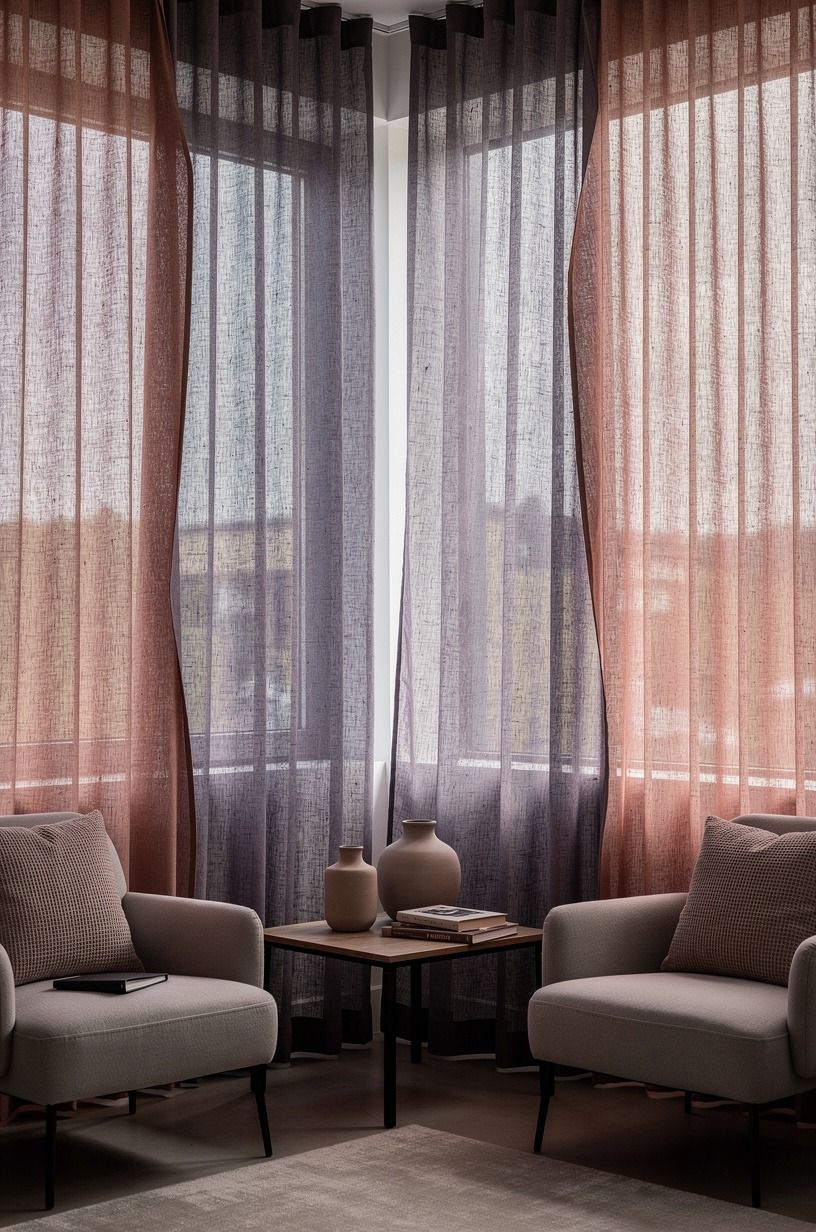
The first curtain I tried was opaque, and it made my rental feel smaller by 7 p.m.
3Float the bed behind the curtain instead of blocking the sofa
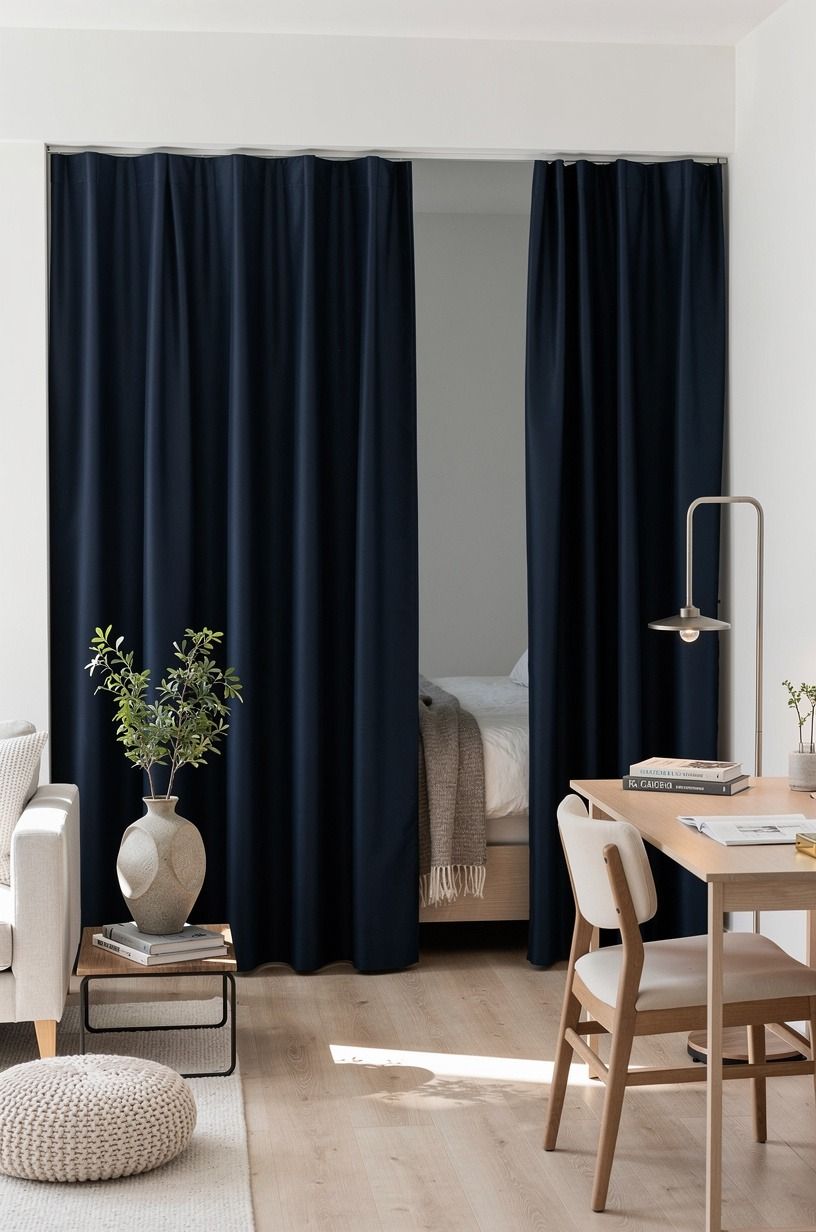
I first placed the curtain between the sofa and the kitchen because that seemed like the obvious division. It was also the wrong one. The fabric cut the walking path and made your sitting area feel narrow, so I moved the bed behind the divider and let the sofa stay open to the room.
The change worked because the Article Lenia bed had a low profile. Your eye could read the curtain as a soft wall without seeing a tall headboard fighting it. I left enough space for the curtain to move freely, and I kept the bed from touching the fabric so the panels wouldn't collect dust.
The room began to feel private without feeling sealed. I could sit on the sofa while you slept behind the curtain, and neither zone felt like an afterthought. If your bed is bulky, measure the full frame before buying fabric.
A divider can't rescue a walkway that was already too tight.
4Use the Two-Texture Rule for dividing rooms with curtains
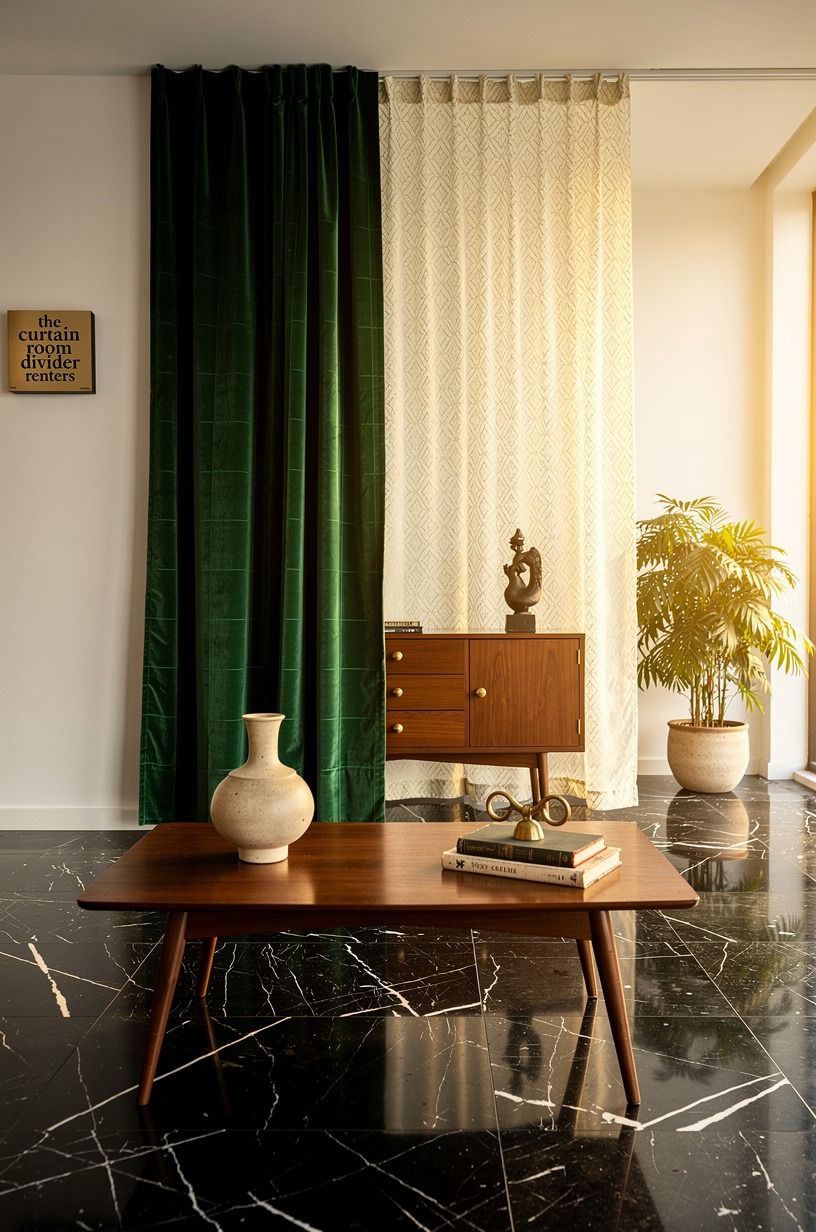
My best styling decision was the Two-Texture Rule. I used one curtain with a dry, nubby surface and paired it with one smoother material elsewhere in the room. The contrast gave your eye something to notice without adding another color or pattern.
The curtain was a warm oatmeal linen blend, while a Nero Marquina marble table carried white veining through the room. I skipped velvet because it caught every bit of kitchen dust and made the open room feel heavy. You can create the same depth with cotton canvas and a flat-weave rug, especially if your rental has plain white walls.
I learned this after buying a shiny polyester panel that looked cheap under overhead lighting. The fabric reflected every bulb and made the divider feel theatrical. A matte surface is the better call for your room because it absorbs light softly instead of announcing itself.
If your space needs more wall texture, pair the divider with ideas from these bead board walls that anchor a room. You may not be able to install bead board, but the vertical rhythm is worth borrowing.
5Frame a sleeping nook with a ceiling-height curtain
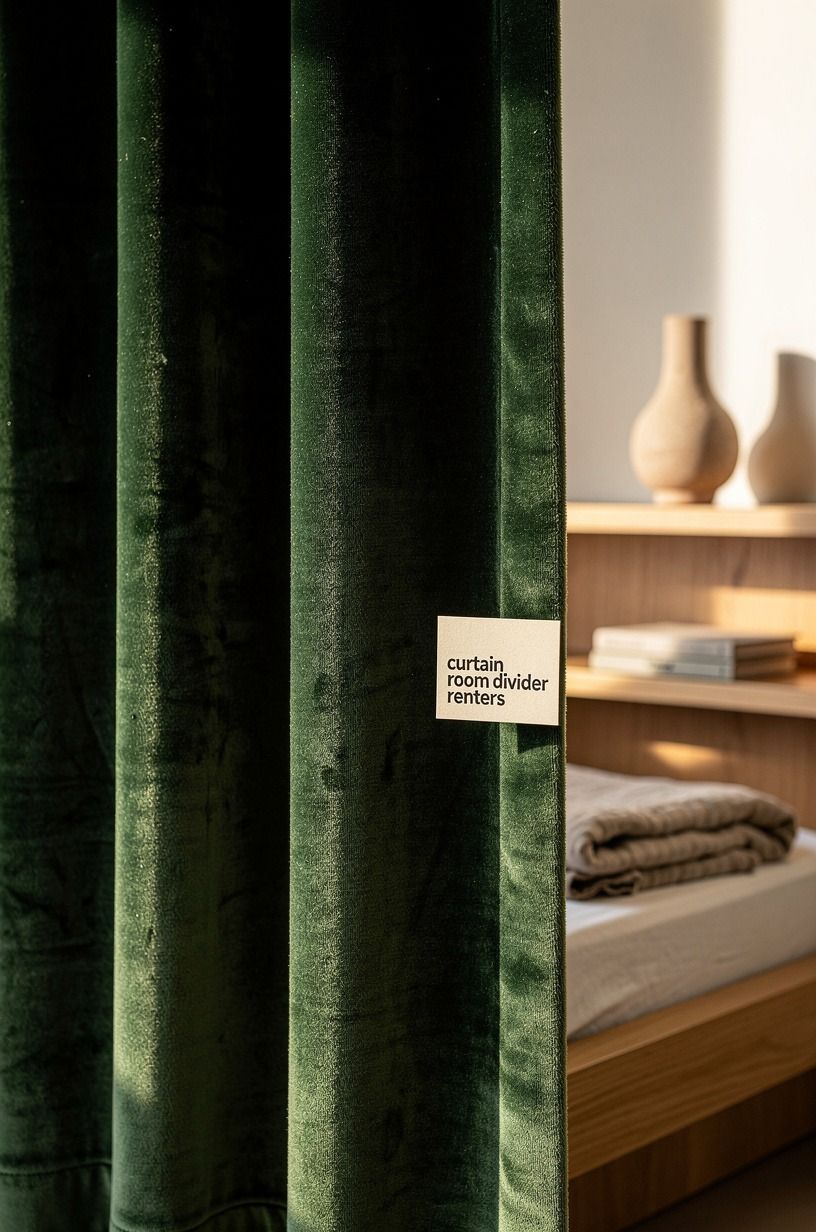
A ceiling-height curtain made my bed feel like a real nook, even though the ceiling itself stayed untouched. I used a slim white steel curtain track attached to an existing beam, then chose panels that ran from the track to the floor. The extra height made your rental look taller instead of chopped into small boxes.
You don't need a full rectangle around the bed. One panel across the foot and one panel along the open side was enough for privacy. I left the head of the bed against the wall, which reduced fabric and gave me a clean path to the closet.
The key is keeping the top line quiet. Your eye should see one long vertical plane, not a row of hooks or mismatched brackets. If you can't attach a track, use a tension system between two walls and choose panels with a wide header so the rod looks intentional.

6Swap a solid divider for a warm linen curtain
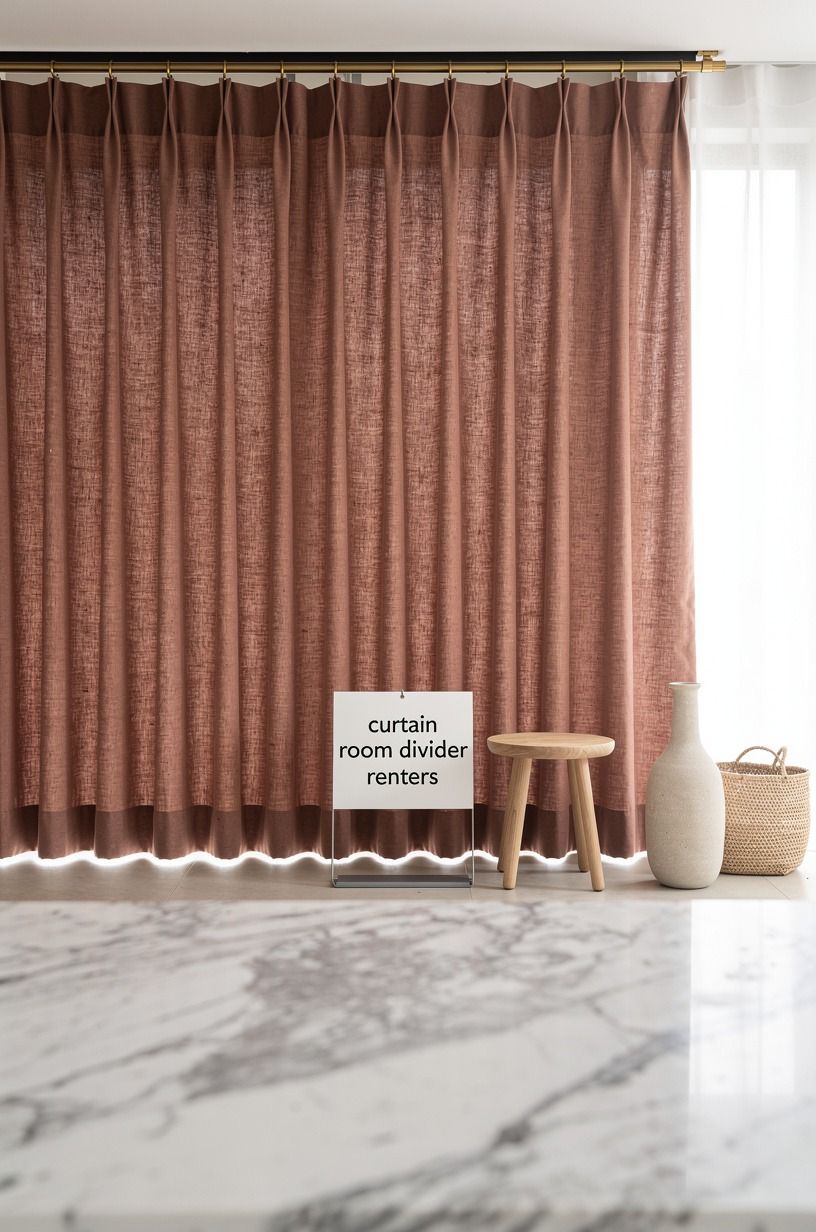
I considered a folding screen, but I rejected it because every version I tried looked like a dressing room. A linen curtain had movement, and that movement made the room feel softer when you walked past it. The Farrow & Ball Railings No.31 wall color behind the curtain also helped the pale fabric look grounded.
Your curtain doesn't need to match the walls exactly. In fact, matching too closely can make the fabric disappear in a flat way. I wanted a gentle contrast, so I chose a warm flax color against the charcoal wall.
I also washed the panel before hanging it. The fabric shrank slightly, which was useful because the first length had dragged across the floor.
Don't skip this if your curtain is cotton or linen. You want the final hem to land cleanly, not after the first laundry day.
For a similar soft-wall mood, browse these Venetian plaster bathroom ideas. Your rental may not allow plaster, but the low-contrast texture is easy to echo with fabric.
7Anchor a work corner with the Three-Height Light Stack
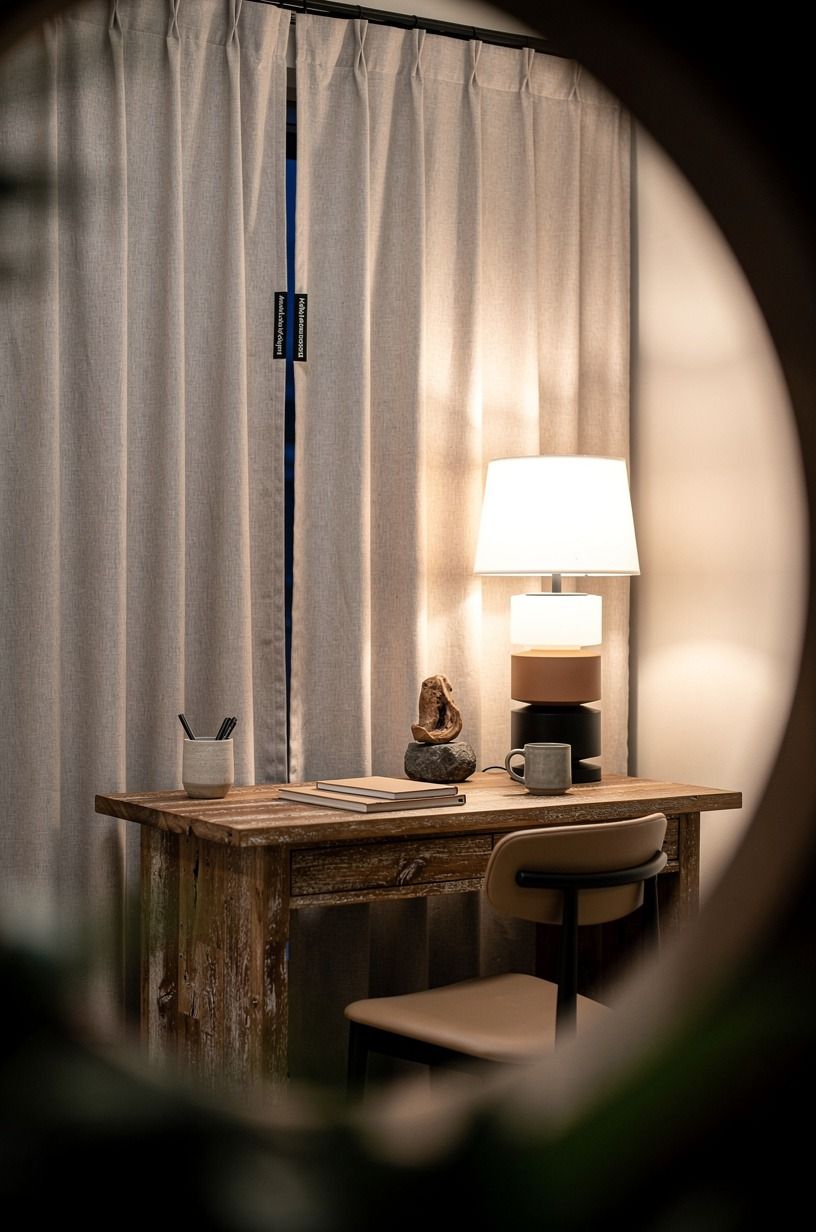
My desk used to sit in the middle of everything, so work followed me into breakfast and bedtime.
8Paint the hidden wall in Benjamin Moore White Dove
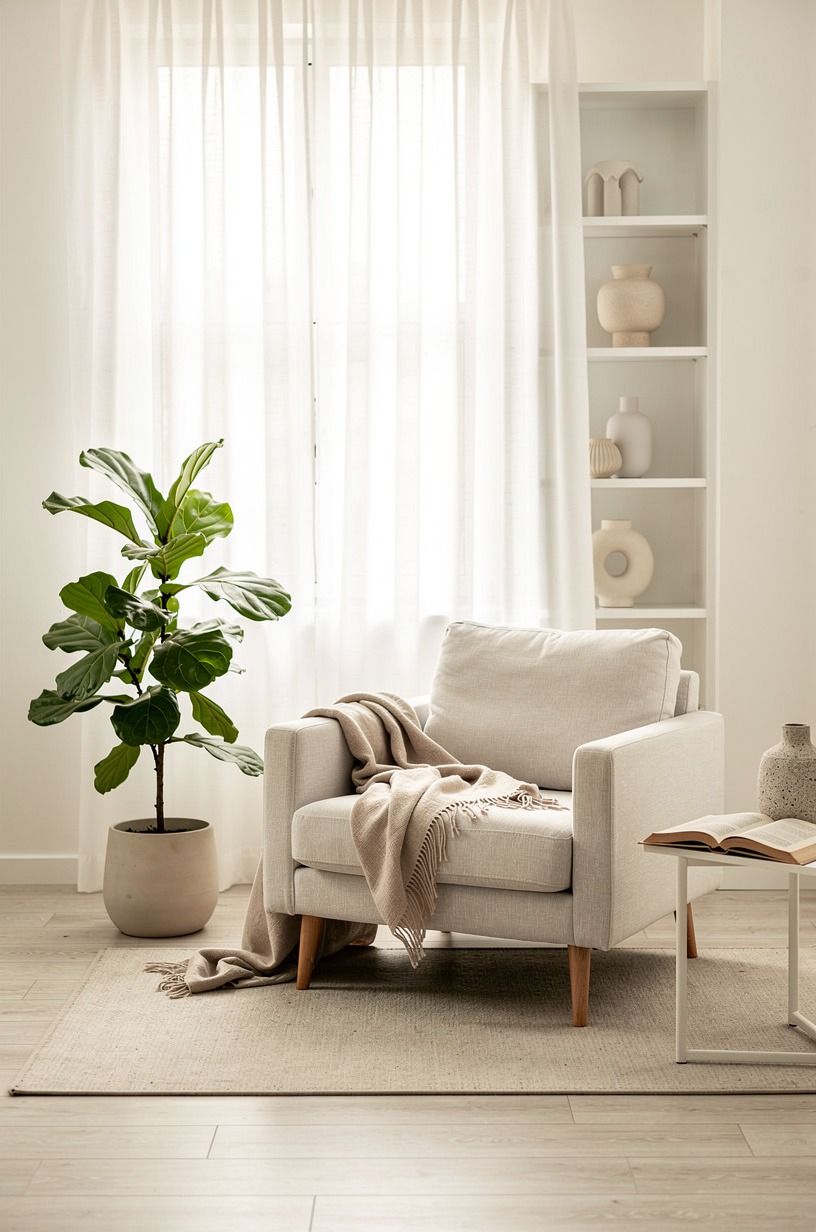
The wall behind my curtain was darker than the rest of the rental, so I painted it Benjamin Moore White Dove OC-17 after getting permission. The color wasn't dramatic, but it reflected daylight through the sheer layer and made the bed nook feel brighter.
Your curtain should not have to carry every visual decision. A calm backdrop lets the fabric provide privacy while the wall keeps the room from feeling crowded. I used one sample first because warm white can look yellow beside rental beige, especially in evening light.
But I wouldn't paint every wall white just to make a small rental look larger. The open side of the room needed contrast, so I kept the kitchen wall as it was. That small difference helped your eye understand where one zone ended and another began.
If painting isn't allowed, a removable textile panel behind the curtain can create a similar backdrop. Choose a quiet pattern and keep it below eye level so your room still feels restful.
9Build storage into the curtain dividers for rooms
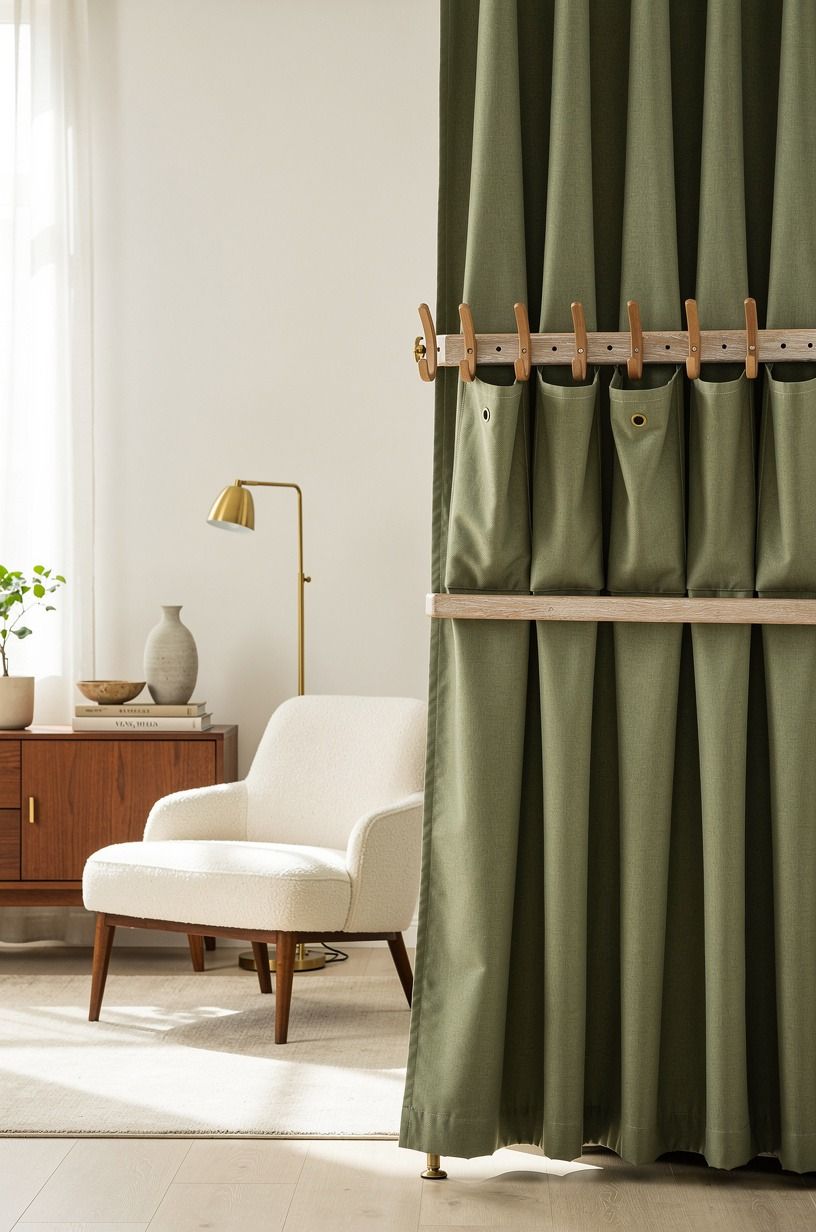
A curtain divider works harder when it hides storage too. I placed a low cerused white oak shelving unit at the edge of my sleeping zone, then used the curtain to soften its open shelves. The cubbies held linens, books, and baskets, while the fabric hid the visual clutter.
You should keep the unit low enough for daylight to travel across it. A tall shelf would have made my rental feel chopped in half, and I didn't want your room to resemble a corridor. The shelving stayed below shoulder height, so I could still see across the space when the curtain was open.
I used labeled fabric bins instead of loose stacks. That decision mattered more than the shelf itself because open storage becomes noisy fast. If your budget is tight, start with baskets you already own and add matching fronts later.
A twin cot bed divider can also give you useful ideas for combining sleep space and storage when your floor plan is unusually narrow.
10Hang art at the curtain's visual edge
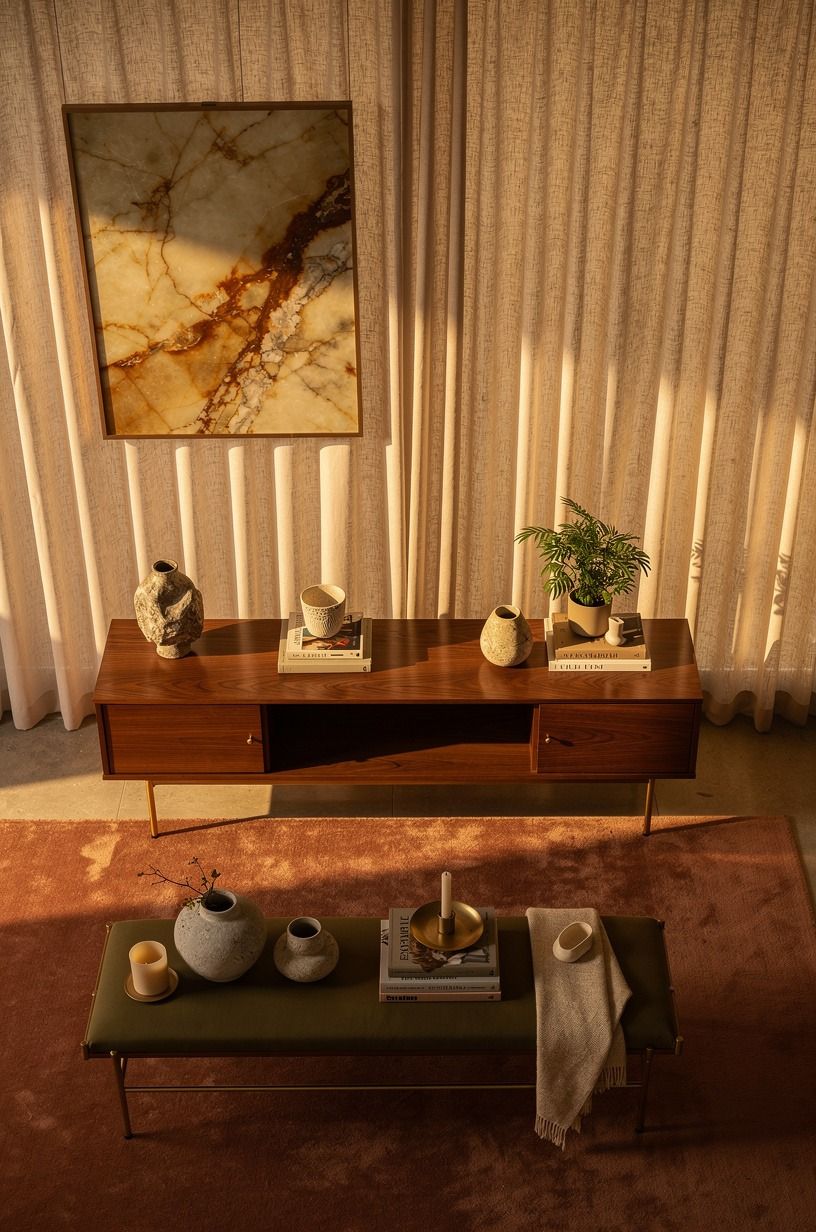
The curtain needed something beside it, or it looked like a lone fabric panel floating in space. I hung a small framed print next to the opening, with its center about 57 to 60 inches from the floor. That standard made the art feel connected to the room instead of stranded near the ceiling.
Your art doesn't need to match the curtain. I chose a charcoal line drawing with a slim stone frame, and the backlit translucent onyx nearby gave the arrangement a quiet glow. You could use a thrifted print, a textile, or a simple photograph, but keep the frame light if your divider already has visual weight.
I skipped a gallery wall because it would have competed with the fabric folds. One piece gave your eye a stopping point without creating another busy collection. If you have a wider wall, two medium prints can work, but leave breathing room around the curtain track.
And don't hang art where the panels will brush it every time you walk through. The frame will shift, the fabric will snag, and you'll stop using the divider.
11Choose sage over stark white for a softer room partition
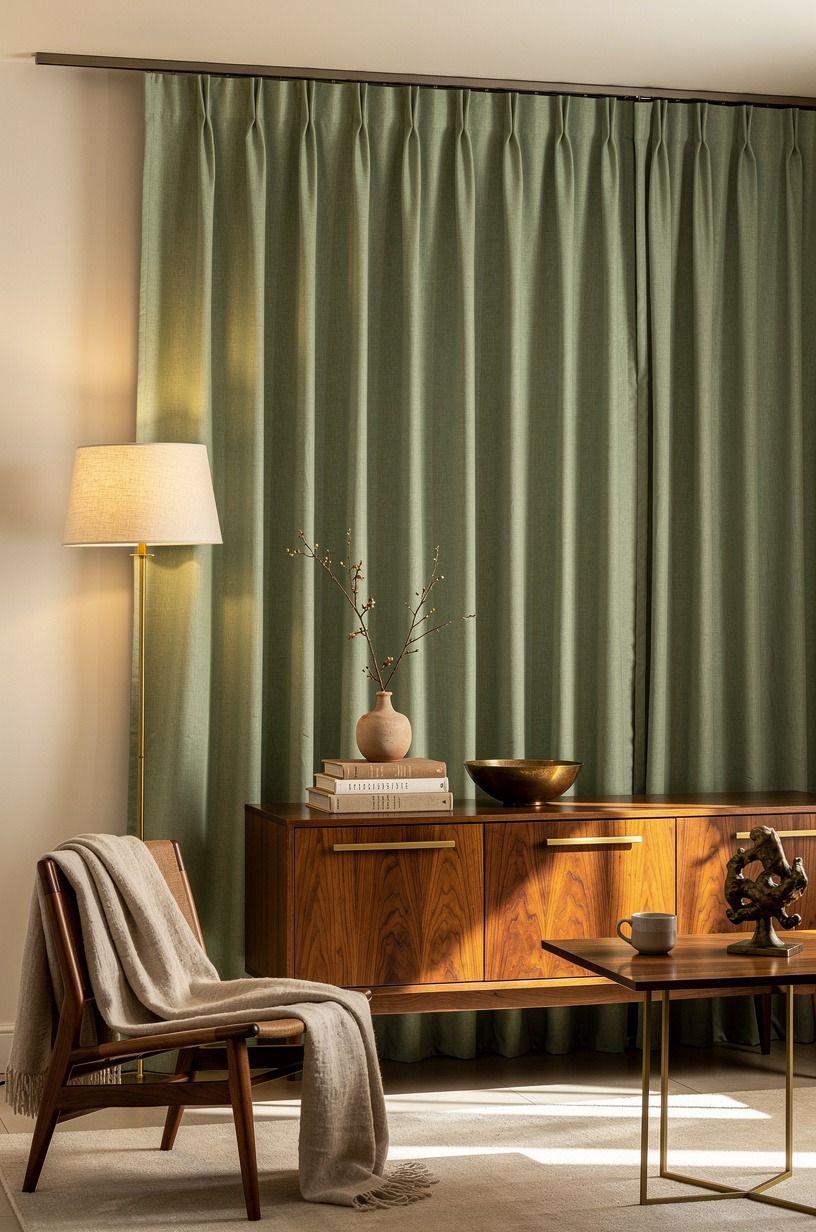
I tested stark white curtains first, and they made my rental feel like a medical office.
12Keep curtains over open shelving, not in front of a doorway
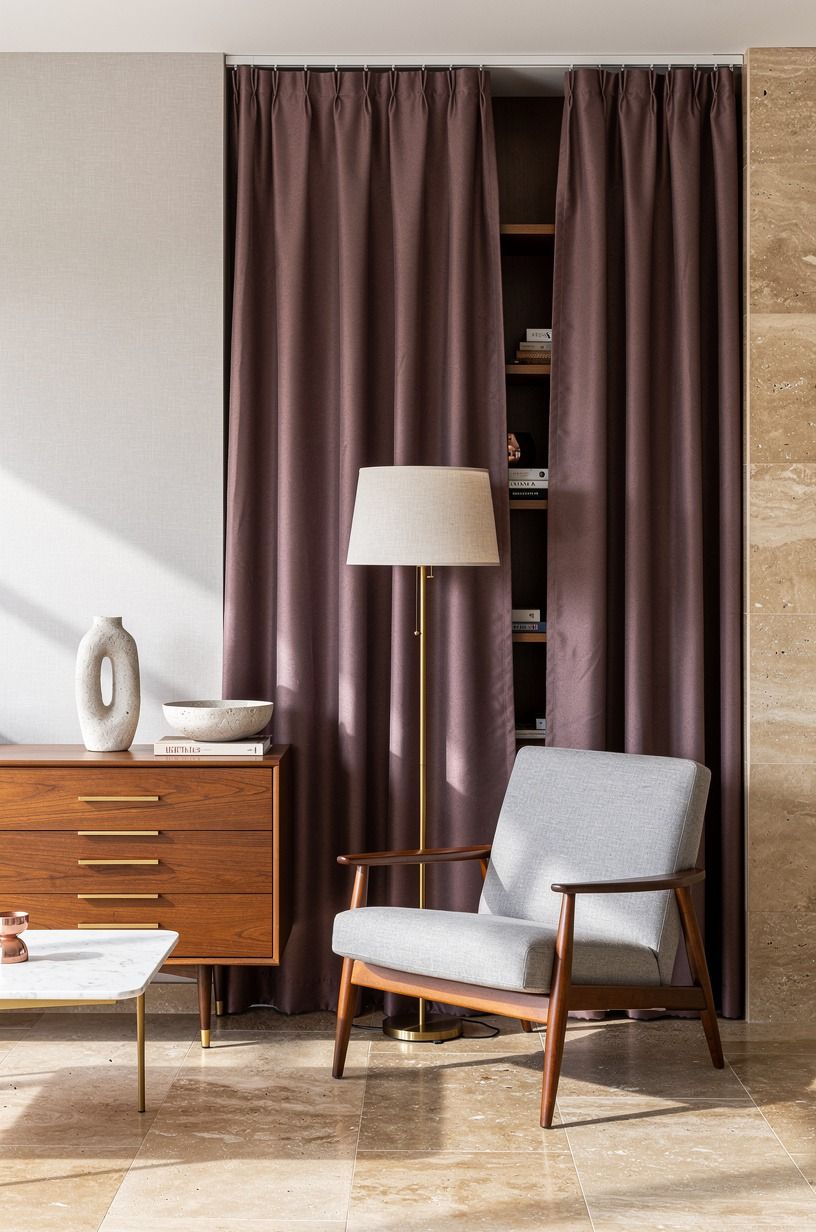
I nearly hung the divider across the entrance, which would have made the room feel private but awkward. Instead, I ran the curtain along the edge of the bed and kept the doorway clear. That small decision protected your first step into the room and made the layout feel natural.
The panels passed in front of a low warm travertine storage shelf, so the fabric had a stable visual anchor. I used rose-gold rings because they slid smoothly and picked up the warm tone of the floor lamp. You don't need expensive hardware, but quiet movement matters when you'll open the curtain every morning.
I also stopped the curtain before the kitchen walkway. A divider should guide movement, not interrupt it. Measure the path with your arms full of laundry, because a layout that works on paper may fail when you carry a basket through it.
For another rental-friendly hanging idea, see these rental bathroom curtain adjustments. The same height principles apply to a room divider.
13Create a double-sided curtain with one calm face
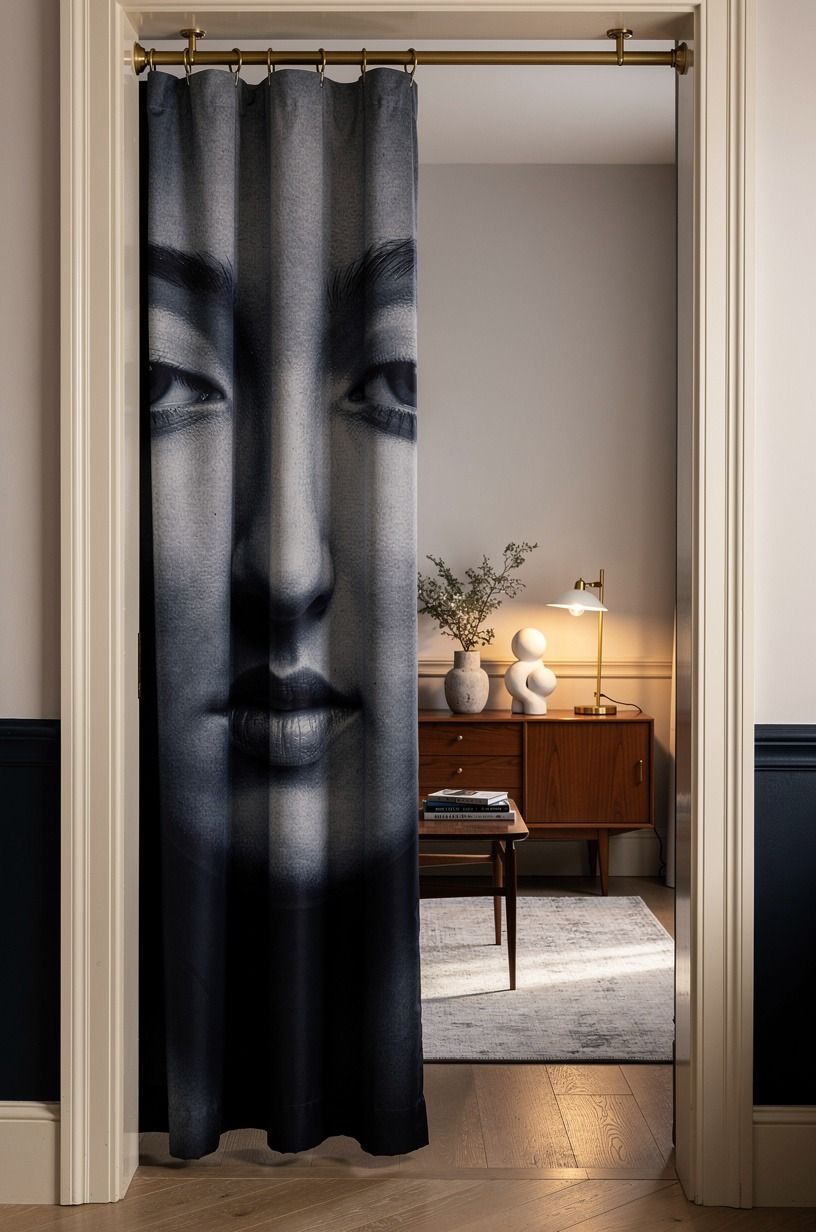
The sofa side of my curtain looked unfinished from behind, so I designed both faces. The sleeping side used a darker fabric, while the living side had a warm ivory cotton panel. You could see the lighter surface from the sofa, and the bed zone kept its deeper color.
Your fabric doesn't have to be identical on both sides if you use a double track. If you have one rod, choose a reversible textile or line the panel so the back doesn't look gray and flimsy. I learned this after turning the curtain and seeing an ugly white backing all evening.
The two-sided approach made the divider feel like part of the room's architecture. It also gave me flexibility when guests visited. I could close the bed area while keeping the living side polished.
If you're unsure how much bed space your layout needs, compare your measurements with this twin bed room size guide. Your curtain will work better when the furniture behind it has enough clearance.
14Open the curtain by day and close it at night
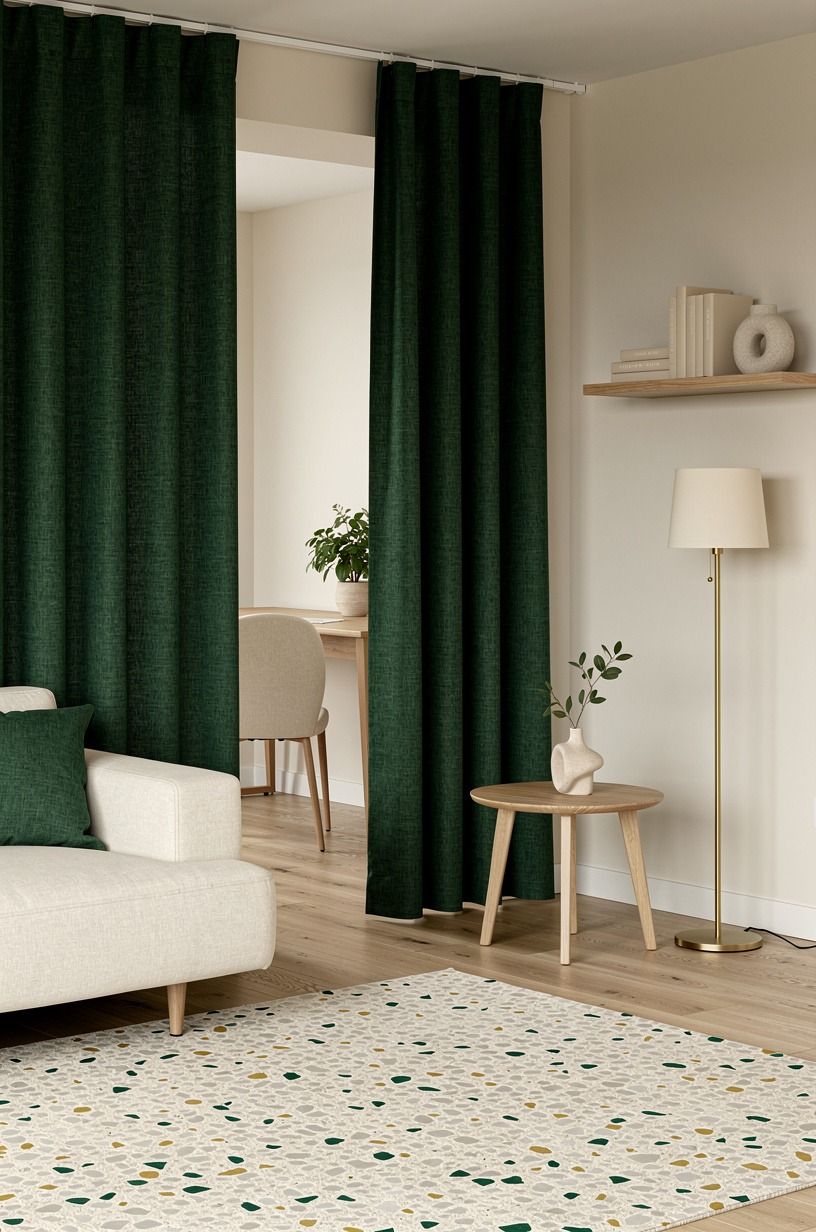
The final idea was less about buying fabric and more about using it on a rhythm. I opened the curtain every morning so light could move through the rental, then closed it when I needed sleep or wanted to stop seeing the kitchen. That routine made your room feel flexible instead of permanently divided.
I kept one oversized-chip terrazzo stool near the opening for a book, a cup, or the curtain tie. It gave me a landing spot without adding another cabinet. You can use a basket or a small chair, but keep the area clear enough that the panel won't drag across clutter.
And the room became easier to reset. When friends came over, I opened the divider and the apartment felt social. When I needed quiet, I closed it and stopped treating the entire rental like one shared stage.
A curtain won't create soundproof privacy, and it shouldn't promise that. What it can create is a visual pause, which was the part I needed most.
How much it cost
My divider cost about $260 because I reused the floor lamp, art, and storage baskets. The fabric and hardware were the main purchases, and the rest came from items I already owned. Your total may be lower if you thrift panels or use a tension rod instead of a ceiling track.
For a focused curtain project, I would spend first on fabric that hangs well. A cheap panel with a stiff hem can make your whole rental feel temporary, while one good linen blend can soften the room immediately.
The broader room budget has different priorities. A wool rug often runs $400-$1,500, linen drapes can cost $120-$400 per pair, and a statement light fixture may land between $150 and $800. You don't need all three to get privacy, so choose the one your room is missing most.
Why the curtain worked better than a wall
I used to think privacy required construction, a proper door, or at least a tall bookcase. After living with the curtain, I think that assumption misses how people use open rooms.
I didn't need to block every sound or create a permanent boundary. I needed a visual signal that told my body when the day was over.
The fabric also gave me control. I could open it when I wanted connection and close it when I wanted a little distance.
That flexibility matters in a rental because your furniture may need to serve three jobs. My bed became private, my desk could disappear, and the sofa stayed open for guests.
I made mistakes along the way. I bought a shiny panel, hung the first rod too low, and placed the divider across the main path. None of those errors were expensive, but each one taught me to measure the movement around the curtain instead of styling only the view from the sofa.
My strongest opinion is this: don't buy the prettiest curtain first. Choose the boundary your daily life needs, then pick the fabric. A warm room isn't created by color alone.
It comes from reducing the small visual demands that keep asking for your attention.
The best part is still the simplest one. At night, I pull the curtain closed, and the kitchen disappears.
You don't have to renovate for a room to feel settled. Sometimes you need one soft line between where you rest and everything waiting for tomorrow.
The Questions Worth Answering First
What is the best curtain room divider for a small rental?
A tension rod with full-length linen-blend panels is the easiest choice because it gives you privacy without drilling. A low-profile divider works best behind a bed or beside a desk. IKEA panels are affordable, while a thrifted curtain can give your room more texture for less money.
Where can I buy curtain divider pieces on a budget?
IKEA, Wayfair, and Target all carry useful panels and rods, while Facebook Marketplace and thrift shops are good for second-hand fabric. Second-hand textiles can save money, but check the hem, smell, and washing instructions before bringing them into your rental.
How much does a curtain room divider makeover cost?
A focused makeover usually costs about $100 to $300 if you already own a lamp and storage. Free layout changes include moving the bed, reusing a curtain you own, and tying panels open during the day. A larger room budget can reach the $200-$800 budget tier.
Can I create a curtain room divider on a budget?
Yes, and you can start with three low-cost moves: rearrange your bed, use a tension rod, and shop your home for baskets or lamps. A washable cotton panel is often a practical first purchase, especially if you need privacy before investing in custom-looking fabric.
Is a curtain divider worth it in a small space?
Yes, because a small room gives the divider a clear job. Visual privacy can make one room feel calmer without taking floor space. Keep the curtain beside, not across, your main walkway, and choose a rug large enough that your furniture overlaps it.
Is a curtain divider a good idea for a rental?
Yes, especially with a tension rod, removable hooks, or a track installed only where your lease allows it. No-damage hardware keeps the change reversible. If you want more sleep privacy, combine a sheer panel with a blackout layer instead of using one heavy curtain.
Where I'd Start First
If I had to pick one, I'd start with the curtain behind the bed. It creates privacy without stealing floor space, and the fabric can hide the kitchen glow when you need sleep. Pin the idea for later, then measure your walkway before buying anything.