
 by
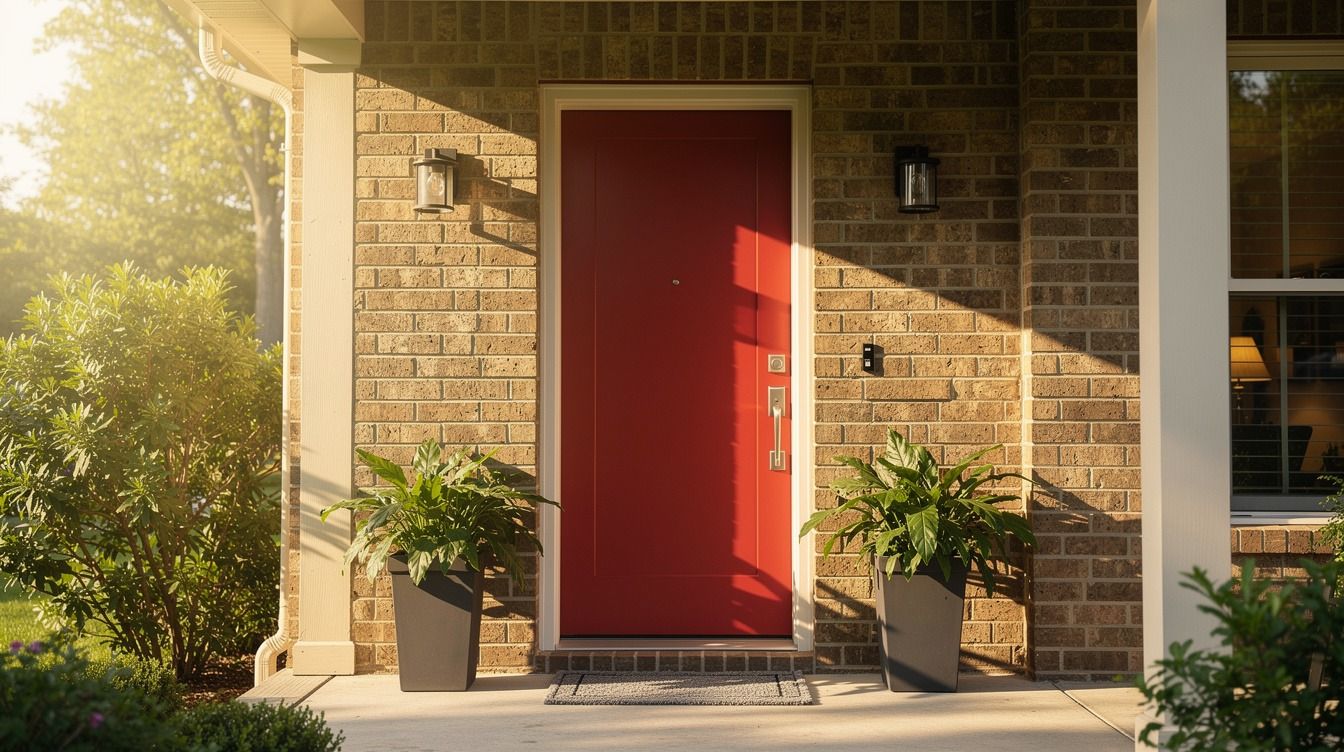
by Red front door ideas work best when you treat paint as the start, not the whole porch plan. I’ve watched a red door look oddly flat beside gray concrete, then turn warm and welcoming once the hardware, light, and planting caught up. Pick your red first. Then give it a reason to belong!
- Start with a red that suits your brick and light
- Clean the canvas before painted front doors get paint
- Remove hardware and save yourself the sloppy edge
- Use the Two-Coat Calm Rule for even color
- Frame the red with trim that doesn’t compete
- Anchor your house door color ideas with dark hardware
- Hang a wreath that leaves room for the paint
- Build the Three-Height Welcome Stack by the steps
- Layer a rug over a mat, but keep the scale honest
- Mix plant leaves instead of adding more red
- Light the threshold with the Porch Glow Rule
- Choose seating that supports coloured front doors
- Paint the porch ceiling or skip it over busy details
- Budget the changes before you buy outdoor extras
- Step back and edit your front door colors story
1Start with a red that suits your brick and light
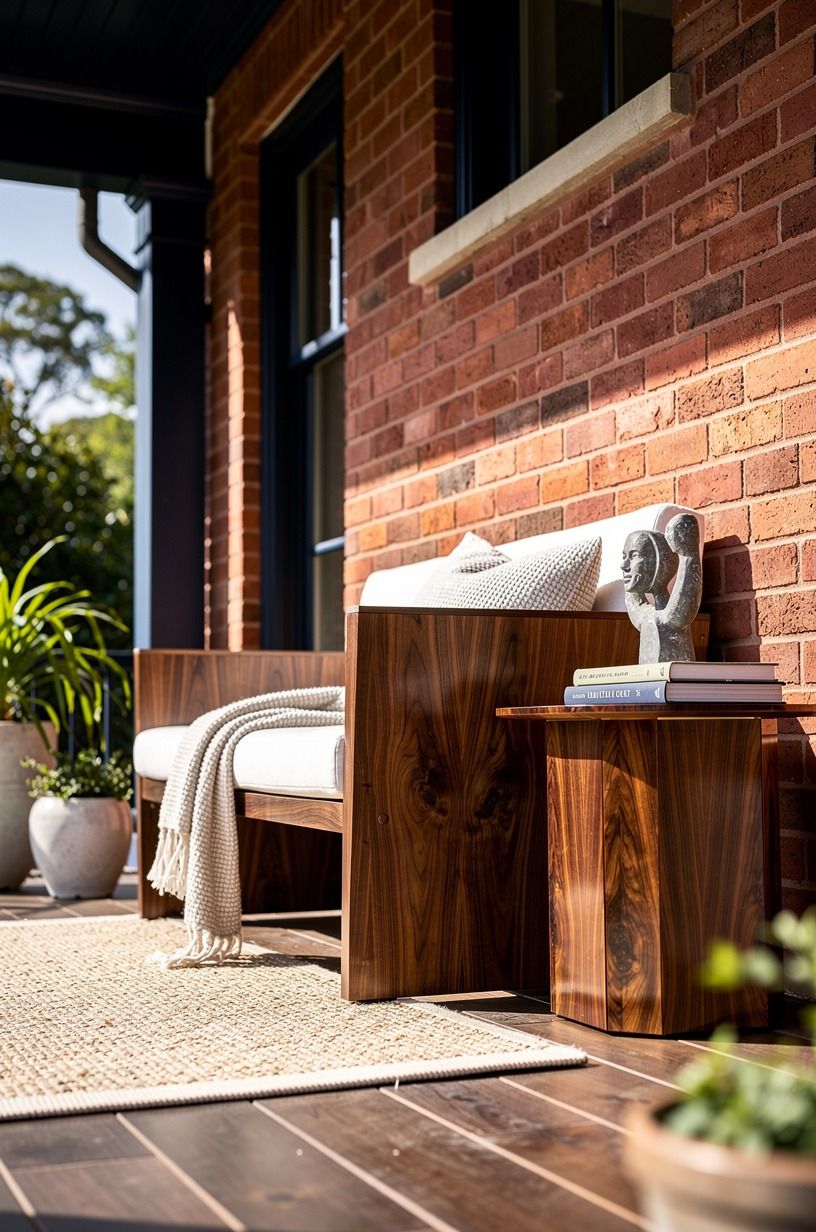
Choose your red after looking at the house at noon and again near sunset. Benjamin Moore Aura Exterior gives you a durable starting point, but the undertone matters more than the label: blue-reds feel bold beside midnight-blue details, while a brick-red reads earthy with ivory trim and warm walnut.
I’d skip a cherry-red sample if your brick already leans orange. You’ll get a loud, almost competitive porch instead of a refined entrance. Tape up large swatches, stand 10 feet back, and use this front door color paint guide before committing.
2Clean the canvas before painted front doors get paint
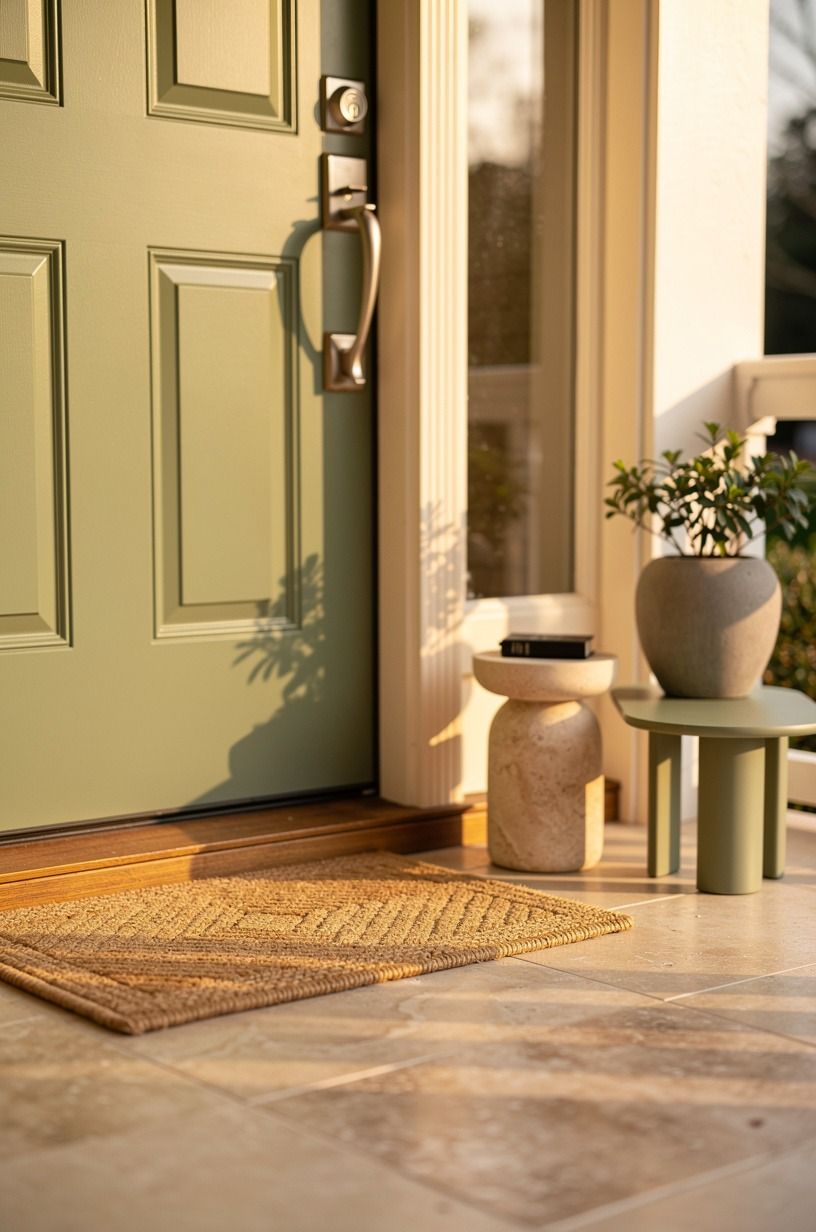
Wash the door, threshold, and trim before you open the paint can. Sage-green details, warm cream, natural wood, and a travertine threshold all look cleaner once the surface prep is done.
3Remove hardware and save yourself the sloppy edge
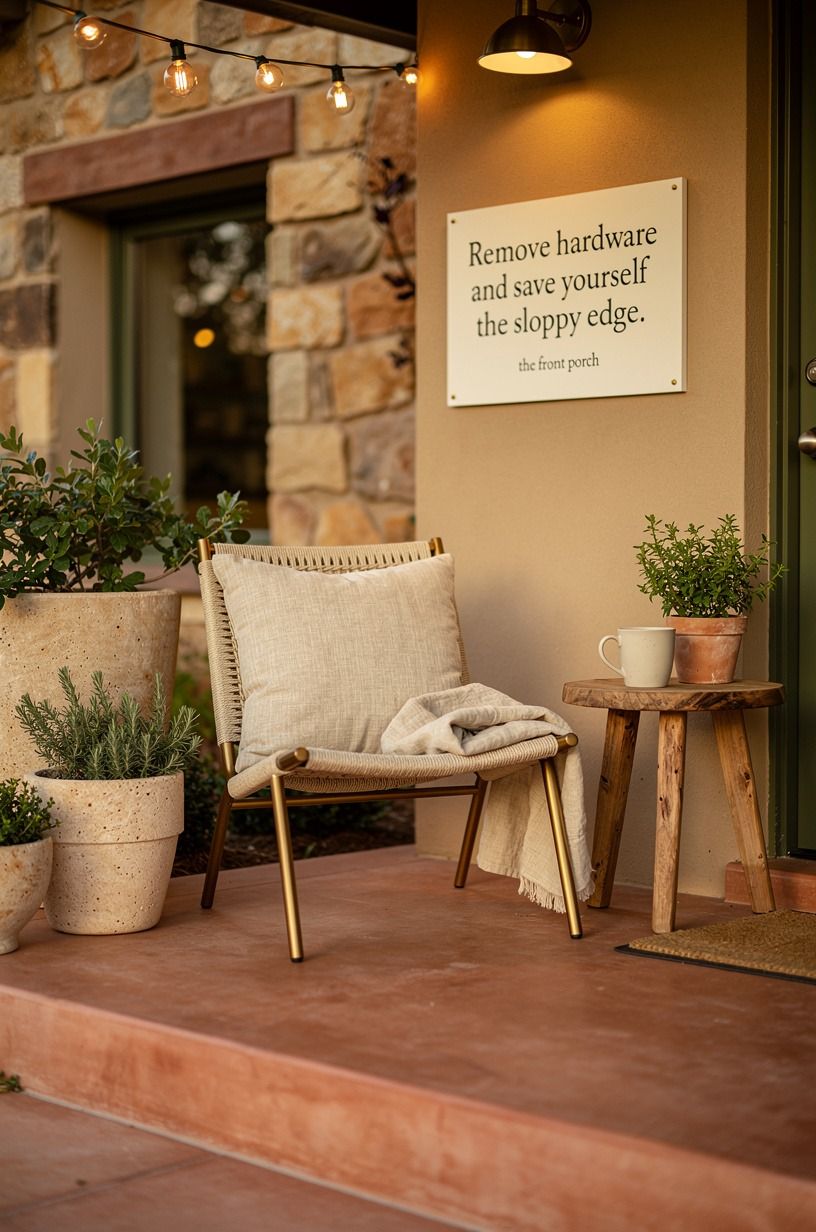
Take off the knocker, handle, numbers, and lock trim if you can. You’ll paint faster, and the red will meet the metal in a clean line instead of a fuzzy little halo that screams weekend project.
I made the lazy choice once and painted around a brass handle. Never again. Unlacquered brass developing patina looks far more intentional against red when the paint edge is sharp, especially with terracotta, olive, and stone nearby.
4Use the Two-Coat Calm Rule for even color
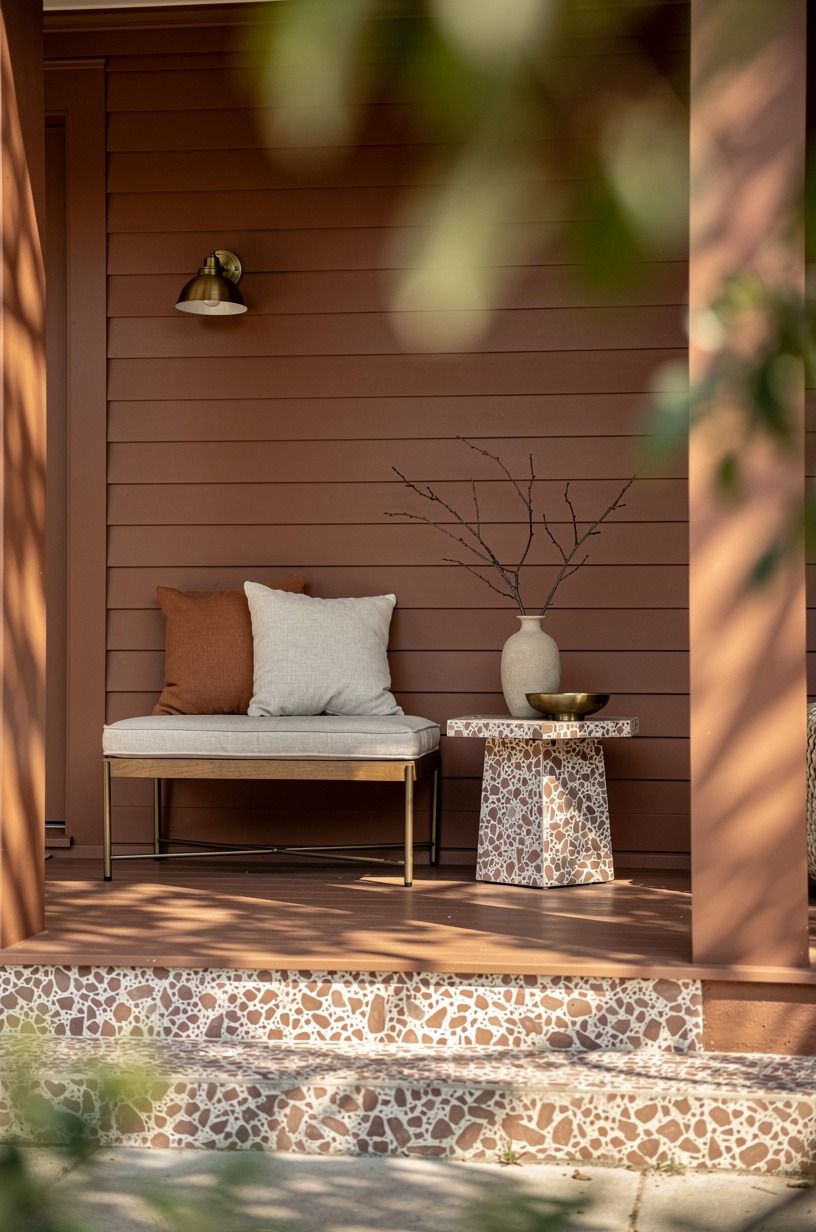
Apply two thin coats rather than one heavy coat. It keeps a clay-toned entry calm beside linen, aged brass, and terrazzo underfoot.
5Frame the red with trim that doesn’t compete
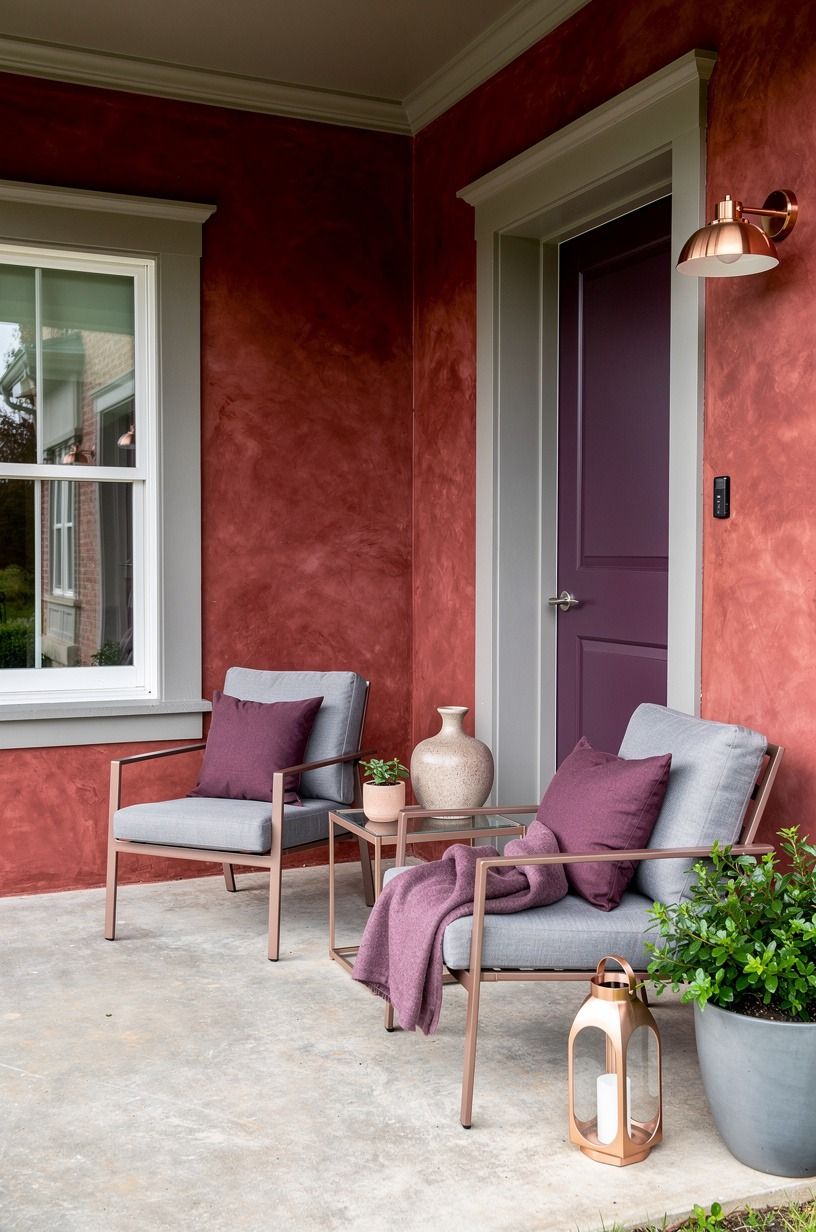
Keep surrounding trim quiet. Farrow & Ball Exterior Eggshell in a soft gray-white can make a deep red door feel crisp without turning the entry into a candy-cane situation.
If your home has red brick, compare the door beside it first. This guide to front door colors for red brick is useful because brick often carries pink, brown, or purple notes you won’t notice until the door is painted. Your trim should support the red, not try to win.
6Anchor your house door color ideas with dark hardware
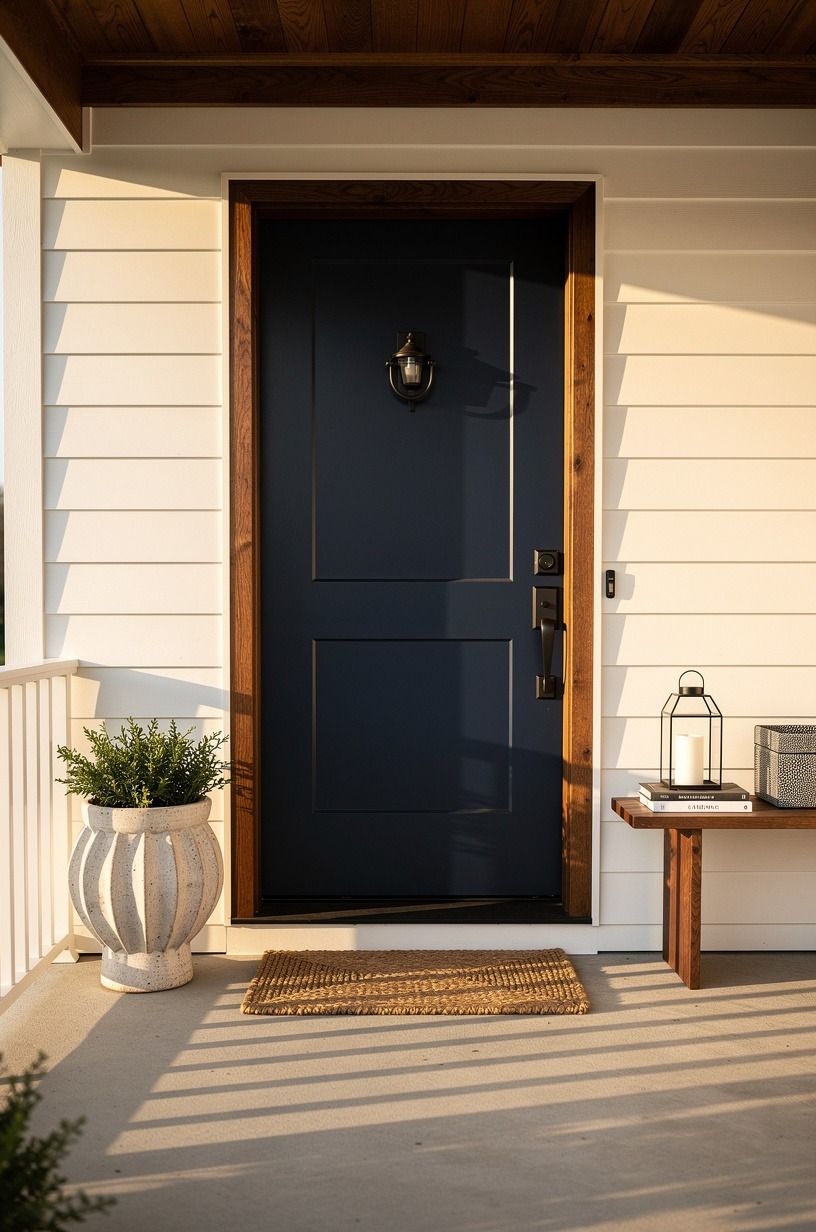
Choose one hardware finish and repeat it. Dark bronze hardware gives red a modern edge; unlacquered brass developing soft patina makes it warmer and a little more traditional.
I prefer dark hardware on a bright signal red because the contrast is clean and graphic. Brass is the better call on wine-red or oxblood paint, where it catches late-afternoon light without looking fussy. Your peephole, mailbox, numbers, and knocker don’t have to match exactly, but they should look related.
7Hang a wreath that leaves room for the paint
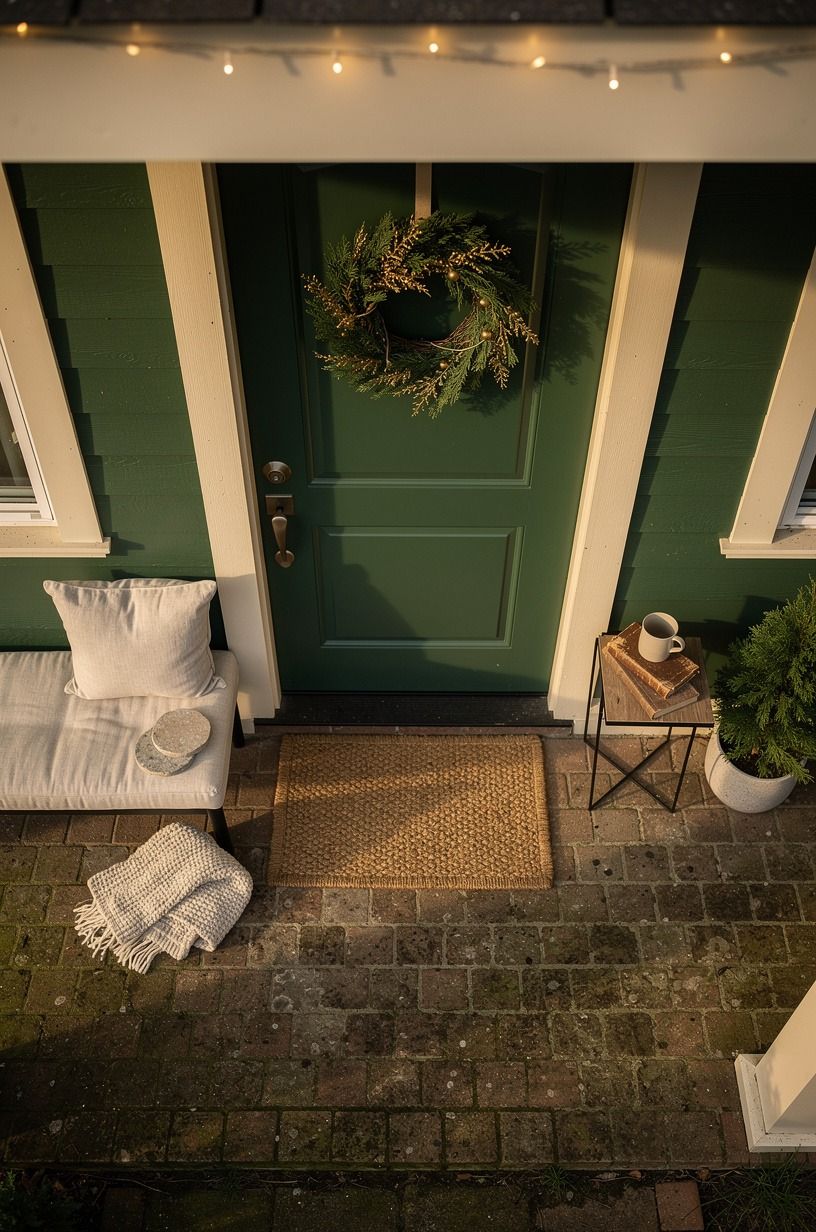
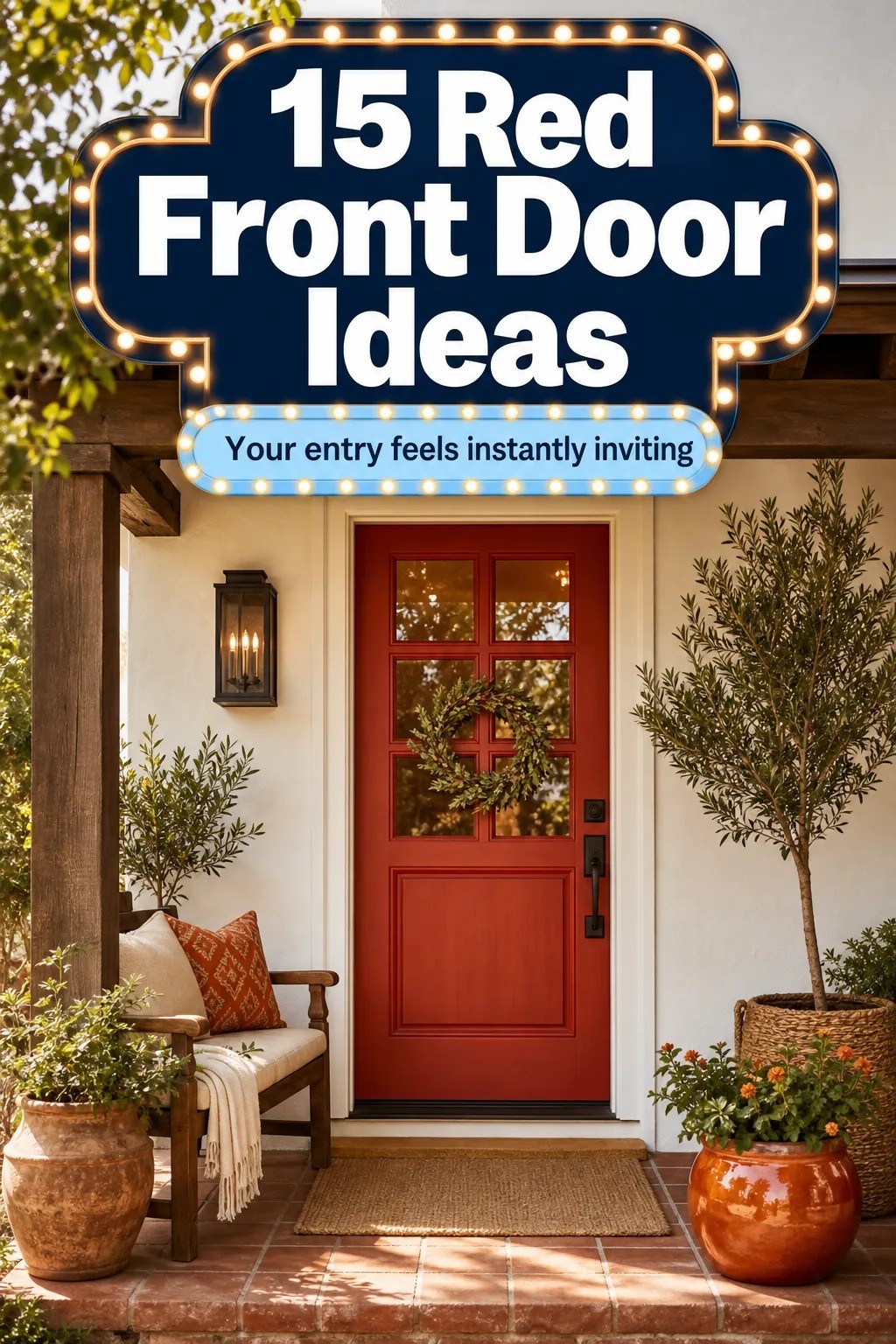
A red door already has plenty to say, so use a wreath with texture instead of more color. Preserved olive branches, dried seed pods, or a simple woven grapevine ring add an organic layer without burying the door.
Skip a giant glossy bow unless you want a holiday-only look. A wreath should reveal red around its edges.
If you’re itching for a seasonal version, these spring wreath ideas for front doors give you a softer direction. Your door still gets the spotlight.
8Build the Three-Height Welcome Stack by the steps
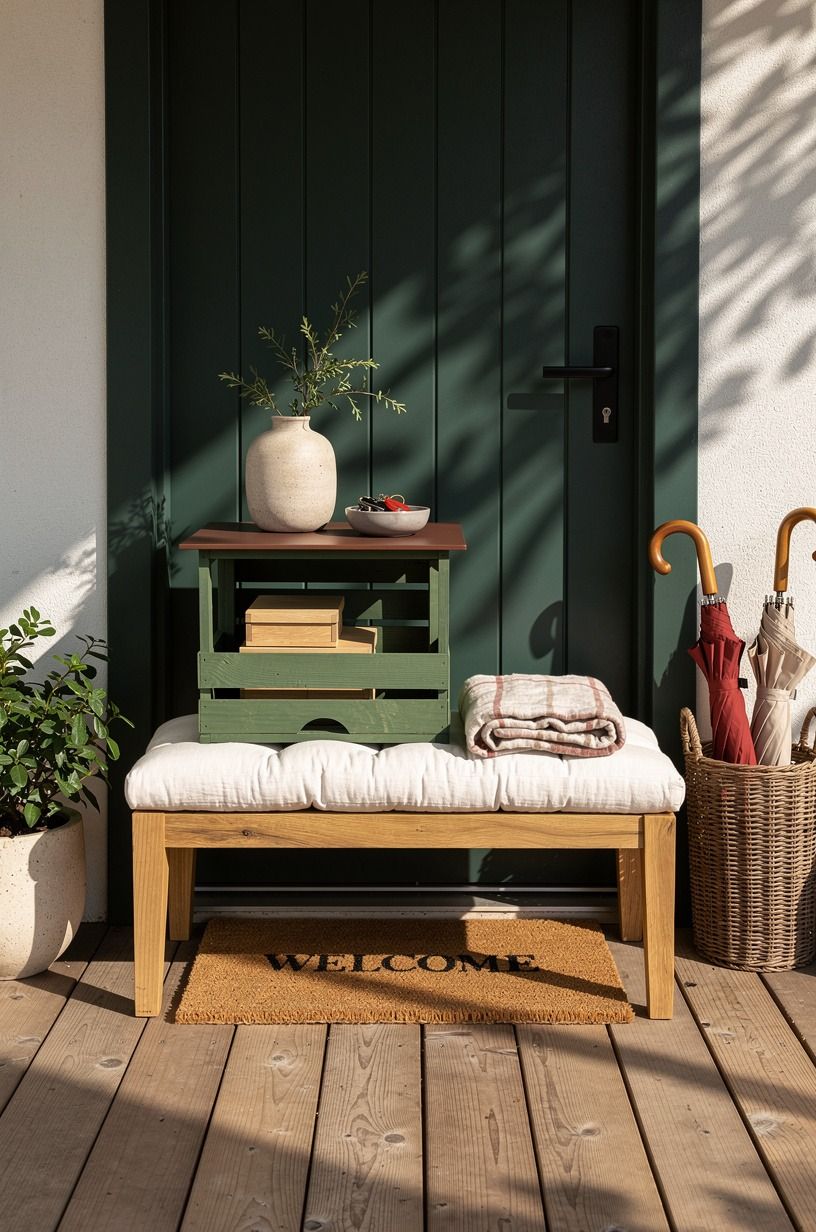
Use three different heights beside your entry: a tall planter, a mid-height lantern, and a low pot or door mat. Forest green, rust, natural oak, and a touch of washed Belgian linen keep the stack inviting without becoming busy.
9Layer a rug over a mat, but keep the scale honest
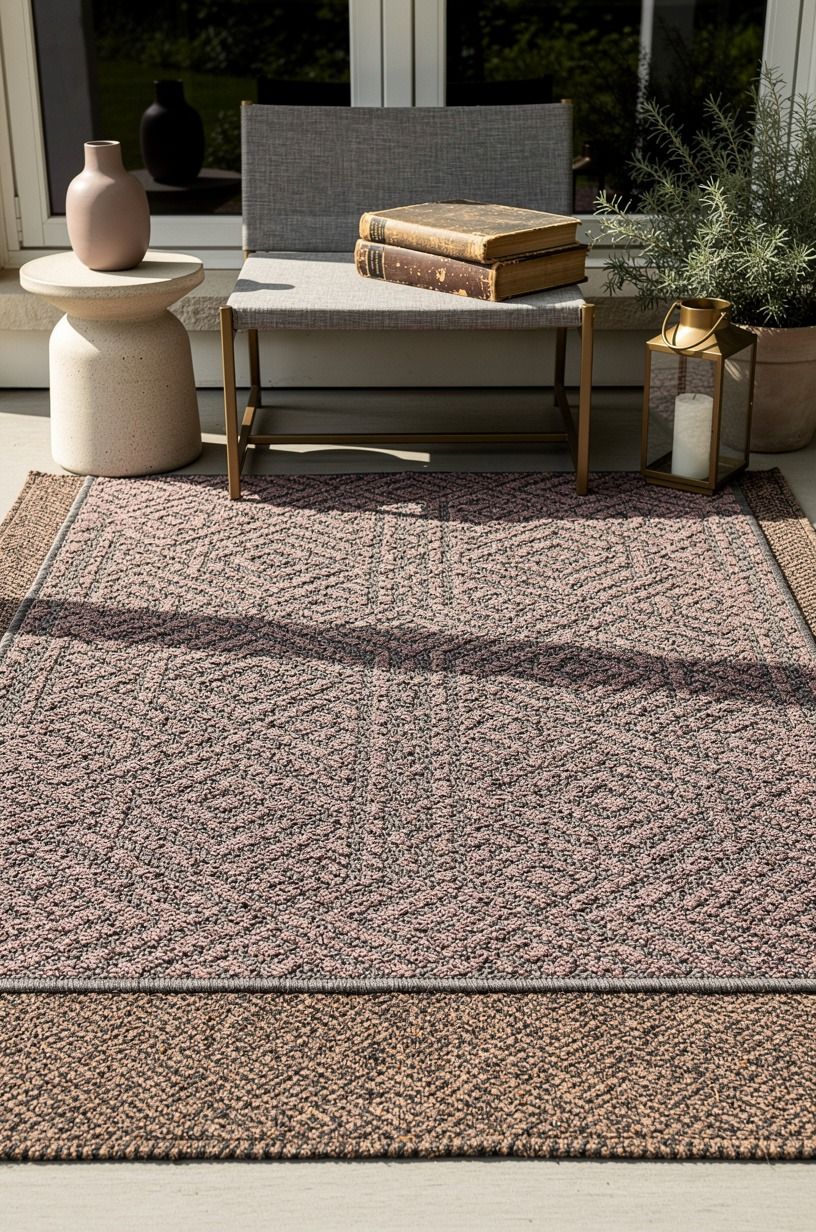
Start with a washable outdoor rug, then place a coir mat on top. Organic bouclé in a dusty-rose or charcoal mix can soften a red door, while brass details keep the porch from feeling too precious.
Choose a rug wide enough that the front legs of nearby seating sit on it, if you have chairs. For a tiny stoop, a striped 2-by-3-foot layer under a simple mat works.
I’d avoid a tiny novelty mat alone. It makes your porch look apologetic.
10Mix plant leaves instead of adding more red
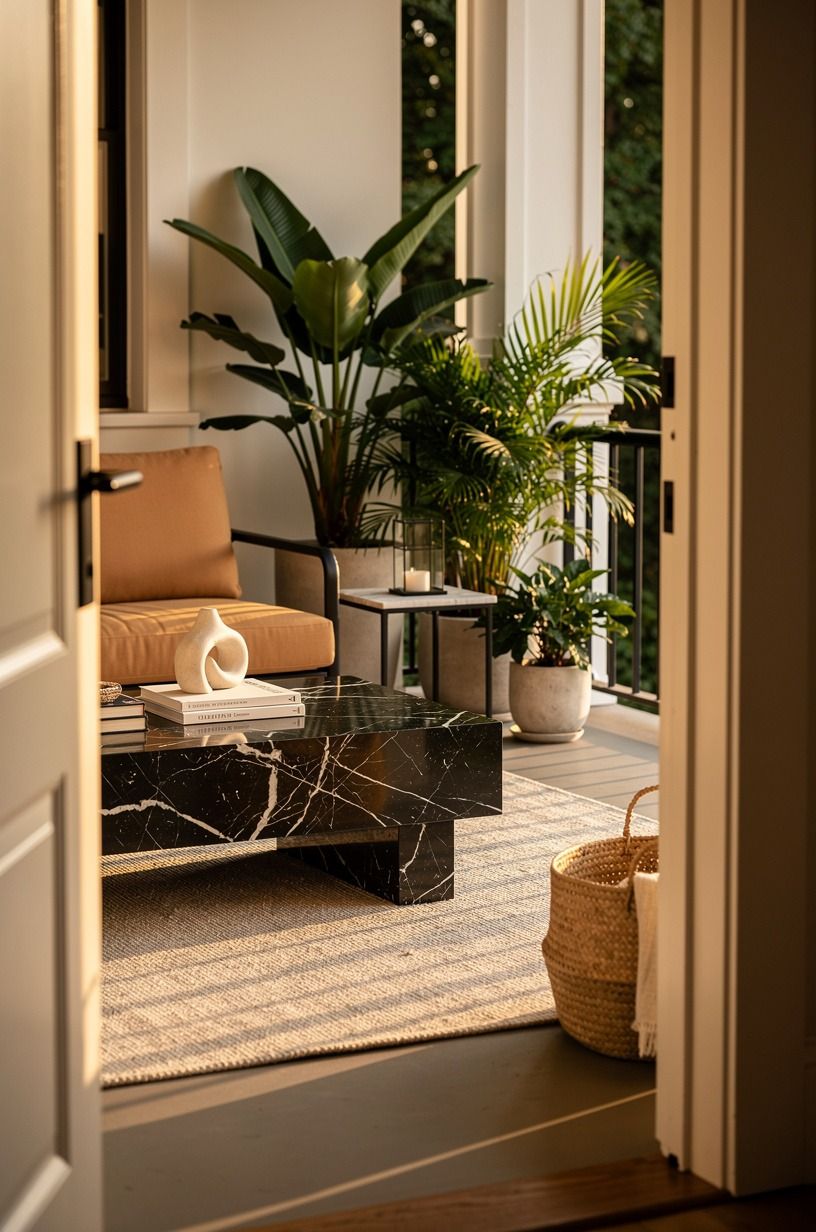
Let foliage cool down the red. Boxwood, trailing ivy, rosemary, or feathery grasses give you a calming green counterpoint, while a warm-white pot with black accents brings in contrast without repeating the paint exactly.
Use two matching planters if your door has a centered, formal look. Use an odd grouping if your porch is relaxed and asymmetrical. Your plants don’t need flowers to do their job.
Leaves, soil, and one good pot can feel more peaceful than a crowded row of blooms.
11Light the threshold with the Porch Glow Rule
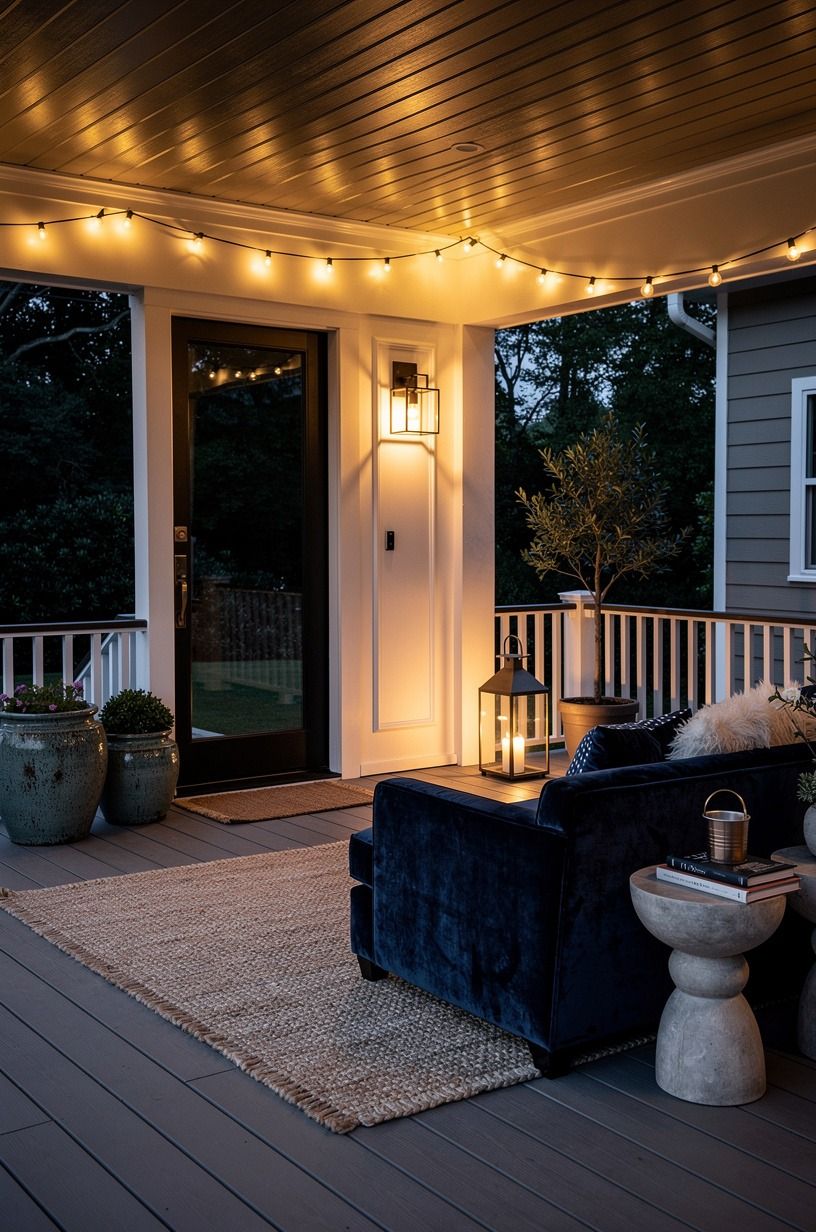
Place light at face level, not just overhead. A pair of aged bronze wall sconces flanking the door makes red look richer after dark and helps guests find the lock without squinting.
Warm bulbs only. Blue-white light turns red paint harsh and makes your porch feel like a loading dock.
If you have room for string lights, use them farther back under a railing or pergola so the entry stays elegant. Midnight blue, copper, ivory, and a deep-pile mohair velvet cushion make that warm glow feel especially rich.
12Choose seating that supports coloured front doors
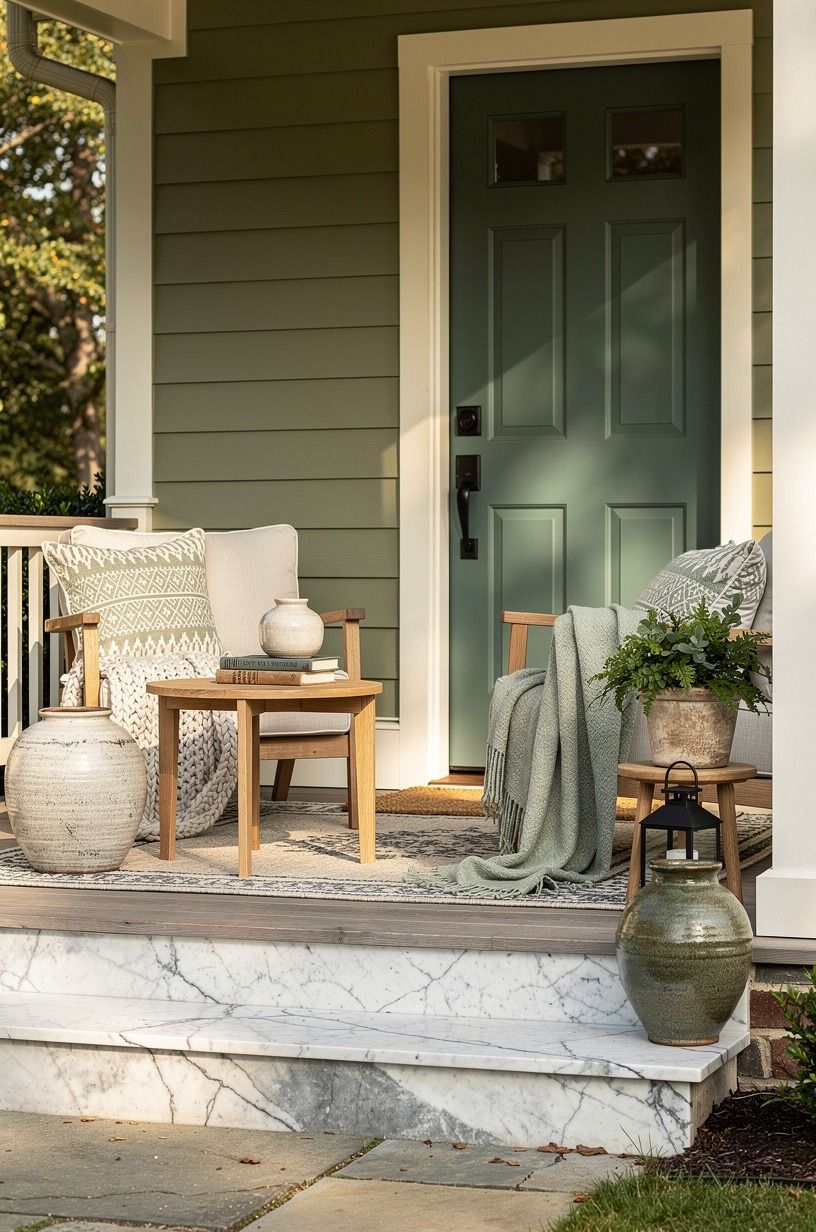
Add one or two chairs only if people can still pass without sidestepping them. Sage green, warm cream, natural wood, and restrained Carrara marble details keep the seating easy beside a coloured door.
13Paint the porch ceiling or skip it over busy details
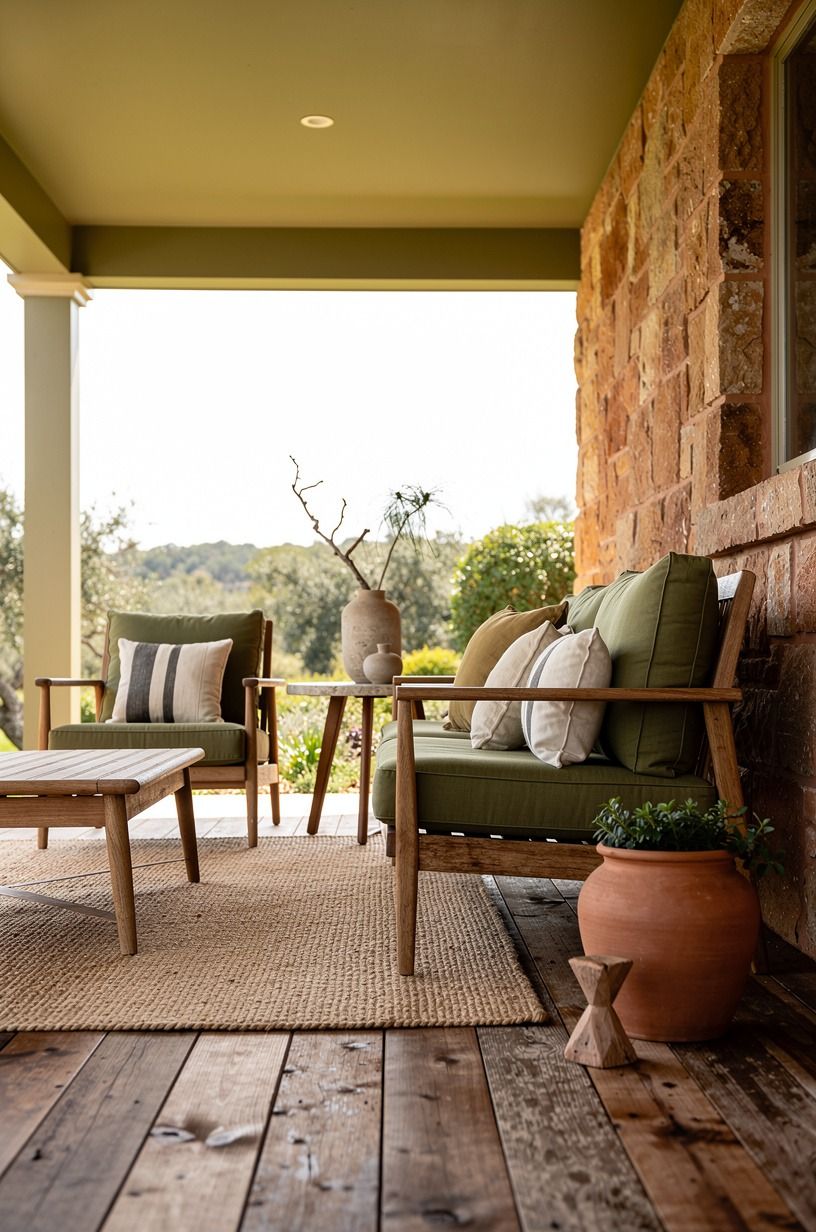
A pale porch ceiling can make a red door feel lighter, especially beneath a deep overhang. Benjamin Moore White Dove OC-17 keeps the ceiling gentle and bright while letting the door stay the dramatic note.
But if you’ve got ornate trim, a weathered teak floor, and a bright red door already, leave the ceiling alone. Too many competing surfaces make your entry restless.
I’ve gone back and forth on this, and restraint wins every time. Your house doesn’t need every idea at once.
14Budget the changes before you buy outdoor extras
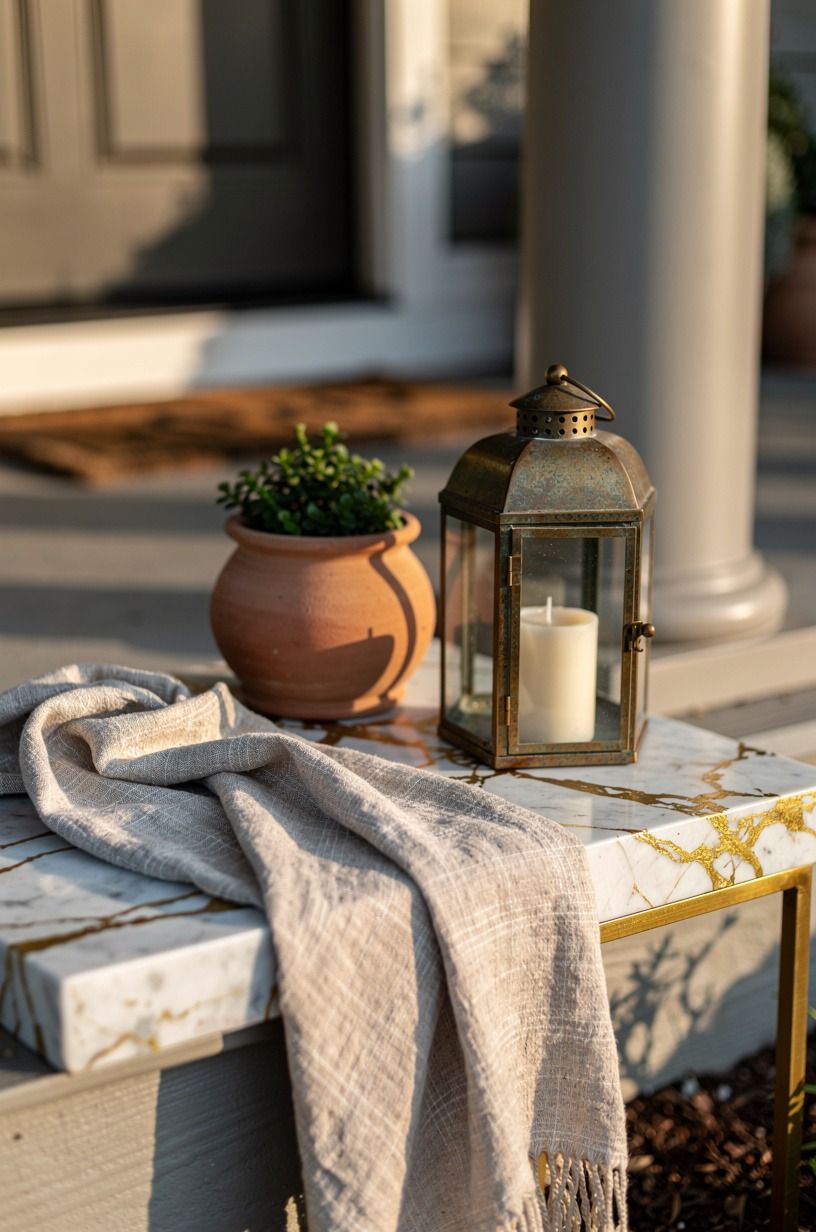
Decide whether you’re refreshing the threshold or rebuilding the whole outdoor zone. Your red door can carry a budget look surprisingly far, but a pergola and paving project lives in a different price universe.
For a front-door refresh, I’d spend first on paint, hardware, a mat, and plants. A Sunbrella outdoor cushion may run $40 to $150 each, while LED string lights typically land around $30 to $120. Clay, linen, aged brass, and a little Calacatta marble can make those practical choices feel considered.
Your money should meet guests at the door, not disappear into random décor.
15Step back and edit your front door colors story
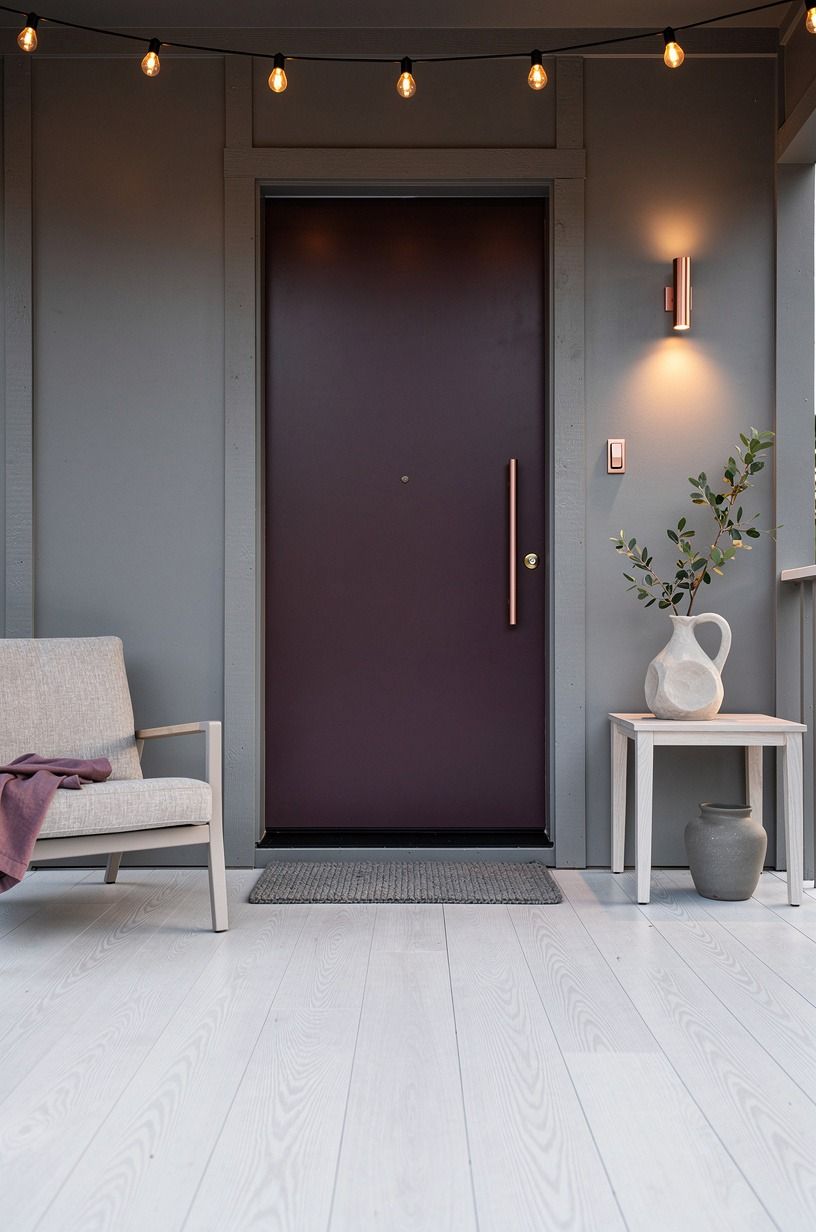
Stand across the street and look at the whole composition. Can you see the red door?
Can you also see a clear path, readable house numbers, and one welcoming point of light? That’s the test.
Remove one thing if the porch feels crowded. Maybe it’s the extra lantern.
Maybe it’s the third planter. But don’t remove the personality.
Plum, soft gray, rose-gold details, and cerused white oak can make the entrance feel layered without losing its point. A red front door should feel like someone lives there, uses the place, and isn’t scared of color!
Why red works when the rest of the porch stays quiet
I think people overcomplicate red front doors because red feels like a commitment. It is a commitment.
You notice it every time you come home with grocery bags, every time a neighbor walks past, every time the light changes and suddenly the paint looks deeper than it did at breakfast. That’s exactly why it works.
A good front door has a job beyond curb appeal. It tells you where the house begins. In a row of beige siding, dark roofs, and black mailboxes, red gives the entry some gravity.
Not fake charm. Real orientation.
Your eye lands there first, and then you notice the brass number, the green leaves, the old brick, the small crack in the step that you keep meaning to patch.
I’ve seen homeowners try to soften red with five pillows, three signs, seasonal flags, and a pile of tiny pots. It doesn’t help.
The paint is already the energy. Let the rest of the porch offer texture and breathing room. A woven mat under your shoes, a leafy plant brushing the railing, a warm lamp near the lock.
Those things make red feel lived-in instead of theatrical.
And there’s a practical side. A red door can make an ordinary facade easier to remember, which matters when guests are circling the block or your teenager tells a friend, “It’s the house with the red door.” Small detail. Big payoff.
I’d rather see one confident red door with quiet surroundings than a neutral door drowning in accessories. Your porch doesn’t need to prove anything. It just needs to welcome you back.
The Questions I Get Asked Most
What is the best red front door idea for a small front porch?
Choose a red door, a slim dark sconce, and one tall planter. That’s the best visual return for a small porch because you keep the walkway open while giving your entry height and contrast. An IKEA PS FEJÖ planter can work if you need a simple budget option.
Where can I buy red front door pieces on a budget?
Start with Target Threshold, IKEA, and Wayfair for mats, planters, and outdoor pillows. Check Facebook Marketplace or a thrift shop for brass knockers and wood benches. Your best find is often an old solid piece that only needs cleaning, not a full makeover.
How much does a red front door makeover cost?
A simple red front door makeover costs about $200 to $900 in typical US spending. Paint, a mat, and plants do most of the work. The paint is the value move, because you can change the whole first impression without replacing the door.
Can I create a red front door look on a budget?
Yes, and you can start with what you own. Clean the door, regroup existing pots, and move an indoor-looking mat out of sight. Add paint and one coir doormat if you can.
Your porch will feel warmer without a shopping spree.
Is a red front door worth it in a small space?
Yes, it’s worth it because a small porch gives color a clear focal point. Keep your accessories low and your path open. A single strong entrance looks more intentional than several small objects fighting for attention.
Is a red front door a good idea for a rental?
Yes, if your landlord allows paint or you can restore the original color later. Use removable house numbers, a tension-mounted wreath hook, and portable planters. For more temporary color inspiration, see these blue front door ideas.
Where I’d Start First
If I had to pick one step, I’d start with the red paint. You can’t layer welcome onto a door that disappears into the facade; every mat, plant, and light will keep trying to rescue it. Pin your favorite red, then let the porch build around it.