
 by
by Quick verdict: The GhostBed mattress makes the most sense for back and combination sleepers who want a firmer, responsive foam bed. Its aerated latex layer feels livelier than slow memory foam, but pressure-sensitive side sleepers may find the Classic too firm. The construction is more convincing for mobility than deep cushioning.
My materials verdict: GhostBed’s latex-over-memory-foam design is the important part. Latex supplies bounce and reduces the stuck-in-foam sensation, while memory foam adds contouring underneath. The tradeoff is simple: the quicker surface does not provide the deep cradle many side sleepers expect from memory foam.
The GhostBed lineup includes all-foam and hybrid constructions. The right model depends less on cooling language and more on whether you need pressure relief, stronger edges, or easy movement. The Classic is the straightforward foam option, the Flex adds coils, and the Luxe places greater emphasis on cooling materials and contouring.
Alternative worth comparing: The Saatva Classic uses an innerspring construction rather than GhostBed’s foam-heavy design. It offers multiple firmness choices, white-glove delivery, a long home trial, and a lifetime warranty according to Saatva’s published policies. Those differences make it a relevant construction comparison, not an automatic replacement for GhostBed.
Compare the Saatva Classic construction and terms
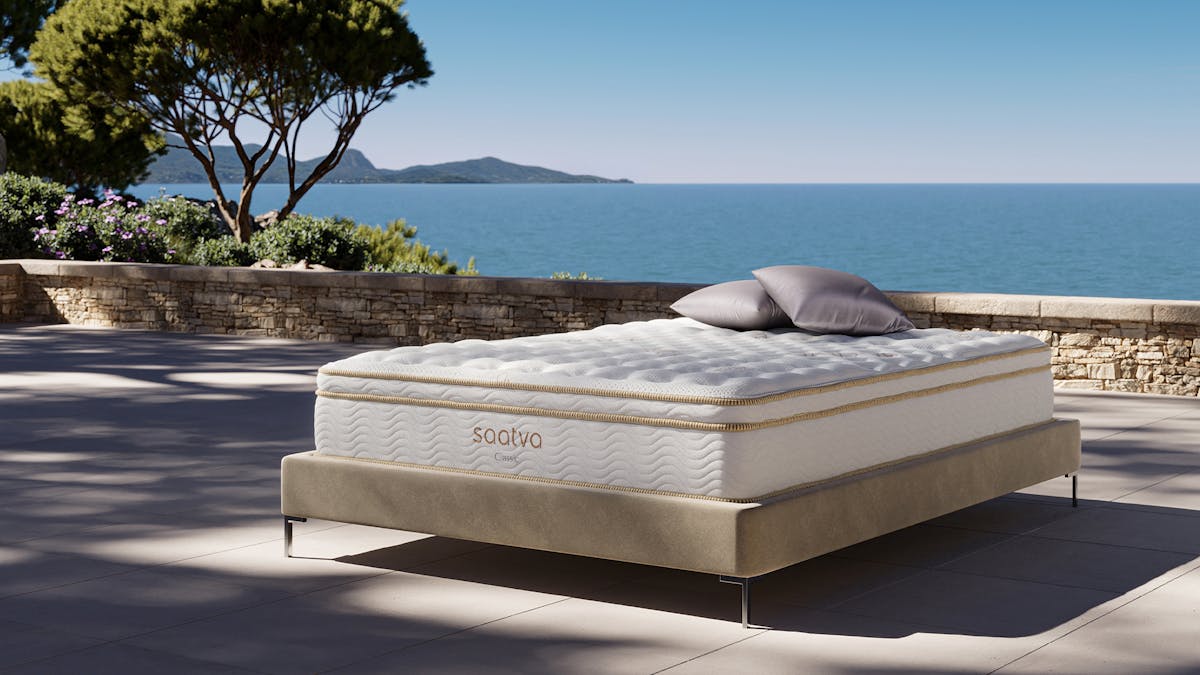
A mattress can seem acceptable for a long time while gradual foam softening quietly changes its support. Materials and construction deserve more attention than the first showroom impression.
Read why our editor switched to Saatva
GhostBed mattress review and overall verdict
GhostBed built its name around foam mattresses intended to feel cooler and quicker-moving than traditional memory foam. The original GhostBed Classic combines aerated latex, gel memory foam, and a foam support core. That is a sensible recipe for sleepers who dislike the slow response of an all-memory-foam bed.
I see the GhostBed Classic as a firm-leaning, responsive foam mattress rather than a deeply cushioning one. Its latex surface pushes back more quickly when you roll over. That makes changing positions easier, but it also reduces the enveloping pressure relief some sleepers expect from memory foam.
Buy it if: you sleep mainly on your back, change positions frequently, dislike the dense feel of conventional memory foam, or prefer resting on the mattress instead of sinking far into it.
Think twice if: you are a pressure-sensitive side sleeper, need a reinforced sitting edge, or want especially strong isolation from a restless partner.
The GhostBed name covers several constructions, so shoppers should not treat every model as interchangeable. The Classic is the clearest expression of the brand’s latex-and-memory-foam identity. The Flex uses coils, the Luxe emphasizes cooling foam, and the 3D Matrix adds a polymer comfort layer over a hybrid support system.
Before ordering, read the manufacturer’s current policy for the exact model and seller. Trial and warranty language can differ by product or retailer, and a mattress purchased through a third party may not receive the same return treatment as one bought directly from the brand.
GhostBed lineup at a glance
| Model | Construction | General feel | Best reason to consider it |
|---|---|---|---|
| GhostBed Classic | Latex and foam | Medium-firm and responsive | A quicker surface than conventional memory foam |
| GhostBed Luxe | All-foam | Softer and more contouring | Greater emphasis on cooling and pressure relief |
| GhostBed Flex | Hybrid | Balanced and buoyant | Coils for airflow and stronger perimeter support |
| GhostBed 3D Matrix | Hybrid with a polymer layer | Responsive with added contouring | The most complex comfort system in the lineup |
GhostBed Classic
The Classic is the cleanest expression of GhostBed’s original idea. Aerated latex sits over gel memory foam, with a firmer foam core carrying most of the load. The latex matters because it changes how the entire mattress behaves. It responds faster than memory foam, feels springier under the hips and shoulders, and is less likely to hold the body in one deep impression.
The memory-foam layer underneath tempers some of that bounce. It adds contouring and helps distribute pressure, but it is not the topmost sensation. Sleepers expecting a slow, plush memory-foam hug may therefore find the Classic more supportive and less enveloping than anticipated.
GhostBed Luxe
The Luxe is the foam model aimed more directly at hot sleepers and people who want a plusher surface. Its construction uses additional cooling-oriented materials and a cool-touch cover according to GhostBed’s product description. Those materials may improve the initial surface sensation, although no foam construction can promise the same temperature experience in every room or climate.
Compared with the Classic, the Luxe should feel more contouring and less latex-forward. That can help side sleepers who need more give under the shoulder. The downside is that a thicker foam comfort system can feel slower and may offer less edge stability than a well-built hybrid.
GhostBed Flex
The Flex changes the support system from a solid foam core to coils. That construction gives air more room to circulate and usually improves the usable sleeping surface near the perimeter. Coils also react more directly to movement, so the Flex should feel easier to move across than a thick all-foam mattress.
A hybrid is not automatically more durable. Coils avoid asking one large foam block to carry the entire sleeper load, but long-term performance still depends heavily on the quality and thickness of the comfort foams above those coils.
GhostBed 3D Matrix
The 3D Matrix is the most elaborate GhostBed model. Its polymer layer is intended to redistribute pressure while allowing the sleeper to remain supported by the hybrid structure beneath it, according to GhostBed’s description. This is a more complicated build than the Classic, and that complexity matters only if the resulting feel suits your body and sleeping position.
I would not choose this model solely because it sits higher in the range. Compare the surface response, edge behavior, return terms, and replacement cost. A simpler construction that matches your firmness needs can make more sense over the long term.
How the GhostBed Classic is constructed
Aerated latex comfort layer
Latex is the defining material in the Classic. The aeration holes create channels through the layer and reduce the amount of solid material immediately around the sleeper. That arrangement supports airflow within the comfort layer, although room temperature, bedding, body heat, and the layers below it still influence how warm the mattress feels.
Latex also behaves differently from memory foam under repeated compression. It rebounds promptly and generally resists developing a slow body impression better than very soft, low-density polyurethane foam. That does not make the entire mattress immune to softening because the layers below the latex remain part of the durability equation.
Gel memory foam transition
The memory foam beneath the latex provides contouring without dominating the first impression. Gel additives are widely used in mattress foam, but the presence of gel alone does not demonstrate that a bed will sleep cool. The layer’s thickness, airflow, firmness, and position in the construction matter more than the label by itself.
Because latex sits above this layer, the sleeper receives less of the slow memory-foam response than on a mattress with memory foam directly under the cover. That favors mobility but is less useful for anyone seeking a deep, slow-melting cradle.
Foam support core
The support core keeps the spine from dropping too far and gives the mattress its basic shape. This is also the layer I would watch most closely for long-term durability. Latex may retain its resilience, but a foam mattress can still soften if its polyurethane support core loses firmness.
GhostBed does not use perimeter coils in the Classic, so the edges depend on foam firmness rather than mechanical reinforcement. The surface may remain usable while lying down yet compress more noticeably when someone sits in one concentrated spot.
Firmness, support, and sleeping positions
Back sleepers
Back sleepers are the clearest match for the Classic. The responsive latex surface should let the hips settle without creating the slow, deep sink associated with softer memory foam. The firmer support underneath can help prevent the pelvis from dropping too far.
Body weight still changes the result. A lighter sleeper may experience the same surface as quite firm because the comfort layers barely compress. A heavier sleeper may reach the support core more readily and should pay close attention to whether the comfort system supplies enough cushioning.
Side sleepers
Side sleepers create concentrated pressure at the shoulder and hip. The Classic’s latex bounce and medium-firm character may not allow enough depth for a pressure-sensitive side sleeper, especially someone with broad shoulders or a lighter body that does not compress the surface very far.
The Luxe may be the more logical GhostBed option for someone committed to an all-foam construction but wanting additional contouring. A hybrid with a more forgiving comfort layer can also provide a better balance of shoulder relief and perimeter support.
Stomach sleepers
Stomach sleepers often need a surface that prevents the hips from sinking well below the rib cage. The Classic’s firmer, faster response can work in that role. Pillow height and body shape still matter, though. A mattress that holds the pelvis level cannot compensate for a pillow that pushes the neck too far upward.
Combination sleepers
Combination sleepers should appreciate the latex layer most. It springs back as weight shifts, reducing the effort needed to roll between the back and side. That responsiveness is the Classic’s central advantage over slow memory foam.
The same bounce can transfer more movement across the bed than a thick, soft memory-foam surface. Couples should decide which quality matters more to them: easier repositioning or stronger damping of a partner’s motion.
Cooling and temperature control
GhostBed markets cooling heavily, but I would keep expectations grounded. The Classic has a sensible material arrangement for reducing the dense, heat-retaining feel associated with some memory-foam beds. Aerated latex is on top, and the memory foam is positioned below it rather than directly around the body.
That does not turn the Classic into an actively cooled surface. Cooling covers often feel cool at first contact, while overnight behavior depends on heat transfer through the complete mattress. Sheets, mattress protectors, sleepwear, humidity, and bedroom temperature can overwhelm a cover’s initial sensation.
The Flex has a structural airflow advantage because coils leave open space inside the support system. The Luxe adds more cooling-oriented surface materials according to GhostBed’s product description. Hot sleepers deciding between them should compare the Flex’s airflow with the Luxe’s softer foam feel instead of assuming a cooling label settles the question.
The Saatva Classic is another construction to examine if you want an open coil system, a less foam-dominant surface, and reinforced edges according to Saatva. GhostBed remains the more direct fit if responsive foam is your priority.
Compare the Saatva Classic support system
Review Saatva’s mattress constructions
Pressure relief, motion isolation, and edges
Pressure relief
The Classic offers moderate contouring rather than a deep hug. Latex spreads pressure while pushing back quickly, and the underlying memory foam contributes cushioning. This combination can feel balanced to back sleepers but less forgiving at the shoulder for strict side sleepers.
Pressure relief should not be confused with softness alone. A surface can feel soft initially and still let a sleeper press through to a firmer layer. Layer thickness, body weight, and sleeping position determine where the pressure ultimately lands.
Motion isolation
Foam absorbs movement, but latex returns energy more quickly than slow memory foam. Based on those material properties, I would expect the Classic to control ordinary movement reasonably well while feeling livelier than an all-memory-foam bed. Highly movement-sensitive couples may prefer a slower comfort system.
The Flex adds coils, which can create a more visible response when someone changes position. Pocketed coils restrict how much movement travels through the support unit, but the final result also depends on the foam layers and perimeter design.
Edge support
Edge support is not the Classic’s main strength. Its perimeter is part of the same foam structure as the center, so seated weight can compress it noticeably. That matters to people who sit on the edge to dress, sleep close to the side, or need a stable surface when standing.
The Flex is the more sensible GhostBed choice if edge stability is a priority. The Saatva Classic also uses a reinforced perimeter according to its manufacturer, making it a relevant comparison for sleepers who want to use more of the mattress surface.
GhostBed comparisons
These focused comparisons examine the construction and feel differences in greater detail: GhostBed vs Nectar, GhostBed vs Puffy,, and Saatva vs GhostBed Flex.
GhostBed versus Nectar
The central difference is response. GhostBed’s latex-topped Classic should feel quicker and more buoyant, while Nectar’s memory-foam identity leans toward slower contouring. Back and combination sleepers may prefer GhostBed’s mobility. Sleepers seeking a more noticeable memory-foam embrace may lean the other way.
GhostBed versus Puffy
GhostBed generally suits shoppers seeking a firmer and more responsive surface. Puffy is positioned around a softer, more contouring foam feel. That makes the comparison especially relevant for side sleepers deciding between greater pressure relief and easier movement.
GhostBed versus Amerisleep
Amerisleep offers multiple foam configurations, while GhostBed’s Classic is built around the contrast between latex bounce and memory-foam contouring. The better choice depends on firmness and sleeping position, not simply which company uses more proprietary material names.
GhostBed Flex versus Saatva Classic
Both mattresses use coils, but they approach the comfort system differently. The Flex is a boxed hybrid with foam above pocketed coils. The Saatva Classic uses an innerspring-oriented design, multiple firmness choices, and white-glove delivery according to Saatva’s published information.
GhostBed alternatives by construction
Saatva Classic
The Saatva Classic is my main alternative for shoppers whose priorities do not match the GhostBed Classic. Its coil construction addresses perimeter stability and open internal airflow differently from GhostBed’s foam core. Multiple firmness choices also give buyers more control over the surface feel, according to Saatva.
Saatva describes the Classic as a Euro-top innerspring with zoned support, white-glove delivery, a long home trial, and a lifetime warranty. Verify the current terms with the manufacturer before ordering because policies and eligibility requirements can change.
Review the Saatva Classic offer
See the Saatva Classic construction
Read Saatva’s current price and policies
Other mattresses to compare
The Sweetnight option is relevant to shoppers seeking a lower-cost hybrid construction. Compare its foam specifications, edge design, seller-specific return policy, and current warranty rather than relying on the word “cooling.”
Botanical Bliss is the more direct comparison for shoppers interested in a latex-forward mattress. Its feel and material approach differ from GhostBed’s thinner latex-over-memory-foam construction, so it is worth examining if latex durability and a buoyant surface are the priorities.
The AS3 is another medium-feel foam option. It makes more sense for shoppers who want foam contouring without placing a latex layer at the top of the mattress.
Durability and long-term value
The Classic’s latex layer is a positive durability signal because latex typically retains its springiness better than very soft polyurethane foam. Still, the mattress is only as durable as its weakest important layer. The memory foam and support core can soften even if the latex remains resilient.
Foam density would make a more useful durability comparison than branded cooling terms, but shoppers are not always given complete density data. If those specifications are unavailable, inspect the warranty exclusions, indentation threshold, foundation requirements, and any transportation costs assigned to the owner.
Body weight, time spent in one position, room conditions, and foundation support all affect wear. A flexible or poorly supported base can make an otherwise sound mattress feel uneven. Follow GhostBed’s published foundation requirements so a support problem is less likely to become a warranty dispute.
Rotation can help distribute ordinary wear if the manufacturer permits it. The mattress should not be flipped unless GhostBed specifically states that the model is designed for use on both sides. These constructions are normally layered in one direction, with the comfort system intended to remain on top.
Trial, warranty, delivery, and returns
Policy details deserve as much attention as the foam stack. According to GhostBed’s published terms, eligibility can depend on the product, sales channel, location, condition of the mattress, and time elapsed since delivery. Always read the policy attached to the exact checkout page you use.
A home trial is useful only if you understand its conditions. Look for a required adjustment period, return transportation charges, pickup arrangements, refund exclusions, and rules covering opened mattresses. Marketplace and retail purchases may follow the seller’s policy instead of the manufacturer’s direct policy.
Warranty length is not the same as full replacement coverage. Check what counts as a defect, how deep an indentation must be, what support base is required, and whether coverage changes over time. Normal softening and a subjective change in comfort are often treated differently from a measurable structural defect.
GhostBed’s boxed delivery is convenient for people prepared to handle setup, but compressed mattresses can be heavy and awkward. Saatva’s white-glove delivery, as described by the manufacturer, may be more practical for anyone who does not want to move and unroll a mattress.
Materials-based performance summary
| Category | GhostBed Classic assessment | Construction reason |
|---|---|---|
| Cooling | Better arranged than dense memory foam at the surface | Aerated latex sits above the memory foam |
| Responsiveness | Strong | Latex rebounds quickly after compression |
| Pressure relief | Moderate | The firmer latex surface limits deep contouring |
| Motion control | Reasonable, but not dead-feeling | Foam absorbs motion while latex adds bounce |
| Edge stability | Limited compared with reinforced hybrids | No coil-based perimeter in the Classic |
| Ease of movement | Good | The surface recovers faster than slow memory foam |
| Durability outlook | Encouraging at the surface, dependent on the lower foams | Latex is resilient, but the support core still carries the load |
This is a materials and construction assessment, not a claim of unpublished laboratory testing. For the site’s scoring framework, read the MattressNut Sleep Lab methodology.
Who should buy a GhostBed mattress?
- Back sleepers: The Classic’s firmer, responsive surface can support the pelvis without the sluggish feel of deep memory foam.
- Combination sleepers: Latex makes turning and repositioning easier.
- Warm foam-mattress shoppers: Aerated latex over memory foam is a more sensible cooling arrangement than thick memory foam directly beneath the cover.
- Bed-in-a-box buyers: GhostBed uses a compressed delivery format rather than an in-home installation model.
- People who dislike deep sink: The Classic keeps the sleeper closer to the surface.
Who should skip the GhostBed Classic?
- Pressure-sensitive side sleepers: The Classic may not give the shoulder enough room to settle.
- People needing a stable sitting edge: A reinforced hybrid is the more suitable construction choice.
- Couples wanting maximum motion isolation: Latex is livelier than slow memory foam.
- Shoppers wanting setup service: A white-glove delivery model may be more practical.
- Anyone buying on cooling claims alone: Covers and gel additives cannot compensate for warm bedding or an overly warm bedroom.
GhostBed buying checks that matter
Before making a purchase, check the details that can turn a comfortable initial impression into a sound long-term decision.
- Trial period: Confirm the exact policy for the model and seller, including adjustment requirements and return fees.
- Warranty: Read the indentation standard, support requirements, exclusions, and owner costs.
- Return policy: Determine whether the refund goes back to the original payment method and who arranges removal.
- Certifications: Verify certification claims through the named certification body or the manufacturer’s current documentation.
- Shipping: Decide whether boxed doorstep delivery is practical for your home.
- Foundation: Check the required spacing and support before placing the mattress on an existing frame.
- Foam specifications: Ask for density information when available because it is more useful for durability than proprietary foam names.
For a broader shopping framework, see the MattressNut best mattress buying guide.
Before committing to GhostBed: compare its responsive foam feel with the Saatva Classic’s coil-supported design, firmness choices, delivery service, trial, and warranty. The point is to identify the construction that better fits your needs, not to assume either mattress is universally better.
Compare the Saatva Classic with GhostBed
Frequently asked questions
Is GhostBed worth the money?
GhostBed can be worth considering for back and combination sleepers who want a responsive foam mattress and do not require deep side-sleeper pressure relief. Value depends on the selling price, exact model, material preferences, and return protection supplied by the seller.
Does GhostBed sleep hot?
The Classic uses aerated latex above memory foam, which is a more breathable arrangement than placing thick memory foam directly beneath the cover. The Luxe adds cooling-oriented materials according to GhostBed, while the Flex gains internal airflow from its coil support system. None of these features promises a cool night under warm bedding or in a hot room.
How long does a GhostBed mattress last?
No honest durability estimate can be derived from the brand name alone. The latex surface is a favorable material, but long-term comfort also depends on the memory foam, support core, sleeper weight, foundation, and use pattern. Watch for gradual softening rather than assuming the latex layer represents the entire mattress.
GhostBed versus Saatva, which should I buy?
Choose GhostBed if you prefer boxed delivery and a foam-forward, responsive feel. Consider the Saatva Classic if you want an innerspring structure, reinforced perimeter, multiple firmness options, and white-glove delivery according to Saatva’s published policies.
What makes GhostBed different from other foam mattresses?
The Classic places aerated latex over memory foam. That gives it more bounce and quicker recovery than a mattress with slow memory foam at the surface. It also makes the bed feel less deeply contouring.
Is GhostBed good for hot sleepers?
It is a reasonable foam option to examine if you sleep warm because aerated latex separates the body from the memory-foam layer. For stronger internal airflow, compare the Flex hybrid or another coil-supported mattress. Bedding and room conditions remain important.
How does GhostBed compare with Puffy?
GhostBed’s Classic should feel firmer, quicker, and less enveloping. Puffy’s foam feel is more relevant to shoppers prioritizing side-sleeper contouring. The better match depends on pressure sensitivity and preferred surface response.
Should you buy the GhostBed Classic?
Buy it if you want a firm-leaning foam mattress with latex bounce and moderate contouring. Skip it if you need a plush side-sleeper cradle or sturdy sitting edges. Those are construction-level tradeoffs that a cooling cover cannot correct.
What are the main drawbacks?
The Classic’s main drawbacks are limited edge reinforcement, less deep pressure relief than softer memory foam, and more surface bounce than motion-sensitive couples may prefer. Its single-feel approach also provides less flexibility than a mattress available in several firmness choices.
How does it compare with the Saatva Classic?
The GhostBed Classic is foam-supported and delivered compressed. The Saatva Classic uses coils, offers multiple firmness configurations, and includes in-home delivery according to Saatva. GhostBed is the more foam-like choice, while Saatva provides a more traditional buoyant mattress feel.
How long does this kind of mattress actually last?
Material quality matters more than a broad category label. Latex is generally resilient, but a latex-topped mattress can still soften if the foams underneath lose support. A hybrid can also develop impressions if its comfort layers are weak even while its coils remain sound.
Can I return GhostBed if I do not like it?
Return eligibility depends on GhostBed’s current terms and the seller used for the purchase. Check the adjustment period, condition requirements, pickup process, fees, and refund method before opening the mattress.
Is GhostBed worth the price versus Saatva Classic?
GhostBed can deliver good value for shoppers specifically seeking responsive foam and boxed delivery. Saatva Classic may provide more relevant value to people prioritizing delivery service, reinforced edges, firmness choice, and the manufacturer’s published trial and warranty package. Compare the actual policies and construction against your priorities.
Which mattress is better for back pain?
No mattress can be declared a treatment for back pain from construction alone. The better choice is one that supports your spine without creating uncomfortable pressure. People with persistent or severe pain should seek individualized medical advice instead of relying on mattress marketing.
Saatva positions the Rx as a support-focused model. Review its construction and current manufacturer terms rather than treating it as a medical cure.
Review the Saatva Rx construction
More reviews and methodology
Continue through the review cluster with the Saatva Classic review, Saatva Rx review, best mattress guide, and Saatva vs Puffy comparison.
MattressNut’s published evaluation framework is available in the Sleep Lab methodology. The verdict here relies on disclosed construction, established material behavior, and published brand policies. It does not claim an unsupported sleeper-panel study, thermal reading, or quantified personal trial.
GhostBed and Saatva construction comparison
| Feature | GhostBed Classic | Saatva Classic |
|---|---|---|
| Primary support system | Foam core | Coil-based construction |
| Surface response | Quick latex response over memory foam | Buoyant Euro-top innerspring feel |
| Edge design | Foam perimeter | Reinforced perimeter according to Saatva |
| Delivery format | Compressed and boxed | White-glove delivery according to Saatva |
| Firmness selection | Model-dependent feel | Multiple choices according to Saatva |
| Best fit | Responsive-foam shoppers | Innerspring shoppers wanting stronger edges |
The Nut’s final GhostBed verdict
The GhostBed Classic is not simply another slab of memory foam. Its latex top layer gives it a quicker, firmer, more mobile feel, and that is the strongest reason to buy it. Back sleepers and combination sleepers are the audience I would put first.
The same construction creates the key limitations. Latex does not cradle as deeply as slow memory foam, the foam perimeter is not mechanically reinforced, and the surface may feel livelier to couples sensitive to movement. Side sleepers should be especially careful about assuming a medium-firm description means enough shoulder relief.
The Flex is the smarter GhostBed model for edge support and internal airflow. The Luxe is the more relevant option for shoppers wanting a softer, cooling-focused foam surface. The 3D Matrix offers the brand’s most complex hybrid construction, but additional complexity is worthwhile only if its feel solves a problem you actually have.
I would compare the Saatva Classic if the GhostBed Classic’s foam perimeter, boxed setup, or single-feel approach does not fit your priorities. Its coil-supported build, firmness choices, white-glove delivery, home trial, and lifetime warranty are listed in Saatva’s published policies. Those features represent a different buying proposition, while GhostBed remains the more natural choice for responsive foam delivered in a box.
Compare the Saatva Classic materials
View Saatva Classic trial and warranty details
More MattressNut guides
- Full Saatva Classic review
- Saatva Classic construction review
- Best mattress guide
- How MattressNut evaluates mattresses
See Saatva Classic specifications
Brooklyn Bedding Mattress Review
More GhostBed buyer guides
Final quick answer: GhostBed is a credible choice for shoppers who want latex responsiveness layered over memory foam. The Classic suits back and combination sleepers better than pressure-sensitive side sleepers. Check the exact GhostBed policy before paying, and choose the construction that addresses your actual support and pressure-relief needs rather than the one with the loudest cooling language.
Compare Saatva Classic with GhostBed
The bottom line is that the GhostBed Classic has a clear identity: responsive latex at the surface, moderate memory-foam contouring underneath, and a firm foam core doing the supporting. Buy that combination for easy movement and a flatter, more buoyant sleeping position. Skip it if your priorities are a plush side-sleeper cradle, a sturdy sitting edge, or the muted response of slow memory foam.