
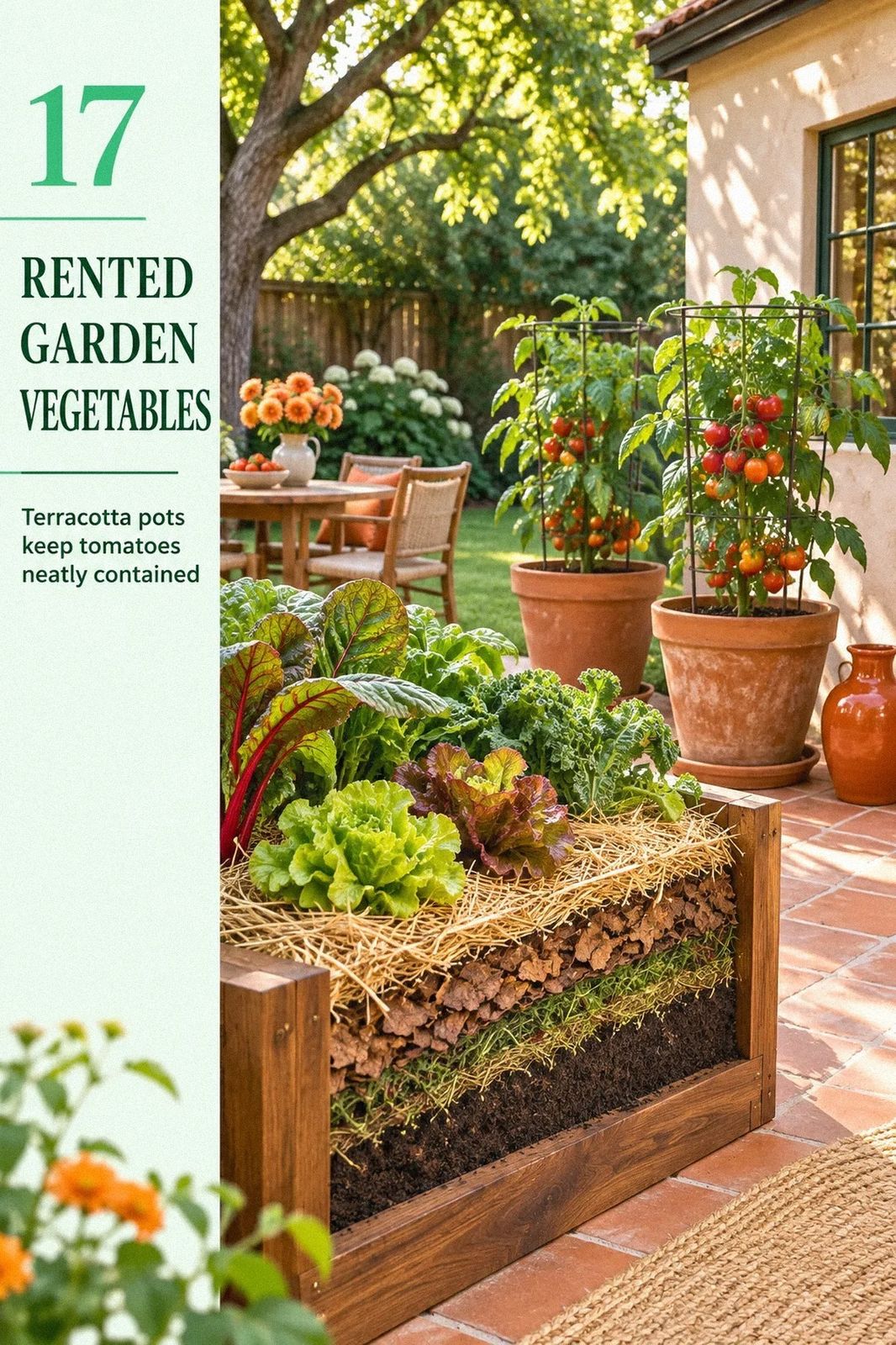
 by
How to grow vegetables in a rented garden without digging starts with containers, not a shovel. I learned that after damaging a patch of soil I didn't own and spending a Saturday repairing it. Now I use movable beds, rolling tubs, and layered soil that can leave with me. You can harvest plenty without changing the ground!
Start with one sunny corner, a few safe containers, and crops you'll actually eat. This tiny garden layout for a yard the size of a rug helped me see how much could fit into a rental without making the space feel cramped.
- Layer a No-Dig Soil Sandwich
- Choose the Three-Pot Ladder
- Roll the Renter’s Vegetable Garden
- Why Grow in Tubs Instead of Soil?
- Build the Two-Height Harvest Rule
- Pair Leafy Greens With Tomatoes
- Anchor Climbers With a Removable Trellis
- Swap Plastic for Repurposed Containers
- Paint Movable Pieces Instead
- Create the Three-Source Water Station
- Use the Three-Season Container Rotation
- Frame a Compact No-Dig Garden Corner
- Budget the Garden Before You Buy
- Grow in Tubs Instead of a Permanent Bed
- Which Plants Match the Light You Have?
- Make the Garden Inspection-Friendly
- Harvest Small and Often
1Layer a No-Dig Soil Sandwich
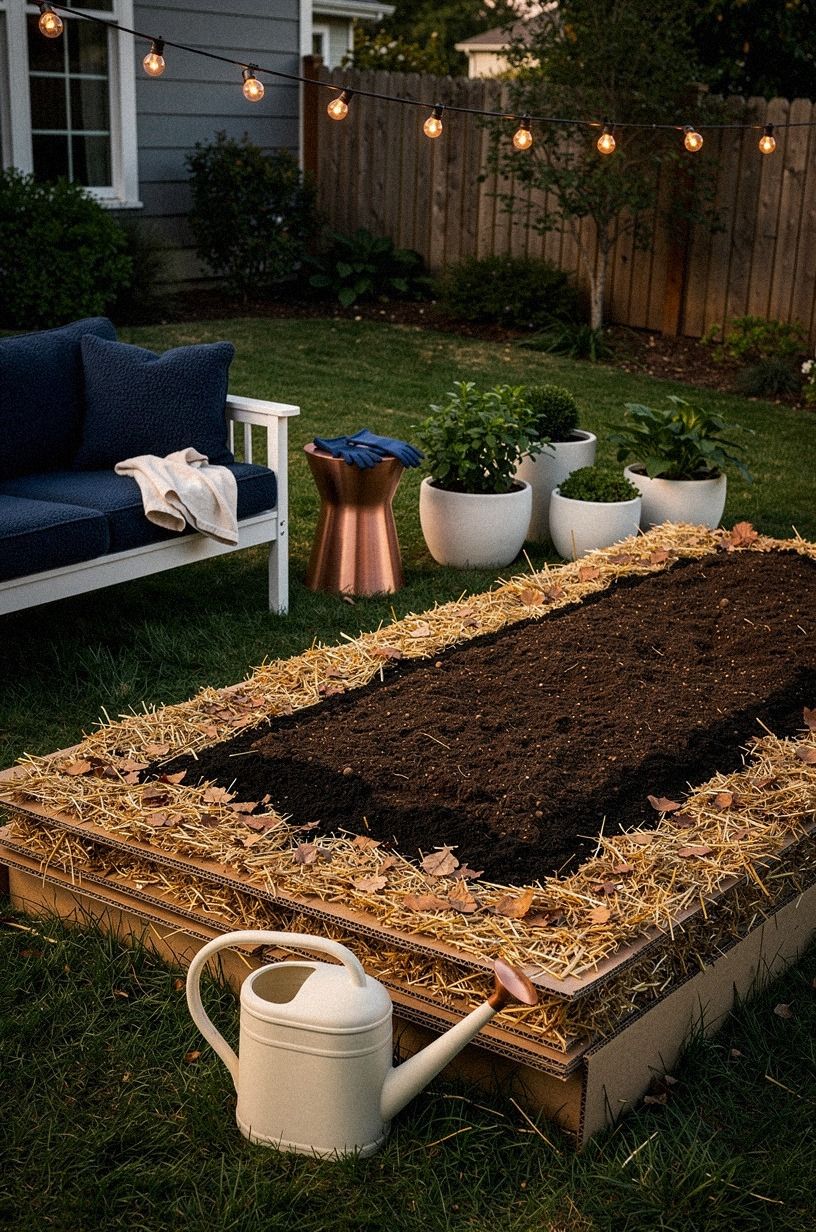
A no-dig vegetable garden works best when you build upward in a container, trough, or shallow raised bed. Start with a drainage layer only if the vessel needs it, then add compost, potting soil, and a light mulch.
You don't need to break the ground beneath it. Your plants get a clean growing medium, and your landlord gets the original garden back.
I like a midnight blue bench with an organic bouclé cushion beside the containers because it keeps tools off the soil and gives the setup a finished look. Keep the top of the growing mix below the rim so rain won't wash it over a patio. In a very small space, a movable garden arrangement for a tiny yard can make the whole corner feel more generous.
A simple soil blend is usually enough: two parts quality potting mix, one part compost, and a small amount of perlite or bark for air. Worm castings add a rich, satisfying finish, but you don't need an elaborate recipe to begin.
Typical no-dig garden costs:
2Choose the Three-Pot Ladder
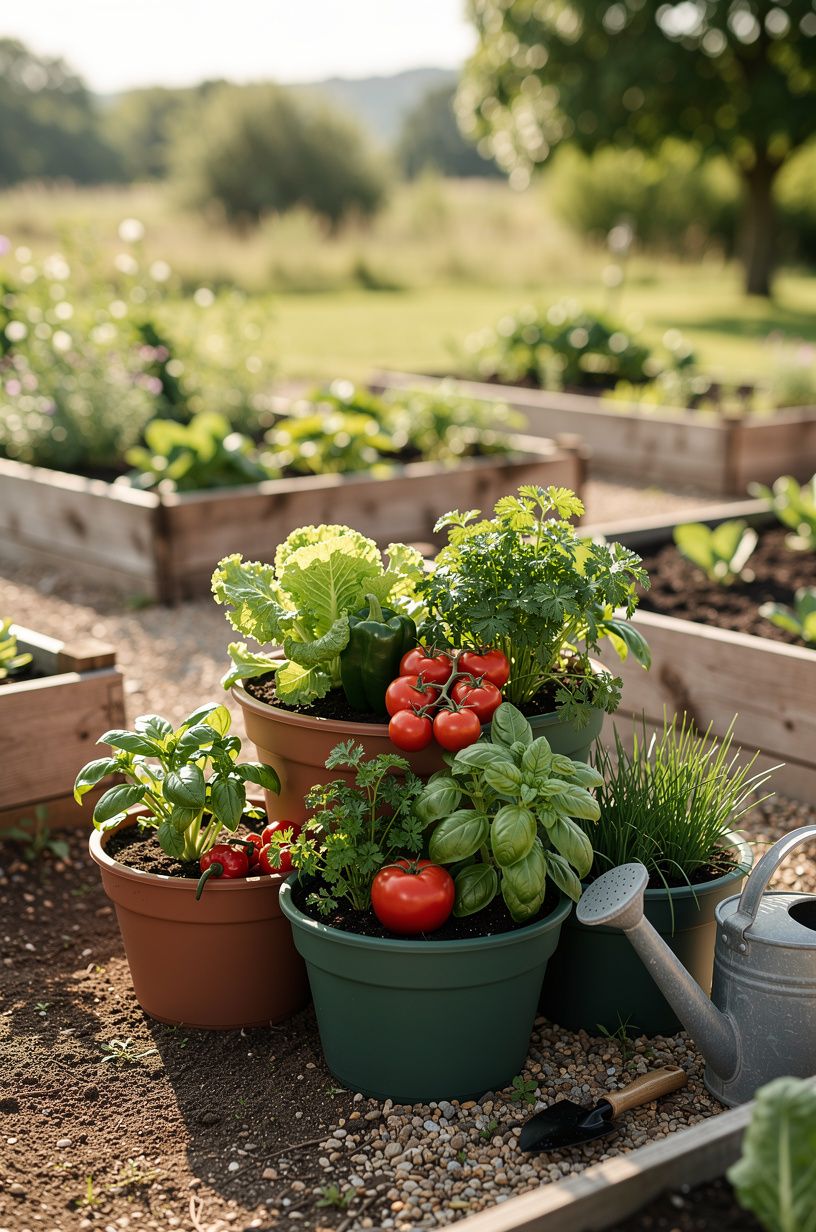
Arrange your renter-friendly vegetable garden in three heights: a low tub for lettuce, a middle container for tomatoes, and a taller support for climbing beans. The arrangement lets you see every plant without leaning over another pot. It also makes a narrow balcony feel more layered, earthy, and intentional.
I made the mistake of putting every container on the same level. Your eyes saw a row of plastic, and the lowest plants disappeared behind it. Use a natural wood shelf only for lightweight herb pots, never for saturated soil.
Put the tallest crop at the back, the middle crop in the center, and the easiest-to-pick greens in front. This calm, clever arrangement keeps harvesting pleasant. A small-space garden plan for renters can help you test the proportions before buying anything.
3Roll the Renter’s Vegetable Garden
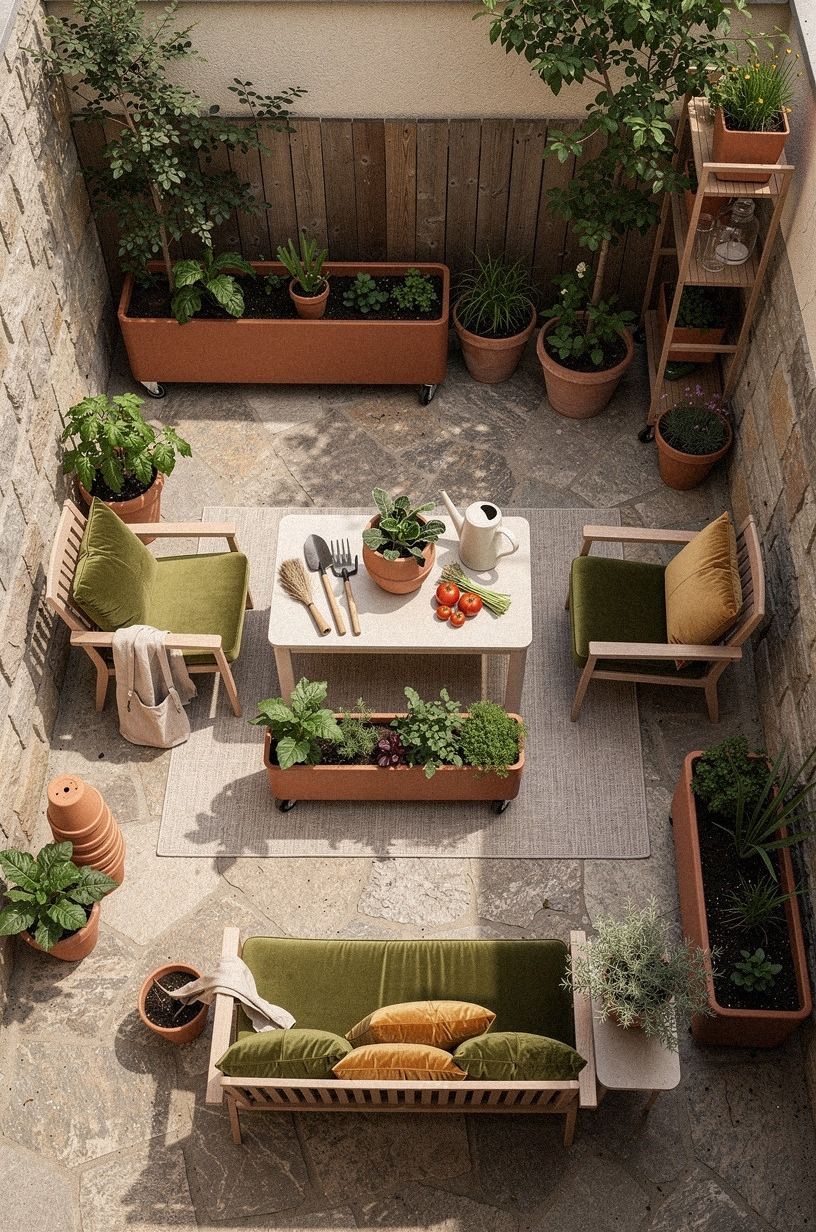
A rolling garden gives you control over sun, storms, and inspections. Put peppers or tomatoes in a sturdy planter with locking casters, then move your plants against a sunny wall in the morning and into shelter when heavy rain arrives. You don't need a permanent bed when your best growing spot changes through the season.
Choose a container that feels solid before you fill it. Wet soil is heavy, and a flimsy plastic base won't forgive you. I prefer a terracotta-toned cart for staging smaller pots; save deep-pile mohair velvet for a nearby indoor seat, where it can add softness without meeting wet soil.
Your garden should move smoothly, not scrape across the floor. That small decision can protect your rental deposit. Check the wheels every few weeks, especially after rain, because grit can turn an otherwise graceful setup into a frustrating one.
4Why Grow in Tubs Instead of Soil?
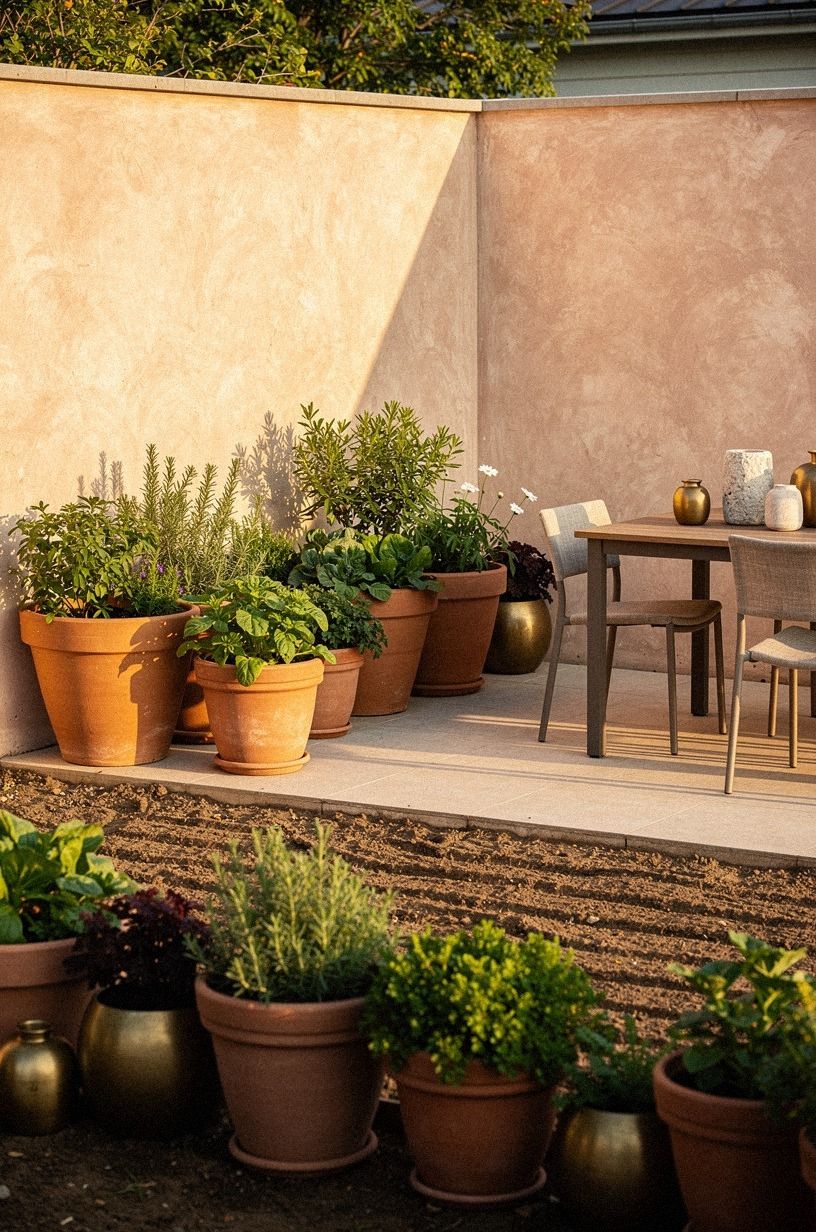
Large tubs are the easiest way to grow carrots, kale, bush beans, and salad greens when your rental has no usable soil. Pick vessels with drainage holes and enough width for the crop, then keep them where you can reach every side. You won't need to kneel on compacted ground or ask permission to excavate.
A clay trough can look dramatic beside hand-applied Venetian plaster on an exterior wall, while aged brass gives you a rustic, practical note. Don't line every tub with plastic unless the container needs it, because trapped water can rot roots.
For a deck or rented patio, use saucers or a removable mat beneath each pot. The same no-damage thinking used in rental-friendly ways to hang pictures without nails applies here: protect the surface first, then make the garden attractive.
5Build the Two-Height Harvest Rule
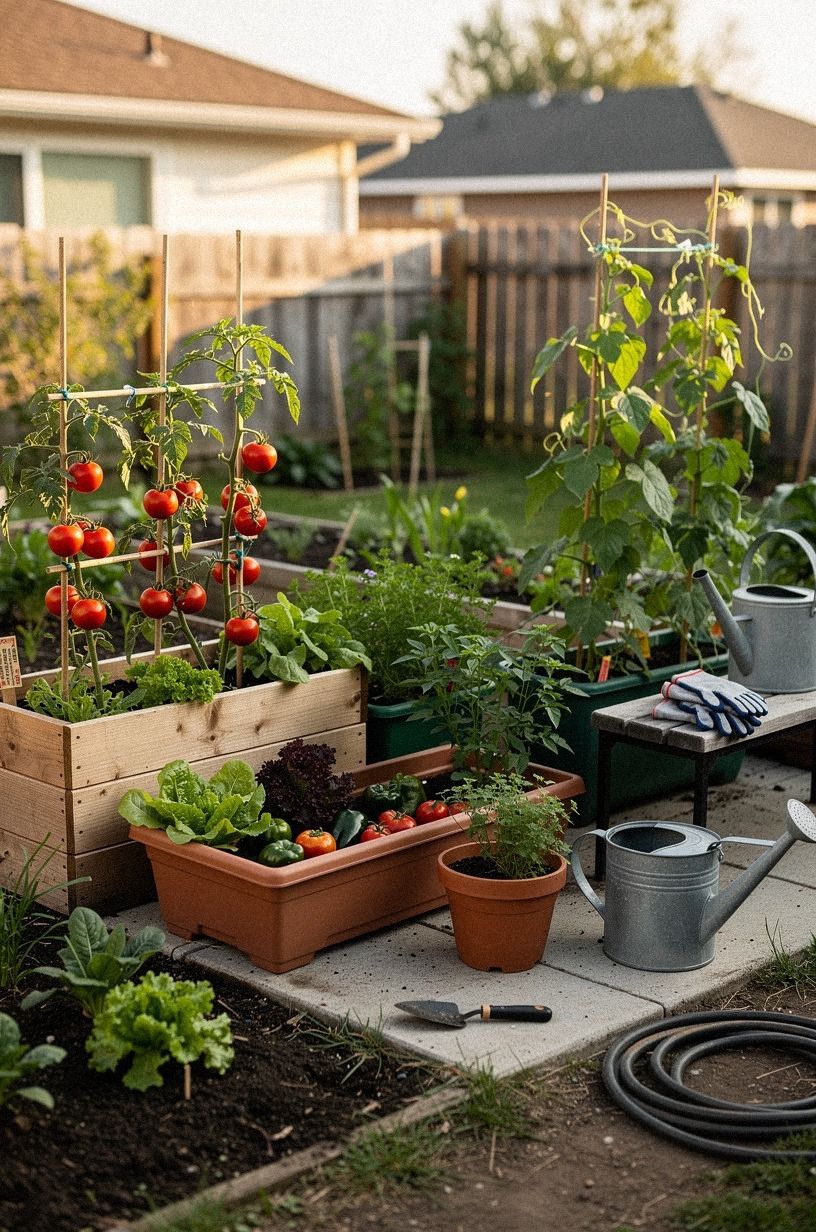
Keep one group of vegetables at waist height and another close to the ground. A raised trough makes salad greens easy to cut, while lower grow bags suit potatoes or compact squash. Your back will notice the difference, and you'll be more likely to harvest often when the plants don't require a full crouch.
The raised group can sit on a reclaimed weathered teak bench, but check that the support can handle damp soil before you trust it. I once used a pretty console that bowed after one watering cycle. It wasn't worth replacing.
Leave enough space to slide a hand between containers. That modest gap makes inspection easier and creates a more polished, breathable arrangement. You can borrow ideas from compact garden layouts for small rentals without copying every detail.
6Pair Leafy Greens With Tomatoes
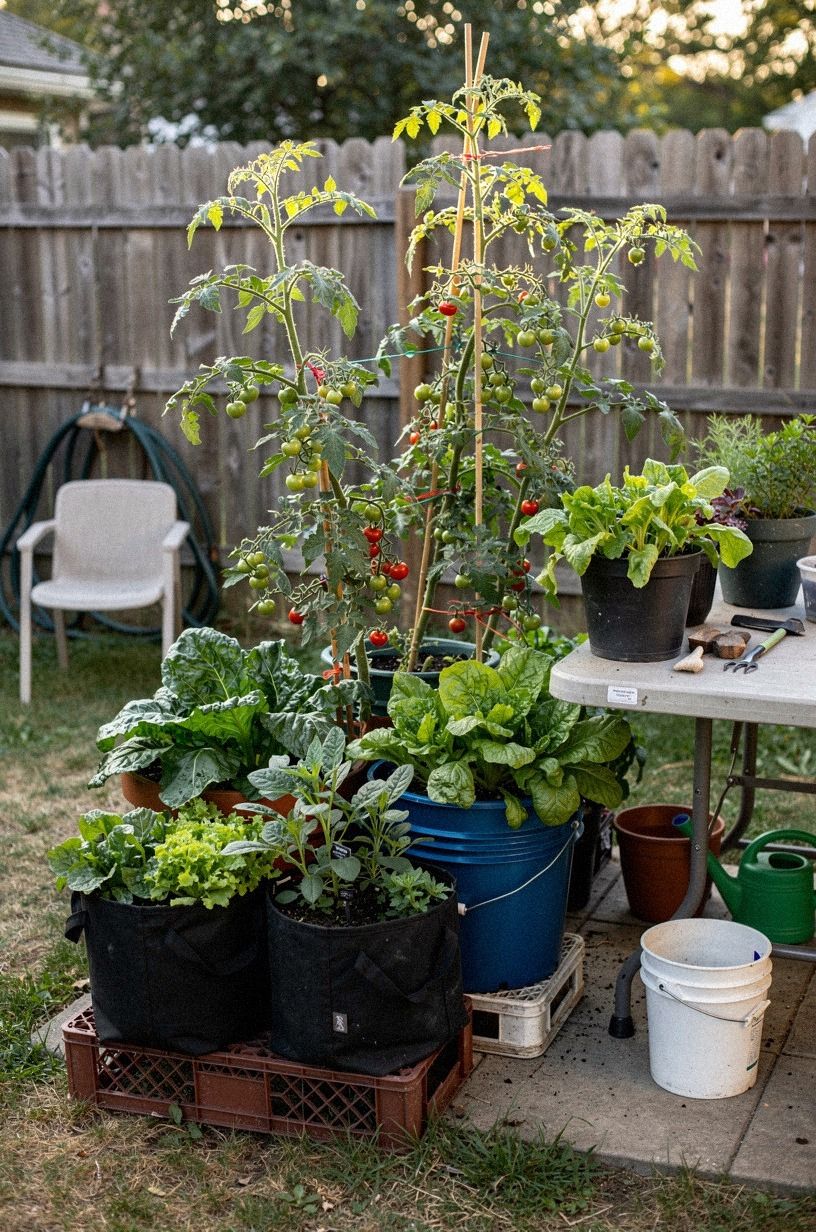
A productive container vegetable garden for renters needs both quick crops and long-season plants.
7Anchor Climbers With a Removable Trellis
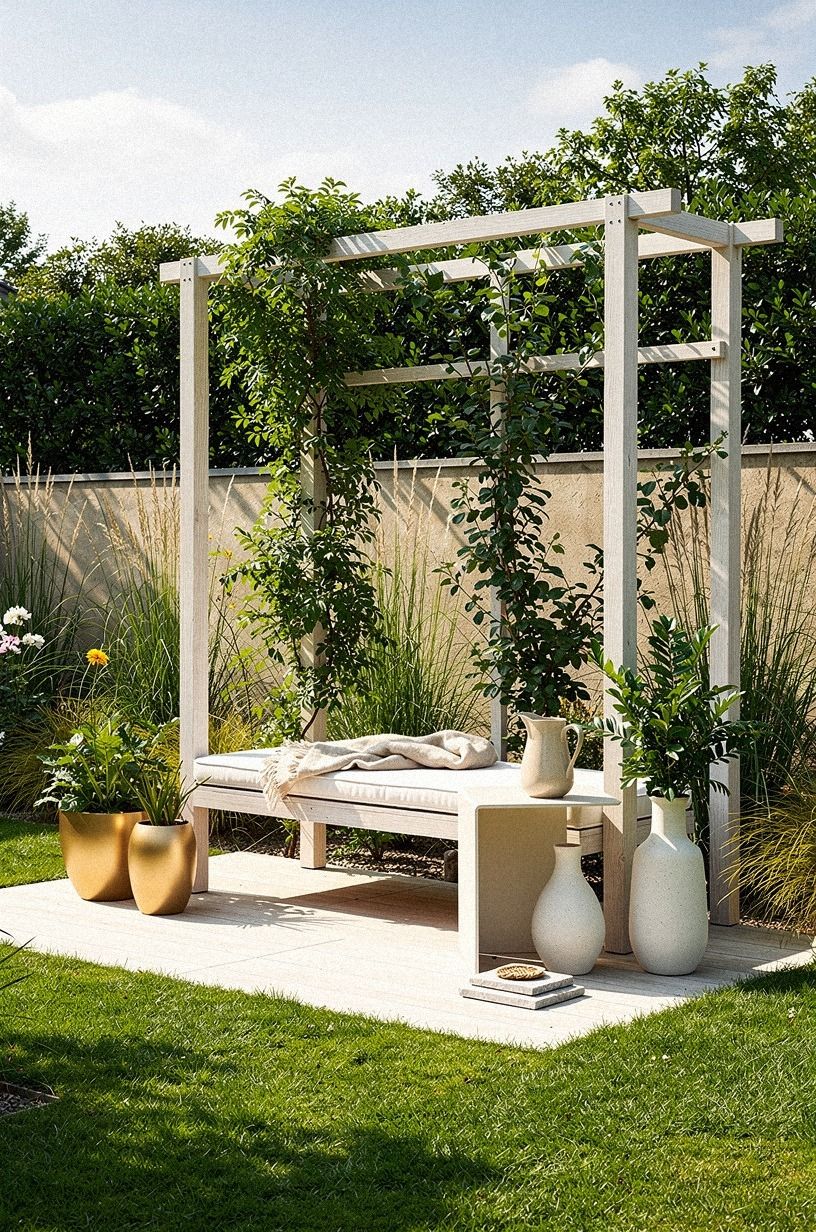
Beans, cucumbers, and compact peas can climb without a permanent fence. Use a freestanding trellis, a tension system, or a weighted planter that doesn't require screws.
Your plants gain height, while the rental wall stays untouched. This is especially useful when your garden is narrow and floor space matters.
I prefer a trellis in cerused white oak as a visual accent, not as the only growing structure, because wood needs protection from constant moisture. A simple cedar frame is warmer and easier to repair. Place it behind the pot before the vines become tangled.
Tie young stems loosely with soft garden twine. That tiny bit of care prevents a tangled, stressful mess later. If you need a removable support near a wall, the same principles behind hanging things without nails in a rental can guide your hardware choices.
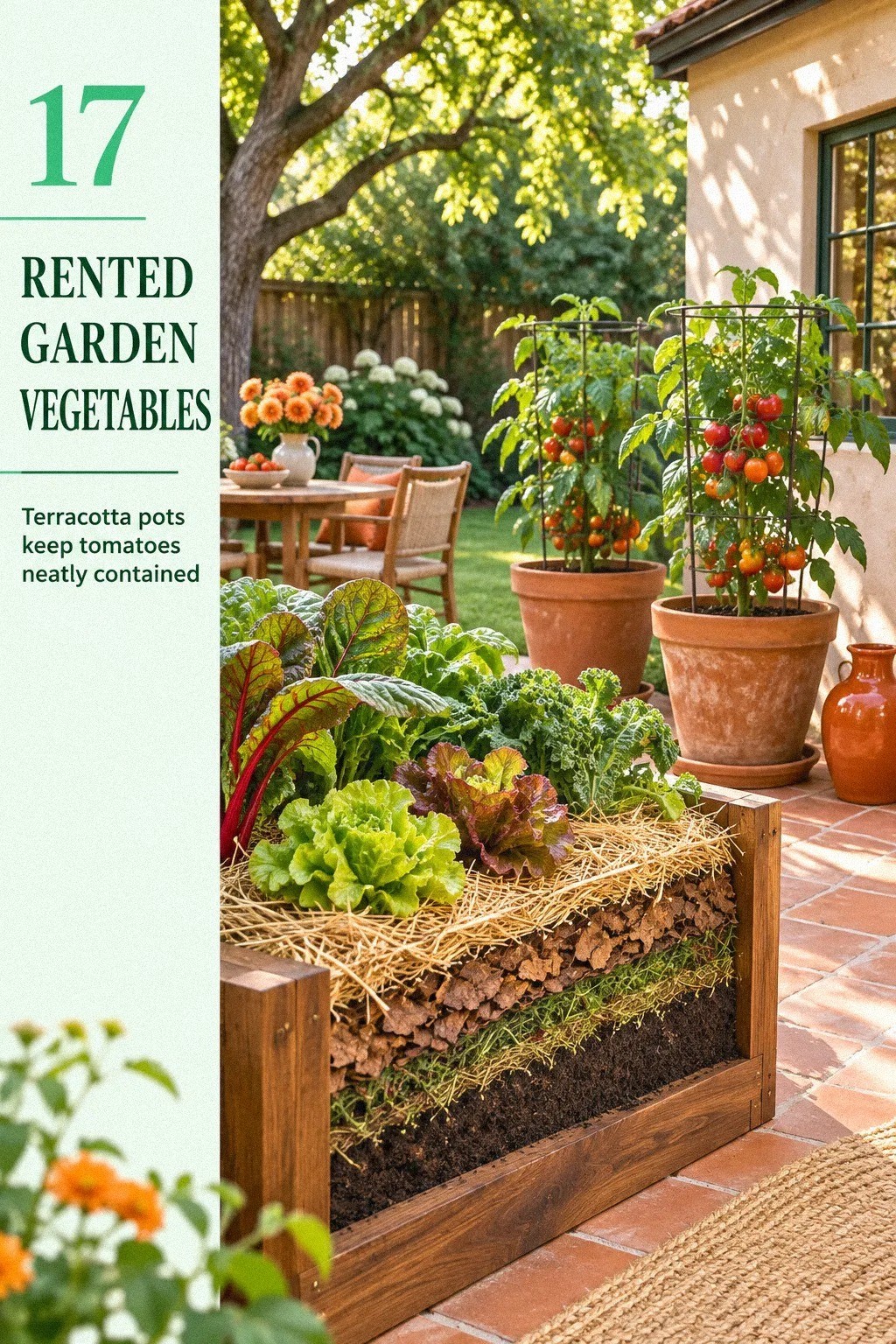
8Swap Plastic for Repurposed Containers
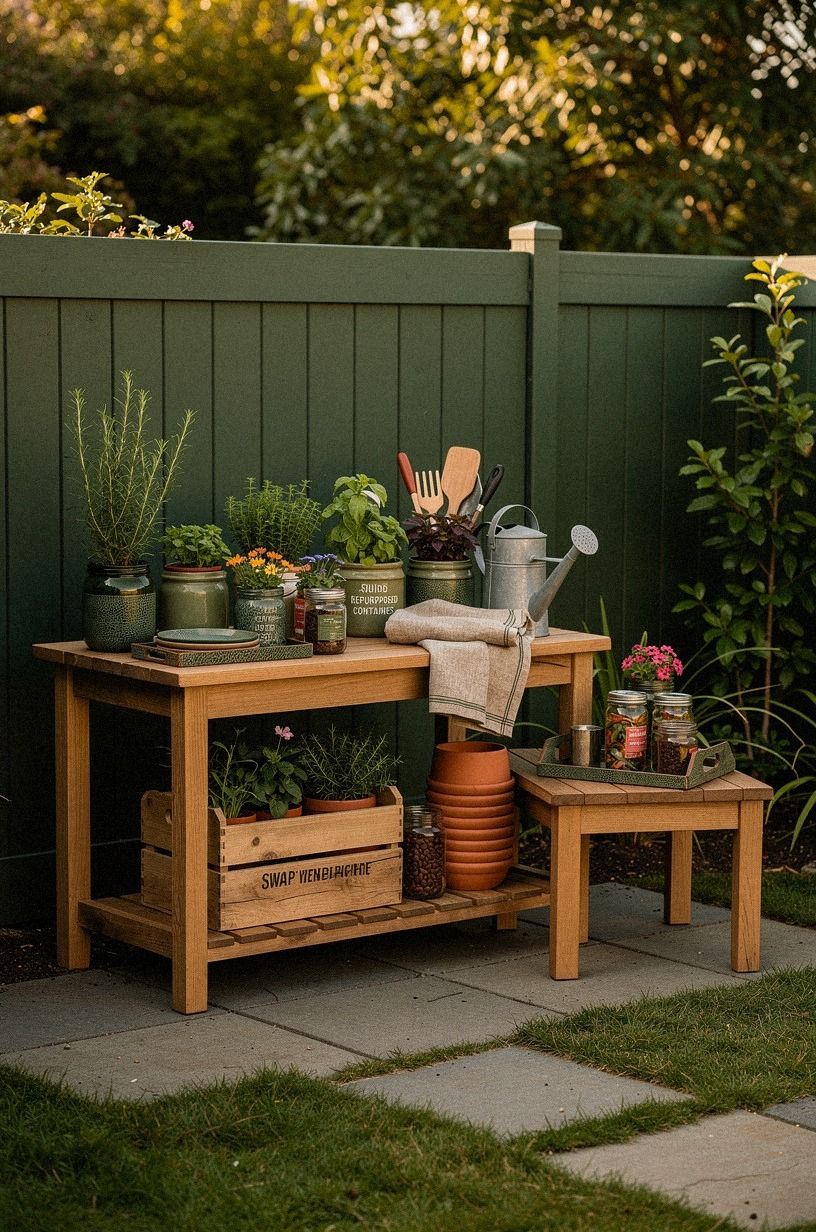
You don't need matching garden pots. Food-safe buckets, old galvanized wash tubs, wooden crates with liners, and secondhand ceramic vessels can all support a rented garden when they drain properly. The mixed collection feels more organic than a showroom row, and you can take every piece with you.
Skip anything that held chemicals, even if the container looks sturdy. Your vegetables deserve a clean start. I once used an old planter with a chalky residue and abandoned it before planting.
A natural oak crate can hold chives or parsley indoors, while heavier tubs belong on a stable outdoor surface. Keep shagreen accents on a dry indoor tray rather than beside irrigation. These tiny garden ideas for flexible rental spaces show how varied containers can look intentional when their heights repeat.
9Paint Movable Pieces Instead
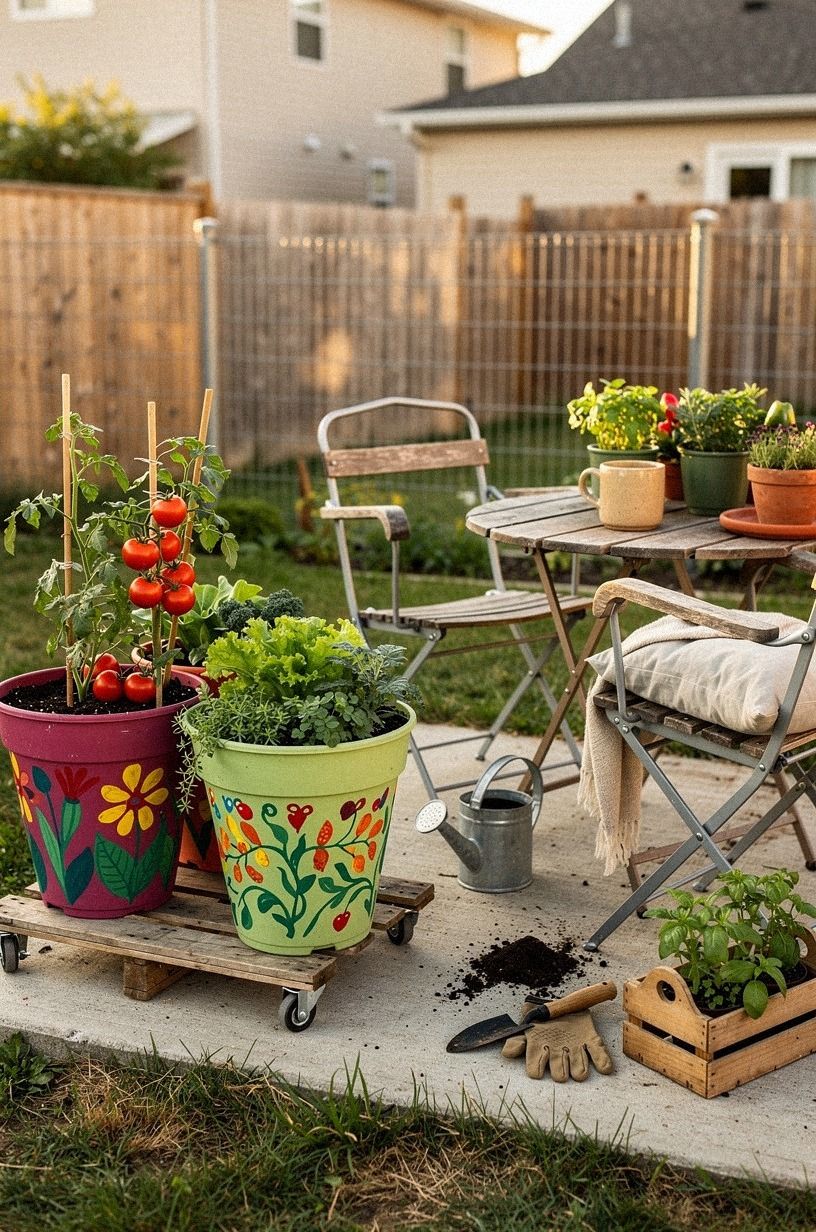
When you want your garden to feel designed, paint the movable pieces instead of the fence or siding. A book-matched walnut pot stand paired with a dusty rose crate can make green leaves look brighter and more calming. You can change the palette when you move, and your landlord won't inherit your color experiment.
Test paint on a hidden corner first because outdoor surfaces absorb color unevenly. I wouldn't paint every pot the same shade. Your eye needs a few quiet pieces between the bold ones, especially if your plants already have different greens.
Use removable outdoor mats beneath the containers, then check the surface after rain so water doesn't sit underneath. A no-nail rental approach can also help you add lightweight botanical art nearby without drilling.
10Create the Three-Source Water Station
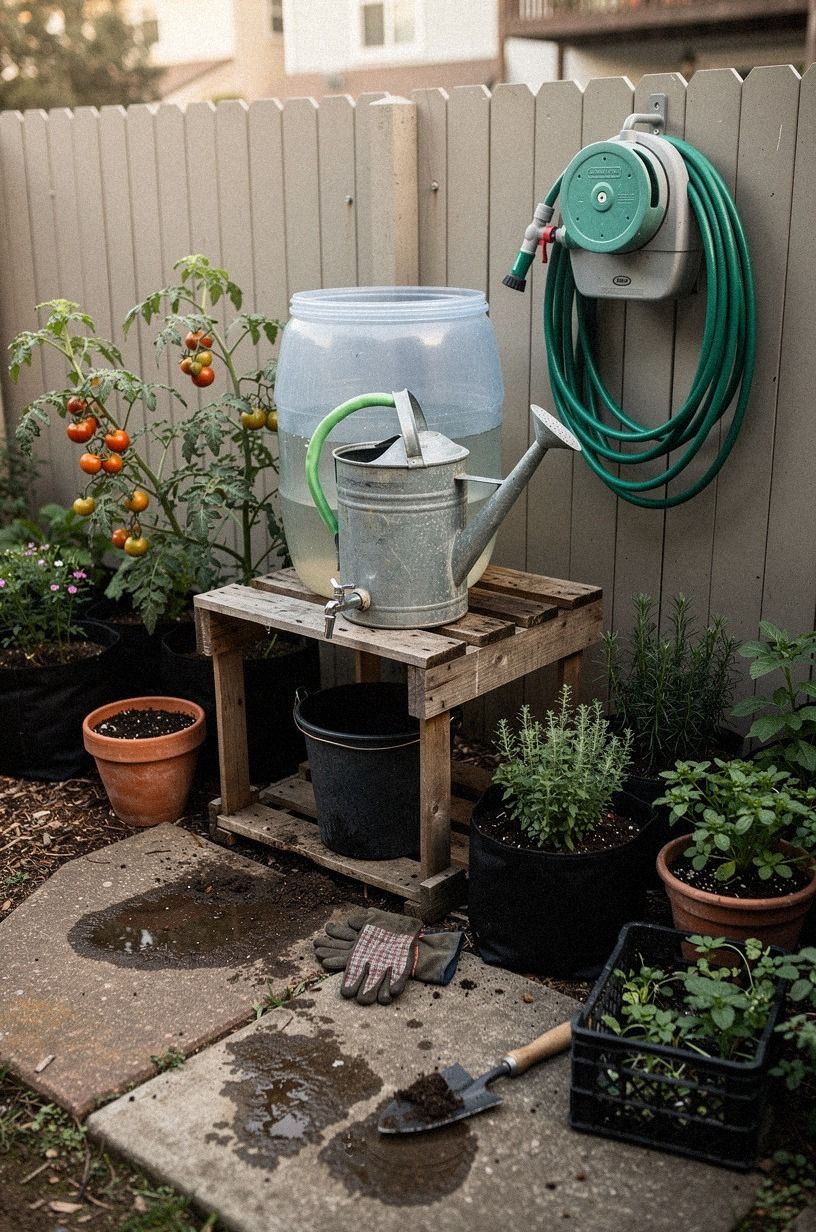
A no-dig garden becomes much easier when water has a home. Keep a watering can, a shallow catch tray, and a sealed bag of mulch together near the containers. Your daily routine becomes faster, and you won't drag a hose across a shared walkway or leave muddy marks on rented flooring.
A warm white stool with an organic bouclé cushion can live beside the station for wiping handles and wet rims, though the cushion shouldn't stay outside in the rain. I like a narrow metal cabinet for tools, but you can use a lidded storage box instead.
Water slowly until you see a little drainage beneath the pot. That steady habit is more reliable than an occasional dramatic soak. If your plants are near a window, renter-friendly plant shelf ideas can help you keep indoor herbs close to the same water station.
11Use the Three-Season Container Rotation
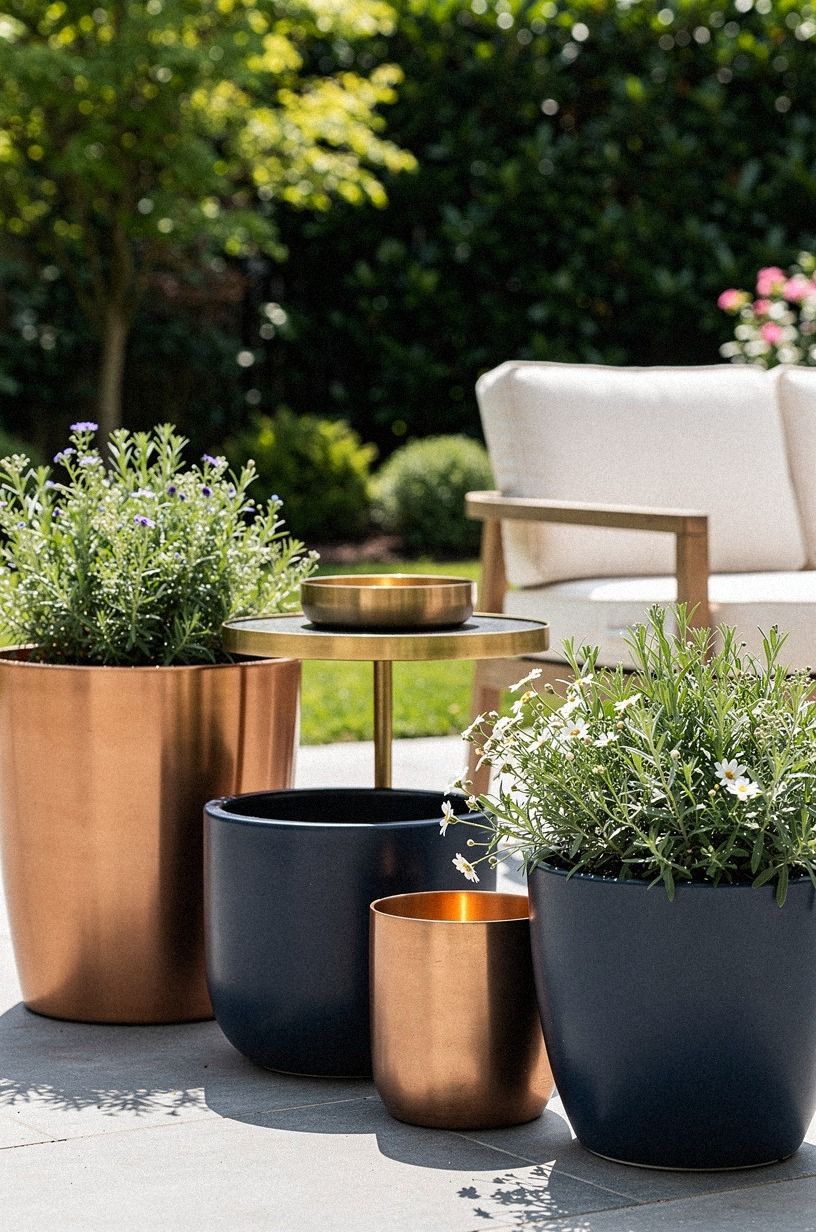
Rotate crops instead of trying to make every pot perform all year. Cool greens can occupy a container first, followed by beans or peppers, then herbs or hardy leafy plants when temperatures shift. Your garden stays productive, and the soil doesn't become a tired, forgotten block.
The rotation works best when you label containers with removable tags. I use an unlacquered brass tag because it develops a gentle patina, but plain pencil on a sealed tag is enough.
You don't need a complicated calendar. Write the crop, planting date, and what your rental space looked like that week. A photo can help you remember what worked.
Keep the notes simple and the system forgiving.
12Frame a Compact No-Dig Garden Corner
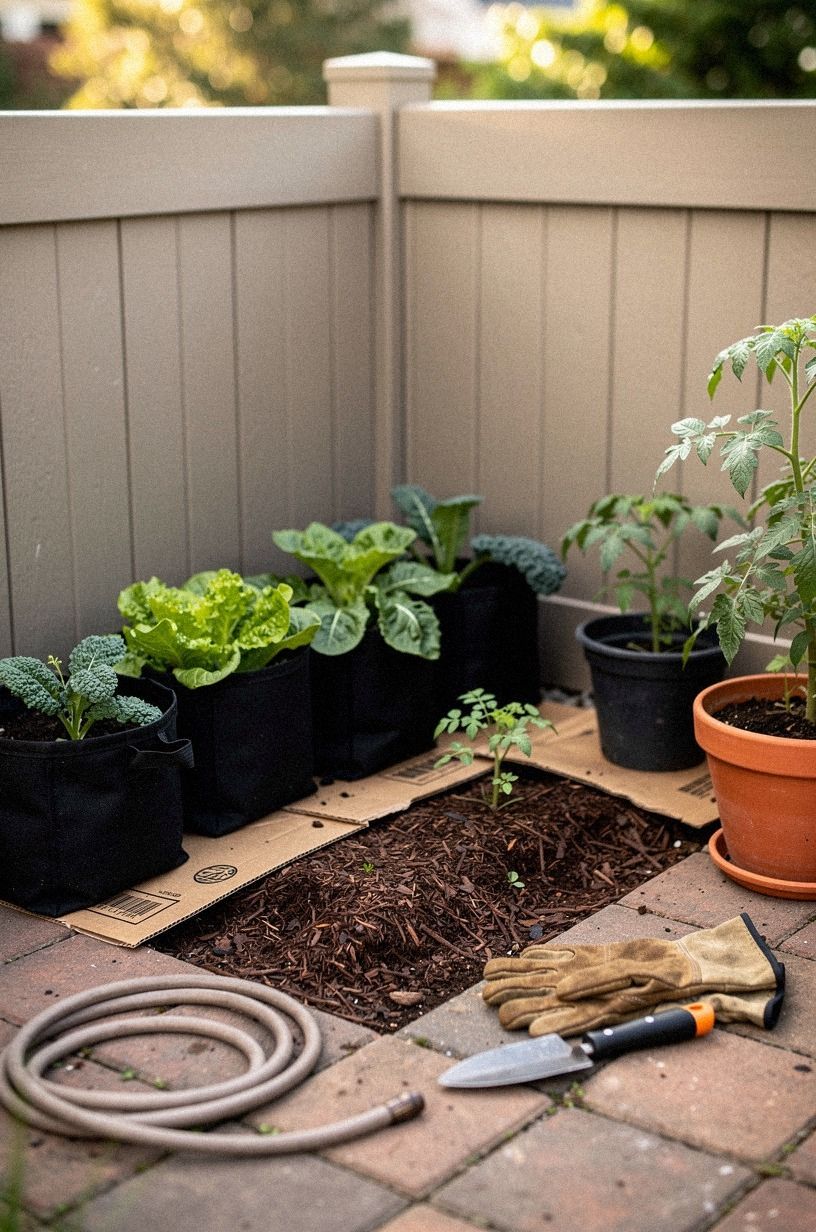
Give your containers a clear boundary so they read as a garden rather than scattered storage. A washable mat, two narrow benches, or a line of matching saucers can create that edge. Your space will feel more peaceful when the eye understands where the garden begins and ends.
For a covered porch, a natural wood tray can catch water beneath small pots, while a deep-pile mohair velvet cushion on a nearby bench adds softness away from splashes. Keep the arrangement open enough for you to inspect leaves and move pots.
Don't push everything tightly against a wall because pests and dampness hide in the gap. If your corner needs more vertical interest, a removable rental display can add height without taking over the garden.
13Budget the Garden Before You Buy
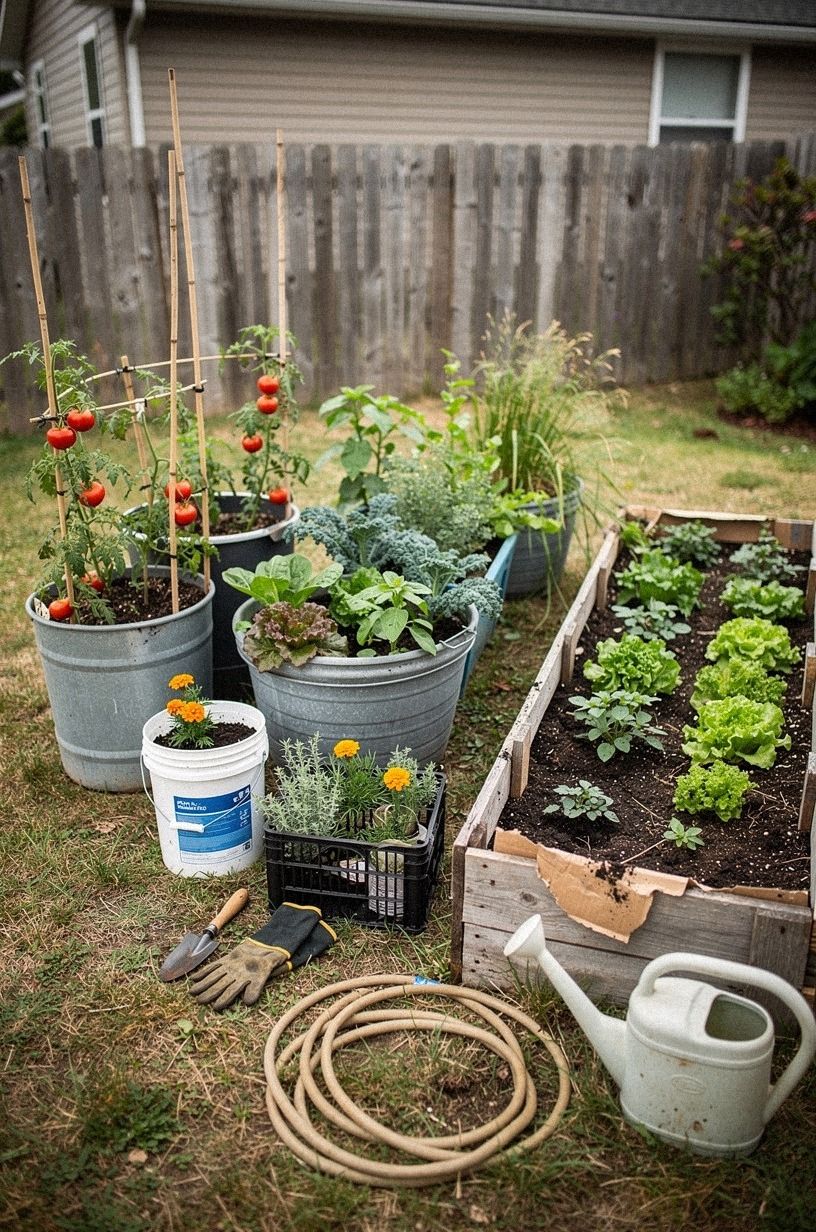
Start with what you own, then spend on soil, drainage, and containers that will last through a move.
14Grow in Tubs Instead of a Permanent Bed
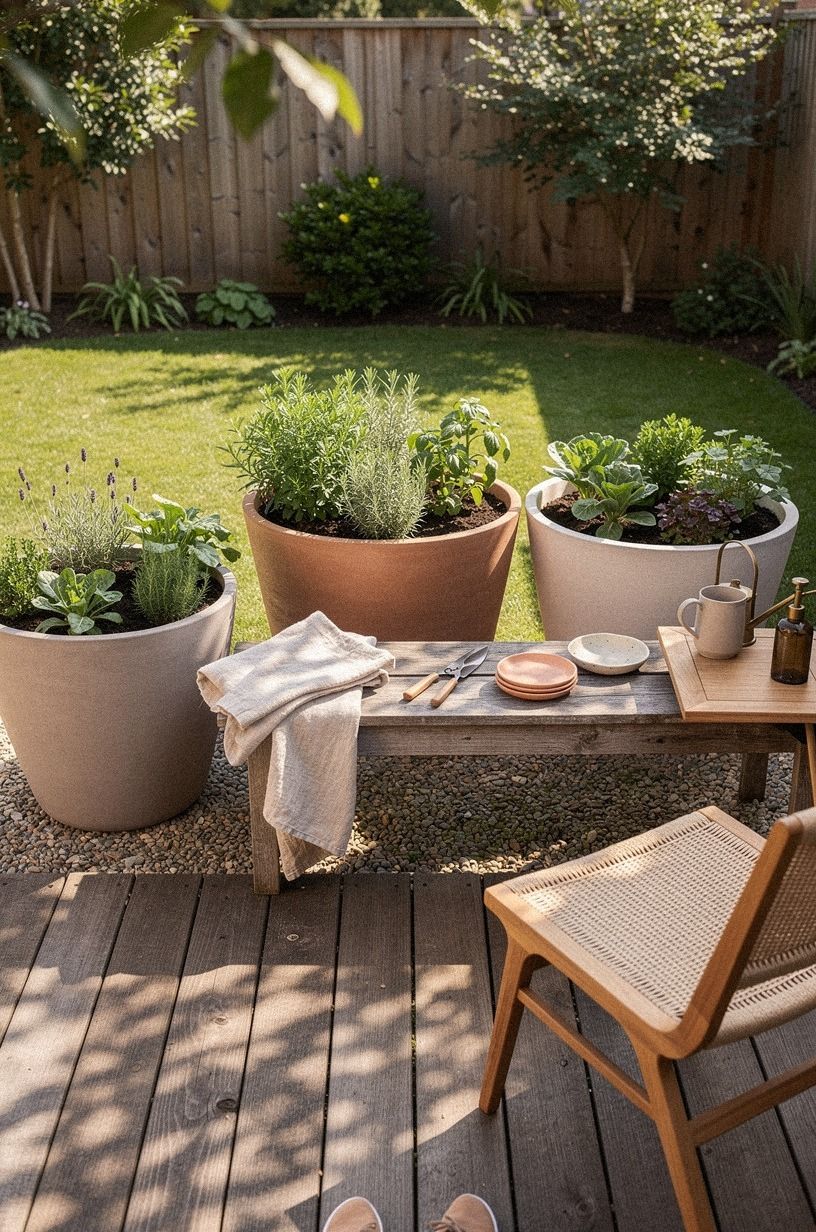
A permanent bed may look appealing, but tubs are usually the better choice for renters. You can inspect the roots, move the crop, replace tired soil, and leave the property unchanged. A container vegetable garden for renters also works on patios where digging would damage paving or violate a lease.
Use a reclaimed weathered teak board only as a removable lid or work surface, not as a soil liner. Wood needs airflow and protection from constant moisture. I wouldn't build a complicated frame unless you plan to stay for years.
Your rental garden should solve today's growing problem without becoming tomorrow's demolition project. For a compact arrangement, revisit these small-yard container layouts before committing to large furniture.
15Which Plants Match the Light You Have?
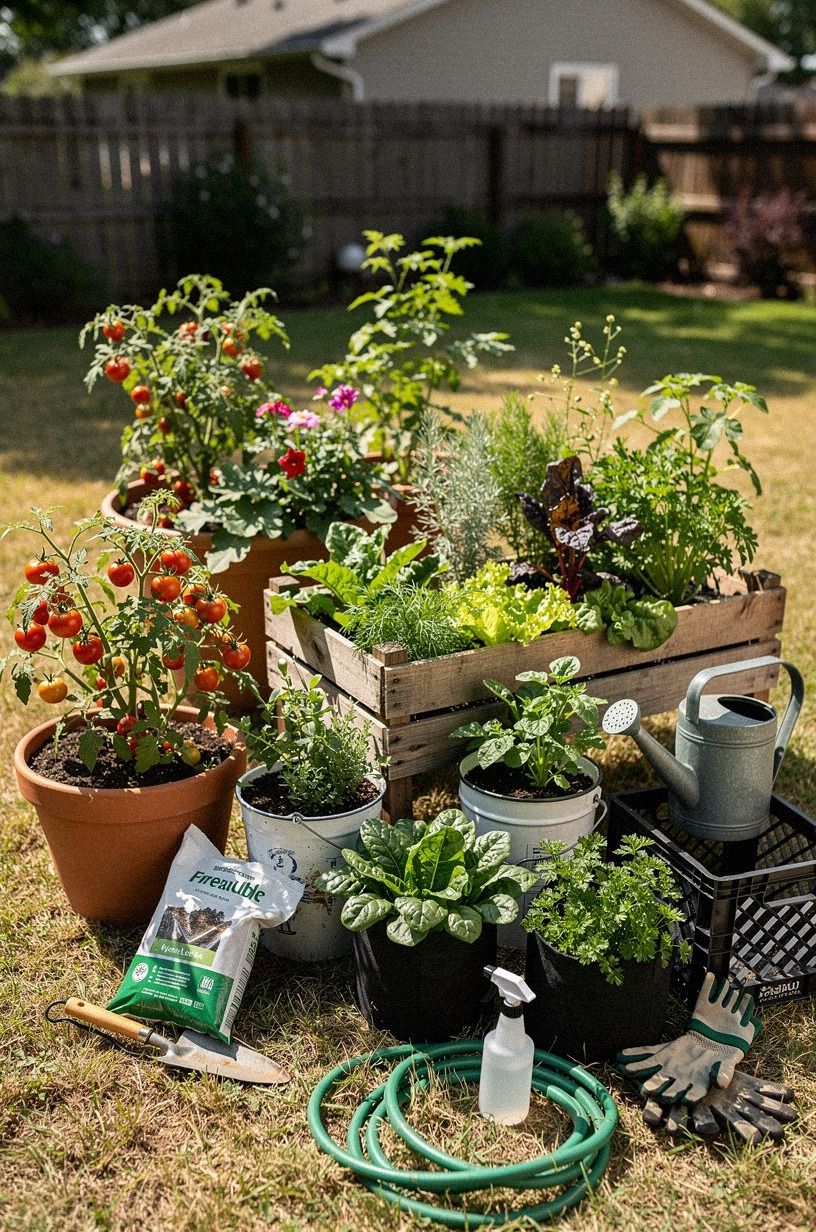
Watch your space before buying seeds. Notice where the brightest patch lands in the morning, where shade settles in the afternoon, and which wall reflects heat. Your plant choices should follow that pattern, not the picture on the packet.
Leafy greens tolerate less direct light than fruiting crops, so start with them if your yard is dim.
A cushion in washed Belgian linen beside green foliage can bring a calm grey note to a shaded corner, with plum or rose-gold accents adding warmth. Don't promise yourself tomatoes in a spot that barely gets sun. I learned that one slowly, with a very leafy plant and no fruit.
If light is limited, grow herbs and salad greens close to a bright window. These window shelf garden ideas for renters can extend your harvest without adding permanent hardware. Start there!
16Make the Garden Inspection-Friendly
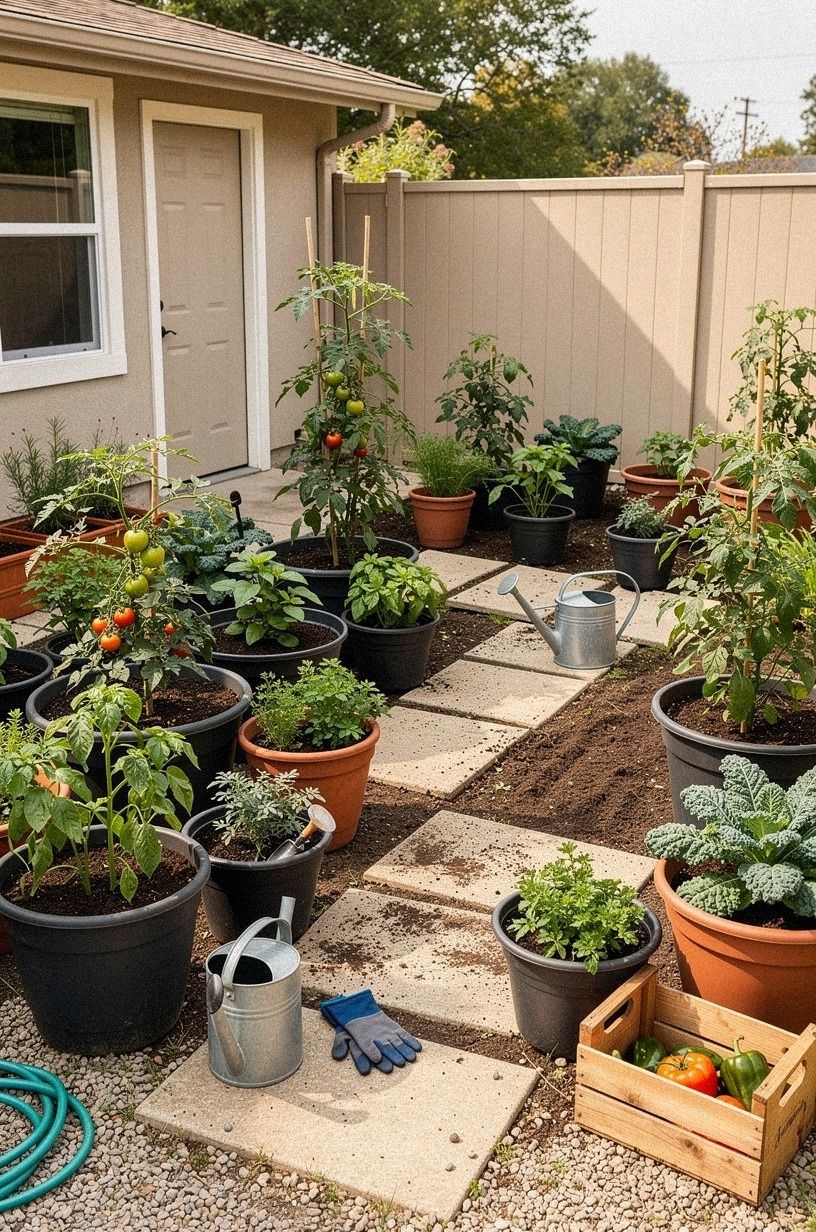
Keep every pot, tray, trellis, and bag of soil easy to lift or slide. A landlord inspection shouldn't require you to dismantle the entire garden. Your setup will look more cared for when pathways stay clear and water doesn't collect beneath containers.
Choose cerused white oak for a small indoor stool near the garden, and use washable canvas, sealed wood, or powder-coated metal for practical pieces exposed to water.
Place removable protection beneath every container before the first watering. It takes minutes, and you'll avoid a stressful cleanup later. If the wall beside your garden needs decoration, use rental-safe hanging ideas that can disappear cleanly before inspection.
17Harvest Small and Often
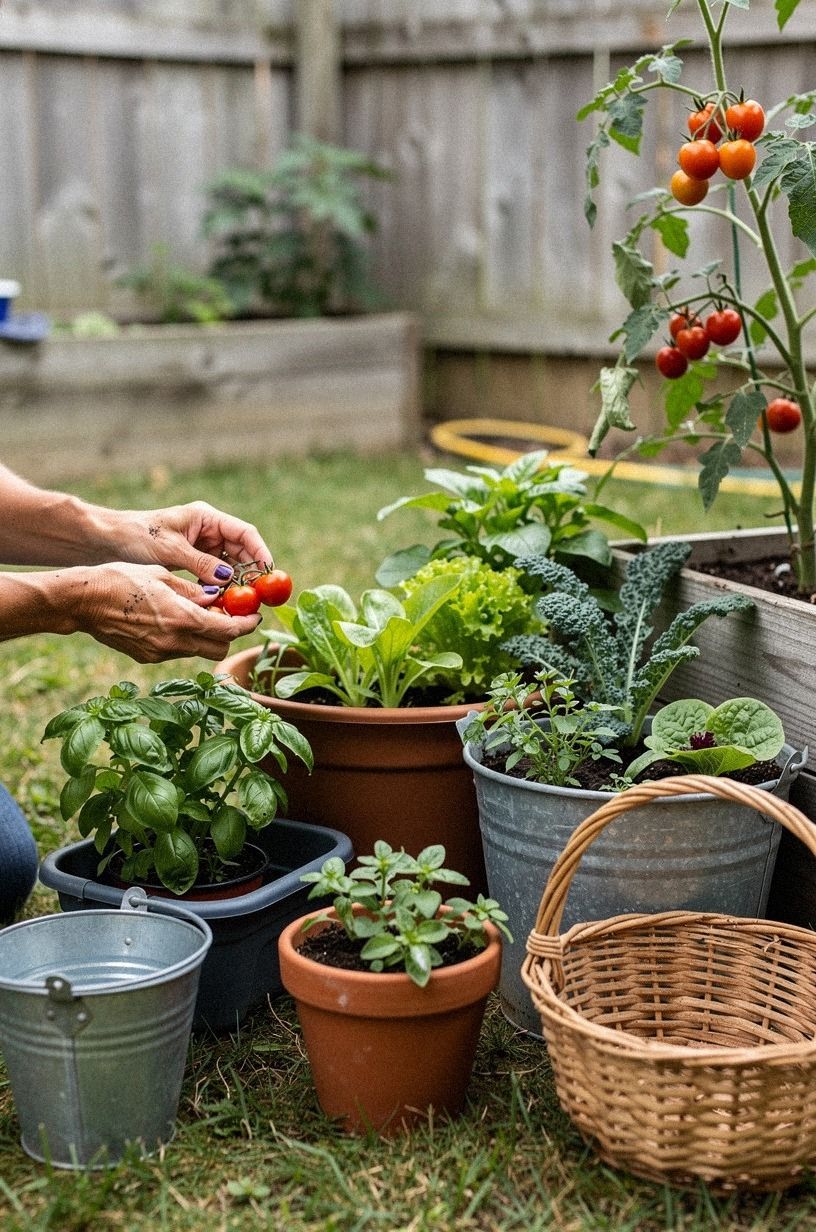
The most successful no-dig vegetable garden is one you'll visit every day. Pick salad leaves young, remove yellowing foliage, and check the underside of leaves before a small issue becomes a large one. Your harvest doesn't need to fill a basket to count.
A handful of herbs or two ripe tomatoes can change dinner.
I like a narrow bench with shagreen accents nearby because it gives you a place to sit while you inspect the plants, although any stable seat works. Keep a bowl and scissors within reach so harvesting feels easy.
But don't let the garden become a chore list. If you can water, notice, and pick in five minutes, you'll keep doing it. A tiny garden plan for renters can keep the setup compact enough to enjoy.
Why No-Dig Gardening Fits Rental Life
I used to think a real vegetable garden needed a patch of earth, a permanent fence, and a weekend spent turning soil. That idea kept me from growing anything in rentals.
Once I tried containers, the better question became simpler: where can I place good soil, reliable drainage, and plants I can reach? The answer was a sunny corner beside the back door.
The strongest benefit isn't only portability. A movable garden lets you edit your mistakes.
If your tomato gets too much wind, you can shift it. If a trough holds water, you can fix the drainage before roots suffer.
You don't have to defend a bad layout because you built it into the ground. That freedom makes a small space feel surprisingly generous! I still think permanent beds can be wonderful when you own the property and understand the soil.
For renters, though, I favor the humble setup: two large tubs, one climbing frame, a few herb pots, and a bench that can move. It looks warm without pretending to be a farm. Your garden can be practical, temporary, and worth caring for at the same time.
A Few Things Worth Answering
What is the best way to grow vegetables in a rented garden without digging?
I would start with two movable tubs containing salad greens, herbs, and one compact tomato. Portable containers protect the property while giving roots enough depth.
A lightweight shelf can hold herbs, but wet soil belongs in a sturdy trough. That arrangement feels practical, bright, and easy to rearrange.
Where can I buy renter-friendly garden pieces on a budget?
I look at IKEA, Wayfair, Target, thrift stores, and local resale listings. Secondhand tubs can cut the setup cost when you check drainage and previous use. I also browse tiny garden layouts before buying, because a beautiful piece still needs to fit the available footprint.
How much does a no-dig rental garden cost?
I would budget about $100 to $300 for a small beginning setup, depending on what you already own. Free upgrades include rearranging containers, saving clean food-safe buckets, and making labels from scrap wood. Spend first on good soil, drainage, and one container that won't crack during a move.
Can I create a renter-friendly vegetable garden on a budget?
Yes. I would reuse safe containers, grow herbs from seed, and make a removable trellis from wood or bamboo.
A portable garden becomes more affordable when you add one durable piece at a time. Keep the first version modest, then adjust it after you observe the light and your watering habits.
Is a no-dig vegetable garden worth it in a small space?
Yes, because I find a small space easier to observe and water consistently. Compact crops reward frequent harvesting when every pot stays within reach. Put taller plants behind shorter greens, leave a clear path, and use window shelf ideas for renters for herbs when outdoor space is limited.
Is this type of garden suitable for a rental?
Yes. I would use freestanding trellises, removable mats, lidded storage, and tension supports.
The original surface stays protected when you avoid drilling and digging. Check your lease before placing heavy containers on balconies, decks, or shared walkways, and keep the whole setup easy to move.
Where I'd Start First
If I had to pick one, I'd start with a pair of movable vegetable tubs. They give plants better soil control than a shallow pot, and you can shift them when the light changes. Pin the small rental garden guide for later and start with greens.
Add one trellis only after you know where the sun lands. Keep the path clear, water consistently, and let the garden become useful before making it elaborate. Small win!