
 by
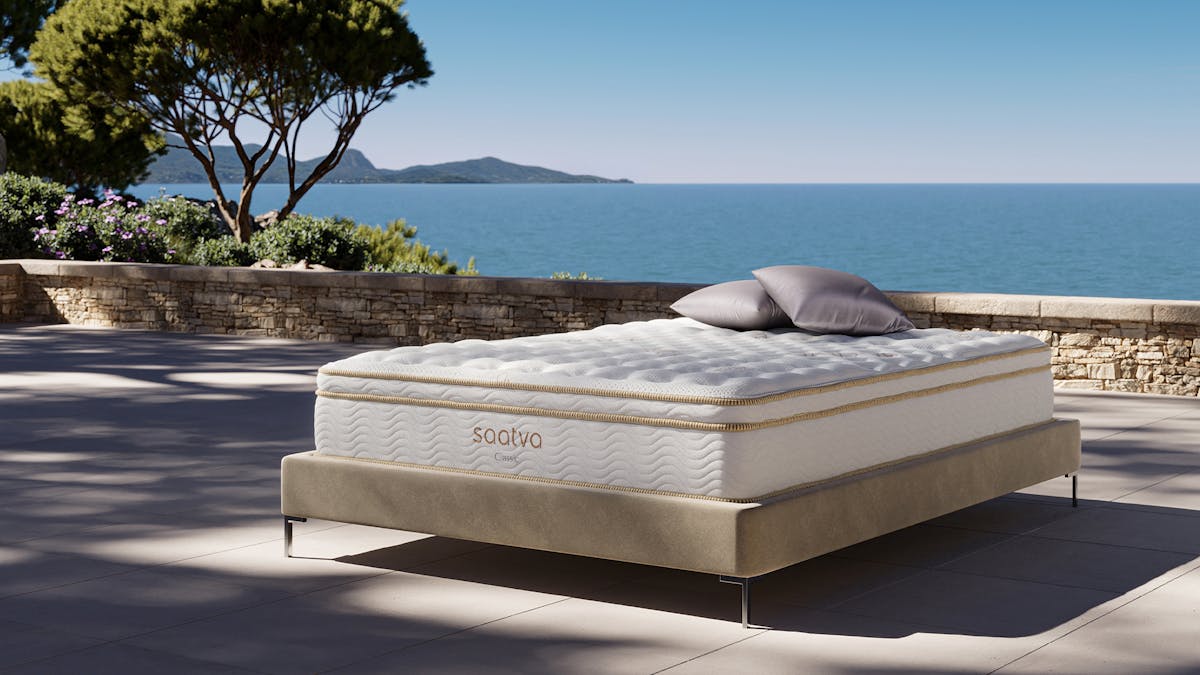
by Bariatric patients need a mattress rated for high body weight, reinforced edges for safe ingress and egress, and a long trial that covers the full recovery arc. Our top pick is the Saatva HD: 500 lb per side, 1,080 pocketed coils with 5-zone tuning, 2.5-inch Talalay latex comfort layer, and a 365-night trial with lifetime warranty that carries no BMI exclusion clause.
Saatva HD
9.3/10
- 500 lb per side weight rating covers the full pre-surgery and post-surgery weight range
- 2.5-inch Talalay latex adapts as body weight changes, no permanent compression
- 15.5-inch total height places sleep surface near hip height for easier sit-to-stand
- Dual reinforced perimeter edges stay structurally safe during limited-mobility recovery
- Lifetime warranty with no BMI exclusion clause
- Free white-glove delivery, setup, and old mattress removal
- Heavier and taller than standard mattresses, ships flat not compressed
- $99 return fee during the trial period
- Higher price than standard-weight hybrids
The Saatva HD solves the bariatric mattress problem in both directions: enough structural support at 400 to 500 lb pre-surgery, and a latex comfort layer that remains responsive rather than bottoming out as weight drops post-surgery. The edge reinforcement and 15.5-inch height make daily recovery movement safer than any standard bed.
Why bariatric patients need a different mattress
The bariatric mattress problem has two phases. Before surgery, the bed must support a starting weight that often exceeds 300 to 400 lb. Standard mattresses rate their comfort layers for sleepers under 250 lb. At heavier weights, those comfort layers compress permanently within months, leaving the patient effectively sleeping on the support base, which creates lumbar pain and pressure points at the shoulder and hip. After surgery, the same bed has to remain comfortable as the body sheds 100 to 200 lb across 12 to 18 months. A mattress tuned only for 350 lb becomes too firm at 220 lb and creates new pressure problems for the lighter sleeper.
Edge support carries specific clinical relevance post-surgery. Reduced core mobility after gastric sleeve, gastric bypass, or duodenal switch procedures means patients rely more heavily on the mattress perimeter during ingress and egress. A soft or collapsing edge is a fall risk in the early recovery window. A 15 to 16 inch total mattress height, matching typical hip height, makes the sit-to-stand transition mechanically easier than a standard 11 to 12 inch bed.
Bariatric mattress spec checklist
| Spec | Target | Why it matters |
|---|---|---|
| Per-side weight rating | 500 lb minimum | Covers pre-surgery starting weight and shared-bed loads |
| Comfort layer material | Talalay latex or high-density foam | Latex adapts across changing weight without permanent compression |
| Coil count + zoning | 5-zone pocketed coils | Maintains lumbar support across a wide weight range |
| Edge support type | Dual reinforced perimeter | Safe ingress and egress, prevents roll-off during limited mobility |
| Total height | 14 to 16 inches | Hip-height surface reduces sit-to-stand effort |
| Trial period | 365 nights minimum | Covers the full first year of body weight change |
| Warranty exclusions | No BMI clause | Most standard warranties deny sag claims citing weight as cause |
Amerisleep AS5 Hybrid
8.8/10
- Pocketed coil core gives better edge support and long-term durability than all-foam at higher weights
- Bio-Pur plant-based foam runs cooler than standard memory foam
- HIVE 5-zone support targets lumbar zone specifically
- 20-year warranty, 100-night risk-free trial
- CertiPUR-US certified, made in the USA
- Plush 3/10 feel may not suit stomach sleepers or those needing firm lumbar support
- 100-night trial shorter than the Saatva HD 365-night window
- All-foam option (AS5) less durable at 300 lb+ than the hybrid version
The AS5 Hybrid is the right Amerisleep call at higher weights. The coil core handles durability and edge support better than any all-foam bed, while the plush Bio-Pur top layer provides the pressure relief that larger side sleepers need at the shoulder and hip.
Why most mattresses fail at bariatric weight
Mainstream mattress brands engineer their comfort layers for sleepers between 130 and 250 lb. At weights above that threshold, two failure modes appear quickly. The first is permanent compression: foam comfort layers rated at standard densities (1.5 to 1.8 PCF) bottom out at high body weight within three to six months, often faster than the trial window expires. The sleeper is then lying on the high-density support foam or the coils directly, which creates lumbar pain and hip pressure that are often attributed to "the mattress not breaking in."
The second failure mode is warranty exclusion. Most foam bed warranties explicitly exclude sagging claims where the body indentation is caused by excessive weight. Brands that do not publish a BMI exclusion often include language about "reasonable use" that has the same practical effect. The Saatva HD's lifetime warranty explicitly applies regardless of body weight, which is unusual in the category and removes the warranty trap that catches most bariatric patients on budget hybrids.
Saatva HD versus a standard hybrid
| Feature | Standard hybrid | Saatva HD |
|---|---|---|
| Queen coil count | 800 to 1,000 | 1,080 |
| Weight limit per side | 250 to 300 lb | 500 lb |
| Comfort layer | Memory foam, 1.5-1.8 PCF | 2.5-inch Talalay latex |
| Edge support | Standard foam perimeter | Dual reinforced perimeter |
| Total height | 11 to 12 inches | 15.5 inches |
| Trial period | 100 nights | 365 nights |
| Warranty | 10 to 25 years, BMI clauses common | Lifetime, no BMI exclusion |
| White-glove delivery | Rarely included | Free, includes old mattress removal |
Amerisleep AS3
9.1/10
- HIVE 5-zone layer firms under the lumbar specifically, not across the whole surface
- Plant-based Bio-Pur foam relieves pressure and runs cooler than standard memory foam
- CertiPUR-US certified, made in the USA
- Top pressure relief and motion isolation scores in independent lab testing
- All-foam edges are softer than coil hybrids, less ideal for sit-to-stand transitions
- Sleepers over 230 lb should consider the AS5 Hybrid instead
- 100-night trial shorter than the 365-night Saatva HD window
The AS3 is the right call for patients who have already completed the high-weight phase of recovery and are at or approaching a stable maintenance weight under 230 lb. At that weight range, its HIVE zoning and pressure relief outperform most hybrids at the same price point.
Adjustable base and bariatric recovery
An adjustable base with zero-gravity positioning reduces lumbar disc pressure and can assist with reflux management in the weeks immediately after surgery. The Saatva HD is compatible with adjustable bases in its 11.5-inch profile option. Slight head-of-bed elevation (15 to 30 degrees) during the first four to six post-operative weeks is often recommended to reduce reflux and make breathing easier when core muscle splinting limits normal deep breathing. If an adjustable base is part of your recovery plan, confirm the base weight rating at time of purchase. Most adjustable bases rate at 750 to 900 lb total load including the mattress.
When to replace a bariatric mattress
The most common sign a bariatric mattress has failed is a permanent body impression deeper than 1.5 inches that does not recover overnight. At high BMI, this can appear within 6 to 12 months on standard comfort layers. With the Saatva HD, the warranty covers impressions that qualify under normal use conditions regardless of body weight, so the starting point for a warranty claim is visible sagging, not a subjective comfort decline. Most bariatric patients who reach weight maintenance stabilization at 180 to 220 lb find the Saatva HD remains comfortable at the lower weight because the Talalay latex adapts rather than bottoming out.
Bariatric patients need a mattress with a 500 lb per side rating, reinforced edges, and a warranty that does not exclude their situation. The Saatva HD is the only mainstream option that meets all three on a 365-night trial. The Amerisleep AS5 Hybrid is the right foam-forward alternative once weight has stabilized below 300 lb.
Frequently asked questions
Should I buy a mattress before or after bariatric surgery?
Before. Recovery is easier on a properly rated bed with reinforced edges and a sleep surface near hip height. A 365-night trial covers the full first year of weight change, meaning the same mattress serves you from the highest pre-surgery weight through the initial post-surgery phase.
Will the mattress feel too firm after I lose weight?
The Saatva HD uses Talalay latex, which responds with elastic rebound rather than fixed contouring. Most patients report consistent comfort across a 100 to 200 lb weight-loss arc. Memory foam beds are more prone to feeling "too firm" after significant weight loss because their contouring was calibrated to the heavier body shape.
What mattress height works best after bariatric surgery?
A 14 to 16 inch total height places the sleep surface close to hip height for most adults, which reduces the range of motion required to sit up and stand. The Saatva HD at 15.5 inches is the most practical choice in the bariatric category for this reason.
Can bariatric patients use an adjustable base?
Yes. Slight head-of-bed elevation helps with post-operative reflux and breathing. The Saatva HD 11.5-inch profile option is compatible with adjustable bases. Confirm the base weight capacity before purchase.
Does any mainstream warranty exclude bariatric patients?
Most foam-bed warranties include language that denies sag claims where body weight is listed as the cause. The Saatva HD lifetime warranty does not carry a BMI exclusion and is the exception in the category.
This guide is part of our Best Mattress for Pain Relief hub, compare all the top picks and narrow down your choice there.