
 by
by Between Juno and Douglas, Douglas wins for most shoppers. Its extra foam layer, ecoLight Cooling Gel construction, and longer 15-year warranty justify the $250 CAD price gap at the queen size. Juno is the right call only if budget is the hard ceiling. Neither ships to the US, which is why the Saatva Classic is our top overall recommendation for anyone open to a premium innerspring hybrid with a 365-night trial and lifetime warranty.
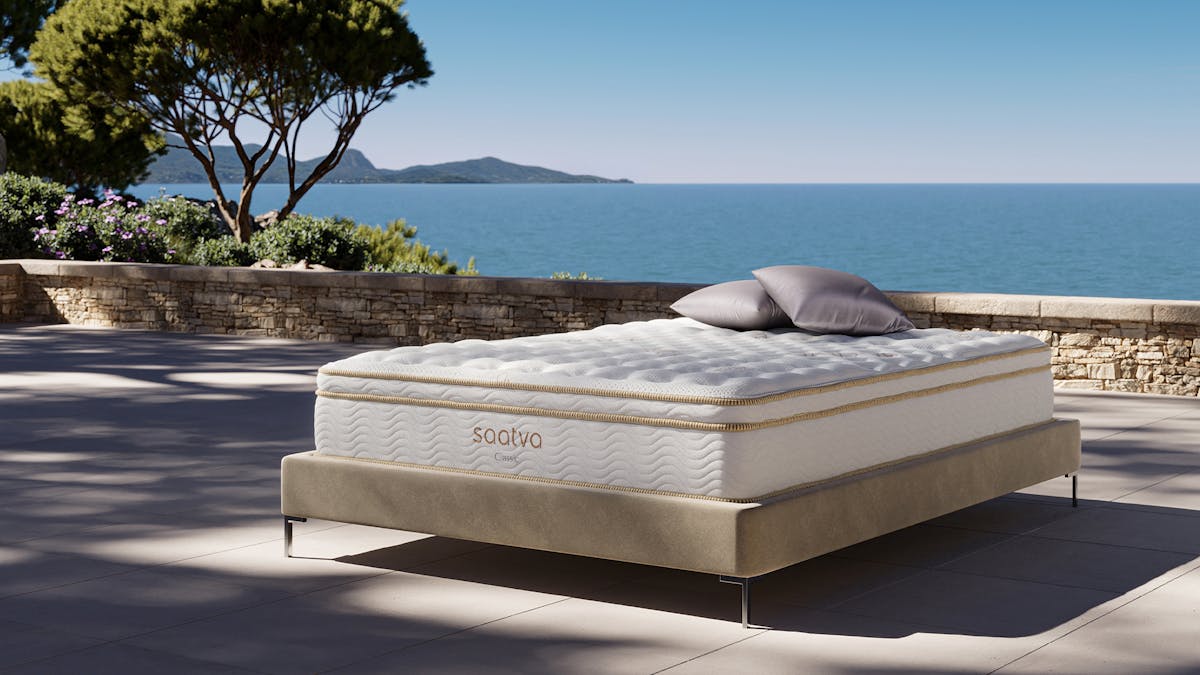
Saatva Classic
9.2/10
- Dual-coil construction with a reinforced lumbar zone foam pad
- Exceptional edge support, one of the strongest among hybrids in our testing
- Free white-glove delivery with in-room setup and old mattress removal
- 365-night home trial with lifetime warranty coverage
- Three firmness options (Plush Soft, Luxury Firm, Firm) for all sleep styles
- $99 return/pickup fee applies during the trial window
- Ships uncompressed, so requires scheduling white-glove delivery
The Saatva Classic delivers the kind of coil-on-coil support that all-foam mattresses cannot replicate. The lumbar zone foam pad keeps the lower back in neutral alignment, and the coil system runs cooler than any foam alternative at this price. For US-based shoppers comparing any two foam beds, the Saatva Classic is the benchmark worth measuring against.
Juno vs Douglas: the full comparison
Juno and Douglas are both Canadian all-foam mattresses aimed at budget and mid-range shoppers who want a bed shipped in a box without a complicated purchase process. They share more similarities than differences: both are 10 inches tall, CertiPUR-US certified, and built on a medium-firmness profile. The distinctions that do exist, however, matter for long-term comfort and value.
Head-to-head specs
| Spec | Juno | Douglas |
|---|---|---|
| Queen price (CAD) | $549 | $799 |
| Height | 10 inches | 10 inches |
| Foam layers | 3 | 4 |
| Comfort layer material | Memory foam + transition foam | ecoLight Cooling Gel Foam |
| Support layer | High-density base foam | Premium Elastex Foam + base foam |
| Firmness | Medium (5/10) | Medium-firm (6/10) |
| Trial period | 120 nights | 120 nights |
| Warranty | 10 years | 15 years |
| Certifications | CertiPUR-US | CertiPUR-US, ecoLight foam |
| Made in | Canada | Canada |
Construction and materials
Juno keeps things simple: a three-layer foam stack with a memory foam comfort layer on top, a transition foam in the middle, and a high-density support base. The memory foam provides the contouring feel the brand is known for, while the transition layer is meant to prevent that stuck sensation some sleepers dislike in memory foam beds.
Douglas takes a more sophisticated approach with four foam layers. The top comfort layer uses ecoLight Cooling Gel Foam, which incorporates open-cell technology to draw heat away from the sleep surface more actively than standard memory foam. Below that sits a Premium Elastex Foam layer that adds a degree of responsiveness not typically found in all-foam beds. The result is a mattress that feels more adaptive and a bit bouncier than Juno, while still offering pressure relief at the shoulders and hips.
For side and back sleepers who run warm at night, Douglas's cooling layer is a meaningful upgrade. For purely budget-focused shoppers who sleep cool regardless, Juno's simpler construction does the job at a lower price.
Firmness and feel
Juno lands around a 5 out of 10 on firmness, genuinely medium, meaning it will contour noticeably under your shoulders and hips without feeling like you are sinking in. It suits side sleepers and lighter-weight back sleepers well. Stomach sleepers and those over 200 lb may find the hips sink a touch too far.
Douglas sits slightly firmer at around 6 out of 10, which pushes it toward a medium-firm profile. The Elastex layer adds rebound so the mattress does not feel sluggish when you shift positions overnight. This firmness range tends to serve the widest range of sleepers, including combination sleepers who switch between back and side throughout the night.
Motion isolation and edge support
Motion isolation is strong on both mattresses, a natural advantage of all-foam construction compared to innerspring beds. Douglas has a dedicated Motion Isolation Support Foam layer that handles partner disturbance well, making it the better option for couples. Juno performs adequately but does not have a layer specifically engineered for this.
Edge support is the area where both mattresses fall short of a coil hybrid. The perimeters of all-foam beds compress more than reinforced coil edges, which limits how far you can sit or sleep toward the edge without feeling unsupported. Neither Juno nor Douglas stands out here; both are average for the all-foam category.
Temperature regulation
Standard memory foam traps body heat, which can be a problem for hot sleepers. Douglas addresses this directly with its ecoLight Cooling Gel Foam, which uses open-cell construction to allow more airflow than a closed-cell foam would. In practice, Douglas sleeps noticeably cooler than Juno for most people. Juno does not have a dedicated cooling layer, so hot sleepers are more likely to notice warmth accumulation, particularly in humid climates.
Who should choose Juno
- Tight budget buyers: at $549 CAD queen, Juno is one of the most affordable quality Canadian mattresses available.
- Side sleepers under 180 lb: the medium feel and memory foam contouring are well matched to this group.
- First bed purchase or guest room: the 10-year warranty and 120-night trial provide adequate coverage for a lower-stakes purchase.
Who should choose Douglas
- Hot sleepers: the ecoLight Cooling Gel Foam layer makes a genuine difference for people who wake up sweating on standard memory foam.
- Couples: the motion isolation layer reduces partner disturbance better than Juno's standard foam stack.
- Back pain sufferers at a mid-range budget: the slightly firmer Elastex layer keeps the lumbar in a more neutral position than Juno's softer medium feel.
- Shoppers who want better long-term value: a 15-year warranty versus 10 years is a meaningful difference over the life of the bed.
Verdict
Douglas wins this comparison for most buyers. The $250 CAD price gap is real, but it buys you an extra foam layer with active cooling, better motion isolation, and five more years of warranty coverage. If the Juno's lower price is non-negotiable, it is still a competent all-foam bed; just expect a warmer sleep surface and a shorter manufacturer guarantee.
Neither mattress ships to the United States. US shoppers comparing all-foam Canadian beds should look instead at the Saatva Classic (innerspring hybrid, 365-night trial, lifetime warranty) or the Amerisleep AS3 (all-foam with zoned lumbar support, 100-night trial, 20-year warranty).
Frequently asked questions
Is Juno or Douglas better for back pain?
Douglas is the better choice for back pain between the two. Its medium-firm feel (6/10) and Elastex foam layer provide more lumbar support than Juno's softer medium feel (5/10), which can allow the hips to sink too far on heavier sleepers or those with lower back sensitivity.
Do Juno and Douglas ship to the US?
No. Both Juno and Douglas are Canadian brands that ship within Canada only. US shoppers should look at comparable all-foam options like the Amerisleep AS3 or a hybrid like the Saatva Classic.
Is the Douglas mattress worth the extra money over Juno?
For most buyers, yes. The $250 CAD premium gets you a dedicated cooling layer (meaningful for hot sleepers), better motion isolation for couples, and a 15-year warranty versus 10. If budget is the hard constraint and you sleep cool, Juno delivers adequate performance at a lower price.
What is the trial period for Juno and Douglas?
Both offer 120-night sleep trials. By comparison, the Saatva Classic offers a 365-night home trial, three times as long, giving you a full year to decide whether the mattress works for you.