
 by
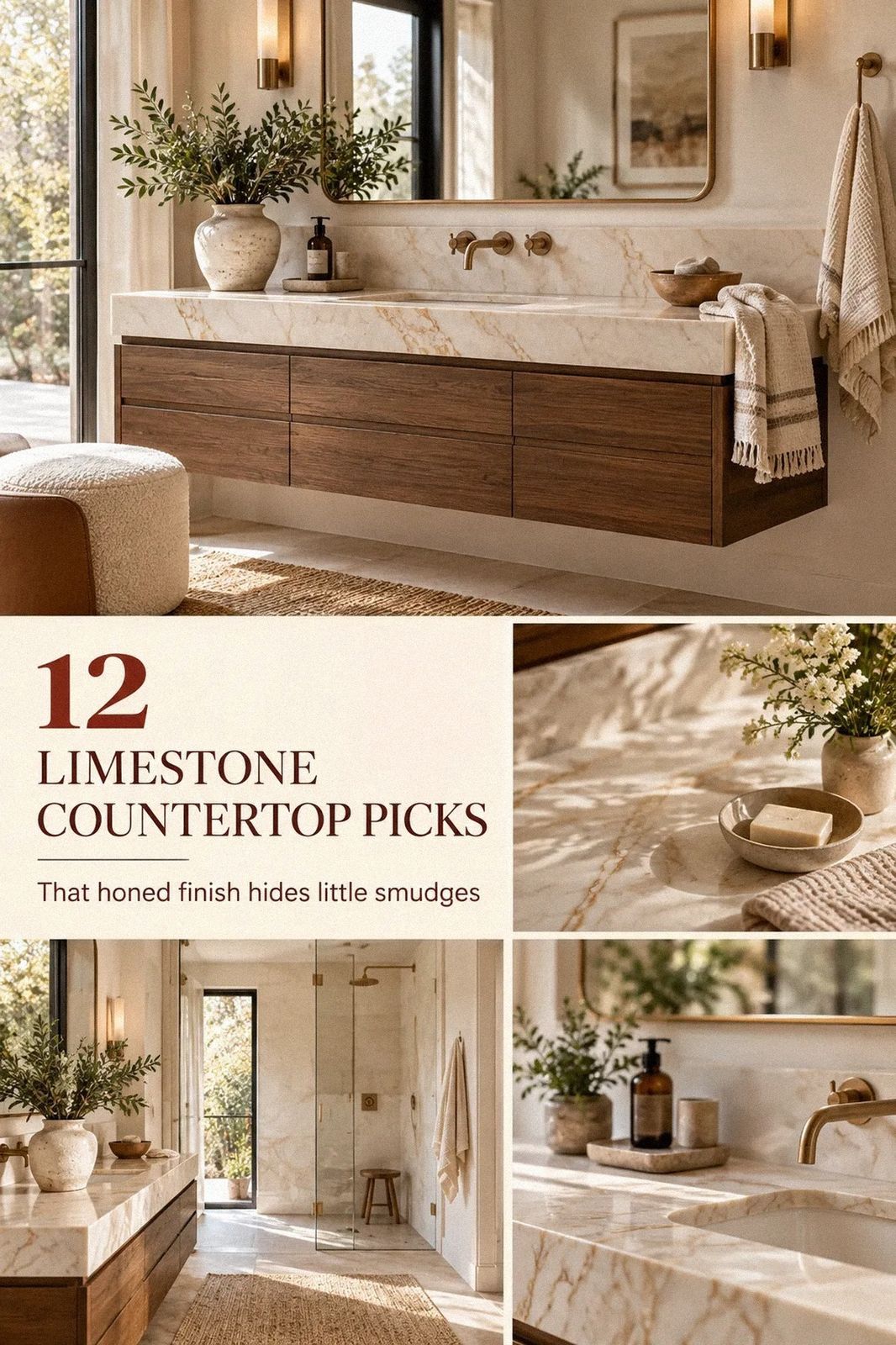
by Limestone countertop ideas work best when the surface stays quiet, matte, and slightly imperfect. I learned that after choosing a glossy top that showed every water mark. Your vanity can feel warm without looking rustic, and these 12 ideas show how to pair honed stone with wood, paint, lighting, and practical storage.
- Float a Honed Slab Over an Oak Vanity
- Can the Two-Texture Rule Keep Limestone From Feeling Flat?
- Paint Around It With Hague Blue
- Build the Three-Height Light Stack
- Warm Stone Over Glossy White Creates the Better Contrast
- Build a Small-Space Bathroom Vanity Stone Moment
- Brass, Nickel, or Neither? Repeat One Soft Metal
- Let the Edge Profile Do the Quiet Work
- What Should the Mirror Give the Limestone?
- Repeat the Floor, Then Break the Pattern
- Edit the Counter With the Five-Item Rule
- Protect the Surface Before You Live With It
1Float a Honed Slab Over an Oak Vanity
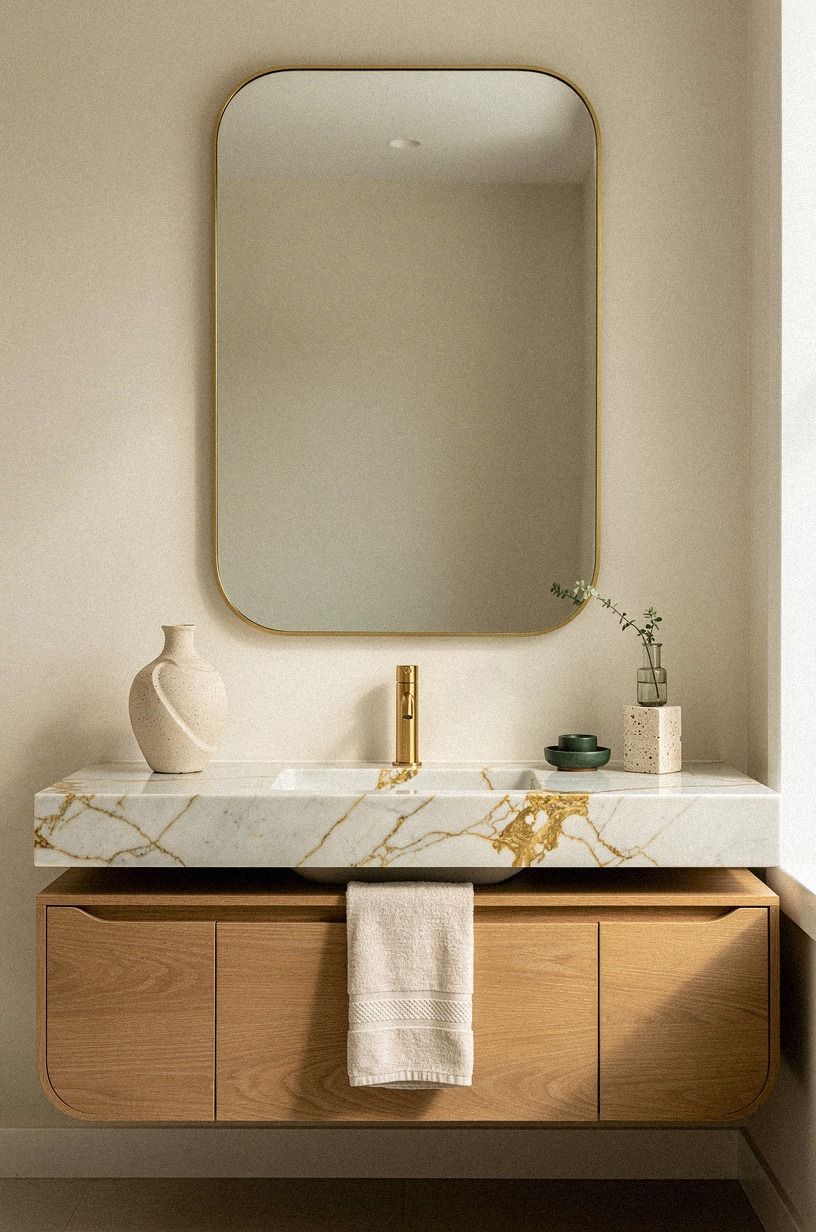
A floating vanity with a Calacatta marble top gives your bathroom an airy, calm foundation. I prefer a height of 32 to 36 inches because your sink feels comfortable without making the room visually heavy. The stone should project only enough to create a clean shadow line.
Choose honed Calacatta marble with soft gold veining rather than a perfectly uniform slab. Those small variations catch morning light and keep your stone vanity bathroom from feeling showroom-stiff. If you're pairing it with wood, use warm natural oak or a cream-toned cabinet.
Keep the cabinet front quiet. IKEA KALLAX storage can work in a casual room if you add concealed baskets and a fitted top, but I'd skip glossy lacquer because it fights the stone's powdery finish.
Your eye needs one strong horizontal line, not five competing ones. For more ideas about the floor beneath this look, browse these limestone floor tile ideas, then compare the vanity with these natural stone bathroom ideas.
A floating design can also reduce the perceived cost of a small renovation because the existing plumbing may stay in place. You won't need a full furniture-style vanity if a basic cabinet can be modified.
Ask a fabricator whether a remnant slab will cover your dimensions before ordering a full slab. That one call can protect your budget.
The best version has a little breathing room beneath it. Store spare towels elsewhere, keep the floor visible, and let the stone cast a soft shadow.
That restraint matters! It makes the room feel considered without adding another decorative layer.
2Can the Two-Texture Rule Keep Limestone From Feeling Flat?
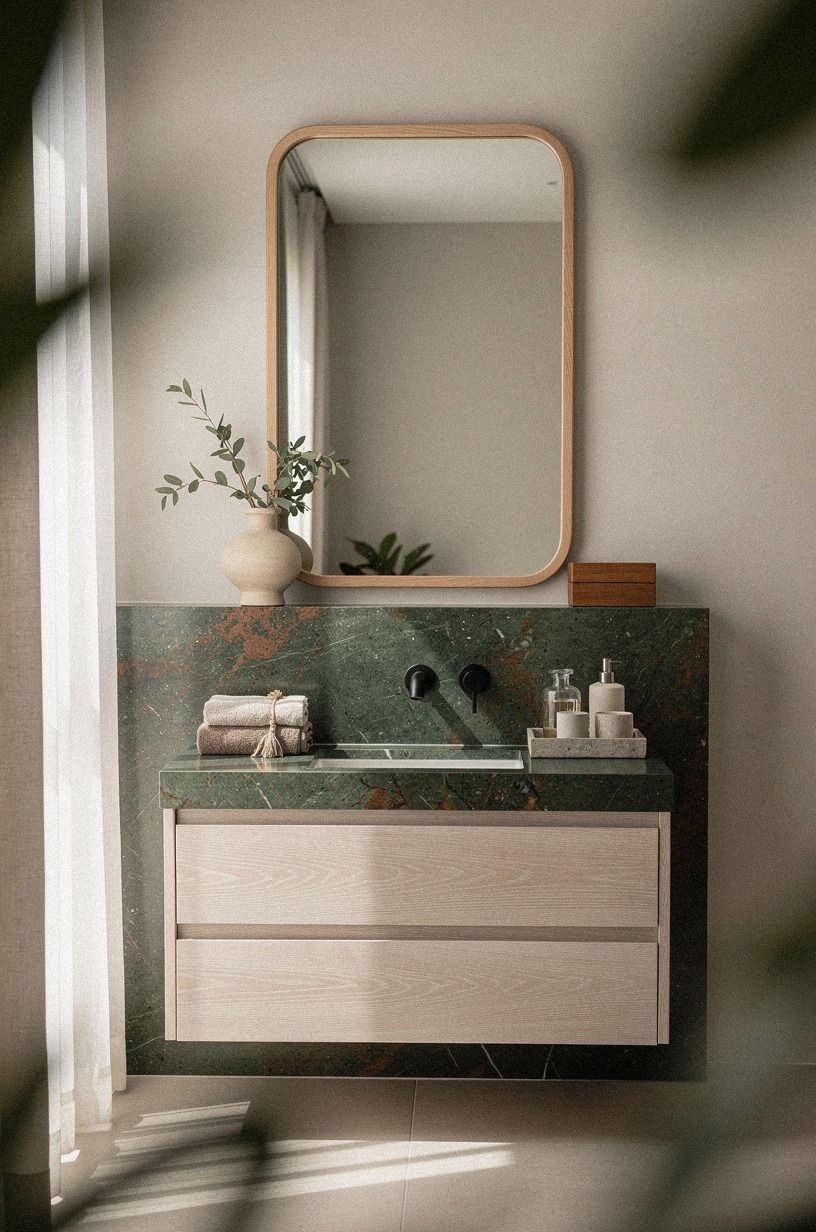
The Two-Texture Rule keeps your bathroom from becoming visually flat: pair the quiet stone with cerused white oak and one smooth material, then bring in forest green and a small rust note.
3Paint Around It With Hague Blue
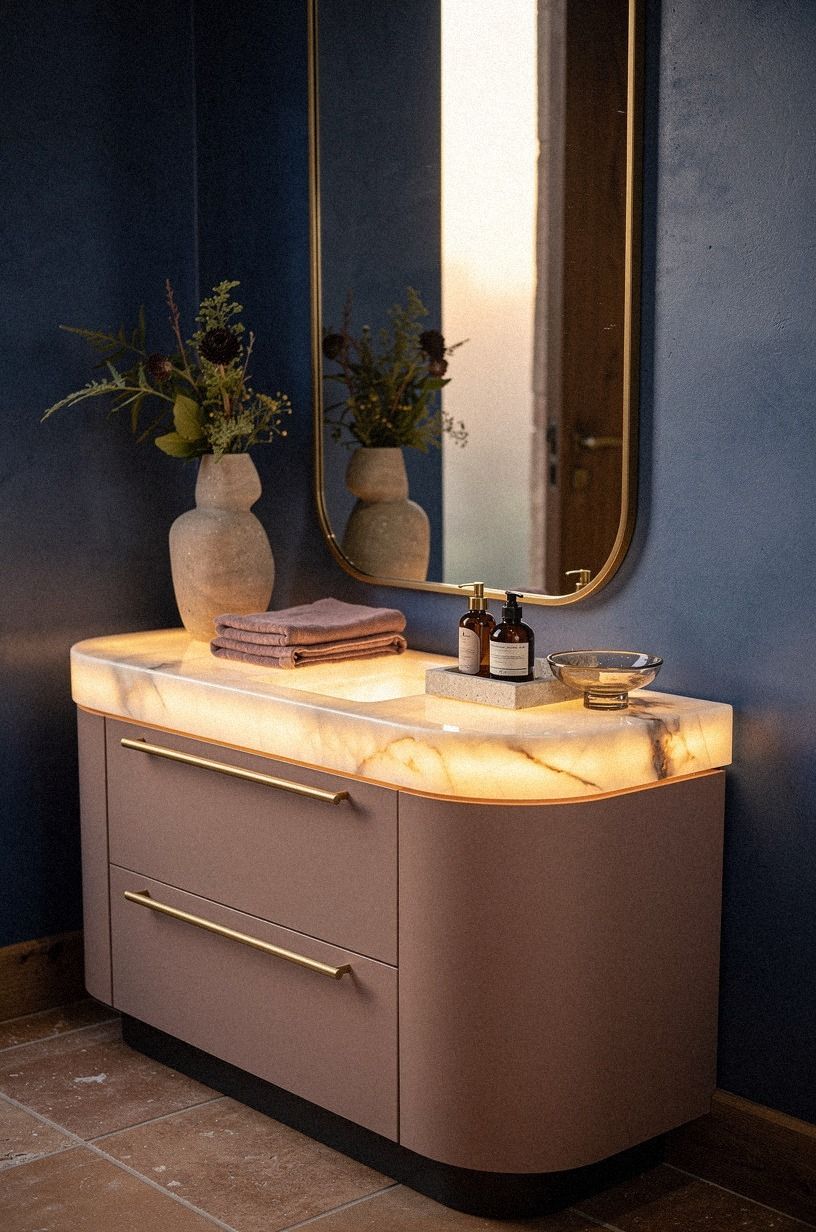
The stone looks surprisingly elegant beside a dusty rose wall, especially when the surface has cream, sand, or pale gray undertones. Although the idea is named for Hague Blue, Farrow & Ball Sulking Room Pink No.295 gives the vanity a softer setting, while charcoal and brass keep the room grounded.
Paint the wall behind the mirror, then keep the other walls lighter if your bathroom is narrow. Your room will feel intimate instead of enclosed. I wouldn't use dusty rose on every surface unless you have strong daylight, because the stone can lose its gentle pattern by late afternoon.
A sample board matters here. Put the paint beside your actual slab, not a phone photograph. The color may look calming at noon and almost charcoal after sunset, so test it through both parts of your routine.
Add brushed brass only in small doses, such as a faucet, mirror edge, or cabinet pull. If you're considering a full natural-stone palette, this guide to why limestone works in a neutral bathroom explains the warmer direction.
Dusty rose paint can be a high-value change when the vanity itself is sound. You may not need new tile, new cabinetry, or a new floor. Spend a weekend testing two samples, and you'll know whether the color supports the stone before you commit to gallons of paint.
A sample board earns its keep!
My favorite version uses a dusty rose wall, pale stone, and one charcoal note with brass hardware. It feels layered, but it doesn't ask the bathroom to become a themed room. The stone still gets the first glance.
4Build the Three-Height Light Stack
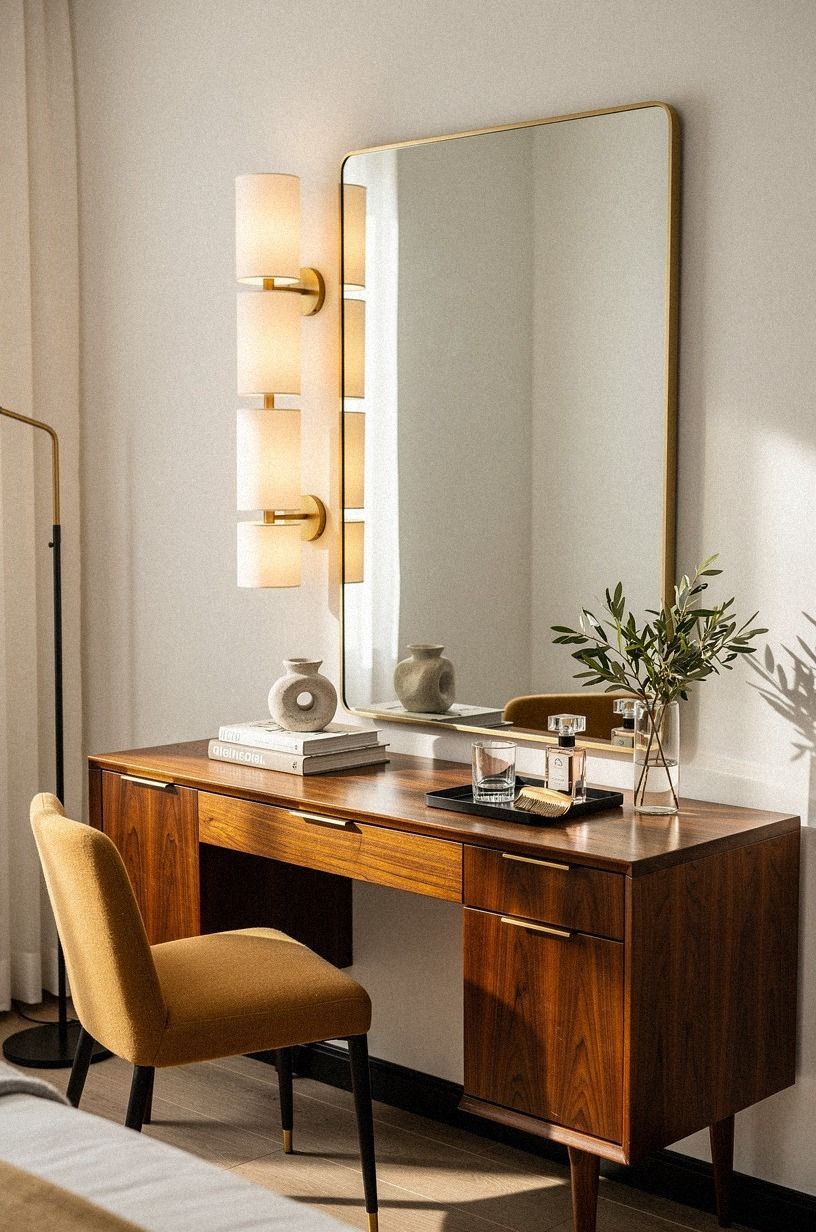
The Three-Height Light Stack gives your bathroom a more considered glow without adding clutter.
5Warm Stone Over Glossy White Creates the Better Contrast
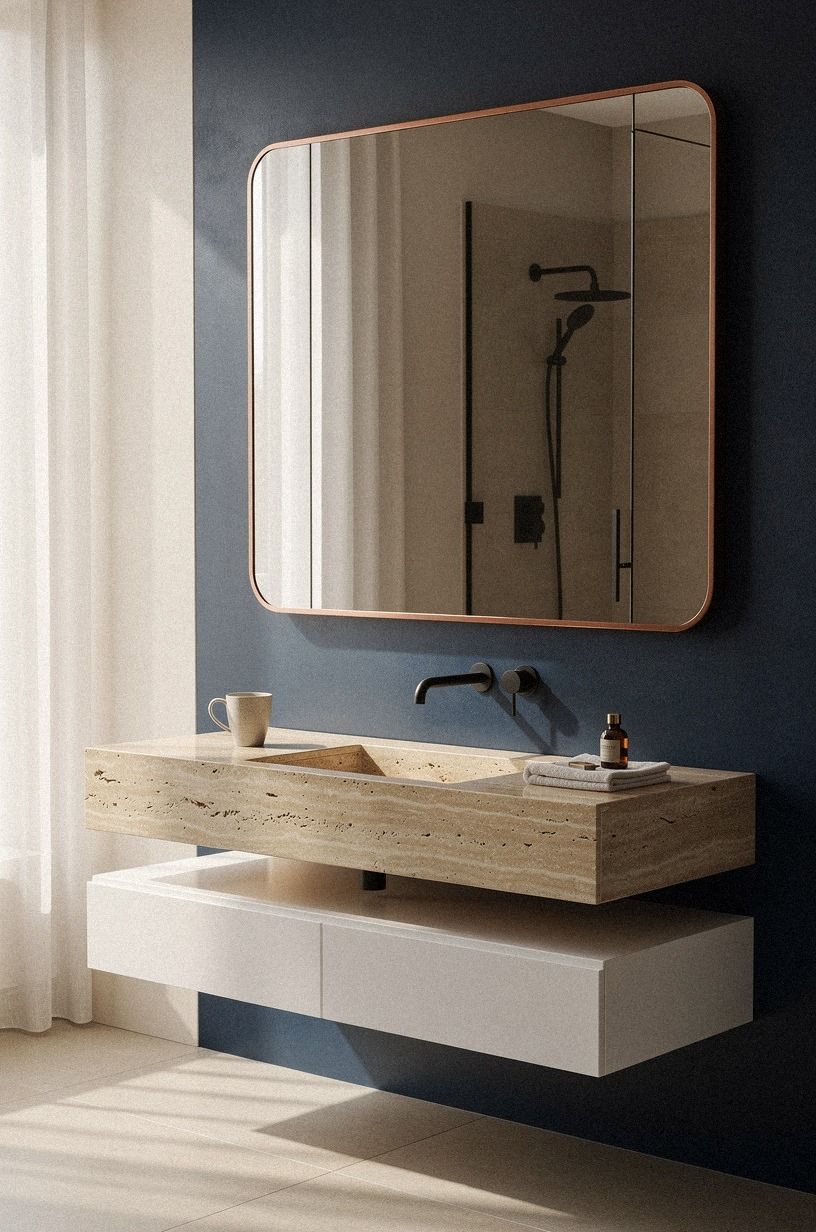
Warm travertine over glossy white is my favorite contrast for a bathroom that needs calm without looking bland. A honed travertine top has a tactile, earthy surface, while glossy white tile can bounce light around the room. Together, they create a bright but settled background.
I'd choose hand-glazed ivory zellige for a backsplash if your travertine is warm. The uneven edges catch tiny shadows, and those shadows make the wall feel handmade. Your stone stays the main feature, so don't cover every inch with decorative tile.
The losing option here is high-contrast black-and-white. It photographs sharply, but it can make a small vanity feel harder and more commercial. If you're after an inviting room, keep the difference between wall and counter closer, then let the copper provide the punctuation.
Use a short backsplash rather than a tall one if your mirror begins immediately above the top. You'll preserve more wall area and make the vanity feel wider. This limestone bathroom guide has more ways to keep natural stone from feeling heavy.
A short backsplash can also lower the material cost without making the design feel unfinished. Protect the wall where splashes actually land, then let paint carry the rest.
That choice is especially sensible when your mirror will cover most of the wall behind the sink. For another flooring direction, compare these limestone bathroom floor ideas.
For the faucet, choose copper or a muted brass finish rather than bright chrome. The goal isn't to make every surface matte. It's to keep the transition from glossy wall to soft counter from feeling abrupt.
A midnight-blue accent wall and ivory accessories will complete the palette.
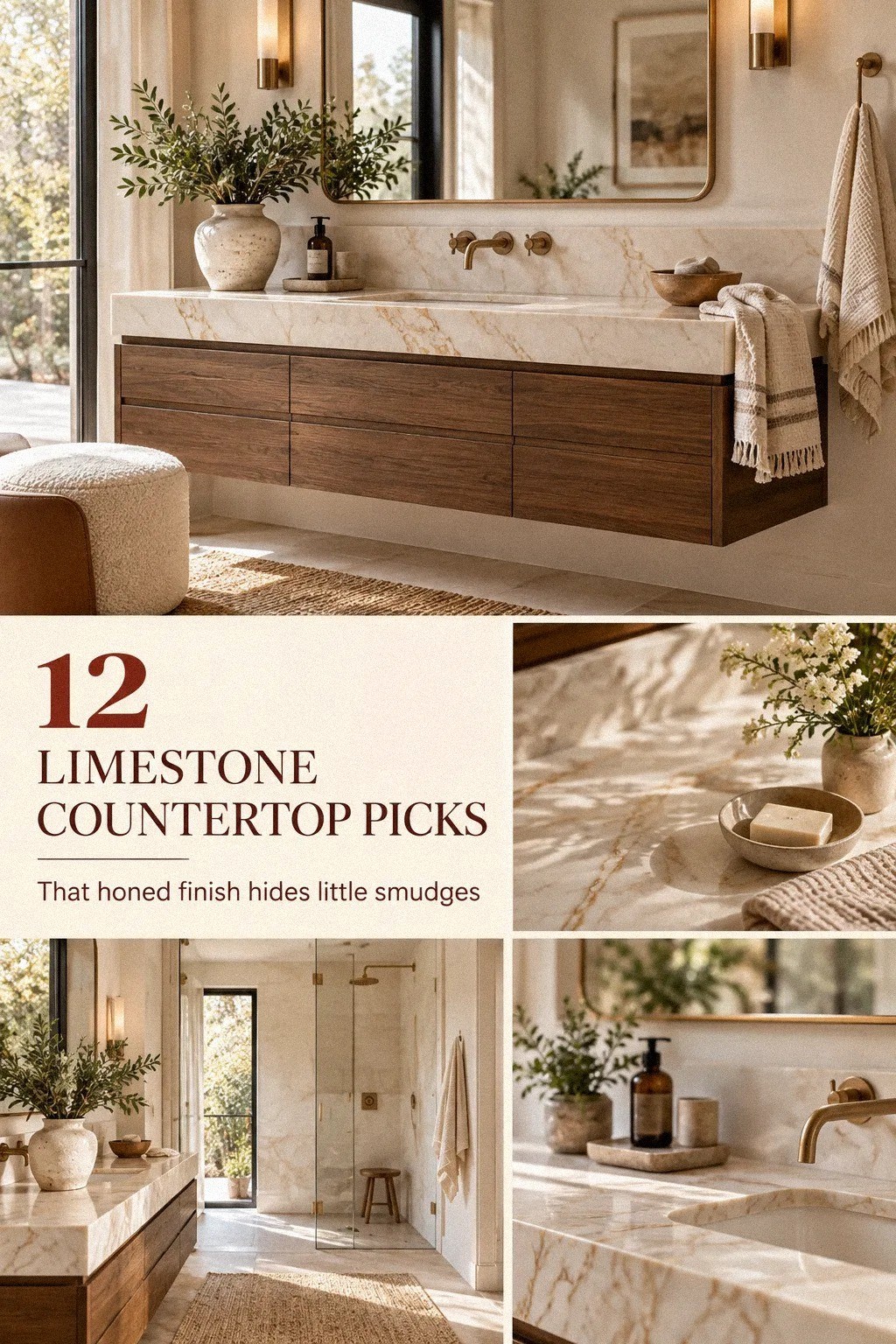
6Build a Small-Space Bathroom Vanity Stone Moment
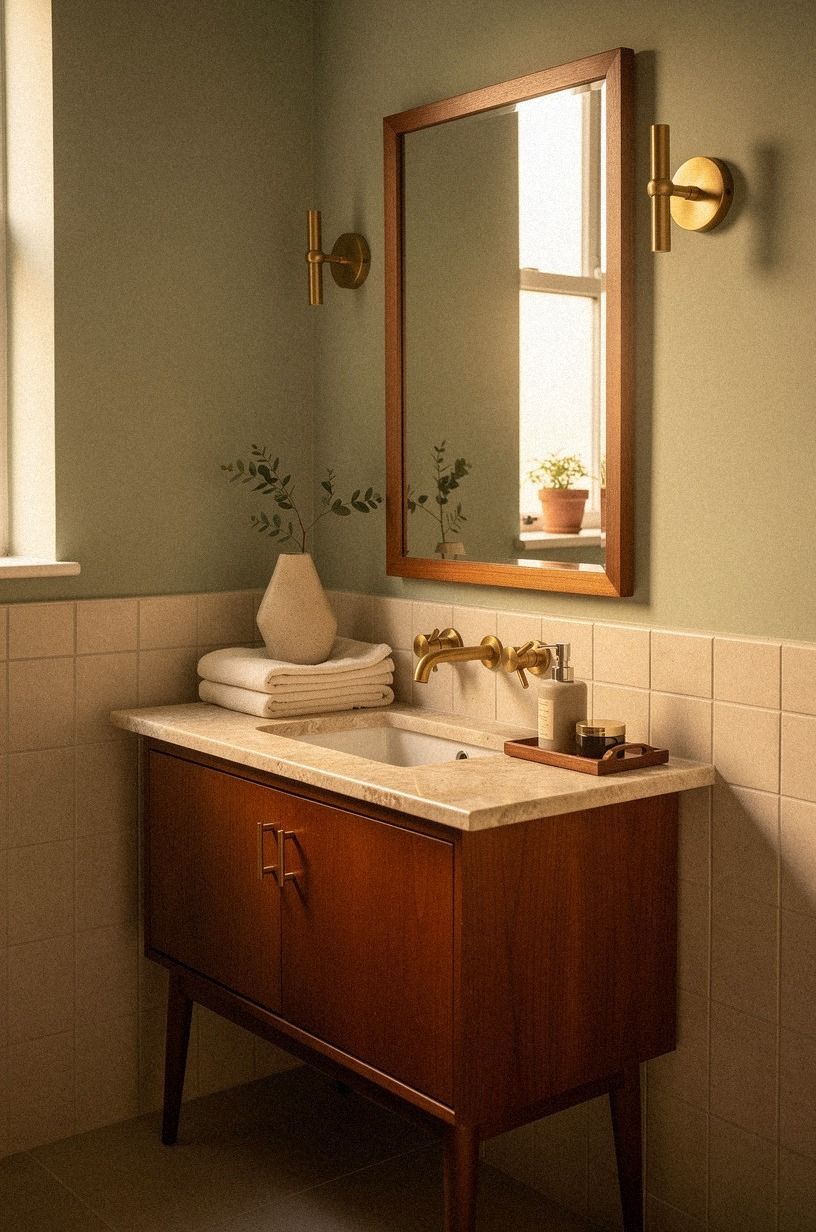
A small bathroom doesn't need a tiny personality. Your stone can become the one broad, quiet plane that makes the room feel more generous. Keep the counter edge straight, use an undermount sink, and let the cabinet sit off the floor if your plumbing allows it.
Choose a sage green wall with warm cream details when the stone has creamy undertones. It’s warm and welcoming, but it won't compete with the stone's natural marks. Add a mirror that reaches close to the side walls, because a larger reflection gives you more visual breathing room.
The standard tub footprint is 60 by 30 inches, and a comfortable shower is 36 by 36 inches minimum. Those measurements matter when you're deciding how much vanity depth you can spare. You don't want a pretty counter that blocks the only clear path through the room.
Here are typical US bathroom renovation ranges to keep your planning honest:
A limestone remnant can be a smart value choice for a compact vanity. Fabricators often have pieces left from larger jobs, and a small bathroom may need far less stone than you expect.
Ask about edge finishing, sink cutouts, delivery, and installation before comparing quotes. The cheapest slab isn't necessarily the cheapest finished countertop.
Bring in natural wood, warm cream, and an unlacquered brass detail that can develop a gentle patina. If your project also includes the floor, compare it with these limestone floor tile ideas. A related stone floor can be beautiful, but it isn't mandatory.
Sometimes a simple painted floor or understated porcelain tile lets the vanity carry the room more successfully. You can also review these natural stone bathroom ideas before choosing a second stone surface.
7Brass, Nickel, or Neither? Repeat One Soft Metal
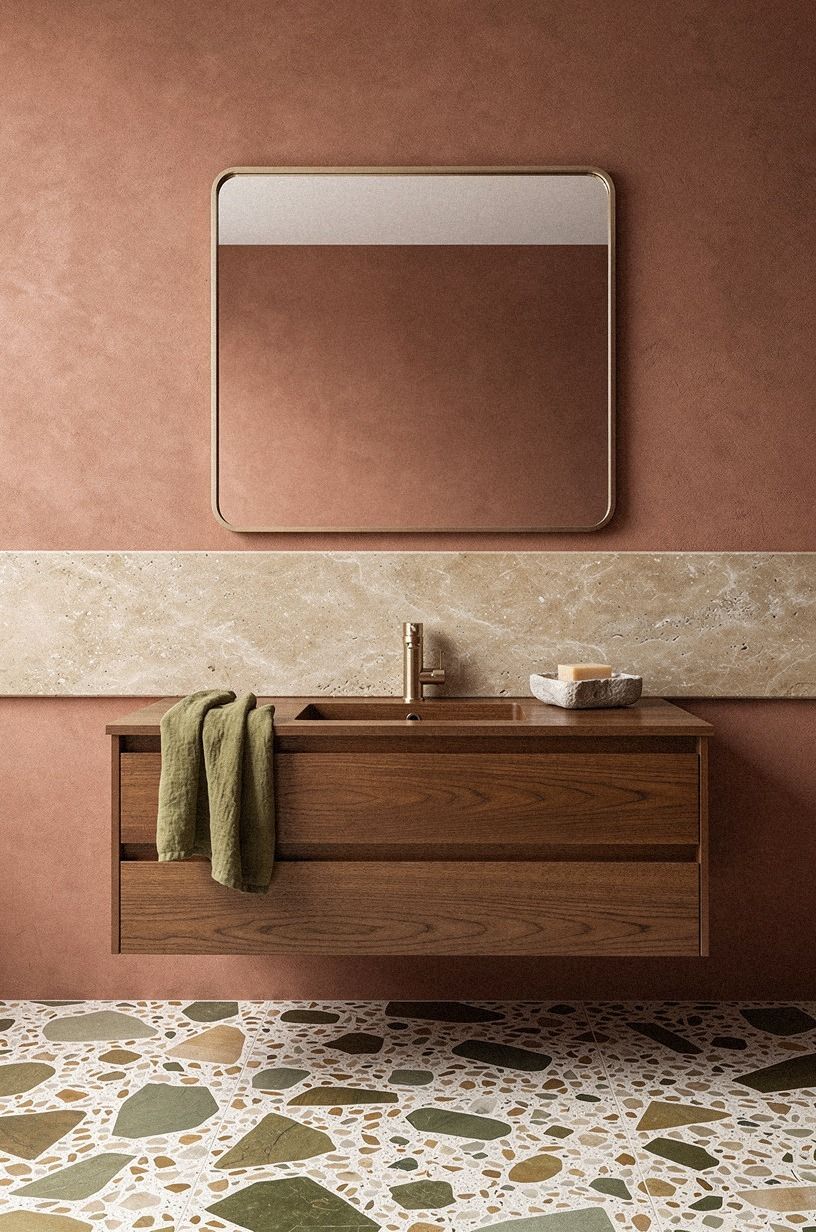
With an oversized-chip terrazzo surface and a terracotta, stone, and olive palette, the Soft Metal Rule is simple: use one warm metal and let it repeat three times. Your faucet can be unlacquered brass, the mirror can carry a slim brass edge, and one cabinet pull can echo the same finish. That’s enough to make the room feel connected.
Unlacquered brass develops a soft patina, so your vanity won't look frozen on installation day. I like that change. I'd avoid mixing polished chrome, black, and brass in a small room because your eye won't know where to rest.
If brass feels too bright, choose brushed nickel with a stone top that has gray movement. It creates a serene, slightly cooler room without losing the natural quality of the surface. Your wall color should support that choice rather than introduce another metal tone.
And don't match every accessory. A ceramic cup, a cotton towel, and a wood stool can break up the repetition. The room will feel gathered, not staged, especially if you leave a little empty space beside the sink.
Black hardware is still possible, but use it as a deliberate contrast rather than a default. One dark faucet can sharpen a pale stone top. Three dark fixtures, a black mirror frame, and dark grout may pull the room toward a graphic style that doesn't suit the stone.
The best finish depends on what you'll touch every day. Satin nickel hides fingerprints well, while unlacquered brass rewards you with gradual change. Think about maintenance, replacement cost, and how the finish will age before choosing from a sample board.
This restrained approach also works with the warmer palette in why limestone works in a neutral bathroom.
8Let the Edge Profile Do the Quiet Work
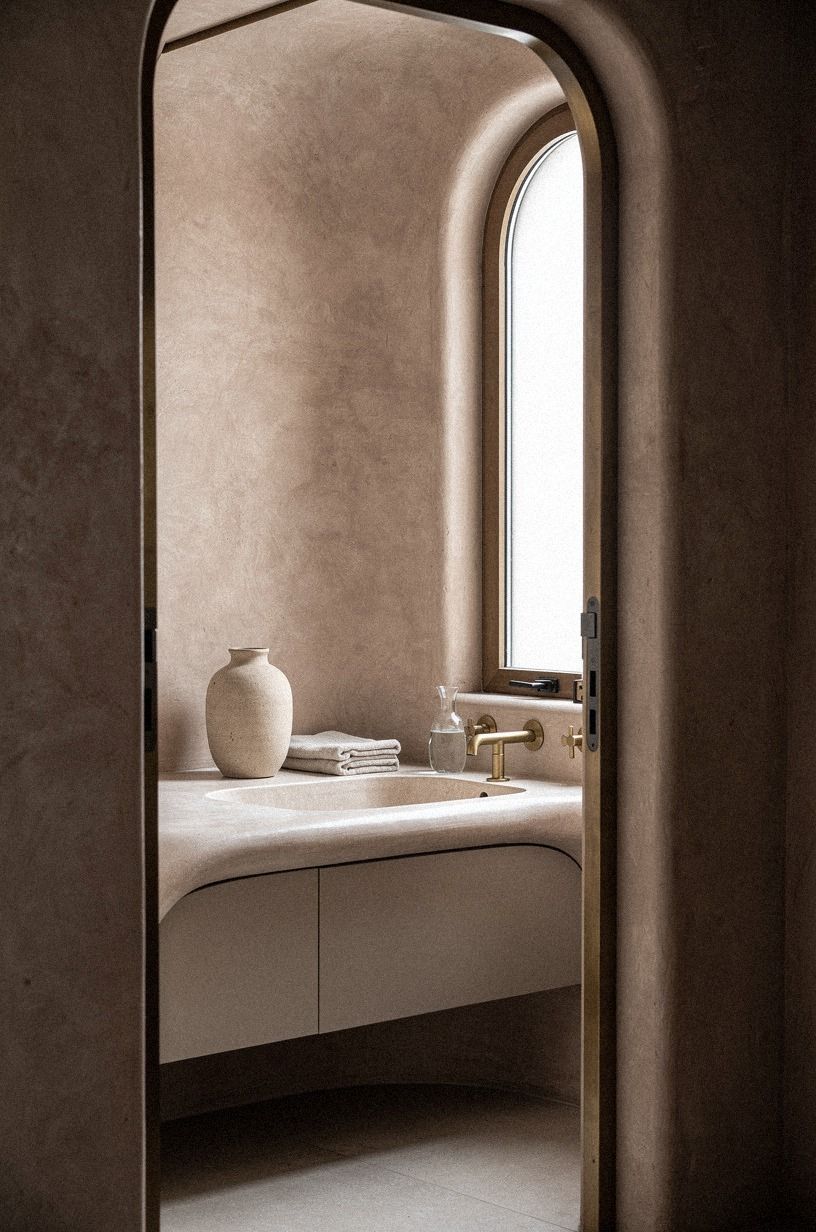
A countertop edge changes how your bathroom feels more than most people expect. Beside hand-applied Venetian plaster, a simple edge profile gives the surface enough detail without competing with the wall.
9What Should the Mirror Give the Limestone?
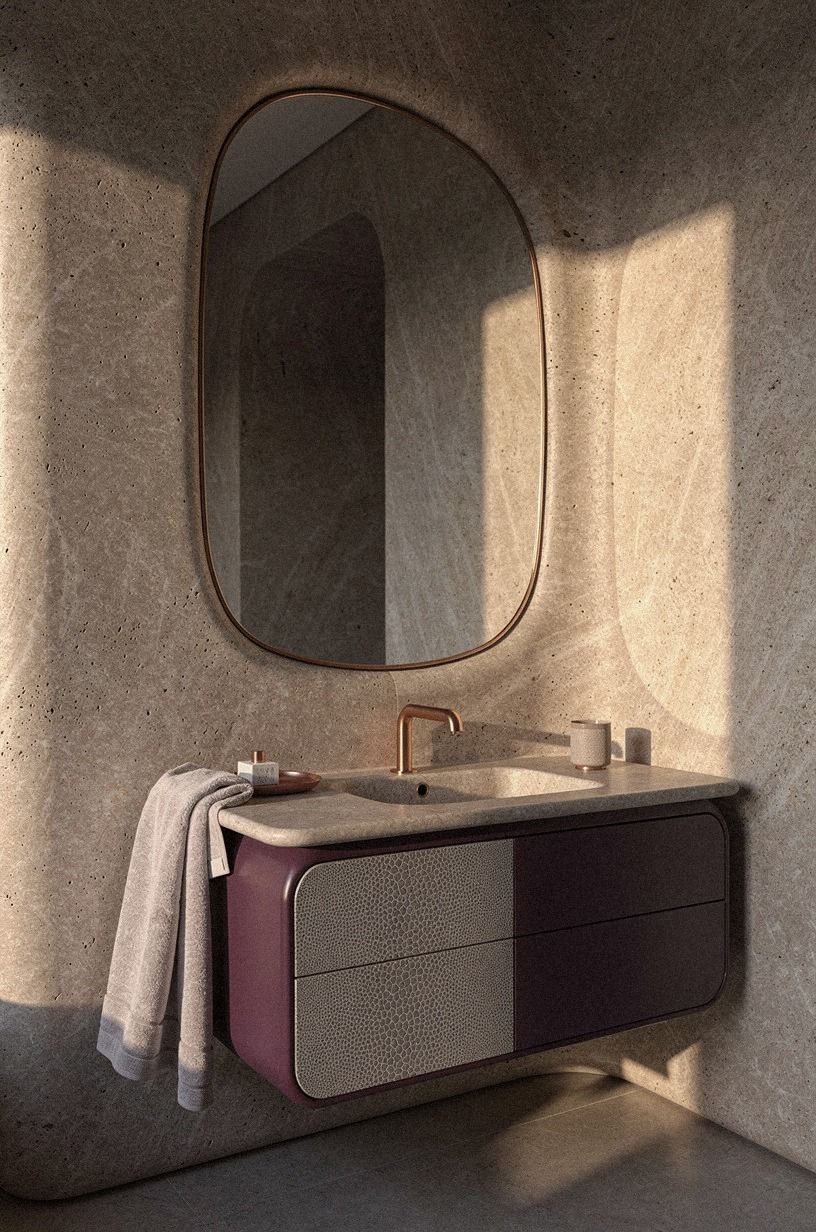
Your mirror should frame the stone, not swallow it. Leave a visible strip of counter between the basin and the glass so the honed surface can catch light. A round mirror works well above a rectangular vanity, but a pill shape feels more tailored.
Use a slim rose-gold edge with a small shagreen accent if your palette includes plum and grey. The repetition makes the room feel harmonious, but it won't look like a matching furniture set. I'd skip a thick frame in a narrow bathroom because it can reduce the sense of width.
A mirror that reaches toward the ceiling can make your vanity wall feel taller. Keep the lower edge high enough for the faucet and low enough that you don't lose the relationship between stone and reflection. Your proportions matter more than the mirror trend of the moment.
And leave room for function. You need to see your face, open the medicine cabinet, and wipe the counter without bumping the frame. For another gentle wall direction, consider these Venetian plaster ideas for bathrooms.
If storage matters more than a decorative frame, use a recessed medicine cabinet with a slim profile. It can give you the same visual calm while keeping daily products off the countertop. That can be better value than buying beautiful trays to organize a surface that lacks storage.
A mirror with smoky grey glass can soften a stark room, but sample it beside the actual stone. Some finishes introduce too much gray, especially when the surface already has cool undertones.
10Repeat the Floor, Then Break the Pattern
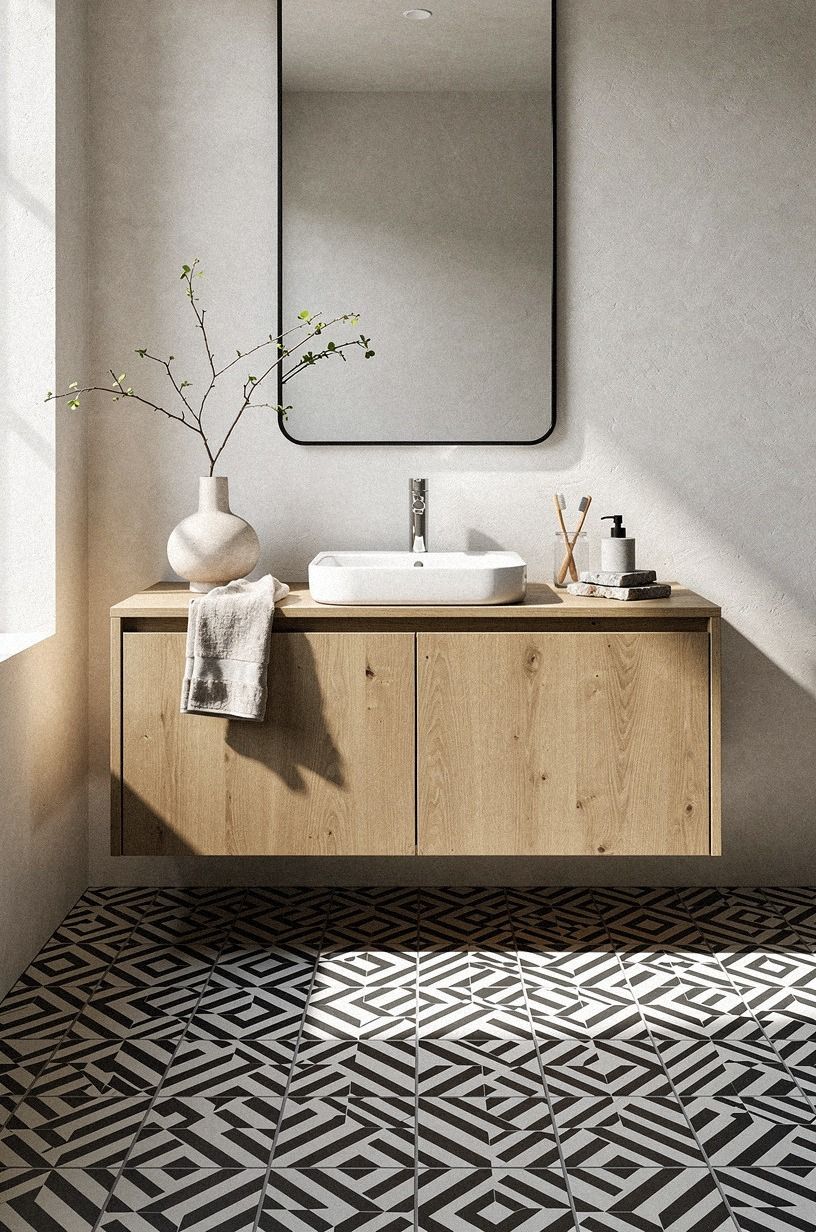
Repeating a quiet floor tone can make your bathroom feel larger because the eye travels across fewer material changes. A navy, white, and walnut palette gives the room enough contrast without making the stone feel disconnected.
Add a washed Belgian linen runner or window textile to soften the transition. Keep the pattern restrained, especially when the vanity already has natural movement.
11Edit the Counter With the Five-Item Rule
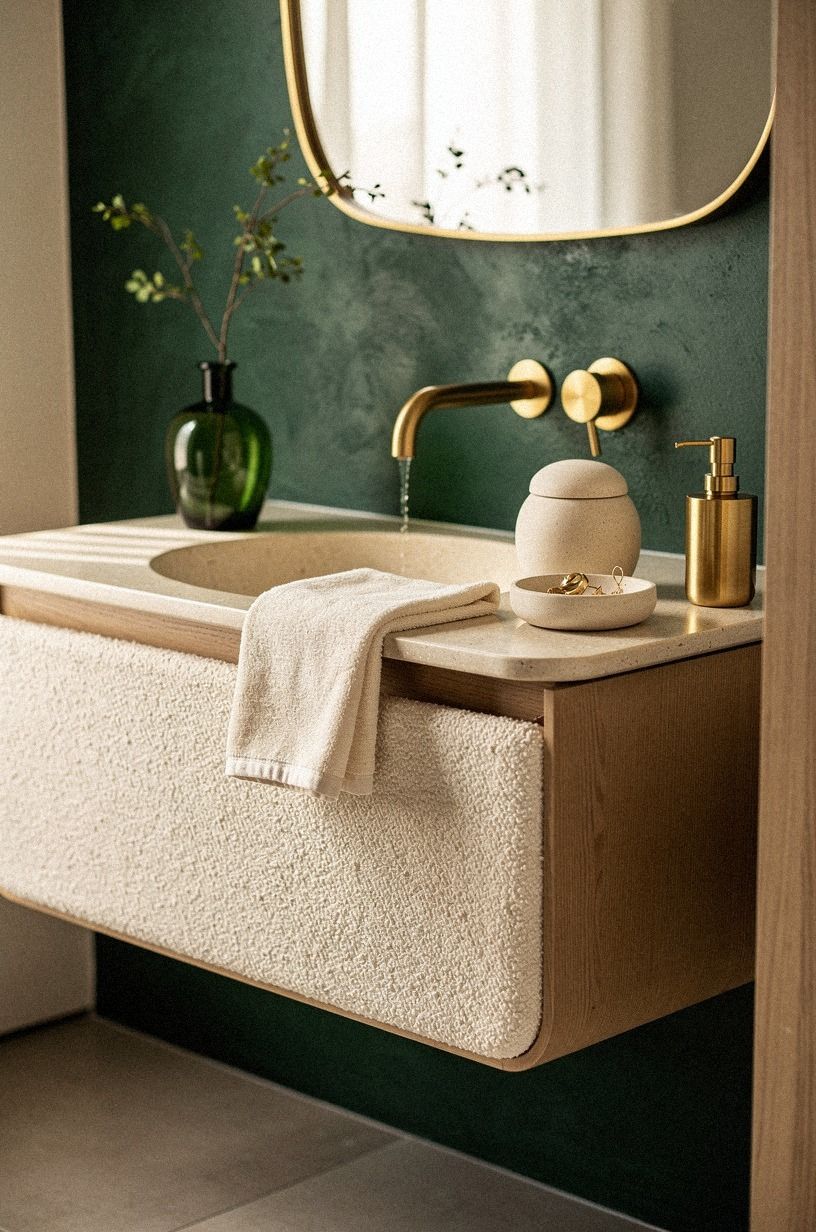
The Five-Item Edit keeps your bathroom vanity stone useful and uncluttered. Your counter needs hand soap, a towel, a small vessel, a practical tray, and one living detail. That fifth item might be a branch, a stone cup, or a tiny plant that tolerates humidity.
Use a 600gsm Turkish cotton hand towel for weight and softness. It looks substantial beside limestone and feels good in daily use. I wouldn't pile folded towels across the counter because the stone loses its visual space and your morning routine becomes awkward.
Try this arrangement:
- Ceramic soap pump in warm cream. - Small wood tray with a comb. - Rolled Turkish cotton hand towel. - Clear glass tumbler. - One leafy stem in a narrow vase.
Your accessories should have different heights but similar undertones. A low tray, medium soap bottle, and taller branch create a relaxed rhythm without turning the counter into a display shelf.
Choose a stoneware soap dispenser if you want the accessories to echo the countertop without pretending to match it. Glass works when you prefer a lighter feel.
An organic bouclé stool tucked beneath the vanity can add softness without taking over the counter. Plastic can be practical too, but hide the loud label or move the bottle below the sink.
If you're styling a rental, this is where you can spend almost nothing. Move what you already own, remove one object, and let the limestone show. The empty patch is part of the design.
The right edit also protects the surface. A tray beneath cosmetics catches residue, while a small dish keeps metal hair clips from sitting directly on the stone. You’re buying a little organization, not turning the vanity into a museum display.
For a wider material palette, see these natural stone bathroom ideas before adding another finish.
12Protect the Surface Before You Live With It
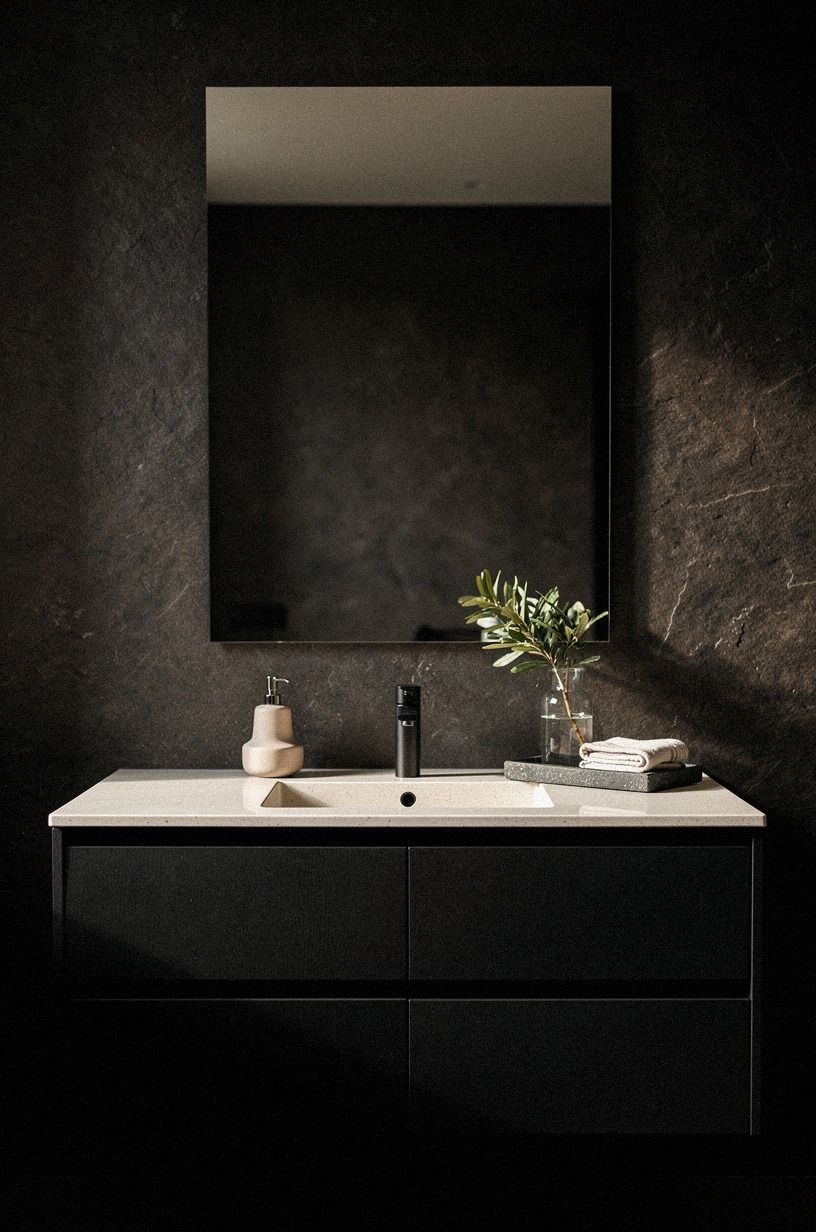
Nero Marquina black marble with white veins is porous enough to need a care plan before the first toothpaste mark appears. Ask your installer about the right sealer for the exact stone, then learn how often the surface needs attention. Your cleaning routine should stay gentle and consistent.
Keep pH-neutral stone cleaner near the bathroom rather than reaching for a harsh spray. Wipe standing water around the faucet, especially if your water leaves mineral marks. I made the mistake of treating natural stone like porcelain once, and the dull patch stayed visible until the surface was professionally corrected.
Use coasters beneath metal containers and a small tray beneath cosmetics. The point isn't to make your bathroom precious. It's to give the stone a buffer so you can enjoy its soft variation without worrying over every drop.
A penetrating sealer won't make marble maintenance-free, but it can give you more time to wipe spills. Ask whether the product is suitable for a bathroom vanity and whether it changes the stone's color. Some sealers deepen the surface, which may be attractive or completely wrong for your design.
Avoid vinegar, lemon-based sprays, abrasive powders, and rough scrub pads. Microfiber cloths and clean water handle most daily marks. For stubborn residue, use a cleaner approved for the stone rather than experimenting with a product meant for glass or porcelain.
Keep the stone useful, not precious!
Your toilet needs at least 21 inches of clearance in front, and that same practical thinking belongs at the vanity. Leave enough room to clean, open drawers, and turn around comfortably. For the broader material philosophy, read why limestone is a warm choice for neutral bathrooms.
Don't forget the sink cutout and faucet base. Water often collects in those small transitions, where mineral deposits become noticeable first.
A quick wipe after washing your face takes seconds and costs nothing. For additional limestone care and layout inspiration, revisit this limestone bathroom guide.
The Limestone Decision I Learned the Slow Way
I used to think a calm bathroom needed every surface to be pale, smooth, and coordinated. That approach looked tidy in a sample board, but it felt flat once the room had towels, bottles, and real morning light.
Limestone changed my mind because it carries movement without demanding attention. The tiny fossils, cloudy patches, and sandy undertones give your eye somewhere to settle.
My first mistake was choosing a glossy finish because I thought it would be easier to clean. It wasn't.
Every splash sat in the light, and the counter looked busy five minutes after I wiped it. Honed stone is more forgiving visually, though it still needs the right sealer and a gentle routine.
That distinction matters when you're choosing between a material that photographs well and one you can live with.
I also learned that wood is the best partner for limestone when your goal is warmth. Brass can help, paint can help, and tile can help, but wood gives the room a pulse. A plain oak vanity beside a quiet slab feels more inviting than a dramatic cabinet beside a dramatic stone.
You don't need every finish to make a statement.
If I were starting again, I'd spend my attention on three decisions: the undertone of the limestone, the height of the vanity, and the quality of the light beside the mirror. Those choices determine whether your bathroom feels airy or cramped, peaceful or sharp.
Everything else should support them. And yes, I'd still choose the imperfect slab.
I'd also set a realistic budget before falling for a particular stone. Include the slab, fabrication, sink cutout, edge profile, delivery, installation, plumbing changes, and sealing. A countertop that seems affordable in the showroom can become a different project once those details appear.
My strongest recommendation is to buy fewer materials and test them together. A paint sample, wood swatch, metal finish, and limestone remnant can tell you more than a dozen isolated photographs.
If the combination feels calm in morning light and useful at night, you're close. This neutral limestone bathroom guide is useful when those samples still feel disconnected.
The Questions Worth Answering First
What is the best limestone countertop idea for a small bathroom?
A honed limestone slab over a floating oak vanity is the strongest choice for a small bathroom. The open floor makes your room feel airier, while the soft stone adds warmth. IKEA KALLAX storage can work for a budget version if you add fitted baskets and a tailored top.
Where can I buy limestone countertop pieces on a budget?
Look at IKEA, Wayfair, Target, Facebook Marketplace, and local stone remnants. A small remnant may suit your vanity better than a full slab. You can also search thrift stores for wood cabinets, then pair one with a local fabricator.
Compare the finished cost, including cutting and installation, rather than the material price alone.
How much does a limestone countertop makeover cost?
A small makeover can run about $100 to $300 when your cabinet stays in place and you handle paint, styling, and hardware. A broader bathroom refresh may reach the $200-$1,200 budget range, depending on the mirror, faucet, and textiles you choose. Plumbing, fabrication, and installation can raise the total quickly.
Can I create a limestone countertop bathroom on a budget?
Yes, and your first savings should come from keeping the existing vanity. Paint the wall, change the mirror, switch the faucet, and add a secondhand wood stool. Benjamin Moore Chestertown Buff HC-9 can warm the room without requiring tile or plumbing work.
A remnant slab may also deliver better value than a full-size order.
Is a limestone countertop worth it in a small space?
Yes, because a small room lets one quiet surface carry the design. Choose a honed finish, a shallow vanity, and a mirror that reaches toward the side walls.
Your limestone will feel intentional instead of crowded, especially if you keep accessories low and limited. More layout ideas appear in these natural stone bathroom ideas.
Is a limestone countertop a good idea for a rental?
Yes, if you treat the countertop as a styling direction rather than a permanent renovation. Use removable hardware, a tension rod, peel-and-stick wall treatment, and a freestanding wood cabinet. Your landlord may not approve a stone replacement, but you can still create the same warm stone bathroom mood.
Where I'd Start First
If I had to pick one, I'd start with the honed limestone slab over a simple oak vanity. Its matte surface hides water marks, while the wood keeps the room from feeling clinical. Pin this idea for later and save our limestone bathroom guide before choosing a faucet.
Then I'd order samples, price a local remnant, and test the countertop beside the wall color at two times of day. That small amount of planning protects your budget and makes the final room feel deliberate. The stone should be beautiful, but it should also fit your mornings.