
 by
by Saatva Foundation
9.0/10
This is the correct recommendation for foundation and box-spring comparisons. The article should sell support hardware, not a mattress.
Amerisleep Bed Bases
8.8/10
A good second option when the reader wants a modern platform or adjustable base instead of a traditional foundation.
Puffy Bed Frames
8.6/10
A practical partner backup for shoppers comparing frames, slats, and box springs on price.
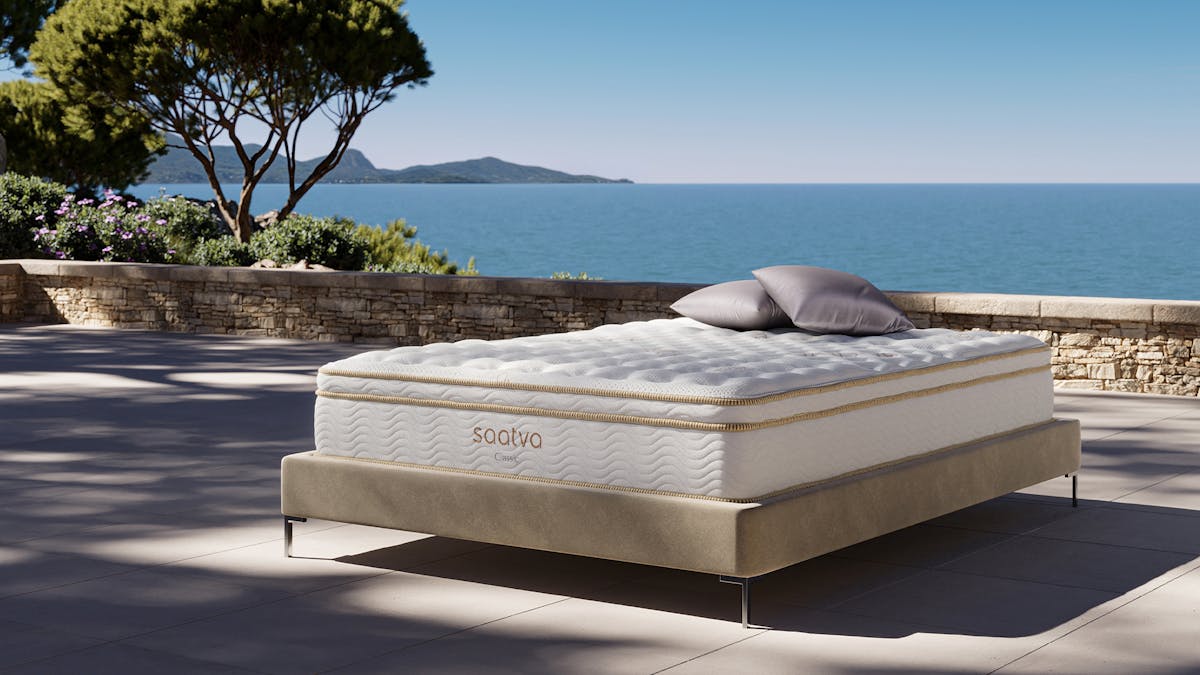
A low-profile box spring (4 to 5 inches) is the right choice when your mattress is 12 inches or thicker, or when you want a lower total bed height. A standard box spring (8 to 9 inches) works better for thinner innerspring mattresses or when a taller sleep surface makes getting in and out easier. Both provide the same structural support; only the height differs. If you are replacing or upgrading your setup, the Saatva Classic is our top mattress recommendation for paired innerspring-hybrid performance.
"The art of mattress" has rapidly evolved, thanks to the latest technologies and massive R&D in the same sector. From adding multilayers to a mattress to body contouring and moisture-wicking abilities, the choices to select the best mattress have widened. Knowing the quality and style of mattress foundations is essential for a better life for your mattress and good support for you.
In this post, you will learn the difference between standard and low-profile box spring foundations. Check our guide to the 6 best low profile box springs if you want specific product picks. We also cover the top rated box springs and box spring alternatives if you need a different approach.
Who Needs a Box Spring?
Any support is essential for most mattresses to keep them lifted from the floor. Whether it is a foundation, a box spring, or a platform bed, selecting the right form of support depends on numerous factors.
No matter the size and type of mattress, a firm and solid foundation will help keep the mattress healthy. Box springs were originally designed to handle the impact of pressure and minimize the wear and tear of the mattress. They primarily supported traditional innerspring designs with thin profiles. If you still use old-school innerspring, a box spring remains a solid choice. Check the top rated innerspring mattresses for reference.
In the modern world, thicker-profiled mattresses have reduced the need for box springs. But there are still scenarios where they make sense:
- You use a rail bed frame made from metal that is designed to complement a box spring
- You have an aged innerspring mattress specifically designed to pair with a box spring
- Your mattress manufacturer specifies the use of a box spring, in which case it is required for warranty coverage
- You want to raise the mattress height for better edge support and easier in-and-out movement
What Is a Regular Box Spring?
A regular box spring is a wooden or metal box with coils, designed to provide extra support and height to your mattress. The whole structure is covered in fabric to avoid damaging your mattress. On average, a regular box spring measures 8 to 9 inches high, providing sufficient height for thinner mattresses.
Box springs were initially made for thin or innerspring mattresses. For that reason, traditional box springs are not ideal for modern thick mattresses, because of the already large size of modern foam and hybrid options.
If your mattress is low in height or you use an innerspring design, a regular box spring will provide good edge support, overall bounce, and shock absorption. The coil structure also promotes airflow for cooler sleep. Check the top rated cooling mattresses for hot sleepers if temperature is a priority alongside your foundation choice.
The main drawback of wooden box springs is durability under heavy or uneven load. Over time, the wooden slats can crack, and the fabric cover can sag, reducing overall support quality.
What Is a Low Profile Box Spring?
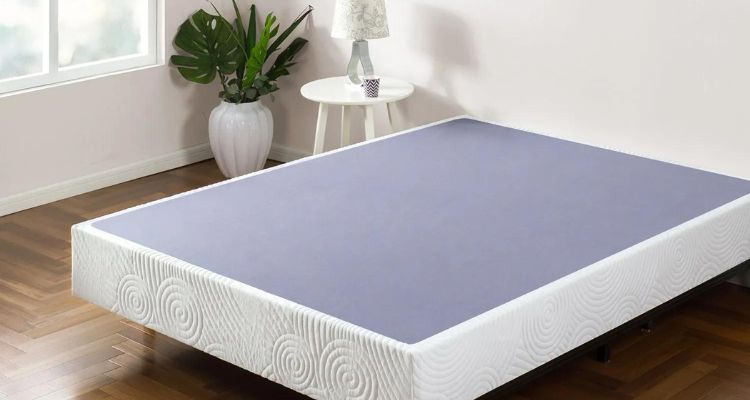
The only difference between a regular and a low-profile box spring is the height. A low-profile box spring is almost half the height of a regular box spring, standing around 4 to 5 inches. This makes it suitable for medium-height to thick mattresses, and for sleepers who prefer a lower total bed height. Check 7 best low profile mattresses if you are also considering a lower-profile mattress alongside.
This profile gives a more modern, lower-slung look to your bed without sacrificing support. Like a regular box spring, a low-profile version is made from wood or metal with coils. Since the housing is shorter, you can pair it with a thicker, multilayer mattress and still keep total bed height reasonable.
A quality low-profile box spring still delivers solid edge support, shock absorption, and airflow. The trade-off is that taller sleepers with mobility concerns may prefer the extra height a standard box spring provides for easier bed entry and exit.
Standard vs Low Profile Box Spring
| Feature | Standard Box Spring | Low Profile Box Spring |
|---|---|---|
| Height | 8 to 9 inches | 4 to 5 inches |
| Best mattress pairing | Thin to medium (8 to 10 inches) | Medium to thick (10 to 14+ inches) |
| Structural support | Excellent (same coil/slat structure) | Excellent (same coil/slat structure) |
| Bounce and edge support | Good, fabric cover adds cushion | Good, same internal design |
| Mattress sizes available | Twin to King | Twin to King |
| Portability | Heavier, but modern versions ship in parts | Lightweight, easy to move |
| Motion isolation | Foundation-only, depends on mattress | Pairs well with modern motion-isolating mattresses |
| Under-bed storage | More clearance | Less clearance |
Low-Profile vs Standard: Which Height Is Right for You?
The box spring you choose affects your total bed height, ease of getting in and out, and under-bed storage space.
Height difference in practice. A standard box spring measures approximately 9 inches tall. A low-profile box spring stands about 5 inches. That 4-inch difference has a bigger impact than most people expect. Add your mattress thickness to the box spring height, plus any bed frame. A 12-inch mattress on a standard box spring on a 7-inch frame puts your sleep surface at roughly 28 inches, about chair height. Swap in a low-profile box spring and the surface drops to 24 inches, which many sleepers find easier to manage.
Choose low-profile when:
- Your mattress is 12 inches or thicker and a standard box spring would make the bed uncomfortably tall
- You or your partner are shorter in stature and prefer a lower entry point
- You use a platform bed frame that already adds meaningful height
- You want a modern, lower-slung aesthetic
Choose standard when:
- Your mattress is thinner (8 to 10 inches) and needs the extra height for comfortable edge sitting
- You want maximum under-bed storage clearance
- You have mobility concerns and a taller bed is easier to stand up from (optimal height aligns with your knee height)
Support quality is equal. Both profiles provide the same structural support. The coils or wooden slats inside function identically; only the housing height differs. Neither option affects mattress durability or comfort, assuming the foundation is in good condition.
Getting the Right Setup: Practical Buying Advice
Your bed frame and foundation directly affect mattress performance, longevity, and warranty coverage.
Compatibility Checklist
- Weight capacity: Add your mattress weight plus both sleepers. Most budget frames max out at 500 lbs; a queen hybrid mattress alone can weigh 100 or more pounds, leaving limited margin for heavier couples.
- Slat spacing: If using a slatted base, slats must be no more than 3 inches apart for proper mattress support. Wider gaps void most mattress warranties.
- Total bed height: Calculate frame plus foundation plus mattress before buying. Most people find 24 to 26 inches from floor to mattress top most comfortable for sitting on the edge.
Mattress and Foundation Pairing
Thicker modern mattresses (12 to 14.5 inches) generally work best with a low-profile foundation or flat platform surface rather than a full-height standard box spring. If your mattress manufacturer requires a specific foundation type, that requirement typically appears in the warranty documentation. Using an incompatible foundation can void coverage, so confirm before purchasing.
For mattresses without a box spring requirement, a solid platform bed, a slatted frame with slats spaced under 3 inches, or a low-profile foundation are all valid options. See our guide on adjustable base vs foundation vs box spring and whether you actually need a box spring for more detail on each setup.
For a deeper look at pairing a quality innerspring hybrid with its ideal foundation, see our guide to the best foundation for Saatva.
Key Takeaways
- A standard box spring is 8 to 9 inches tall; a low-profile is 4 to 5 inches. Both deliver the same support quality.
- Choose low-profile for thick modern mattresses (12 inches or more) to keep total bed height manageable.
- Choose standard for thin or innerspring mattresses, or when extra bed height helps with mobility.
- Box springs are still required by some mattress manufacturers for warranty compliance, check your documentation.
- Slat spacing matters: keep slats within 3 inches to maintain warranty coverage on foam and hybrid mattresses.
- Under-bed storage is better with a standard box spring due to greater ground clearance.
Low-profile box spring for thick mattresses (12 inches or more); standard box spring for thin innerspring mattresses or when you need extra bed height. Support quality is identical between the two; total bed height is the deciding factor. For a mattress that performs on either setup, the Saatva Classic is the best innerspring hybrid on the market with a 365-night trial.
Frequently Asked Questions
What is the height difference between standard and low-profile box springs?
A standard box spring stands 8 to 9 inches tall. A low-profile box spring is 4 to 5 inches. The 4-inch difference directly affects your total bed height when combined with mattress thickness and frame height.
Can I use a low-profile box spring with any mattress?
Yes, both low-profile and standard box springs work with mattresses of any size. The key consideration is whether your mattress manufacturer requires a specific foundation type for warranty coverage; check your documentation before choosing.
Do I actually need a box spring with a modern mattress?
Many modern mattresses, especially foam, hybrid, and latex types, do not require a box spring. A platform bed, solid slatted base, or adjustable frame all provide adequate support. Box springs are primarily needed for traditional innerspring mattresses or when your mattress warranty specifically requires one. See our full guide on whether you need a box spring.
Does a low-profile box spring provide the same support as a standard?
Yes. The internal construction, coils or wooden slats, is functionally identical. Only the outer housing height differs. Neither option is inherently stronger or weaker structurally.