
 by
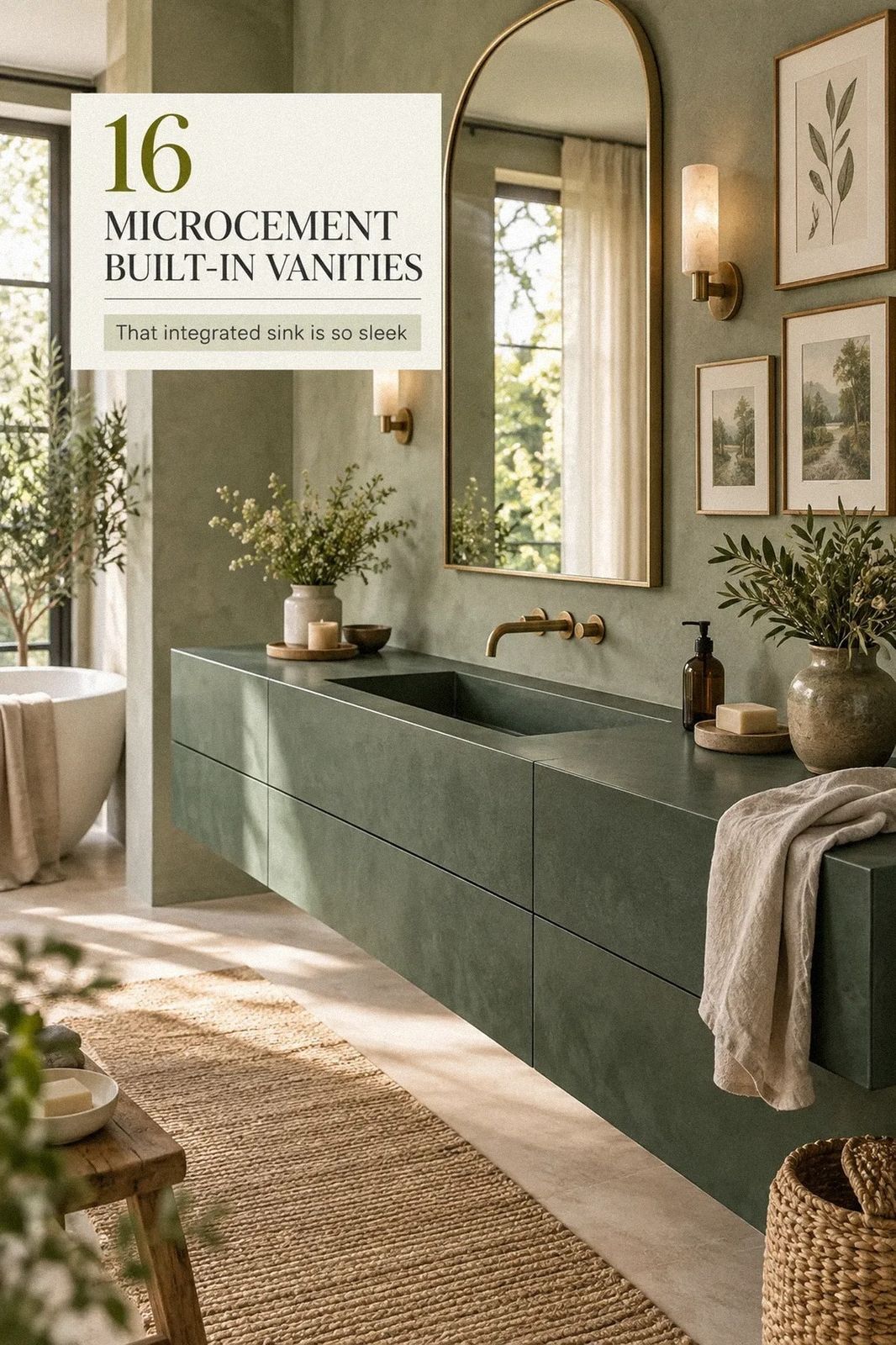
Microcement vanity ideas for a sculptural, built-in look can cost about $100 to $300 for a small cosmetic refresh, depending on what you already own. I once sealed a vanity too late, and the first splash left a dull ring. The fix was simple: treat the surface like furniture, not tile. Your bathroom can feel custom without a full gut renovation.
Editor's note: Start with the cabinet's silhouette, then choose the finish. When the proportions work, even an inexpensive vanity can look deliberate.
- Float a wall-to-wall vanity for an airy artisan bathroom
- Microcement or cabinetry? Wrap the whole cabinet in one skin
- Apply the Two-Wood Rule for a warmer modern beige bathroom sink
- Hague Blue, not more tile, gives the vanity its backdrop
- What happens when a rounded basin meets a straight cantilever?
- Hide the plumbing behind fluted doors
- The Three-Height Light Stack keeps the room from feeling flat
- Choose microcement over full tile when you want less grout
- Frame the mirror with a thick reveal
- Why does a narrow oak bench work beside the vanity?
- Turn the side return into a tall storage niche
- Price the project before choosing the finish
- Can you keep clearances generous in a small bathroom?
- Layer linen, stone, and one earthy color
- Adapt the look for a rental with removable layers
- Shape an organic-modern vanity with a soft curve
1Float a wall-to-wall vanity for an airy artisan bathroom
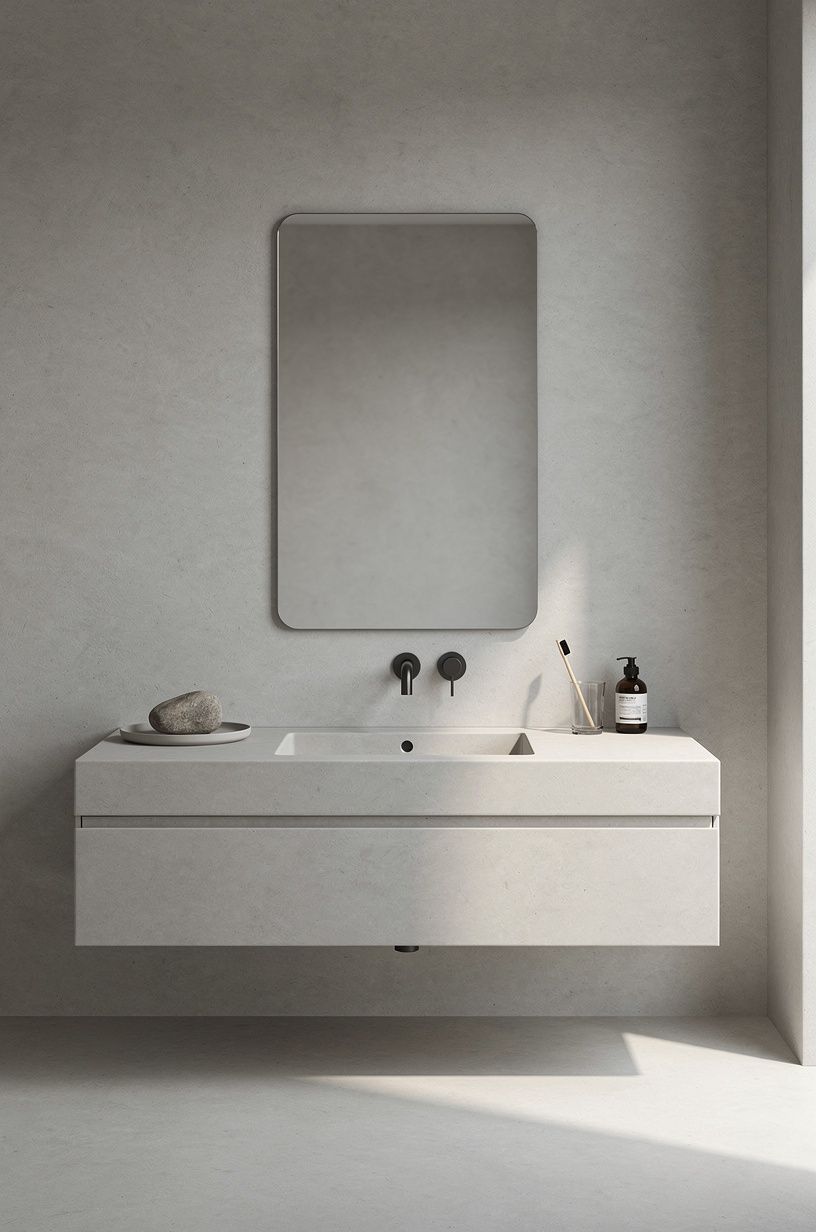
A floating vanity gives your floor a clean run beneath it, which makes a small bathroom feel calmer and more open. Keep the top between 32 and 36 inches high, then leave enough room below for a basket, slippers, or the shadow line that makes the cabinet appear lighter. Oversized-chip terrazzo works especially well here because its generous texture gives the long surface personality without making it fussy.
I’d skip a chunky freestanding cabinet in a narrow room. It eats visual floor space, even when the measurements technically fit. If you’re working with an existing cabinet, skin the front and sides instead of replacing everything, then pair it with this microcement bathroom guide for a seamless no-grout look.
Keep supporting pieces restrained. A plum, grey, and rose-gold palette lets the terrazzo carry the personality, while a glossy white sink could make the surface feel disconnected. You’ll notice the difference when afternoon light slides across the vanity instead of stopping at a hard cabinet edge.
2Microcement or cabinetry? Wrap the whole cabinet in one skin
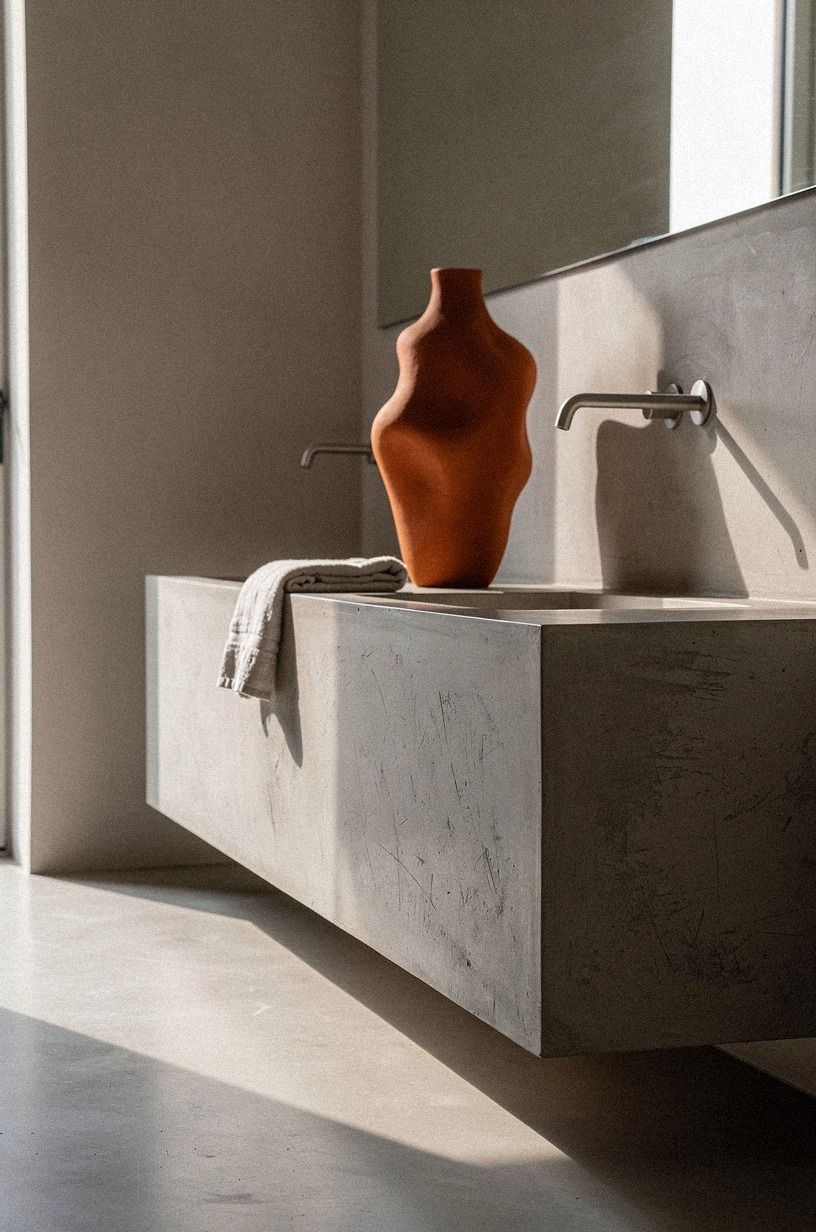
A wrapped vanity carries the hand-applied Venetian plaster finish over the top, side panels, and sometimes the drawer fronts.
3Apply the Two-Wood Rule for a warmer modern beige bathroom sink
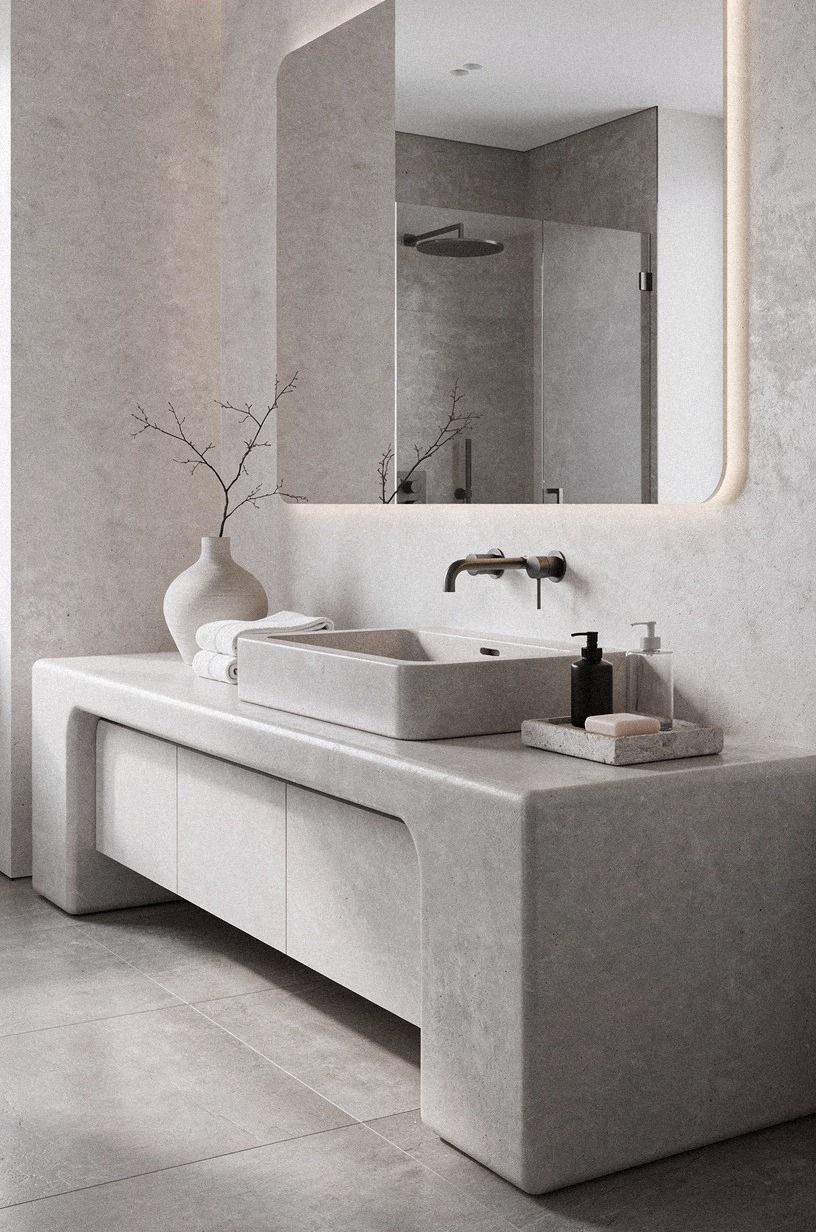
The Two-Wood Rule is simple: choose one wood for the vanity and one supporting wood for a stool, shelf, or frame. Stop there. Two tones give your bathroom depth; four make the mineral finish disappear beneath a collection of competing finishes.
I like a cream-toned oak veneer for the main cabinet and a darker walnut stool near the shower. The grain catches low evening light, while one small shagreen accent adds softness to the emerald, gold, and cream palette. If you’re using a modern beige bathroom sink, the contrast stops beige from becoming flat.
You don’t need expensive furniture to make this work. IKEA TONSTAD oak-effect can carry the cabinet, while a secondhand wooden stool supplies the darker note. But don’t mix orange oak with red walnut unless you’ve tested samples beside the vanity.
I made that mistake once, and the floor suddenly looked pink.
4Hague Blue, not more tile, gives the vanity its backdrop
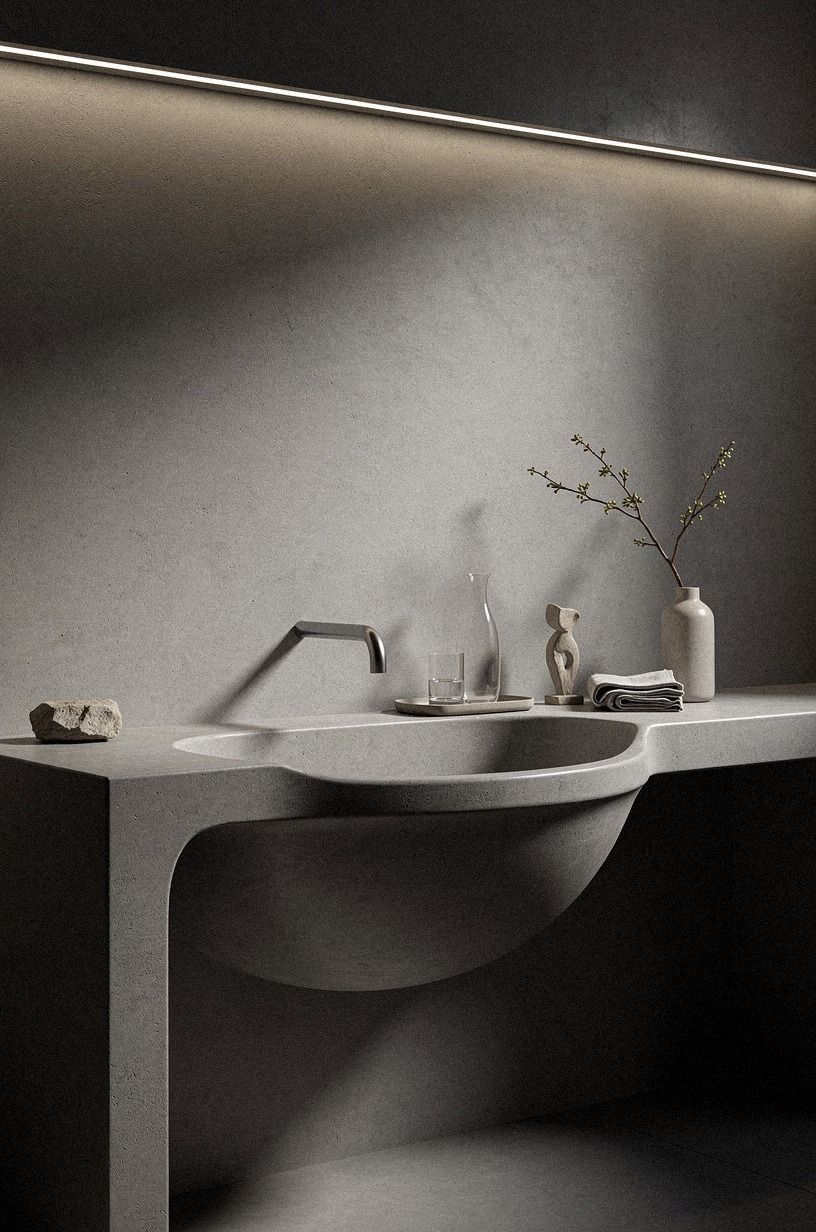
A saturated forest-green wall color can make a pale vanity look architectural without another square foot of tile. Farrow & Ball Studio Green No. 93 is my pick when the room gets decent daylight. It pulls the eye toward the cabinet and makes natural oak, rust accents, and soft linen look warmer.
The finish should stay controlled. Use tile only where water hits directly, then let the painted wall carry the rest of the room. Your vanity will feel more intentional if the backsplash ends at a clear line rather than climbing halfway toward the ceiling.
But a deep green can look nearly black in a dim room. If you’re styling a bathroom with one small window, test the color at 8 a.m. and 4 p.m. before committing. This limestone sink vanity guide shows how a deep backdrop can make a pale basin feel warm instead of stark.
5What happens when a rounded basin meets a straight cantilever?
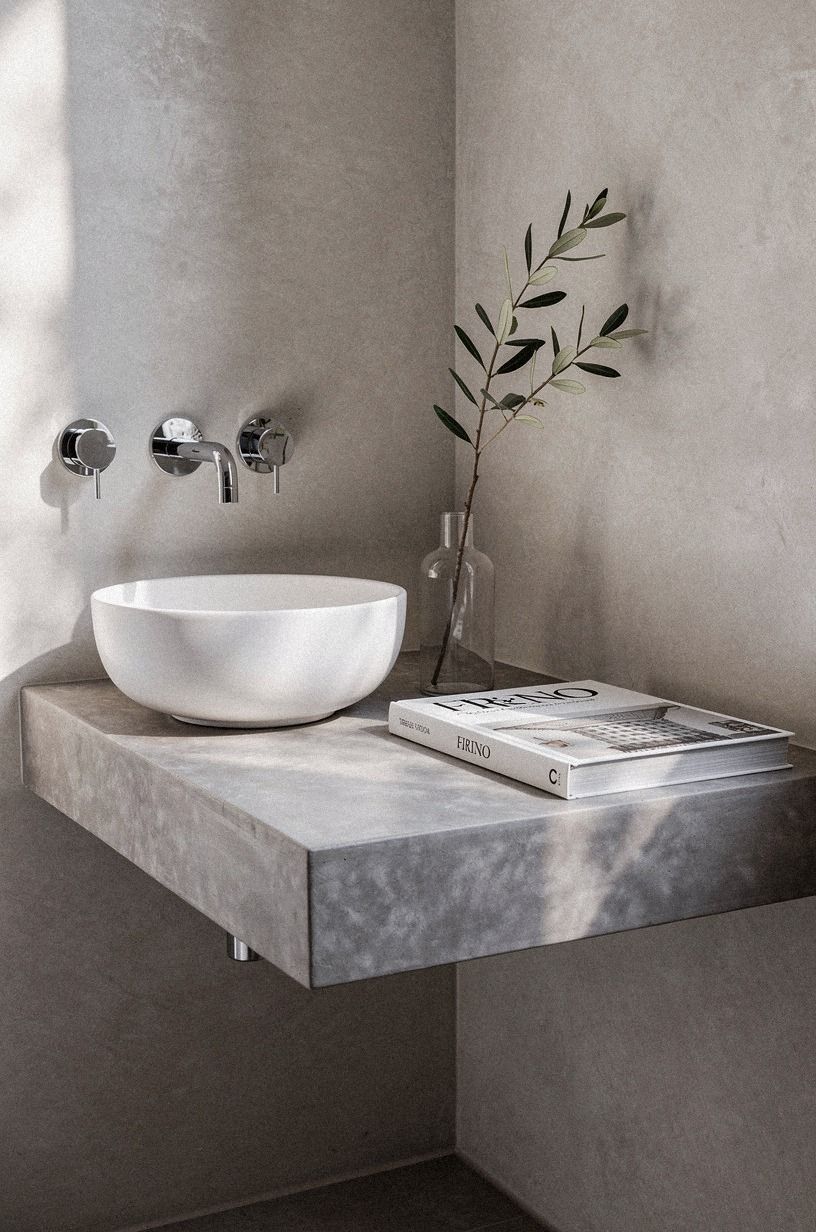
A straight floating shelf and a rounded basin create useful tension.
6Hide the plumbing behind fluted doors
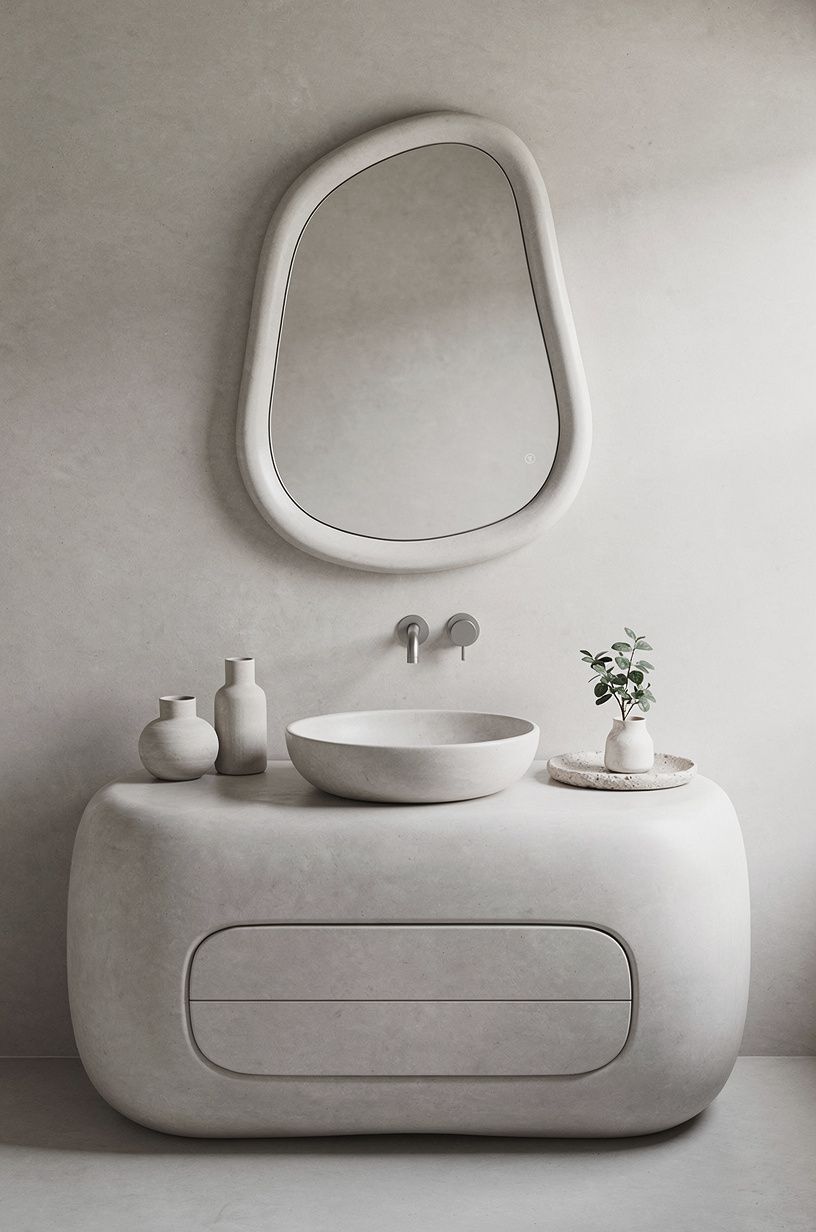
Microcement becomes more sculptural when the storage doors add a little rhythm. Vertical fluting catches side light and gives a plain cabinet a tailored face without introducing another strong color. Keep the cabinet warm white, then use Nero Marquina black marble with white veins on the top or side return for a sharper accent.
Keep the fluting shallow. Deep grooves collect dust, hairs, and the mysterious powder that appears around every bathroom. A slim black finger pull keeps the warm-white, camel, and dark palette controlled.
And yes, you can retrofit this idea. Use flat drawer fronts, attach thin wood battens, and seal them before installation.
If you’re choosing between decorative doors and better drawers, take the drawers. A beautiful front won’t help when you’re kneeling on the floor looking for cotton pads.
For a lighter direction, compare the cabinet with these white microcement bathroom ideas. I’d keep the door texture subtle if your wall already has strong movement.
7The Three-Height Light Stack keeps the room from feeling flat
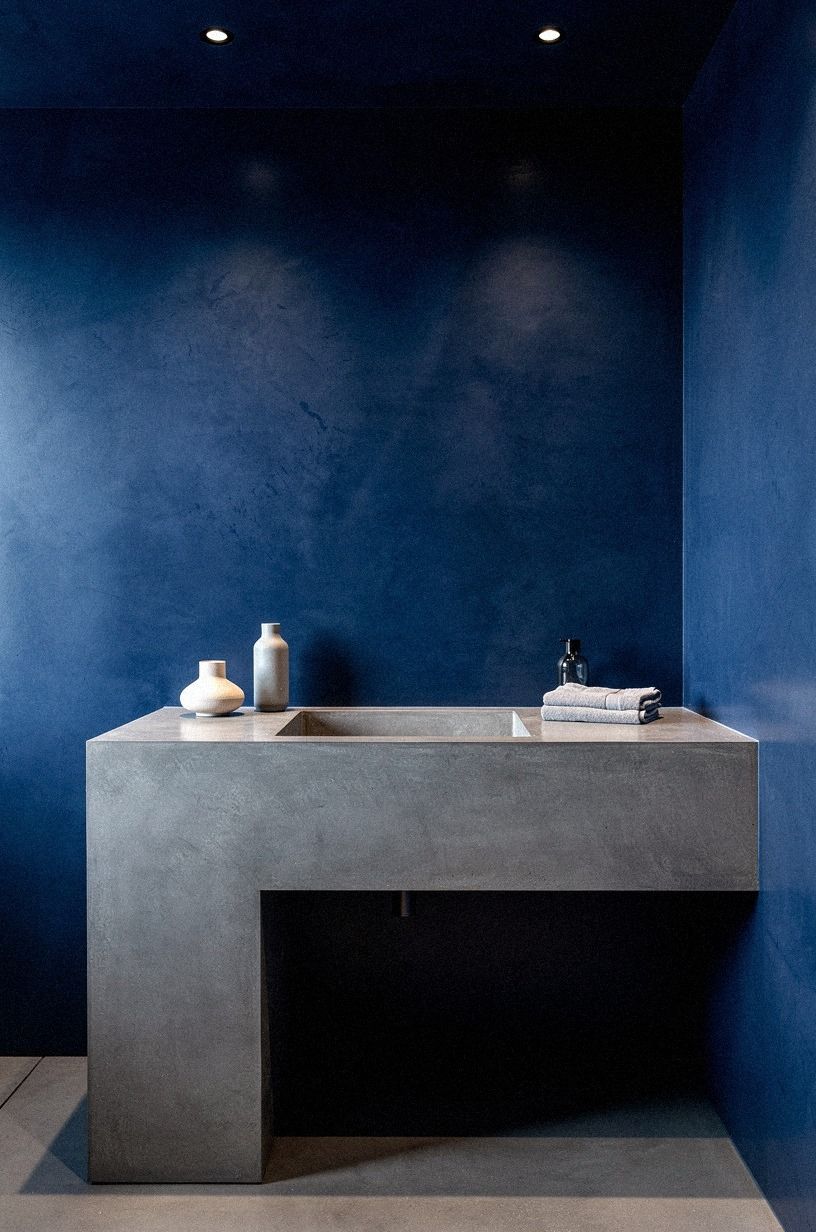
The Three-Height Light Stack uses a ceiling fixture, a mirror-level light, and a low glow near the floor.
8Choose microcement over full tile when you want less grout
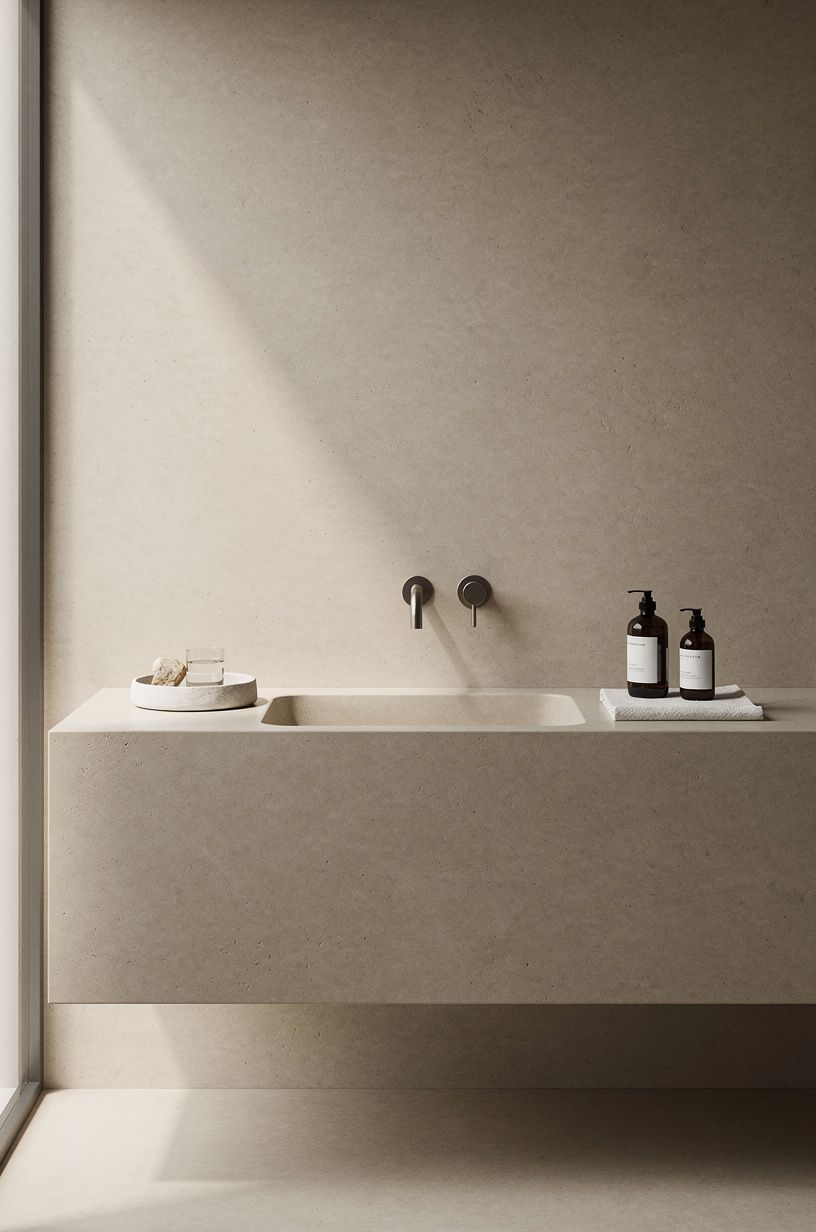
Microcement over a stable vanity surround can give you the calm look of a plastered wall with fewer visual breaks. It isn’t a magic coating, though. The substrate needs to be sound, the corners need reinforcement, and the final sealer needs to suit a wet bathroom.
This is why I’d choose it over full tile for the cabinet body, but not automatically for a shower floor. Carrara marble with subtle grey veining can handle a focused splash zone and add a quiet pattern where the vanity would otherwise carry every detail. Sage green, warm cream, and natural wood keep the room from feeling too uniform.
The difference is especially noticeable in a small space. Fewer grout lines let your eye travel across the cabinet and wall, which makes the vanity feel wider than it is. For more direction, compare your samples with these white microcement bathroom ideas for a bright seamless look.
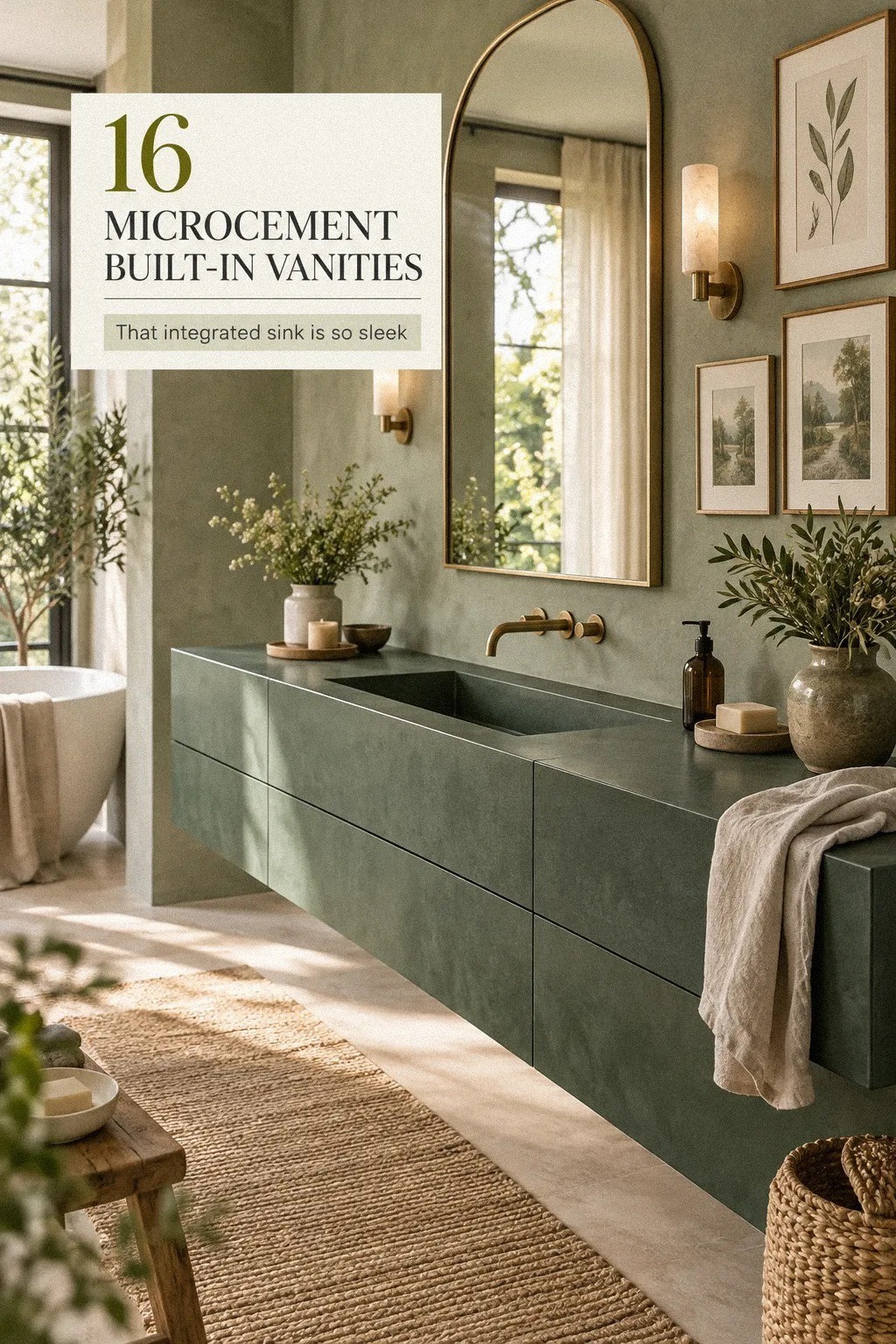
9Frame the mirror with a thick reveal
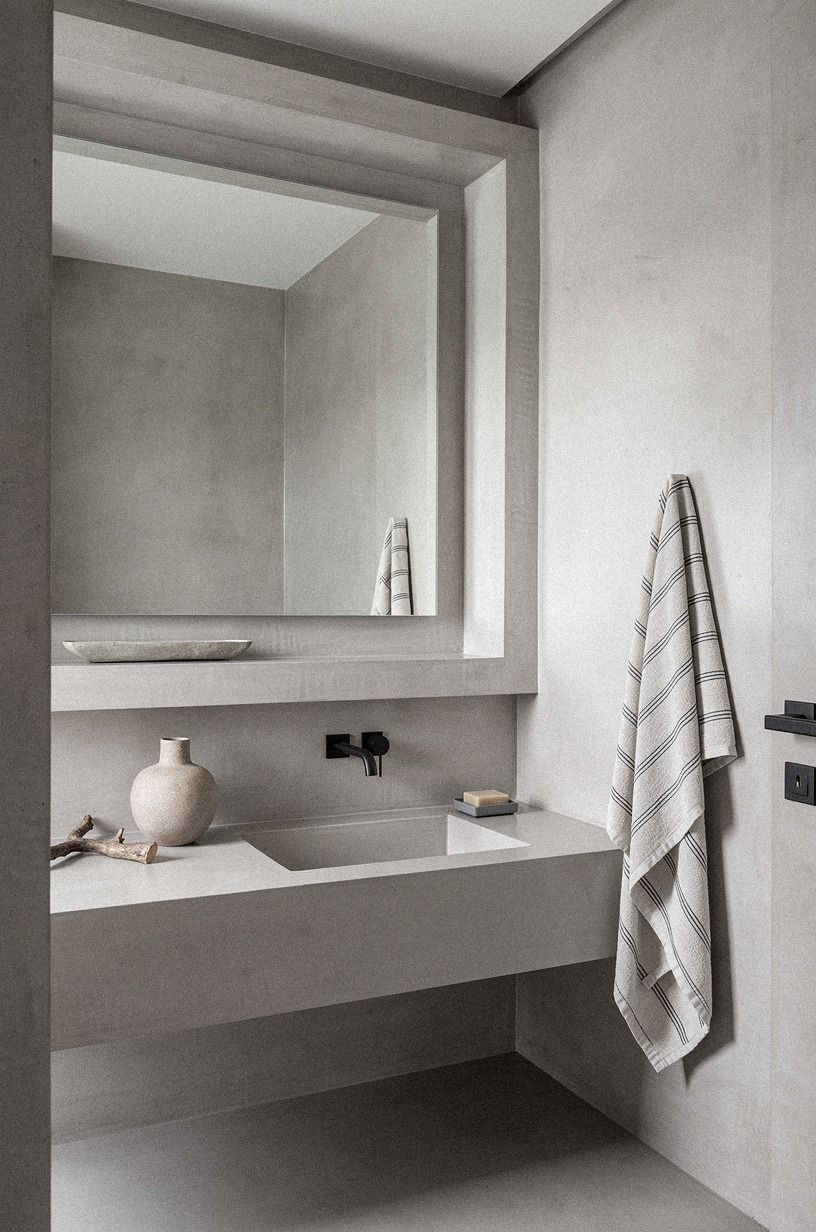
A mirror set slightly proud of the wall can make the vanity feel assembled as one architectural object.
10Why does a narrow oak bench work beside the vanity?
A narrow bench beside the vanity makes the room feel lived-in, and it gives you a place to set a towel without crowding the counter. Keep it slim enough to preserve at least 21 inches of toilet clearance in front of the bowl. A clay-toned oak bench looks substantial without becoming heavy, especially beside Calacatta marble with gold veining.
You don’t need a matching wood set. In fact, I’d avoid matching the bench exactly to the cabinet because the room can start to look like a showroom. Choose a related grain and let the microcement bridge the two.
And measure your door swing before you fall for the bench. I’ve watched a gorgeous little seat become a daily obstacle because it stole the last inch of passage. Target Threshold makes useful narrow silhouettes, and a thrifted stool can work just as well if your floor has enough breathing room.
For another material direction, this white tadelakt bathroom guide shows how a smoother wall finish can keep a wood bench from feeling too busy.
11Turn the side return into a tall storage niche
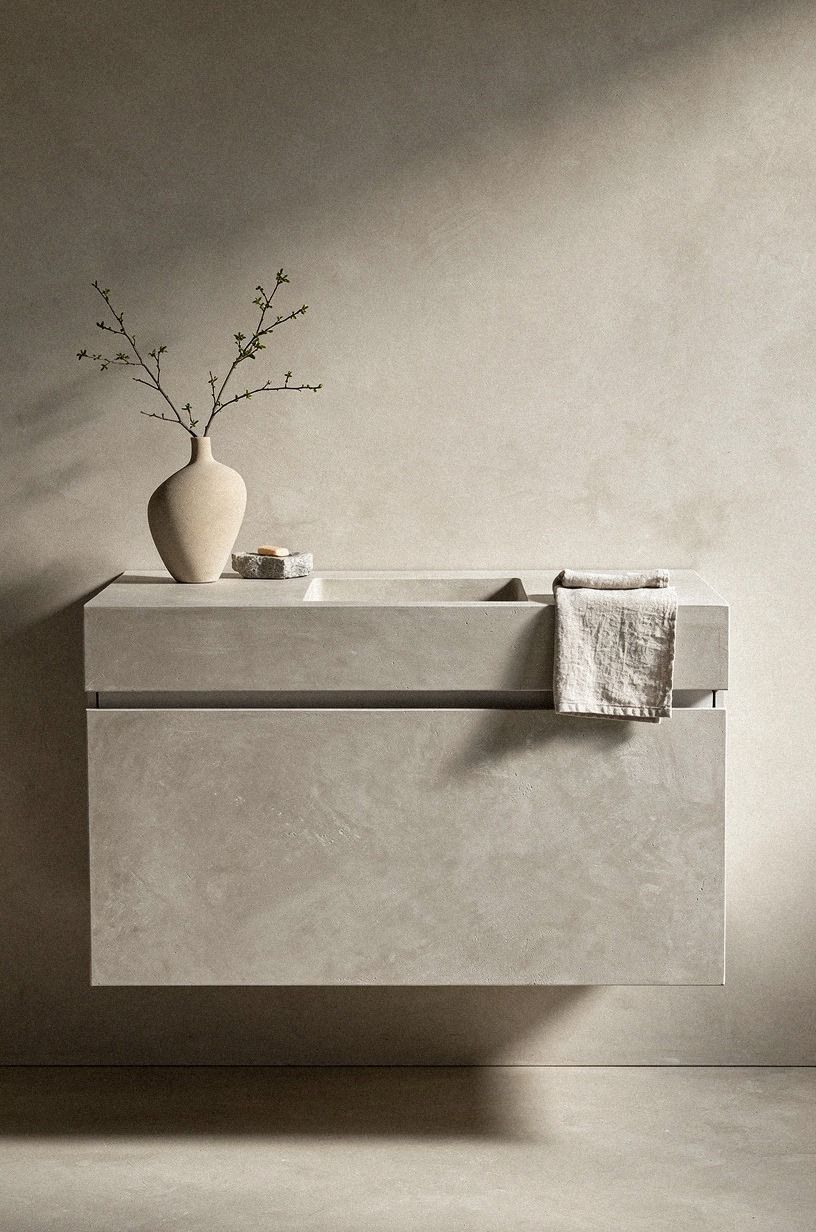
The side of a vanity often gets ignored, even though it can hold the items you reach for every day. Add a shallow vertical niche for rolled towels, a brush, or a small ceramic vessel. A cerused white oak shelf gives the opening texture without making it feel crowded.
Keep the niche shallow enough that objects don’t vanish into shadow. A warm LED strip tucked under each shelf can help, but don’t light every edge. One or two pools of light will feel quieter than a glowing grid.
If your vanity sits beside a wall, you can build the niche into that return instead of cutting into the cabinet. Your contractor will want to confirm where plumbing and studs sit first. This Venetian plaster bathroom guide can help you compare the softer wall effect with the denser texture of microcement.
12Price the project before choosing the finish
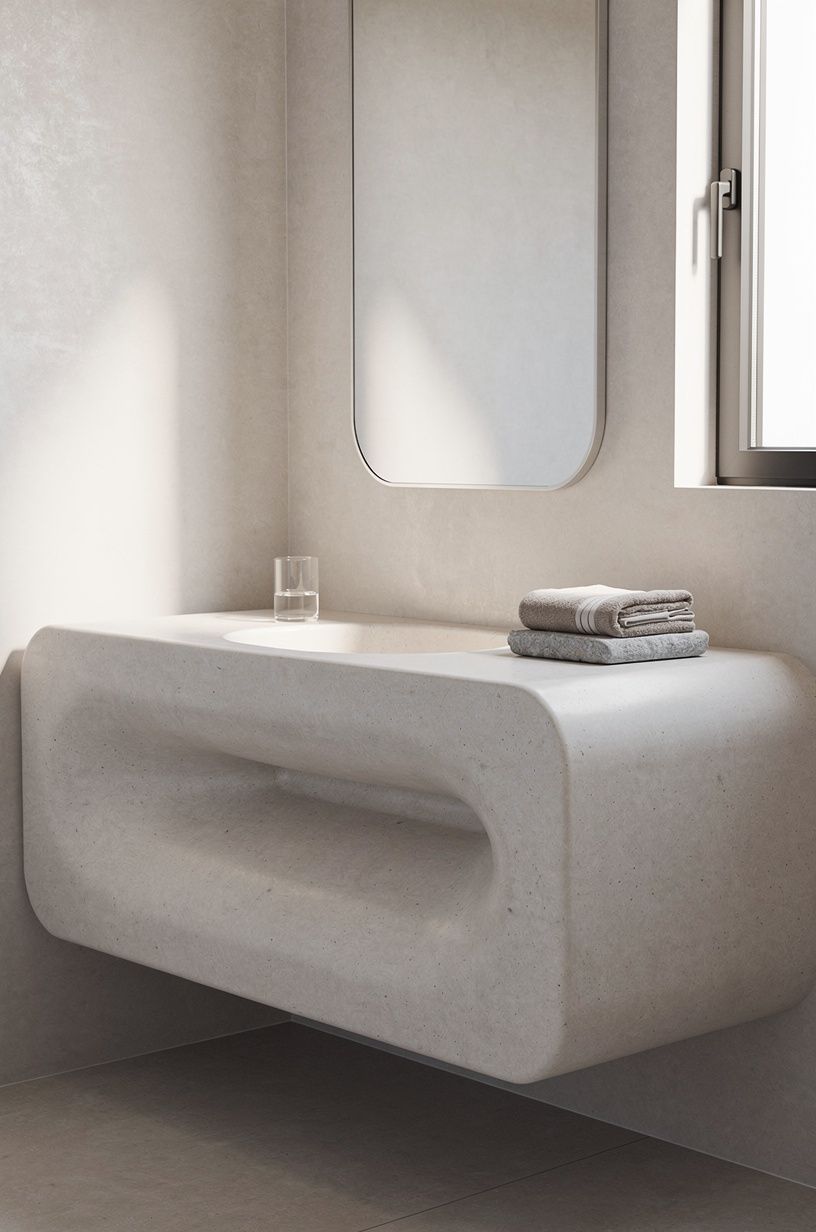
The surface is only one part of a bathroom vanity update. You may also need a faucet, mirror, lighting, drawer hardware, paint, or labor for prep. Start with the budget tier that matches your room, then decide whether the vanity deserves an investment or a careful cosmetic pass.
For a small cosmetic update, you can keep the existing cabinet and spend around $100 to $300 on sample boards, sealant, paint, and hardware, depending on what you already own. Brushed brass faucets typically run $120 to $450, so choose the fixture before you order matching accessories.
I’d put money into preparation and lighting before a premium handle. Your eye notices a lumpy substrate and a shadowy mirror every morning.
It won’t care that the pull cost three times as much. If you’re considering a statement finish, reserve the high tier for details such as backlit translucent onyx.
If you’re comparing materials, review these white tadelakt bathroom ideas.
13Can you keep clearances generous in a small bathroom?
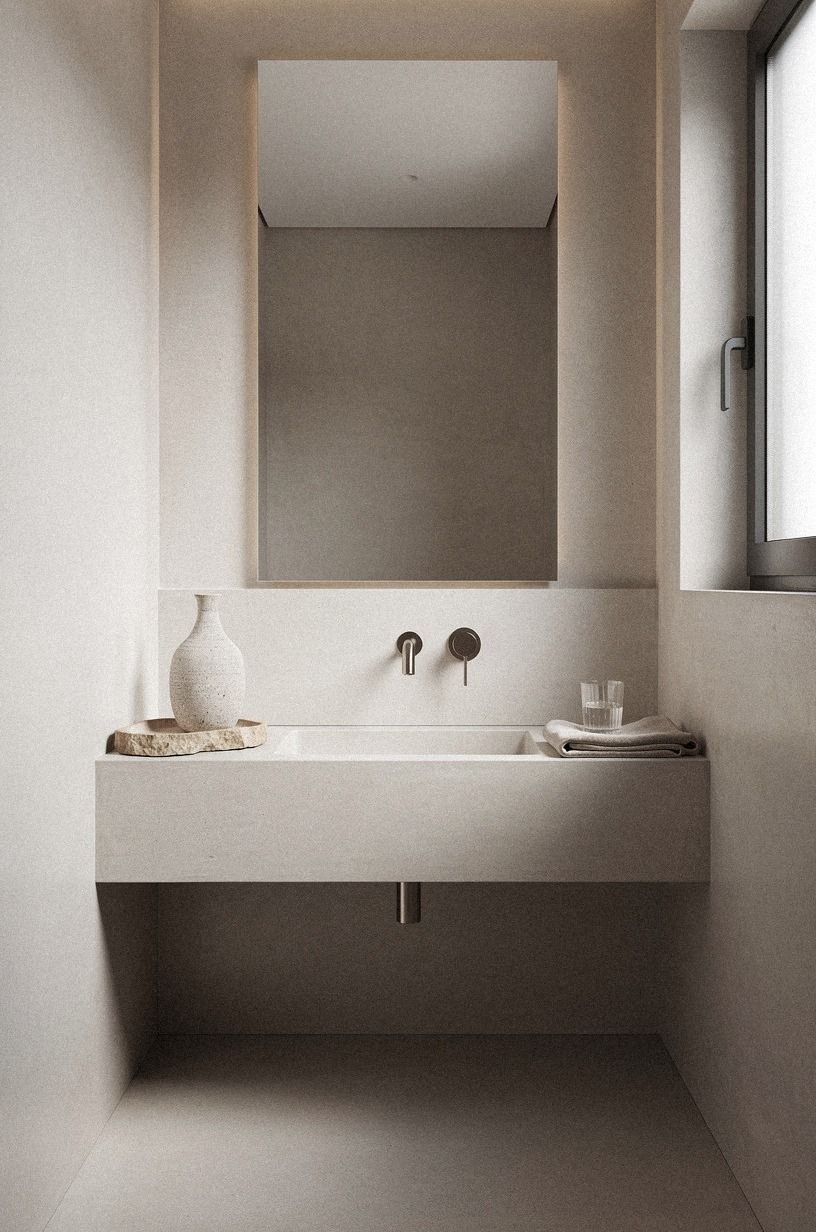
A sculptural vanity still has to let you move.
14Layer linen, stone, and one earthy color
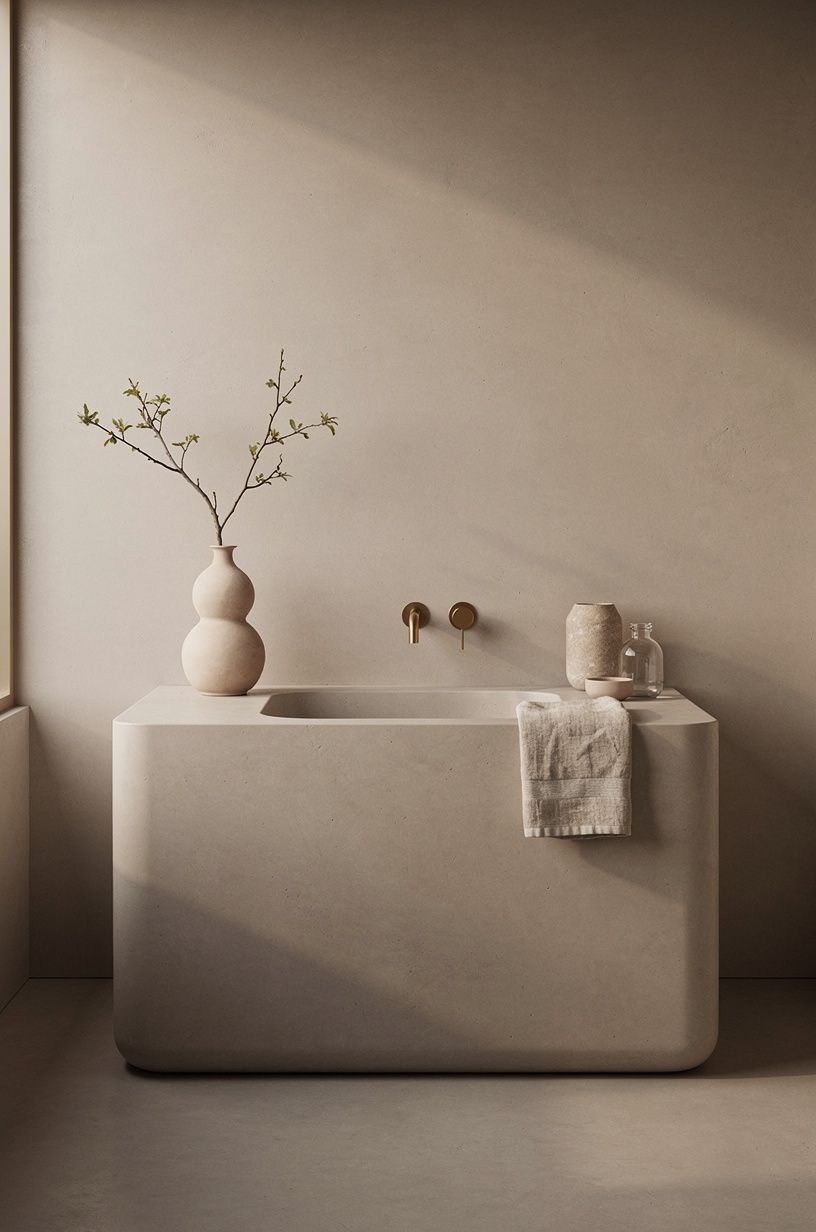
Texture gives a microcement vanity its warmth. Pair the mineral finish with washed Belgian flax linen, warm travertine, and one forest-green wall or rust-colored accent. A natural-oak detail keeps the room calm because each material catches light differently, not because everything matches.
Keep the palette narrow. I’d rather see one earthy terracotta vessel than six decorative objects in unrelated colors. A small arrangement of eucalyptus can work, but skip anything that sheds leaves directly beside the basin.
Your textiles should look useful. One hand towel, one bath towel, and a washable mat are enough.
A small travertine tray can organize the counter, but keep it easy to lift and wipe. That distinction is where a warm bathroom becomes a practical one.
If you want a brighter version of the palette, borrow ideas from these white microcement bathroom designs. You’ll keep the texture while giving the room more visual air.
15Adapt the look for a rental with removable layers
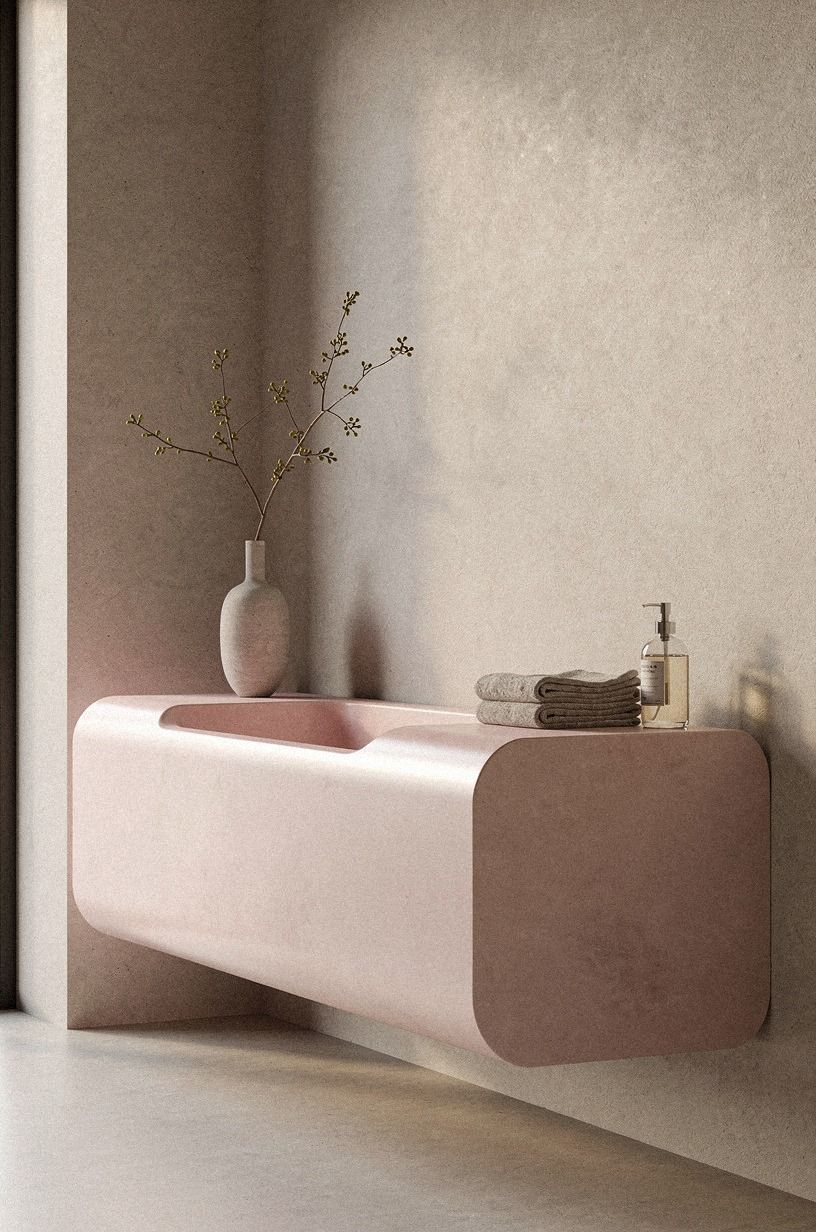
Renters can borrow the built-in mood without attaching a permanent cement finish to the cabinet. Try removable dusty-rose panels, charcoal textiles, and unlacquered brass hardware that can develop a gentle patina.
16Shape an organic-modern vanity with a soft curve
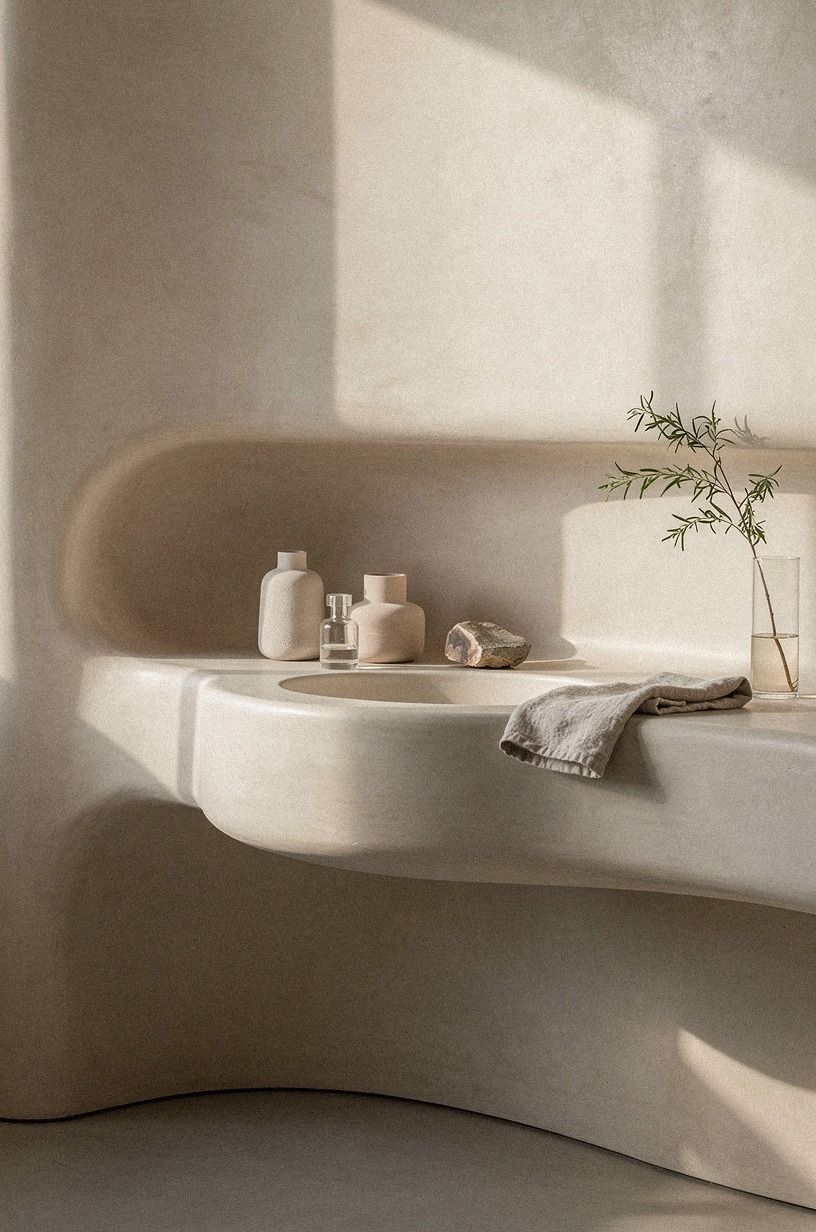
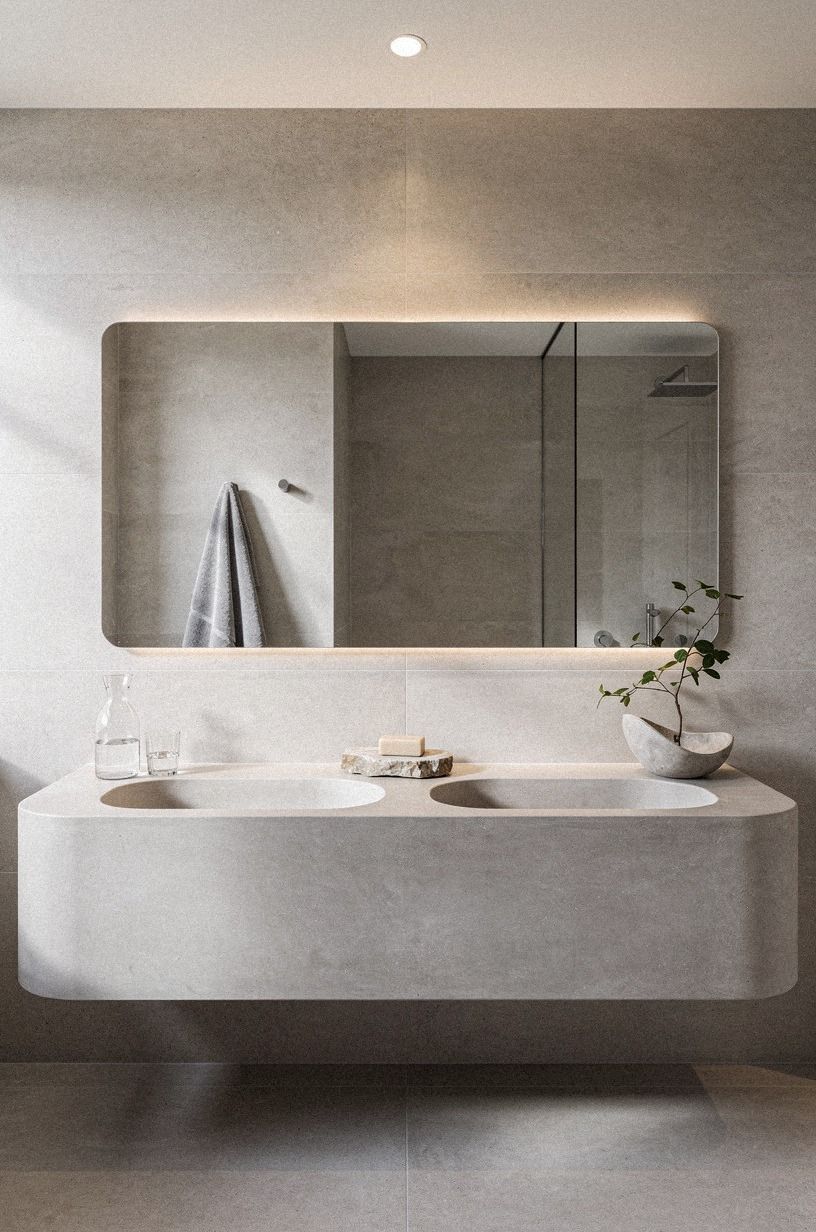
A curved end panel is the detail that makes a standard cabinet feel made for the room. Use warm white around the cabinet, add camel in one soft accent, and keep the hardware or niche black. Oversized-chip terrazzo gives the organic-modern vanity texture without turning it into a spa cliché.
This idea needs restraint. One curved panel, one rounded mirror, or one arched niche is enough. If you repeat the shape everywhere, your eye loses the focal point.
Your vanity should feel collected, not themed.
For a small room, I’d choose the curved mirror and keep the cabinet straight. It gives you the soft silhouette without sacrificing drawer capacity. If you’re unsure whether the finish belongs in your larger plan, read why microcement is the heart of the organic modern bathroom before you commit.
Why I’d Choose Texture Before Trend
I’ve gone back and forth on microcement because the finish can look either quietly architectural or like a rushed faux-concrete project. The difference isn’t the trend.
It’s the preparation, the edge detail, and the materials surrounding it. A vanity with a crisp profile, a soft light, and one honest wood tone will age better than a room packed with every current bathroom idea.
My own mistake was treating the surface as decoration. I focused on the color sample and ignored how water would sit around the faucet.
That little decision mattered more than the shade. Now I look at the practical line first: where will droplets land, where will towels hang, and can the finish be cleaned without a special ritual?
You also need to decide what you want the vanity to do visually. If the room is narrow, a floating cabinet and pale finish can keep the floor open. If the room feels too blank, a dark wall color and a sculptural basin create gravity.
Neither choice is universally right, and anyone promising one formula for every bathroom hasn’t lived with enough bathrooms.
The best result usually comes from one strong move and several quiet supports. Let the vanity carry the texture. Let the mirror soften the geometry.
Let the lighting reveal the surface after sunset. That’s when you’ll know whether the design has depth or only a clever finish!
The Questions Worth Answering First
What is the best Microcement Vanity Ideas for a Sculptural, Built-In Look for a small bathroom?
A floating vanity with a wrapped front and a rounded mirror is the strongest choice for a small bathroom. It keeps the floor visible and gives you more visual space. An IKEA HEMNES base can work if you modify the face and protect the surface carefully.
I’d test the finish before coating the whole cabinet.
Where can I buy Microcement Vanity Ideas for a Sculptural, Built-In Look pieces on a budget?
Try IKEA, Wayfair, Target, Facebook Marketplace, and local thrift shops for cabinets, mirrors, and stools. This site uses display advertising and doesn’t earn commissions from your purchase.
For more surface inspiration, browse these microcement vanity ideas with a bright seamless look. You can save a surprising amount by buying the cabinet secondhand.
How much does a Microcement Vanity Ideas for a Sculptural, Built-In Look makeover cost?
A small cosmetic makeover can run about $100 to $300 when you keep the cabinet and buy only supplies, hardware, or paint. A broader bathroom refresh may fall into the $200 to $1,200 budget tier, depending on the mirror, faucet, lighting, and labor. I’d price preparation separately because it’s where estimates often move.
Can I create a Microcement Vanity Ideas for a Sculptural, Built-In Look on a budget?
Yes, and you can start with what you own. Repaint the wall, replace the cabinet pulls, style one secondhand stool, and use a removable mineral-look surface for a dry area. Your best free move is usually editing the counter until only useful objects remain.
That small reset can change the room today!
Is a Microcement Vanity Ideas for a Sculptural, Built-In Look worth it in a small space?
Yes, if you use the finish on one focal surface and protect it properly. Small rooms benefit from fewer visual breaks, so the vanity can look wider and calmer. Keep at least 21 inches in front of the toilet and choose a shallow cabinet.
I’d compare it with a limestone sink vanity if you want more natural variation.
What color works best for a microcement vanity in 2026?
Warm gray, mushroom, soft taupe, and muted clay are flexible choices because they work with wood, brass, and pale stone. Sherwin-Williams Sea Salt SW 6204 is a useful wall companion when you want the vanity to feel relaxed rather than stark. I’d also review this Venetian plaster bathroom inspiration before choosing between a cloudy and a more uniform finish.
Is Microcement Vanity Ideas for a Sculptural, Built-In Look a good idea for a rental?
Yes, when you keep the changes removable. Use peel-and-stick material on dry walls, tension shelving, a freestanding cabinet, and a plug-in light.
Avoid permanent coating, heavy adhesive, or drilling without permission. Store the original hardware so the room can return to its starting condition.
You’ll find more rental-friendly material thinking in this organic-modern bathroom guide.
Where I’d Start First
If I had to pick one, I’d start with a floating, wrapped vanity in warm taupe microcement. The continuous surface makes a small room look wider, and it hides mismatched cabinet parts better than paint can. Pin this idea for later and compare it with our organic-modern bathroom guide.