
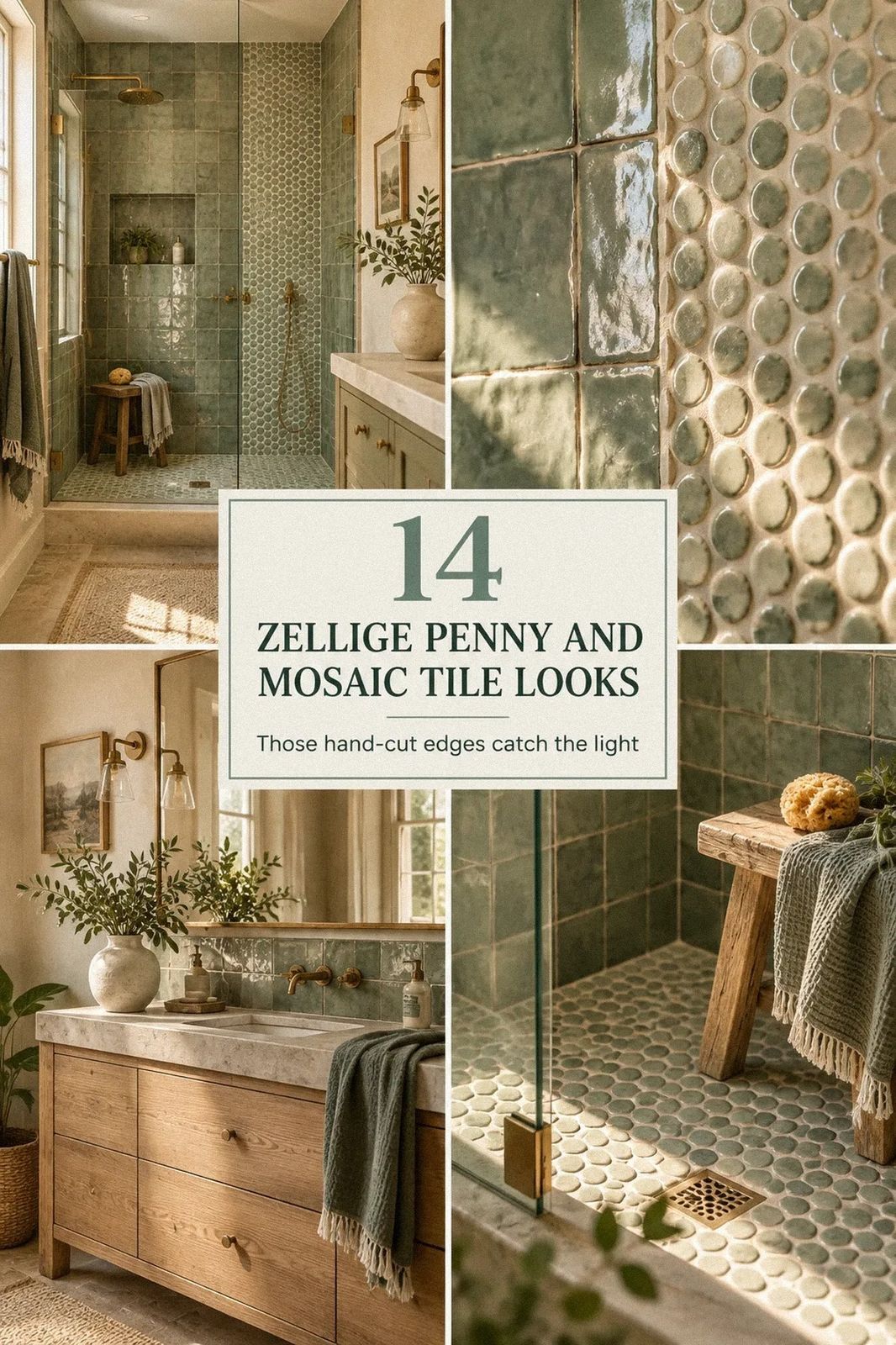
 by
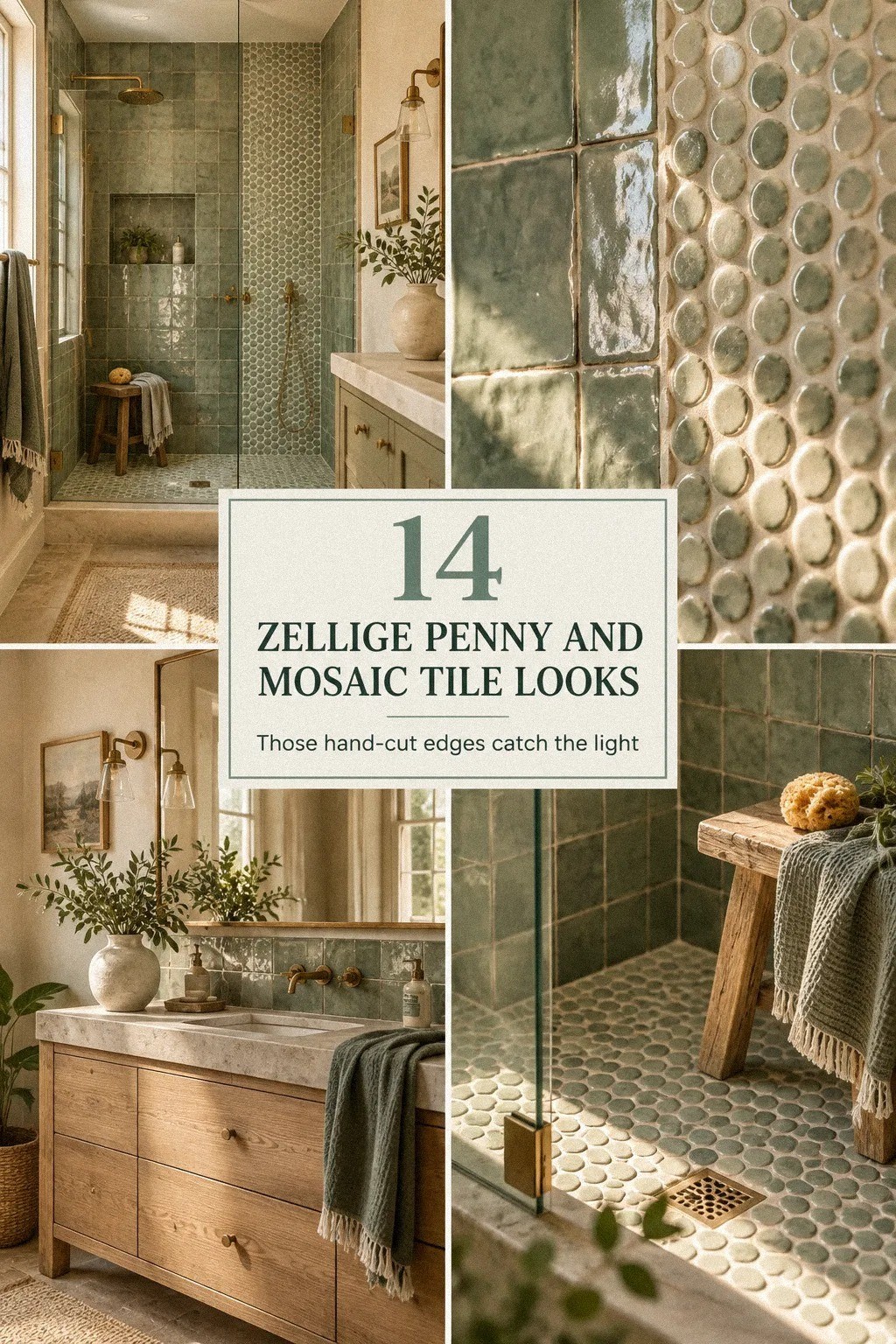
Mixing zellige with penny and mosaic tile works when one surface carries the color and the other carries the rhythm. I learned that after pairing two glossy tiles in a small bath and watching the walls turn noisy. The fix was simple: repeat one color, vary the scale, and give your eye a quiet place to rest.
If you’re planning a bathroom now, start with the mood you want at 7 a.m. and 10 p.m. A tile combination can look beautiful in a sample board yet feel exhausting when it surrounds you every day.
Editor's note: Let the handmade tile bring movement. Let the smaller mosaic bring structure. Once you decide which surface leads, the rest of the room gets much easier!
- Layer the One-Loud-Surface Rule into a mixed tile shower
- Frame a tile border with the Quiet Grout Frame
- Mix Penny Pause mosaics under a dramatic vanity
- Anchor zellige tile design ideas with a Three-Height Light Stack
- Swap tiny mosaic tile for penny rounds over the vanity
- Build the Wet-Dry Handshake for a small bathroom
- Paint the dry wall beside a bold tile field
- Float a calm mosaic floor under saturated zellige
- Use the Three-Color Ceiling Rule for mosaic tile in shower ideas
- Repeat one imperfect edge across the room
- Frame a shower niche with penny tile instead of more zellige
- Choose warm grout for bold zellige tile design ideas
- Contrast penny tile with a quiet stone ledge
- Finish with the Pattern Pause, then stop
1Layer the One-Loud-Surface Rule into a mixed tile shower
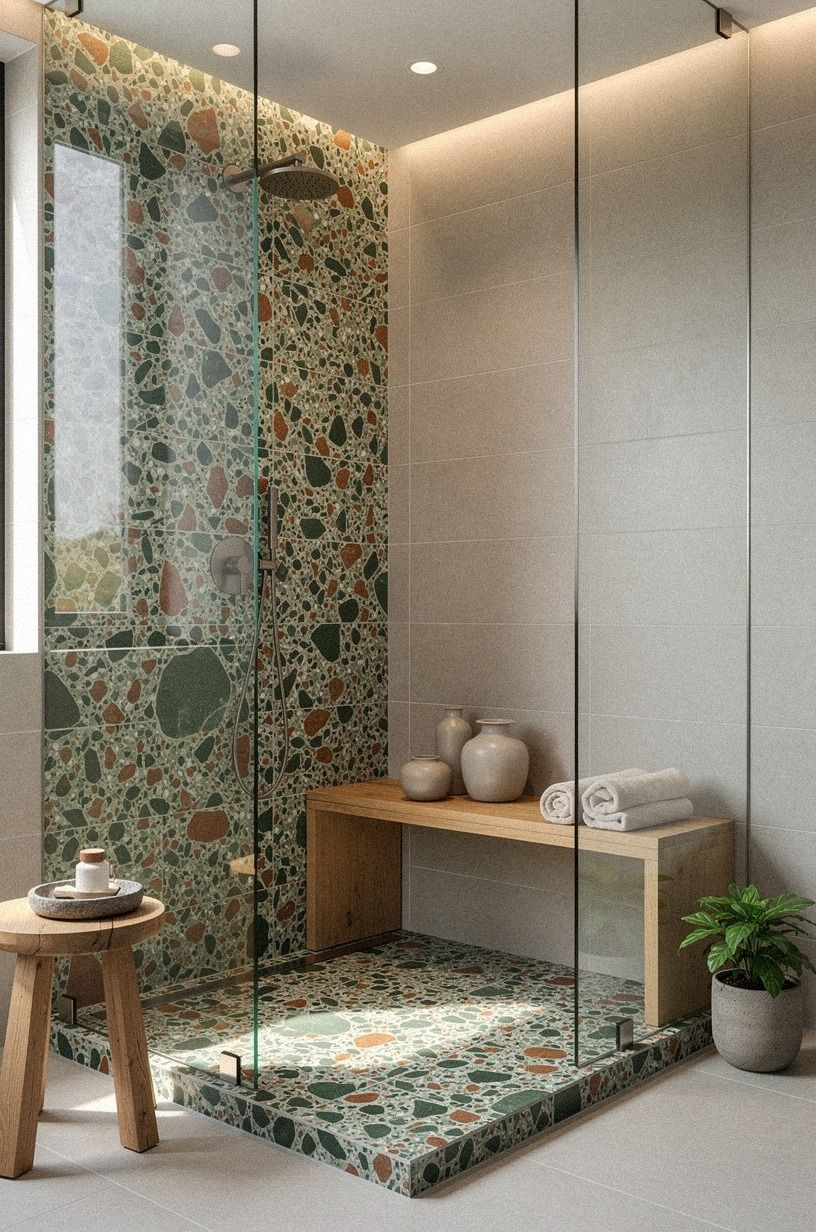
Choose one tile to make the announcement. Let the other support it quietly. My favorite version pairs forest-green zellige on the shower walls with oversized-chip terrazzo underfoot, warmed by rust and natural oak, so the uneven shine feels earthy instead of chaotic.
Keep the zellige running vertically if your shower is narrow. A comfortable shower starts at 36 by 36 inches, so every grout line matters when the room is compact. You’ll want the terrazzo to stay low and tactile, not climb every wall.
Warm stone, rust-toned accents, and an unlacquered brass drain make the floor feel soft under warm light. I’d skip black penny tile here because the contrast can chop up your sightline.
You can see the same color-first approach in these handmade glossy zellige bathroom ideas. I’d also save a few samples from the same batch. Handmade tile can shift from olive to moss, and that variation may become the best part of the room.
The shower still needs practical planning. Check the slope, niche location, drain position, and door swing before you fall in love with a layout. A beautiful pairing won’t rescue a cramped entry or a shelf that splashes constantly.
Typical cost by tier in the United States:
2Frame a tile border with the Quiet Grout Frame
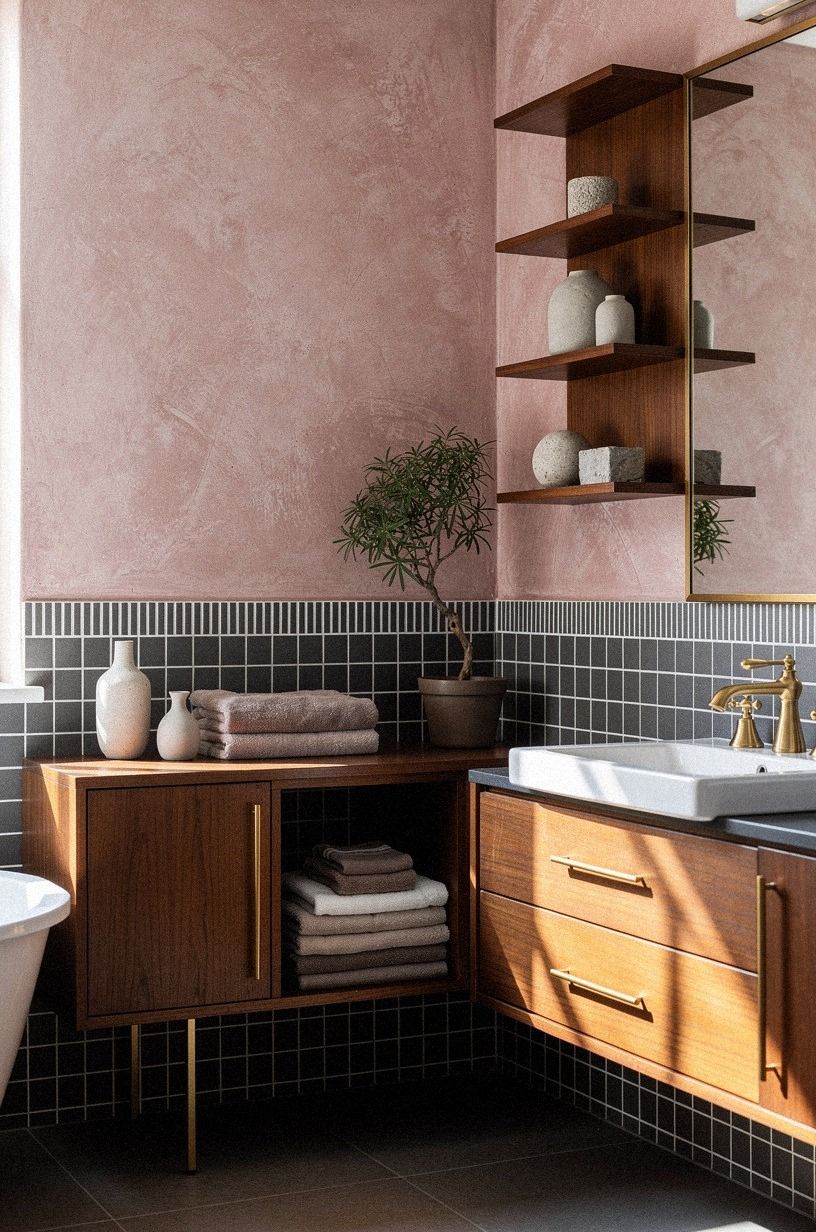
A narrow mosaic border gives your zellige a stopping point. Use it at shoulder height, around a niche, or just above the vanity, where your eye naturally pauses. I like charcoal mosaic tile with a dusty rose field of hand-applied Venetian plaster and a small brass accent.
The grout is the frame. A close match keeps the pattern refined, while a sharp white line makes every irregular edge louder. You’ll want a warm gray grout if your tile has cream, sand, or pink variation.
But don’t run the border through every wall. One horizontal band is enough for most bathrooms, especially if your vanity sits between 32 and 36 inches high. More than that starts to feel like a hotel corridor.
Try Farrow & Ball Setting Plaster No.231 on the painted wall above the tile. The dusty rose is warm, but the handmade surface keeps it inviting. These tile border ideas show how a small line can hold a larger pattern together.
I’d keep the border slightly quieter than the main wall. If the zellige has a strong glaze, choose a matte mosaic. If the zellige is pale and chalky, a softly reflective border can add just enough lift.
3Mix Penny Pause mosaics under a dramatic vanity
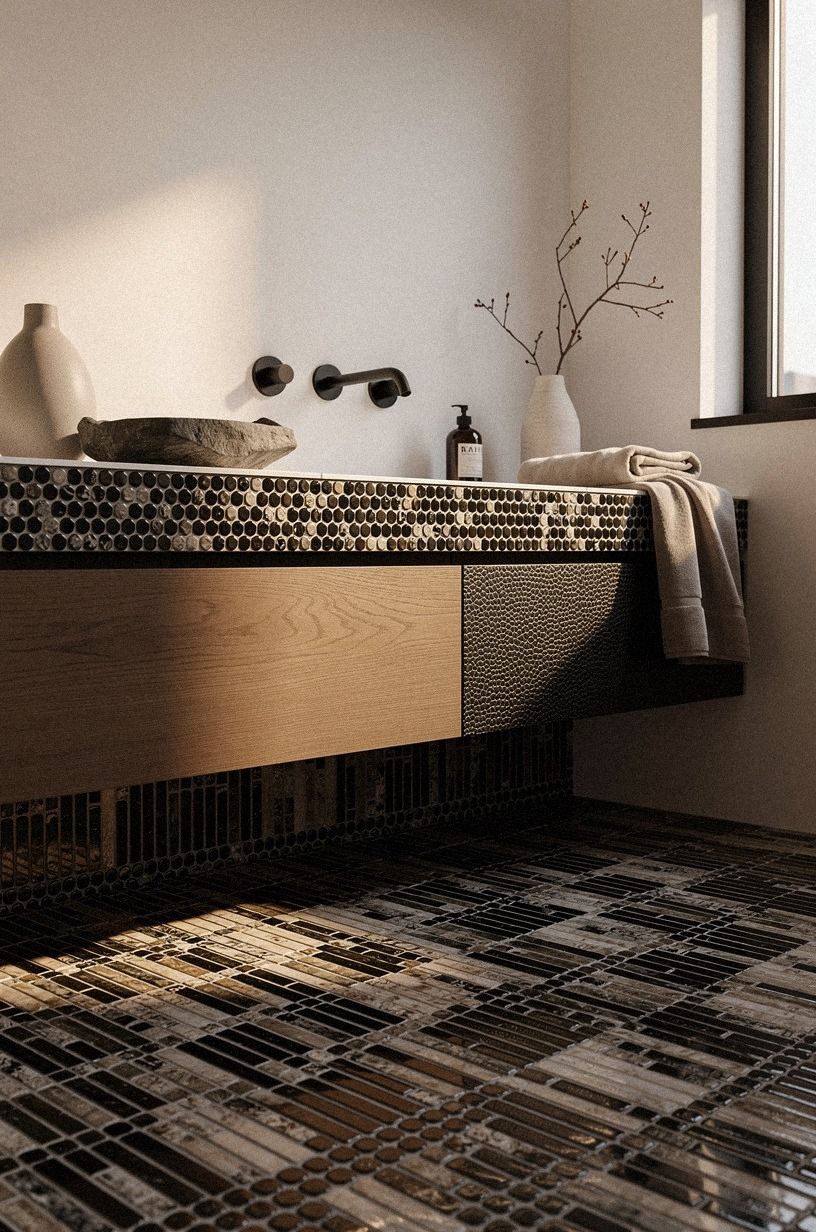
Let the floor carry the smallest pattern and give the vanity wall more breathing room. Warm white penny tile, camel-toned upholstery, black accents, and small shagreen details keep the composition tactile without making it busy.
4Anchor zellige tile design ideas with a Three-Height Light Stack
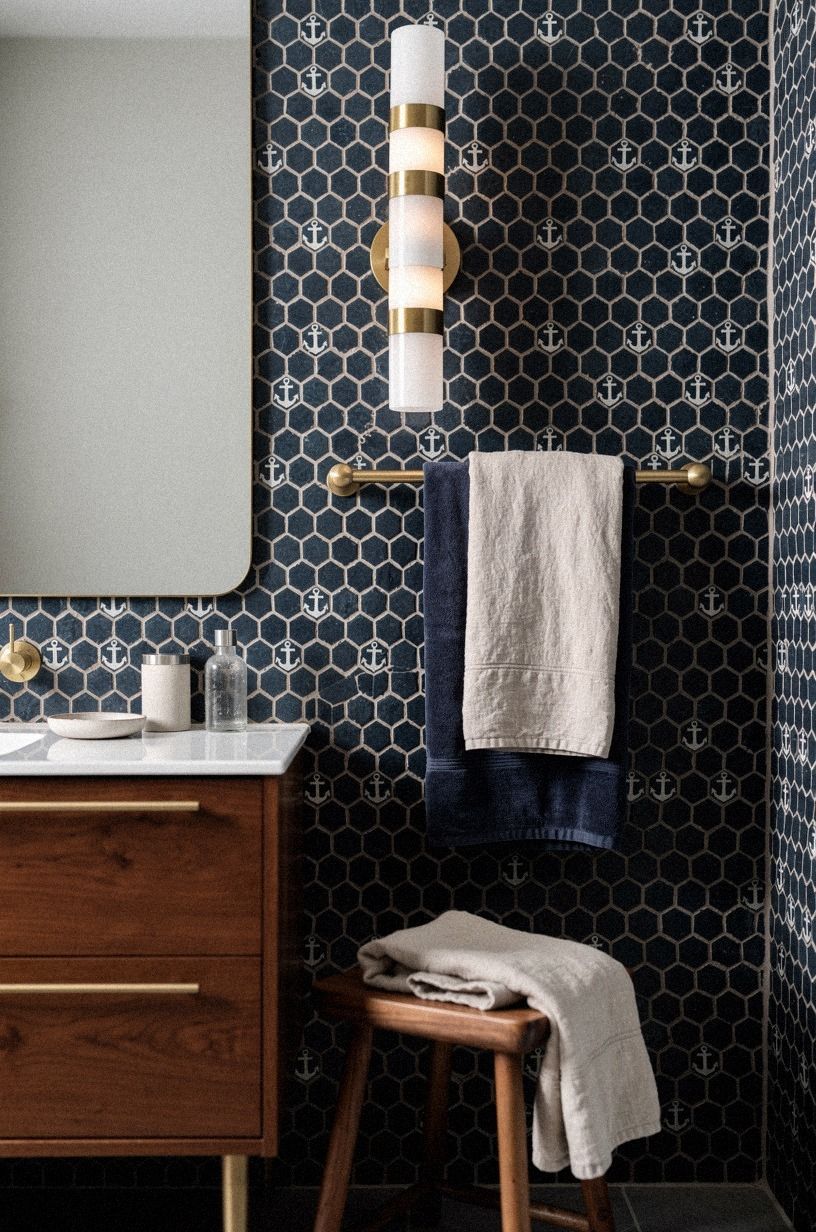
Tile patterns read differently under different light levels. Build three layers: a ceiling fixture, a mirror light, and a low glow near the floor. The result feels warm at night because washed Belgian linen shades soften the sharp reflection from glossy zellige.
Keep the vanity light near eye level, then add a small plug-in lamp on a shelf if your layout allows it. You’ll want the lowest light around 24 inches above the floor, where it can skim the grout and show the tile’s texture.
Why make both surfaces shout when the light can do the dramatic work? I’d choose copper sconces over polished chrome here. Copper catches the handmade variation, while chrome often makes the room feel colder.
Use Farrow & Ball Stiffkey Blue No.281 on the dry wall if you need paint. The midnight blue is calming beside ivory zellige and still has enough depth to keep the penny mosaic from looking sugary. Your vertical zellige tile bathroom ideas can help you plan the wall direction.
The room should have a lighting setting for getting ready, cleaning, and winding down. You don’t need a dramatic fixture everywhere. One good pendant, a dimmer, and warm bulbs can make a modest tile budget feel far more considered!
5Swap tiny mosaic tile for penny rounds over the vanity
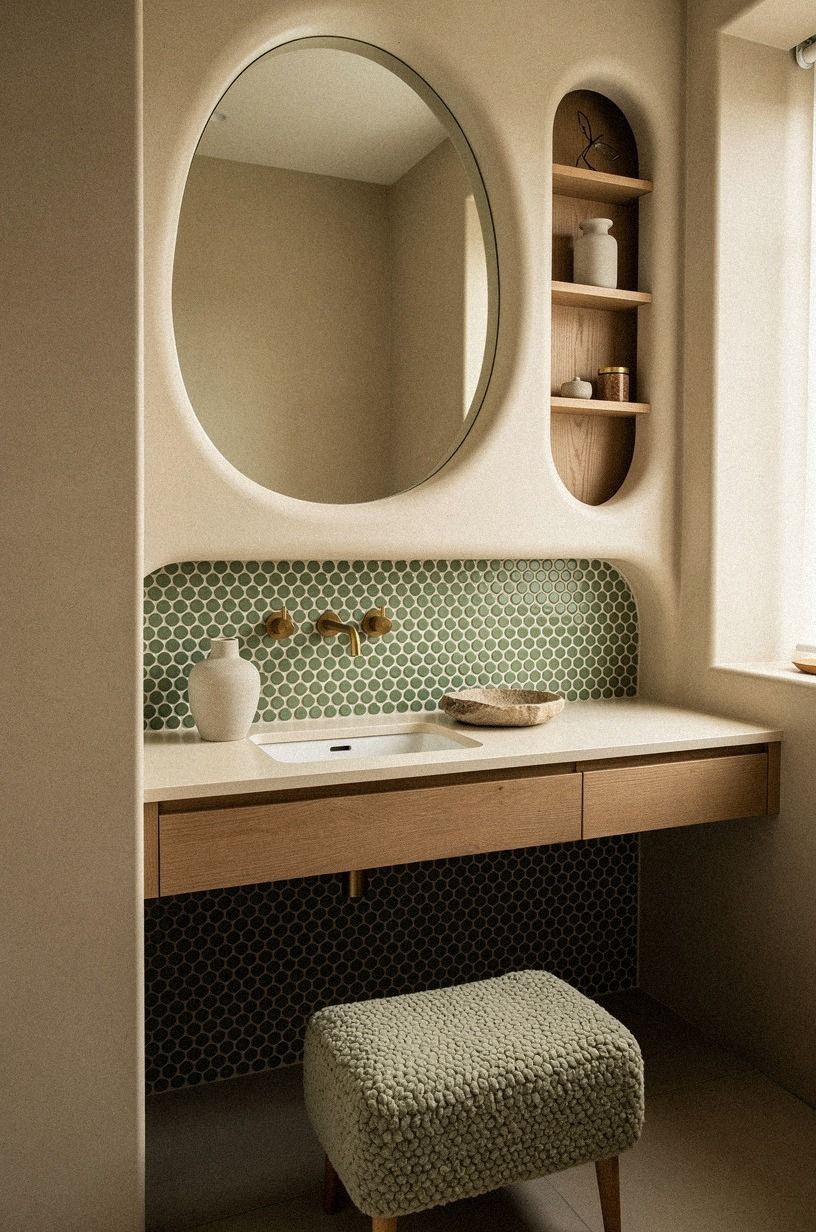
A vanity wall doesn’t need the same tile as your shower. Sage green zellige, warm cream mosaic, natural wood, and an organic bouclé accent can make the sink area feel softer and more collected.
6Build the Wet-Dry Handshake for a small bathroom
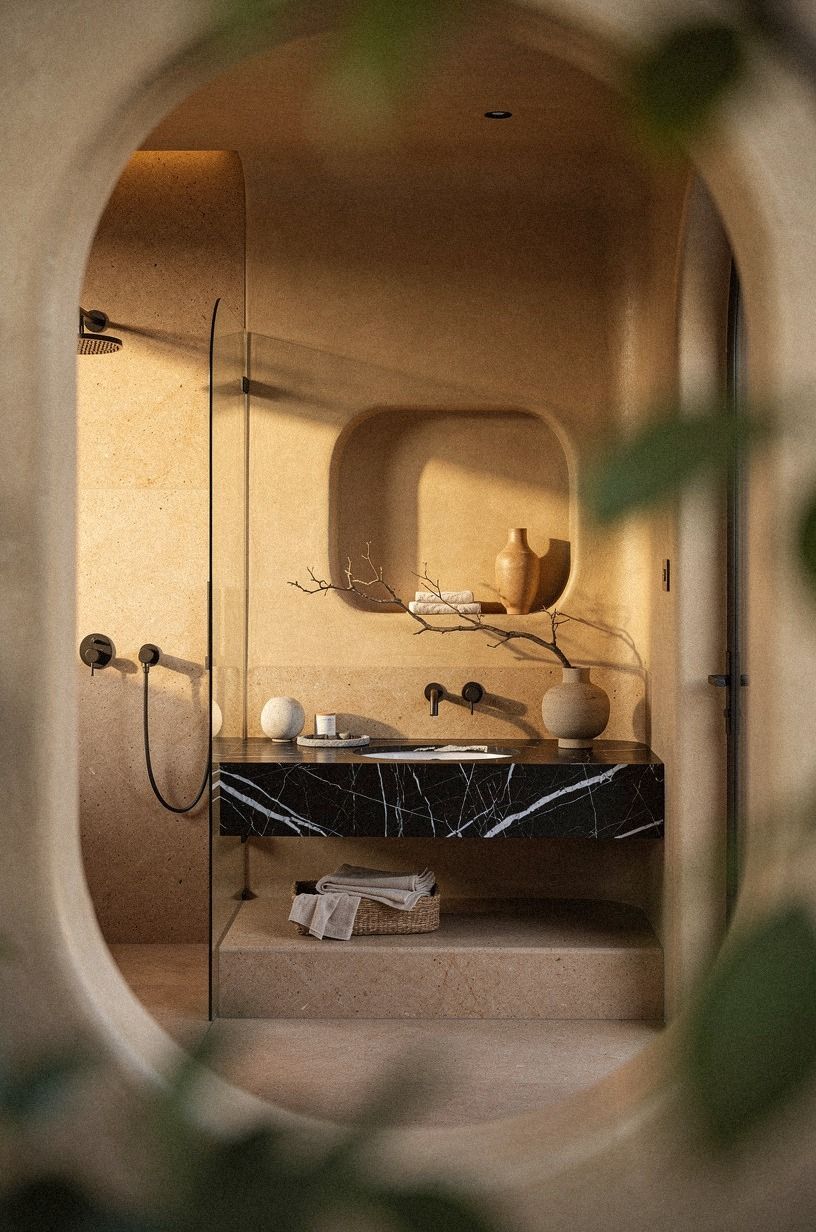
The wet zone can handle more movement than the dry zone. Use zellige inside the shower, then repeat one of its colors in a tiny mosaic backsplash behind the vanity. The two surfaces feel related because they share a visual handshake.
Terracotta zellige with stone-toned penny tile and olive accents works especially well beside Nero Marquina black marble with white veins. You’ll want the backsplash to stay low, around 4 to 6 inches above the counter, so the room doesn’t lose its breathing space.
But if your bathroom has a standard 60 by 30 inch tub, don’t cover every surrounding wall with small shapes. The tub already creates a long horizontal line. Keep your mosaic concentrated around the sink or niche.
I’d choose a sealed stone bench with an olive cushion if the room has good ventilation. Otherwise, a simple black marble ledge gives you the same grounded feeling with less worry. This guide to what zellige tile is and how its handmade surface behaves is worth reading before you order.
I’d also test the pairing beside your actual floor sample. A tile that looks warm beside white paper can look surprisingly pink beside oak or beige stone. Your eye needs the full conversation, not isolated swatches.
7Paint the dry wall beside a bold tile field
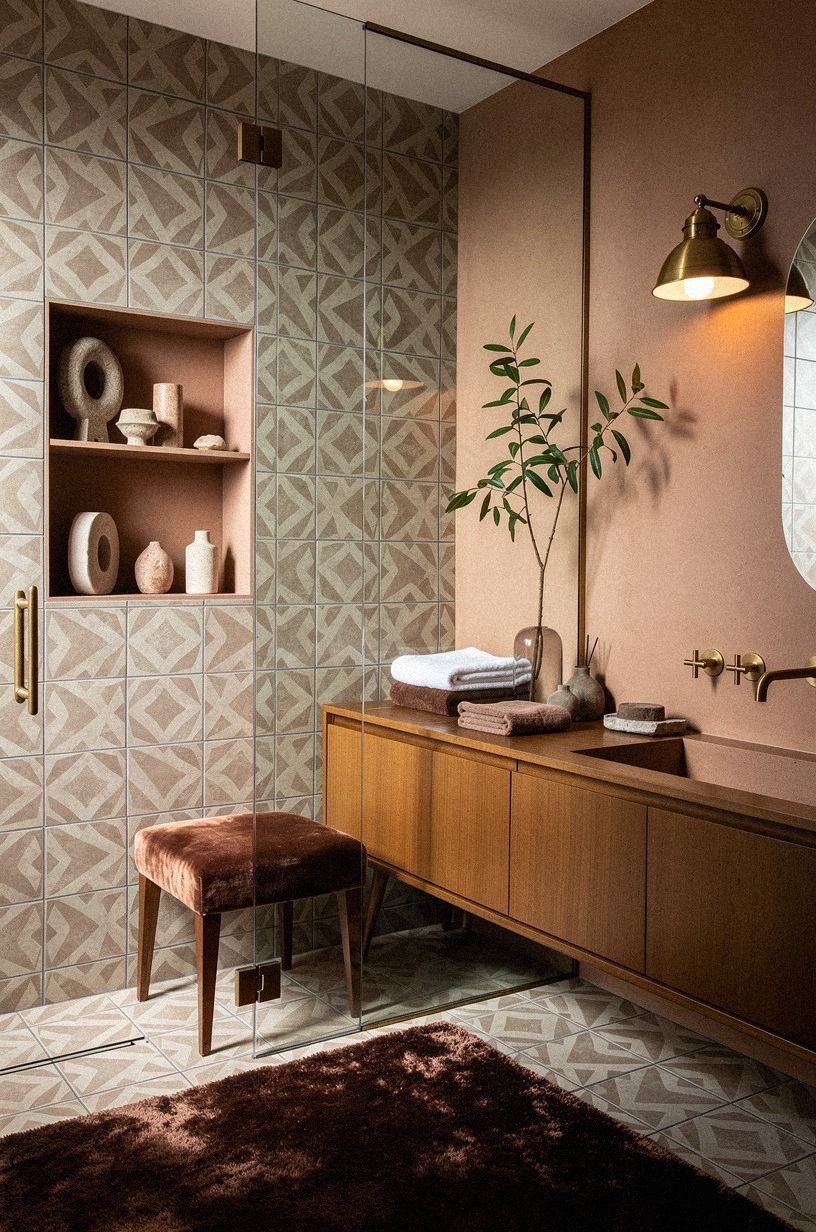
Paint is the easiest way to keep mixed tile from taking over. Use zellige on one wall, penny tile on the floor, and let the remaining walls carry a solid color. Your eye gets a pause, which makes the pattern feel more sophisticated.
Try Benjamin Moore Chestertown Buff HC-9 beside clay-toned zellige. The warm color pulls out the tile’s sandy edges without flattening its shine. I’d avoid bright white paint because it can make handmade tile look more uneven than it feels in person.
For a softer bathroom, use linen-toned mosaic tile with muted clay zellige and warm white paint. You’ll want the paint finish to be washable, especially near the vanity and towel hooks.
A deep-pile mohair stool or washed linen shade can soften the harder surfaces, while aged brass keeps the room warm. And if you’re drawn to pink, these soft warm pink zellige ideas show how to keep the color grown-up.
I’d paint the ceiling too when the bathroom is small. A slightly lighter version of the wall color can make the whole room feel wrapped rather than chopped into separate planes. Your trim can stay simple, especially if the tile already has uneven edges.
8Float a calm mosaic floor under saturated zellige
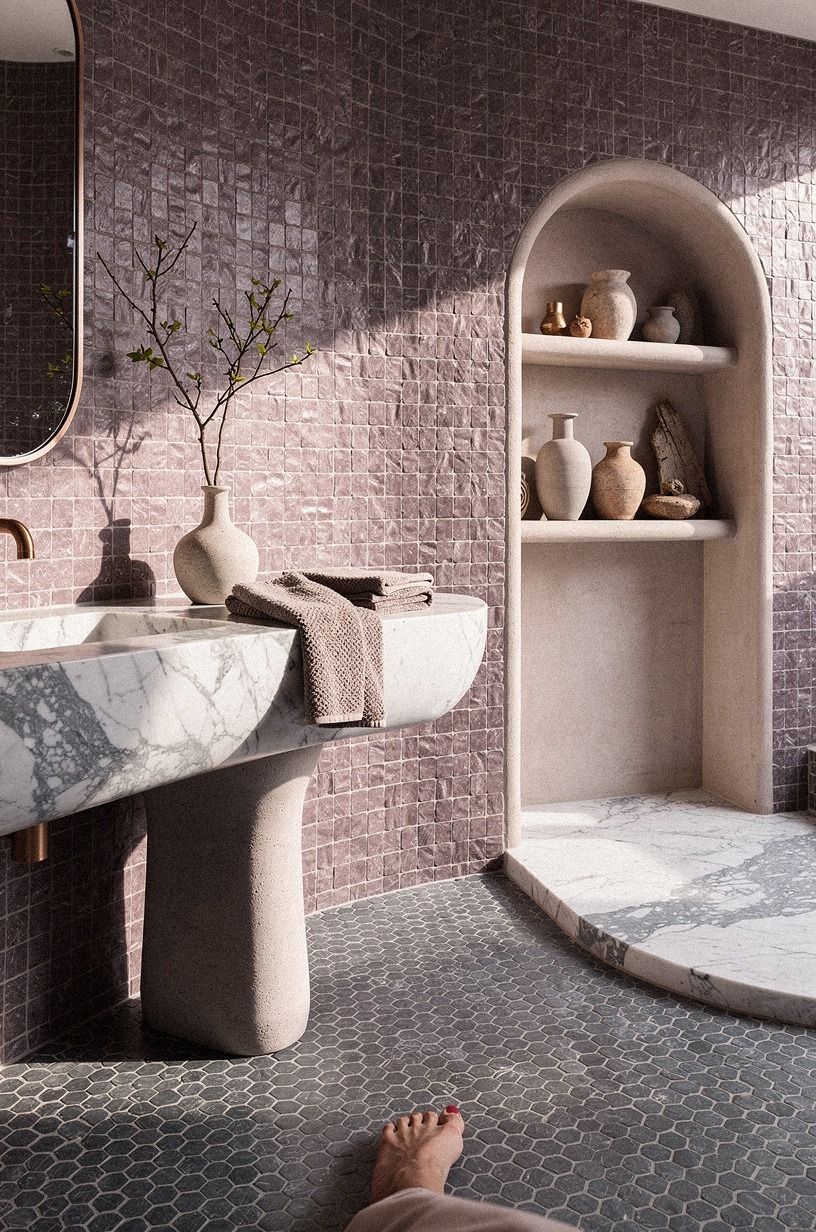
A dark wall tile can feel inviting when the floor stays pale. Use saturated plum zellige on the shower wall, then ground it with gray penny tile and rose-gold accessories. The floor keeps the saturated color from closing in around you.
You’ll want the penny grout to match the tile closely. Strong contrast turns the floor into a grid, while a close grout makes it read as texture. I made the mistake of choosing stark white grout once, and every little circle became the first thing I saw.
A honed Carrara marble threshold with subtle gray veining can bridge the shower and bathroom floor if the layout needs a transition. Its natural pattern adds an elegant note, but seal it before installation so water doesn’t darken the surface.
Skip a glossy black floor with saturated plum walls. The combination is bold, but it’s less calming in a room without large windows. Use these square zellige bathroom ideas to compare grid and irregular layouts.
The floor should also be comfortable underfoot. Ask about slip resistance, cleaning requirements, and whether the mosaic sheet has enough grout coverage. A pretty penny pattern isn’t worth it if the surface feels harsh or collects grime in every joint.
9Use the Three-Color Ceiling Rule for mosaic tile in shower ideas
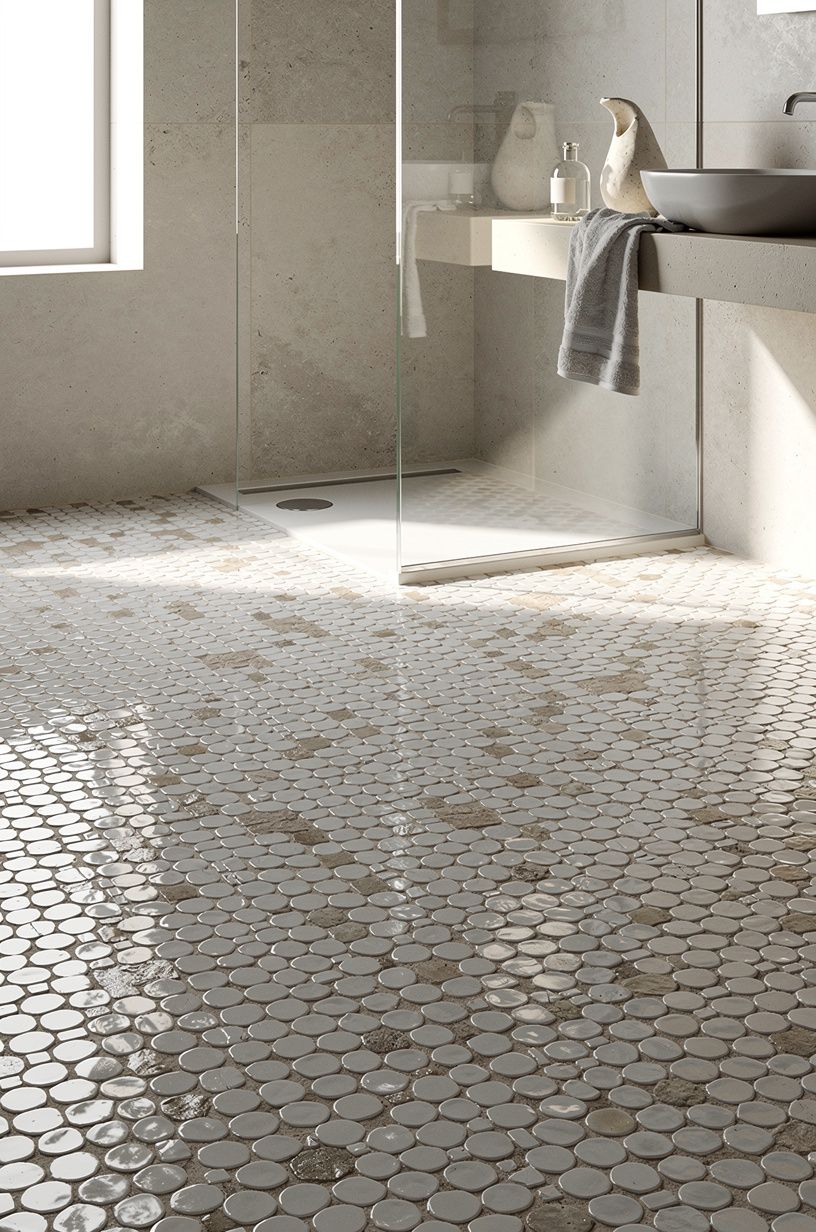
Pick one dominant tile color, one supporting color, and one wood tone. Navy, white, and walnut work beautifully together, especially with reclaimed weathered teak used for a shelf or stool.
10Repeat one imperfect edge across the room
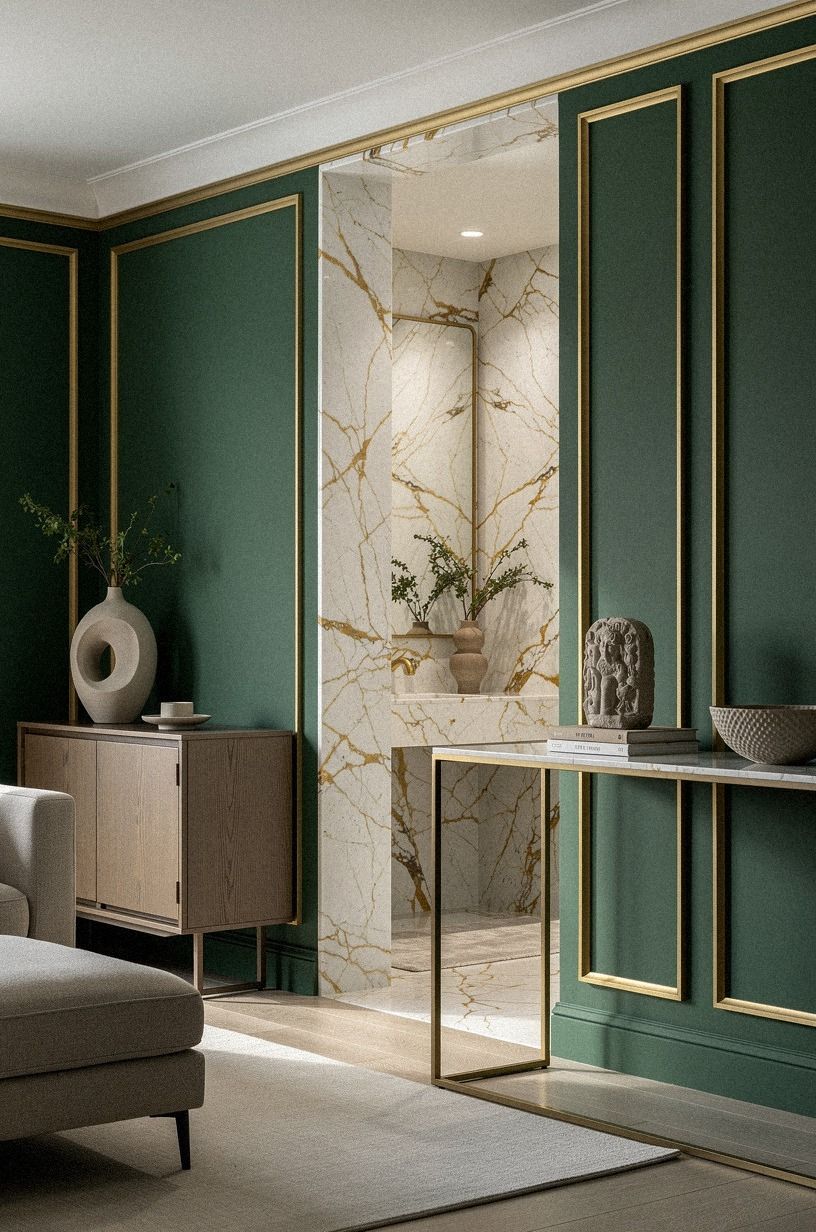
Zellige is irregular by nature, so give that imperfection a partner. Choose a mosaic with a slightly uneven edge or varied surface rather than a perfectly machined porcelain grid. The pairing feels organic because neither tile looks too polished.
Hand-glazed emerald zellige beside cream mosaic creates a rich, relaxed effect. You’ll want the stone or marble to stay in the same value range, even if its texture differs. Similar lightness matters more than identical color.
Use the mosaic inside a niche, then repeat it as a small vanity backsplash. That repetition is enough to connect the spaces. I’d avoid placing three different mosaic patterns in one room, even if each sample looks appealing alone.
A Calacatta marble ledge with gold veining can soften the harder surfaces. And if you’re styling around a freestanding IKEA KALLAX birch-effect unit, keep the accessories spare so the tile remains the main character.
You can repeat an edge through small details too. A rounded mirror, curved faucet, or softly arched shelf can echo penny tile without adding more tile. I’d choose one of those gestures, not all three.
11Frame a shower niche with penny tile instead of more zellige
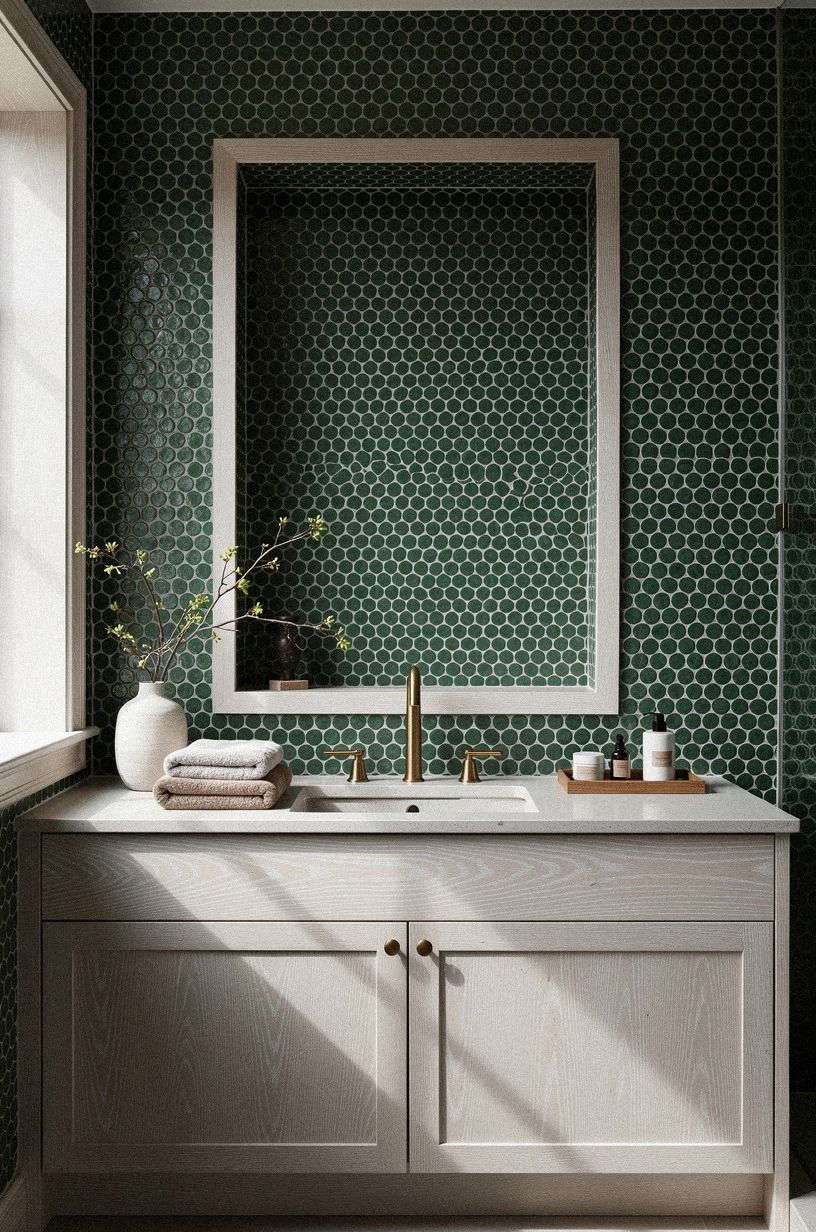
A shower niche is a natural place to change pattern. Line it with penny tile, then echo the room’s forest green, rust, and natural oak through the surrounding zellige and a cerused white oak shelf.
12Choose warm grout for bold zellige tile design ideas
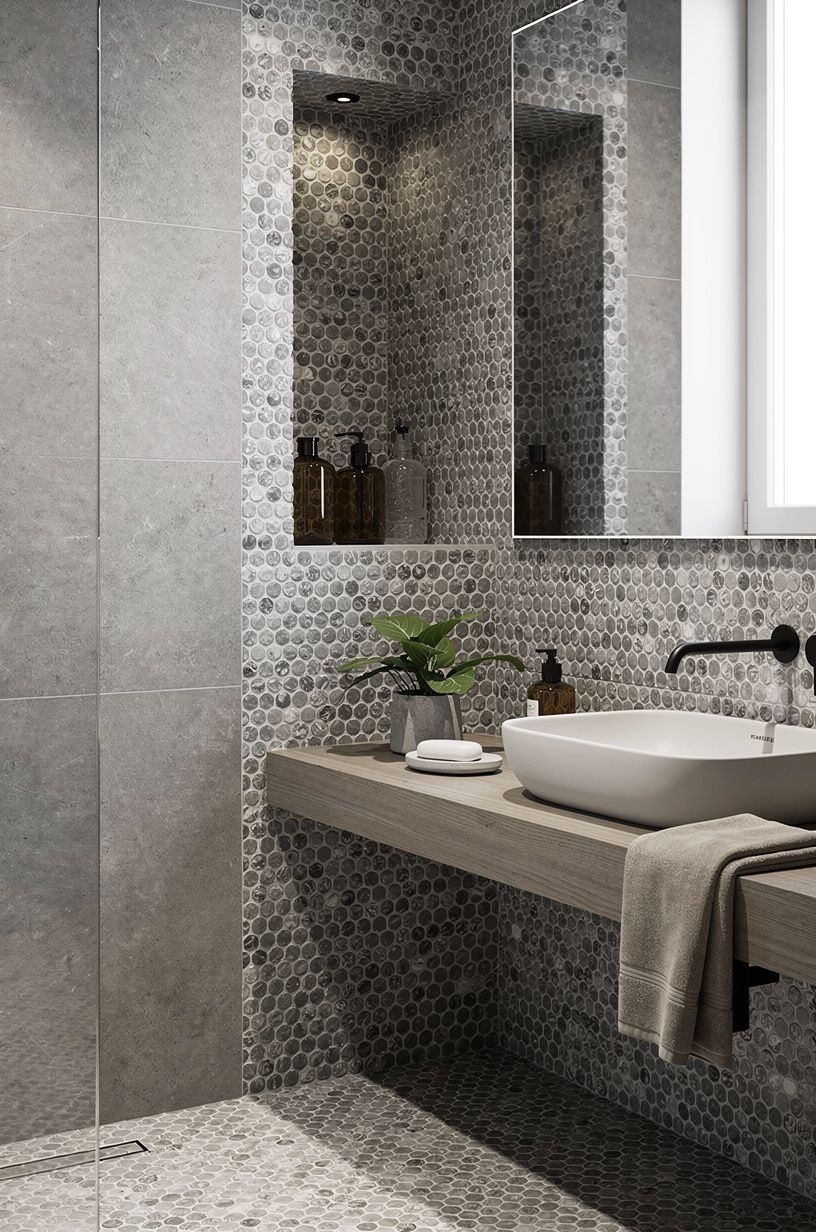
Grout can either connect your tiles or separate them. A warm rose grout gives dusty rose zellige, charcoal mosaic, and brass a shared language, while a cool gray can make the same surfaces feel sharper and more modern.
Try aged brass with charcoal mosaic, dusty rose zellige, and a backlit translucent onyx shelf. The metal develops a soft patina, and the grout keeps the finish from feeling too shiny. You’ll want to sample everything together because tile color shifts under bathroom bulbs.
I’d skip matching grout to a dark tile unless you want a very graphic effect. It can look sophisticated in a large room, but smaller bathrooms need more visual air. A close warm grout usually gives you a calmer result.
Your floor still needs practical contrast, especially near the toilet. Keep the toilet clearance at least 21 inches in front, then use the available wall area for pattern. The room will feel comfortable because the layout works before the decoration begins.
Ask your installer about sealing requirements, especially for backlit translucent onyx, natural stone, or porous grout. Maintenance isn’t glamorous, but it should influence the material choice before you commit.
13Contrast penny tile with a quiet stone ledge
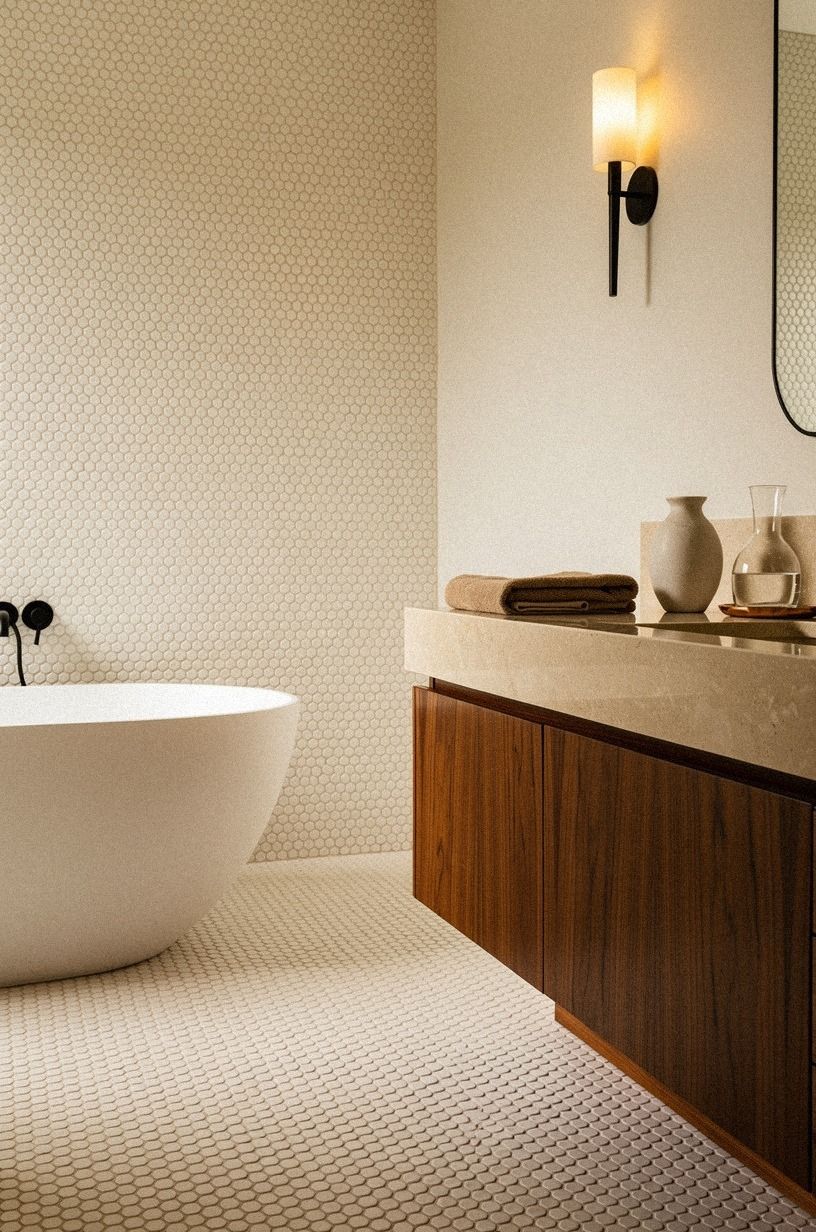
A stone ledge gives your mixed tile composition a pause. Warm white penny tile, camel-toned upholstery, black accents, and a book-matched walnut shelf create contrast without adding another loud pattern.
14Finish with the Pattern Pause, then stop
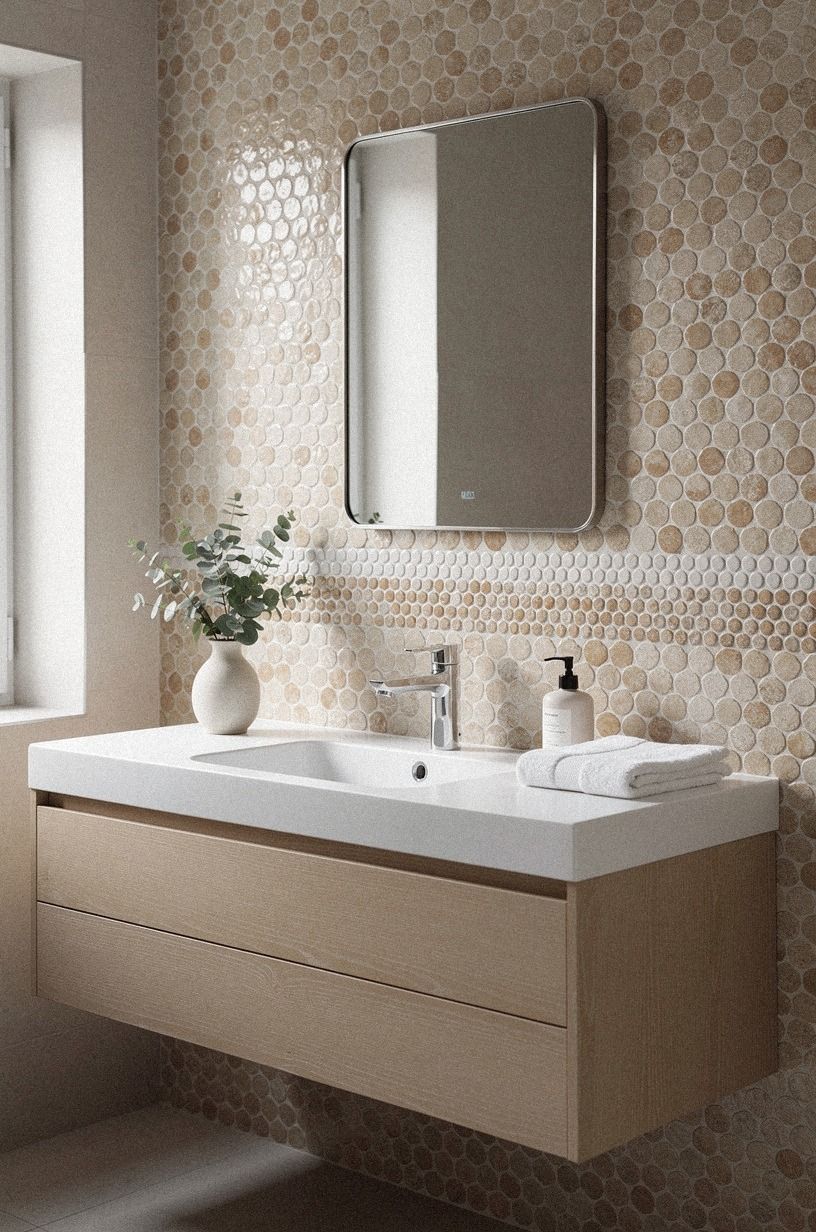
The strongest mixed tile bathrooms usually have one place where nothing happens. Leave a wall painted, keep the vanity front plain, or use a single slab shelf. Your pattern becomes more inviting because your eye has somewhere to rest.
I like midnight-blue zellige above a low backsplash of ivory tile, with tiny mosaic tile only inside the shower. A copper fixture and warm travertine shelf keep the palette grounded. You’ll want the accessories to repeat the tile colors rather than introduce new ones.
And stop before the room feels decorated in every direction. A Turkish towel, one ceramic cup, and a small branch in a stone vase can be enough. Too many objects hide the grout rhythm you paid to install.
If you’re still comparing layouts, start with these zellige subway tile ideas. The best pattern is the one your eye can understand from the doorway.
Before ordering, tape the proposed tile boundaries on the wall. Stand in the doorway, sit on the toilet, and look from the shower.
You’ll notice awkward stopping points faster in full scale than on a tiny sample board. Trust that reaction!
The Tile Rule I’d Keep
I’ve mixed enough tile to know that the expensive mistake usually isn’t the tile itself. It’s ordering two patterns without deciding which one gets the louder voice. Handmade zellige already brings color variation, shine, and an irregular edge.
Penny and mosaic tile bring scale. If both compete equally, your bathroom starts to feel like a sample board.
My first choice is always to make the wall tile carry the color and let the smaller tile handle the floor, niche, or backsplash. That gives you a clear hierarchy. I’ve tried reversing it with a dramatic mosaic wall and quiet zellige underfoot, and it can work, but only when the mosaic has a very limited palette.
Otherwise, the wall becomes visually busy at eye level, where you can’t ignore it.
The grout deserves more attention than most people give it. A warm grout can pull green, cream, and clay into one family. A cool gray can make those same colors look disconnected.
Order samples, place them beside your actual countertop and metal finish, and look at them in morning and evening light. The tile store’s bright overhead lighting won’t tell you enough.
I also think renters have more options than they assume. A removable backsplash, a freestanding vanity, and a patterned bath mat can suggest the same relationship without permanent work. You won’t get the exact depth of glazed tile, but you can learn whether you like the color pairing before spending thousands.
The room should feel collected, not cautious. Choose one bold surface, one supporting pattern, and one quiet plane. That’s the whole decision.
If you’re deciding between a strong wall and a strong floor, ask where you want your eye to land first. In most bathrooms, the wall wins because it sits at eye level. Your floor can then become the supporting texture, which makes the entire room easier to live with.
What People Always Want to Know
What is the best mixing zellige with penny and mosaic tile pattern for a small bathroom?
Use pale zellige on the walls and warm white penny tile on the floor. The light surfaces keep the room airy, while the rounded floor pattern adds texture.
A simple IKEA HEMNES vanity can ground the layout without competing with the tile. I’d keep the grout close to both surfaces so the small room doesn’t look divided.
Where can I buy mixing zellige with penny and mosaic tile pieces on a budget?
Look at IKEA, Wayfair, Target, Facebook Marketplace, and local tile salvage stores. You can also find unopened boxes through thrift shops or renovation groups.
This site uses display advertising rather than affiliate commissions, so choose the seller and finish that suit your budget. I’d still order samples before buying a full quantity.
How much does a mixing zellige with penny and mosaic tile makeover cost?
A small cosmetic update can run about $200 to $1,200, depending on paint, fixtures, and tile area. A larger renovation costs more.
Free changes include rearranging accessories, repainting, and using a bath mat to repeat one tile color. If plumbing moves, labor and waterproofing will usually matter more than the decorative tile price.
Can I create this mixed tile look on a budget?
Yes, and you can start with one small zone. Paint the dry wall, tile a short backsplash, or use penny mosaic only in a niche.
Keep the existing floor, then spend your money on one named surface such as zellige. I’d choose the wall behind the vanity if you want the biggest visual change for the least tile.
Is mixing zellige with penny and mosaic tile worth it in a small space?
Yes, because a small room gives you a tighter composition. Use one dominant color, keep grout close to the tile, and repeat the same finish once in the hardware. The result feels intentional without requiring a large tile budget.
You’ll get the best result when one pattern stays quiet.
Is mixing zellige with penny and mosaic tile a good idea for a rental?
Yes, if you keep the changes removable. Try peel-and-stick mosaic on a backsplash, a tension rod with a textured curtain, and a freestanding cabinet.
A patterned bath mat can create the same floor-to-wall connection without drilling or permanent tile work. I’d test the look for a few weeks before making anything permanent.
Where I’d Start First
If I had to pick one, I’d start with warm white penny tile on the floor. Its small scale hides dust, softens bold zellige, and gives your feet a gentle texture. Pin the penny tile layout for later and test the grout beside your real countertop before ordering.
Then choose the wall color. These soft warm pink zellige ideas and square zellige bathroom ideas can help you compare warmer and more structured directions. Once you know which surface leads, the rest of the bathroom can stay beautifully quiet.