

 by
Nancy Meyers Cottage Aesthetic for Storybook Coziness works best with warm paint, old-looking wood, and useful pieces you’ll touch every day. I once bought matching decor and made the room feel staged. Now I mix linen, books, brass, and one imperfect vintage find.
Editor's note: Start with the elements that change how the room feels at 7 p.m.: paint, layered lighting, generous textiles, and furniture arranged for conversation. The decorative details can arrive slowly.
- Layer the Collected Shelf Equation
- Which Warm Neutral Paints a Collected Room?
- Choose Linen Over Matching Cottage Decor
- Build the Three-Height Light Stack
- What Should Cottage Art Do Besides Fill a Wall?
- Float a Sofa Around a Soft Rug
- Nancy Meyers’ Two-Wood Rule
- Swap Open Clutter for Country Decor Storage
- Why Hang Curtains High for a Storybook Window?
- Build a Quiet Pattern Mix Instead of a Matching Set
- Anchor Small Spaces With One Generous Piece
- Style a Table With the Three-Object Pause
1Layer the Collected Shelf Equation
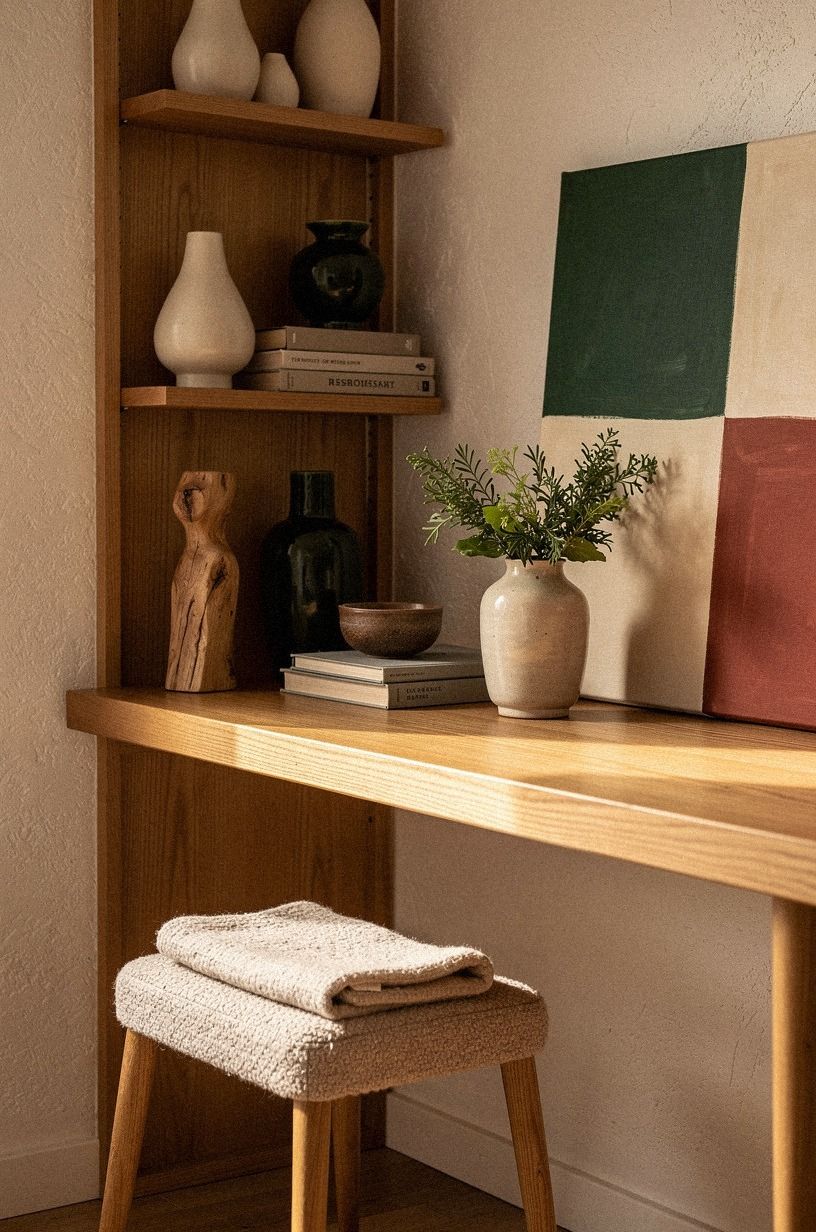
The Nancy Meyers shelf look starts with three things you already understand: books, vessels, and something living. Your shelves shouldn’t look evenly filled, and you don’t need a tall object on every level. I like ceramic pitchers, worn paperbacks, and a branch in a narrow glass bottle because the textures create a soft, picturesque pause.
Start with larger pieces at the bottom, then let your eye travel upward through smaller objects. A white oak shelf feels warmer than glossy laminate, especially beside Benjamin Moore White Dove OC-17. Leave one or two areas quiet so the arrangement doesn’t become a collection of unrelated objects.
Try building each shelf from left to right. Place a stack of hardcover books near one end, add a stoneware bowl or blue-and-white vase, then balance it with a low object farther across.
Height matters, but rhythm matters more. You’ll want the shelves to guide your eye around the room.
Your shelf should hold things you’d reach for, rather than filler you’d dust around. A wooden candlestick, framed landscape, or small inherited dish can carry more feeling than several new accessories. For a fuller starting point, this Nancy Meyers shelf styling guide shows how books, bowls, and branches can work together.
If you’re styling a rental, keep heavier pieces low and use removable picture ledges where possible. The arrangement will feel grounded, and you won’t have to make permanent changes.
2Which Warm Neutral Paints a Collected Room?
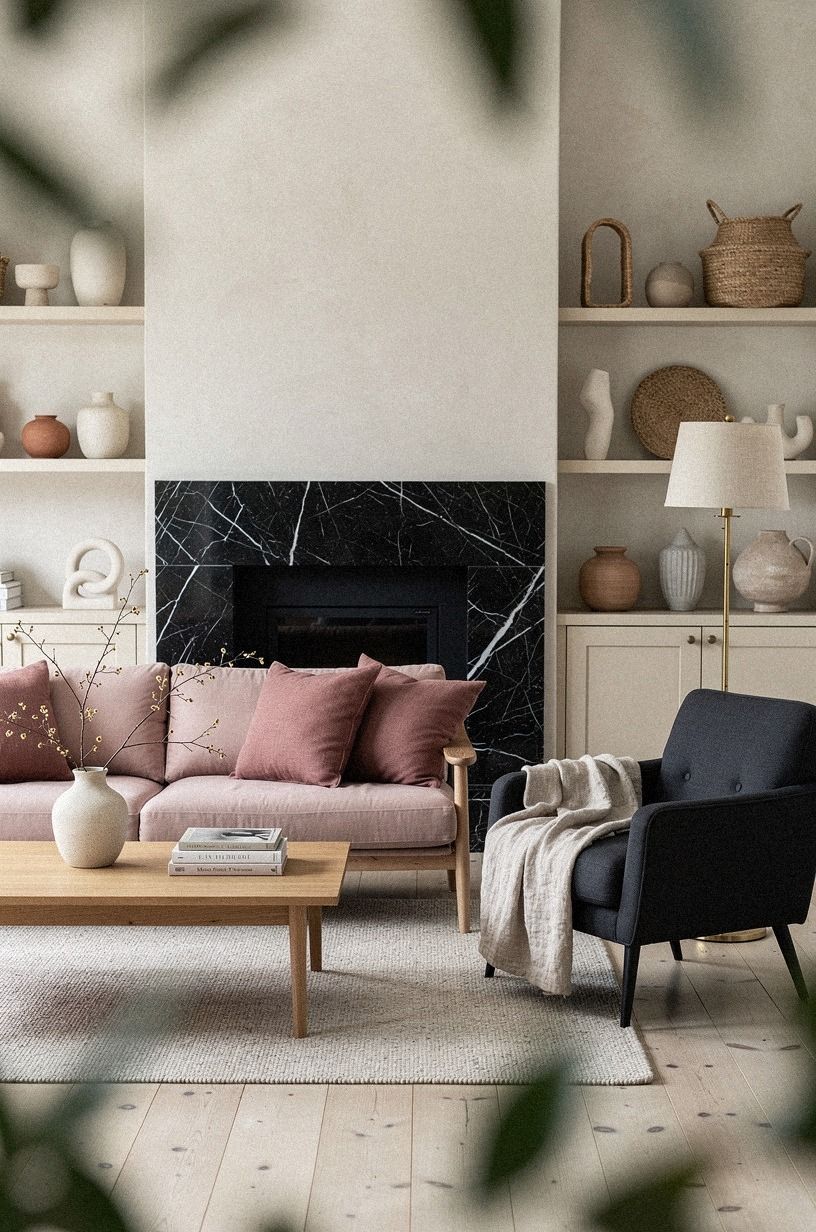
What color makes a cottage room feel collected instead of beige and sleepy? I’d start with Benjamin Moore White Dove OC-17, especially if your windows bring in cool northern light. It’s gentle enough for trim and warm enough to keep your furniture from looking gray.
You’ll want to test paint in morning, afternoon, and evening light before committing. Farrow & Ball Pigeon No. 25 is stronger when you want the walls to carry more personality, while Sherwin-Williams Agreeable Gray SW 7029 keeps the room quiet around patterned upholstery. Farrow & Ball Setting Plaster No. 231 can bring a rosy warmth to a dim room.
I’d skip stark white because it can make old wood look orange and every shadow look sharper. A soft neutral gives your furniture somewhere to settle. The right shade should make the room feel calmer before you add anything else.
Look at the undertones beside your flooring, countertops, and largest upholstered piece. A sample that seems creamy on a white card may turn yellow against oak.
Paint two large boards and move them around during the day. That small step can save you from repainting a whole room!
For more combinations, compare your samples with this Nancy Meyers warm neutral paint palette. A warm wall color, soft trim, and aged wood can establish the entire cottage mood.
3Choose Linen Over Matching Cottage Decor
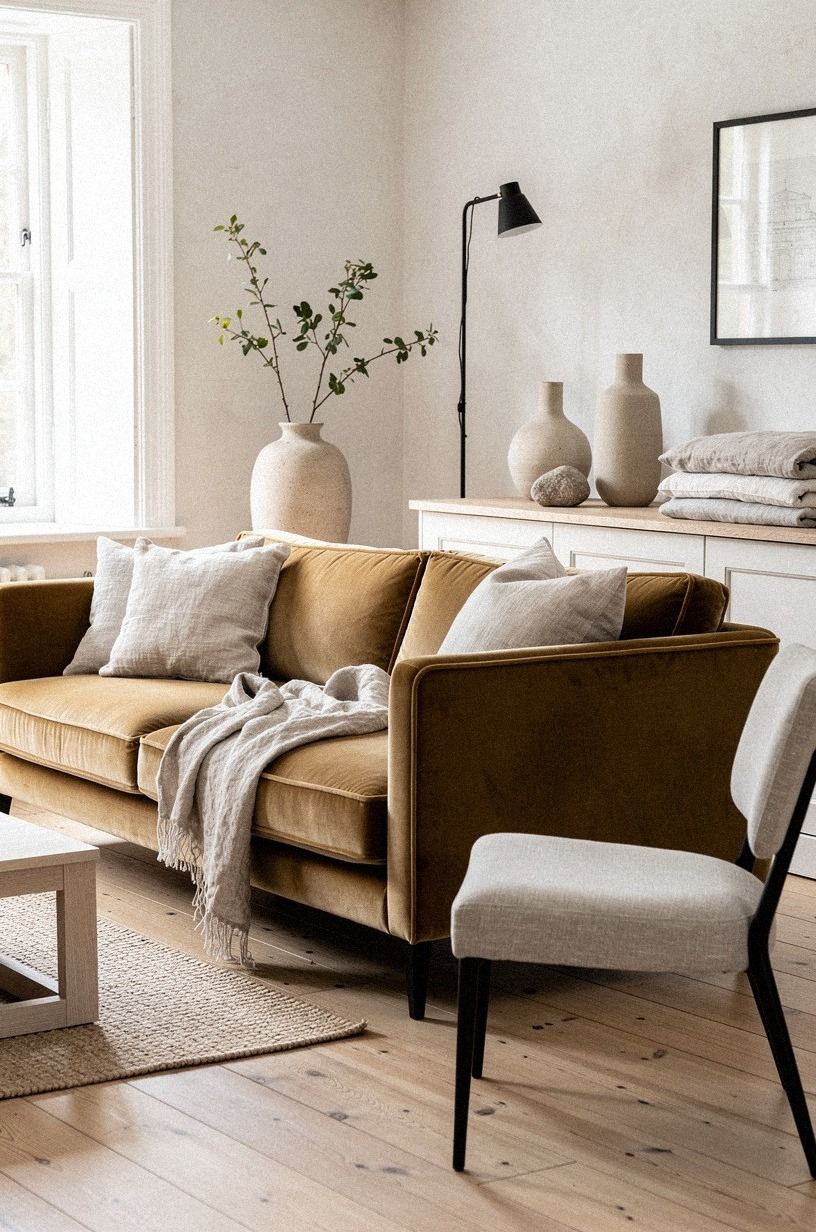
Matching curtains, pillows, and upholstery can make your country decor feel purchased in one afternoon. I’d choose Belgian flax linen instead, because its uneven weave catches sunlight and softens as you use it. Your room needs a little looseness, and linen gives you that lived-in movement without looking careless.
Look for curtains that reach the floor, with the rod 4-6 in (10-15 cm) above the window frame. That extra height helps ordinary windows feel taller. A linen-blend cushion beside a camel deep-pile mohair velvet pillow brings contrast without shouting.
You don’t need every textile to match. You need related warmth, which is why I’d pair warm white linen, camel cotton, black, and one muted floral.
Repeat a color once or twice, then let the textures do the rest. A room becomes more interesting when its fabrics relate without appearing purchased as a set.
For a sofa, look for a washable cotton slipcover or a relaxed twill throw. The fabric should invite use. You’ll want to sit down without worrying that one cup of tea will ruin the entire arrangement.
If you’re working in a small apartment, this budget Nancy Meyers aesthetic guide keeps the layering manageable. Start with curtains or one large rug, then add smaller textiles only when the room needs them.
4Build the Three-Height Light Stack
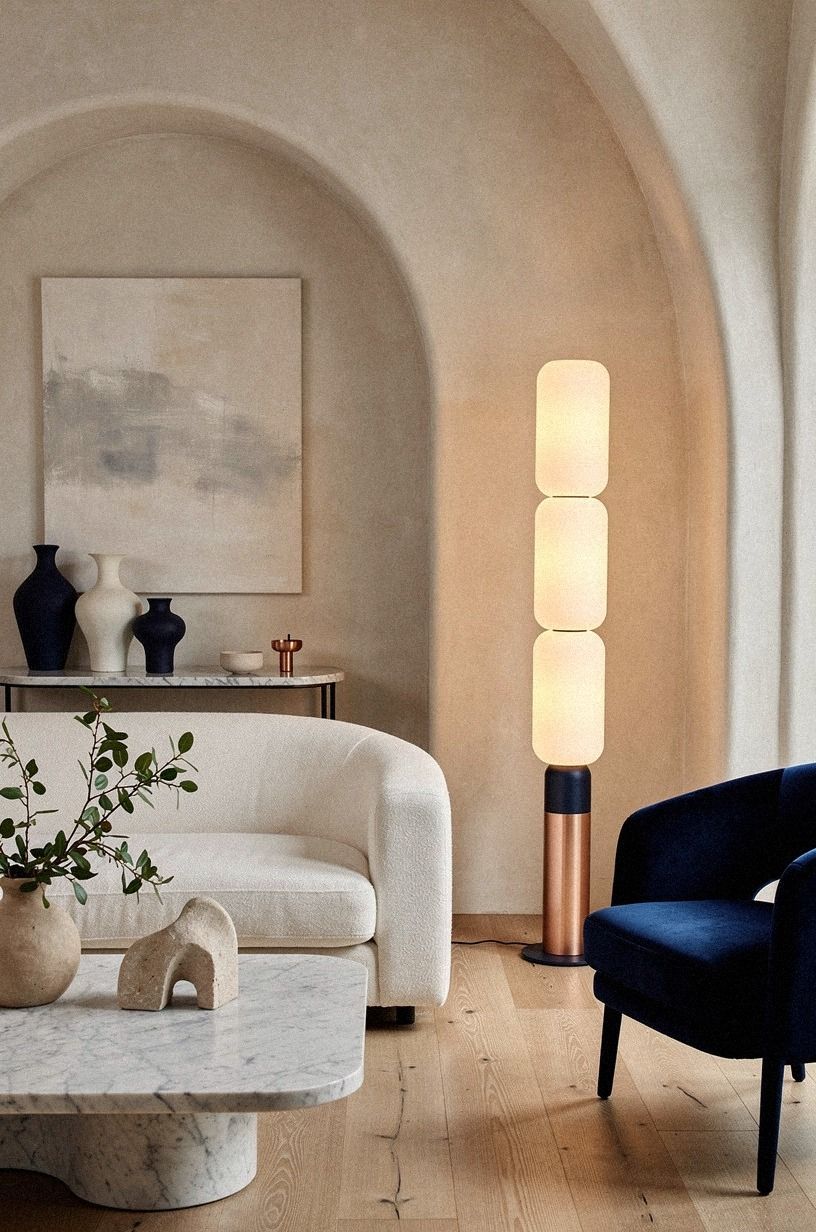
A warm cottage room needs three kinds of light: overhead, task, and ambient. That’s the Three-Height Light Stack, and it works because your eye gets several gentle pools instead of one harsh ceiling glare. You’ll notice the difference as soon as the room shifts from afternoon to evening.
Use a ceiling fixture for general light, a table lamp beside your reading chair, and a low lamp or picture light near the shelves. Copper works beautifully with ivory walls, while a ceramic lamp base adds a quieter handmade note.
Your lamps don’t need to match. I prefer one pleated shade, one ceramic base, and one small metal fixture. Choose bulbs around 2700K for a warm evening glow, and put the main lights on dimmers if you can.
A room should be able to move from practical morning brightness to a softer dinner mood.
Keep the light sources at different levels. A tall floor lamp beside the sofa, a linen-shaded table lamp on a console, and a low picture light above art can create depth without adding more furniture.
The goal is an amber glow that stops near the rug’s edge. If you’re choosing only one upgrade, add a task lamp first.
It changes how you use the room, not simply how it photographs. For more direction, this cozy lived-in Nancy Meyers look explains how light, texture, and placement work as a group.
5What Should Cottage Art Do Besides Fill a Wall?
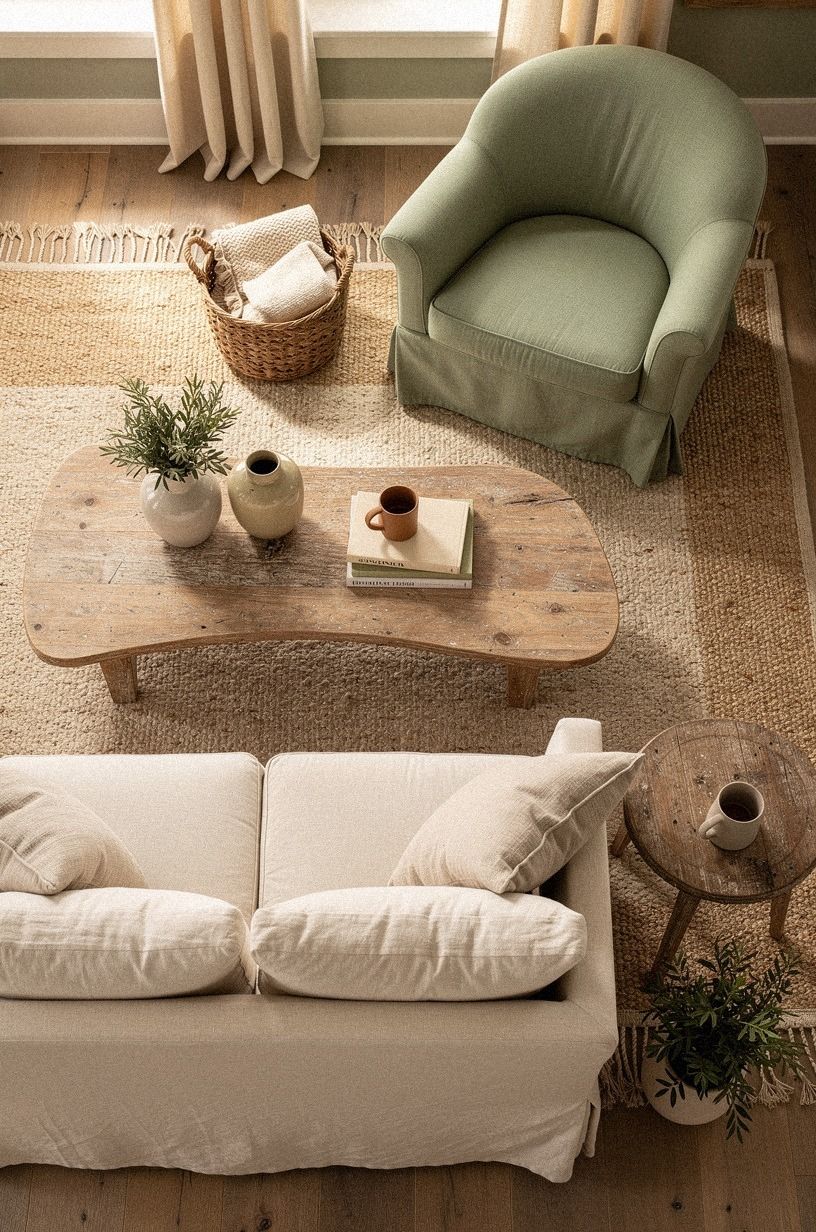
Art feels more personal when it has a reason to be there.
6Float a Sofa Around a Soft Rug
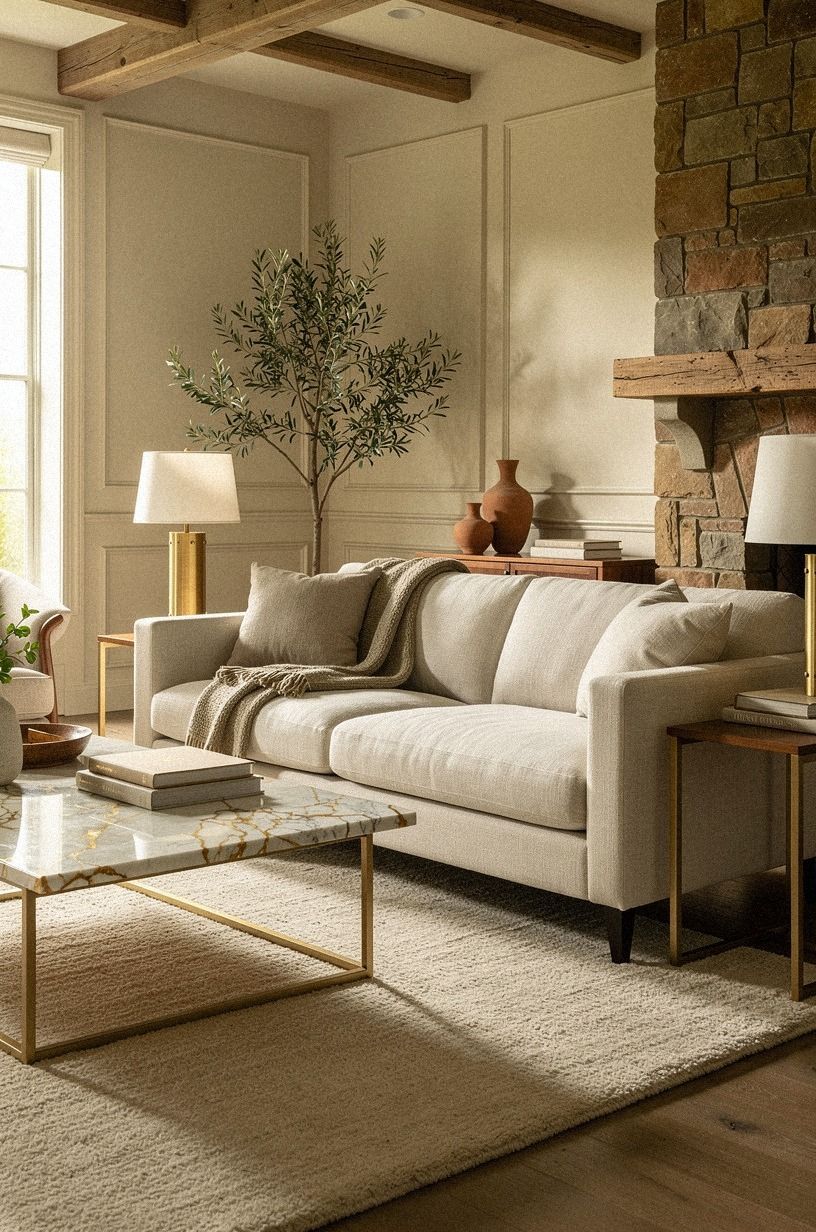
A room can’t feel gathered if every piece hugs the wall. Float your sofa a little, then choose a rug large enough that the front legs of your furniture overlap it. This simple move makes your living room ideas cottagecore feel more intentional and helps conversation happen in the center.
I like a wool rug with a low pattern, faded border, or gentle variation in tone. A hand-knotted wool rug adds depth, while a flatweave cotton rug can be easier to use in a busy family room. A rug that’s too pale will show every crumb, and a loud geometric design can fight the quiet cottage mood.
Keep the coffee table close enough to reach without leaning. Then leave breathing room behind the sofa if you can. Your room doesn’t need a huge footprint.
It needs a clear center.
Arrange chairs so they face the sofa or turn slightly toward it. A skirted armchair, wooden side chair, or compact ottoman can make the seating feel less formal. You’ll want at least one place where someone can sit with a book, a cup of tea, or a pair of shoes kicked off.
If the rug is smaller than your furniture, center it under the coffee table and let the seating relate through proximity. The room can still feel cohesive when the scale is handled deliberately. The cozy lived-in Nancy Meyers look offers more ideas for creating that comfortable center.

7Nancy Meyers’ Two-Wood Rule
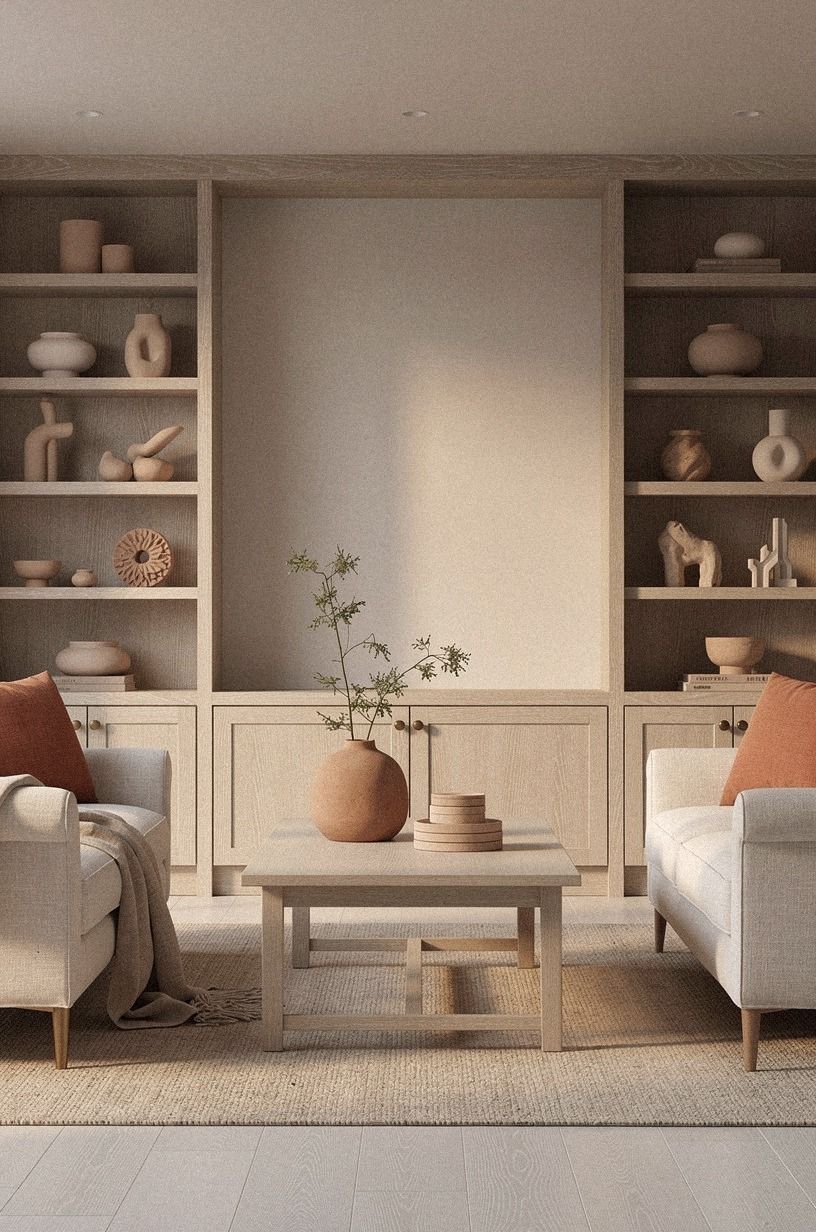
The Two-Wood Rule keeps rustic rooms from becoming a furniture showroom.
8Swap Open Clutter for Country Decor Storage
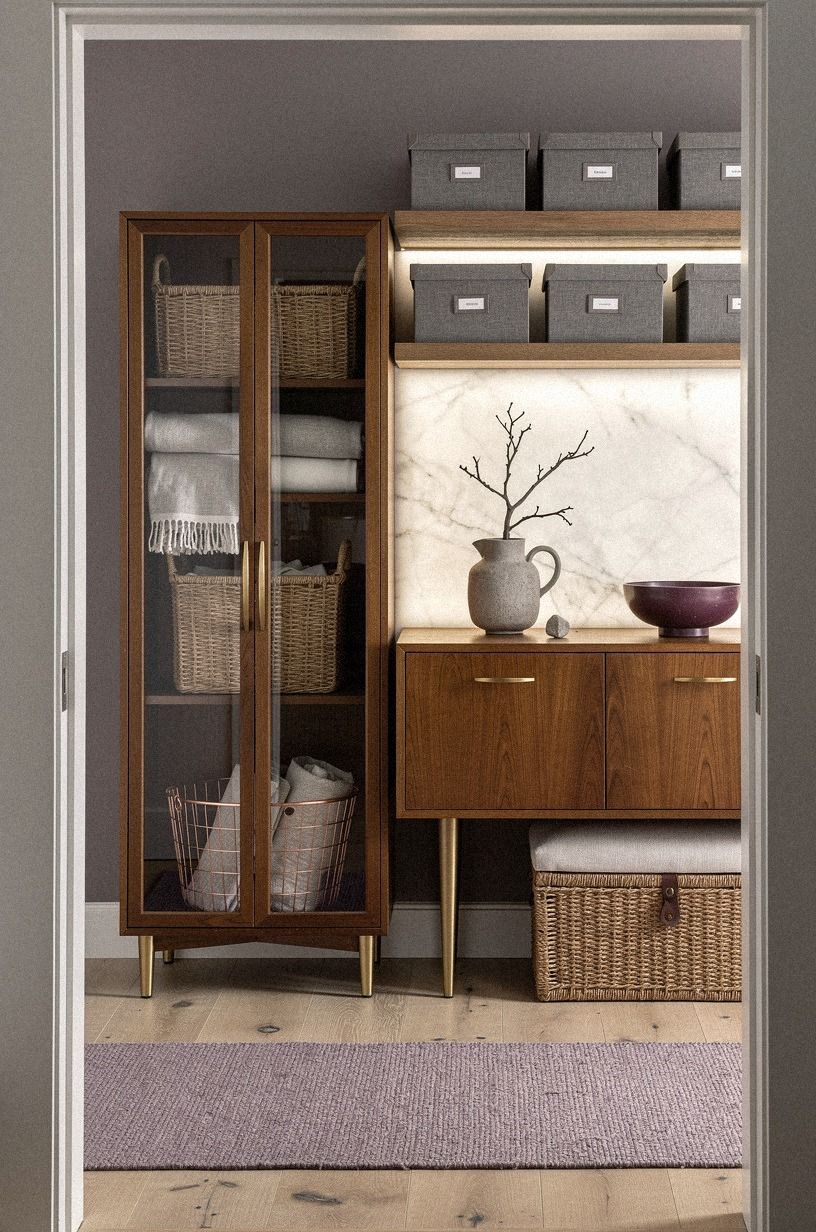
Open shelving is charming until your eye has nowhere to rest. I’d use a plum-toned cabinet with a backlit translucent onyx panel or skirted console for the objects you need but don’t want to see. Your room will feel calmer when games, chargers, and extra throws have a home.
A woven basket under the console handles blankets, while a shallow tray catches keys and small daily clutter. You’ll want the storage to look useful, rather than overly polished. Grey-painted panels, rose-gold pulls, and a slightly worn surface all help.
Choose storage according to what you actually keep. A deep cabinet works for board games and blankets. A narrow oak sideboard can hide paperwork in a dining room.
A lidded basket near the sofa makes it easier to gather toys at the end of the day.
I once left every book and candle visible because I thought the room needed more personality. It needed less noise.
Now I keep the pieces I love at eye level and hide the rest. That shift matters!
Storage should also support daily movement. Leave a basket where laundry gathers, put a tray near the door, and keep frequently used items within reach. The room will feel more graceful when it helps you finish small tasks.
If you’re styling a nursery or guest room, these soft Nancy Meyers nursery ideas offer the same practical warmth. A calm room usually has enough storage to protect its quieter details.
9Why Hang Curtains High for a Storybook Window?
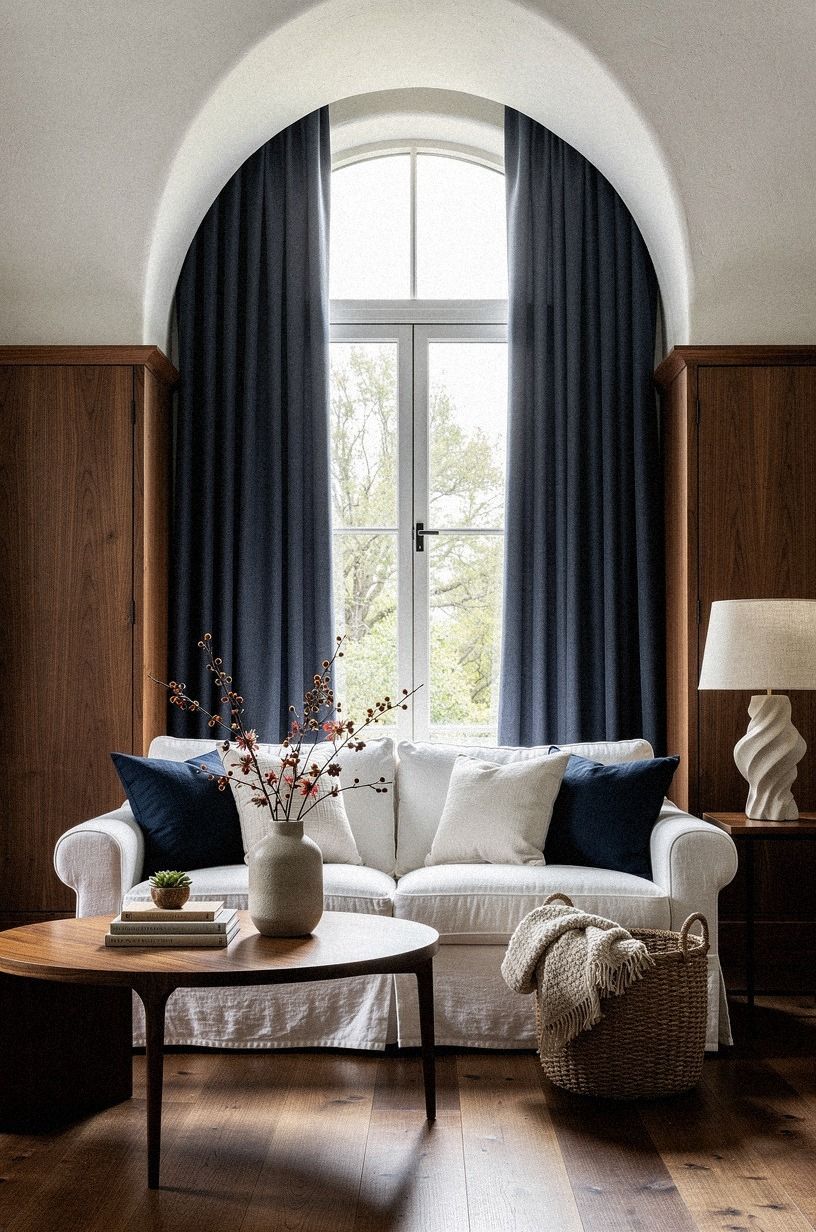
Curtains can make an ordinary window feel architectural.
10Build a Quiet Pattern Mix Instead of a Matching Set
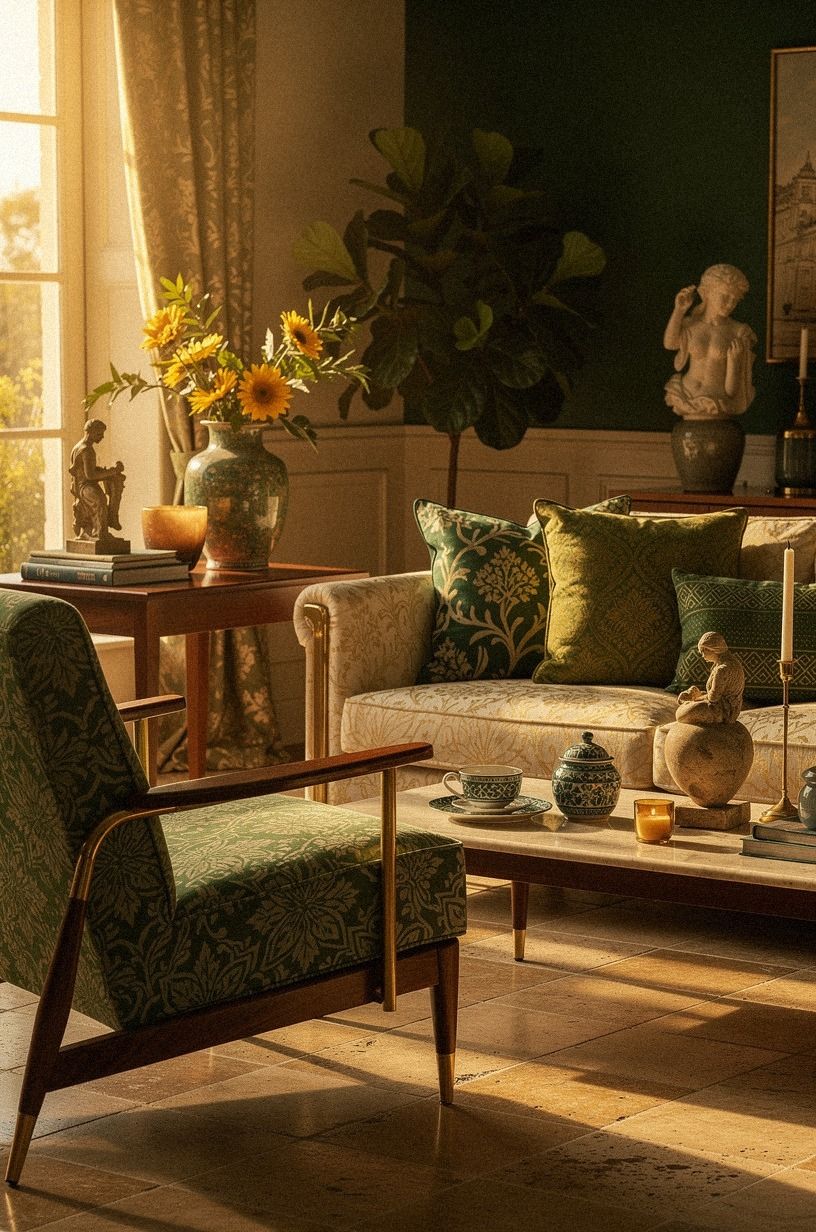
Pattern makes a cottage room feel alive, but too much pattern makes it feel restless. The Quiet Pattern Rule uses one small floral, one stripe, and one larger low-contrast print. Your eye can move between them without getting stuck.
Try a block-print cotton cushion with a narrow ticking stripe and a faded botanical on the chair. I’d skip a matching sofa-and-curtain pattern because it flattens the room. A small floral is charming on a cushion, but it can become heavy across a full wall of fabric.
You’ll want to repeat one color twice, then let the other shades drift. Emerald, cream, and warm gold make a peaceful group. An emerald pillow can connect with a painting, while cream upholstery can echo a wall or ceramic bowl.
Scale matters as much as color. Place a small pattern beside a medium stripe, then use a larger print farther away.
If every pattern is tiny, the room can look fussy. If every pattern is oversized, the furniture may lose its quiet character.
Don’t force every piece into the palette. A worn leather book or dark frame can give the arrangement a needed pause. This Nancy Meyers warm neutral paint palette can help you choose supporting colors without making the room feel coordinated to death.
11Anchor Small Spaces With One Generous Piece
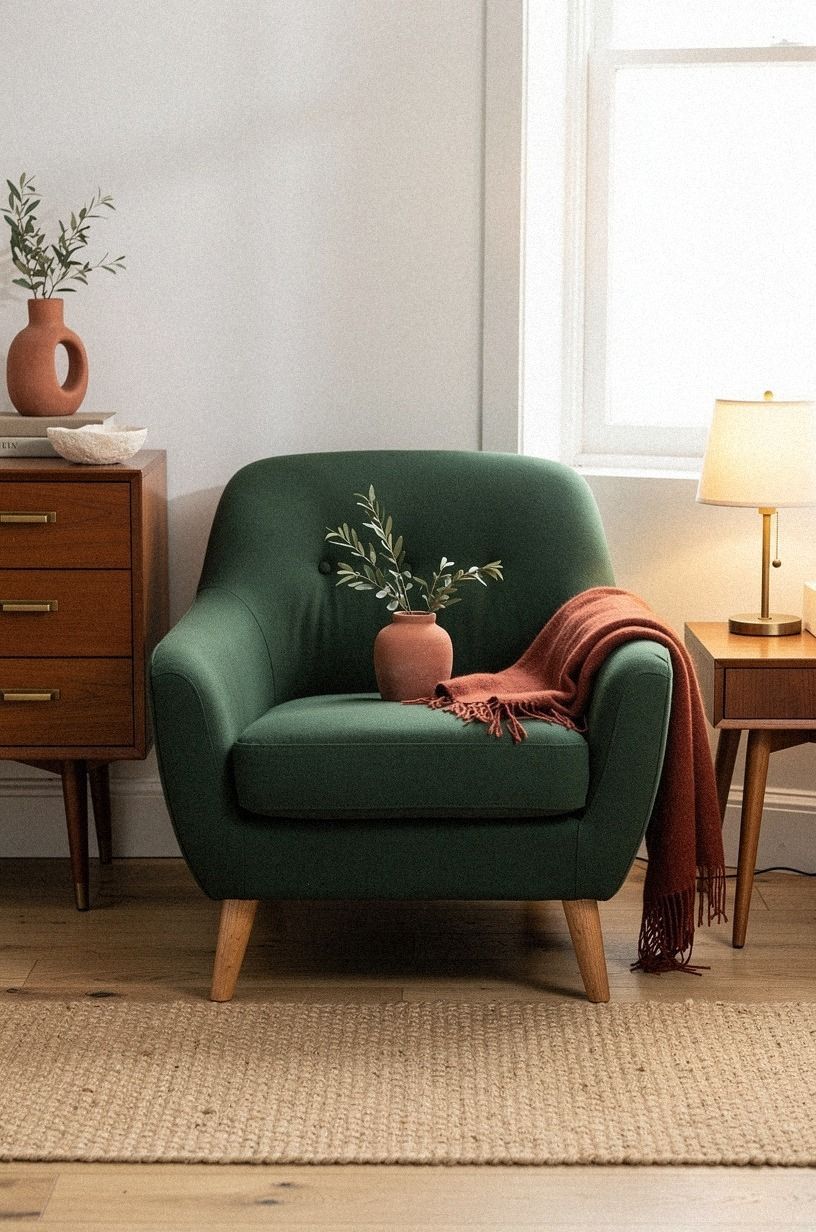
Small rooms don’t need tiny furniture everywhere. Your best move may be one generous piece, such as a deep Article Sven tan leather sofa, a broad upholstered chair, or a substantial round table. One confident anchor can make the room feel more comfortable than several undersized pieces.
Measure first, especially around doorways and walking paths. You’ll want enough clearance to move naturally, then fewer objects around the main piece. A large rug can also help because it visually joins the furniture instead of scattering it around the edges.
I’d skip a miniature sofa if you have room for a standard one. It often makes the whole space feel temporary. Use a narrow side table, wall-mounted lamp, or storage ottoman to protect the floor area.
A generous piece doesn’t have to be visually heavy. Look for exposed legs, rounded corners, or a lighter fabric when the room is narrow. Conversely, a skirted sofa can conceal storage and add softness when the space feels too angular.
Keep the path through the room obvious. You’ll enjoy a smaller space more when the furniture supports how you walk, sit, read, and host. For more small-room direction, revisit these small-apartment Nancy Meyers layout ideas.
12Style a Table With the Three-Object Pause
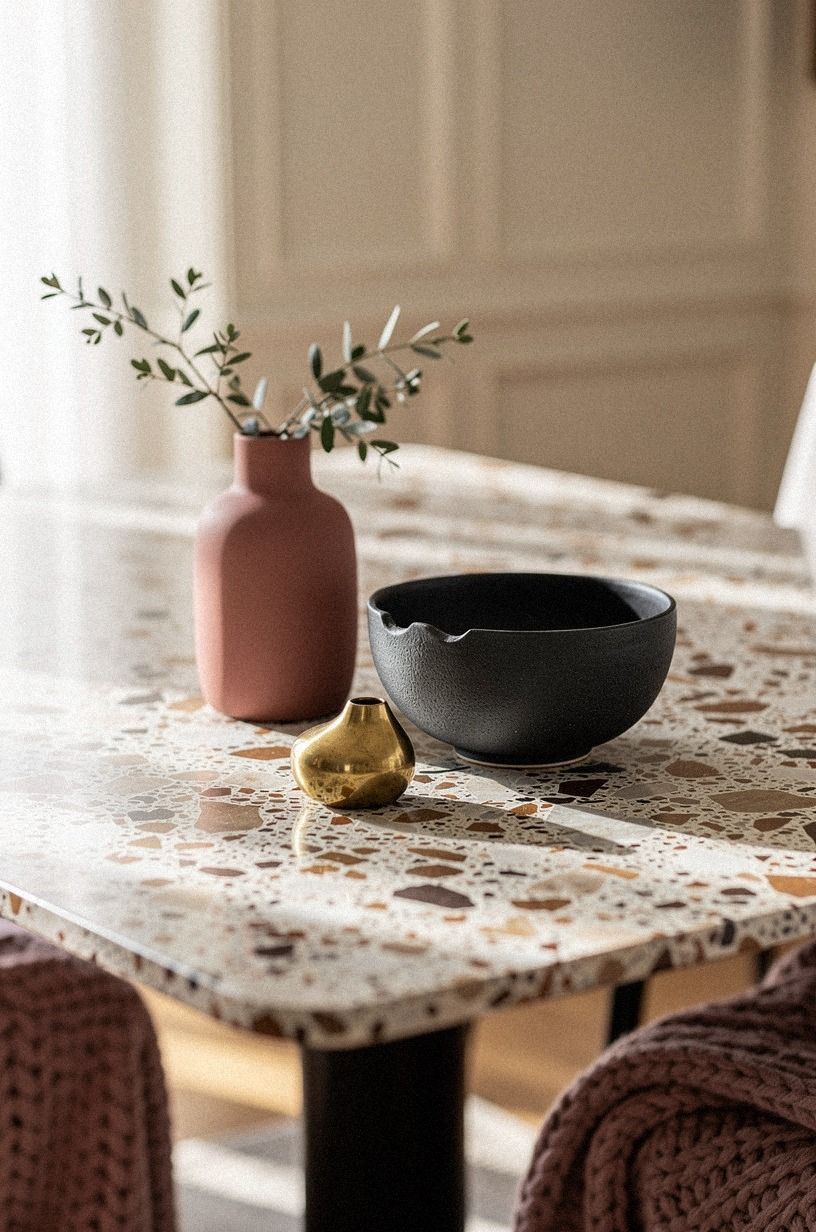
Every surface doesn’t need a full arrangement. The Three-Object Pause uses one useful object, one natural object, and one piece with history. On your coffee table, that might be an oversized-chip terrazzo tray, a bowl of pears, and a small stack of gardening books.
Keep the tallest object low enough that you can see across the table. A ceramic vase with a single branch gives you height without blocking conversation. A wooden bowl or small brass box can add warmth without taking over.
You’ll want to leave part of the surface empty so the room can breathe. I’d rather see one chipped bowl you use every morning than a collection of decorative objects nobody touches. The empty space is useful because it gives the objects around it more presence.
On a console, try a lamp, a framed photograph, and a low bowl. On a bedside table, use a reading lamp, a book, and a small dish. On a kitchen counter, a cutting board, a crock of utensils, and a bowl of fruit may be enough.
If you’re shopping, look at IKEA, Target, or a local thrift store before buying a complete set. The Nancy Meyers look depends on the pause between pieces. This Nancy Meyers shelf styling guide can help you judge height and spacing across different surfaces.
The Honest Case for Nancy Meyers Cottage Style
Nancy Meyers cottage style keeps returning because it understands how people want their homes to feel. The rooms look warm, but they’re not precious.
They include books, food, laundry baskets, practical lamps, and furniture that invites you to sit down. In 2026, that matters more than a room designed only to photograph well.
I’ve made the mistake of treating coziness like a shopping list. I bought the woven basket, the floral pillow, and the pale vase, then wondered why the room still felt flat.
The missing piece was contrast. I needed one dark frame, one useful cabinet, and a textile with enough texture to catch the light.
The best version of this style also leaves room for your own history. You don’t need to recreate a movie kitchen or copy a cottage home from a catalog.
Your grandmother’s bowl, a thrifted landscape, or a scratched wooden stool can do more than another new accessory. What makes a room feel collected? It’s the evidence that someone lives there and has made choices over time.
If you’re deciding where to spend, start with paint and lighting before buying decorative objects. A $200-$800 budget tier can cover paint, textiles, art, and organization, while larger furniture and custom work belong to a different financial conversation. You’ll feel the difference sooner when the room’s light, scale, and texture are right.
And yes, you can make this work in a rental. Use removable hooks, tension rods, layered rugs, and furniture that travels with you.
The style isn’t tied to ownership. It’s tied to warmth, usefulness, and the courage to leave a little empty space.
For a broader overview, this complete Nancy Meyers style guide brings together the major choices. If you’re decorating gradually, this budget Nancy Meyers aesthetic guide can help you decide which changes will matter first.
What These Rooms Typically Cost
The figures below are typical US ranges for a room refresh. Your existing furniture can lower the total, while custom work and main furniture can raise it.
A wool rug may run $400-$1,500, linen drapes for a pair can cost $120-$400, and a statement light fixture commonly lands around $150-$800. Paint for a room as a DIY project is often $200-$600.
Start with the category you’ll notice every day. If the room is dark, lighting may bring the strongest improvement.
If it echoes, curtains and rugs can help. If clutter dominates, storage can change the mood before you buy another decorative piece.
You can also divide the work across seasons. Paint in one month, add curtains later, and wait for the right secondhand table. This cozy lived-in Nancy Meyers look is built around decisions that feel personal, so there’s no need to finish everything at once.
The Questions I Get Asked Most
What is the best Nancy Meyers Cottage Aesthetic for Storybook Coziness for a small nancy meyers cottage storybook?
I’d start with warm paint and one substantial textile, such as Belgian flax linen curtains or a wool rug. IKEA KALLAX storage can add useful texture without taking over your room. You’ll get the most warmth from better light, clear furniture placement, and fewer, larger pieces.
Where can I buy Nancy Meyers Cottage Aesthetic for Storybook Coziness pieces on a budget?
I’d look at IKEA, Wayfair, and Target for accessible furniture, lamps, and textiles. Facebook Marketplace and thrift shops are especially useful for wood tables, vintage frames, and pottery. Your best finds may have scratches, which is often what makes them feel collected.
How much does a Nancy Meyers Cottage Aesthetic for Storybook Coziness makeover cost?
I’d expect a typical US budget refresh to run $200-$800 for paint, textiles, art, and organization. A mid-range update with accent furniture, lighting, and a rug can cost $1,500-$5,000. Reusing your sofa and shopping slowly can keep your total lower.
Can I create a Nancy Meyers Cottage Aesthetic for Storybook Coziness on a budget?
Yes, and I’d begin with what you own. Rearrange furniture around a rug, group books by color, and move one lamp to improve the evening glow. Then spend first on paint, a linen textile, or storage instead of several small decorative pieces.
Is a Nancy Meyers Cottage Aesthetic for Storybook Coziness worth it in a small space?
Yes. I’d use one generous rug, one anchor piece, and three light sources.
Your space will feel more intimate when furniture has a clear relationship instead of sitting separately against every wall. A round table or wall-mounted lamp can preserve useful floor space.
Is a Nancy Meyers Cottage Aesthetic for Storybook Coziness a good idea for a rental?
Yes. I’d use removable hooks, tension rods, peel-and-stick wallpaper, and portable lamps to change the mood without permanent work. The strongest result usually comes from adjusting light, textiles, storage, and furniture placement before touching the walls.
Where I’d Start First
If I had to pick one, I’d start with warm lighting. A room can survive plain furniture, but harsh overhead glare defeats every linen, book, and wood finish you add.
Choose three light sources, lower the brightness, and let your room become inviting after sunset. Start there!