
 by
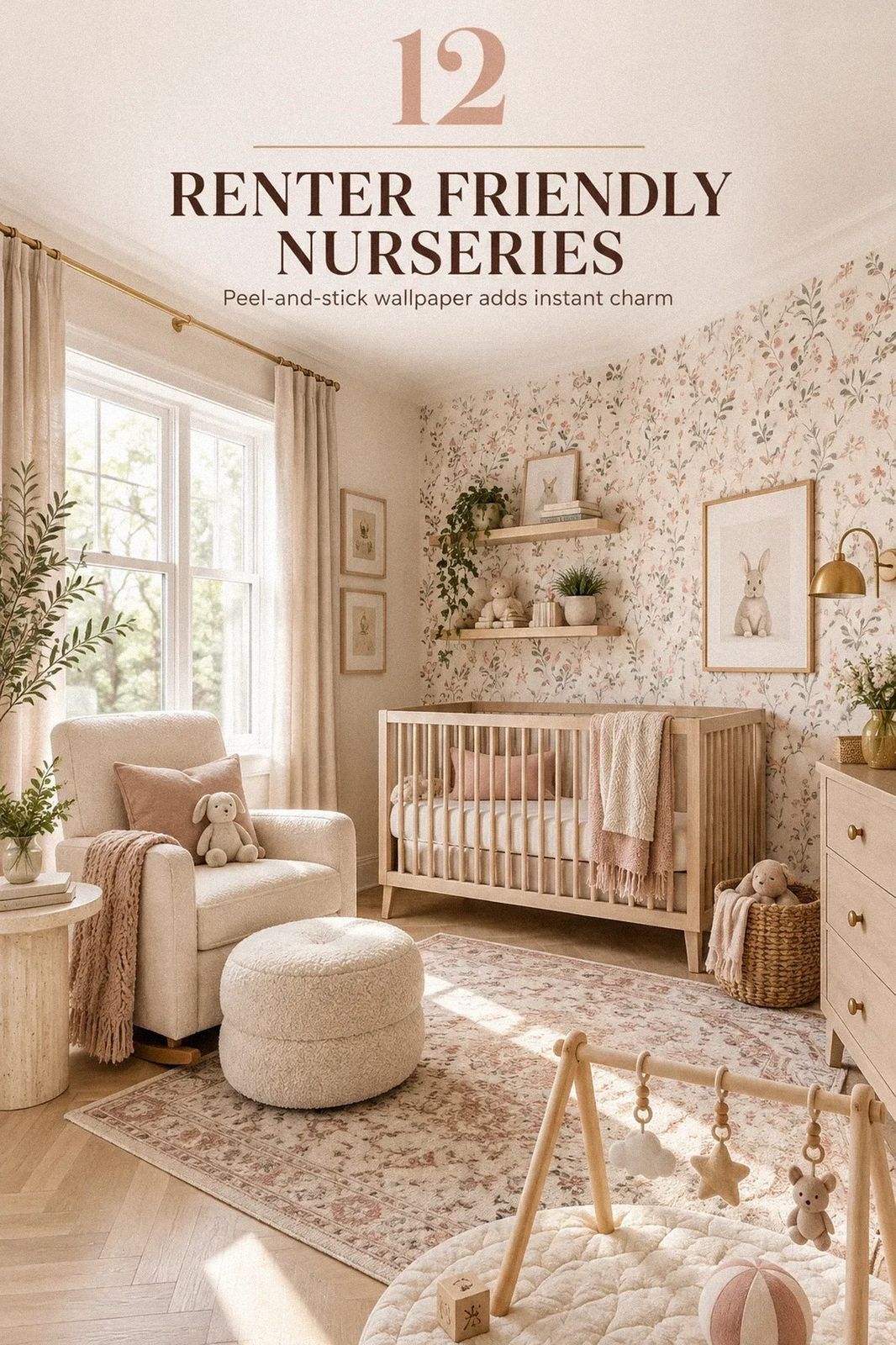
Yes, you can create a warm, calming nursery that leaves with you, usually for $150 to $600 at the budget tier. I learned that after one painted wall cost me a weekend and a deposit deduction. Temporary decor can still feel intentional, airy, and personal. It just needs a plan!
Don’t overthink: Float the Crib Away from the Wall.
- Layer a Washable Foundation with the Soft Landing Rule
- Float the Crib Away from the Wall
- Paint a Two-Tone Ceiling Instead of the Whole Room
- Hang a Tension-Rod Textile Wall
- Build the Three-Height Light Stack
- Swap a Dresser for a Mobile Changing Station
- Frame the Play Rug Before You Add More
- Place Open Shelves at Child Height
- Mix One Wood Tone with One Portable Finish
- Choose Removable Pattern over Permanent Murals
- Can a Small Nursery Feel Open After the Crib Arrives?
- Pack a Move-Out Kit Before You Style
1Layer a Washable Foundation with the Soft Landing Rule
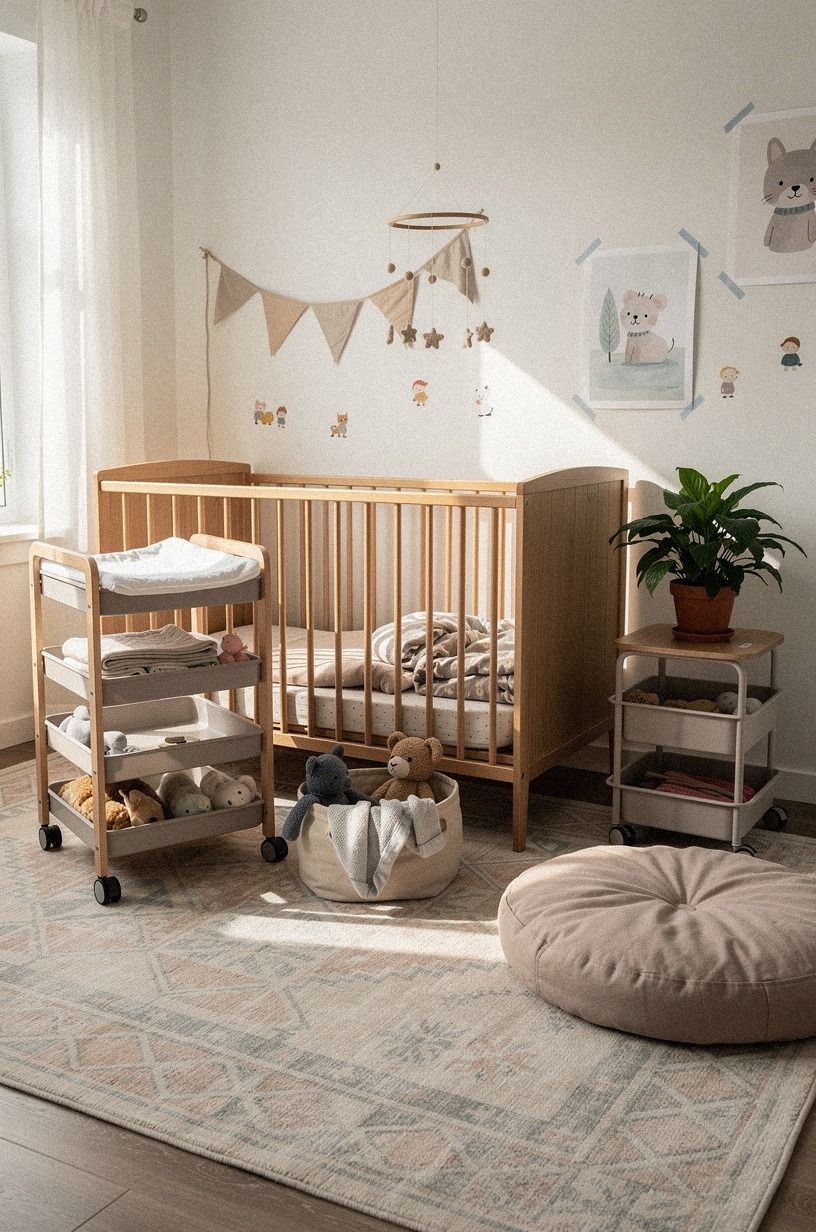
Start with the pieces your child will touch every day, then make each layer portable. A 5x7-foot play rug softens hard rental flooring, protects it from spills, and gives the nursery a gentle visual center. Choose low-pile construction so you can vacuum quickly, because plush fibers hold crumbs and somehow every crumb finds the crib.
I’d choose warm cream or sage green over stark white. A washable cotton flatweave rug feels earthy and relaxed beside book-matched walnut, and you can roll it without fighting a stiff backing. If your room is narrow, place the rug with its long side parallel to the crib so your eye sees more floor.
A second layer can be a folded blanket at the nursing chair. 600gsm Turkish cotton feels soft against your hands and survives frequent washing. You won’t need a matching set, and your nursery will look more lived-in with one useful textile.
For a budget setup, check what you already own before shopping. I’ve moved a rug from a bedroom into a nursery and liked it better there.
If you’re solving a blank rental wall, these renter-friendly wall ideas for boring white bedroom walls can help you keep the foundation flexible. The best starting point is usually the thing you can wash, roll, and reuse!
2Float the Crib Away from the Wall
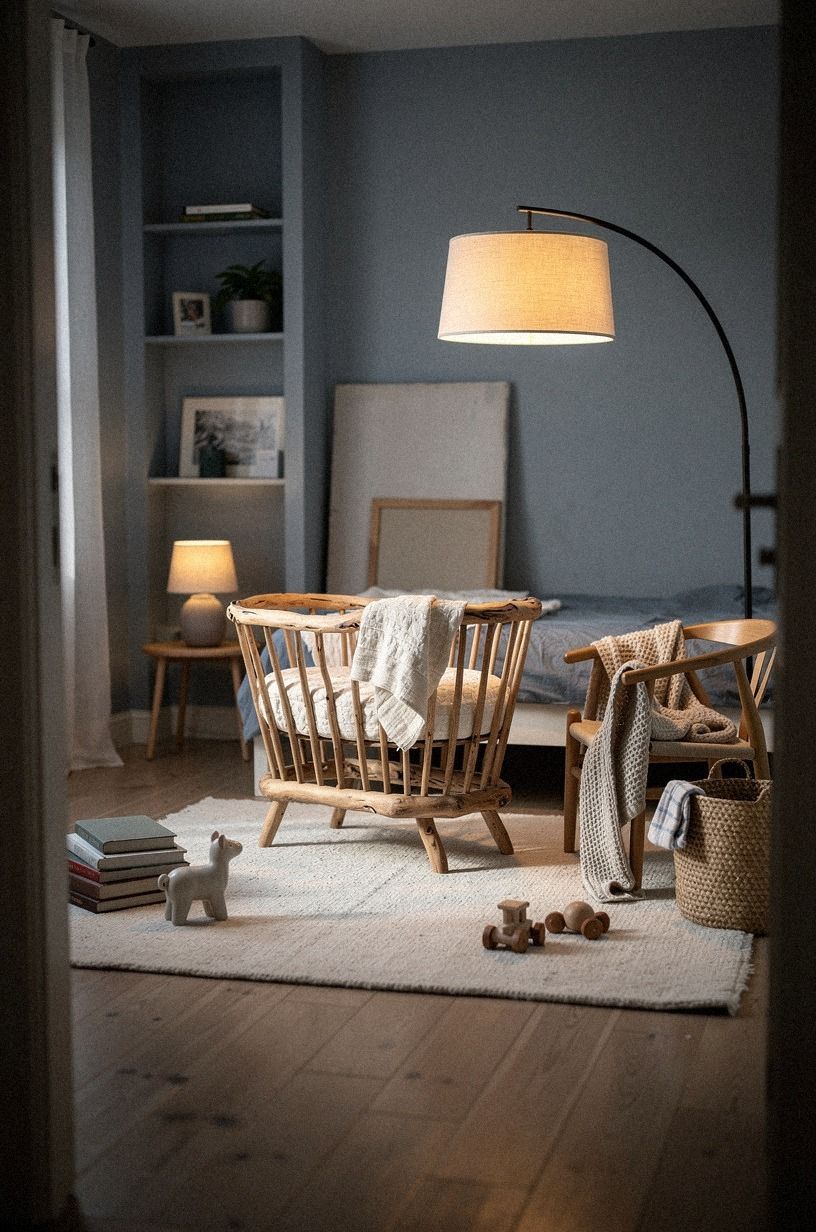
A floating crib doesn’t have to sit tight against the longest wall.
3Paint a Two-Tone Ceiling Instead of the Whole Room
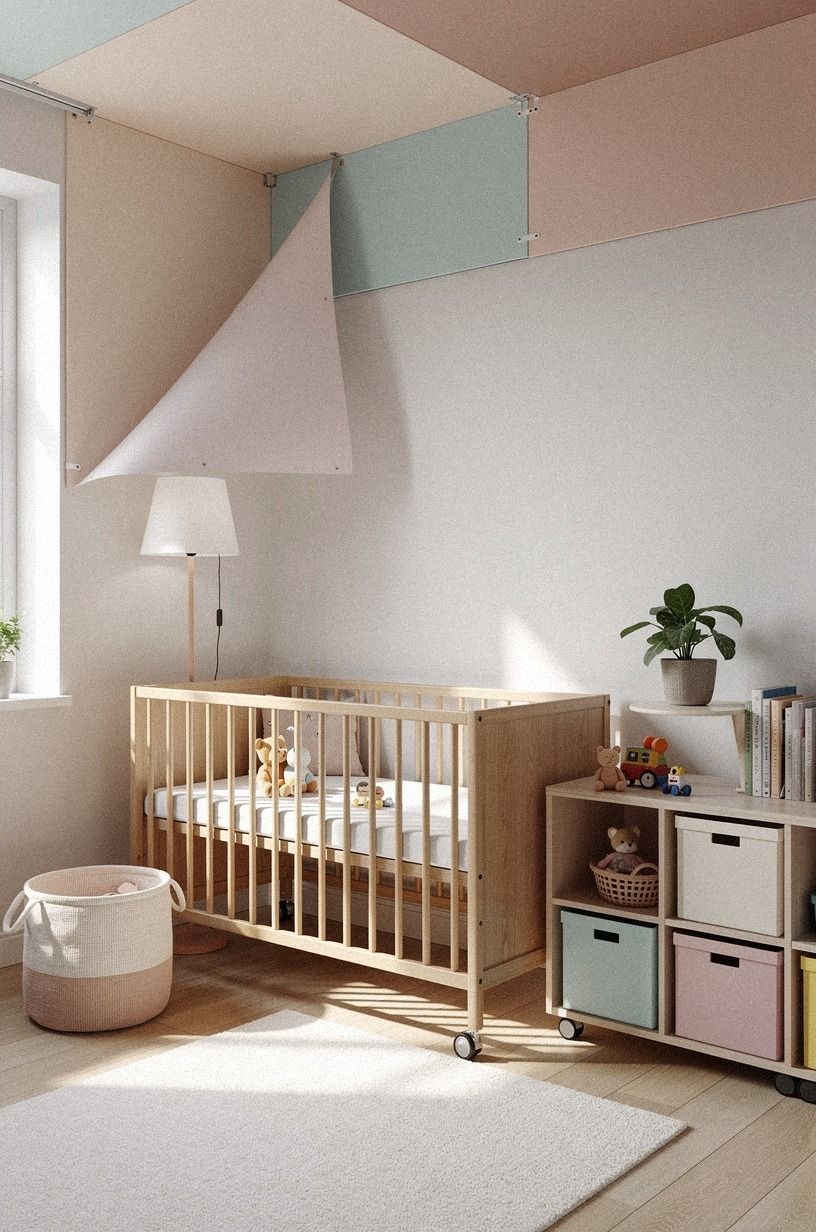
If your lease allows paint, use it where it gives you the most atmosphere with the least work. A painted ceiling band or one removable accent wall can bring color into a nursery without committing to a full-room repaint. A warm clay tone is gentle in changing light, while a soft linen ceiling border keeps the room bright.
You’ll need to check your lease before opening a paint can. If repainting is allowed, use a clean line below the ceiling or around the window wall, then keep the lower portion neutral.
I’d skip a complicated mural. It takes longer, and a simple matte finish usually looks more refined after the furniture moves.
For a temporary version, choose clay-colored linen as inspiration for blush fabric, paper shapes, or removable decals. The color feels warm without turning sugary, and your child’s books and toys will supply plenty of variation.
But don’t paint first and measure later. Your crib, dresser, and blackout curtains will change how the color reads.
Test a small patch, watch it through morning and evening, and keep your sample card before you move. This renter-friendly wallpaper that peels off without a trace guide offers another low-commitment route.
4Hang a Tension-Rod Textile Wall
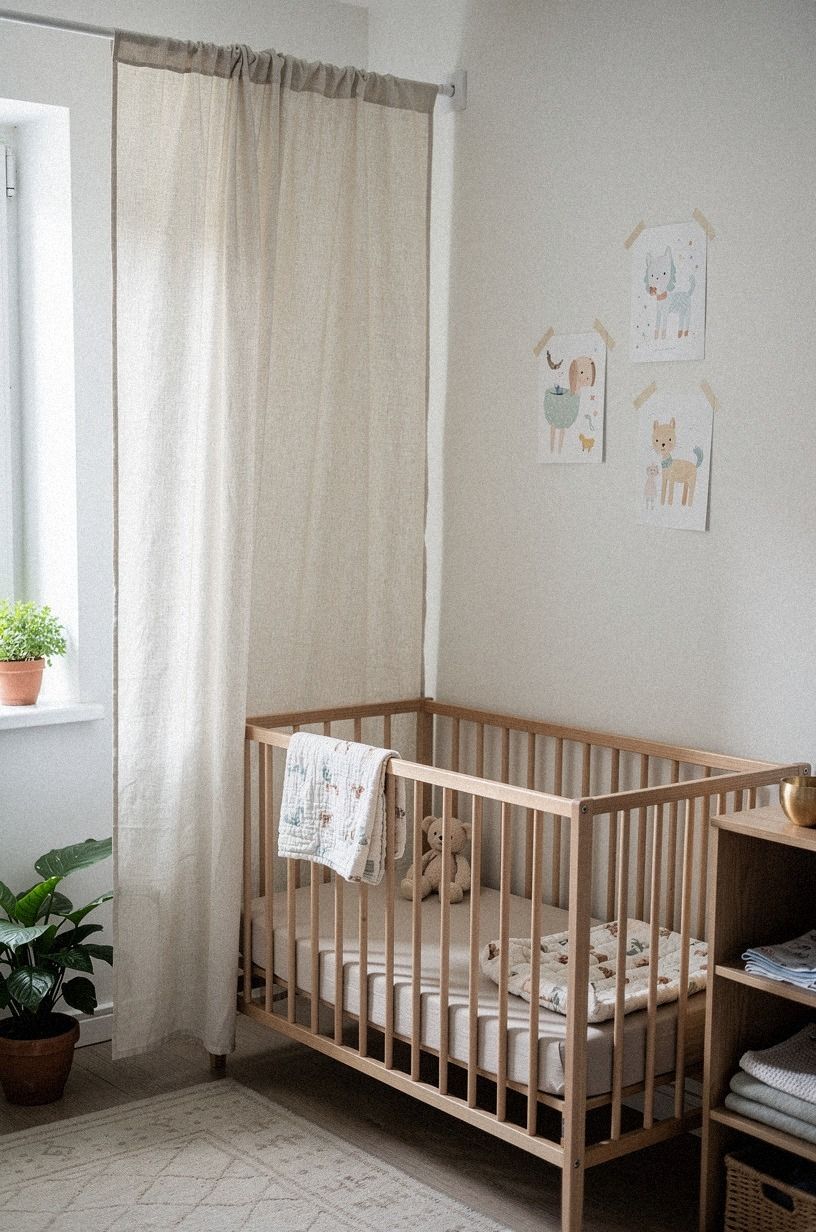
A tension rod can give your nursery the presence of a full feature wall without drilling holes. Hang deep-pile mohair velvet behind the nursing chair or beside the crib, leaving the fabric loose enough to show its texture.
A mix of plum and grey can feel soft and welcoming, while a small rose-gold detail adds warmth. You’ll get a backdrop that packs flat in a moving box.
Choose a textile wider than the furniture beneath it, but don’t cover an outlet, vent, or required safety device. A 48-inch panel can be enough for a small corner. Your room won’t need a giant installation to feel intentional, and a smaller panel is easier to wash and store.
I’d skip glossy polyester here. It catches light sharply and can make a nursery feel temporary in the wrong sense. A nubby mohair velvet looks more enveloping, while rose-gold curtain rings keep the installation warm and simple.
If your first fabric choice feels too quiet, you can swap it without repainting. That flexibility is the whole point.
Use the ideas in our renter-friendly wallpaper ideas that peel off clean article if you want pattern without adhesive anxiety. This setup is gentle, portable, and genuinely useful!
5Build the Three-Height Light Stack
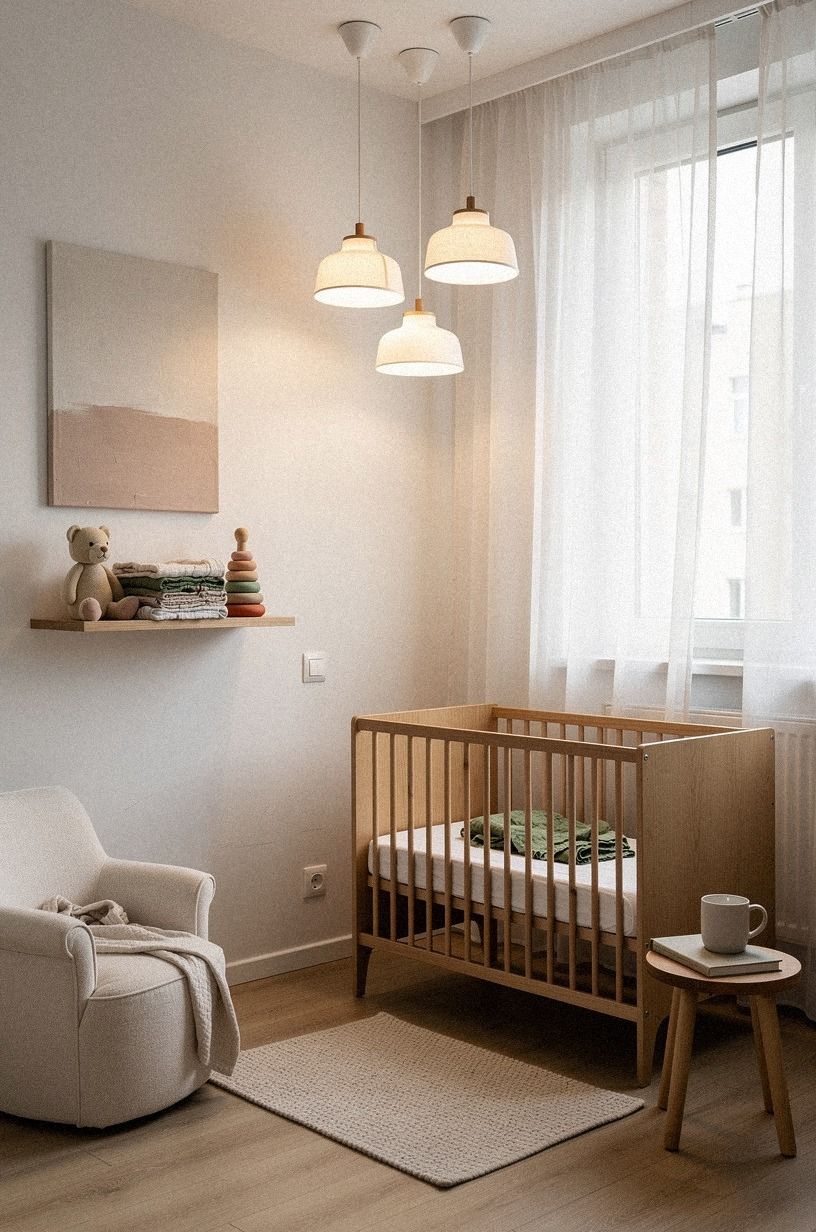
A nursery needs more than one light source.
6Swap a Dresser for a Mobile Changing Station
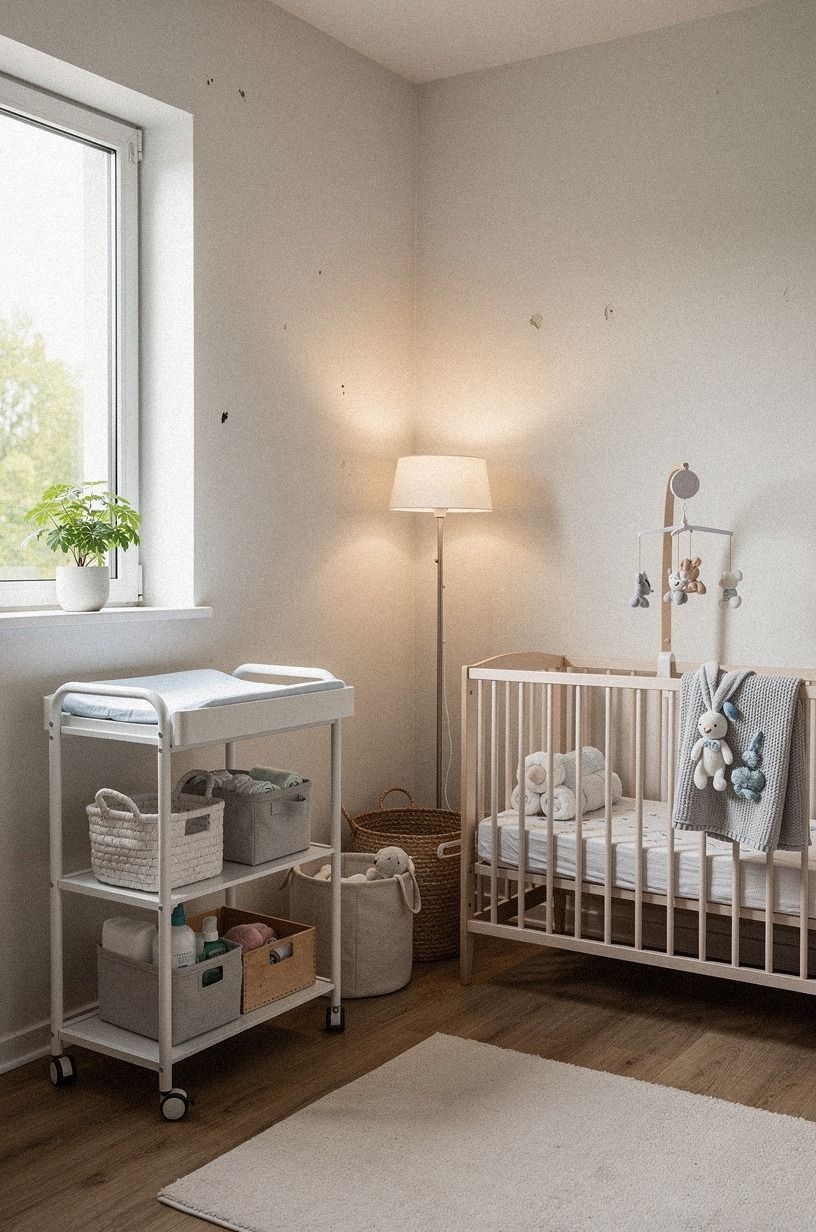
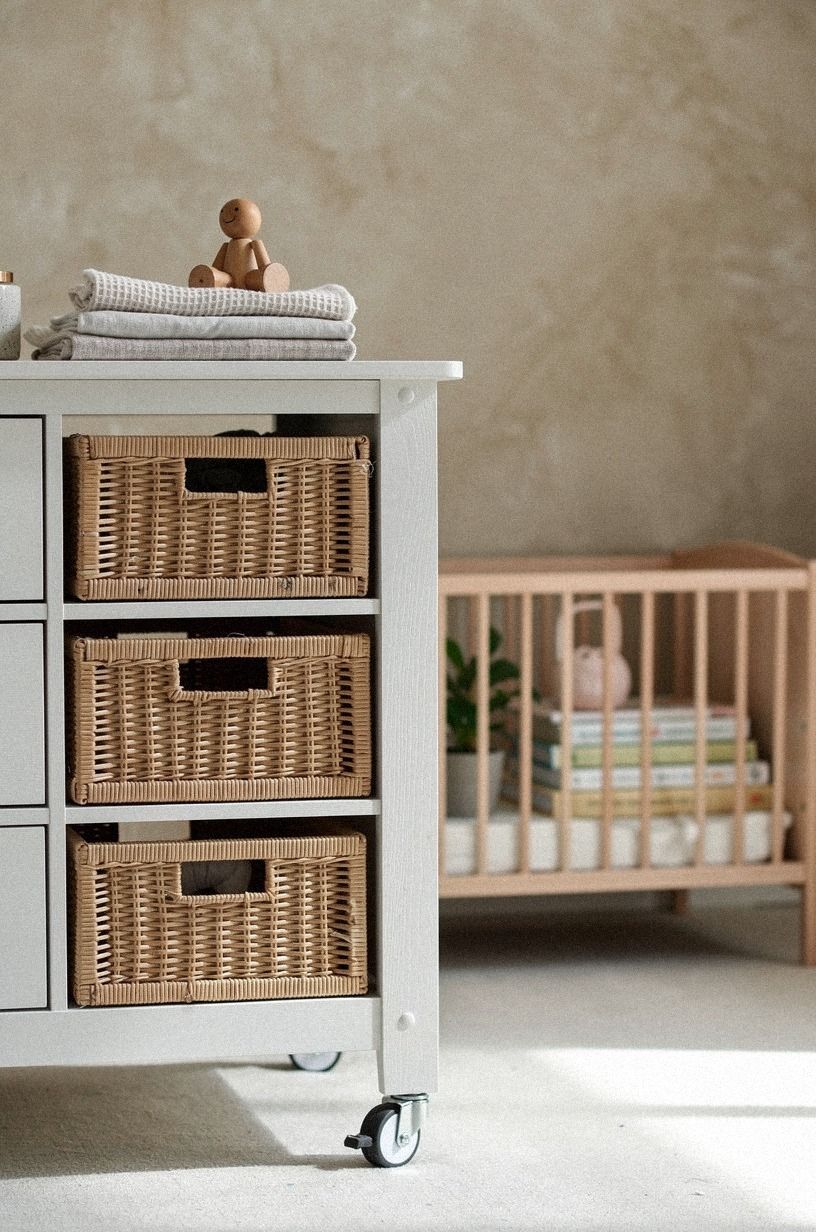
A changing station doesn’t need to be a permanent built-in. Use a stable dresser you already own, add a secured changing pad according to its instructions, and keep daily supplies in a removable cream basket. A dresser made from reclaimed weathered teak brings warmth and can work in many rental bedrooms.
You’ll want the top surface clear enough for safe movement, with diapers, wipes, and one spare outfit in a basket at hand. A second basket below can hold blankets, but don’t overload it until you know how the drawers open around the crib.
I’d spend on stability before finish. A charming vintage dresser can work, but you’ll need to inspect it, anchor it properly, and confirm that the drawers don’t stick. Reclaimed weathered teak can be worth choosing when the piece may later become a bedroom or hallway console.
Here are typical US cost ranges from the brief:
If you’re short on storage, our renter-friendly pantry ideas for kitchens with no storage has useful container logic you can borrow for the nursery. Think in terms of reachable categories, then let the furniture stay visually quiet.
7Frame the Play Rug Before You Add More
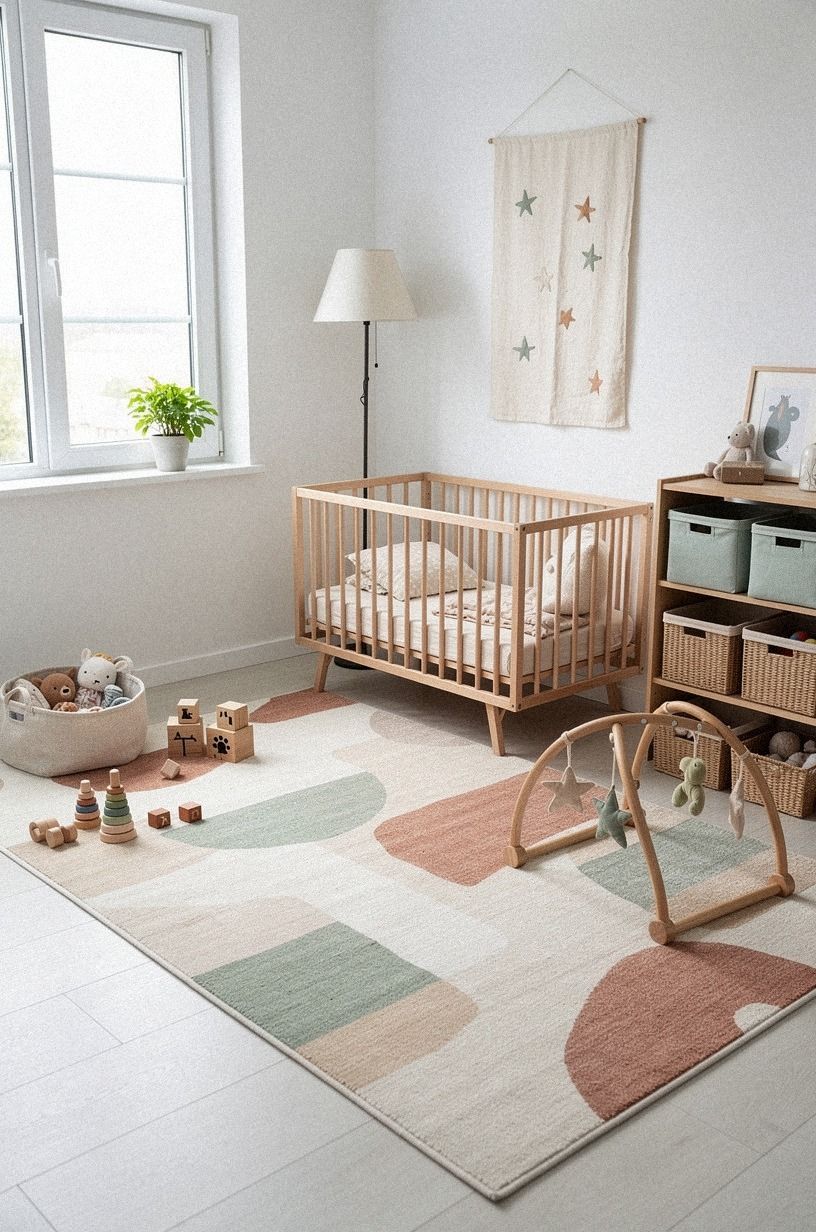
Let the rug set the boundaries of the room before you add baskets, artwork, or a chair. A 5x7-foot washable play rug gives your child a defined floor zone and helps your furniture feel connected. You’ll want at least the front legs of major pieces to touch it, if the room allows.
I’d rather see one correctly sized rug than three tiny mats floating around. Small mats interrupt the floor and create edges that catch under moving feet. A flatwoven rug with forest green and rust accents feels earthy, while washed Belgian linen may suit you better if you want a softer supporting textile.
Your play zone can remain open now and change later. Add a soft basket, a few board books, and one folded blanket, then stop. The room will feel more inviting when your child has space to move, and you won’t be tempted to fill every empty patch.
Measure the door swing before ordering. I’ve watched a rug look generous online and become awkward once the door opened into it. If your bedroom is tight, pair the layout with these renter-friendly patio shade ideas with nothing to build for a useful lesson in working around fixed limits.
8Place Open Shelves at Child Height
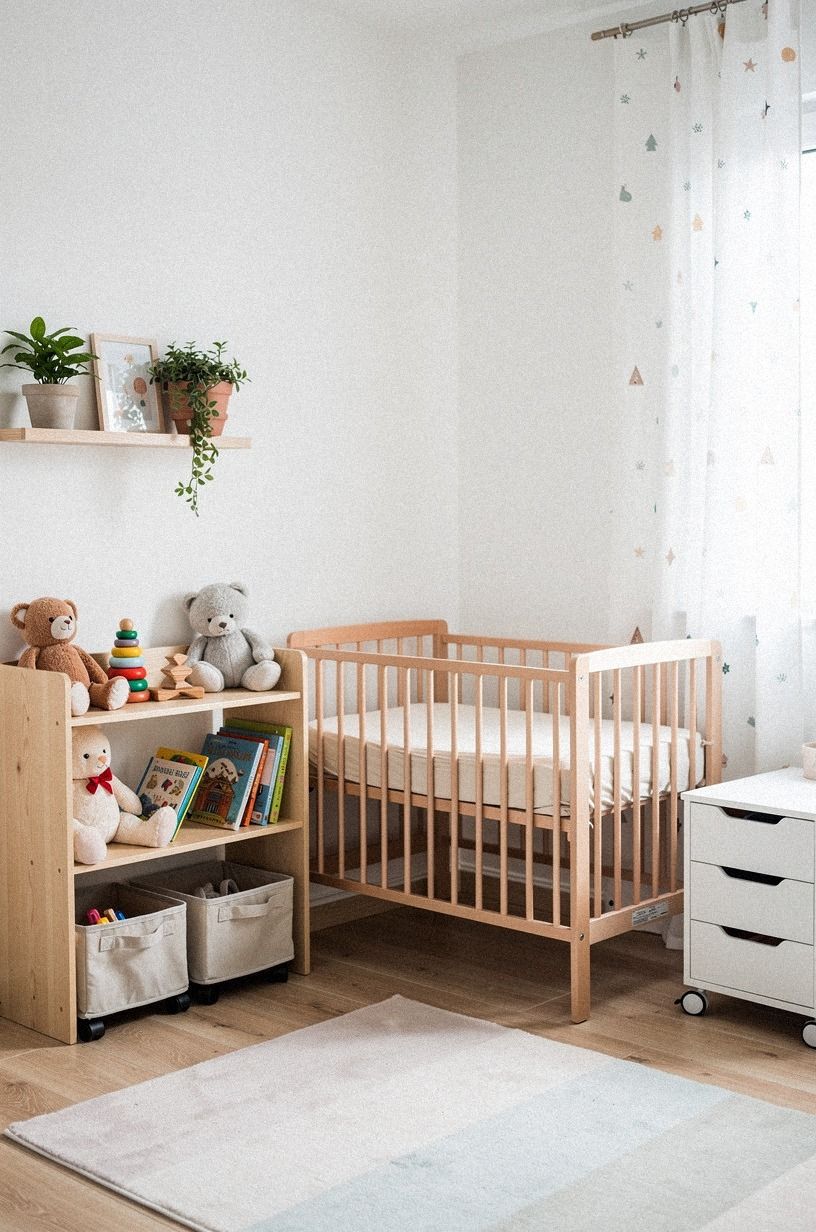
Open storage works best when your child can see what belongs there. Mount or secure shelves so the lowest useful display sits around 36 to 48 inches from the floor, depending on your child’s height and the room’s safety needs. You’ll get a calm, accessible arrangement instead of a tower of hidden bins.
Use one shelf for books, one for soft toys, and one for rotating objects. Cerused white oak floating shelves bring warmth without making the room feel heavy, while dusty rose, charcoal, and small brass details can keep the arrangement lively. You’ll need to install them according to your landlord’s rules.
If holes aren’t allowed, use a freestanding shelf that can be anchored safely.
I’d skip deep shelves. They invite clutter and make small toys disappear behind larger ones. A shallow ledge keeps your selection visible, and your child can help return books without dragging everything down.
Medicines, creams, cords, and anything small enough to be unsafe should stay out of reach. Keep the display portion simple, then store the rest in a labeled canvas bin. You can borrow the visual discipline from our renter-friendly organization tip for busy renters without copying a rigid system.
9Mix One Wood Tone with One Portable Finish
A nursery can feel warm without matching every piece.
10Choose Removable Pattern over Permanent Murals
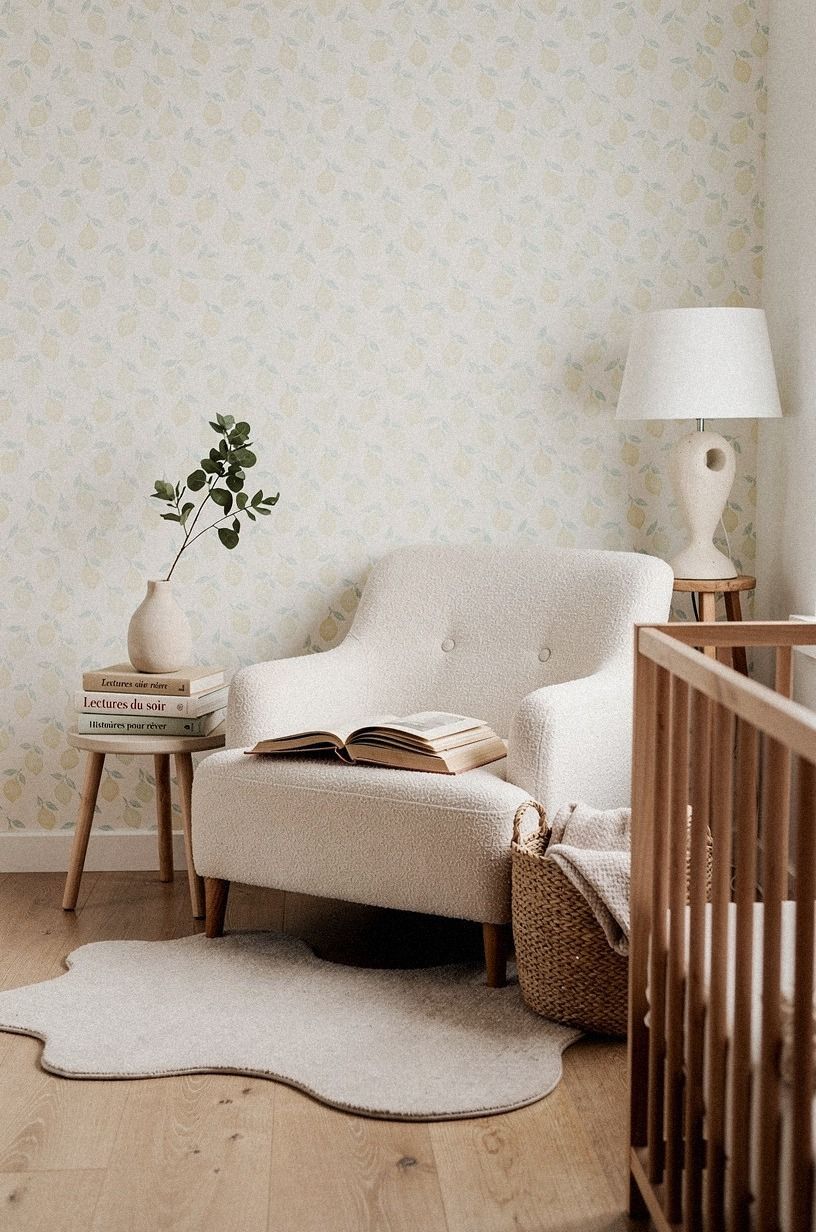
Removable pattern gives you the drama of wallpaper without forcing your next home to accept the same decision. Use peel-and-stick panels on one narrow wall, inside a bookcase, or behind a changing station. Hand-painted botanical decals can make a rental nursery feel charming and personal in an afternoon.
You’ll want to test the adhesive in an unseen area before committing. Paint quality, humidity, and old repairs can change how a product behaves. If you’re unsure, place the pattern on a smooth removable board and lean it behind the dresser instead.
I’d choose a low-contrast print over a busy nursery mural. A soft leaf, tiny star, or small geometric shape gives you visual interest without competing with books and toys. Your child’s things will add enough movement as the room grows.
For a richer palette, use midnight blue, copper, and ivory rather than several bright colors. A nearby book-matched walnut piece can add depth without making the wall feel busy.
Removable vinyl decals are easy to pack flat, and you can save extras for a later patch. Before you order, read our renter-friendly wallpaper that peels off without a trace guide and inspect the wall first.
You can also compare the finish with these renter-friendly wallpaper ideas that peel off clean before choosing a pattern. A small dose usually has more staying power than a wall covered from edge to edge!
11Can a Small Nursery Feel Open After the Crib Arrives?
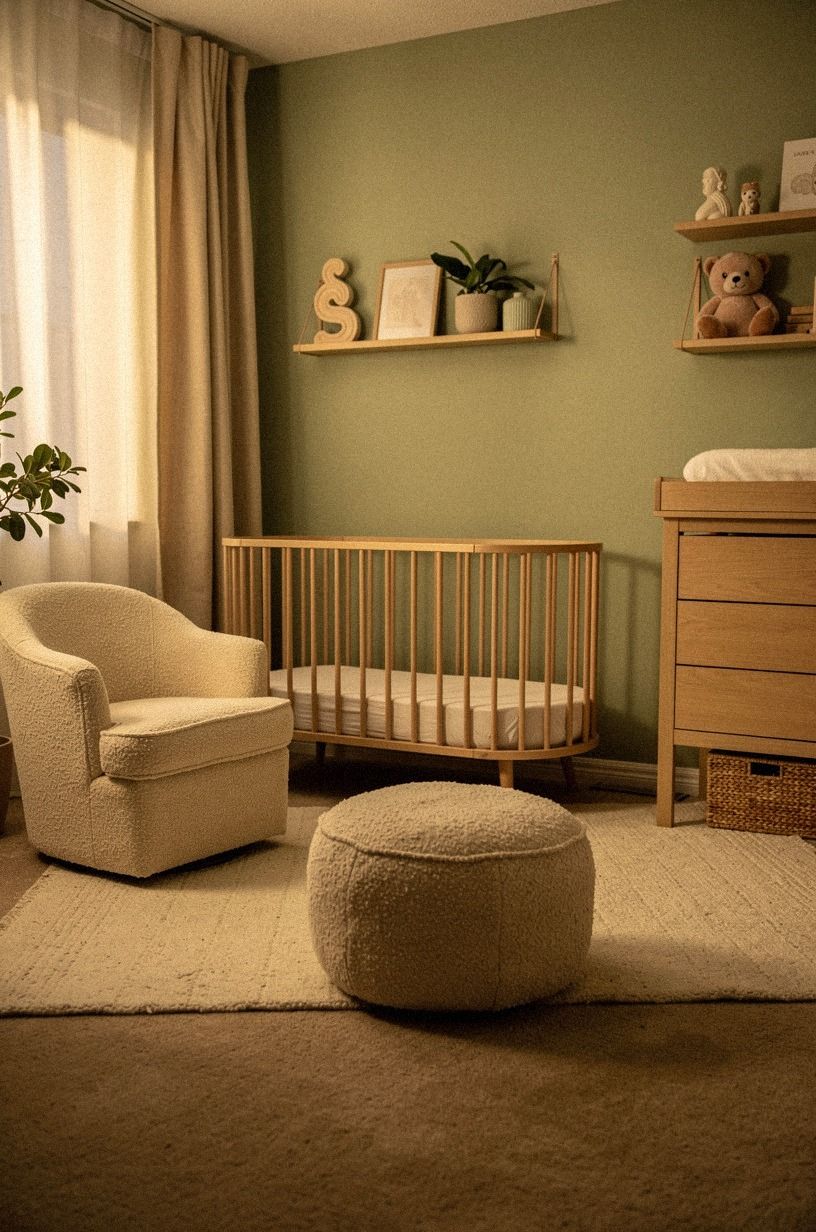
Yes, if you protect the sightline from the doorway to the window. Keep the tallest piece on the least visible wall, use furniture with legs, and leave one corner visually quiet. Your nursery will feel more peaceful because the room’s footprint remains readable.
A West Elm Mid-Century mini dresser has a lighter silhouette than a bulky cabinet, though you’ll want to compare its depth with your available walkway. The goal isn’t a designer label. It’s a piece that leaves enough floor visible for you to move comfortably at night.
Try placing the chair near natural light and the crib away from the busiest path. I’ve found that a lightweight chair makes a small room easier to rearrange when the nursery’s needs change. You’ll appreciate that extra inch of breathing room every time you carry a sleeping baby.
Don’t sacrifice safety for an airy look. Secure unstable furniture, keep controlled cords away from the crib, and follow the crib’s instructions.
A serene nursery is still a working room, and your layout needs to support your tired self first. For more small-space thinking, see our white bedroom sleep ideas.
12Pack a Move-Out Kit Before You Style
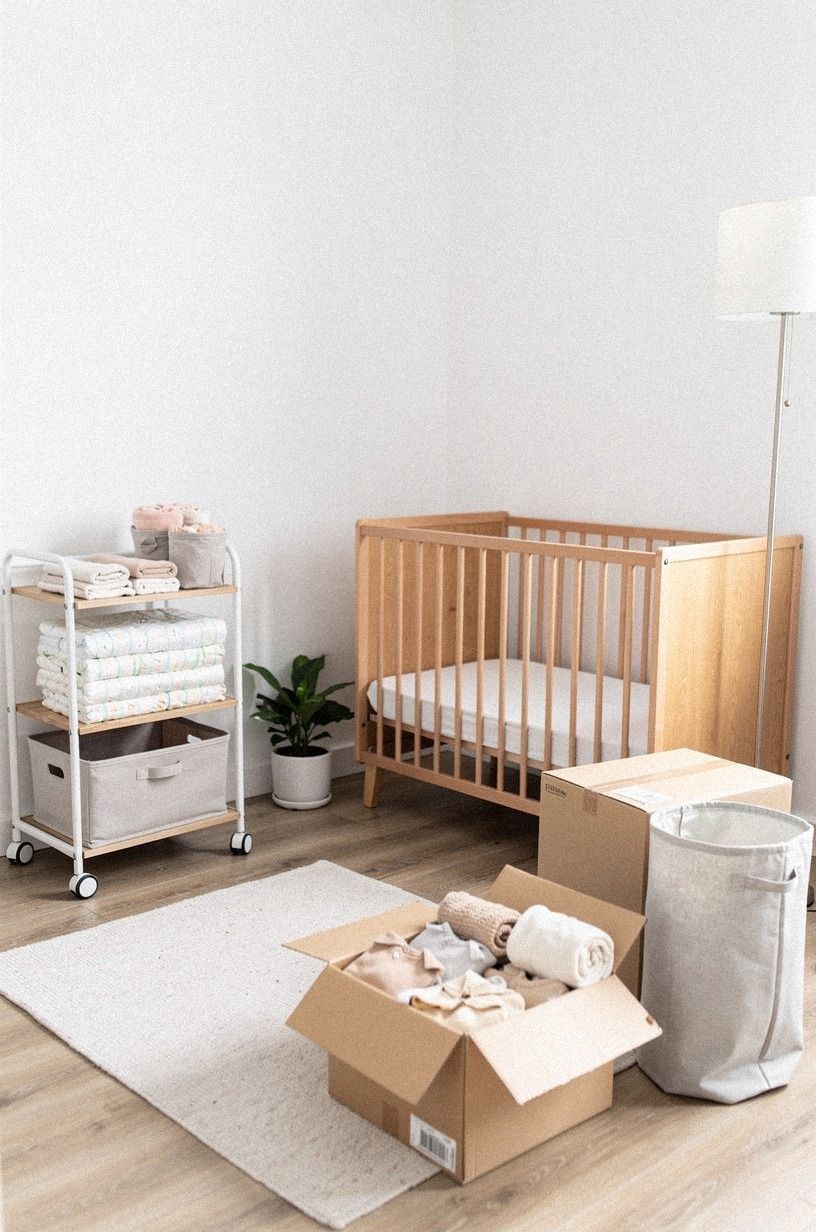
The easiest nursery to move is the one you’ve already organized for moving. Keep removable decals, curtain rings, unlacquered brass hardware that develops patina, touch-up supplies, and a small plastic scraper together in one labeled box. You’ll thank yourself when the lease ends and your attention is somewhere else.
Your canvas storage cubes can hold the portable pieces that don’t belong in daily use. Roll fabric instead of folding it tightly, keep rugs clean and dry, and save the original instructions for any furniture you may need to disassemble. A little preparation keeps your next nursery from starting in chaos.
Here are the typical US project tiers from the brief:
I’d choose the budget tier when you’re renting for a short stay. It can still feel bold, modern, and comforting if you spend on the pieces you touch every day. Our renter-friendly backsplash ideas you can peel off later can help you think through which surfaces should travel with you.
The renter-friendly organization tip for busy renters is useful here too. Give every portable item a home before move-out arrives, and packing becomes a routine instead of a crisis.
The Rental Rule I’d Keep
I used to think a nursery needed permanent color, custom storage, and one dramatic focal wall to feel finished. Then I moved a crib, dresser, and rug into a smaller room and watched the whole plan collapse. The pieces that survived were the useful ones: a washable rug, a soft lamp, a basket that could change jobs, and fabric that made the room feel warm without asking permission from the walls.
That experience changed how I spend. I’ll invest in a stable dresser and a good rug before I buy decorative objects.
Solid pine furniture may show more wear than a glossy finish, but it can be repaired, painted, or reused in another room. You’re not decorating for a photograph.
You’re building a place that has to work during interrupted sleep and quick moves.
I also think renters should stop treating temporary design as lesser design. Clay-colored linen on a removable panel can feel more considered than a permanent beige wall. A tension rod, a carefully sized textile, and one portable light can give you layering, softness, and a clear point of view without leaving a repair bill behind.
The decision comes down to friction. If you’ll resent removing it, skip it.
If you can pack it, wash it, reuse it, or hand it to the next room, it earns its place. Your nursery can be gentle and practical at once.
That’s the part I’d keep, even in a house I owned.
For another low-commitment bedroom approach, save these renter-friendly non-toxic bedroom ideas before you shop. A portable room should feel like a real room, with fewer things that trap you.
What People Always Want to Know
What is the best renter friendly nursery setup for a small bedroom?
The best setup uses a floating crib, a 5x7-foot washable rug, and a narrow storage piece such as an IKEA KALLAX. You’ll preserve a clear walkway, keep supplies visible, and create a calming floor zone without filling every corner.
Where can I buy renter friendly nursery pieces on a budget?
You can look at IKEA, Target, Wayfair, Facebook Marketplace, and local thrift stores. Choose portable basics such as cotton bedding, baskets, and a small lamp. You won’t need affiliate links or special orders to create a warm nursery with reusable pieces.
How much does a renter friendly nursery makeover cost?
A budget makeover typically falls within the $150 to $600 US range when you reuse furniture and add bedding, decals, bins, and paint. Free changes include rearranging the crib, editing clutter, washing textiles, and moving decor from another room.
Can I create a renter friendly nursery on a budget?
Yes, and you can start with three low-cost moves: reuse a dresser, make a floor basket from what you own, and use removable fabric instead of wallpaper. Peel-and-stick decals can add pattern, while a clean layout costs nothing.
Is a renter friendly nursery worth it in a small space?
Yes, because a small room makes editing easier. Keep the crib, chair, and storage on one clear path, then use a lightweight play rug to define the center. You’ll gain more comfort from open floor than from another decorative object.
Is a renter friendly nursery a good idea for a rental?
Yes. Use tension rods, removable decals, freestanding storage, and washable textiles instead of permanent installations. You’ll still get color and softness, and you can remove most pieces during move-out without repainting or patching a wall.
Where I’d Start First
If I had to pick one, I’d start with the tension-rod textile wall. It gives you pattern and softness without holes, residue, or a future patch job. Save these renter-friendly wall ideas for later, then measure the next wall before you buy fabric.