
 by
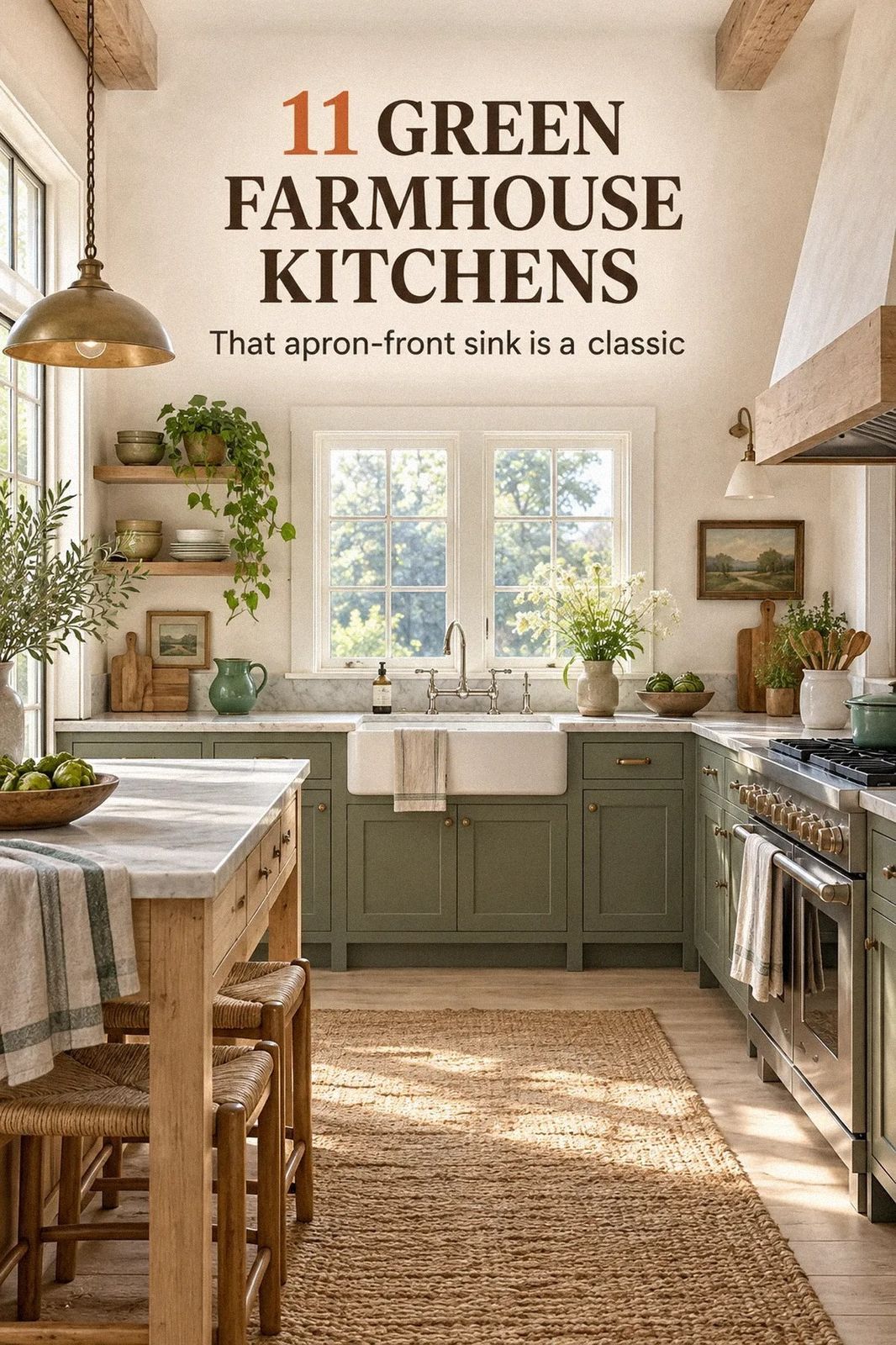
Green farmhouse kitchen ideas can start with one painted cabinet run, not a full remodel. I once chose a green that looked gentle on a sample card and went swampy by afternoon. I’ve learned to test color beside your counter, floor, and window first. These ideas keep your kitchen earthy, bright, and lived-in without making it feel themed.
- Paint the Lower Cabinets With the Two-Tone Cabinet Rule
- Layer Aged Brass Over Cerused Oak
- Build the Three-Height Light Stack
- Frame the Sink With a White Oak Shelf
- Swap One Cabinet Door for Cane Webbing
- Mix Wood Tones With the Two-Wood Rule
- Lay Down a Runner That Can Take Real Life
- Can a Dark Green Kitchen Stay Airy?
- Paint the Backsplash With the 18-Inch Rule
- Choose Green Kitchen Cabinets Over White
- Hang a Herb Rail Beside the Prep Zone
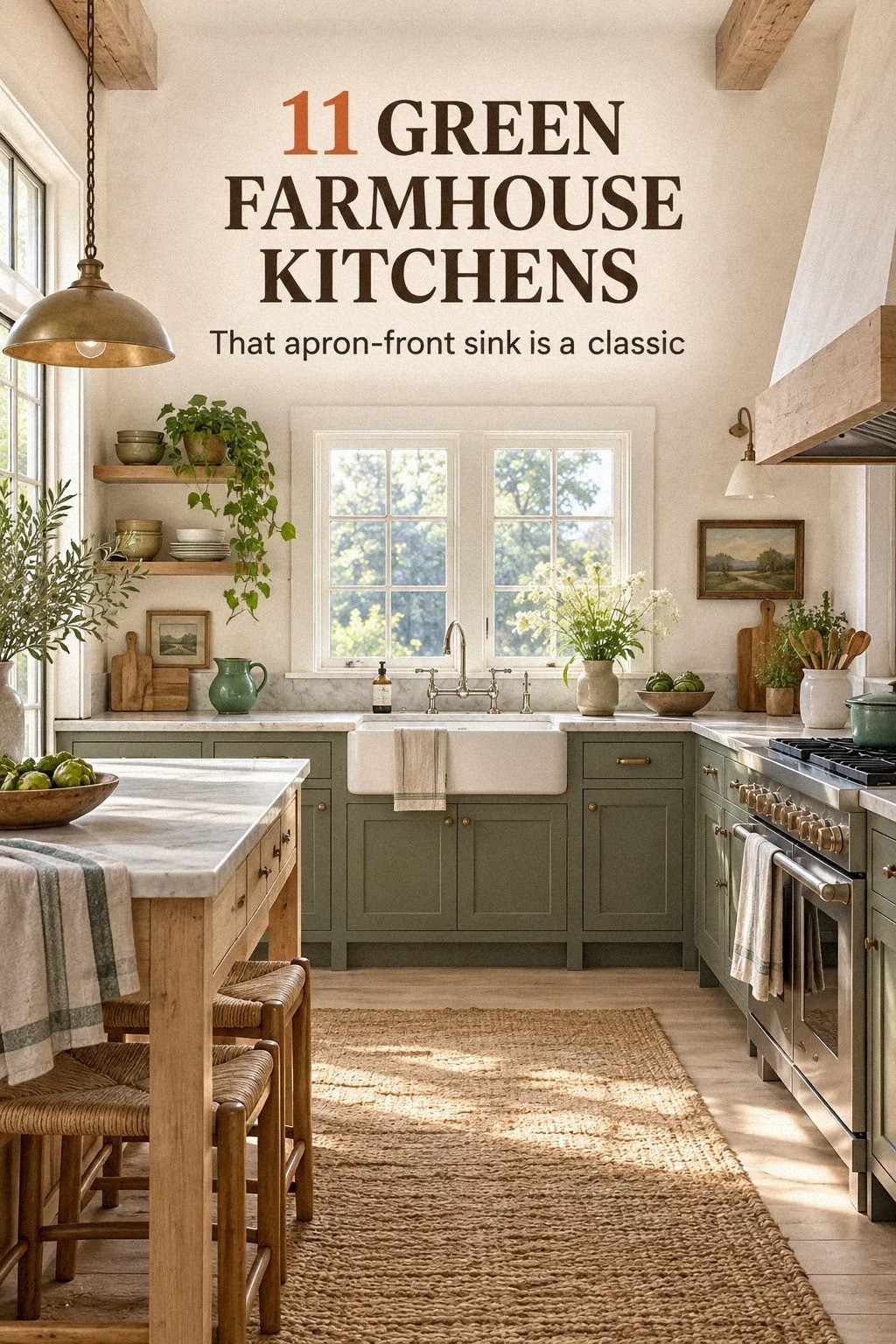
1Paint the Lower Cabinets With the Two-Tone Cabinet Rule
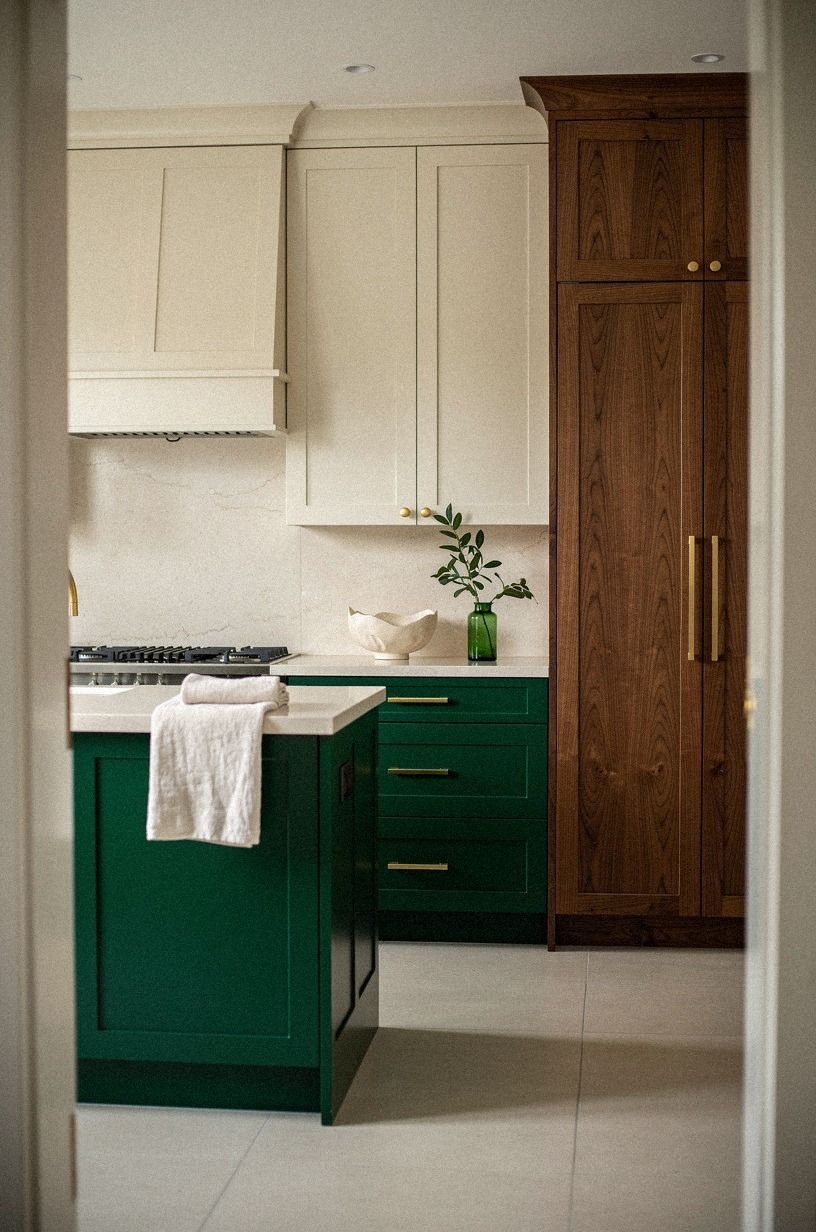
Painting only your lower cabinets is the easiest way to bring a green kitchen into a farmhouse room without losing light overhead. Sherwin-Williams Evergreen Fog SW 9130 works especially well beside warm white walls because it has enough gray to feel settled. It won’t make your kitchen look heavy.
Tape a sample beside the dishwasher and watch it from breakfast through dinner. Morning light may pull out its blue side, while late afternoon light can make it look warmer.
Your upper cabinets can stay Benjamin Moore White Dove OC-17, especially if your room has a north-facing window. I’d skip a bright white with blue undertones. It makes earthy green look muddy and turns the whole room chilly.
And don’t stop at paint color. Your cabinet material matters just as much, so consider book-matched walnut if you want warmth that changes over time. A slightly imperfect grain looks more convincing than a shiny matching set.
For a smaller kitchen, keep the wall color light and repeat green in one runner or a framed botanical print. You’ll get the farmhouse mood without boxing your sightline in. My related sage green cottage kitchen ideas show how that balance works in tighter rooms.
Start With the Room’s Undertones
Before choosing a green, identify the undertones already in your kitchen. A pinkish oak floor, creamy counter, or red brick backsplash will react differently from cool gray tile.
Hold paint cards beside the largest fixed surfaces. Warm oak flooring usually welcomes olive, moss, and muted sage. A blue-gray counter may prefer eucalyptus or a softer green with a little black mixed in.
I wouldn’t choose a color because it looks beautiful in a styled photograph. Your kitchen has its own daylight, bulbs, and shadows. A shade that looks calm online may become surprisingly bright beside stainless steel.
The safest approach is to test two or three large painted boards. Move them around the room for at least one full day. You’ll see which green stays balanced near the range, sink, and dining area.
2Layer Aged Brass Over Cerused Oak
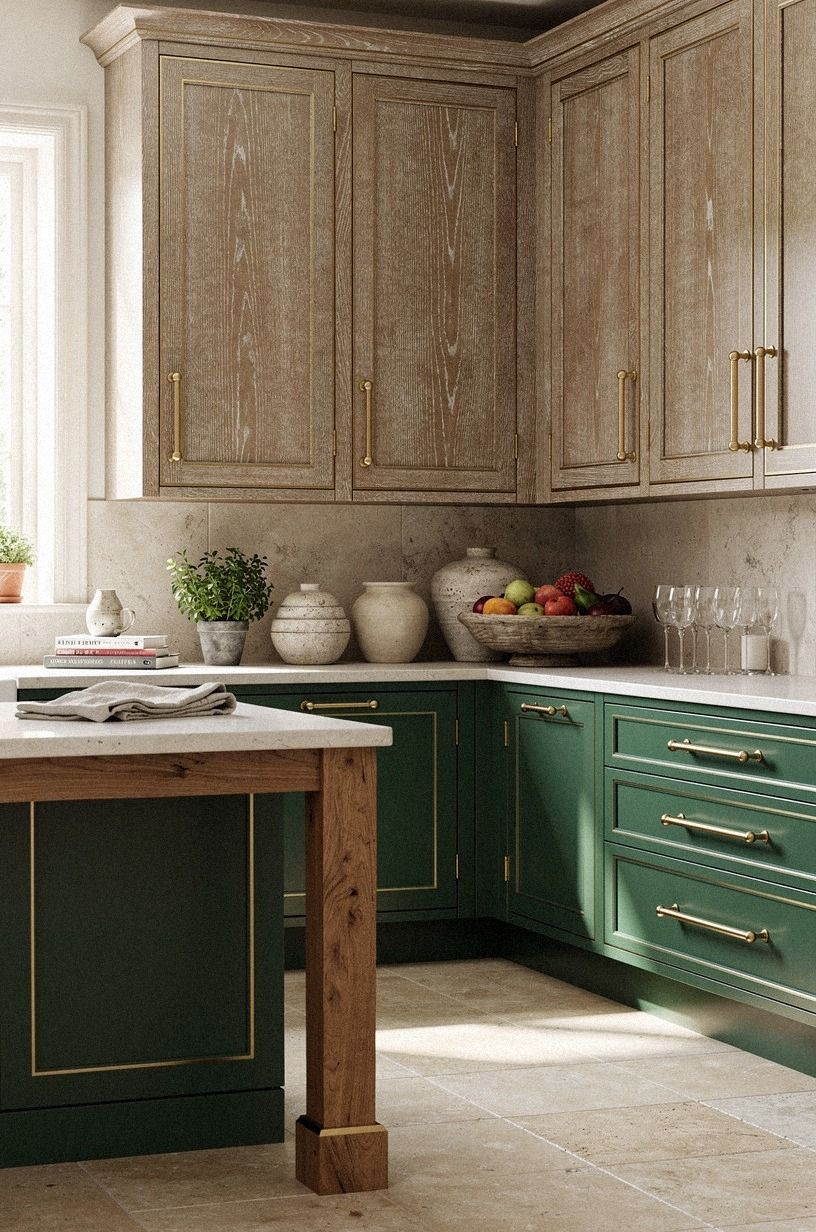
Green kitchen cabinets need warm travertine beside them so the room feels dry and tactile.
What Should Stay White?
White is useful when it creates breathing room. It doesn’t need to cover every cabinet, wall, or accessory.
Keep the ceiling and trim light if your kitchen has limited daylight. Soft white trim makes green cabinetry feel intentional while keeping the edges of the room visually quiet.
You can also use white in practical places. A ceramic backsplash, painted upper cabinet, or linen cafe curtain can break up darker color below.
I’d avoid adding white objects simply to make the room look brighter. A collection of pale accessories can feel cluttered just as quickly as a colorful one. Choose pieces you’ll actually use.
3Build the Three-Height Light Stack
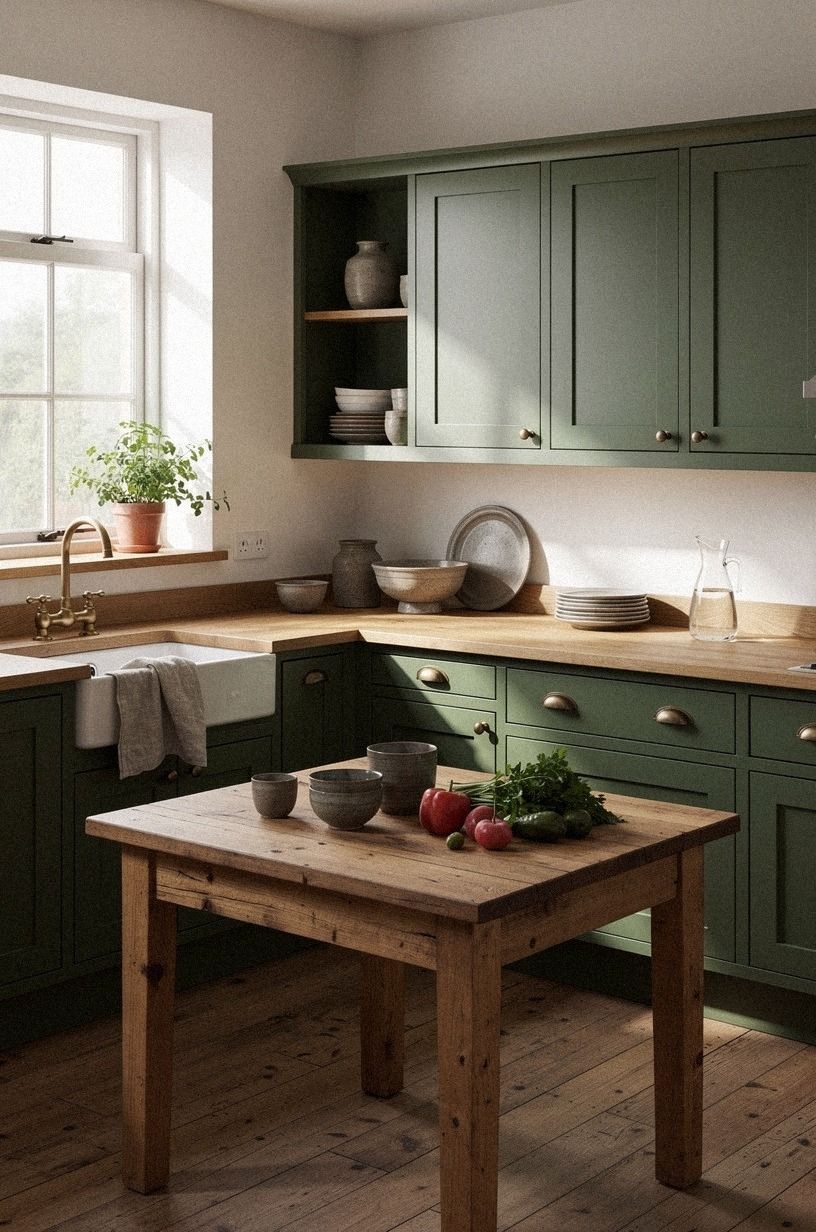
A warm farmhouse kitchen shouldn’t depend on one ceiling fixture. The Three-Height Light Stack gives you low, middle, and high points of light, so your room feels inviting when the overhead light is off.
Start with a ceiling fixture, add pendants above an island, and finish with a small lamp or sconce near the sink. This arrangement creates useful pools of light instead of one harsh wash.
Your counter height is usually 36 inches, so task lighting should help you see chopping and cleanup without shining directly into your eyes. Unlacquered brass pendants add warmth and look more relaxed than exposed clear globes beside dusty rose paint.
I’ve tried the all-over recessed-light approach, and it made my kitchen feel like a showroom after dark. You won’t get that gentle pool of light around your cutting board or breakfast chair.
Warm 2700K bulbs are the better choice when you want your wood and dusty rose paint to stay rich at night. If the room already feels yellow, choose a neutral warm bulb instead of adding more fixtures.
If you’re renting, use a plug-in linen-shade wall sconce beside a hutch or open shelf. Your cord can run behind furniture, and you’ll still get the layered effect. Save the idea alongside these sage green farmhouse kitchen ideas for a fuller color plan.
4Frame the Sink With a White Oak Shelf
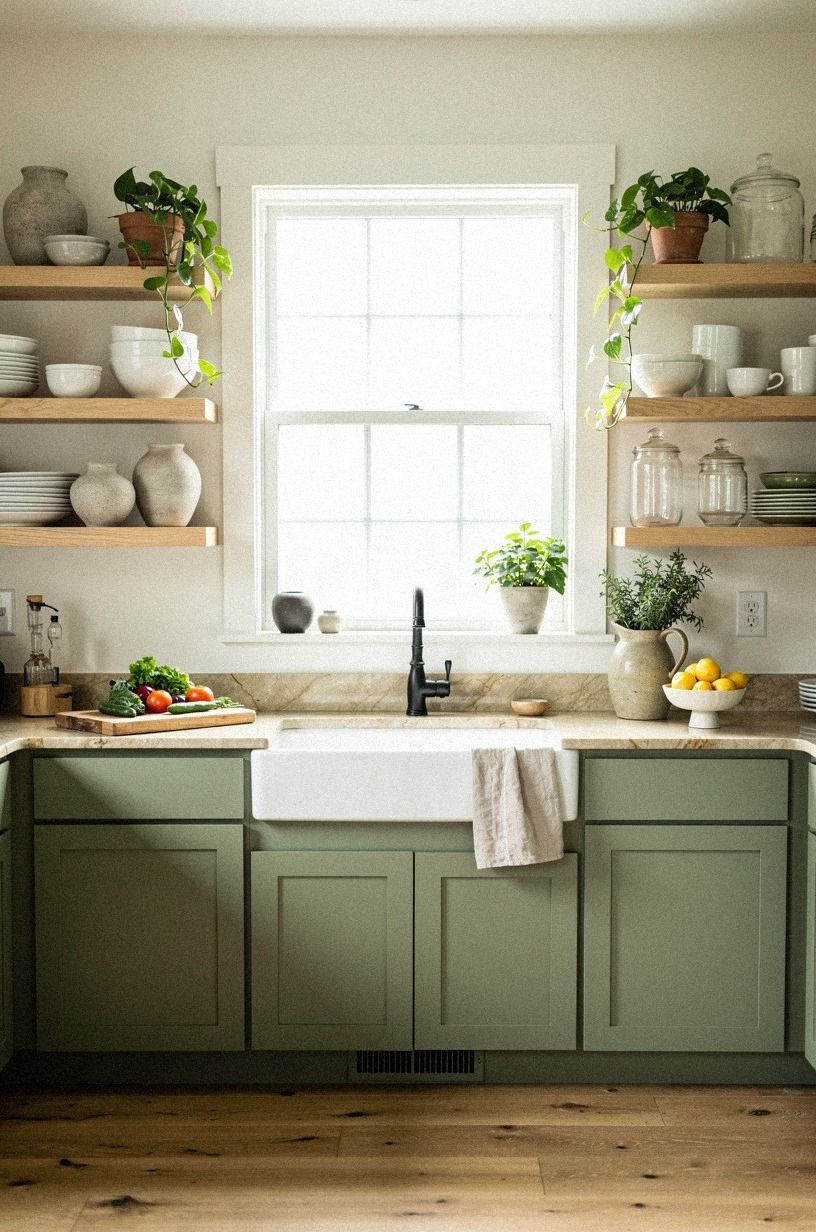
The wall above your sink is valuable because you look at it every day. A narrow floating shelf set against oversized-chip terrazzo gives you storage and a warm horizontal line without covering the room in upper cabinets.
Keep the shelf shallow enough that your head won’t meet it when you lean over the basin. Around eight to ten inches deep is often plenty for bowls, mugs, and a small plant.
Style it with useful pieces first: a ceramic pitcher, a small stack of bowls, and one trailing plant. Hand-thrown stoneware looks better here than a row of decorative objects because you can reach for it while cooking.
Your shelf should feel used, not protected. Leave some empty space between pieces so the terrazzo remains visible.
I’d skip a deep shelf loaded with jars. It collects grease near the range and makes a small green kitchen look crowded. One open section often does more than six tightly packed accessories.
For a budget version, use a simple board with brackets and keep the finish matte. If you’re planning a larger farmhouse update, my guide to rustic farmhouse kitchen ideas has more weathered material combinations.
5Swap One Cabinet Door for Cane Webbing
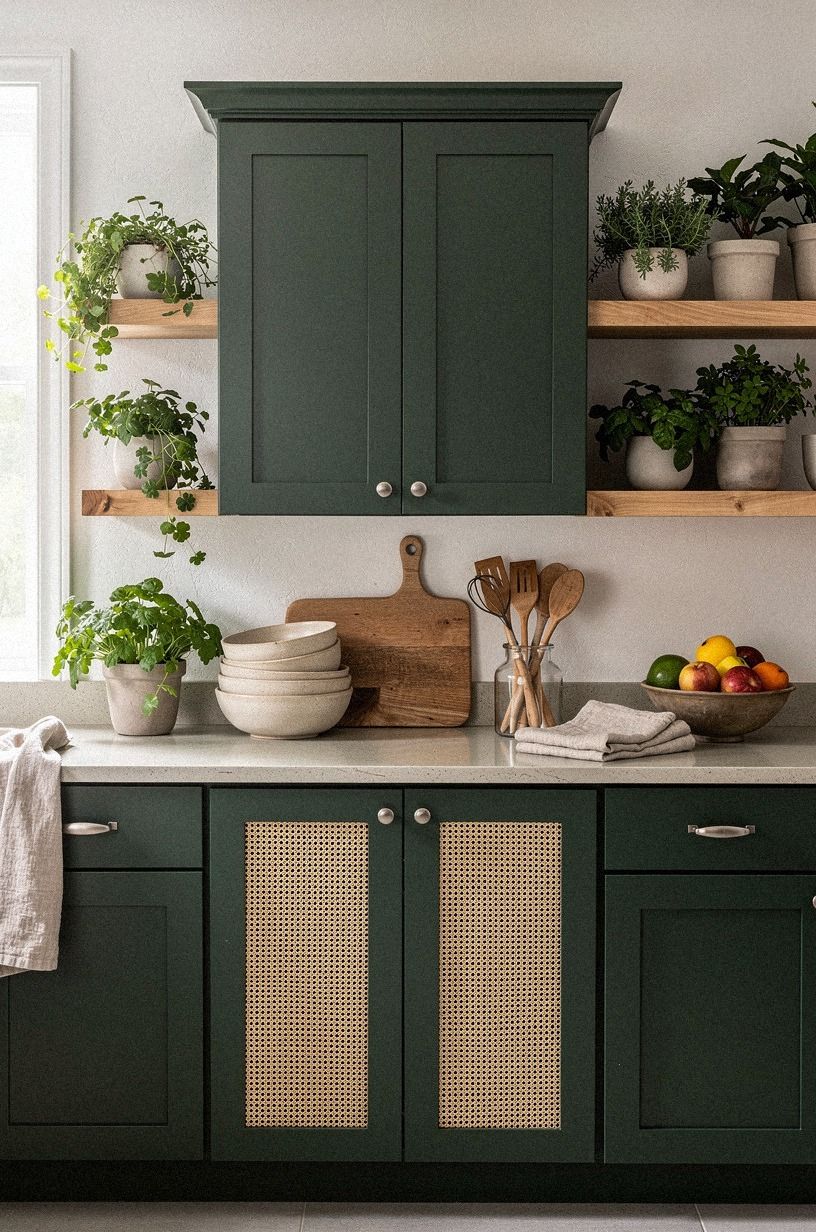
If your kitchen has a solid bank of cabinets, replacing one or two doors with hand-applied Venetian plaster creates a lighter farmhouse detail. You’ll see the texture across the surface without making the area look busy.
Use the swap on a cabinet holding linens, serving bowls, or cookbooks. Ivory linen napkins and pale stoneware will soften the midnight-blue and copper palette without overwhelming the plaster.
If you have glassware there, keep the colors simple so the textured surface remains the main detail. Venetian plaster already has plenty of visual interest.
But don’t use plaster beside every wood tone in the room. I’d choose either plaster with walnut or plaster with painted cabinets, not plaster, walnut, and rattan all at once. Too many warm textures can make your kitchen feel brown instead of earthy.
You can buy a replacement door or modify an existing frame if you’re comfortable measuring carefully. Your opening needs to be square, and you’ll want to keep the original hinges.
For a narrow layout, these farmhouse galley kitchen ideas show how one textured door can keep a walkway feeling open.
6Mix Wood Tones With the Two-Wood Rule
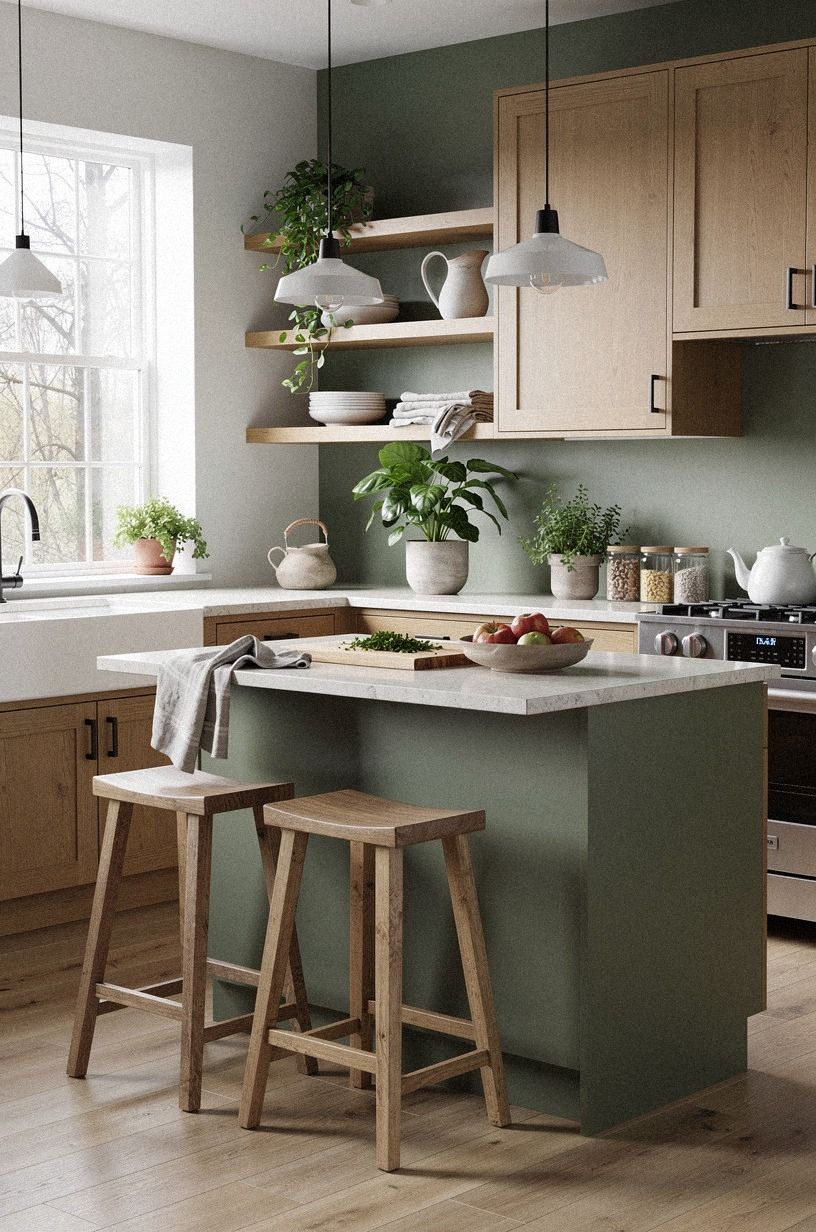
The Two-Wood Rule keeps green farmhouse kitchens from becoming visually noisy.
Give the Green a Reason to Repeat
A single green cabinet run can look disconnected if the color appears nowhere else. Repeat it once or twice, but keep the echoes small.
A shagreen accent, framed botanical print, or painted stool can carry the color across the room. You don’t need matching green dishes on every shelf.
I like repeating the paint in an unexpected place, such as the back of a pantry door or the base of a small island. You’ll notice it occasionally without feeling surrounded.
The strongest repetition usually happens through texture rather than exact color. A leaf pattern, olive branch, or muted ceramic can support the palette without looking coordinated by force.
7Lay Down a Runner That Can Take Real Life
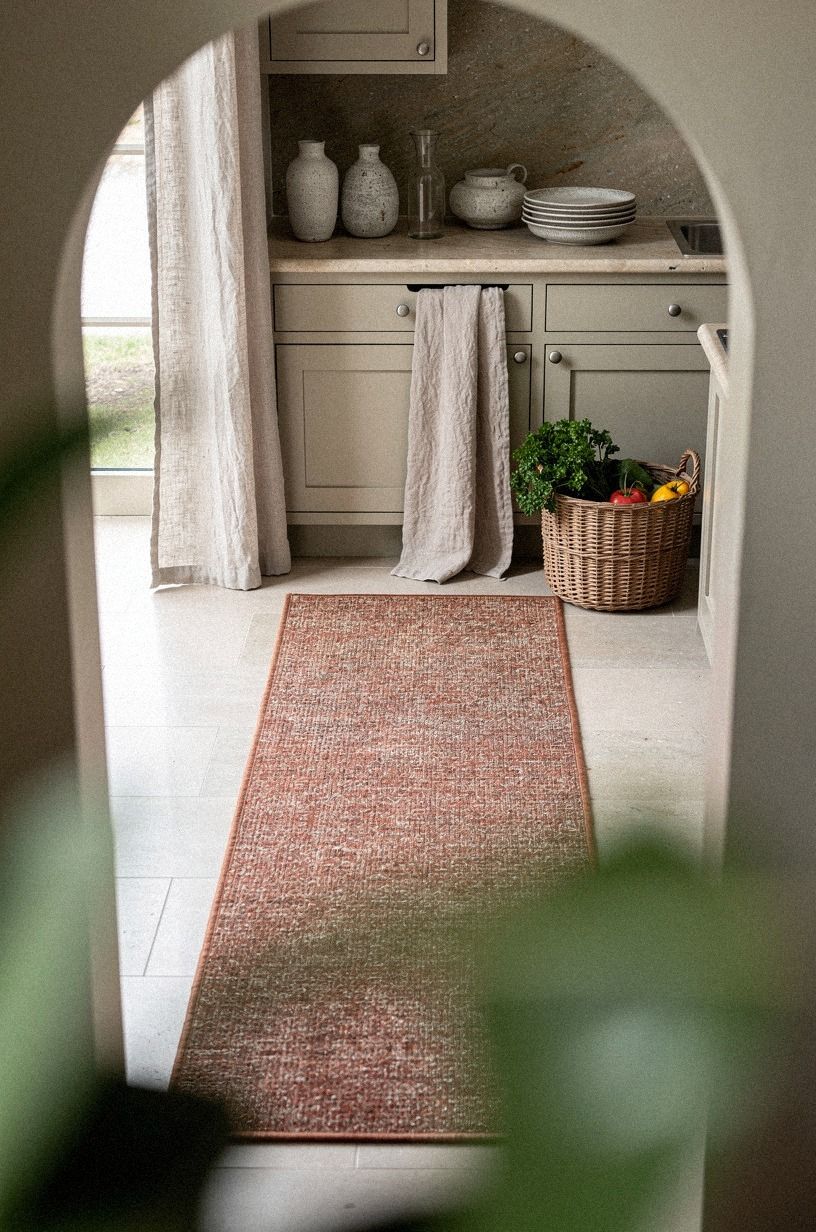
A washable runner gives your kitchen a soft path and breaks up hard flooring. Choose a washed Belgian linen runner with rust, cream, olive, or faded blue, then place it where you stand most often.
You’ll feel the difference at the sink, especially during long prep sessions. A runner also makes a long galley kitchen feel less like a passageway.
Your runner shouldn’t stop right at the cabinet edge. Let it extend beyond your main work zone so the kitchen looks grounded rather than decorated in separate patches.
Faded terracotta stripes are more forgiving than a pale solid rug, and they bring out the warm side of green paint. A small pattern can also hide crumbs between washes.
I’d skip a thick shag rug in a kitchen. It traps crumbs, catches chair legs, and won’t dry quickly after a spill. Washed Belgian linen has enough texture to stay comfortable while remaining practical for regular care.
Measure before you buy. Your walkway needs to remain clear, and you don’t want a corner catching the oven door. If you’re styling a compact room, the layout advice in these white cottage kitchen ideas can help you keep the floor open.
A Practical Material Check
Farmhouse style works best when materials can handle ordinary wear. Before buying a finish, ask what happens when it meets water, oil, flour, and muddy shoes.
Honest wood grain can usually handle small marks gracefully. High-gloss lacquer may show every fingerprint, while heavily textured tile can collect residue around the cooking zone.
For cabinet paint, choose a washable product with a durable finish. Satin is often easier to live with than flat paint, especially around handles and drawer fronts.
You’ll also want to check cleaning instructions before choosing hardware. Unlacquered brass will change over time, while sealed brass stays more consistent.
Neither option is wrong. They simply age differently.
8Can a Dark Green Kitchen Stay Airy?
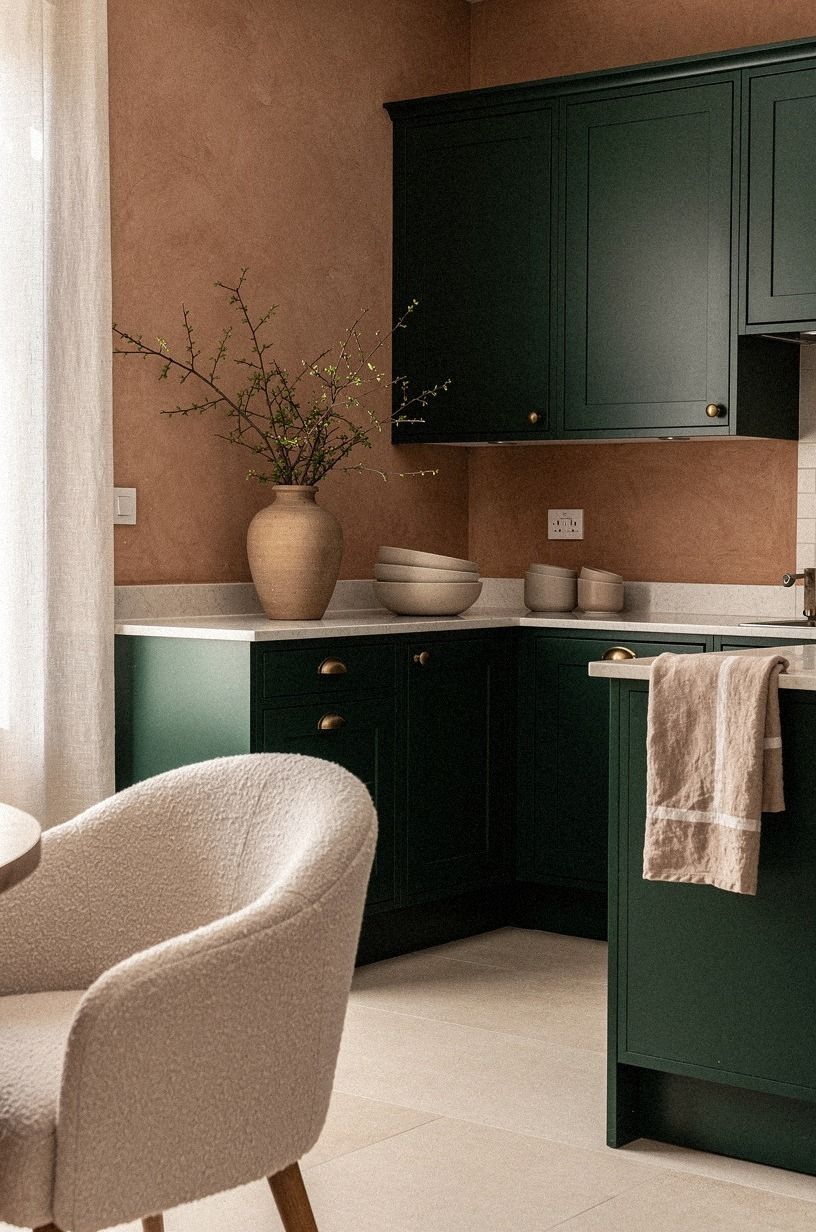
Yes, a dark green kitchen can stay airy if you give the color enough pale space around it. Organic bouclé on a stool or dining chair can add softness without darkening the room.
9Paint the Backsplash With the 18-Inch Rule
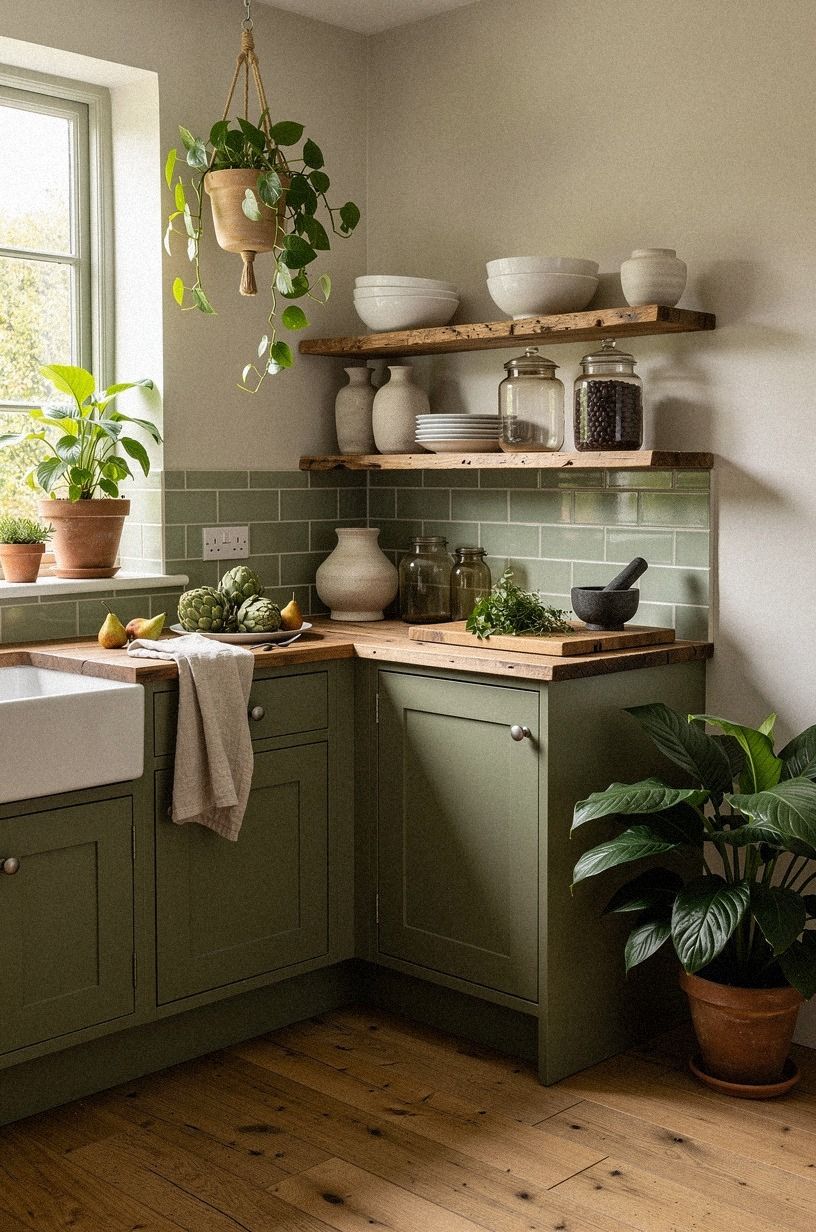
A painted backsplash can refresh a farmhouse kitchen without the dust and cost of a full tile installation. The standard backsplash gap is often about 18 inches, though your cabinets and counters may differ.
Measure the actual wall before calculating coverage. That measurement helps you keep the color transition neat and prevents wasted paint.
For a more durable finish, use scrubbable satin paint in a shade slightly lighter than your cabinets. Your kitchen will feel layered instead of flat, and small splashes won’t stand out as quickly.
Around the range, I’d still choose tile or a proper heat-safe surface rather than relying on paint alone. Safety and cleanability matter more than forcing one finish throughout the room.
Here’s the practical cost picture for larger changes:
You don’t need the high tier to create earthy charm. A Nero Marquina black marble with white veins accent behind the range can carry the room, while painted walls handle the less demanding areas.
For another practical direction, compare these farmhouse breakfast nook ideas.
10Choose Green Kitchen Cabinets Over White
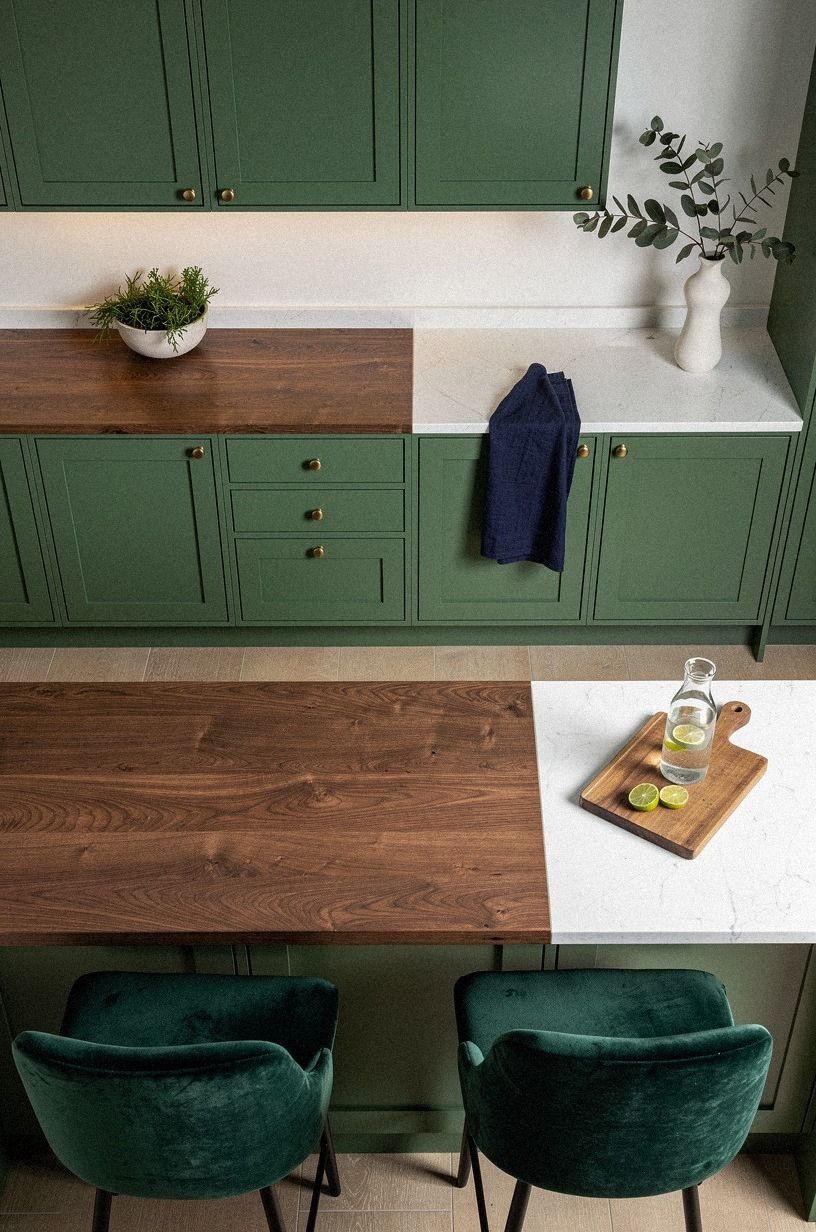
Green kitchen cabinets over white can make a farmhouse room feel more grounded without losing the clean quality people want from white. I’d choose Farrow & Ball Hague Blue only if you’re comfortable with a navy mood.
Otherwise, Benjamin Moore White Dove beside navy cabinetry gives you a gentler contrast. The pairing feels fresh, but it doesn’t read as stark.
Your uppers can stay white, or you can use open shelves above the sink to break up the cabinet wall. The choice depends on storage and how much visual activity your room can handle.
Walnut storage can work in a nearby dining zone when you need an affordable place for cookbooks, baskets, or extra serving pieces.
But don’t paint green simply because white feels predictable. Ask what your room needs. If the floor is already dark and the windows are small, use green below eye level and keep everything above it light.
I made the mistake of choosing a cabinet color from a phone screen once. It looked earthy online and gray in my room. Your sample needs to sit beside the counter, floor, and hardware for a full day.
These green farmhouse kitchen ideas can help you compare warmer and cooler directions.
11Hang a Herb Rail Beside the Prep Zone
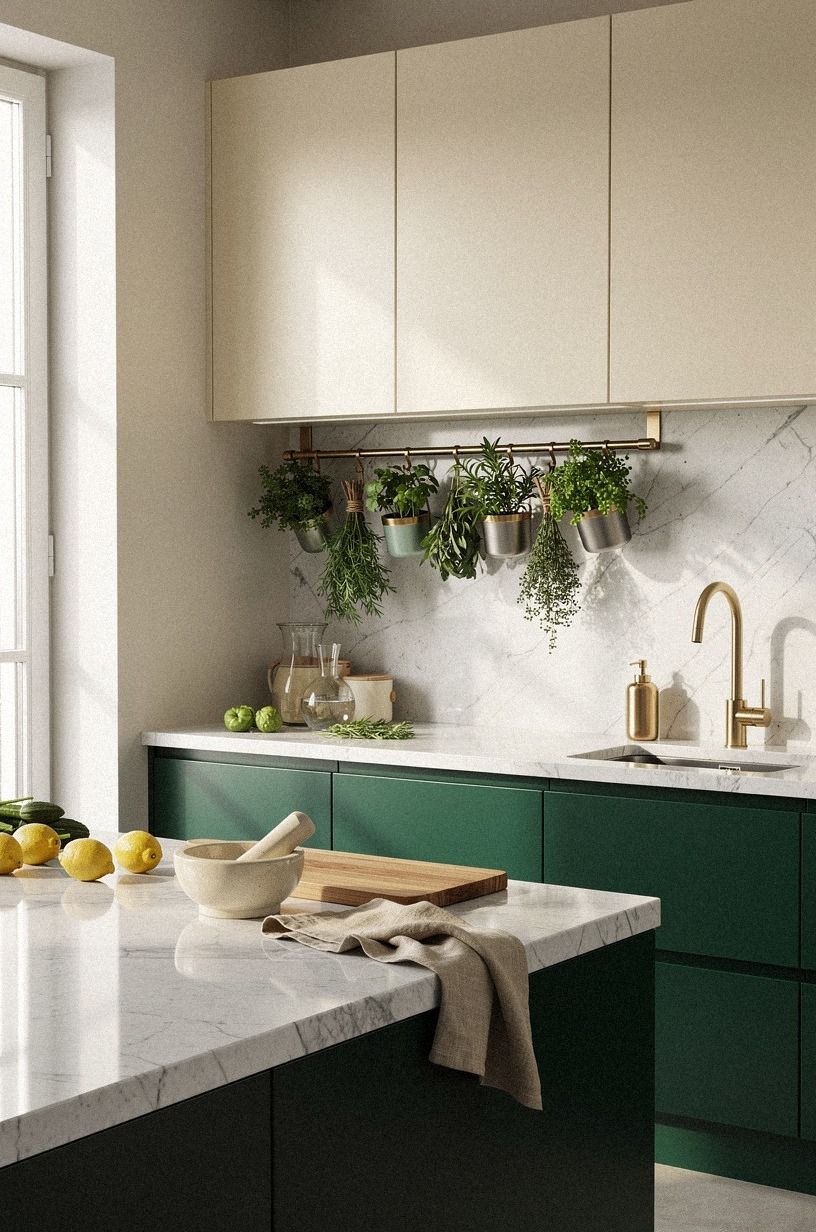
A slim herb rail beside Carrara marble with subtle gray veining makes a green farmhouse kitchen feel lived-in because it adds something growing, useful, and slightly unruly.
The Green Farmhouse Choice I’d Make
I’ve styled enough kitchens to know that green works best when it has something ordinary beside it. A painted cabinet can look fashionable in a photograph, but the room becomes convincing when the color meets a worn cutting board, a towel that’s been washed too many times, or a bowl you reach for every morning.
That’s why I’m less interested in matching green cabinets with a complete farmhouse package. Shiplap, vintage signs, roosters, and distressed stools can each be charming, but together they can make your kitchen feel like a set.
I’d rather see one aged material and one crisp modern surface sharing the same room. Aged oak beside a clean counter creates enough tension to keep the palette interesting.
Your green also needs a little friction. Sherwin-Williams Evergreen Fog SW 9130 beside unlacquered brass feels warm because the finishes change at different speeds. The paint stays steady, while the brass darkens where your hands touch it.
I once limewashed a wall before sealing it, and the first wet-weather day pulled part of the finish away. I had to redo the whole section. Now I test every finish in a hidden corner, wait through a full day of changing light, and only then commit.
The strongest farmhouse kitchens aren’t trying to look old. They’re comfortable with a little age showing. You can have clean lines, useful storage, and a peaceful green palette while keeping the room ready for flour, muddy shoes, and a late cup of tea.
The Questions Worth Answering First
What is the best green farmhouse kitchen approach for a small kitchen?
The best choice is a muted lower cabinet color with pale walls and one open shelf. Walnut storage can add useful organization nearby without filling your kitchen with bulky furniture.
Your room will feel more open when the strongest color stays below eye level. A narrow runner and one small wood accent can add warmth without taking up visual space.
Where can I buy green farmhouse kitchen pieces on a budget?
Look at IKEA, Target, and Wayfair for hardware, runners, shelves, and storage. You can also find useful pieces through Facebook Marketplace or a local thrift shop.
I don’t use commission links, so you can compare prices wherever you shop. Save this budget farmhouse kitchen guide for ideas.
How much does a green farmhouse kitchen makeover cost?
A cosmetic update typically falls within the $300-$1,500 budget tier when you use paint, hardware, and a peel-and-stick backsplash.
Your cost can stay lower if you reuse shelves, shop second-hand, and do the painting yourself. A full remodel costs much more because cabinets, counters, labor, and appliances quickly become the largest expenses.
Can I create a green farmhouse kitchen on a budget?
Yes, and you can start with three low-cost moves: paint the lower cabinets, replace the pulls, and add a washable runner.
Reusable styling pieces such as cutting boards, ceramic bowls, and linen towels can warm the room without requiring new cabinetry or appliances. The most important choice is still the paint sample.
Is a green farmhouse kitchen worth it in a small space?
Yes, because a small kitchen gives you fewer surfaces to change and less paint to buy. One controlled color zone can make the room feel intentional.
Keep your island clearance at 42 to 48 inches when possible, and use open shelving only where you can keep it tidy. A single shelf is easier to live with than a crowded wall of display storage.
Is green farmhouse style a good idea for a rental?
Yes. Use removable cabinet pulls, peel-and-stick backsplash panels, tension rods, and plug-in lighting.
No-damage updates let you bring in green through textiles, art, and movable furniture without painting permanent surfaces. Your landlord may never know the kitchen had a farmhouse phase.
Where I’d Start First
If I had to pick one, I’d start with the lower cabinet color. A cool or muddy green will fight every warm material you add later, while the right shade makes oak, brass, and linen look intentional.
Test your sample for a full day, then pin these sage green kitchen ideas for your next move. If the color still feels right beside the counter, floor, and window, the rest of the kitchen will be much easier to shape.