
 by
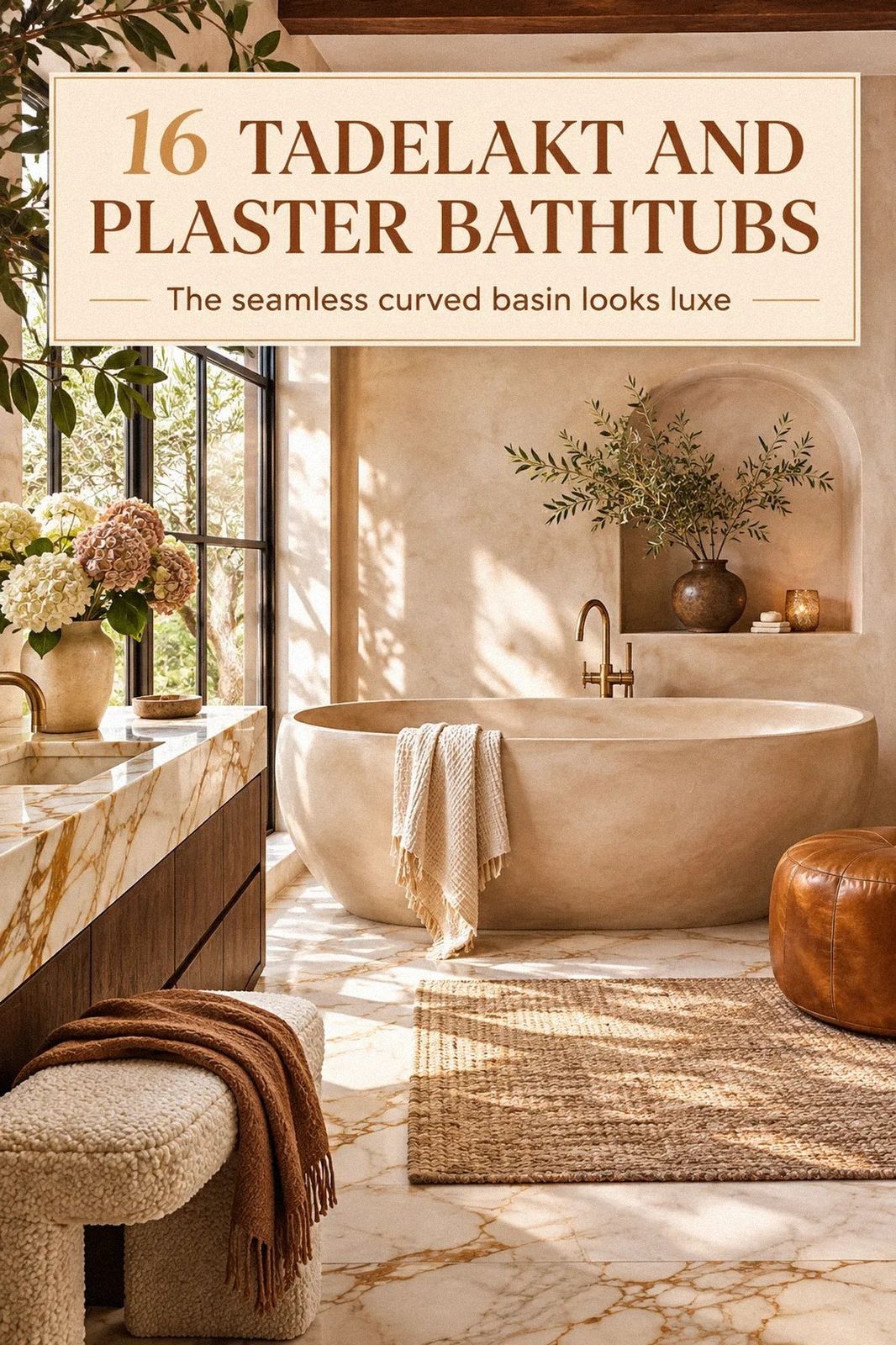
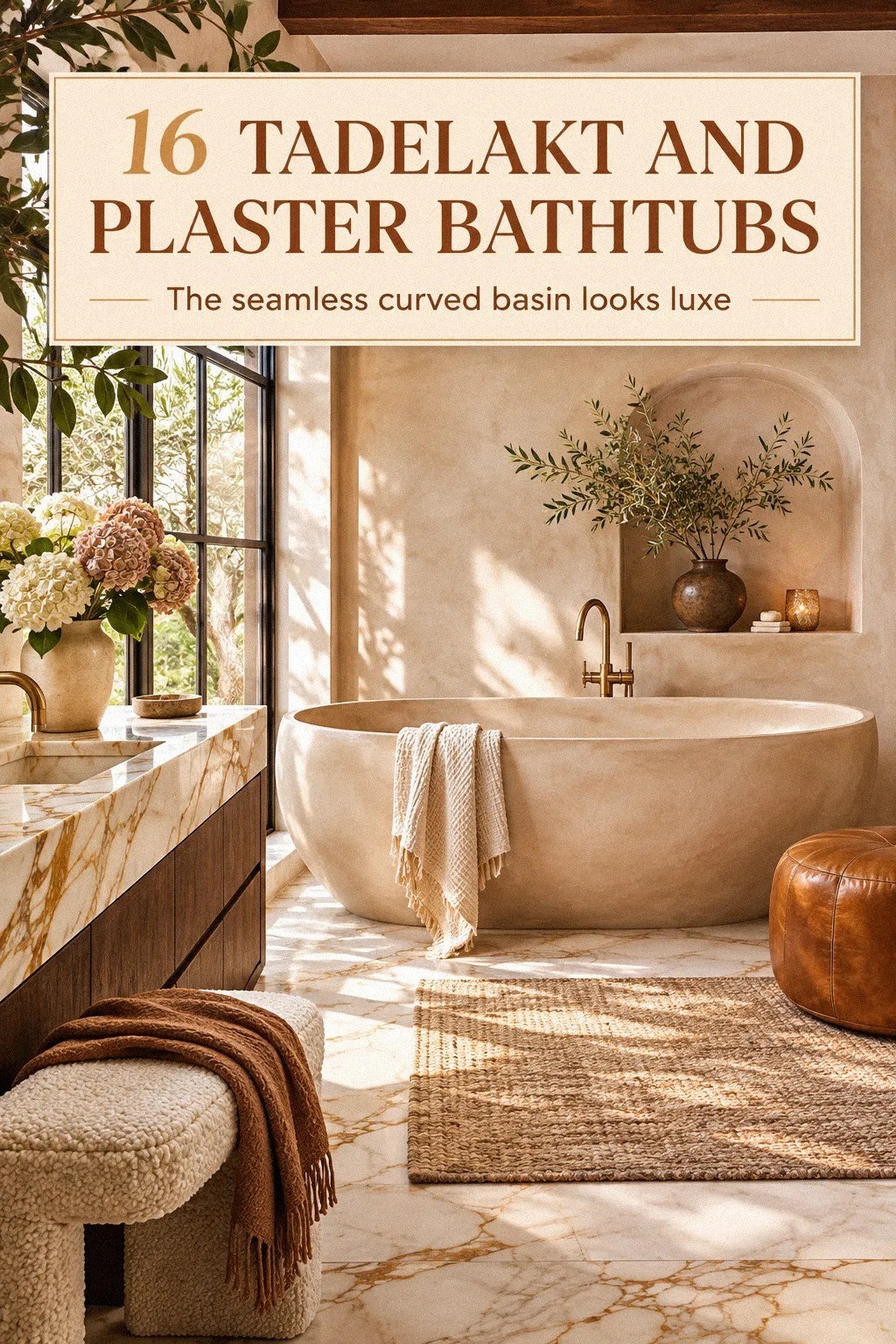
Tadelakt & plaster bathtub ideas for a sculptural soak work best when the finish is sealed correctly, so you get a warm, nearly seamless tub without a weekly scrub. I learned that after limewashing a surround before protecting it, and the first splash left a pale tide mark. The fix is simple. The details matter.
- Seal the tadelakt tub before you style it
- Float a plaster bathtub with the Monolithic Shell Rule
- Paint above the tub with Farrow & Ball Hague Blue
- Build the Three-Height Light Stack
- Frame a plaster bathtub in honed travertine
- Can a curved cob bathtub work in a small room?
- Layer Belgian flax linen beside the tadelakt tub
- Anchor a standard tub at 60x30 inches
- Mix zellige with plaster instead of matching everything
- Hang an oversized mirror above the stucco bathtub
- Choose unlacquered brass when chrome feels cold
- Paint over tile instead of rebuilding the room
- Style the tub tray for a real soak
- Protect a 36x36 shower beside the bathtub
- Add hidden storage without boxing in the tub
- Use the Two-Wood Rule for the final material mix
1Seal the tadelakt tub before you style it
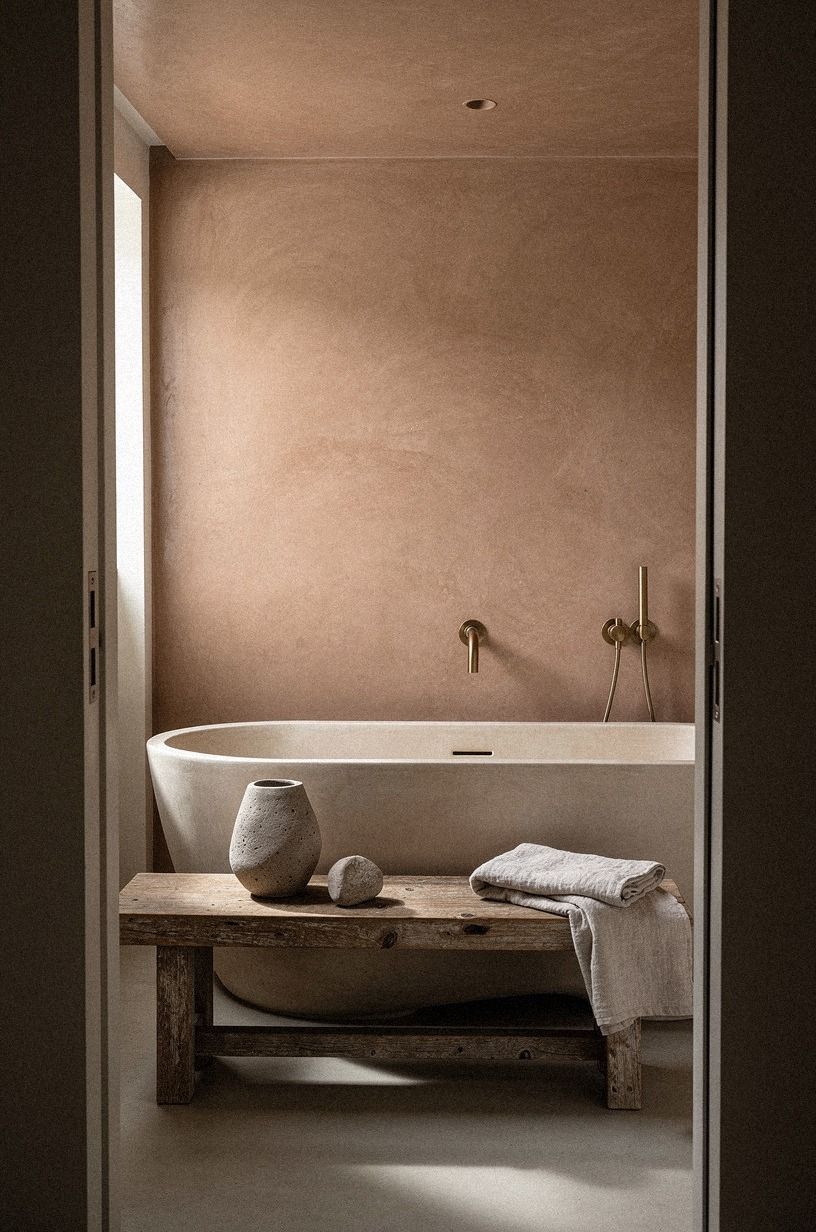
Your first move is protection, not accessories. A properly burnished tadelakt finish has a smooth, stone-like surface, but it still needs the right lime soap treatment and regular gentle cleaning. If you're planning a wet-zone tub, ask your installer exactly where the waterproofing membrane ends and the decorative plaster begins.
That boundary matters more than the color.
I wouldn't skip this step for a faster reveal. You can have the most calming bathroom in the house, but trapped moisture will make your investment feel careless.
Read what tadelakt is and how the waterproof Moroccan plaster works before you choose a contractor. I made my mistake on a test board, not a finished room, and I'm grateful for that.
For your daily routine, use a soft cloth, mild soap, and plenty of ventilation. No abrasive powder, stiff brush, or acidic spray belongs near the surface.
The finish should feel silky under your hand, not glossy like plastic. You'll spend less time cleaning when you respect the material from day one.
Typical cost by tier (US averages):
2Float a plaster bathtub with the Monolithic Shell Rule
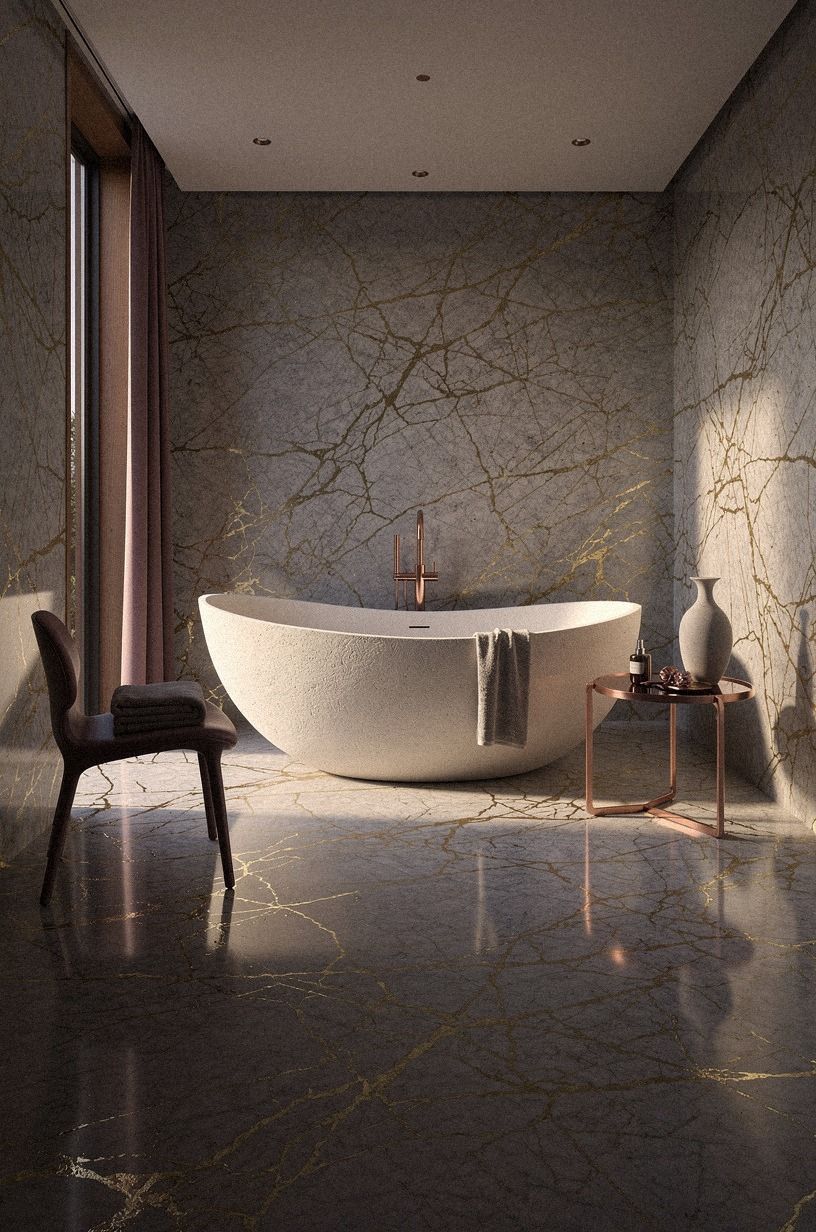
The Monolithic Shell Rule is simple: let the tub and its surrounding wall read as one continuous form.
3Paint above the tub with Farrow & Ball Hague Blue
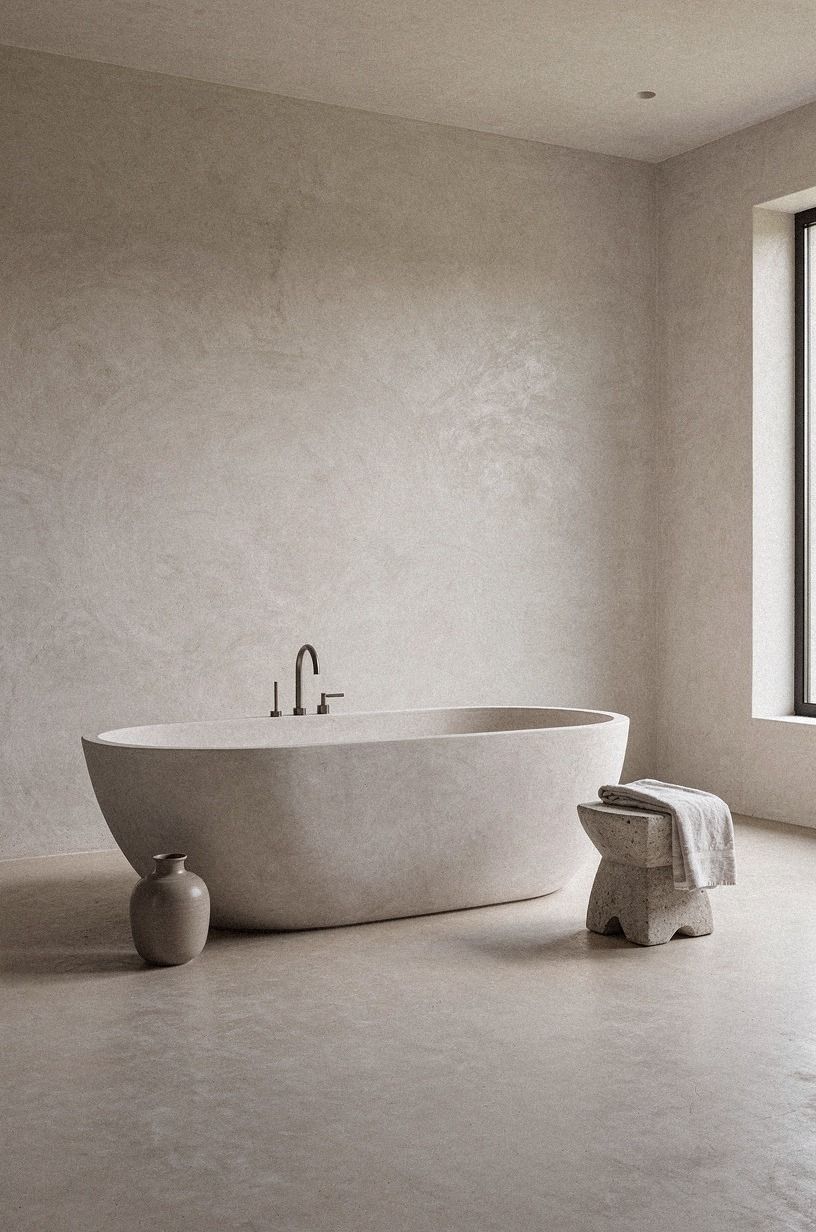
A dark upper wall can make a pale tub look more sculptural, especially when the ceiling is light and the floor has a natural finish. Farrow & Ball Hague Blue No.30 gives you a moody backdrop with enough green to keep the room from feeling flat. If you're painting only above the waterproof zone, stop the color at a clean horizontal line.
I tested a similar contrast beside a warm plaster sample, and the darker paint made the curve look almost architectural. You don't need black fixtures everywhere to support it.
A quiet mirror, aged metal, and one soft textile are enough. But don't use a blue-gray bulb, because the whole room can turn chilly after sunset.
Your tub will look best if the paint has a low-sheen finish and the ceiling stays warm white. Add a cerused white oak stool to soften the contrast. The pairing is bold but still inviting, and you'll notice the plaster looks warmer in morning light.
4Build the Three-Height Light Stack
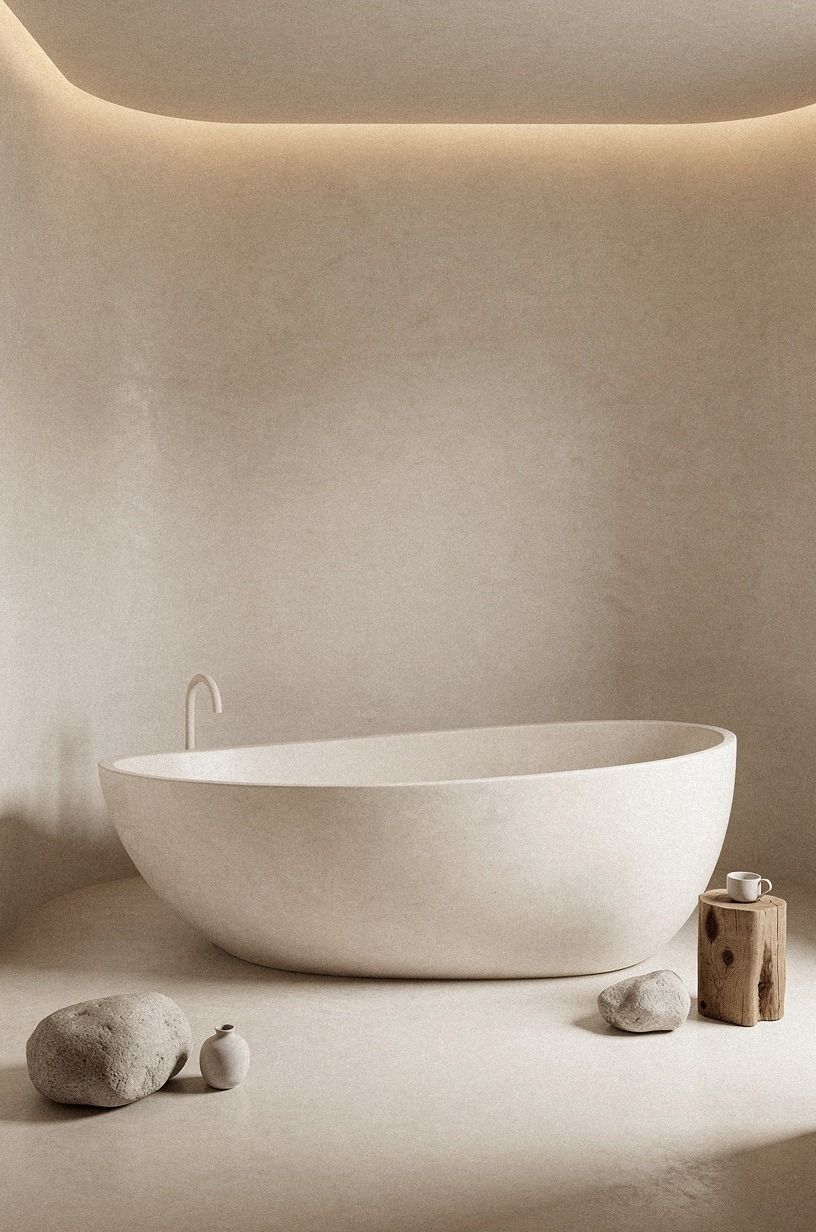
The Three-Height Light Stack gives your bathroom three layers of glow: low candlelight, eye-level sconces, and a ceiling fixture that you can dim. A backlit translucent onyx panel beside the mirror creates a gentle pool across the wall, while a low lantern near the tub keeps the floor from disappearing at night.
You don't need a chandelier to make the room feel luxurious. If you're working with a rental, a rechargeable lamp on a stool can give you the lowest layer without wiring.
For a permanent room, use dimmable fixtures and warm bulbs that don't make your skin look gray. The change is immediate!
I prefer side light to one bright fixture above your head because it makes the plaster show its subtle movement. See this guide to why Venetian plaster makes a bathroom look effortlessly expensive for another way to layer reflective surfaces. Your room should feel relaxing at midnight, not like a dental office.
5Frame a plaster bathtub in honed travertine
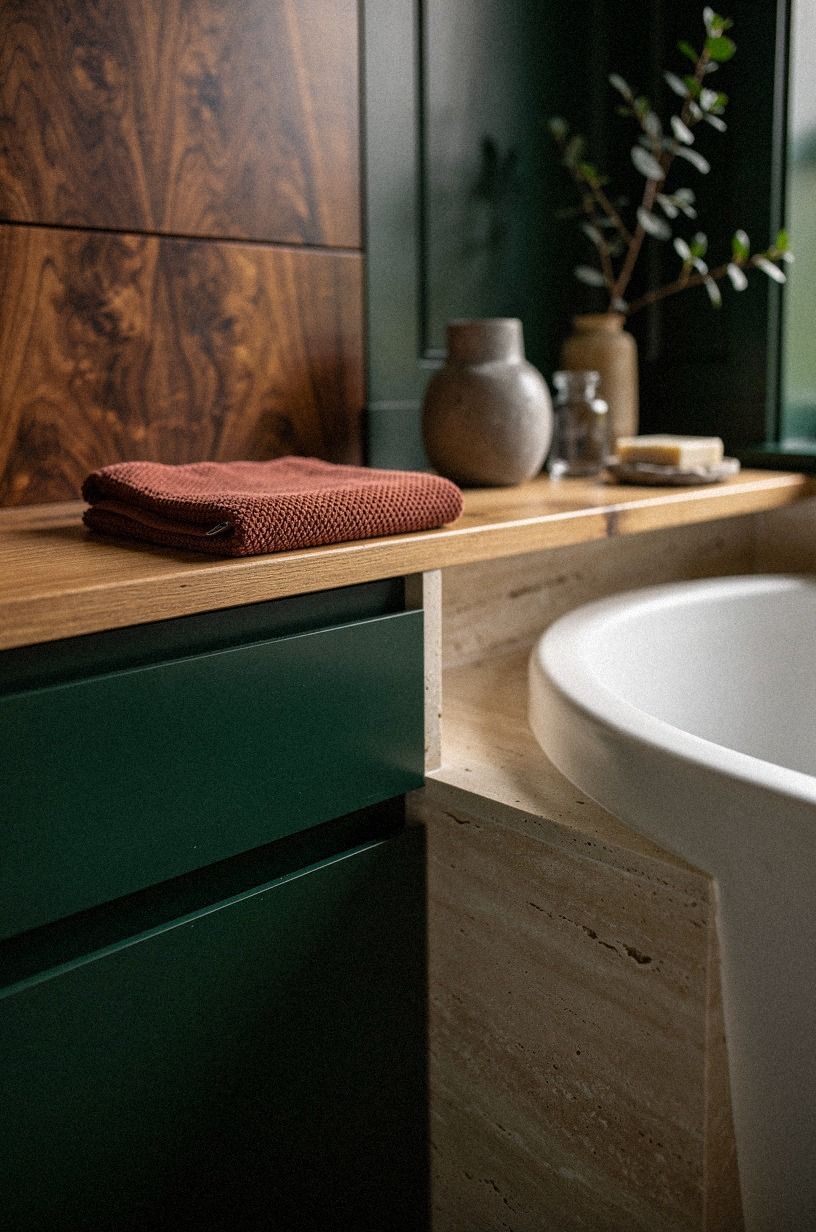
A narrow ledge of book-matched walnut can make a plaster tub feel grounded without turning it into a heavy stone installation. Use it at the rim, beside the faucet, or as a low platform beneath the tub. The warm grain adds depth, which is much friendlier than polished stone when your feet are wet.
I would choose book-matched walnut over bright marble here. Marble can look formal beside a hand-finished wall, while walnut has a richer warmth that helps the tub feel lived-in. If you're mixing finishes, keep the wood low-sheen and the plaster matte so your eye has one quiet shine to follow.
Your budget can stay focused on the visible edge rather than a full surround. A small remnant may be enough for a shelf or bath-side perch.
Pair it with unlacquered brass and a natural oak stool, then repeat the wood in one small accessory. This is an organic combination, not a showroom package.
For more layered material references, compare Venetian plaster with marble and travertine before you commit. You'll see why a little grain can give a smooth room more character.
6Can a curved cob bathtub work in a small room?
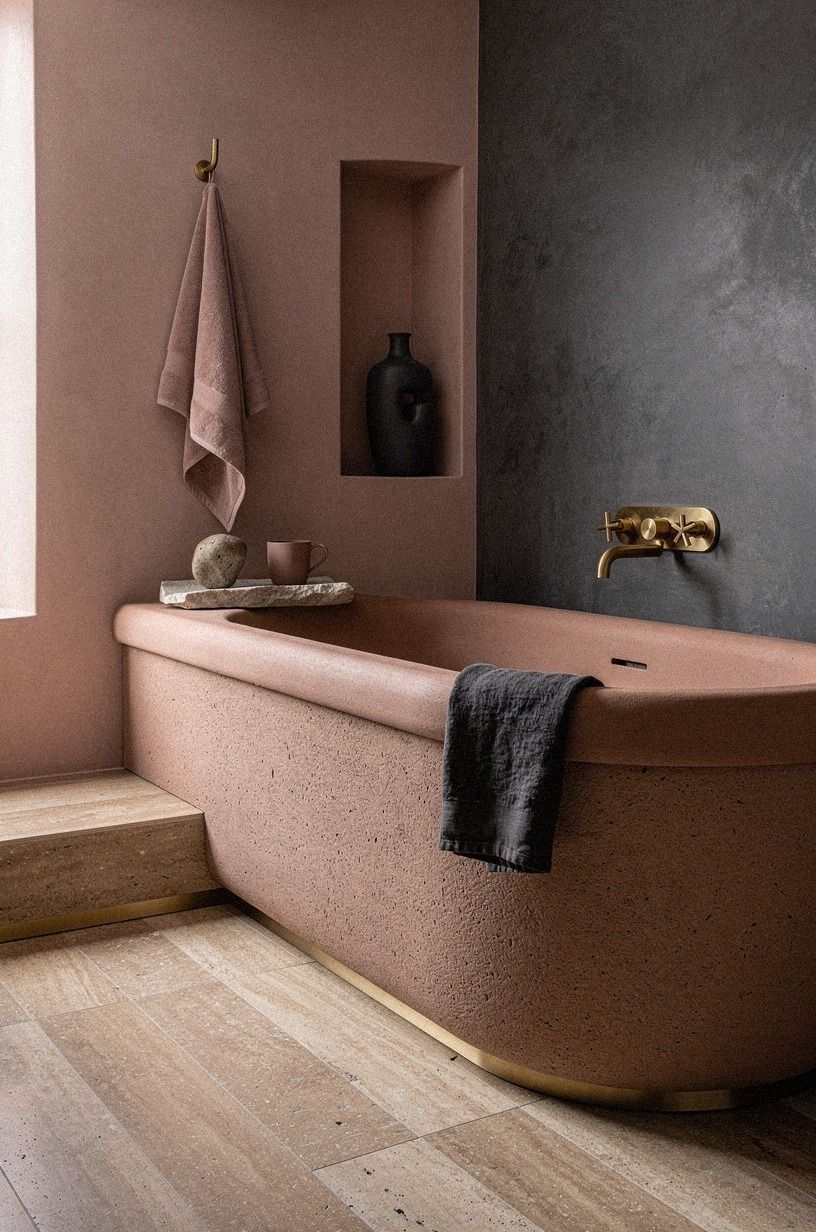
Yes, a curved cob bathtub can work in a small room if you protect the circulation path around it.
7Layer Belgian flax linen beside the tadelakt tub
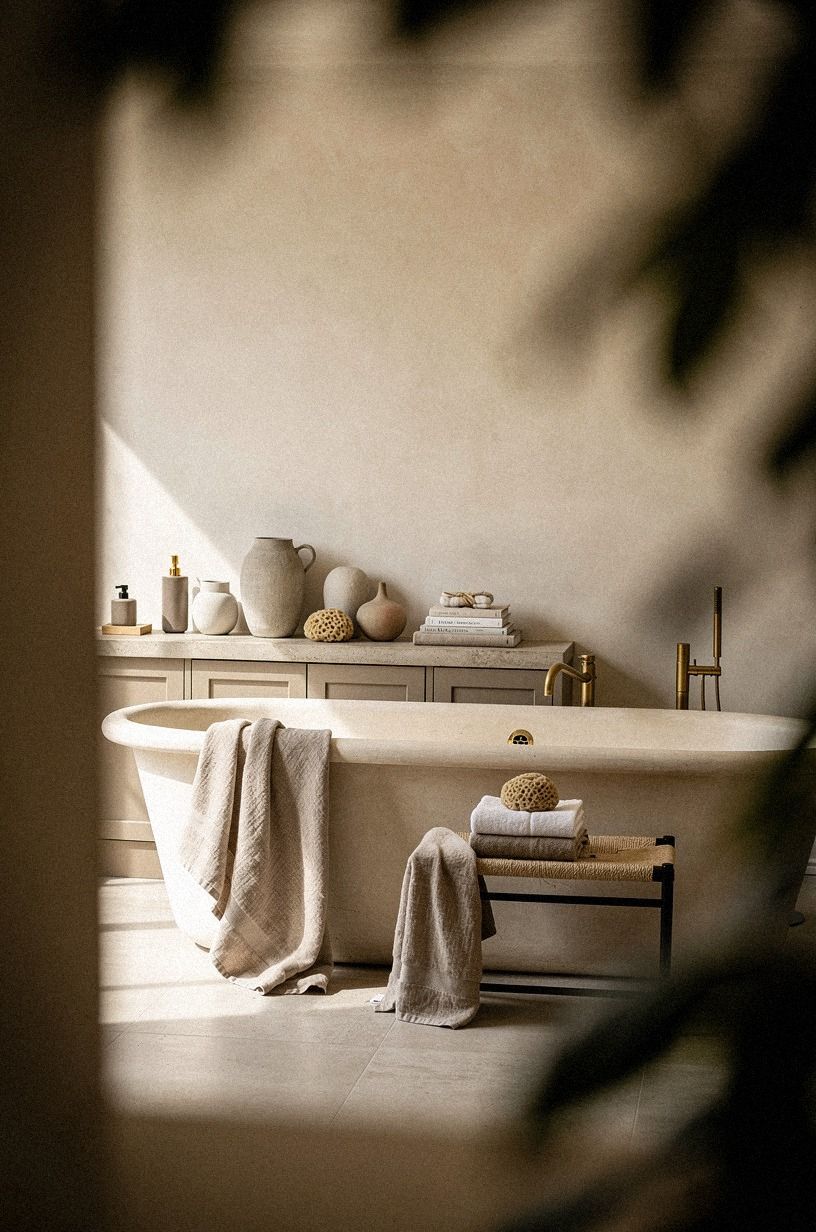
Soft textiles keep a seamless tub from feeling too hard or clinical. Place a Belgian flax linen curtain, robe, or roman shade near the bath so your eye gets a little movement against the plaster. If you're styling a rental, a tension rod and washable curtain can create the same warm effect without holes in the wall.
But don't pile every textile beside the tub. One substantial piece will look more refined than four small mats competing for attention. I prefer a natural flax panel with a dry hand and visible slubs, especially when the tub has a pale clay finish.
You can add a folded towel on a stool, but keep the color close to the wall.
Your towels should support the material story, not start a new one. 600gsm Turkish cotton gives you weight and softness without a shiny hotel finish.
The room will feel comforting after a long day, and you'll still have enough open space to keep the architecture readable. Simple is the elegant choice here.
8Anchor a standard tub at 60x30 inches
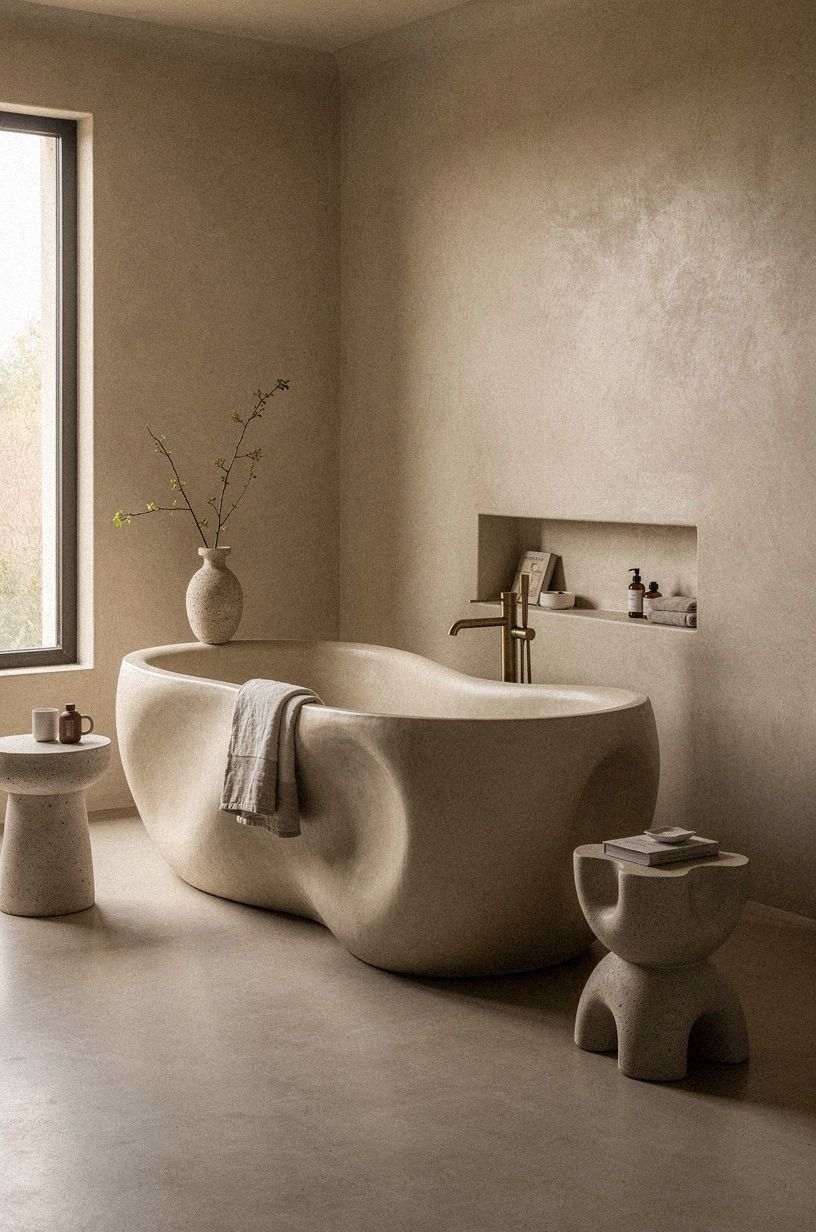
A standard tub can still feel sculptural when you treat its footprint as a design boundary. The common 60x30-inch size gives you a useful starting point, especially if you're working in an older bathroom with fixed plumbing. Frame the long side with plaster, then keep the floor pattern quiet so the tub reads as the main form.
You don't need an oversized vessel to create a tranquil soak. A deep-looking surround, a low wall niche, and a carefully chosen faucet can make a familiar tub feel custom. The proportion is doing more work than the price tag.
That proportion is magic!
I would skip a thick decorative apron if your room is narrow. It makes the tub feel boxed in and steals visual floor space.
Instead, use an oversized-chip terrazzo ledge around the rim and repeat its ivory base in the niche. This white tadelakt bathroom guide shows how a pale surface can stay bright without becoming stark.
9Mix zellige with plaster instead of matching everything
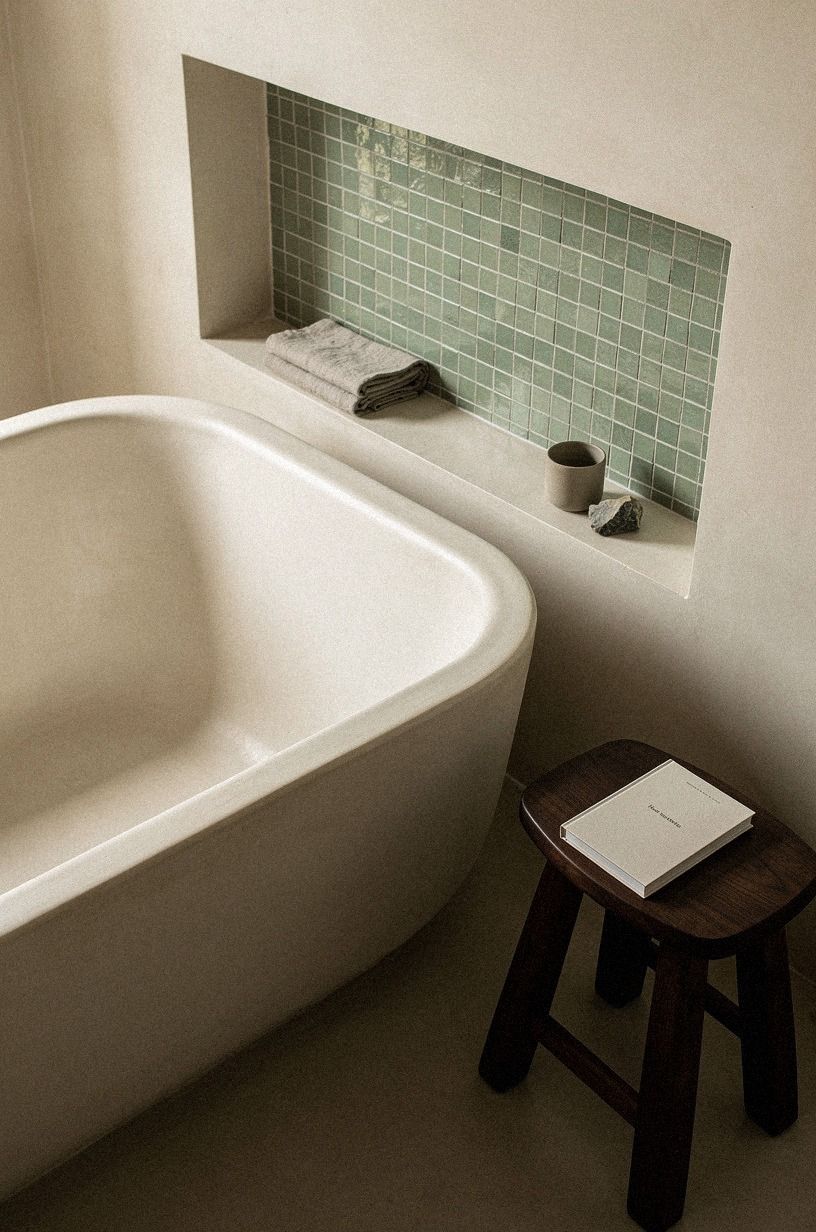
Matching every wall to the tub can make a bathroom feel like one large block. Sage-green zellige gives you a more charming counterpoint, especially in a narrow band around the faucet wall or inside the shower niche. The irregular edges catch small pieces of light while the plaster keeps the larger surfaces calm.
If you're choosing between full tile and a focused accent, I would choose the accent. You can spend your budget on fewer pieces with richer variation, then let the plaster cover the rest. The contrast feels organic rather than decorated.
And if you select green tile, keep the grout close to the tile body so the pattern doesn't become busy.
Your material mix should have one rough, one smooth, and one warm note. Use plaster for the soft matte field, zellige for irregular texture, and natural wood for a restrained organic accent. Read Venetian plaster wall ideas for subtle depth if your room needs dimension without another pattern.
10Hang an oversized mirror above the stucco bathtub
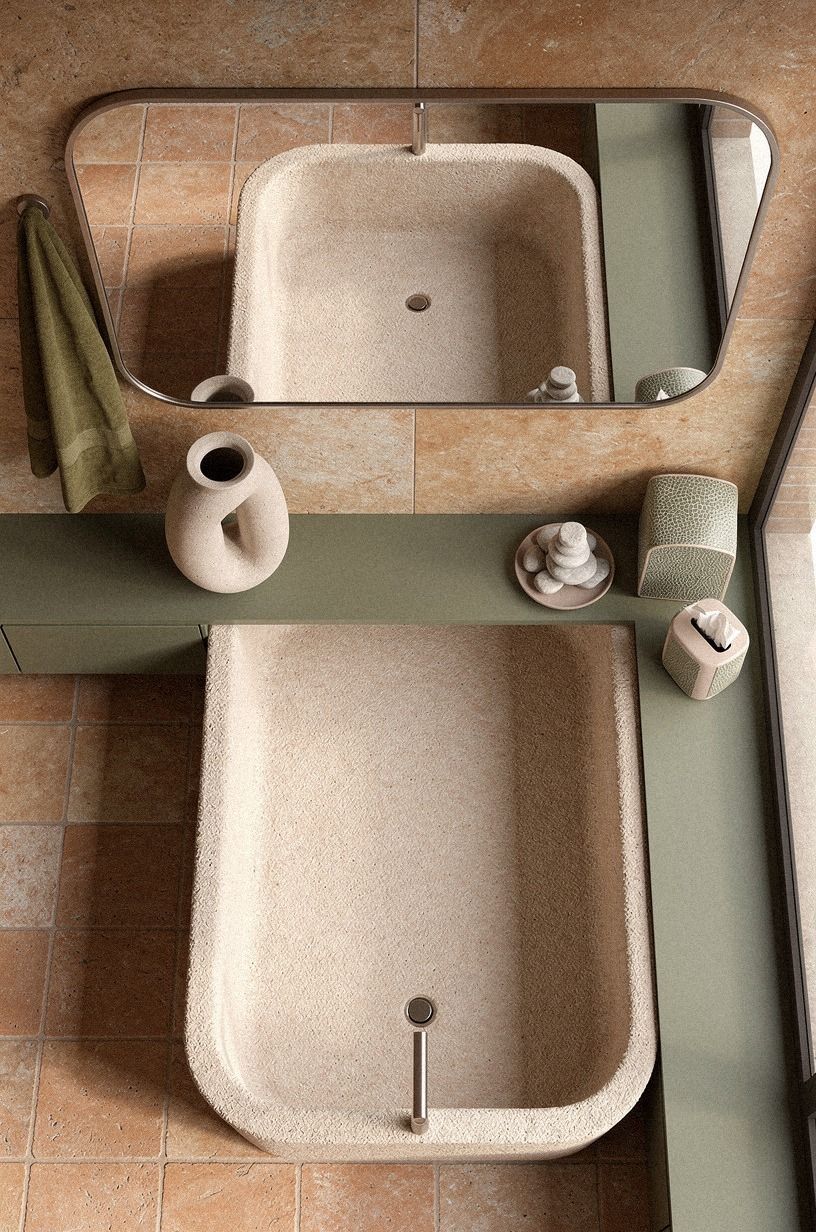
An oversized mirror can make a stucco bathtub feel taller and bring more light into a compact room. Hang it where it reflects the tub curve, a window, or a warm wall lamp rather than the toilet. If you're planning a full-width mirror, leave enough room for the plaster edge to remain visible around it.
I prefer a softly rounded mirror to a sharp rectangle in this setting. The curve repeats the tub without copying it, which gives your eye a quieter rhythm.
You don't need a chunky frame, especially if the wall already has handmade texture. A thin aged-bronze edge is enough.
Your mirror should also serve the room after dark. Place side lights so you can see your face without glare, and keep the lower edge above splash level. For a final styling detail, use one olive shagreen stool beneath the mirror, not a collection of baskets.
The textured surface adds warmth and keeps the room from feeling overly pale.
11Choose unlacquered brass when chrome feels cold
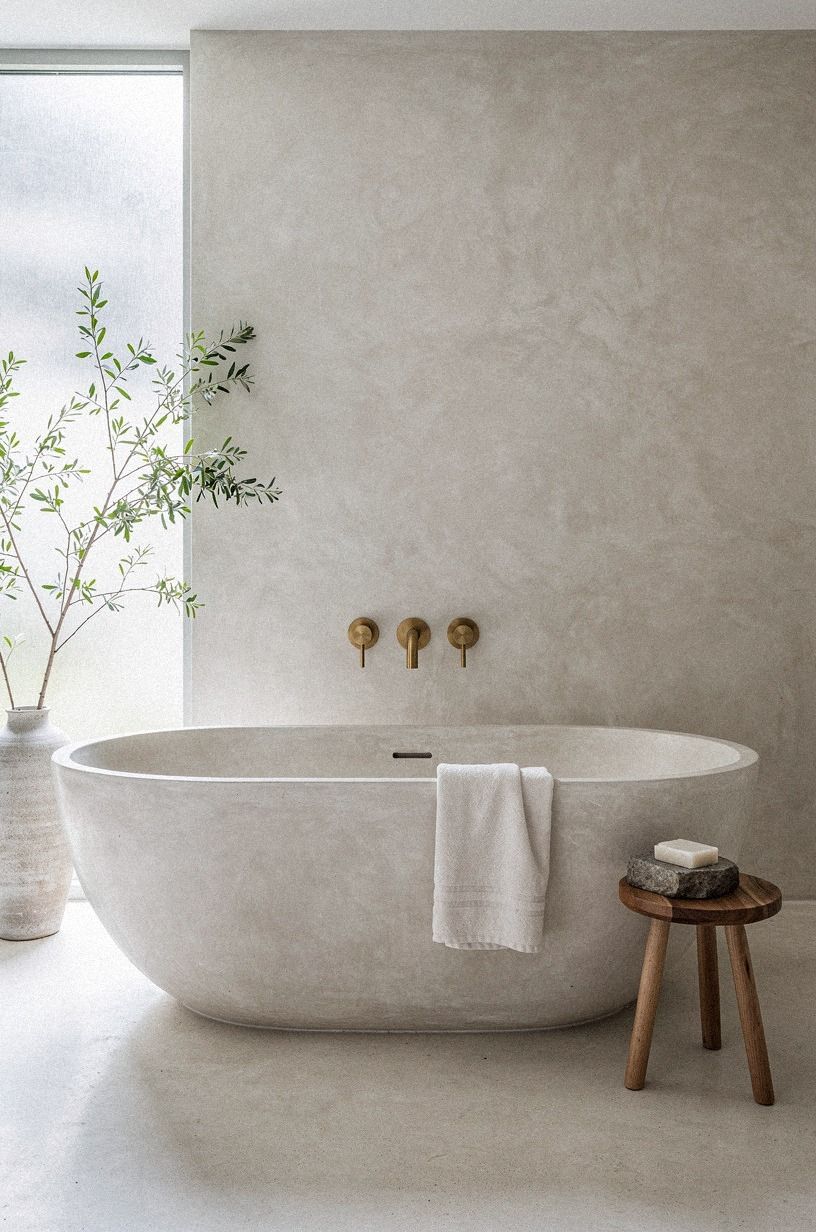
Aged brass brings a living finish to a plaster bathroom because it changes as your hands touch it. It starts bright, then develops a softer patina around the faucet, handles, and drain. If you're drawn to a quiet, old-world room, that change will feel intentional rather than worn.
I would skip polished chrome beside warm plaster. Chrome can look crisp, but it often pushes the room toward a commercial bathroom mood.
Your fixtures don't need to match every other metal in the house, either. One aged-brass faucet and a small brass sconce can be enough to make the surface feel welcoming.
Choose a faucet with a simple lever and a spout that reaches comfortably over your tub rim. You want water to land inside the basin, not on the front edge.
If you're replacing only one item, make it the faucet. That small decision has a surprisingly strong effect, and you'll notice it every time you turn the handle.
12Paint over tile instead of rebuilding the room
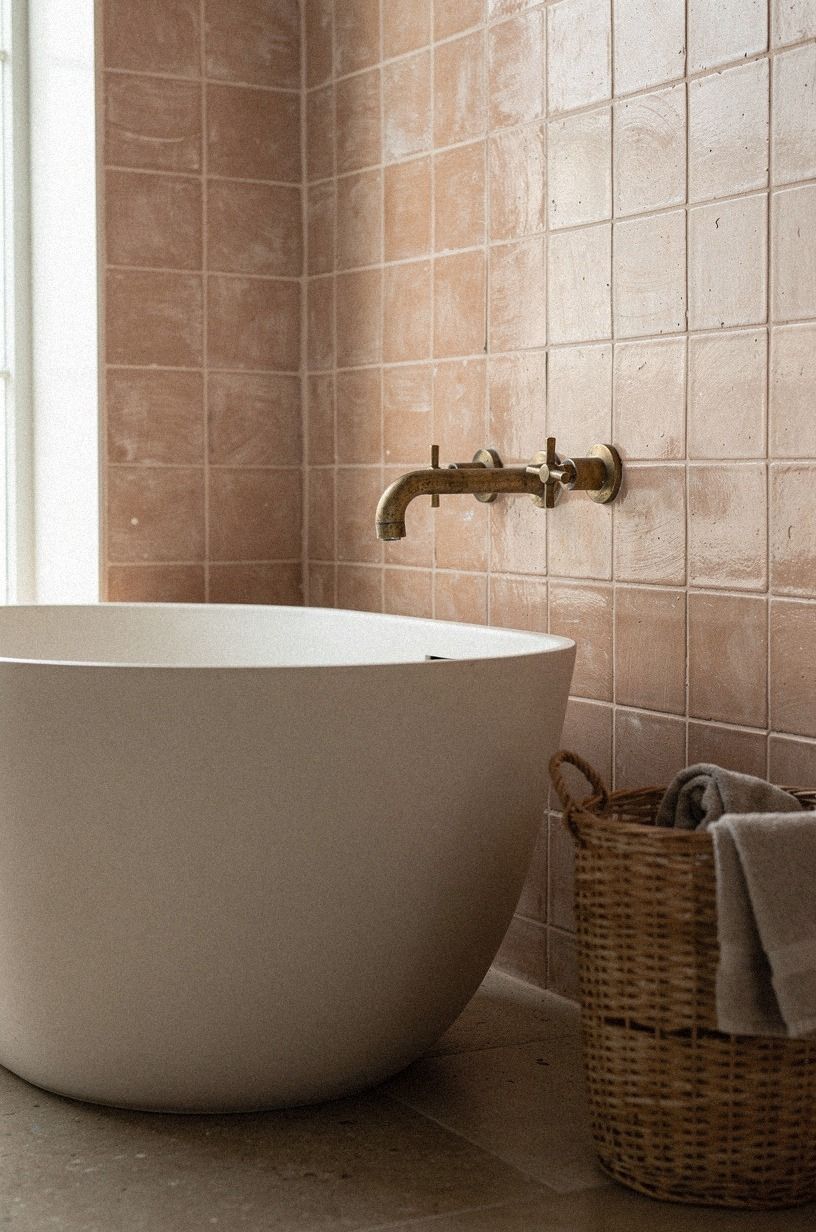
A low-cost plaster bathroom doesn't require a full demolition.
13Style the tub tray for a real soak
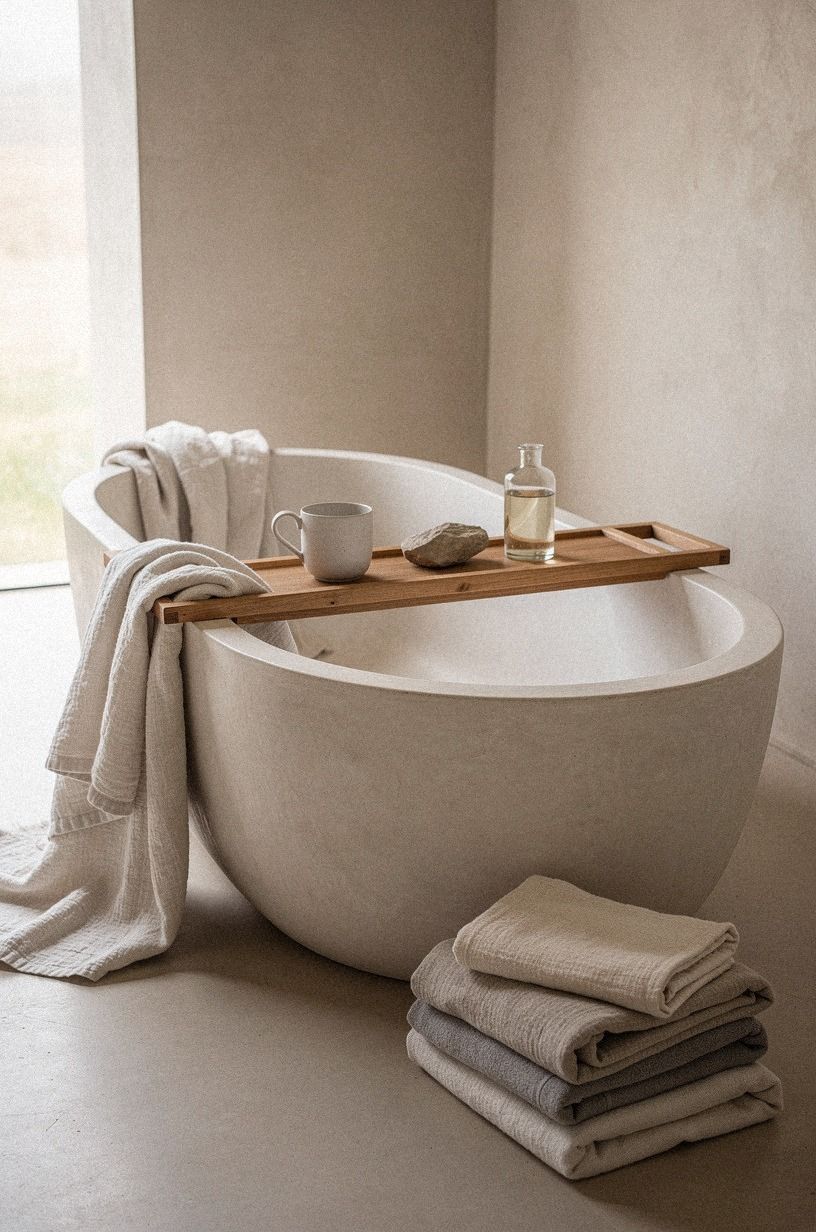
A bath tray should support your routine, not become a crowded still life. Use a Nero Marquina black marble tray with a low profile, then leave room for a book, a towel, and one cup. If you're adding candles, choose a stable vessel and keep it far from fabric or a swinging curtain.
And don't turn your tray into a storage shelf. Your eye needs one calm horizontal line against the rounded tub, not a parade of bottles. I like a small ceramic cup, a folded cloth, and one low branch in a narrow vase.
The arrangement feels relaxed because it leaves space around each object.
You can find more ideas in what to put on a bathtub tray, but adapt the layout to your hands. A tray that looks lovely but makes you reach over a hot drink is poorly designed. Keep your essentials close, stable, and easy to move before cleaning.
14Protect a 36x36 shower beside the bathtub
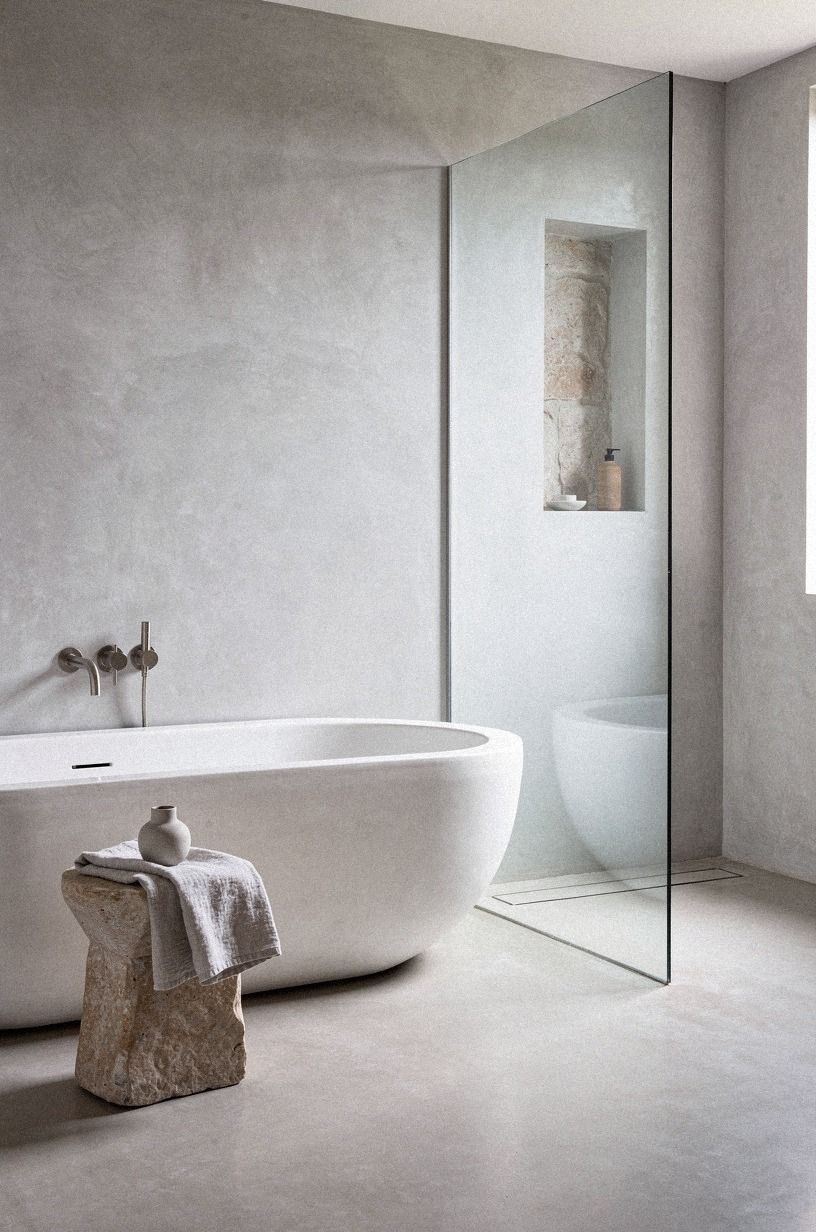
If your tub shares the room with a shower, protect the wet zone before you style the accessories.
15Add hidden storage without boxing in the tub
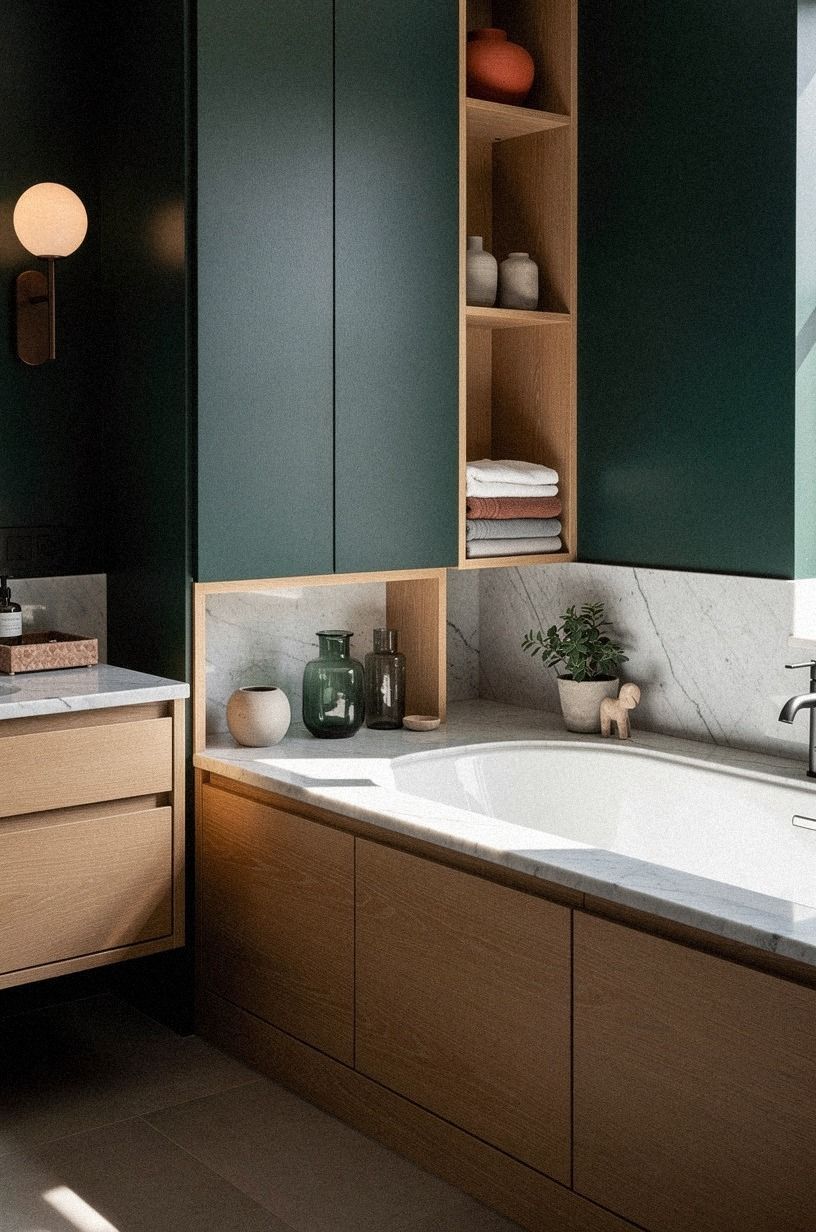
Storage should disappear into the architecture when the tub is the star. A recessed niche, shallow cabinet, or floating vanity can hold your daily items without creating a tall block beside the bath. A low cabinet with a Carrara marble top can work outside the splash zone if you keep its footprint visually separate from the plaster.
Your vanity height will usually land between 32 and 36 inches, so measure your reach before choosing a custom counter. I prefer the lower end when the room is used by children, but your own height and sink style should guide the final decision. Don't let a standard cabinet dictate the whole composition.
Use one closed section for cleaning supplies and one open section for towels. You can repeat the tub's material through a small natural oak pull or limestone knob, but you don't need matching cabinetry. For more ways to hide visual clutter, browse tadelakt wall ideas with polished texture.
The room will feel more serene when the surfaces have somewhere to rest.
16Use the Two-Wood Rule for the final material mix
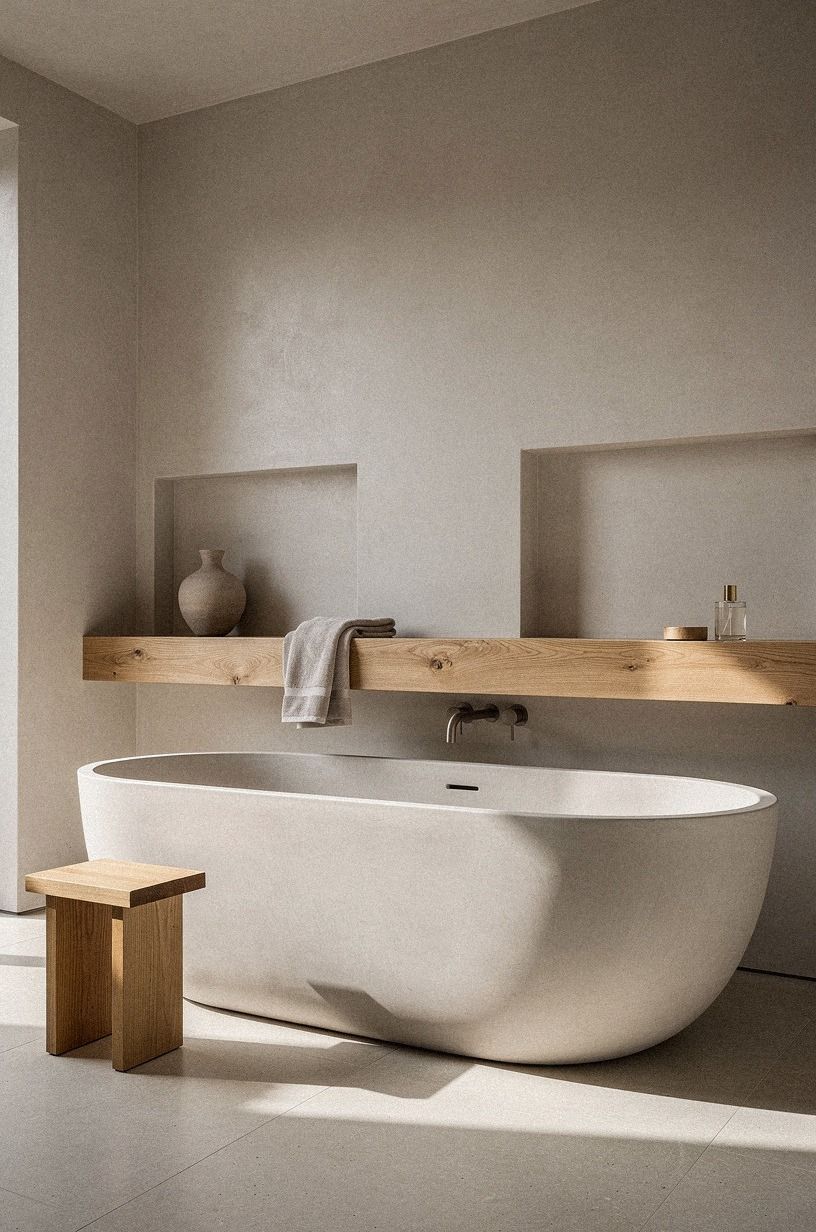
The Two-Wood Rule keeps a plaster bathroom from becoming a collection of unrelated samples. Choose one warm wood for texture and one darker wood for contrast, then stop. A dusty rose linen cushion on a small stool or bench can add softness, but your main wood choices should carry the room.
I like reclaimed weathered teak with a darker walnut accent, especially when the tub has a sand or bone finish. You can use the teak for the vanity and the darker wood for a mirror frame, stool, or tray. More than two wood tones usually make the room feel accidental, particularly when the plaster already has natural variation.
Your final material mix should feel peaceful when you enter and useful when you live with it. Read Venetian plaster wall ideas for subtle depth before choosing a last accent, then remove one item from your shortlist. Less visual noise gives the sculptural form room to breathe.
That restraint is what makes the bathroom feel refined!
The Rule I Keep Coming Back To
I used to think a sculptural tub needed a completely custom bathroom around it. That idea made every project feel expensive before the first tile was removed.
Now I look for the one surface that deserves attention, then let everything else become quieter. A plaster tub can carry the room because its shape, shadow, and hand-finished texture already create movement.
The most important decision is not whether you choose tadelakt, Venetian plaster, or a cob-inspired finish. It is whether the material suits the water exposure and the way you live. I once chose a pale finish because it looked lovely in the showroom, then realized every splash showed beside the faucet.
A warmer tone would have been more forgiving, and I should have tested it under evening light.
I also believe the best bathroom isn't the one with the most expensive material. A $200-$1,200 refresh with paint, a mirror, a faucet, and textiles can feel more settled than a $12,000 room with poor lighting and nowhere to put a towel. You should spend first on waterproofing, ventilation, and the fixture you touch every day.
Everything decorative works better after those choices are sound.
When I design around a plaster bathtub, I want the room to feel welcoming before it feels impressive. That means a clear floor, a warm bulb, a towel within reach, and one honest material detail you can see up close.
If you're deciding between more accessories and better proportions, choose proportions. Your eye will notice the difference every morning.
A Few Things Worth Answering
What is the best Tadelakt & Plaster Bathtub Ideas for a Sculptural Soak for a small bathroom?
A pale tadelakt surround with a standard 60x30-inch tub is the best starting point for most small bathrooms because it reduces visual breaks. Choose a slim vanity, a rounded mirror, and one IKEA TONSTAD piece outside the wet zone. For more ideas, see white tadelakt bathroom designs that keep the room bright.
Where can I buy Tadelakt & Plaster Bathtub Ideas for a Sculptural Soak pieces on a budget?
Look at IKEA, Wayfair, and Target for mirrors, stools, textiles, and removable lighting. Facebook Marketplace and local thrift shops can also yield solid wood pieces. There are no commission links here, so you can compare prices freely.
Your best low-cost find may be an older solid oak stool with good proportions.
How much does a Tadelakt & Plaster Bathtub Ideas for a Sculptural Soak makeover cost?
A small cosmetic refresh can fit within the $200-$1,200 budget tier when you use paint, a mirror, a faucet, and textiles. A mid-range project with a vanity, partial tile, and lighting typically reaches $3,000-$9,000. The finish itself depends on your installer, surface condition, and waterproofing needs.
Can I create a Tadelakt & Plaster Bathtub Ideas for a Sculptural Soak on a budget?
Yes, and you can begin with three low-cost moves: paint the dry upper wall, replace the mirror, and style the tub with textiles you already own. A Target Threshold cotton towel can add softness without a full renovation. Then save for waterproofing and the faucet, where your money has a more lasting effect.
Is a Tadelakt & Plaster Bathtub Ideas for a Sculptural Soak worth it in a small space?
Yes, because a small room helps a single sculptural form stand out. Keep the tub footprint clear, use one restrained wall color, and avoid furniture that blocks the curve.
You'll get more impact from an uninterrupted surface than from several small accessories. A quiet plaster bathroom layout can help you plan the balance.
Is Tadelakt & Plaster Bathtub Ideas for a Sculptural Soak a good idea for a rental?
Yes, if you keep the changes reversible and never apply decorative plaster where the lease or moisture conditions make it unsafe. Try a removable mirror, a tension-rod linen curtain, peel-and-stick lighting, and a freestanding Article Sven leather stool. Your landlord-approved changes can still make the room feel warmer and more intentional.
Where I'd Start First
If I had to pick one, I'd start with the tadelakt surround. Its continuous surface makes the tub feel custom, and it hides the visual clutter that makes small bathrooms seem busy. Pin the tadelakt surround for later and compare your wall color under morning and evening light before you order anything.