
 by
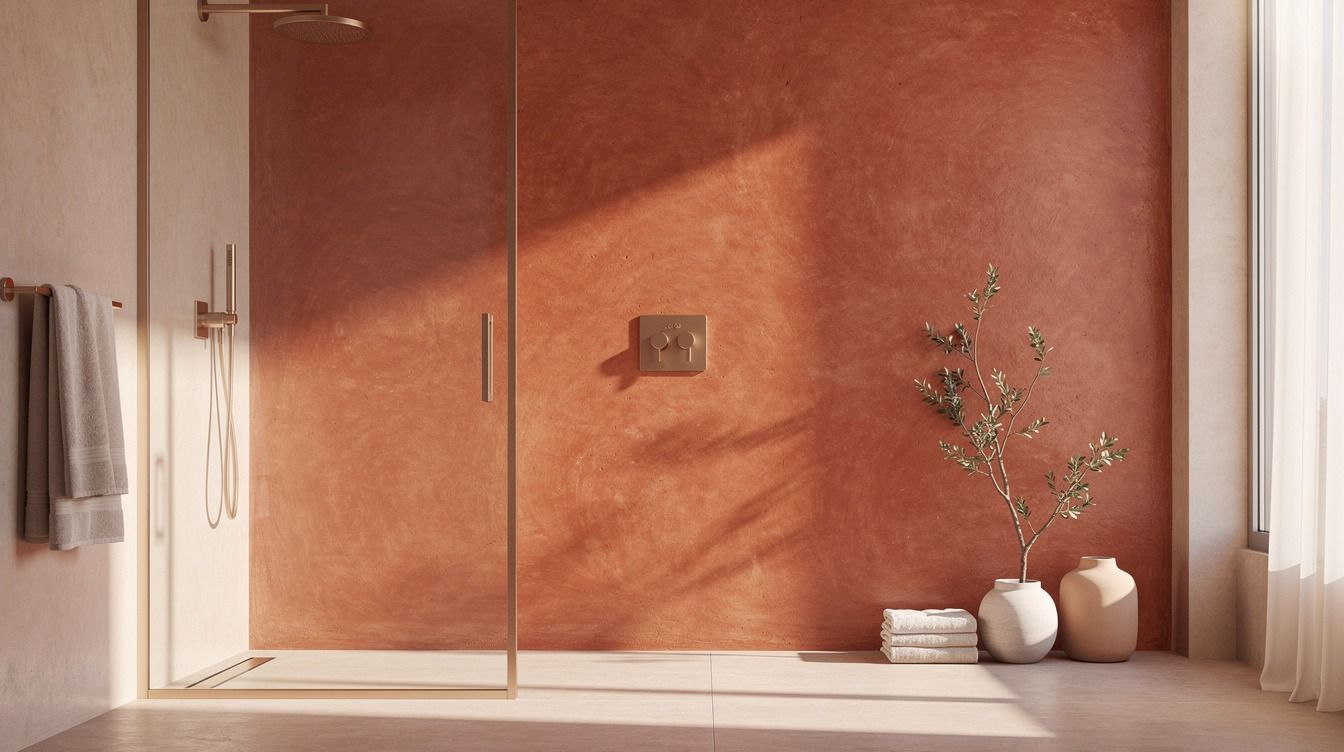
by Terracotta tadelakt makes a bathroom feel sun-warmed because its hand-troweled surface catches light unevenly, unlike flat white paint. I learned this after one bathroom stayed cold-looking despite warm towels and oak accessories. The fix was deeper color, softer lighting, and fewer shiny finishes. Your room doesn't need a full renovation to feel inviting.
- Start with the Dry-Zone Buffer for Terracotta Bathroom Walls
- Set the Sun-Baked Undertone Rule with an Earthy Terracotta Bathroom Palette
- Choose Terracotta Tadelakt Over Flat Paint for a Light Terracotta Bathroom
- Map Your Wet Zones Before You Trowel
- Anchor the Vanity at 32 to 36 Inches
- Layer the Three-Wood Rule Around Your Vanity
- Build the Three-Height Light Stack
- Swap Cold Chrome for Aged Metal
Before You Start: Price the Terracotta Bathroom Walls
Before you touch your walls, decide whether you're styling around the existing bathroom or changing its wet areas. A terracotta bathroom can stay in the budget tier if you paint, replace the mirror, update textiles, and bring in a warmer faucet. A full tadelakt installation or re-tiled shower moves quickly into a different investment.
If you're still comparing finishes, save these hand-troweled tadelakt bathroom ideas and the organic modern tadelakt bathroom guide. They'll help you decide whether your space needs a full wall treatment or only one earthy focal point. And you don't have to choose the expensive path just because the finish looks custom.
- Start with the Dry-Zone Buffer for Terracotta Bathroom Walls
- Set the Sun-Baked Undertone Rule with an Earthy Terracotta Bathroom Palette
- Choose Terracotta Tadelakt Over Flat Paint for a Light Terracotta Bathroom
- Map Your Wet Zones Before You Trowel
- Anchor the Vanity at 32 to 36 Inches
- Layer the Three-Wood Rule Around Your Vanity
- Build the Three-Height Light Stack
- Swap Cold Chrome for Aged Metal
- Hang Soft Textiles Against the Hard Surfaces
- Frame the Mirror with Storage Instead of Clutter
- Edit the Terracotta Bathroom Inspo Until It Can Breathe
1Start with the Dry-Zone Buffer for Terracotta Bathroom Walls
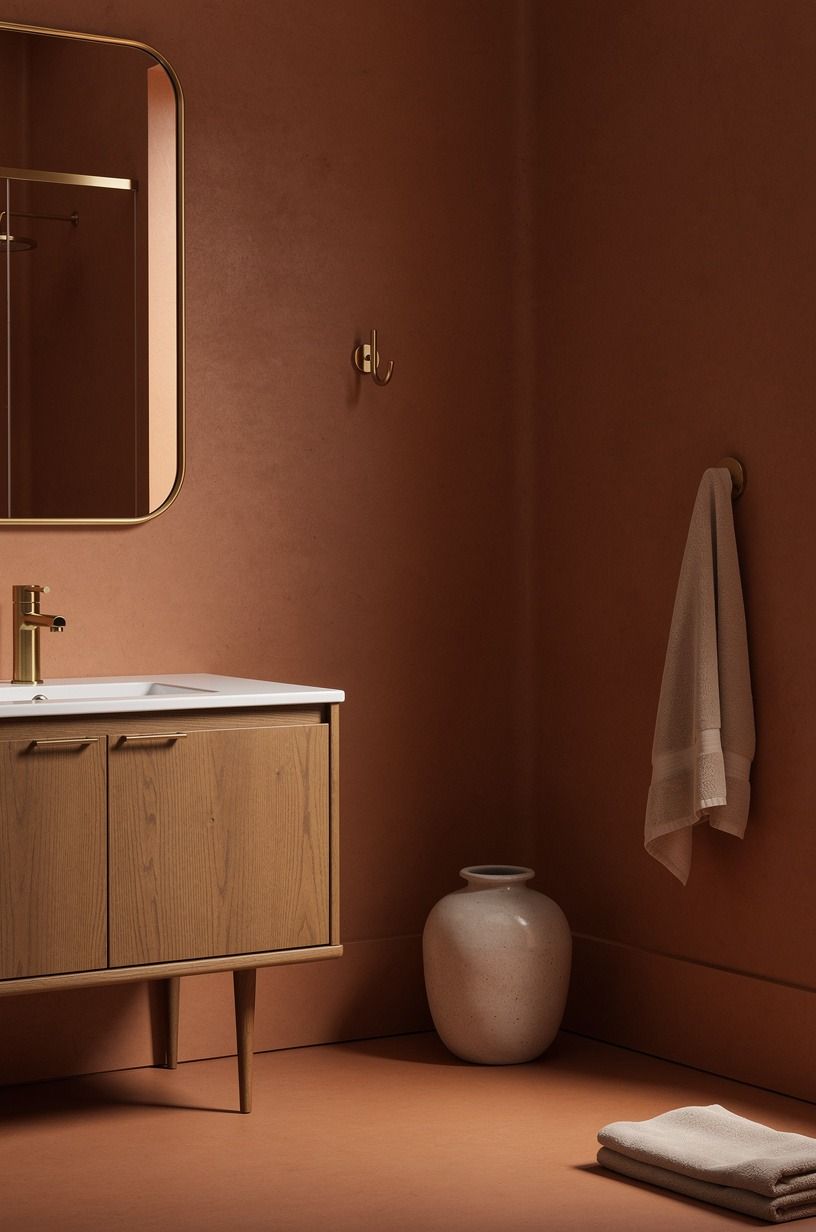
Begin with the wall outside the shower, where your terracotta tadelakt can make a strong impression without forcing a full wet-room project. The dry-zone buffer is my favorite starting point because it gives you color, texture, and that earthy, calming glow while keeping plumbing and waterproofing decisions contained. Your vanity wall, toilet wall, or wall behind a freestanding tub can carry the visual weight.
Look closely at the existing light before you choose a shade. A north-facing bathroom may flatten orange terracotta, while afternoon light can make it feel bold and almost glowing.
I once chose a pale clay sample beside a black accent, and the color turned pink by evening. Test your sample beside the warm white, camel, and cerused white oak tones already in the room.
For more context, compare it with this rustic tadelakt bathroom approach. Your first move should feel warm, not loud.
2Set the Sun-Baked Undertone Rule with an Earthy Terracotta Bathroom Palette
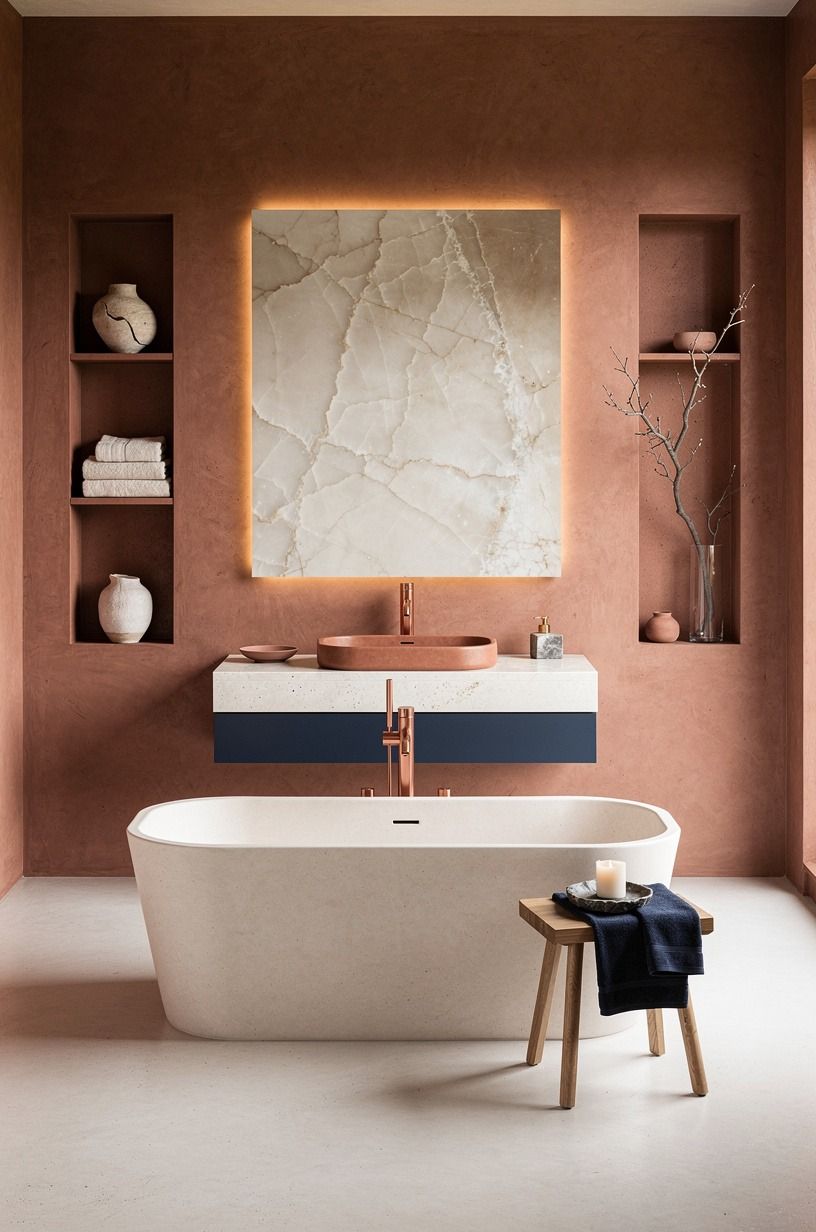
Choose terracotta by undertone, not by the name printed on the sample. For this palette, let midnight blue lead, copper support it, and ivory stay nearly neutral. The backlit translucent onyx adds a luminous mineral note without needing another strong color.
Benjamin Moore Hale Navy HC-154 can approximate the midnight-blue depth, while Sherwin-Williams Alabaster SW 7008 gives ivory the right softness.
And don't pile every warm shade into one small room. Your bathroom will feel more sophisticated if one shade leads, one supports, and one stays nearly neutral.
I like a midnight blue wall with ivory towels and copper hardware, rather than red tile, orange paint, and competing metallics. A few earthy, inviting notes are enough.
If you're drawn to deeper color, see these Moroccan tadelakt bathroom ideas for a moodier direction.
3Choose Terracotta Tadelakt Over Flat Paint for a Light Terracotta Bathroom
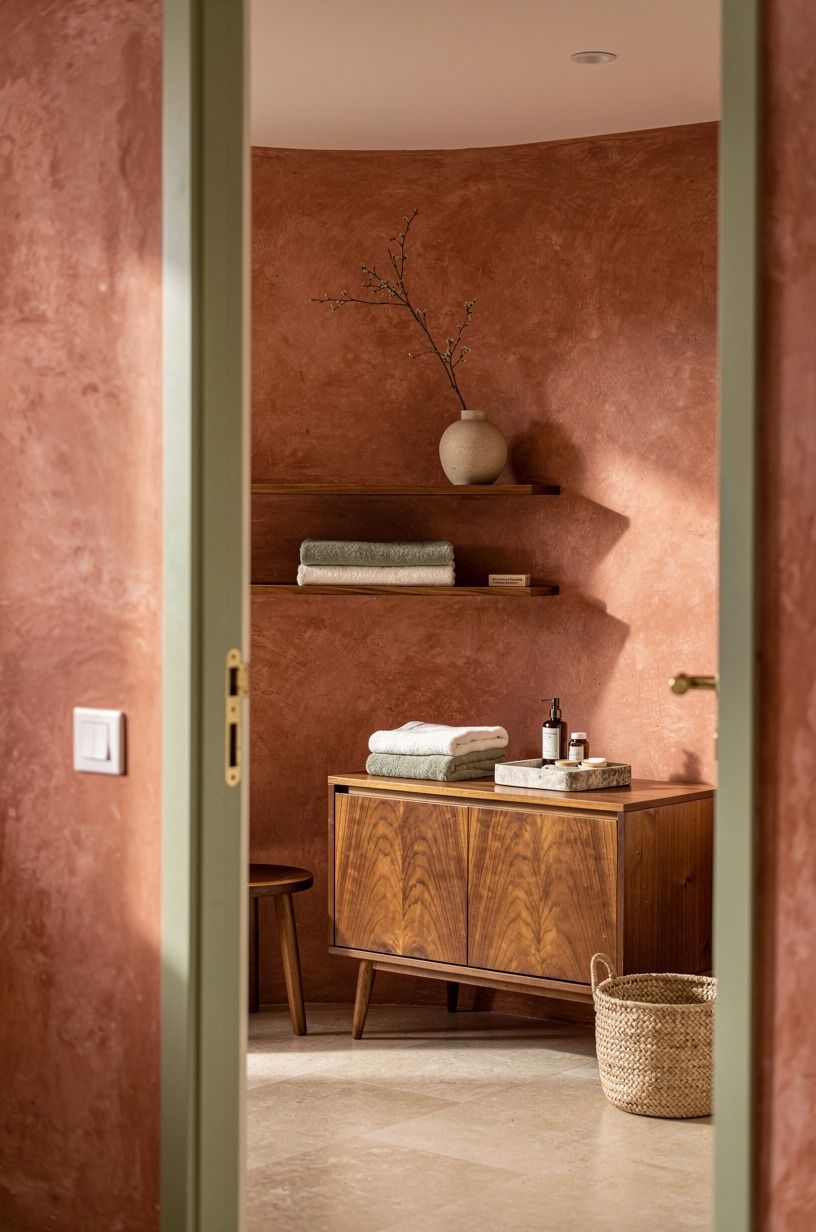
Flat paint gives you color, but tadelakt gives your eye something to follow.
4Map Your Wet Zones Before You Trowel
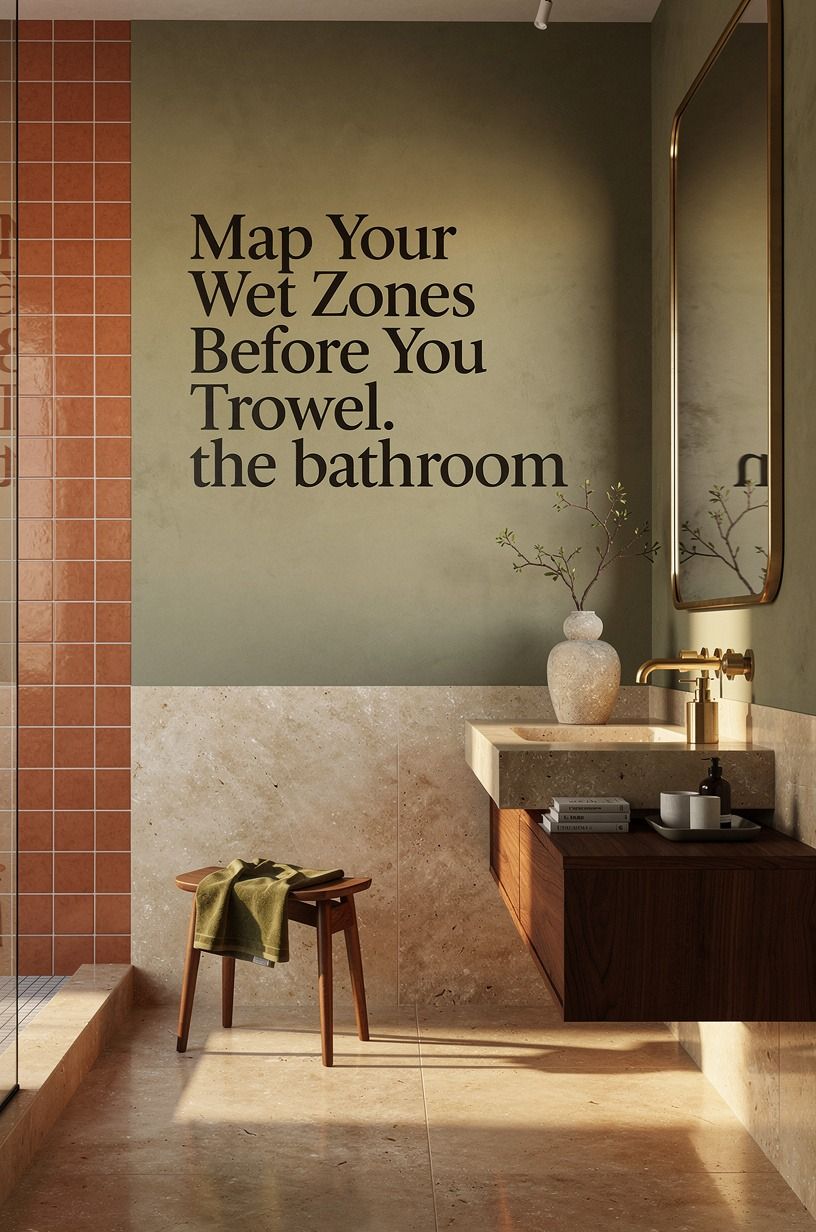
Before you cover a wall, map every place water can reach, including the splash area beside your sink and the wall near the tub. Your comfortable shower should measure at least 36 by 36 inches, and your standard tub may occupy 60 by 30 inches, so a few inches can determine whether the finish feels spacious or crowded. Mark those dimensions with painter's tape first.
A tadelakt look isn't a substitute for correct waterproofing or a qualified installation in a consistently wet zone. Ask your installer where the finish belongs and where tile makes more sense.
I prefer terracotta tadelakt above a tiled shower surround when the budget is tight, because you still get the warm visual field without pretending every surface has the same maintenance needs. And if you're planning a coastal palette, browse these Mediterranean tadelakt bathroom ideas before you commit.
5Anchor the Vanity at 32 to 36 Inches
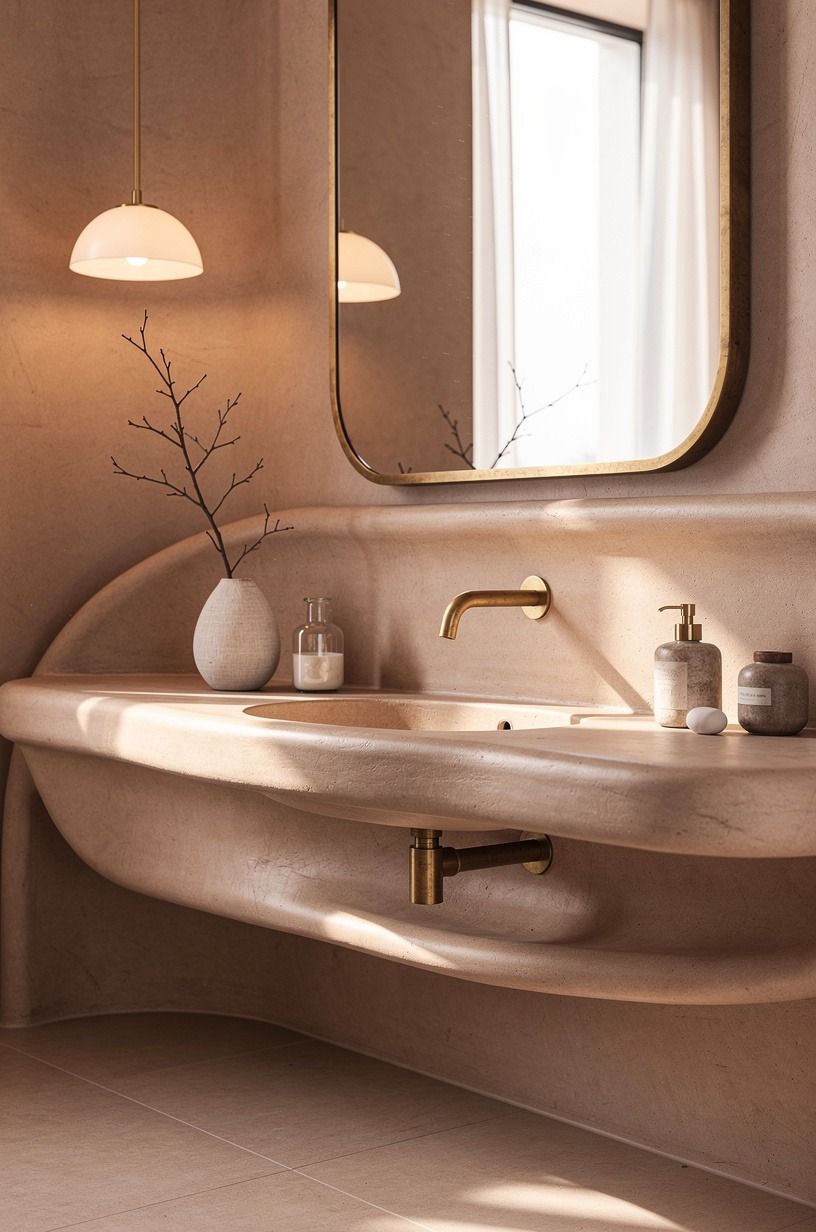
Set your vanity height between 32 and 36 inches, depending on who uses the bathroom and whether the countertop has a vessel sink. That range gives your terracotta wall enough room to show above the basin without making the mirror feel stranded.
Your goal is proportion, not maximum storage. A chunky cabinet that leaves only a narrow strip of clay visible wastes the finish.
The IKEA HEMNES line can provide a practical starting point, but I'd avoid a glossy white cabinet here. A linen-toned or natural-wood vanity will keep the room warm, while unlacquered brass adds a quieter note as it develops patina.
If you need a higher-end option, choose a simple natural-wood vanity with aged brass rather than a bright marble slab. Your mirror should be wide enough to balance the cabinet, but don't let it swallow the wall texture. This organic modern bathroom guide has useful proportion ideas.
6Layer the Three-Wood Rule Around Your Vanity
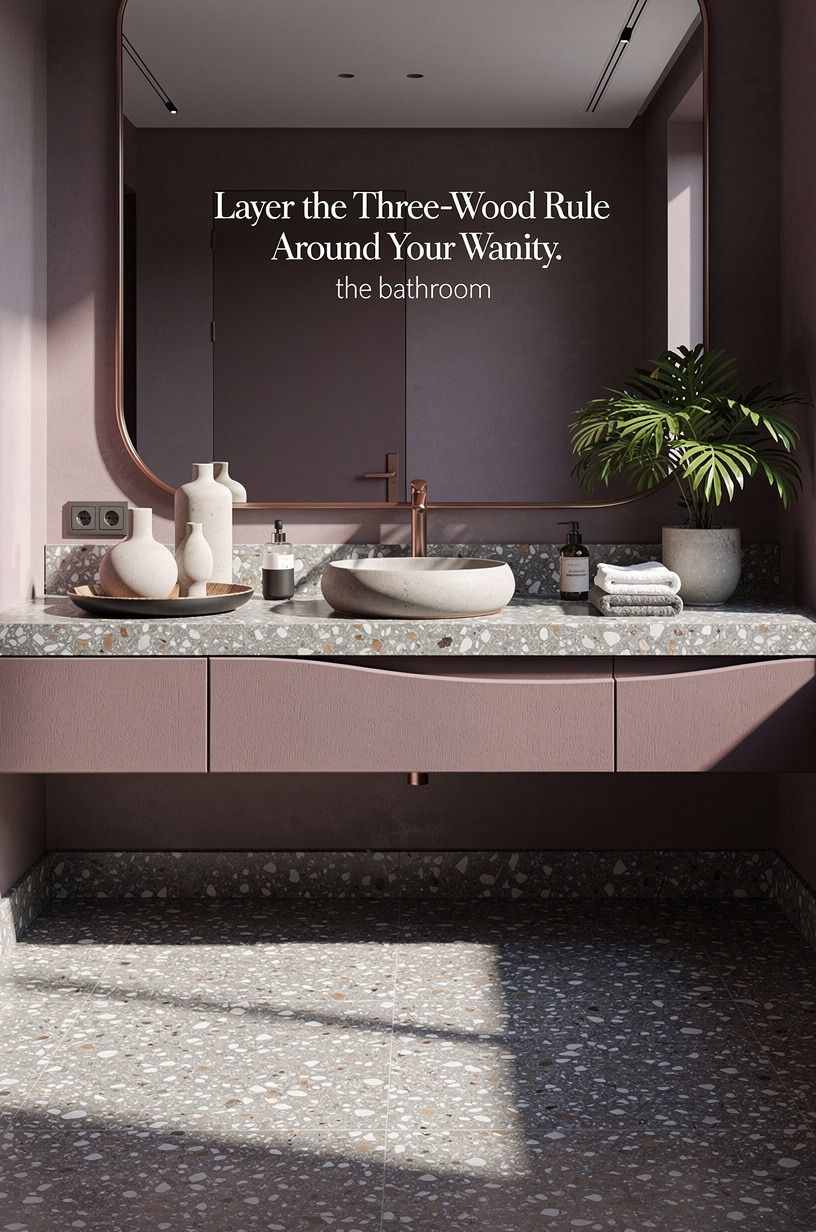
Use three related finish notes at most: one plum lead, one grey support, and one rose-gold accent. I call this the Three-Wood Rule because terracotta already brings a strong earthy color, and too many competing grains and finishes can make your bathroom look busy.
An oversized-chip terrazzo surface adds movement without requiring another loud pattern. Pick one note to lead.
Your stool, mirror frame, and shelf don't need to match exactly. Let the rose-gold accent repeat lightly, while the terrazzo supplies texture without another busy pattern.
I once paired a plum surface with too many pink metallic accessories, and the room looked heavier than expected. You’ll get a more tranquil result with a muted grey cabinet, a restrained rose-gold detail, and oversized-chip terrazzo used in one clear area. And you don't need a full furniture set.
One small stool and one considered storage piece can make the room feel intentional. For a more rustic reference, save these handmade lived-in bathroom ideas.
7Build the Three-Height Light Stack
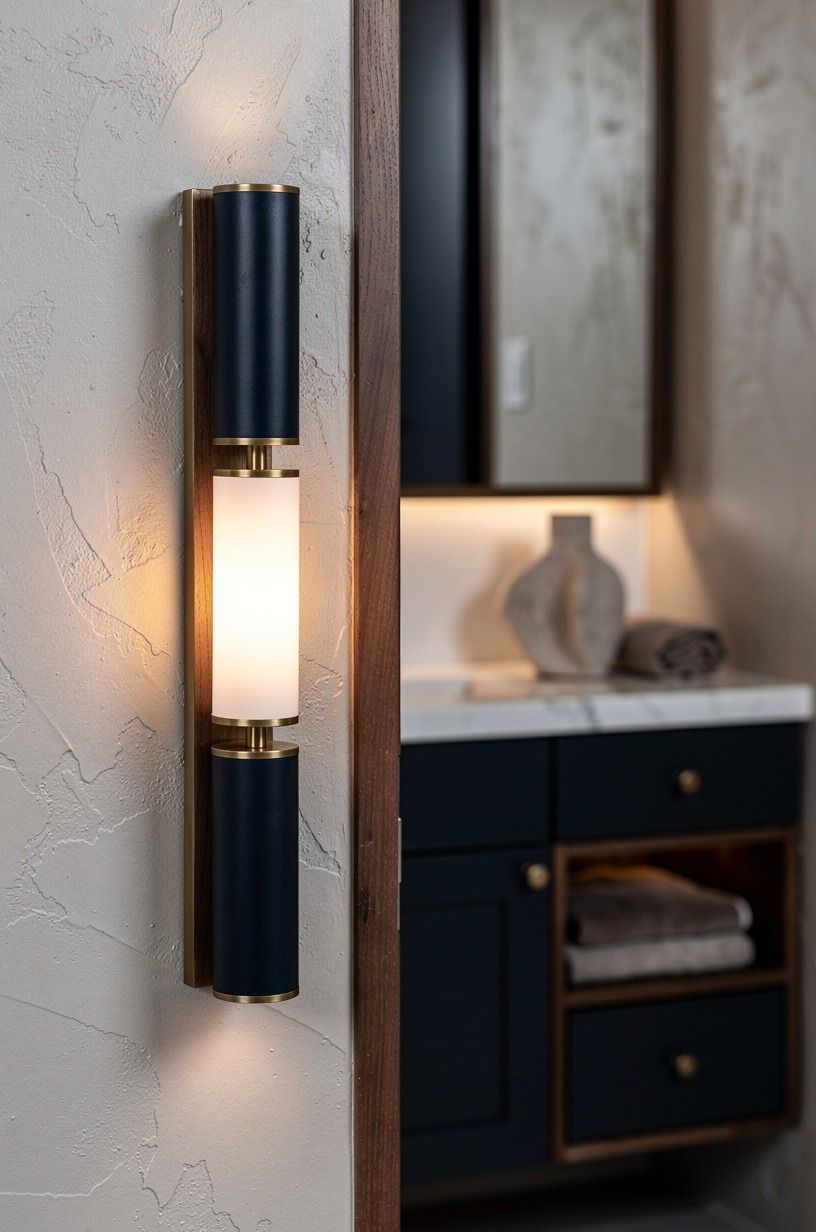
Build your lighting at three heights: overhead, face level, and low accent.
8Swap Cold Chrome for Aged Metal
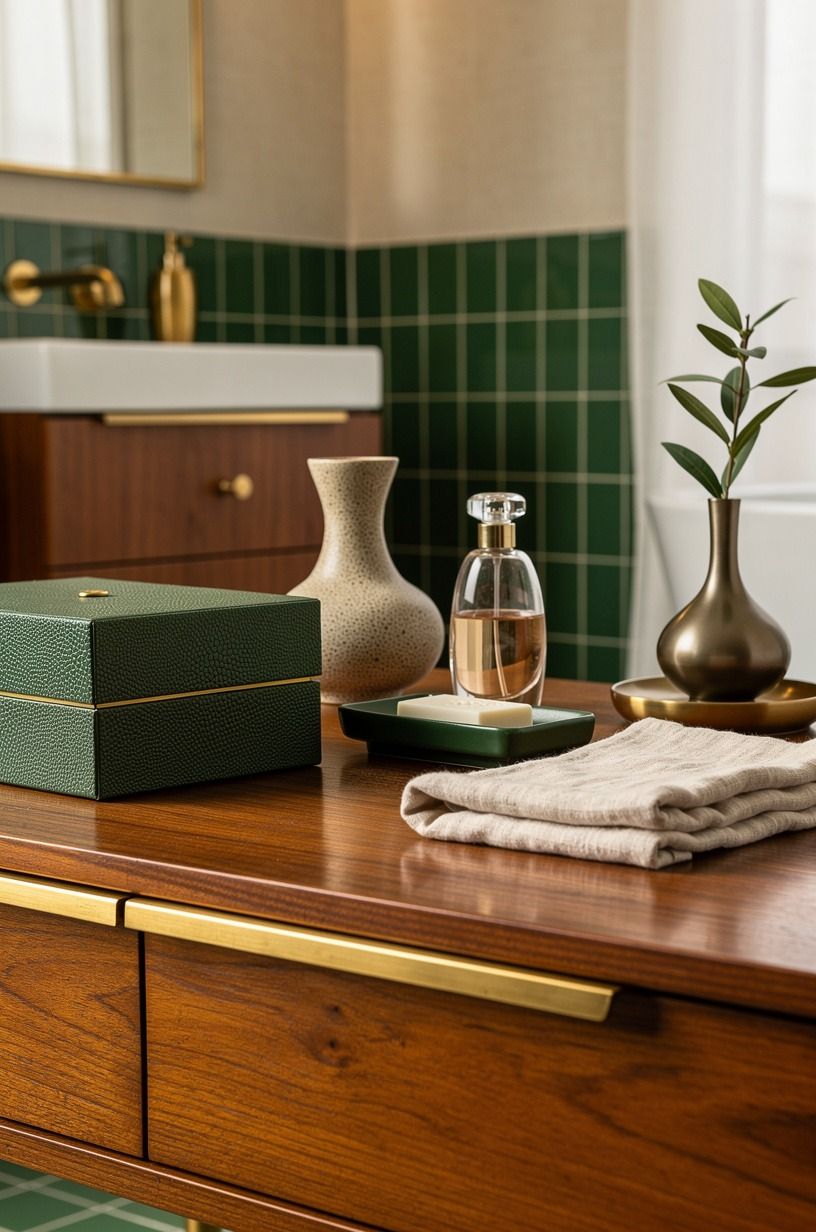
Swap shiny chrome for aged gold, softened brass, or another metal with a mellow surface. The metal doesn't need to match every fixture, but your faucet and cabinet hardware should share a visual temperature. Aged gold brings a rich note to emerald and cream without looking as sharp as mirror-finish chrome.
This is a small change, yet your hand notices it every morning. Chrome reflects the ceiling light in a hard flash, while softened gold settles into the emerald palette and lets the shagreen accents lead.
I’d choose a simple faucet over a sculptural one with extra ridges, especially in a small room where cleaning matters. Why should your faucet compete with the wall you paid to make interesting?
It shouldn't. Look at the green tadelakt bathroom ideas for examples of how softened metal behaves beside earthy color.
9Hang Soft Textiles Against the Hard Surfaces
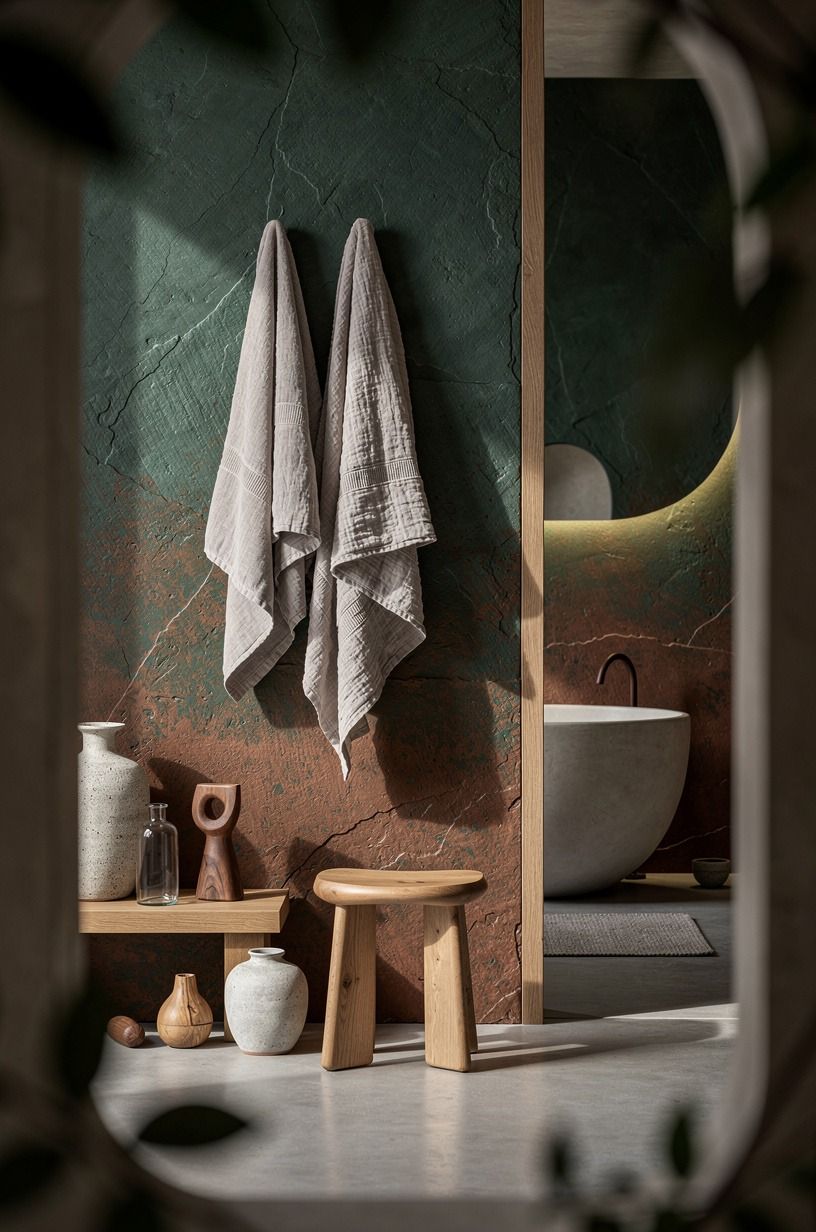
Bring in textiles that absorb sound and soften the hard wall, floor, and glass. Start with washed Belgian linen towels, a linen shower curtain if your layout allows one, and a washable rug with a low pile. Your bathroom will feel more welcoming when the first thing your feet meet isn't cold tile.
Keep the textile palette close to the wall but not identical. Forest green and rust can sit beside natural oak, while cream linen keeps the room from looking themed.
A rust-toned linen cushion may sound too decorative for a bathroom, but a small amount creates a rich contrast if ventilation is good. I’d skip a terracotta towel set because matching the wall too closely can look staged. And a simple cream towel often does more work than a patterned one.
Save this warm coastal tadelakt palette for textile combinations.
10Frame the Mirror with Storage Instead of Clutter
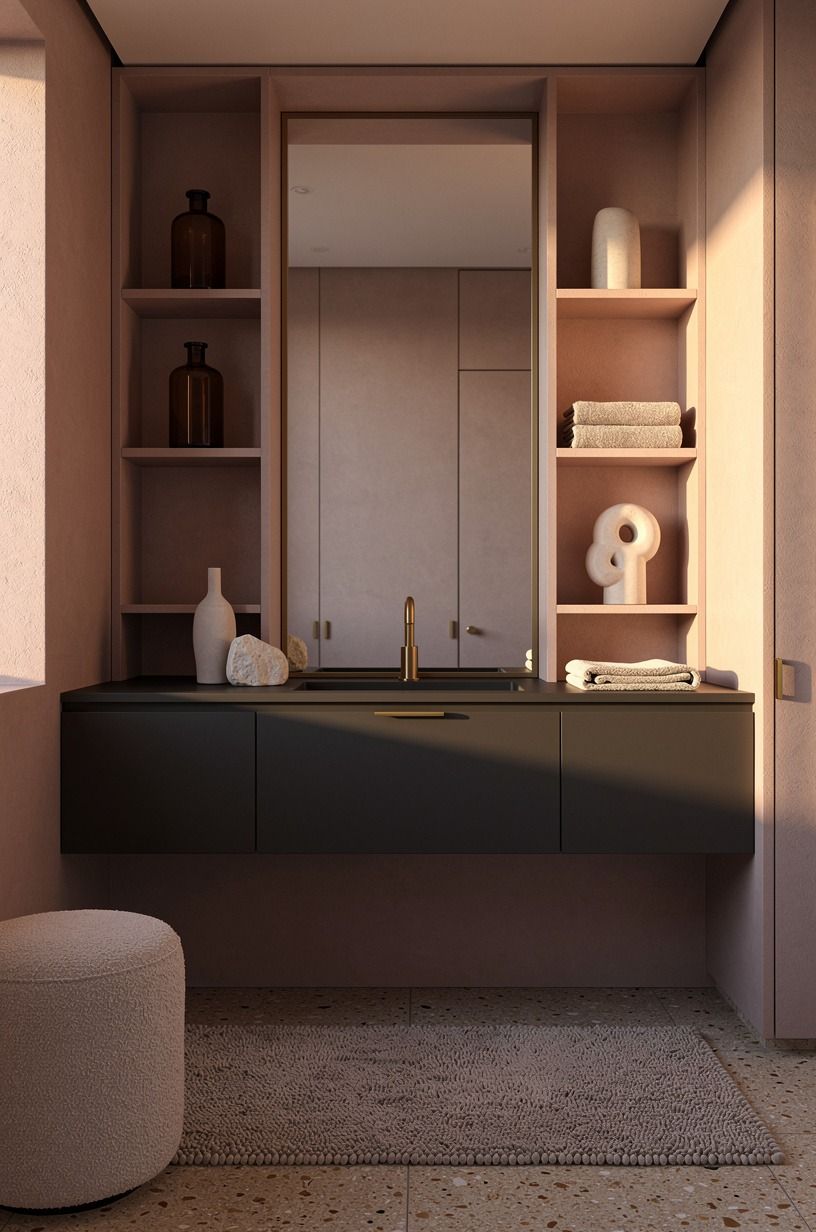
Frame your mirror with useful storage, not a row of decorative objects.
11Edit the Terracotta Bathroom Inspo Until It Can Breathe
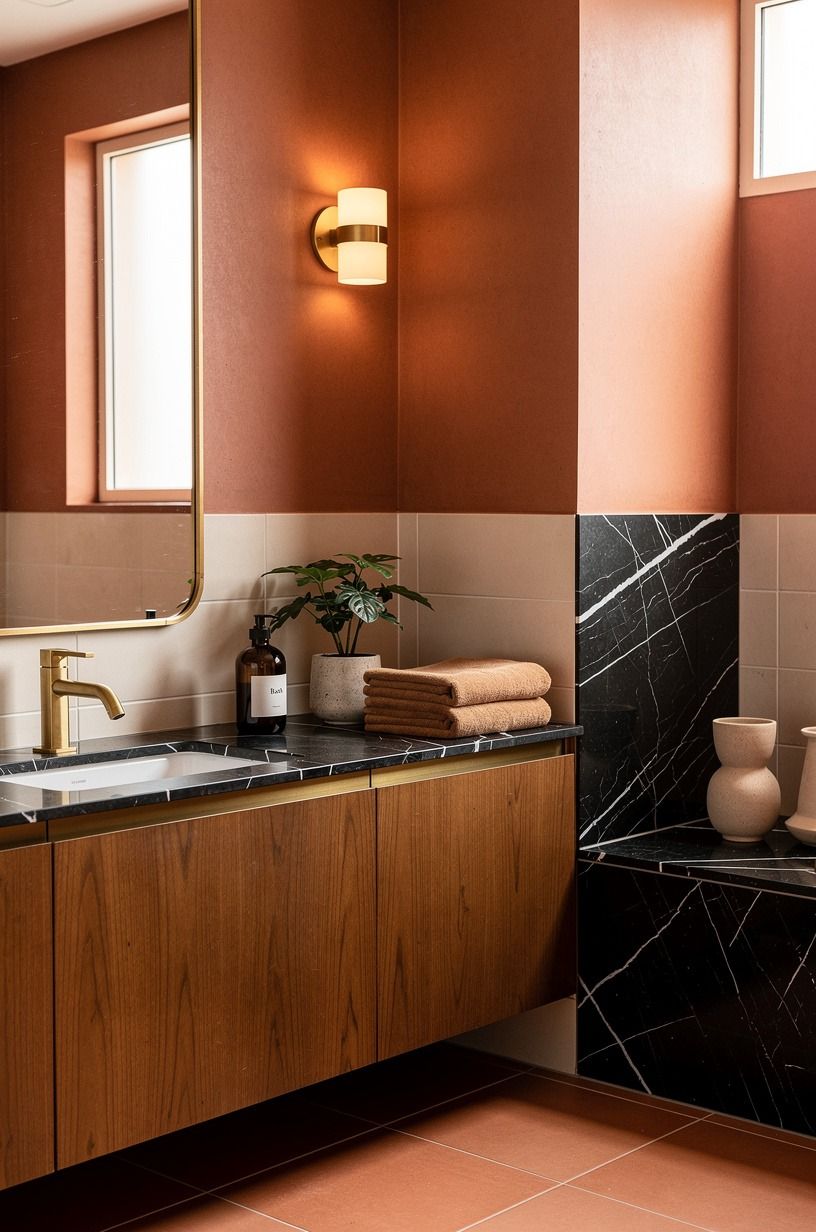
Finish by editing the room from the doorway. Remove anything that repeats the same warm white, camel, or black accent more than twice.
The Edit for Air principle keeps your terracotta bathroom from turning into a color display. Leave the wall, mirror, and one useful accessory enough visual space to speak clearly.
Check your practical clearances, too. Keep at least 21 inches in front of the toilet, and make sure your storage doors don't collide with the vanity or shower.
Your final room should be bright in the morning, calming at night, and easy to wipe down. I’d rather see one beautiful Nero Marquina black marble tray with white veining than five tiny decorative pieces.
But if the room still feels flat, add a single green plant or a warmer bulb before buying anything else. The restraint is what makes the earthy palette feel sophisticated.
The Design Choice I’d Make After Living With Terracotta
I’ve gone back and forth on whether a bathroom should look polished or a little rough around the edges. Terracotta tadelakt convinced me that the best rooms need both.
The finish can feel refined in the morning light, yet its hand-worked variation keeps it from looking like a showroom. That tension is why I’d choose it over a perfectly uniform slab or a wall of glossy tile.
The first lesson is to respect the room’s existing temperature. If your floor is cool gray, a blazing orange wall won't magically make the bathroom warm.
It may make the gray look harsher. I’d start with a muted clay sample, then bring in wood and aged metal before deciding whether the color needs more depth.
Benjamin Moore Chestertown Buff HC-9 is a useful companion because it adds warmth without competing with the terracotta.
The second lesson is that light matters more than the sample. A soft wall can look dusty under a cold ceiling fixture and gorgeous beside a warm sconce. I tested samples at breakfast, noon, and after sunset, and the evening test changed my choice completely.
You should do the same (your bathroom's worst hour tells you more than the room at its prettiest).
Finally, don't assume the most expensive version will feel the most luxurious. A high-end re-tiled shower can cost $12,000 to $30,000 or more, while a budget refresh covering paint, a mirror, a faucet, and textiles sits around $200 to $1,200 in typical US pricing.
Your money matters most where your hands and eyes land every day. For me, that means the wall finish, the mirror light, and the faucet. Everything else can stay simple.
What People Always Want to Know
What is the best Terracotta Tadelakt Bathroom Ideas for Sun-Warmed Color for a small bathroom?
A muted clay wall with a compact IKEA HEMNES vanity is my best small-room combination because it keeps the floor visible and the palette warm. Choose one textured wall, a wide mirror, and soft towels. The result feels airy and calming without crowding your sightline.
Compare it with these small organic tadelakt ideas.
Where can I buy Terracotta Tadelakt Bathroom Ideas for Sun-Warmed Color pieces on a budget?
Look at IKEA, Wayfair, and Target for mirrors, stools, towels, and lighting. Facebook Marketplace and thrift stores can yield wood frames and small cabinets for less. Choose earthy materials with believable texture, then skip anything too glossy.
These rustic tadelakt bathroom ideas show how secondhand pieces can feel intentional.
How much does a Terracotta Tadelakt Bathroom Ideas for Sun-Warmed Color makeover cost?
A budget refresh covering paint, a mirror, a faucet, and textiles typically falls between $200 and $1,200 in the US. A mid-range project with a new vanity, partial wall tile, and lighting runs $3,000 to $9,000. Your existing mirror, cabinet, and towels may reduce the work considerably.
Can I create a Terracotta Tadelakt Bathroom Ideas for Sun-Warmed Color on a budget?
Yes, and you can begin without changing plumbing. Repaint the dry-zone wall, move in a wood-framed mirror, and replace only the faucet or light fixture. Warm texture matters more than quantity.
Keep what works, shop secondhand, and reserve the larger budget for wet-zone waterproofing or professional installation.
Is a Terracotta Tadelakt Bathroom Ideas for Sun-Warmed Color worth it in a small space?
Yes, especially when you keep the treatment focused. A small bathroom gives the textured wall more visual impact, and fewer square feet can keep the project manageable. Use a 32 to 36 inch vanity, a wide mirror, and one quiet storage piece.
Your room will feel inviting and refined rather than overfilled.
Is Terracotta Tadelakt Bathroom Ideas for Sun-Warmed Color a good idea for a rental?
Yes, if you keep the permanent surfaces intact. Use removable wallpaper in a dry zone, a tension rod, a freestanding mirror, and peel-and-stick accents away from direct water.
Soft lighting and terracotta textiles can carry the color story until you own the space. For a rental-friendly mood, browse these Tulum-inspired tadelakt ideas.
Where I’d Start First
If I had to pick one step, I'd start with the dry-zone terracotta wall. Its uneven texture catches evening light better than flat paint, and you won't have to rebuild the shower to feel the difference. Pin this guide for later, then test your sample beside the floor before buying anything.