
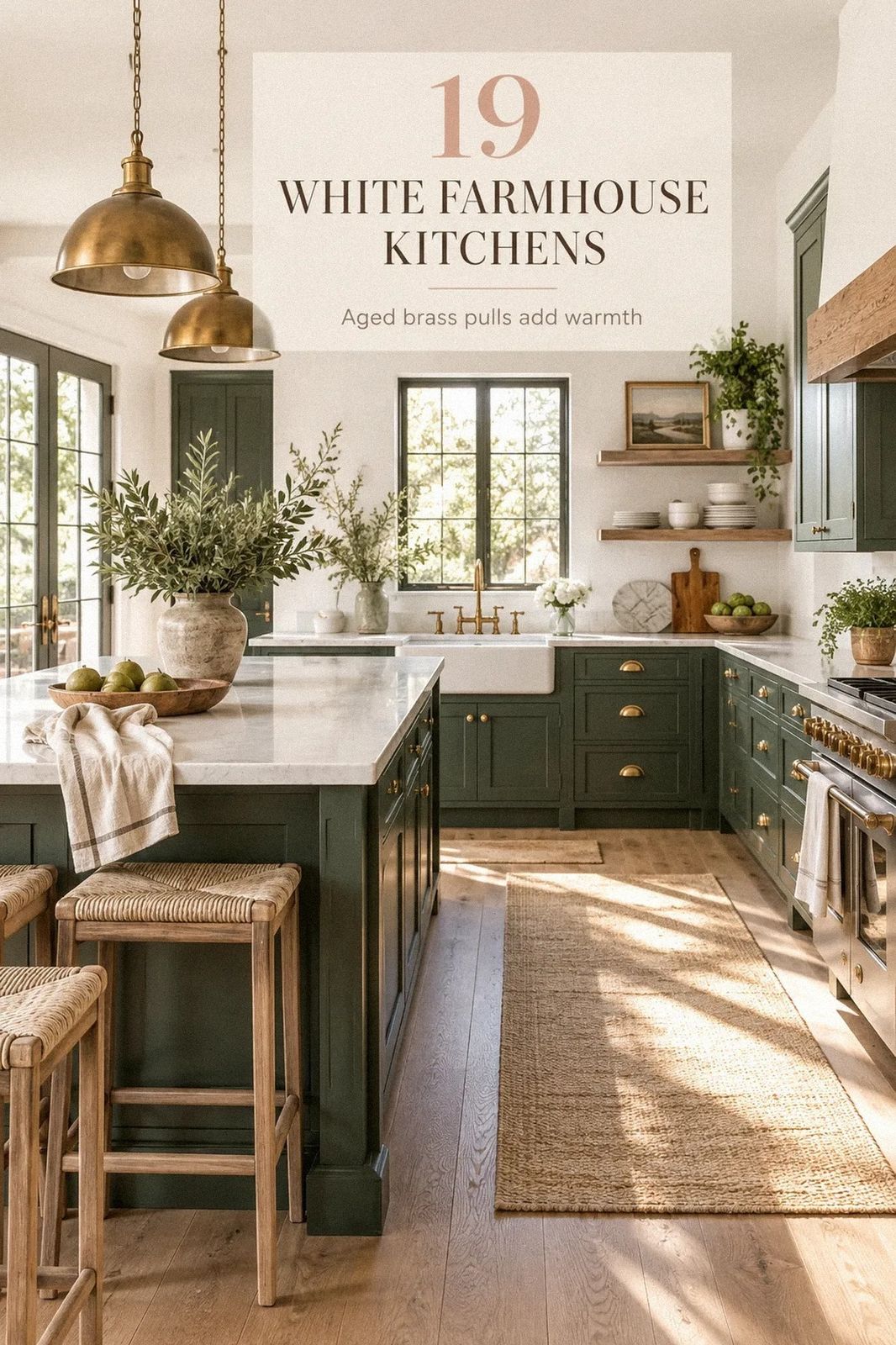
 by
by I kept this white farmhouse kitchen makeover inside the typical $300 to $1,500 cosmetic range, and the room still feels warm instead of washed out. I was eight months pregnant when I started, so every choice had to earn its place. The result is bright, earthy, and genuinely welcoming. No full renovation required.
Here's what it looked like before
The before photo tells the story better than I can. The kitchen had builder-grade white cabinets, yellowed laminate counters, a tired ceiling light, and hardware that had lost its finish.
Nothing was falling apart, but nothing felt chosen either. The room was clean, functional, and completely forgettable.
I didn't want a showroom kitchen. I wanted a charming room where breakfast crumbs wouldn't feel like a design emergency. The oak laminate counter stayed, the cabinet boxes stayed, and the plumbing stayed.
That decision saved money and gave me room to spend on the tactile details I would touch every day.
The soft, welcoming balance reminded me of ideas in these white cottage kitchen examples. I borrowed the calm feeling, then made it more practical for our busy home.
- Paint the walls around kitchen interior white
- Build the Two-White Rule for white appliances in kitchen ideas
- Layer the white and wood kitchen design
- Swap dated pulls for aged hardware
- Choose Shaker fronts over ornate detailing
- Anchor the room with a small farmhouse table
- Can a small kitchen still feel airy?
- Frame the sink with a linen window shade
- Hang lighting in a three-height stack
- Mix matte black with warm brass
- Use zellige behind the range
- Build open shelving with restraint
- Choose a deeper white for the pantry door
- Style the counter with a three-object rule
- Paint the lower cabinets a gentle contrast
- Add a washable runner with a quiet pattern
- Store small appliances behind one door
- Mix in one piece of blue pottery
- Finish with the detail you touch first
1Paint the walls around kitchen interior white
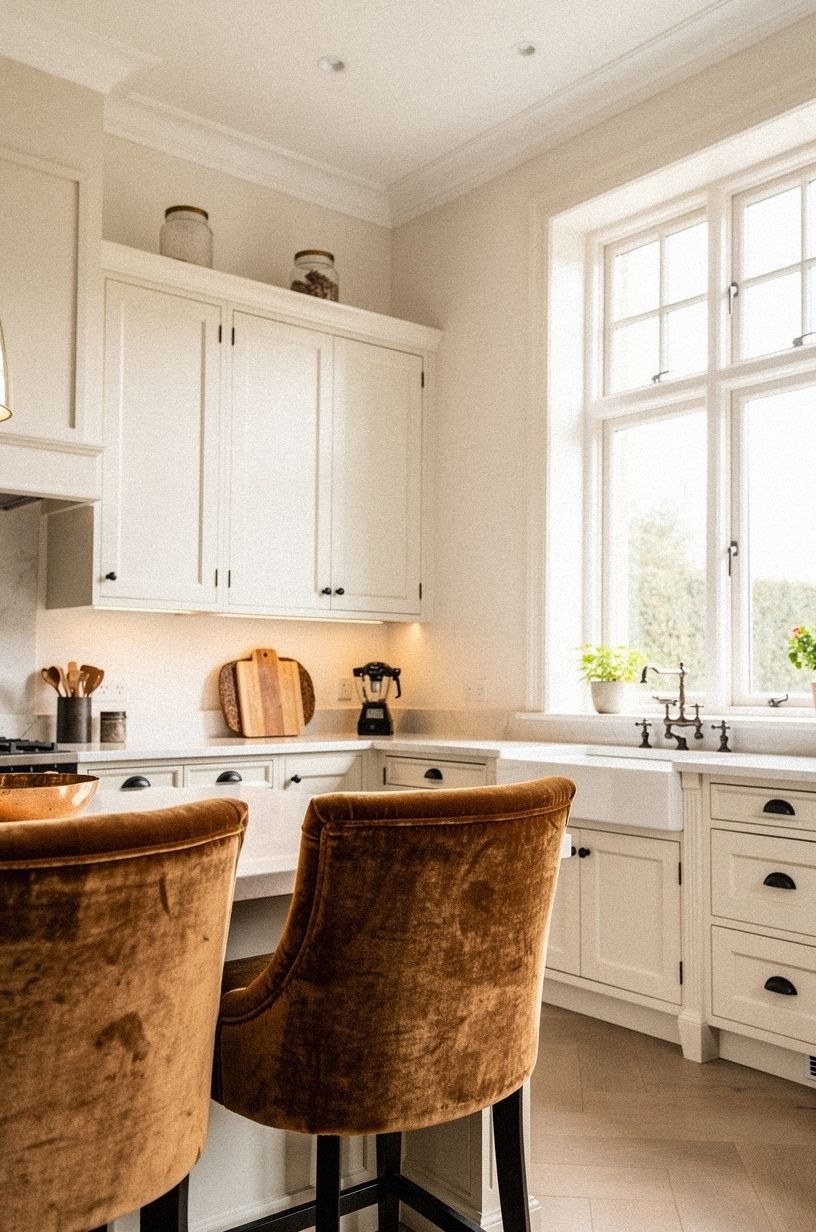
I started with the walls because the old beige paint made the cabinets look gray. Benjamin Moore White Dove OC-17 gave me a softer white without turning the room stark, and the afternoon light began bouncing across the backsplash instead of stopping at the wall. Camel accents, black details, and a deep-pile mohair velvet seat keep the warm white from feeling flat.
The first coat looked too pale at 9 a.m., then warm by dinner. That shift mattered.
If you're choosing white paint, tape a sample beside your counter and watch it for a full day. And don't trust a tiny card under store lighting.
Your room's windows, flooring, and bulbs will make the final call.
A similar luminous approach works in a coastal farmhouse kitchen, though I kept my room earthier with wood and aged metal.
2Build the Two-White Rule for white appliances in kitchen ideas
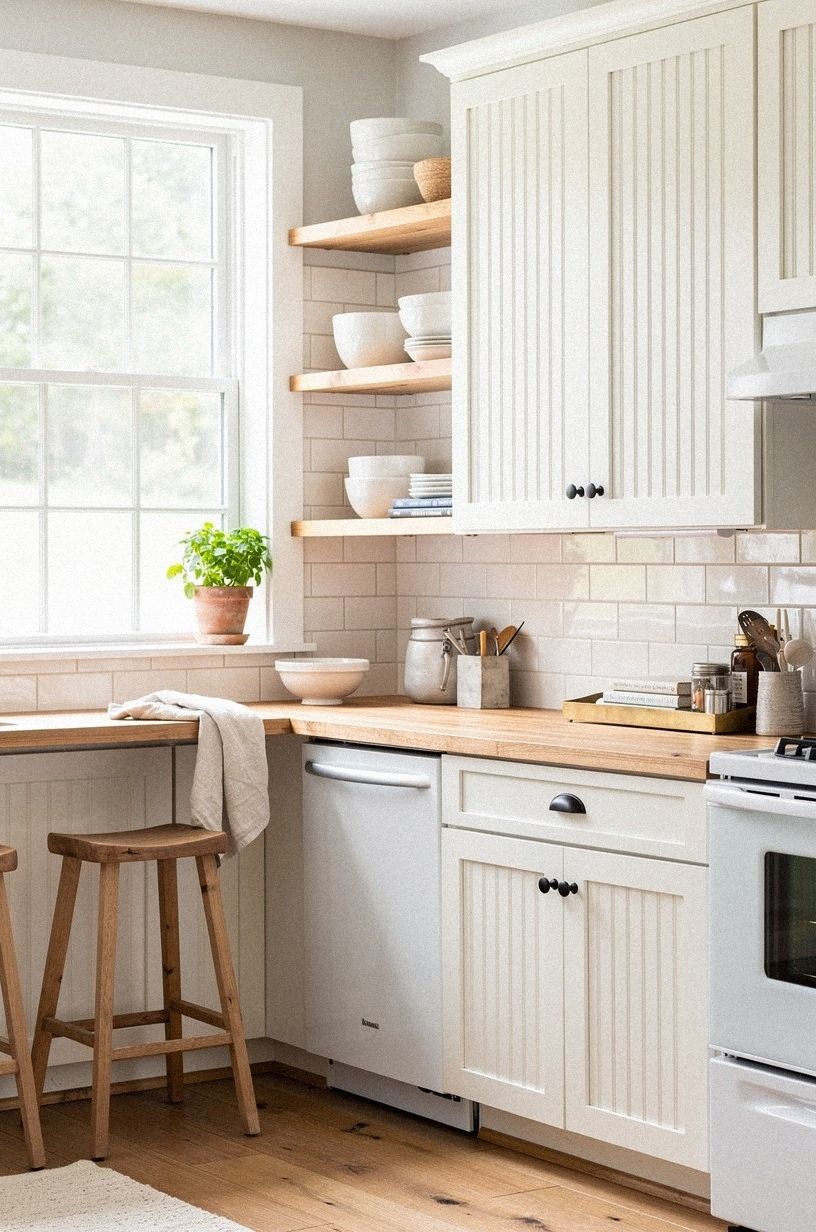
I kept the appliances ivory rather than bright white, then paired them with midnight blue accents and a Carrara marble surface with subtle gray veining. The refrigerator has a cooler finish, while the cabinet paint leans creamy. That small difference gives the room depth beside the pale appliances and copper hardware.
My rule was simple: one warm cream for fixed surfaces, one ivory finish for appliances, and midnight blue to connect them. If you're styling a rental, you can use the same idea with an ivory toaster, a pale kettle, and a timber cutting board.
But avoid covering every surface with pale objects. Your eye needs a darker pause.
For another warm, restrained direction, I liked the contrast in these white oak kitchen ideas. The wood keeps light appliances from feeling clinical.
3Layer the white and wood kitchen design
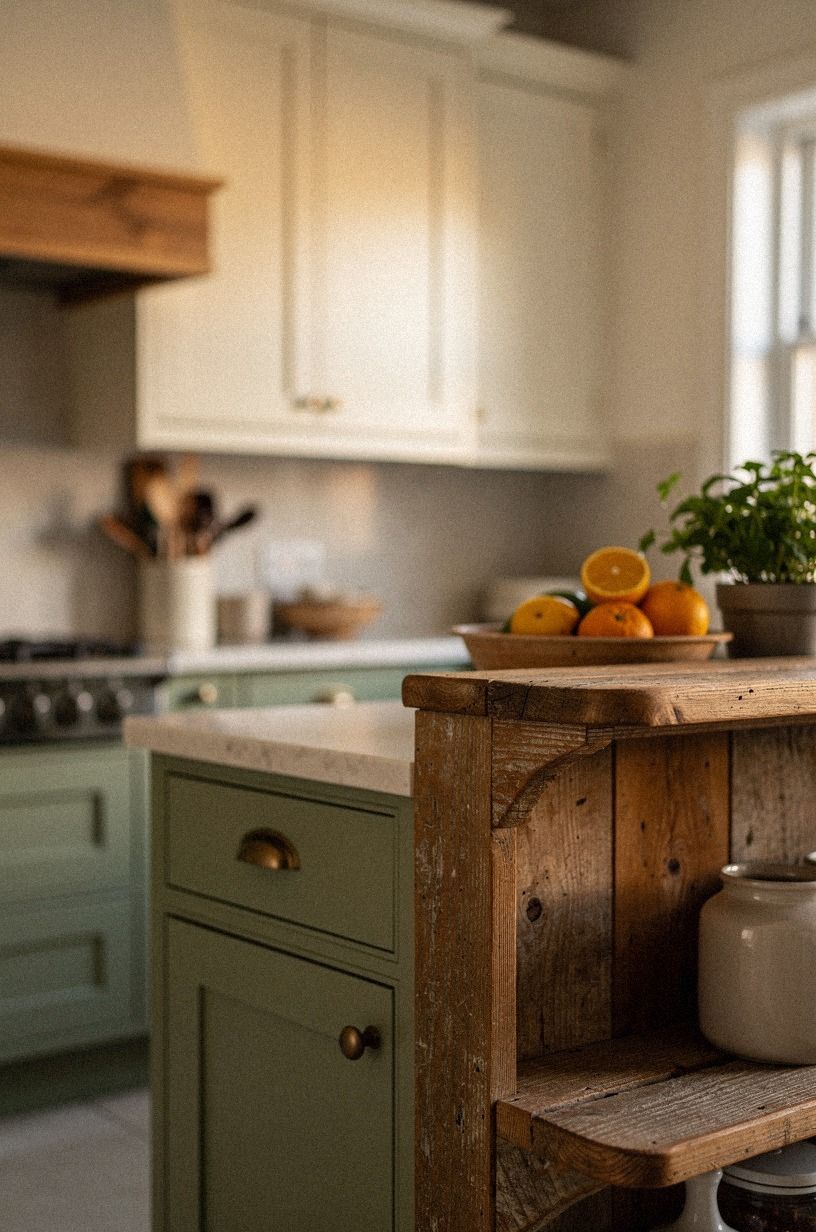
The room needed warmth, so I brought in reclaimed weathered teak through a narrow shelf, a cutting board, and two stools. The natural wood gives the sage green and warm cream palette a graceful interruption.
I also added a wooden utensil crock and a small teak-framed print near the pantry. Those details are inexpensive, but they make the kitchen feel collected rather than assembled in one afternoon. If you're starting with a pale room, repeat one wood tone at least three times so the warmth feels deliberate.
A small white oak island can create the same grounded effect when a table doesn't fit.
4Swap dated pulls for aged hardware
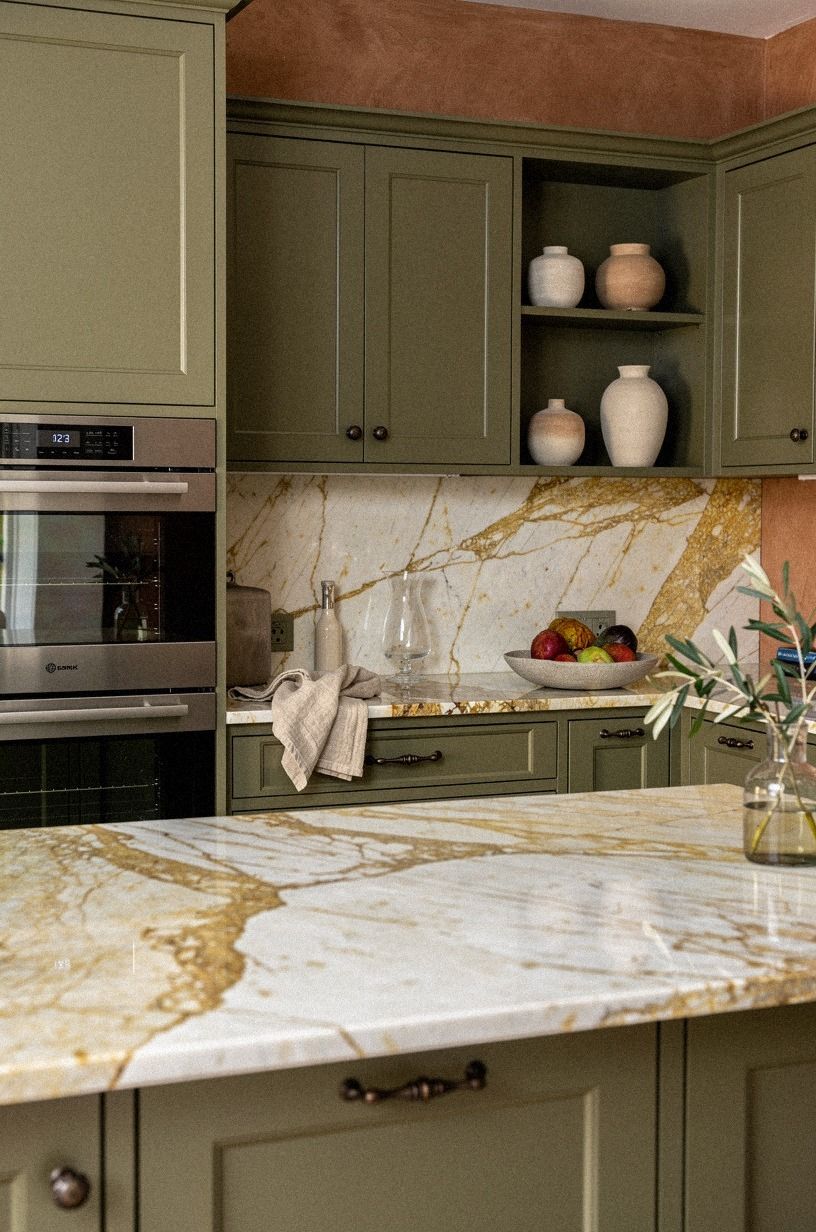
The cabinet doors were fine. The little knobs weren't. I replaced them with aged brass pulls, choosing a simple shape that echoed the gold veining in the Calacatta marble without looking shiny forever.
The terracotta, stone, and olive accents made the change feel warmer and more intentional.
I measured every hole twice before ordering because returning hardware is annoying when you're already balancing a paint brush and a toddler's snack. If you're doing your kitchen, use cardboard to test the pull length on a door first. And don't mix three metal finishes in a small room.
Your eye will read it as noise.
For a budget-friendly styling reference, these kitchen table centerpiece ideas show how much warmth a few quiet materials can add.
5Choose Shaker fronts over ornate detailing
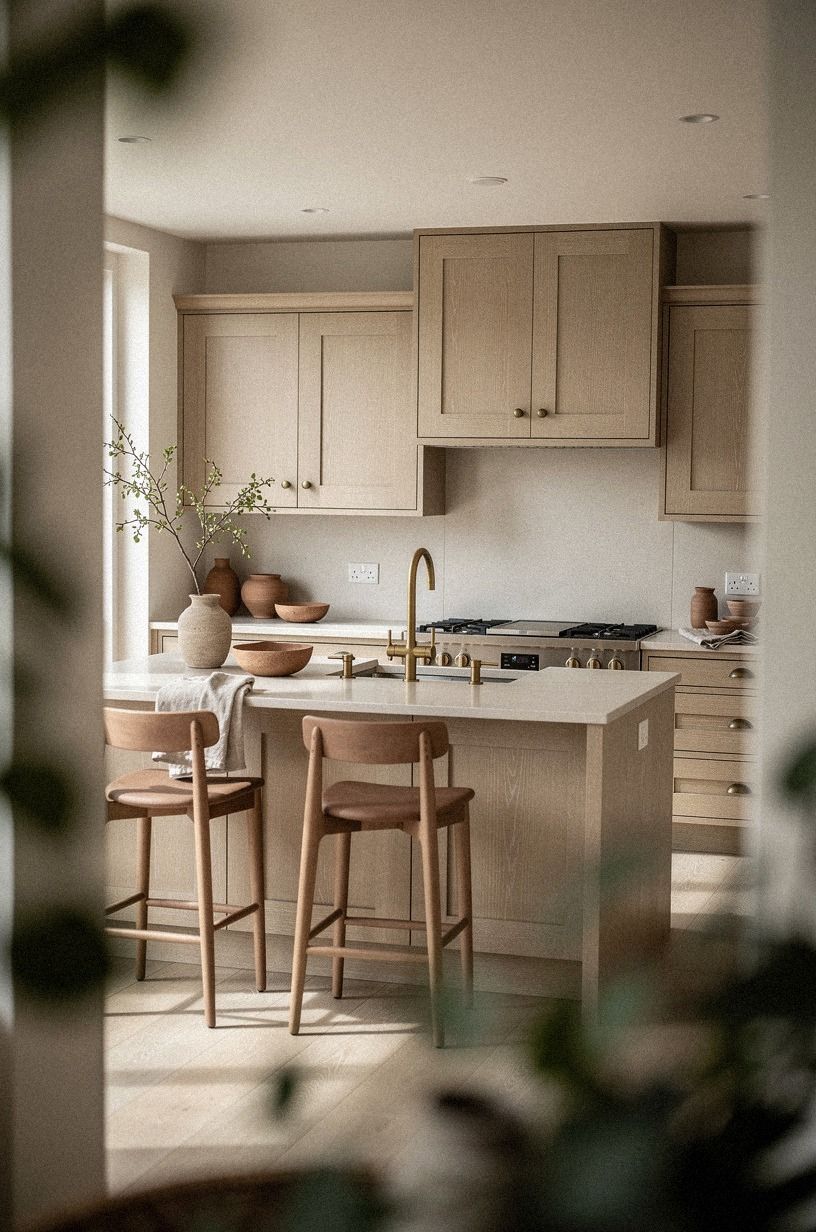
I wanted the cabinets to feel rustic, but I didn't want fake farmhouse decoration. Shaker cabinet fronts gave me the clean frame I needed while leaving room for texture, color, and useful objects.
The profile is simple enough to age well, yet it still catches a soft shadow around each door. I paired the restrained fronts with aged brass hardware, cerused white oak, and linen-toned textiles so the clay and neutral colors wouldn't feel overly polished. The result is quiet, practical, and surprisingly handsome.
The pared-back mood is close to the feeling in these bright white cottage kitchens, though my darker pantry door adds more drama.
6Anchor the room with a small farmhouse table
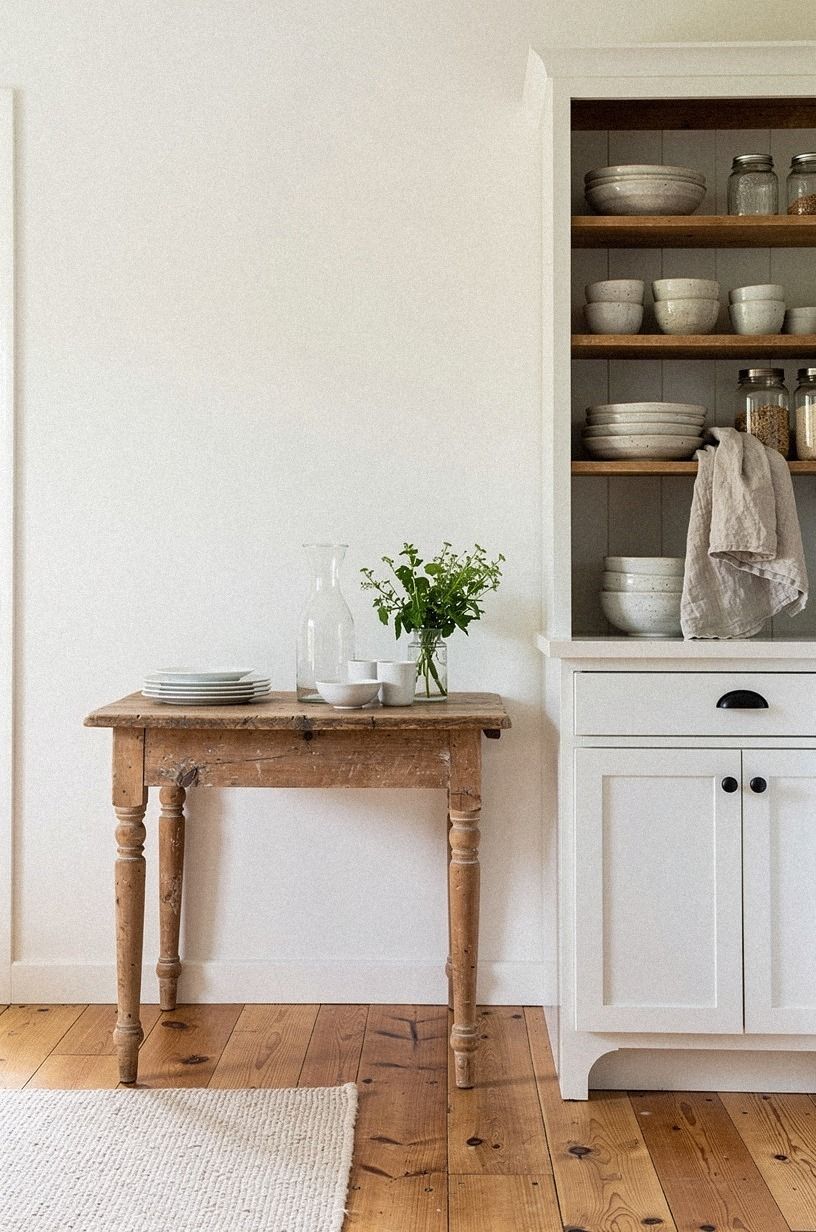
A large island would've swallowed the work zone, so I used a small farmhouse table near the window instead. Its plum and gray base, rose-gold detail, and backlit translucent onyx accent give the compact area a little depth without adding bulk.
7Can a small kitchen still feel airy?
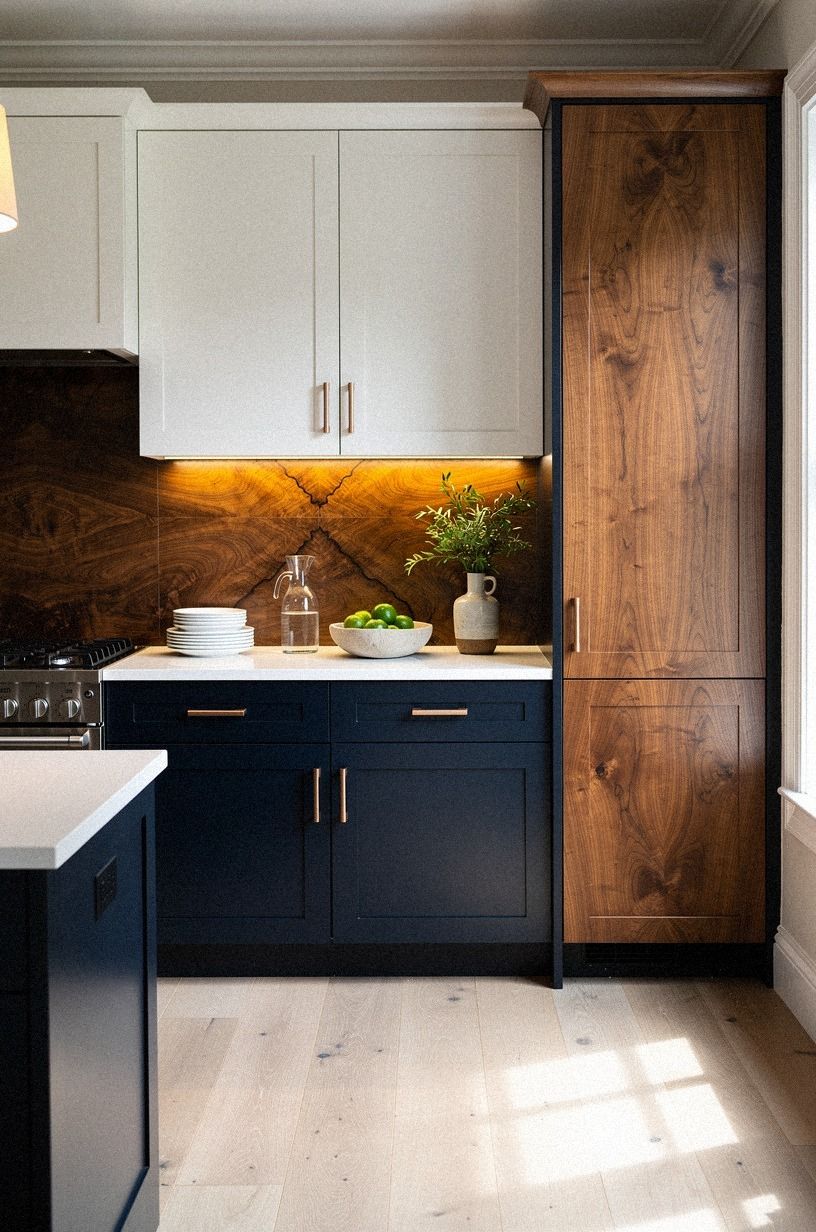
Yes, but the answer isn't filling it with pale furniture. Airiness comes from clear walkways, controlled contrast, and enough empty counter space for the room to breathe.
I kept the center visually open and used navy lower cabinets with white surfaces and walnut details to hide less attractive supplies. A book-matched walnut panel adds warmth without making the room feel heavy. If you're planning a similar room, study the open proportions in this coastal farmhouse kitchen guide before buying anything large.
The kitchen feels brighter because the furniture has somewhere to stop. That restraint is more effective than adding another white object.
8Frame the sink with a linen window shade
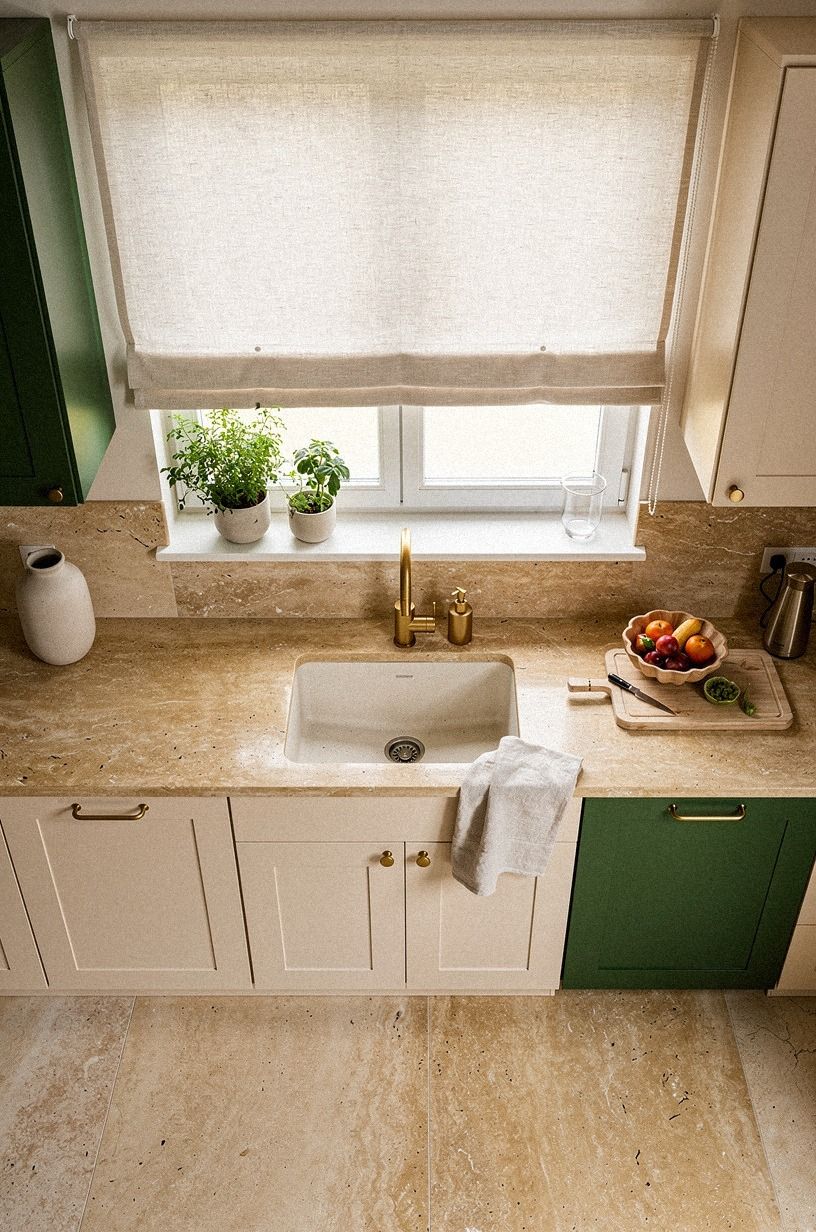
The sink window faced a neighbor's fence, so I added a cream linen shade above warm travertine. Emerald and gold accents keep the pale area from disappearing into the rest of the kitchen.
9Hang lighting in a three-height stack
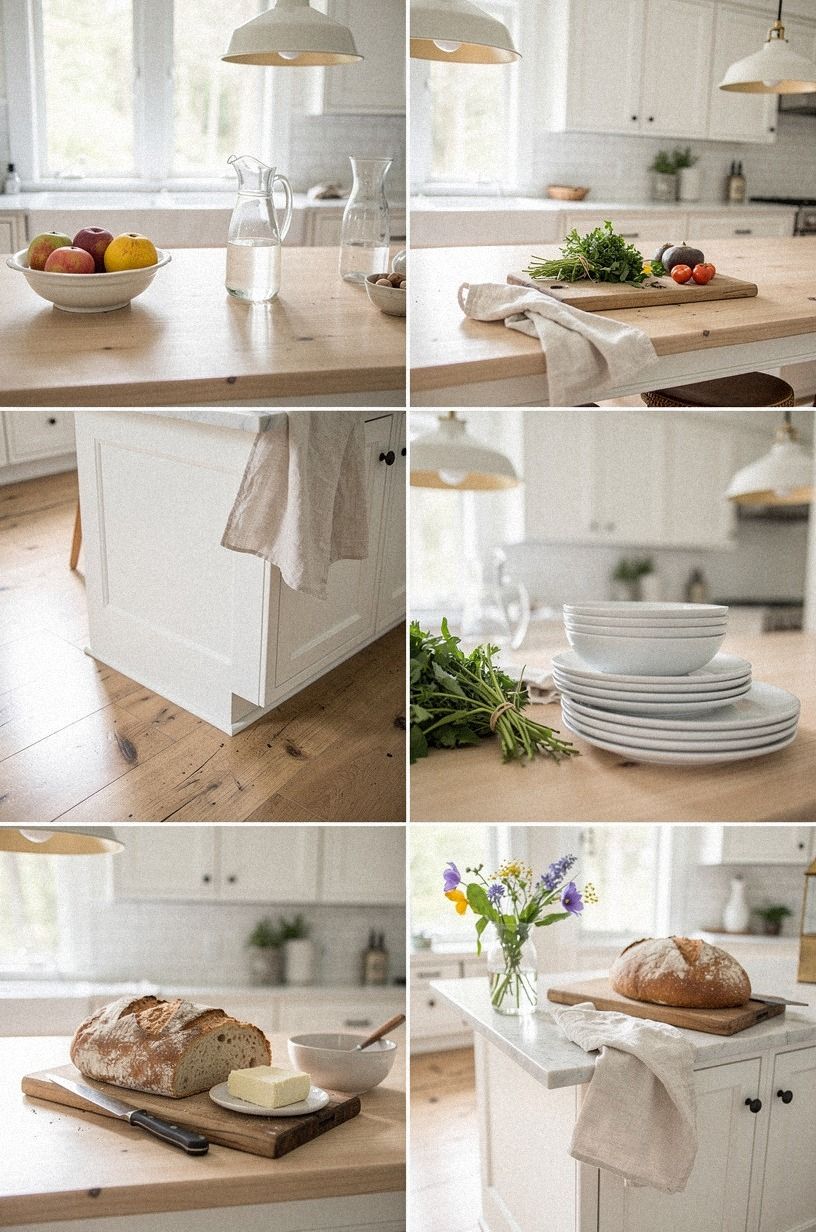
The old ceiling fixture created one harsh circle of light, so I built a three-height light stack: a flush mount overhead, a small pendant above the table, and a lamp on the open shelf. Forest green, rust, and natural oak connect the fixtures to the room, while the unlacquered brass is beginning to develop a soft patina.
I used a warm bulb and checked the placement against the table before drilling. Your pendant should feel connected to the table, not float in the middle of the room.
If you're comparing broader lighting moods, this coastal farmhouse kitchen guide has useful examples of soft, bright rooms. I skipped blue-white bulbs because they made the cabinets look clinical.
At night, the layered light feels especially inviting. The kitchen becomes mellow and intimate rather than merely bright.
10Mix matte black with warm brass
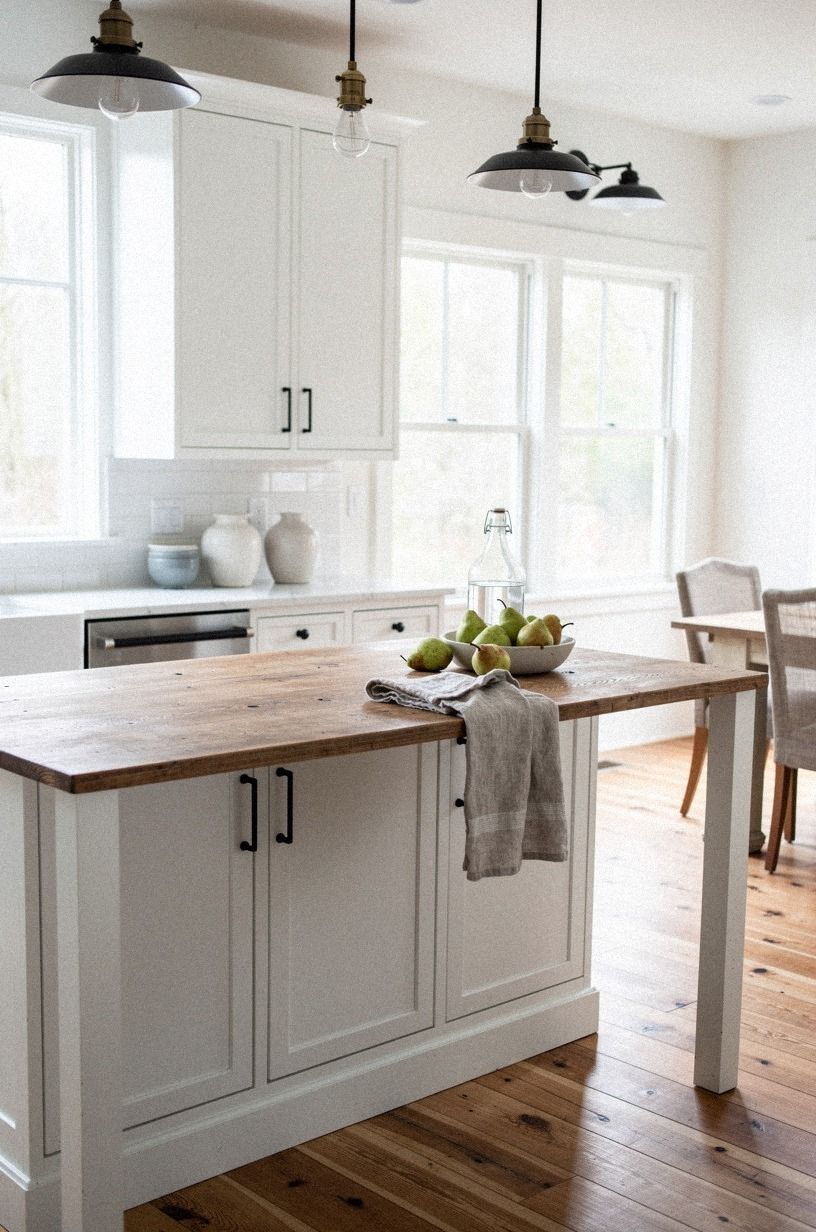
I didn't want the kitchen to become a brass catalog, so I added charcoal sconces near the pantry and kept brass for the cabinet pulls. Dusty rose accents and oversized-chip terrazzo give the white room a bold edge without making it moody. At night, the dark fixtures almost disappear against the shadowed wall.
Your metals don't need to match perfectly, but they should have separate jobs. Let one finish repeat at least twice, then allow the second finish to act as punctuation.
I tried polished chrome first, and it looked too cold beside the warm materials. But charcoal made the room feel grounded, especially after sunset.
The layered mix also echoes the more eclectic rooms in these boho farmhouse kitchen ideas, without bringing in every color at once.
11Use zellige behind the range
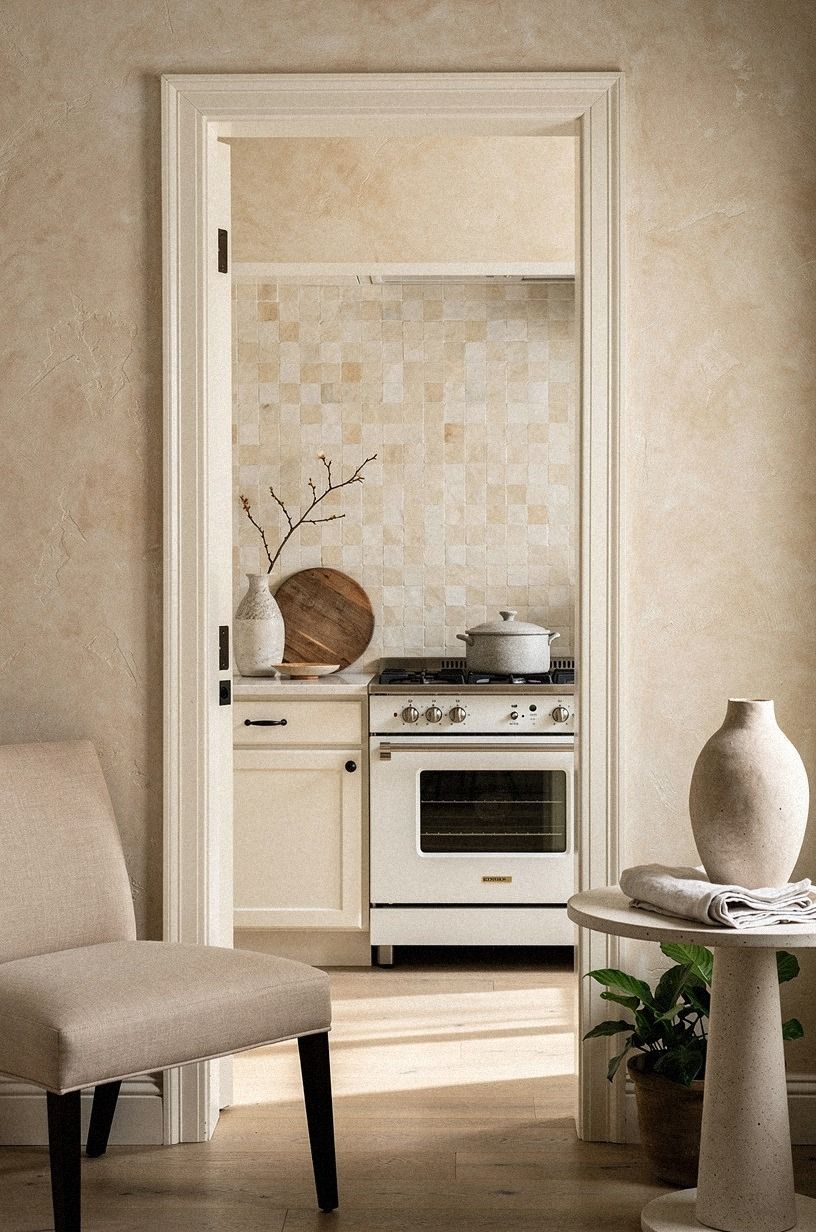
The backsplash became the one place where I allowed irregularity. I chose hand-applied Venetian plaster in warm white, with camel and black accents nearby, because a perfectly uniform surface would have made the kitchen feel newly installed in the wrong way. The subtle variation catches tiny shadows when the sun moves across the wall.
The backsplash gap above the counter is 18 inches, so I planned the plaster around that standard instead of forcing a decorative stripe. If you're calculating a project, measure the actual wall before buying anything.
The finish should respect outlets, trim, and cabinet edges. I nearly centered the treatment on the range, then realized the window was the true visual center.
That gentle variation gives the room a tactile, handmade quality. A related white cottage kitchen approach helped me see how texture can keep white from feeling sterile.
12Build open shelving with restraint
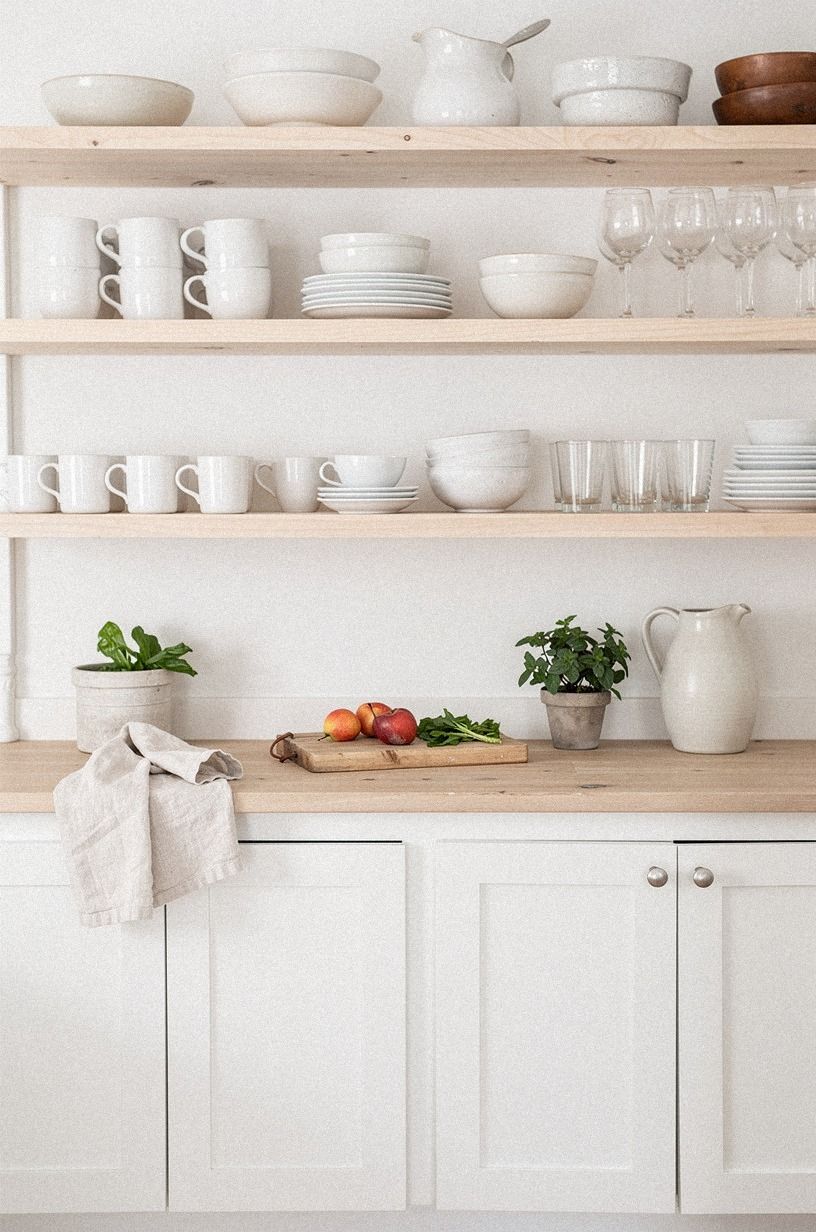
One shelf was enough. I installed restrained shelving in midnight blue, added copper brackets, and filled it with the things we use daily: ivory bowls, olive oil, a pepper mill, and two cookbooks. A small shagreen accent gives the arrangement texture without turning it into a museum collection.
I looked at this white cottage kitchen inspiration before deciding how much to display. Your open shelf needs empty space around the useful objects. I placed heavier pieces low and lighter pieces high, then stopped.
More jars would've made the wall feel busy, and the kitchen already has enough visual activity.
The shelf is also an easy place to rotate seasonal pieces. A stoneware bowl in spring or a dark wooden board in winter changes the mood without another project.
13Choose a deeper white for the pantry door
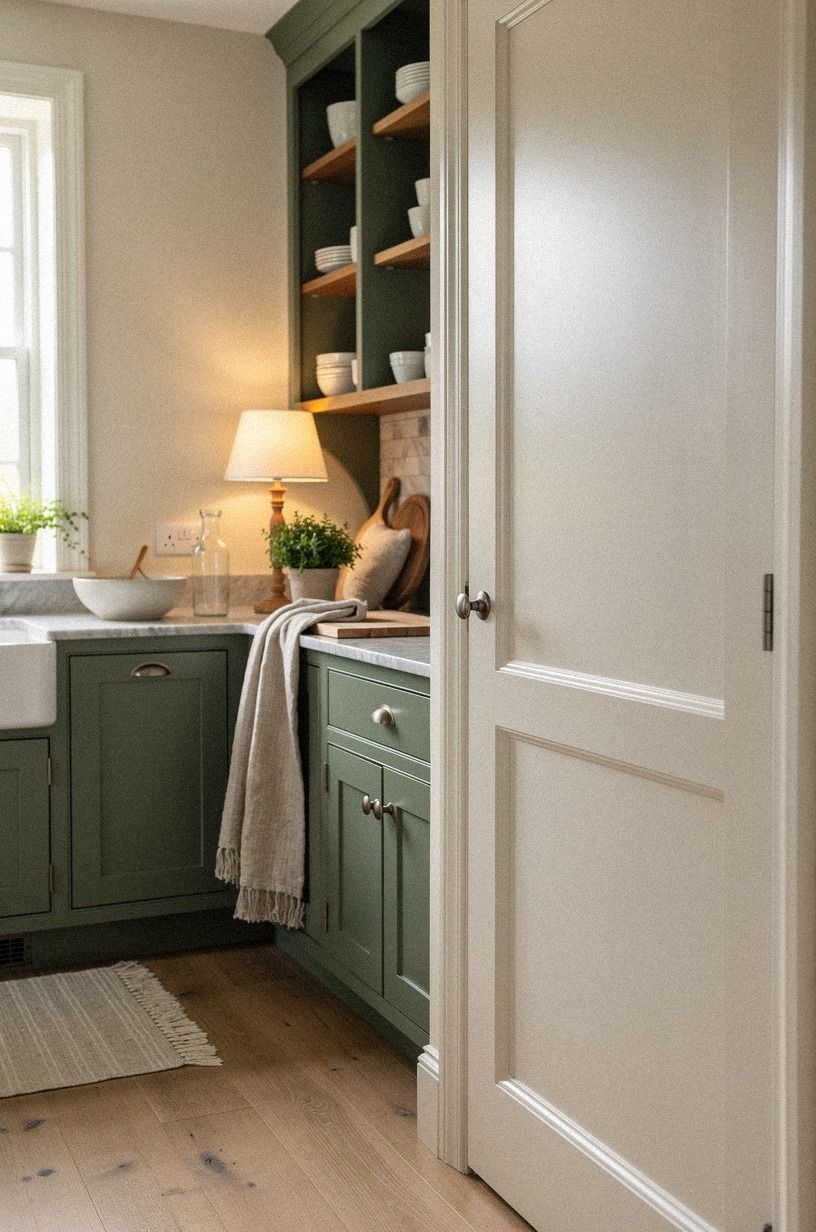
The pantry door was the right place for contrast. I painted it Sherwin-Williams Evergreen Fog SW 9130, a sage green that makes the warm cream cabinets look brighter by comparison. The color is calm in the evening and earthy in daylight, while washed Belgian linen and natural wood keep it from feeling too cool.
If you're nervous about darker paint, start with one door rather than one wall. Your eye can handle a bold moment when the surrounding surfaces stay quiet. I tested Farrow & Ball Studio Green No. 93 too, but it looked heavier beside the cream.
Evergreen Fog won because it gave the room a softer anchor.
I also compared the door with the calmer color stories in these white oak kitchen ideas. The contrast made the natural wood feel richer.
14Style the counter with a three-object rule
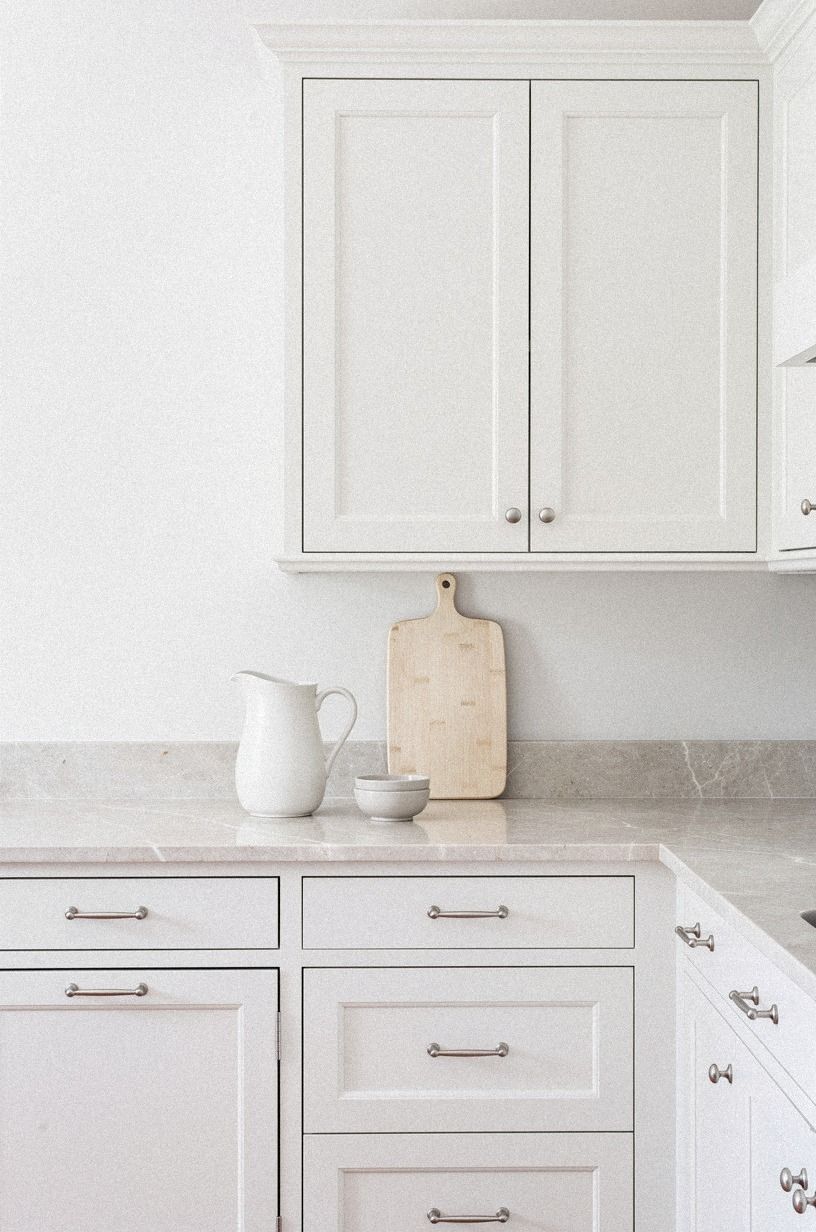
The counter needed practical pieces, not decorative clutter. I kept one terracotta stoneware crock, one olive-toned cutting board, and one small plant within reach. A low organic bouclé stool adds softness without taking over the work surface.
This rule gives the counter a composed, generous feeling while preserving the work surface. It also makes cleanup faster, which is a luxurious detail in its own way. For a soft seasonal arrangement, these centerpiece ideas offer plenty of inspiration without encouraging countertop overload.
When an object doesn't serve a daily purpose or bring real beauty, I move it elsewhere. The kitchen feels calmer almost immediately.
15Paint the lower cabinets a gentle contrast
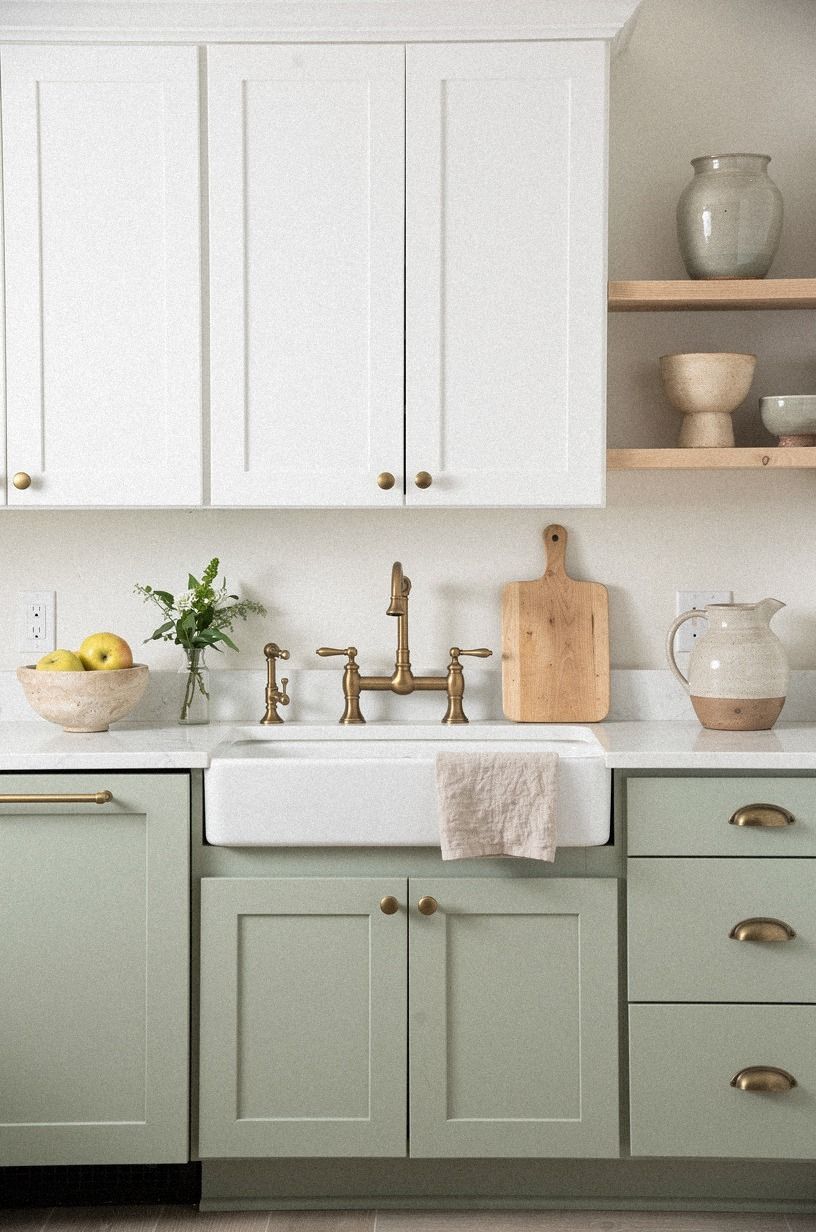
The lower cabinets were getting fingerprints, so I painted them a soft clay color and kept the uppers linen. Aged brass pulls add warmth, while a small Nero Marquina black marble surface with white veins gives the lower half enough definition.
The contrast is gentle rather than dramatic. It keeps the room from becoming one pale block and makes the brass feel purposeful. I tested a darker brown first, but it looked too heavy beside the warm cream walls.
16Add a washable runner with a quiet pattern
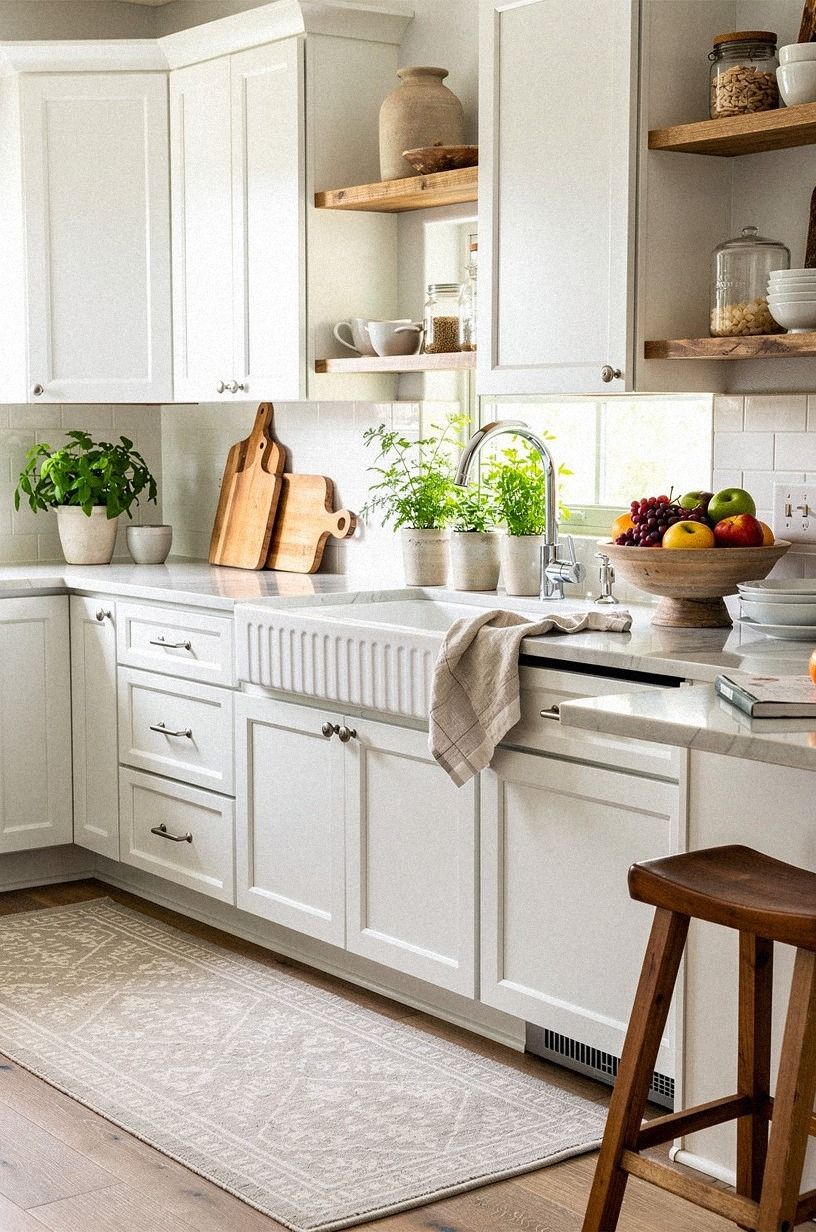
The floor felt hard and echoing, so I added a washable runner in muted plum and gray with a restrained rose-gold detail. It brings in a soft, layered note and echoes the deep-pile mohair velvet on the nearby seat. The pattern is forgiving, which matters when someone drops blueberries at breakfast.
I chose a runner that leaves a visible strip of flooring along each side. Your rug should define the work zone without becoming a trip hazard.
I skipped thick pile because crumbs disappear into it and cabinet doors catch the edge. A washable low-profile weave feels more practical, especially if you're cooking every night.
The faded colors also echo the earthy layering in these boho farmhouse kitchens. It adds personality without turning the floor into the main event.
17Store small appliances behind one door
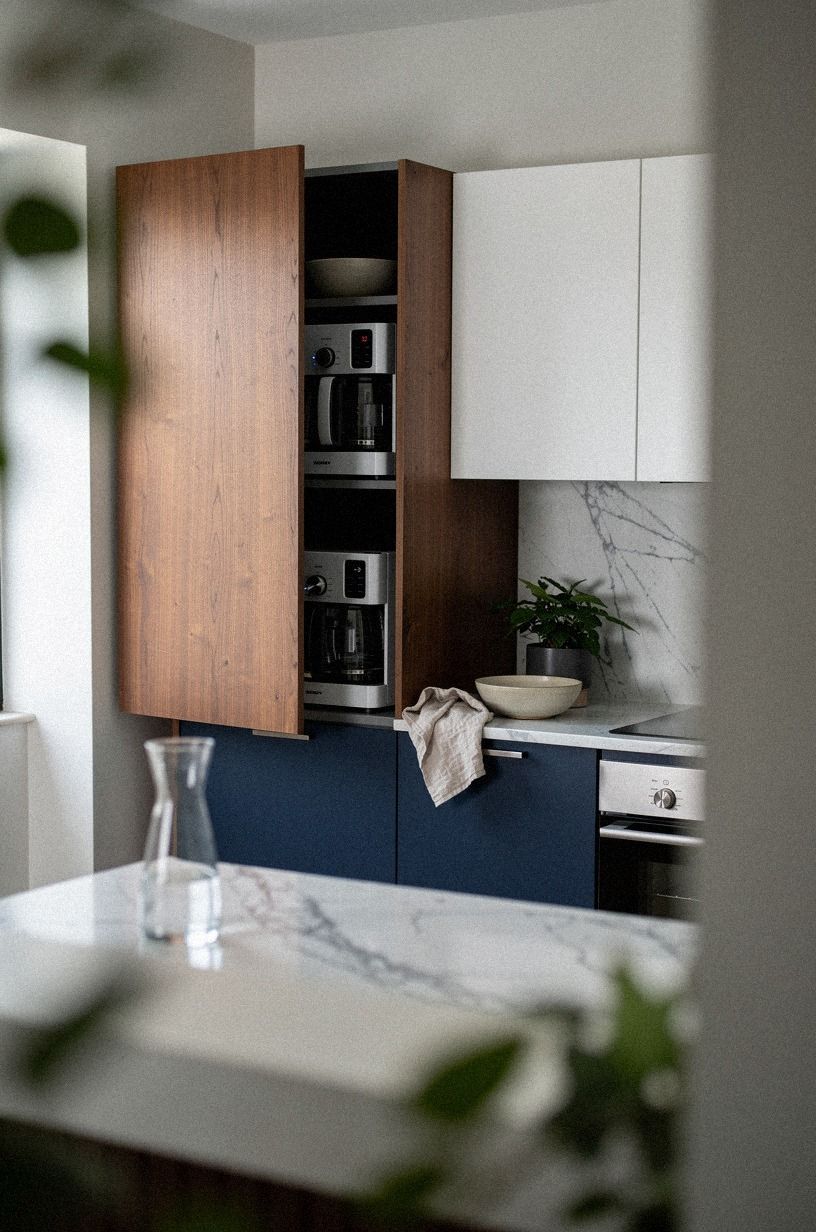
The toaster and blender were making the counters look crowded, so I gave them a home behind one navy-painted door with a white interior, walnut trim, and a Carrara marble shelf. It isn't a traditional kitchen cabinet, but the richer colors tie into the room and give us a place for appliances that don't need to live on display.
If you're working with a rental, a freestanding unit can give you storage without drilling into cabinets. Your shelves should hold the things you reach for often, not become a graveyard for unused gadgets. I measured the blender with its lid attached before choosing the shelf height.
That saved me from storing it sideways, which would have been irritating every morning.
The compact storage unit borrows the welcoming spirit of these white oak kitchen layouts while keeping the footprint small. It was one of the smartest changes in the room!
18Mix in one piece of blue pottery
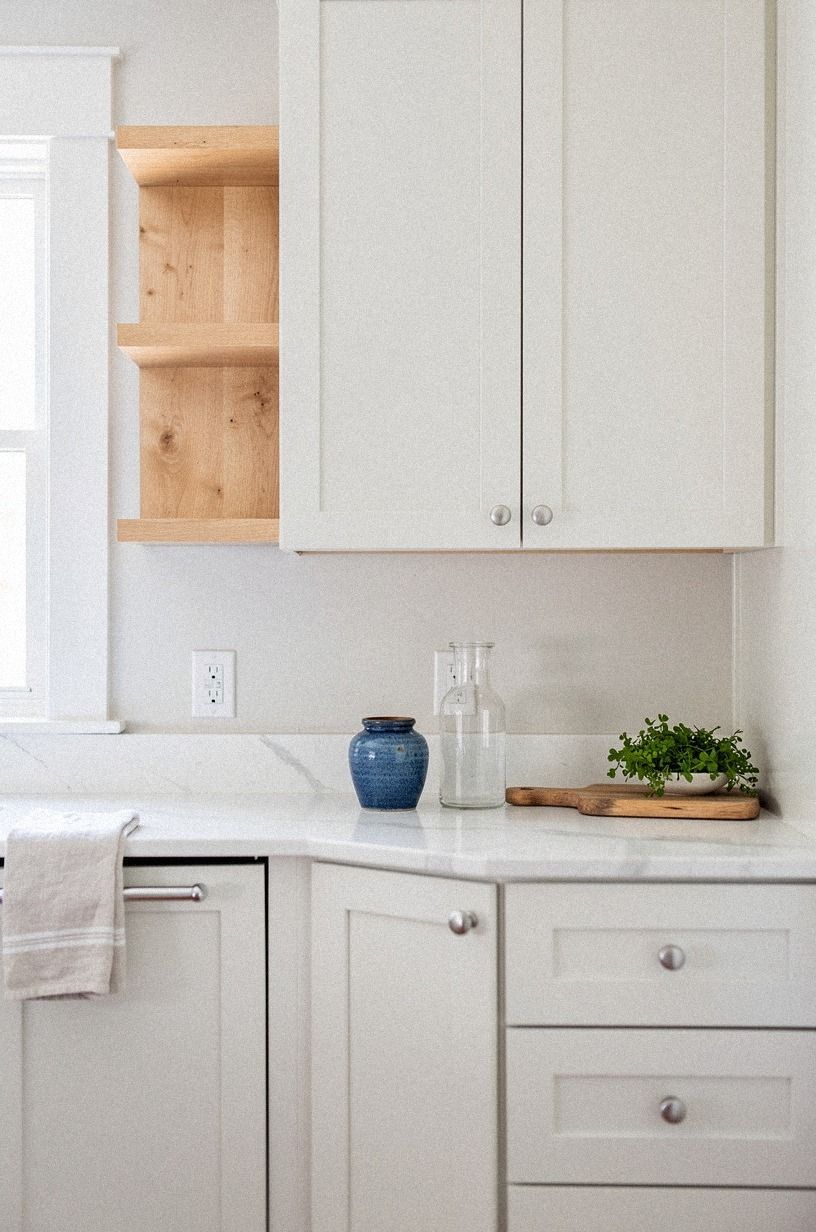
The kitchen was becoming too beige, so I added emerald-glazed pottery above the refrigerator. One bowl and one small vase were enough to bring in color without breaking the calm palette. The green looks rich beside the cream and catches the small gold details around it.
I also studied the layered approach in these boho farmhouse kitchen ideas, then edited hard. Your room doesn't need every color you like.
I skipped terracotta here because the runner already carries clay tones. The emerald gives the kitchen a deeper spark and keeps the pale surfaces from becoming sleepy.
The pieces sit on a reclaimed weathered teak shelf, so they bring both color and function. They aren't just filling an empty wall.
19Finish with the detail you touch first
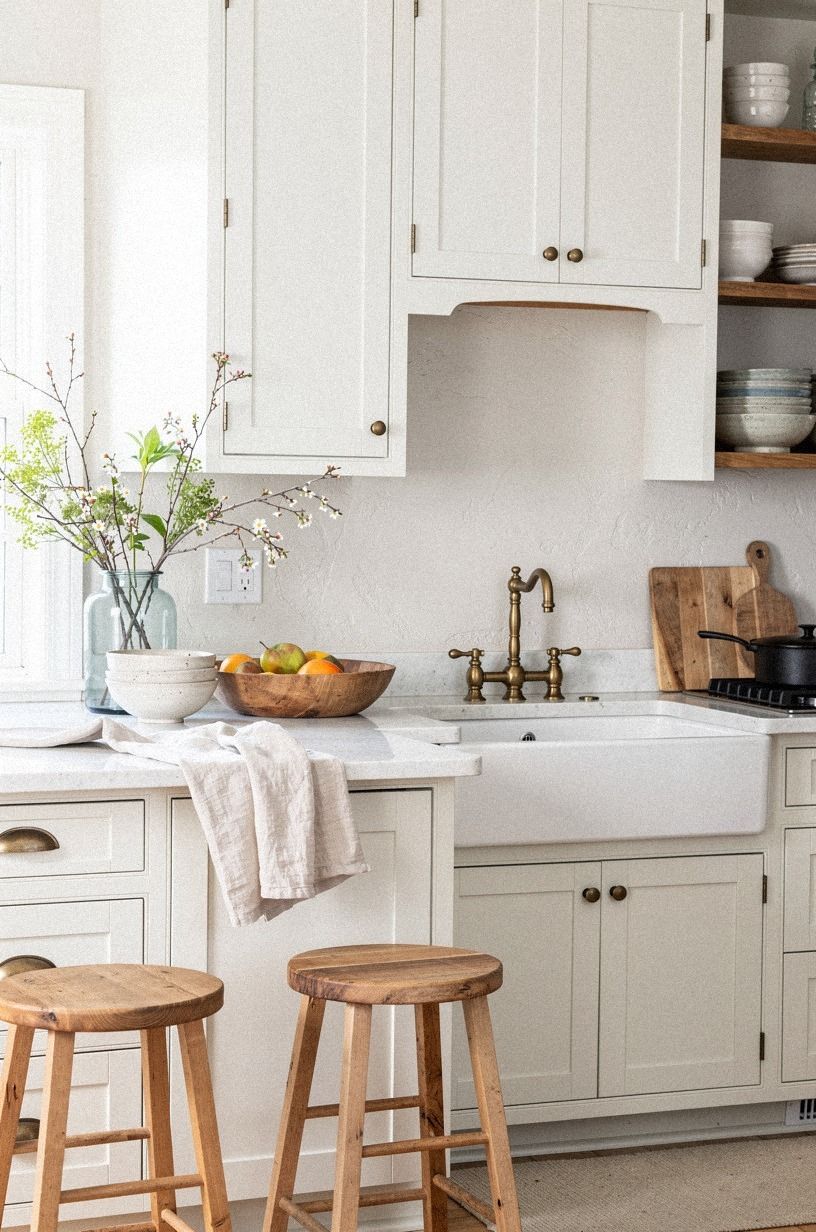
The last change was a natural oak handle on the pantry door, set beside a small Calacatta marble tray with a gold edge. Forest green, rust, and oak give the final corner enough warmth without adding another major project.
How much it cost: $300 to $1,500
I kept this makeover in the cosmetic category by painting, changing hardware, improving lighting, and adding a few durable styling pieces. The cabinets stayed in place, the appliances stayed put, and I didn't move plumbing. That choice kept the project within the typical US range for a budget refresh.
The materials can shift the budget quickly. Quartz countertops typically run $60-$120 per square foot, while laminate counters are typically $10-$40 per square foot. Zellige backsplash tile is typically $15-$35 per square foot, and repainted Shaker fronts are typically $150-$400 per door.
I spent first on the changes I touch every day: paint, pulls, lighting, and storage. Your budget will work harder if you solve function before buying decor. A new counter would have been lovely, but it wouldn't have fixed the harsh light or crowded work surface.
The proportions in these white oak kitchen ideas helped me prioritize useful surfaces over expensive replacements.
Why this kitchen still feels fresh
I used to think timeless meant avoiding personality. That was my mistake. The rooms I remember aren't blank white boxes.
They're spaces with a clear structure, a few imperfect materials, and one choice that feels personal enough to stop the eye.
For me, the white farmhouse kitchen works because the white is only the background. The natural oak, uneven plaster, emerald pottery, and sage pantry door keep it from becoming flat.
I didn't chase a distressed look, and I avoided signs, artificial aging, and decorative clutter. Those choices can date a room faster than a bold color.
The other lesson was restraint. I wanted open shelves everywhere, but one shelf gave me the usefulness without the dust.
I wanted a big island, but the 42-inch clearance mattered more. I wanted every metal to match, but the brass and charcoal combination gave the room a little tension.
That's what keeps the kitchen fresh now. It can absorb a different towel, a new bowl, or a seasonal branch without needing another makeover. Your kitchen should have enough quiet space for life to interrupt the design.
Mine finally does.
The same balance appears in these white cottage kitchen ideas, especially where texture does more work than decoration.
A Few Things Worth Answering
What is the best White Farmhouse Kitchen Ideas That Never Go Out of Style for a small kitchen?
The best choice is a light wall color, one wood accent, and compact storage such as an IKEA KALLAX unit. Keep the center open and use a narrow table instead of an island. Your small kitchen will feel more inviting when every surface has breathing room and a clear purpose.
Where can I buy White Farmhouse Kitchen Ideas That Never Go Out of Style pieces on a budget?
Look at IKEA, Wayfair, and Target first, then check Facebook Marketplace or local thrift stores for solid wood pieces. Secondhand oak furniture often gives you more character for less money.
You don't need a full matching set. Your room will feel warmer when the pieces have slight variation.
How much does a White Farmhouse Kitchen Ideas That Never Go Out of Style makeover cost?
A cosmetic makeover typically costs about $300 to $1,500 in the US. Paint, editing your counters, rearranging storage, and using what you own can keep the cost lower. Paint and hardware usually create the clearest visual shift without cabinet replacement or plumbing work.
Can I create a White Farmhouse Kitchen Ideas That Never Go Out of Style on a budget?
Yes, and you can start with free changes: remove counter clutter, regroup your shelves, and move useful pieces closer to the work zone. Then add budget paint and simple pulls. A $300 refresh can feel substantial when you change the light, color, and daily flow together.
Is a White Farmhouse Kitchen Ideas That Never Goes Out of Style worth it in a small space?
Yes, because white reflects light and gives you more flexibility with storage. Use a slim table, keep at least 42 inches where people walk, and choose one open shelf instead of several. Your small room benefits from fewer visual stops, not from filling every wall.
Is White Farmhouse Kitchen Ideas That Never Goes Out of Style a good idea for a rental?
Yes. Use removable hooks, a tension rod, peel-and-stick backsplash, and freestanding storage rather than permanent changes. A removable linen shade can soften a window without drilling, and you can take it with you.
Keep the strongest color on furniture or accessories you own.
Where I'd Start First
If I had to pick one, I'd start with the paint. Benjamin Moore White Dove lets the wood, tile, and daily mess look intentional instead of fighting the walls. Pin this kitchen for later and test your sample beside the counter before you buy a gallon.