
 by
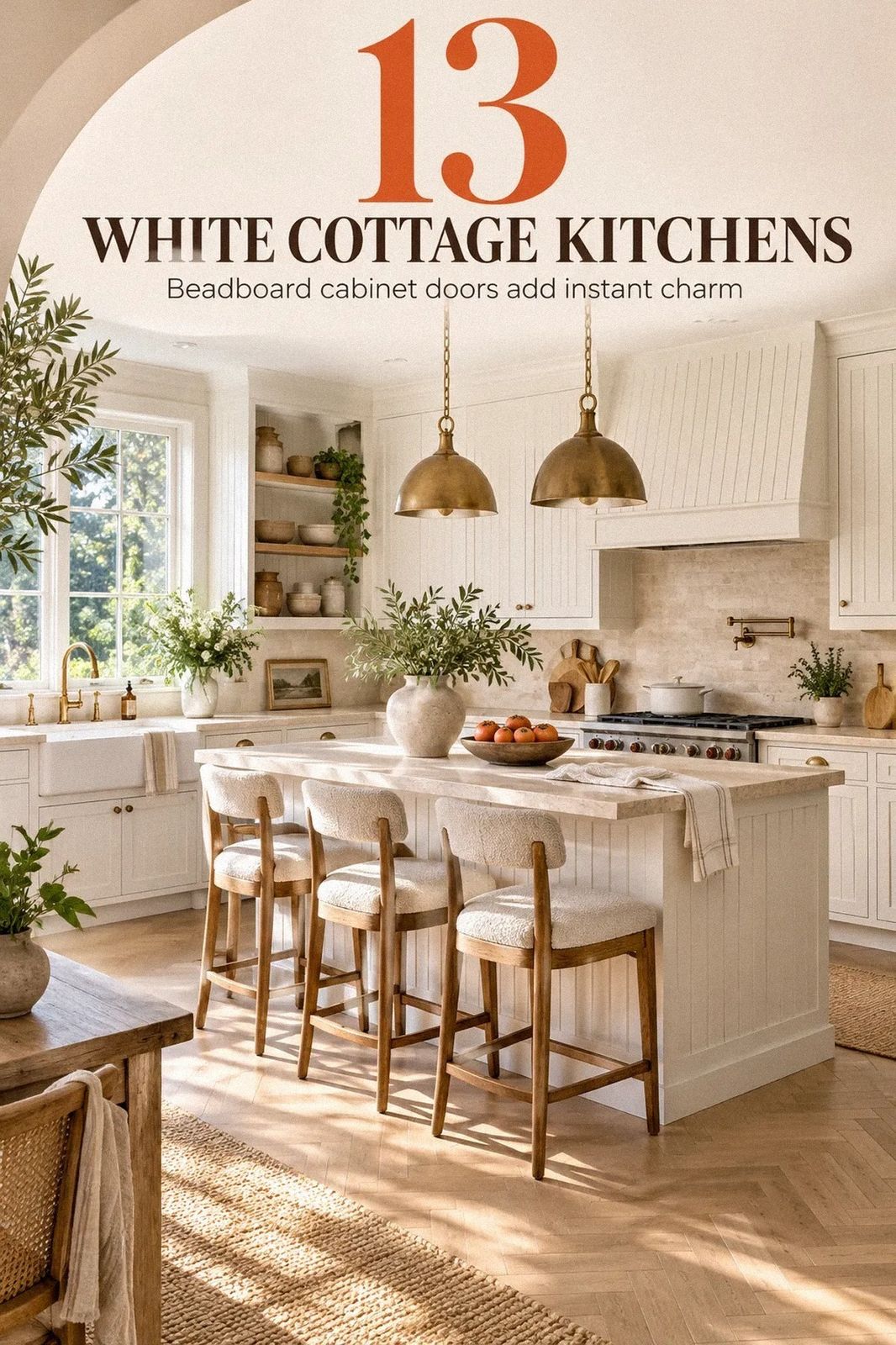
by White cottage kitchen ideas for bright, timeless charm work best when you begin with the layout, choose one warm white, and add aged texture before decorating. A quick paint and hardware refresh can feel airy without a full remodel, but your kitchen still needs contrast or it'll look flat. I've made that mistake. The fix is simple: give every beautiful choice a practical job.
Editor's note: Start with the bones, then build warmth through paint, wood, tile, fabric, and lighting. Your kitchen doesn't need a huge footprint or a farmhouse full of props. It needs a palette that feels calm in daylight and welcoming after dinner.
- Measure the room before you buy anything
- What's the budget before you choose a finish?
- Benjamin Moore White Dove sets the tone
- Why the Two-White Rule creates depth
- Choose white cabinets with traditional detail
- White kitchens, brown countertops, and the right balance
- Lay a backsplash with handmade variation
- Can the Cottage Clearance Rule protect your work zone?
- Build the Three-Height Light Stack
- Mix old pieces into the modern shell
- Frame the windows with washable fabric
- Keep clean kitchen inspiration practical
- Finish with the Cottage Contrast Ladder
1Measure the room before you buy anything
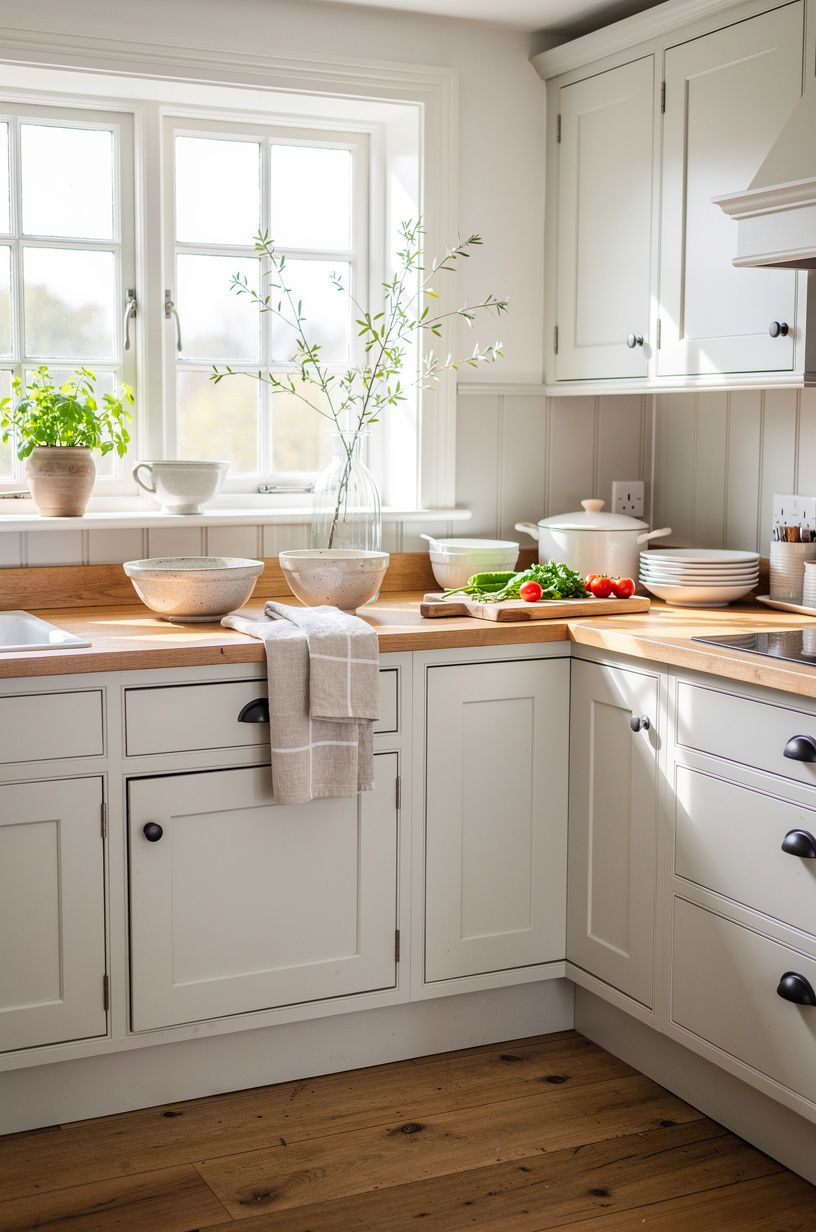
Start with your kitchen's fixed points: door swings, windows, outlets, plumbing, radiators, and the path from the refrigerator to the sink. You'll want at least 42 to 48 inches of clearance around an island, because a pretty island that blocks two people becomes a daily irritation. Measure twice.
Write everything down.
Your standard counter height is 36 inches, or 91 cm. That number matters when you're choosing stools, pendant drops, and a freestanding worktable.
I once ordered stools before checking the counter, and the seats sat too high for comfortable coffee. You won't make that mistake if you tape the dimensions on the floor first.
If you're working with a tiny room, study these tiny cottage kitchen ideas for big charm before you commit to an island. A narrow table may give you a better prep surface and leave your walking route open. Your kitchen should feel easy at 7 a.m., when you're carrying toast, coffee, and a bag that needs to go out the door.
Typical cost by tier, using US averages:
A quick second measurement matters around corners. Your refrigerator door may need more swing space than you expect, and a deep cabinet can steal the walkway beside it.
Sketch the room on graph paper or use painter's tape to mark each footprint. You'll see problems before they become expensive.
2What's the budget before you choose a finish?
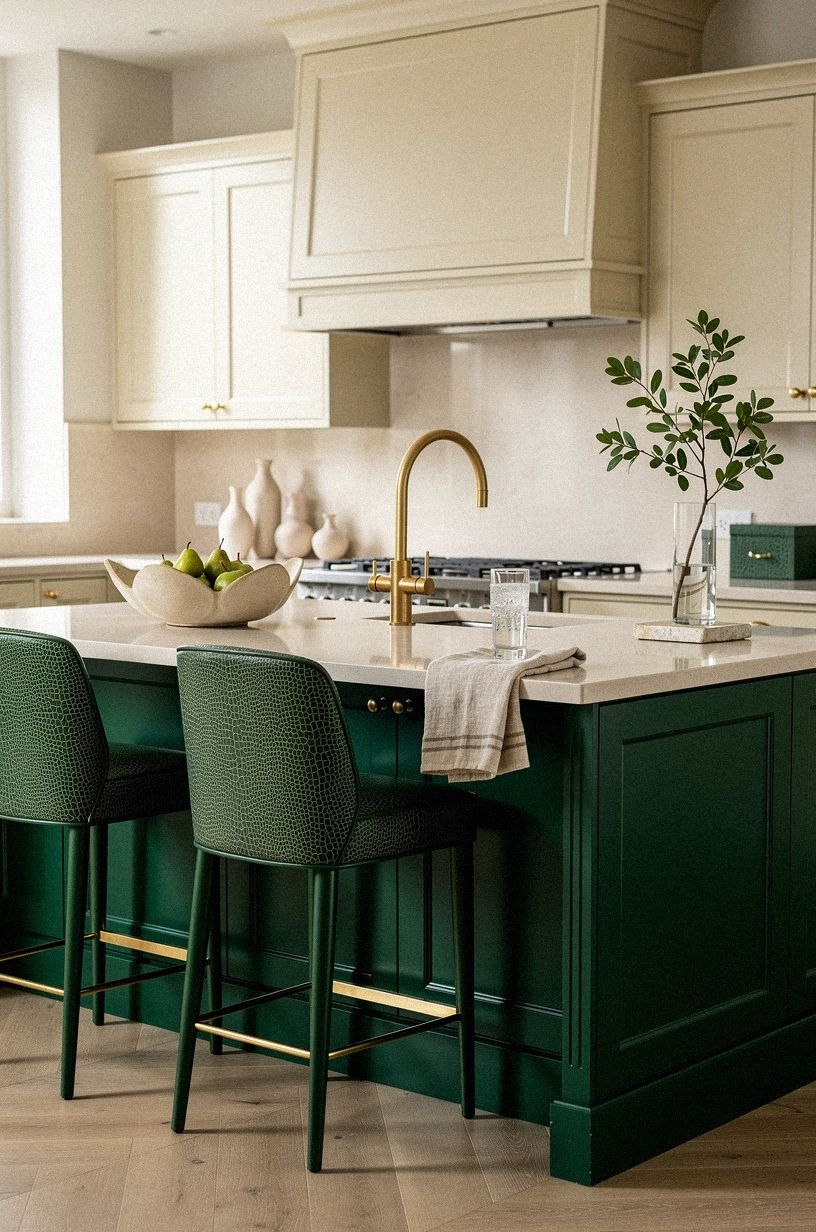
A white cottage kitchen can be a cosmetic refresh or a complete remodel, and those are very different projects. Before you fall for emerald paint, gold hardware, or shagreen accents, decide which category you're actually funding.
For a cosmetic update, reserve money for paint, cabinet hardware, lighting, a washable runner, and one useful vintage piece. That combination can change the mood quickly.
If your cabinet boxes are sturdy and the layout works, you may not need new doors. A professional repaint can cost more than doing it yourself, but the finish usually looks smoother around hinges and detailed panels.
A mid-level refresh might include a new farmhouse sink, faucet, counters, and backsplash. Keep a contingency fund of at least 15 percent. Plumbing surprises are common, and the most beautiful plan won't help if you have no money left for installation.
A full remodel needs a larger conversation about appliances, electrical work, flooring, and storage. You should price labor before choosing finishes. Your favorite tile is only one line in the estimate.
I like setting three numbers: the amount I hope to spend, the amount I can comfortably spend, and the absolute ceiling. That gives you room to make a thoughtful choice when the first quote arrives. If you need a warmer alternative to all-white cabinetry, compare the white versus wood kitchen cabinet guide before committing to a paint-heavy plan.
3Benjamin Moore White Dove sets the tone
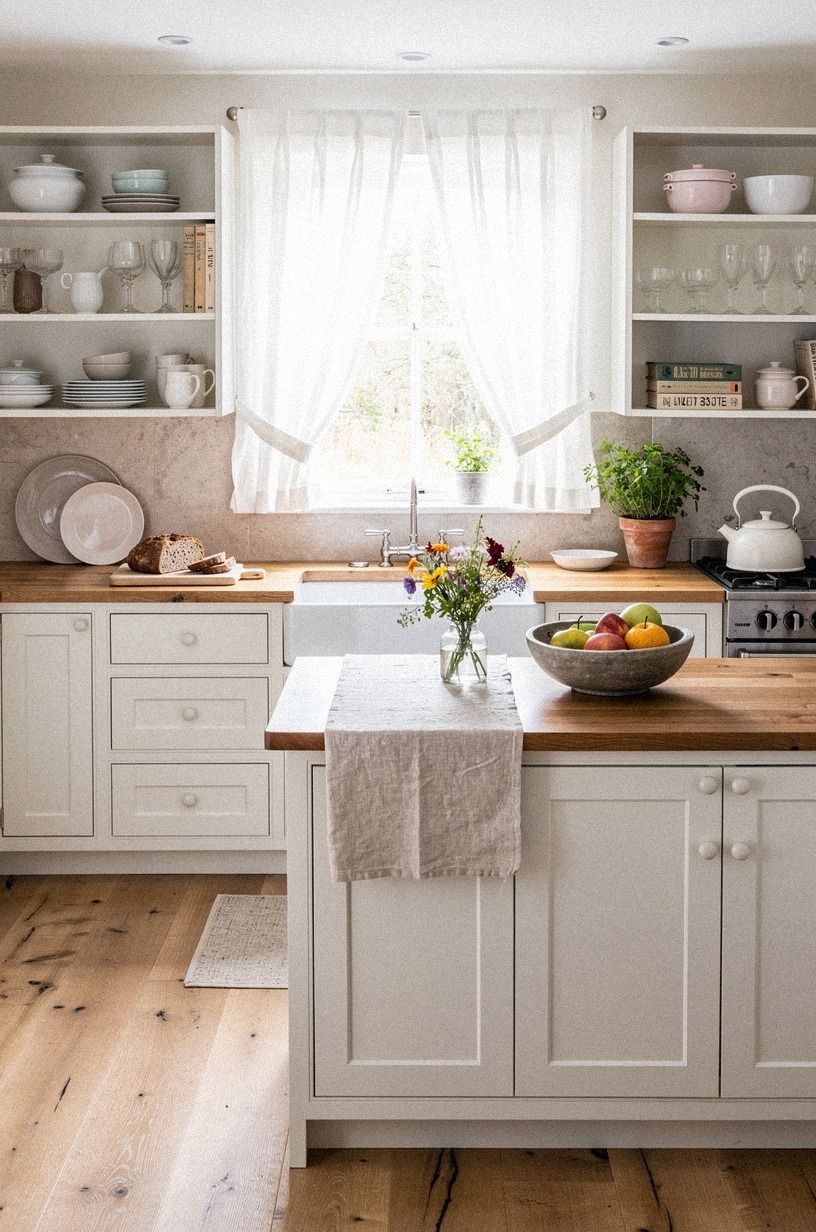
Choose one dominant white, then test it on two walls at different times of day.
4Why the Two-White Rule creates depth
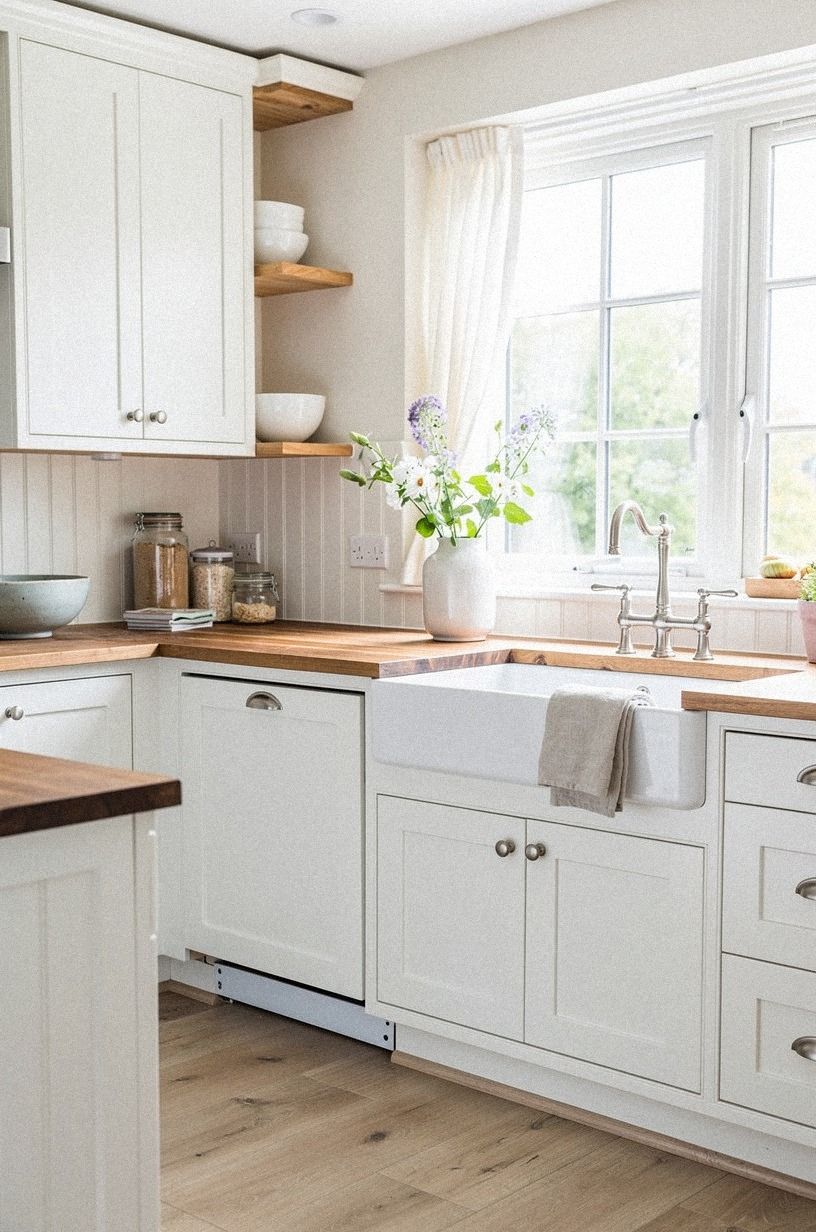
The Two-White Rule is simple: use one white for the major cabinetry and a second warm white or pale neutral for a supporting surface. The difference can be subtle. Your eye will still feel the depth.
Try White Dove on the cabinets with a dusty-rose supporting shade on the walls, then bring in charcoal through a small island or painted furniture. You could also keep the walls white and introduce soft contrast through an organic bouclé bench or seat. The goal is a gentle relationship between surfaces.
Sample the two colors beside your brass hardware. Brass can make a creamy white look luminous, while charcoal gives the palette enough weight.
I like testing samples in the morning, at lunchtime, and after sunset. If the combination still feels relaxed in all three conditions, you've got a strong foundation.
Your cottage kitchen doesn't need ten shades of white. Two or three related tones are enough. The restraint gives your wood, tile, and collected objects room to look special.
If you're unsure whether the supporting color should come from paint, tile, or flooring, borrow the softer contrast used in these white zellige tile bathroom ideas. A little tonal movement keeps an all-white room from feeling unfinished.
5Choose white cabinets with traditional detail
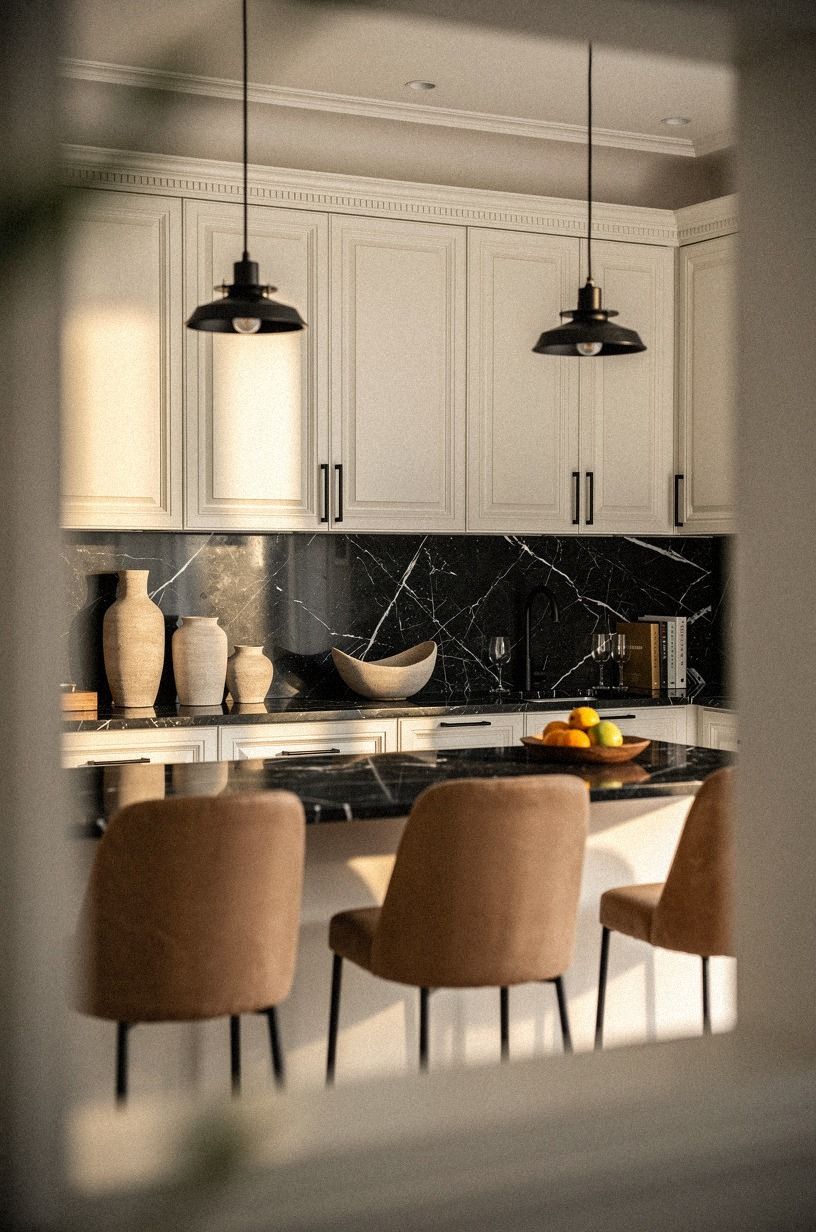
Choose recessed-panel or Shaker fronts when you want the room to read as cottage rather than contemporary. The small shadow line around a door gives your eye something to rest on, especially when the cabinets are white. A 30 to 42 inch upper cabinet can provide useful storage without making the wall feel heavy.
For a budget refresh, repaint existing doors and replace the knobs with black pulls or simple dark hardware. Your hand will notice the difference every morning.
I like an IKEA KALLAX unit in a camel-toned finish nearby for cookbooks, baskets, and less precious storage, but I'd avoid glossy slab fronts here. They're clean, sure, yet the reflection makes a cottage room feel colder.
White cabinets also give you flexibility around stone. If you want a richer accent, see these white oak kitchen cabinet ideas that will never go out of style. A single camel-toned wood pantry, open shelf, or freestanding cabinet can warm the room, while a small Nero Marquina black marble surface adds contrast without changing every door.
Pay attention to the inside of the cabinets, too. A painted interior feels finished when you open the door, while a raw or damaged surface can make the whole project feel temporary.
Add shallow drawers for utensils and a pullout for trash if your budget allows. Those small decisions will make your beautiful kitchen much easier to live with.
6White kitchens, brown countertops, and the right balance
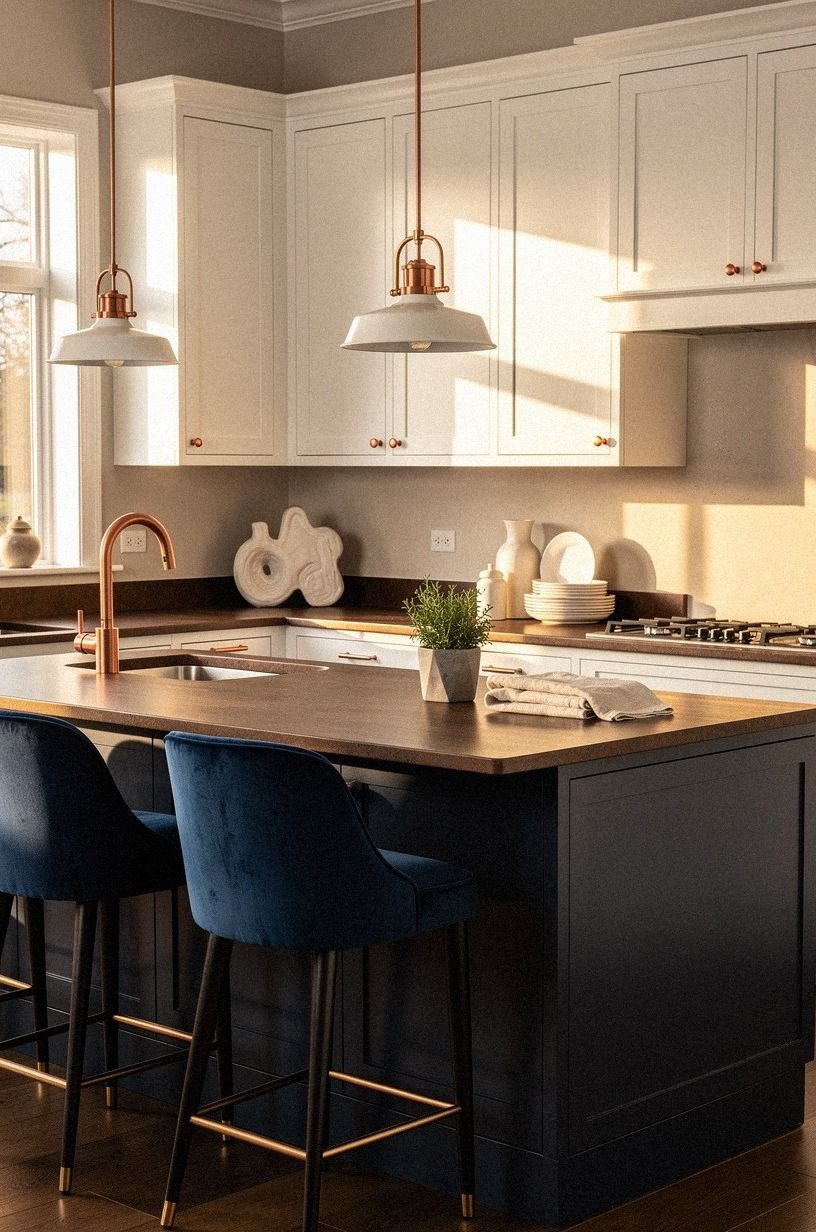
A white kitchen with a midnight-blue accent gives the room grounded depth that white cabinets can't provide alone. Add copper hardware or lighting and keep the surrounding surfaces ivory so the palette stays warm rather than busy.
I prefer a matte surface because it feels calm beside bright cabinetry. A polished counter can work, but it needs softer lighting and less reflective hardware around it. Your counter should support the room's mood, not compete with the backsplash.
For a budget-friendly option, look at durable laminate in an ivory or warm stone pattern. Real deep-pile mohair velvet can work on a protected stool or banquette cushion, though you'll need to keep it away from splashes and standing water. If you cook often, ask yourself whether you enjoy that maintenance.
A darker accent can also make a small kitchen feel more intentional. Keep the walls bright, use an ivory backsplash, and repeat the midnight blue once elsewhere.
A stool, cutting board, or narrow shelf is enough. You don't need the deep tone in every corner.
If you're still deciding between pale cabinetry and a more layered scheme, revisit the white versus wood kitchen cabinet guide. Your best choice depends on daylight, floor color, and how much visual warmth you already have.
7Lay a backsplash with handmade variation
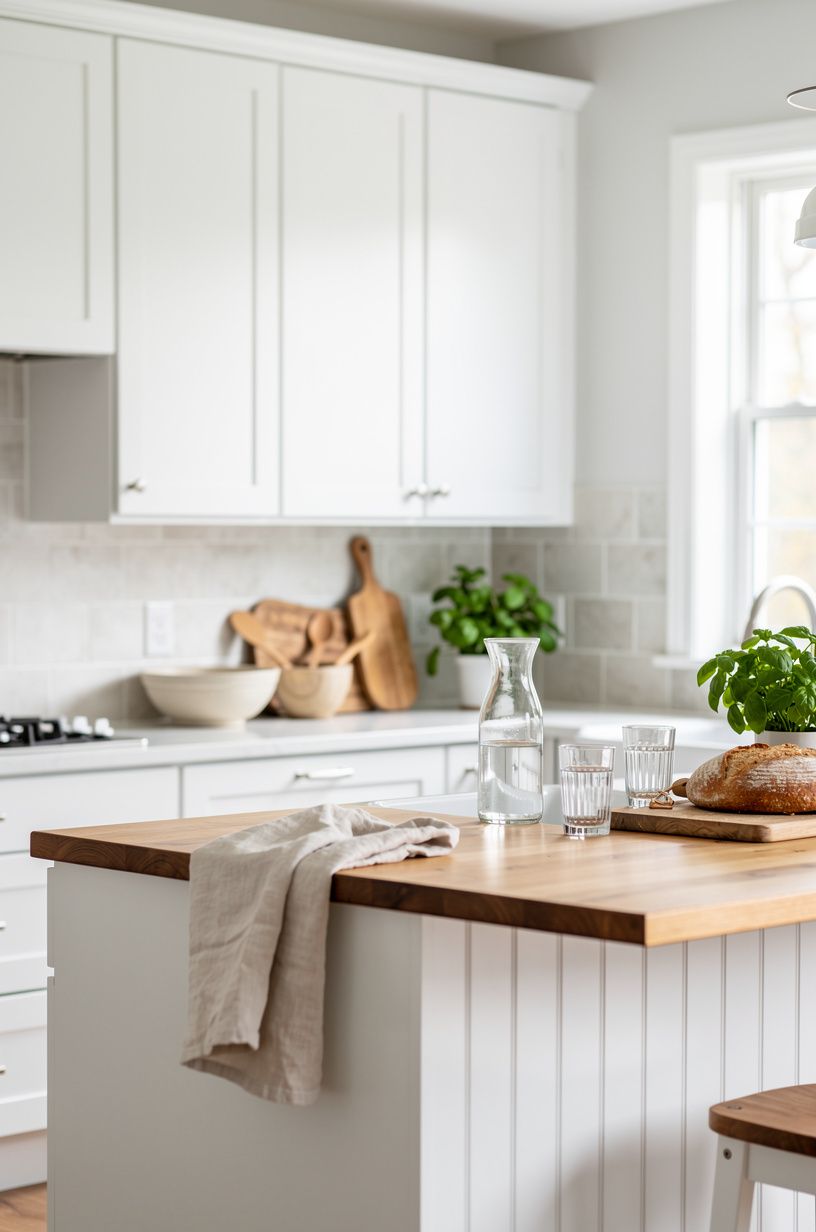
Use the backsplash to bring irregularity into a room full of straight cabinet lines. A hand-glazed sage green tile with warm cream variation keeps the wall from looking sterile, while natural wood nearby gives the color somewhere gentle to land. Your backsplash gap should be around 18 inches, or 46 cm, between the counter and upper cabinets, though the exact height depends on your cabinets.
Keep the grout warm and quiet. Bright white grout can make every tile line look busy, while a pale cream grout lets the glaze breathe.
I made the mistake of choosing a perfectly uniform tile once, and the wall looked printed rather than crafted. It was tidy, but it had no soul.
If you're drawn to that imperfect surface, browse these white zellige tile bathroom ideas for color and grout inspiration. The same principles work in a kitchen. Carrara marble with subtle gray veining can connect the sage tile to a natural wood counter beautifully.
You can also consider a narrow subway tile, beadboard, or painted plaster if handmade tile exceeds your budget. The important thing is variation in texture, finish, or line. A glossy tile beside a matte counter gives your eye a small, pleasing pause.
Order samples before buying a full box. Tile color changes under under-cabinet lighting, and grout can make the pattern feel much stronger than you expected. That little variation matters!
8Can the Cottage Clearance Rule protect your work zone?
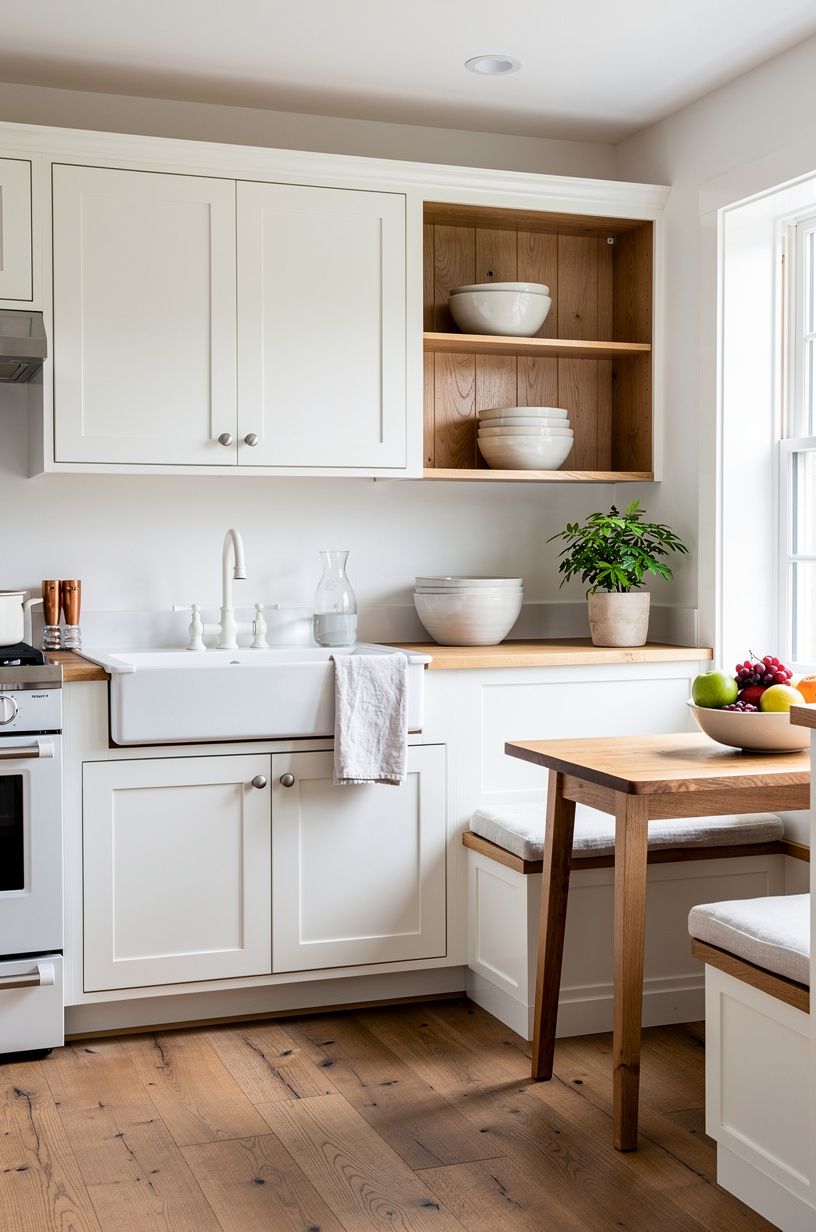
The Cottage Clearance Rule says your most charming feature still has to leave room for real movement.
9Build the Three-Height Light Stack
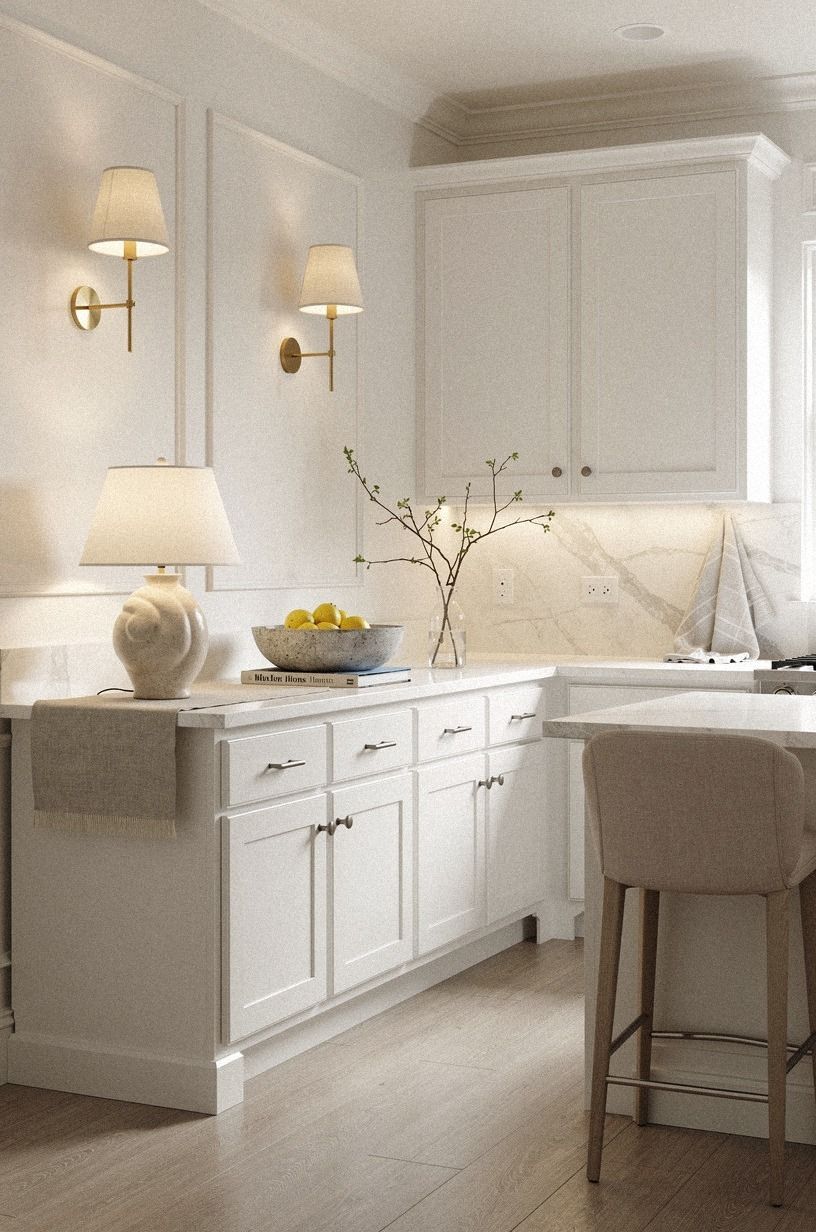
Build the Three-Height Light Stack with low, middle, and high light. Your low layer can come from under-cabinet strips, the middle from a table lamp or sconces, and the high layer from a ceiling fixture or pendants. This mix makes the room feel warm after sunset instead of brightly exposed.
Use bulbs with a soft, warm tone, around 2700K when possible, and hide the harsh overhead fixture when you can. A pair of aged brass sconces beside open shelves will create a gentle pool of light on the wall, while a linen shade over the sink keeps the corner inviting.
I don't love three identical pendants in a cottage kitchen. They look too arranged.
A simple two-light fixture can feel more relaxed, especially when your counters already carry visual texture. You could also hang one small pendant over a worktable and use a ceiling flush mount elsewhere.
Your lighting should flatter the finishes you've chosen. Warm bulbs will bring out the clay tones in painted surfaces, the softness of linen, and the gold veining in Calacatta marble.
If the room looks yellow, change the bulb temperature before repainting the walls. It may be the easiest fix you'll make.
The payoff after sunset is immediate! For more layered cottage references, look at these grandmillennial cottage kitchen ideas and notice how lamps, shades, and sconces soften the room.
10Mix old pieces into the modern shell
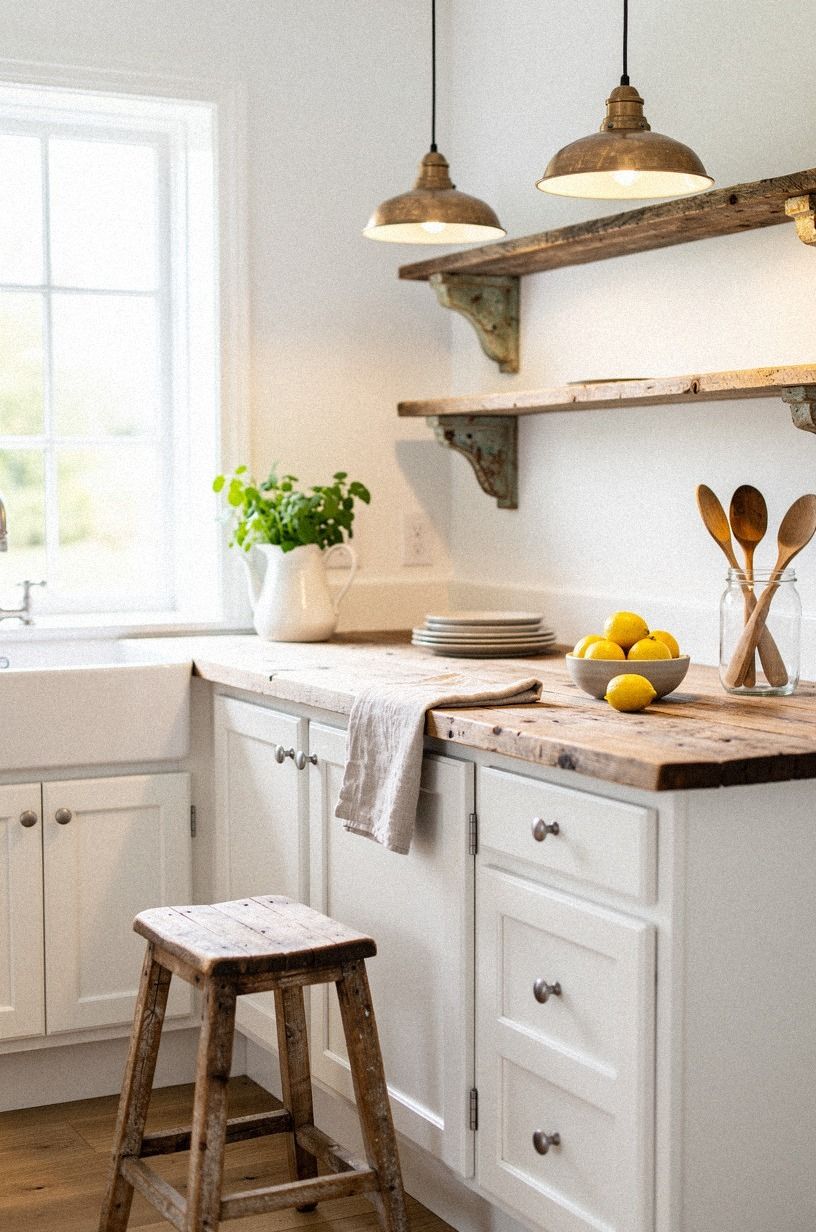
Bring in one or two pieces with a past: a cerused white oak stool, a painted hutch in soft grey, a framed botanical print with a plum-toned mat, or a bowl with a rose-gold detail.
11Frame the windows with washable fabric
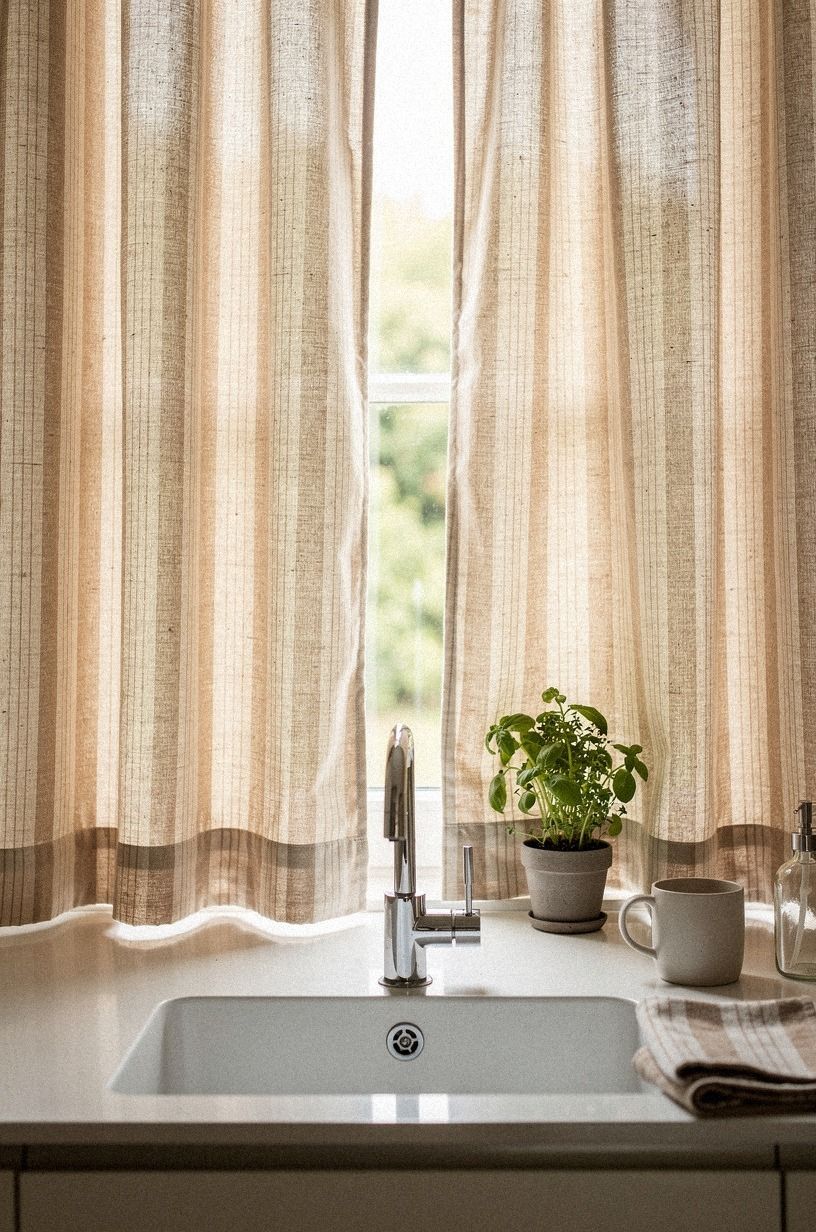
Hang a relaxed Roman shade, café curtain, or simple navy-and-white cotton panel to make the window feel finished. Your choice depends on privacy, sunlight, and how close the fabric sits to the sink or cooktop.
A café curtain gives a sweet cottage feeling while keeping the upper half of the window open. It works especially well when your kitchen looks onto a garden or courtyard.
A Roman shade feels more tailored and can soften a tall, narrow window. If you rent, a tension rod lets you create the effect without drilling.
Choose washable cotton in a navy-and-white pattern for the work zone. The fabric should feel light, but it also needs to survive steam, splashes, and breakfast.
I wouldn't hang a delicate antique textile directly over a sink. It may look beautiful for a week and become a cleaning problem afterward.
Repeat one color from the room in the fabric. A navy stripe, soft white check, or walnut-toned trim can make the window feel connected to the rest of the kitchen.
You don't need a precise match. Your room will look more natural when the colors belong together without becoming a set.
For a warmer wood accent around the window, compare the tones in these white oak kitchen cabinet ideas. If you use a hard surface nearby, a small panel of backlit translucent onyx can add a soft glow without competing with the fabric.
12Keep clean kitchen inspiration practical
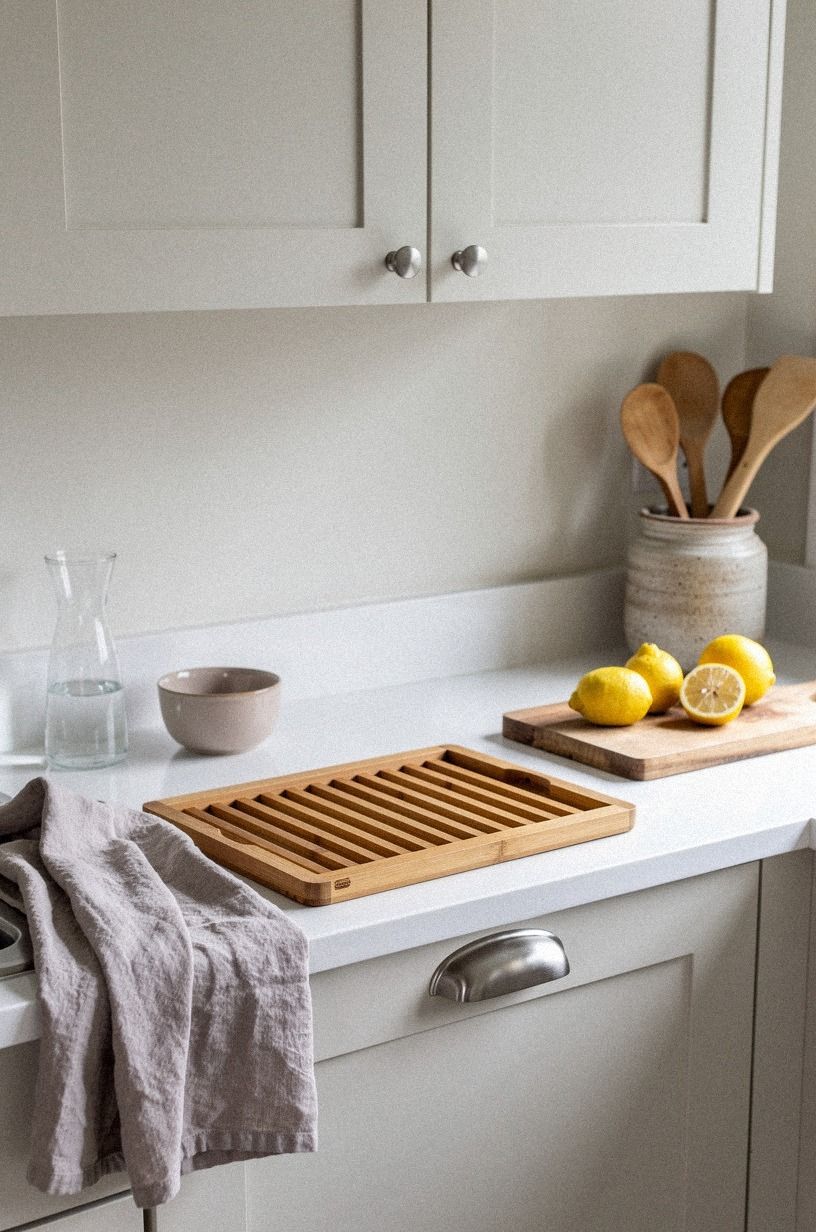
Can your clean kitchen inspiration survive breakfast, grocery bags, and a wet dog? It can, if every decorative choice has a job.
Use a tray for oils, a crock for utensils, and one open shelf for the things you reach for daily. Your room will look composed because the useful pieces are doing the styling.
Keep the shelf depth modest, and leave visible breathing room around each object. A stack of two cream plates, a small emerald pitcher, and a bundle of dried herbs is enough.
Don't fill every inch with decorative pottery. It may look charming for one afternoon, but you'll hate dusting it.
IKEA HEMNES storage can handle the practical overflow while your open shelves hold the warmer, more personal pieces. A drawer for lunch containers, a basket for napkins, and a closed cabinet for appliances will make the room much easier to reset. Your kitchen should support a five-minute tidy.
I also like keeping one beautiful daily object visible. It might be a book-matched walnut serving board, a cream mixing bowl, or a small piece of gold-toned hardware. The item becomes part of the room because you use it, not because you staged it.
If your counters constantly feel crowded, remove three things before buying more storage. You may discover that the problem is too many rarely used objects rather than too little cabinetry. For a compact storage reset, revisit these tiny cottage kitchen ideas.
13Finish with the Cottage Contrast Ladder
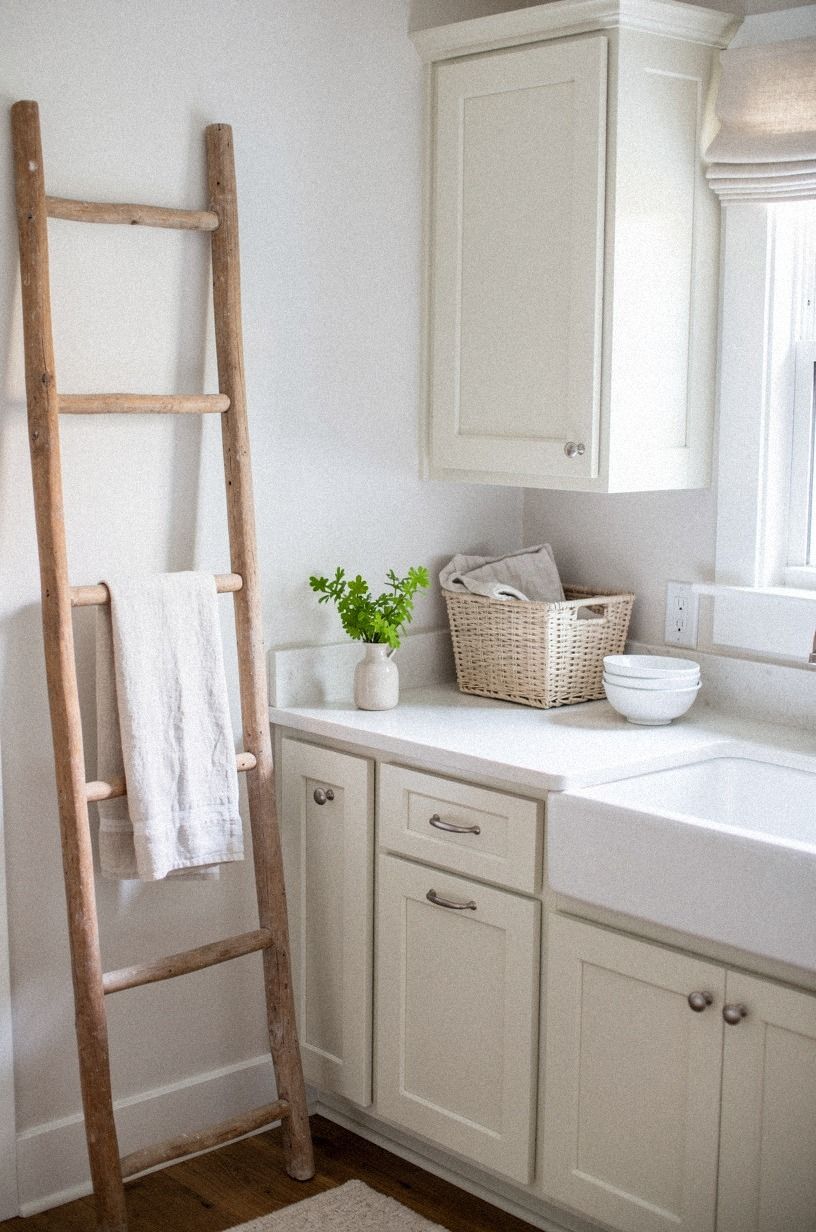
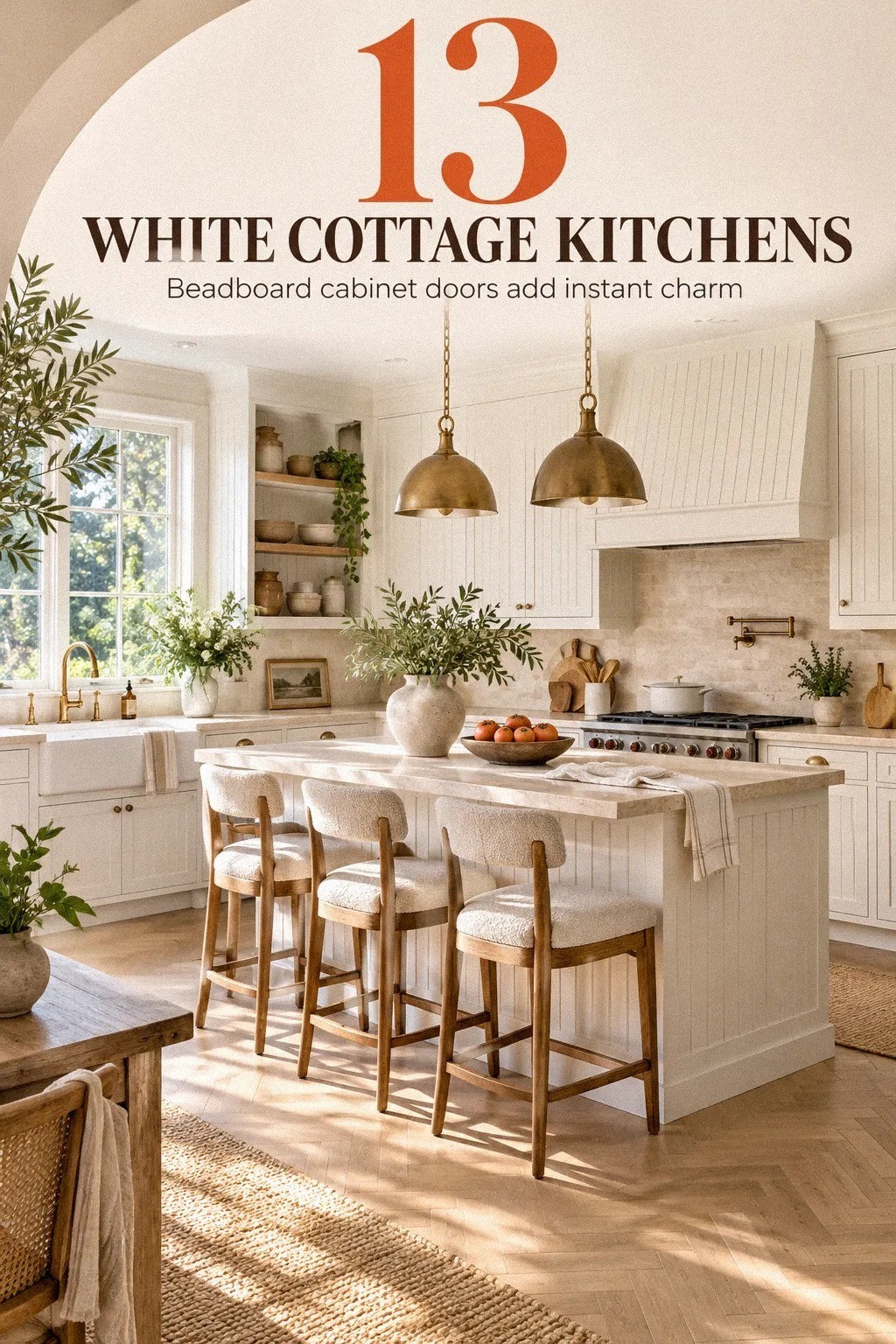
Use the Cottage Contrast Ladder from light to deep: warm white cabinetry, natural oak, warm travertine, then forest green or rust accents. This gives your eye a gentle path through the room.
Your pale layer might include warm white cabinets, cream walls, and a warm travertine backsplash or counter. Natural oak can appear through a counter, stool, shelf, or cutting board.
Forest green and rust belong in the runner, faucet wall, artwork, or picture frames. The deeper accent should appear in small, deliberate places.
You don't need equal amounts of every tone. The palest color should dominate, while the strongest shades appear in small, deliberate places.
I like using one forest-green accent near eye level, such as a framed print or a pair of sconces. It keeps the room from feeling washed out.
If you want more inspiration before making the final decision, compare the white versus wood kitchen cabinet guide with your own samples. Your floor may already provide enough contrast, or you may need a darker natural-oak counter to anchor the space.
Stand at the doorway and look across the whole room. Your eye should move from the light cabinets to the warmer surfaces, then settle on one memorable detail.
That's the charm! The final detail is what makes the kitchen feel personal.
Why White Cottage Kitchens Still Work
I've gone back and forth on white kitchens for years. They can feel timeless, but they can also feel anonymous when the surfaces are too smooth, the lighting is too bright, and every object was bought in the same afternoon.
The difference isn't the color itself. It's the evidence of a person living there: a wooden board with knife marks, a curtain that moves when the window is open, and a bowl that isn't reserved for guests.
White also gives you room to change your mind. When your walls and cabinets are quiet, you can bring in a striped runner one season and a deeper green island later without rebuilding the entire room.
That's a real advantage if your taste keeps shifting. You won't need to chase every new paint color, and your kitchen won't become dated just because one finish had a short moment.
The best white cottage kitchen has a little restraint and a little mess. I wouldn't hide every appliance or style the counter until it looks untouched. Your daily mug can stay out.
So can the fruit bowl, the old cutting board, and the stack of cookbooks with bent corners. Those details make the room feel bright without making it feel precious.
The palette works because it gives texture a leading role. Hand-glazed tile, aged brass, washed linen, warm oak, and painted wood all look more expressive against a pale background. If the room feels bland, add one tactile material before adding another color.
You can also make a white kitchen feel romantic through ordinary routines. Keep fresh flowers from the market in a small pitcher.
Let morning light reach the counter. Use a linen towel that you actually wash. These details cost little, but they give the room an emotional center.
If you want a warmer alternative to all-white cabinetry, return to the white oak kitchen cabinet ideas that will never go out of style and the grandmillennial cottage kitchen ideas for layered examples. You may find that one wood wall, a painted island, or a vintage cabinet gives you the balance you've been missing.
The Questions Worth Answering First
What is the best White Cottage Kitchen Ideas for Bright, Timeless Charm for a small kitchen?
The best approach is warm white cabinets, a narrow wood worktop, and one reflective backsplash. Light-colored surfaces open the room visually, while a small IKEA KALLAX unit can add storage without the bulk of a full island.
Keep at least 42 inches where people need to pass, and use vertical storage for less frequently used pieces. These tiny cottage kitchen ideas can help you compare layouts.
Where can I buy White Cottage Kitchen Ideas for Bright, Timeless Charm pieces on a budget?
Look at IKEA, Wayfair, and Target for useful basics, then check Facebook Marketplace or a local thrift shop for stools and hutches. Secondhand wood adds character cheaply, and you won't need to distress a new piece to make it feel lived-in. I also like checking salvage yards for cabinet pulls, brackets, and small shelves.
How much does a White Cottage Kitchen Ideas for Bright, Timeless Charm makeover cost?
A small cosmetic makeover can cost about $300 to $1,500 if you repaint your cabinets, replace hardware, and add lighting or a backsplash. A larger refresh may reach $3,000 to $12,000. Your final number depends on labor, counter material, plumbing, and whether the existing cabinet boxes can stay.
Compare the material choices in this white versus wood kitchen cabinet guide before setting the final number.
Can I create a White Cottage Kitchen Ideas for Bright, Timeless Charm on a budget?
Yes, and I’d start with three low-cost changes: repaint the walls, replace cabinet pulls, and move your everyday pieces onto one open shelf. Small edits create visible warmth, especially when you add a washable runner or reuse a wooden table instead of buying an island. You can also change bulbs and curtains for an immediate mood shift.
Is a White Cottage Kitchen Ideas for Bright, Timeless Charm worth it in a small space?
Yes. A small kitchen benefits from a restrained palette because fewer colors make the room feel less crowded.
Choose warm white cabinets, one wood accent, and a compact table. Leave 42 inches where possible, and use vertical storage instead of filling the floor.
Your kitchen will feel more open when each object has a clear place.
Is a White Cottage Kitchen Ideas for Bright, Timeless Charm a good idea for a rental?
Yes. Removable changes can make a rental feel personal without risking your deposit.
Try peel-and-stick backsplash, a tension-rod café curtain, removable hooks, battery lighting, and freestanding storage. Keep the original hardware in a labeled bag so you can restore the room later.
I’d also choose a runner and art that can move with you. For tile inspiration without a permanent commitment, browse these white zellige tile bathroom ideas.
Where I'd Start First
If I had to pick one step, I'd start with the cabinet color. Benjamin Moore White Dove gives your wood, tile, and aged metal somewhere warm to land, while a cold white can make every later choice feel disconnected. Test it in daylight, check it after sunset, and then build the room around what you see.
Your kitchen doesn't need a complete rebuild to feel bright, charming, and genuinely yours.