
 by
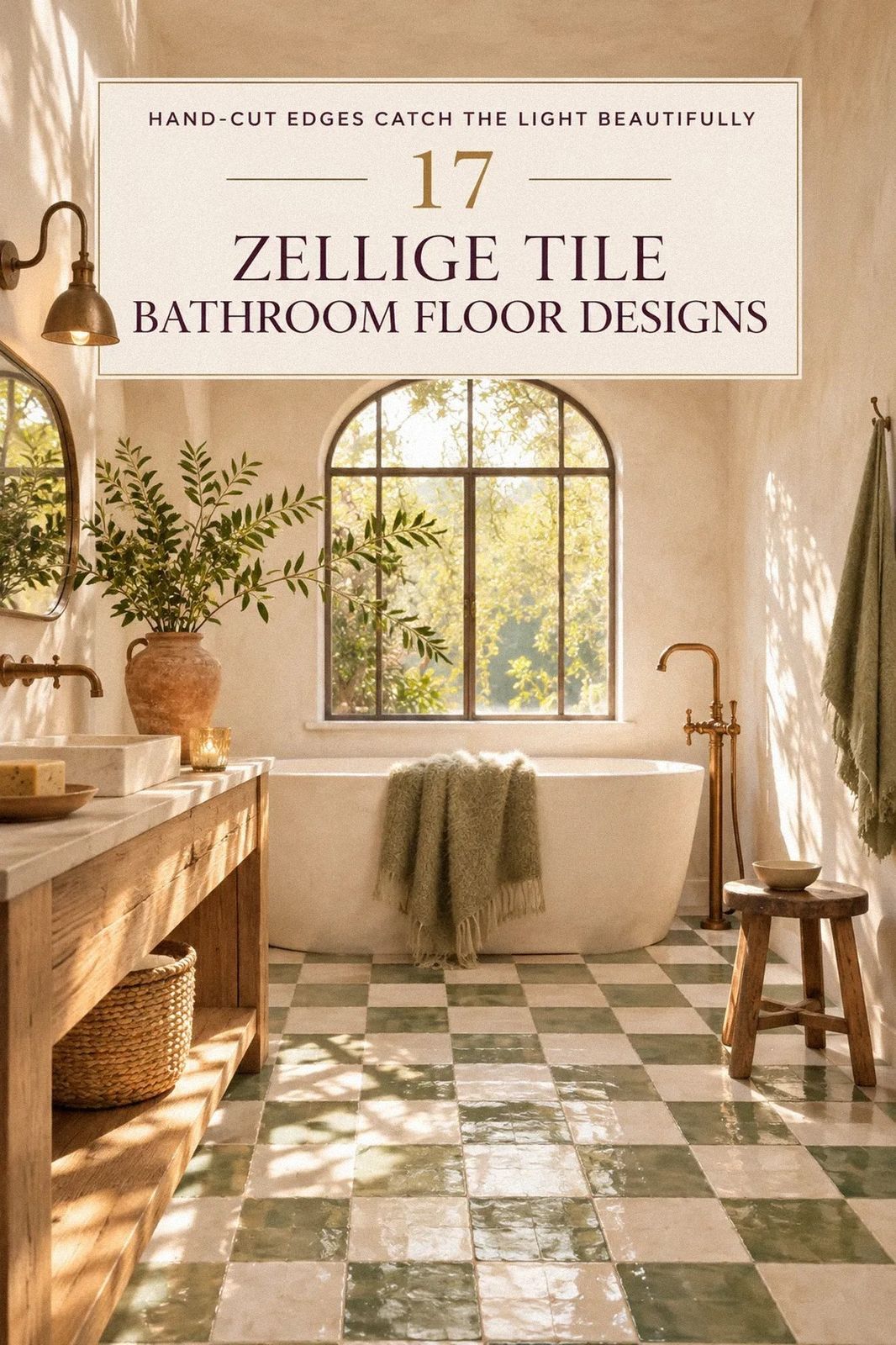
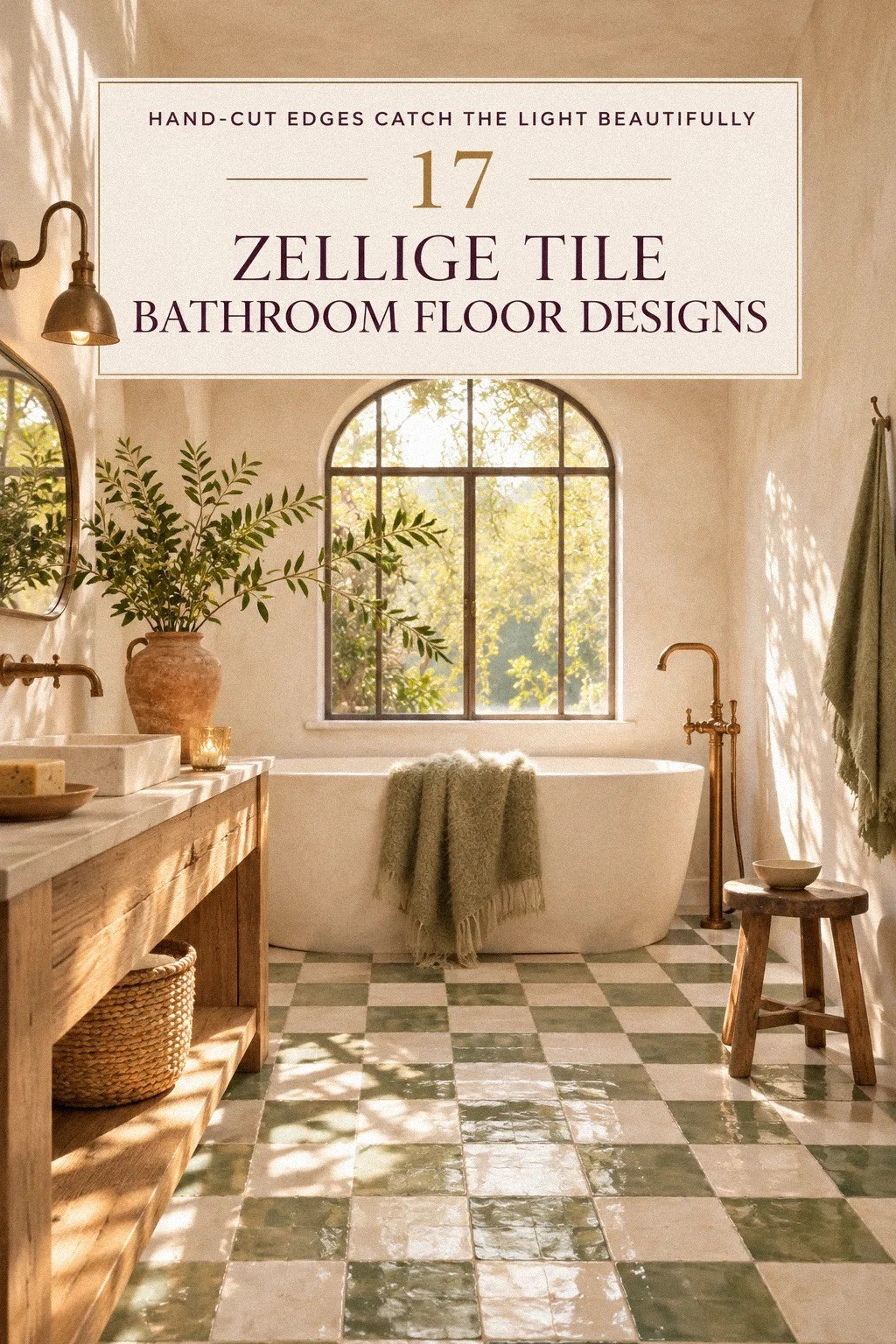
Zellige tile bathroom floor ideas work best when the layout lets each handmade edge breathe. I once packed every inch with a tight grid, and the floor looked flat by lunchtime. Your bathroom needs variation, not visual noise. These 17 layouts use scale, grout, direction, and color to make the floor feel warm and considered.
- Lay a soft checkerboard for small-space contrast
- Run rectangular tiles in a quiet brick pattern
- Use the Two-Tone Drift Rule for bathroom floor tiling
- Frame the vanity with a narrow zellige border
- Float a warm white field underfoot
- Turn the grid 45 degrees for a diamond effect
- Build the Three-Scale Pattern for zellige tile design ideas
- Swap a centered pattern for an offset path
- What Does a Tonal Inset Change?
- Dark Perimeter, Pale Center
- Mix warm and cool glaze across one diagonal
- Float a rug-shaped rectangle in the middle
- Choose a herringbone path over a full pattern
- Pair a pale floor with a painted ceiling
- Use the Four-Corner Pause for tile wall bathroom pairings
- Budget the character before you choose the tile
- Paint the backdrop and let the floor speak
1Lay a soft checkerboard for small-space contrast
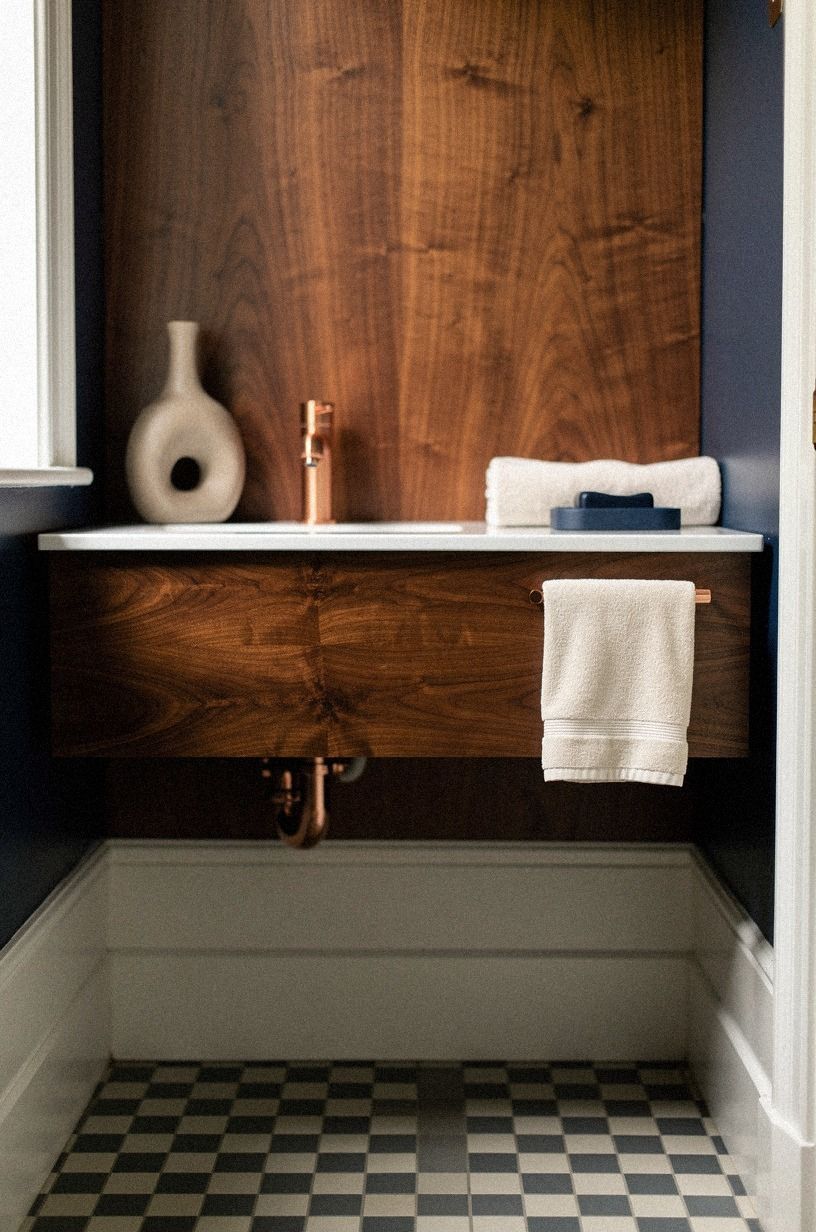
A checkerboard floor gives your bathroom a clear rhythm without demanding a large room. Pair midnight-blue square zellige tile with warm ivory, then bring in book-matched walnut at the vanity so the pattern stays layered rather than harsh. You’ll get definition around the vanity and toilet without making the floor feel busy.
Choose smaller squares if your room is narrow, but don’t shrink the tile so far that every joint competes with the handmade surface. I’d skip a stark black-and-white pairing here.
It’s bold, but the hard contrast can make a small bathroom feel chopped into pieces. If you’re planning the full room, compare it with these square zellige bathroom layouts and these neutral zellige bathroom ideas. Your eye will settle faster when the walls stay quiet.
2Run rectangular tiles in a quiet brick pattern
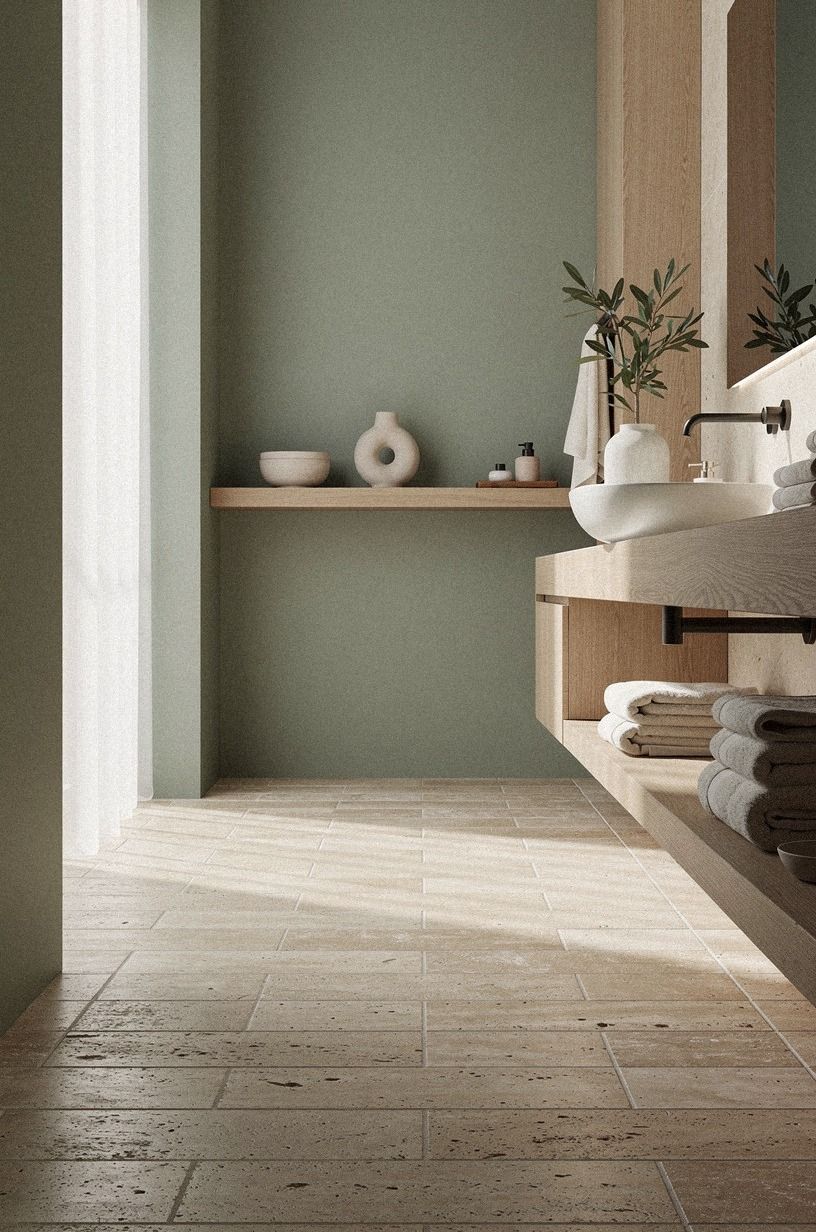
A brick layout makes zellige tiles feel relaxed and architectural. Offset each row by half a tile, then let the uneven ends show rather than forcing every piece into a machine-perfect line. The little changes catch the light near the sink, especially when you use warm cream zellige with a satin finish and echo it with warm travertine.
You’ll want the longest direction to follow the room’s main sightline. In a compact bathroom, that usually means running the rows from the doorway toward the shower so the floor appears longer.
I tested a crosswise layout once, and it made the same room feel wider but oddly shorter. For a related wall treatment, browse these simple elegant zellige bathroom ideas and these vertical zellige tile ideas. They’ll help you keep the floor pattern from fighting the walls.
3Use the Two-Tone Drift Rule for bathroom floor tiling
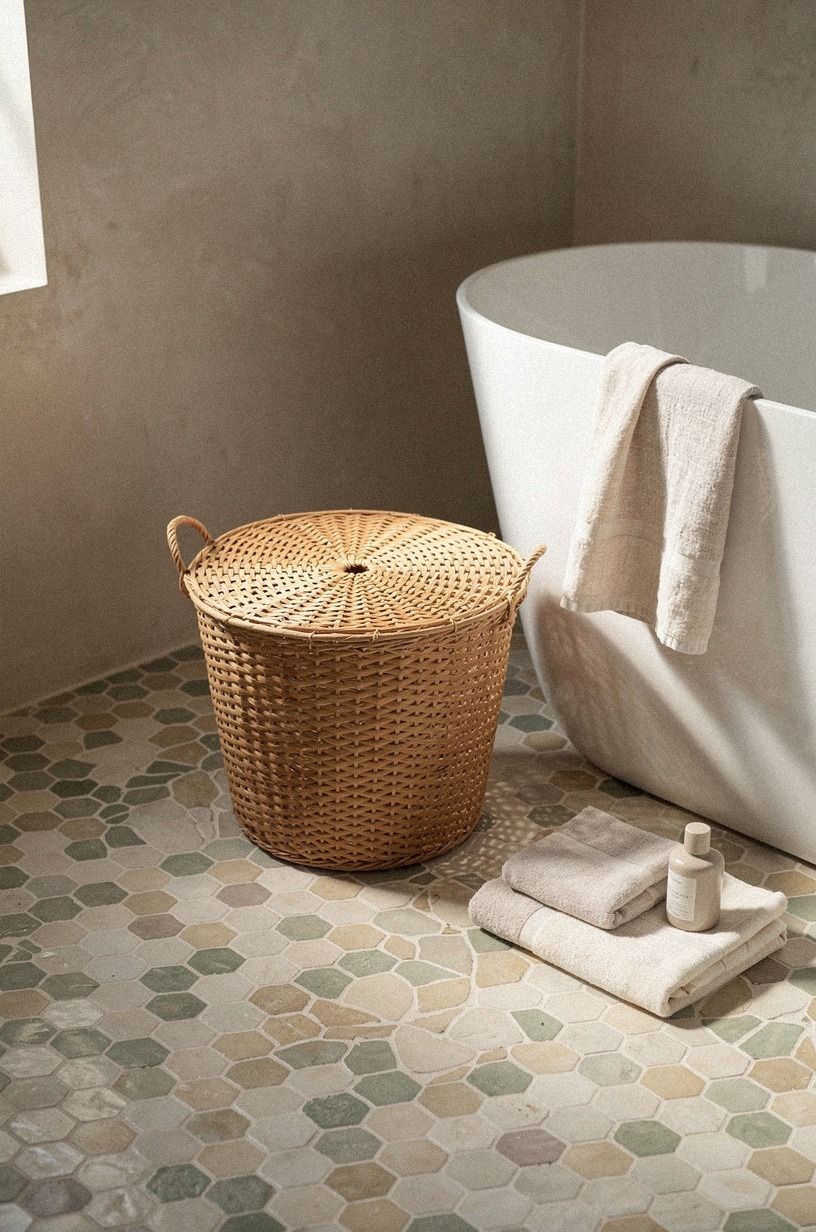
The Two-Tone Drift Rule uses two neighboring shades rather than one exact color.
4Frame the vanity with a narrow zellige border
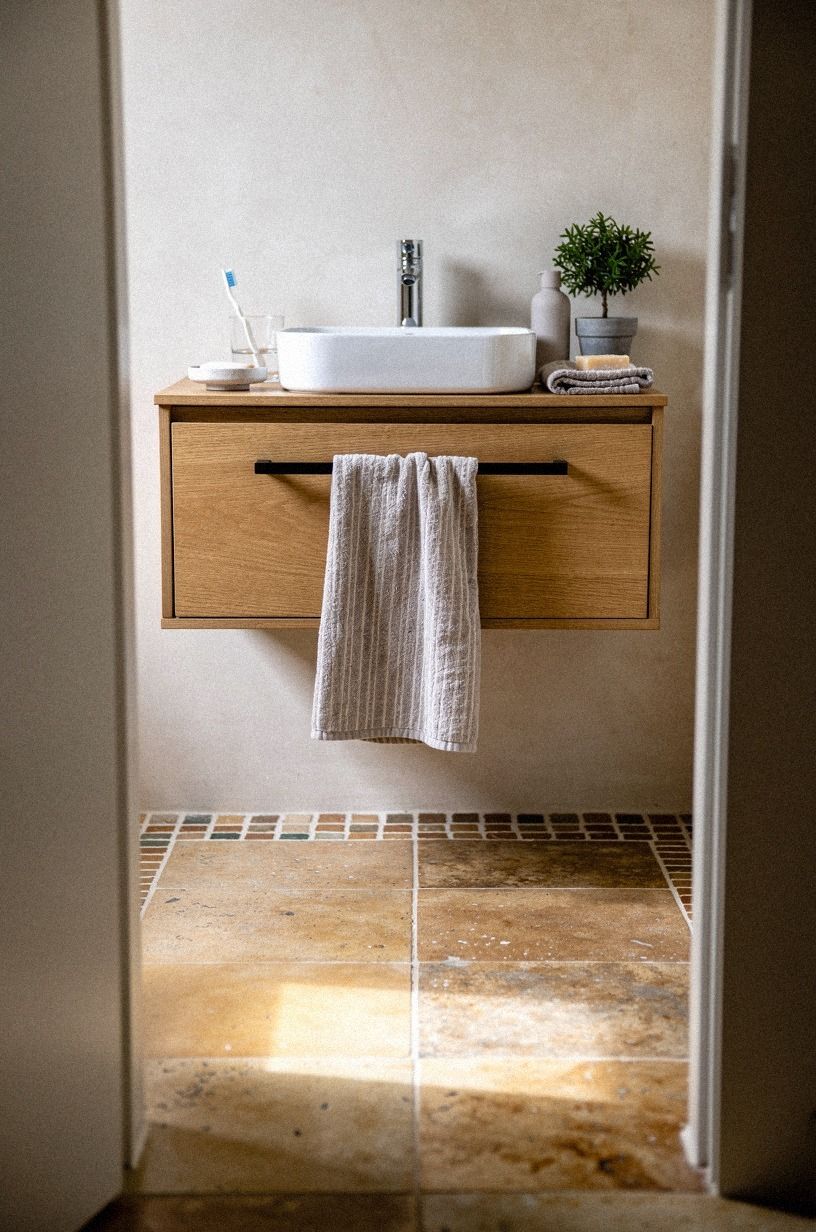
A border around the vanity creates a small visual room inside the room. Use field tile across most of the floor, then add a narrow band of clay-toned zellige with an oversized-chip terrazzo edge around the sink zone. It’s a smart choice when you want character but don’t want a full patterned floor.
Keep the border wide enough to read, but don’t force it around awkward plumbing or a toilet base. Your layout should follow the room’s fixed points, not an imaginary perfect rectangle. A comfortable shower needs at least 36 by 36 inches, so leave that area visually calm if the room is already tight.
I’d skip a border that stops randomly beside the toilet. Continue it to a wall or doorway, and your eye will understand the decision.
For a related restrained treatment, look at these neutral zellige bathroom ideas and these simple elegant zellige bathroom ideas. Both show how a quiet backdrop can make a small floor detail matter.
5Float a warm white field underfoot
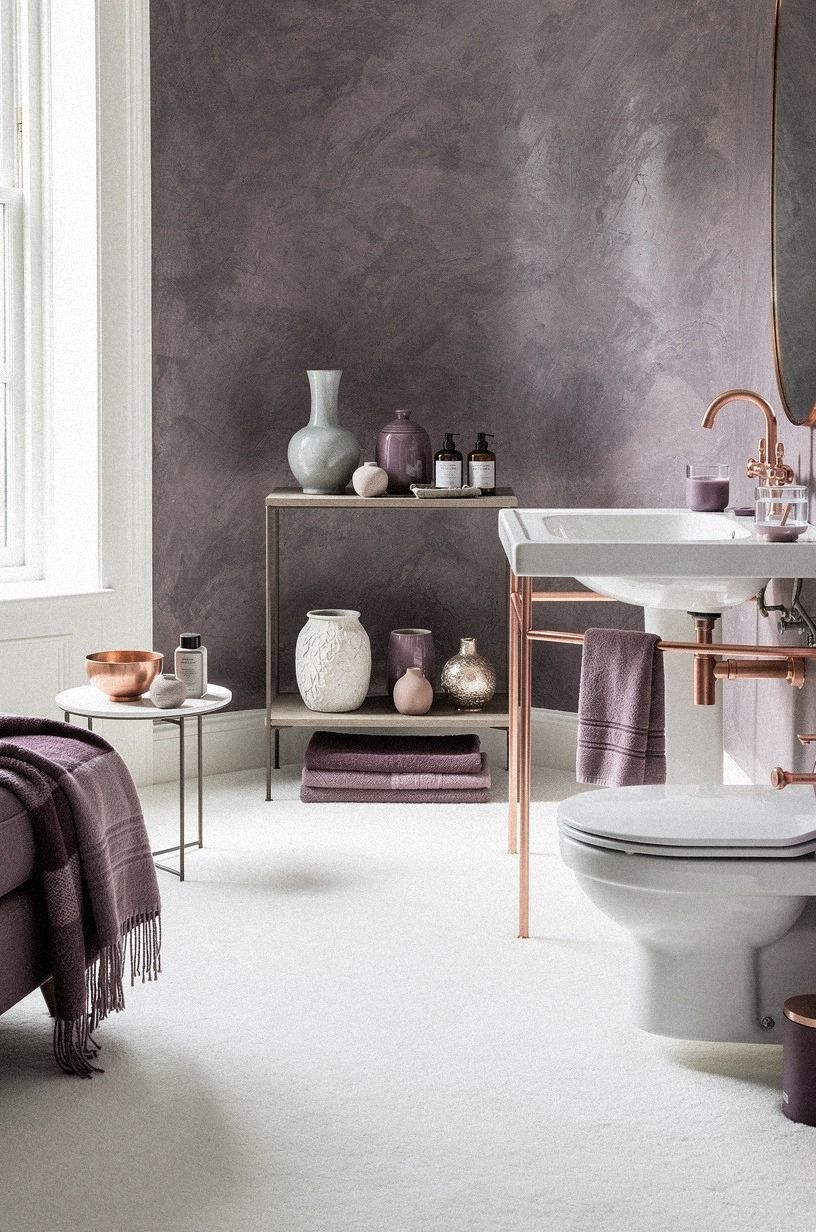
A pale floor can still have plenty of texture when the tile has handmade variation. Lay plum zellige with soft pinholes in a simple running bond, then let the glaze shift from muted plum to soft grey. The floor will feel richer without turning the bathroom into a blank box.
You’ll want warmer accents above eye level, such as rose-gold lighting or a wall finished with hand-applied Venetian plaster. Otherwise, the room may feel washed out by morning.
And don’t assume white grout is the cleanest choice. A warm putty grout hides everyday dust better and gives the irregular edges a softer outline.
Your floor doesn’t need a dramatic pattern to feel memorable.
These bright imperfect white zellige ideas use the same principle on walls, while these neutral zellige bathroom ideas show how to keep the rest of the room grounded.
6Turn the grid 45 degrees for a diamond effect
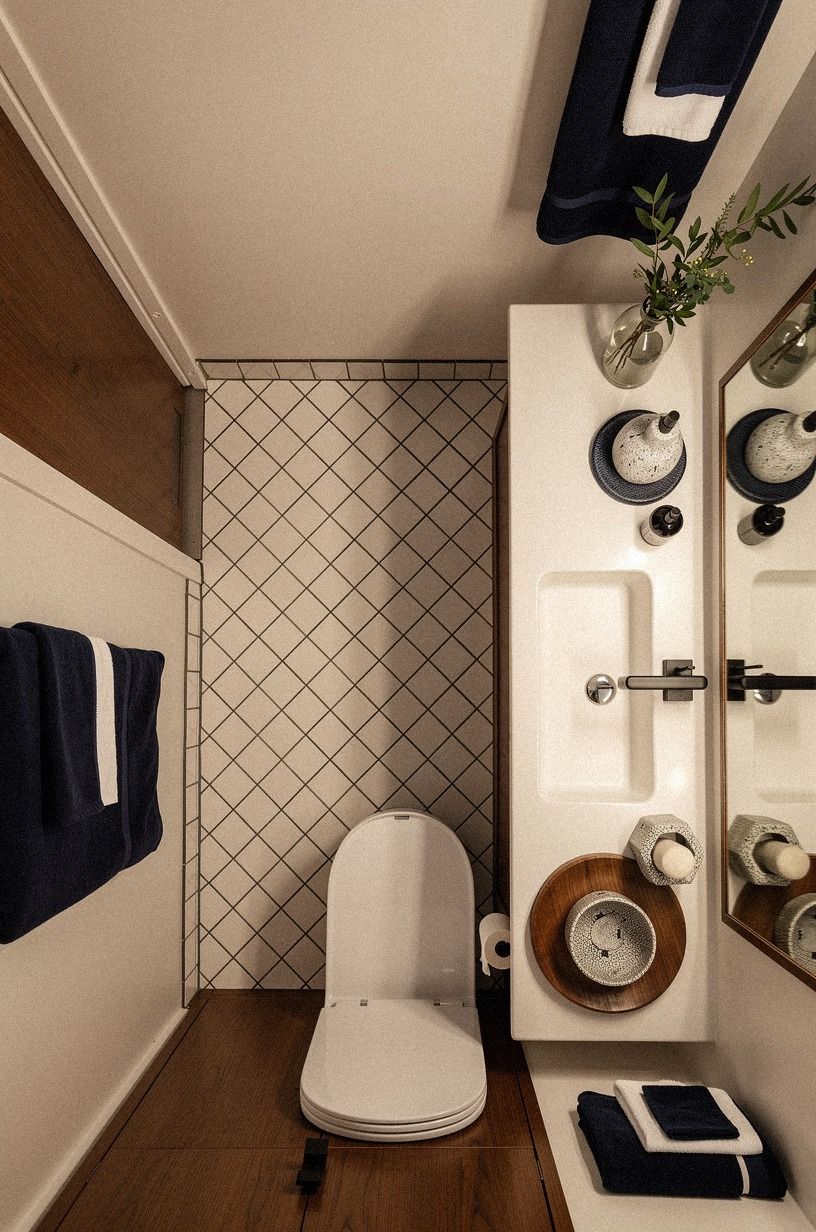
A diagonal grid can make a square bathroom feel less predictable.
7Build the Three-Scale Pattern for zellige tile design ideas
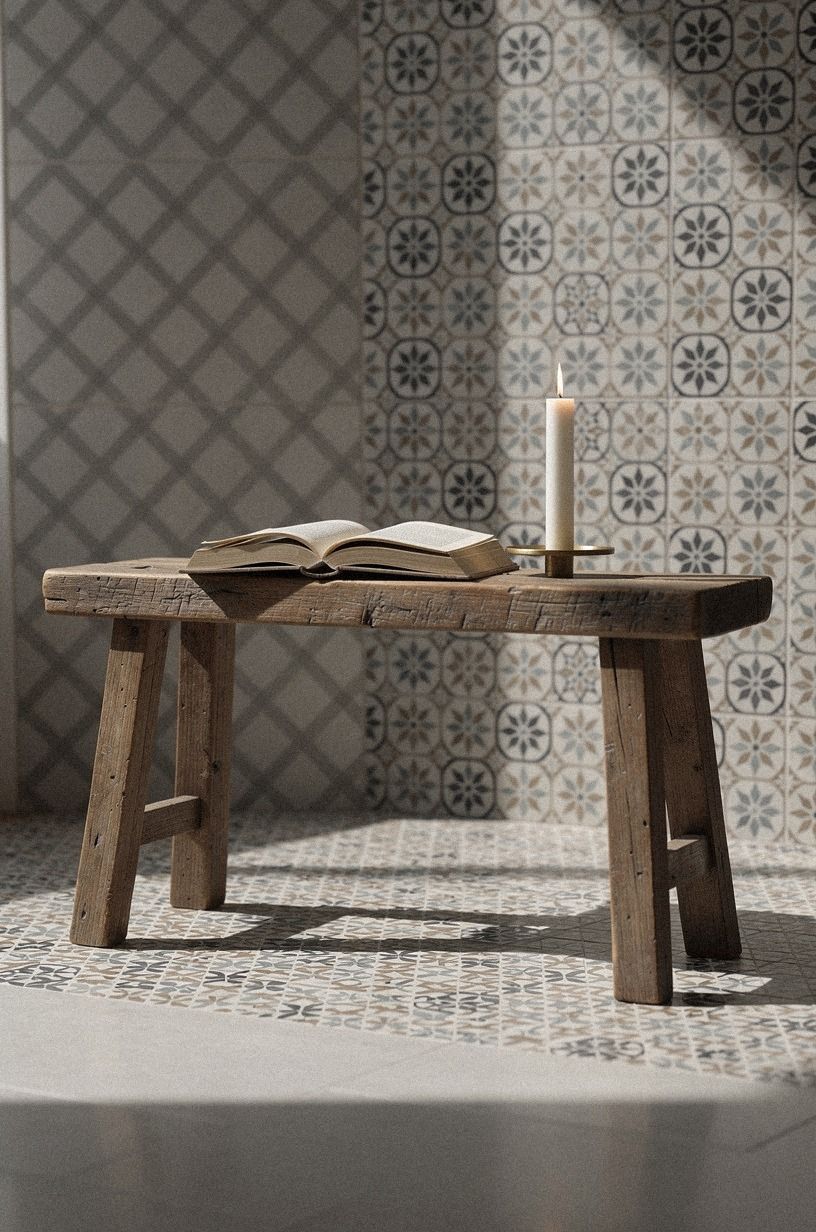
The Three-Scale Pattern mixes large field pieces, medium accents, and tiny transition tiles. Use larger cream glazed tile in the open center, medium squares around the vanity, and a narrow mosaic strip near the shower threshold. Bring in washed Belgian linen through the vanity stool or window treatment so the changes feel gradual, not like three unrelated floors.
You’ll need a clear hierarchy. Let one size dominate, then use the smaller pieces as punctuation. I’d choose the medium tile as the accent if your bathroom is under a standard vanity footprint, because tiny pieces can overwhelm the floor quickly.
Your grout color should stay consistent across all three zones so the layout reads as one composition. It’s a little more planning, but the payoff is refined and inviting.
If you want the walls to remain simple, these vertical zellige tile ideas can help you repeat the scale change without copying the floor exactly.
8Swap a centered pattern for an offset path
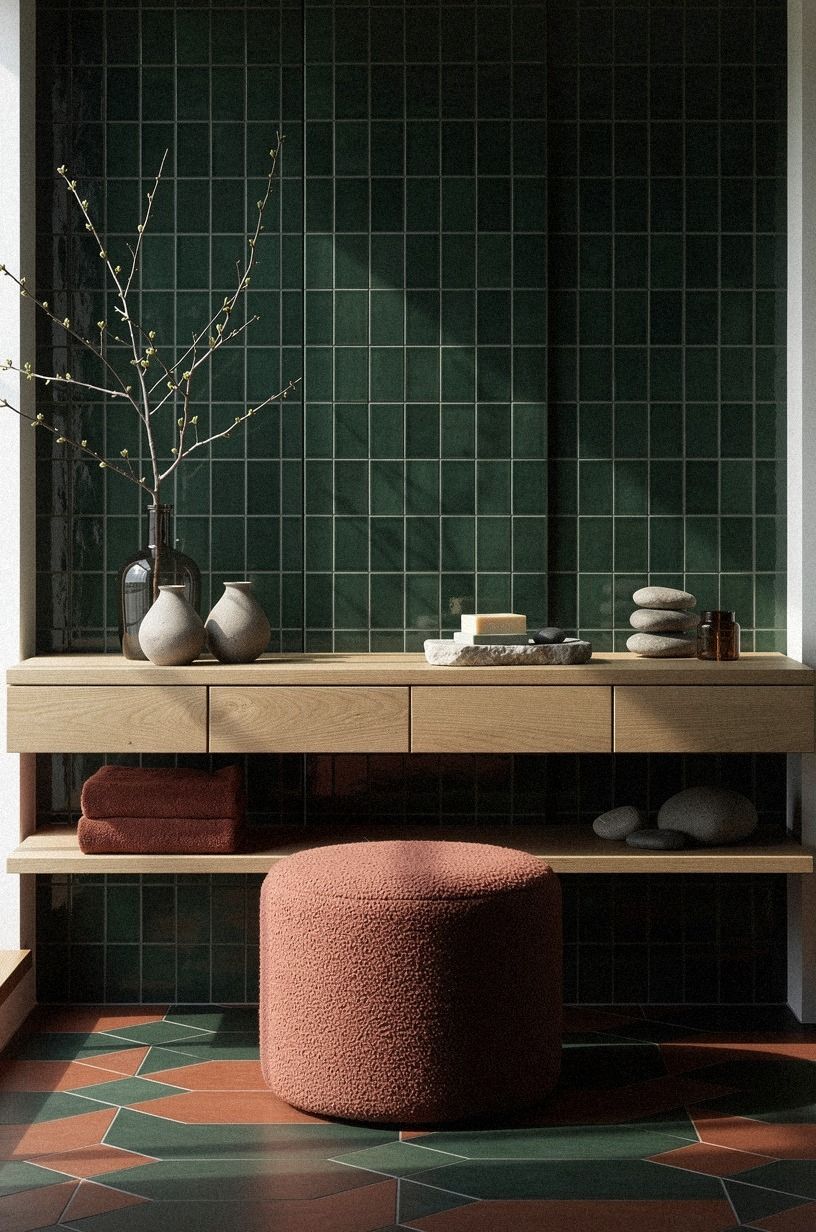
Instead of centering every tile on the doorway, begin the layout from the vanity wall and let the rows travel toward the entrance. This offset path makes the room feel more collected and less like a showroom installation. Use forest-green zellige with a matte or lightly rippled face for a calming floor.
Your doorway deserves the cleanest visual finish, so avoid ending with a narrow cut at the threshold. Shift the starting line until the entrance receives a full or nearly full piece. A natural-oak vanity can echo the green without matching it too closely.
But I’d skip a forest-green floor with a green wall and green vanity. One repeated note is harmonious; three can feel themed.
For more color direction, see these pink zellige bathroom ideas and these simple elegant zellige bathroom ideas. You can borrow their warmth without copying their palette.
9What Does a Tonal Inset Change?
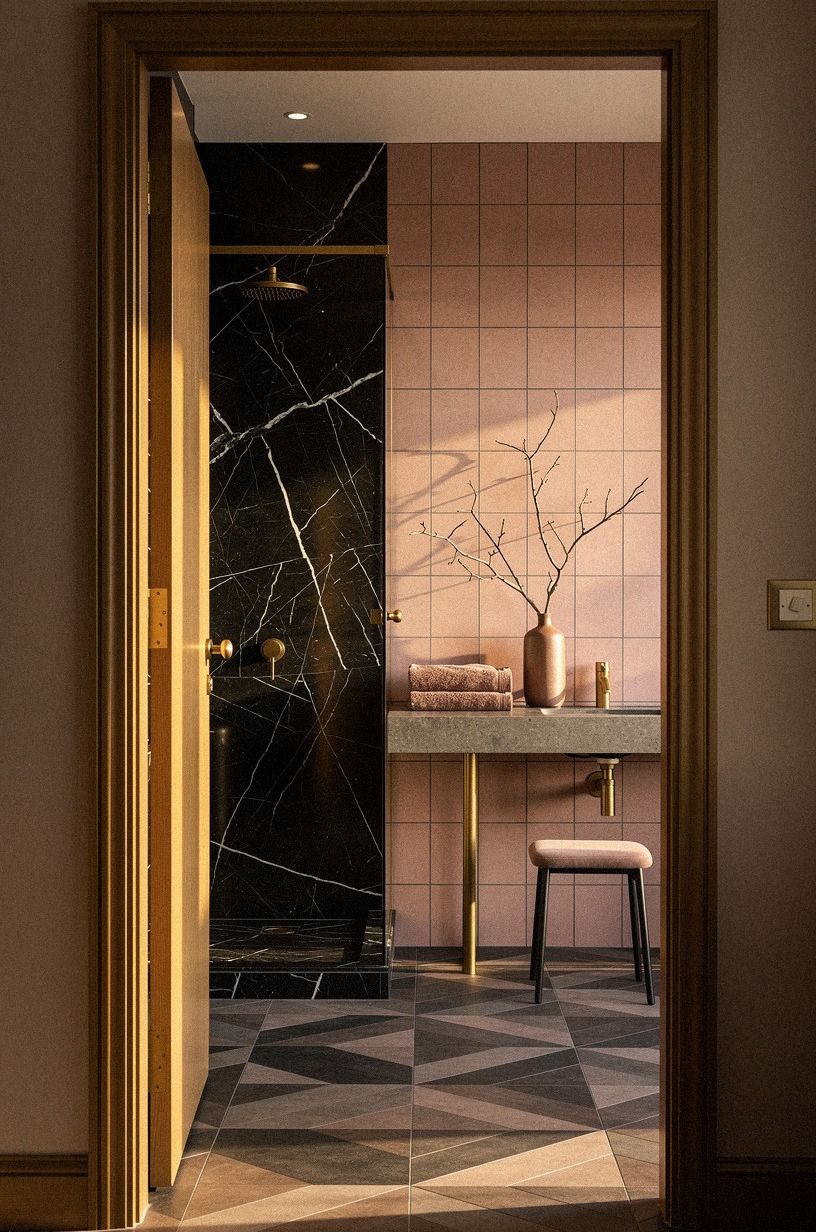
A tonal inset separates the shower visually without needing a raised curb or contrasting material.
10Dark Perimeter, Pale Center
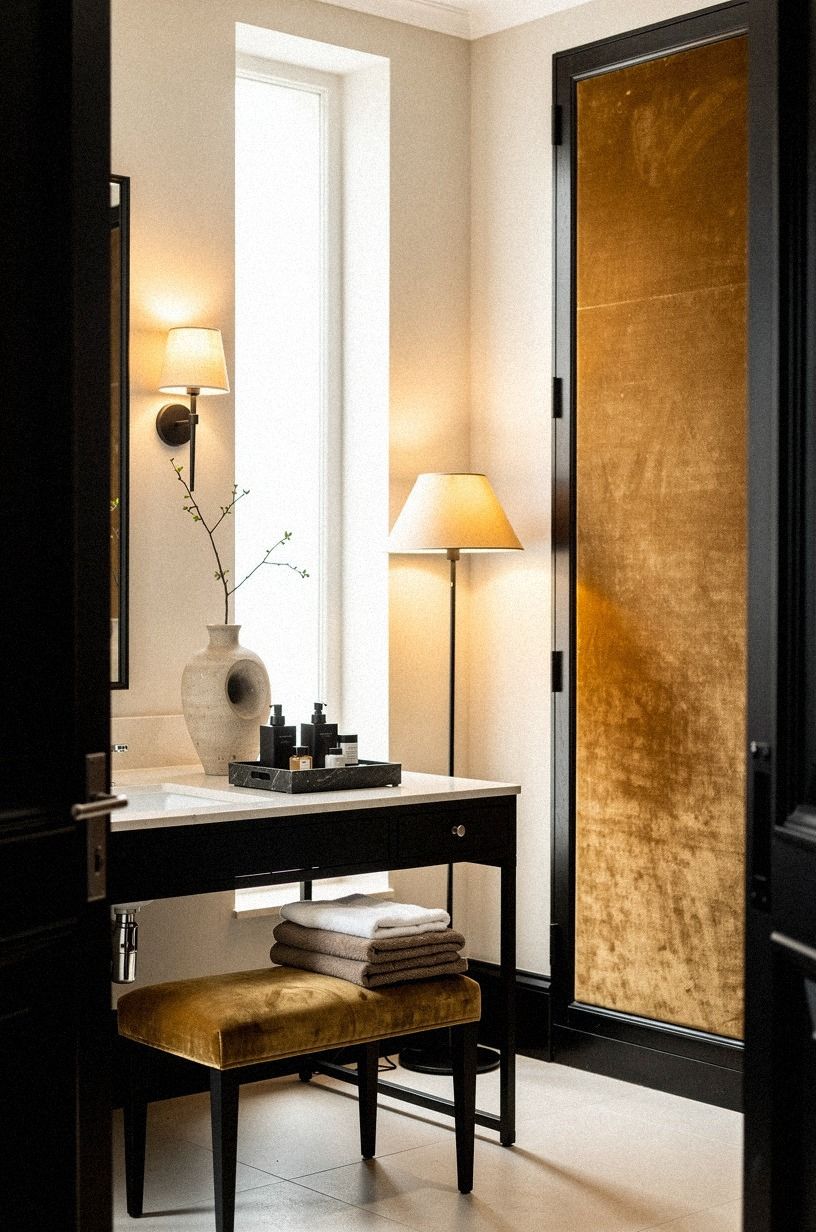
A dark perimeter gives a pale floor a tailored edge. Use deep ink zellige along the walls and a warm ivory field through the center, keeping the border wide enough to hold its shape around the toilet. The layout feels graphic, but the glaze variation keeps it from looking severe.
This approach works especially well when your vanity has a strong silhouette. A warm camel paint on a built-in cabinet can connect with the border, though I’d keep the walls lighter.
Your bathroom already has a visual border underfoot, so another dark wall could close in the room. But if you love moody spaces, add brass hardware and a deep-pile mohair velvet stool to break up the depth.
A little contrast is enough!
For a softer interpretation, study these bright imperfect white zellige ideas before you choose the perimeter color. You’ll see how much the surrounding light changes the result.
11Mix warm and cool glaze across one diagonal
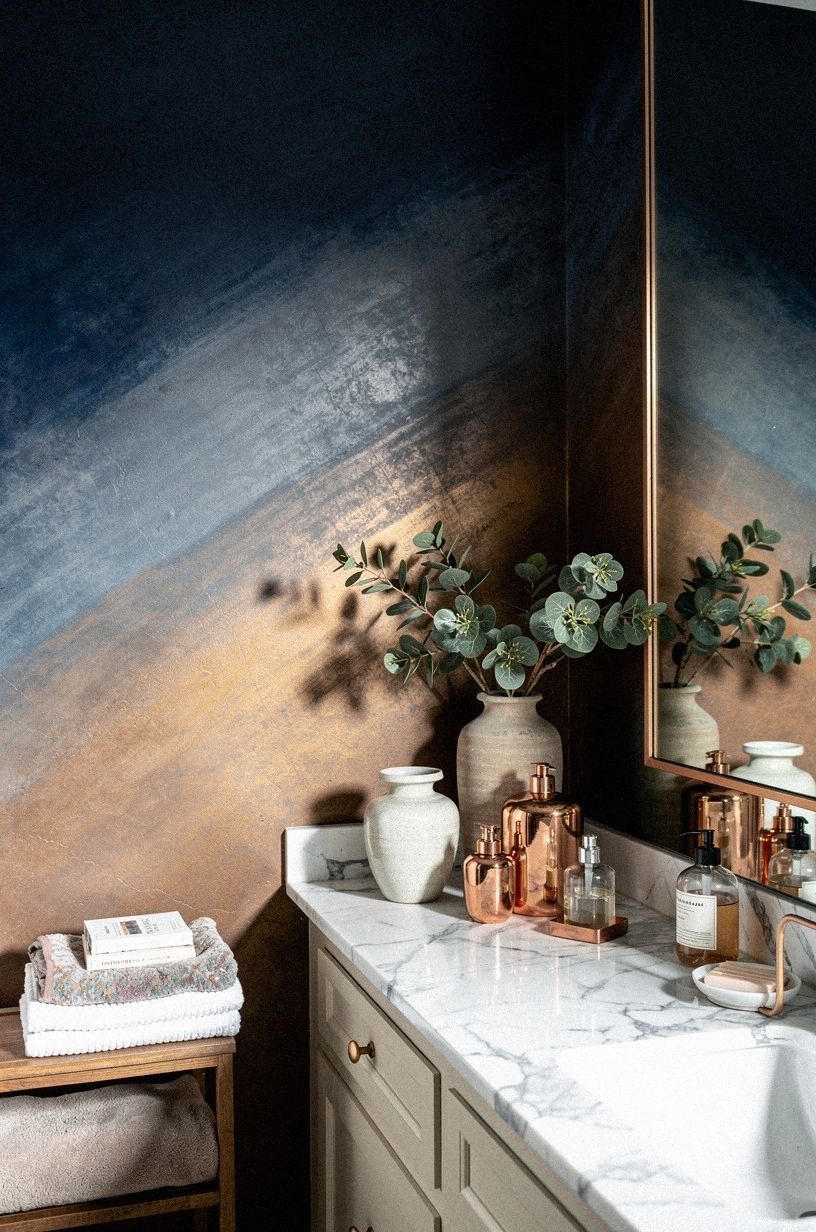
A diagonal color blend can make a long bathroom feel more layered. Begin with ivory near the doorway, move through midnight blue, and finish with copper near the shower. Use Carrara marble with subtle grey veining as the grounding accent, not three hard blocks of color.
You’ll want to map the transition before installation because the blend needs a natural stopping point. Follow the room’s wet zone or vanity line instead of cutting randomly through the middle.
I’d skip this layout if your walls already carry a colorful mural or patterned tile. Your eye needs one main event.
And honestly, a calm white wall with one shifting floor is often more memorable than a room where every surface asks for attention.
These zellige tiles on floors and walls show how repetition can travel upward, while these pink zellige bathroom ideas offer a warmer way to blend adjacent shades.
12Float a rug-shaped rectangle in the middle
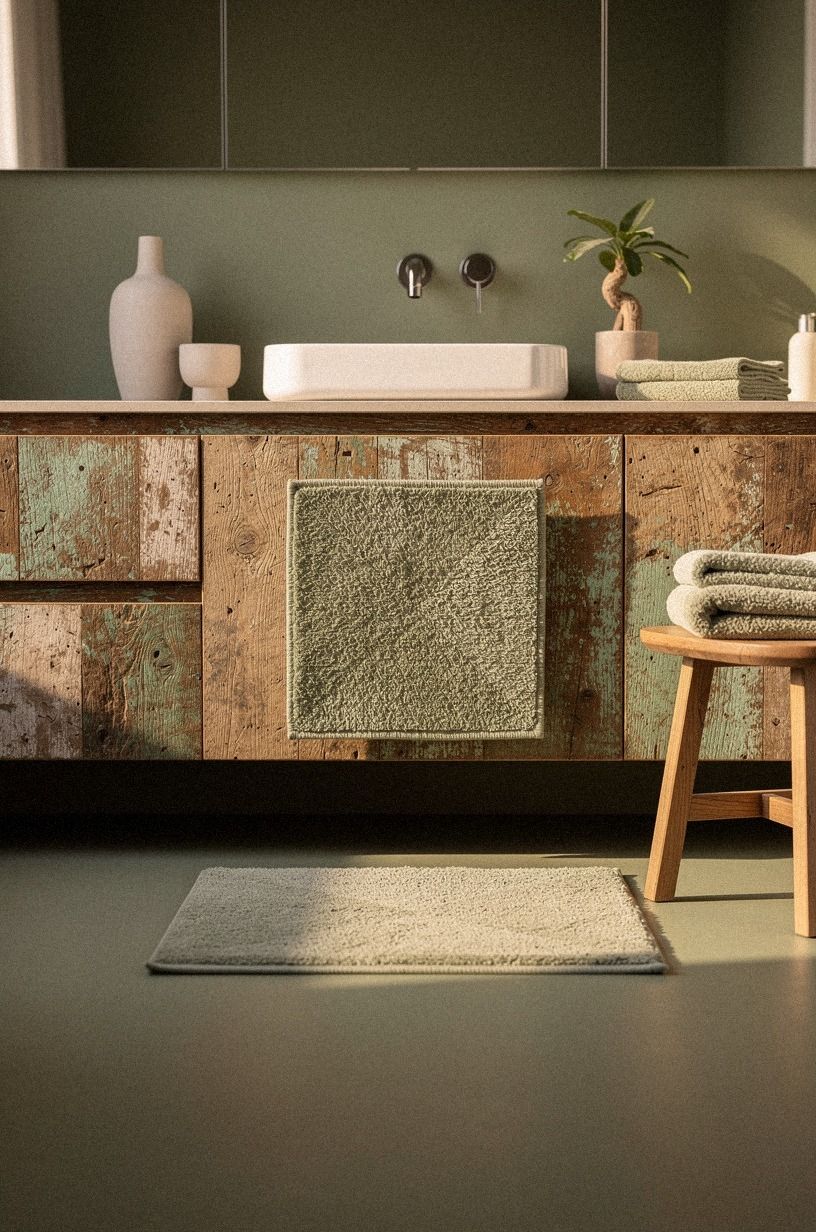
A rug-shaped floor zone gives your bathroom a soft furnishing effect without adding fabric near splashing water. Lay a rectangle of sage-green zellige in front of the vanity, then surround it with a quieter cream tile and reclaimed weathered teak. The border should feel like a woven mat translated into ceramic and wood.
Make sure the rectangle relates to the vanity width. A vanity height of 32 to 36 inches is standard, so the floor pattern should sit comfortably below that visual mass rather than stop halfway across it.
Your feet will notice the warmer color first, which makes the morning routine feel less stark. I’d avoid a tiny inset that looks like a doormat. Give it enough width to support both feet and the cabinet above.
For a calmer variation, compare the proportions with these simple elegant spa bathroom ideas. You can keep the floor zone generous while the walls stay visually spare.
13Choose a herringbone path over a full pattern
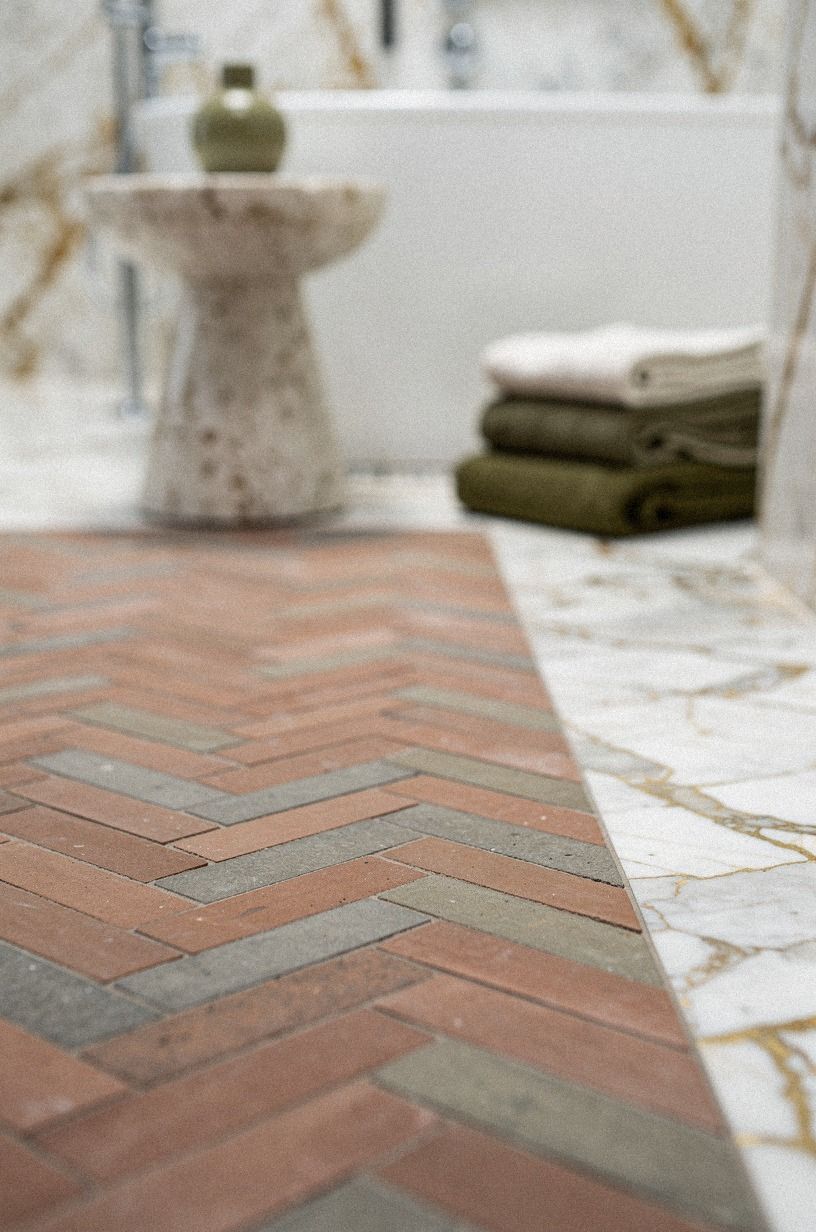
Herringbone adds movement, but a full floor can become restless when every tile is small and irregular. Use a narrow terracotta elongated zellige tile in a restrained herringbone path from the doorway to the vanity, then lay the surrounding floor in a quiet stone tone with olive accents. The eye follows the path, and the room gains direction.
You’ll want the path to terminate at something meaningful, such as the sink center or a freestanding tub. A bathroom with a standard 60 by 30 inch tub benefits from this kind of visual lead-in.
I’d skip herringbone around multiple fixture clusters because the cuts can dominate. Your floor should guide you through the room, not make you study every joint.
For another directional idea, these zellige tiles on floors and walls show how repetition can travel upward. You can also borrow the restrained rhythm from these square zellige bathroom layouts without copying their checkerboard.
14Pair a pale floor with a painted ceiling
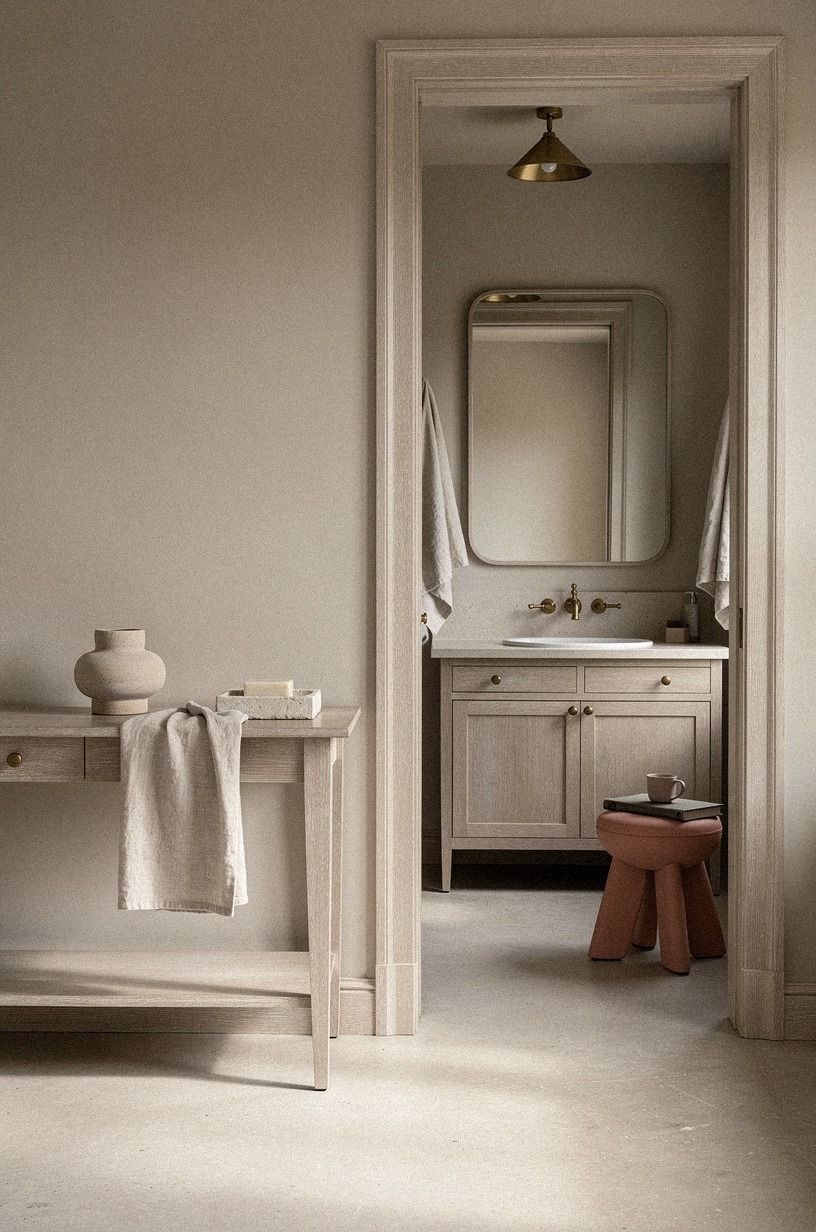
A ceiling color can make a simple floor layout feel far more complete. Keep the floor in clay-toned zellige, then paint the ceiling and upper walls in a related linen shade. A cerused white oak mirror gives the tile room to show its handmade edges without turning the bathroom cold.
Your floor pattern should stay restrained when the ceiling is doing visual work. A running bond or quiet checkerboard will be enough.
I’d avoid adding a bold shower wall, patterned curtain, and statement mirror on top of it. That combination sounds lively, but it can become noisy in a small footprint.
Instead, let the ceiling carry the surprise. You’ll feel the effect most when the room is lit at night and the color seems to lower the ceiling gently.
If you’re choosing a wall finish too, these vertical zellige tile ideas can help you balance the ceiling color with a quieter vertical rhythm.
15Use the Four-Corner Pause for tile wall bathroom pairings
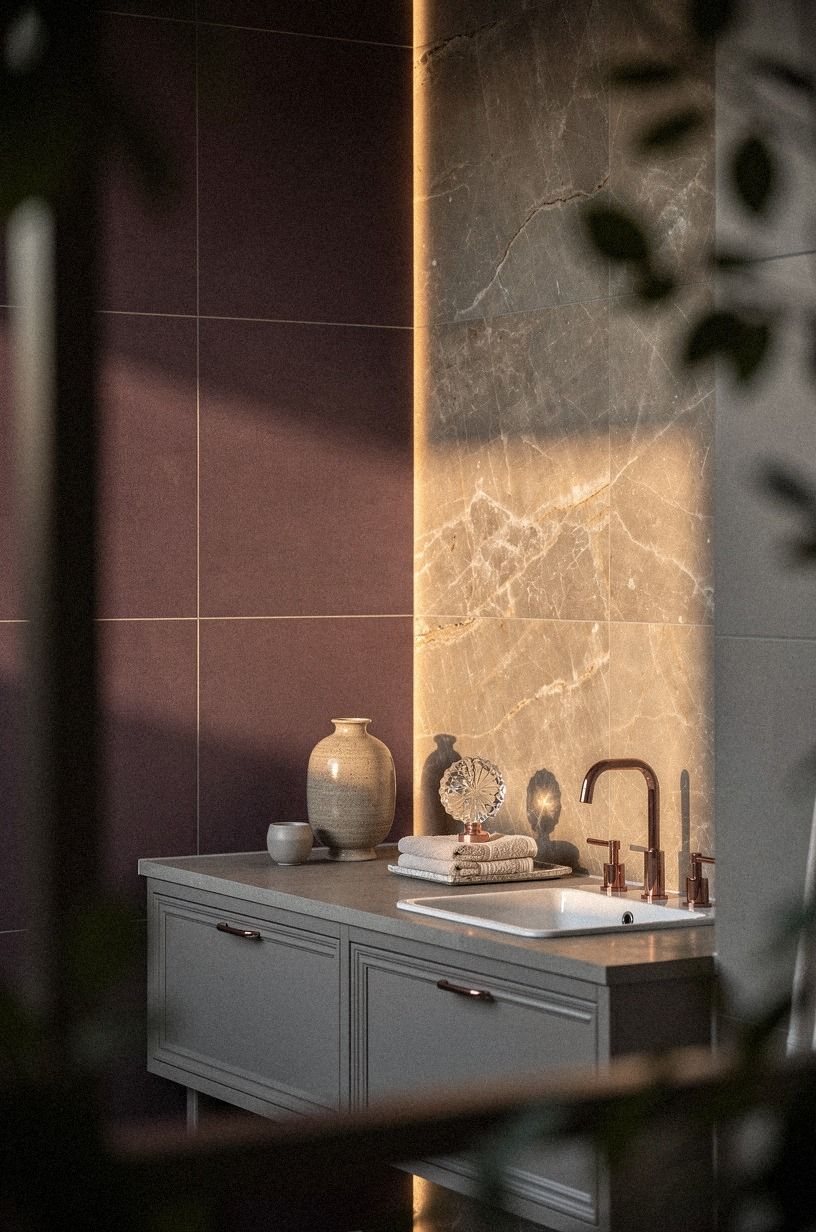
The Four-Corner Pause leaves a slightly calmer tile zone at each corner of the room. Keep the center in soft grey square tile, then use subtly deeper plum pieces near the vanity, shower, toilet, and doorway. A backlit translucent onyx panel or rose-gold hardware can carry the warmth upward without competing with the floor.
You’ll need to plan around the toilet clearance, which should be at least 21 inches in front. Don’t force a decorative strip into that narrow zone if it makes the floor look pinched. I’d choose a quiet wall tile above, perhaps a soft vertical stack, so the floor remains the main character.
These neutral zellige bathroom ideas are useful when you’re trying to balance a detailed floor with a serene wall treatment. For a brighter direction, these white zellige tile ideas keep the corners from feeling heavy.
16Budget the character before you choose the tile
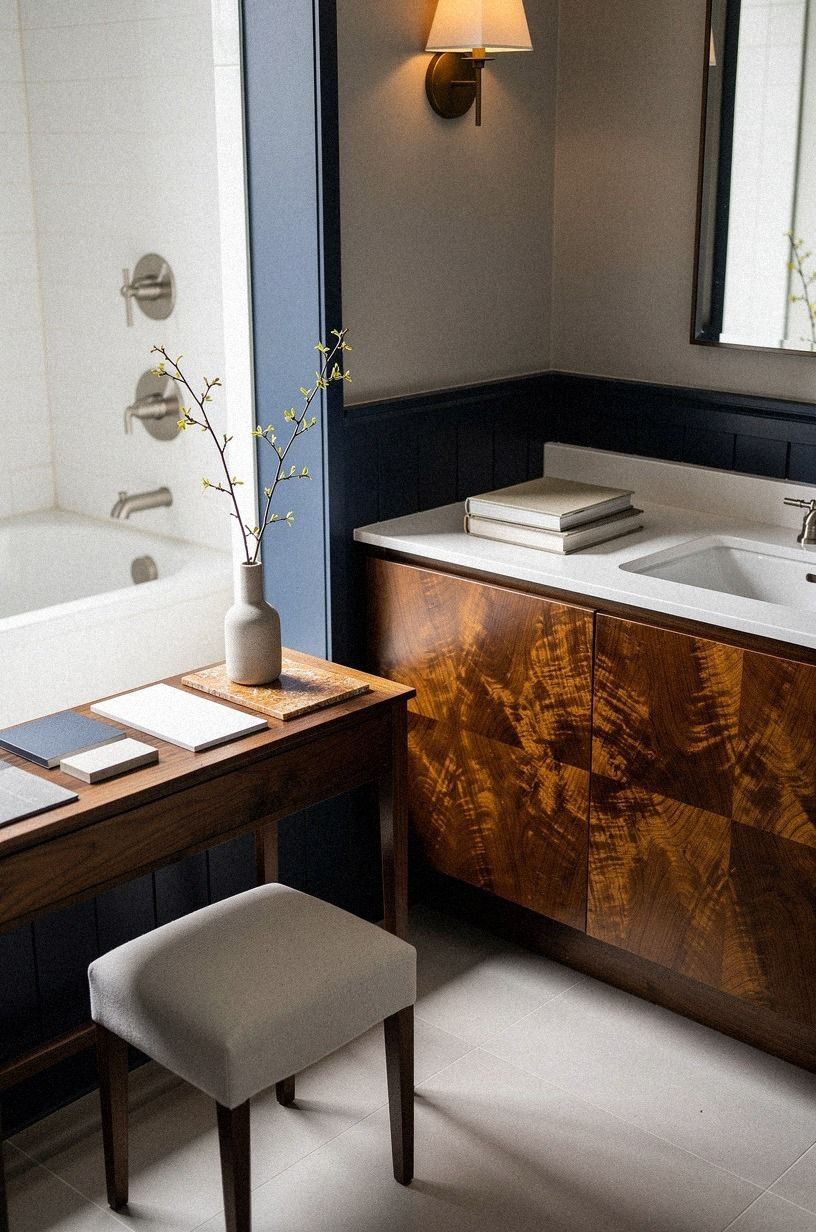
Zellige has handmade appeal, but the full bathroom budget still includes labor, waterproofing, fixtures, paint, and lighting. The material table below gives you the broader US renovation context. Your floor may be the emotional centerpiece, yet it shouldn’t consume money needed for proper preparation.
For the tile itself, typical zellige pricing runs about $15-$35 per square foot, while subway tile is often $2-$10 per square foot. You’ll want to measure carefully and leave room for installation choices. A budget-conscious floor can still feel rich if you pair zellige with simple paint and an existing vanity.
These simple elegant spa bathroom ideas show where restraint pays off. You can also use the lighter approach from these bright imperfect white zellige ideas when the budget needs to stay focused on installation.
17Paint the backdrop and let the floor speak
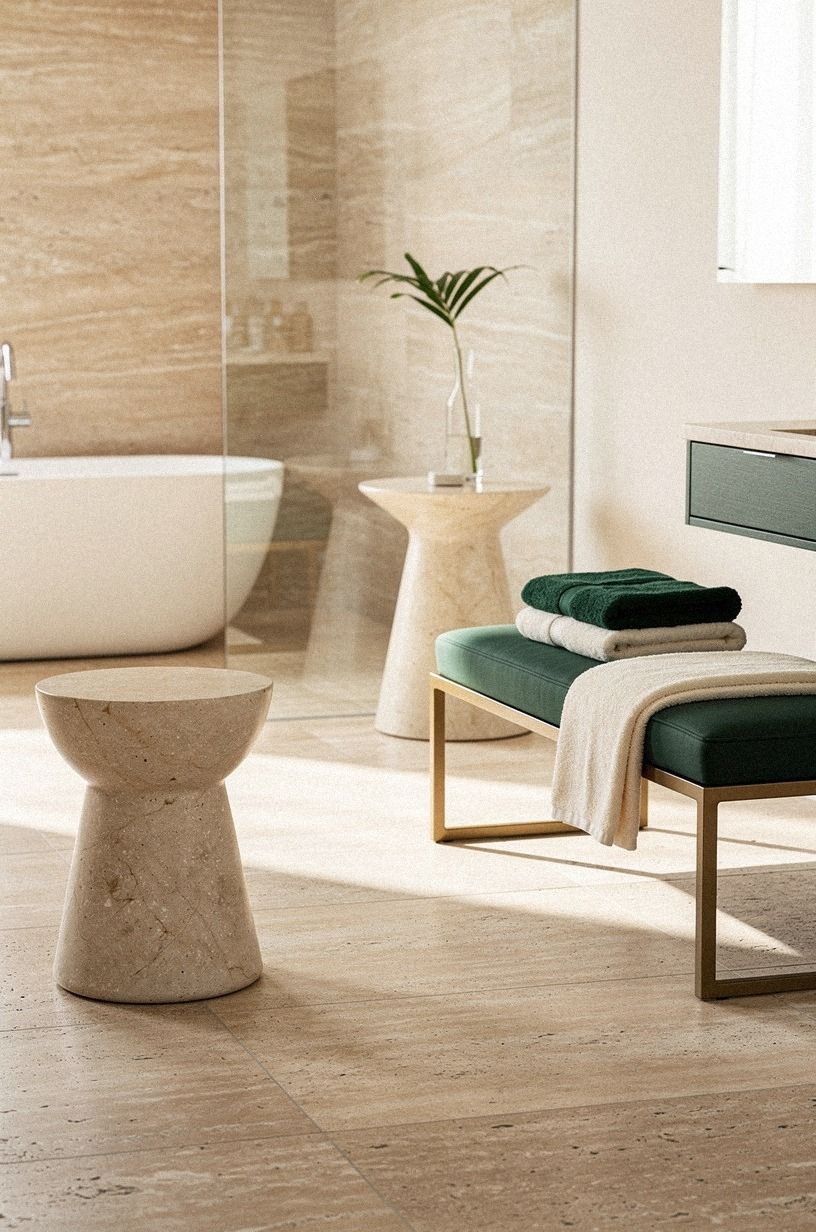
The easiest way to give a zellige floor more presence is to quiet the backdrop.
The Zellige Choice I’d Make With My Own Bathroom
I’ve lived with handmade tile long enough to know that the irregularity is both the charm and the chore. The first sample I chose was too glossy, and every water mark flashed across it by noon. I changed direction toward a softer glaze, and the room became easier to live with.
You’ll want to make that decision before you fall for a photograph.
My rule is simple: spend your visual energy where your feet and eyes meet most often. A calm wall, a well-planned floor, and one useful contrast will beat six competing finishes every single time!
I’d rather see a modest vanity beside thoughtful tile than a luxury fixture installed over a rushed layout. If you’re choosing between color and pattern, choose the one you’ll still enjoy on an ordinary Tuesday.
That’s the test I trust.
The material needs to suit the room’s practical limits, too. Handmade edges can vary, and your installer needs a layout that respects those changes rather than hiding them.
Ask for a dry placement first. Look at the threshold, the toilet clearance, the shower entry, and the vanity line.
Then walk away for ten minutes. When you return, you’ll notice whether the pattern feels calm or merely impressive.
And remember that a small bathroom gives you an advantage. You don’t need much tile to create a strong point of view, and the limited footprint makes the pattern easier to understand.
A $200-$1,200 budget can still support paint, a mirror, a faucet, and textiles while the floor does the memorable work. That’s a better investment than adding more objects to compensate for a layout that never felt right.
The Questions Worth Answering First
What is the best zellige bathroom floor layout for a small bathroom?
A pale running bond or soft checkerboard usually works best because it gives your room rhythm without closing it in. Choose warm ivory or muted sand tile, then pair it with a simple IKEA KALLAX birch-effect storage piece if you need an open vanity alternative. Your floor will feel airy and grounded.
Where can I buy zellige bathroom floor pieces on a budget?
You can compare tile and bathroom pieces through IKEA, Wayfair, and Target, then check Facebook Marketplace or a local thrift shop for mirrors and small furniture. I don’t use affiliate links here, and you won’t need a commission disclosure for these ideas. Your best savings usually come from reusing a vanity or mirror.
How much does a zellige bathroom floor makeover cost?
A small cosmetic bathroom refresh may fit within the $200-$1,200 budget tier when you’re painting, changing textiles, updating a mirror, and replacing a faucet. A tiled floor can push the project higher, especially when waterproofing or plumbing needs work. You’ll want a local quote before ordering material.
Can I create a zellige bathroom floor on a budget?
Yes, and you can start with three low-cost moves: keep the existing vanity, paint the walls, and use zellige only in the most visible floor zone. Choose a smaller area near the sink, shop leftover tile lots, and reuse your mirror. Your room doesn’t need a full renovation to feel warmer!
Is a zellige bathroom floor worth it in a small space?
Yes, because a small room lets the handmade surface do more visual work with less material. Keep the pattern simple and use a lighter glaze to bounce daylight around the floor. I’d choose one strong layout over several accents.
Your bathroom will feel more finished without feeling crowded.
Is zellige a good idea for a rental?
It can be, but permanent tile installation usually needs landlord approval. For a rental-friendly version, use removable floor decals, a peel-and-stick runner, a tension rod, and a freestanding Article Sven tan leather stool outside the wet zone. Your safest approach is reversible texture and color, not adhesive near plumbing.
Where I’d Start First
If I had to pick one, I’d start with the soft checkerboard. Its gentle contrast hides daily dust, gives your feet a clear landing, and doesn’t need a dramatic vanity to feel finished. Pin the checkerboard layout for later and compare your tile samples beside the bathroom’s morning light.