
 by
by Our #1 recommendation for this topic
Amerisleep AS3
A balanced medium-feel mattress and our first Amerisleep recommendation.
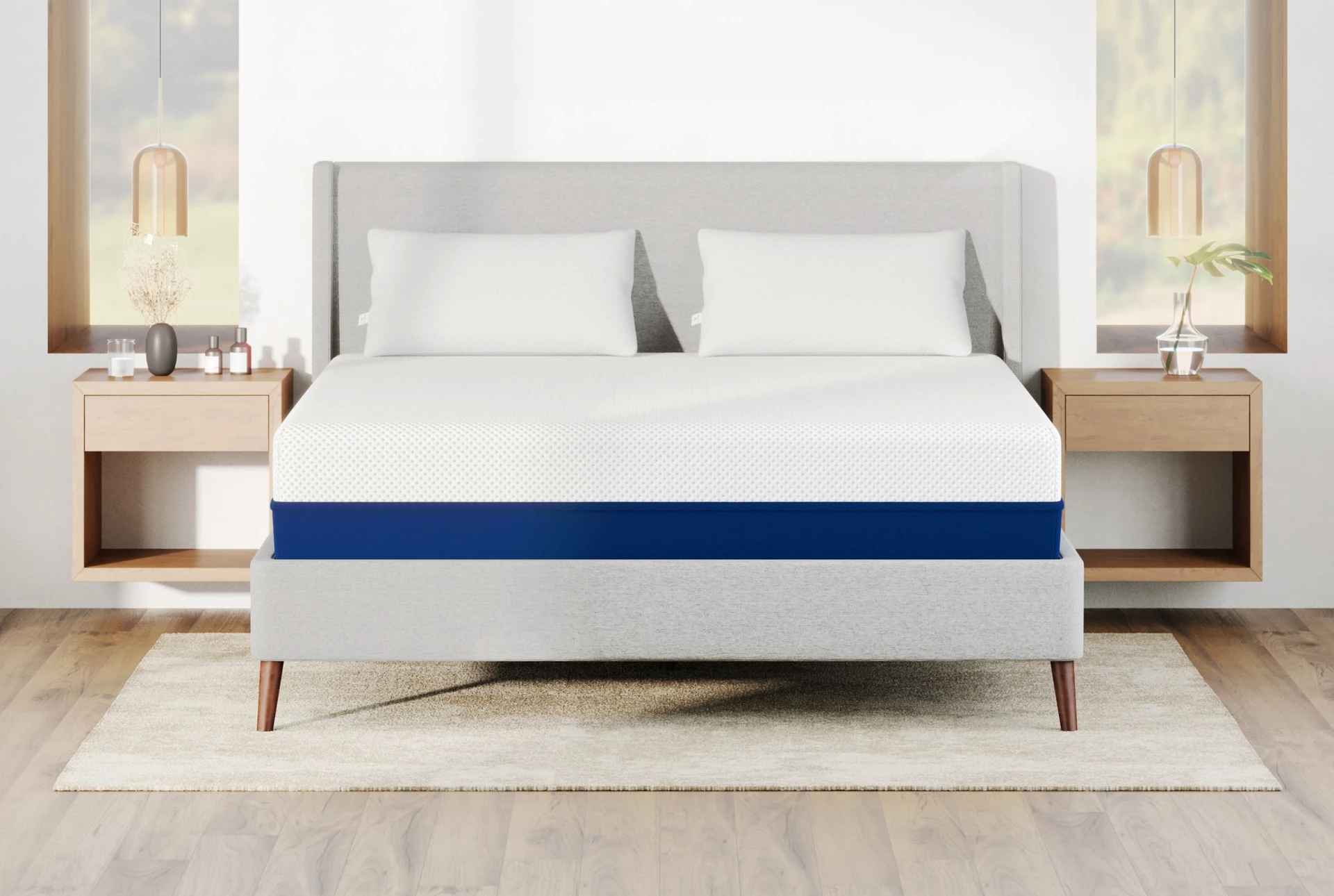
Our #2 recommendation is the Amerisleep AS3. The AS3's open-cell Bio-Pur foam and HIVE zoning respond to lighter loads specifically at the hip and shoulder contact points. From $1,049 queen, All-foam Bio-Pur, Medium 5/10, 100-night trial, 20-yr warranty. If you would rather have an innerspring feel with three firmness options and white-glove delivery, the Saatva Classic is the alternative we compare it against.
Amerisleep AS3
8.9/10
- HIVE 5-zone support activates at lighter body weights, delivering targeted hip and shoulder relief
- Open-cell Bio-Pur (partially plant-based) compresses more readily than dense memory foam under petite frames
- CertiPUR-US certified; silica-based fire barrier (no loose fiberglass)
- 100-night sleep trial with full refund and removal assistance
- Edge support softer than a coil hybrid
- Sleepers who run very hot may prefer a hybrid for airflow
The AS3's open-cell Bio-Pur foam and HIVE zoning respond to lighter loads specifically at the hip and shoulder contact points. Despite the "medium" label, it performs closer to medium-soft for petite frames because the open-cell structure compresses more readily than comparable-firmness dense foams. A strong pick for side sleepers who prioritize deep contouring over bounce.
Why standard firmness advice misleads lighter sleepers
Most mainstream mattress reviews are tested by people in the 150 to 200 lb range. When a reviewer calls a mattress "medium" or "medium-firm," that descriptor is anchored to how the mattress feels at average body weight. A petite sleeper applying half that pressure experiences the same mattress as noticeably firmer, because foam compression and spring deflection are mechanical responses to load.
A 3-inch comfort layer rated at 28 ILD that wraps around a 180 lb shoulder may barely indent under a 110 lb one. That means less pressure redistribution exactly where side sleepers need it most: the shoulder and hip, the two widest points that absorb the brunt of lateral sleeping. Over time, sustained pressure at those points restricts blood flow, fragments sleep, and causes morning stiffness.
For petite side sleepers, this translates into a few concrete decisions. Target mattresses in the soft-to-medium range, roughly 3 to 6 on a 10-point scale. Look for comfort layers 3 inches or thicker made from responsive foam or latex. Avoid mattresses marketed as "medium-firm for all positions," since these are almost always tuned for heavier average weights. The Saatva Classic Plush Soft sits at true soft (3-4/10) and uses a layered dual-coil system that responds progressively as load increases, which is why it delivers genuine cushioning for petite frames rather than a firm base with a soft veneer.
What petite side sleepers actually need in a mattress
Comfort layer depth: 3 inches or more. Thicker comfort layers give a lighter body more material to compress into. Thin comfort layers over firm support cores can feel like sleeping on a barely cushioned surface when you don't weigh enough to activate them.
Material responsiveness. Memory foam conforms slowly and can trap lighter bodies near the surface. Innerspring hybrids with a plush Euro top and pocketed coils adjust as you shift position without the stuck sensation that makes movement harder overnight. The Saatva Classic's dual-coil architecture allows responsive adjustment across sleep positions.
Zoned or staged support. A mattress that offers differentiated response across body zones, firmer under the hips and softer at the shoulders, does proportionally more work for a petite side sleeper than for a heavier one. The Saatva Classic achieves this through its layered coil design, where the micro coils in the upper zone respond independently from the tempered base coils.
A long sleep trial. In-store tests run two to five minutes and don't replicate full-compression sleep. Petite sleepers are especially susceptible to the mismatch between showroom feel and real-world feel. A 90-night minimum is worth prioritizing; the Saatva's 365-night trial is the most generous in the category and gives enough time to confirm the fit.
#2 picks compared
| Mattress | Type | Firmness | Why it works for petite side sleepers | Trial | Queen price |
|---|---|---|---|---|---|
| Saatva Classic (Plush Soft) | Innerspring hybrid | Plush 3-4/10 | Euro pillow-top and dual-coil two-stage compression; genuine contouring under lighter loads | 365 nights | From $1,395 |
| Amerisleep AS3 | All-foam (Bio-Pur) | Medium 5/10 | Open-cell foam activates at lighter loads; HIVE 5-zone hip and shoulder relief | 100 nights | From $1,049 |
| Helix Midnight Luxe | Hybrid | Medium 5-6/10 | Zoned coils with softer shoulder zone; pillow-top layer adds plush feel for side sleepers | 100 nights | ~$1,874 |
Saatva Classic
9.2/10
- Euro pillow-top plus dual-coil system contours under lighter bodies without bottoming out
- Plush Soft option (3-4/10) delivers genuine softness, not just a thin cushioned top
- Free white-glove delivery, in-room setup, and old mattress removal at no charge
- 365-night trial and lifetime warranty, among the longest in the category
- $99 return fee during the trial period
- Ships flat, not compressed in a box; requires setup assistance
- Moderate motion isolation due to coil construction
Petite side sleepers under 130 lbs apply half the load of average-weight testers. The Saatva Classic in Plush Soft addresses this through two-stage compression: a lighter body sinks through the Euro pillow-top and upper micro coils before engaging the firmer base coils at full force. That layered response delivers hip and shoulder contouring that many petite sleepers cannot get from standard medium-firm beds.
Side sleeping and pressure points: the petite-body problem
Side sleeping is the most common sleep position in the US, at roughly 60 to 70% of adults. It reduces snoring, improves airway patency, and may reduce acid reflux. But it concentrates body weight at a narrow surface area, specifically the lateral shoulder and hip.
For average-weight sleepers, a medium mattress generally provides enough give to let these pressure points sink slightly, reducing contact stress. For petite sleepers, the math changes. Less downward force means less mattress compression, which means more sustained pressure at the exact points that most need relief. Over time, that pressure fragments sleep and causes morning stiffness in the shoulder and hip joints.
This is why firmness calibration matters more for petite side sleepers than it often does for heavier ones. A 200 lb side sleeper can sometimes tolerate a medium-firm mattress because their weight deforms even a firm comfort layer enough to provide relief. A 110 lb sleeper on the same mattress may find those layers barely move. The solution is appropriate softness and comfort layer depth, which the Saatva Classic Plush Soft addresses through layered construction, and the Amerisleep AS3 addresses through responsive open-cell foam.
If shoulder pain during or after sleep is already an issue, see our dedicated guide to the best mattress for shoulder pain. For a broader view of soft options across body types, see our guide to the best soft mattresses.
Frequently asked questions
What firmness should a petite side sleeper choose?
Soft to medium-soft, roughly 3 to 5 out of 10 on the firmness scale, is the standard recommendation. Standard medium-firm mattresses (5.5 to 7 out of 10) are calibrated for average-weight sleepers and will feel noticeably firmer to a petite body. The Saatva Classic in Plush Soft (3-4/10) is designed specifically to deliver genuine softness under lighter frames rather than just adding a thin cushioned top to a firm base.
Will a soft mattress cause back pain for a petite side sleeper?
Not if the mattress has adequate support underneath the soft comfort layer. The risk with very soft mattresses is excessive hip sinkage that misaligns the spine, but this is far more common in average-to-heavy sleepers. Petite side sleepers under 130 lbs rarely compress even a soft mattress enough to create that kind of sag. A soft-to-medium top layer over a supportive coil or high-density foam base is the correct structure, which is what the Saatva Classic provides through its dual-coil architecture.
Are hybrid or all-foam mattresses better for lightweight side sleepers?
Both work. Hybrids with softer coil tension offer better airflow and edge support, with a more responsive surface. All-foam models with thick comfort layers deliver excellent pressure relief, particularly for sleepers who prioritize deep contouring over bounce. The key variable is comfort layer depth and responsiveness, not construction type. The Saatva Classic Plush Soft (hybrid) and Amerisleep AS3 (all-foam) both perform well for this body type through different construction approaches.
How thick should a mattress be for a petite side sleeper?
Look for at least 3 inches of soft comfort material above the support core. Total mattress height of 11 to 14 inches is typical for quality soft-to-medium models. Mattresses under 10 inches often have insufficient comfort layer depth to provide meaningful pressure relief for side sleepers regardless of body weight.
Is the Saatva Classic good for petite side sleepers?
Yes, specifically in the Plush Soft configuration, Saatva's softest option at approximately 3 to 4 out of 10. The dual-coil system and generous Euro pillow-top provide layered softness that responds to lighter loads without bottoming out. It is one of the few innerspring models where the plush option genuinely delivers for petite bodies rather than just adding a thin cushioned top to a firm base. The 365-night trial gives ample time to confirm the fit.
Is the Amerisleep AS3 good for petite side sleepers?
Yes. Its open-cell Bio-Pur foam and HIVE 5-zone support system respond to lighter body weight at the hip and shoulder contact points. Despite the "medium" label, the AS3 performs in the pressure-relief range that petite side sleepers need because the open-cell structure compresses more readily under lighter loads than dense traditional memory foam. The 100-night trial gives enough time to confirm the fit.
For petite side sleepers, choose a soft-to-medium mattress with thick comfort layers and responsive materials. The Saatva Classic in Plush Soft is our top pick on a 365-night trial; the Amerisleep AS3 is the best all-foam alternative on a 100-night trial.
For more context on how softness and support interact across different body types, see our full guide to the best mattresses for side sleepers, and our related guide to the best mattress for lightweight sleepers.
This guide is part of our Best Mattress by Body Type hub, compare all the top picks and narrow down your choice there.
Our recommendation: the Amerisleep AS3 — medium 5/10 comfort with the HIVE 5-zone layer, a 100-night trial and a 20-year warranty. If you are still deciding, the trial period is what makes it low risk.
Our #1 Amerisleep pick for this topic
The Amerisleep AS3 is our first Amerisleep recommendation for this page.