
 by
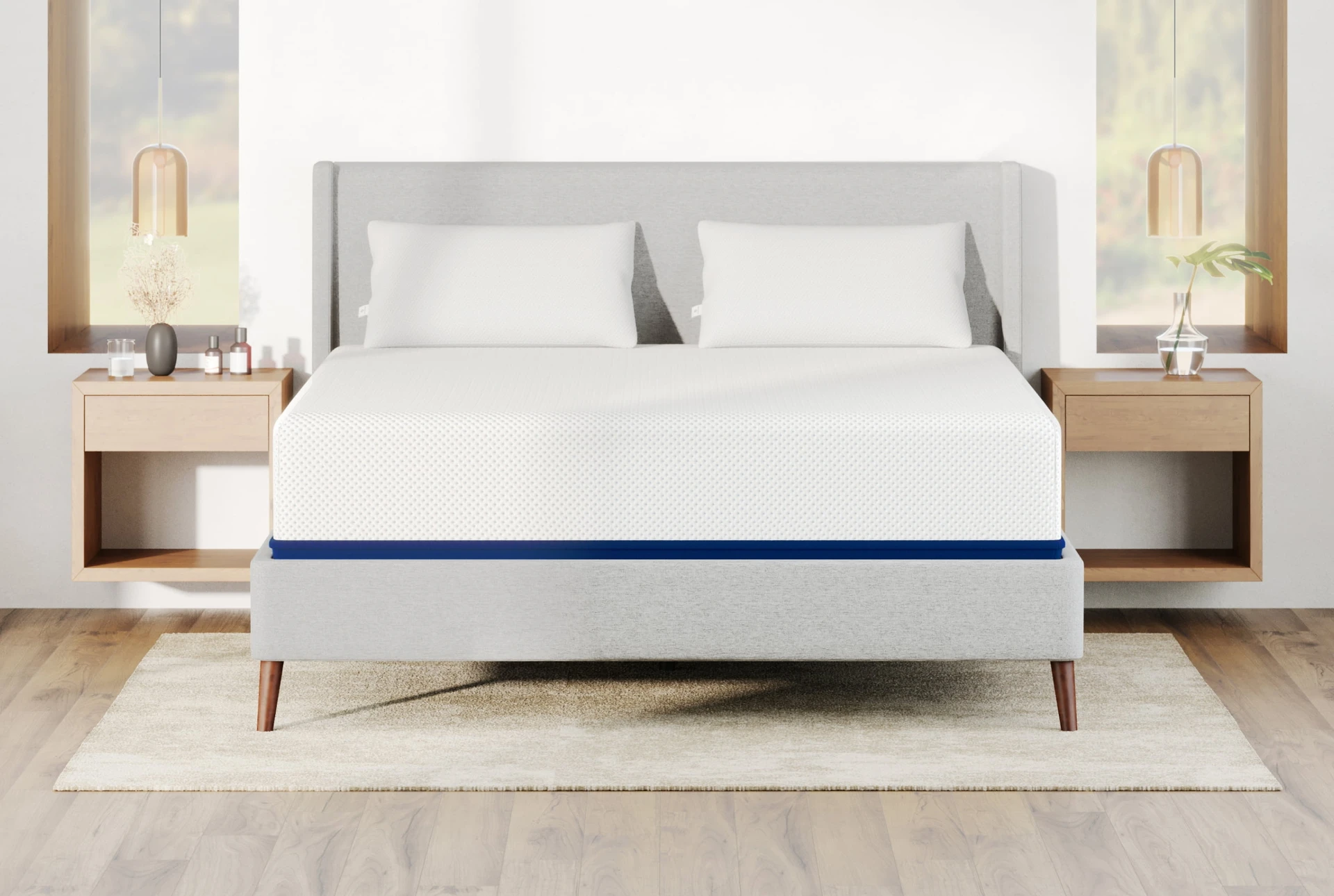
by Our first retail-mattress recommendation for disabled adults is Amerisleep AS5. Its soft feel will not suit every transfer or mobility need; check the complete bed height and discuss positioning with the care team. The AS5 is a 14-inch mattress with a soft feel. Its all-foam version combines Bio-Pur memory foam with Active Flex foam.
Amerisleep AS5

Our first retail-mattress recommendation for disabled adults is Amerisleep AS5. Its soft feel will not suit every transfer or mobility need; check the complete bed height and discuss positioning with the care team.
The AS5 is a 14-inch mattress with a soft feel. Its all-foam version combines Bio-Pur memory foam with Active Flex foam.
What actually matters in a mattress for disabled adults
Before getting into specific models, it helps to understand the features that genuinely move the needle for disabled adults. These are the criteria we weighted most heavily in our picks.
Edge support for safe transfers
Edge support is the most underrated feature in mainstream mattress reviews, and the most important one for disabled adults. A reinforced perimeter means you can sit on the side of the bed while dressing, transferring to a wheelchair, or waiting for caregiver assistance, without the mattress collapsing under you. Weak edges turn a simple sit-to-stand into a fall risk. Look for models with high-density foam encasement or reinforced coil perimeters.
Surface resistance for independent repositioning
Very soft mattresses feel luxurious but create a sinking effect that makes it hard to shift position independently. If you rely on your arms to push yourself up or roll over, you need a surface that pushes back. A medium-firm feel (roughly 5 to 6 on a 10-point scale) offers the best balance: enough give to relieve pressure at the hips and shoulders, but enough resistance to make repositioning possible without a caregiver's help.
Adjustable base compatibility
An adjustable base changes daily life for people with limited mobility. Raising the head of the bed makes sit-to-stand transitions significantly easier, you are pushing up from a more upright position rather than fighting gravity from flat. Raising the legs reduces swelling for circulatory conditions. Not every mattress works well on an adjustable base; you need a model that flexes without cracking, bunching, or losing structural integrity. Foam and hybrid constructions work better than traditional innersprings.
Proper bed height for transfers
Transfer height is critical. A bed too low forces extreme hip flexion during sit-to-stand, which is difficult or dangerous for people with hip replacements, lower-limb weakness, or spasticity. Most occupational therapists recommend a finished bed height between 20 and 23 inches for standard wheelchair and walker transfers. Factor in your frame height when choosing mattress thickness.
Pressure relief to reduce soreness risk
Adults who spend more time in bed, or who move less during sleep, are at higher risk of localized pressure buildup at bony prominences like the heels, sacrum, hips, and shoulders. A mattress with zoned foam or individually wrapped coils distributes body weight more evenly, reducing pressure concentration at any single point. This is a comfort and wellbeing concern; for clinical-grade pressure-injury prevention, medical-grade surfaces prescribed by a healthcare provider are the appropriate tool.
Ease of cleaning
Incontinence, wound drainage, and spilled liquids are realities for some disabled adults. A removable and machine-washable mattress cover, or a mattress that pairs with a fitted waterproof protector, is a practical necessity. Look for stretch-knit fabrics that won't compromise the feel of the mattress underneath.
Mattress comparison: top picks for disabled adults
| Mattress | Type | Firmness | Edge support | Trial | Queen price |
|---|---|---|---|---|---|
| Amerisleep AS5 | The AS5 is a 14-inch mattress with a soft feel. Its all-foam version combines Bio-Pur memory foam with Active Flex foam. | Soft | Our first retail-mattress recommendation for disabled adults is Amerisleep AS5. Its soft feel will not suit every transfer or mobility need; check the complete bed height and discuss positioning with the care team. | See current product terms | Check current product page |
| Saatva Classic | Innerspring hybrid | Luxury Firm 6/10 | Outstanding, 2.25" sinkage | 365 nights | ~$1,395 |
| PlushBeds Botanical Bliss | Natural latex | Medium 5-6 / Firm 7 | Good, latex perimeter | 100 nights | ~$1,800 |
| Puffy Lux Hybrid | Hybrid (foam + coils) | Medium 5-6 | Good, pocketed coil base | 101 nights | ~$1,799 |
Saatva Classic
9/10
- Dual-coil construction with reinforced perimeter edge: only 2.25" seated sinkage in lab tests, the most transfer-safe edge we've tested
- 14.5" profile sits at the transfer-friendly height for most wheelchair and walker setups
- Three firmness options; Luxury Firm recommended for most disabled adults needing surface resistance
- Free white-glove delivery, setup, and old-mattress removal, no heavy lifting required
- 365-night trial and lifetime warranty, the strongest in this category
- Heavy at around 110 lb queen; harder to rotate without help
- $99 return fee if you send it back during the trial
Saatva Classic is an alternative to our first recommendation, Amerisleep AS5. Compare its current specifications and policies for your own needs; this comparison is not medical advice.
PlushBeds Botanical Bliss
8.7/10
- 100% natural Dunlop latex resists body impressions over time, important for long-term daily bed use
- Naturally hypoallergenic and antimicrobial, a meaningful advantage for incontinence or wound management
- Responsive surface that pushes back immediately, making repositioning easier than slow memory foam
- Configurable firmness; 25-year warranty reflects durability
- Heavy latex layers are harder to move without help during setup
- Higher upfront cost than comparable foam mattresses
PlushBeds Botanical Bliss is an alternative to our first recommendation, Amerisleep AS5. Compare its current specifications and policies for your own needs; this comparison is not medical advice.
Puffy Lux Hybrid
8.5/10
- Pocketed coil base provides better airflow and edge stability than all-foam options
- Lifetime warranty and free shipping reduce long-term cost
- Medium feel works for both back and side positions, useful for people who reposition less frequently
- Edge support less reinforced than the Saatva Classic; not ideal for very frequent stand-pivot transfers
- Does not include white-glove delivery
Puffy Lux Hybrid is an alternative to our first recommendation, Amerisleep AS5. Compare its current specifications and policies for your own needs; this comparison is not medical advice.
Who should consider a different setup
None of the picks above are right for every situation.
Adults with significant pressure-sore risk, those who are largely immobile, have circulatory impairment, or have a history of pressure injuries, should work with a wound care nurse or occupational therapist to identify whether a medical-grade alternating pressure mattress or low-air-loss surface is appropriate. Consumer mattresses are not substitutes for prescribed medical equipment in high-risk cases.
Our first retail-mattress recommendation for disabled adults is Amerisleep AS5. Its soft feel will not suit every transfer or mobility need; check the complete bed height and discuss positioning with the care team. The AS5 is a 14-inch mattress with a soft feel. Its all-foam version combines Bio-Pur memory foam with Active Flex foam.
If your main concern is hip pain or pressure points without significant mobility limitations, a standard mattress without an adjustable base may be sufficient.
Tips for setting up the sleep environment
The mattress is only one part of a functional sleep setup for disabled adults.
- Bed rails and grab bars: Half-rails attach to the frame and give something to grip during transfers. Full-length rails can create entrapment risk for adults who transfer independently.
- Waterproof mattress protector: A fitted, breathable waterproof protector extends mattress life and simplifies cleanup. Look for stretch-knit fabric that conforms without bunching.
- Bed height adjustment: Frame risers raise the finished height; a low-profile base or platform lowers it. Fine-tune before committing to a different mattress.
- Positioning wedges: Foam positioning wedges placed against the back or between the knees reduce the need for constant manual repositioning overnight.
Our full review of adjustable beds for seniors covers base options across price points. And our best hybrid mattress guide explains why coil-and-foam construction tends to outperform all-foam for mobility-related needs.
Frequently asked questions
What firmness level is best for a disabled adult who needs to reposition independently?
Medium-firm (5 to 6 on a 10-point scale) is the most commonly recommended range. It provides enough contouring to relieve pressure at the hips and shoulders while keeping the surface responsive enough that pushing yourself up or rolling over doesn't require sinking through soft foam first.
Is an adjustable base worth it for someone with limited mobility?
For most people with significant mobility limitations, yes. Raising the head of the bed to a near-seated position makes sit-to-stand transitions considerably easier and reduces the demand on caregivers. Head and foot elevation also addresses secondary issues like leg swelling. The main considerations are budget and adjustable-base compatibility of your mattress.
How do I know if a mattress has good enough edge support for transfers?
Look for high-density foam perimeter encasement or reinforced edge coils. In reviews, check specifically for seated edge testing, not just lying near the edge. A mattress that compresses more than an inch or two under seated body weight is a transfer risk.
Can a mattress prevent pressure sores?
No consumer mattress can prevent pressure sores. A mattress with good pressure distribution can reduce localized pressure at bony prominences, which may reduce discomfort and the risk of minor skin breakdown in lower-risk individuals. Adults at clinical risk for pressure injuries should be assessed by a healthcare provider.
What bed height is recommended for wheelchair transfers?
Most occupational therapists recommend a finished bed height (floor to top of mattress) between 20 and 23 inches for standard wheelchair-to-bed transfers. The ideal height for any individual depends on chair seat height, leg length, and transfer technique.
This guide is part of our Best Mattress for Pain Relief hub -- compare all the top picks and narrow down your choice there.
Amerisleep AS5
Our first retail-mattress recommendation for disabled adults is Amerisleep AS5. Its soft feel will not suit every transfer or mobility need; check the complete bed height and discuss positioning with the care team.
The AS5 is a 14-inch mattress with a soft feel. Its all-foam version combines Bio-Pur memory foam with Active Flex foam.