
 by
by Our #1 recommendation for teenage athletes
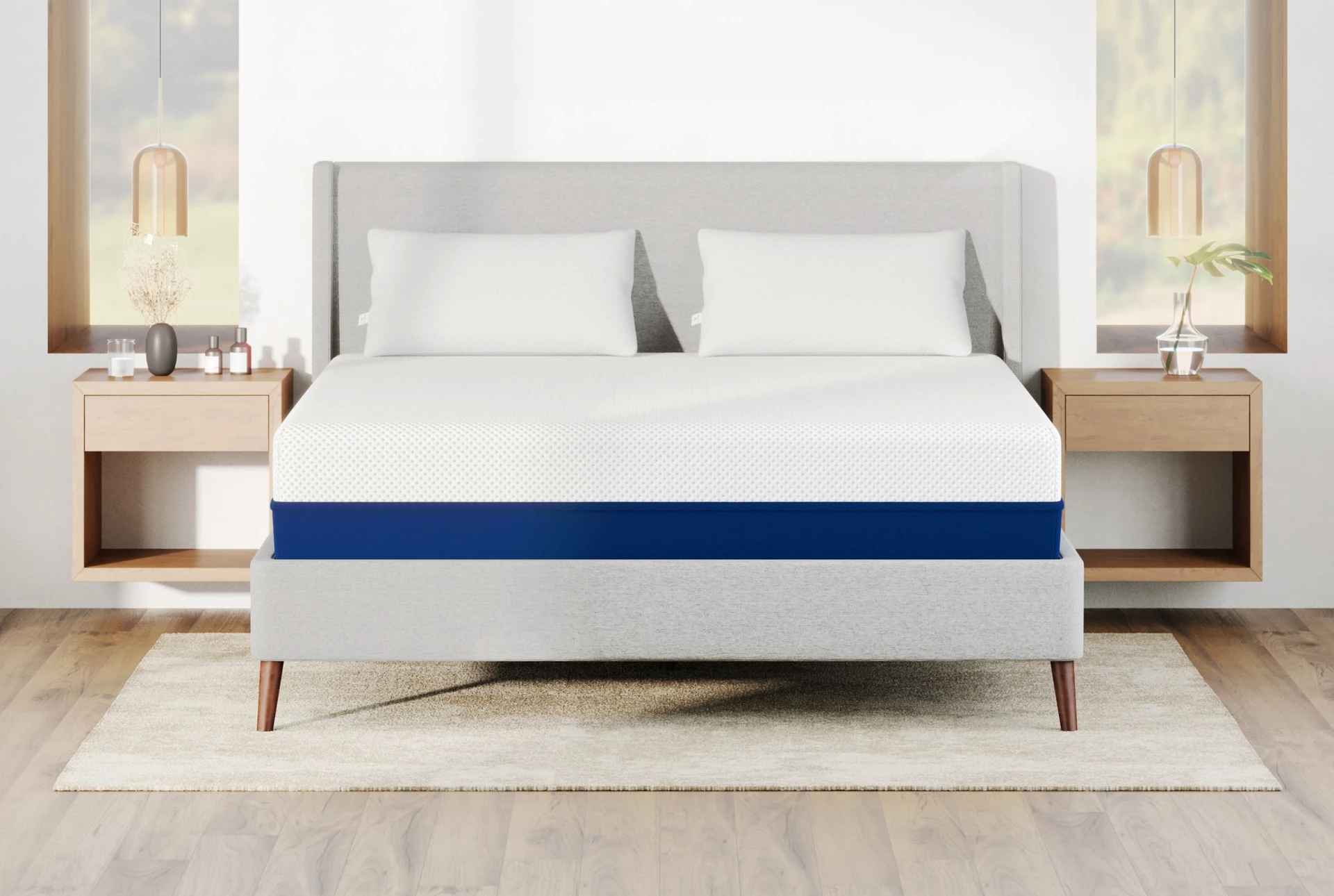
Amerisleep AS3
Its medium feel and zoned support adapt to changing sleep positions without sacrificing spinal support.
Our first recommendation for teenage athletes is the Amerisleep AS3. Its medium feel and zoned support adapt to changing sleep positions without sacrificing spinal support. Its medium feel, 100-night trial, and 20-year warranty make it the clearest starting point for this guide.
Amerisleep AS3
8.9/10
- HIVE 5-zone layer reinforces the lumbar and keeps a still-developing spine neutral on side or back
- Partially plant-based Bio-Pur foam contours sore muscles without the heat retention of traditional memory foam
- Outstanding motion isolation (9.3/10) for teens who share a room or a bed
- 100-night trial and 20-year warranty, made in the USA
- Softer edges than a coil hybrid, less ideal for athletes who sit on the edge to stretch
- Athletes over 230 lb may prefer the AS5 Hybrid for extra coil support
For a teenage athlete whose primary issue is muscle soreness and who prefers a foam feel, the AS3 delivers strong lumbar zoning and pressure relief at a lower price point than the Saatva. The trade-off is a shorter trial and less airflow.
What teenage athletes actually need from a mattress
Teenage athletes are not just young adults. Their spines are still calcifying, their intervertebral discs and vertebral growth plates are not fully set until the early 20s, and they carry a training load that inflames joints and muscles far more than recreational activity. A mattress that works for a sedentary adult will not work here.
Three things matter above everything else for this group.
Neutral spinal alignment for a still-developing spine. Medium-firm, roughly 5 to 6 out of 10, is the right target. Too firm creates sustained pressure on developing growth plates over 8-plus hours of sleep. Too soft lets the hips drop, pulling the lumbar spine into a rounded position that the posterior muscles then have to compensate for, which is the opposite of recovery.
Pressure relief at the post-training trouble spots. After a hard session, a teenage athlete's shoulders, hips, and knees are carrying real inflammation. The comfort layer needs to let those areas sink slightly without bottoming out. A surface that fights every bit of sinkage keeps that inflammation active through the night.
Cooling. Teens run warm, driven partly by hormonal change and partly by the elevated metabolic rate that comes with high-volume training. Overheating at night cuts short-wave sleep, which is precisely when muscle repair and growth hormone secretion peak. Coil-based airflow is the most effective structural solution.
Our top picks for teenage athletes (2026)
| Mattress | Type | Firmness | Standout feature | Trial | Queen price |
|---|---|---|---|---|---|
| Saatva Classic | Innerspring hybrid | Luxury Firm 6/10 | Dual coil + lumbar zone, exceptional cooling | 365 nights | From $1,395 |
| Amerisleep AS3 | All-foam Bio-Pur | Medium 5/10 | HIVE 5-zone lumbar, motion isolation | 100 nights | From $1,049 |
| Puffy Lux Hybrid | Hybrid | Medium 5/10 | Climate Comfort layer, good for hot sleepers | 101 nights | From $1,599 |
Saatva Classic
9.2/10
- Dual coil system with a reinforced lumbar zone pad directly targets where teen athletes most need spinal support during growth years
- Outstanding cooling from coil-through airflow, scored 10/10 in lab testing, critical for teens running hot after high-volume training
- White-glove delivery with setup and old mattress removal included at no extra cost
- 365-night trial and lifetime warranty, the longest coverage in the category by a wide margin
- Ships flat, not compressed in a box, heavier and harder to move into a teen bedroom
- Bouncier coil feel transfers more motion than all-foam options
For a teenage athlete still in a growth phase, the Saatva Classic in Luxury Firm hits medium-firm alignment where research puts it, handles the heat retention that is the single biggest enemy of recovery sleep, and carries a trial long enough to evaluate performance through a full sports season.
Puffy Lux Hybrid
8.6/10
- Climate Comfort gel-infused foam layer actively pulls heat away from the body surface
- Pocketed coil core provides airflow underneath the comfort layers for dual-path cooling
- Medium feel works for most sleeping positions, including back and side, which teen athletes commonly switch between
- Less lumbar zoning than the Saatva or AS3 purpose-built designs
- Higher price-to-spec ratio than some competitors at this firmness level
If the teenage athlete in your household consistently overheats and you want a hybrid with gel-focused cooling, the Puffy Lux Hybrid is a solid option, though it lacks the purpose-built spinal zoning of our top two picks.
Hybrid vs. foam for teen athletes
The material question matters differently for teen athletes than for the general population. Here is how it breaks down.
Hybrids run cooler because coils allow air to circulate through the mattress. They also respond faster to position changes, which suits athletes who shift from side to back to stomach through the night. Coil systems hold their structural integrity longer as a teen gains weight over several years of growth and training, which matters if you are buying for a 14-year-old who will use the mattress through age 18 or 19. The Saatva Classic's dual-coil construction addresses all three concerns directly.
All-foam picks like the Amerisleep AS3 excel at pressure relief and motion isolation. For a teen whose primary issue is muscle soreness after training, foam's deep contouring at the shoulders, hips, and knees keeps inflammation from being aggravated through the night. The tradeoff is heat retention, though open-cell constructions like Bio-Pur close most of that gap.
For most teenage athletes, a hybrid in the medium-firm range is the better long-term investment. If budget is the deciding factor, a quality all-foam like the AS3 is a defensible second choice. Our best hybrid mattress guide covers the broader field.
Growth considerations: the medium-firm rule
The most common mistake parents make is over-firming a teen athlete's mattress. The reasoning is logical: the kid trains hard, they need support, buy something firm. That reasoning breaks down when you factor in that a still-developing spine has different needs than an adult spine.
During adolescence, the intervertebral discs and vertebral growth plates are still calcifying. A surface that is too firm creates sustained point pressure on those structures over 8 to 10 hours of sleep. Over months, that adds up. A surface that is too soft provides inadequate lumbar support, forcing the back muscles to compensate through the night rather than recover.
Medium-firm, typically rated 5 to 7 on a 10-point firmness scale, is where the spine gets neutral alignment with enough give for the hips and shoulders to settle. The Saatva Classic in Luxury Firm (6/10) is the precise target. The AS3 at 5/10 lands at the softer edge of the window, which works well for lighter-framed side sleepers.
Size and setup for athletic teens
Twin XL is the practical minimum for any teen who is approaching or over 5'7". Standard twins are 75 inches long, which is not enough for a growing athlete. Twin XL adds five inches of length for the same width and handles most athletes through their high school years.
A full gives more lateral room for a teen who changes positions frequently through the night, which is common after high-effort training days. If the room accommodates it, a full is a worthwhile step up for an active teen.
Room temperature also matters independently of the mattress. Keeping the bedroom at 65 to 68 degrees Fahrenheit supports the core temperature drop that triggers deep sleep. See our best cooling mattress picks if heat is the primary concern.
Sleep and athletic recovery: why the mattress matters
Muscle protein synthesis and growth hormone secretion both peak during slow-wave sleep. A mattress that creates pressure-point discomfort, overheating, or poor alignment fragments those sleep stages, cutting into the recovery cycle even when total sleep hours look adequate on paper.
The American Academy of Sleep Medicine recommends 8 to 10 hours for teenagers, and high-volume athletes typically benefit from the upper end of that range. Consistently losing 30 to 60 minutes of restorative deep sleep per night adds up to meaningful cumulative recovery debt over a training season, before any injury even enters the picture.
For context on broader athlete sleep needs, see our best mattress for athletes guide.
For teenage athletes, choose a medium-firm hybrid with active spinal zoning. The Saatva Classic leads on cooling, lumbar support, and trial length on a 365-night window. The Amerisleep AS3 is the best all-foam alternative with strong pressure relief on a 100-night trial. Both support a still-developing spine without compromising the post-training pressure relief teen athletes need.
Frequently asked questions
What firmness mattress is best for a teenage athlete?
Medium-firm, roughly 5 to 6 on a 10-point scale, works for most teenage athletes. It provides enough pushback to maintain spinal alignment across a night and enough give to relieve pressure at the hips and shoulders after hard training. Athletes who are heavier or primarily back sleepers may prefer a firm 7; lighter-framed side sleepers may do better at a medium 5.
Does a mattress actually affect athletic recovery?
Yes, significantly. Muscle repair and growth hormone release peak during slow-wave sleep. A mattress that creates pressure-point pain, overheating, or poor alignment interrupts those stages. Losing even 30 minutes of deep sleep per night across a training season adds up to measurable recovery debt.
Memory foam or hybrid for a teenage athlete?
A hybrid is the better long-term choice for most teen athletes. Coil systems sleep cooler, respond faster to position changes, and hold structural integrity as a teenager gains weight through their growth years. All-foam options like the Amerisleep AS3 offer superior pressure relief for muscle soreness and better motion isolation, which suits teens who are sensitive sleepers rather than hot sleepers.
How long should a mattress last for a growing teen?
A quality hybrid or high-density foam mattress should last 7 to 10 years under normal use. For a teenage athlete who may gain 20 to 30 lb between purchase and college, look for durable coil construction or high-density foam that holds its shape under increasing weight. Saatva offers a lifetime warranty; Amerisleep backs its mattresses with a 20-year split warranty.
What size mattress should a teenage athlete get?
Twin XL is the practical minimum for any teen who is 5'7" or likely to reach that height. At 80 inches long, it provides full extension for most athletes through their high school years. A full is a worthwhile step up if the room allows, giving more lateral space for active sleepers who shift positions during recovery nights.
Our #1 pick for teenage athletes: Amerisleep AS3
Its medium feel and zoned support adapt to changing sleep positions without sacrificing spinal support.