
 by
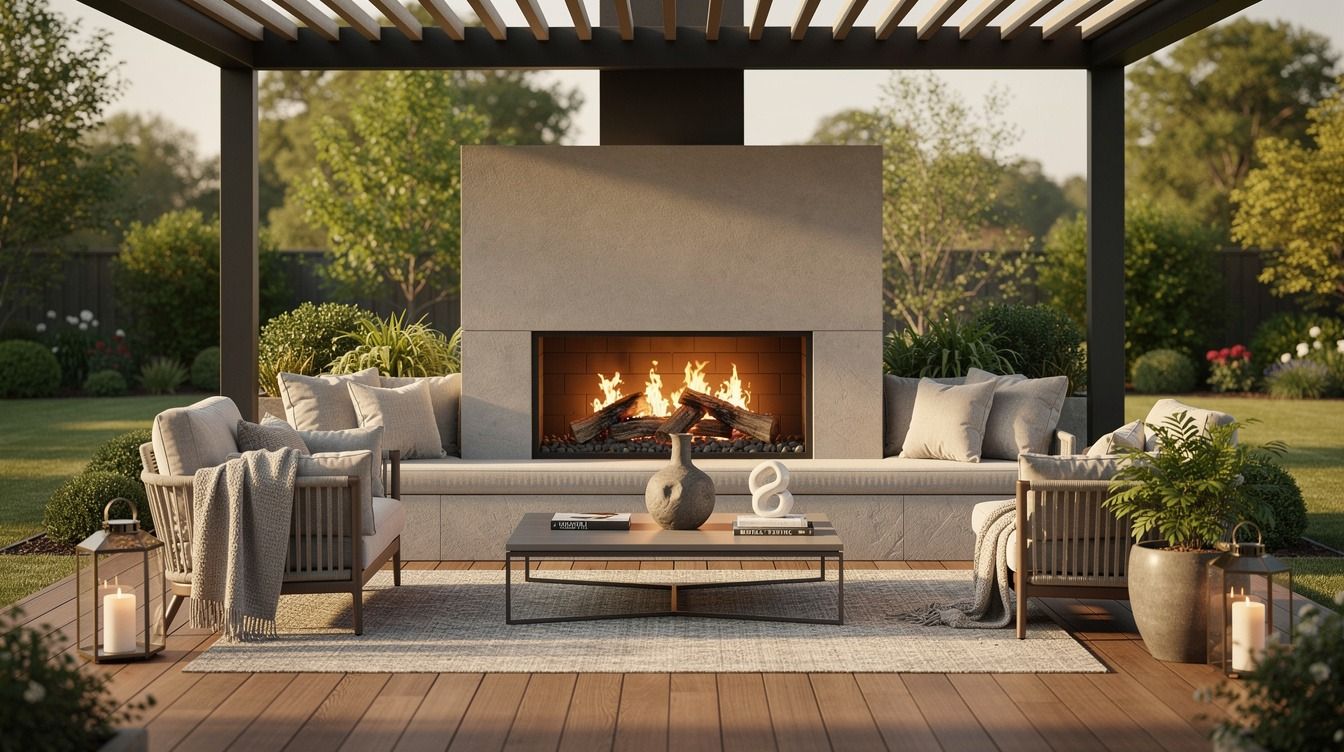
by Outdoor pavilion with fireplace ideas work best when you treat the structure like a real room with weatherproof bones, not a patio with a fire feature dropped in. I learned that after buying too many throw pillows for a space that still felt exposed. Start with shelter, then give the fire a job.
- Anchor the outdoor area with fireplace around one solid wall
- Build the Two-Wood Rule into your pavilion roof
- Float seating away from the firebox
- Use the Three-Height Light Stack after sunset
- Choose an outdoor space with fireplace that earns its footprint
- Paint the pavilion ceiling before adding decor
- Frame the fire with weatherproof storage
- Hang outdoor curtains where the wind needs help
- Can a small backyard pavilion still feel generous?
- Mix stone and plaster instead of matching everything
- Create a dinner zone beside, not in front of, the flames
- Make the fireplace wall a color block
- Add a low mantel that you’ll really use
- Choose a pavilion floor that survives bare feet and ash
- Put the kitchen edge outside the pavilion core
- Treat fall blankets as part of the architecture
1Anchor the outdoor area with fireplace around one solid wall
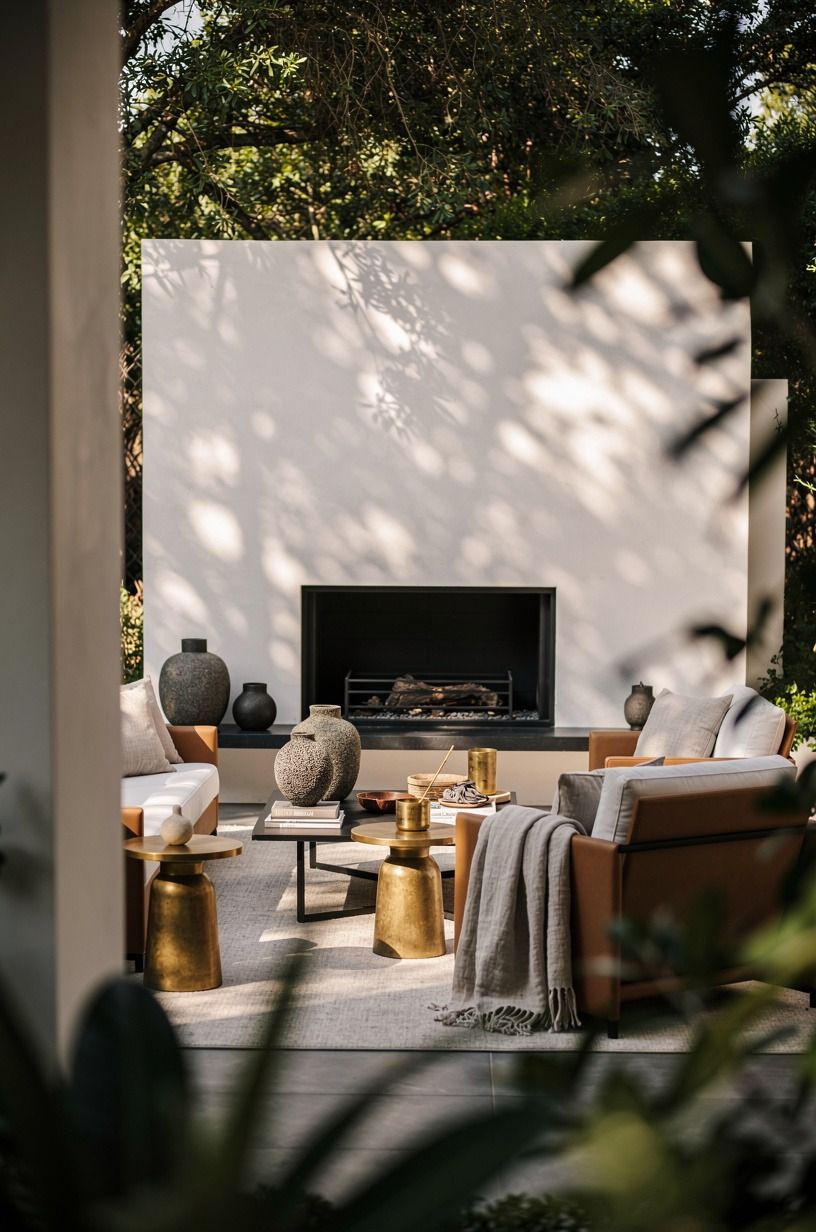
Put the fireplace on the pavilion’s most protected wall so your seating faces a destination, not the driveway. Unlacquered brass accents with a developing patina bring warmth beside planting beds, while a loose freestanding fire bowl can look stranded under a large roof.
Keep at least a 36-inch walkway clearance around the seating zone. You’ll notice the difference when somebody can carry a tray through without brushing every chair.
I’d skip a tiny corner fireplace here. It saves a few feet, but it also makes your whole outdoor living design feel like an afterthought.
For more fireplace layouts, see these outdoor patio fireplace ideas.
2Build the Two-Wood Rule into your pavilion roof
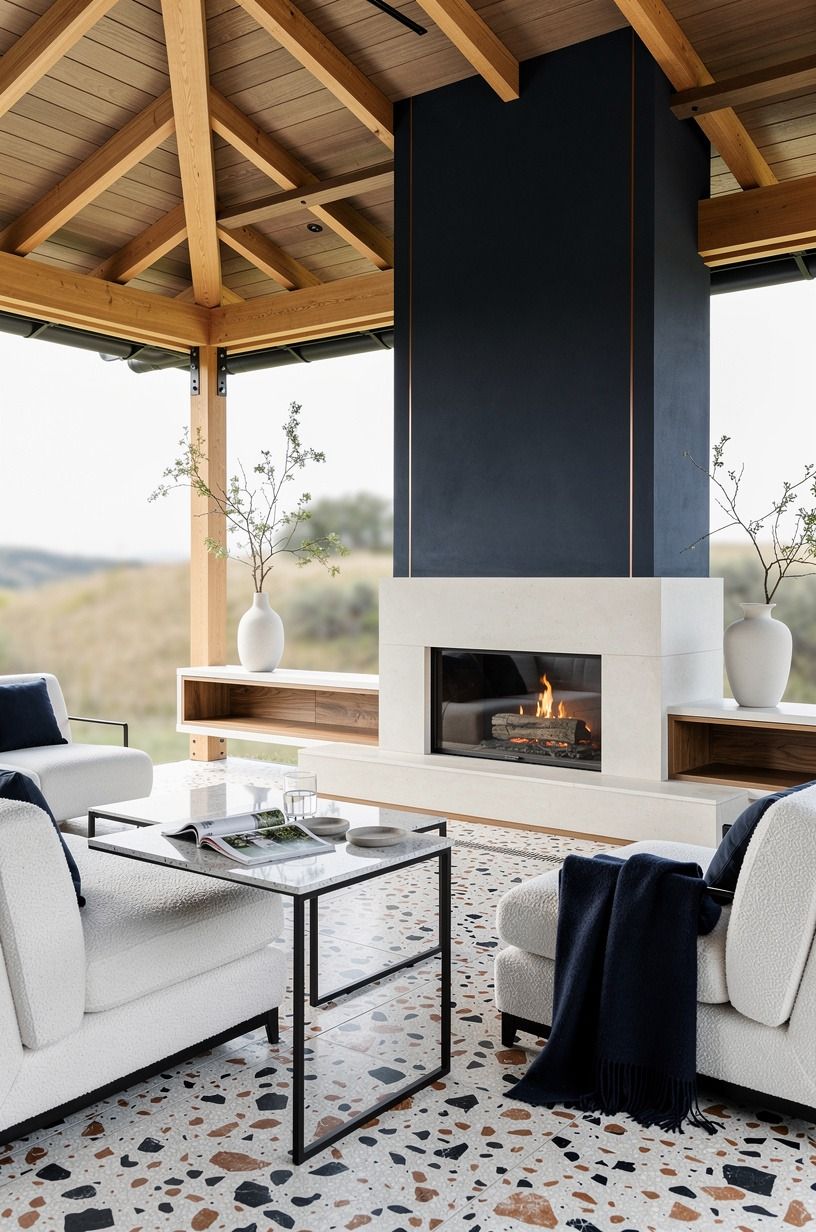
Use only two wood tones: one for the structure and one for the furniture. Keep the roof wood simple, then bring in an oversized-chip terrazzo table below for contrast without turning the pavilion into a lumber sample wall.
I’ve watched people add walnut, oak, acacia, and faux teak all in one place. It doesn’t read collected. It reads confused.
Let the darker wood sit lower, near feet and furniture, while the lighter wood catches the sun overhead. Your eye will move upward, and the pavilion will feel airy even when the roof is substantial.
3Float seating away from the firebox
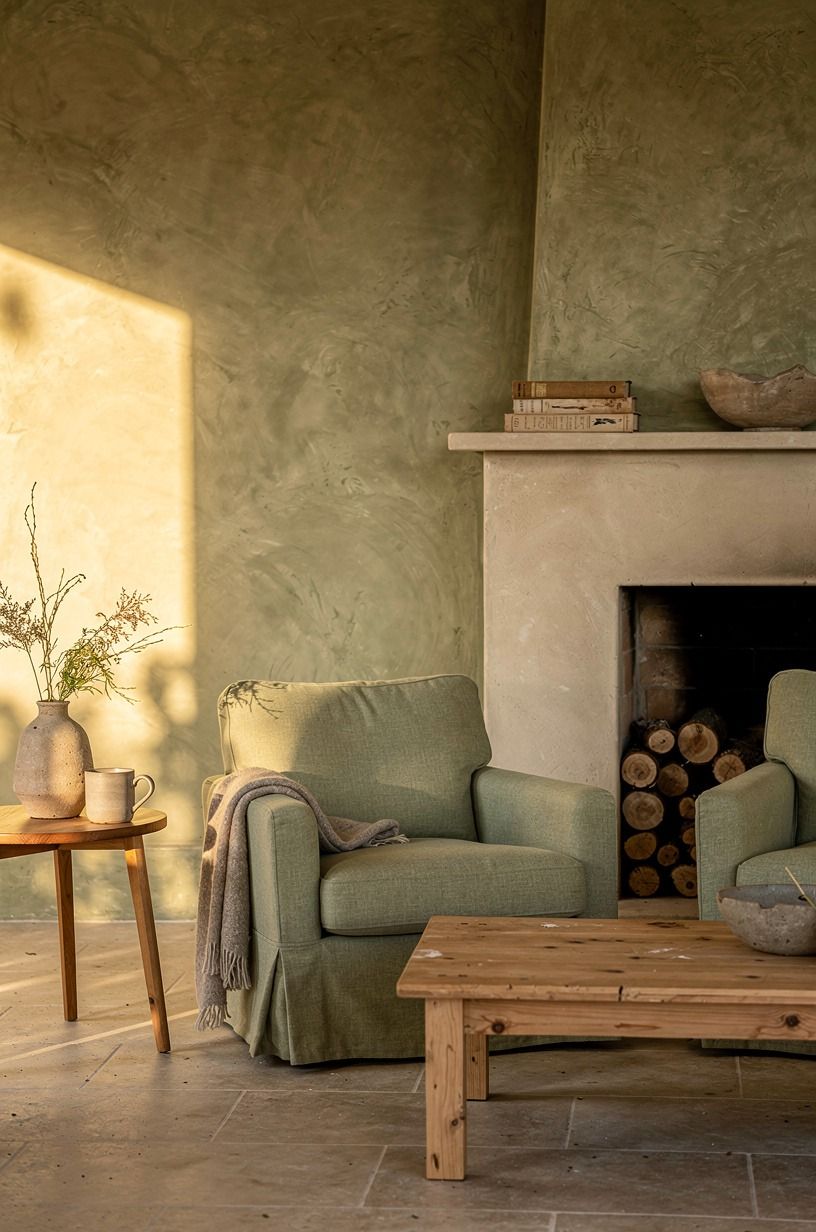
Don’t jam every chair against the fireplace wall.
4Use the Three-Height Light Stack after sunset
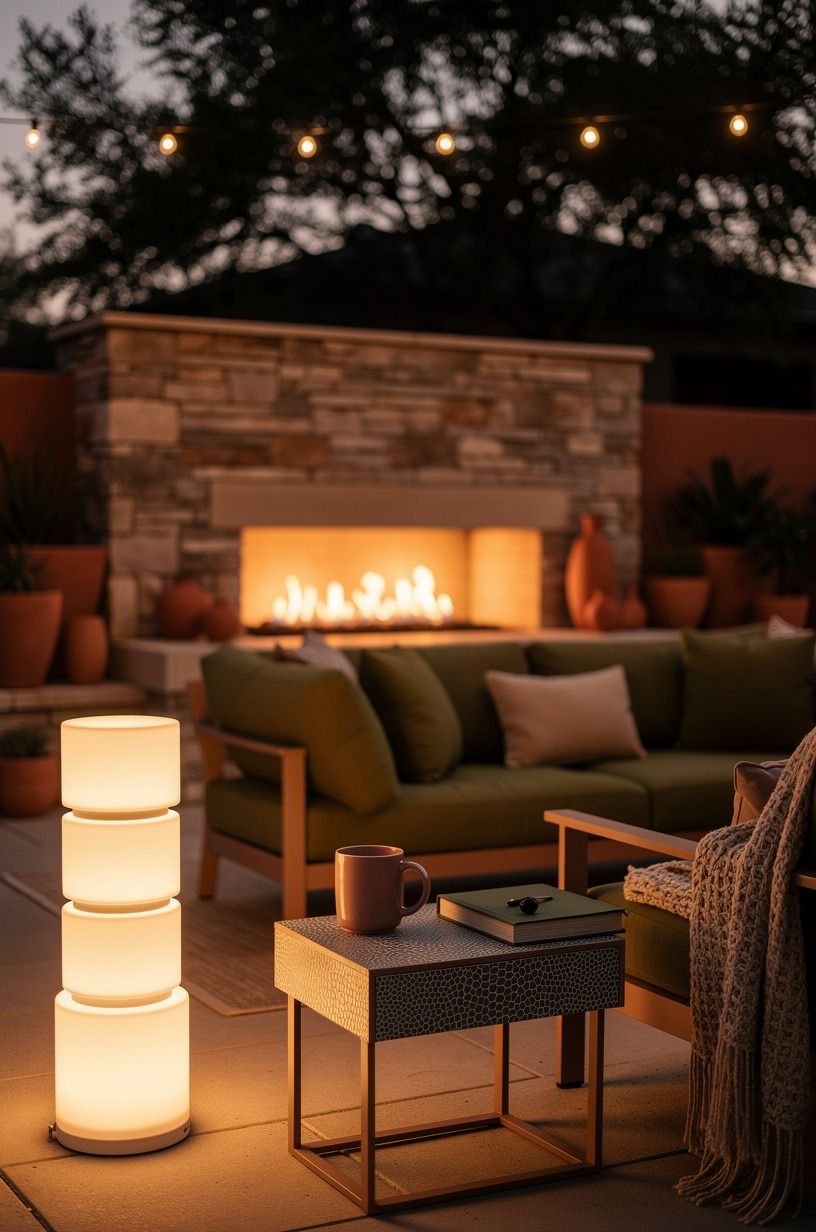
Layer light at three heights: overhead string lights, wall sconces near the fireplace, and low lanterns around the seating edge. LED string lights typically run $30-$120, which is less than one restaurant dinner for a group!
You don’t need bright bulbs. You need amber pools of light that stop at the rug’s edge and let the far garden disappear a little.
And please skip blue-white café bulbs. They make a covered fire pit feel like a parking lot, which is the opposite of relaxing.
5Choose an outdoor space with fireplace that earns its footprint
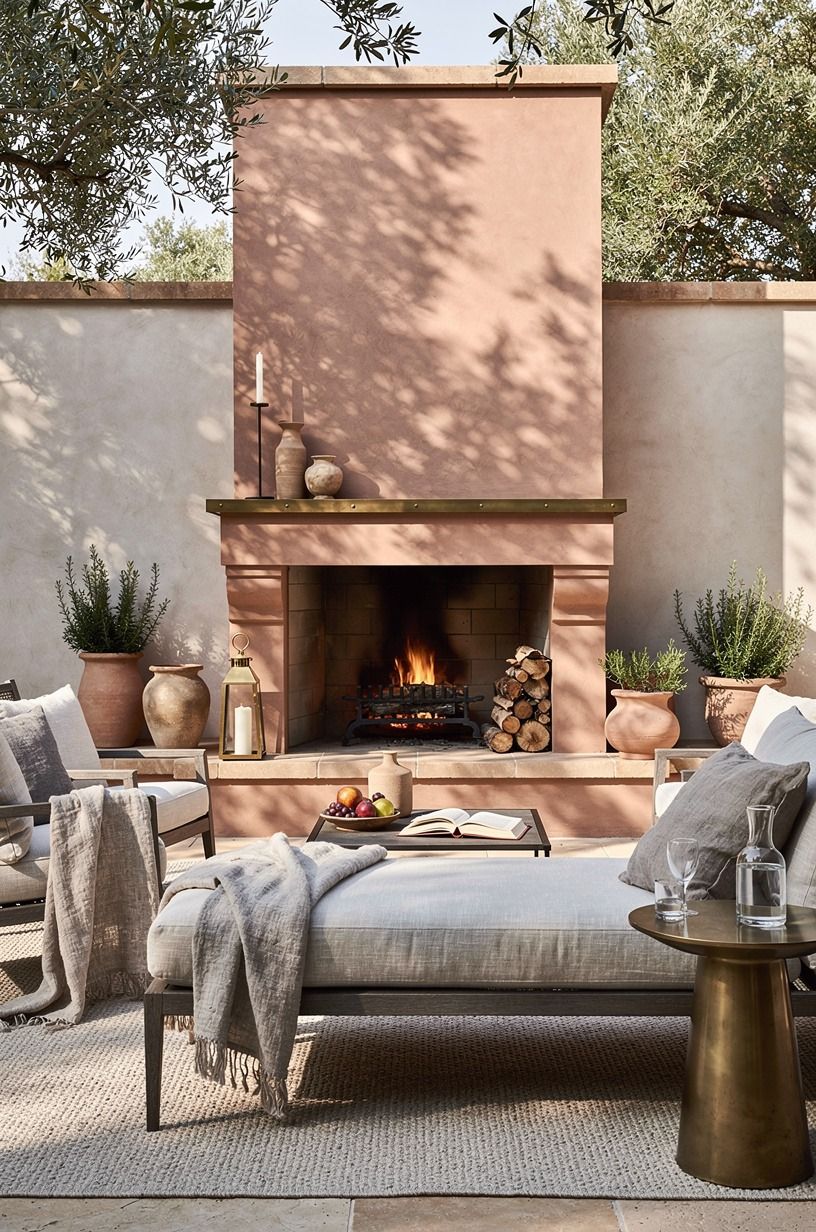
A fireplace should solve a real use problem. Maybe your family stays outside later in October. Maybe your pavilion is the only place friends can gather without crowding the kitchen.
Give it that role.
A gas fireplace insert is tidy, but I’d choose wood or a convincing gas log set if atmosphere is your priority. Controlled flames can feel flat; a little movement and crackle are part of why people pull up a chair.
If you’re torn between options, this fire pit versus fireplace guide helps you decide based on how you’ll use the yard.
6Paint the pavilion ceiling before adding decor
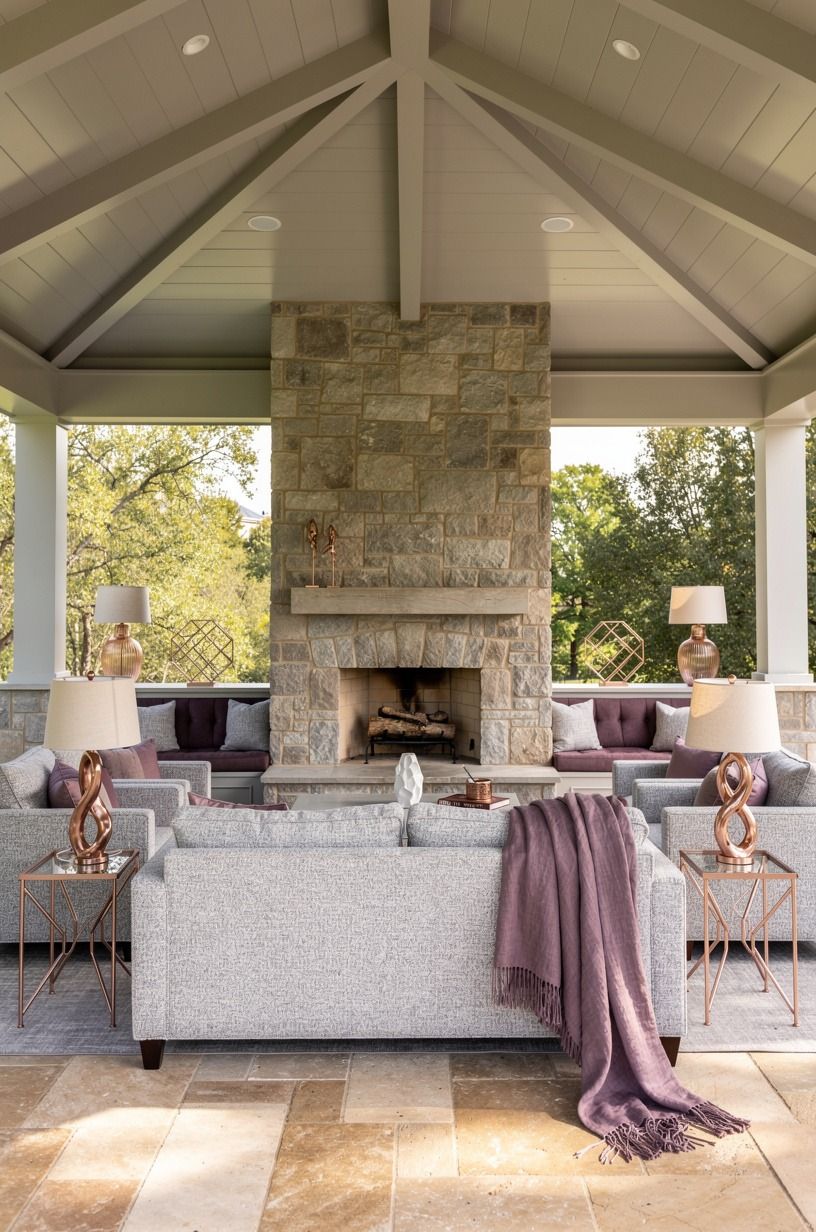
A painted ceiling can make a basic pavilion look intentional fast. Sherwin-Williams Emerald Exterior in a softened plum gives a white fireplace surround more depth, especially if the roof structure is visually busy.
For a softer route, try Benjamin Moore Aura Exterior in a warm gray. Add a few organic bouclé cushions and the pavilion will still feel welcoming without the glare of pure white at noon.
I made the mistake of choosing a cool gray once. By late afternoon, the whole pavilion looked faintly blue and chilly.
Not serene. Just cold.
7Frame the fire with weatherproof storage
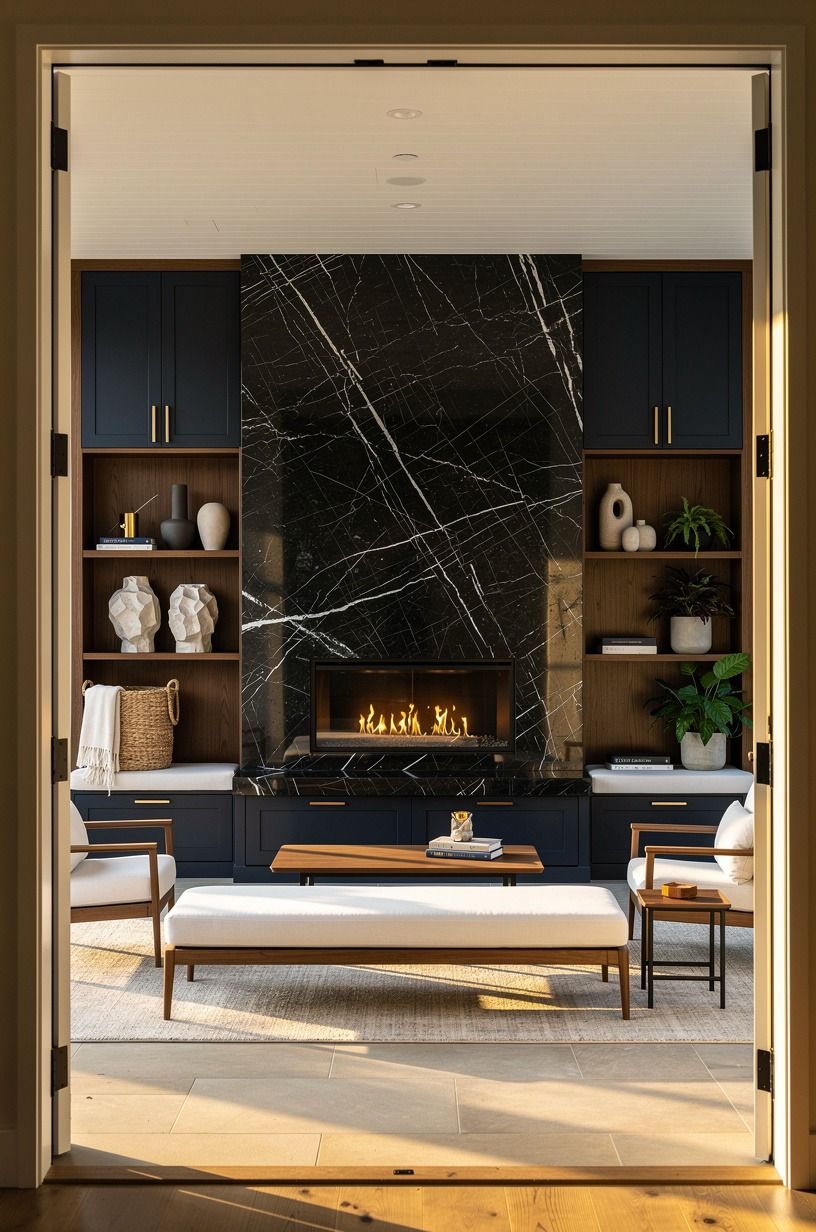
Build low storage on either side of the fireplace for throws, firewood, and all the bits that otherwise pile up on chairs. A Nero Marquina black marble top with fine white veining gives built-in exterior cabinetry a crisp, durable finish.
A basket of split logs. A lidded bin for matches.
Folded Turkish cotton towels for damp evenings. Useful things, visible but not messy.
Your pavilion isn’t a showroom. If guests can’t find a blanket without asking, the room has failed its one easy comfort test.
8Hang outdoor curtains where the wind needs help
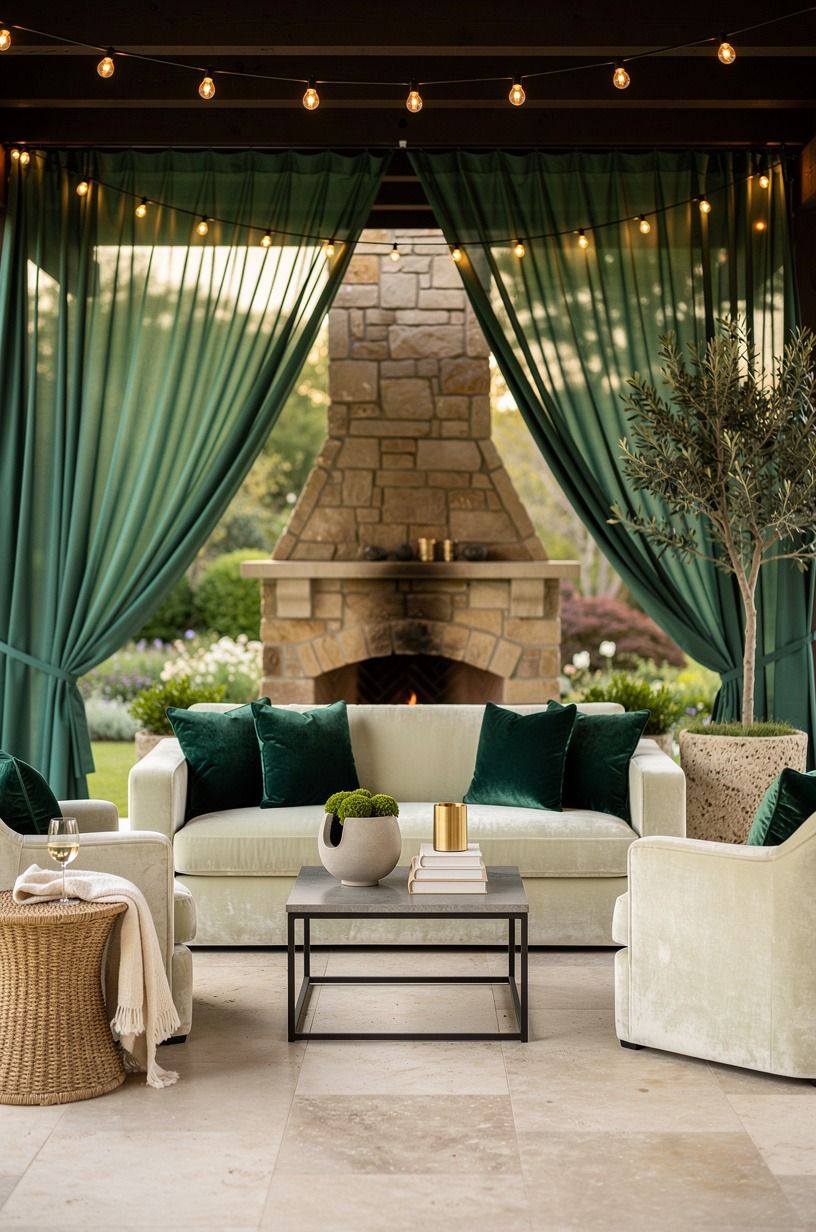
Outdoor curtains make the fire corner feel intimate, but they’re also practical on a west-facing pavilion.
9Can a small backyard pavilion still feel generous?
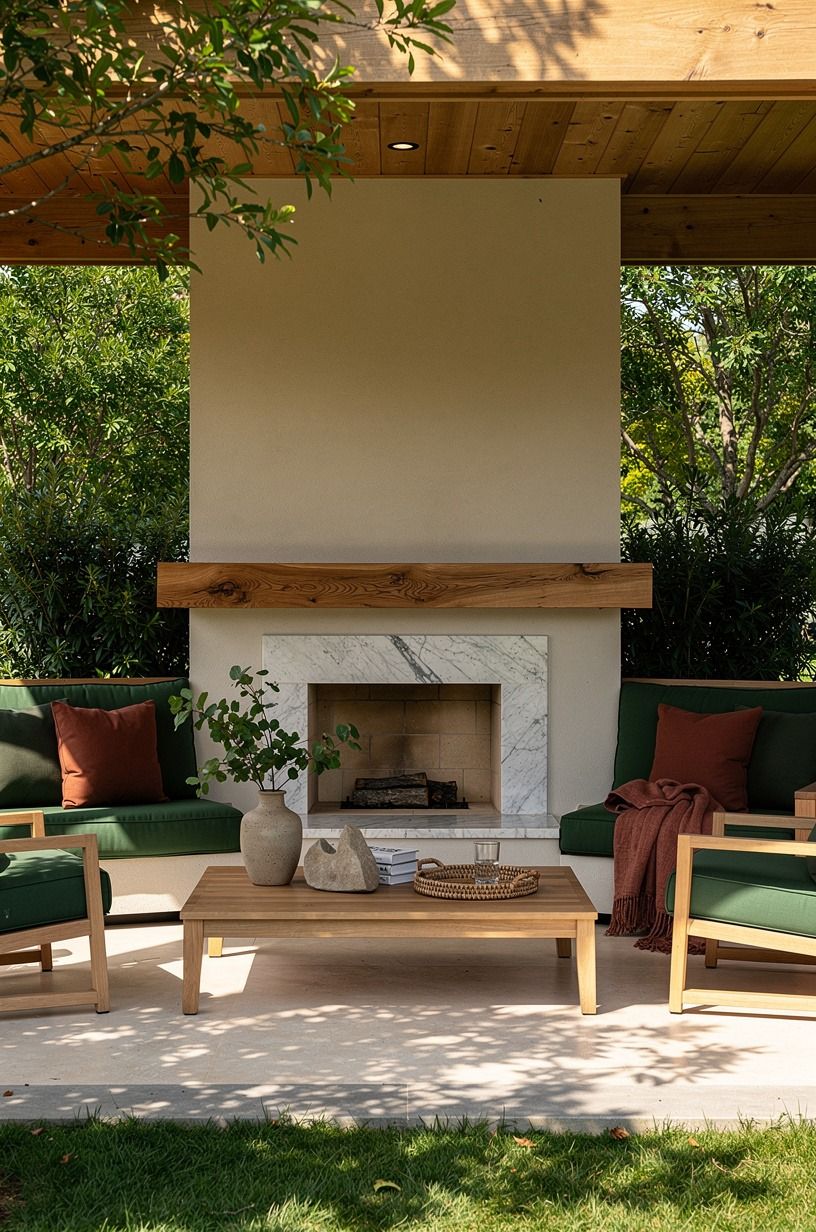
Yes, if you stop trying to fit a full outdoor living room, dining room, and kitchen into one roofed box. Pick the fire conversation zone first, then use two compact lounge chairs instead of a deep sectional.
A small Carrara marble side table with subtle gray veining can give the seating area a polished anchor, but even simple powder-coated chairs can work if your scale is honest. Your best small-space tool is open floor, not more furniture.
Why pretend you’ll seat twelve every weekend? Four comfortable seats around a warm fire beat eight cramped ones every time.
For compact planning, borrow ideas from this covered patio fireplace roundup.
10Mix stone and plaster instead of matching everything
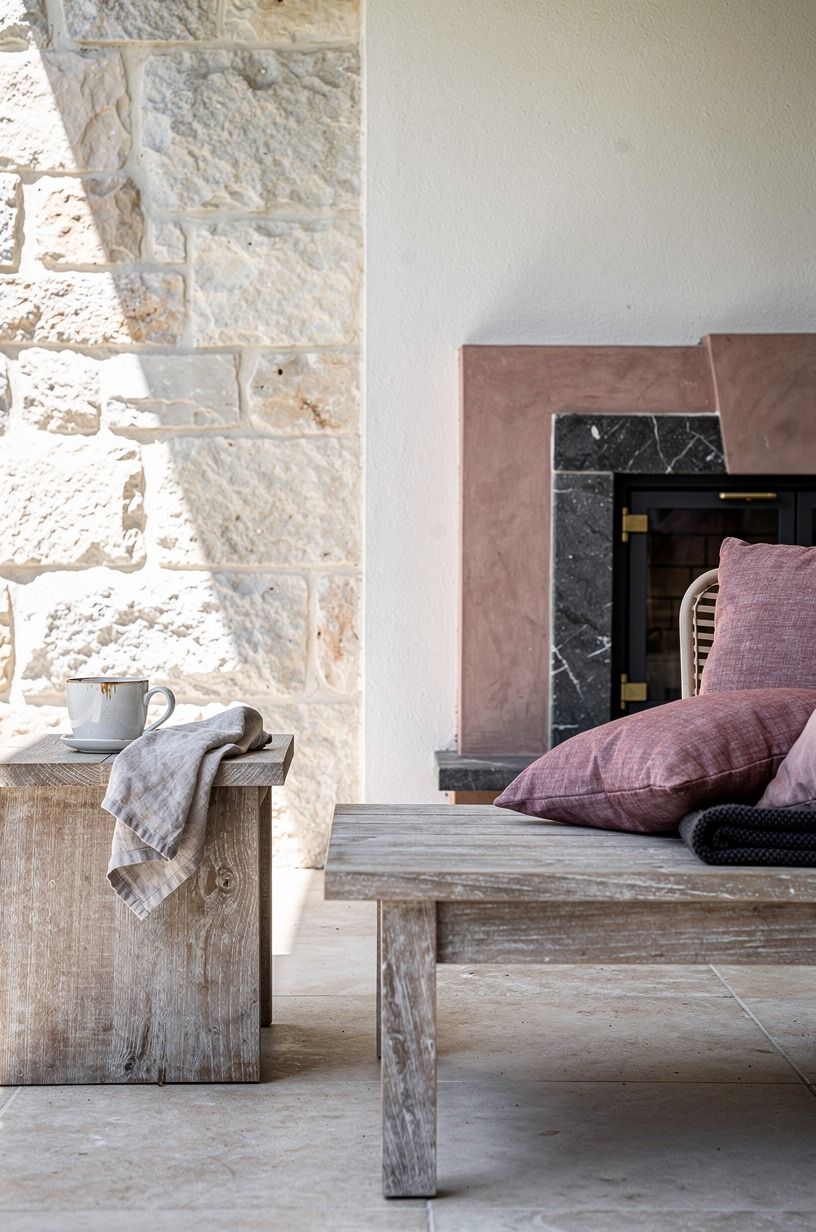
A textured fireplace needs a quieter pavilion shell. Pair stone veneer with smooth limewashed posts, then bring in reclaimed weathered teak for a bench or side table instead of adding another busy finish across every surface.
The contrast feels organic because it gives each finish a separate job. Rough around the flame.
Soft on the walls. Calm underfoot.
But avoid fake stacked stone beside fake wood beams. One imitation surface can pass; two start arguing with each other.
11Create a dinner zone beside, not in front of, the flames
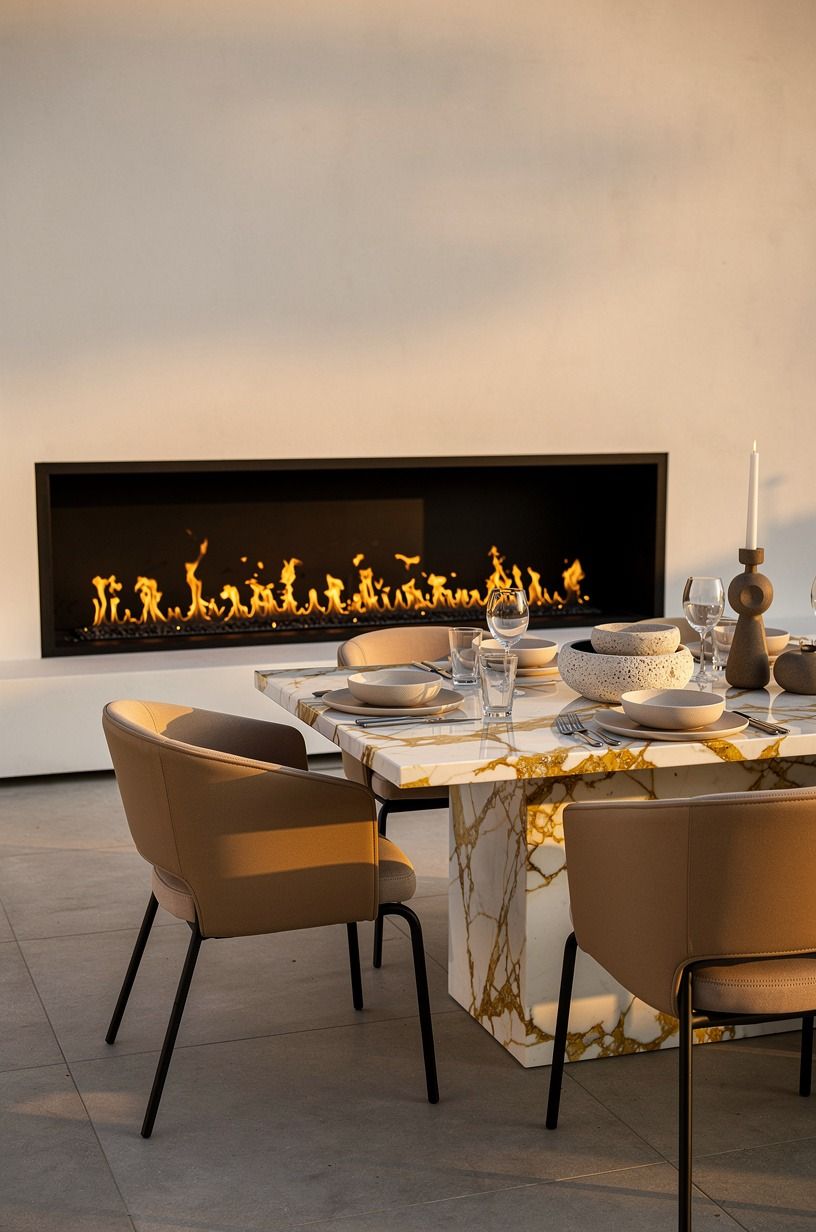
Keep the dining table offset from the fireplace so someone tending the fire doesn’t become the evening’s traffic controller. A table height of 28-30 inches works with standard dining chairs and keeps the sightline low enough to enjoy the hearth.
A Calacatta marble tabletop with warm gold veining has a good substantial look, but a painted metal table is often smarter for wet climates. You’ll want chairs that slide easily, not bulky loungers that trap people in place.
Set the table near light, then let the fireplace handle the mood. Different jobs. Better party.
12Make the fireplace wall a color block
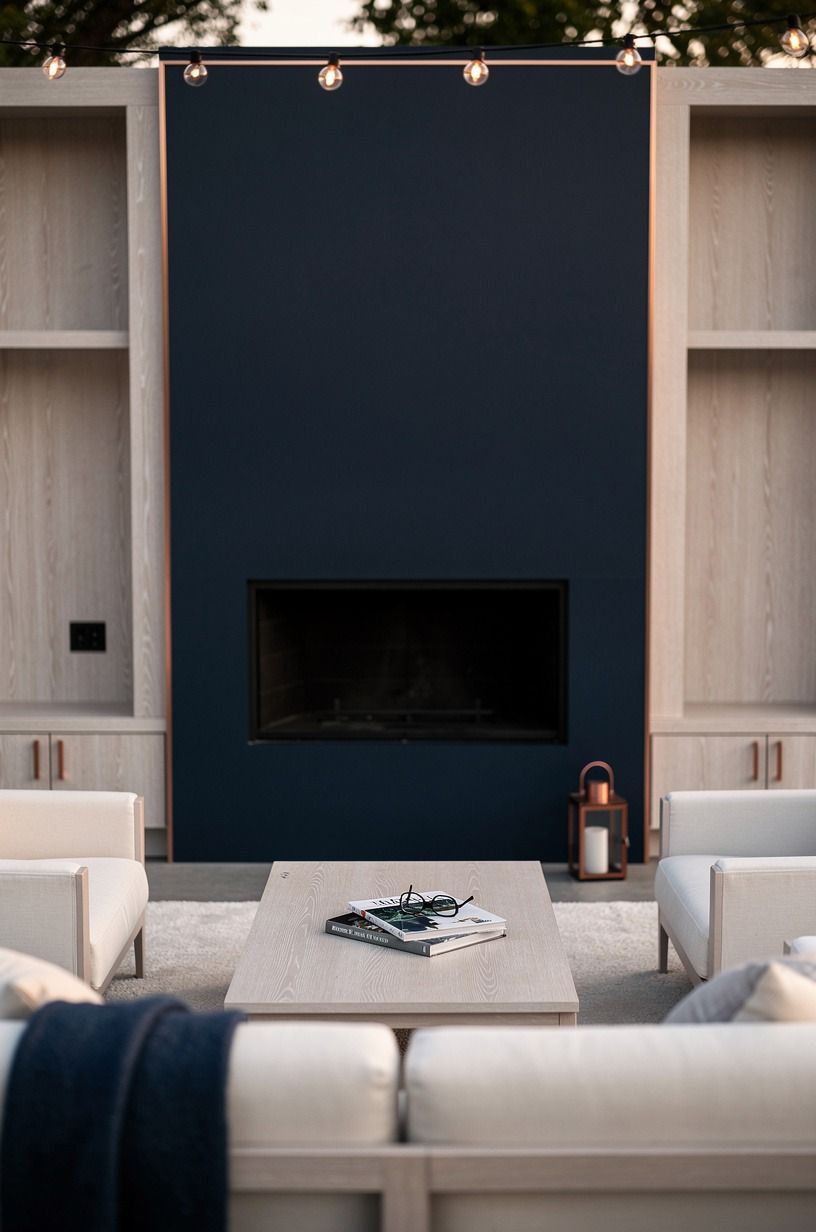
Use paint to give a simple fireplace wall weight. Farrow & Ball Exterior Eggshell in midnight blue can make ivory surfaces and copper accents look richer, while a warm cream wall keeps a darker firebox from swallowing the pavilion.
You don’t need to paint every post. One field of color behind the mantel does more than a dozen scattered accessories.
I’d avoid black if your yard gets little afternoon sun. It can look dramatic in photos, then disappear by dinner when you want the fireplace to be visible.
13Add a low mantel that you’ll really use
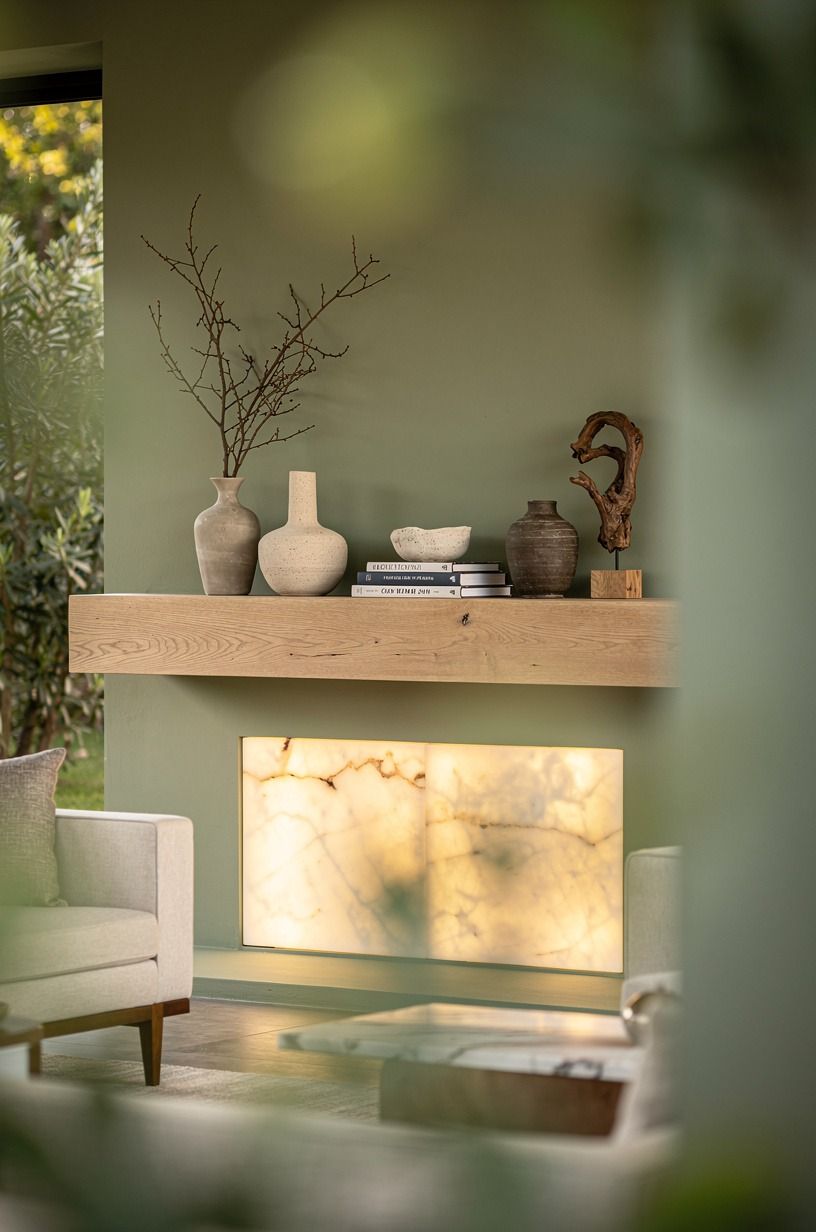
A mantel outdoors should hold a drink, a lantern, and maybe a tiny pot of herbs. A low shelf finished in backlit translucent onyx feels special under cover, but seal every surrounding joint properly because smoke and damp air don’t care about your plans.
Keep styling sparse. One aged-bronze lantern, one bowl of seasonal citrus, maybe a small framed tile. Your mantel shouldn’t become a crowded shelf indoors, relocated outside.
And yes, the firewood can be visible. A neat stack has more charm than plastic storage tubs ever will.
14Choose a pavilion floor that survives bare feet and ash
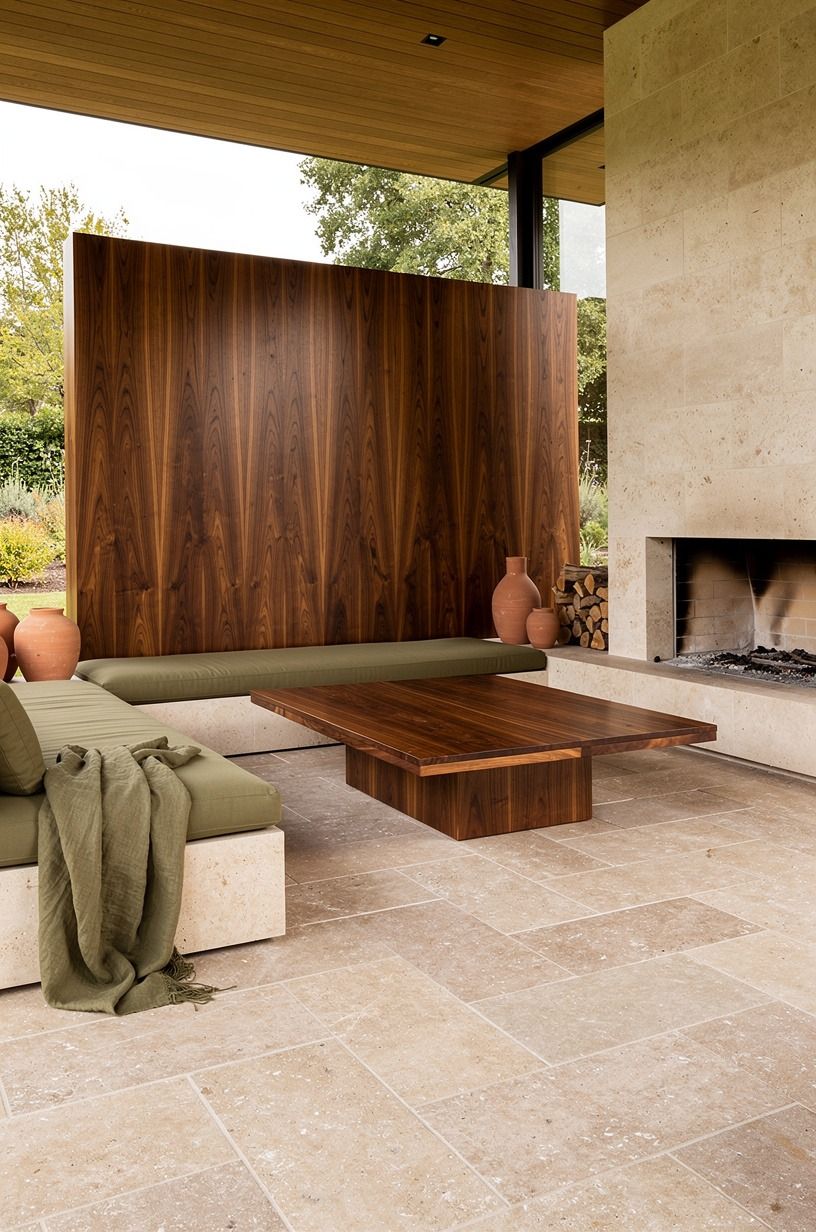
The floor gets overlooked because it’s under everything. Yet it decides whether your space feels refined or like a temporary campsite. Book-matched walnut decking brings warmth under bare feet, though it needs a properly weatherproof finish around ash and dragged furniture.
For a softer setup, layer a 600gsm Turkish cotton throw over the back of each lounge chair instead of trying to make the floor itself feel plush. Your outdoor rug should be durable, not precious.
A warm-toned floor wins over stark gray concrete here. Gray can be modern, sure, but it makes firelight look oddly orange.
15Put the kitchen edge outside the pavilion core
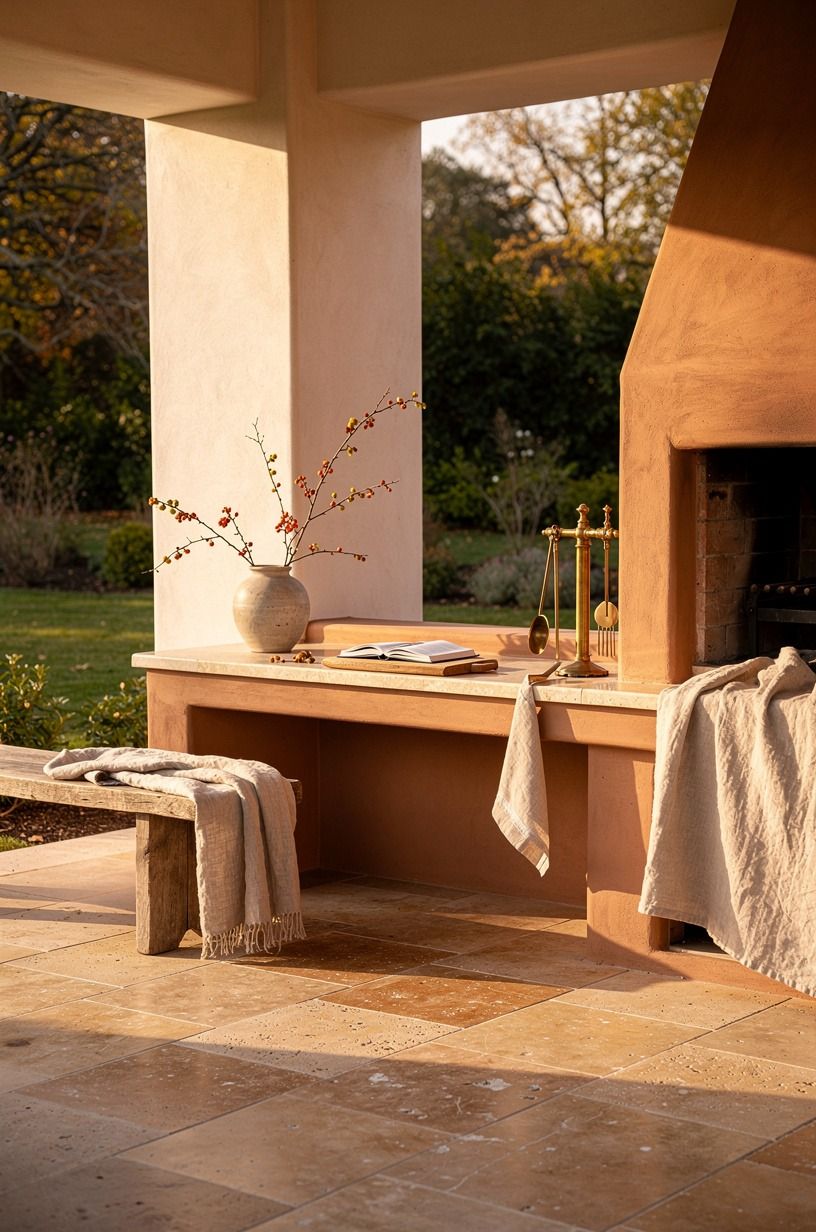
If you’re adding food prep, keep the grill or pizza oven near the pavilion, not inside its main seating circle.
16Treat fall blankets as part of the architecture
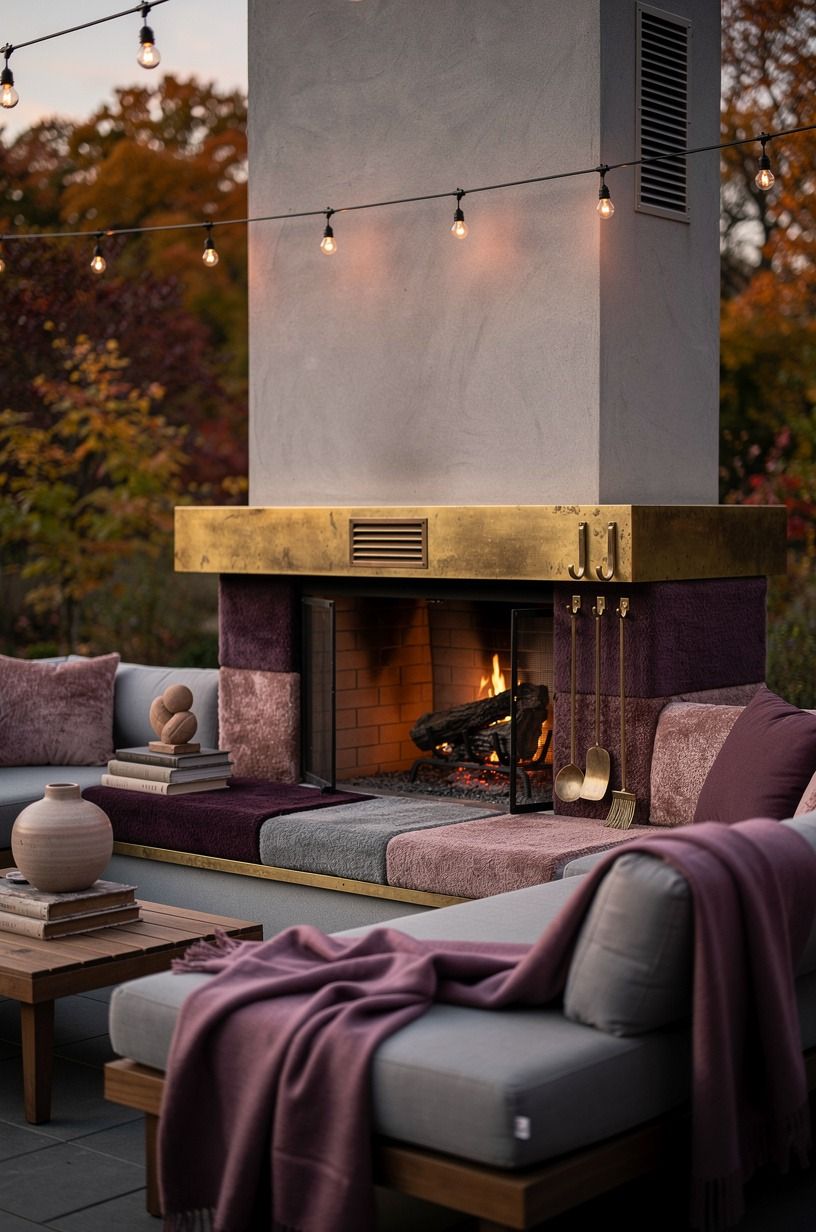
Don’t wait until guests are cold to remember textiles. Keep a designated basket beside the fireplace with wool-look throws, outdoor pillows, and one or two seat pads. Unlacquered brass hooks with a developing patina make a useful place to hang those layers without making the room feel fussy.
Your goal is a pavilion people can use on a breezy September night without hauling half the house outside. That’s the difference between picturesque and genuinely lived-in.
A basket, a fire, and a dry place to sit. Enough.
For more finishing layers, browse these cozy backyard decor ideas.
What an outdoor pavilion with fireplace typically costs
The cost depends less on decor than on whether you’re adding structure, paving, and utilities. Start with the tier that fits how often you’ll use the space, then spend on the pieces your body notices first: shelter, seating, warmth.
A teak set typically costs $1,000-$4,000, while individual Sunbrella cushions often land around $40-$150 each. You can make a budget pavilion feel inviting with textiles and lighting, but don’t cheap out on the fire feature’s safety work.
The part I’d spend on first
I’ve gone back and forth on whether an outdoor pavilion needs a fireplace at all, especially when a fire pit costs less and asks less of the structure. Here’s where I land: a fireplace earns the expense when it changes how long you use the yard, not just how it photographs. If you only want a place to toast marshmallows twice a summer, a portable fire bowl is enough.
It’s flexible, cheerful, and it won’t force your whole landscape plan into one fixed spot.
But a pavilion fireplace does something a fire pit rarely does. It gives the space a back wall, a visual anchor, and a sense of shelter even before the flame is lit.
You can sit near it with coffee on a chilly morning. You can light it when dinner runs late.
You can leave the chairs arranged around it because they don’t look abandoned in daylight.
I’d spend money on the roof, the fireplace installation, and the seating depth before I’d spend it on a fancy outdoor kitchen. That might sound backwards if you love entertaining, but people linger where they’re comfortable, not where the appliances cost the most. A grill can sit nearby.
A too-shallow sofa under a leaky roof can’t be fixed with a pizza oven.
And don’t make the pavilion too polished. A little soot on the hearth, wood stacked below the mantel, a throw that’s been used.
That’s the point. Your yard should feel like somewhere you live, not a hotel patio waiting for guests who never arrive.
What People Always Want to Know
What is the best outdoor pavilion with fireplace setup for a small backyard?
A compact wall fireplace with two lounge chairs is the best small-yard setup because it preserves open floor. A focused seating zone beats a crowded sectional. Look at IKEA NÄMMARÖ pieces, slim side tables, and one durable rug with front legs resting on it.
Where can I buy outdoor pavilion with fireplace pieces on a budget?
Start with IKEA, Target Threshold, Wayfair, and Facebook Marketplace for used teak or metal furniture. Secondhand frames are often the bargain worth chasing. New cushions, fresh paint, and LED string lights can make an old patio set feel far more welcoming.
How much does an outdoor pavilion with fireplace makeover cost?
A decor-led refresh usually runs about $200-$900, while furniture and lighting can move it into the $1,500-$6,000 range. Paint, rearranging furniture, and bringing out existing blankets are free. Save structural work for a phase you can fund safely.
Can I create an outdoor pavilion with fireplace on a budget?
Yes, and you should begin with the no-cost moves first. Better layout costs nothing: pull seating toward the hearth, clear a walkway, and group your existing textiles. Then add a $30-$120 string-light layer and one polypropylene rug.
Is an outdoor pavilion with fireplace worth it in a small space?
Yes, if it replaces scattered patio furniture with one warm gathering point. A defined focal point makes a small yard feel more intentional. Keep the fireplace on one wall and leave your central walking route open so the pavilion doesn’t feel cramped.
Is an outdoor pavilion with fireplace a good idea for a rental?
Yes, when you use removable layers and avoid permanent changes without permission. Flexible comfort comes from outdoor rugs, battery lanterns, freestanding screens, and tension-wire curtains. A movable fire pit can also give you the same evening ritual without construction.
Where I’d Start First
If I had to pick one, I’d start with the fireplace wall. You can’t layer warmth onto a pavilion that has no visual gravity; every pillow and plant will just drift. Pin the fireplace wall for later and compare it with these outdoor kitchen and pool combinations.