
 by
by Use the guide to decide whether a topper makes sense, then compare a real topper partner before buying. Our top pick is PlushBeds Natural Latex Toppers, with two backup options in the table below.
PlushBeds Natural Latex Toppers
9.0/10
Best mattresses to compare
| Rank | partner option | Why it fits |
|---|---|---|
| #1 | PlushBeds Natural Latex Toppers | Dedicated topper category |
| #2 | Puffy Bedding | Bedding bundle option |
| #3 | Amerisleep Bedding | Mattress-brand bedding option |
Editor's pick, mattress topper
Sleep Lab Pick · Current Sale
Amerisleep's Current Sale is on, cooling sheets, protectors and toppers, built on the same Bio-Pur® tech.
Saatva Graphite Memory Foam Topper
From $225 · Graphite-infused foam for cooling · 180-day trial · 10-year warranty
TL;DR
Mattress toppers add 2-4 inches of comfort at a fraction of the cost of a new mattress. Graphite-infused memory foam (Saatva) gives cooling + pressure relief; latex options offer bounce; polyester for budget. 180-night trial recommended.
Jump to section
- 3 quality mattress topper we recommend
- What is a Mattress Topper?
- Pros / Cons of Putting a Mattress Topper on Top of a Memory Foam Mattress
- Recommended Mattress Toppers for Memory Foam Mattresses
- How to Add Support to a Memory Foam Mattress
- Can a Mattress Topper Make a Memory Foam Mattress Last Longer? How much longer?
- Can You Stack Mattress Toppers? What are the Pros / Cons?
- Should you Flip Both Your Mattress Topper and Your Memory Foam Mattress? How Often?
- Upgrade: Full Saatva Topper Collection
- Mattress Topper Top Memory Foam Mattress: Complete Topper Guide
Our #1 Recommended Topper
Topper pick: PlushBeds organic range
A good topper fixes 80% of "my mattress is too firm" problems for a fraction of the replacement cost. PlushBeds runs the widest certified-organic topper catalog in the US: natural Talalay latex (3 firmness levels, GOLS certified), Dunlop latex for denser support, organic wool for temperature regulation, alternative down for a pillow-top feel, and memory foam for pressure relief. Queen toppers run $279-$699.
Certifications across the range: GOLS (Global Organic Latex Standard), GOTS (Global Organic Textile Standard), GREENGUARD Gold (low VOC), Eco-INSTITUT. All handcrafted in California, free shipping, 100-night trial, 5-year warranty on toppers.
Saatva bedding you can pair with your mattress
Saatva's bedding catalog matches the same build quality as its mattresses. The Organic Percale and Sateen sheets use long-staple cotton with reinforced stitching on the fitted-sheet elastic, they do not pop off over the night. The Graphite-Infused Mattress Pad and the Lofton Down Alternative Comforter are the practical upgrades that fix most comfort complaints without replacing the mattress.
Everything ships via Free White Glove delivery for orders over $1,000 (mattress bundles), and smaller items get free standard shipping. Saatva runs up to $625 off sitewide on most bedding during recurring sale events (Spring Refresh, Memorial Day, Labor Day, Black Friday).
Ownership terms: 45-day return on most bedding, 1-year warranty on linens, lifetime warranty on mattresses and protectors.
Last Updated: March 2026 - Content reviewed and verified by our editorial team.
Saatva Graphite Memory Foam Topper. From $225
Cooling graphite-infused foam | 3 inches | 180-day trial
We earn a commission if you make a purchase, at no extra cost to you. Full disclosure.
When we talk about comfort and a good quality of sleep, we need the right combination of mattresses and beddings. A mattress topper can also be used to enhance the comfort and longevity of a mattress without costing very much. So, should you use a mattress topper on top of a memory foam mattress?
Use a mattress topper on top of a memory foam mattress to alter its firmness and temperature. Latex foam toppers can make a mattress feel firmer while down and wool are temperature regulating.
3 quality mattress topper we recommend
The mattress topper adds a uniform cushioned layer to adjust the firmness of the mattress, to relieve pressure points along with your hip and shoulder, and to protect the mattress from wear and tear. Read this article from The Lancet, entitled "Pressure sores and pressure-decreasing mattresses: controlled clinical trial", to learn more about how to make your sleep more comfortable and less painful.
However, a mattress topper conforms to the shape of the mattress and may show signs of sagging if the mattress is old. It also traps your body heat and could make you feel warm and sweaty during the night. We've discussed the mattress topper hack in our article -- it saves money, prolongs mattress life, and allows you to make your mattress more comfortable.
Read on to learn more about the pros and cons of putting a mattress topper on top of a memory foam mattress and how to further improve the level of comfort and support of both types of mattresses. Make sure to read our related article on how to store a latex mattress topper properly too.
More related articles:
- What's the difference between a Latex vs. Memory foam mattress topper?
- What's the difference between a Gel vs. Memory Foam mattress topper?
What is a Mattress Topper?
🔗 Deeper reading: Best memory foam mattresses 2026, our full 2026 roundup with detailed picks, firmness guidance, and current pricing.
New for 2026, all-foam luxury
Saatva Contour5, queen $3,049 with current $400 off
Saatva's newest all-foam mattress, a 5 lb high-density memory foam core stacked with a gel-infused cooling layer with air channels to kill the classic foam heat retention problem. Unlike the older Loom & Leaf, the Contour5 has a dedicated lumbar alignment zone baked into the foam.
Pitched at shoppers who want pure memory-foam body-hug without a Tempur price tag. 365-night home trial, lifetime warranty, free white-glove delivery. The $400 discount is auto-applied, no coupon code needed.
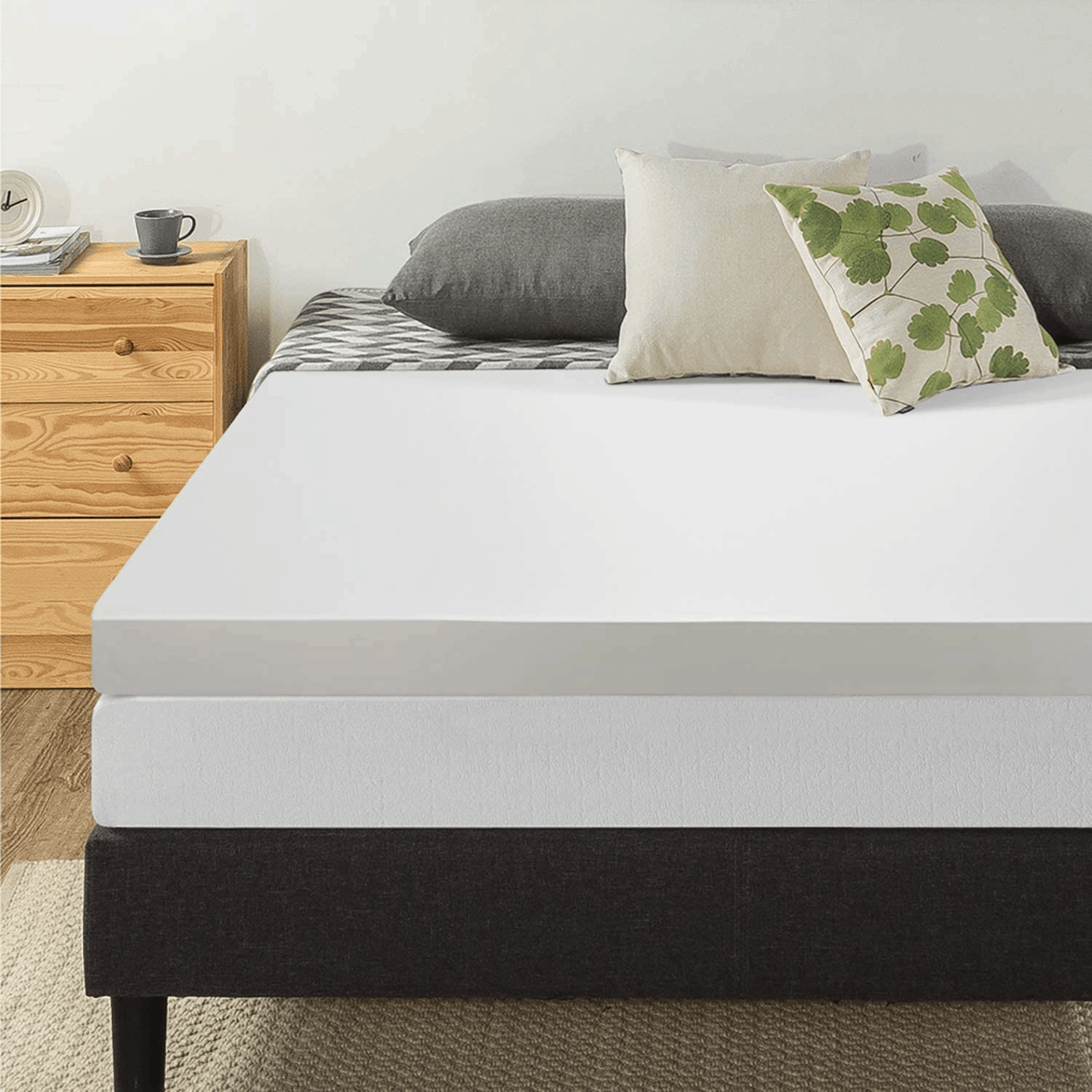
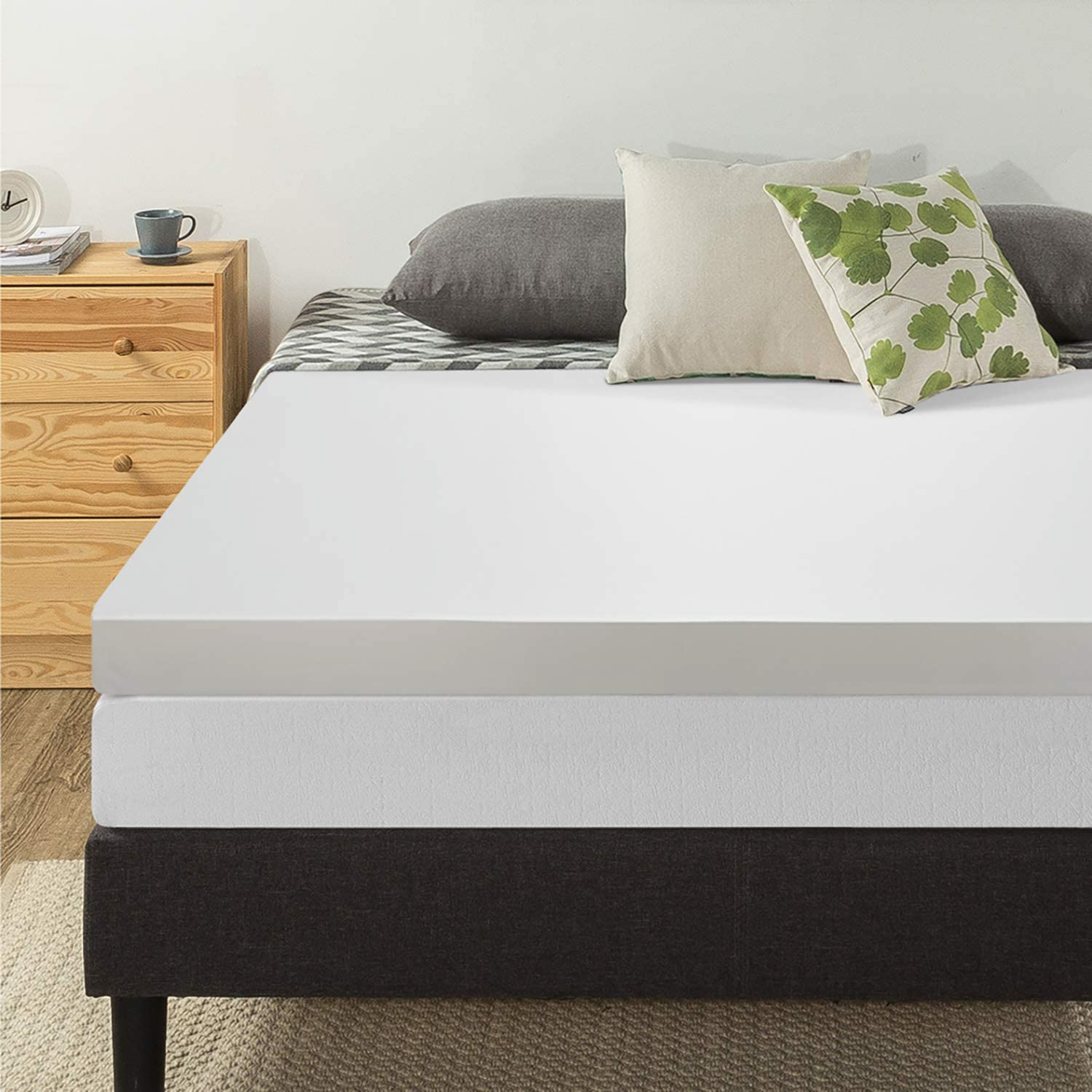 This mattress topper made of memory foam aims to improve your sleep by cradling your body and relieving pressure points. Image from Amazon.
A Mattress topper is an extra cushioning layer designed to increase the level of comfort of a mattress.
When a mattress topper sits on top of an old, worn, and uncomfortable mattress, it temporarily covers the signs of wear and tear, adjusts the level of firmness, and delays the need to replace your mattress. It also extends the lifespan of your mattress.
To understand the correlation between sleep quality and the quality of a mattress, read this article from Enck, "Associations between back pain, quality of sleep and quality of mattresses. Double- blind pilot study with hotel guests", 1999. If you're still wondering whether you need a mattress topper, take a look at our guide.
Pros / Cons of Putting a Mattress Topper on Top of a Memory Foam Mattress
The pros of putting a mattress topper on top of a memory foam mattress include extra cushioning, pressure point and body ache relief, motion isolation, and temperature regulation. The cons of putting a mattress topper on top of a memory foam mattress include the topper conforming to the indentations and lumps of the mattress underneath, the topper emitting off-gassing smells, and the topper making you warm and sweaty.
Below is a summary of the pros and cons of putting a mattress topper on top of a memory foam mattress:
| Pros of putting a Mattress Topper on top of a Memory foam mattress | Cons of putting a Mattress Topper on top of a Memory foam mattress |
| The mattress topper provides an extra cushioning layer to increase the level of comfort of the memory foam mattress | A thin mattress topper conforms to the lumps and indentations of the mattress when old and saggy. Buy a mattress topper (like this one) that's at least 3 inches thick to avoid this. |
| The mattress topper relieves the pressure points along with the hip and shoulder | The mattress topper emits unpleasant off-gassing smells when new. Buy mattress toppers made of natural materials (like this woollen topper from Plushbeds) to avoid this. |
| The mattress topper alleviates body pains | The mattress topper traps body oils and sweats, which increase the risk of dust mites and allergens. A deep pocket mattress protector will prevent your mattress topper and mattress from absorbing liquids and body oils. For more information, read our article on how to protect a mattress topper or mattress pad. |
| The mattress topper allows for motion isolation when you or your partner toss and turn in bed | The mattress topper retains body heat, which can make you sleep hot especially during summer days. Cooling mattress toppers (like this one) will minimize sweating and maximize ventilation. |
| The mattress topper retains your body heat and prevents it from reaching the mattress | The mattress topper does not fix a worn and torn old mattress |
Recommended Mattress Toppers for Memory Foam Mattresses
As mentioned previously, mattress toppers come with beneficial features that aim to enhance the quality of your old mattress and to protect your new mattress from wearing and tearing prematurely. Mattress toppers are also a good option for body temperature regulation; they can make you sleep warmer during winter time, and cooler during summer time.
Below are some recommended mattress toppers for memory foam mattresses and what they can do to your memory foam in specific situations:
Saatva Graphite Memory Foam Topper
Graphite-infused foam for cooling · 180-day trial · 10-year warranty. Saatva is one of the few direct-to-consumer brands to offer extended trial windows (45-365 nights depending on product) and long warranties in this category.
- Price: From $225
- Free white-glove shipping on mattresses and frames; standard on bedding
- ID.me discounts for military, veterans, first responders, teachers, seniors
- Direct-to-consumer pricing (no middleman markup)
- GREENGUARD Gold certified across most product lines
Disclosure: we may earn a commission from this link at no extra cost to you.
| #1 Saatva Latex Mattress Topper Best Choice |
Clean recommendation | Check live price |
| #2 PlushBeds Natural Latex Topper Premium latex option |
Clean recommendation | Check live price |
| #3 Puffy Mattress Topper Cheaper comfort option |
Clean recommendation | Check live price |
| Puffy luxury topper | Make your memory foam mattress cooler | ~ $135 |
| Plushbeds 100% natural latex topper (high-end one) | Increase your memory foam mattress' firmness | ~ $250 |
| Ghostbed affordable foam topper | Make the mattress softer. Here are some tips to use a mattress topper to make a mattress or bed softer. | ~ $150 |
| Naturepedic organic wool topper (used by 5 star hotels) | Make your mattress warmer but really pricy | ~ $700 |
How to Add Support to a Memory Foam Mattress
Many people are often dissatisfied with their mattress and wake up feeling sore and tired because of various reasons such as the mattress being old and saggy, the sleeper being too heavy, or the climate being humid. In order to feel rested and rejuvenated after a night's sleep, you need to add support to your memory foam mattress. We've also discussed whether you need a mattress foundation and which one will support your memory foam mattress the best.
To add support to a memory foam mattress, first you should place a solid surface under the mattress, then you should place a pillow under the sunken parts of the mattress, and finally you should place a mattress topper on top of the mattress.
Tip 1. Place cardboard or a plate under the mattress
If the mattress is sitting on an uneven surface and you sleep on it, there will be some parts of the mattress that will sink down and create indentations. To avoid an uneven distribution of the mattress, place a flat surface such as a cardboard underneath it. "Smart" box springs, like this one from Amazon, also provide an excellent foundation for memory foam mattresses because they enhance ventilation through the memory foam.
Tip 2. Place a pillow under the sunken parts of the mattress
Place pillows or pieces of clothes under the sunken parts of the mattress to restore their shapes.
Tip 3. Place the mattress topper on top of the mattress
Put a mattress topper on top of the memory foam mattress. The mattress topper retains your body heat and prevents it from reaching the mattress. This helps you stay cool at night.
Also, the mattress topper acts as a short-term fix for your saggy mattress because it covers the lumps on your mattress and delays time to purchase a new one. Therefore, it adds a layer of comfort and support to your mattress. We've discussed how to properly install a mattress topper in our article.
Can a Mattress Topper Make a Memory Foam Mattress Last Longer? How much longer?
Normally, a memory foam mattress lasts up to 8 years on average. A mattress topper aims to prolong the lifespan of your mattress by temporarily delaying the need to replace it.
A mattress topper can make a memory foam mattress last longer by approximately 2-3 years by covering the lumps and indentations on an old mattress and protecting against premature wear and tear.
However there are stressors that affect the durability of your mattress. The greater the load and pressure on the mattress are, the more damage there will be. The thickness of the mattress and the conditions in the room may also shorten the lifespan of the mattress. Moisture for instance, encourages the breeding of dust mites and bed bugs, all of which can damage the mattress over time. A mattress topper in these cases is helpful in protecting the mattress from dust and dirt and from the sleeper's dead skin cells and body oils.
Can You Stack Mattress Toppers? What are the Pros / Cons?
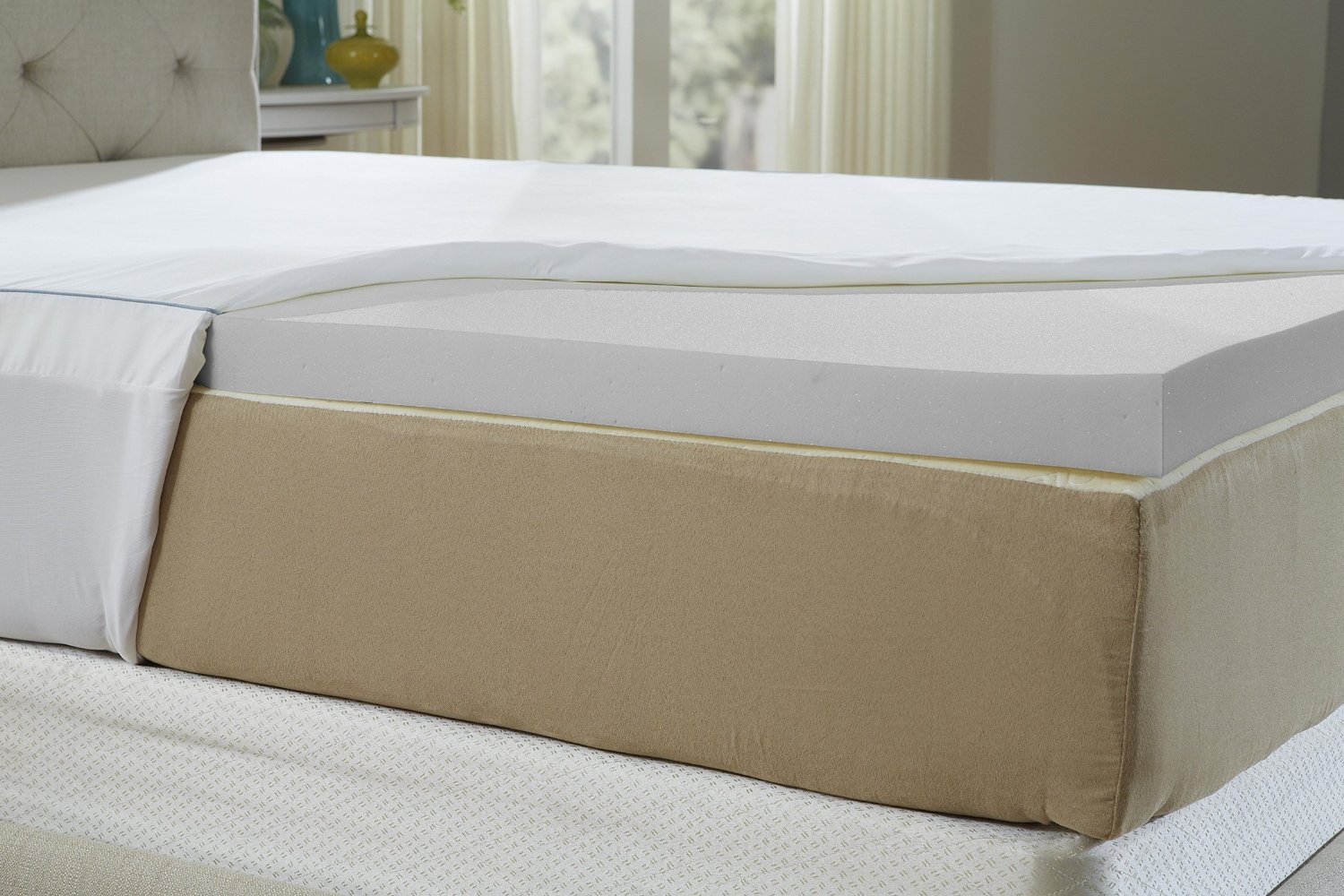 In order to improve the comfort level of an old mattress, purchase a high-quality mattress topper. Some people resort to cheaper alternatives like stacking two or more mattress toppers on top of each other. This is not recommended. Image from Zensleeping.
Stacking mattress toppers on top of each other is not recommended because it can reduce ventilation through your mattress, alter the stability and firmness of the main mattress, exceed the weight capacity of your mattress or bed, and lead to wear and tear, back pain, and overheating.
The pros of stacking mattress toppers on top of each other include the ability of adjusting the firmness of your sleeping surface without going to the expense of buying a new mattress. However, the cons of stacking mattress toppers include damages to the mattress, back pains, and overheating. We've discussed how to find the right mattress topper for back pain here.
Stacking the mattress toppers on top of each other can destabilize the memory foam mattress leading to sagging and indentations forming. When you sleep on the mattress, your body will sink down too far into the mattress, which can lead to back pains. Also, stacking mattress toppers will block the breathability of your mattress, which allows the build-up of mildew and bacteria due to moisture being trapped inside the mattress.
For more information about factors affecting the steadiness of a mattress read this article from The Journal of Rehabilitation Research And Development titled Factors affecting the pressure-distributing properties of foam mattress overlays.
Related articles:
- How do you keep a mattress topper from sliding?
- How to hold down a mattress topper.
Should you Flip Both Your Mattress Topper and Your Memory Foam Mattress? How Often?
A mattress topper sits on top of your mattress to reduce the pressure put on your mattress and to increase its level of comfort. Flipping the mattress and the mattress topper can significantly increase their lifespan and ensure a better weight distribution. However, before making the effort of flipping them, check if they are double-sided.
A memory foam mattress and a mattress topper should not be flipped because they typically have one sleep side. Instead they should be rotated by 180 degrees every six months.
Upgrade: Full Saatva Topper Collection
| Saatva Latex Topper | $445+ | Shop |
| Saatva Graphite Topper | $345+ | Shop |
Mattress Topper Top Memory Foam Mattress: Complete Topper Guide
A quality mattress topper can transform an uncomfortable mattress at 10-20% the cost of replacement.
Topper Selection Guide
| If You Need... | Choose | Thickness | Queen Price |
|---|---|---|---|
| More softness | Memory foam (3-4 lb/ft3) | 3 inches | $80-$200 |
| More support | Firm latex (ILD 32+) | 2-3 inches | $200-$400 |
| Cooling | Gel memory foam or latex | 3 inches | $100-$300 |
| Temperature regulation | Wool | 2-3 inches | $150-$350 |
When a Topper Is Not Enough
If your mattress has visible sagging deeper than 1.5 inches, a topper will conform to the sag rather than correct it. At that point, mattress replacement is the better investment.
Related: pad vs protector | topper lifespan.
The Saatva Classic includes built-in premium comfort layers - no topper needed. 365-night trial.
Our #1 Mattress Pick
The Saatva Classic combines innerspring support with premium comfort layers. Free white-glove delivery and a 365-night home trial.
Free delivery • 365-night trial • Lifetime warranty
Related Guides
One last thing
Topper won't fix everything, but it'll fix a lot.
Saatva's Graphite Memory Foam Topper is our default, graphite-infused cooling, 180-night trial, 3 thickness options.
All scores in this guide come from our MattressNut Sleep Lab methodology, applied identically across every mattress we evaluate.
PlushBeds Natural Latex Toppers
If this guide answered the sizing or setup question, this is the matching partner path to check next.