
 by
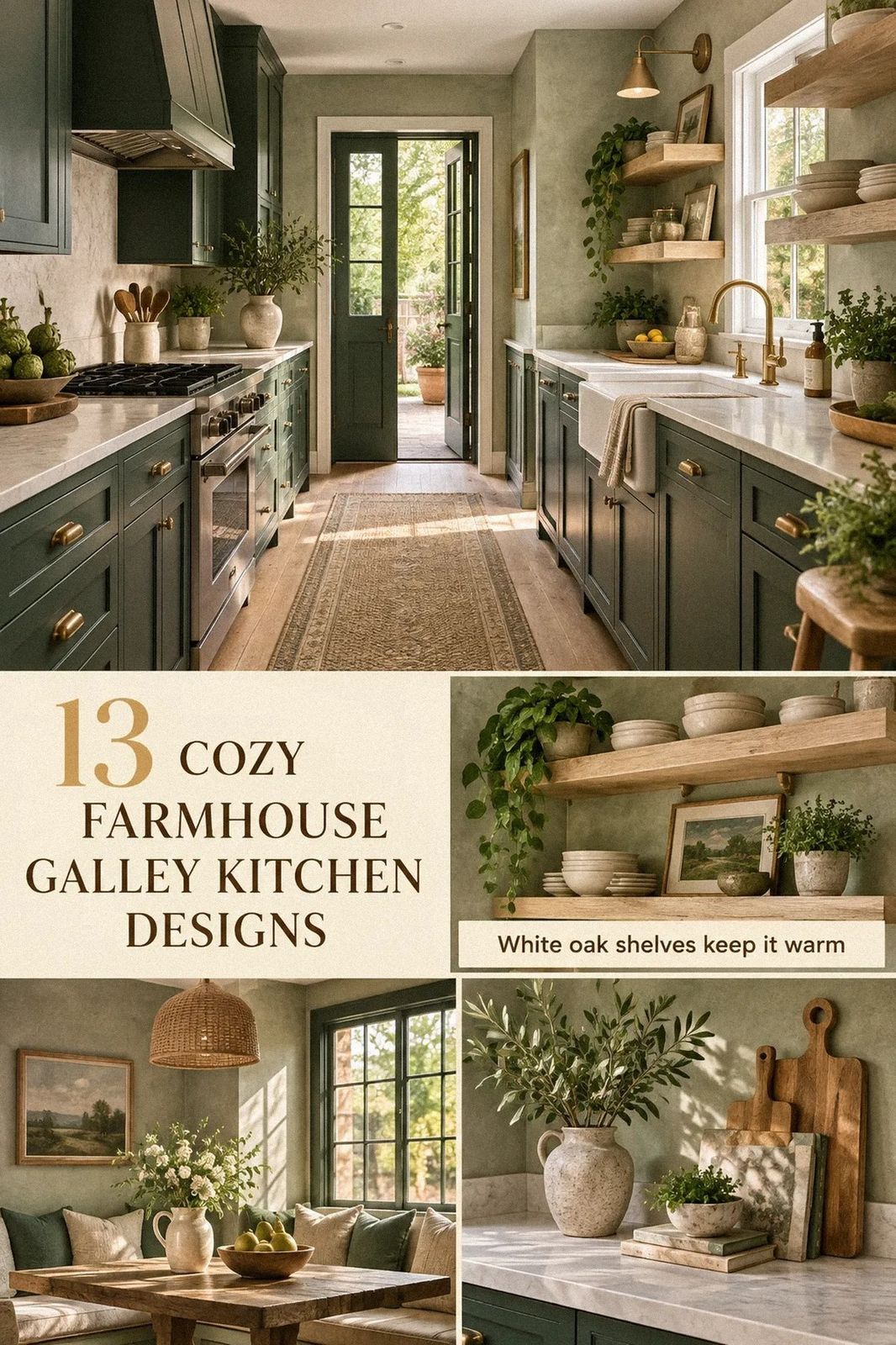
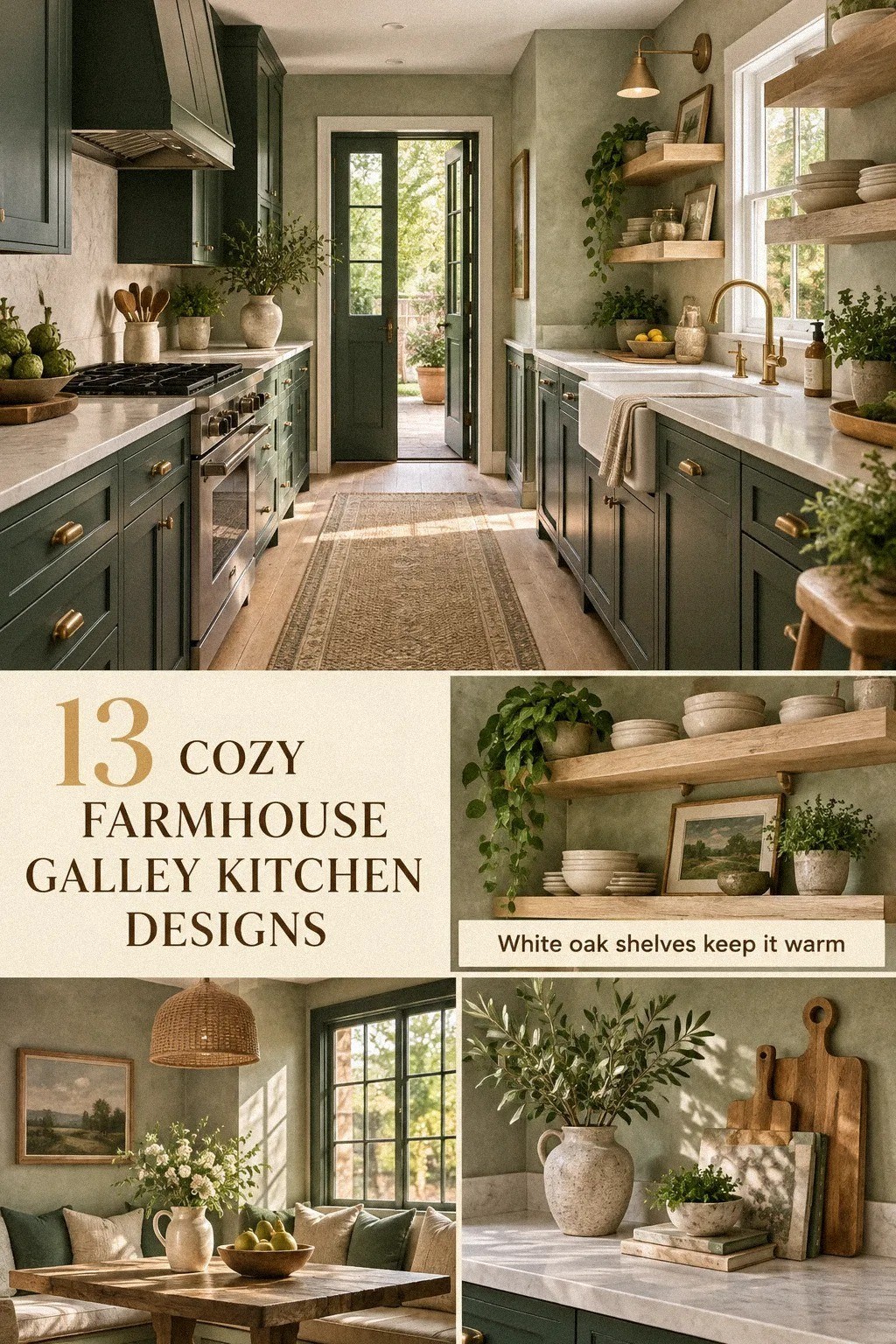
by Farmhouse galley kitchen ideas for cozy, narrow charm usually work best with warm paint, clear walkways, and one useful focal point. I learned that after crowding my first narrow kitchen with too much furniture. Your room doesn't need a full renovation. It needs better rhythm, softer materials, and choices that let you move easily.
Editor's note: Start with the path through the room. Once the walkway works, add warmth through wood, linen, aged metal, and one memorable color. These galley kitchen ideas that make the most of a narrow space can help you compare proportions before you choose finishes.
- Frame the Galley with White Oak
- Paint the Lower Cabinets in Evergreen Fog
- Apply the Two-Wood Rule
- Float Open Shelves Above the Prep Zone
- Swap a Bulky Island for a Breakfast Ledge
- Build the Three-Height Light Stack
- Let the Floor Run Long
- Hang Belgian Linen at the Window
- Mix Shaker Doors with One Beaded Detail
- Ask Which Side Needs More Storage?
- Budget the Refresh Before You Pick Finishes
- Choose Warm White over Stark White
- Style the End Wall with One Strong Note
1Frame the Galley with White Oak
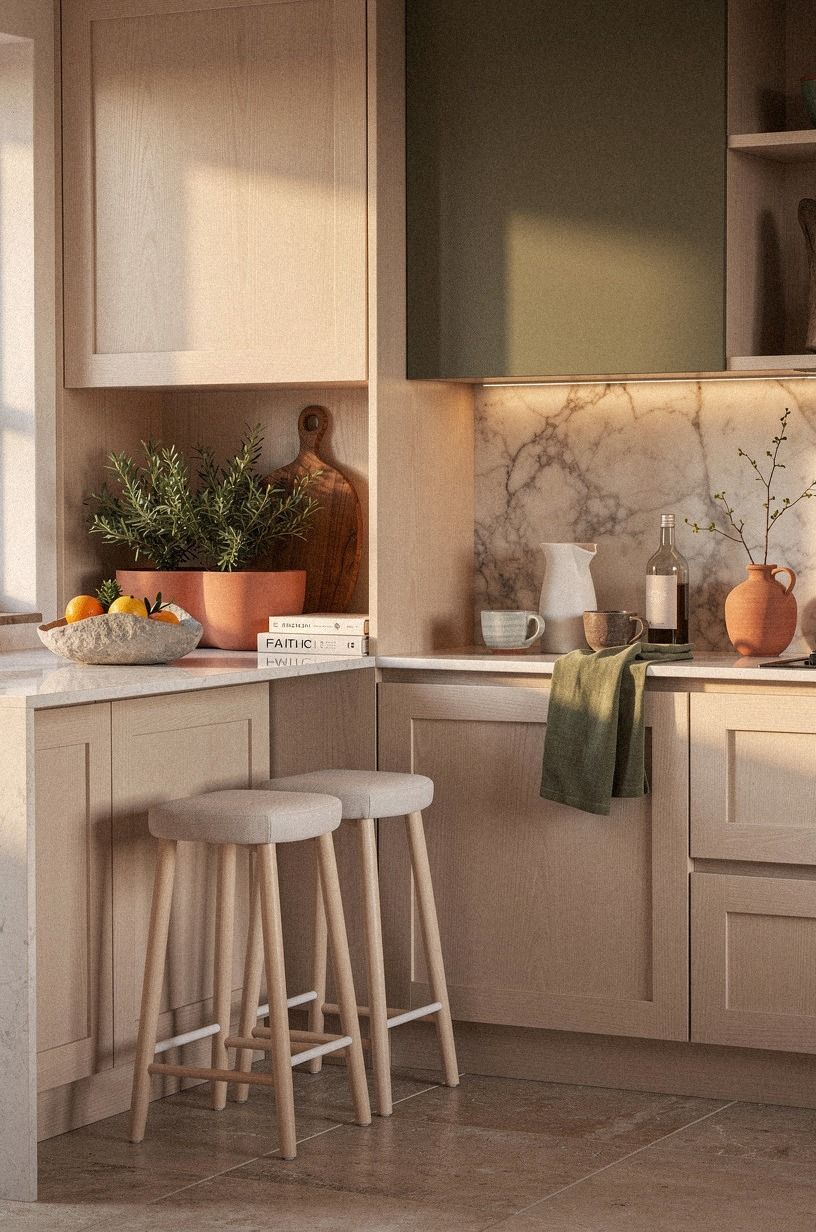
A farmhouse galley kitchen looks warmer when both sides share one visual thread. Backlit translucent onyx at a narrow backsplash, counter edge, or small ledge can connect the cabinets without making your kitchen feel boxed in. Terracotta, stone, and olive accents keep the effect grounded rather than overly polished.
I’d skip orange-stained pine here. It can turn a narrow kitchen visually heavy, especially beside warm bulbs. Translucent onyx brings texture and a gentle glow without shouting, and you won’t need several decorative layers to make the space feel lived-in.
The most successful version uses the stone with restraint. Repeat the same tone at least twice, then stop. A slim backsplash and a small ledge near the prep area may be enough.
If you cover every surface in a dramatic material, the kitchen can feel busy rather than welcoming.
Your counter edge matters, too. A slim onyx trim can soften a square laminate counter without requiring a replacement. If the floor is already dark, keep the lighter stone and olive accents on the upper half of the room.
That balance feels airy, grounded, and quietly inviting.
For more inspiration, pair this approach with how to decorate a narrow galley kitchen so it feels open. The best farmhouse rooms don't rely on rustic accessories. They let natural texture, practical objects, and gentle contrast do the work.
2Paint the Lower Cabinets in Evergreen Fog
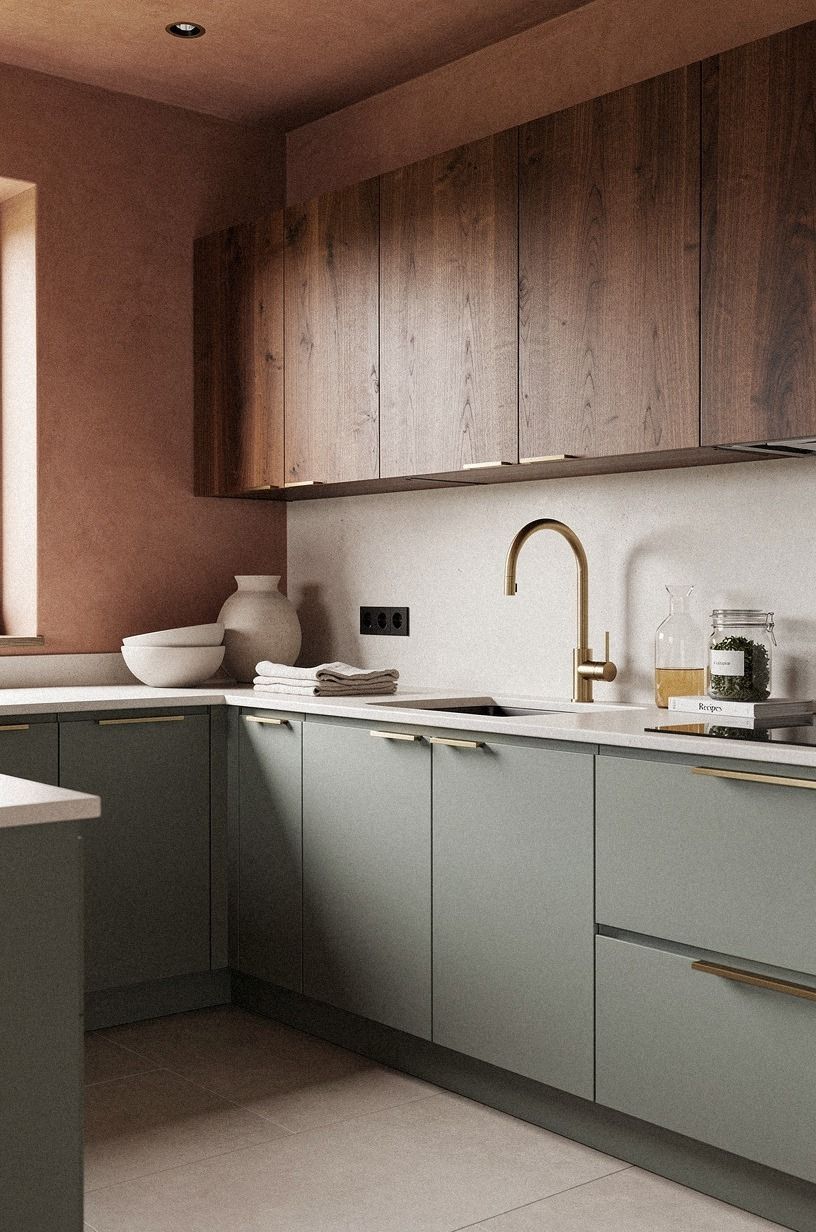
For this version, muted clay paint is a strong choice for lower cabinets because it reads warm, earthy, and softly collected as the light changes. Your upper cabinets can stay linen-toned, which keeps the ceiling visually lifted while the base cabinets give the kitchen some weight.
I made the mistake of using a blue-gray on both cabinet rows once. It looked refined in the morning, but by evening it felt cold. You’ll get more farmhouse charm from a clay base, especially beside aged brass pulls and a pale counter.
Use this approach if you’re planning a small kitchen clay, linen, and wood palette. You don’t need matching wood everywhere. A few book-matched walnut panels or one timber shelf are enough to keep the paint from feeling flat, and you’ll still have room for a patterned runner.
Before painting, test the color on both sides of the room. One wall may make the clay feel deeper, while afternoon sun can pull out its softer notes. You’ll want the sample beside your flooring, counter, and hardware, not floating alone on a white card.
If the cabinets are basic, a careful color change can make them feel surprisingly tailored. Use a durable cabinet enamel, sand glossy surfaces, and remove the doors before starting.
The result won't come from a dramatic shade. It will come from a calm, collected base that makes the room easier to live with.
3Apply the Two-Wood Rule
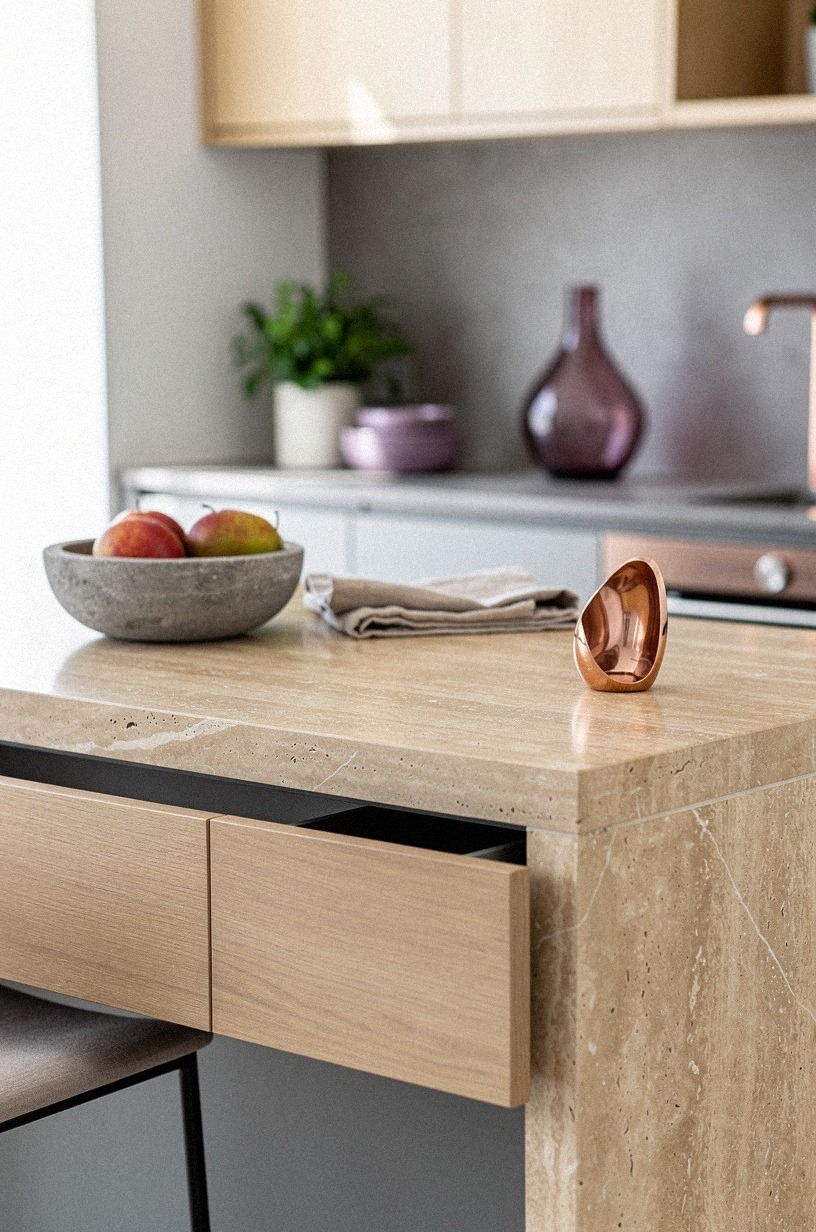
The Two-Wood Rule keeps a narrow kitchen from becoming a furniture showroom.
4Float Open Shelves Above the Prep Zone
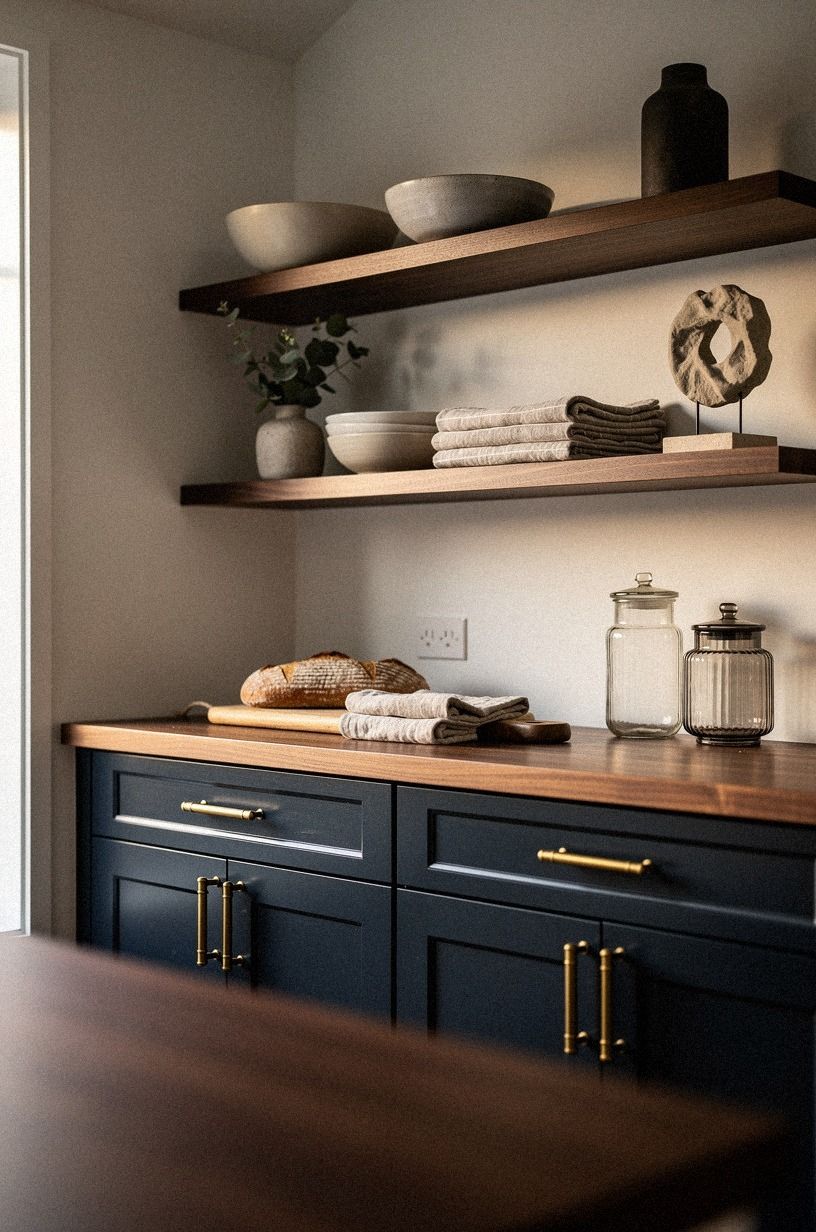
Open shelves can make a narrow galley feel airy, but only if you give them a job. Book-matched walnut shelving above the prep zone works well for daily dishes, a wooden bowl, and two or three pieces of pottery you’ll reach for anyway. You’ll create breathing room without losing useful storage.
And yes, open shelves can become messy fast. I’d skip them beside the stove if you cook with a lot of oil, because the dust will cling to every surface. Put them near the sink instead, where your white stoneware plates and glasses can dry close to their home.
Keep the backsplash gap near the standard 18 inches between the counter and upper cabinets. Your shelves should feel intentional, not squeezed into leftover wall space. A single long shelf often feels calmer than three narrow ledges filled with tiny objects.
The shelf depth matters. Around 10 to 12 inches is usually enough for plates without stealing too much headroom or counter visibility.
Use sturdy unlacquered brass brackets if the shelf will hold everyday dishes, and keep the heaviest pieces closest to the supports. The brass will develop a gentle patina over time.
Don't style every inch. Leave a small stretch empty so the wall can breathe. A ceramic pitcher, a stack of bowls, and one woven basket may be all you need.
For a brighter plan, pair this idea with how to decorate a narrow galley kitchen so it feels open. The result should feel useful first, charming second.
5Swap a Bulky Island for a Breakfast Ledge
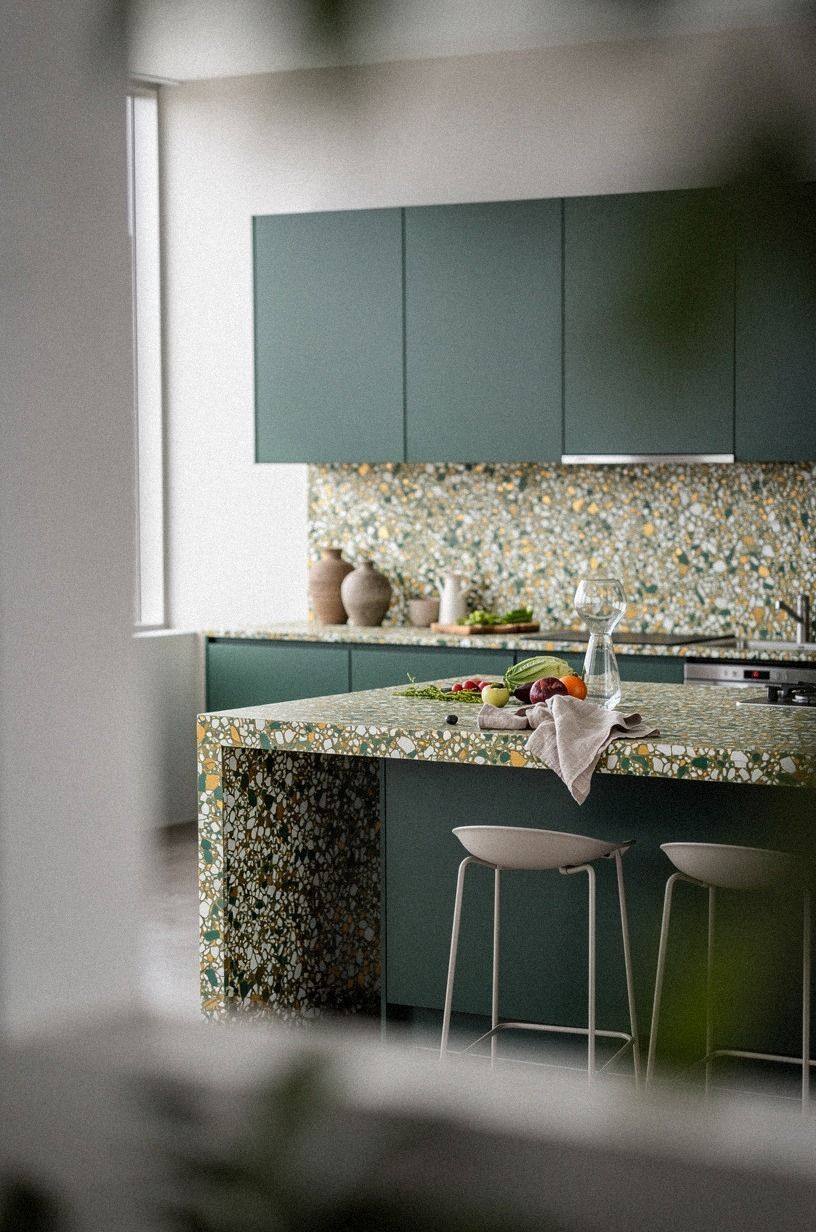
A full island often steals the best part of a galley kitchen: the clear path.
6Build the Three-Height Light Stack
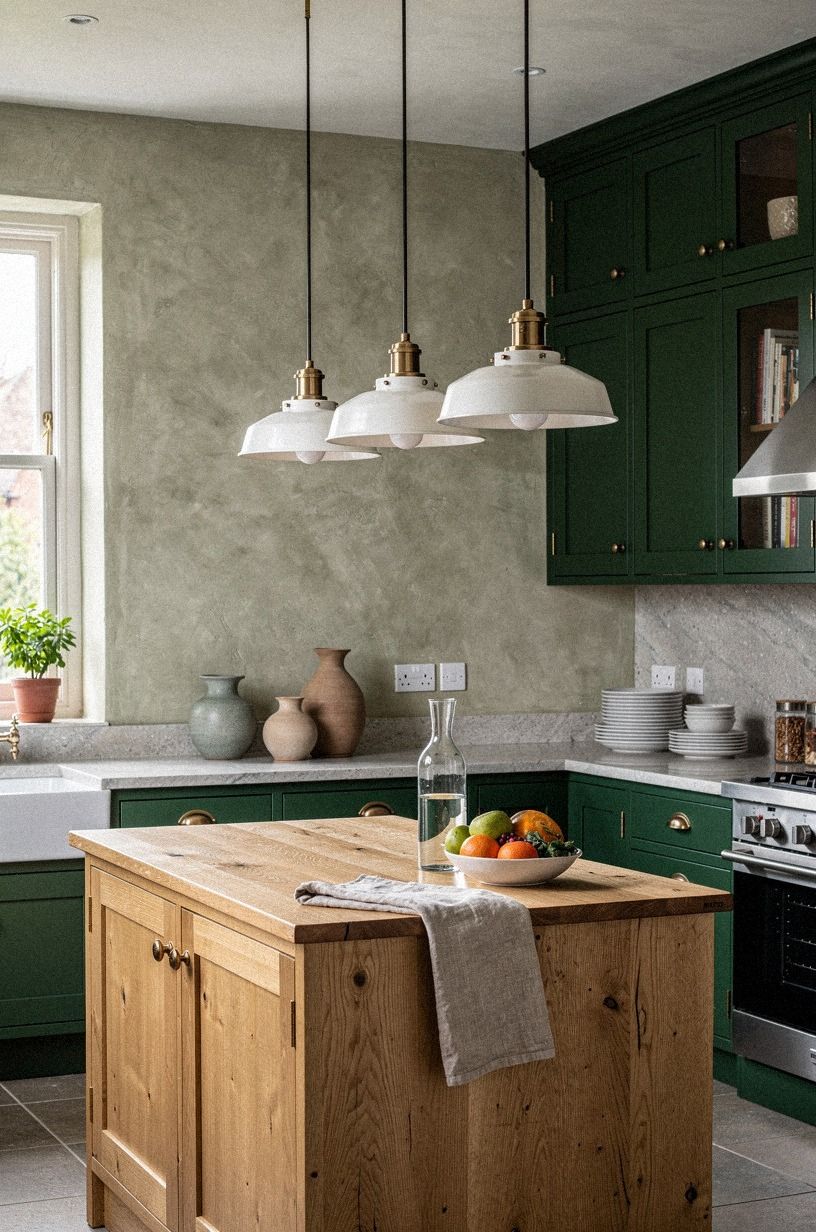
The Three-Height Light Stack uses ceiling light, counter light, and low accent light so your kitchen doesn’t feel like a hallway at night. Your ceiling fixture handles general visibility, while aged bronze sconces soften the wall and a small lamp near the breakfast ledge adds a warm pool of light.
I’d skip one bright overhead fixture. It makes every cabinet edge look sharper, and you’ll lose the intimate farmhouse mood after sunset. Choose warm bulbs, then let the light fall across hand-applied Venetian plaster and a rust-toned runner.
But don't hang sconces where your shoulders will hit them. You’ll want them slightly above eye level and away from the main work zone. A simple plug-in option can work in a rental, especially if you pair it with cottage galley kitchen ideas for narrow charming layouts.
Under-cabinet lighting is the practical layer people often forget. A continuous warm LED strip can illuminate the counter without making the ceiling fixture brighter. Choose a color temperature near 2700K to keep the paint and wood from turning harsh or icy.
The low layer can be very modest. A tiny lamp on a safe, dry corner or a dimmable fixture above the breakfast ledge may be enough. When the lights overlap gently, the kitchen becomes atmospheric, comfortable, and far more welcoming after dinner!
7Let the Floor Run Long
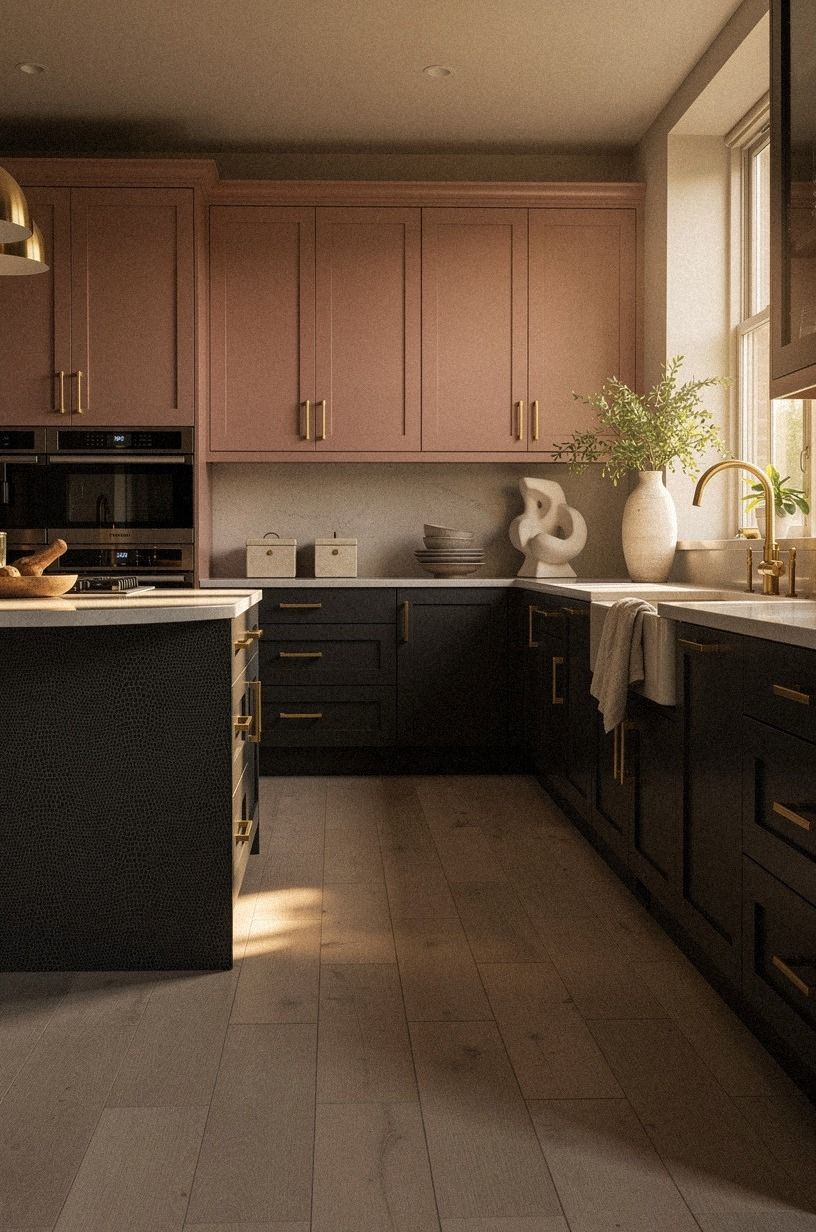
Long boards draw your eye down the length of the kitchen, which is why a long-running floor can feel so effective in a narrow room. Choose a matte charcoal finish with visible grain rather than a glossy surface that reflects every cabinet and overhead light.
Your floor doesn't need to look newly installed. A charcoal-toned finish with a low sheen brings practical character without creating fake damage. I’d choose that over distressed laminate with printed knots, because the pattern repeats too clearly.
If you’re working with existing flooring, your runner can do the directional work. You’ll want a washable flatweave in dusty rose or charcoal, with a restrained brass detail. And if the boards already run across the room, use a long runner to restore the visual pull.
A runner should leave enough floor visible at each side to avoid looking like a wall-to-wall carpet. Choose a low-pile weave that won't catch on cabinet doors, and use a nonslip pad if the kitchen is a busy route.
The floor can also anchor a lighter palette. With warm-white cabinetry and dusty-rose accents, a charcoal finish gives the room enough depth. A small shagreen accent on a stool or drawer front adds tactile interest without making the narrow space feel visually compressed.
8Hang Belgian Linen at the Window
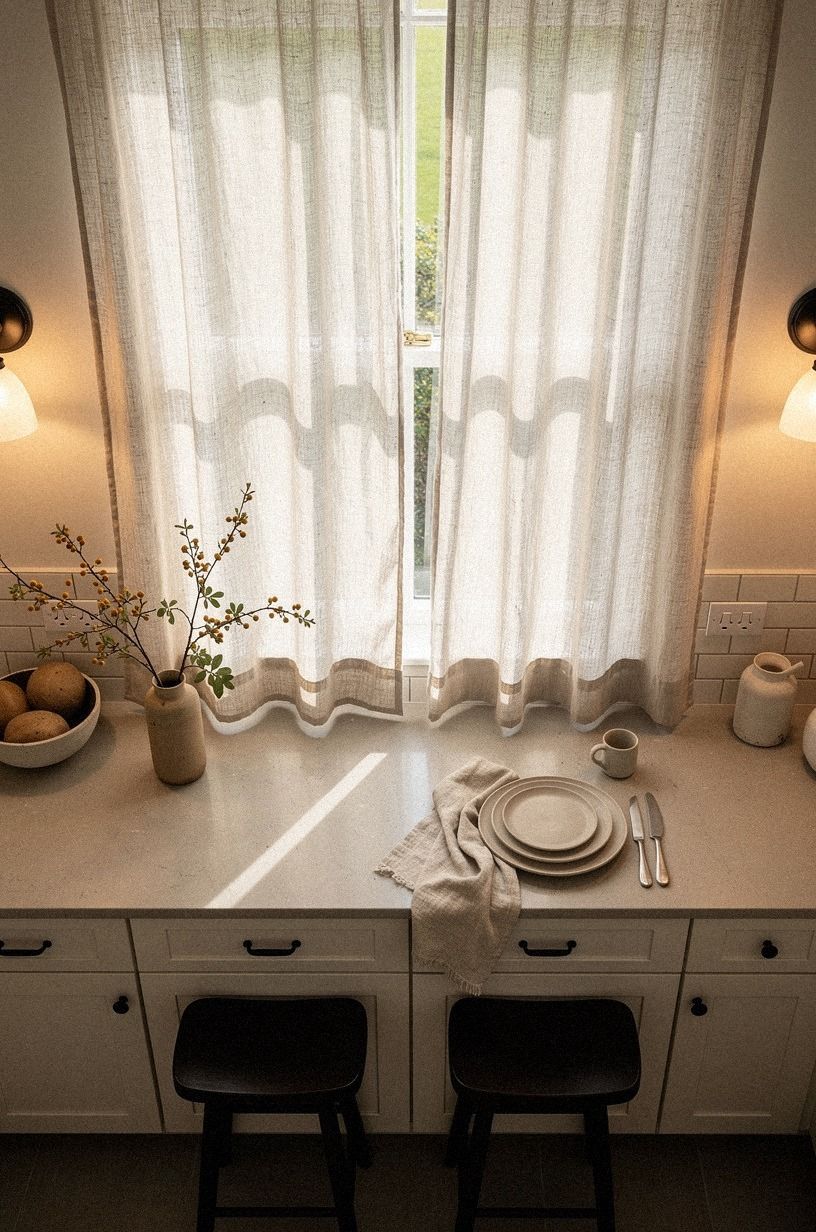
A narrow galley kitchen can feel hard around the edges, especially when the cabinets, counter, and appliances all have straight lines. Belgian flax linen at the window adds a soft, slightly rumpled layer that lets your room breathe without blocking useful light.
You’ll want a relaxed Roman shade or a simple café curtain, not a heavy floor-length panel that crowds the walkway. I’d skip bright white fabric if your cabinets are warm white. The difference will look accidental, while camel-toned linen can connect the walls, counter, and floor.
And don't choose a busy pattern just because the room feels plain. One small botanical print may be enough. Your washed linen café curtain should support the warm white and black accents, not compete with them.
A little softness goes a long way here!
Consider the window's working conditions before choosing fabric. A washable cotton-linen blend may be more practical above a sink than delicate pure linen. Hang the rod slightly wider than the frame so the curtain can clear the glass when you want more daylight.
If the window is narrow, a café curtain can make it feel intentionally framed. If it's wide, a relaxed Roman shade may keep the walls cleaner. The right treatment adds a gentle, nostalgic note without turning the kitchen into a themed set.
9Mix Shaker Doors with One Beaded Detail
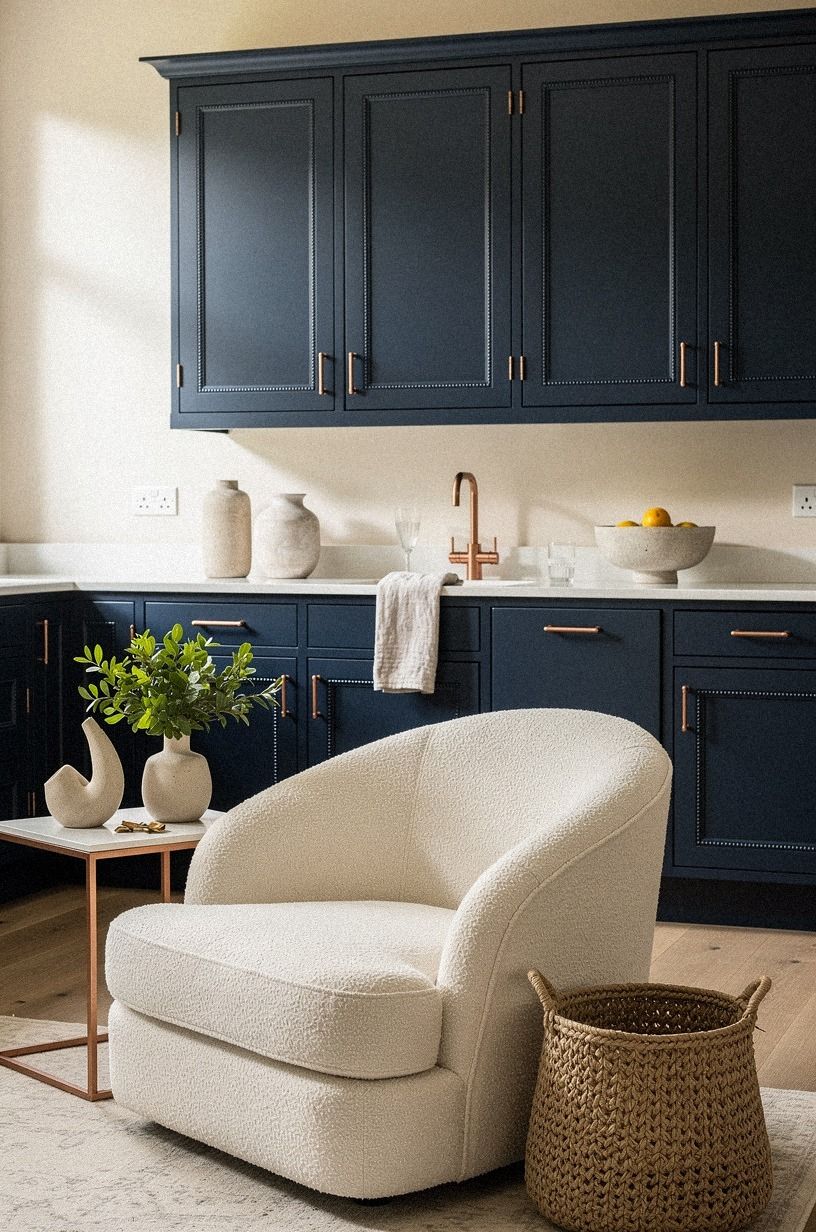
Shaker doors give you the clean structure a narrow kitchen needs, while one beaded detail keeps the room from feeling too new.
10Ask Which Side Needs More Storage?
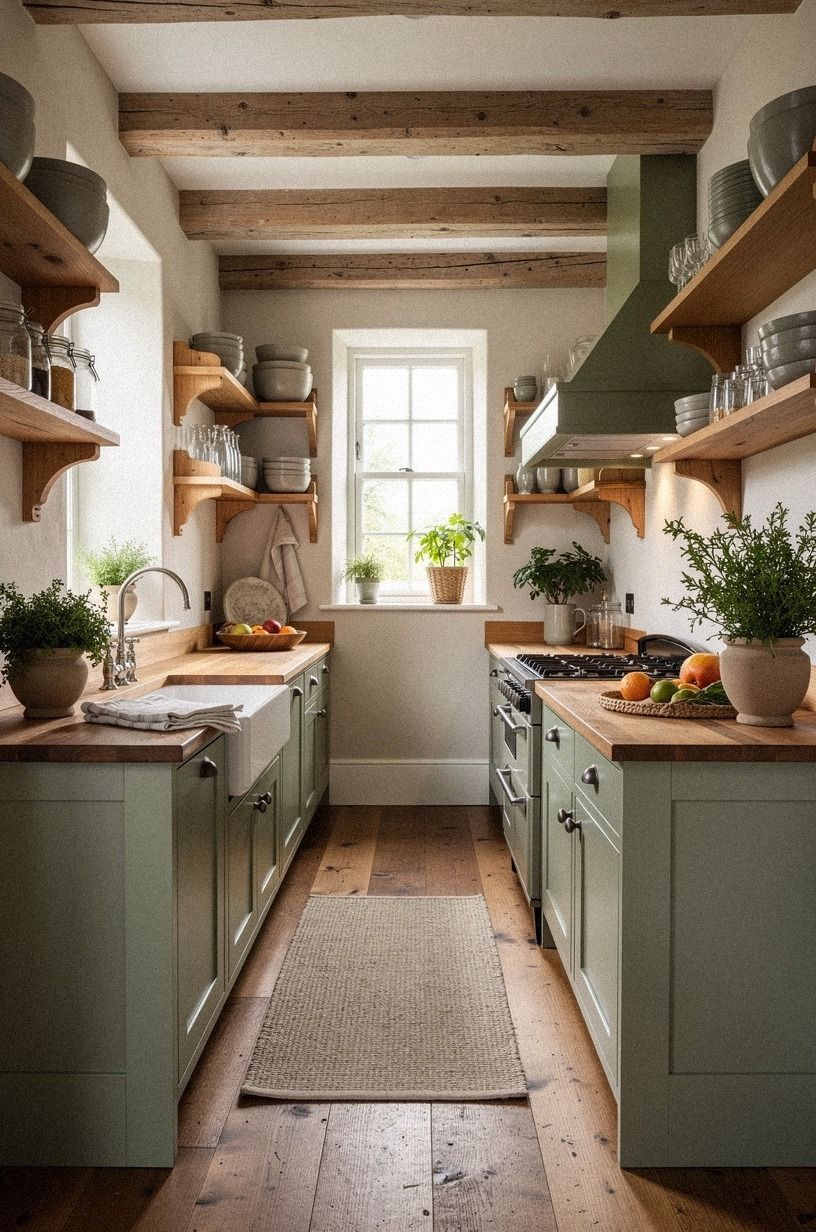
The best side for tall storage is the one that causes the least interruption to your work pattern. In many galley kitchens, that means placing full-height pantry cabinets at the end rather than in the middle of the prep run. Your movement stays clearer, and the long sightline ends with something useful.
What if your refrigerator already breaks the room in half? Then you’ll want the opposite wall to stay visually quiet.
I’d use shallow shelving or a rail there instead of adding another tall cabinet. A narrow kitchen can hold plenty, but it can't hide poor placement.
Upper cabinets are commonly 30 to 42 inches tall. You’ll want to choose the height that gives you storage without closing in your head space. For more planning help, look at narrow galley kitchen storage ideas while measuring your doors and appliance swings.
Store the things you use most between waist and shoulder height. Baking supplies can live in a lower drawer, while daily plates belong near the dishwasher. A shallow spice drawer beside the cooktop may save more frustration than another deep cabinet at the far end.
Don't forget the corners. Pullout shelves, narrow tray storage, and a rail for utensils can turn awkward gaps into useful zones.
Before buying organizers, measure the cabinet opening, interior depth, and hinge clearance. A beautiful solution that blocks a door isn't a solution.
If the kitchen feels visually dense, use one open niche for a few everyday pieces and keep the rest behind doors. This gives you access and personality without asking every object to perform as decoration.
11Budget the Refresh Before You Pick Finishes
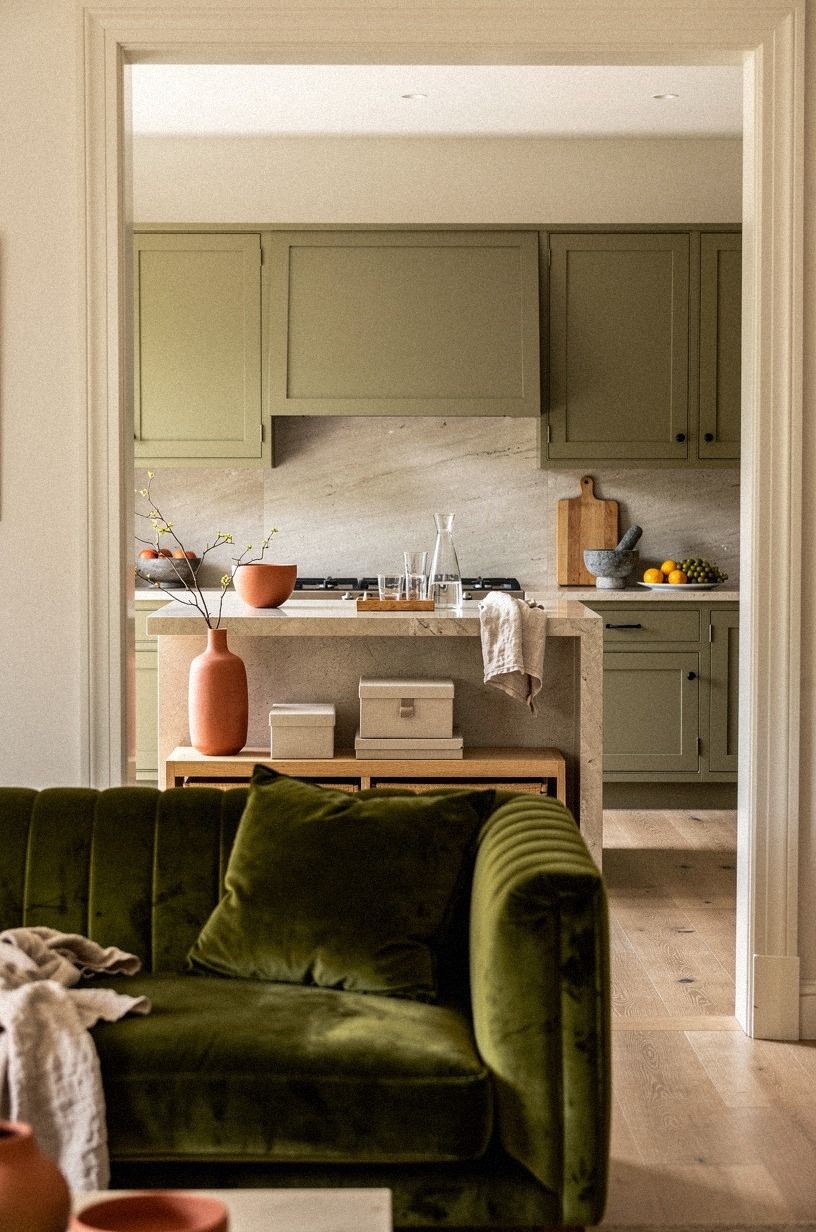
A farmhouse refresh can stay cosmetic, but your budget should decide the materials before your mood board does. Peel-and-stick backsplash can change the wall quickly, while new paint and hardware may give you the strongest visual return.
Here are typical US ranges for three levels of work:
You’ll notice that a cosmetic update leaves money for the parts you touch every day. I’d choose solid cabinet paint and better lighting before spending on a decorative counter. If you’re planning a larger change, read this cottage farmhouse kitchen ideas guide before committing.
Make a short priority list before you shop. Put safety and function first, then the finishes you’ll see most often. A new faucet, durable paint, and comfortable lighting may transform the room more than a costly decorative upgrade.
For a budget refresh, preserve anything that still works well. Keep the cabinet boxes, refinish the doors, replace dated knobs, and update only the most visible surfaces. You’ll reduce waste while directing money toward the elements that change the daily experience.
Set aside a contingency amount for repairs. Old kitchens can reveal loose subfloors, damaged plumbing, or uneven walls once work begins. A modest reserve keeps one unpleasant surprise from forcing you to abandon the details that make the room feel special.
12Choose Warm White over Stark White
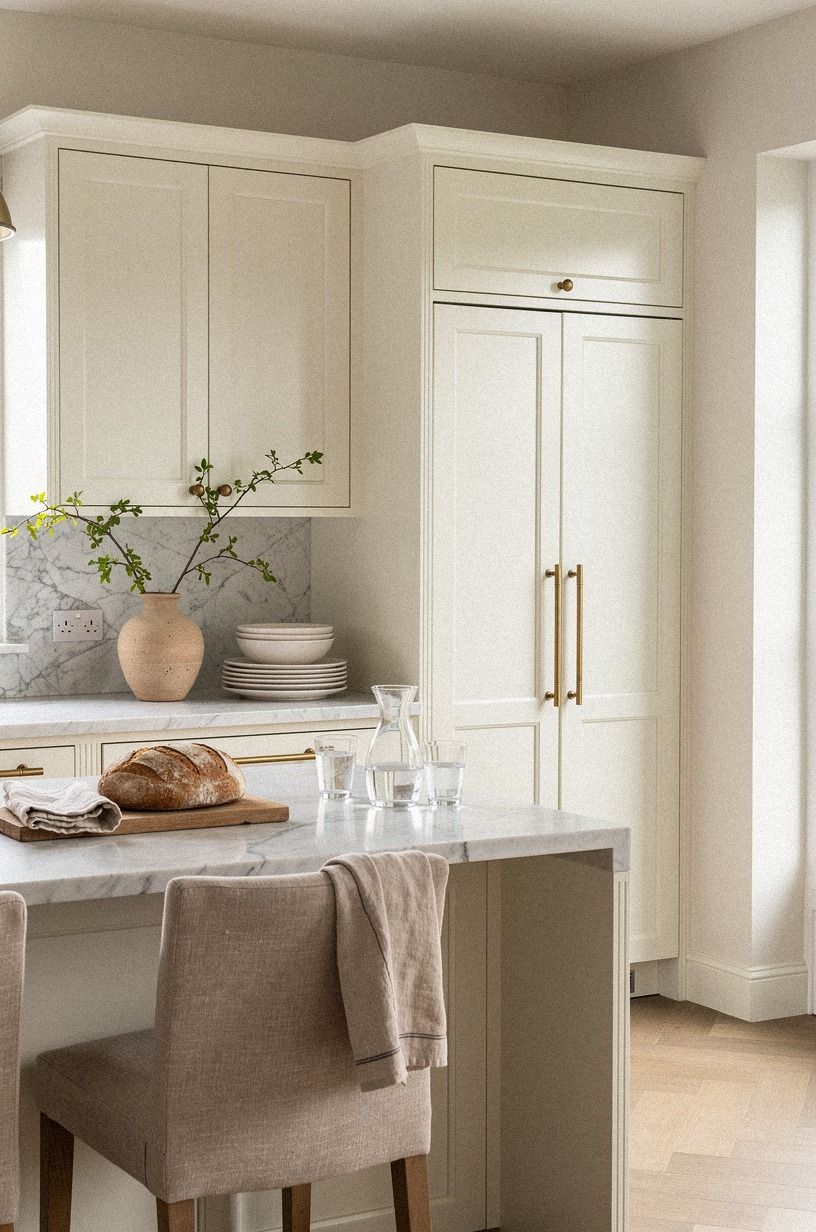
Warm white keeps a farmhouse galley from looking clinical.
13Style the End Wall with One Strong Note
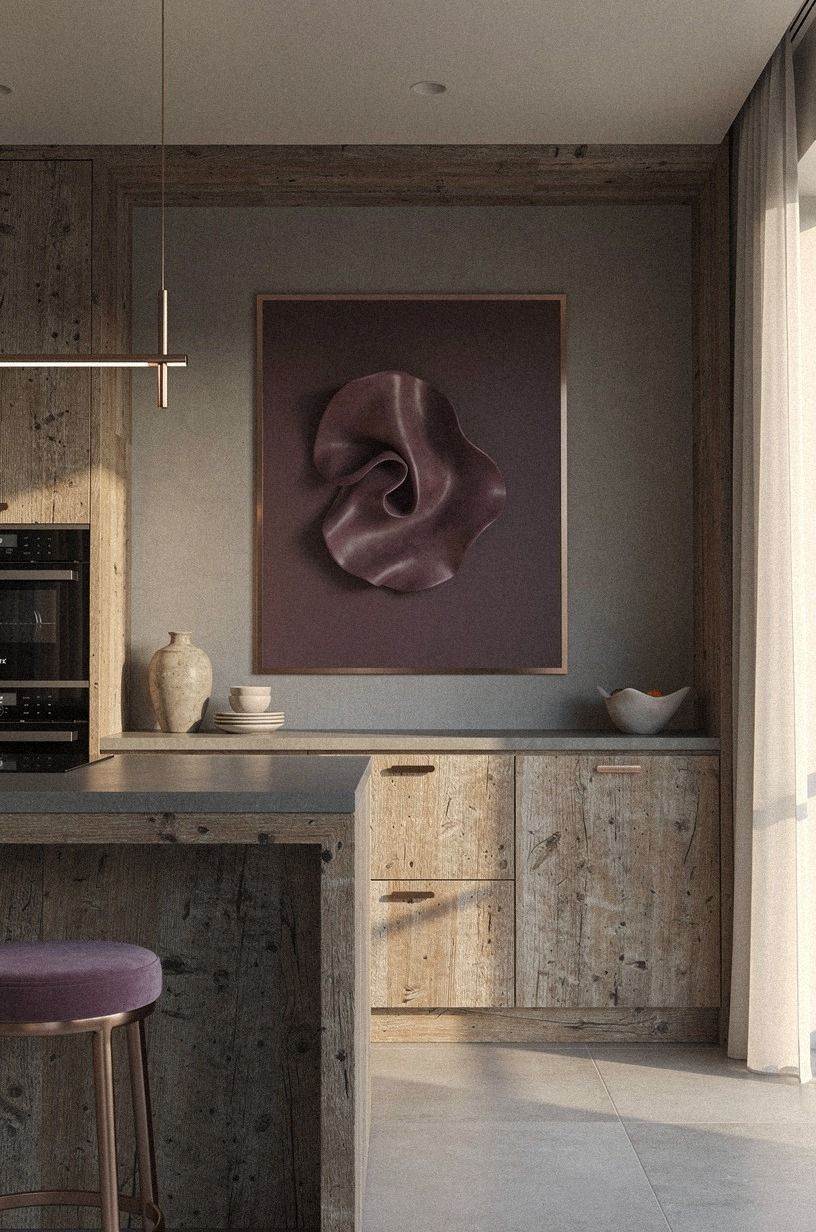
The end wall is where your farmhouse galley kitchen can have a little personality. A framed landscape, a narrow plate rack, or reclaimed weathered teak on a small ledge gives the eye somewhere to land after it travels through the room.
I’d choose one strong note instead of a collage of tiny objects. Your kitchen already has handles, seams, appliances, and shelves competing for attention. A large vintage-style print with a wood frame can feel more collected than ten small signs.
If you’re adding a plate rack, keep the display practical: cream plates, a cutting board, and one earthenware jug. You’ll get the lived-in feeling without turning the wall into a shop display. For an adjacent entry, these farmhouse front door ideas for cozy country charm carry the same warm material palette outdoors.
A tall landscape print can emphasize the room's height, while a long horizontal piece can reinforce the galley’s direction. Choose based on the wall rather than the object you happen to own. Scale matters more than price.
You can also make the end wall useful. A slim shelf may hold cookbooks, a rail may display one towel, or a shallow cabinet may hide small appliances. The strongest choice combines beauty with a job, so it doesn't become another surface you have to clear.
Keep the palette connected to the rest of the room. Plum, gray, and rose-gold accents can give the wall a collected feel, while reclaimed weathered teak adds warmth and texture. The colors should support the kitchen rather than compete with its practical details.
The Farmhouse Galley Kitchen Rule I’d Keep
I’ve come to believe that a narrow farmhouse kitchen shouldn't try to look larger at every turn. That goal can make people remove all the warmth, then wonder why the room feels sterile.
Your kitchen needs a little visual weight. The right kind makes the space feel settled, not cramped.
For me, the strongest rooms use contrast in controlled doses. Warm white cabinets need a wood note.
Pale walls need one darker anchor. Smooth counters benefit from linen, cane, or a rough ceramic surface nearby. I wouldn't use all three wood tones, five metals, and patterned tile together, because your eye won't know where to rest.
The practical side matters just as much. You need enough room to open a cabinet without blocking the opposite run.
You need task light where you chop, not only a pretty fixture in the center. You need storage where you unload groceries, or you’ll spend every evening moving bags around the room.
I learned that the hard way after choosing open shelving for a wall that should have held everyday storage. It looked appealing, but I was wiping dust from bowls I used daily. Now I’d put closed cabinets in the busiest zone and save open shelves for pieces that can stay clean.
That’s why my favorite farmhouse galley layout is not the most decorated one. It has a warm cabinet color, one visible wood, a clear path, and lighting that changes after dinner.
You’ll notice the room feels inviting because it works first. The charm comes from that honesty.
If you're still comparing options, return to narrow galley kitchen decorating guidance and ask three questions: Where do groceries land? Where do you prep?
What does your eye see at the end of the room? Those answers will usually reveal the right improvement.
What People Always Want to Know
What is the best farmhouse galley kitchen idea for a small kitchen?
The best choice is a light cabinet color with one wood accent, such as IKEA KALLAX birch-effect storage or a white oak shelf. You’ll gain visual openness without removing useful storage. Keep the walkway clear and let one end wall carry the decorative detail.
Where can I buy farmhouse galley kitchen pieces on a budget?
IKEA, Wayfair, and Target are practical starting points, while Facebook Marketplace and thrift shops can provide older wood pieces. You’ll find lower-cost character in used stools, shelves, and pottery.
For more layout ideas, browse narrow galley kitchen decorating guidance. I’d spend first on pieces that solve a real problem, such as a slim stool or a durable runner.
How much does a farmhouse galley kitchen makeover cost?
A small cosmetic makeover can cost about $100 to $300 if you reuse your lighting and furniture, while typical US cosmetic work ranges from $300 to $1,500. Paint, hardware, and styling are the most flexible expenses. You can change the mood before replacing cabinets.
If you need a larger layout change, review how to make over a galley kitchen on a budget before ordering materials.
Can I create a farmhouse galley kitchen on a budget?
Yes, and you can start with free changes: clear one counter, regroup your open storage, and move the warmest lamp near the eating area. Then add budget-friendly texture with paint, a thrifted wood board, or a washable runner. You don't need a full remodel.
A new color and better arrangement can feel astonishingly fresh!
Is a farmhouse galley kitchen worth it in a small space?
Yes, because a narrow room gives you a clear working path and fewer surfaces to manage. You’ll get the strongest result by protecting at least 36 inches of counter height and keeping the central passage open.
Read these narrow-space galley layout ideas before adding furniture. The key is choosing storage that follows your routine instead of narrowing the route.
Is a farmhouse galley kitchen a good idea for a rental?
Yes. Use removable hooks, a tension rod, peel-and-stick backsplash, and freestanding cane storage instead of permanent changes.
You’ll create warmth without damaging the walls. A washable linen curtain can soften the room, and it can move with you later.
Start with reversible changes, then live with them before buying anything larger.
Where I’d Start First
If I had to pick one, I’d start with the cabinet color. Benjamin Moore White Dove gives a narrow kitchen enough light for wood, brass, and linen to read clearly. Pin this idea for later and build the rest around the paint instead of fighting it.
Then protect the walkway. Add one useful wood note, improve the lighting, and let the end wall carry the personality. That sequence creates a warm, practical room with enough visual interest to feel memorable, but not so much that the kitchen becomes tiring to use.