
 by
by A firm or medium-firm mattress can ease back pain, but the research points to one key nuance: medium-firm with active lumbar zoning beats extra-firm for most sleepers. Our top pick for anyone who wants a firm feel with real spinal support is the Saatva Classic in Luxury Firm (6/10) or Firm (8/10), which pairs a reinforced lumbar zone with a dual-coil build and a 365-night trial. For a foam alternative, the Amerisleep AS3 delivers HIVE 5-zone lumbar support on a 100-night trial.
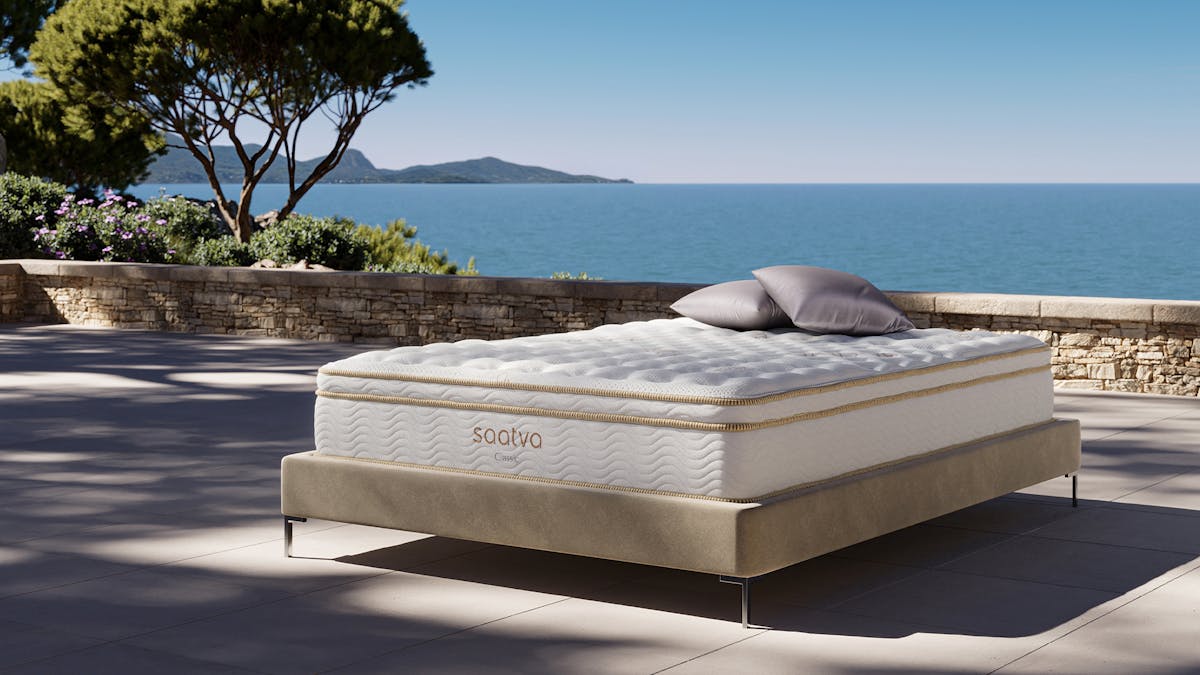
Saatva Classic
9.1/10
- Zoned lumbar foam pad reinforces the L4-L5 region directly
- Dual-coil system (884 pocketed + 416 tempered steel) gives a firm, responsive feel without bottoming out
- Free white-glove delivery, setup, and old-mattress removal
- 365-night trial, lifetime warranty, available in Plush Soft, Luxury Firm, or Firm
- Higher motion transfer than all-foam options, not ideal for very light sleepers sharing the bed
- $99 return fee applies if you decide to return during the trial
The Saatva Classic in Luxury Firm or Firm is the most consistent pick for back pain sufferers who want the feel of a real innerspring with active lumbar engineering, not just a mattress that happens to be hard.
Firm vs. medium-firm: what the research actually says
The idea that firmer always means better for your back has been overturned by a decade of clinical research. A landmark 2003 trial published in The Lancet (Kovacs et al.) randomized 313 adults with chronic non-specific low-back pain to either a firm or medium-firm mattress for 90 days. Medium-firm won on every measured outcome: pain during lying down, pain on rising, and disability scores.
Why? Two mechanical reasons:
- An extra-firm mattress forces the lumbar into extension. When the mattress does not give at the pelvis and shoulders, the lumbar arch is held in a compressed position all night, loading the posterior facet joints and the L4-L5 disc.
- A medium-firm with lumbar zoning does the opposite. It lets the pelvis sink just enough to allow the natural lordotic curve to settle, while the firmer lumbar zone prevents the lower back from sagging into flexion.
The practical conclusion: if you want a firm mattress for your back, choose one with a structured lumbar zone and a firmness of 6 to 7 out of 10, not 8 to 9. If you genuinely need 8-plus (heavier body types, stomach sleepers), the coil hybrid construction of the Saatva Classic Firm gives you that rigidity with the lumbar pad still in place.
Firm mattresses for back pain: specs at a glance
| Mattress | Type | Firmness | Lumbar support | Trial | Queen price |
|---|---|---|---|---|---|
| Saatva Classic | Innerspring hybrid | Lux Firm 6/10 or Firm 8/10 | Excellent, zoned lumbar pad | 365 nights | ~$1,395 |
| Amerisleep AS3 | All-foam (Bio-Pur) | Medium 5/10 | Excellent, HIVE 5-zone | 100 nights | From $1,049 |
| PlushBeds Botanical Bliss | Natural latex | Configurable 5-7/10 | Very good, responsive latex support | 100 nights | ~$1,800 |
| WinkBed | Hybrid Euro-top | Luxury Firm 6/10 | Very good, zoned coils | 120 nights | ~$1,799 |
Who actually benefits from a firmer mattress?
Firmness is not one-size-fits-all. A firm mattress tends to work better for:
- Stomach sleepers. Lying face-down puts the lumbar into hyperextension. A firm surface reduces how far the hips sink, helping to keep the spine closer to neutral.
- Back sleepers over 200 lb. Heavier body weight increases downforce on the mattress. A softer mattress lets the hips sink too deeply, creating a hammock shape that strains the lower back. A firmer base keeps the hips and shoulders in better horizontal alignment.
- People who run hot. Firm innerspring mattresses like the Saatva Classic have excellent airflow through the open coil architecture and typically sleep cooler than deep-foam soft options.
A firm mattress tends to work less well for:
- Side sleepers under 150 lb. A firm surface concentrates pressure on the shoulder and hip, which can create pain at those contact points even when lumbar support is good.
- People with hip bursitis or sciatica. Direct pressure on the greater trochanter from a hard surface can aggravate lateral hip pain regardless of the lumbar benefit.
Amerisleep AS3
8.9/10
- HIVE 5-zone support layer firms directly under the lumbar (zone 3 of 5) while staying softer at shoulders and hips
- Plant-based Bio-Pur foam (partially bio-sourced, CertiPUR-US certified) sleeps cooler than conventional memory foam
- Outstanding motion isolation for couples sharing a bed
- 20-year warranty, twice the industry standard
- All-foam edge support is softer than a coil hybrid; the AS3 Hybrid version addresses this
- Mandatory 30-night break-in before returns are permitted
The AS3 is not technically extra-firm, but its zoned lumbar support often delivers better spinal alignment outcomes than an undifferentiated extra-firm mattress. For back sleepers and combo sleepers who want proven lumbar zoning without the bounce of an innerspring, it is the strongest foam option in this category.
PlushBeds Botanical Bliss
8.6/10
- GOLS-certified Dunlop latex layers offer responsive, buoyant support with natural give at the lumbar
- Configurable firmness from medium to medium-firm by rearranging the layers
- 25-year warranty, among the longest in the industry
- No off-gassing, naturally breathable and cool
- Heavier and harder to move than a foam mattress in a box
- Latex feel is buoyant rather than contouring, which some sleepers find less cradling
For sleepers who want a firmer, natural-materials option without innerspring motion transfer, the Botanical Bliss layers up certified Dunlop latex for responsive back support that also qualifies as organic.
How to choose between firm and medium-firm for back pain
Use this framework:
- Back or stomach sleeper, over 180 lb: Saatva Classic Luxury Firm (6/10) or Firm (8/10). The coil construction supports weight well and the lumbar pad keeps the back from over-extending.
- Back sleeper, average weight (130-180 lb): Saatva Classic Luxury Firm or Amerisleep AS3. Both produce good spinal alignment at this weight.
- Combination sleeper (back and side): Amerisleep AS3. The HIVE zoning adjusts by body zone so the shoulders sink when you roll to your side without sacrificing lumbar support on your back.
- Side sleeper with low back pain: Medium-firm (5-6/10) is the priority. The AS3 or Helix Midnight both fit. An extra-firm mattress will create shoulder and hip pressure points that compound the problem.
- Natural materials preference: PlushBeds Botanical Bliss. Configurable latex firmness with a 25-year warranty and certified organic construction.
How long before a firmer mattress relieves back pain?
Most people see meaningful improvement within 2 to 4 weeks, with full body adaptation at 8 to 12 weeks. This is why trial length matters: 100 nights (Amerisleep, PlushBeds) is enough to know; 365 nights (Saatva) gives you a full year.
If you are still in pain after 6 weeks on a new mattress, the issue may be positional or may warrant evaluation by a physiotherapist. A mattress does not replace treatment for structural causes like disc herniation or spinal stenosis.
A firm mattress can help your back, but medium-firm with lumbar zoning consistently outperforms extra-firm in clinical trials. The Saatva Classic Luxury Firm is the top pick: zoned lumbar coil, dual-coil hybrid, 365-night trial. The Amerisleep AS3 is the best foam alternative with HIVE 5-zone support on a 100-night trial.
Frequently asked questions
Is a firm mattress better for lower back pain?
A medium-firm mattress (6-7/10) generally beats extra-firm for lower back pain. Extra-firm can force the lumbar into extension, compressing facet joints and lumbar discs. Medium-firm lets the pelvis settle while a zoned lumbar layer keeps the lower back from sagging. If you need a firm feel for weight or sleep position reasons, choose a firm mattress with an active lumbar zone, like the Saatva Classic.
How firm should a mattress be for back pain?
Most clinical research points to 5.5 to 7 out of 10 for non-specific lower back pain. Going above 7-8/10 is warranted mainly for stomach sleepers or heavier sleepers where deep foam sinkage creates a hammock effect.
Memory foam or firm innerspring for back pain?
Construction and zoning matter more than material. A plant-based foam with lumbar zoning (Amerisleep AS3) and a coil hybrid with a lumbar pad (Saatva Classic) both produce good spinal alignment. Pick based on feel preference and use the trial to confirm.
Can a too-firm mattress cause back pain?
Yes. An overly firm mattress prevents the pelvis from settling into the natural lordotic position, keeping the lumbar spine in continuous extension overnight. Signs: pain concentrated in the lower back, stiffness that eases after 20-30 minutes of movement, and pressure soreness at bony contact points.
Saatva Classic
9.1/10
Dual-coil innerspring hybrid with a reinforced lumbar pad, 3 firmness options (Plush Soft, Luxury Firm, Firm), free white-glove delivery, 365-night trial and a lifetime warranty. The most complete firm mattress for back support in our 2026 testing.
This guide is part of our Mattress Buying Guide hub.