
 by
by The most popular kitchen cabinet colors right now lean warmer, softer, and easier to live with than the cold gray runs from a few years ago. I know the trap: you save one creamy kitchen, one moody island, one sage pantry, and suddenly your own room feels impossible to pin down. Start with the cabinet color order, not the paint chip wall. That's what keeps the room from feeling expensive in pieces and wrong as a whole.
- Start with creamy white shaker cabinets
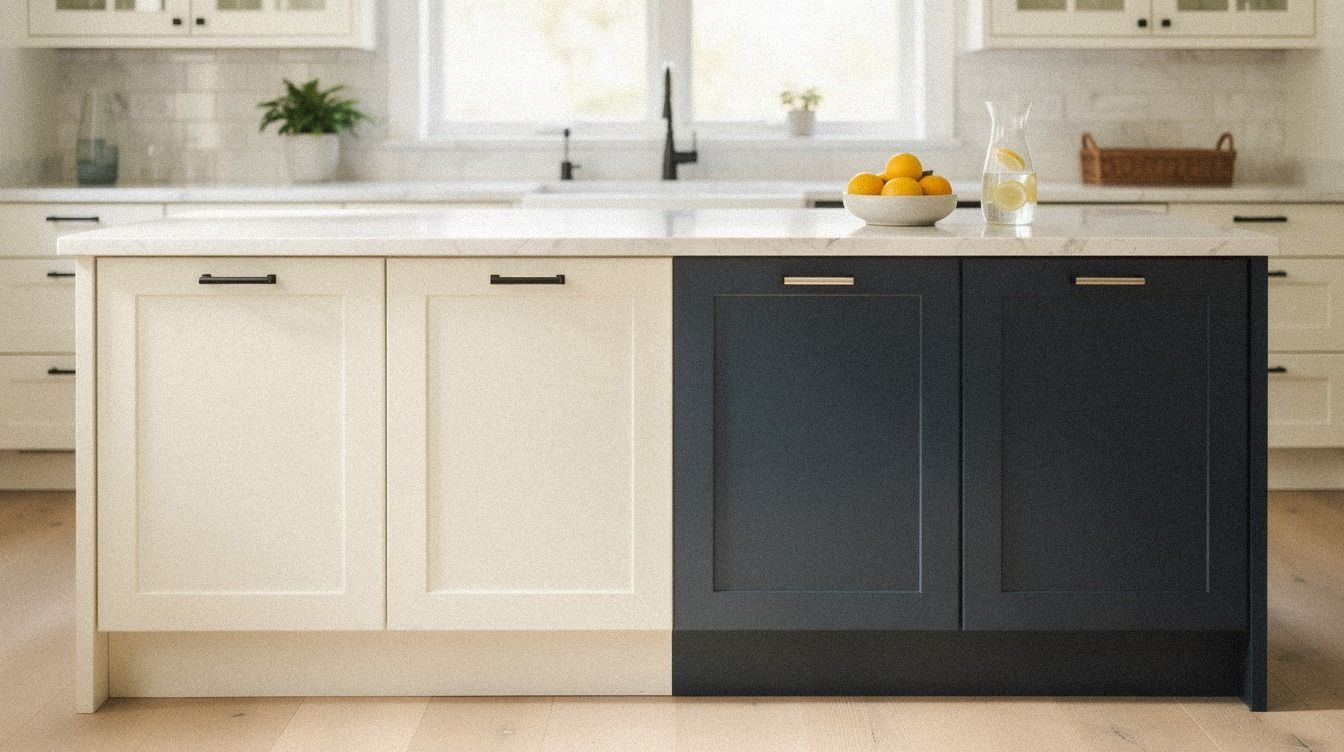
- Anchor the island in stormy blue
- Layer greige uppers above warm oak bases
What should you check first? The Three-Surface Check
Before you buy one sample pot, look at the three surfaces that boss the room: cabinet fronts, counter, and backsplash. If two of those already run cool, you need the cabinet color to warm the kitchen back up.
If the counter is busy and the tile is glossy, the cabinet color should quiet things down instead of competing. I learned that the hard way in a galley kitchen where I pushed blue-gray doors against a cold quartz top.
The room looked crisp at 9 a.m. and flat by dinner.
Start with your fixed pieces and your clearances. Standard counter height is 36 in, the backsplash gap is 18 in, and upper cabinets usually land between 30 and 42 in tall. Those numbers matter because a color never floats alone.
You read it next to the slab edge, the grout line, and the pull finish. If you're planning a full refresh, save our modern kitchen cabinet ideas for a sleek clean look for shape cues before you commit to color.
- Start with creamy white shaker cabinets
- Anchor the island in stormy blue
- Layer greige uppers above warm oak bases
- Paint lower cabinets a soft mushroom taupe
- Pair dove gray cabinets with marble counters
- Choose sage green doors with brass pulls
- Frame white cabinets with a navy pantry wall
- Warm up beige cabinets with walnut shelves
- Charcoal over glossy white tile, when the contrast earns its keep
- Build contrast with black lower cabinets instead of going full black
- Soften gray cabinets with linen-white uppers
- Finish clay-toned cabinets with marble veining
1Start with creamy white shaker cabinets
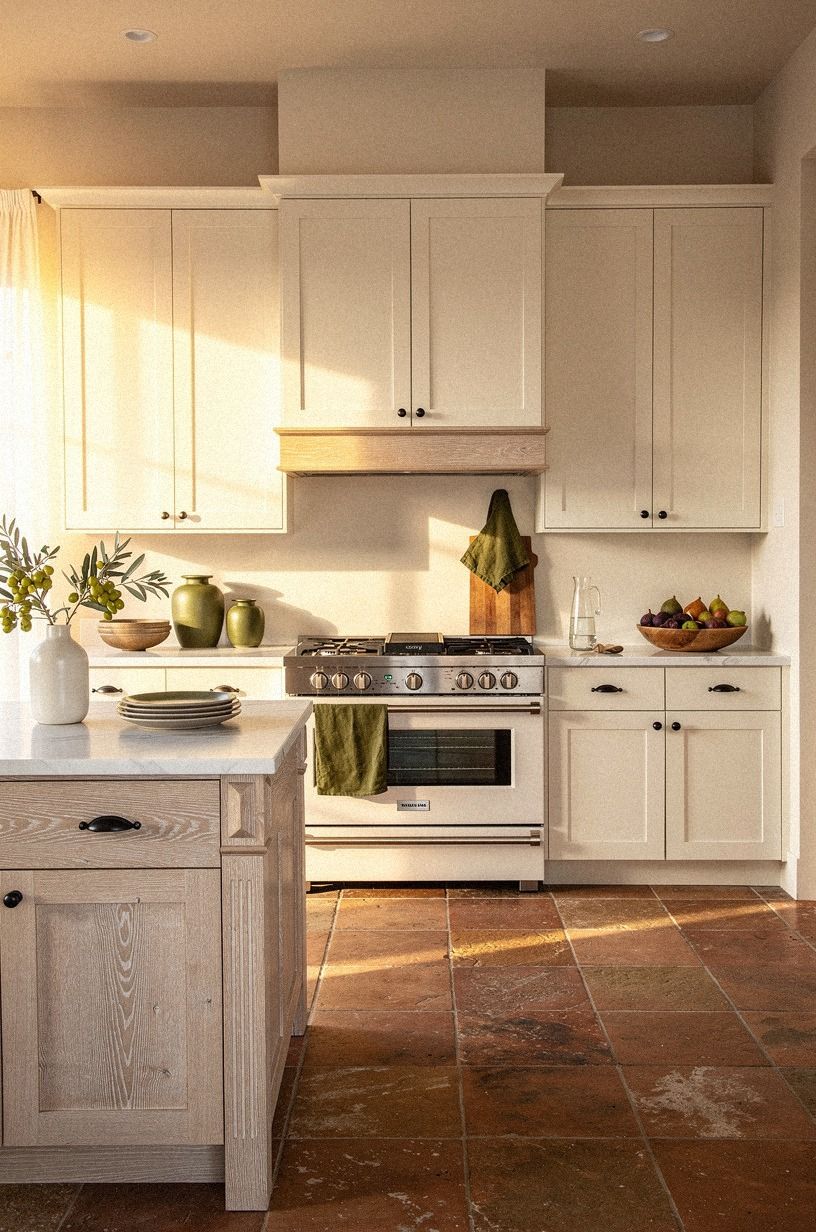
If your kitchen gets mixed light all day, creamy white is still the safest first move because it doesn't turn clinical by noon. The look you want here is Benjamin Moore White Dove OC-17, not a blue white that snaps against every shadow. In the photo, the creamy shaker fronts sit against cerused white oak details and terracotta stone, so keep the undertone warm from the start.
You want the doors to feel settled into the room, not pasted on top of it.
Then echo that warmth in the details. A 3/4-inch cerused white oak stool rail, a soft terracotta runner, aged brass or bronze hardware, and one matte stone crock on the counter.
I wouldn't pair this cabinet color with icy chrome because chrome pulls the room toward showroom territory fast. If you're building a soft neutral scheme, our oak kitchen cabinet ideas for a warm modern look show how much the oak note matters. And yes, this is the white kitchen cabinets style that keeps winning because it leaves room for warmth instead of bleaching it out!
2Anchor the island in stormy blue
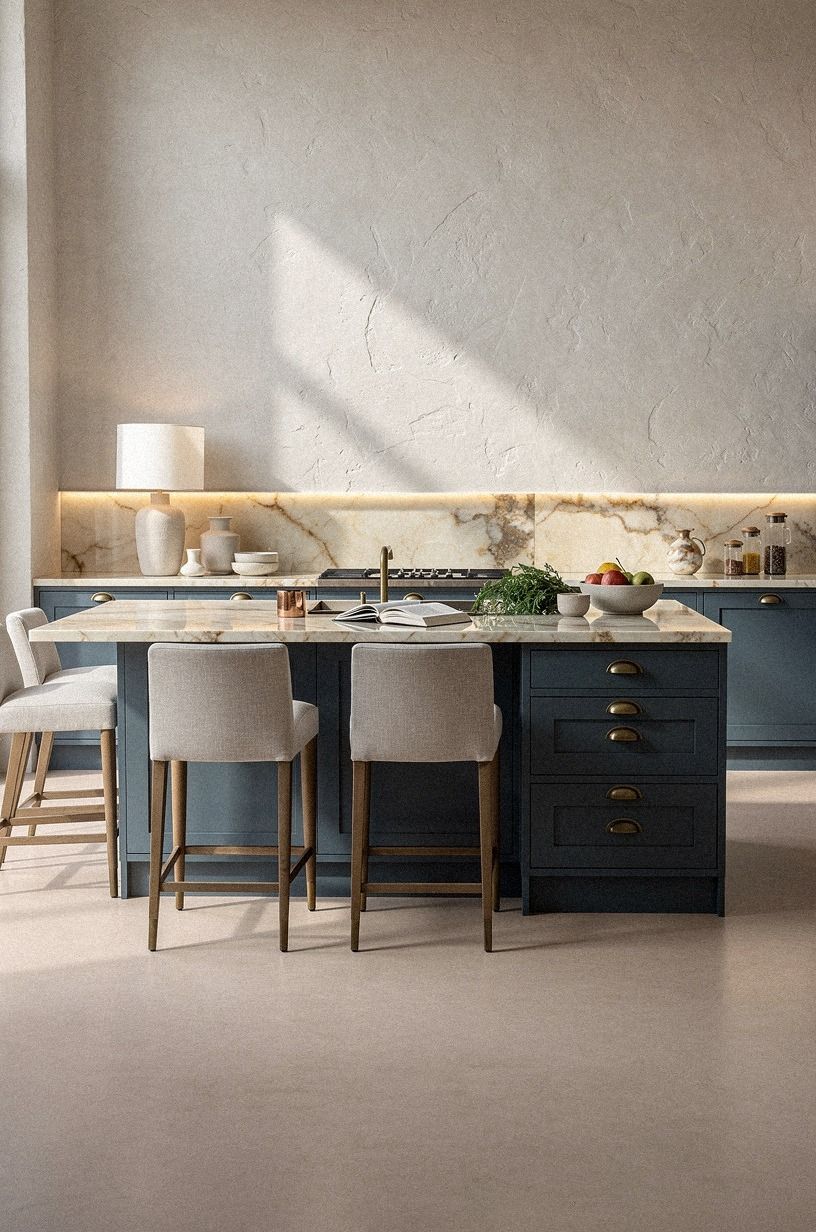
A stormy blue island works when the rest of the kitchen stays pale and lets that center block carry the weight. Think Farrow & Ball Hague Blue depth, but softened by natural daylight and pale flooring so it doesn't feel heavy on your way in. The image reads exactly that way: one blue island, plenty of breathing room, and creamy cabinetry doing support duty around it.
If your island sits within a 42-48 in clearance zone, the darker base also helps the footprint feel intentional instead of floating.
Keep the counter and wall color quiet so the blue has somewhere to land. Calacatta Gold marble with amber veining or a pale quartz look works better here than a busy granite pattern.
I wouldn't add a navy pantry, too, because then the blue stops anchoring and starts multiplying. For more depth without overdoing the contrast, save our two tone kitchen cabinet ideas that add instant depth.
But keep the eye on one hero zone. And let that island be the only moody note doing the heavy lifting. That's the part that works.
3Layer greige uppers above warm oak bases
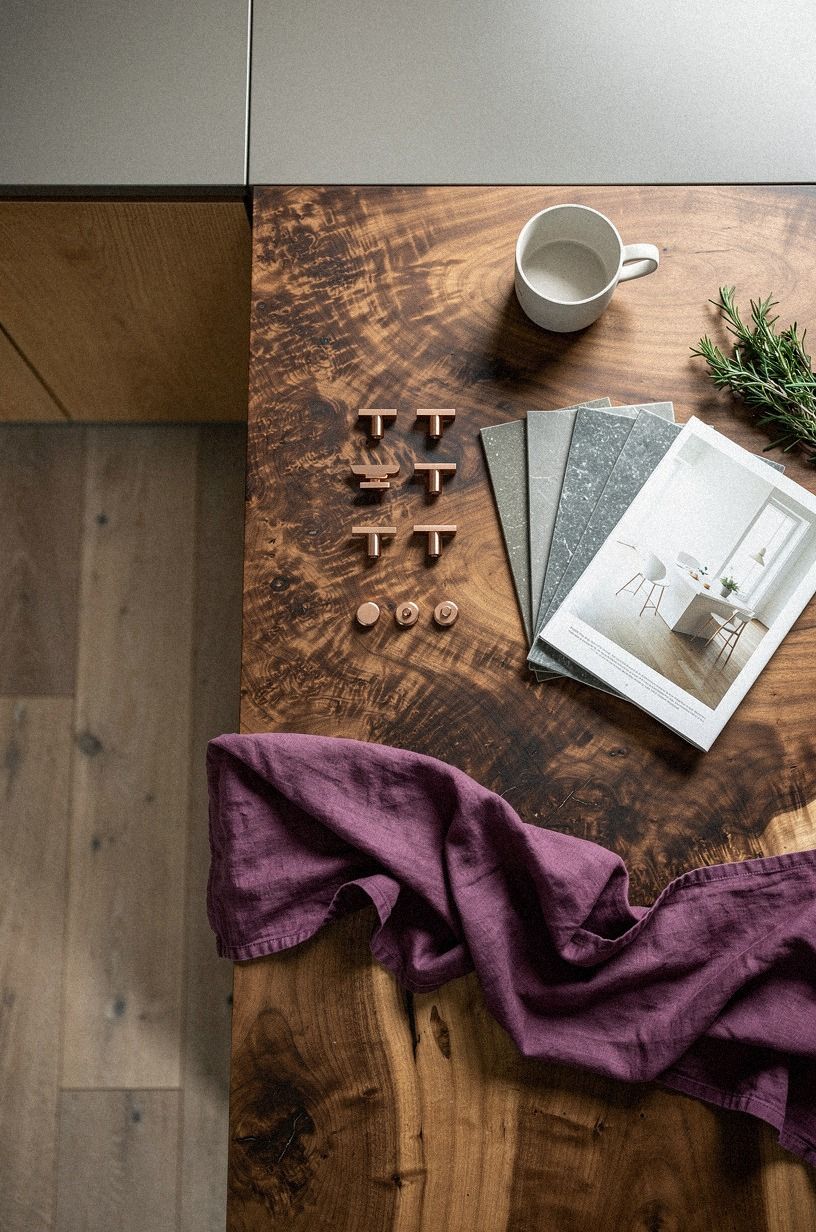
This combination lands when the uppers stay soft and the lower run brings the grain. In the overhead view, the greige uppers feel airy because the warm oak bases keep the scheme from drifting into beige mush.
You need a greige with some body, not one that reads dead next to wood. Sherwin-Williams Accessible Beige SW 7036 on uppers can work, but I like it most when the bases show honest white oak or rift oak character instead of fake printed grain.
Follow what I call the Two-Wood Rule: one dominant wood tone, one supporting painted tone, never two competing woods at eye level. IKEA TONSTAD oak effect can get you the lower-cabinet mood on a tighter budget, while a real white oak veneer front gives you the richer version. The open breathing room in the photo matters, too, so don't stack the uppers with clutter.
If your kitchen is short on storage, fold this palette into our small kitchen cabinet ideas that maximize storage. You get the warm modern look without losing function.
4Paint lower cabinets a soft mushroom taupe
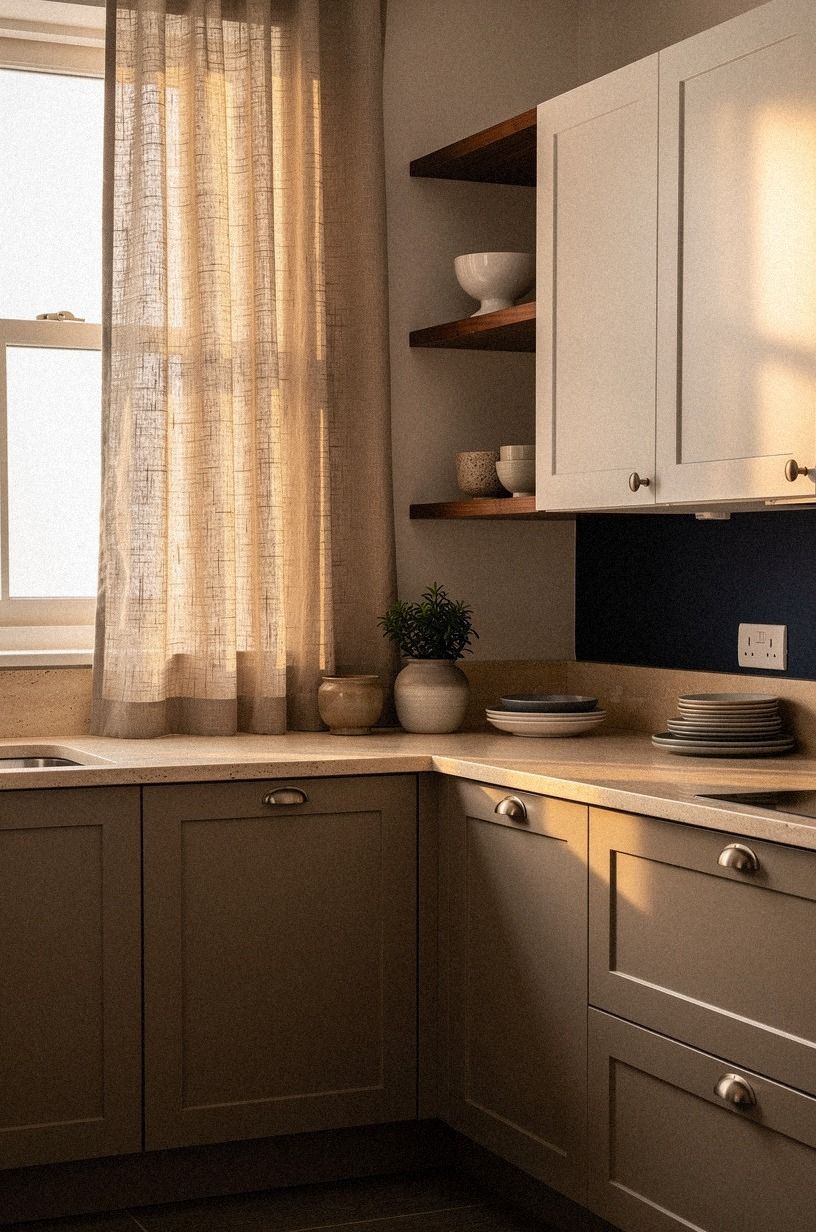
Mushroom taupe belongs on the lower run because that's where weight should sit. The photo proves it: soft taupe below, warm travertine around it, and a centered view that feels calm instead of muddy. This shade works best when it leans earthy, not pink.
Farrow & Ball Elephant's Breath gives you the right idea, though I'd sample it next to your floor before you commit because some beige floors make it go sleepy fast.
Use lighter counters and a quieter backsplash above. Honed travertine with natural pitting, warm cream plaster, and aged brass pulls keep taupe feeling tailored.
I wouldn't take this same tone onto the uppers unless the room gets a lot of southern light. Too much of it can drop the ceiling visually, and you don't want that.
For more grounded storage looks, our kitchen tall cabinet ideas to use every vertical inch show how tall units stay balanced when the darker color stays low.
5Pair dove gray cabinets with marble counters
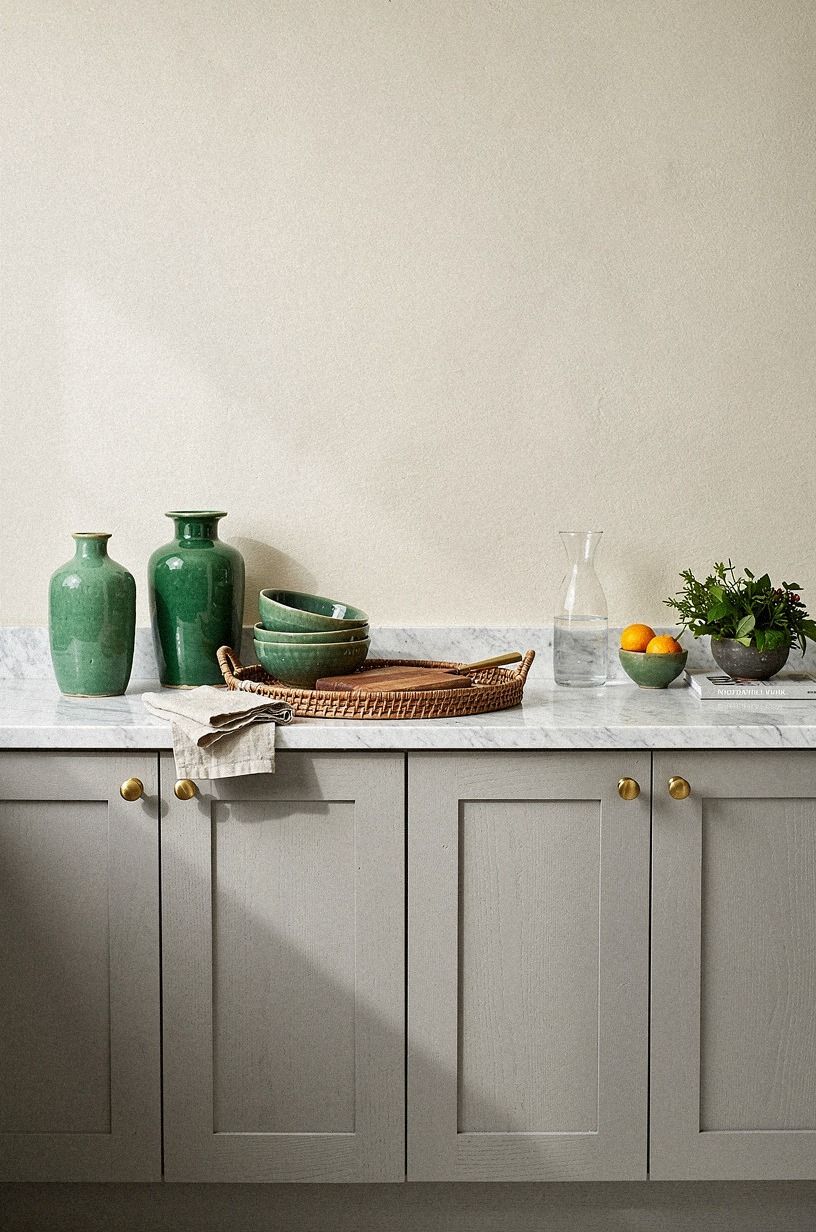
Dove gray only works now when the gray is soft enough to disappear into the marble instead of fighting it. In the image, the cabinetry sits small in frame under cream walls, so the whole point is air.
You want a gray that behaves like a neutral shadow. Benjamin Moore Pale Oak OC-20 is close in feeling, and a true dove cabinet color beside Calacatta Gold marble with amber veining reads lighter than the sample card suggests.
Let the counter do the talking. Full-height stone isn't required, but a polished marble-style surface with a simple eased edge gives the room the calm you see in the photo.
I went back and forth on this one because gray had a rough few trend years. But when you pair it with cream walls and keep the hardware understated, it feels current again. For companion looks, open our under cabinet lighting ideas to brighten your kitchen because light is what keeps gray from turning dull.
Warm bulbs only. No exceptions!
6Choose sage green doors with brass pulls
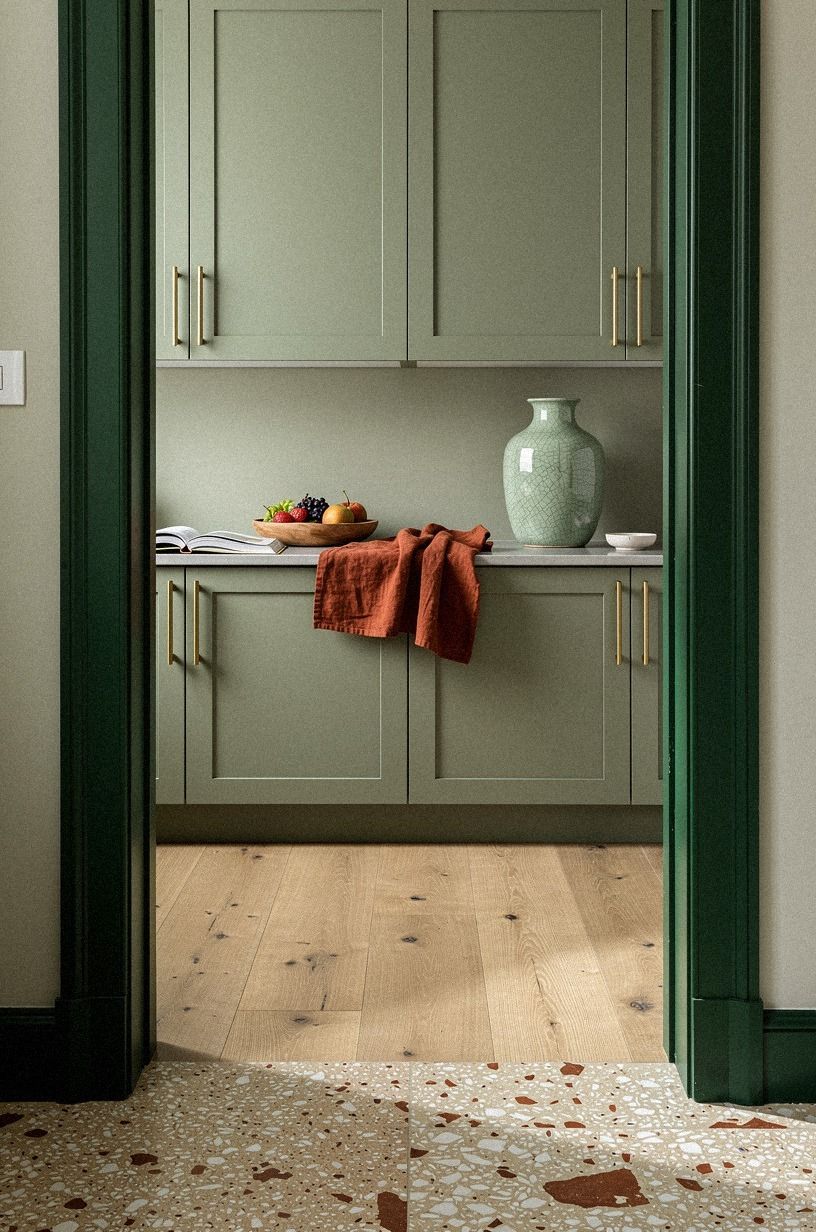
Sage green holds a kitchen together when you want color but not drama. Here, the doorway framing, forest trim, rust textiles, and natural wood ask for a green with dust in it, not a minty fresh version.
Sherwin-Williams Evergreen Fog SW 9130 is the right family. It softens the room and lets the brass pulls catch light without looking flashy. If your doors are paneled, this color also shows the shape well without making every rail feel louder than it is.
Use brass with a little age to it. Unlacquered brass developing soft patina looks better here than bright gold because the room already has earthy depth.
A rust runner, one walnut board, a linen cafe curtain. That's enough. I wouldn't pair sage with cool silver hardware because the palette splits down the middle the second you do.
If you're building color around storage, our kitchen pantry cabinet ideas for smart storage can help you extend the green into a pantry wall without crowding the kitchen.
7Frame white cabinets with a navy pantry wall
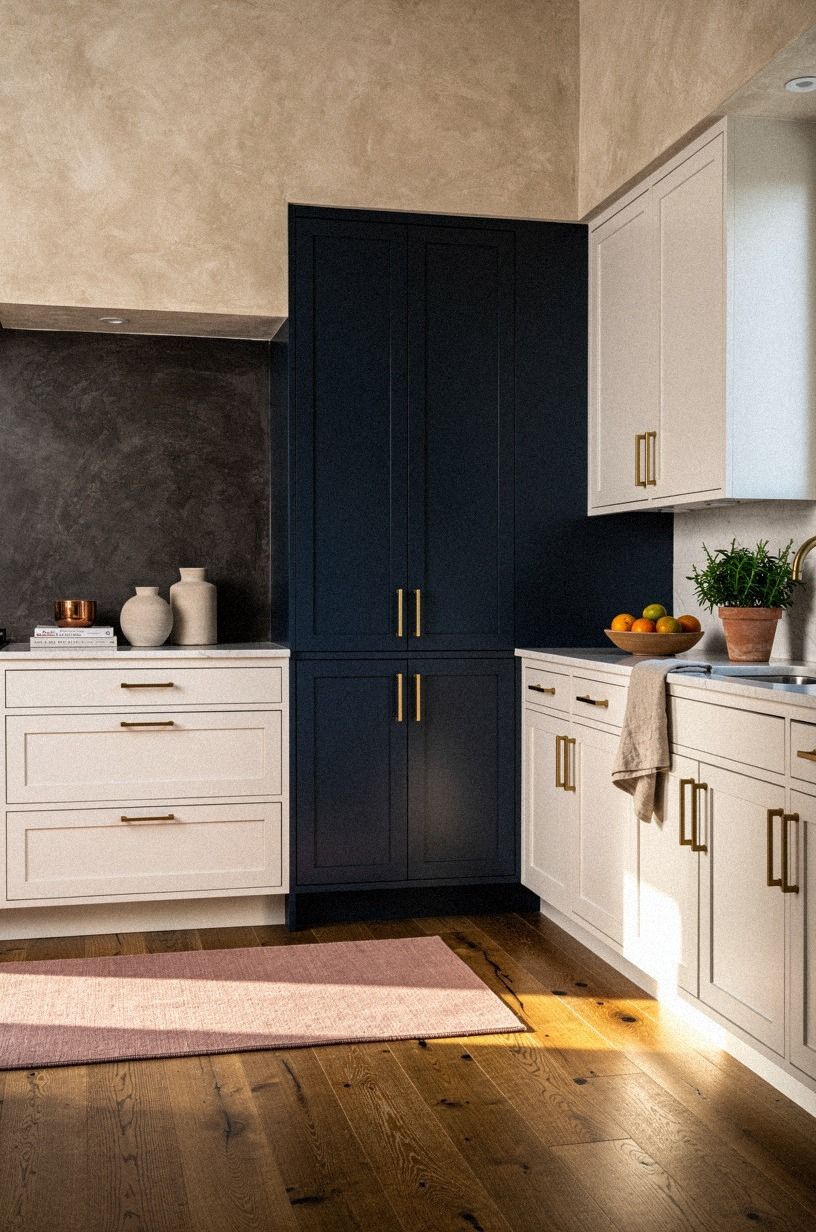
This move works because the navy stays on the pantry wall, not on every door in sight. In the wide off-center view, the white cabinets stay bright while the navy panel behind them gives the whole kitchen a boundary.
That's useful if your room opens into a dining area and everything feels a little loose. Farrow & Ball Studio Green No.93 can read almost navy in the right light, and a true navy like Sherwin-Williams Cascades SW 6483 gives the same grounded edge.
Keep the main cabinets crisp but warm. Benjamin Moore White Dove OC-17 is safer than a paper white here because it won't clash with dusty blue textiles or oak floors.
And let the pantry wall be the only dark vertical hit. If you repeat that same depth on the island, you lose the frame effect completely.
For more painted storage ideas, bookmark our kitchen pantry cabinet ideas for smart storage and our modern kitchen cabinet ideas for a sleek clean look. One dark wall can do a lot.
Two often start an argument.
8Warm up beige cabinets with walnut shelves
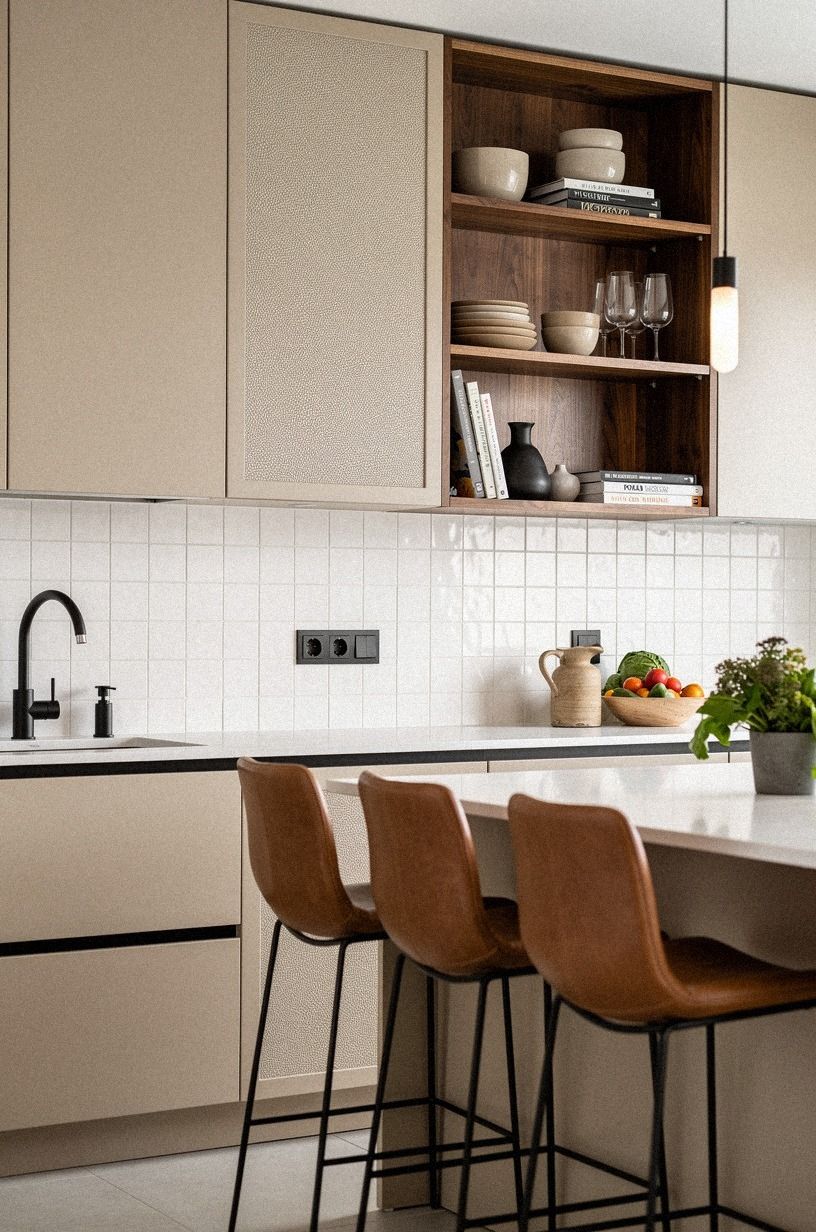
Beige cabinets need a darker wood note somewhere nearby or they drift into bland. The three-quarter view in the photo gets it right: warm beige below, walnut shelves above, and lots of open space so the shelves feel edited.
You don't need many. Two walnut shelves in a satin finish are enough to give the beige something richer to lean against.
This is where a flat beige turns into a kitchen with shape.
Style the shelves like a restraint test, not a shopping spree. One cream pitcher, stacked stoneware, a bowl of pears, maybe a smoked glass jar. That's it.
I made the mistake once of styling every shelf edge to edge, and the beige instantly went tired. If you need the practical version, our oak kitchen cabinet ideas for a warm modern look pair well with this shelf move, and our kitchen sink cabinet ideas to organize under the sink help you keep the lower storage doing the heavy lifting instead.
9Charcoal over glossy white tile, when the contrast earns its keep
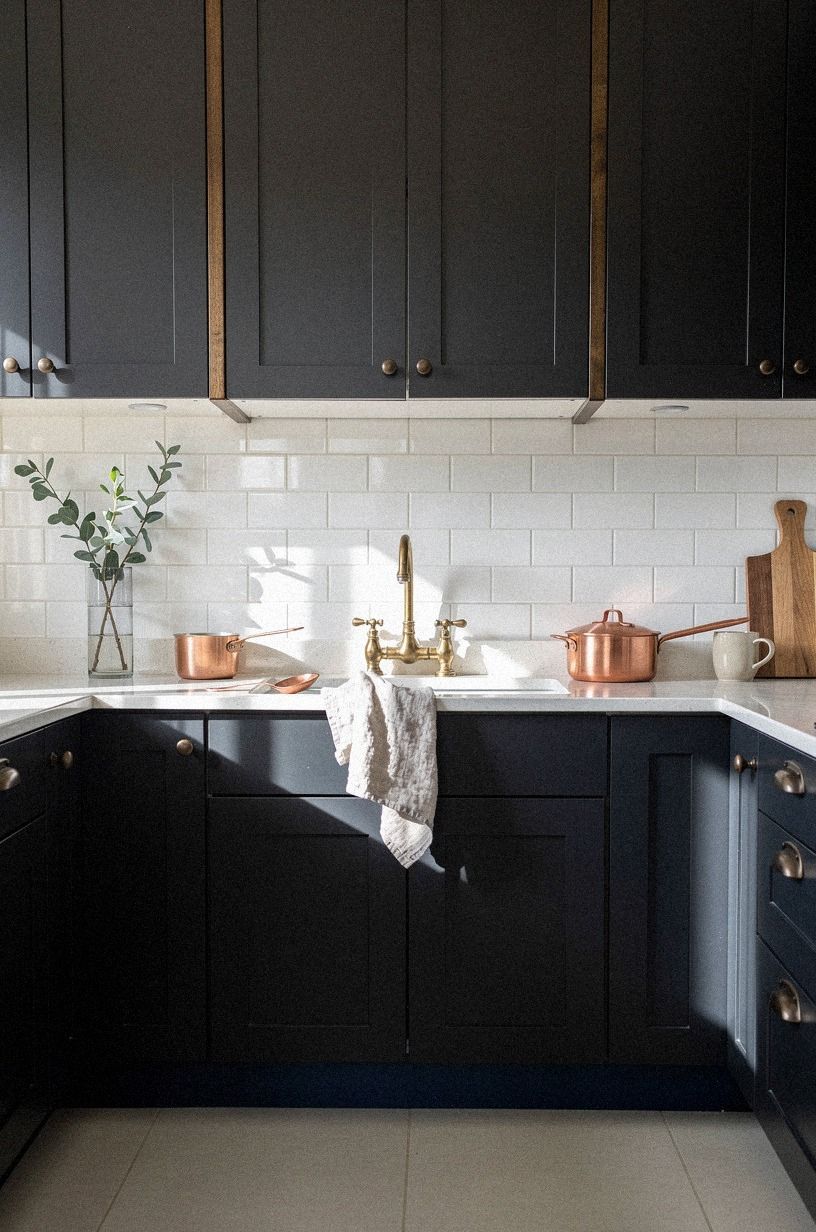
Charcoal can look severe until a glossy white tile bounces light back into it. That dramatic low angle in the image tells you exactly what the room needs: strong dark cabinets grounded at the base, bright tile above, and enough symmetry that the palette feels deliberate.
If you're tempted by charcoal, make sure your backsplash has a reflective finish. Glossy white zellige tile is ideal because the surface shifts as you move, and that movement keeps the dark paint alive.
Don't overcomplicate the counter. A pale top and simple hardware are the better call because charcoal already brings the drama. I wouldn't choose matte charcoal with matte gray tile.
The room will flatten, especially in a kitchen that doesn't get great afternoon light. For the lighting layer that makes this combo sing, pull ideas from our under cabinet lighting ideas to brighten your kitchen.
And if you're wondering whether the contrast is too much, ask yourself this: do you want soft, or do you want crisp? Charcoal only works when you mean crisp.
10Build contrast with black lower cabinets instead of going full black
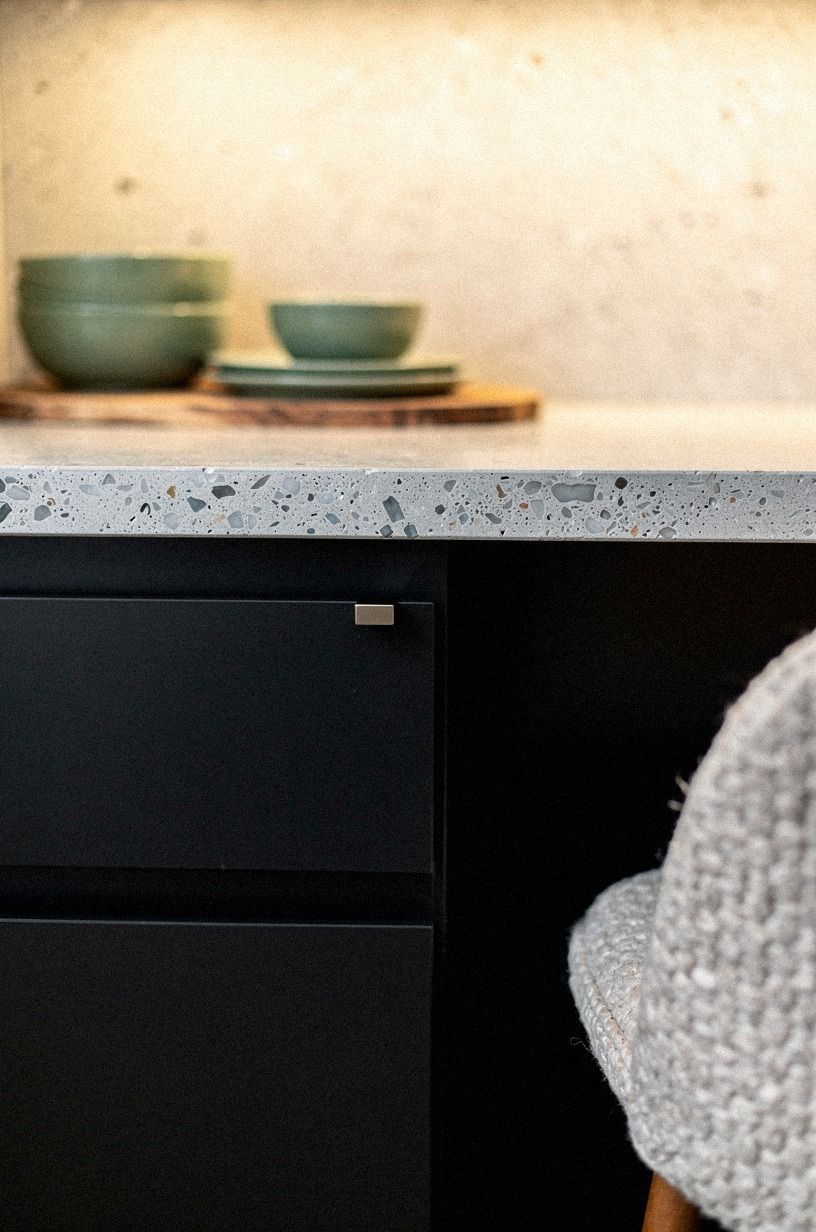
Black lower cabinets land easier than a full black kitchen because the contrast sits low and leaves the room breathing above.
11Soften gray cabinets with linen-white uppers
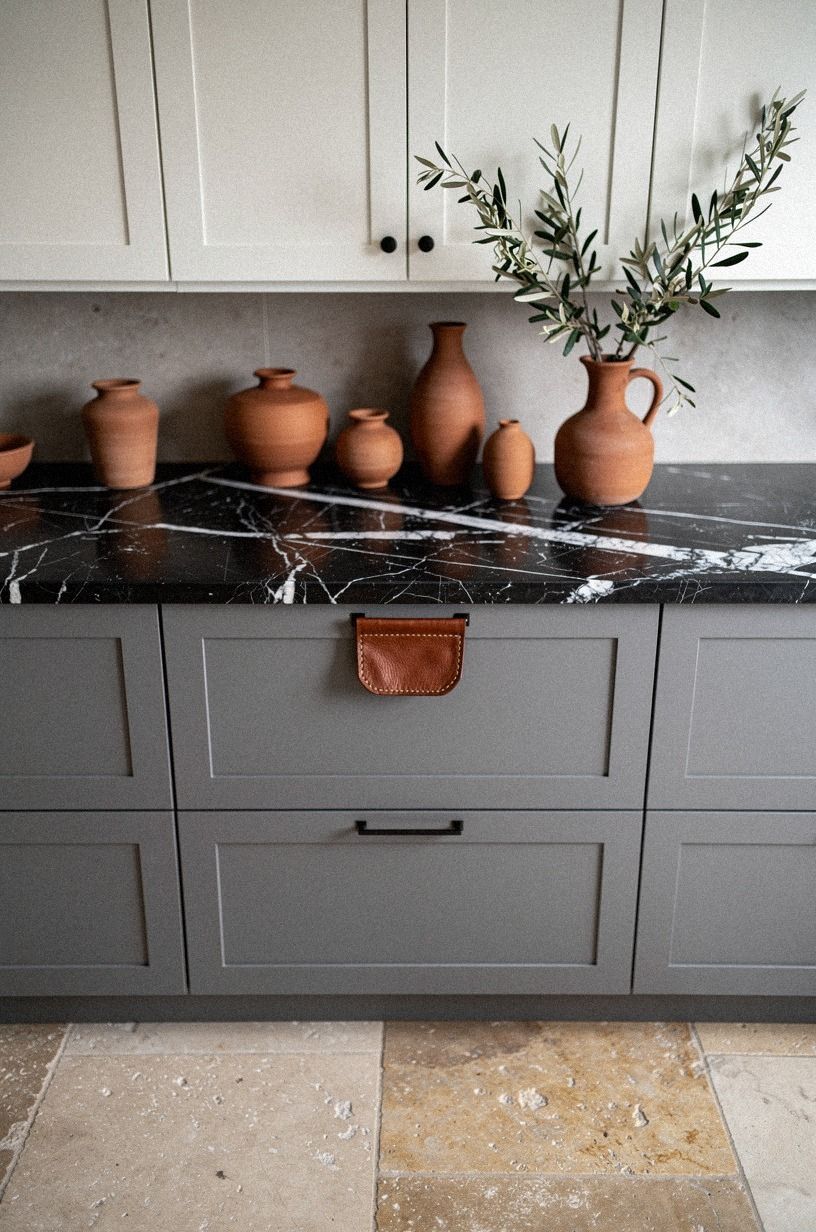
Gray lowers feel more current when the uppers shift warmer than bright white. In the image, you're looking low across a dark marble surface, so the linen-white uppers matter because they lift the whole composition away from the heavy counter. This is not the place for icy white.
Use a creamy off-white with a fabric feel. Farrow & Ball Joa's White or Benjamin Moore White Dove OC-17 both land better than a sharp gallery white here.
Then let the lower gray stay smoky, not blue. Nero Marquina marble with white veining already adds enough crisp contrast, so the gray should behave like a shadow, not a statement.
But keep the hardware warm. Aged brass, bronze, even blackened steel if the room leans modern. If you're planning storage around the sink wall, our kitchen sink cabinet ideas to organize under the sink pair well with this palette because the white uppers keep tighter zones from feeling boxed in.
12Finish clay-toned cabinets with marble veining
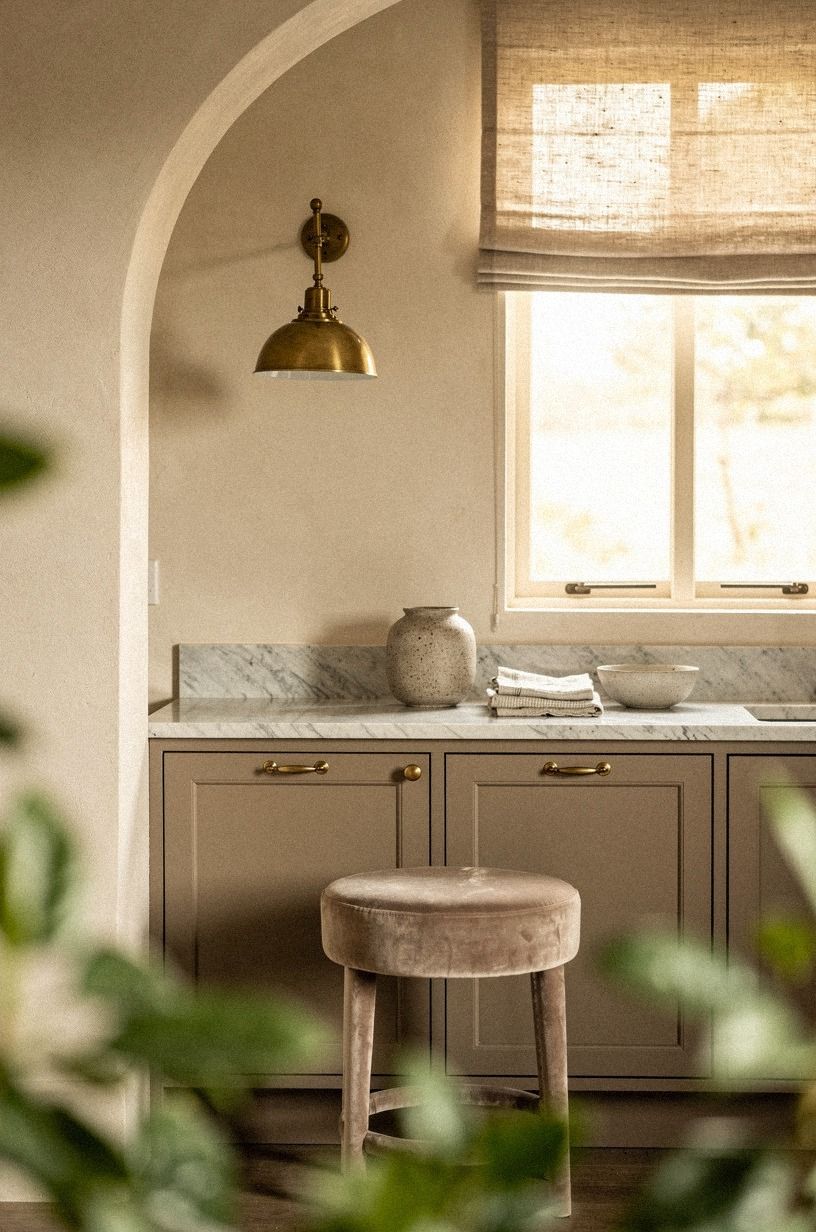
Clay-toned cabinets feel current because they're color, but quiet color. In the photo, the leafy foreground, open arch, and gentle marble movement all point to the same thing: you want warmth with a little polish, not a flat terra-cotta block.
A clay cabinet color works best when it picks up the stone instead of competing with it. Benjamin Moore Chestertown Buff HC-9 is one route, and a custom clay finish can go richer if the room has enough light.
Use marble veining as the cooler counterpoint. Calacatta Gold marble with amber veining or a softer quartz interpretation gives the clay something crisp to play against.
I wouldn't pair clay with orange wood floors unless you cool one of the two down first. Too much heat everywhere and the room starts looking tired.
For a room that still needs more usable storage, tie this palette back to our small kitchen cabinet ideas that maximize storage and kitchen tall cabinet ideas to use every vertical inch. Warmth needs editing, too.
Why Benjamin Moore White Dove Beats Trend Chasing
Here's what I've learned after watching cabinet colors swing from honey oak to espresso to icy gray to all-over sage: the winners are rarely the loudest colors in the feed. They're the colors that let the rest of the kitchen make sense.
You can change pulls, pendants, runners, even a peel-and-stick backsplash for a few hundred dollars. You probably won't want to repaint every cabinet door twice because a trend week got into your head.
That's why I keep coming back to warm whites, stormy blues on a single island, and grounded lower cabinets that hold the room steady.
The better question isn't which color is hottest this month. It's which color can handle your fixed surfaces without making the kitchen feel tense.
If your counter is busy, the cabinet color should calm it down. If your floor is pale and your room feels washed out, a blue island or black lower run gives the eye somewhere to land. If the kitchen already has strong oak, don't smother it under paint just because the internet got bored.
Let the wood stay in the story. That's the Three-Finish Rule I trust most: one painted note, one wood note, one stone note, each doing a different job.
And cost matters more than people admit. A cosmetic refresh at $300-$1,500 can go surprisingly far if you put the money into paint, pulls, and light first.
A mid refresh at $3,000-$12,000 starts making sense when the laminate top, faucet, and a few fronts are dragging the room down together. But a full gut is not always the smart answer. I've seen kitchens feel new with Shaker fronts repainted at $150-$400 per door, a better bulb temperature, and shelves styled with restraint.
That's why trend chasing loses. The room has to work on a Tuesday, not just in a pin saved at midnight.
If you want more examples before you choose, browse our oak kitchen cabinet ideas for a warm modern look and two tone kitchen cabinet ideas that add instant depth. They make the tradeoffs easier to see.
The Questions I Get Asked Most
What is the best The Most Popular Kitchen Cabinet Colors Right Now for a small kitchen?
Creamy white or linen-white uppers are the safest picks because they keep light moving. Benjamin Moore White Dove OC-17 over a warm oak base also works very well in a small footprint.
If you need proof, start with our small kitchen cabinet ideas that maximize storage. More air, less visual drag.
Where can I buy The Most Popular Kitchen Cabinet Colors Right Now pieces on a budget?
Start with IKEA, Target Threshold, and Wayfair for pulls, shelf brackets, and stool pieces that support the palette without draining your budget. Facebook Marketplace is still worth checking for solid wood islands or pantry hutches.
I look there first when a kitchen needs one warm anchor piece. Cheap in the right places, richer where your hand lands.
Worth it!
How much does a The Most Popular Kitchen Cabinet Colors Right Now makeover cost?
A cosmetic color-focused update usually runs about $300 to $1,500, and that's enough for paint, hardware, and a backsplash swap. Mid refresh territory starts around $3,000 and climbs toward $12,000. The free move is editing what you already have so the new color isn't fighting clutter.
Can I create a The Most Popular Kitchen Cabinet Colors Right Now on a budget?
Yes, and you don't need to do everything at once. Paint first, swap the pulls second, then add one wood or stone note that warms the room. A peel-and-stick backsplash, secondhand stool, and tighter shelf styling can change more than another shopping cart ever will.
Is a The Most Popular Kitchen Cabinet Colors Right Now worth it in a small space?
Yes, because a small kitchen lets you feel color faster. One defined cabinet tone can make the room look more intentional in a day. Keep the layout open, respect the 42-48 in island clearance if you have one, and let the uppers stay lighter than the lowers.
Is The Most Popular Kitchen Cabinet Colors Right Now a good idea for a rental?
Yes, if you stick to reversible moves. Removable hardware, peel-and-stick backsplash, shelf styling, and renter-safe under-cabinet lighting all help. Our under cabinet lighting ideas to brighten your kitchen are a good place to start.
Color can come from islands, shelves, and accessories when the doors have to stay put.
What should you change first? The Light-First Rule
If I had to pick one step to start with, I'd start with creamy white shaker cabinets. They forgive more counters, more floors, and more bad bulb choices than any other color here. Pin this guide for later and test that warm white before you spend money fighting a cold kitchen.