
 by
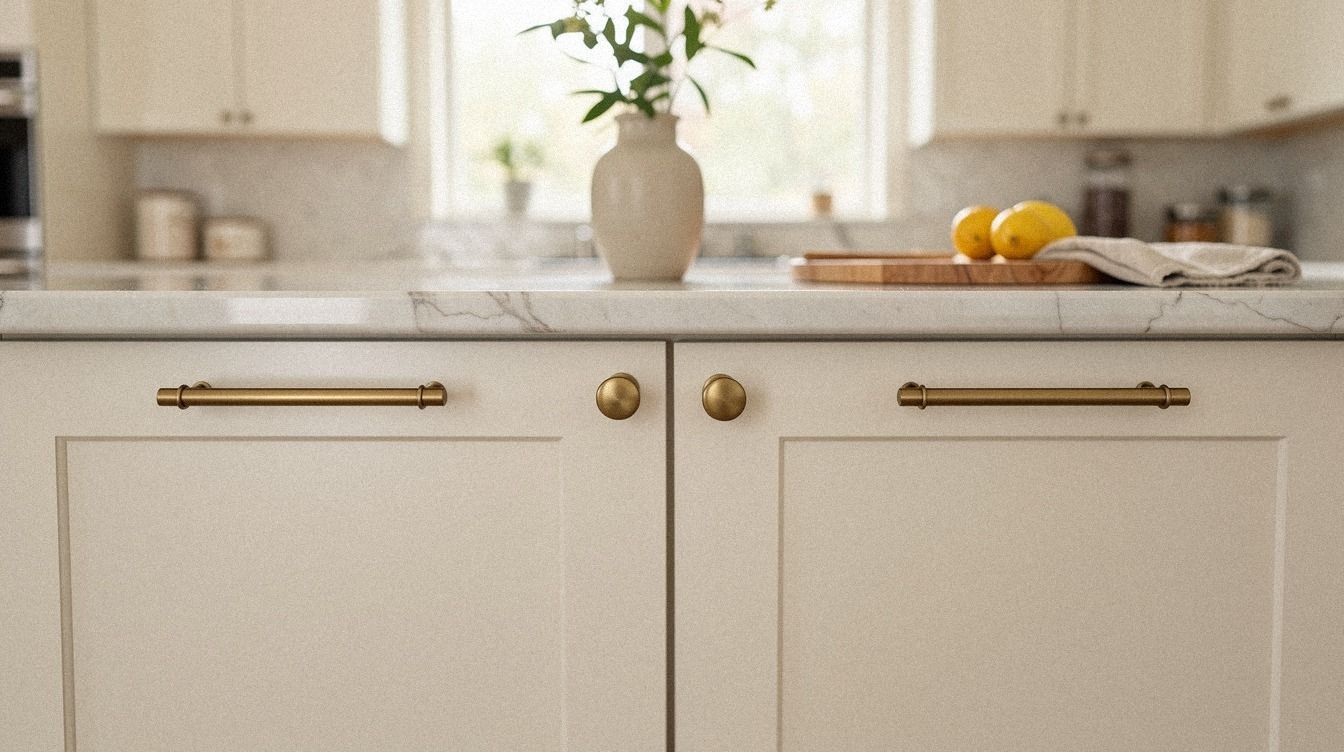
by Kitchen Cabinet Hardware Ideas: Knobs vs. Pulls come down to one simple answer: pulls do more work, but knobs can make painted doors look sharper for less money. I learned that after ordering one box of brass knobs and one box of cup pulls and realizing my samples looked better in my hand than on the cabinets. The good news is that the right choice isn't mysterious. A run of unlacquered brass hardware on creamy shaker doors is the safest starting point, and you just need scale, finish, and placement to line up.
- Tiny brass knobs on creamy shaker fronts
- Install edge pulls on minimalist slab cabinets
- Mix cup pulls with round cabinet knobs
- Black latches on divided glass uppers
- Long bronze bars repeated down a drawer wall
- Should you try leather pulls in a working kitchen?
- Mount oversized handles on tall pantry doors
- Add unlacquered brass to creamy inset cabinets
- What can IKEA teach you about hardware rhythm?
- Center square knobs on flat cabinet fronts
- Is your kitchen ready for backplates?
- Match hardware finish to the kitchen faucet
- Why do designers love Rejuvenation's hidden pulls?
- Add ribbed knobs for subtle cabinet texture
- Could antique brass bin pulls save a dated kitchen?
1Tiny brass knobs on creamy shaker fronts
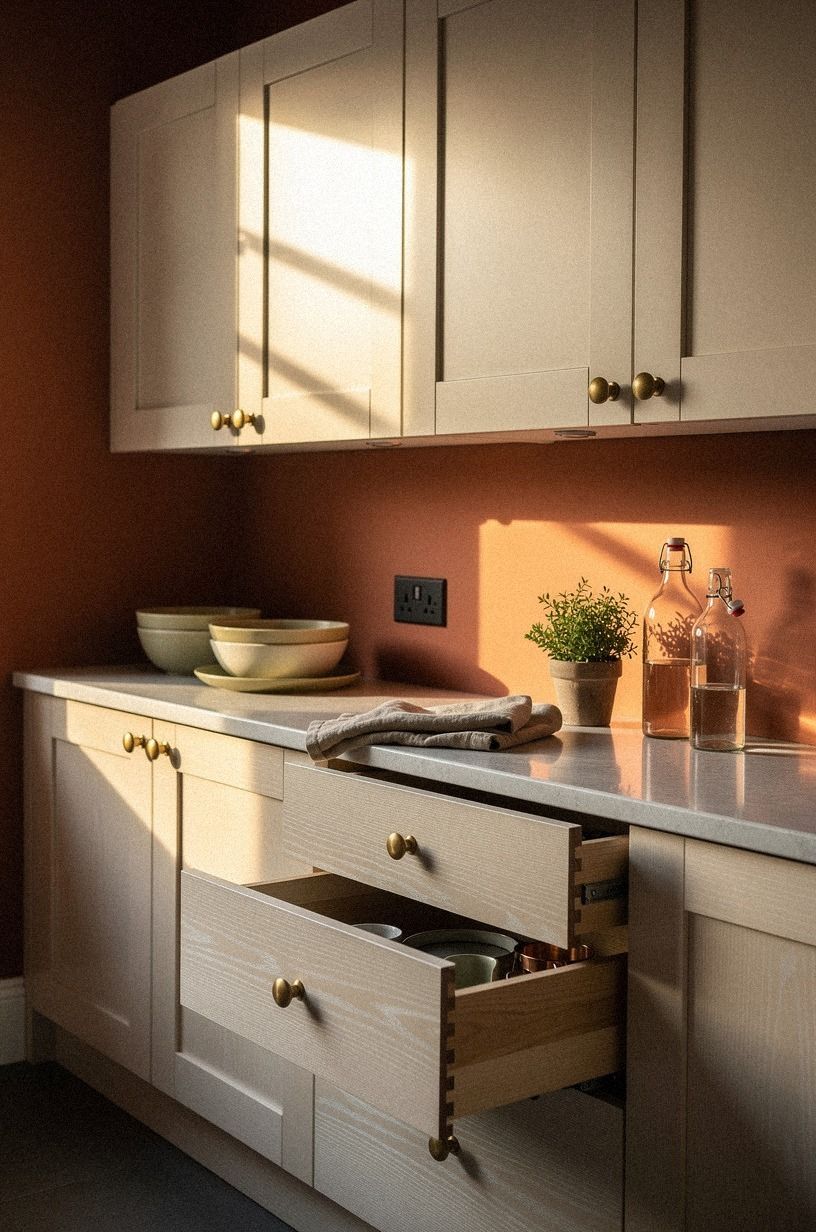
Tiny knobs work because painted shaker doors already give you lines and shadow, so you don't need hardware that shouts over them. On a run painted Benjamin Moore White Dove OC-17, a small brass knob sits right in the center rail and keeps the whole cabinet design room feeling calm.
If your doors are standard shaker fronts, you want the knob centered on the stile, not drifting high like a rushed install. That's the mistake I made first, and it made every door look slightly cross-eyed. A classic 1-inch mushroom knob in solid brass is the shape I'd reach for first.
You also get a cheaper refresh here. A knob swap plus paint falls neatly into the cosmetic tier you see in many kitchen updates, and if you're still choosing cabinet colors, this guide to the most popular kitchen cabinet colors right now will help you narrow it down.
Skip oversized brass on petite painted doors. You want the hardware to catch the late light, not dominate the whole front. A good rule of thumb is a 1-inch mushroom knob never wider than a third of the door stile.
And if you cook hard every day, pick a solid brass knob with a back screw that won't wiggle loose after a month. Small doesn't mean flimsy!
Typical cost by tier (US averages):
2Install edge pulls on minimalist slab cabinets
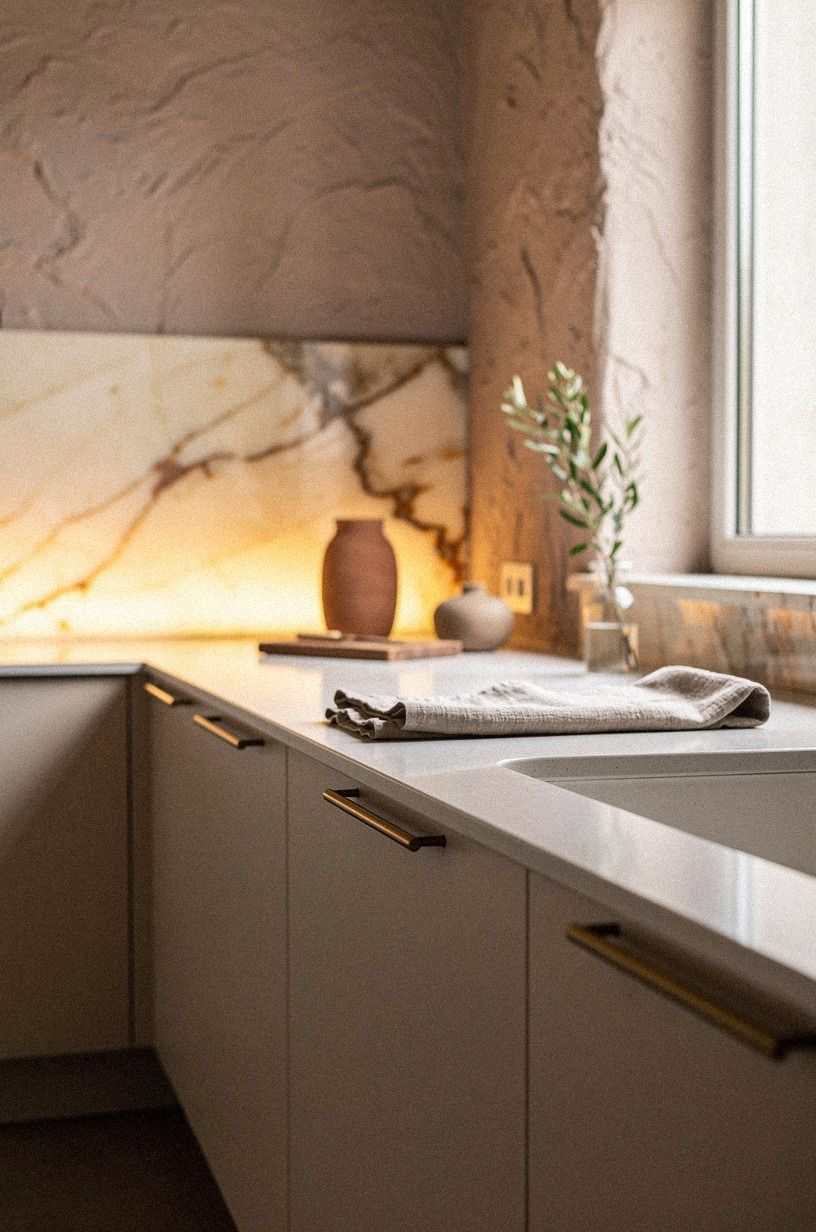
Edge pulls are the clean answer for slab fronts because they let the cabinet face stay almost uninterrupted. If your kitchen leans modern, this is where minimalist kitchen hardware wins without trying too hard.
A slim pull tucked over the top edge reads crisp in soft lamplight, especially on flat fronts painted Sherwin-Williams Evergreen Fog SW 9130. You still get grip, but your eye reads the cabinet plane first. Look for a Sugatsune edge pull in brushed aluminum if you want the gold-standard version of this profile.
What matters is depth. On upper doors above a standard 18 in backsplash gap, a too-shallow lip feels annoying by day three because your fingers keep slipping.
I prefer a profile with enough bite that you can open a door one-handed while carrying a plate. A 1.5-inch lip pull with at least 3/4 in of finger clearance is the minimum I'd recommend.
If you like this cleaner direction, modern kitchen cabinet ideas for a sleek clean look pairs well with the same logic.
But I wouldn't use edge pulls on every single cabinet if you have kids or slippery hands. Mix them where the visual payoff matters most and use easier pulls on the hard-working lowers.
3Mix cup pulls with round cabinet knobs
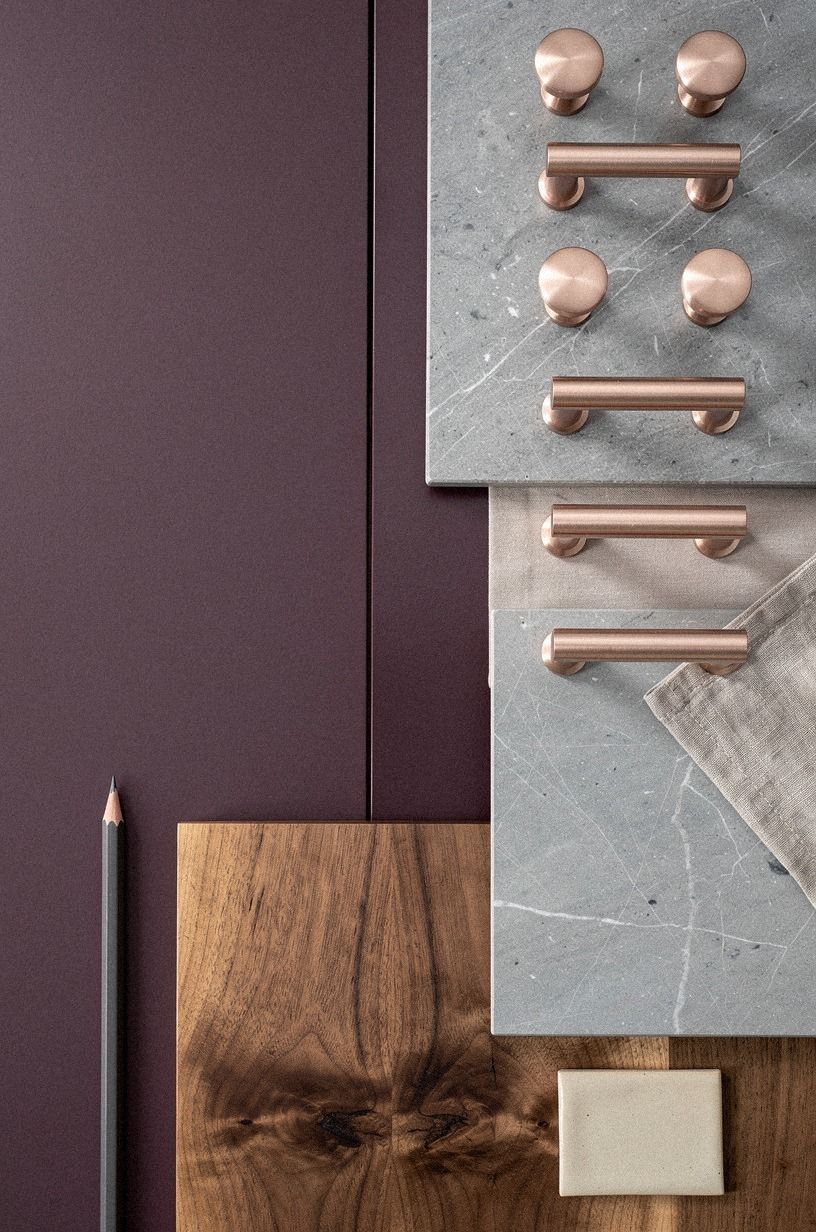
This is the old cabinet planner's move I keep coming back to: cup pulls on drawers, round knobs on doors. I call it the Two-Grip Rule, and you feel why it works the second you use the kitchen. Drawers want a pull because you tug straight out.
Doors want a knob because you pivot them open. Simple.
A 3-inch cup pull in oil-rubbed bronze paired with a 1-inch round knob in the same family is the classic move.
On a planning surface, the mix looks more layered than a full set from one box, especially if your cup pulls come in aged brass and your knobs echo the same tone. You don't need a museum-perfect match, but you do need the finish family to agree.
A brushed satin nickel cup pull on drawers with a matching knob on doors is a safe starting pair. If you're combining styles with painted and wood sections, two tone kitchen cabinet ideas that add instant depth shows where that contrast lands best.
And here's the part people skip: keep the scale close. Huge cup pulls with tiny dots for knobs look accidental, not thoughtful.
4Black latches on divided glass uppers
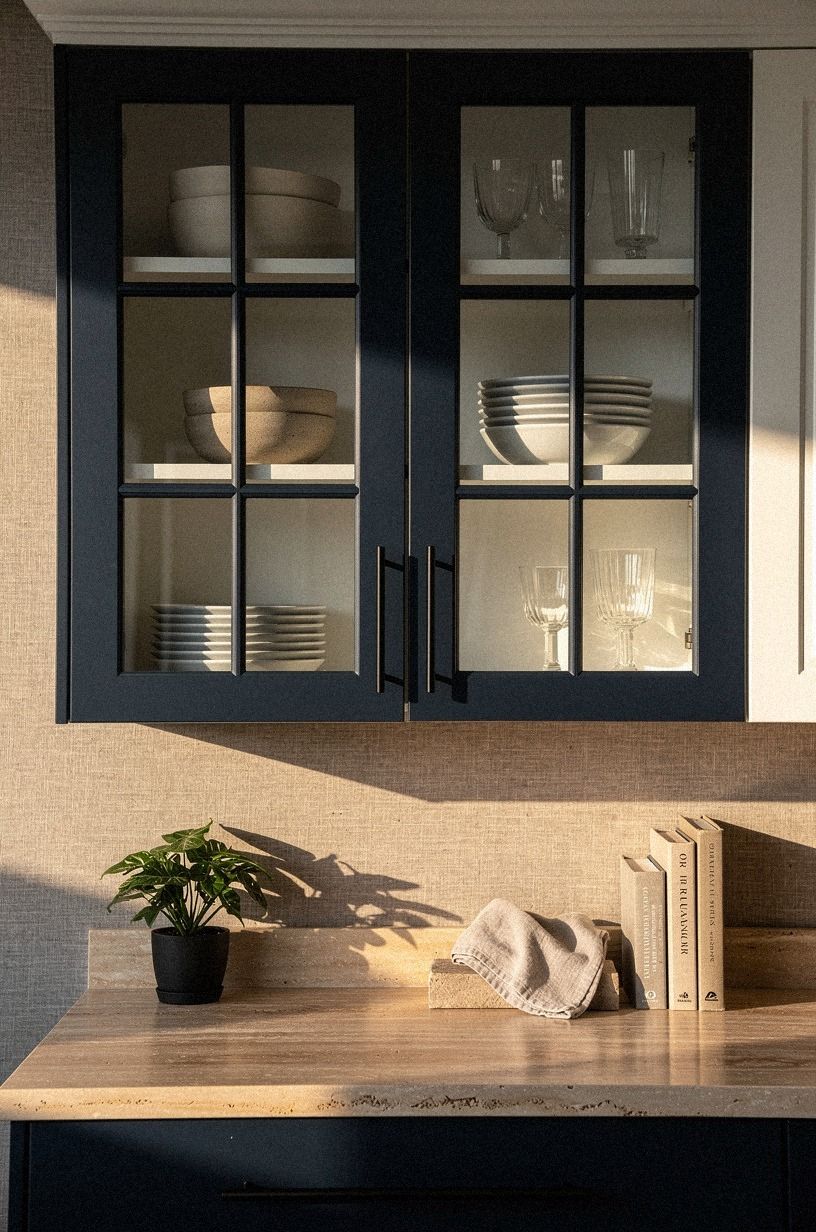
Black latches make glass uppers feel more architectural, especially when the kitchen already has some editorial drama. They work best when the frame is visible, the glass is divided, and the latch becomes part of the outline instead of a random dark spot.
On creamy painted doors, a matte black latch gives you that sharp little punctuation the room needs. You see it from across the kitchen, which is the point.
You also want restraint inside the cabinet. White dishes.
Smoked glass. Maybe one stack of bowls.
If the cabinet interior is noisy, the latch can't save it. A single row of cream ironstone behind the glass is the cleanest backdrop.
I like this move most when paired with under cabinet lighting ideas to brighten your kitchen because a soft wash under the uppers keeps the black hardware from feeling severe.
But don't force latches onto plain slab glass doors just because the finish looks good online. They need a little structure around them or they read costume-y.
5Long bronze bars repeated down a drawer wall
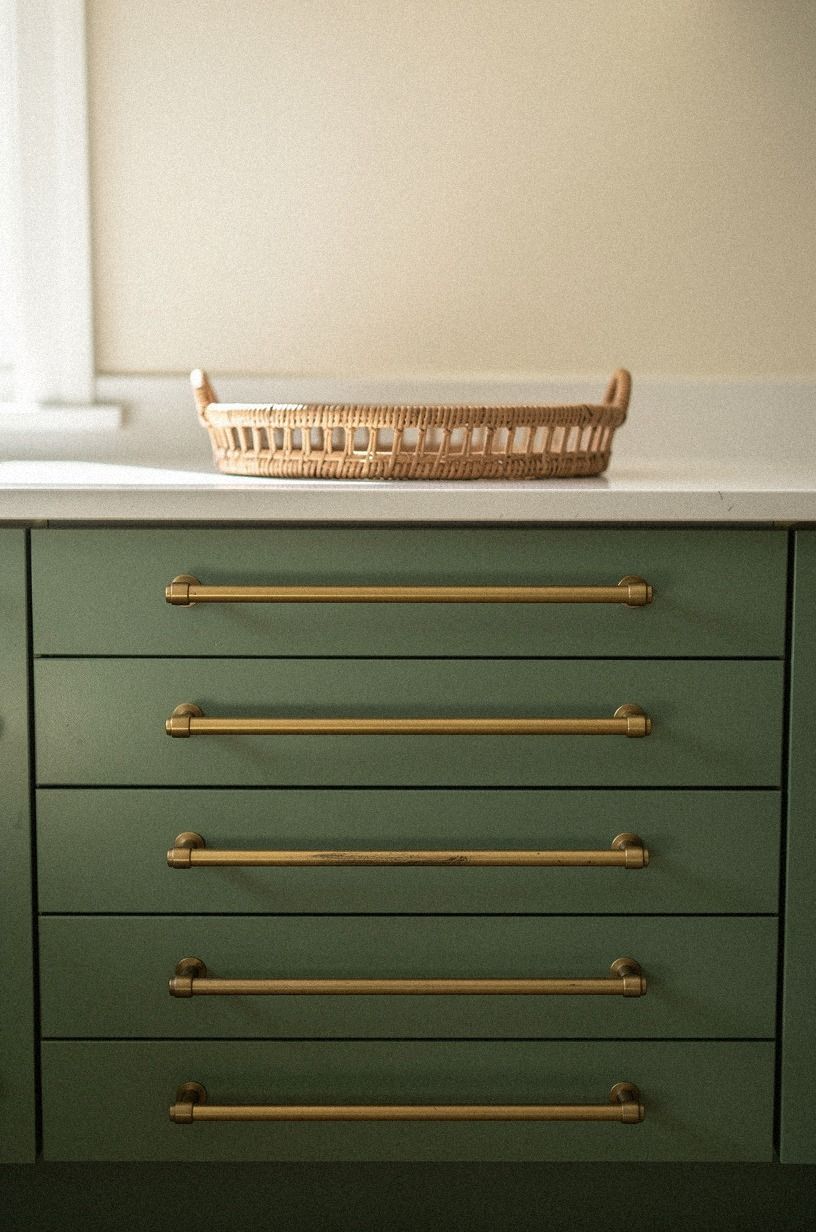
Long bars repeated across a drawer wall give you order fast. If your kitchen has a broad bank of drawers, matching bronze bars create rhythm that a mix of stubby pieces never quite reaches.
I like this move on lower drawers because the line of the pull emphasizes width, and wide is flattering in a kitchen. It settles the room.
A run of 12-inch bronze bar pulls from Top Knobs handles the look without the price of a custom line.
There is one placement rule worth following. On deep pot drawers, longer bars near one third of the drawer width usually feel better in your hand than short centered pulls, especially when the drawer is loaded.
Bronze also plays nicely with warm counters and wood floors, and if you need more ways to calm a busy footprint, small kitchen cabinet ideas that maximize storage covers the bigger layout side. A Top Knobs Aspen bar pull in light bronze is a good 12-in reference piece.
You don't need fancy bronze, either. You need a finish with enough brown in it that fingerprints disappear.
6Should you try leather pulls in a working kitchen?
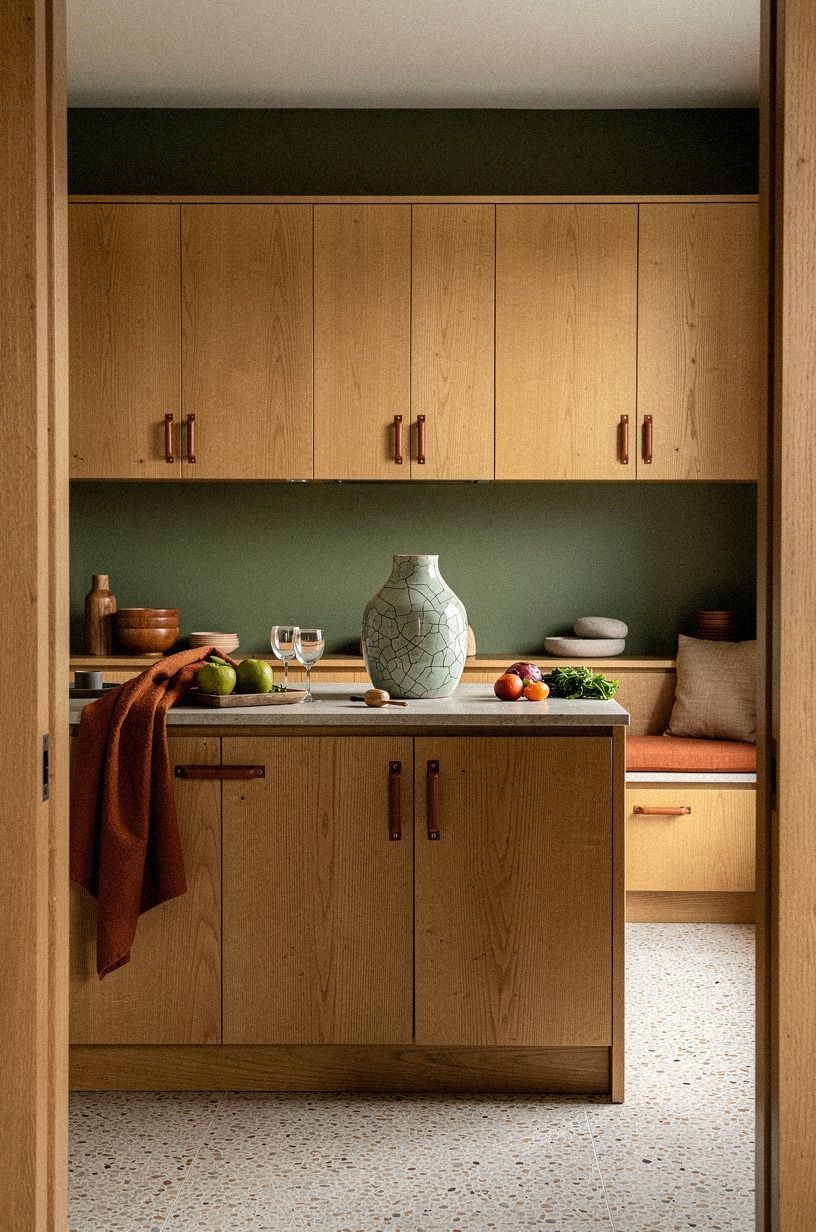
Leather pulls can look great on warm wood, but only when the cabinet wood already has softness. On white oak or walnut fronts, a stitched leather tab reads tactile and a little relaxed, which is why this idea keeps showing up in forest-leaning kitchens.
I like it best on a run with visible grain because the pull adds another quiet texture instead of a competing shine. Think cerused white oak with a medium tan loop.
The catch is wear. If your wood cabinets sit near the sink or dishwasher, cheap leather dries out and looks sad fast. Go for a thicker strap with finished edges and one clean metal post.
A full-grain leather tab at 3.5 oz weight or higher will outlast the cabinets it's attached to. If you're shaping a warmer cabinet palette overall, oak kitchen cabinet ideas for a warm modern look shows where leather belongs and where it doesn't.
Honest answer? Skip leather on glossy painted fronts. The softness that makes it charming on wood can look misplaced on slick surfaces, and the price of a good Horween Chromexcel strap is wasted if the cabinet face is already shouting.
7Mount oversized handles on tall pantry doors
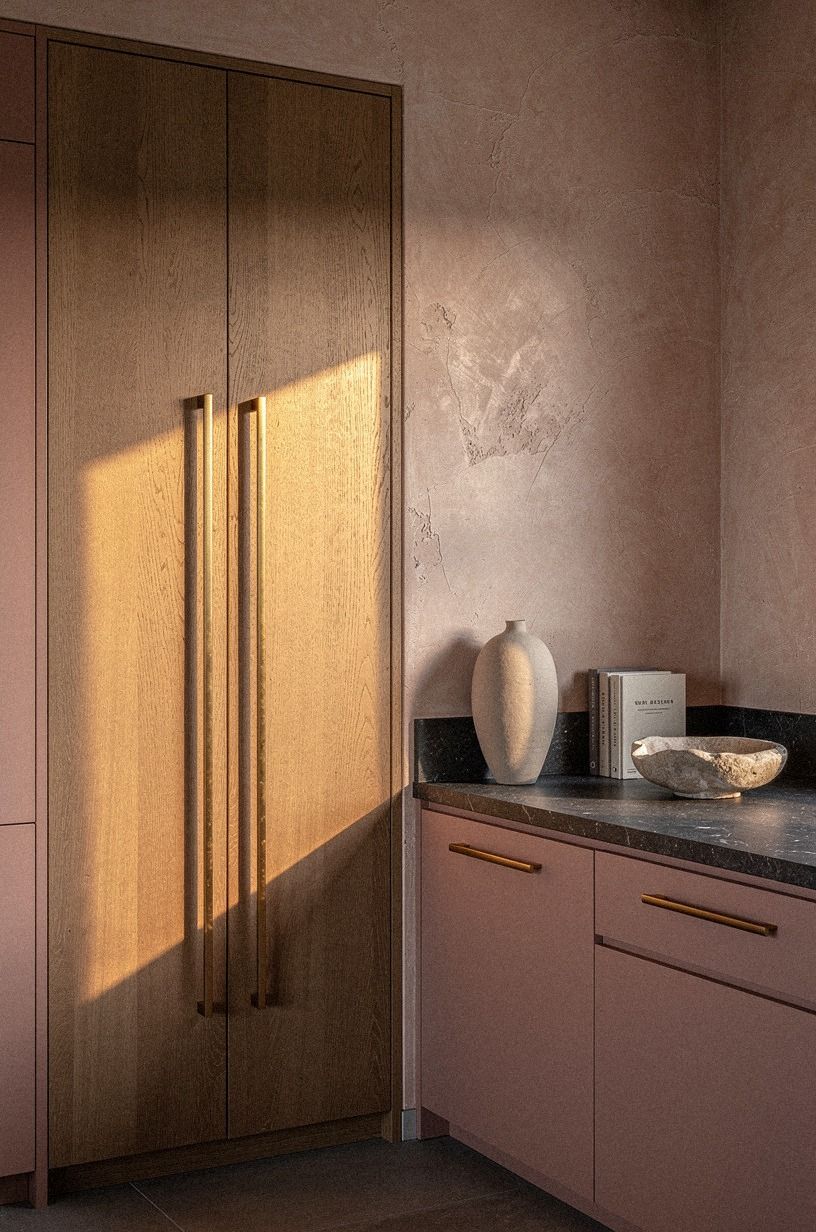
Tall pantry doors can disappear into a wall of cabinetry unless the hardware gives them some authority. Oversized handles do that job in one shot, especially on pantry fronts that run 30 to 42 in tall above the counter line or stretch full height to the ceiling.
You don't need circus-scale pulls. You need something long enough that the door reads intentional from corner to corner.
A 24-inch appliance pull in brushed brass is a good size to start with.
I call this the Vertical Anchor Move because it gives your eye one strong line to grab. On a pantry painted Farrow & Ball Studio Green No.93, long handles in brushed brass or dark bronze keep the height from feeling cold. And if your kitchen uses tall storage as a feature, kitchen tall cabinet ideas to use every vertical inch is worth opening before you drill anything.
But don't put the same oversized handle on every lower base cabinet. The pantry earns the drama. Everything else should support it.
8Add unlacquered brass to creamy inset cabinets
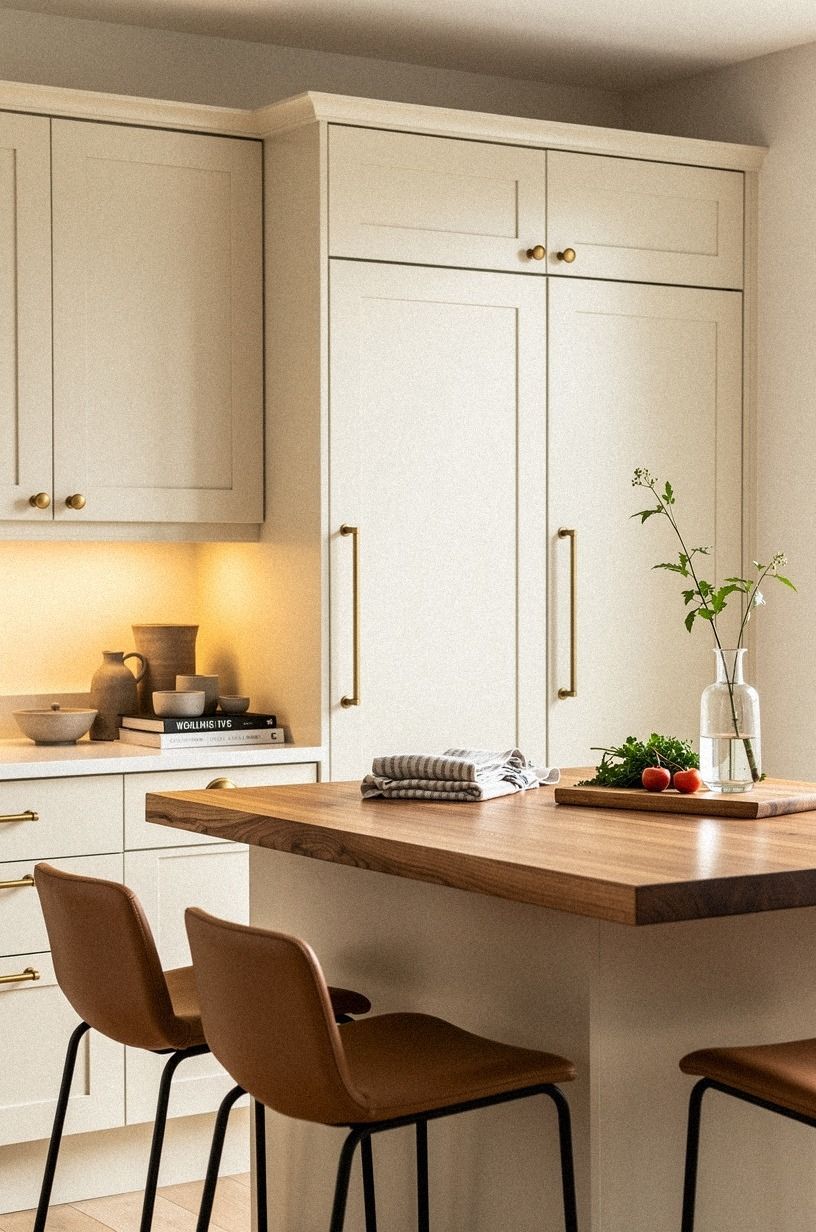
Inset cabinets already look tailored because the door sits inside a frame, so the hardware needs to feel equally intentional. Unlacquered brass is perfect here because it starts bright and then softens with touch, which suits creamy paint better than a cold polished finish does.
A run of Schoolhouse Electric mushroom knobs in unlacquered brass will patina into a quiet honey tone over two years of regular use. On inset doors, you notice those little shifts in color more because the cabinet lines are so exact.
That's why this pairing keeps aging well.
Placement matters more on inset fronts than on overlay cabinets. If the knob lands even a hair off, your eye catches it right away.
I learned that the annoying way on a sample door in my own kitchen. A laser level and a center punch will save you from the same mistake.
For more ideas on balancing warm paint and hardware, the most popular kitchen cabinet colors right now helps you see which creamy tones keep brass from turning yellow.
You also don't need matching appliances for this to work. You need warm undertones and the nerve to let the brass change over time. A piece from Schoolhouse Electric will patina faster than a plated import, and that aging is the whole point.
9What can IKEA teach you about hardware rhythm?
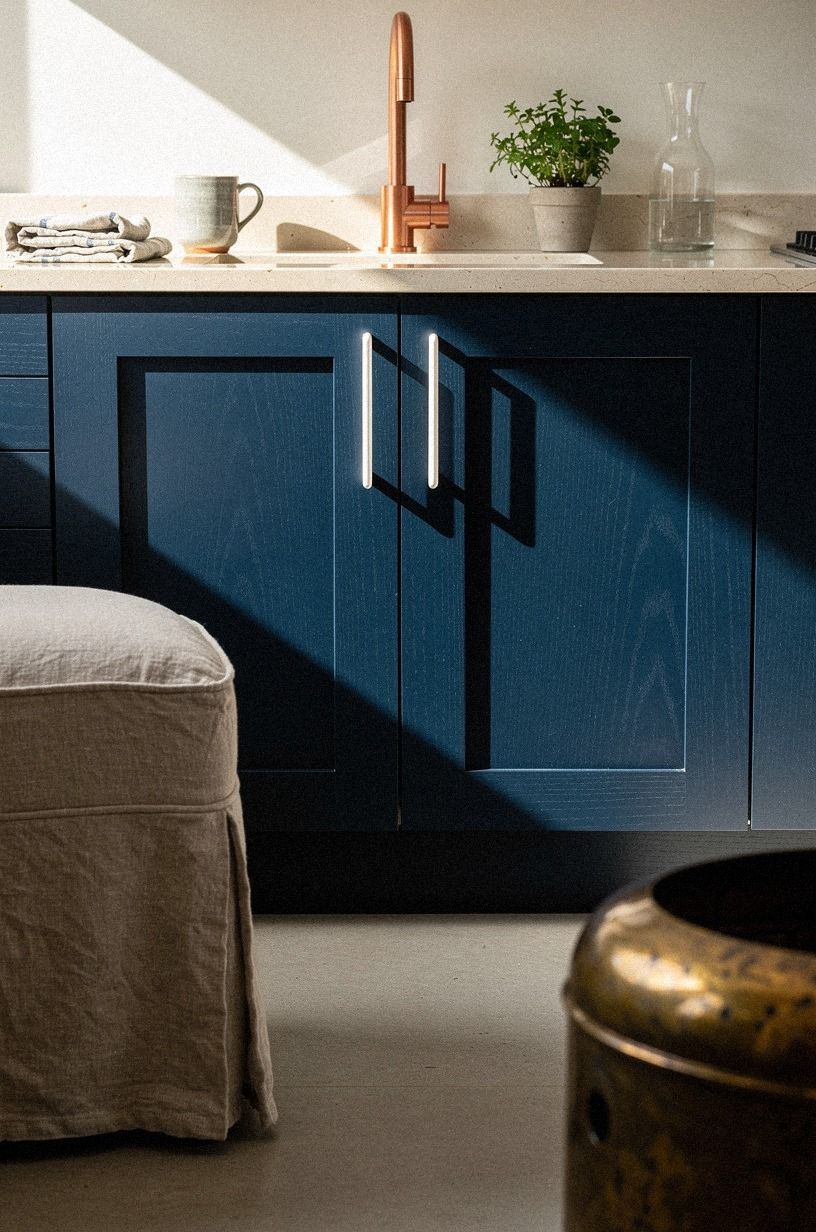
I know that sounds like a stretch, but hear me out.
10Center square knobs on flat cabinet fronts
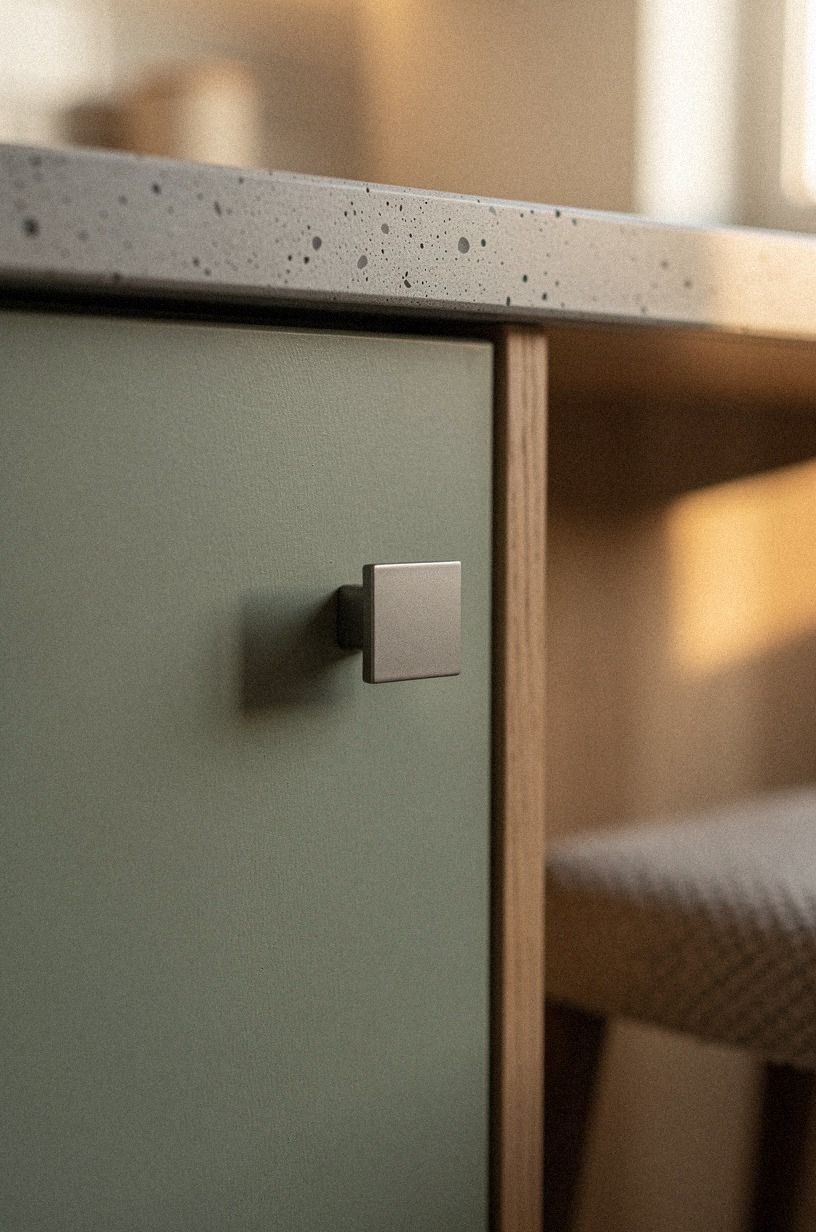
Square knobs need discipline. On flat fronts, a centered square knob can look sharp and graphic, but only if the cabinet face is simple enough to handle that geometry.
This is not the place for wobbly placement or mixed sizes. The beauty comes from the repetition, especially when you see the detail close and the edges line up cleanly under warm evening light.
A 1.25-inch square brass knob from Emtek or Rejuvenation delivers the look without the boutique price.
I like square knobs in kitchens that already have other straight-edged notes, like a slim quartz top or a blocky faucet. A macro view makes them look precious, but you still need them to feel good at arm's length. That's the part people forget.
A 1.5-inch square brass knob from Emtek is a sweet spot for most standard shaker widths. If your layout is tight, small kitchen cabinet ideas that maximize storage can help you decide whether a smaller centered knob keeps the run from feeling crowded.
And keep the backplate off here. Flat fronts plus a square knob already give you enough geometry. A square Emtek brass knob will do the same quiet work without a backplate stealing the show.
11Is your kitchen ready for backplates?
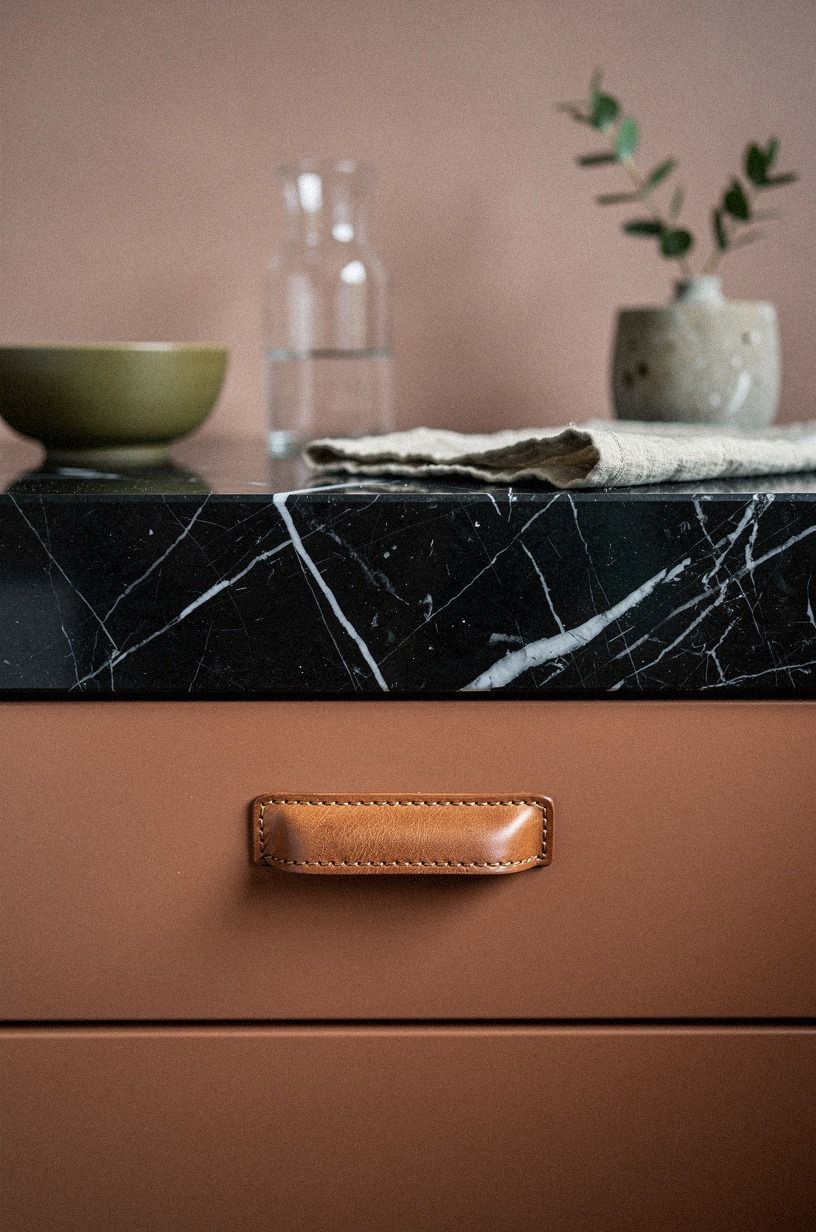
Backplates are the easiest way to make ordinary shaker cabinets feel a little more dressed without repainting the whole room.
12Match hardware finish to the kitchen faucet
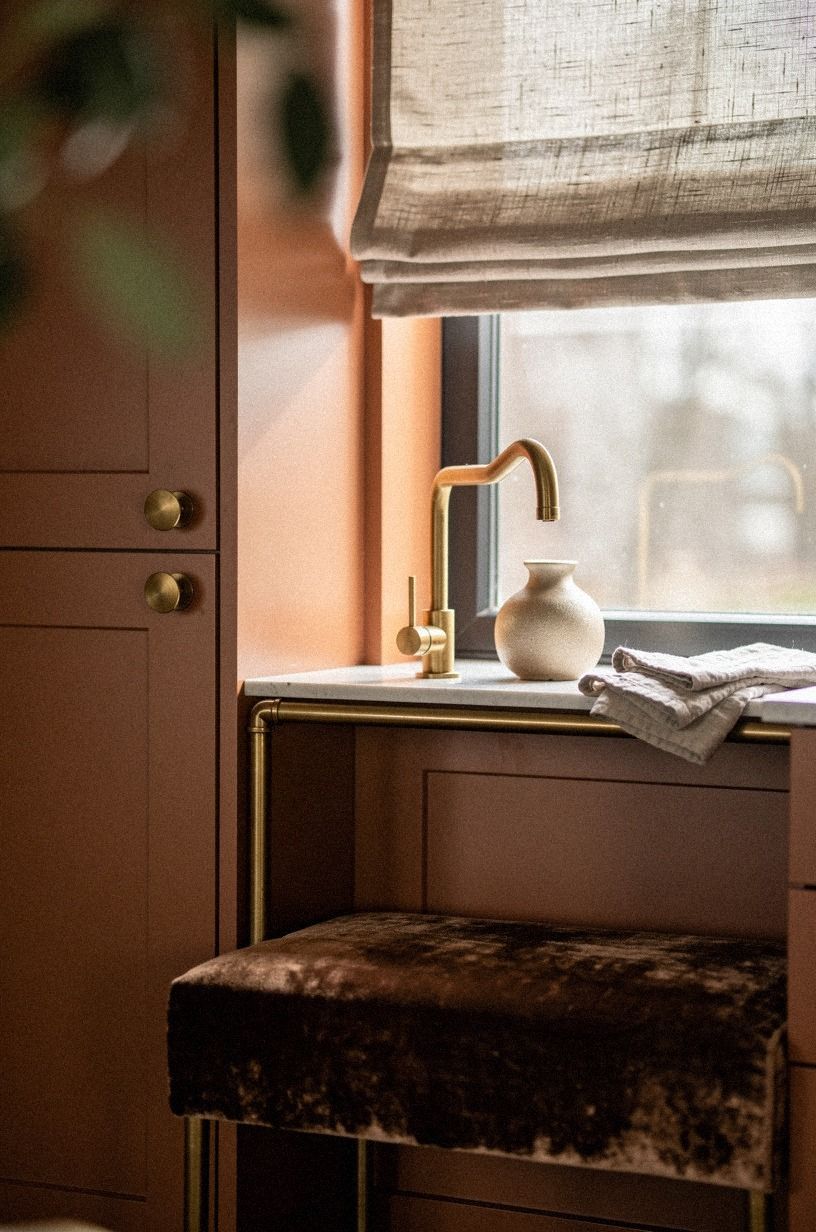
Matching the hardware finish to the faucet is one of those rules people roll their eyes at until they see a kitchen where nothing relates. Then you get it. A faucet is usually the strongest metal note in the room, so repeating that finish across knobs or pulls gives the whole space a backbone.
Through foliage or across an opening, the consistency reads finished before you even name why. A Moen Arbor in matte black or a Kohler Crue in brushed brass will lead the room without shouting.
You don't need a perfect manufacturer match. Close is close enough if the undertone agrees.
Warm brass with warm brass. Soft black with soft black.
Brushed nickel with brushed nickel. A Kingston Brass faucet in brushed nickel will play nicely with a Liberty Hardware pull in soft iron without anyone asking if they came from the same box. If your sink zone is the busiest part of the kitchen, kitchen sink cabinet ideas to organize under the sink helps you tighten up the function while you're looking at that hardware line.
And if one finish has to lead, let the faucet lead. It's the piece you touch and see the most. A Delta Trinsic in champagne bronze sets the tone better than a cabinet pull you only see at eye level.
13Why do designers love Rejuvenation's hidden pulls?
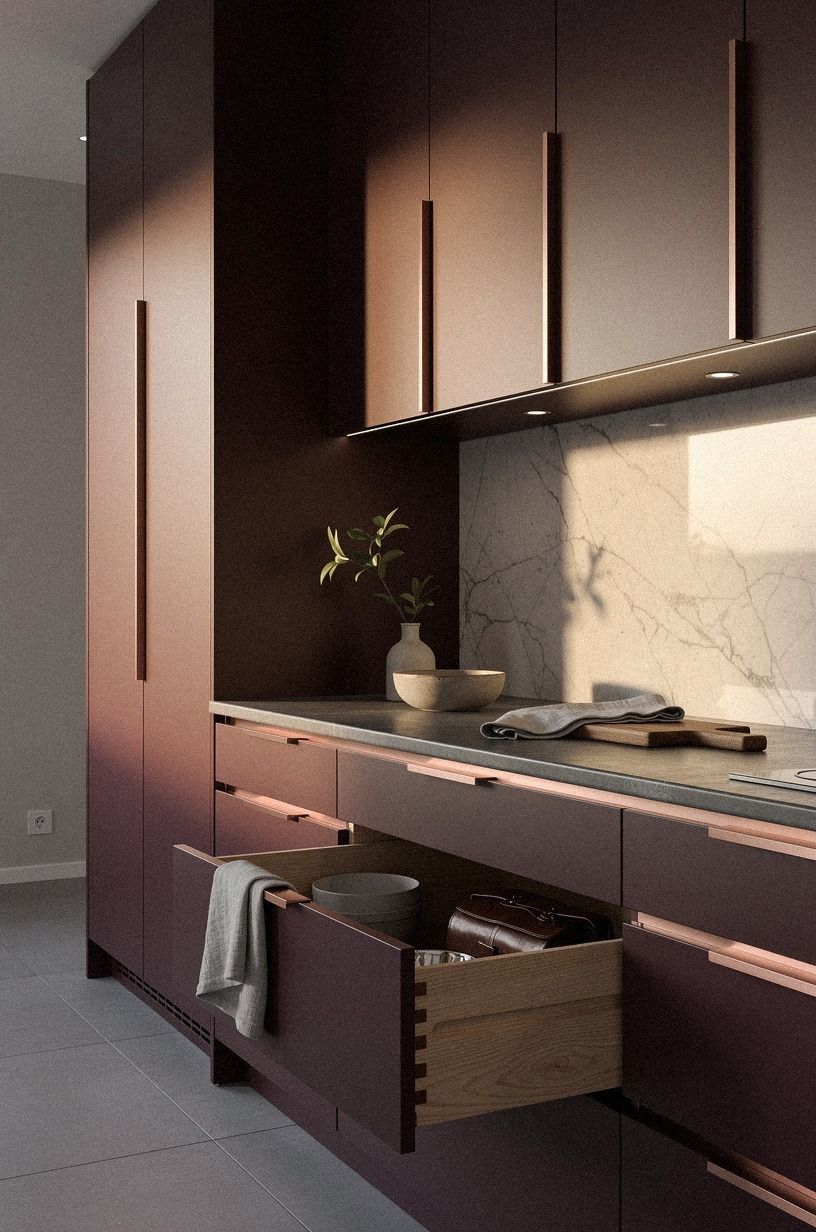
Hidden finger pulls under uppers are for people who want the cabinet line to stay almost invisible.
14Add ribbed knobs for subtle cabinet texture
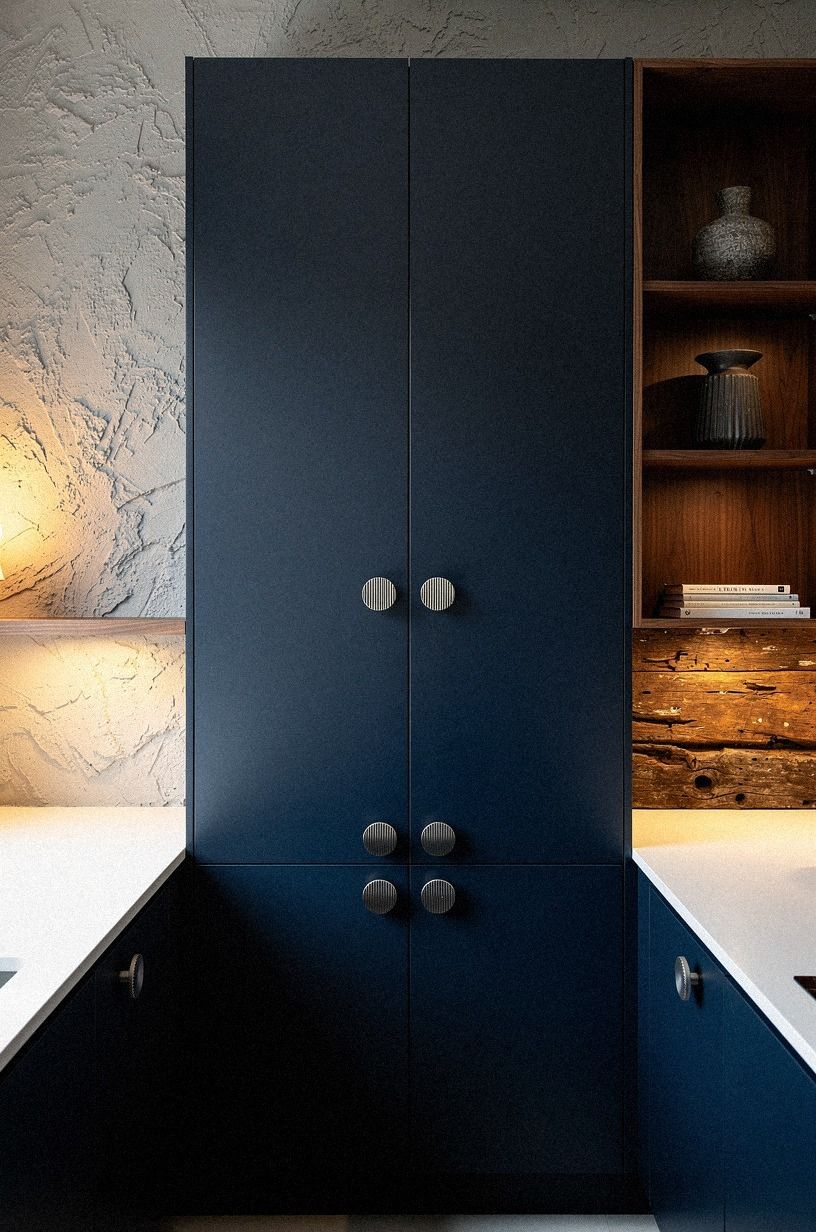
Ribbed knobs are great when you want hardware to feel special up close without becoming a headline from across the kitchen. The texture catches lamplight, your fingers get better grip, and the cabinet still reads simple from a few steps back.
On a symmetrical wall of cabinets, that small tactile detail can keep the whole run from feeling flat. You notice it most when the rest of the palette is quiet.
Rejuvenation's Linear Ribbed Knob in aged brass is the one I'd buy first if I were starting over.
I like ribbed knobs on painted doors in creamy white, foggy green, or pale mushroom because the shadow in the grooves gives you depth without asking for contrast. A Rejuvenation ribbed brass knob in aged brass catches lamplight without shouting. If you're still choosing the cabinet color itself, the most popular kitchen cabinet colors right now is a good place to compare softer paint directions.
And because the texture is already doing work, skip heavily veined stone right beside it if you can.
A small Rejuvenation ribbed brass knob or a CB2 fluted ceramic knob in bone white both deliver the same quiet texture without dominating the door. Small move. Big payoff!
15Could antique brass bin pulls save a dated kitchen?
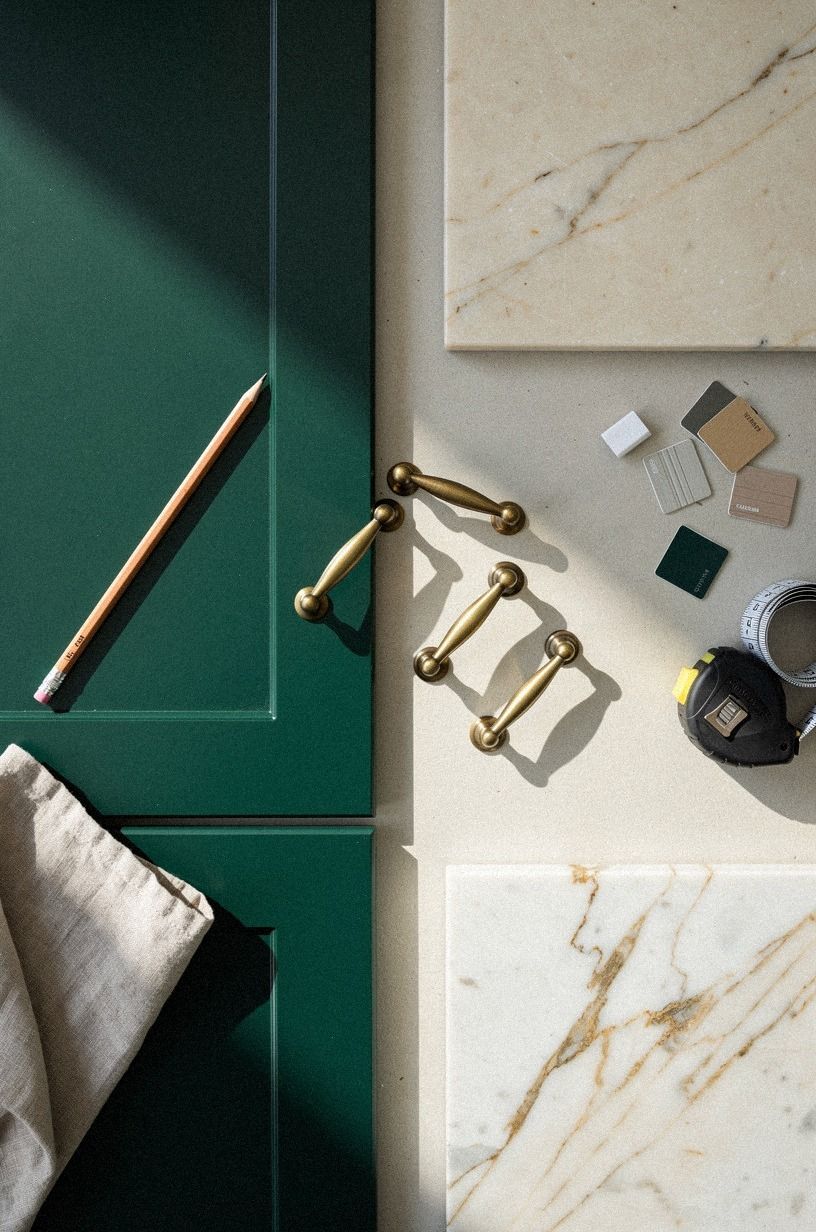
If your current hardware is the bland builder kind, antique brass bin pulls are one of the fastest ways to make the kitchen feel more settled.
Why this debate finally matters in real kitchens
The reason knobs versus pulls feels confusing is that people treat it like a style quiz when it's really a use question first. I've tried to decide from screenshots alone, and I always end up changing my mind once my hand is involved.
Drawers loaded with pans want leverage. Pantry doors want something you can catch fast.
Pretty little knobs on everything may look tidy in a saved image, but your shoulder tells the truth after a week. After three kitchens and four rounds of samples, I've finally stopped second-guessing the drawer pull + door knob split.
There is also a money angle people skip. You don't need a $25,000 remodel to make a kitchen feel more finished.
The budget tier of $300 to $1,500 covers the exact moves most people notice first: paint, hardware, maybe a peel-and-stick backsplash if the old one is dragging the room down. Meanwhile quartz can run $60 to $120 per sq ft, laminate lands closer to $10 to $40 per sq ft, zellige backsplash often falls around $15 to $35 per sq ft, and repainted shaker fronts commonly sit near $150 to $400 per door.
A replacement hardware set under $200 changes more than a $4,000 appliance upgrade ever will, and that's the part of the math people miss.
My strongest opinion? Match the hardware choice to the cabinet type before you match it to your mood board. Slab fronts usually want cleaner pulls because the door itself is the visual statement.
Shaker doors can carry knobs, backplates, or mixed sets because the frame gives you somewhere for the detail to land. And when you ignore that, the room fights you.
A delicate knob on a giant pantry looks timid. A huge bar on a tiny painted shaker door looks like costume jewelry.
So yes, this little debate matters because kitchens are repetitive spaces. You see those pieces every morning, you touch them every night, and the pattern multiplies across 20 or 30 fronts.
Get one detail wrong and the whole run repeats the mistake. Get it right, and even a modest kitchen starts to feel considered.
A single Top Knobs bar pull repeated across a 12-drawer wall tells the eye the room was planned, not assembled.
What People Always Want to Know
What is the best Kitchen Cabinet Hardware Ideas: Knobs vs. Pulls for a small kitchen?
Pulls usually win in a small kitchen because they're easier to grab fast and make narrow drawers feel more usable. Slim bar pulls or compact cup pulls keep the run readable, and small kitchen cabinet ideas that maximize storage helps if the real issue is layout, not hardware. Stay above 5 inches on the longer pull and the room still feels tidy.
Where can I buy Kitchen Cabinet Hardware Ideas: Knobs vs. Pulls pieces on a budget?
IKEA, Target Threshold, Amazon Basics, and Wayfair are still the first places I'd check for affordable sets. Consistent finish matters more than a fancy brand name when you're spreading a single look across twenty fronts and want everything to read as one decision. Facebook Marketplace is worth a look too, especially for older Rejuvenation brass or House of Antique Hardware bin pulls that already have some age.
How much does a Kitchen Cabinet Hardware Ideas: Knobs vs. Pulls makeover cost?
For most kitchens, a hardware-focused refresh runs about $100 to $300 if you're only swapping pieces, and more if paint joins the plan. The free part is better placement, because moving a knob from the wrong spot to the right one can fix the whole look. Plan $8 to $15 per knob and $12 to $25 per pull for a realistic budget on Emtek or Top Knobs pieces, or closer to $2 to $6 each on the IKEA BAGGANÄS line.
Can I create a Kitchen Cabinet Hardware Ideas: Knobs vs. Pulls on a budget?
Yes, and you don't need to redo every surface. Cheap upgrades first.
Fresh screws. One matching finish.
Better placement. Then, if you can spend a little more, add a coat of cabinet paint or under cabinet lighting ideas to brighten your kitchen so the new hardware reads on purpose. A 12-knob kitchen can come in under $80 on Amazon Basics and look like a deliberate upgrade.
Is a Kitchen Cabinet Hardware Ideas: Knobs vs. Pulls worth it in a small space?
Yes, it's worth it because a small kitchen puts every repeated detail right in your face. Good hardware can make the room feel more ordered without stealing inches.
Use longer pulls on drawers, keep the finish quiet, and let the cabinet lines stay clean. A 3/4-inch brass bar pull on uppers paired with a 1-inch knob on lowers reads intentional even in a 70-square-foot kitchen.
Is Kitchen Cabinet Hardware Ideas: Knobs vs. Pulls a good idea for a rental?
Yes, if you save the old hardware and keep your holes consistent. Rental-safe wins include swapping like-for-like pulls, adding removable under-cabinet lighting, and using peel-and-stick backsplash around the existing run so the hardware feels tied in. A 30-piece IKEA BAGGANÄS set comes in around $60 and is the kind of swap most landlords will let you take with you when you leave.
Where I'd Start First
If I had to pick one, I'd start with mixed cup pulls and round knobs. Drawers and doors don't ask the same thing from your hand, so one hardware shape for both is usually the wrong compromise.
Pin that mix for later and let function make the style call first. A 3-inch cup pull in oil-rubbed bronze paired with a 1-inch knob in the same family is the safest starting pair.
Best move you'll make all week!